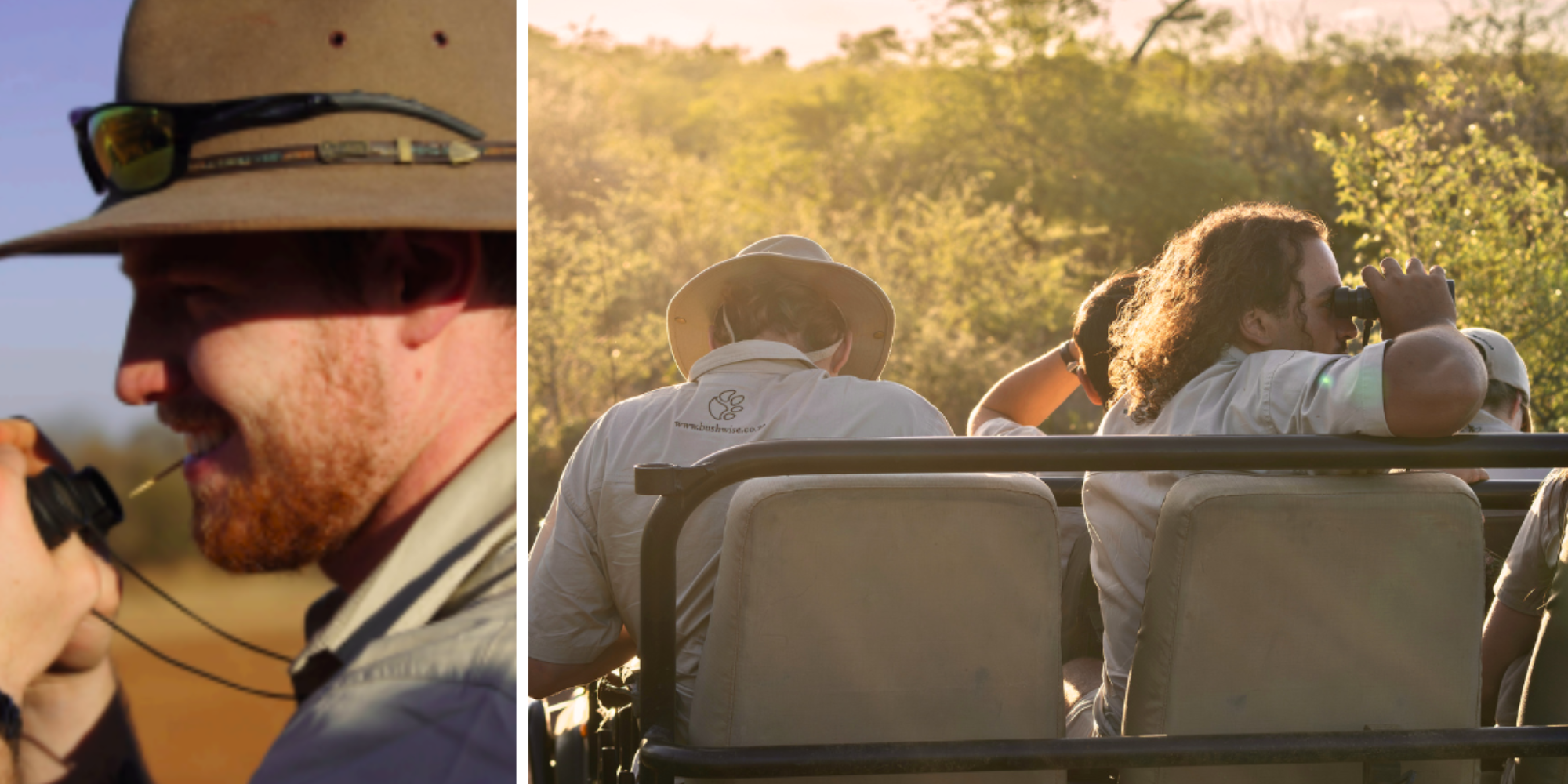
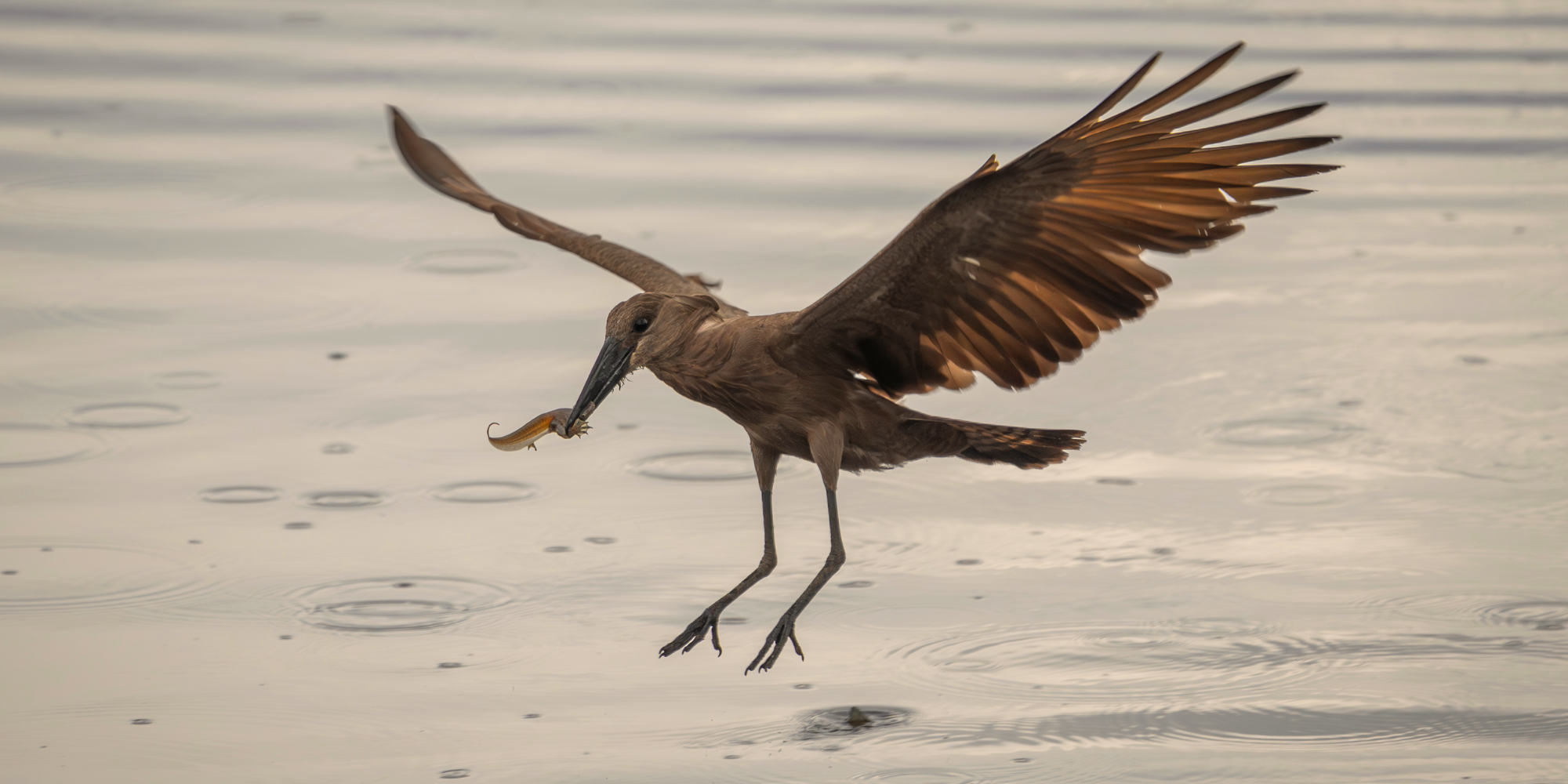
Tag: #safariguide

  • A wilder path: Why I quit my desk job for a life in the South African bush

    This blog was written by Aleisha Carter, a Bushwise International Field Guide student. Each student takes a turn as camp manager, and writing a blog is part of the experience.

    3 min read

    I used to be an Executive Assistant. A bubbly joker of an Executive Assistant to a wonderful Executive Director in the heart of Brisbane, Australia. My biome was the concrete jungle filled with twinkling glass skyscrapers and dilapidated old buildings waiting to be bought out and replaced with even more twinkling glass skyscrapers. My flagship species was the roaring city buses, all filled with different assortments of workers and, keeping with my current theme, tiny parasites. Okay, yes, I mean lice. 

    Life in the concrete jungle biome was defined by the scent of coffee every morning, followed by the unfriendliness of people waiting for those coffees to work miracles. Life inside the twinkling glass skyscraper home ranges was defined by eye strain from staring at three computer screens for eight hours a day, ticking the seconds on the tiny computer clocks.
    image

    We choose the path of least resistance, right? I’d fallen into administration because I was good at it, it paid well, and the opportunity to climb up the corporate ladder meant very nice moolah (money) if I stuck at it. But there’s something missing in this scenario – job satisfaction, happiness, contentment. 

    Thanks to my job being inside, I was suffering from a serious lack of not just vitamin D, but also vitamin joy! So, while volunteering in Finland in 2023 with 87 Siberian Huskies, I made a decision: I would pursue a career in something that brought me joy – animals. And so, I applied to study Zoology at university and I got accepted!

    Unfortunately, I simply could not commit to living in the concrete jungle for three straight years while I completed my degree. Call it whatever you want – commitment issues, a travel itch, a yearning for something BIG – I felt that there was something else out there for me, another pathway I could take to pursue my dream of escaping the desk and being surrounded by animals every day. And then I found it, or more specifically, it found ME! It was like the sky opened up, and a choir of angels started singing as I laid eyes on the description of the Bushwise Field Guide Course, courtesy of my Instagram targeted ads. It had everything I had desired to learn in the zoology course, but implemented in a practical setting to get me out into the real world NOW.

    An interview, a deposit, many appointments and visa stresses later, and I was on the plane to South Africa to pursue this dream. Did I cry when I flew away from my previous biome and my previous home range and my previous role in this complicated ecosystem? No. Did I cry when I left my family, not knowing when I would see them again? Yes. But the beauty of this course is that I’ve accidentally found an entirely new family out here in the bush.
    image

    My new home range is a small village of bomas set in the savannah biome of South Africa. My territory is, in my humble opinion, the cutest boma in the village, stationed right outside the dining hall and bathrooms. Our flagship species is no longer the crowded buses and lice-ridden seats but the African Elephant and Leopard. No, we’re not parasite-free, but many impalas are here to nibble any ticks attached to their fur.

    My days are no longer spent in front of a screen, but instead I’m living out the scenes of my computer screensaver. We drive through herds of elephants, watch flocks of vultures take to the sky in wind thermals, track the prints of lions until we find entire prides. And then every night we eat together as a family, recounting the adventures and sightings of the day.

    I used to be an Executive Assistant. Now, I’m a Field Guide in training and I finally feel alive.

    Ready to leave the office and embrace a life in nature? Learn more about Bushwise courses and apply today to start your adventure as a field guide!
  • Tracks, signs, and transferable skills: How art helped me master the bush

    This blog was written by Chané Jansen, a Bushwise International Field Guide student. Each student takes a turn as camp manager, and writing a blog is part of the experience.

    4 min read

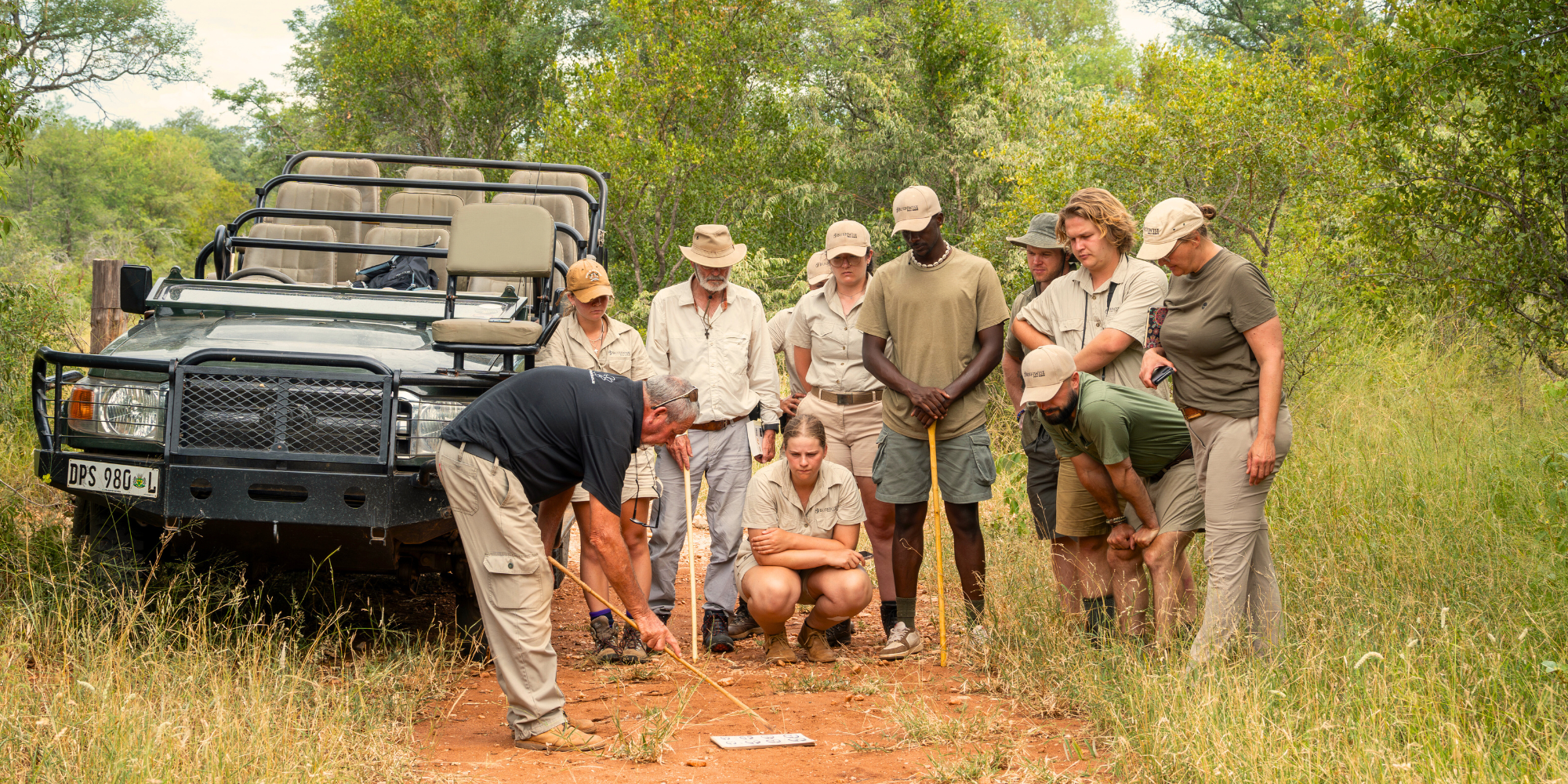
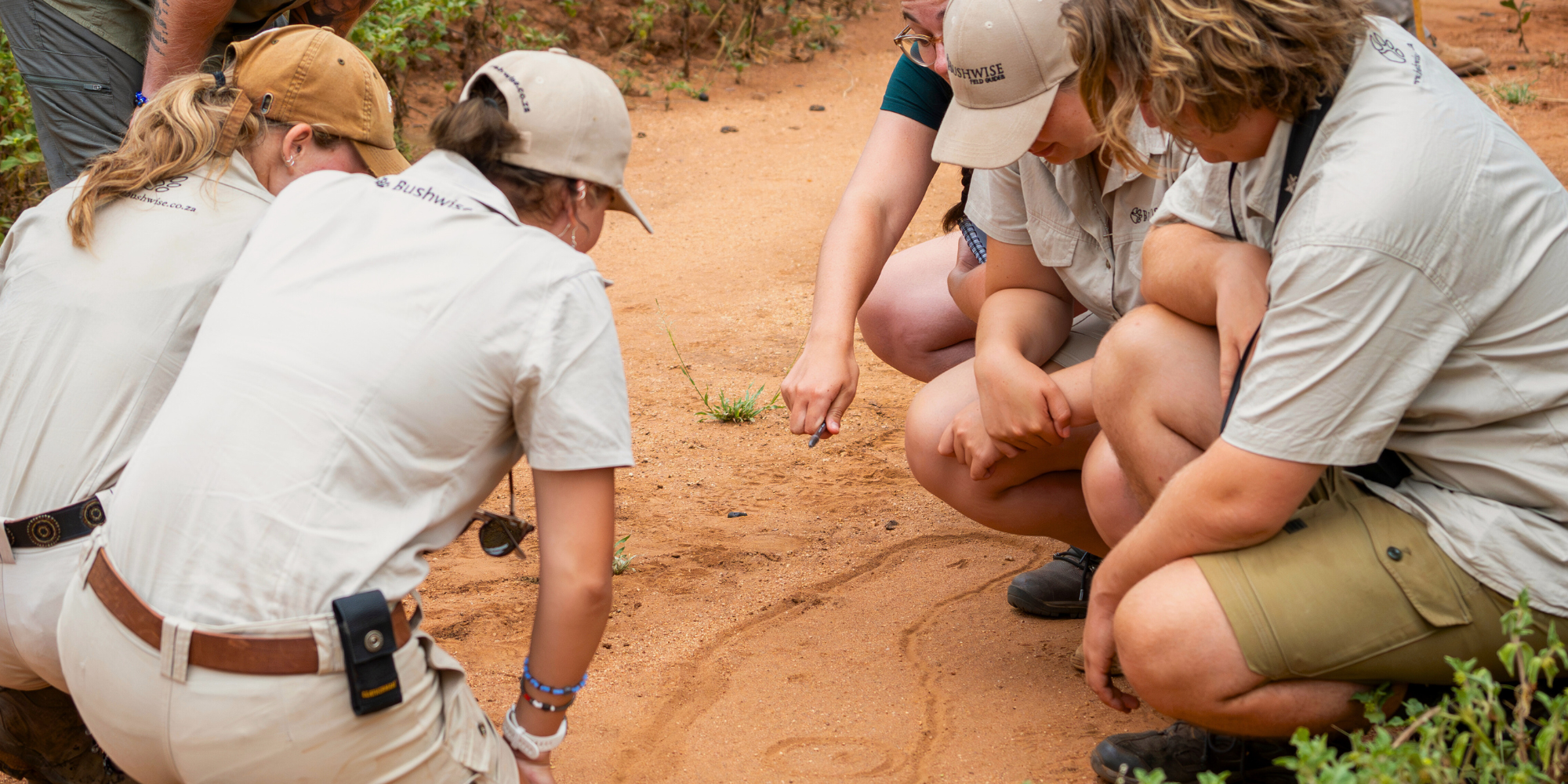
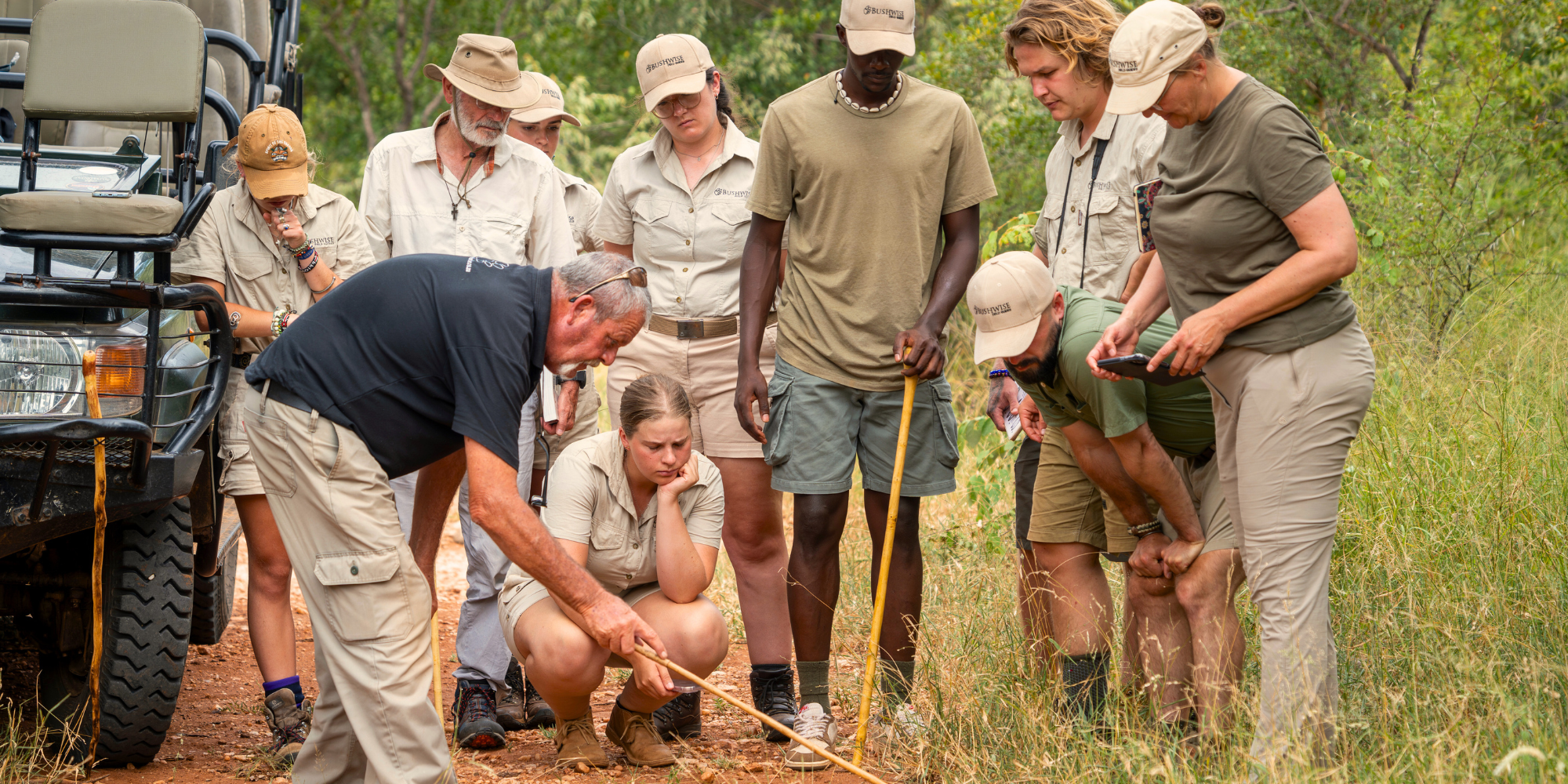
    The Sabi Sabi students have all taken turns as ‘Camp Manager’, but I was the one holding the title during Sam Patrick’s 7-day Track & Sign course and assessment. While those first few days were filled with nerves, apprehension, and thoughts like, ‘I don’t have any professional bush experience; what if I can’t do this?’, my tune soon changed when I realised I’ve been training for this for many years – I just didn’t know it. 

    My background and education in design and fine arts had, all this time, been rewiring my brain to identify shapes, scale, and patterns. And what do you know? That’s exactly what track and sign is. Tapping into my artistic skills took me from zero to Level 3 Tracker in just 7 days. 

    image

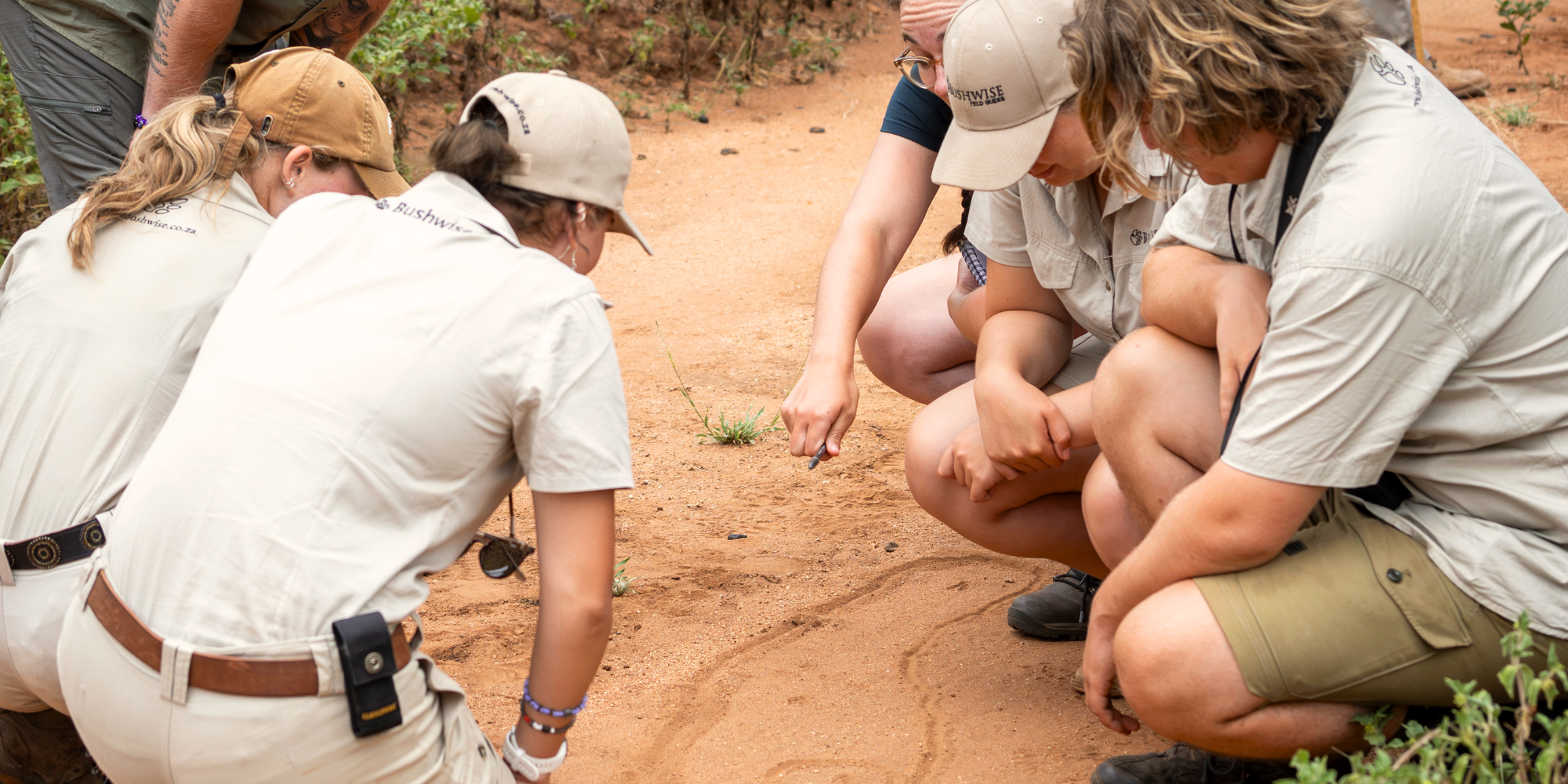
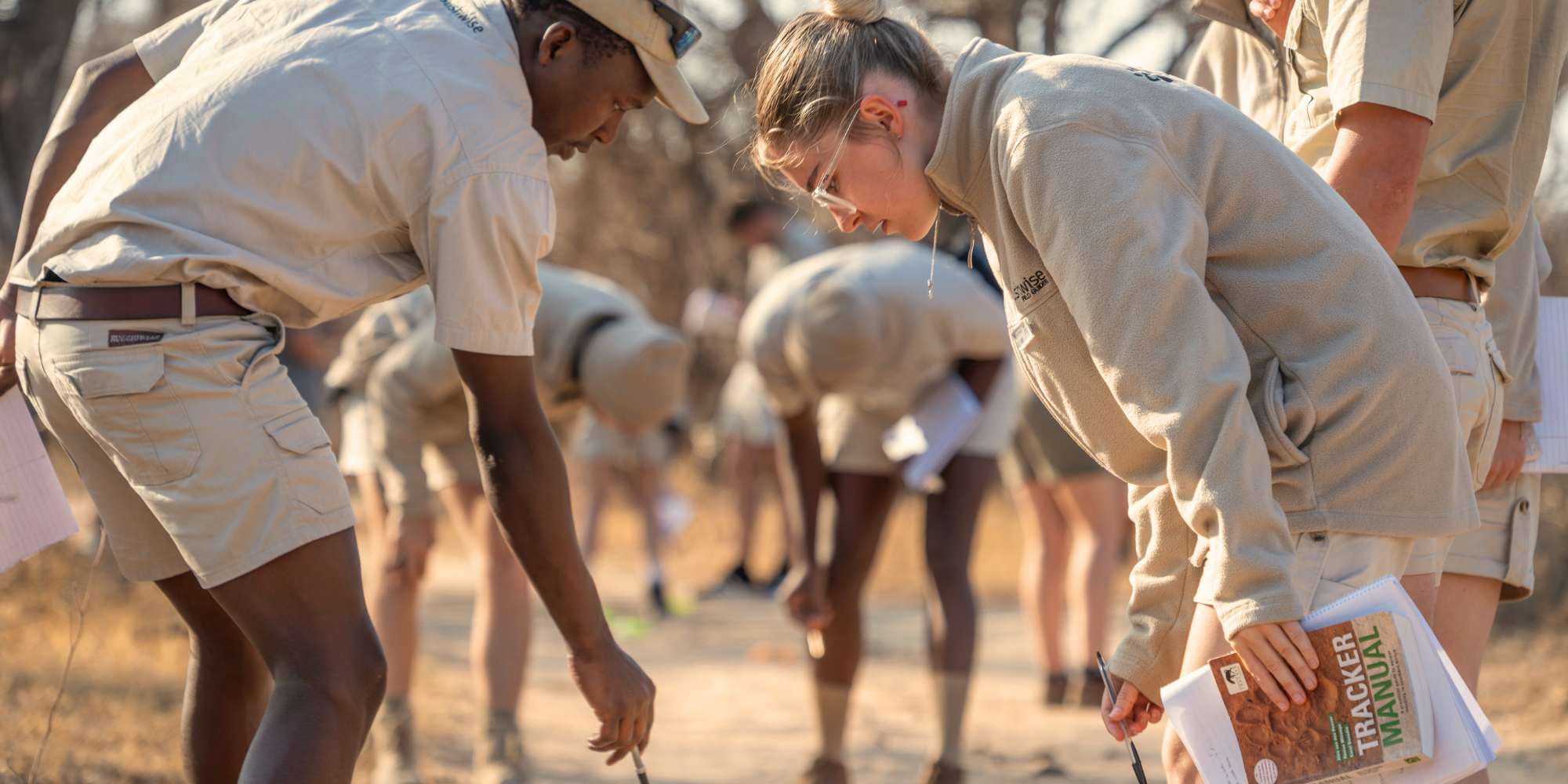
    When Sam arrived that Sunday, I knew next to nothing. My first ‘baseline’ test score is not something I’ll be bragging about, and it shook my confidence to the core. Over the following week, we would be learning to identify the tracks (footprints) and signs (dung, markings, evidence) of the animals and critters in our area. Living in the heart of Sabi Sabi, the list of wildlife we could encounter was extensive, and by day four, our species count was over 45. From paws to hooves, snakes to beetles, a multitude of bird feet, and even frog tracks on assessment day, track and sign tests not only your knowledge but also your observation skills, problem-solving, and critical thinking. 

    Staring down the barrel of track and sign suddenly made me question how qualified I really was, and self-doubt began to creep in. I have a degree in graphic design with a minor in fine arts – what on Earth am I doing here? The things I know exist on a computer screen or a stretched canvas. The delicate, technical skills I’ve acquired throughout my life felt miles away from the wild South African bushveld I found myself in now. After all, what could something like still-life drawing or logo design possibly have to do with staring at the ground?

    Information overload doesn’t begin to describe the first couple days. Our schedule looked something like this every day: 

    • 6:30am to 10:30am: finding, mock testing, and discussing tracks out in the field.

    • 2:00pm to 3:00pm: lecture-based class on tracks and signs.

    • 3:30pm to 6:00pm: another round of finding, testing, and discussing. 

    Amidst the hectic schedule, it was a flurry of toes, pads, lobes, claws, hooves, edge profiles, points, angles, registering, gait, and stride. I never realised how much information could be gathered from marks in the sand and the vast variety of marks possible. Just as you begin to feel comfortable, a new track, ever so similar to one you’ve already learned, throws your groove off entirely. It was simply a matter of putting your head down and trying.

    image

    Slowly but surely something was happening – like a camera lens sharpening its focus on a once-blurry subject, click by click, track by track, I was starting to see things clearly. The hooves that just two days ago all looked the same were each their own distinct shape. The round toes were glaringly different from oval toes, and gait seemed obvious. Rather than an endless list of feet I had to memorise, I was seeing shapes, patterns, and the subtleties that differentiated one spoor from another. 

    One moment from day four stands out to me vividly – walking up to yet another circled track in the sand, as we had been doing countless times each day. But this time was different. I took a single glance at the track – no more than three seconds – and without hesitation, I confidently said, “that’s a duiker,” already turning to walk away before the thought had even fully registered. It was only when I stopped and turned back that I realised what had just happened, my own confidence had caught me off guard. 

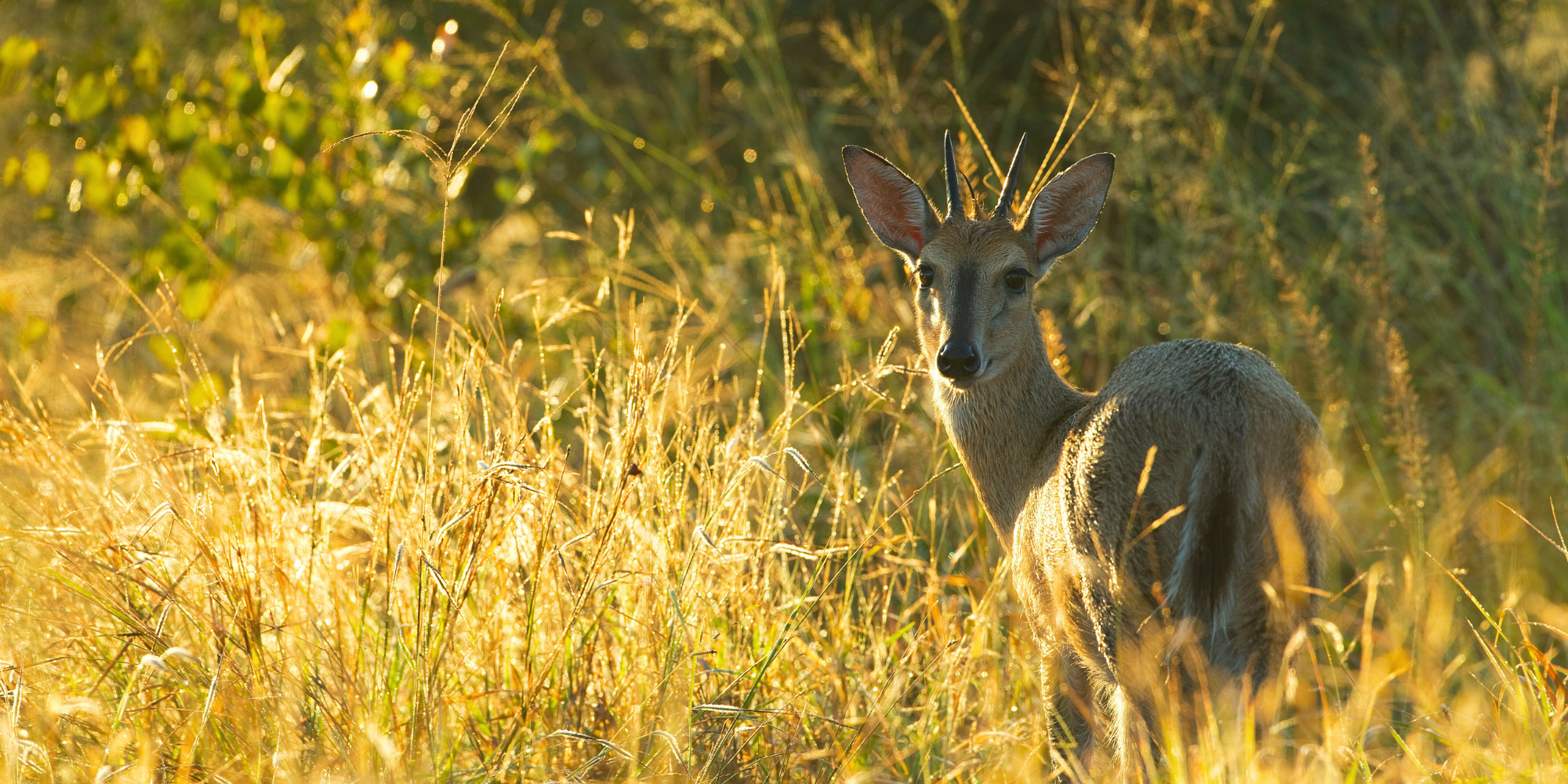
    I took a moment to go through the process of elimination we had been learning: a relatively small hoof, a slightly curved outer edge profile, a slightly blunted point, and the tracks directly registered. The length of the hoof was more or less equal to the width. All signs point to one answer: duiker. But what struck me wasn’t just the accuracy of identification, it was how instinctive it has become. This track simply looked like a duiker. Instead of painstakingly dissecting each print, I began to just know. Know the shape, know the pattern, know the scale. Within this moment, I recalled something Sam had said on the very first day (that I didn’t really hear through all my internal self-doubting): “Track and sign is just shapes and patterns.” It seems silly looking back how long it took me to realise that what I know best is exactly what we were learning here, just in another form. 

    image

    By the time assessment came around, I walked up to tracks with a smile on my face. Not only had I learned so much in just a week, but I also finally tapped into what I already knew. As my journey in the bush continues, I want to remember that all my skills, whether I realise their relevance or not, can only make me better. I want to encourage anyone thinking about a course with Bushwise or a career in the bush who feels uncertain about having the “right” skills or enough experience. Let me assure you: there is no one-size-fits-all field guide. Whatever knowledge or skills you bring, from any discipline or area of life, will only add to your strengths and make you a unique, well-rounded guide. Embrace what makes you different – those are the very things that will set you apart and allow you to thrive in ways you never imagined.

    Ready to turn your unique skills into bush knowledge? Explore Bushwise courses and apply now to start your journey in wildlife guiding!

  • The resilience of the cheetah

    This blog was written by Eline Kemper, a Bushwise International Field Guide student. Each student takes a turn as camp manager, and writing a blog is part of the experience.

    4 min read

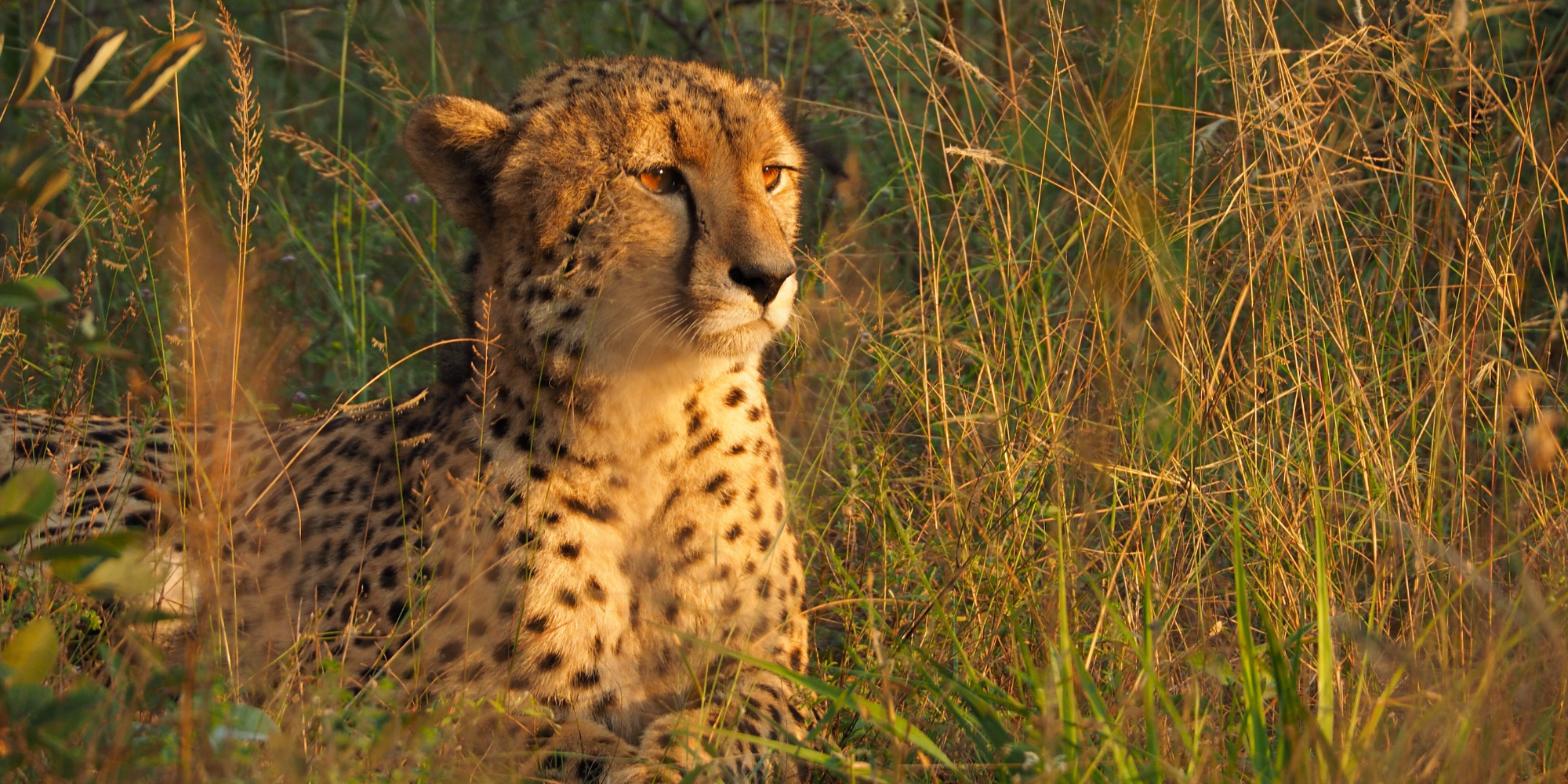
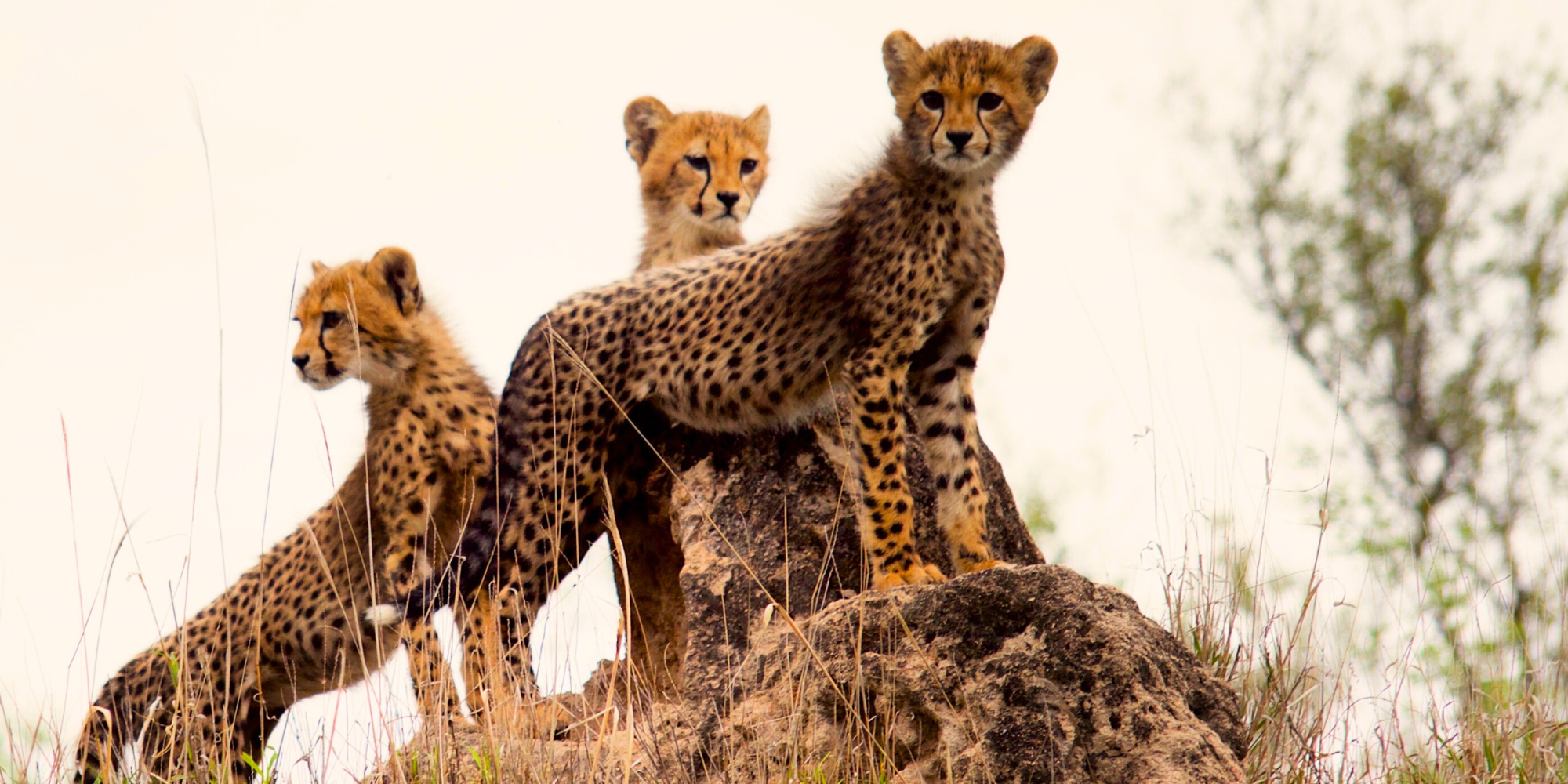
    I am currently enjoying my third semester with Bushwise and I have had the chance to see my favourite animal twice so far! Last week, we saw two juvenile cheetahs quite up close. We think they are brother and sister who only just left their mother. I have been waiting to see cheetahs out in the wild in South Africa for years, so I count myself very lucky. 

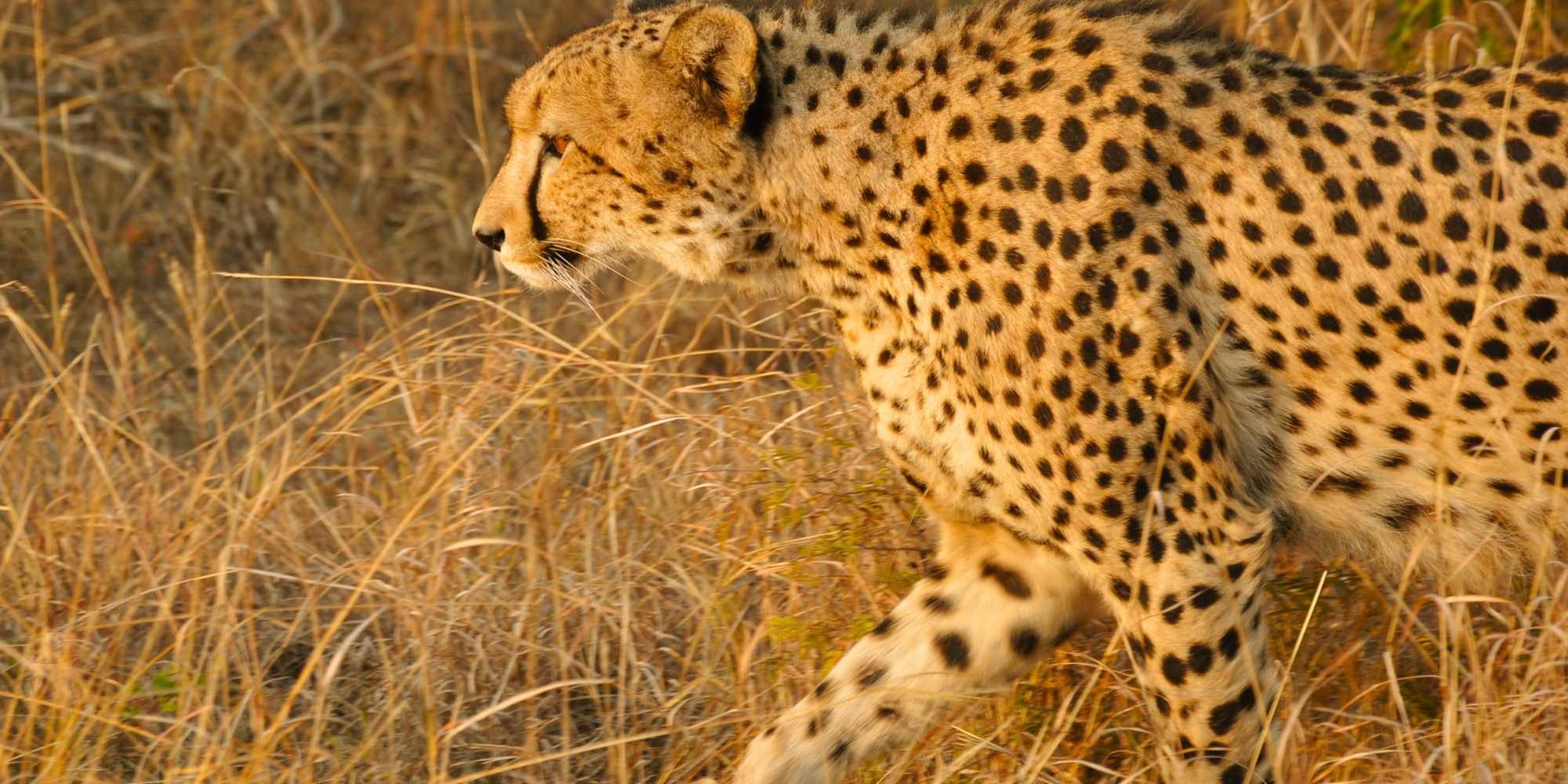
    It is the beauty of cheetahs that captured me first: their spots, tear marks, and honey-brown eyes. But, it was after I did my research on them that I came to appreciate them even more. I admire their personality, but especially their resilience, which is what I would like to share some information on with you in this blog.

    image

    Female cheetahs are solitary animals, except when they are raising their cubs. Male cheetahs can be solitary as well, but usually form coalitions. These coalitions consist of one or up to four other male cheetahs, usually their littermates. Males provide no parental care; this responsibility lies with the mother. Therefore, the primary key to the survival of cheetah cubs is the mother. Another reason why the mother is so important is because cheetah cubs are altricial at birth. 

    “Altricial” is one of the words I became familiar with during my last semester with Bushwise. It means that an animal is born in an undeveloped state; they are helpless at birth. Cheetah cubs have their eyes closed for four to 11 days after birth and have no locomotive competency. After 12 to 13 days they can start walking. And it is only after 18 months that the cubs reach their adolescence and are ready to become independent. 

    Currently, the cheetah population is decreasing rapidly. According to reports, there are approximately only 7100 cheetahs left in the wild and they lost 91% of their historic range due to habitat loss and fragmentation. 

    image

    The steep decline in cheetah populations is a result of several causes and one of them is their high offspring mortality. This high offspring mortality has different causes. For example, shortages of food and/or water, climate change, being killed by farmers, and the illegal trade. 

    Extreme poverty is one reason for the illegal trade in cheetahs. The other suspected reason is the desire for exotic pets in the Middle East. Nevertheless, the biggest cause of high offspring mortality is predation by lions and hyaenas. There is no exact estimated percentage of the overall mortality rate of cheetah offspring and the offspring mortality of cheetahs can also differ per area. 

    However, here are a few statistics that can give you an idea. A study on cheetah cub survival on the Serengeti Plains and in the Kgalagadi Transfrontier Park showed that 4.8% of the cubs that were born survived until their adolescence in the Serengeti Plains and 35.7% in the Kgalagadi Transfrontier Park. According to other research, the average percentage of cubs that survive until their adolescence is 30%. Thus, the mortality rate for cheetah cubs found in this research is 70%. 

    image

    According to M. Laurenson, “cheetahs suffer high offspring mortality rates compared to other large felids”. These percentages were alarming to me, but here comes the fascinating part: three traits of the reproductive physiology of the cheetah are thought to have evolved as an adaptation to their high offspring mortality. Namely: they can restart their oestrus cycle quickly after losing a litter, they have one of the shortest intervals between litters and they have a large litter size compared to other felids. 

    If a female cheetah loses a litter, her oestrus cycle restarts quickly. The female comes into oestrus and can be pregnant with young again within 19 days after losing her litter. Second, they have one of the shortest intervals between litters, compared to other large felids. And third, cheetahs have a large litter size compared to other felids. The average litter size of cheetahs is four, but their litters can range in size from one to eight cubs. Meanwhile, other felids have litters with an average of three, which ranges from one up to five.

    It is admirable how cheetahs, but also animals in general, evolve to become resilient to the challenges they have to deal with. I could write another 10 blogs on the cheetah, there is so much that is interesting about them, but for now, I am going to leave it here. I hope I will be able to do conservation work one day to observe their (resilient) behaviour and protect them. I believe doing the International Field Guide Course with Bushwise is a good place to start this journey! 

    Ready to make an impact in wildlife conservation? Explore Bushwise courses and apply today to start your journey in field guiding and protecting endangered species!

  • Stealth and claws: Life of the elusive leopard

    This blog was written by Lionel Gojon, a Bushwise International Field Guide student. Each student takes a turn as camp manager, and writing a blog is part of the experience.

    3 min read

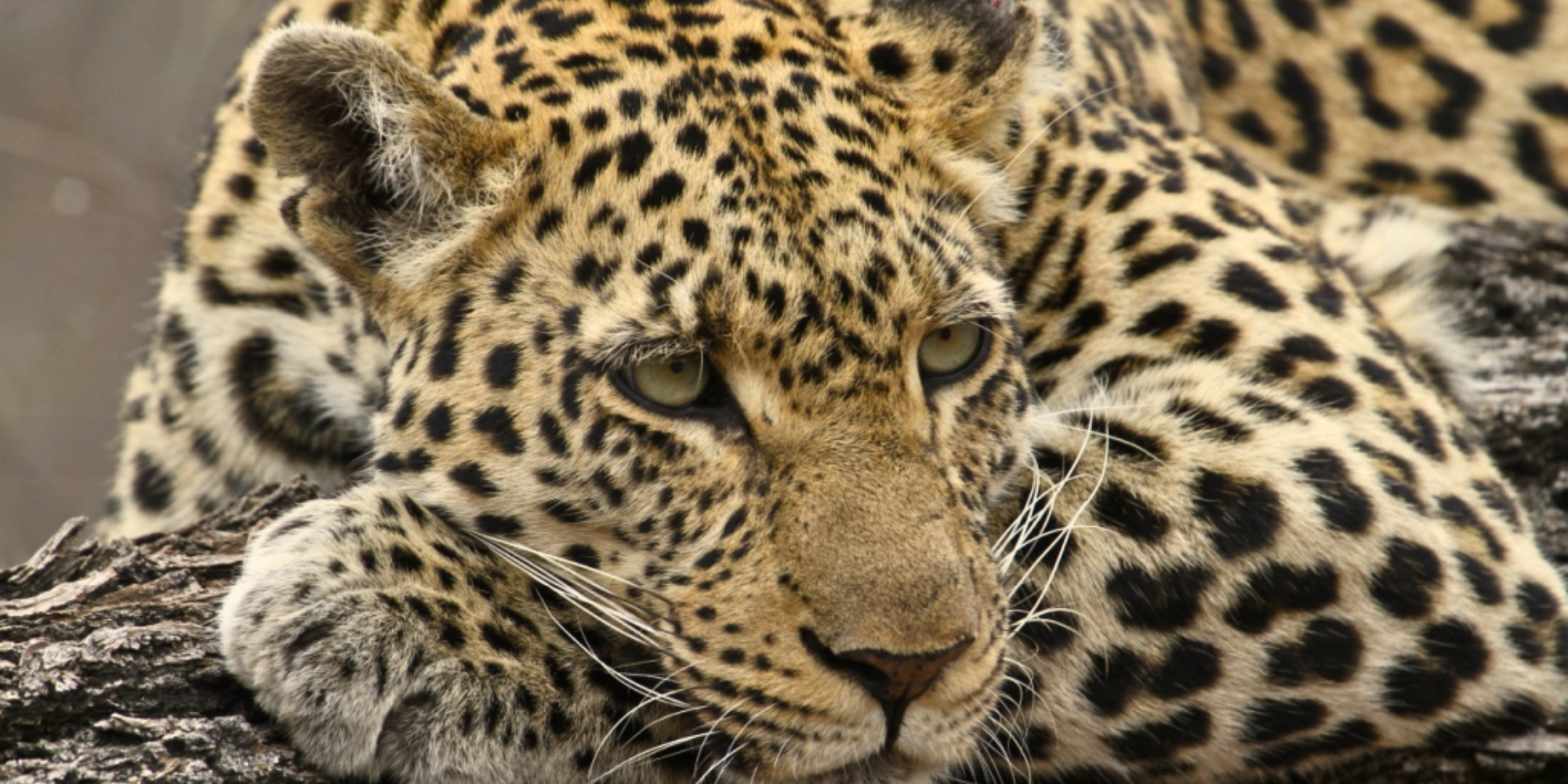
    A shadow in the night. A speck of dust rolling. Razor-sharp claws severing. A piercing shriek. Leopards are the epitome of stealth.

    As an Emirati field guide told me once, “You can’t own a leopard.” Fences can be made, national parks can be guarded and protected, but there is no way to keep a wild leopard in a specific area. Like a shadow, it will vanish into the night. It can be anywhere and you wouldn’t notice. It would only leave its haven at night, a deadly creature killing in complete silence. 

    image

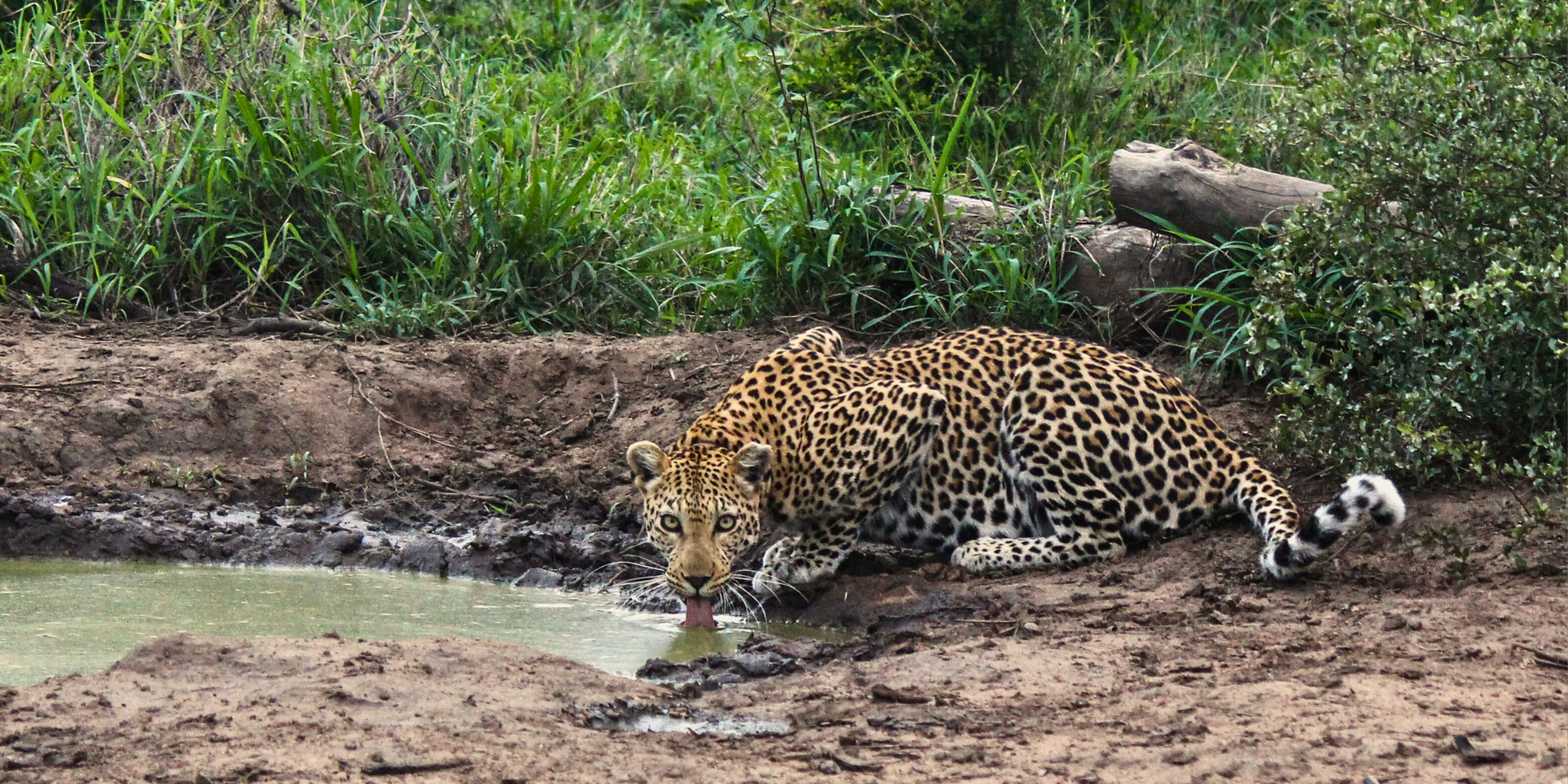
    Leopards can survive even in areas not thought for them. A rocky outcrop, a mountainous chain, a desert, a rainforest, farmland, the outskirts of a city, you name it. Male leopards have been known to cover large distances, looking for territory. 


    The leopard has always been my favourite animal since a young age. Their stealthiness fascinated me; their raw power made me wonder. I found it unimaginably beautiful from the first glimpse. I was always looking at pictures and watching videos of leopards, wondering when I would be able to witness such grace in person. How could a fairly light animal lift such heavy prey into the trees? How could it stay up there, comfortably settled with its meal, laughing at the fight for food raging on below? Some would call it arrogance, I’d call it sheer superiority. 

    We’ve all witnessed the incredible agility and skill of a domestic cat. It can fall from anywhere and will land on its feet, unfazed; so flexible that a fall which could have killed a human would barely bother it. We’ve seen them dodging snake attacks, so fast that even the incredible reflexes of a serpent are no match for them. We’ve seen them bullying much bigger dogs or hunting and playing with food as if it were easy. Now imagine the same animal, but much bigger, and without thousands of generations of domestic life that may slowly erode their reflexes and capabilities. That’s the leopard.  

    image

    From a mouse to a wildebeest, the leopard can kill a vast variety of prey. It will ambush the animal, or get close enough without being noticed before striking. The suffocation will be fast, the chances of survival will be thin. For me, the most impressive hunts are when the leopard waits up in a tree for an impala to get under it, and then lets itself fall on the poor ungulate, sometimes from very high points. 

    Despite its incredible abilities and adaptation skills, the population of leopards around the world are largely declining, mainly due to habitat loss, poaching for claws and body parts, as well as conflict with farmers and trophy hunting in some instances. Once widespread around Africa, Asia and even parts of Europe, leopards are now believed to be present in only around 25% of their original range. Some subspecies such as the Amur leopard in the Russian far-east have populations of no more than a hundred individuals. It is our duty to preserve this magnificent animal and find ways to coexist. 

    Learn more about the fascinating world of leopards and find out how you can contribute to wildlife conservation with Bushwise programs. 

  • Building bonds, facing fears and embracing bush life

    This blog was written by Meere Malherbe, a Bushwise International Field Guide student. Each student takes a turn as camp manager, and writing a blog is part of the experience.

    3 min read

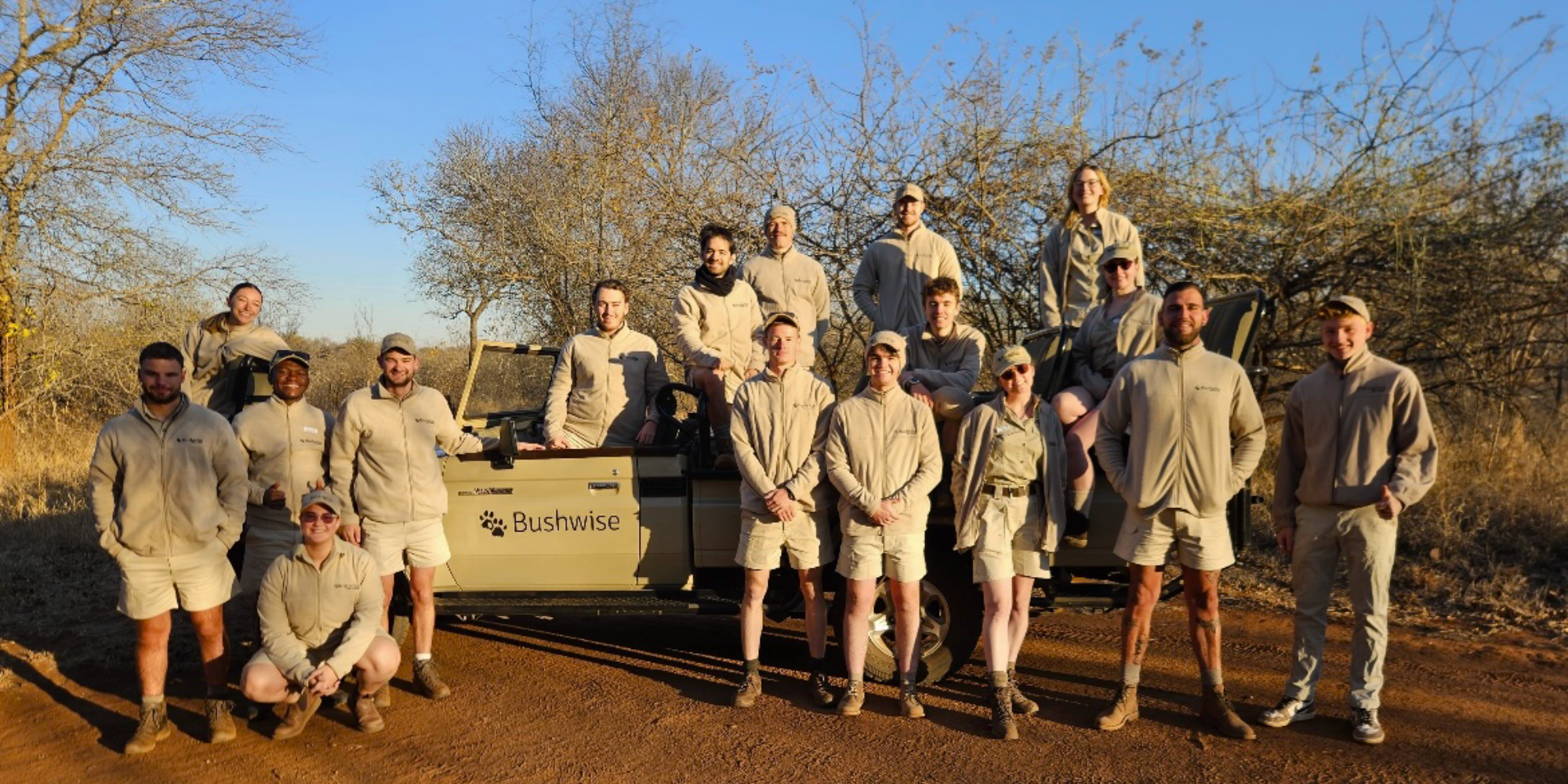
    It’s already the fifth week of being a Bushwise student. I can’t believe how time flies here. I can personally say that we’ve all grown closer and are a huge Bushwise family. We all look out for one another. I could not have asked for a better group! 

    Our week consisted of doing our presentations and our final lectures. Yes, that’s right, we are finally done with them! On Monday we did mammals, Tuesday was ethology, Wednesday was reptiles, Thursday was conservation management and historical human habitation. It has been a lot to take in for the past couple of days but at least we have each other. 

    image

    On Saturday night the group got together for a braai! It was a good way to end the week! Braais always takes me back home, where every night my family and I would spend a whole night laughing and enjoying each other’s company, and Saturday was exactly that! 

    Every day we’d set off on our early morning and afternoon game drives. I always look forward to these because you never know what you might see. Every day one or two students will get their chance at driving us around and talking about nature and all its glory. I can proudly say that everyone has been doing an amazing job so far and can’t wait for the next one! 

    On Wednesday, we had our reptile lecture, and got to go to the Hoedspruit reptile park. We all enjoyed a different scene for once, and learned quite a lot. We got to experience some close encounters with some of people’s biggest fears.  

    image

    Every night, all the students get together and learn all the bird calls, and come up with their own personal way of remembering them. There are so many different calls and some sound so similar. It’s spectacular to see how hard everyone has been working and all the effort being put into the days! We should all be proud of ourselves. 

    Every weekend we do get some time to ourselves which is always wonderful. A few of us will often drive to Gravelotte or Hoedspruit, usually just to enjoy a day out at a restaurant or paddle. Sometimes even just to stock up on snacks. 

    The days have slowly but surely started to warm up. Whenever we study in the classroom, we put on our swimsuits and just hop into the pool to cool down before getting back to do some studying. I have to say I am quite excited to experience how nature changes when spring comes around and all the leaves and plants start to sprout (It will make botany a lot easier). 

    image

    I have to be honest, the thought of being camp manager was like a constant worry that I had in the back of my head. I didn’t want anyone to feel that they needed to treat me differently, but as the time went on, I realised that nothing really changed. It felt like a normal week at camp. Being camp manager doesn’t mean that you don’t have to do your duties, but to make a good impression on others around you. 

    If anyone ever asked me if Bushwise is worth it, I would one hundred percent recommend it! It is so peaceful out in the bush, and it’s a great way to connect to nature and make amazing friends. Don’t wait till the last minute to do what you love, don’t be afraid to take that step in your life, you only live once. Make it worth your while! 

    Ready to embrace the wild and make lifelong friends? Explore Bushwise courses and apply now to start your adventure in nature!

  • From city streets to safari seats: My first three weeks as a Bushwise student

    This blog was written by Taylor Mee, a Bushwise International Field Guide student. Each student takes a turn as camp manager, and writing a blog is part of the experience.

    3 min read

    We’ve reached week three and I think it’s pretty safe to say we are really starting to settle into being full time Bushwise students. The 5am wake-ups, the intermittent phone signal, showering with frogs – it’s all becoming wonderfully familiar. 

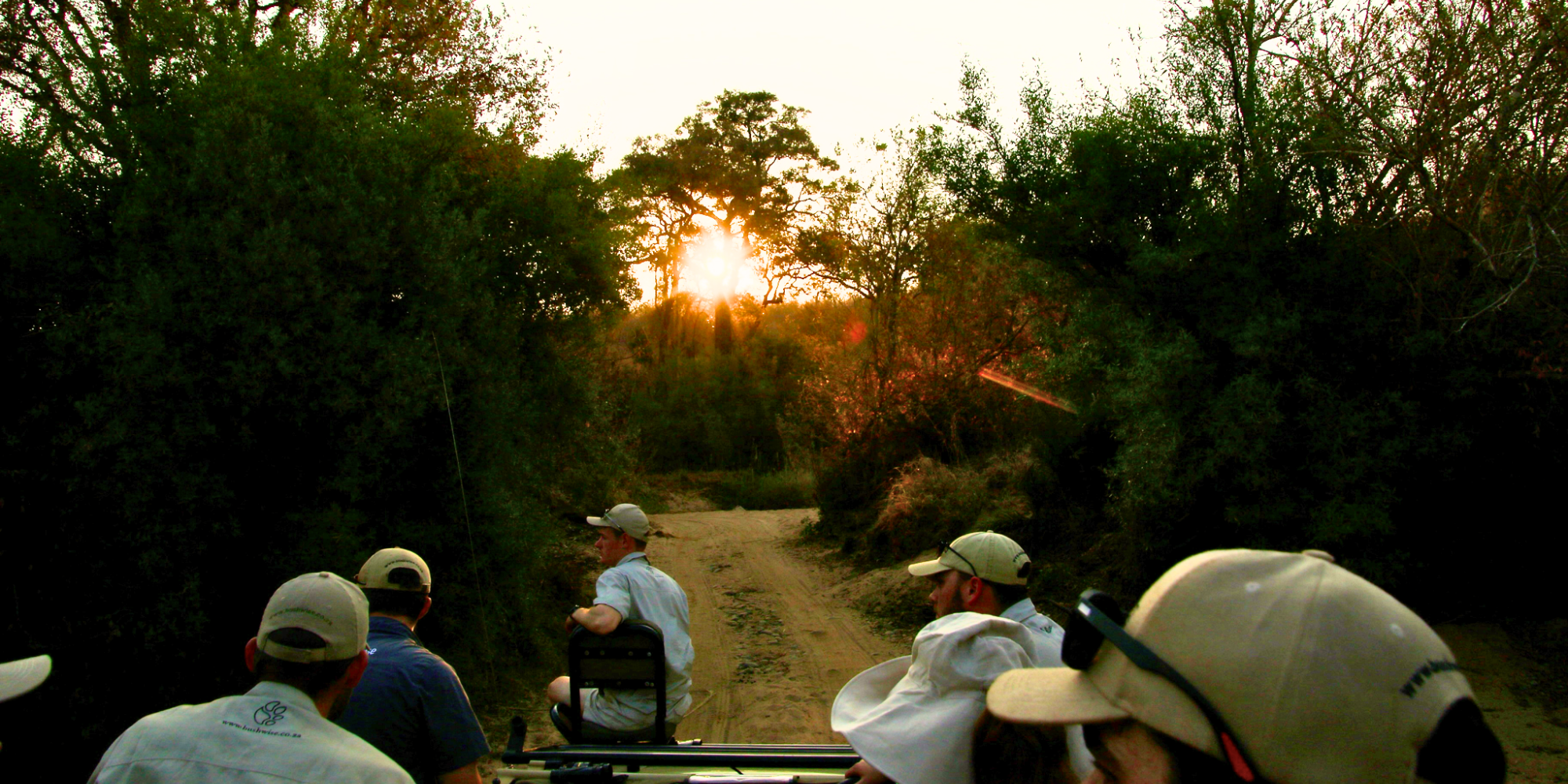
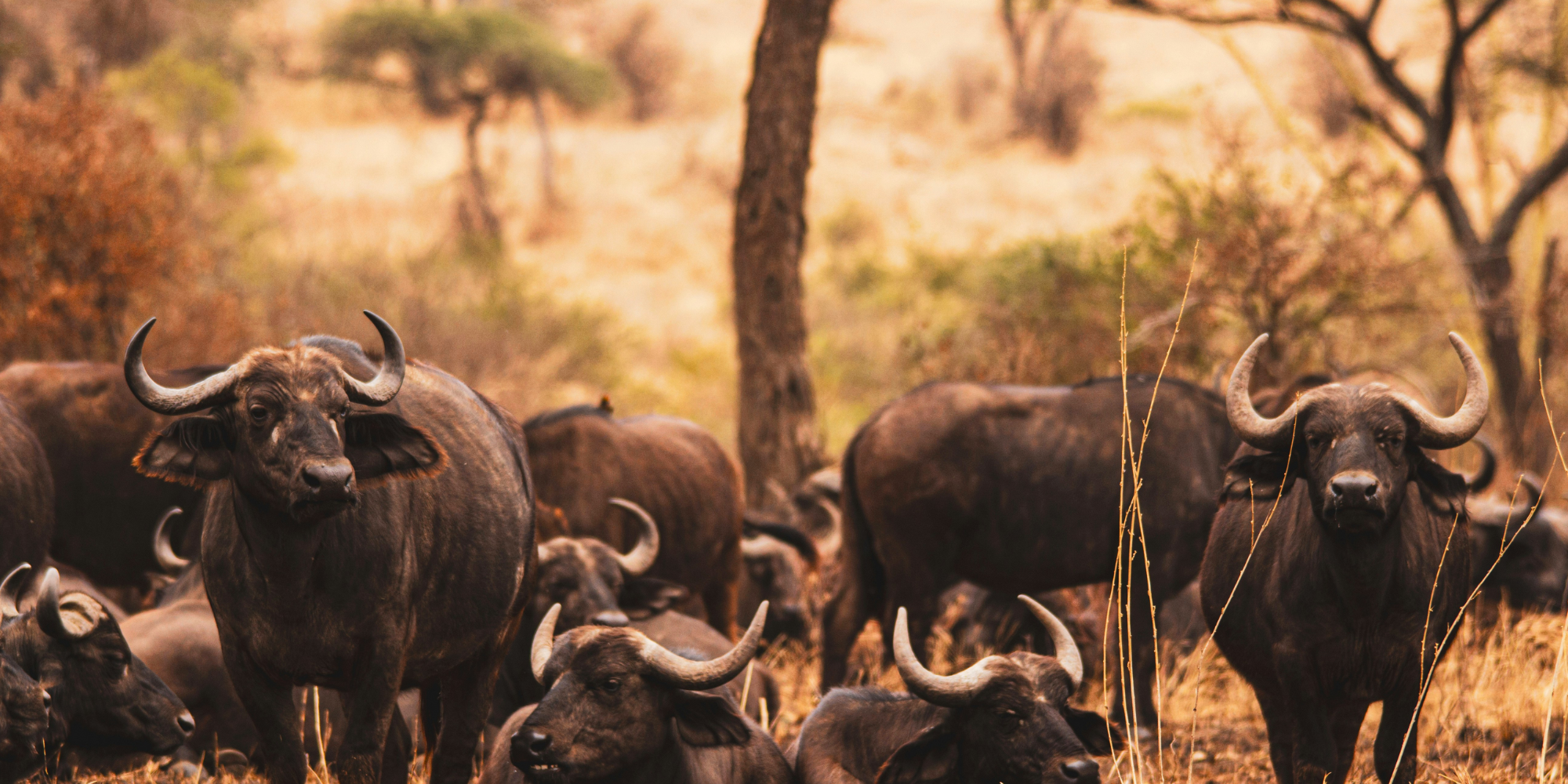
    Not long ago, I was drifting off to sleep to the delightful screech of mating foxes, and instead my eyes now closed after a “hard” day’s work to the distant call of a hyena. I say “hard” because being out here really feels like anything but hard work. Would I rather be sitting on the 77 bus, stuck in traffic, listening to some school kids shout about which TikTok they watched last night or be on the back of a game viewer, stuck behind a buffalo herd, listening to the wondrous sounds of the bush? Sorry, London, this man chooses Mahlahla. 

    image

    Amongst all the fun we’ve been having, it has also been a huge privilege and honour to be appointed camp manager for this past week and, in turn, become a shoulder to lean on for my newly adopted Bushwise family. 

    Our first exam week hit camp hard as I took over the reins, further extenuating the need for me to be a strong figure that my people could turn to in their toughest moments. But it was so encouraging to witness that seemingly nothing brings people together in a mutual act of support and solidarity quite like revising for, and attempting to pass, the first of your CATHSSETA exams

    It’s wild to think (excuse the pun) that in the short space of time we’ve been here, our knowledge base has already grown massively. Not long ago my field guiding mental database consisted of being able to provide a list of mammals commonly found in this part of the world – your giraffes, your zebra, of course your big five! 

    I don’t want you thinking I’m a fool, though! Don’t get me wrong I’ve watched my fair share of BBC Natural History Unit programmes, but there’s only so much information three series of Planet Earth can provide you with (we want series four please, Dave!). 

    image

    Now, however, if you want me to distinguish the difference between basalt and granite based soils, I can do so without a second’s hesitation. Need to know the cloud formation before a cold front hits? Hit me up! What taxonomic family does an Otter belong to, you ask? Mustelids people, they’re obviously mustelids. If by the end of the six months here I’m not able to distinguish a tree by a solitary lick of its bark or decipher which bird has flown past simply by listening to the flap of its wings, I’ll be incredibly disappointed – at this moment in time it feels like anything is possible thanks to the amazing experiences we are having and the training we are receiving.

    I also never thought I’d get so much continued joy out of looking at poo! The dogs walking in the hotspots of London won’t know what’s hit them when I return. We’ve already become so accomplished at identifying dung by its shape, colour and context that after six months here learning everything Darryn, Jason and Simone have to offer, I’ll have absolutely no hesitation in determining that it was the owner of the black labrador, approximately 8 months old, on a strictly dry food diet that didn’t pick up their dogs waste last Wednesday morning between 07:22 and 07:36 am.  You’re a welcome, officer. 

    image

    All in all, I think there is no doubt we can call semester one a success! New lifelong friendships are beginning to form, a whopping 8 modules worth of knowledge stored away (hopefully) forever and plenty of awesome sightings under our brown belts!

    It’s very sad to be hanging up my camp manager boots at the end of this hard week of studying. But I take one last look at the base, as I climb into the taxi taking us for a few well-earned days of relaxing in Hoedspruit, knowing that I’ve left Bushwise Mahlahla in a better place than I found it.  


    Ready to start your own adventure with Bushwise? Explore our courses and apply today to begin your journey in the African bush!

  • The subtle art of becoming a field guide

    This blog was written by Ryan English, a Bushwise International Field Guide student. Each student takes a turn as camp manager, and writing a blog is part of the experience.

    4 min read

    For as long as I can remember, I’ve wanted to work with animals, but I’ve never known exactly how. The idea of working in an office surrounded by walls and cubicles sounds like one of the layers of hell, so I have set out to find a way to be outside with animals for a living. 

    After finishing school, I decided to study zoology and natural science in university, but I had an itch to scratch with being back in the bush. Then it hit me when I spoke to my friends and family. Since you love telling people about animals so much, why don’t you do that for a while and see how you like it? Since that moment I knew being a guide in Africa would be my next adventure. 

    image

    Starting the process 

    The first step to following my aspirations of working in the bush was to leave my home city of Sydney, Australia, for South Africa where I would travel six hours from Johannesburg to the foot of the Klein Drakensberg, in the Limpopo province. More specifically, the Mahlahla campus at Bushwise

    Out here there are no streetlights, paved roads, noisy planes flying overhead or noise through the night. It’s peaceful from the onlookers perspective. After spending some time here you’ll soon realise how much is really going on. The walk from the dining room to my bedroom alone is an adventure at night with eyes flashing back at me, bushes rustling and figures seemingly disappearing into the pitch-black night. 

    The day is filled with birds calling to each other, antelope running around while keeping an eye on you and the honey badgers waiting in the termite mounds or in a hole for a chance to raid the fridge.

    image

    The more you listen to all the sounds, the more you realise how complicated and intertwined it all is. Then you are hit with the sudden reality: “I need to know every little sound out here and what it all means.” This is when I was almost hit with a slight wave of panic. 

    I only have 6 months to learn as much as humanly possible out here. I need to be able to educate and answer questions for guests who may have spent their whole lives wanting to come out here. And it needs to be entertaining! I don’t know what every bird sounds like or what the trees are, let alone the types of grass or the differences in footprints between animals we only hear about in Australia. This is going to be a huge 6 months of intense learning. It feels like everyone around me somehow knows more than me in every subject despite most of the group I’m with also being from other countries and continents. 

    Then one night, I realised: “This is a great thing, I can learn from everyone here, not just the instructors.” This realisation quickly sparked my competitive nature. I can and will become the best guide I can be and I’ll do my best to take the best parts of my peers around me to make Frankenstein’s guide. 

    image

    There was a catch, it’s not all just about animals when you are a guide in the bush. We need to be a driver, photographer, host, protector, medic, comedian all while being a beacon of knowledge. 

    Our first two weeks of class have been composed of classes that I would not have guessed when I began this path of leaving Australia. We did wilderness first aid courses, a hosting class on wine, and a photography class to help our guests. We need to be a multitool in the bush and we need to be good at it. 

    Once our people skills have been learned we can start to scratch the seemingly bottomless pit of knowledge about our environment. We need to navigate the stars at night, understand the weather without a forecast, predict where animals are by the shape of the land and the colour of the soil. This depth of knowledge is intimidating but I’m up for the challenge. 

    Just as I think I’m on top of the workload, we are given weekly prep tests that instantly humble me. With a minimum pass mark of 75%, this course might be the death of me but, I’ve spent too long wanting this and too much money to fail so it’s time to put my head down and work until I have achieved the best I possibly can. It’s not just about the mark, though, it’s about being the best I can be, even if I don’t top the class in test marks I’ll still be able to say I did my best and will shine when I’m finally in the bush with people who want to learn and look to me for the answers. This course is hard, but all the best things are.

    Explore Bushwise programs today and apply now to start your journey in the South African bush!

  • A sneak peek into my life as a Bushwise student

    This blog was written by Jason Peter Lizamore, a Bushwise International Field Guide student. Each student takes a turn as camp manager, and writing a blog is part of the experience.

    3 min read

    The first time we saw each other was at the airport. It was really early in the morning and all of us were so excited. On our way to the campus our driver, Blessing, was the funniest guy we could ever imagine. We had two stops where we could go and grab some snacks and drinks. The people in the back enjoyed the drive, while the people in the front (like myself) had the time of our lives.

    Blessing drove us safely to the campus. We arrived and I already felt like this is our time to become the best version of ourselves. The trainers welcomed us politely and introduced themselves to us. After that, Darryn said we had to do a lot of paperwork – the fun part. Then the trainers showed us our rooms. At first I wasn’t sure if I liked the room on the other side of the campus, but now I kinda enjoy it because I have a place a bit away from everyone (if I need a bit of space for myself or to study). I enjoy the walk in the mornings to the dining room because I get time to prepare myself for the energy everyone already has.

    image

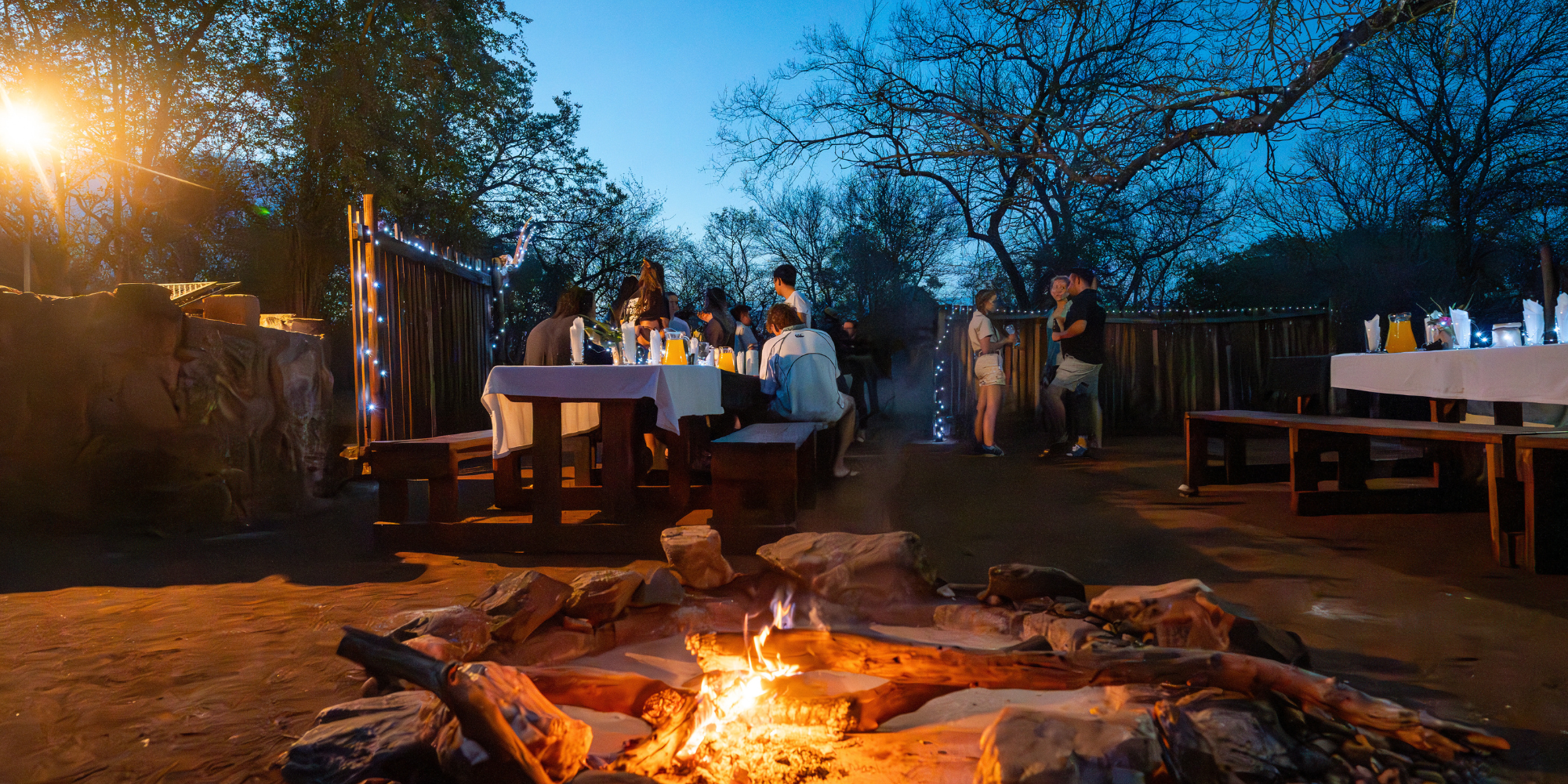
    The first night we sat around the fire while Rose was preparing our food, we told our stories to each other and got to know the trainers a bit better, made a few jokes and so on. Rose, our cook, makes the most amazing, delicious food.

    The next evening she made her famous chicken pie (Darryn, Jason and Simone’s favourite meal).

    During the week we got to know each other a bit more and made a bonfire every night. I can gladly say, we will become really good friends. Everyone respects each other and we are holding together as a team.

    The trainers are really polite and fair. The way they teach us is more than I have expected. They go into very fine detail and go out of their way to explain stuff to us. Famous quote from Darryn: “We work hard and play hard.”

    image

    One evening, Meere, Jana (some of the students) and myself sat outside and had a nice chat and made some jokes. All of a sudden a porcupine came around the corner and tried to open the fridge. We chased it away and went to make ourselves some tea. I walked back to the shelf to get the cups (keep in mind, without a torch), I grabbed the cups, turned around and this porcupine stood right next to me, opened his quills and hissed. Ran back and Jana and Meere were dying with laughter.

    The first aid course was challenging at first, but really interesting. I knew a lot of things already and I am really proud to say that all of us passed the course! Andrew is a really passionate man and all of us look up to him.

    image

    Our campus at Bushwise is really beautiful and is filled with amazing, spectacular wildlife all around us. Being out in the bush is really a once-in-a-lifetime experience. I think I can speak for all of us – it makes us feel alive and important. We can learn so much and better ourselves. We will have a massive impact on how people experience the bush and I can’t wait to start my journey. This is, honestly, like a wish come true; to teach tourists about animals and what impact they have on our lives is going to be amazing.

    I can’t wait to have more experiences and grow together with Bushwise. 

    Ready to start your own adventure and create unforgettable memories? Learn more about Bushwise courses or apply now to join our community!

  • I left my job in the UK to be a safari guide in South Africa

    This blog was written by Matthew Dufty, a Bushwise International Field Guide student. Each student takes a turn as camp manager, and writing a blog is part of the experience.

    4 min read

    I’m Matthew, a 26-year-old from the United Kingdom who gave up his life back in England to travel over 8000 miles to pursue my life-long passion of working within nature. But, why?

    From an early age I was obsessed with the wildlife in the southern part of Africa. My earliest memory is watching a documentary following the lives of a pack of wild dogs. I was hooked from then on. 

    Being from the UK the only opportunity to see these animals would be on TV, so from that moment I added “South African safari” to my bucket list. This was only emphasised more when a TV show called “Wild at Heart” came out when I was eight. The series shows the journey of a family emigrating to South Africa where they attempt to rehabilitate a game reserve for animals. This opened my eyes to the fact that not only can you go to South Africa to see these animals but you can also go there to work with them. This blew my mind. 

    image

    In 2019 and 2021 I ticked “South African Safari” off the bucket list with trips to Malelane and the Sabi Sands, and as mind-blowing as those experiences were, it just wasn’t enough; there was still something missing.

    That something was working with animals. In 2023 in had the privilege of spending three weeks in Namibia volunteering at the Namibia wildlife sanctuary and the Kanaan Desert Retreat. The first 2 weeks were spent at the wildlife sanctuary where the focus is to rehabilitate vulnerable animals, with the hope of releasing them back to the wild. The final week was more focussed on the conservation of the area allowing animals to have free movement in the area without the obstruction of the fences from farming areas that were once there. These 3 weeks gave me the realisation that I couldn’t spend the rest of my life working in a retail environment with the mundanity of repeating the same day over again. I spent a couple of weeks reminiscing about the past 3 weeks when I returned home and made the decision to search for something that could help me scratch that itch of working in nature. That’s when I found Bushwise.

    But why Bushwise? The thought of becoming a nature guide had me hooked instantly and I knew that was my future. As mentioned, I have been on safaris before, some better than others, but what was the factor that defined each of them? The guide. 

    image

    For me, personally, the guide is the most important piece in the game drive puzzle. They are the person that turns a good sighting into a great sighting and also creates an experience which will be memorable for the guests on board. An international trip to South Africa for safari isn’t cheap and the last thing you want is for your experience to be ruined by a guide that doesn’t show the same excitement and enthusiasm as you. Having spent time researching Bushwise I soon realised that, for what I wanted, Bushwise was the logical choice. 

    Other organisations provide a very similar experience but the option of a 6-month placement seemed like an opportunity I couldn’t pass on. The possibility of actually working within a lodge environment had me sold. In addition to the advantage of being taught by high-quality and knowledgeable trainers, the Bushwise team are also there to help support the transition of becoming a qualified nature guide.

    image

    So what does the future hold and what do I want to do with my career? I would love to have a long and distinguished career as a nature guide. I left my job of 6 and a half years to pursue a dream and I want to make that dream my reality. I enjoy my life back home – the job security, financial freedom and being surrounded by friends and family – but I am only truly myself when in a natural environment surrounded by the sights and sounds of all things South Africa has to offer.

    It’s not going to be easy – becoming a nature guide isn’t something that happens overnight, it’s dedication to a purpose which is greater than yourself. You’re not only an ambassador for the country and place you work but also for the conservation and protection of the wildlife. You are being a voice for the voiceless and need to spread the impact that humans are having on the natural environment.

    I am currently in my second week of my 50-week course and I am already gaining invaluable knowledge on, not only what a nature guide should know, but also how to carry yourself to ensure that you are being professional every day. It’s a long way from my life back in the UK, but with the environment Bushwise has created, they give you the best chance of following your dreams. Here is to the next 48 weeks!

    Ready to follow your passion for wildlife and conservation? Learn more about Bushwise courses and apply now to start your adventure!

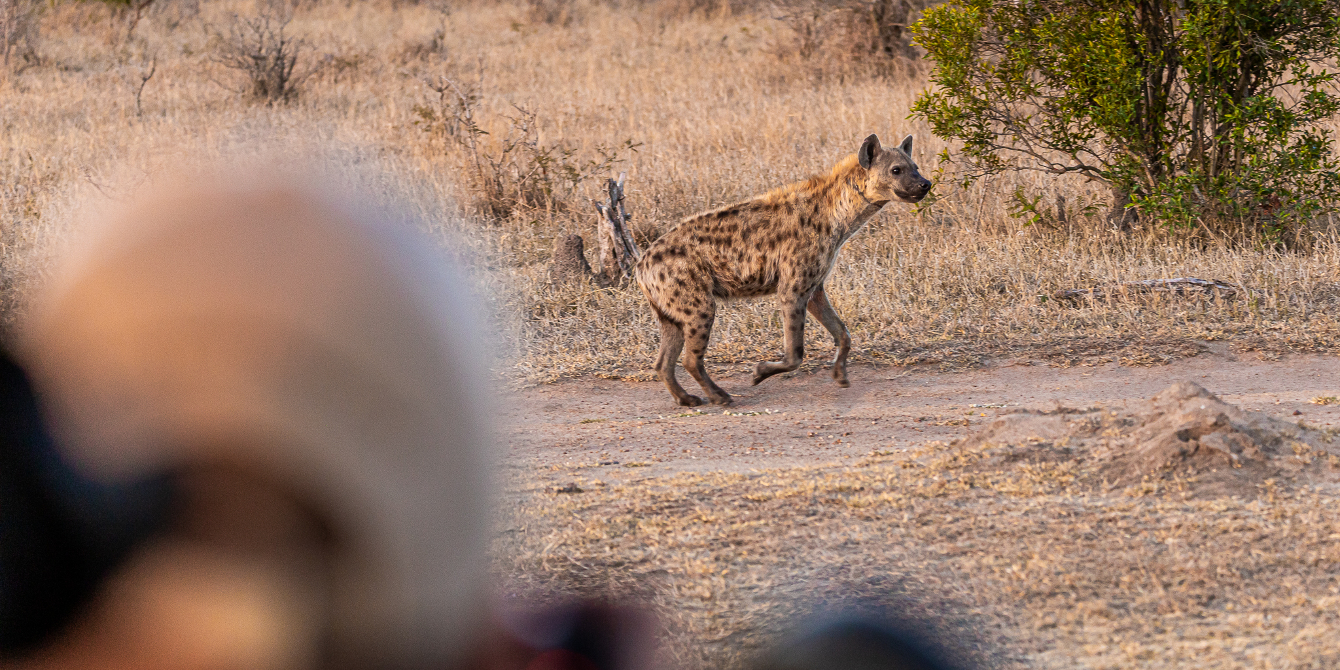
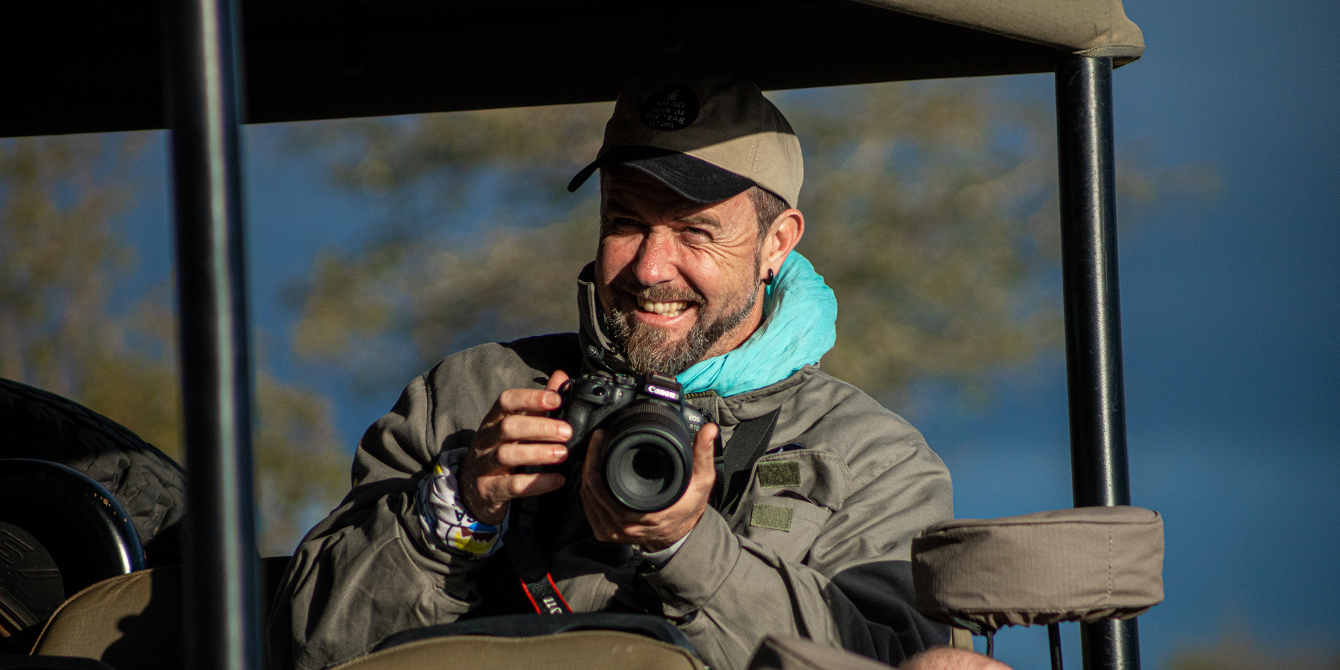
  • Through the viewfinder: wildlife photography

    This blog was written by Skye Ludbrook, Bushwise student at our Mahlahla campus. Skye has a keen interest in photography and is currently completing the IFGA Safari Guide Course 6/12 Months.

    3 min read

    Looking through the viewfinder on your camera is an incredible ability. It replicates taking a split second out of a moment and viewing it from a completely different perspective.

    The power of a camera

    image

    Wildlife and nature itself are overwhelming things to experience. Seeing how all the branches of life work together to create a sensational whole and being able to feel that sensation through a picture is beautiful. When making use of the artistic medium, you open up many doors in terms of making your game drive the best possible experience.

    Photography is a particularly important part of my life. It allows me to express emotions and experience through a visual source. When I look through my viewfinder I find an open space where I can encourage my creative side. Creativity is a vital aspect that all people should have in their lives.

    Wildlife photography in particular, is an exceptional way of sharing information to people all over the world. As a guide one of our roles is to play a part in the conservation of the natural environment. I feel that photography is the best way to reach out about conservation.

    image

    Not only can you revisit that experience, but you also feel this sense of extreme focus. Taking photos of the environment around you allows you to feel abundantly engaged with what surrounds you and your experience. Over time those pictures will hopefully spark a focus on moments in your life that you never really focused on.

    As a guide it is important to try and know a little bit about all the aspects that come with the job. Having an understanding of photography is one of them as it will increase the quality of your drive for both you and most importantly your guests.

    Why photography is a useful guiding skill

    image

    By knowing how photography works, you can be both a guide to people starting out as wildlife photographers and most importantly to your guests who are trying to capture memories of their life changing experience.

    You’ll be able to tell your guests what the best composition is for the image they want to take. You can guide them on the shutter speed (how fast or slow the shutter on your camera closes), the aperture they should set (the amount of focus the photo will show), and the ISO that should be used (this is dependent on the lighting you are in).

    Throughout your guiding career, you’ll learn and gain more experience. This time spent learning and growing your photographic skills will reflect positively on your photo outcomes and help you impart some of these skills to your guests.

    image

    By enriching their skills, you create an overall positive experience for them which they will carry with them for the rest of their lives. I look forward to seeing smiles on my future guests’ faces when they take an image they love.

    Capturing moments to last a lifetime

    image

    Wildlife photography can be as simple as sharing content you captured of amazing sightings or as important as sharing information about animals that are in danger and need saving. Our society absorbs information primarily through visual content. Using my abilities and passion for photography and the natural environment around me, motivates me to use it to my advantage.

    I love capturing moments and being able to share them with the inquisitive people that make up the world, and I hope you find your spark to make a difference through your viewfinder. If you need a little extra inspiration, consider applying for a Bushwise course and take your wildlife photography to the next level.

    Words by Skye Ludbrook, photos by Louise Pavid

    #lion #wildlife #gameranger #Birding #bushwise #fieldguide #safariguide #Exam #training #guidejobs #animals #apprenticefieldguide #safari #fieldguiding #gamedrive #guiding #fieldguidecourse #studying #fieldguides