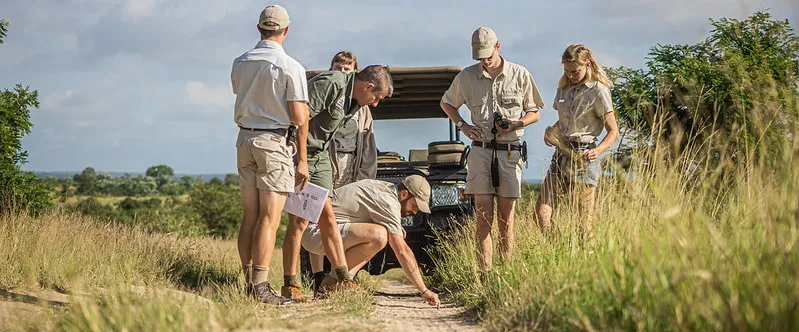
Author: Zaytoen Domingo

  • How did the zebra get its stripes? And other zebra facts and folklore

    Single-hoofed, black-and-white striped equids known as zebras can be found in the African bushveld. These beasts are closely related to horses and donkeys, but have an interesting story of their own. 

    Telling stories to your guests is an important part of your role as a field guide, so it’s a good idea to have some folklore in your repertoire. It’s also important to have some interesting facts up your sleeve.

    The most striking feature of the zebra is its dual-toned coat. Find out how the zebra got its stripes, other fun facts about zebras and why these zebra facts are good to know for field guides.

    Why do zebras have stripes?

    Some say zebras are white with black stripes. Others believe zebras are black with white stripes. 

    But did you know that zebras actually have black skin under their fur?

    The age-old question, “how did the zebra get its stripes?” is something you might have asked yourself the first time you learnt about these equids. 

    This story about zebra stripes comes from the San people from the Namibian Kalahari Desert. 

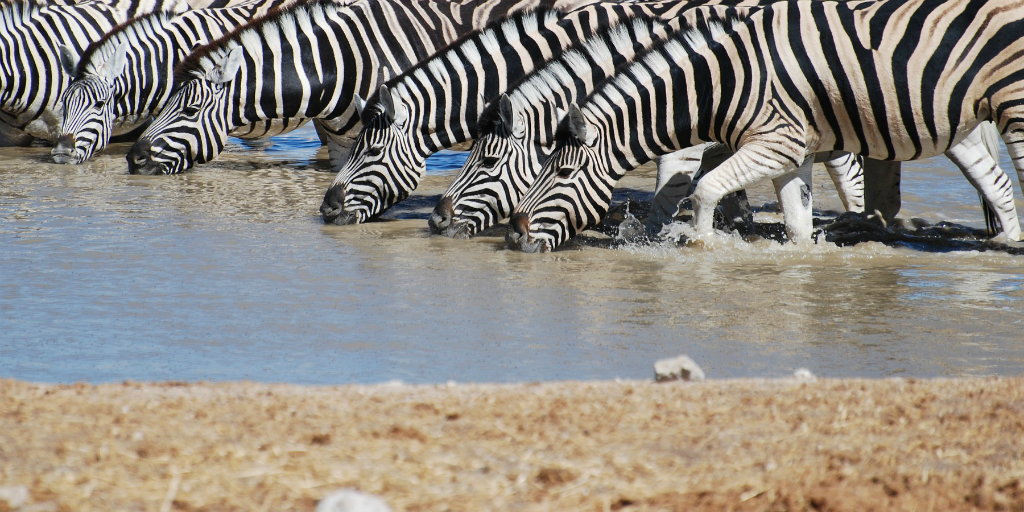
    A long time ago, Africa almost ran out of water because the sun was so hot that it dried up most of its water pools. Animals came from far and wide to drink from the few pools that were left. One day, a baboon sat making a fire next to one of the few remaining water pools that he ruled over and kept to himself. A young zebra and his father came from the grasslands in search of water to drink.
    image

    Original photo: “Zebra drinking” by Hilde Swets is licensed under CC BY 2.0

    When the baboon saw them approaching, he jumped up to guard his water pool with all his might and warned the zebras to stay away. The young zebra and the baboon got into a big argument.

    With a mighty kick, the young zebra sent the baboon flying into the air. He landed on his bottom, causing a patch of hair to fall out. 

    The young zebra, dizzy from the kick, stumbled into the fire next to the water pool. His white fur got scorched and left him with black stripes. 

    The zebra’s fur would never be plain white again.

    Scientists haven’t been able to determine the real-life origin of zebra stripes, so all we have is  folklore. As a field guide, you will share oral stories like this one with your guests on a safari drive.

    If there are kids joining their parents on the safari drive, you can play “Where’s Wally”. Instead of spotting the boy in the striped t-shirt, you can spot the animal with the striped coat.

    Let’s find out about some other zebra facts to add to your stories.

    What sound does a zebra make?

    Original video: “Zebra sounds” by  AlexTriceratops123 is licensed under CC0

    It may not come as a surprise that some zebras sound like horses. But it will surprise you that some zebras also sound like dogs, or people laughing, or even pigs.

    Sometimes zebras bark, bray, or snort, each with a high-pitched tone. Each sound has a different meaning — like saying hello or “get out of my personal space!”

    You can say hello to zebras every day as a field guide on a nature reserve.

    What do zebras eat?

    Zebras are herbivores and mainly eat grass. They also eat small bushes, twigs and leaves from trees that they can reach. 

    You probably wondered how many nutrients are in these simple plants? Almost none.

    Did you know that zebras have strong digestive systems, which helps them to live on diets with minimal nutrients?

    Where do zebras live?
    image

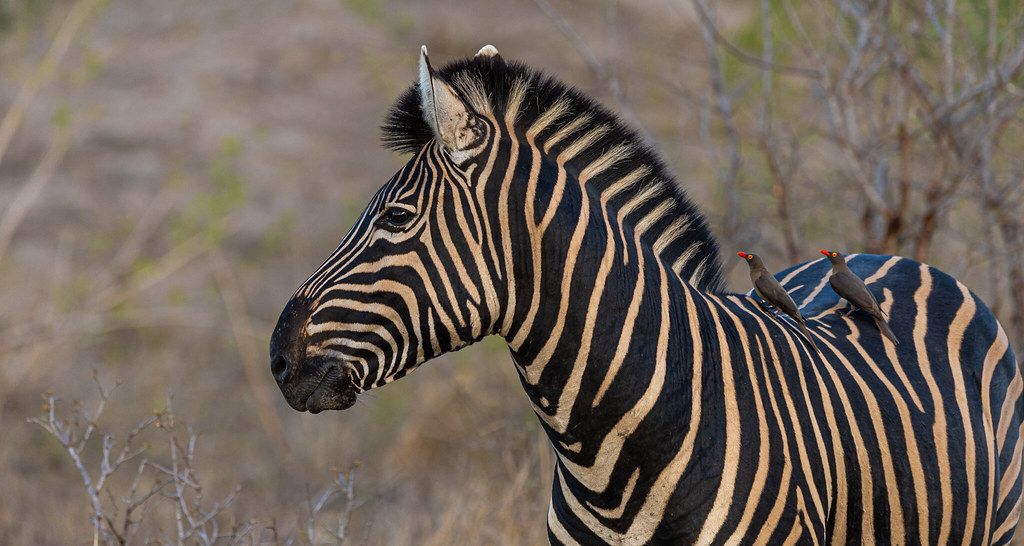
    Zebras are native to Africa. The zebra habitat is grasslands, some in the east and south parts of Africa. 

    A zebra species called the Grevy’s, can be found in Ethiopia and north of Kenya. Others are found on mountains, like in South Africa, Namibia, and Angola.

    Zebras can also be spotted in nature reserves where the species are conserved and protected. 

    Do you love wildlife like zebras and want to make an impact on wildlife conservation

    You can work with zebras and other wild animals. Join a field guiding course today.

    BY: Zaytoen Domingo
  • Is Pumba a common warthog?

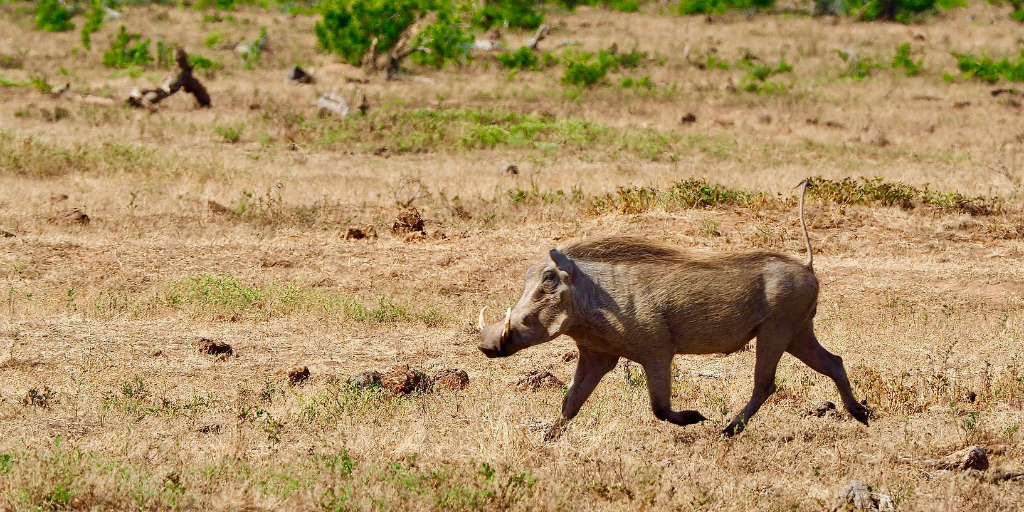
    Original photo: Warthog by Schwingi is licensed under CC BY 2.0

    BY: Zaytoen Domingo

    Everyone knows one of the most beloved Disney characters, the Lion King’s Pumba the warthog. But do we know how closely related he is to the real-life common warthog?

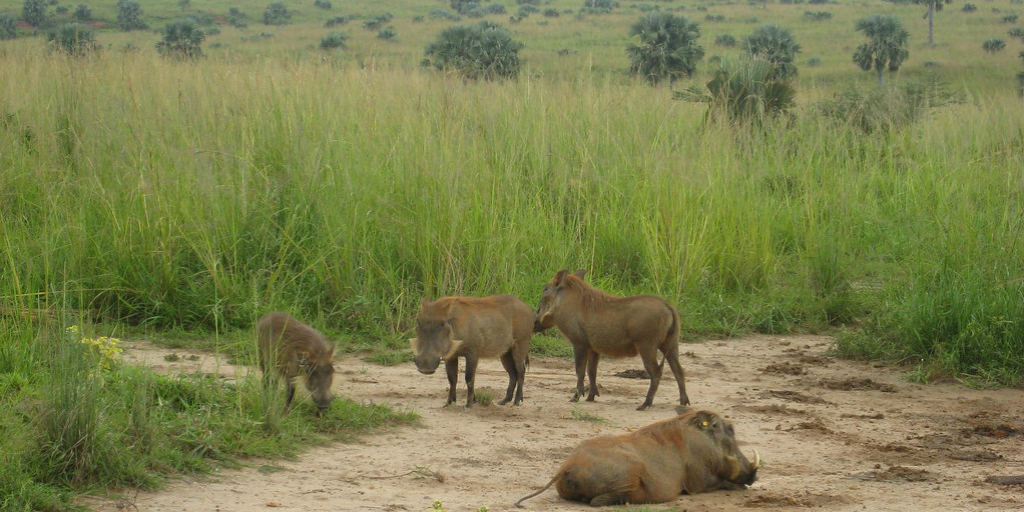
    The character of Pumba is based on a real-life species of warthog, the common warthog. You can find them in sub-Saharan Africa. Our fictional warthog does look similar to our sub-Saharan warthog, except that Pumba has a smoother, pixelated advantage over the scruffy look of his real-life common warthog inspiration.

    But what are some of the other similarities between Pumba and the common warthog we find out on the African plains? Let’s find out.

    What sounds do common warthogs make?

    image

    Original photo: Warthog South Africa by RightSaidFrodo is licensed under CC BY 2.0

    If you’ve watched the Lion King, you’ll be familiar with the singing version of a common warthog. But can real-life common warthogs sing? Let’s take a look at the first time Pumba appeared on screen.

    After falling asleep in an open plain, Simba is seconds away from being eaten by vultures when a speeding figure rushes onto the plain, scaring the vultures away.

    Is it a bird? Is it a plane? No, it’s a warthog.

    Audiences around the world share a sigh of relief at the sight of Pumba, with a meerkat perched on his head. And just when we think that the scene can’t get any better, Pumba starts to sing. 

    Hakuna Matata. 

    But what about the common warthog? Can this animal really sing?

    Well, according to the San Diego Zoo Global Library, the common warthog grunts, and will occasionally squeal or squeak.

    But, don’t be disappointed, because the library also notes that the common warthog can grunt rhythmically.

    So when you’re a field guide conducting a tour in the African bushveld, you might be lucky enough to hear the song-like grunting of the common warthog. 

    And hearing this music out in the field may just set you up with no worries for the rest of your days, as the song goes.

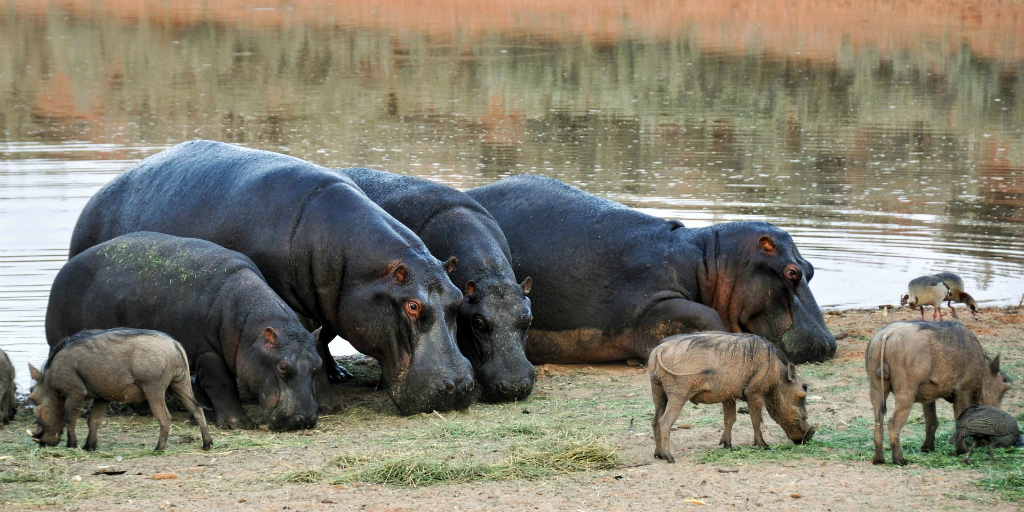
    Is the common warthog as friendly as Pumba?

    image

    Original photo: Hippopotamus by kolibri5 is licensed under CC BY 2.0

    In Swahili, “Pumba” means foolish or silly – a fitting name for our happy-go-lucky warthog. But, is the real common warthog just as friendly? 

    Well, even though the male common warthog lives a solitary life, while the females look after the young, when warthogs meet in the savannah, they greet by rubbing their faces together. It’s like a warthog-hug.

    And, during the scene of the Lion King where Pumba and Timon sang “The Lion Sleeps Tonight”, and Nala the lion jumped out to attack them, the common warthog would act just like Pumba did, avoiding a fight and fleeing instead.

    In fact, warthogs don’t often show aggression, except during mating season when the male common warthogs will fight one another.

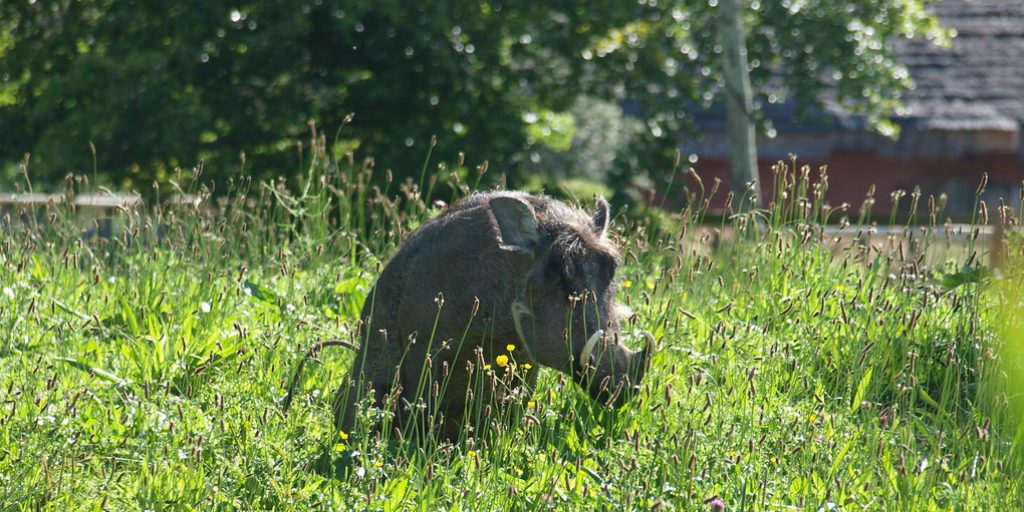
    Do common warthogs smell or is it just Pumba?

    image

    Original photo: Chester Zoo by Nigel Swales – 2 is licensed under CC BY-SA 2.0

    Pumba has a terrible odour, which is why he doesn’t have many friends, but he also has some bad manners, like farting way too much.

    Did you know that Pumba was the first Disney animated character to fart on television?

    There’s isn’t much evidence suggesting that the common warthog is as smelly as Pumba, or that it emits smelly gasses. So, being smelly may be a characteristic that’s unique to Pumba.

    Common warthogs and meerkats: can they be friends?

    One of the most famous fictional friendships in the world is the one between Timon and Pumba. In almost every scene in the movie, we see Timon riding on Pumba’s back, singing a song or two.

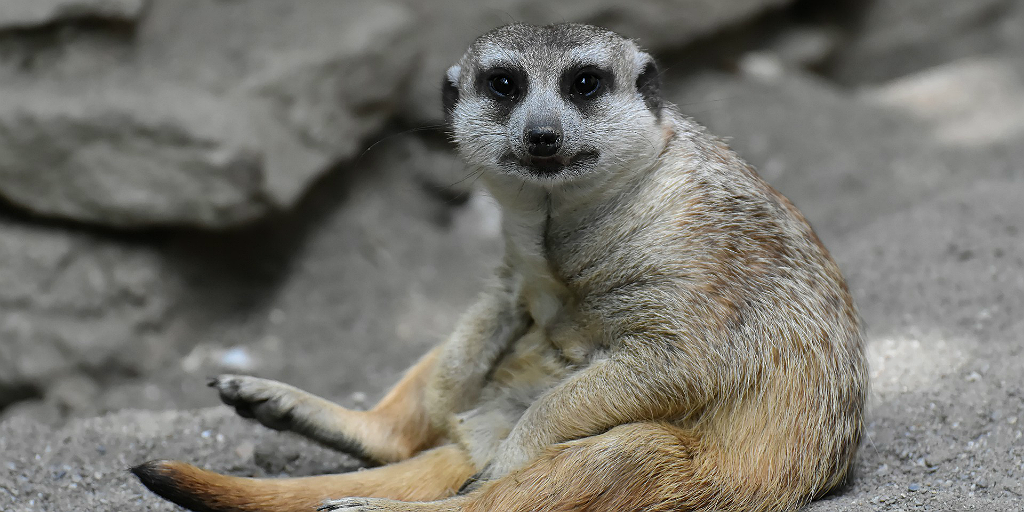
    Did you know that meerkats climb onto warthogs to feed on ticks and other parasites? So somewhere in Africa, there might actually be a Timon-and-Pumba friendship.

    image

    Original photo: Meerkat by Alexas_Fotos is licensed under CC BY 2.0

    Would a common warthog adopt a lion cub?

    When Simba meets Timon and Pumba after Pumba saves him from the vultures, audiences experience hope for the lion cub. 

    The first thing Pumba asks Timon once he realises that Simba is only a cub, is “Can we keep him? Can we please keep him? Oh, I promise I’ll walk him every day. If he makes a little mess, I’ll clean it up!” 

    And so Simba enters a new way of life, away from his home at Pride Rock. We see Simba grow up with Timon and Pumba as they teach him new songs and melodies. 

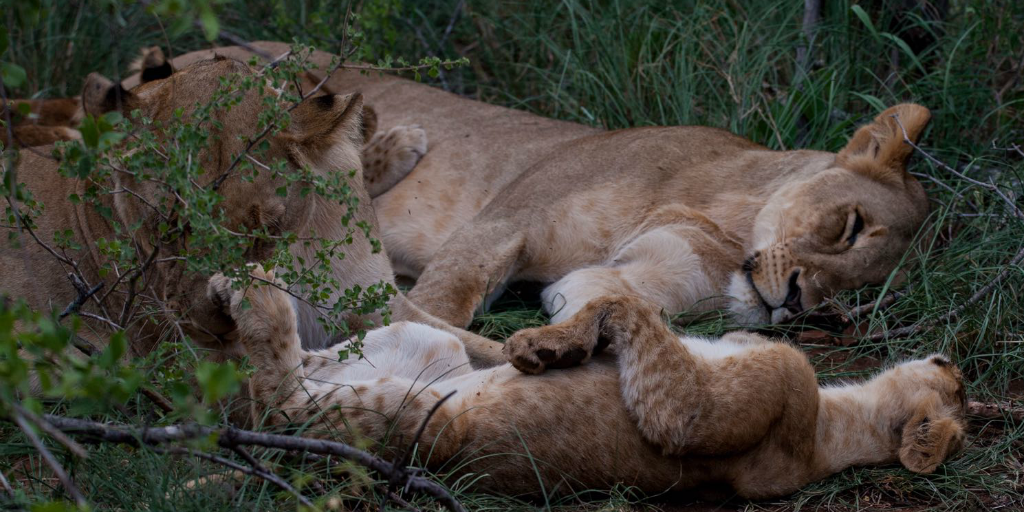
    Simba and Pumba form a sweet surrogate father-and-son bond that may leave you wondering if this bond could overcome the real-life nature of a predator-and-prey relationship.

    Well, when Timon responds to Pumba saying, “You’ll be his little mess. He’s gonna eat you and use my body as a toothpick,” he gives us a good idea of what might actually happen if a warthog got too close to a lion in real life. 

    So, is Pumba a common warthog after all? Pumba is definitely a common warthog, but with a fictional flair.

    How did the common warthog get its name?

    image

    Original photo: Warthog Safari by Elleithyia is licensed under CC BY 2.0

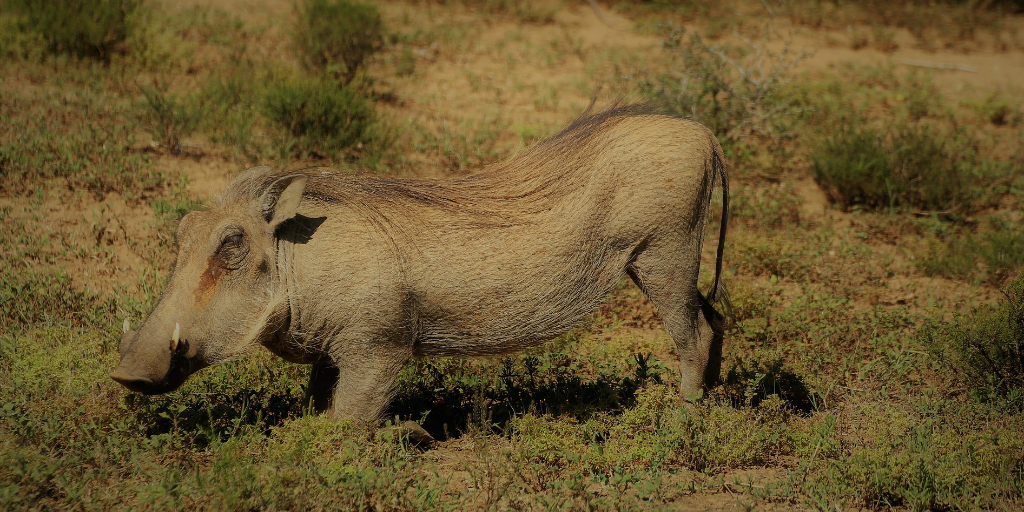
    The common warthog earned its name from its protruding wart-like glands on its face. But the glands are actually not warts.

    They’re just growths of skin that help identify male from female common warthogs. Female common warthogs have two small protrusions below their eyes, while the males have four big ones.

    The growths also help with protection. But how?

    Well, female common warthogs are nurturers and tend not to get into fights with other animals. As we mentioned earlier, male common warthogs will flee from predators, but they’ll get into fights with one another over their mating partners.

    They fight by charging towards one another and ramming into each other’s faces. Their growths act like padding to protect them. 

    The common warthog population in Africa

    image

    Original photo: paraa_70 by jnissa is licensed under CC BY 2.0

    The common warthog is listed as “least concern” on the IUCN Red List of Threatened Species, but the population is decreasing. 

    Threats to the common warthog species include natural disasters like droughts, and human threats, like hunting. Warthogs are often victims of trophy hunting.

    Trophy hunting is when wild animals are killed for sport, and the animal’s head or other body part is kept as a souvenir or trophy. 

    The common warthog, like all other wild animals, is important to wildlife ecosystems. By becoming a field guide, you can help with the conservation of wild animals.

    Learn more common warthog facts and facts about other wildlife. And to gain a deeper understanding of wildlife and ecosystems, see how you can become a field guide.

  • A day in the life of a field guide

    Have you ever wondered what a wildlife professional does in a day’s work? Let’s talk about a day in the life of a field guide.

    A field guide is a specialised person who conducts tours for people visiting nature reserves. A field guide’s job is to teach visitors about natural environments, the wildlife that inhabits them, and how to interact with the environment.

    Waking up as a field guide

    Your day will start with the crisp notes of the African bushveld birds filling the morning air with melodies before sunrise. Your first duty for the day is to prepare the padkos.  “Padkos” is a South African term for packed food. It is a most beloved necessity when embarking on a journey. 

    The first item on the list is to pack the hot box. A hot box is a flask of hot water for coffee and tea.

    You’ll pack a few snacks to accompany the hot beverages. Some must-haves include Ouma Rusks — traditional South African biscuits made from buttermilk — nuts, fruit, and anything else you love to eat.

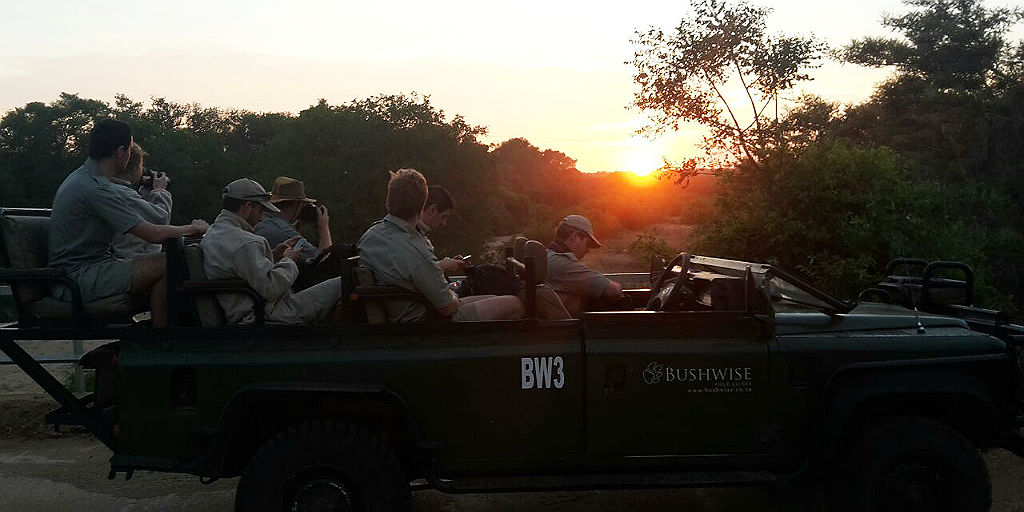
    Then it’s time to pick up the eager guests with your safari drive vehicle. Once everyone is seated safely, you’re ready to set off for the wildlife reserves.

    image

    The safari drive to the nature reserve

    A good way to start the safari drive with the guests is to introduce yourself and exchange names with everyone before you take off. Once you’re all comfortable, you’ll start engaging in the itinerary for the day. 

    Before starting the vehicle, make sure the guests are seated safely. Next, you will usually explain the route that you’ll be taking and mention some key points for safety.  “Out in the safari, you will spot the famous Big Five — the lion, leopard, rhinoceros, elephant, and buffalo. But first, we need you to sit back and stay seated at all times.”

    The journey begins. 

    During the safari drive around the nature reserve, you will talk about plants and animals that the guests can expect to encounter. For example, if you’re based at the Addo Elephant National Park, you might say: “We will be taking the Nyathi route past the fever tree forest. On your left you will spot the Sabi pride. The fever tree forest is also home to a nesting pair of paradise flycatchers, so keep an eye out.”

    Keep the information fun and lighthearted. The guests’ experience will determine your success as a guide, so make sure your guiding makes them feel as passionate as you do about nature.

    image

    At the nature reserve

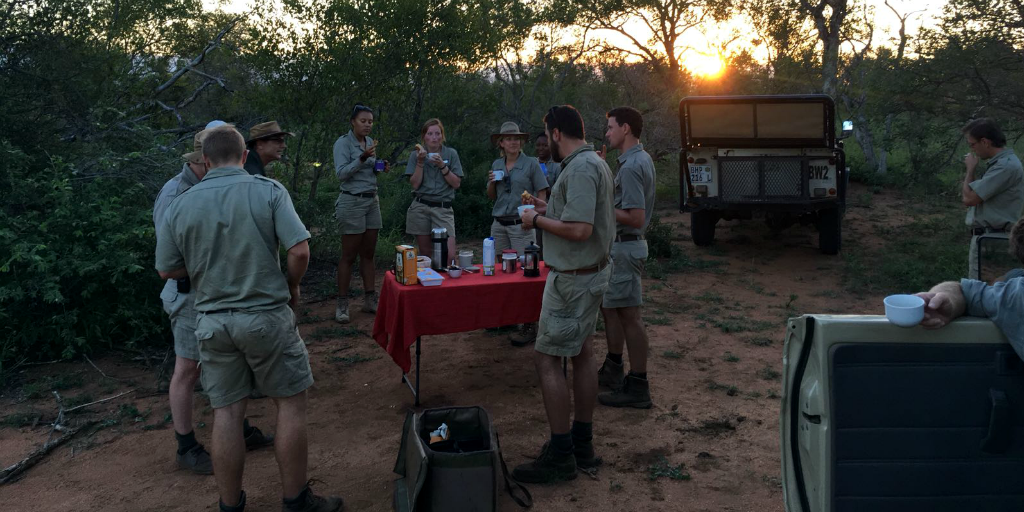
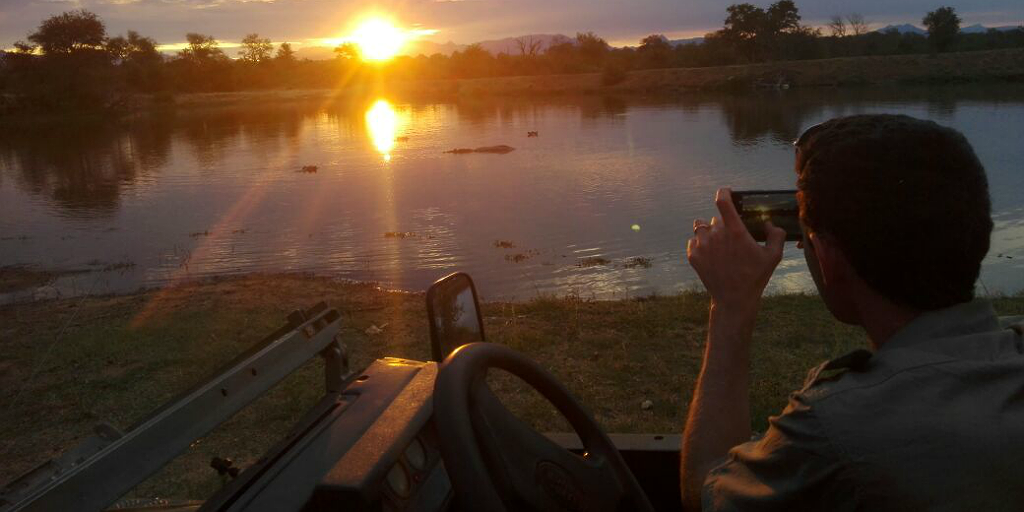
    Find a phuza stop — a traditional Zulu term for “drink”. Unpack the snack box and share a cup of coffee with your guests while breathing in the sunrise. Get to know your guests while helping them to get to know nature. What better way to soak up the morning sun?

    You should also inform guests about the cultural importance and history of the places you cover. This adds to the experience of the trip by allowing the guests to connect to nature and its significance.

    Most field guides don’t have to do data collection, unless you are employed as a researcher. For example, GVI, a sustainable development organisation and partner of Bushwise, runs a wildlife research expedition in Limpopo, South Africa. Collecting data on plants and animals in wildlife reserves provides valuable information for conservationists. It assists them in tracking, understanding, and protecting the animals.

    image

    Going back to the base camp

    It’s time to drive back to the lodge where guests can enjoy a meal. A traditional South African meal might be a braai—an Afrikaans word for “barbecue”.

    You can use this time to plan your next safari drive for the second group of guests in the afternoon. The itinerary for the afternoon safari drive should be the same as the morning safari drive, but maybe this time you can pack a different snack box. 

    An afternoon snack box might include more savoury snacks like biltong — dried, cured meat — and a few sundowners. Embark on the safari drive, talk to your guests and find a phuza stop to enjoy the sunset. 

    Some of your guests are from Sweden and have never seen an African buffalo. When you come across one, the guests are noticeably amazed and have tons of questions.

    This is your chance to test your hand at some fun storytelling.  “The African buffalo loves swimming and bathing in rivers. When you dip your toes in a river in Africa, be sure to do so after the buffalo bathing time at midday.” Or, “Have you noticed that the horns of the African buffalo look like question marks? They must be very inquisitive beasts!”

    After all, storytelling is vital to the field guiding experience.

    Back at the lodge, you might want to join the guests for dinner. This is a good time for guests and field guides to come together and share some stories, before you go off to prepare the itinerary for the next day. Find a relaxing spot outside the lodge and share drinks under Orion’s belt. Don’t forget to make a wish if you see a shooting star.

    image

    How can I become a field guide?

    Bushwise offers a range of wildlife courses to help you start your field guiding career. All courses are CATHSEETA and IFGA accredited.

    The best thing about Bushwise is a guaranteed job offer for South African students within six months of completing select 6/12 month courses. You’ll get to learn and practise in the places you might end up being based in.

    Become a field guide and find out what your day would be like.

  • How the fever tree got its name

    Original photo: “Serengeti 24”by Abeeeer is licensed under CC BY 2.0.

    BY: Zaytoen Domingo

    Once upon a time, a storm raged fiercely above the Atlantic Ocean. And on this ocean was a ship. Meanwhile, in Africa, the tall fever tree tightened its armoured roots in the soil. And so the scene is set for a heroic African tale. 

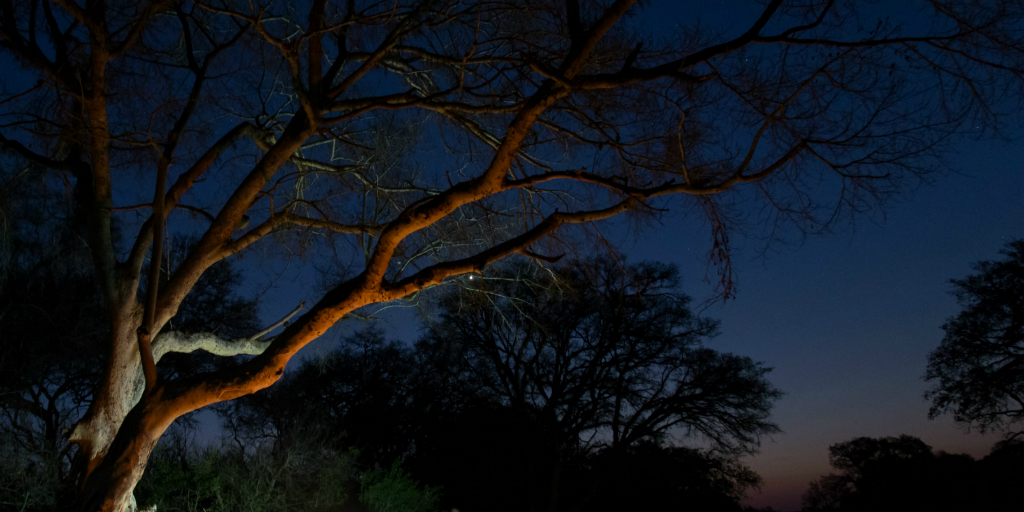
    Deep in the swamps of Africa grow the tall fever trees. The trees have golden bark with a powdery residue and a secret green bark, too beautiful to be revealed, hidden underneath.

    The fever trees had many secrets. The most famous one was its hidden mosquitoes.

    Mosquitoes and colonisation

    image

    Original photo: “mosquito”by Bob A Fox is licensed under CC BY 2.0 

    Africa was a land rich in resources that the rest of the world wanted to get their hands on. Colonisers came from far and wide to Africa for her resources like gold and ivory.

    They came in large ships, and docked on Africa’s coastline. Without any maps, they needed to find a way to navigate through the foreign land and back to their ships without getting lost.

    So, they decided to trek along Africa’s shining rivers and through the villages that lived nearby. When they reached the villages, the colonisers captured Africa’s people and enslaved them.

    The African people were so deeply connected to the land that Africa became enraged at the trespassers for ill-treating them. When the trespassers moved back along the rivers to get to their boats, they began to fall ill with severe fevers.

    image

    They had no clue what was happening to them, but all they knew was that many of them fell ill at the feet of the tall trees alongside the riverbanks. The colonisers began to fear the trees that made them so ill and named them “fever trees”.

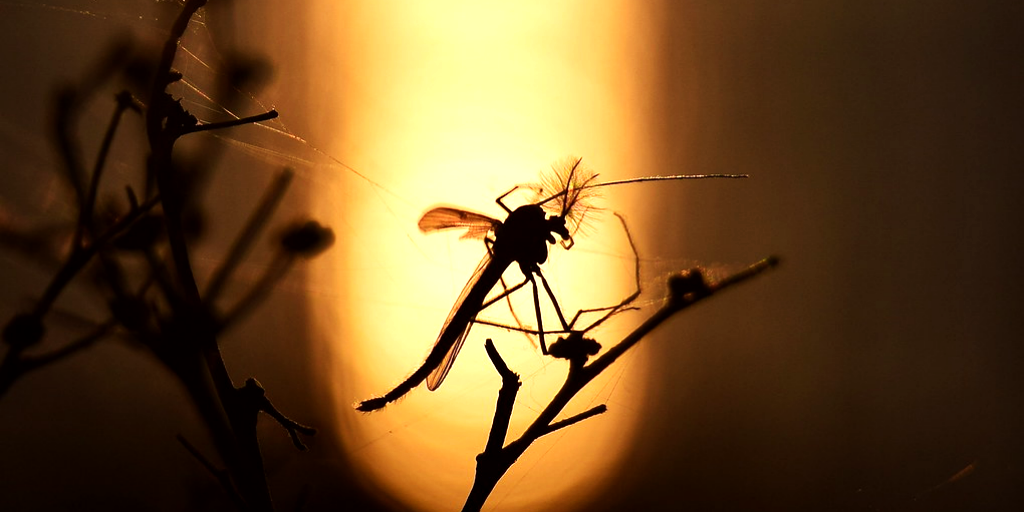
    Little did they know that there were tiny mosquitoes that lived around the river where the trees grew. The mosquitoes defended Africa’s people and her resources by biting into the skin of the colonisers.

    They transferred a deadly disease that would later be known as malaria.

    African mythical stories are the heart of field guiding

    image

    You can learn more about the African fever tree and how to retell African mythical stories with your own flair by becoming a IFGA safari guide. As a field guide, part of your job is taking guests from all around the world on safari adventures, and sharing stories, such as the story of the African fever tree. 

    When guests ask you questions, take the opportunity to share the mythology of the bush, and create vivid details from your own imagination to give the story life. This is especially fun when you tell guests about animals they don’t see back home.

    The kudu, for example, is only found in Africa. Your guests have never seen a majestic animal like this one before. Tell them how the Zulu people used the kudu horn to make music when they prayed.  

    image

    After all, storytelling is essential to field guiding. 

    If you are really passionate about wildlife stories and are keen to share this with others, you can become a safari field guide or a trail field guide. Whether you drive out on a safari or walk a trail, you will lead guests on an adventure of a lifetime with the stories you tell.

    Become a field guide and create your own African tales, and learn more about the best mythical stories in Africa by joining a program to become a skilled researcher or field guide.