Tag: #bushwisestudent

  • Luxembourg to the Lowveld – My Field Guide Journey

    This blog was written by Mara Belacchi, a Bushwise Professional Safari Guide student. Each student takes a turn as camp manager, and writing a blog is part of the experience.

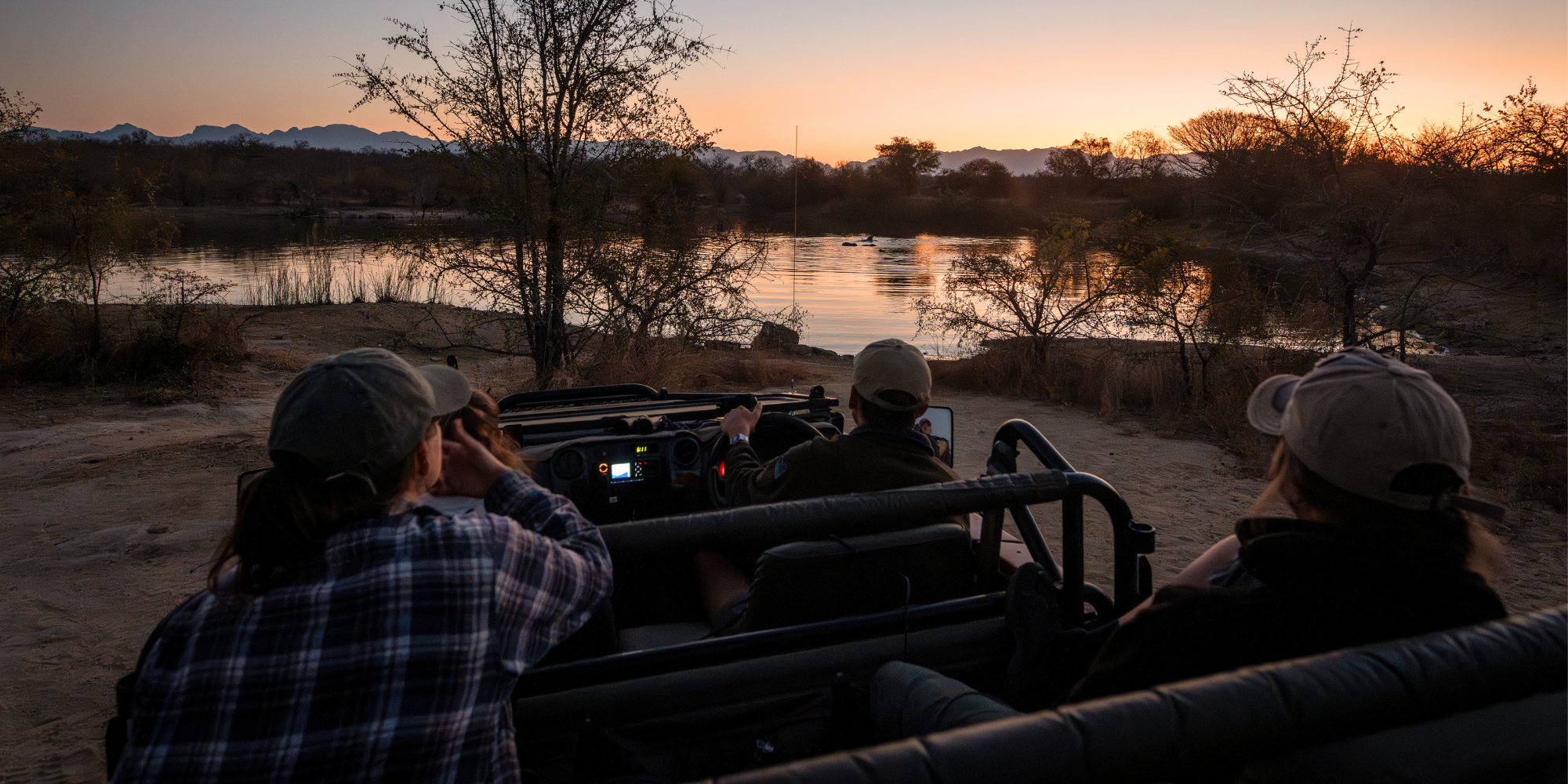
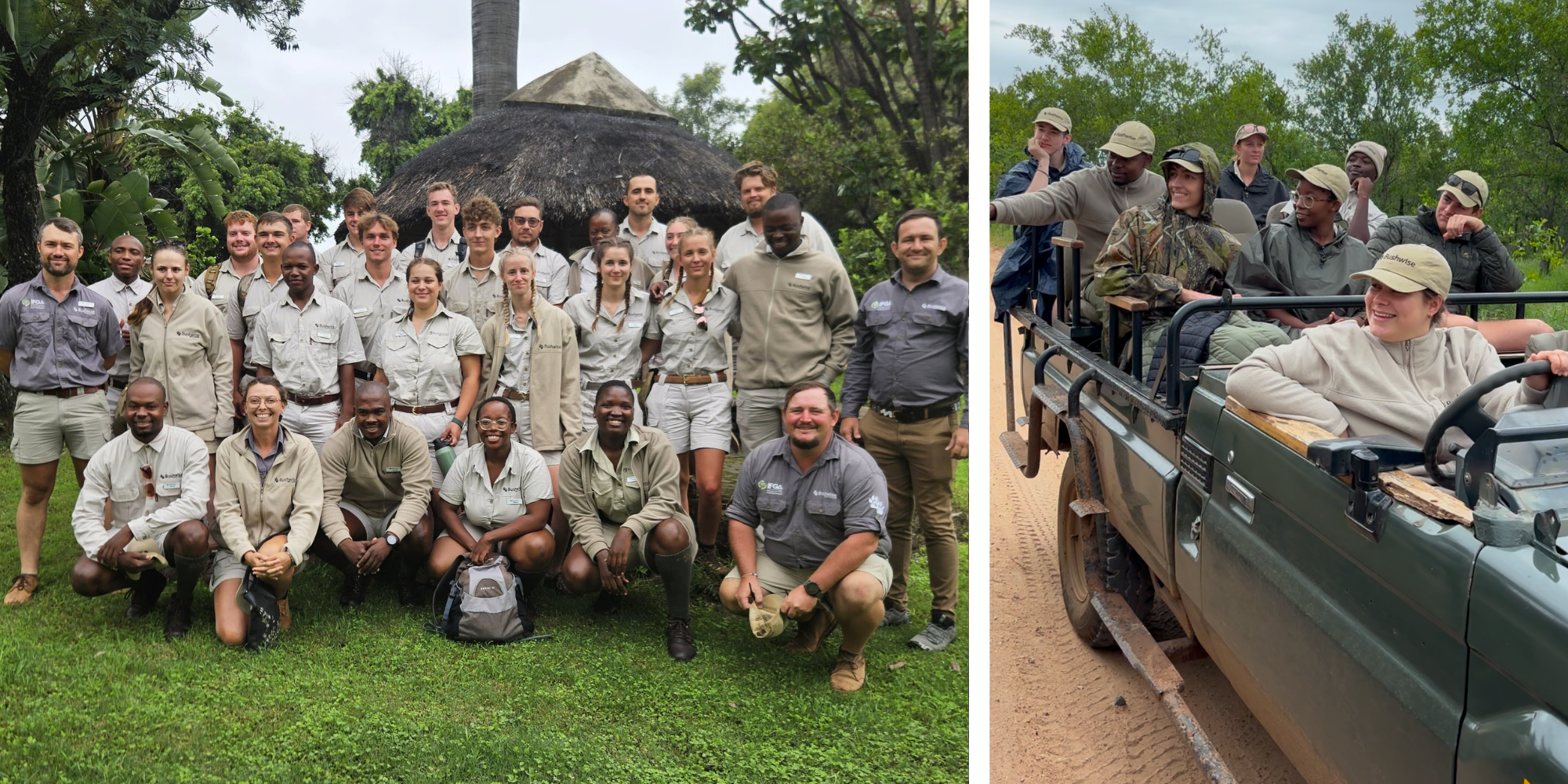
    Almost five years ago, I decided to become a field guide. At the time, I was camping in the Serengeti National Park as part of an overland journey from Kenya to South Africa, traveling with a group of strangers who, over time, became close friends. That night, under a sky so full of stars, we sat around the fire, reflecting on the last few days of game drives in the Serengeti and the Ngorongoro Crater. 

    As we shared our thoughts, one of the travelers told us something that changed my life. He mentioned that he had completed a 60-day field guide training course, IFGA Professional Safari Guide Short course (2 months), and was now a qualified safari guide. Until that moment, I hadn’t even known that such a career path existed. I was fascinated. The idea of living and working in the African bush, of spending every day surrounded by nature and wildlife, immediately took hold of me. He gave me an email address, and after a few exchanges back and forth, I was introduced to Bushwise. That was the day I decided that I would become a field guide.
    image

    At the time, I was just 20 years old and had only recently finished school. I decided to go to university first, but from that moment on, there wasn’t a single day – truly, not one – where I didn’t think about this dream. I followed Bushwise on every platform, read every post, watched every video, and counted the days until I could finally be here. And now, here I am.

    The first four weeks of my 6-month training have felt like a dream. A dream I finally get to

    live, and one I never want to wake up from. Every part of the training feels right – whether

    it’s attending lectures, practicing my driving skills, memorising plant species, or heading

    out on game drives. My heart has never been this full, and my mind has never been this

    at peace.
    image

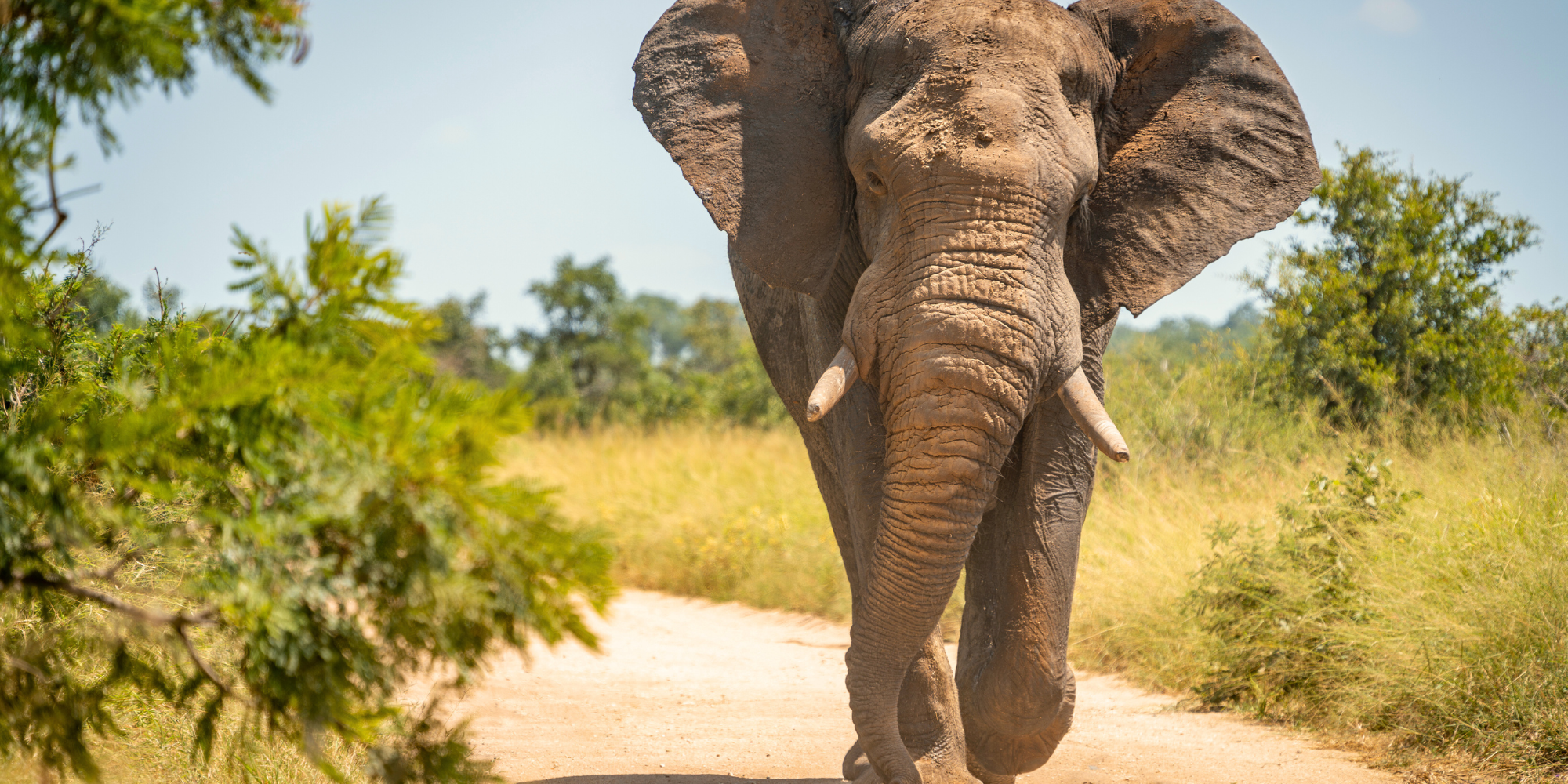
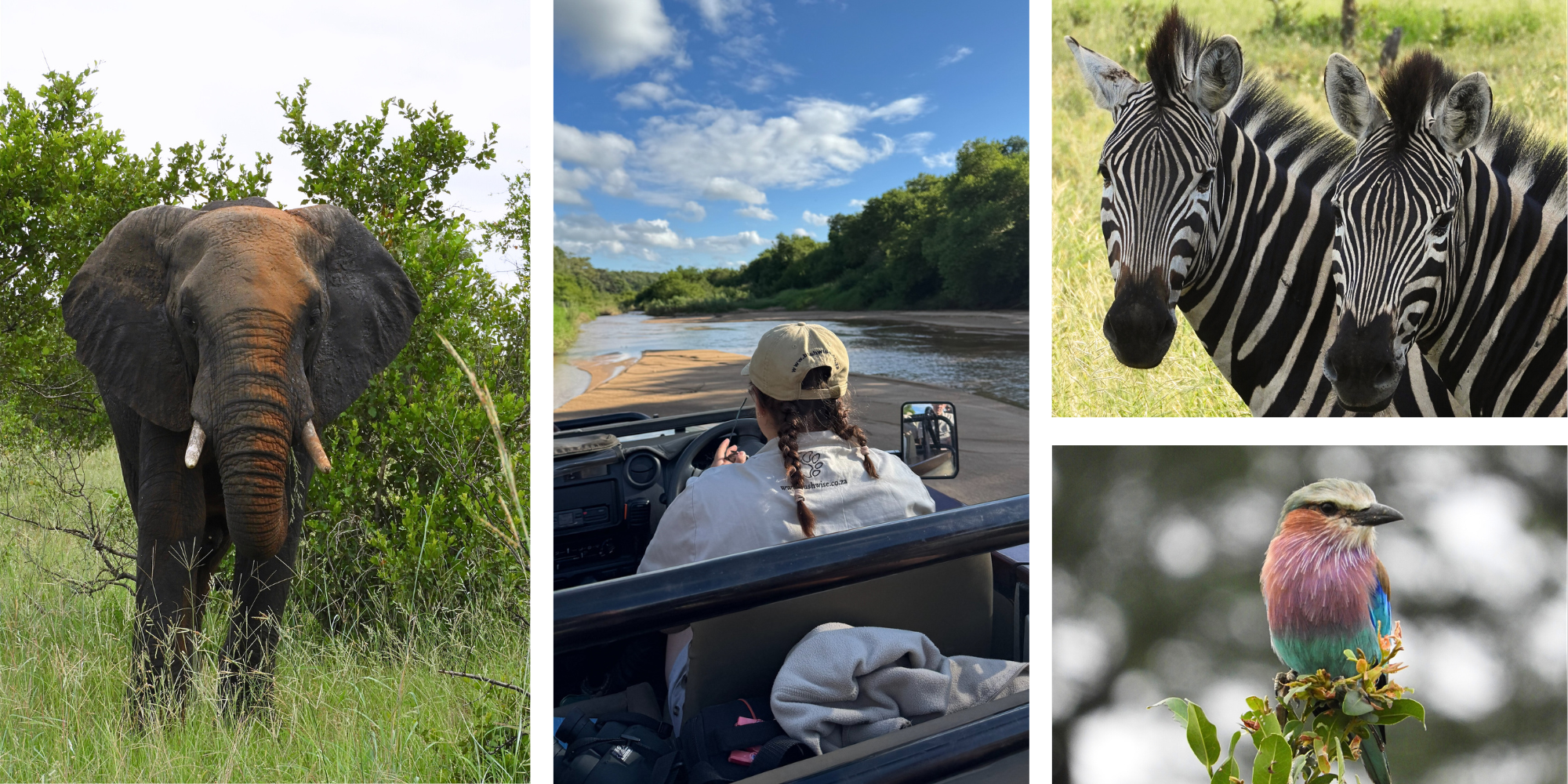
    It’s not just the big moments, like watching elephants calmly pass by or the thrill of

    navigating the game viewer across rivers, that make this experience so incredible. It’s

    the small, everyday moments that truly bring it to life. Starting to recognize plants and

    trees, excitedly shouting “Knob Thorn!” every time we pass one. The growing instinct to

    identify birds by their calls alone. Learning to identify birds, ticking new species off my

    list, and slowly becoming a birder. These are the moments that make this experience so

    special. The small victories, the quiet realizations, the growing connection to the bush.

    Every day, it feels more like home.

    Now, an exciting break lies ahead – our first off-week. A few of the girls from my campus

    and I are heading to the very north of Kruger National Park, a region known for its

    incredible birdlife. While taking a break from training will be strange, the thought of

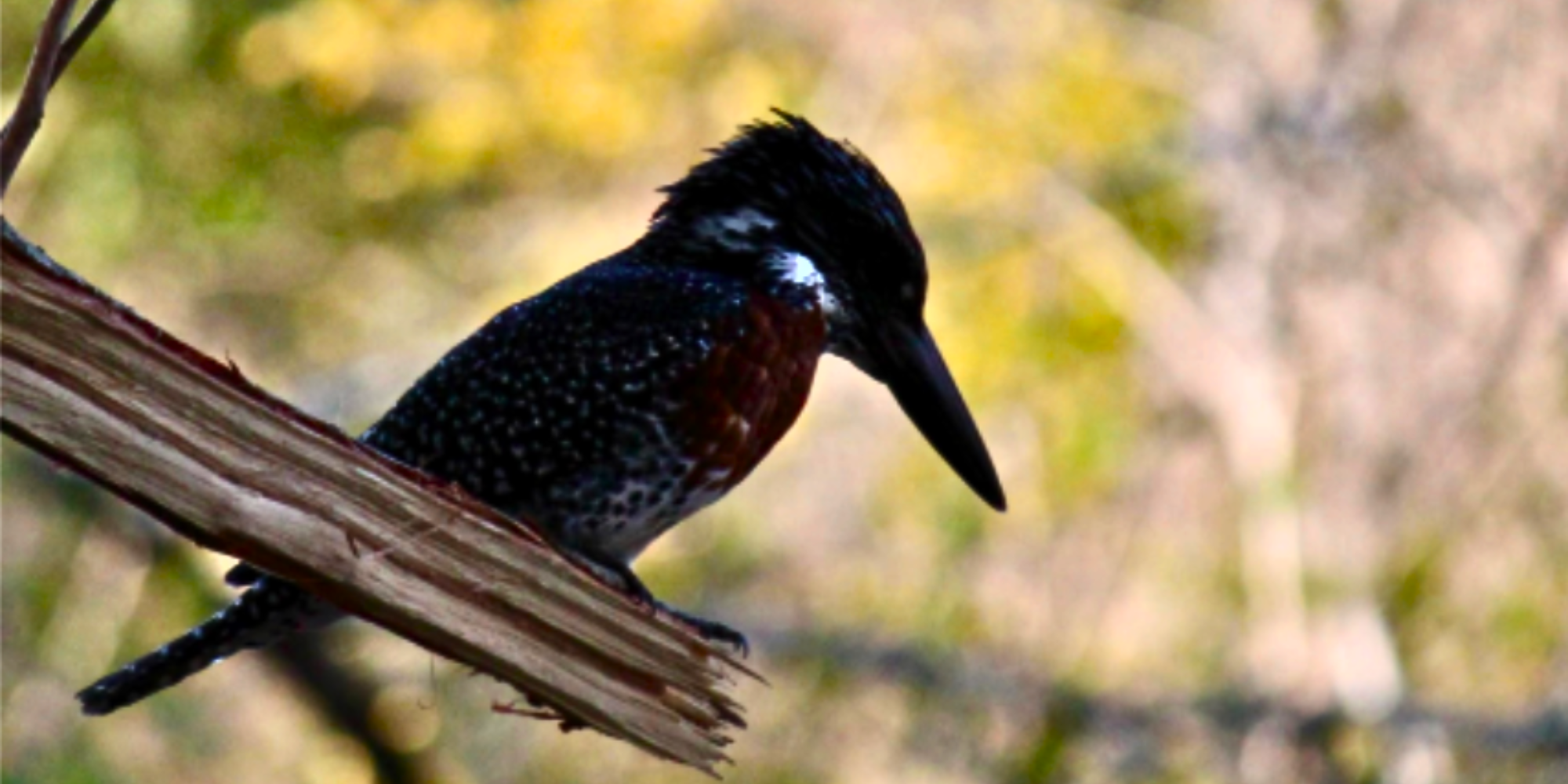
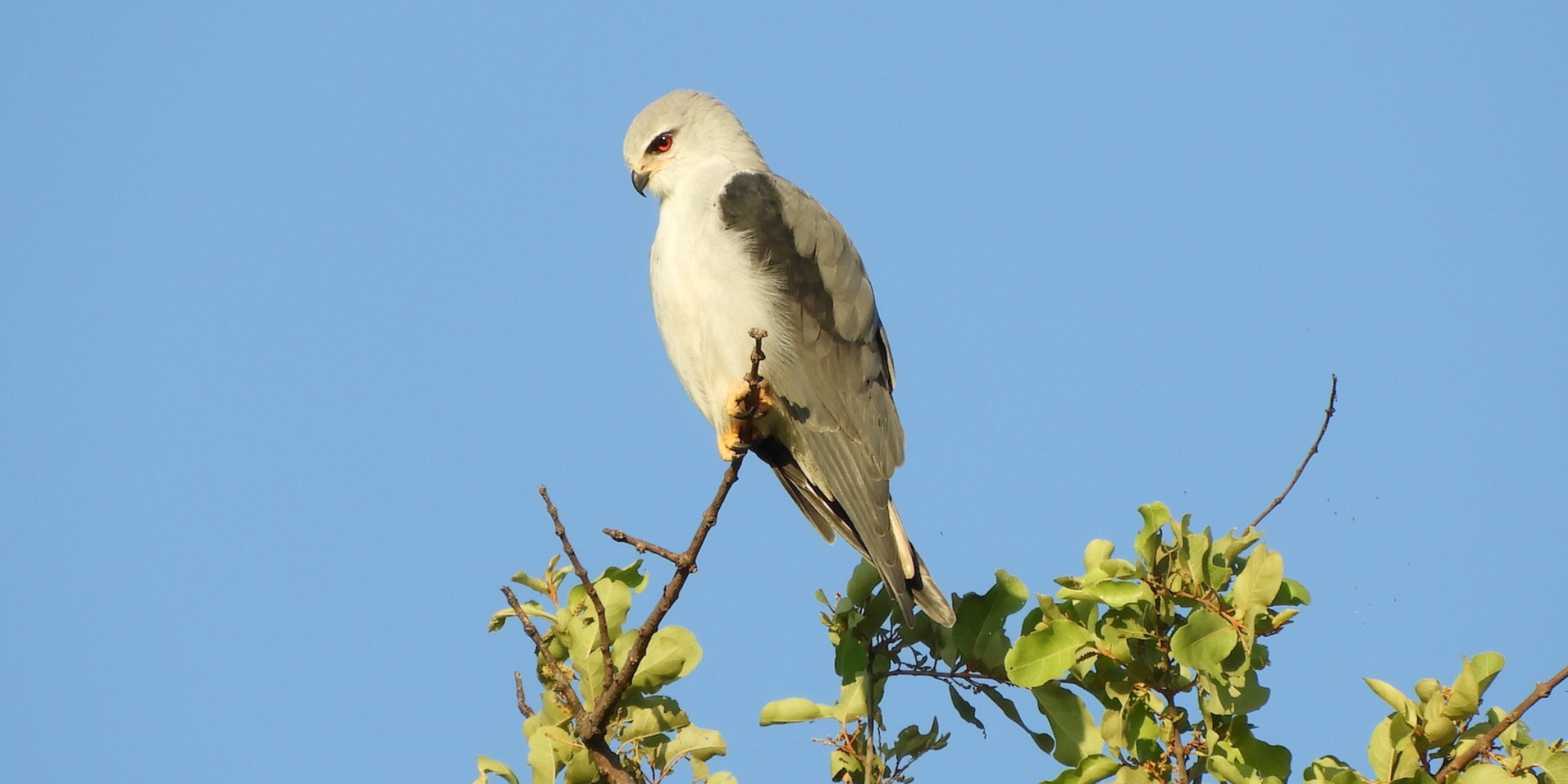
    exploring a new part of the bush with new friends makes it exciting. Of course, I have a small but important mission: to find and identify birds we haven’t seen yet. The Giant Kingfisher, in particular, has been on my mind, and I’m determined to finally tick it off my list.
    image

    Every day here reaffirms that I am exactly where I am meant to be. The road to get here

    wasn’t always easy – it took patience, determination, and years of waiting – but it was

    worth every second.

    Five years ago, I sat under the Serengeti sky, dreaming of this life. Now, I wake up every

    morning, step outside, and realize that I am living it.

    I wouldn’t trade it for anything.

    Ready to start your journey as a field guide? Explore Bushwise courses and apply now to become a qualified guide!
  • What can an expert guide learn from Bushwise? This is Daniel’s story

    Daniel Razafimandimby, an experienced tour guide from Madagascar, recently travelled to South Africa to join the Bushwise IFGA Professional Safari Guide Course (2 months). His goal? To enhance his skills, deepen his knowledge, and bring these insights back to inspire and elevate guiding standards in his home country. This is his story.

    With a career spanning more than 20 years, it’s safe to say Madagascan tour guide Daniel Razafimandimby is an expert in his field. Though he giggles as he recalls being completely stumped by Bushwise’s Track & Sign module during his first week in South Africa. 

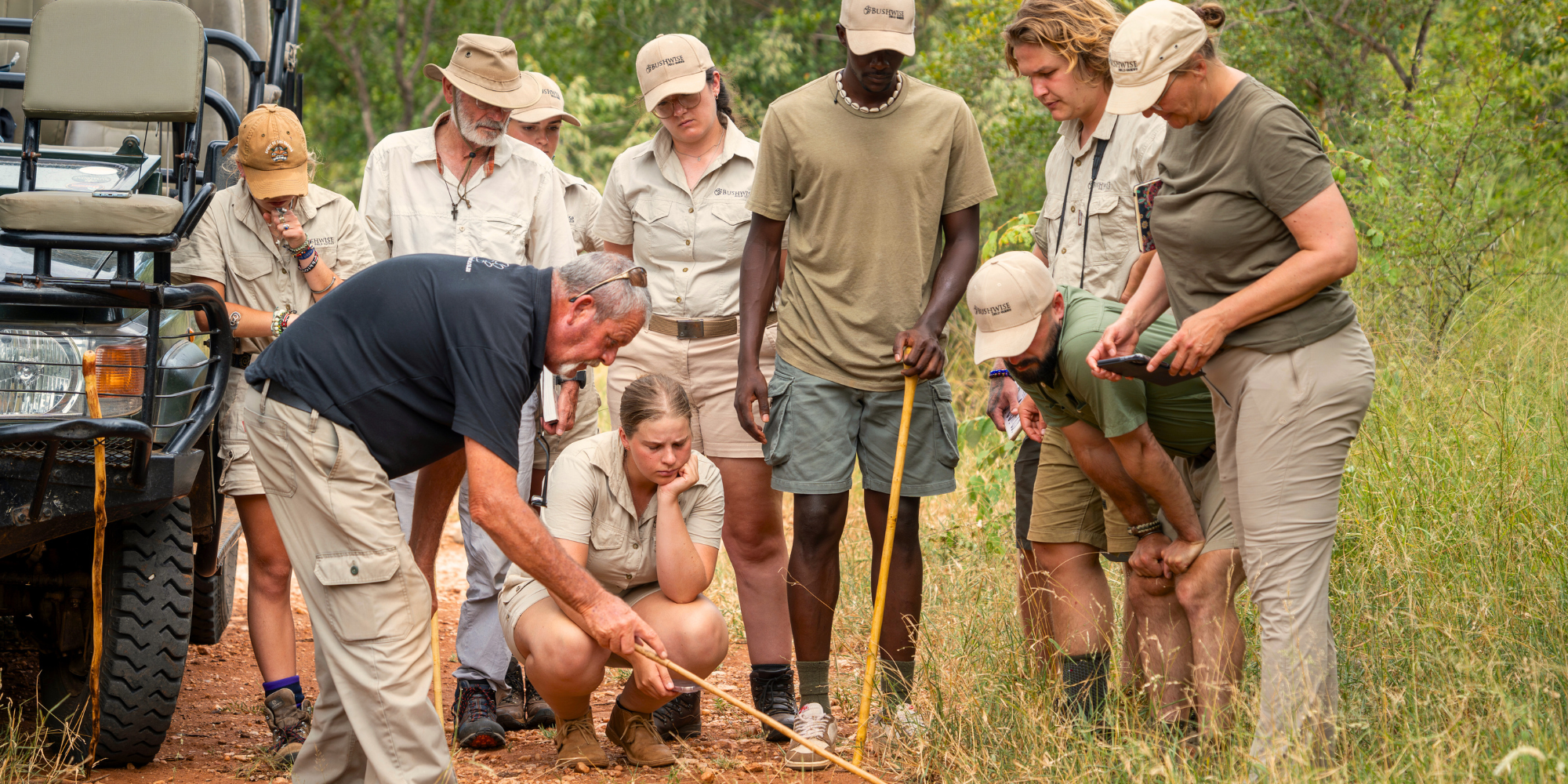
    “Nobody explained to me about the tracks and signs,” he laughs as we connect via Zoom. “And then I thought, what were they doing? When the instructors stopped and explained about the toes, about the lobes [animal tracks in the sand], what were they doing?” 

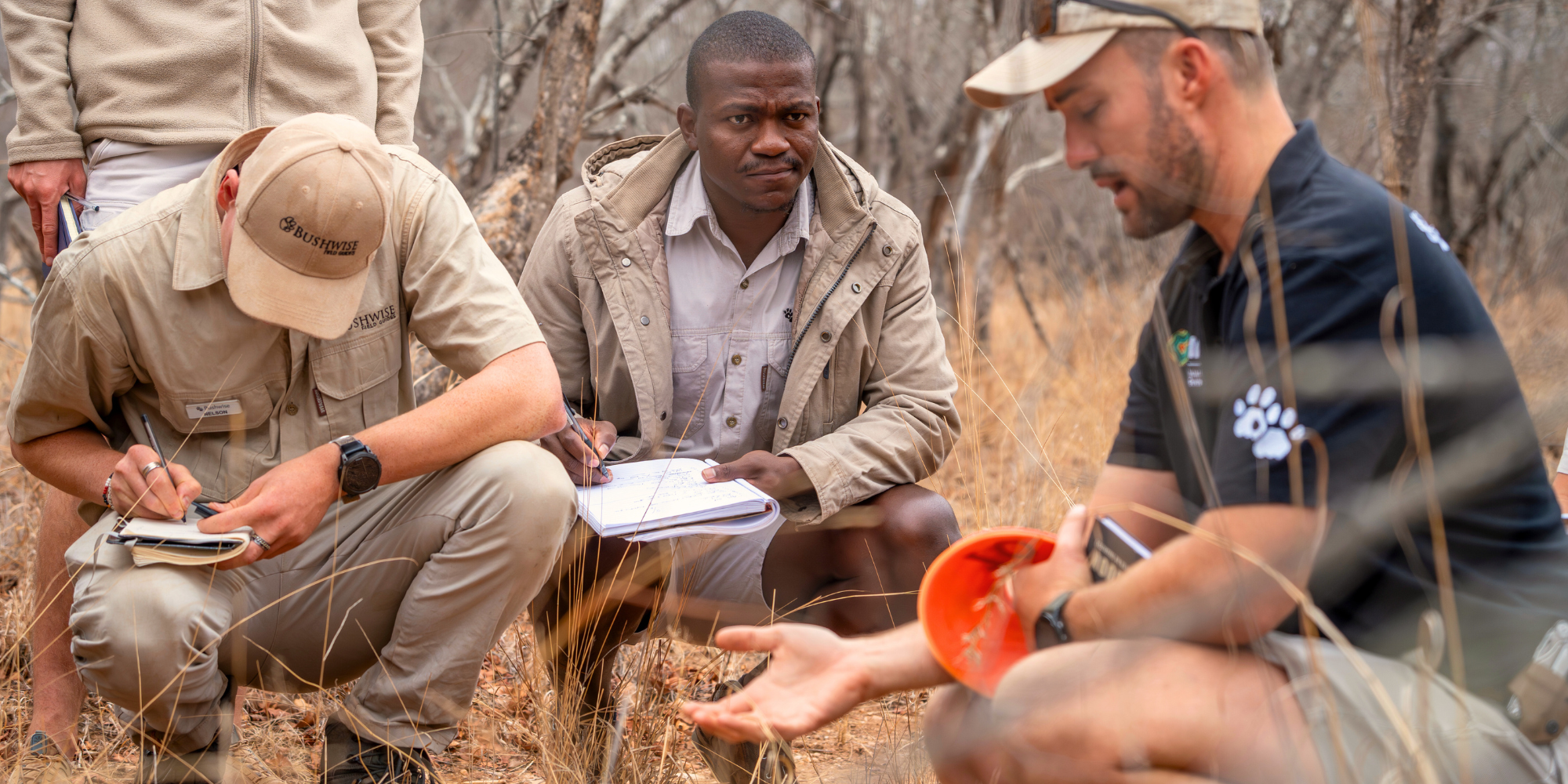
    Fueled by curiosity and encouraged by his fellow students, Daniel referred to his course material, quickly working to understand tracks and signs and other essential guiding skills. And so began his 2-month journey as a Bushwise student in the South African savannah. 

    image

    “I think the best way to describe the 2-month IFGA Professional Safari Guide Course is to say it’s an ‘experience of a lifetime’,” says accomplished Bushwise trainer Andrew Kirton. This high-level course, backed by the International Field Guides Association (IFGA), is perfect to get students ready for the guiding industry. “It takes a lot of hard work from the trainers, but even more so from the students,” he adds. 

    The Bushwise IFGA Professional Safari Guide Course (2 months) consists of 17 modules including ecology, botany, astronomy, arthropods, taxonomy and more. Students also participate in daily game drives, learning to operate viewing vehicles, track animals, identify bird calls and distinguish between different flora. “The modules are the foundation of what a guide should know,” says Andrew. 

    And while courses like astronomy were introduced to Daniel in Madagascar, he praises the comprehensive approach Bushwise implements.

    “Here [we’re equipped with] a practical way to combine everything. Especially the practice drives helped a lot; we don’t have that in Madagascar,” Daniel tells me. “My instructors really helped me have extra practice with driving. That doesn’t exist in Madagascar – to combine everything together and to be assessed on it, that doesn’t exist at all. We have a written test at the end of the program, and that’s it.”

    image

    Daniel’s course with Bushwise was made possible through Noble Caledonia, a boutique wildlife and marine expedition cruise company based in the UK. Recognising the value of Bushwise’s field guide courses, especially their focus on soft skills training, Noble Caledonia sponsored Daniel’s studies. Over two months, he acquired these invaluable skills and will now share them with his network back home.

    “Soft skills are one of the most important aspects of being a guide,” explains Bushwise trainer Andrew. “We work on developing great communication skills, verbal and non-verbal skills, teamwork and being a team player, but also having the responsibility of being camp manager for a week, which ensures delegation skills and teaches students how to work under pressure. Time management is also an important aspect within the many soft skills we cover.”

    With these skills in hand, guides gain a deeper understanding of the tourism industry, says Andrew. “Bushwise has mastered this throughout the years, ensuring the best possible guides come out of this course, which is an important aspect for us – they are, indeed, the future of the guiding industry.”

    image

    In his short time with Bushwise, Daniel gained insights from his trainers and identified ways that guides in Madagascar could enhance their customers’ experience. “We don’t have hotboxes [insulated cases designed to keep drinks and food hot or cold] in Madagascar; we don’t have any drink breaks, even during a trek that can start from 06:00am until 16:00pm. I think I can tell them how it’s quite the highlight of a tour just to add a kind of hotbox to have a drink break.”

    Daniel also plans to share his experience on the Bushwise way of learning. “I think the most important thing will be how to combine astronomy with geology, the climate and wildlife. Because in Madagascar, the guides are mainly focussed on wildlife, and that’s about flora and fauna (plant life and animals) most of the time. Some will add a bit of history and culture. But it’s a big world, I think everything should be included, because I was told I might not see animals during a game drive, and so I had to talk and get the guests interested in what I’m talking about.”

    Daniel’s passion for guiding can be felt even through the computer screen, and Andrew says it was even more of a joy to behold in person. “Daniel was such a great person to have on the course. One thing I can say is, the Daniel who arrived is not the same Daniel that left.”

    Learn more about Bushwise courses and how you can take your guiding expertise to the next level with the IFGA

  • From rugby fields to the African bush: My field guide journey

    This blog was written by Charlie Birch, a Bushwise International Field Guide student. Each student takes a turn as camp manager, and writing a blog is part of the experience.

    Bushwise is a place where like-minded people come together to complete a course that they are all passionate about. If that’s conservation, guiding or just nature in general. We have all heard the same story of “I’ve always wanted to do this” and “this has always been my dream.” Yes, to some extent this was mine, but it came about in a completely different way than I imagined. 

    My original dream was to play rugby, and I’ve been fortunate enough to have played at a decent level in different countries, experiencing things that one can only dream of. However, like a lot of dreams, you eventually wake up. I got injured multiple times with my shoulders and decided to call it quits long-term, as I would like to still be intact when I reach the age of 40! 

    image

    This is where Bushwise comes in. If you told me a year ago that I would go from playing rugby, living in a flat with someone in my hometown, working a good job and progressing in it, to then moving to the South African bush, living with a bunch of strangers studying to be a field guide, I’d say you’re lying. But here I am. 

    This has honestly been one of the most important and fascinating decisions of my life. I feel at home here more than I have ever before. The people, the culture, the food, the brandy and coke, just everything seems right for me here in South Africa. I can say I have met some people I will be friends with for life – cringe, I know, but I do genuinely see myself keeping in contact with some and having them in my life forever. 

    image

    This past week, I had the pleasure of being camp manager, which involves having more duties as well as a voice for your fellow camp mates. Fortunately, we have had a nice week of ARH (advanced rifle handling) which has been a great new experience as I have never shot with a rifle before. I say this, but due to us having rifle handling, and one of our golden rules being ‘drinking and shooting don’t mix’ it’s been quite a dry week where some of the camp mates have struggled adjusting to this new way of life! All-in-all, we have passed everything so far and have enjoyed it, but I can assure you we all have a lot to learn and none of us will be a James Bond any time soon. 

    image

    In terms of what is next for me, I have no clue. One thing I have learnt about myself and about life out here is that it’s best not to plan too far ahead as everything changes on a dime. I want, and would love, to stay here and work in a lodge as I feel like I’d do well as a guide, or maybe one day even a trainer and share the knowledge I gathered through the years I was working and hiding here. 

    This is my plan and I know for some it will be theirs if they do this course too. Maybe one day I will go back home to the Southwest. One thing is for sure, though, I will never lose my love and respect for this place and its wildlife. My name is Charlie Birch and this is the beginning of my guiding journey. 

    Ready to start your own life-changing journey? Learn more about Bushwise courses and apply today!

  • Through the lens: A birder’s paradise

    This blog was written by Alex Rivarola, a Bushwise International Field Guide student. Each student takes a turn as camp manager, and writing a blog is part of the experience.

    Hello Everyone! My name is Alex and I want to talk to you about birds! Why birds, you may ask? Well it may or may not have something to do with our schedule of just finishing up our Bird Theory exam, followed by Bird Slides and Sounds. I also really enjoy finding and observing our avian neighbors. There is just something relaxing about waiting a while to just listen to their plethora of calls and unique behaviours. So let’s dive right in. 

    image

    I am based at the Sabi Sabi Ranger Academy (also known as Greg’s Camp) and what I can tell you is that we are in an ideal location to see all kinds of birds. The camp is located along a drainage and is the lowest point in the surrounding area. This, coupled with a high water table, means that the drainage line has had water in it throughout the dry season. Sufficient water means a lot of healthy vegetation for birds to go about their daily business.

    image

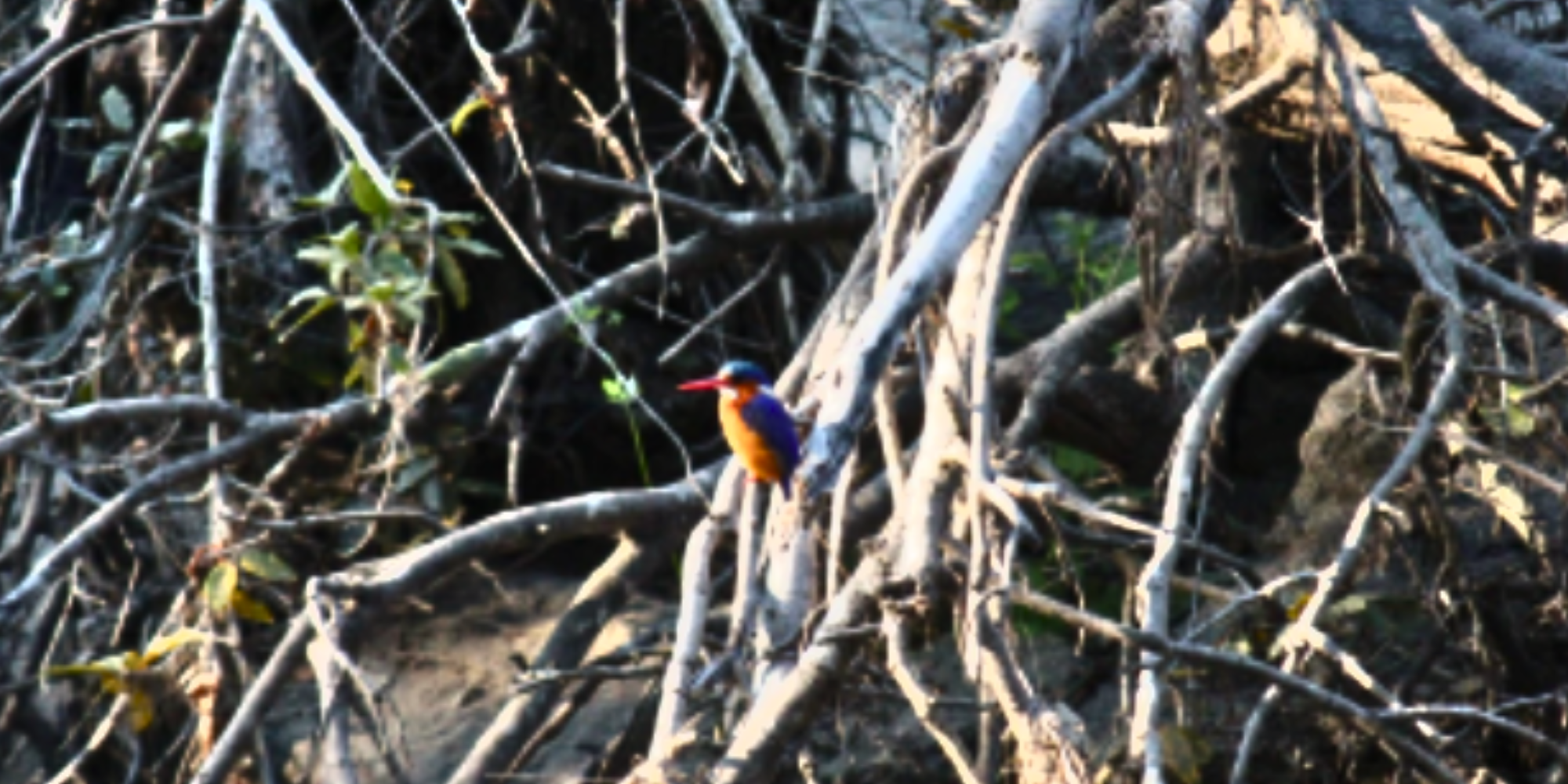
    Of the kingfisher’s typically found in our area of operation, we have had visits from giant, pied, striped, brown-hooded and malachite kingfishers. It is also only a matter of time before the woodland kingfisher shows up. We have been warned that this particular kingfisher is rather noisy, so it should be relatively easy to find it when it does show up. 

    image

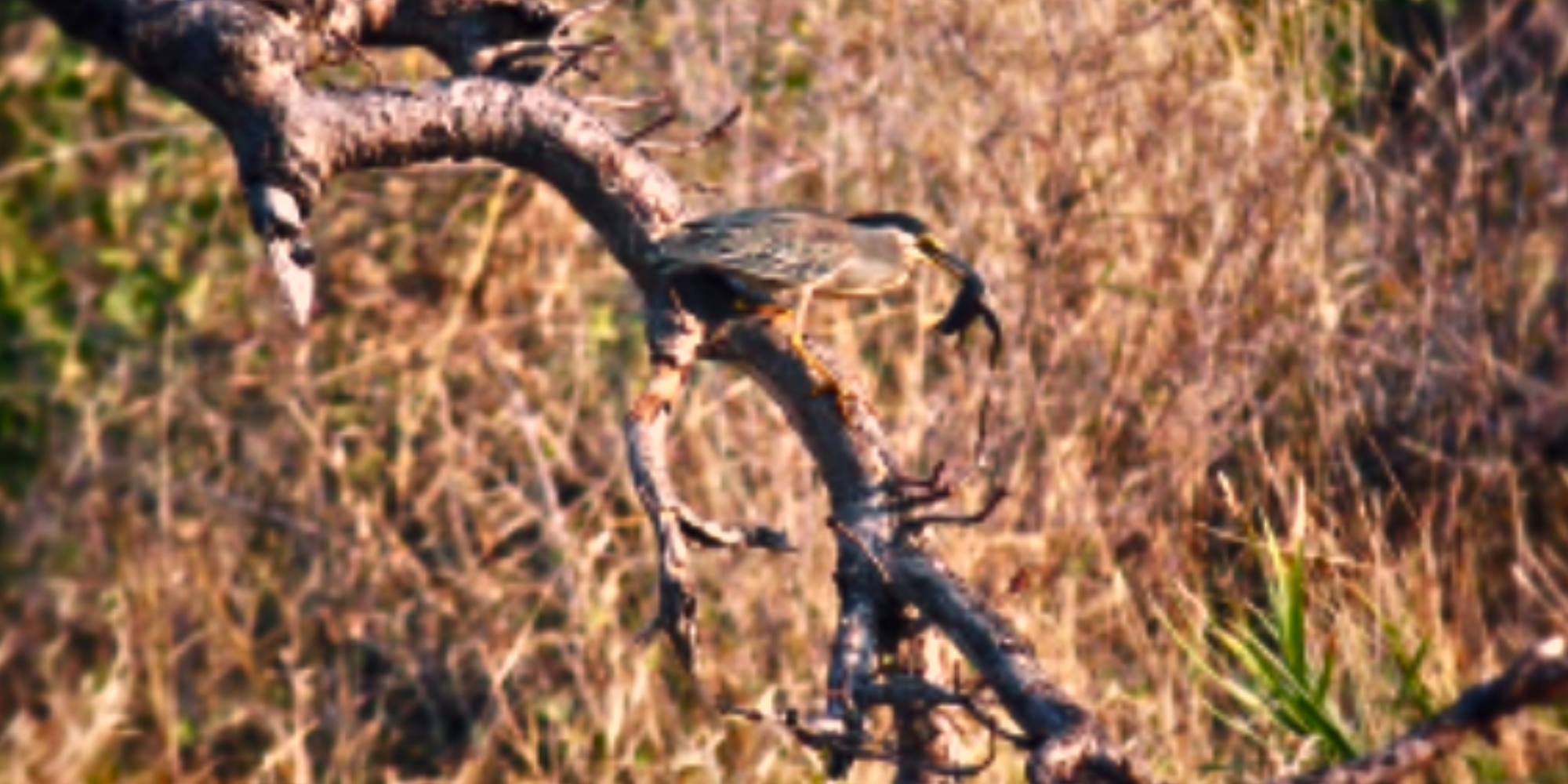
    We have also had some regular visits from grey, striated and even a white-backed night heron! I always find these birds a bit awkward with how they walk around, until they manage to snatch something from the water with surprising speed.

    image

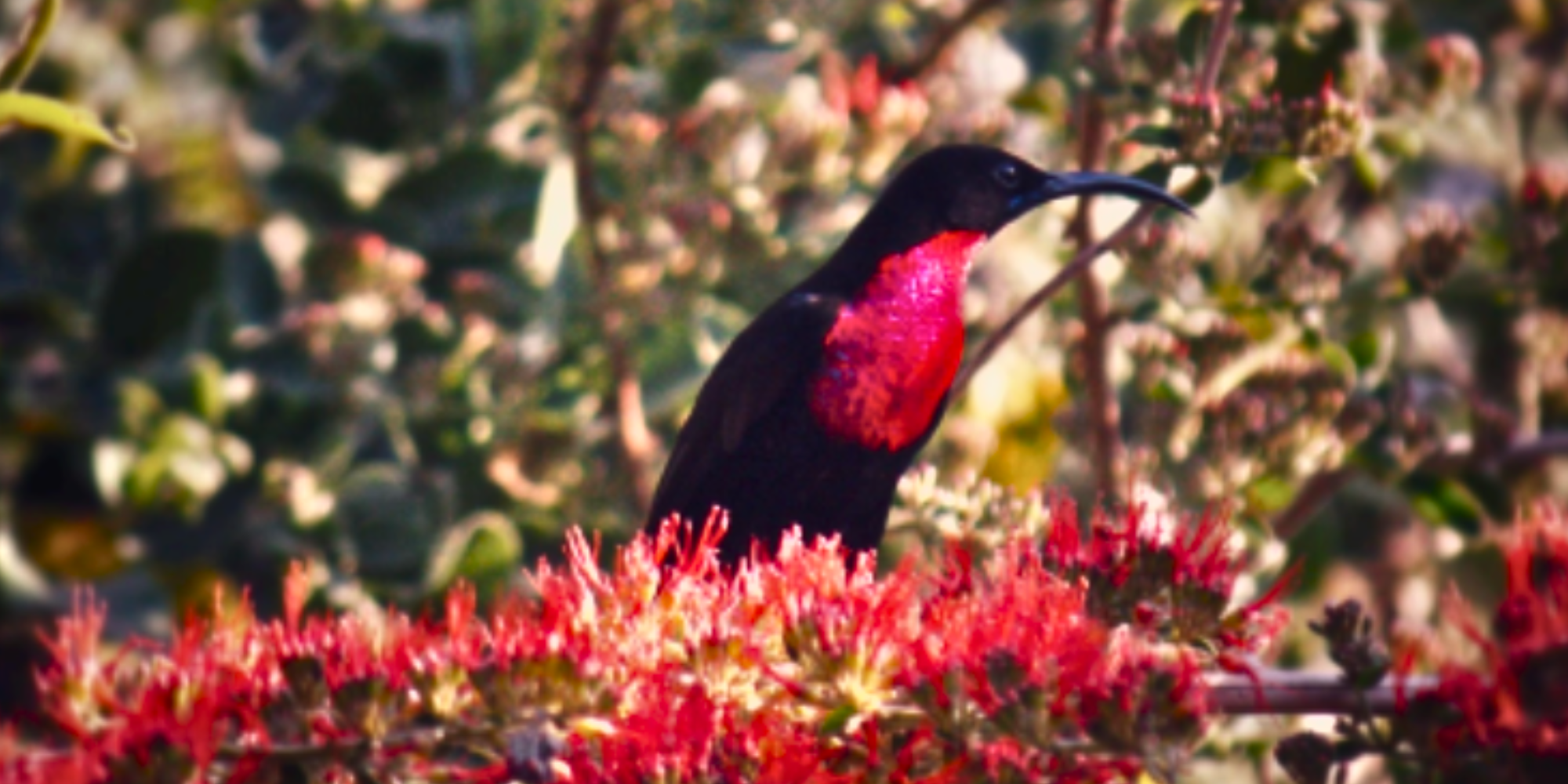
    Another group of birds we see (and hear) on the regular are the sunbirds. White-bellied, Marico and scarlet-chested so far. Much like us students before an assessment, these are busy, busy birds as they move from tree to tree and flower to flower.

    image

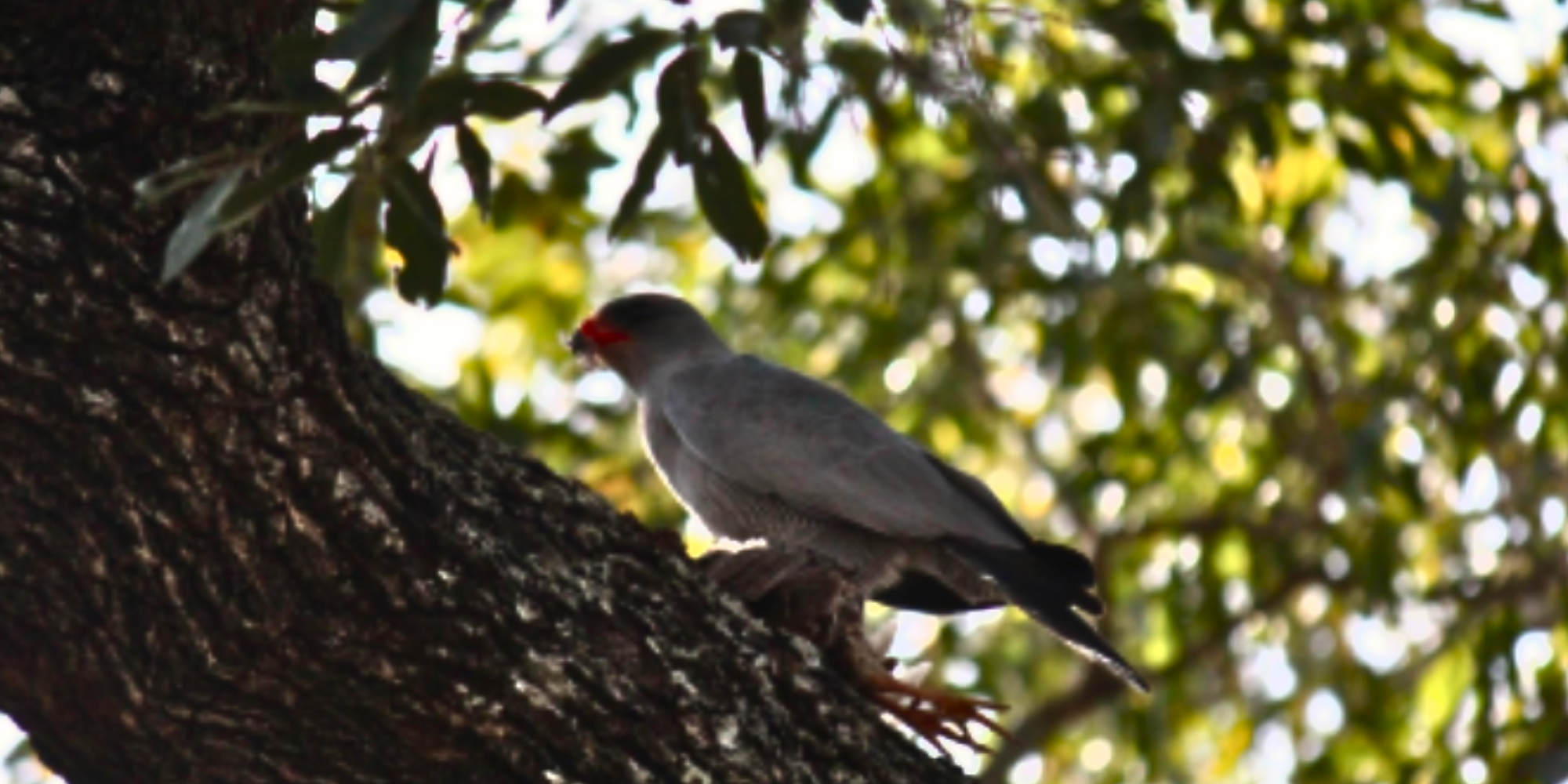
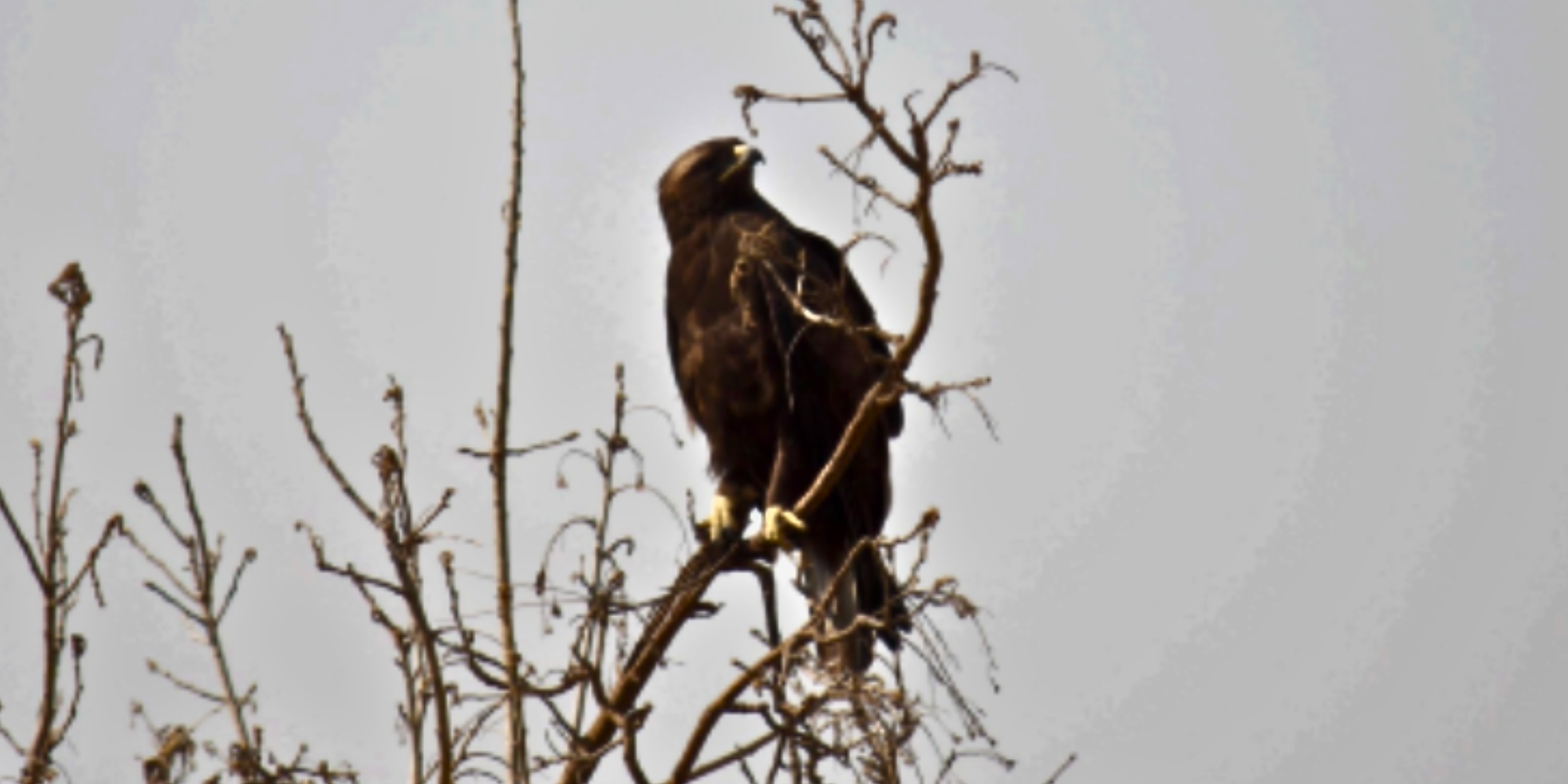
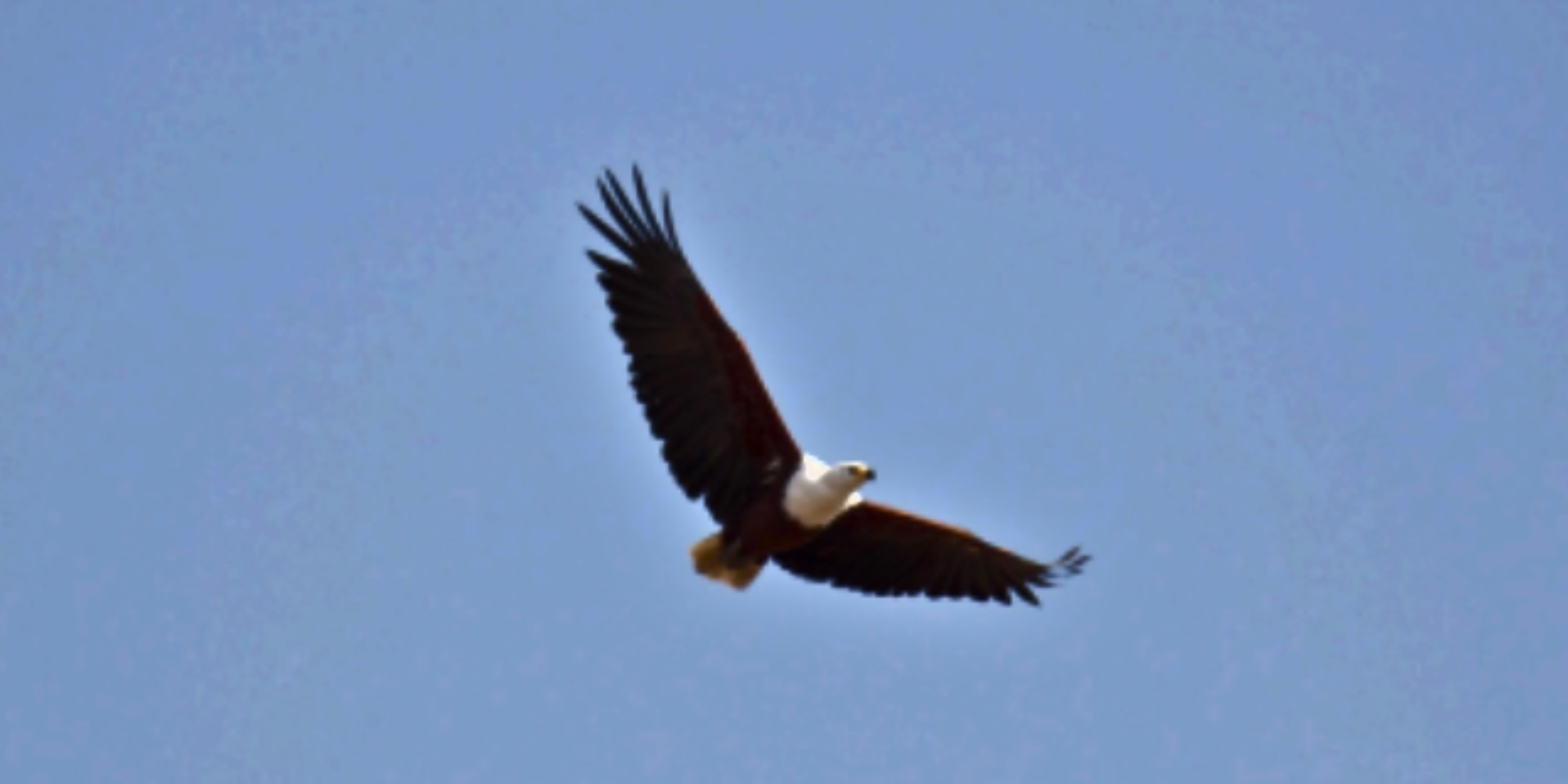
    From small to large, we have also had some visits from some of the resident raptors such as the African fish eagle, Wahlberg’s eagle, brown snake eagle, and a rather ruthless dark chanting goshawk, who has made it it’s life mission to find every crested francolin or Natal spurfowl in our camp.

    image

    image

    image

    And last but not least a few of my favourites! Hopefully we will find some more species paying a visit to our camp. And hopefully not during game drives! I hope you enjoyed this brief foray into some of the local birds. Goodbye everyone!

    image

    image

    image

    image

    image

    Ready to immerse yourself in the wild? Learn more about Bushwise’s field guide training programs and how you can start your journey today.

  • Fierce, fast, and under threat: The extraordinary life of African wild dogs

    This blog was written by Amy Jefferson, a Bushwise International Field Guide student. Each student takes a turn as camp manager, and writing a blog is part of the experience.

    Facts:

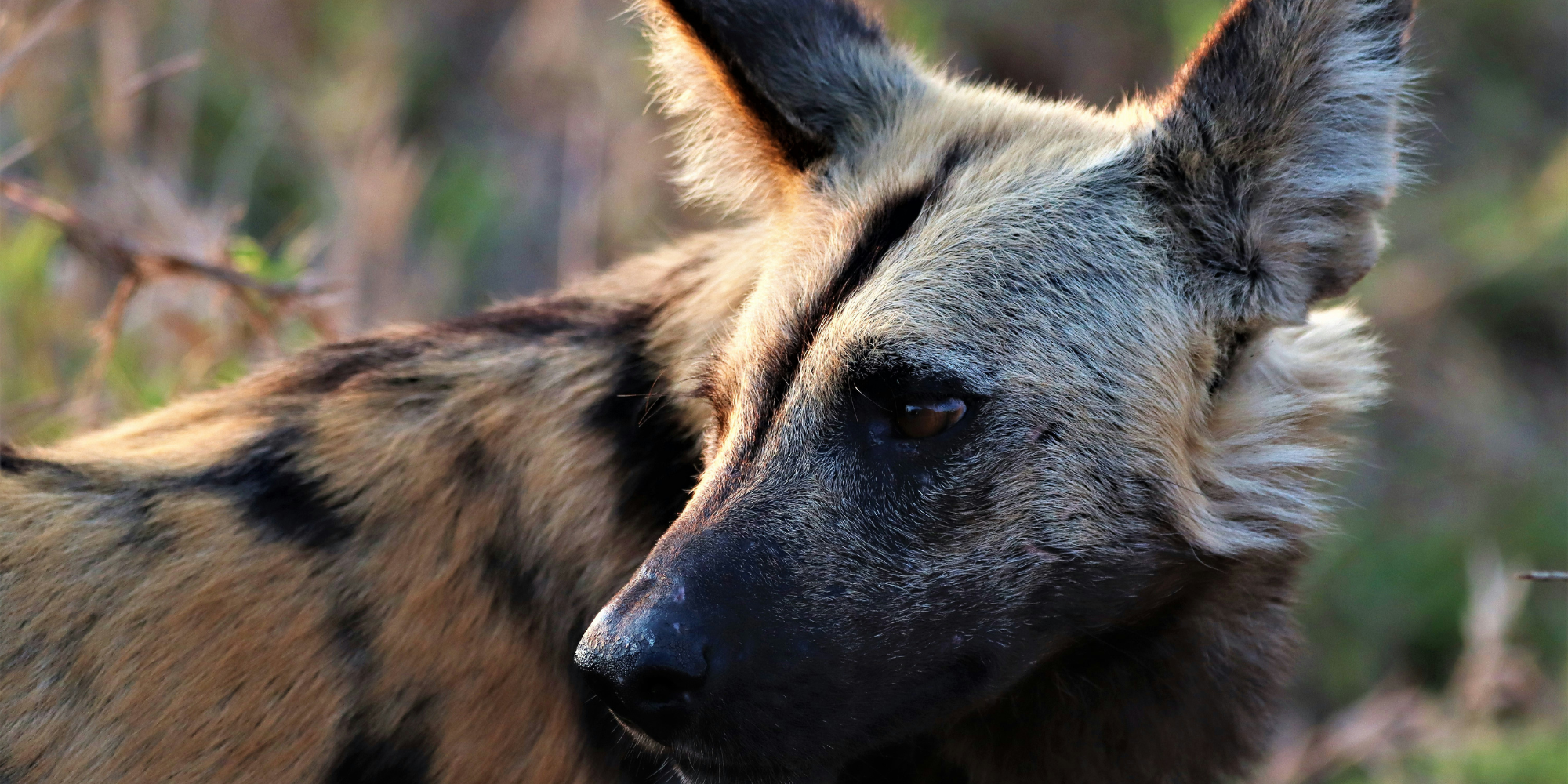
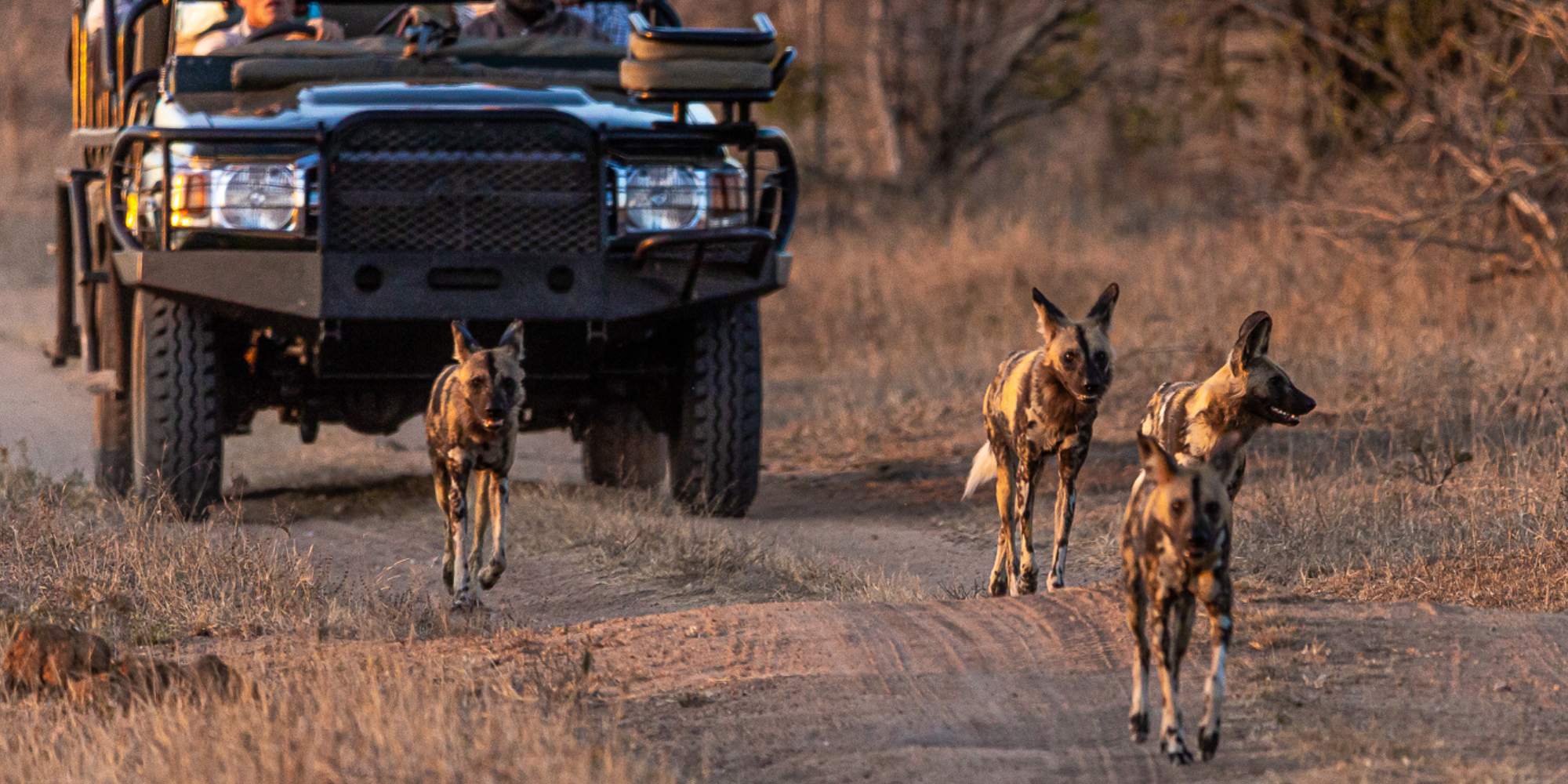
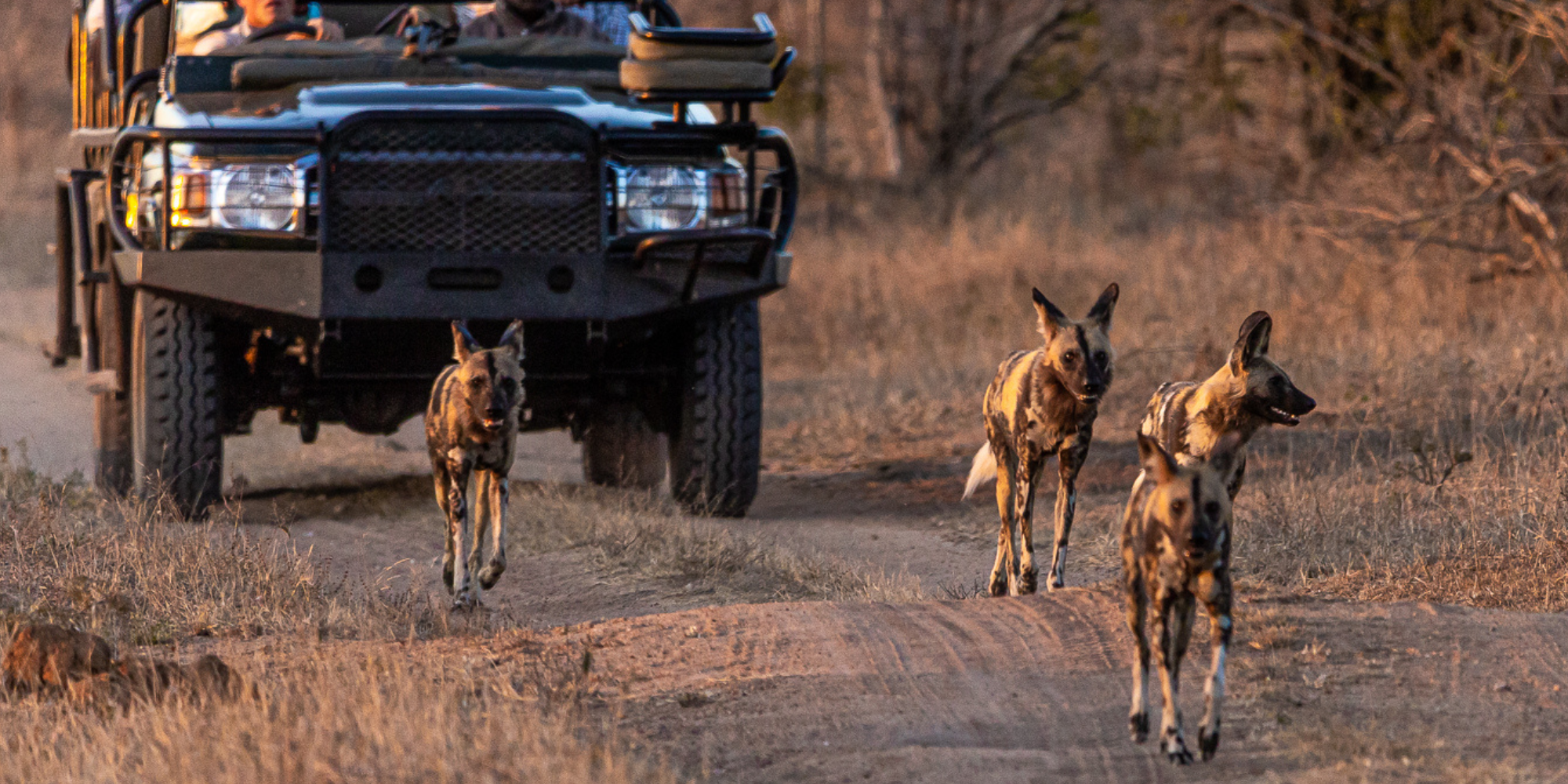
    African wild dogs are highly endangered animals with an estimated population of 6,600 with their current population decreasing. They have incredible hearing, with muscles allowing their large ears to swivel. They only have 4 toes per foot, unlike other dogs which have 5 toes. They can run up to 70 kilometres per hour. They generally live up to 11 years old in the wild. They communicate by touch, actions and vocalisation.

    They have a success rate of up to 80% when hunting due to their high levels of communication, they are among the most effective predators in the world. To put that into perspective, lions have a one-in-four success rate. This is nearly all a result of their pack coordination, which is still a rich source of zoological research. It was only recently discovered that they use sneezes to ‘vote’ on hunting decisions.  

    image

    Territories: 

    Wild dogs spend their days prowling huge amounts of territory, with home ranges of up to several hundred square kilometres. To put that into perspective, Greater London is home to 8.8 million people, but an area that size could only support one or maybe two Wild Dog packs. 

    Pack social structure:

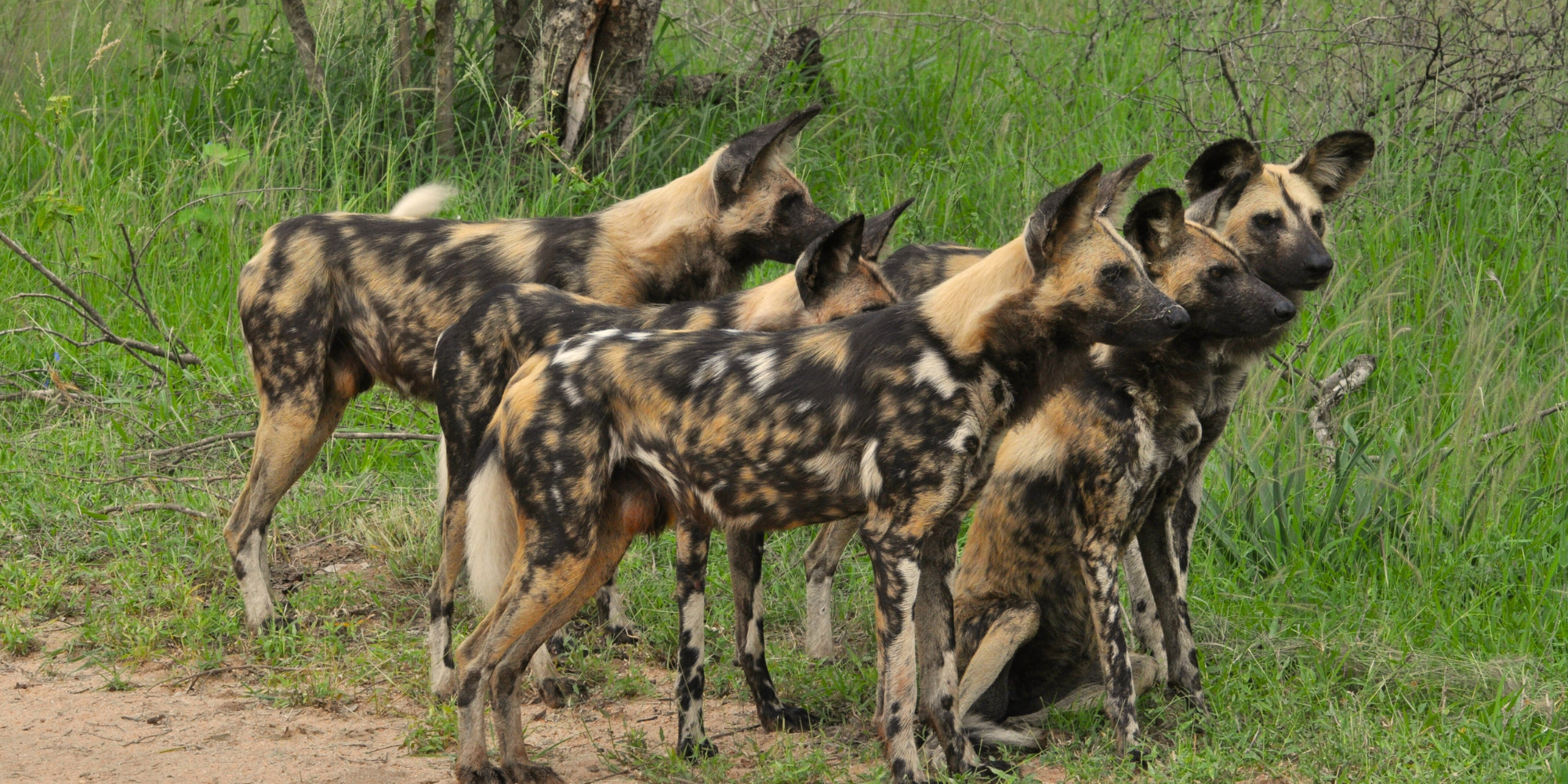
    African wild dogs are seasonal breeders, in South Africa pups are usually born mid winter, after a gestation period of 70 days. Litters can be 12 pups or more, the female cannot suckle offspring for too long. From the age of 3 weeks, milk is supplemented with regurgitated meat brought to the pups by other pack members. Their pups are given priority over dominant pack members when feeding. Packs average around 15 members and have been known to sometimes go up to 40. Before the recent population decline, packs of up to 100 were recorded.

    Non-breeding adults sacrifice their own nourishment to ensure the pups in the group get enough to eat and grow. The packs typically hunt antelopes and will also tackle much larger prey. They are extremely social and known to help the other members of the pack when they are weak or sick. Once mature, males stay with their original pack while the females generally seek a new pack. They are extremely loyal to its species and habitat. 

    image

    To form a pack:

    To form a pack you need a few brothers and a few sisters who are NOT related and put them in an enclosure together and they will decide who becomes the alpha male and alpha female. Only the alpha female and male will mate and have pups but the whole pack will look after the pups. If they do not form any connections together, when they are sedated you can rub one on the other and when they wake up they will automatically be drawn together because their scents will be on each other. 

    Threats:

    Unfortunately, they are often hunted and killed by farmers who fear for their livestock. They are also threatened by shrinking space to roam as well as susceptibility to diseases – these diseases include rabies and distemper from coming into contact with domestic animals. The IUCN reports that the population level of African wild dogs fluctuates but is in a likely irreversible decline. Genetic inbreeding may be the possible cause of the Kruger National Park wild dog’s life expectancy of only 6 years. 

    image

    Conservation:

    African wild dogs are among many species that benefit from the creation of protected wildlife corridors that help connect their increasingly fragmented habitats. Conservation groups are also working on initiatives that reduce conflict between humans and African wild dogs. These include awareness initiatives that dispel myths about the animals as well as educational initiatives that offer farmers training in livestock management techniques that prevent depredation 

    Learn more about Bushwise courses and find out how you can contribute to conservation efforts and make a real impact.

  • ‘I have found my true passion’: A life-changing Bushwise journey

    This blog was written by Surprice Shabangu, a Bushwise International Field Guide student. Each student takes a turn as camp manager, and writing a blog is part of the experience. 

    My name is Surprice Shabangu from Numbi village, which is located near the Numbi gate of the Kruger National Park. Growing up I used to see buses and open vehicles taking international tourists to the national park “Skukuza”, and that was quite fascinating to see how people from all over the world are coming to visit the national park which is a symbol to our locals. I have always been curious to how few of our elders with the community ended up working in the park driving open vehicles.

    After completing my studies in BA honors in sociology, which mainly focuses on society and its behavior, I worked for an NGO known as Gold-Youth Development, where I served for 4 years as a intern facilitator. My contract was for 3 years and this year it was extended by 2 years where I was going to serve two more years as a lead intern facilitator. 

    I started following Bushwise on social media early 2023 and I was fascinated by the things they used to post about. To me their posts were informative and some of the things were very relatable to me as a local resident. Last year I saw a post from Tourvest, but never got the opportunity to apply. I spend so much time with high school friends who are now nature and culture guides, listening to their life stories of Kruger National Park and wildlife. They made me more curious and to develop love for the bush and wildlife.

    image

    Around May or June this year I saw a post from Bushwise together with Sabi Sabi Ranger Academy, they were looking for people who will be trained as field guides. I did not waste time because I knew that this could be a life-changing opportunity. I applied and luckily I was amongst the people who received the scholarship.

    I did not know what life would be like in the bush, hence I was ready to face anything. When I got the opportunity I had to quit my job to start a new life in the bush. Bushwise came to me at a time where I was stressing a lot about life as I knew that soon the pipeline at work was going to get to me and I was going to be unemployed eventually. 

    Honestly, being in the bush with Bushwise has imparted me with knowledge and skills that I never thought I would gain in life – from understanding animal behaviour and nature to delivering an ethical nature guide experience for guests. I gained skills on how to work within a team, how to manage and lead people with diverse cultures and behaviour. 

    image

    I have found my true passion and I feel connected to nature. Through this new journey I have gained incredible experience on trailing wild animals, interpreting animal’s behavior. I believe that I will be a good mediator between wildlife and people visiting Africa who never got to see the wildlife.  

    I met wonderful people, from the previous 60-day students to my classmates; I believe that I met lifetime friends whom I might work with in future. Being with them feels like a new home and we are a family. We often fight but always have a way of sorting our differences, we help each other with academics and whenever one loses focus we are able to be honest with one another and encourage each other. 

    Lastly, how can I forget my instructors, they did an amazing job in sharpening my driving and guiding skills. They are amazing people, always patient with their students and they want what’s best for us. I will forever be grateful to Sabi Sabi and Bushwise for changing my life, ensuring that I am able to change my home situation. 

    I hope that Bushwise will continue to transform the lives of disadvantaged African children to be tools that will ensure that conservation is preserved so that the future generations get to know the beauty of African wildlife. 

    Ready to discover your true passion? Explore Bushwise courses and apply now to start your own adventure!

  • Inspiring the next generation of female field guides

    This blog was written by Lihle Donecia Mndawe, a Bushwise International Field Guide student. Each student takes a turn as camp manager, and writing a blog is part of the experience. 

    Enrolling with Bushwise academy has been a great evolving journey for me, I have developed into a passionate and knowledgeable person with wildlife. This blog reflects my growth and development before, during and after. How I got to be part of the Bushwise 6-month program was a very fortunate experience for me, through the Sabi-Sabi Foundation which sponsored four candidates to study in becoming a field guide with Bushwise and the Sabi-Sabi Ranger Academy. Out of 700 plus candidates that applied for the sponsorship I got to be part of the four candidates that made it to the final selection. After the selection, that’s when I knew my life was about to change to an exciting one – new skills and development. 

    Before 

    I have always been passionate about wildlife, as I have worked at a safari lodge as a receptionist for over 6 years. With my great customer service, patience and being a team player, I knew I would be a perfect fit for being a field guide. Before stepping into Bushwise’s gates, I knew little about animal track, signs and trails, birds and trees, yet I had the eagerness to learn the ins and outs about the wild. I had so much interest in bush walks, even though I had a limited knowledge of the ecosystem. With the lack of information and direction, it took me a little bit longer to finally be where my passion is.

    image

    During 

    One can acquire a skill from an academy, from a role model or a mentor. Currently as a Bushwise student  I have gained so many skills. I got my driving skills with Bushwise with the help of the head trainer – I will forever be grateful for such an opportunity. I have gained a lot of skills and am still learning, with the very knowledgeable and patient mentor I got to learn a lot. Practical assessments such as track and sign, birding, botany, astronomy and sleep out I enjoyed the most, theory lessons were also exceptional, reptile was a bit of a challenge but had a happy ending. Lodge hosting was top-tier for me as I have experience in hosting from my previous workplace; it reminded me of all the good times shared with customers creating unforgettable experiences. 

    At the beginning of the course I had less confidence in myself, especially being 1.5 metres in height. I had a few challenges that did not favour my height, like reaching the pedals [in the game viewer], getting on the tracker seat, and changing tyres, but it all comes with practice. 

    image

    Future 

    Now all that is left is the fun stuff – rifle handling and trails . My goal is to achieve the remaining assessments and I am looking forward to getting placed at the lodge. That is when reality will hit, putting all the practical and theoretical skills into practice and engaging with the ecosystem. 

    There is still a long road ahead – more studying, research, learning new techniques and exploring to do. Everyday is a learning experience. Graduating will be the biggest part of my growth and development.

    The Bushwise program is definitely a life changing opportunity, I would recommend it to anyone who has the passion to become a field guide because of their well-trained instructors, proper study material and good course planning. My mission is to grow in the industry and inspire other young females who are passionate to become field guides. Exploring outside the country and experiencing different ecosystems is definitely a dream for me. 

    Ready to begin your own wildlife journey? Apply for a Bushwise course and start your adventure.

  • Oceans to savannahs: My journey to becoming a field guide in Africa

    This blog was written by Jesse Lommerse, a Bushwise International Field Guide student. Each student takes a turn as camp manager, and writing a blog is part of the experience.

    My name is Jesse Lommerse. I am 22 years old, grew up in the Netherlands and for the past couple of years I’ve been living my best life. When I was 19 I bought my own sailing-yacht and started sailing around South and Central America. I have always been a big admirer of the outdoors and nature, but when I started my sailing adventure I really came in touch with my wild side having left everything behind from family, friends, luxury and comfort to wild seas, new countries, new people and lots of adventures. I spent almost 2 years travelling 3 oceans and over 20 countries with a good friend of mine, in which during the long days at sea I had plenty of time to think about my life and what I wanted to do with it.

    image

    Do I want to live on a boat for the rest of my life? Do I want to work for my Dad in the Dutch flower business or do I want to go my own way and make sure I find something that I really enjoy and what I want to be doing the rest of my days?

    So I started thinking about what skills I have and what I’m good at. In my times of sailing I’ve noticed that when I was working on a charter I was very good with my guests and people seemed to like my character. They even liked it more when I started to talk about the colourful fish in the oceans, the big birds in the sky or about the big variety of insects everywhere in Latin America. With my passion for nature, my natural ability to work with tourists and my love for animals I came to the conclusion to become a field guide. However to begin with I had no idea where I wanted to be a guide until I remembered that I went to the Kruger National Park in South Africa with my dad when I was very little and that I really loved everything there. The guides were so kind and full of knowledge, the game reserves were full of animals and the landscapes were astonishing. Therefore I searched for the best training camp, joined up and started a new adventure. 

    Having arrived a couple of months later it was just how I pictured it, kind classmates and trainers all sharing the same interests, cosy huts to sleep in, in the middle of the bush with hyenas and leopards calling in the night and with over 30 birds waking you up in the morning. This was it! A place where I can learn and grow and become the best version of myself. With no regrets of leaving everything behind again, I promised myself I would become the best guide in my own way. One of the nice things of becoming a guide is that there’s not just one way of doing your job. I’ve met a lot of different people here in my camp from a lot of different countries and so many different ways of guiding. It would make sense, guiding is such an enthusiastic job and people express themselves in different ways. 

    image

    Life as a field guide in training is the best! It never felt like I was back in a school studying subjects because I have to. I am here because I love learning these subjects. Although the days can be long, time seems to fly by. We’re now in the 4th semester and we have done so many wonderful things like: birding, track and sign, trailing, and so many more. It’s been a real honour to have been taught by one of the original master trackers Adrian Low and Colin Patrick, seeing them work is like watching the conductor leading an orchestra, it’s a piece of art. The birding week was also fun, although it was very rough in the beginning seeing and learning all the most common birds in our area in one week, but the further we got, the easier it got. 

    Since I’ve been here it’s been so much fun, I’ve learned a lot and made loads of good friends.  It’s a shame knowing that when I get my certificate I have to leave everything behind again…

    If you have a love for nature and a sense of adventure I would definitely recommend becoming a field guide. 

    Ready to start your own journey in becoming a field guide? Explore Bushwise courses and apply now to become a qualified nature guide!

  • The call of the bushveld

    This blog was written by Jon-Harry van Wyk, a Bushwise International Field Guide student. Each student takes a turn as camp manager, and writing a blog is part of the experience. 

    When I was a young boy growing up in South Africa, the ultimate experience would be to stay in the bushveld. The wildness of the place, the sounds you hear at night, the excitement of seeing animals looking at you through the underbrush – there is no place on earth where you feel more in touch with the beauty and magnificence of nature. It is hard not to have an awakening in your soul once you have travelled deep into the bush, along the rivers and looked out over it from atop the peaks. 

    image

    The first experience that I can think of that really sparked my interest in becoming a guide was around the age of ten. My family and I went on a game drive in the Pilanesberg Nature Reserve when this happened. I remember it was a sweltering day, the flies followed us as we moved in hopes of getting moisture from a bead of sweat. Our guide had found a herd of elephants who at the time were in the midst of their breeding season. We watched as two massive bull elephants struggled against each other for dominance and the breeding rights to their female onlookers. One of the bulls was defeated after a tussle that shook the ground and broke trees. As we sat there, he turned to face us, you could almost see the embarrassment in his eyes after his loss. There was a switch that flipped in his mind, he decided he would not stand the embarrassment, no mock charge or warning he flew towards us.

    image

    I remember in those moments of fear and the pumping of adrenaline how cool and collected our guide had stayed. He had read the situation before the fight had even finished, he had kept a cool head when the dust started flying and five tons were barreling towards us. After we had reversed for over three hundred meters or so the elephant felt he had gotten his frustrations out. As we drove back to the lodge, I felt an excitement and a newfound feeling of yearning to be the man in that seat, to be the man who could read the wild, to be a guide! Many years have passed since then, but that passion has always kept burning inside of me.

    Now, as a young man, my passion for the bush has evolved. I want its serene beauty to still be here for my grandchildren and their children. I have taken the first steps in my journey towards becoming a guide by joining Bushwise. I want to immerse myself with this lifestyle and learn all it can teach me, I intend to leave no stone unturned in this experience. My end goal is to get involved in more of a conservation career through hunting. I’ve come across many individuals who disagree with my plan but in order to keep our parks ecosystems functioning there has to be checks and balances for populations. I hope that through my career I can learn from and teach those that I encounter how to ethically control population numbers, so that we may preserve the beauty of the South African bush for many generations to come.

    image

    My adventures along this path may very well lead me to different outcomes for my future, but my sights will always firmly be set upon preservation of the wild environment I now get to call home. Becoming a guide is just the beginning of this journey that I have set out upon, however it will not be its conclusion. Being in a place surrounded by people with the same passion and love for the bushveld was the perfect start. I encourage those that feel the pull of the bushveld to take that step deeper into its wonder and wildness, it is a place that changes you.

    Ready to start your own journey in nature conservation? Explore Bushwise courses and apply now to become a qualified field guide!
  • Meet the Shy Five: Africa’s most elusive creatures

    This blog was written by Jessica Piper, a Bushwise International Field Guide student. Each student takes a turn as camp manager, and writing a blog is part of the experience. 

    3 min read

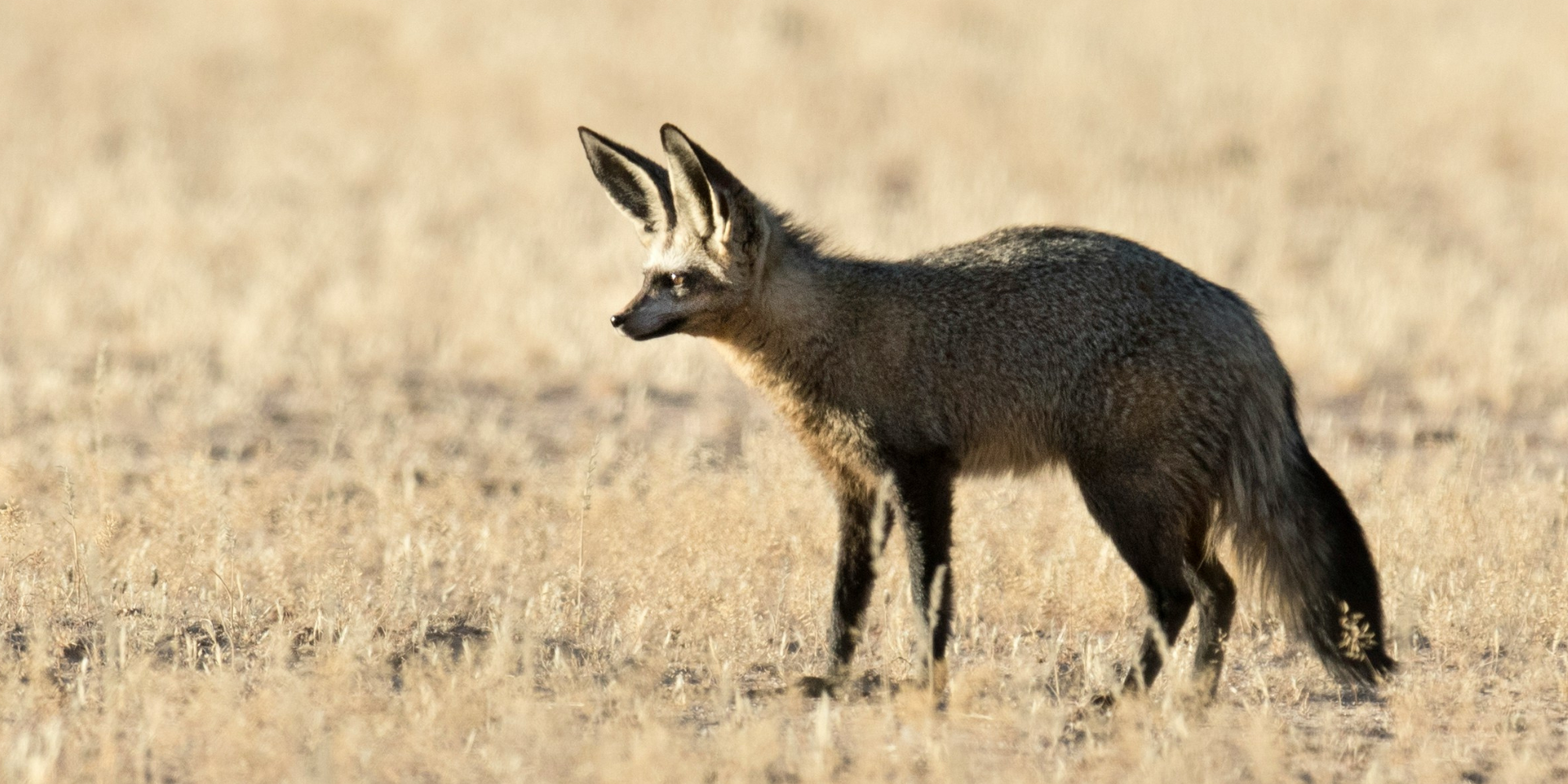
    Not many people know or have heard about the Shy Five. Completely different from the Big Five, you’ll rarely see them out in the open. For these five cuties you’ll have to go out early in the  mornings and look carefully because they get spooked easily. These animals are nocturnal, which is mainly why they are tough sightings but are no less exciting then the Big Five. They are  not big or dangerous but are secretive about how they go about their lives. The Shy Five are the  Aardwolf, Aardvark, Bat-eared fox, Pangolin and Porcupine. 

    Aardwolf  [view image here]

    The aardwolf is a part of the hyena family and is referred to as the termite-eating hyena because unlike other hyena family members, the aardwolf mainly eats termites and other insects. They have a bushy tail and slender body with a mane or ridge of hair running down their back, and  their tongue is especially sticky to catch all their favourite food. They have an acute sense of  smell which they use to locate termite mounds and can consume thousands of termites in one night. The shy nature of the Aardwolf and its preference for the darkness is the reason that it is  rarely seen.  

    Aardvark [view image here]

    The aardvark, or more often referred to as ‘earth pig’, is a peculiar looking animal with thick  almost hairless skin, a long snout and rabbit-like ears. These animals, like the aardwolf, are  nocturnal and eat mostly termites and ants, with a preference for termites. They have powerful claws built for digging which can break through termite mounds easily. The aardvark can escape predators by quickly digging underground. The burrows that they leave behind can be crucial to other species, creating shelter for multiple animals, including small mammals, snakes and some insects. However, due to their solitary nature and the fact that they are nocturnal they are very rarely seen. 

    Bat-eared Fox 

    image

    The bat-eared fox got its name from its enormous ears, which are used to detect insect movement underground. Their ears aren’t just for hunting but can also aid in regulating its body temperature in hotter climates. Their diet has been highly adapted for insects, mainly beetles  and termites. The bat-eared fox is usually seen in small family groups or pairs and is known to be a more social animal although they are still difficult to spot. They spend their days in their burrows to avoid the heat. The fact that they prefer the open and that they are nocturnal makes them very elusive. 

    Pangolin 

    image

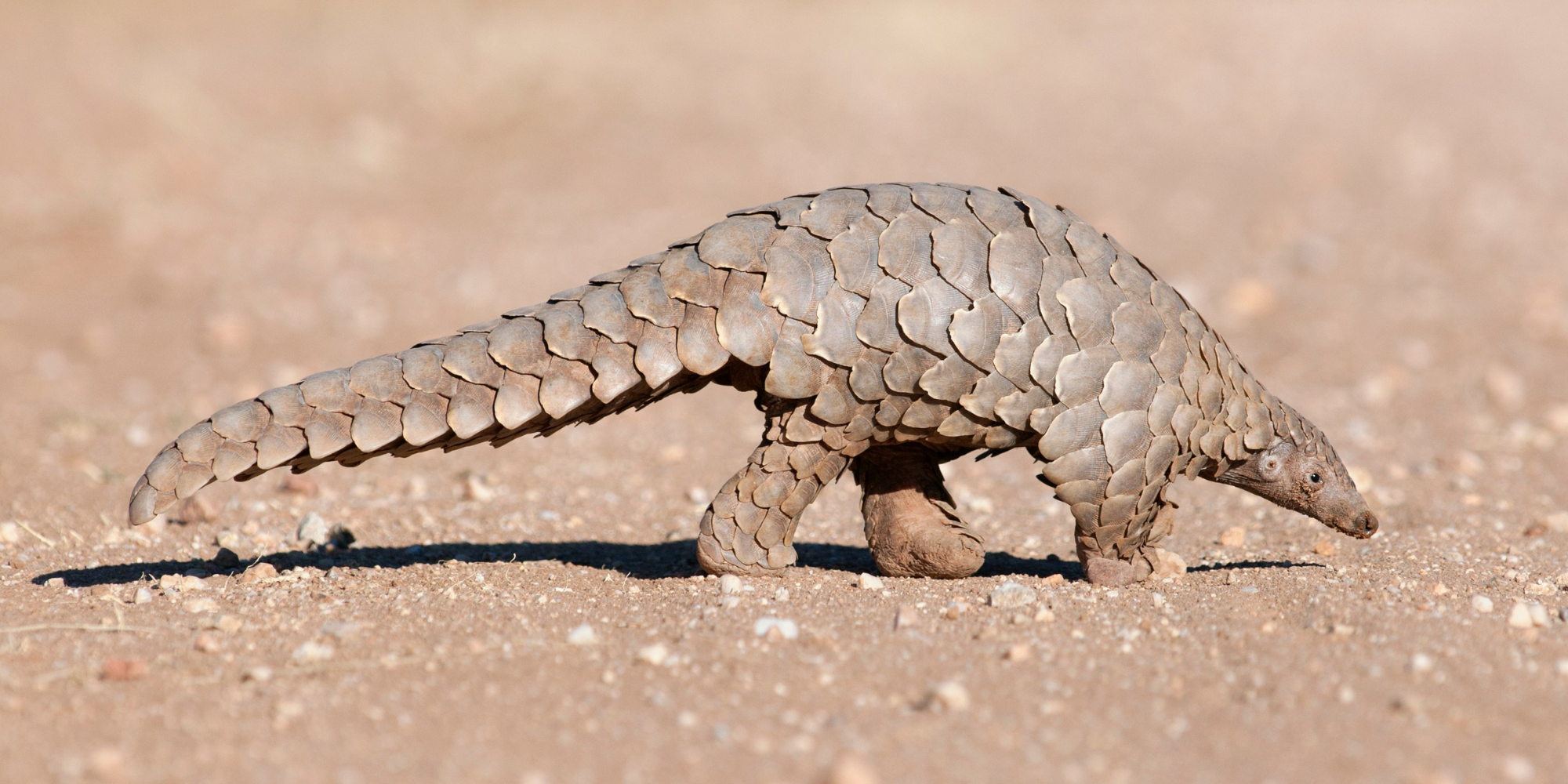
    The pangolin is considered to be the most elusive of the Shy Five. It is covered in scales made of  keratin that overlap each other. When threatened they curl up into a tight ball using its scales as armor protection. Like the aardwolf and the aardvark, the pangolin’s diet mainly consists of ants and termites, using its sticky tongue to lap them up. The pangolin is solitary and nocturnal and spends most of its life in thick vegetation or hidden in burrows. Due to its declining population sightings are extremely rare, making it a very sought-after animal to see in the bush. 

    Porcupine 

    image

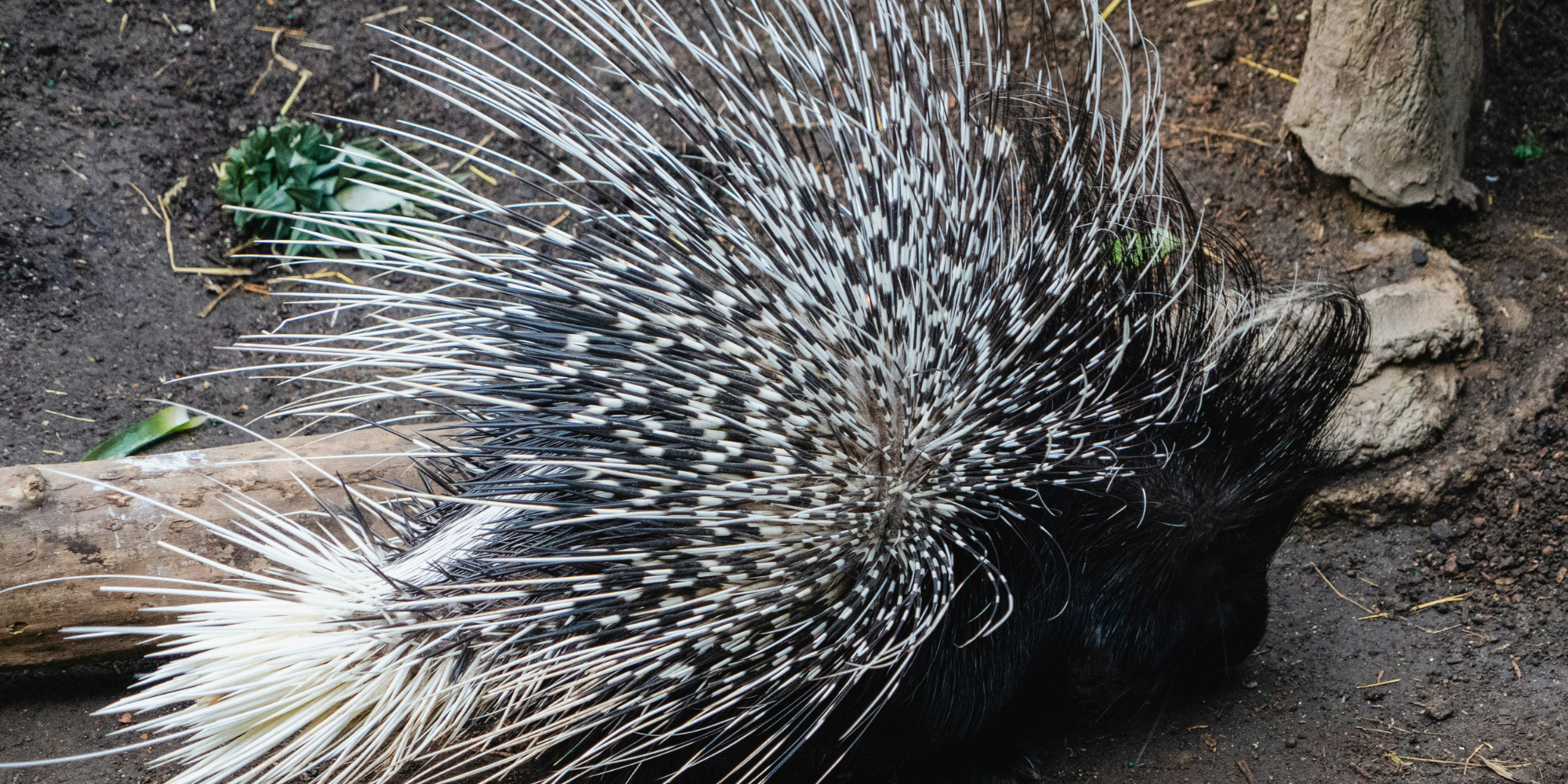
    The porcupine is the largest rodent in Africa and can be recognised easily by the sharp quills. It  uses its quills mainly for defence against predators and when the porcupine is threatened it will  raise and rattle its quills as a warning before running backwards towards the threat to try to  impale them with its barbed, sharp spines. Porcupines forage for bark, roots and tubers during  the night and spend their days in their burrows or rocky crevices. They have a very secretive nature which makes them difficult to spot, however, you can tell if one has been in an area by the  quills often left behind. 

    The Big Five is definitely more of a fan-favourite and on people’s list to see, but the Shy Five are no less interesting. Their roles in the ecosystem and their elusive nature make them a compelling topic for those who are willing to go beyond the beaten path. Seeing any of the Shy Five will require patience, but when spotted will leave a lifetime impression on enthusiasts. 

    Want to explore the fascinating world of Africa’s wildlife? Join a Bushwise course today and take the first step toward becoming a field guide!