Tag: #wildlifeeducation

  • From fear to fascination: A closer look at baboon spiders

    This blog was written by Lilias Burnel, a Bushwise Professional Safari Guide student. Each student takes a turn as camp manager, and writing a blog is part of the experience.

    Baboon spiders tend to get a bad reputation. With their long legs, large fangs, and hidden burrows, it’s easy to see why people often associate them with danger. But like many misunderstood species, a closer look tells a very different story.

    In the wild, encounters with baboon spiders are often brief, usually just a flash of movement as one disappears into its burrow. They keep to themselves, going about their lives quietly. But for those who take the time to stop and watch, something is fascinating about their stillness and precision. What might look like a threatening posture at first is usually a defensive one. This is a natural response in a world full of predators.
    image

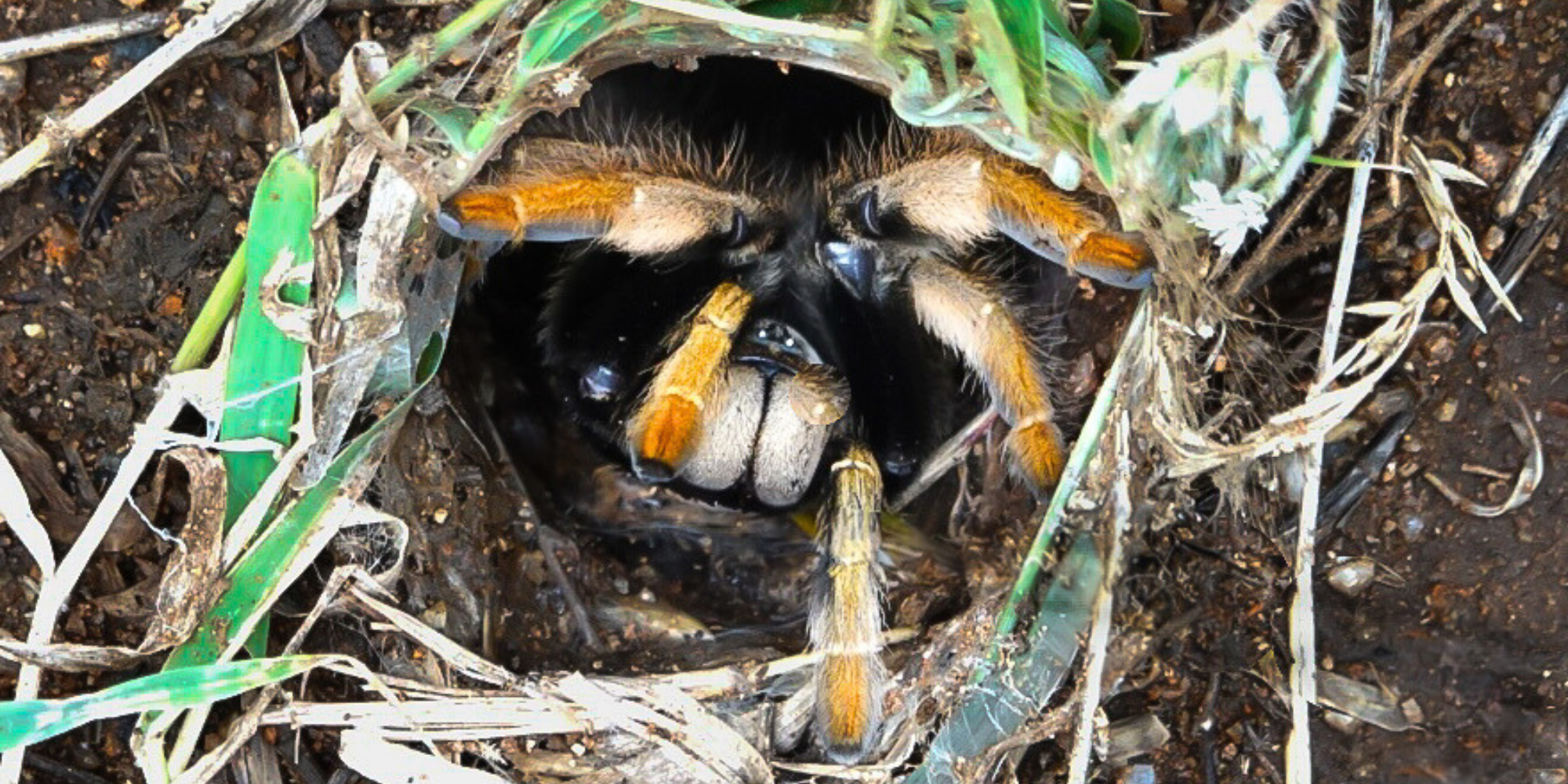
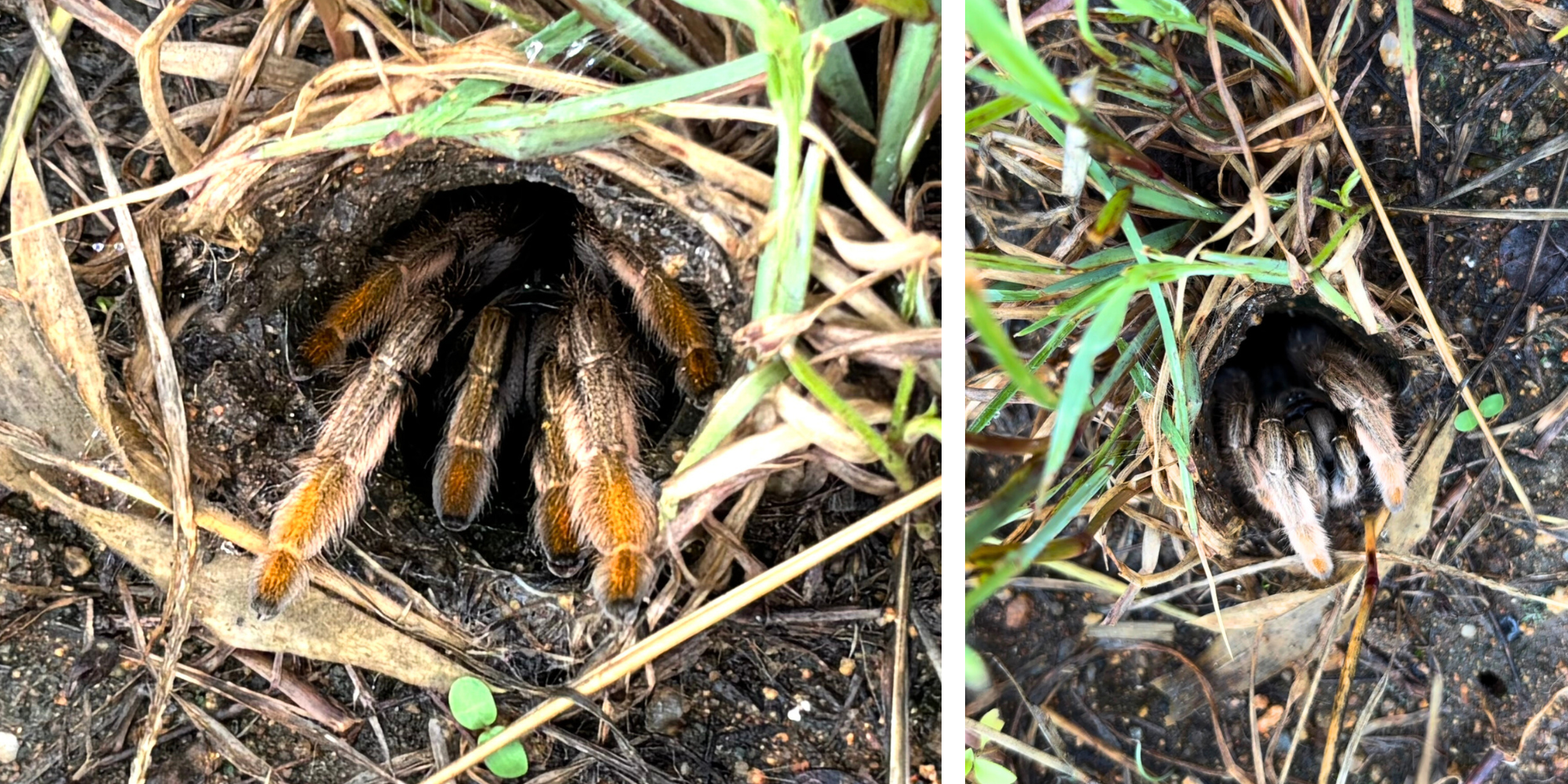
    Baboon spiders belong to the Harpactirinae subfamily, a group of tarantula-like spiders found across Africa. They’re named for the thick, hairy appearance of their legs, which resemble those of a baboon. Unlike web-building species, baboon spiders are ambush predators. They spend most of their time in burrows, which can be up to half a metre deep, using them as both a hiding place and a base for hunting. Some species line their burrow entrances with silk and bits of debris, while others create a tidy circular opening that blends into the surrounding earth.

    Their hunting method relies on patience. The spider stays tucked away, sensing vibrations on the silk lining of the burrow as insects move nearby. When the moment’s right, it quickly strikes, grabbing its prey and delivering a venomous bite. In some species, the fangs can reach nearly two centimetres in length, strong enough to pierce tough exoskeletons. That said, their venom is not considered dangerous to humans. Bites may cause some pain or swelling, but serious reactions are extremely rare.
    image

    One of the more surprising things about baboon spiders is how long they can live. While many spiders survive only a year or two, female baboon spiders can live for over 20 years. They grow slowly, moulting several times a year as they mature, and can even regenerate lost limbs over time. However, moulting leaves them vulnerable for a short while until their new exoskeleton hardens. Males, on the other hand, have a much shorter life cycle. Once they reach maturity and find a mate, their role is complete.

    Despite their resilience, baboon spiders are under threat. Expanding agriculture and urban development are reducing the natural areas where they can safely build burrows. Illegal collection for the pet trade is another concern, especially for species with slower growth rates. Although they may still seem fairly common, their slow life cycle means populations can decline quickly. Conservation efforts are underway in some regions, but changing how people see them is just as important.

    image

    Baboon spiders are a good example of how first impressions can be misleading. What at first seems frightening can, with time and understanding, become something worth protecting. These spiders aren’t aggressive or dangerous – they’re simply well-adapted survivors, playing their part in the ecosystem like so many others. And once we start to see them that way, it’s hard not to be impressed.

    Want to experience Africa’s wildlife up close? Join a Bushwise course and learn from experts while seeing incredible wildlife.
  • The humble dung beetle: Nature’s unsung hero

    This blog was written by Cari van Eeden, a Bushwise Professional Safari Guide student. Each student takes a turn as camp manager, and writing a blog is part of the experience.

    “It seems to me that the natural world is the greatest source of excitement, the

    greatest source of visual beauty, the greatest source of intellectual interest. It is the

    greatest source of so much in life that makes life worth living.” – David

    Attenborough.

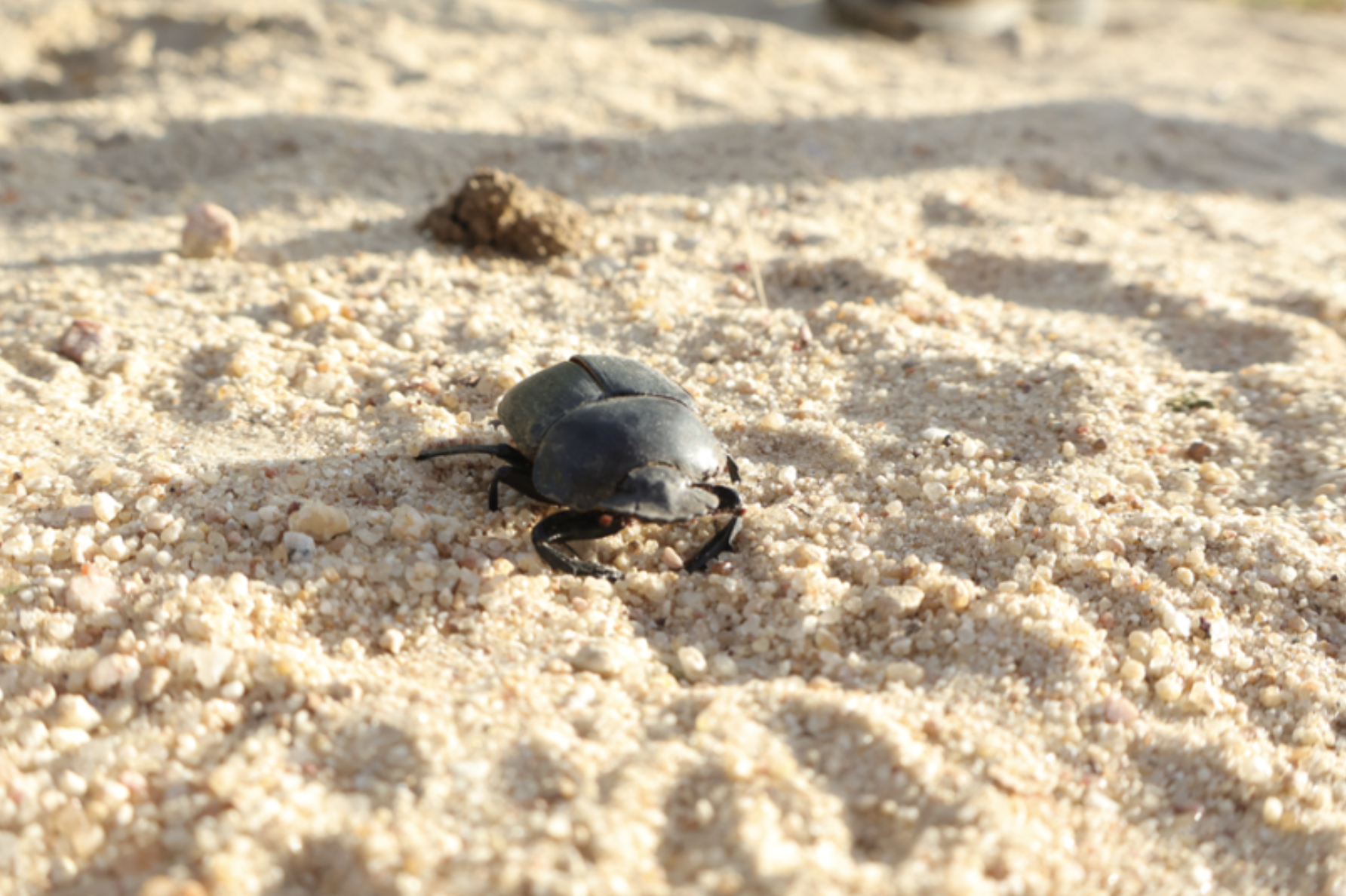
    Dung beetles, known across the world, often go unnoticed. However, during my time at Bushwise, I learned just how crucial they are to the environment.

    image

    The crucial role of dung beetles

    Dung beetles are vital to maintaining a healthy ecosystem. During the summer months, they play an essential role by burying dung, which, as it decomposes, returns nutrients to the soil. This process improves soil structure and supports plant health. Additionally, they help control pests like flies, which can spread disease. By moving dung, they also assist in seed dispersal, unknowingly giving plants a helping hand.

    Dung beetles: The silent workers

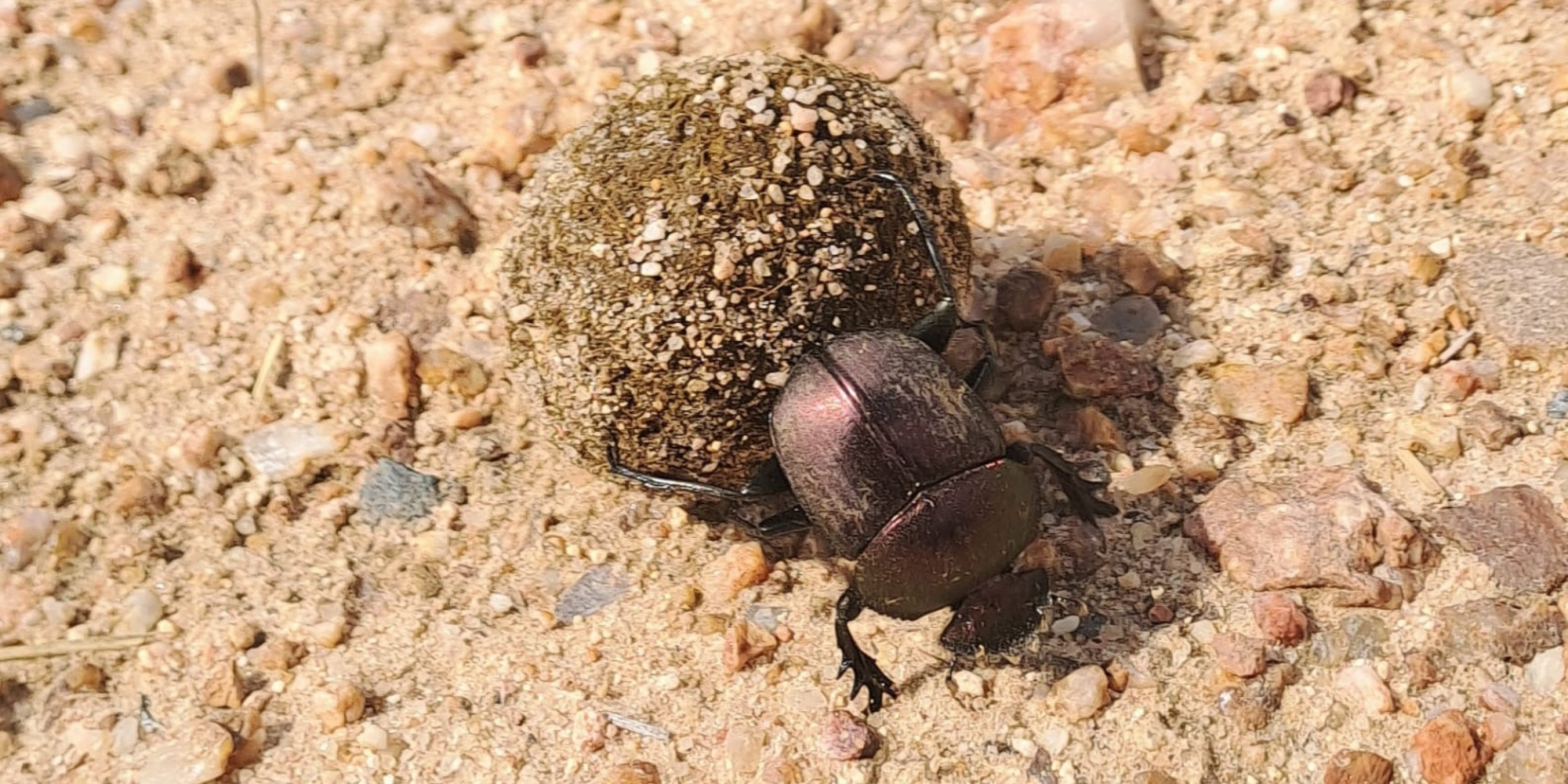
    There are four categories of dung beetles. One group, known as telecoprids, is particularly interesting. These beetles roll balls of dung away from the dung pile, then bury them in soft soil. This not only helps the nutrient cycle but also plays a large role in the biodiversity and beauty of our surroundings. As field guides in training, we quickly recognise how valuable these creatures are, so we make it a point to drive around them while they’re busy at work. It’s also important for us to share the significance of their work with guests during future safaris.

    image

    The fascinating dung ball

    So, why the dung ball? Dung balls serve two primary purposes. They are either used as a food ball, providing nourishment, or as a brood ball, where females lay their eggs. Sometimes, both. 

    Brood balls are fascinating. Often, one beetle clings to the ball while the other pushes it along with its hind legs. The male does most of the heavy lifting, rolling the ball far from the dung pile. Once he finds soft soil, they both dig and bury the ball, allowing the female to lay her eggs inside. This is a perfect example of teamwork in action. The ball ultimately serves as both a food source and a home for the developing larvae. It’s incredible to think that such a small creature can push 50-80 times its body weight.

    Other interesting dung beetles

    There’s also a group of dung beetles called endocoprids. These beetles don’t roll dung but instead dig tunnels beneath the dung piles. Then, there are the paracoprids, who skip the rolling and tunnelling altogether. Instead, they hop onto the dung and lay their eggs right there, though this method comes with the risk of being trampled by larger animals.

    Lastly, the kleptocoprids are beetles that steal dung balls from other beetles, often after a fierce struggle.

    image

    What we can learn from the dung beetle

    Facts aside, these remarkable insects offer valuable lessons: Firstly, there are many ways to achieve the same goal, so avoid comparison. Secondly, never underestimate the power of the “smallest” among us. And lastly, you are often stronger than you realise.

    Ready to learn more about nature’s incredible creatures firsthand?  Explore our wildlife courses to begin your journey into field guiding.