Author: Bushwise Student

  • Inside the world of the cuckoo wasp

    This blog was written by Benjamin Loon, a Bushwise Professional Safari Guide student. Each student takes a turn as camp manager, and writing a blog is part of the experience. All images accompanying this blog were captured by Benjamin.

    Cuckoo wasps are small, mostly solitary wasps best known for their bright metallic, iridescent body colours, which have earned many species the common name “jewel wasps”. However, the more widespread name “cuckoo wasp” comes from their unique reproductive strategy: brood parasitism, much like that of cuckoo birds. It is this unusual behaviour, combined with their brilliant colours, that fascinated me from a young age.

    The beautiful colours of the cuckoo wasp are what first drew me to them, but the reason behind these colours is just as intriguing. The vibrant, jewel-like appearance of many cuckoo wasps is not pigment-based alone, but largely structural. Their exoskeleton has a unique multilayered structure composed of extremely thin, semi-transparent layers that act as light reflectors. These layers produce vivid iridescent colours through selective interference as light hits them. Because the colours depend on the angle of incoming light, they can shift dramatically simply by changing your viewing angle.

    Scientists suggest several possible reasons for this striking colouration. These include camouflage among shiny or reflective surfaces, visual signalling (including limited sexual signalling), thermoregulatory effects, or even added structural strength to the exoskeleton itself. No single explanation applies to all species, and the true function may differ between lineages. As a photographer myself, these colours make cuckoo wasps a dream subject to photograph (when they finally sit still!) and make the moment of getting the shot even more rewarding.
    Cuckoo wasps practise kleptoparasitism, the theft of food collected by another individual,  as well as parasitoidism, where the parasite’s young ultimately kill the host’s brood. After a female cuckoo wasp sneakily infiltrates a host’s nest, she lays her egg in the same cell as the host’s eggs before quickly leaving the area. The cuckoo wasp egg usually hatches sooner than the host’s, and the larva consumes the food stored for the host larva (kleptoparasitism). In some cases, the cuckoo wasp larva will also eat its foster siblings (parasitoidism).
    Cuckoo wasps parasitise a wide range of hosts, including many solitary bees and wasps such as mason bees, potter wasps and mud-dauber wasps. I recently observed this behaviour while sitting at a termite mound chimney, watching cuckoo wasps shadow potter wasps in an attempt to locate their nests. The potter wasps would repeatedly chase the cuckoo wasps away whenever they got too close, much like brood-host birds do when defending against cuckoos.
    The interaction between cuckoo wasps and their hosts is a classic example of brood-parasitic coevolution. Host species evolve behaviours that reduce the risk of parasitism, such as sealing nest cells more quickly after laying eggs, nesting in more concealed locations, guarding their nests, or making subtle changes to nest architecture. In response, cuckoo wasps evolve counter-strategies such as stealthy approaches, rapid egg laying, repeated nest visits, and closely shadowing hosts to locate nesting sites.
    Interestingly, some observations suggest that multiple cuckoo wasps may occasionally mob or distract a host wasp, which superficially resembles the distraction tactics used by some avian brood parasites. While this is not a universal or well-documented strategy across all cuckoo wasp species, it is a fascinating example of how similar pressures can lead to convergent behaviours in very different animals. Like cuckoo birds, cuckoo wasps are locked in an evolutionary arms race with their hosts – a dynamic that highlights how much complexity exists in the often-overlooked insect world.

    Many physical and behavioural traits of cuckoo wasps appear to be adaptations to their risky lifestyle as nest invaders of often larger and more venomous hosts. They possess an unusually dense and tough exoskeleton that helps resist stings from angry hosts if caught. They also exhibit a unique defensive behaviour known as conglobation, where the wasp rolls into a tight ball, tucking in its legs and antennae to protect softer body parts. This combination of armour-like exoskeleton and balling behaviour greatly reduces the risk of injury during host encounters and increases the wasp’s chance of escape after laying its eggs.

    Cuckoo wasps are not merely “parasites”, but important components of solitary bee and wasp communities. They influence host population dynamics, drive changes in nest architecture and behaviour, and even play a minor role as incidental pollinators when visiting flowers for nectar. Unfortunately, like many insects, cuckoo wasps face growing threats from habitat loss and environmental change. As my favourite insects, I sincerely hope their populations remain healthy and continue to delight our eyes while remaining a persistent nuisance to the local insects!

    If you’d like to see the fascinating small creatures of the wild for yourself, Bushwise offers a selection of wildlife courses designed to help you turn your passion into purpose.

  • Red-Billed Oxpeckers: Nature’s Little Clean-Up Crew

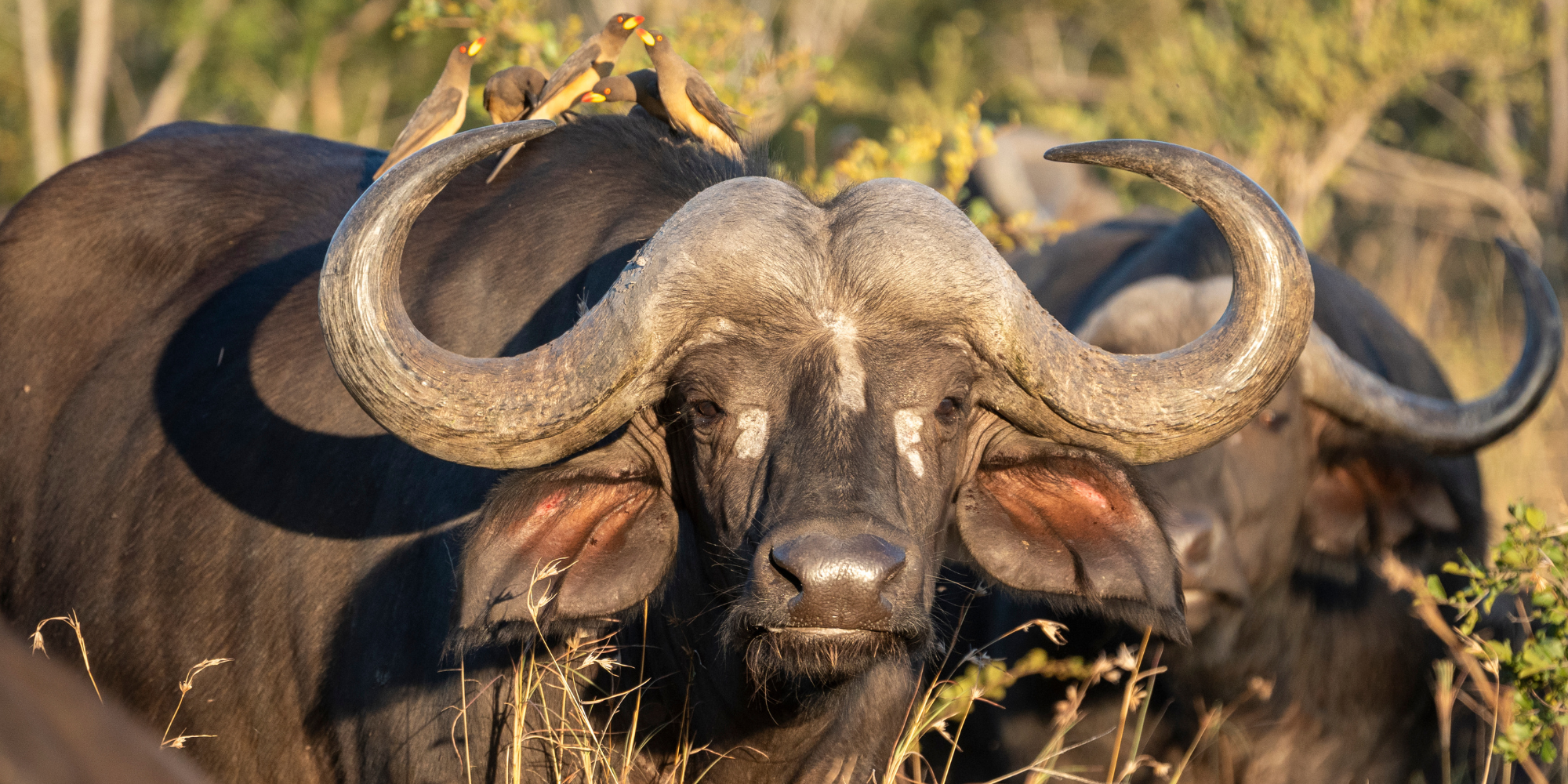
    Red-billed oxpeckers are small, striking birds that are easy to spot on the backs of large herbivores across southern and eastern Africa. Their bright red bills and sharp yellow eyes make them stand out, but their importance goes far beyond their colourful appearance. These birds play a crucial role in maintaining the health of both wildlife and the ecosystems they inhabit.

    Red-billed oxpeckers are famously associated with large mammals such as buffalo, giraffe, antelope, and even domestic cattle. They feed primarily on ticks, flies, and other parasites that infest their hosts. By doing so, they provide a natural form of pest control, reducing the parasite load and irritation for the animals they perch on. This mutualistic relationship benefits both species: the oxpecker gets a steady food supply, while the host experiences better health and comfort.

    These birds are not limited to just eating parasites. They also consume dead skin and sometimes even blood from small wounds, which can be a source of controversy among scientists. Some research suggests that oxpeckers may prolong minor wounds to keep a steady food source, while other studies indicate that their overall effect on host health is generally positive. Regardless, their presence has a clear impact on animal welfare in the wild.

    Red-billed oxpeckers are highly social and are often seen in pairs or small flocks. Their interactions extend beyond their feeding habits. They are vocal birds, using calls to communicate with each other and alert their hosts to potential dangers, such as predators nearby. In this way, they contribute indirectly to the safety of the animals they associate with, making them an integral part of the savanna’s intricate web of relationships.

    Beyond individual animals, red-billed oxpeckers play a role in the wider environment. By controlling parasite populations, they help maintain healthier herbivore populations, which in turn affects vegetation patterns and predator-prey dynamics. Their feeding habits also provide opportunities for other scavengers and insects to benefit from leftover food or disturbed parasites, adding yet another layer to their ecological significance.

    Red-billed oxpeckers are dependent on large herbivores, which means that the conservation of these birds is closely tied to the health of mammal populations. Habitat loss, declining wildlife numbers, and human-wildlife conflict all have the potential to affect oxpecker populations. Protecting large savanna and grassland ecosystems ensures these birds can continue their work, supporting the overall health of the environment.

    Spotting red-billed oxpeckers in the wild offers a small but fascinating glimpse into how species work together in nature. They are a reminder that even the smallest creatures can have a significant role to play in maintaining balance within ecosystems.

    If you’re interested in learning more about the interactions between birds and mammals, or want a career working with wildlife, explore Bushwise’s professional wildlife courses and deepen your understanding of Africa’s incredible wildlife.

  • African Wild Dogs: Lessons from a hunt that didn’t succeed

    African Wild Dogs: Lessons from a hunt that didn’t succeed

    This blog was written by Theodore Sfiso Mathonsi, a Bushwise Professional Safari Guide student. Each student takes a turn as camp manager, and writing a blog is part of the experience.

    There are moments in the bush that stay with you long after the dust settles, experiences that can never be taken from you. Moments that teach you about wildlife, but also about life itself. My first sighting of African wild dogs was one of those moments.

    We were out on an afternoon game drive, moving through the usual rhythm of scanning, listening, and reading the bush as it unfolded around us. From what I remember, it was a beautiful evening. The light was soft and golden. Then, from the back row of the game viewer, one of the students called out, “Madach, Madach” (the Shangaan word for African wild dogs). We all lifted our heads, caught off guard by the urgency in the call. It came so unexpectedly.
    It was our first time seeing African wild dogs. There were about five in the pack, and one was limping, though still highly alert. It was incredible to watch them move, pacing with that unmistakable energy, their patchwork coats catching the light. For many of us, it was the first encounter with them. You could feel the shift in the vehicle immediately.
    There’s something about wild dogs. They carry a sense of coordination, intelligence, and purpose that is hard to ignore. What struck me most in that moment wasn’t just their presence, but their resilience. One of the five had a clear injury to its leg. It lagged slightly at times, its movement uneven, but it remained fully part of the pack, still moving, still trying.
    We followed them for a while before eventually losing sight of them. We moved ahead, guided by their general direction, and it became clear what was unfolding. They were on a hunt. Ahead of us, a large herd of impala was grazing, completely unaware of the strategy closing in around them.
    The dogs began to spread out, silent and focused. Then, in an instant, everything shifted. The calm broke into chaos. Dust rose into the air. The impalas scattered in every direction. The dogs pushed forward, weaving through the confusion in an attempt to isolate a target. Even the injured dog joined the chase, pushing through its limitations with a determination that was hard to ignore.
    We watched from an elevated position on the game viewer, with a clear view of everything unfolding below. It was raw nature, unfiltered, unpredictable, and real. But the hunt did not end in a successful outcome. After a burst of coordinated effort, the impalas managed to escape. One by one, the dogs slowed, regrouping, tongues out, breathing heavily.
    The opportunity had passed. Yet there was no sense of defeat among them. No frustration. No hesitation. They simply came back together, recalibrated, and continued moving.
    That moment stayed with me. Because in that unsuccessful hunt, there was a powerful lesson I did not expect to take away from the sighting. At Bushwise, we are taught more than guiding skills. We are taught awareness, patience, and resilience. What I saw that day was not failure. It was effort. It was unity. It was resilience.

    The wild dogs did not succeed in their hunt, but they did not lose anything either. They committed fully, worked as a team, and adapted when things did not go their way. Even the injured member was not left behind, supported simply by being part of something larger than itself. That stayed with me.

    In life, especially when building a career, a dream, or a new path, things do not always go the way you expect. You put in the effort, make your move, and sometimes it does not land.
    But that does not mean the moment is wasted. Like those wild dogs, there is value in the attempt. There is growth in the process. There is strength in staying part of the journey, even when you are not at your best. And there is power in continuing forward anyway.
    That sighting reminded me that success is not always defined by outcome. Sometimes it is defined by showing up, playing your role, and staying in motion, even when things are difficult.
    As we eventually left the wild dogs and continued our drive, the energy in the vehicle did not fade. If anything, it deepened. Because we had not just witnessed a hunt. We had witnessed a story. A story of persistence, teamwork, trial and adaptation, and continuing regardless.
    And for me, that carried more weight than any successful hunt we could have seen.
    If you want to view Africa’s wildlife firsthand, Bushwise offers a range of wildlife courses where you can learn, experience, and live within a Big Five game reserve in Africa.
  • How to identify birds using the GISS method

    How to identify birds using the GISS method

    Birdwatching is one of those skills that becomes more rewarding the longer you do it. At first, all the fluttering wings and quick movements can feel overwhelming, but once you know what to look for, patterns start to appear. The GISS method is one of the best tools to help you get there.

    GISS stands for General Impression of Size and Shape. It’s a method used by guides, rangers, and birders around the world to identify birds quickly and confidently, even with only a short glimpse. Instead of fixating on tiny markings, GISS encourages you to take in the whole bird – its size, its proportions, how it moves, and where it’s found. Here’s how it works.
    General
    The “General” part of GISS refers to your first impression. What’s the bird’s overall look and feel? Is it elegant and slender like a heron, or compact and busy like a sparrow? Sometimes, your instinctive sense of a bird can be the most accurate clue. The more time you spend watching birds, the sharper that instinct becomes.
    Impression
    “Impression” focuses on the bird’s movement and personality. How does it behave? Is it gliding effortlessly, darting between branches, or bobbing its tail as it walks? Behaviour can tell you a lot — for instance, wagtails are known for their characteristic tail-bobbing, while hornbills tend to move deliberately through the trees. Watching how a bird acts in its environment often gives you just as much information as what it looks like.
    Size
    Size can help narrow things down quickly. Compare the bird to others nearby or to something familiar. Is it smaller than a dove? Bigger than a starling? Size can be deceptive depending on distance, so use it as a rough guide rather than a strict rule. Still, it’s a good way to eliminate possibilities — a bird much larger than a sparrow, for example, isn’t going to be one.
    Shape
    Shape is one of the most reliable identifiers. Look at the silhouette — long neck, short tail, broad wings? Raptors tend to have sturdy bodies and hooked beaks, while swallows are streamlined for fast flight. Even without colour, an experienced guide can identify a bird just by its outline against the sky. Practising this skill takes time, but it pays off quickly once you start noticing patterns.
    Using GISS in the field
    When you’re out in the bush, you rarely get the luxury of a perfect view. Birds hide in thick foliage or take off before you can grab your binoculars. The GISS method helps you make quick, confident identifications using what you can see in the moment. Start with your overall impression, watch how it behaves, note its size and shape — and only then, if you can, check colours or markings to confirm your guess.
    Developing your bird identification skills takes patience and practice, but it’s one of the most rewarding parts of spending time in nature. Each sighting sharpens your observation skills and deepens your connection to the natural world.
    Want to turn your passion for wildlife and the bush into a career? Learn more about Bushwise’s professional wildlife courses and start a career in the safari, conservation, or tourism industries.
  • Spotted hyenas and how hydration shapes their survival

    This blog was written by Koketso Barongwa Sekome, a Bushwise Professional Safari Guide student. Each student takes a turn as camp manager, and writing a blog is part of the experience.

    Across Africa’s open plains, the sound of a spotted hyena’s call cuts through the night. These animals are clever, complex, and highly adaptable, but even the most resourceful creatures need one thing to survive: water.

    image

    In the bush, where dry seasons can stretch for months, water plays a surprisingly big role in shaping hyena behaviour and survival. It helps them regulate body temperature, digest food, heal from injuries, and keep their coats in good condition. It also influences where they live, how they hunt, and how their clans interact.

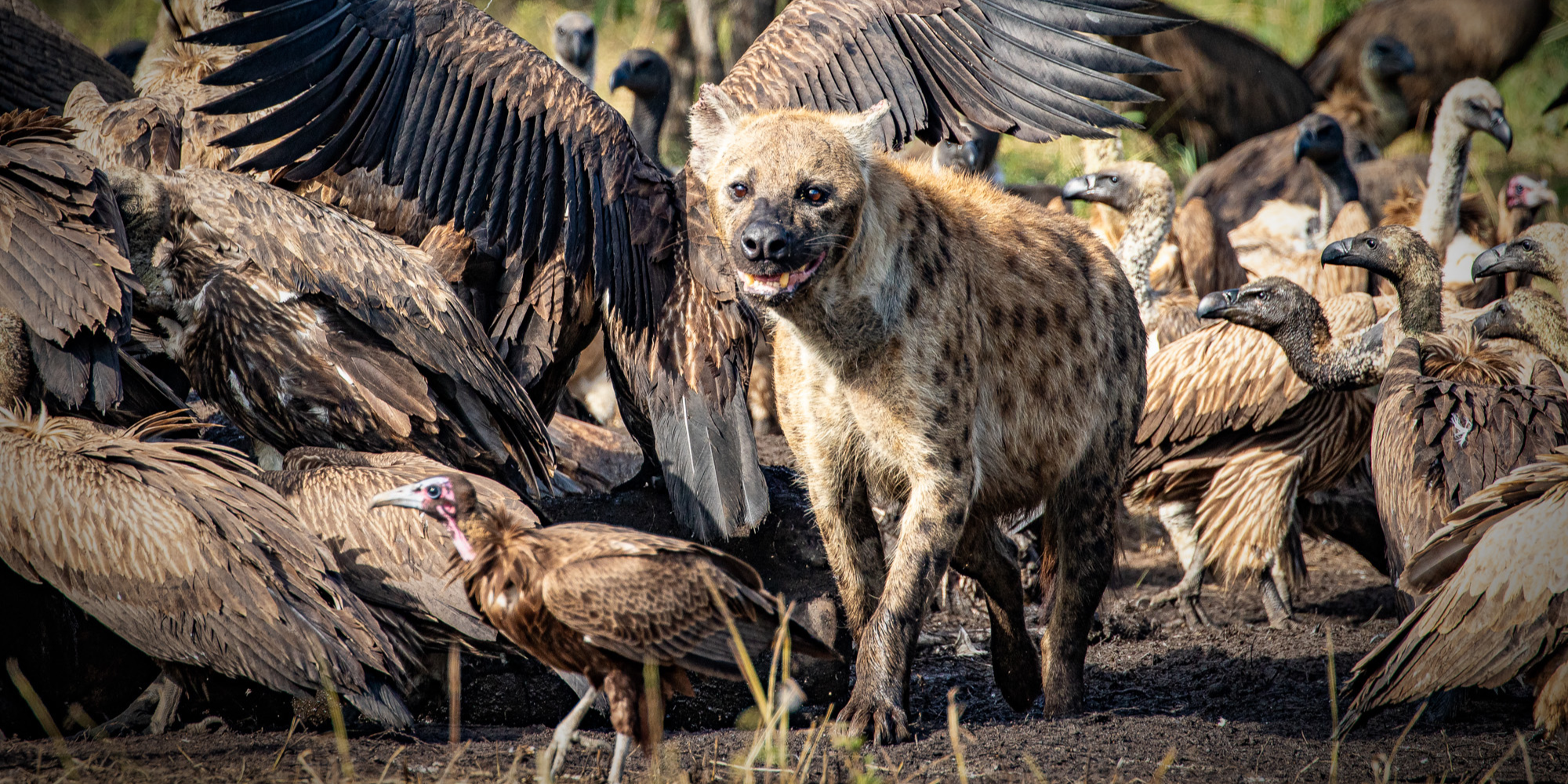
    Spotted hyenas get most of their water from their prey. The blood and soft tissues of animals they hunt or scavenge contain enough moisture to sustain them for several days. When water is easy to find, they’ll drink often and use rivers, dams, or pans to cool off in the heat. In dry conditions, they can go a week or more without drinking, depending almost entirely on prey fluids for hydration.

    Hyenas are often drawn to waterholes – not just to drink, but to cool down, socialise, and hunt. Water sources attract herbivores, and where there are prey animals, predators are never far behind. Researchers have even seen hyenas submerging carcasses in water to hide them from other scavengers and return later for a second meal.

    image

    Areas with reliable water tend to support more hyenas. That’s partly because water brings in more prey, but also because it provides central meeting points for clans. Hyenas use these spots to interact, reinforce social bonds, and communicate through scent marking and vocalisations. When drought hits and waterholes dry up, these important gathering places disappear, and clan territories may spread wider as they search for food and hydration.

    To cope with the heat, hyenas adjust their routines. They’re mostly active at night, when temperatures are cooler and less energy is lost to the sun. During the day, they’ll rest in the shade or in shallow pools of water. Their bodies are well adapted to conserving moisture, and their kidneys are efficient at holding onto water even in arid environments.

    Water shapes every part of a spotted hyena’s life – from hunting to social structure to territory size. Protecting natural water sources like rivers, pans, and wetlands helps ensure not only the survival of hyenas but also the balance of the broader ecosystem they’re part of. When water thrives, so does everything else around it.

    image

    If learning about the natural world excites you, imagine studying it in person. Join Bushwise to explore Africa’s wildlife up close, understand the behaviours that keep ecosystems in balance, and take the first step towards a career in field guiding, wildlife tourism, or conservation.

  • The Spotted Bush Snake: Misunderstood and harmless

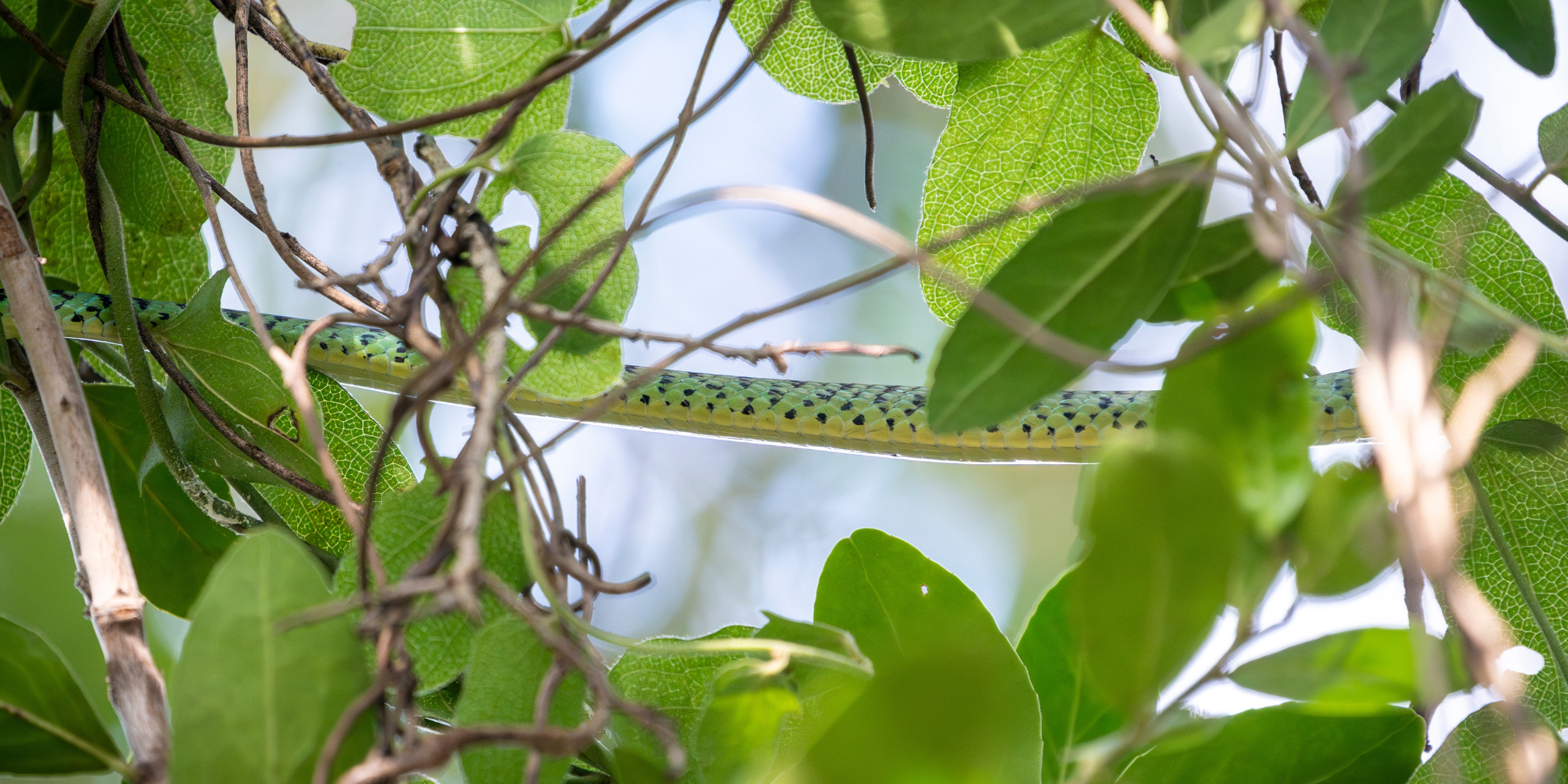
    Every so often, someone spots a bright green snake sliding across a wall or sunning itself in a tree and immediately sounds the alarm — “Boomslang!” It’s an understandable reaction, but more often than not, what they’ve actually seen is the spotted bush snake. And despite the confusion, this sleek little reptile couldn’t be more different from its venomous lookalike.

    image

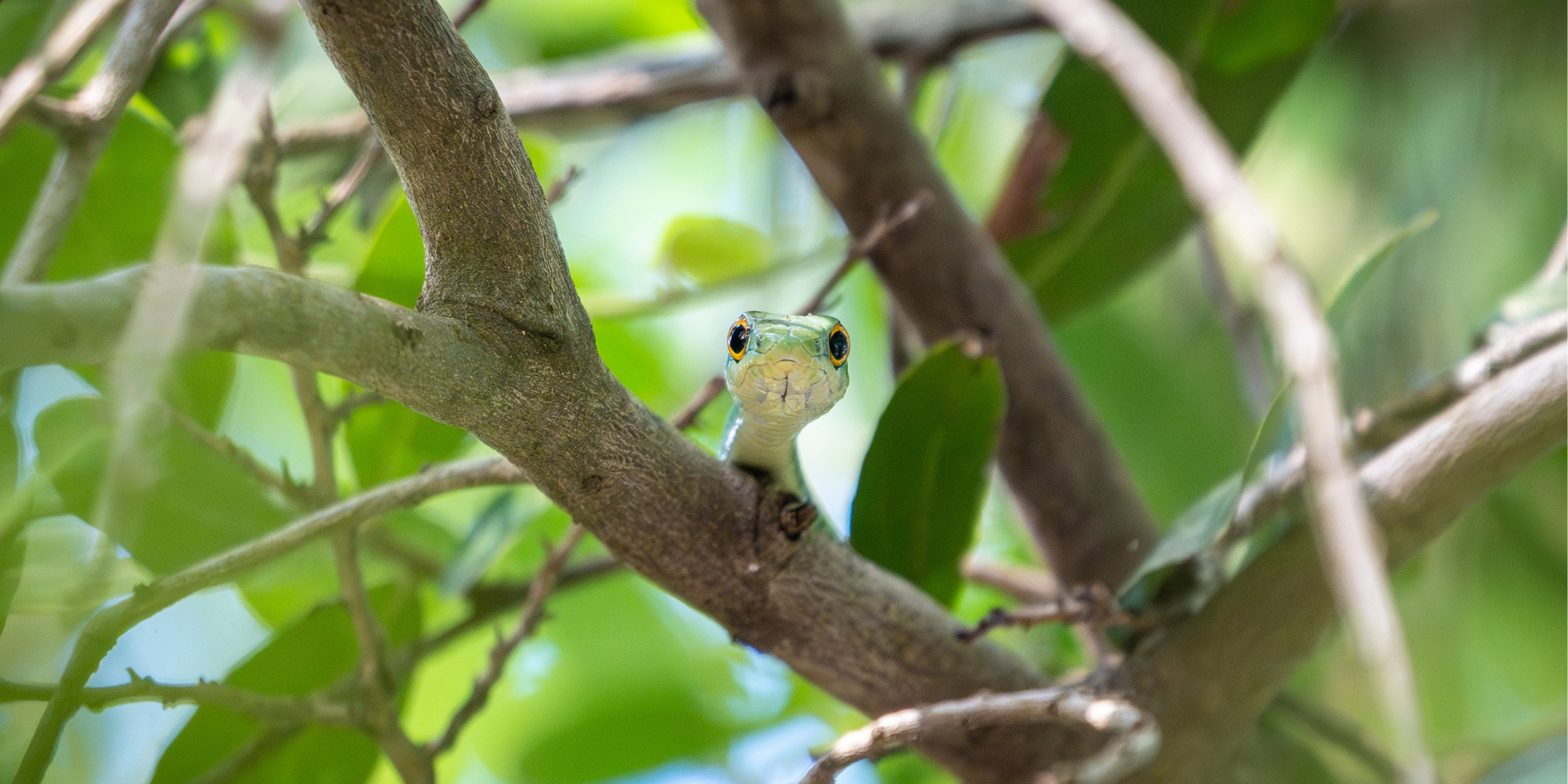
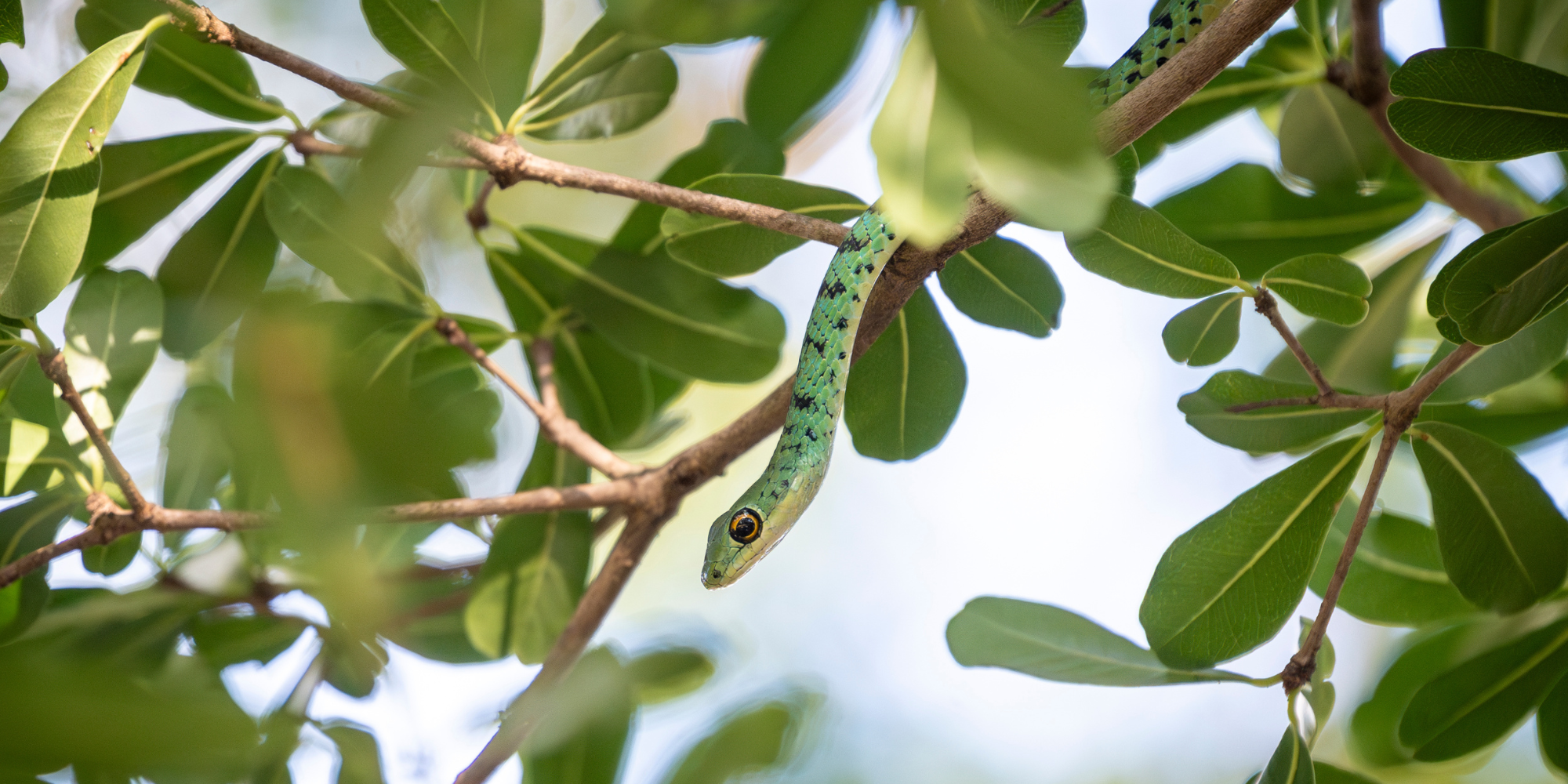
    The spotted bush snake (Philothamnus semivariegatus) is one of the most commonly seen snakes in southern Africa, and one of the most misunderstood. It’s completely non-venomous, harmless to people, and actually quite shy. But because it shares that vivid green colouring with the boomslang (Dispholidus typus), it often gets mistaken for one.

    Spotted bush snakes are slim, agile, and usually measure around 80 to 100 centimetres in length. Their colour can vary from bright leaf green to a more turquoise tone, often with a scattering of black or blue spots along the body, which is where they get their name. Their eyes are large and golden, with round pupils, giving them a very alert look. They’re diurnal, meaning they’re active during the day, and they’re almost always found in trees, shrubs, or even on walls and roofs where they can chase their favourite prey: geckos and small lizards. Occasionally, they’ll take a frog, but their diet is mainly made up of fast-moving reptiles.

    image

    You can find spotted bush snakes throughout most of sub-Saharan Africa. In South Africa, they occur widely across the eastern and northern provinces, KwaZulu-Natal, Limpopo, Mpumalanga and parts of Gauteng, wherever there’s enough vegetation and warmth. They’re particularly common in gardens and around homes that border natural areas, which explains why so many people encounter them without realising what they are.

    The boomslang, on the other hand, is indeed one of Africa’s most venomous snakes, and it also happens to be green – at least the males are. But there are a few simple ways to tell the two apart. For one, the boomslang has a noticeably larger head and an extremely large eye relative to its head size. It’s also stockier, with a thicker body and a more defined neck. The spotted bush snake, in contrast, is slender, even delicate, with a more uniform head shape and smaller eyes. Boomslangs also tend to have smoother, shinier scales and a more olive or matte green tone, while spotted bush snakes often have those characteristic dark speckles and a hint of blue.

    image

    Another key difference is behaviour. Spotted bush snakes are quick to flee and almost impossible to corner. If approached, they’ll zip up a wall, into a tree, or disappear into a gutter. Boomslangs, on the other hand, tend to freeze when threatened, relying on camouflage. And of course, while the boomslang’s bite can be deadly, the spotted bush snake doesn’t possess venom that poses any risk to humans or pets.

    Want to learn more about Africa’s wildlife? Bushwise offers wildlife courses that range from a few days to a year.

  • African vs Cape Buffalo: What’s the Difference, Really?

    Spend a little time around safari chatter and you’ll hear people use the words African buffalo and Cape buffalo like they mean the same thing. It’s an easy mix-up – after all, they look pretty similar, they’re both part of Africa’s famous Big Five, and they both have that same “don’t mess with me” stare. But there is a difference.

    image

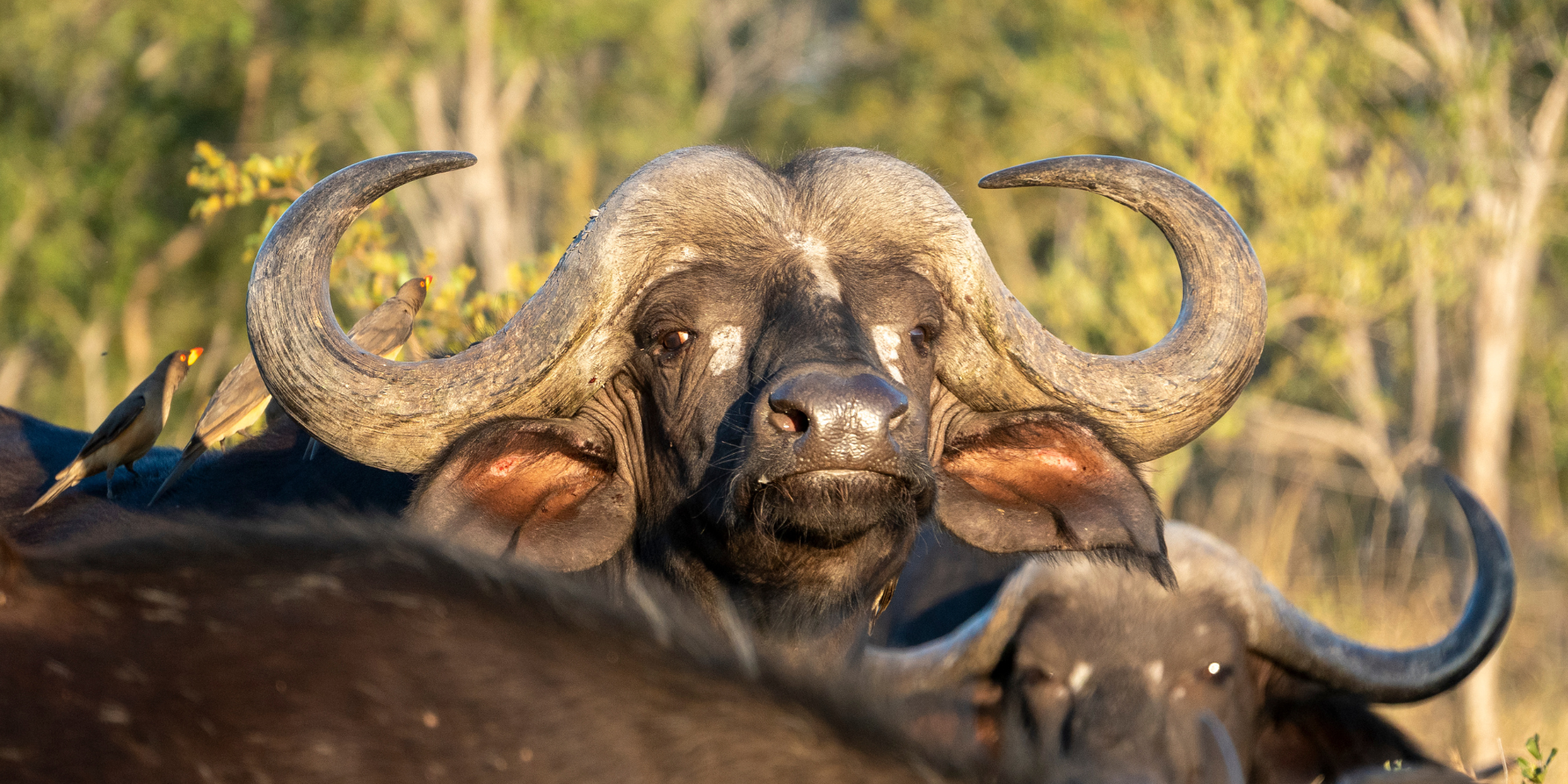
    Let’s start with the basics. The African buffalo (Syncerus caffer) is the umbrella species – the big picture term. Within that species, there are a few recognised subspecies found across the continent. The Cape buffalo (Syncerus caffer caffer) is just one of them. It’s the largest, most common, and the one most people think of when they picture a buffalo charging through the bush. So when you hear someone say “African buffalo,” they might be referring to any of the continent’s buffalo types. But when they say “Cape buffalo,” they’re talking about a very specific one – the southern heavyweight.

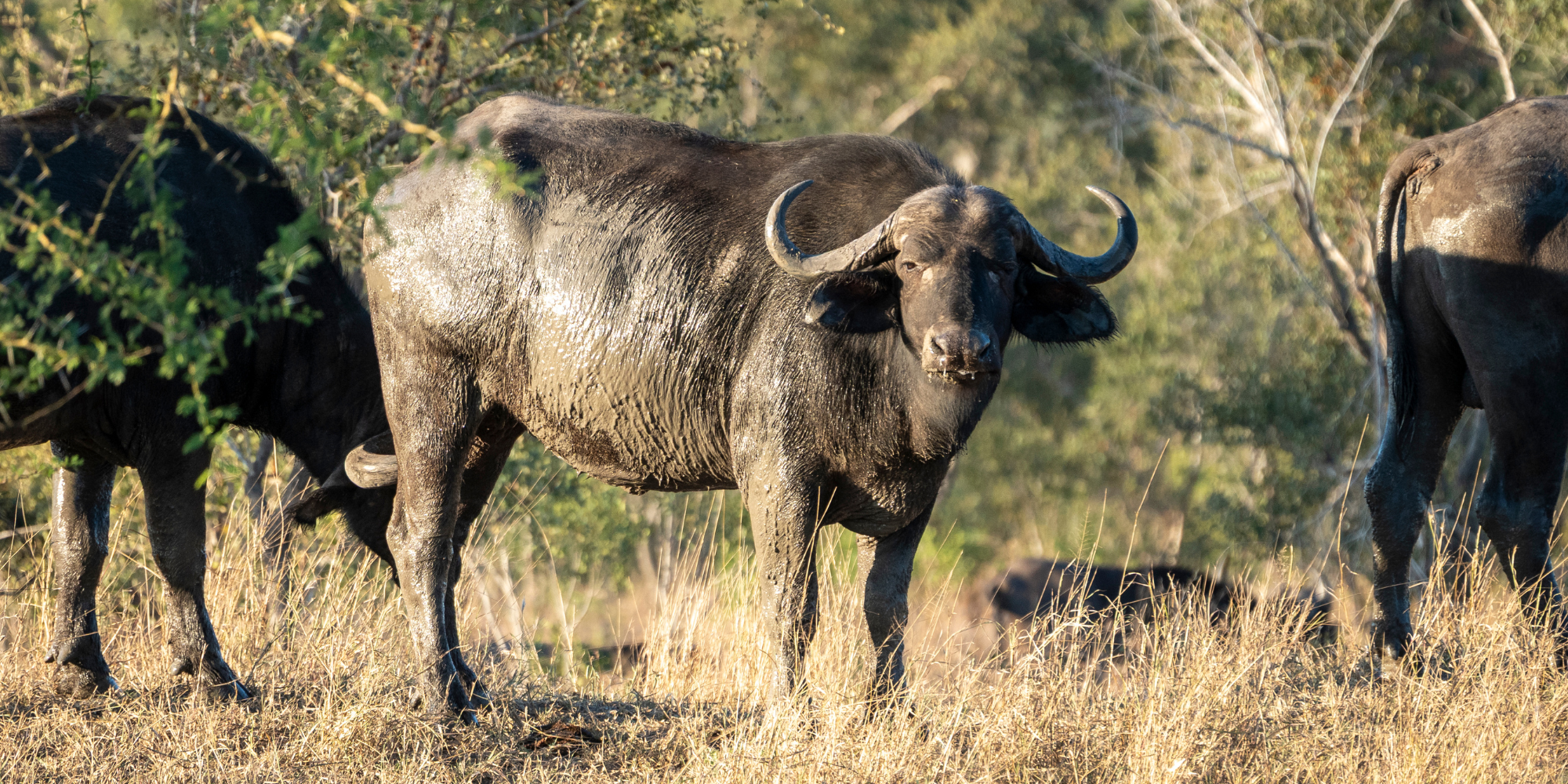
    Cape buffalo are the ones you’ll see in southern and East Africa: South Africa, Botswana, Zimbabwe, Tanzania, and Kenya. They’re large, muscular, and dark in colour, often almost black, with thick, curved horns that meet in the middle of their heads to form that solid “boss”. They tend to move in large herds, sometimes hundreds strong, and are known for their unpredictable, stand-your-ground attitude. That’s what earned them their reputation and their place among the Big Five.

    image

    Head further north or into central and western Africa, and you’ll meet the Cape buffalo’s smaller cousins. The forest buffalo (Syncerus caffer nanus), for instance, lives in the dense rainforests of Central and West Africa. It’s reddish-brown, smaller, and far more secretive than the Cape buffalo. Instead of wide open grasslands, it moves quietly through the undergrowth, more shy than showy. There are also a couple of intermediate subspecies, like the Sudan buffalo and Nile buffalo, which have traits that sit somewhere between the forest and Cape types, depending on where they live.

    So, to sum it up simply:

    • The African buffalo is the species as a whole.
    • The Cape buffalo is one subspecies – the biggest, darkest, and most widely seen on safari in southern Africa.
    • The forest buffalo and others are smaller, redder, and adapted to different environments further north in Africa.

    Every Cape buffalo is an African buffalo, but not every African buffalo is a Cape buffalo.

    image

    And what about water buffalo? You can read more about how they differ from the African buffalo here.

  • The Lowveld of South Africa: A look at its fauna and flora

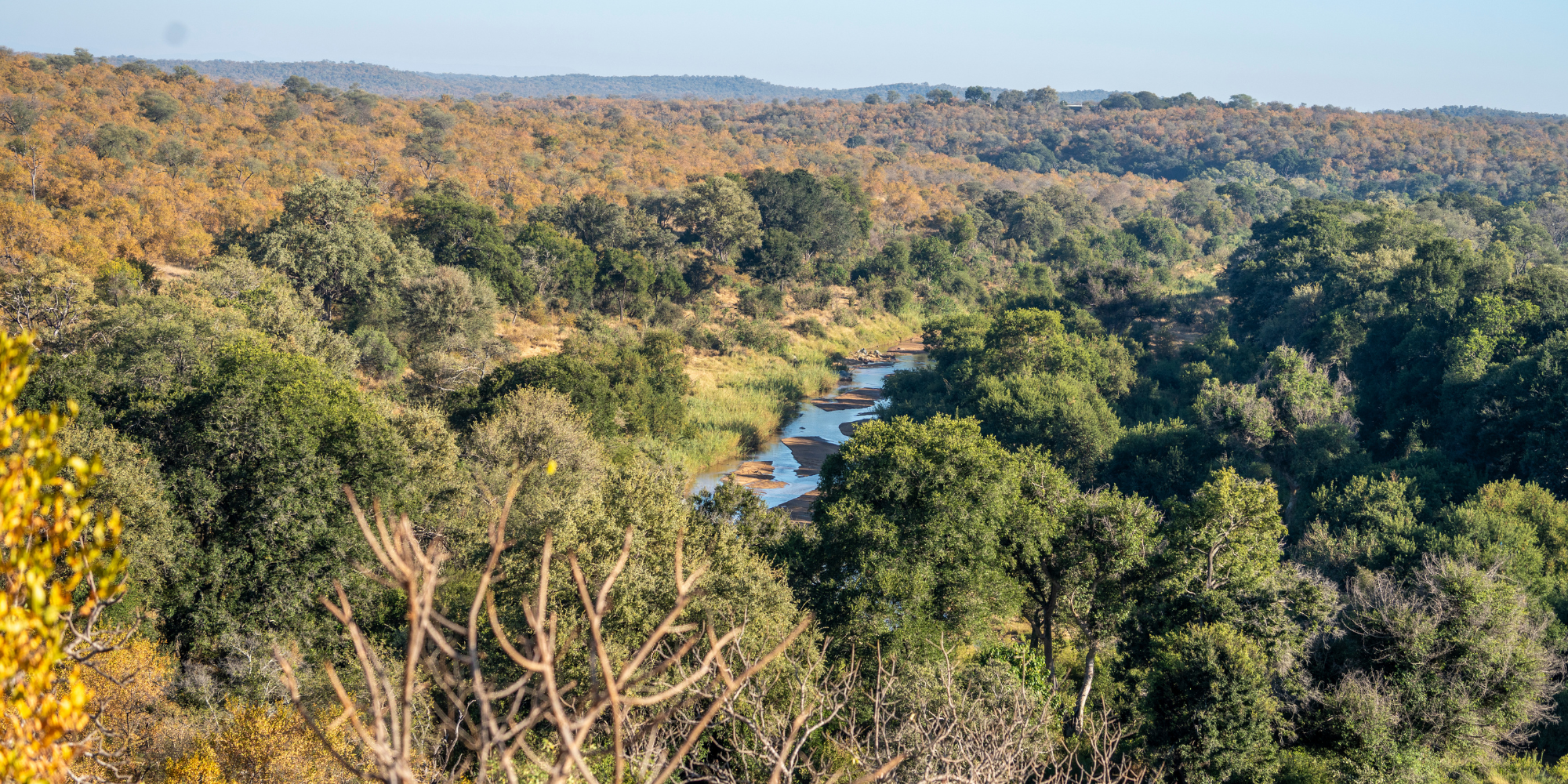
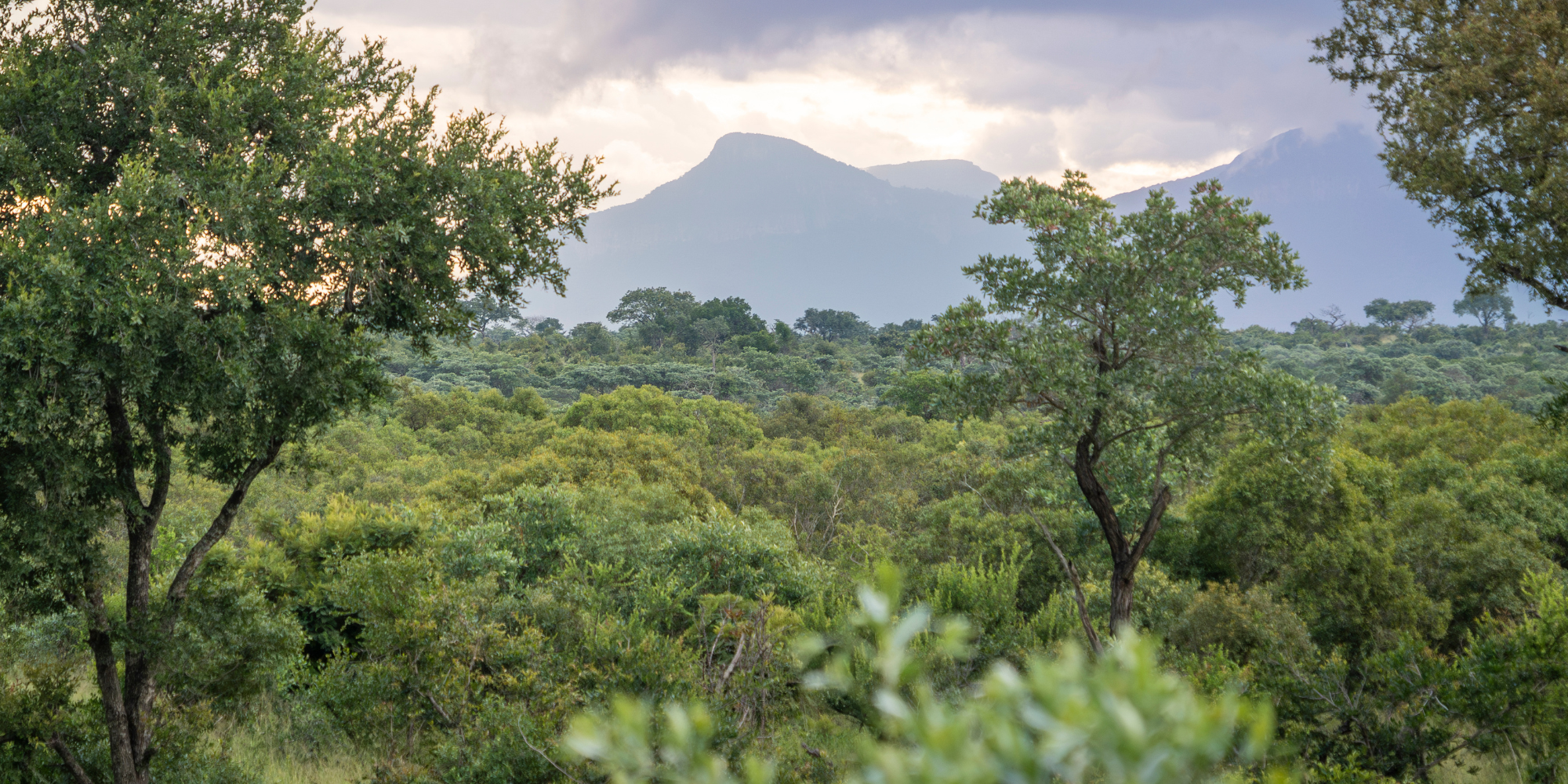
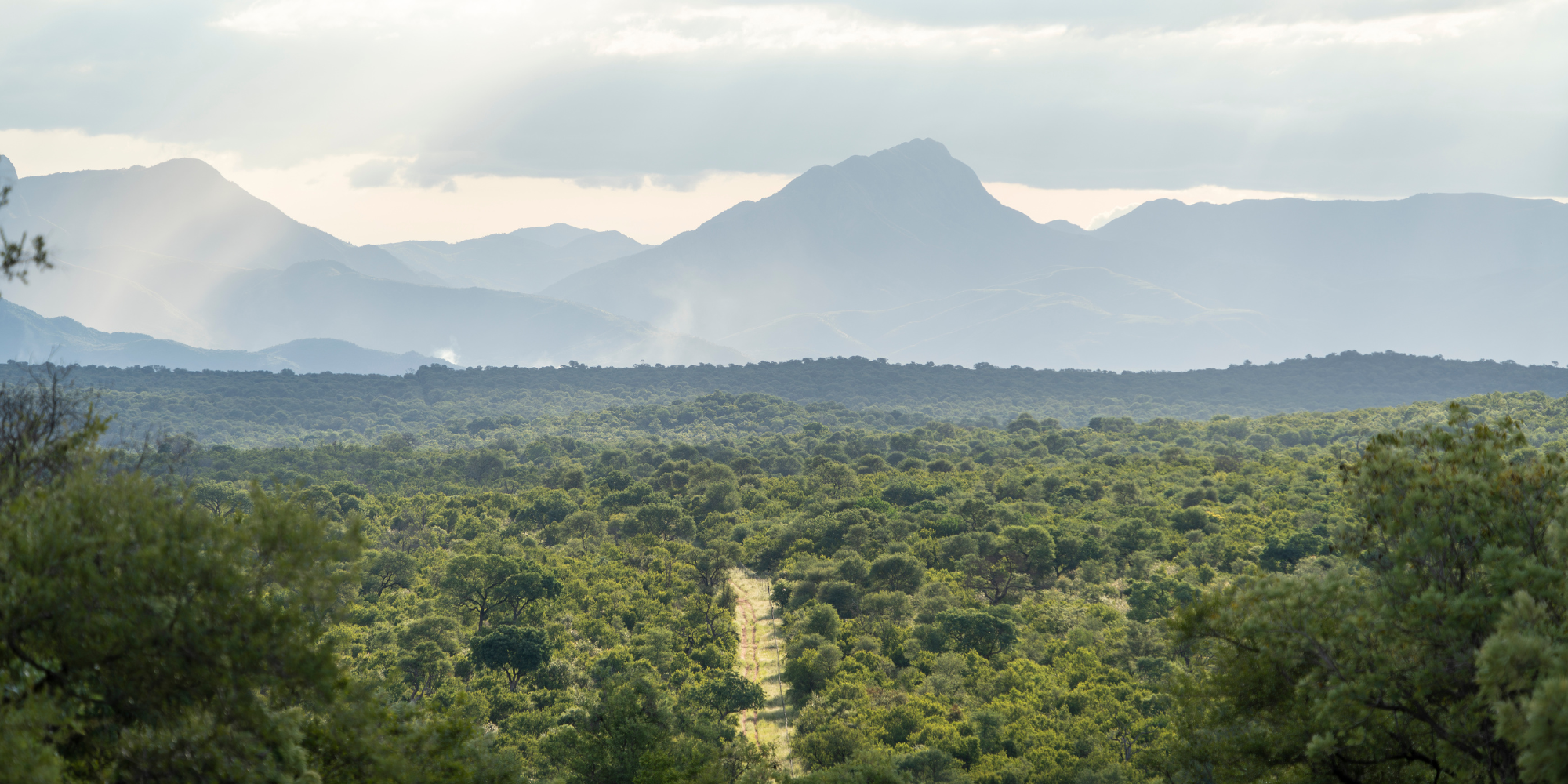
    The Lowveld is the low-lying, subtropical region of north-eastern South Africa, mostly below 1 000 metres. It is known for its warm climate, open bushveld, and rich wildlife. Many people think of this area as the “classic African landscape” because of its broad valleys, rivers, and variety of plants and animals.

    image

    The climate of the Lowveld is a key factor in shaping its vegetation and wildlife. Summers are hot and wet, with most rain falling between October and April. The rest of the year is warm and dry. This pattern affects when plants grow and when animals breed or move. Soil type and elevation also influence which species are found in different areas.

    Vegetation in the Lowveld includes open woodlands and savannahs with a mix of trees, shrubs, and grasses. Mopane woodland, common in parts of Limpopo, is dominated by the mopane tree, which supports many insects and browsing animals. Other areas feature acacia or thorn bushveld, fever trees, baobabs, and forest along rivers. This mix of plant types creates many different habitats for animals.

    image

    The wildlife of the Lowveld is closely linked to its plants. The region supports large herbivores and predators, including the Big Five, as well as smaller mammals and specialist species. Birds are common in areas with water and varied vegetation. Wetlands, rivers, and different types of woodland each attract their own bird species. The range of habitats is one reason the Lowveld is so rich in wildlife.

    Different parts of the Lowveld have different species because of variations in climate, soil, and water. Temperature and rainfall can change quickly across the region, especially near escarpments and rivers. Soil types affect which plants can grow, with some soils supporting moisture-loving species and others supporting drought-tolerant trees like mopane. Permanent rivers and pans provide water for animals and attract migratory birds. Past land use, fire, and grazing also shape the landscape and the species it can support.

    image

    The Lowveld is a region of diversity. Bird-rich thickets sit beside open grasslands, mopane woodlands surround pans that attract elephants, and rivers provide life for many animals. Protecting these areas requires conserving rivers, managing fire carefully, and allowing grazing that does not harm native plants.

    For guides, naturalists, and travellers, the Lowveld offers an opportunity to see how plants and animals are connected. By observing the trees, grasses, and water sources, it is possible to understand why each part of the Lowveld supports different communities of life.

    If you want to experience the Lowveld and its species first-hand, view Bushwise’s professional wildlife courses and start your journey in South Africa’s remarkable bush.

  • Understanding and protecting Africa’s elusive leopards

    This blog was written by Tia Bell, a Bushwise Professional Safari Guide student. Each student takes a turn as camp manager, and writing a blog is part of the experience.

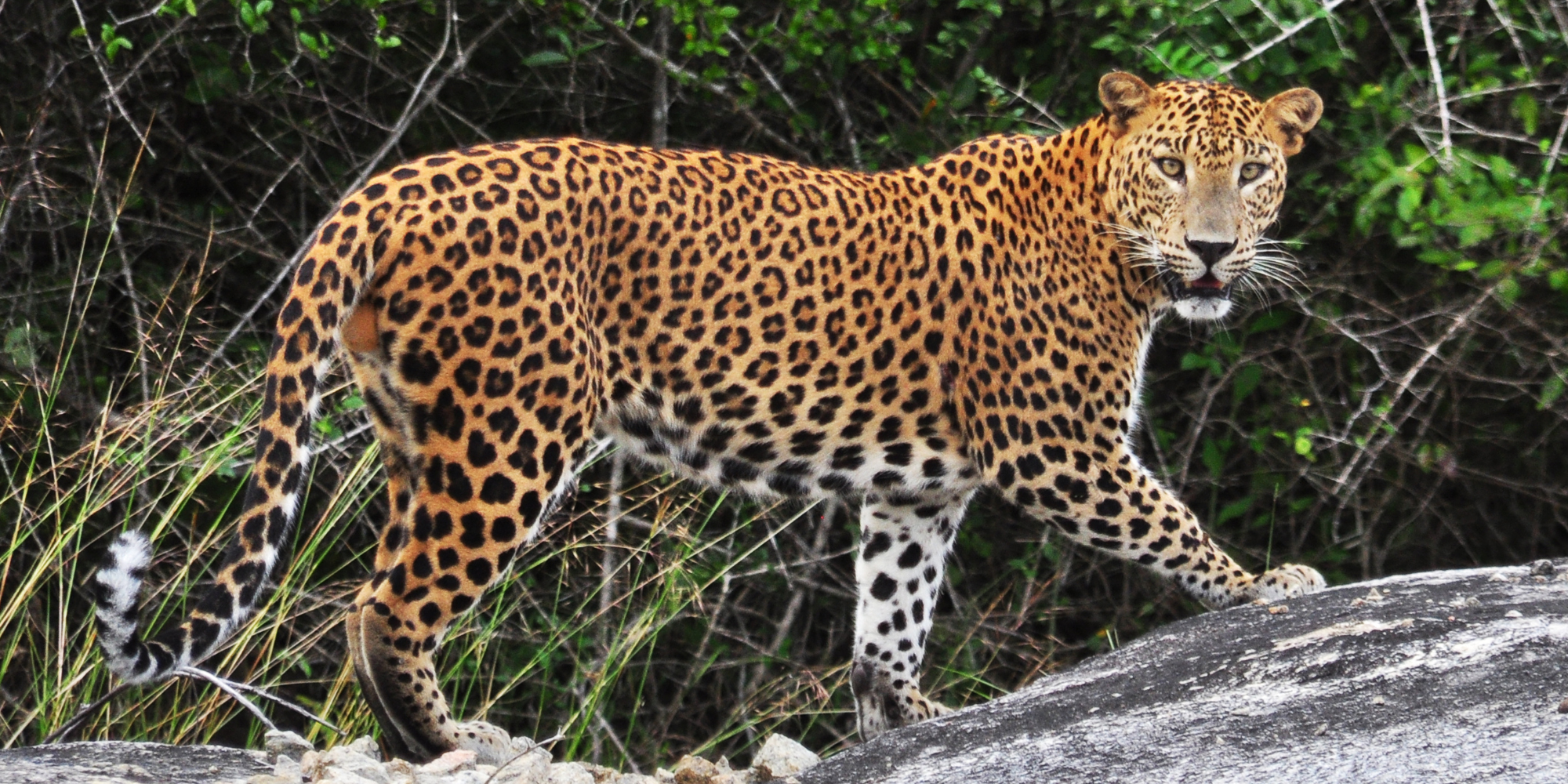
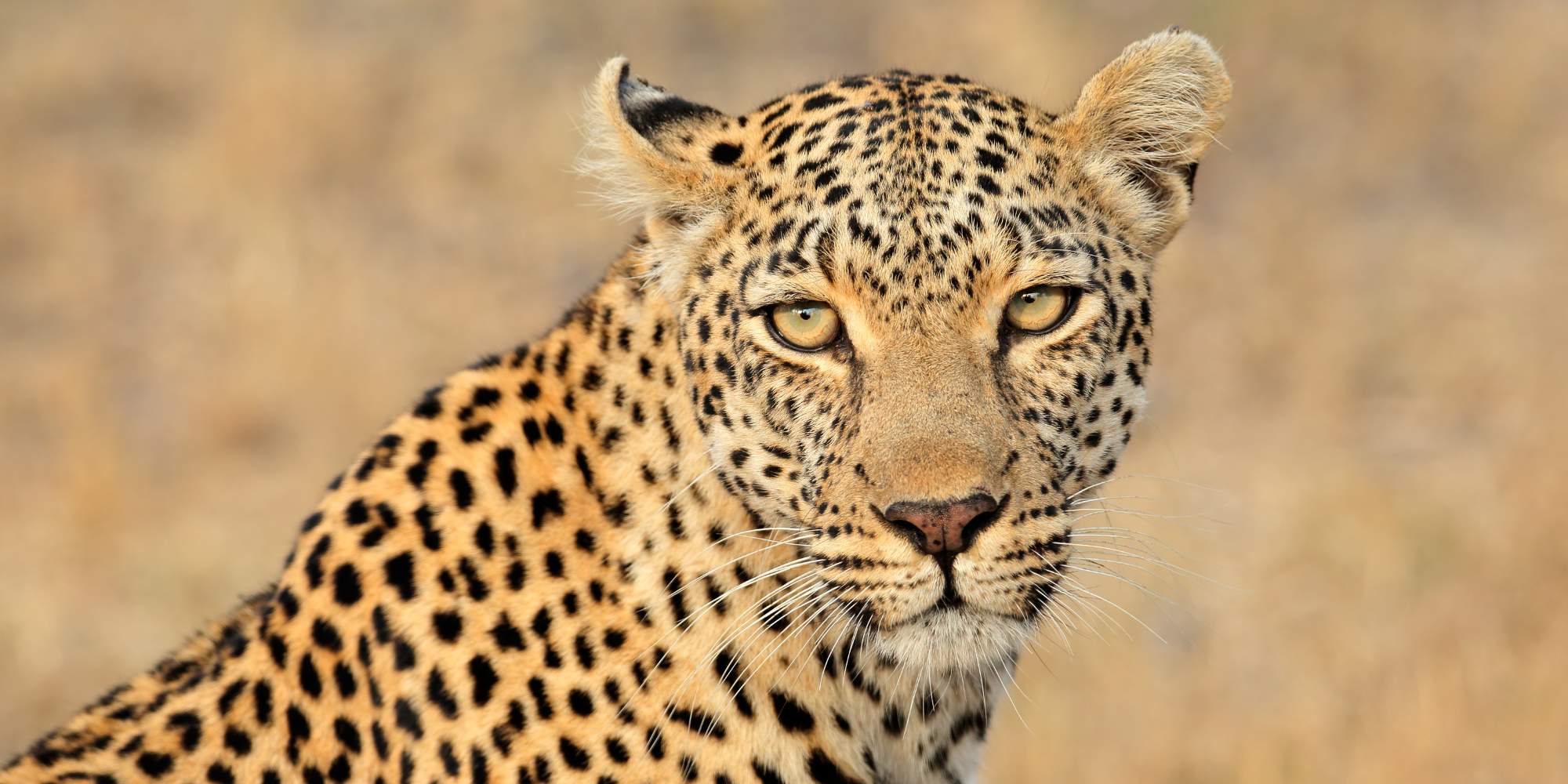
    The leopard is one of Africa’s most mysterious and graceful creatures. Powerful, stealthy, and beautifully patterned, it’s an apex predator and one of the Big Five, a true sign of a healthy ecosystem. But despite being such a master of survival, leopards are facing more threats than ever. Human activity is shrinking their world, and without our help, these incredible cats could disappear from places they’ve lived for generations.

    image

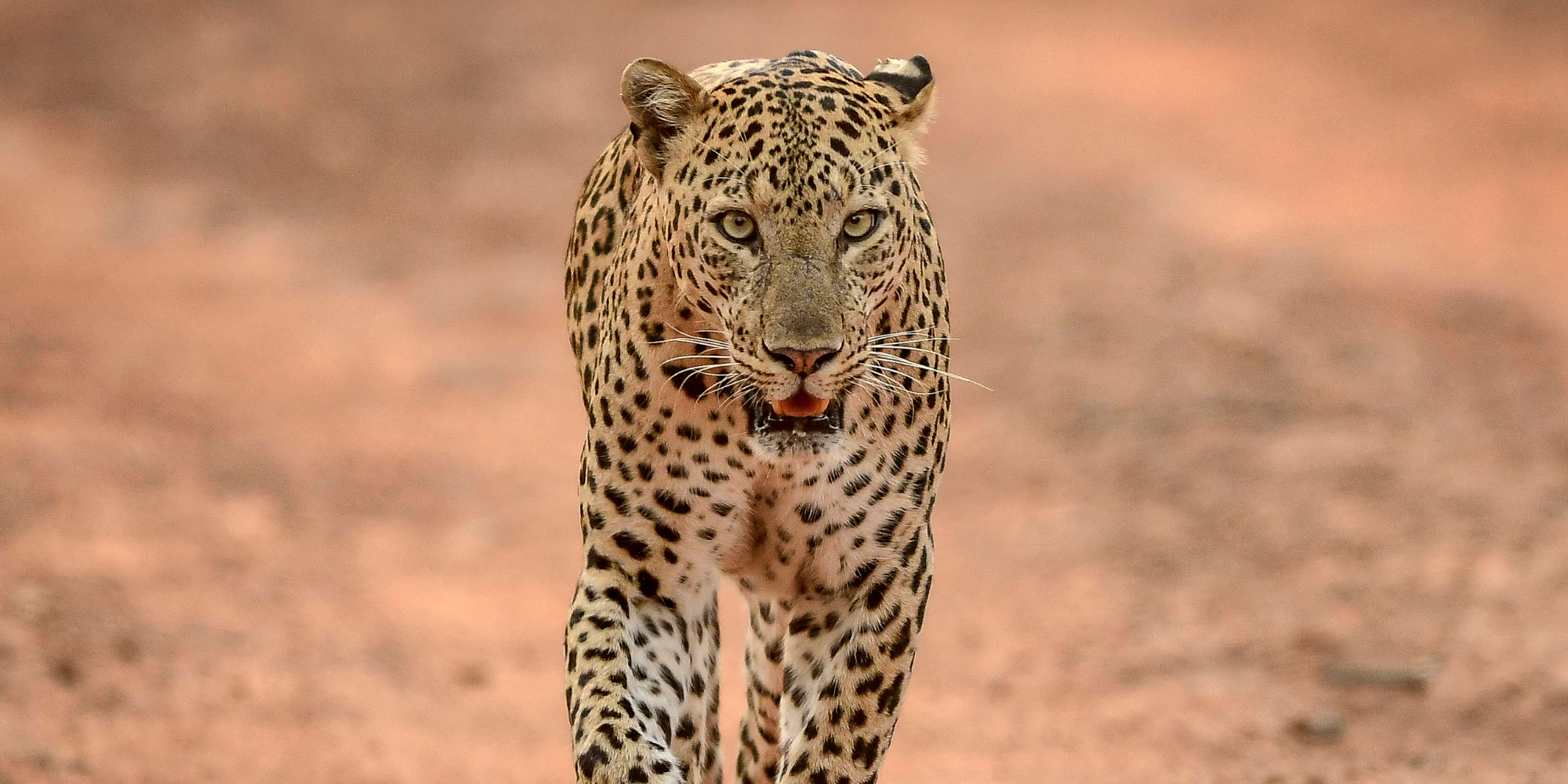
    Leopards are the ultimate experts in staying out of sight. Mostly solitary and active at night, they rely on camouflage and patience to hunt. They don’t sprint after their prey like cheetahs—they stalk quietly, wait for the perfect moment, and then strike with speed and precision. Hunting isn’t easy, and even the most skilled leopard doesn’t succeed every time.

    Competition is tough. Lions, hyenas, and even some scavenging birds are always trying to steal a leopard’s hard-earned meal. To protect their food, leopards often drag it up into trees, sometimes prey as heavy as they are. It’s a brilliant survival trick, keeping their dinner safe from other predators while showing off just how strong and adaptable they are.

    Life as a leopard is mostly a solo adventure. They only come together briefly to mate, and after that, the female takes care of the cubs alone. Usually, she raises two or three little ones, teaching them how to survive in the wild until they’re ready to go off on their own. Scientists are even exploring whether the spots on a leopard—their unique rosette patterns—might tell us something about family connections. That’s still early research, but it could help with tracking and protecting them.

    image

    Even though they’re at the top of the food chain, leopards are considered vulnerable on the IUCN Red List. Human pressures are the main threat. Farmland and development break up their habitats, poachers and trophy hunters reduce their numbers, and conflict with livestock often ends badly for the cats. Protecting leopards isn’t just about saving one species; it’s about keeping ecosystems balanced and healthy.

    The good news is that conservation can work, especially when communities are involved. Educating people about leopards, helping them coexist safely, and showing the benefits of protecting wildlife can make a real difference. It’s a team effort: people, science, and nature working together.
    image

    Leopards may move silently through the bush, but they’re not invisible in importance. Their survival is tied to the health of their environment and the communities around them. By understanding them, protecting them, and giving local people a stake in their future, we can make sure these shadows of strength continue to roam Africa’s wild places and that we don’t lose the beauty, mystery, and vital role they play in our world.

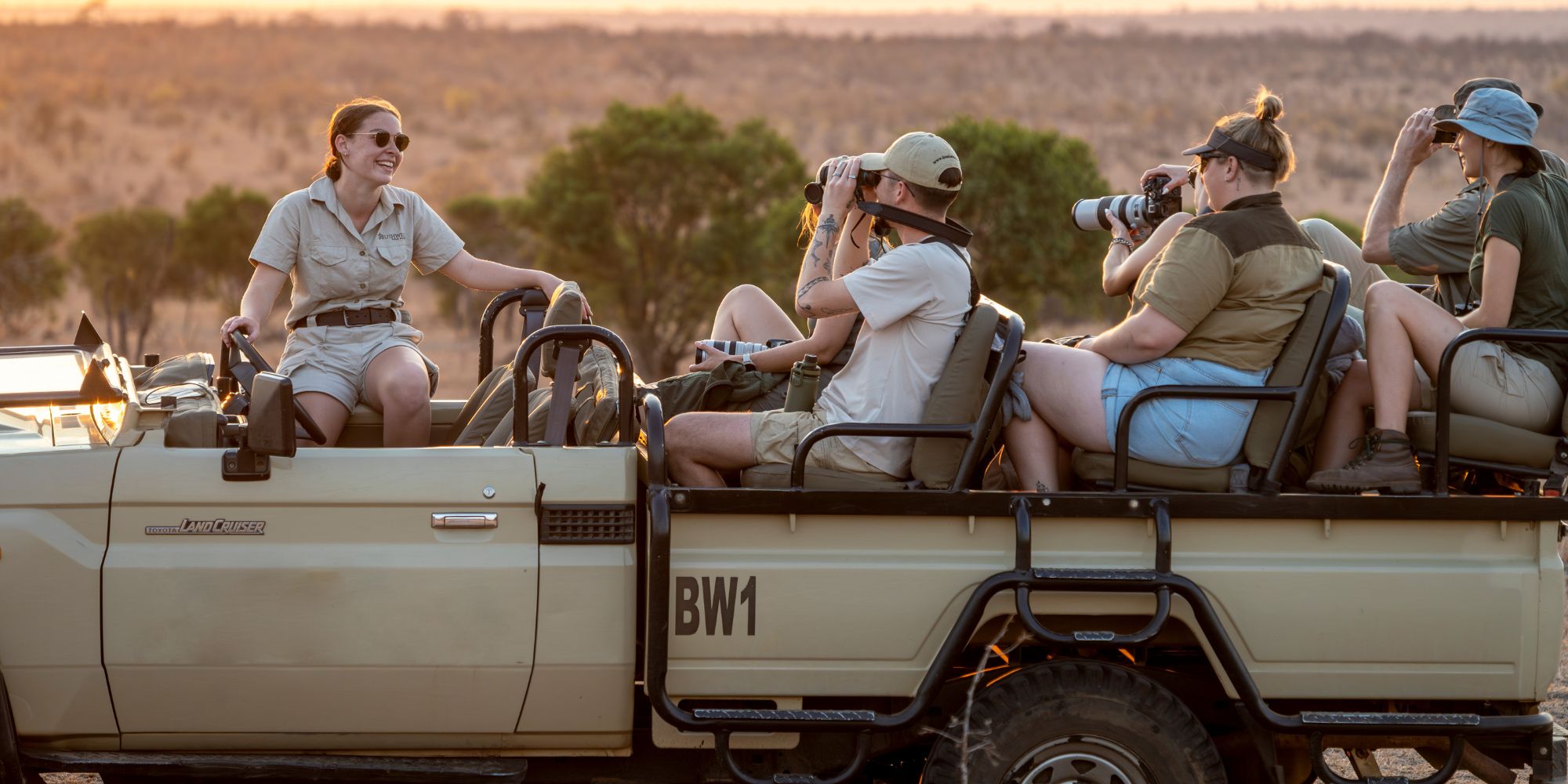
    Want to see African wildlife up close and make a real difference? Bushwise offers a wide range of professional wildlife programs where you can get hands-on, learn from experts, and help conserve these amazing animals.

  • The ultimate Bushwise packing guide

    Wondering what to pack for your Bushwise course? Student Emma Dalmeijer, an IFGA Professional Safari Guide student, shares her experience (and a few lessons learned) about what really works in the African bush – from vellies and khaki shorts to rain jackets you might never use.

    Before arriving at Bushwise, I stood in front of my wardrobe, wondering what on earth to bring. I had never been to Africa before, so I had little idea of what to expect. In the end, I chose what seemed sensible: a pair of mountain shoes from a local outdoor store, one pair of zip-off pants, some denim shorts, a few old shirts, a rain jacket, and, for headwear, a cap and some headbands.

    image

    My plan was simple – comfortable, practical, and multi-functional clothing.

    However, when I arrived in South Africa, I quickly realised that dressing for the bush is something of a science in itself.

    The shoe dilemma

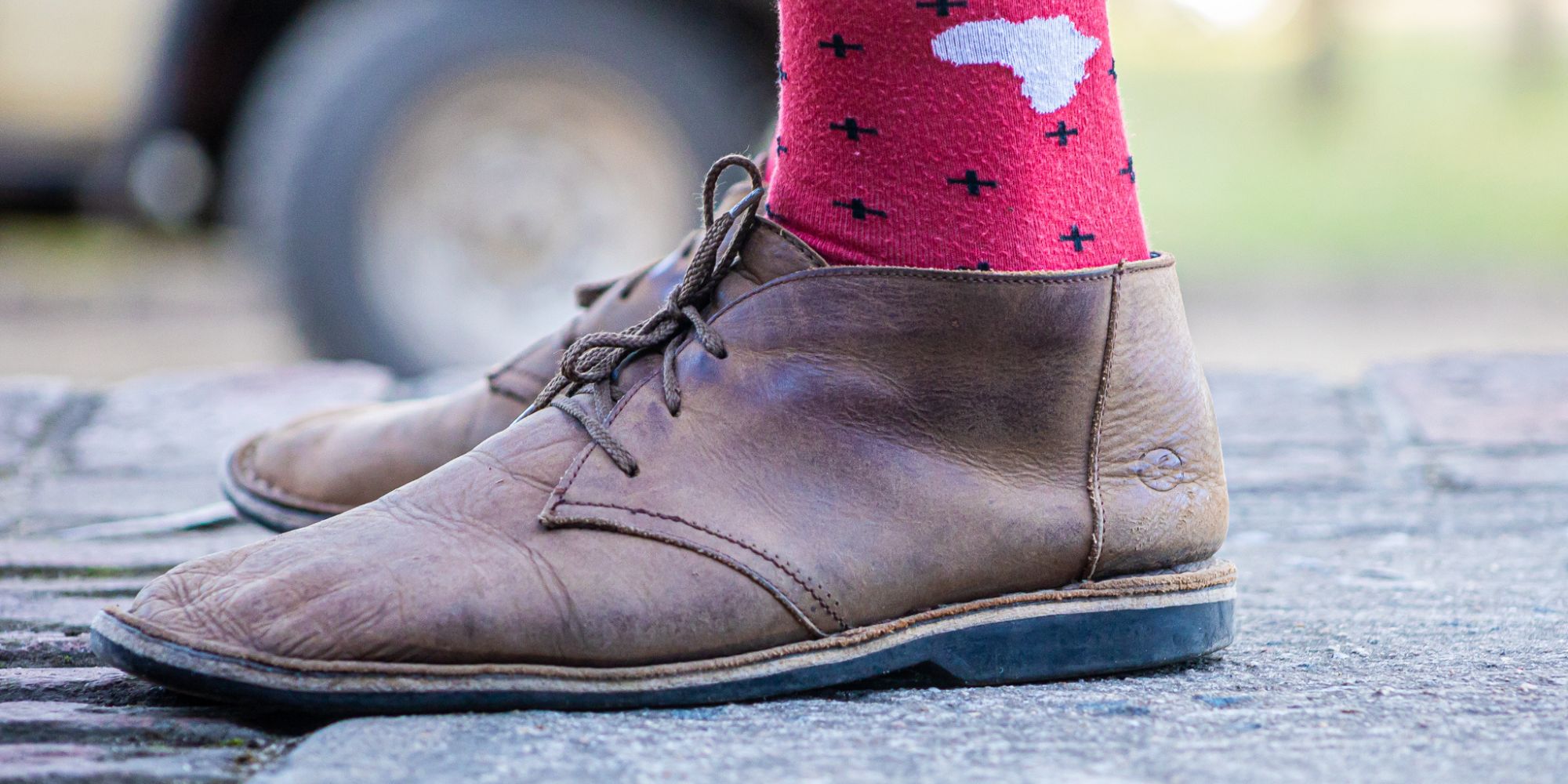
    On my first morning on campus, I stepped out in my sturdy mountain shoes — only to have another student say, “Your feet will be so hot! We’re buying vellies in town.”

    (Vellies are a shoew worn by almost all South Africans, usually made from leather)

    image

    At first, I didn’t think much of it. My shoes were perfectly fine… during winter, at least. But when summer arrived, the inside of those shoes became almost unbearable. That’s when I decided to try a pair of vellies.

    I immediately understood why South Africans rely on them. They’re breathable, lightweight, and quiet, making them ideal for tracking animals without leaving heavy footprints in the sand. My mountain shoes didn’t stand a chance against them!

    That said, my personal favourite footwear remains flip-flops, or “plakkies”, as they’re called here. Every South African seems to live in them, and I now understand why.

    image

    Shorts that mean business

    My zip-off pants seemed like a clever idea at the time, until I met the thorny vegetation of South Africa. Every branch I brushed past caught onto the material, leaving small holes behind.

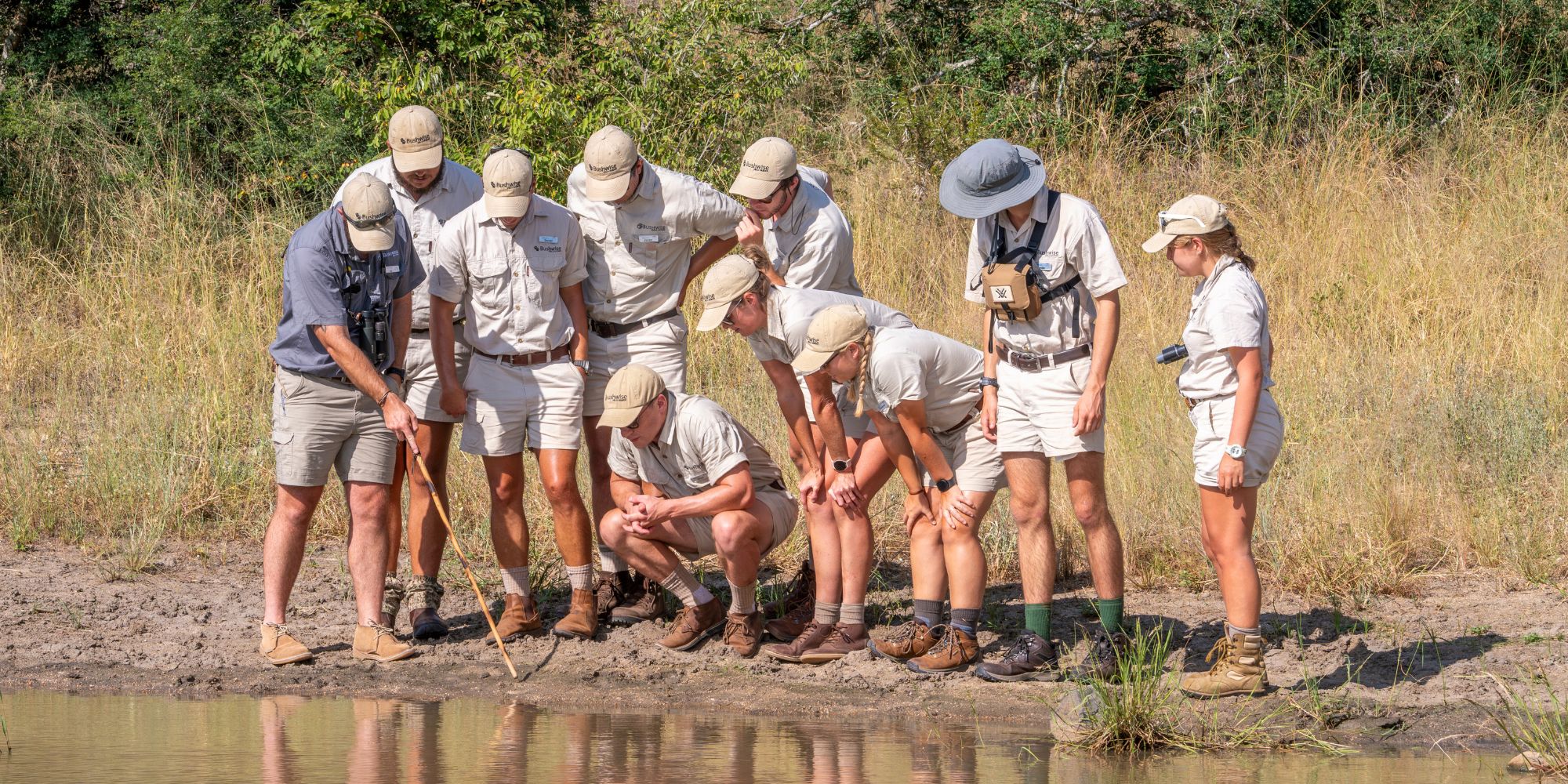
    Fortunately, Bushwise provides a professional uniform. The khaki shorts are made of durable, comfortable fabric, and the pockets are spacious, making it easy to carry everything needed for a bush walk.

    Compared to the tiny pockets on the shorts I brought from home, these were a revelation.

    Shirts and rainstorms

    When it came to shirts, my tank tops and T-shirts served me fairly well. However, most students preferred the traditional safari-style button-up shirts with roll-up sleeves and ventilation panels. Personally, I kept things simple, though I could see the appeal of those designs.

    The real surprise came during the rainy season. Coming from the Netherlands, I assumed my rain jacket would be indispensable. But when the rains arrived, I watched the South Africans walk out in shorts, plakkies, and T-shirts as though nothing had changed. Apparently, rainwear isn’t a necessity here!

    image

    Hats and sunglasses

    One absolute essential is a hat. My old baseball cap works perfectly well, though around camp you’ll see everything from bucket hats to wide-brimmed safari styles. As long as it shades your face and eyes, it does the job.

    Sunglasses, surprisingly, are less critical than I expected, and a good hat provides most of the protection you need.

    Tools of the trade

    Clothing aside, one of the most useful items I brought was my Swiss Army knife. I’ve always liked multi-tools, but here I discovered the South African equivalent – the Leatherman.

    It does everything a Swiss knife can, but with the added benefit of strong pliers, which turn out to be incredibly handy. South Africans swear by them, and I can see why. They’re practical, durable, and,  if I’m honest,  rather impressive to have on hand. Naturally, I had to get one for myself.

    image

    The ultimate bush outfit

    After a few months at Bushwise, I’ve perfected my go-to outfit, and it’s quite simple: a pair of vellies, the toughest khaki shorts you can find, a light button-up shirt, a Leatherman, and a reliable hat. Stick to neutral, earthy tones, and you’ll blend right into the environment.

    Want to experience the African bush for yourself? Bushwise offers a range of wildlife courses, ranging from a few days to a year!