Author: Bushwise Trainer

  • Animal social structures – solitary or gregarious?

    In this blog, Nico (trainer with Bushwise and finalist for Safari Guide of the Year 2022) describes animal social structures. Discussing animal groupings, animal behaviour and animal dynamics is all part of being a successful guide. As a guide trainer, it’s important to have the skills to pass this information on to your students. 

    Nico has demonstrated a strong ability to teach and lead as a Bushwise trainer. He stands alongside a strong group of trainers and staff, with a combined over 100 years of experience in this industry. Here he talks about animal social structures, looking specifically at two popular big cat species.

    Animal social structures
    image

    As the world starts to return to a semi-normal life, there are a couple of things we as a human species can take away from the COVID-19 pandemic. The most important thing I have taken away from the past two years is that we are a very social species. A lot of people around the world struggled with the lockdowns and really struggled when forced to isolate, effectively forcing humans to become solitary. 

    We crave social interaction for our well-being and when left to ourselves there is a real threat of depression. We have seen this in the latest statistics of depression around the globe. Being a social species has also helped us to be one of the most successful species on earth by working together.

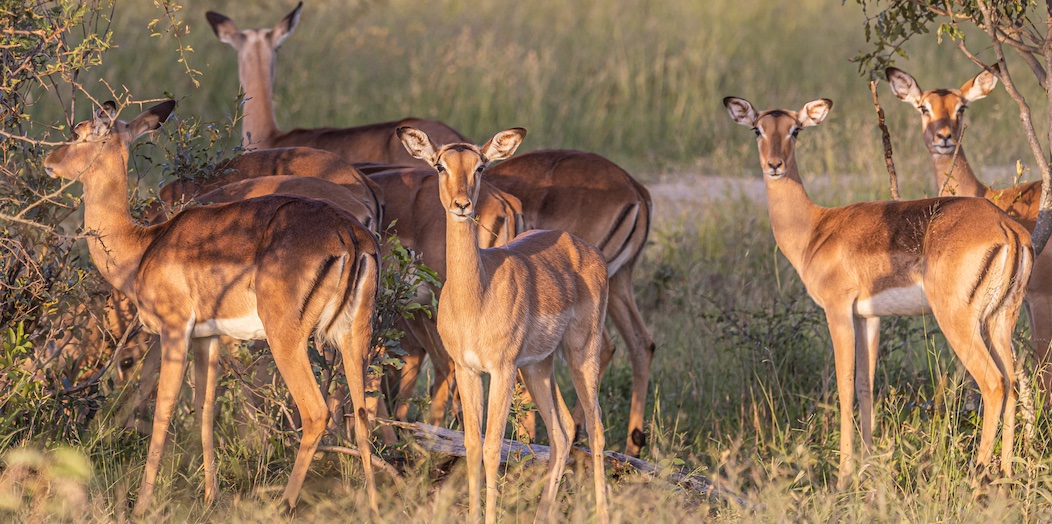
    In the natural world, life has continued as normal, with animals even moving into areas closer to human habitation. But looking at the different animal social structures, some species rely a lot on their social structure by working together for their success rather than their well-being. 
    image

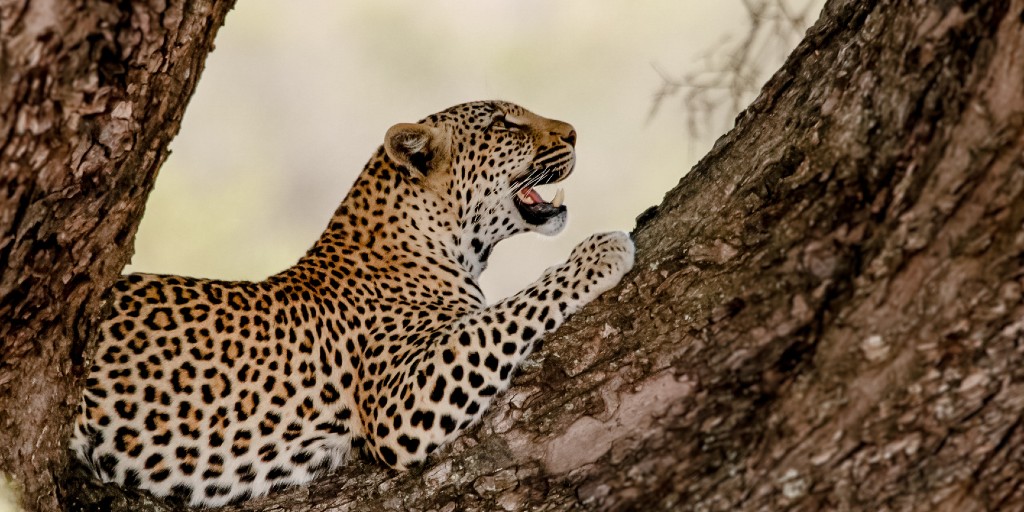
    Some species live a solitary life and some are gregarious (live in groups). This will have an effect on how certain species obtain food, mate and what territory they occupy. We tend to think that animals that live a gregarious life should be more successful, but this is not always the case. Some of the most successful species on earth live a solitary life.

    Take leopards, for example. They occur on almost every continent on the planet, making them the most successful big cat on earth. But how does being solitary contribute to the success of this species? If we focus on leopards found in Africa, we can look at what makes this species so successful. 

    First, we can look at the diet of a leopard. They have an extremely wide range of prey species, from something as small as a beetle to an antelope three times their size. Second, we can look at their body structure and how they hunt. They are built for stealth and very short bursts of speed. They will hide away and try to get as close as they possibly can to their prey.  Taking into account the above two points, this cat is able to occupy almost any type of habitat – from the coastal areas of South Africa to the very arid areas of Namibia, and even the highest mountain ranges.
    image

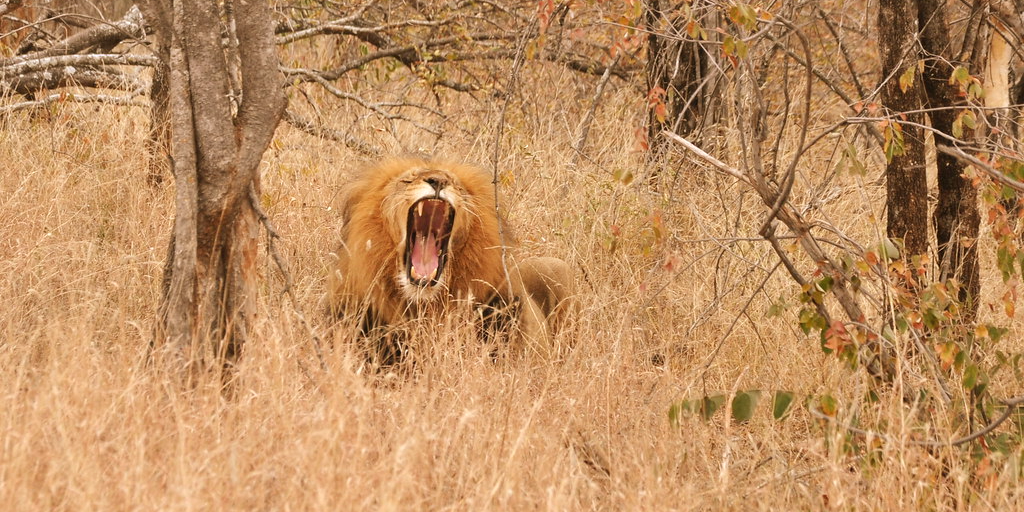
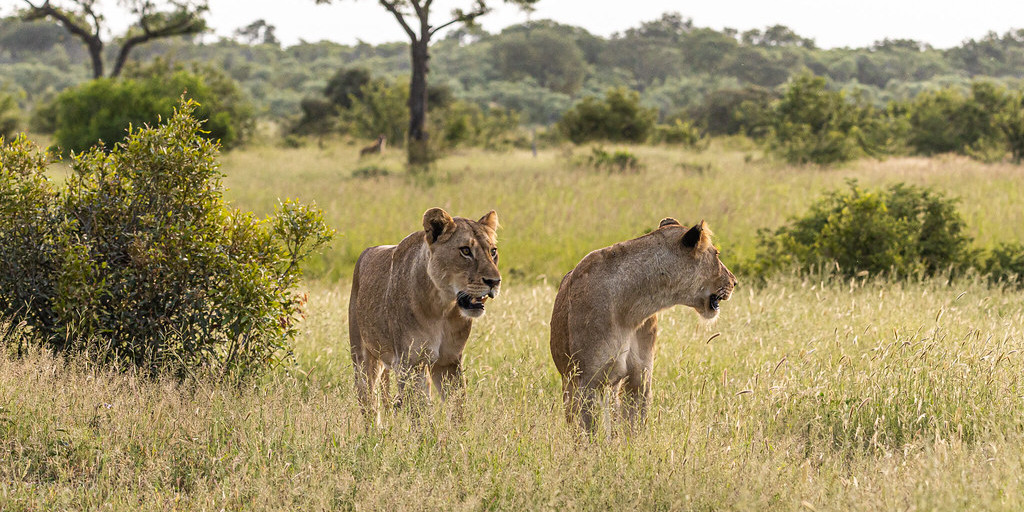
    An example of a gregarious animal is a lion, another big cat in Africa,  and probably the most well known and most feared predator on earth. It is not only their size, but also because they are the only big cats that work together as a family group that makes lions an apex predator. Lions in some regions of Africa will take down the largest of land mammals, the African elephant. Being social allows them to do this and adds great value to population control. They can live in groups from four to 21 animals, and in some places prides as big as 30 lions have been recorded. Having this many members in a group does come with challenges, with the biggest being food.

    If we look at these two different species, we can see how some aspects of each help them be successful in some way or another. The one problem with being social in the animal kingdom is the amount of food needed to survive in a certain area/habitat. Being solitary, you do not have to compete directly with members of the same group for food. However, being social means you have safety in numbers and can work together to be successful, whereas when you are solitary you are on your own.

    What social structure applies to Bushwise students?
    image

    As a field guide, it’s important to understand animal social structures. This knowledge will make you a better guide, as you’re better able to interpret animal activity, explain why an animal is doing something in a certain way and share insights with your guests. As Nico points out, this applies not only to wildlife, but also humans. 

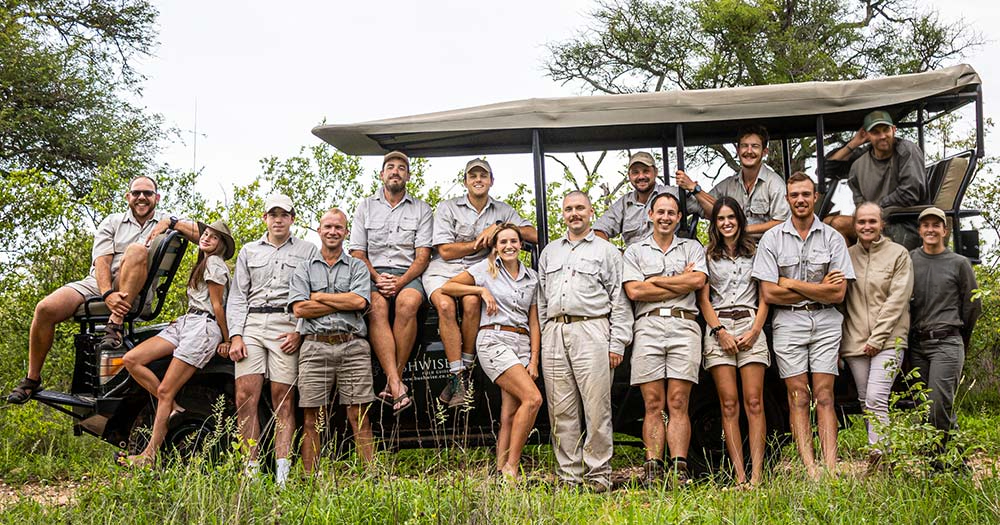
    On a Bushwise course, students are gregarious. They learn together, support each other, take turns completing essential camp tasks and look out for one another. But they’re also independent. They’re leaders in their own right, and have unique skills and talents that make them strong guides. At Bushwise, we aim to create some of the best safari guides out there by supporting each student in their development, whether they are social or solitary creatures! 

    Interested in learning about animal group dynamics, animal behaviour, and seeing this in action? Join a Bushwise course and start gaining wildlife knowledge!

    #gameranger #bushwise #safariguide #apprenticefieldguide #safari #fieldguidetrainer #fieldguiding #endangeredspecies #cybertracker #gamedrive #fieldguidecourse
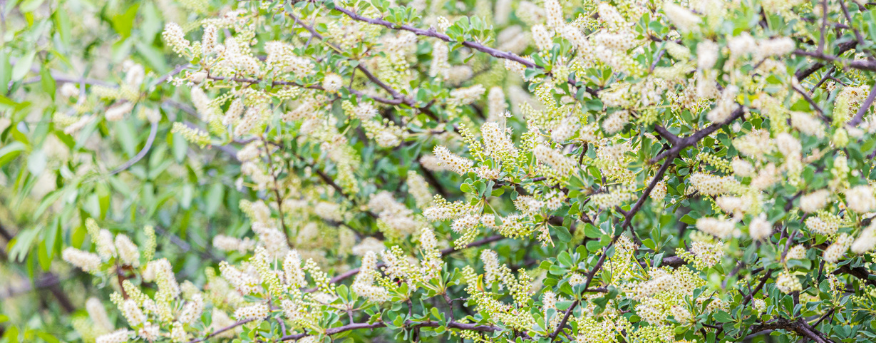
  • South African plants and cultural beliefs

    South Africa is home to a huge variety of plant life, with many plants holding important cultural, medicinal and spiritual values. Bushwise trainer Francois Theron explores the role of South African plants and why this knowledge is important for safari guides.

    South Africa is exceptionally rich in plant diversity and accounts for more than 20,000 species – that’s 10% of all plants found on the planet! Not only do we have incredibly high plant biodiversity, we also have great cultural diversity. South African plants are used by many people in their everyday lives for food, medicine, shelter and other necessities.

    Ethnobotany is the study of how different cultures use indigenous plants. People have been using plants for thousands of years all over the world, but in recent decades people have increasingly started moving from rural places into urban areas.

    image

    We see this across Africa, where people have access to modern healthcare systems and have moved from subsistence farming to cash crop farming. These changes in sociocultural lifestyles have impacted the indigenous knowledge of traditional and medical uses of plants.

    In South Africa, over 2,000 plant species have been recorded as used in traditional medicine. There is still a lot left to be documented about these plants and their uses. Although we live in a modern era with medical care being freely available, there is a growing interest in natural and traditional medicines. 

    Some of the most common South African plant-derived medicines that we learn about on a Bushwise course include quinine, morphine, codeine, aspirin, atropine and reserpine, to name just a few. Other discoveries include anti-cancer drugs like taxol and vincristine that come from the plant Catharanthus roseus, commonly known as the Madagascar periwinkle. 

    image

    South Africa is a major contributor to world medicine. We supply aloes, which are sold commercially for stomach problems, and buchu, which is used to treat inflammation and fight kidney and liver ailments. Another plant sold commercially is devil’s claw (Harpagophytum procumbens), which is used in Germany as supportive therapy for degenerative disorders of the locomotor system.

    In a more traditional application, the baobab tree, an iconic African tree, played an important role in the meetings of kings and elders. They would only hold meetings under the baobab tree as they believed the tree’s spirit would guide them in decision making. Another tree that plays an important role in religion is the sacred fig (Ficus religiosa). In Hinduism, Buddhism and Jainism, this tree is the tree of knowledge. In Judaism and Chistianity, it is the tree of good and evil.

    image

    Another common and popular tree is the marula. Few people know that this tree has protected species status in South Africa – due in large part to the important role it plays in local communities. Because marula trees are either male or female (the term for this is dioecious), it was commonly believed that drinking an infusion of the bark of the male or female tree could influence whether your baby would be a boy or a girl.

    In addition, weddings were traditionally performed beneath the expansive canopy of large marulas. Its fruit was even used to prepare the beer that was consumed at these weddings!

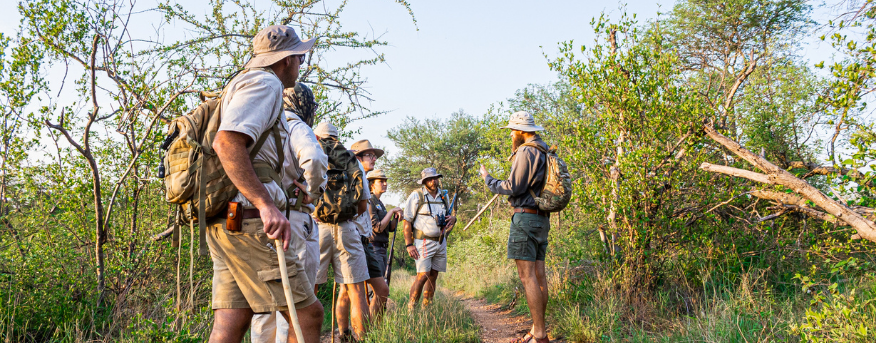
    For the field guide and prospective apprentice field guides, it’s of utmost importance to be able to identify these South African plant and tree species. Safari guides must also know their cultural importance and traditional and medicinal use. This knowledge can be used to educate visitors to the African continent and discuss the critical role plants play in our environment, history and culture. 

    image

    With over 20,000 species, the opportunities for discussion and engaging on the role of plants in South Africa can go on and on. It is our obligation as field guides, safari guides and trail guides to learn and understand these beliefs. We should share this knowledge with people visiting the bush,  so they understand the beauty and cultural diversity that this great country thrives on. 

    Does ethnobotany interest you? Part of our Bushwise IFGA Safari Guide course is learning about South African plant species. Apply today and learn more!

    #southafrica #bushwise #fieldguide #safariguide #training #apprenticefieldguide #safari #fieldguidetrainer #kruger #southafricanplants #fieldguidecourse
  • Astronomy and mythology: written in the stars

    This article was written by Ben Coley, Bushwise Trainer and author of the new Specialist Astronomy Qualification.

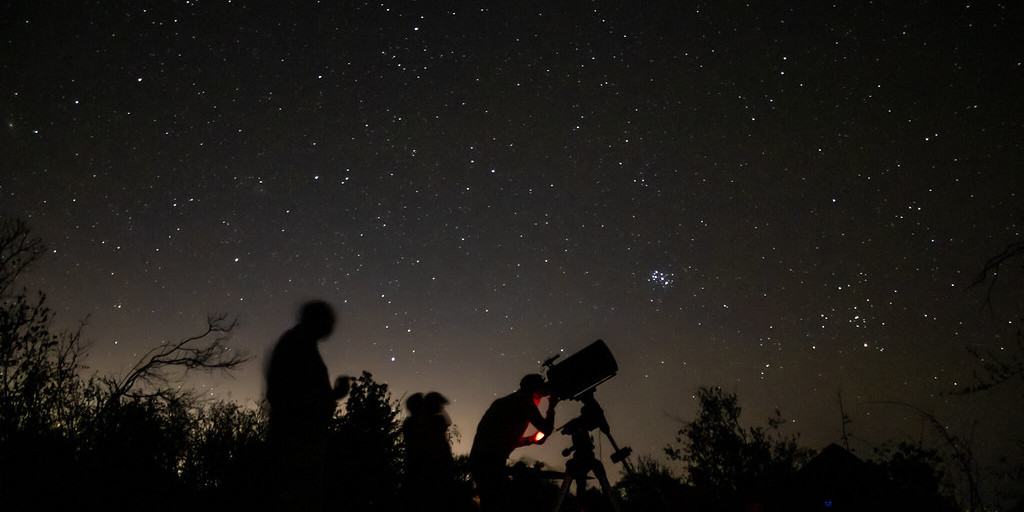
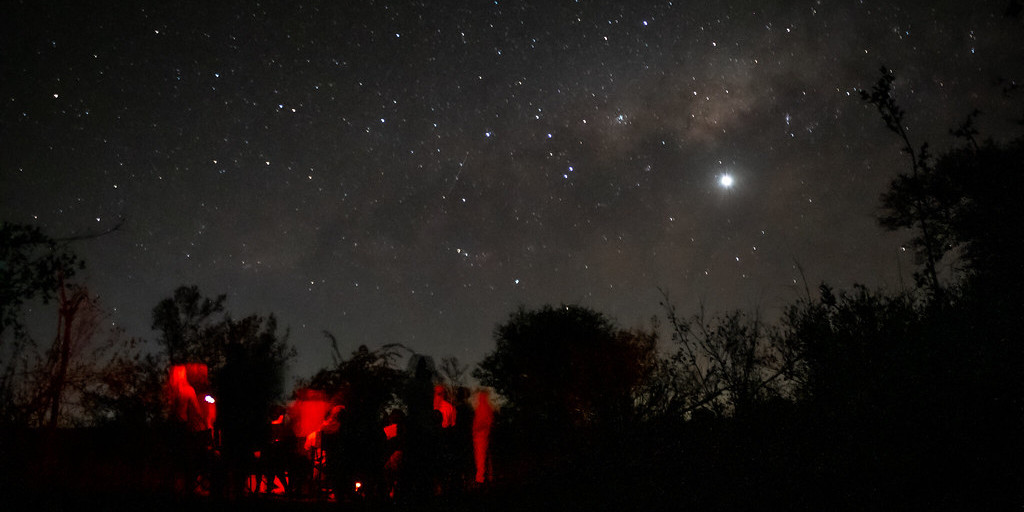
    Since the dawn of time, humans have looked to the heavens to understand the world.

    image

    From learning to interpret the passing of time, to navigating at night, to predicting the best times of the year to plant crops, our understanding of the night sky and astronomy has shaped our society. Not only have the stars given us the ability to plan our lives, they have offered us the ideal storyboard to record our cultural stories, memories, ideals, and experiences.

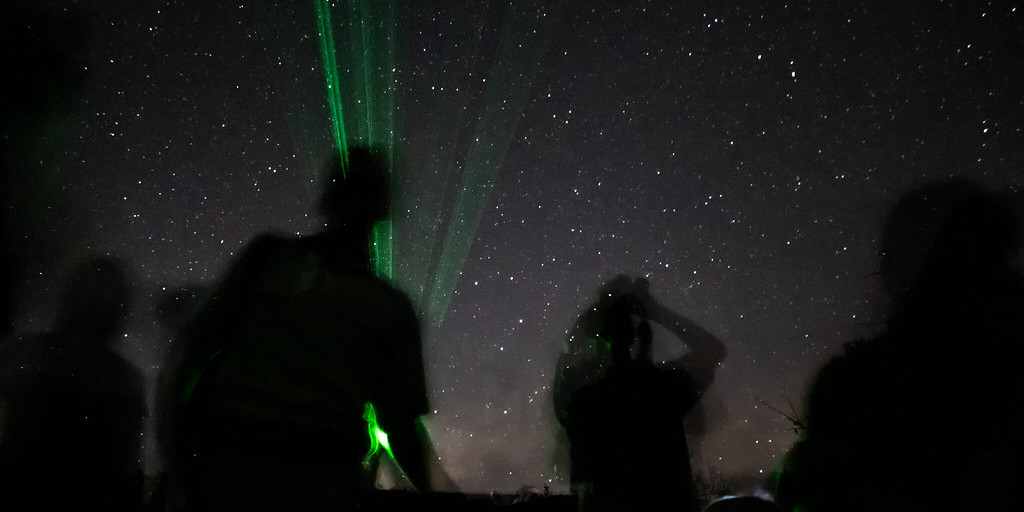
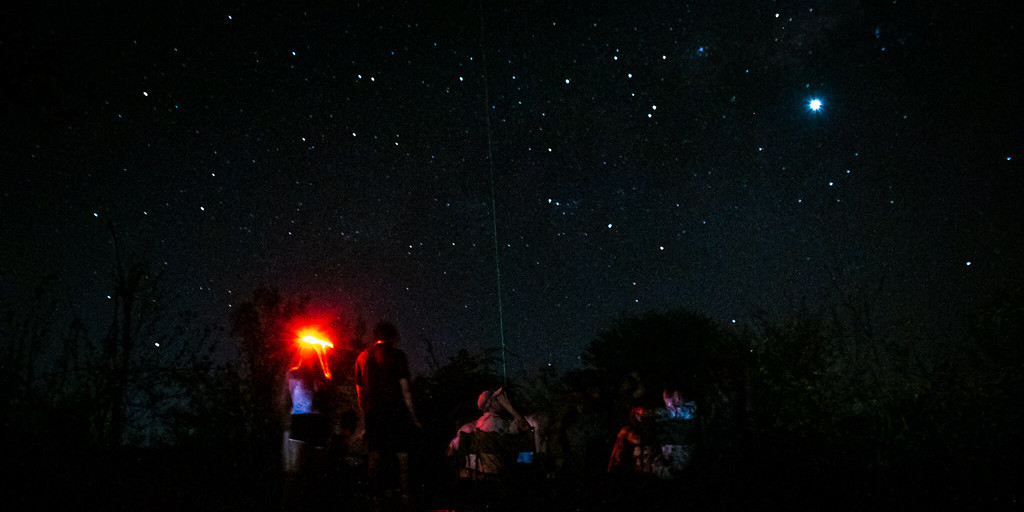
    For field guides, the diamond-studded sky offers a unique opportunity to discuss the cultural significance of man’s history. To be able to do this whilst immersed in the pristine wilderness is an experience that many guests will cherish forever.

    Let’s take a look at some of the most famous and beautiful stories that have migrated from the constellations to our consciousness.

    Orion

    Orion is undoubtedly the most famous and recognisable constellation in the sky. Many people are aware of the classic Greek myth depicting the great fight between Orion and his arch nemesis, Scorpio, the giant celestial scorpion. But its origins lie far deeper in human history.

    image

    Many of the constellations were adopted by the Greeks from ancient Mesopotamia, and Orion is thought to have originally depicted their great hero Gilgamesh from as far back as 3000 BC. Many of his exploits have been recorded in literature, and a series of tablets from Sumerian times, known as the Epic of Gilgamesh.

    In Africa, the three stars representing the great belt of Orion have been identified by different tribes and cultures as various different animals, including zebras, warthogs and even tortoises.

    In one story, Mintaka, Alnilam and Alnitak are believed to be three zebras that roamed the heavens. A hunter, depicted by the giant red star Aldebaran (Taurus), tried to shoot one of them with his arrow but missed. The zebra, terrified after their near escape, and by the nearby stalking lion (Betelgeuse), escaped to Earth when the stars touched the western horizon. In some Bushman cultures this is believed to be the origin of the zebra species on Earth.

    Crux (the Southern Cross)

    The Southern Cross is the most famous collection of stars in the southern celestial sphere. Its four main stars shine brightly and their unmistakable footprint has been used by ancient civilisations and sailors for millennia as a beacon for navigation.

    When viewed from Australia and New Zealand, Crux is a circumpolar constellation (never setting below the horizon) and has been so influential in their history that it has been honoured by being placed on the national flags of both countries.

    image

    In Africa, the Xhosa and Zulu tribes saw the Southern Cross as groups of giraffes parading across the heavens – perhaps placed there by the animals themselves, to ensure the Moon didn’t get lost as it traversed the skies. Bushmen tribes had a great deal of respect for lions, the apex predator with whom they shared the land – there are various references, often involving red-coloured stars, to these celestial beasts.

    To some groups, the four stars of the cross represented a pride of lions, with the dimmer fifth star (Epsilon Crucis) as their young cub. The pointer stars, or Alpha and Beta Centauri, were the two pride males following the pride as they continuously circled their hunting grounds in search of prey.

    Ophiuchus

    Ophiuchus, the Serpent Bearer, is the forgotten sign of the Zodiac and one of the most underappreciated constellations in the sky. It can be found close to Scorpius and Sagittarius and despite being overlooked as a zodiacal sign, the Sun spends as many as 18 days a year within its boundaries.

    The constellation represents Asclepius, the medicine man of the gods and is usually illustrated holding a rod with a snake wrapped around it. According to Greek mythology, Asclepius learned the secret of resurrection by watching a serpent revive its mate with some magical herbs. Hades, Greek god of the underworld complained to Zeus that this was too much power for mankind to have. Zeus agreed, striking him down with a lighting bolt and placing him in the sky to honour his life and service.

    To this day, many medical companies use the “Rod of Asclepius” as their logo, including the World Health Organisation.

    image

    Canis Major and Canis Minor

    The large and small hunting dogs are usually considered to be the faithful companions of Orion, aiding him in slaying Taurus, the bull. However, both these constellations have their own stories. Canis Major is thought to be Laelops, a great dog that could run down and capture anything it chased. It was gifted to Europa by Zeus after his seduction of her in Crete, along with a magical javelin and a bodyguard fashioned from bronze.

    Canis Minor is thought to be the Teumessian Fox, another mythological creature that could never be caught. For reasons unknown the giant man-eating fox was set upon Thebes and created havoc amongst the people. Laelops was brought in to capture the menace but since their magical powers cancelled each other out, the two protagonists engaged in an endless pursuit before Zeus finally turned them both to stone and placed them in the sky.

    Aquila

    Aquila represents the faithful eagle that served Zeus, carrying his lightning bolts and delivering him the souls of heroes. It has been suggested that at some Roman emperors’ funerals, an eagle was lightly fastened to the top of the pyre so that once the bird’s feathers were singed by the flames, it would break free and take to the skies, carrying with it the emperor’s soul.

    The story of Aquila is also coupled with Hercules and the unfortunate events surrounding the titan, Prometheus. Some sources suggest the human race was sculpted out of clay by Prometheus and the titan was intent on improving the lives of his creation.

    image

    In one story, he stole fire from the gods and gifted it to mankind. Zeus saw this as a great betrayal and punished not only Prometheus, but all of mankind. He fashioned Pandora, the first woman, and sent her to Earth with a box containing misery and evil that was soon opened by people, its contents spreading great pestilence to the world. This is the origin of the fabled notion of not opening Pandora’s Box for fear of the repercussions!

    The immortal Prometheus was chained to a rock and Zeus sent Aquila, his faithful eagle, to peck at his liver every day. Being immortal, Prometheus’s liver would regenerate each night, only to befall the same fate the next day. Prometheus was doomed to suffer this anguish for eternity but was eventually rescued by Hercules, who killed Aquila with one of his poisoned arrows.

    Learn more about our night sky

    The beauty of constellation mythology and cultural starlore is that we have no way of knowing exactly which stories are true. In fact, the truth is irrelevant. The stars became the ultimate tapestry for cultures to record their ideals and their beliefs, and the sheer diversity of stories is a treasure trove for any budding guide to regale to their guests. Be it African, Greek, Roman, Egyptian, Mesopotamian, Aztec, Aboriginal or the Hopi from North America, there is a tale that will resonate with every guest.

    image

    Bushwise now includes a specialist astronomy course, based on the new Advanced Astronomy qualification, with the intention of arming its students with a plethora of information about the night sky and the cultural sagas depicted within.

    We hope this unique knowledge will not only make our guides unique within the industry, but also arm them with the ability to wow their guests – inspiring them to unleash the power of their imagination, and share this new-found knowledge with friends and loved ones across the globe.

    Expand your knowledge of the night sky and astronomy while you train to become a field guide. Apply today and start your career journey with Bushwise.

    #gameranger #bushwise #fieldguide #stars #safariguide #astronomy #apprenticefieldguide #nightsky #fieldguidetrainer #sightings #zodiac #fieldguidecourse
  • Crunch time on campus

    Some images in this article were taken pre-COVID-19.

    BY: Darryn Murray

    This blog was written by Darryn, one of our trainers. In this blog, Darryn talks about exam time for the Bushwise students. 

    As the students on campus approach the end of the course, their months of learning, training and studying will be put to the test. And at this stage of their guiding careers, this may be the most important test yet. 

    image

    The CATHSSETA NQF 2 exam will be written at the end of the week, and the students are hard at work in preparation.

    The trainers have been noticing something interesting about the students – there are several different groups of students that employ different methods of studying for the exam. Let’s take a look at some ways the Bushwise students are preparing.

    Night owls

    image

    These are the students that prefer to study late into the evenings (and sometimes into the early hours of the morning) when the campus is at its quietest. 

    The only downside to this is that they tend to have the sleeping habits of owls, too – during the daytime!

    Early birds

    image

    These students sometimes wake up before the real birds in the bushveld!  

    The trainers have recorded limited interactions between the night owls and the early birds. The early risers aren’t very social early in the morning – that is until they’ve had their morning cup of coffee. The students that study at night, on the other hand, don’t get much sleep, so they’re often heard exchanging greetings with a series of moans and groans!

    Social butterflies

    image

    These are students that flitter between various study groups, learning as they go, and never spending too much time at one study venue. They exchange knowledge with their peers before moving along to the next study group to ask questions and exchange any newly gained knowledge.

    Pack dwellers

    These groups of students elect a “pack leader” to act as a teacher for the group during their study sessions. Sometimes the leader changes between modules; more often it remains the same throughout the study period.

    Lone rangers

    image

    These students tend to study on their own, and only join the group for meals and other group activities before retreating to their “study caves” again for hours on end.

    As the days draw closer to the exam, the stress levels get greater too, and any mention of “Don’t stress; relax; take a break for a bit” from the trainer’s is unwelcomed!

    Regardless of which study group the students belong to, they’re all putting in a great effort to prepare for the upcoming exam. We wish them all of the very best for the remaining days!

    Which study group do you think you’d belong to? Join a course and find out.
  • Animals don’t always play by the book

    Photo by: Carl Louis Steenkamp

    BY: Nico Brits

    This blog was written by Nico, one of our trainers. Here, Nico shares his experiences with wild animals in the African safari.

    As a field guide, it’s important to have academic knowledge of animals, but it’s equally important to observe and interpret what’s happening with the animals you’re viewing. There are so many facts written about animals in books that contradict what you will sometimes witness out in the field.

    image

    This image was taken pre-COVID-19.

    There have been many instances, throughout my career, where animals haven’t demonstrated textbook behaviour, and I’ve been left having to explain what the animals were doing and why I think they were behaving that way.

    Every book I’ve read about cheetahs says they’re diurnal animals (active during the day), and mainly hunt in open areas where they can use their speed. But, during my time working in the Eastern Cape, I noticed that the male cheetahs in a specific area started to change their behaviour, and became more nocturnal. They also started to hunt in thicker areas, where they stalked prey like leopards do; and where there were coalitions of cheetahs, they hunted like lions (one cheetah would chase the prey towards the other cheetah).

    image

    The first time I had to explain this phenomenon to guests was while we were sitting with two cheetah brothers on a warm afternoon. I could see the animals were hungry, and explained to the guests that we should wait with them for a little while – knowing they’d likely get up before sunset to hunt. I thought the cheetahs might be behaving this way because of a lack of competition from spotted hyenas in that area. Just as I thought, once the sun had set, the two brothers got up and started moving.

    When there are changes in animal behaviour, field guides often have to find a reason, because these are things you wouldn’t usually find in books. I think there’s a lot we still don’t know and understand about animals and their behaviour.

    image

    Photo by: Callum Evans

    Some of the other strange changes I’ve seen include zebras only roaming around one specific tree, and lions joining prides they weren’t born into.  I imagine there are plenty of unusual behaviours that other field guides have seen but not documented. 

    So when you see animals do things that you’ve never heard or read about before, don’t worry. Watch and try to figure out why.

    Don’t just read it – find out what wild animals are really like by joining a Bushwise course.

  • Campus after dark

    Some images in this article were taken pre-COVID-19. 

    BY: Darryn Murray

    This blog was written by Darryn, one of our trainers. Here, Darryn shares a story about creatures on campus.

    While sitting around the campfire in the evening after a busy day of learning, writing tests and doing activities like safari drives, we at Bushwise are treated to the sounds of lions roaring in the distance, jackals, hyenas – and every so often, leopards – calling in the darkness, with the feeling of the crisp bush air surrounding us.

    image

    Photo by: Ben Klunder

    Recently, at about 11:00 pm one evening, I heard a commotion in the car park. I walked out onto my porch, armed only with a torch, to investigate the noise. All I could see moving about in the torchlight was a bushbuck. 

    Early the next morning, a few of us did a bit of CSI-type investigating.  The bushbuck I spotted the night before had been attacked by a leopard on campus! 

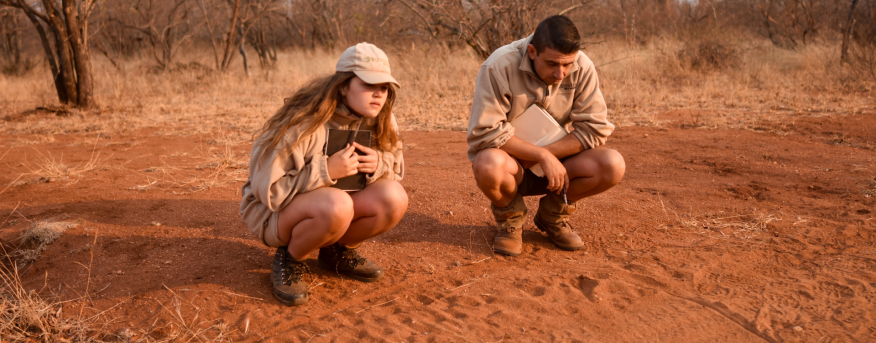
    Footprints, drag marks in the sand and a few drops of blood were all the clues that we had to work with. 

    Not long after we discussed the signs we found, we spotted the bushbuck, still alive and walking gingerly near the dam on campus. A day later, however, he succumbed to his injuries not far from where he had been seen the day before.

    image

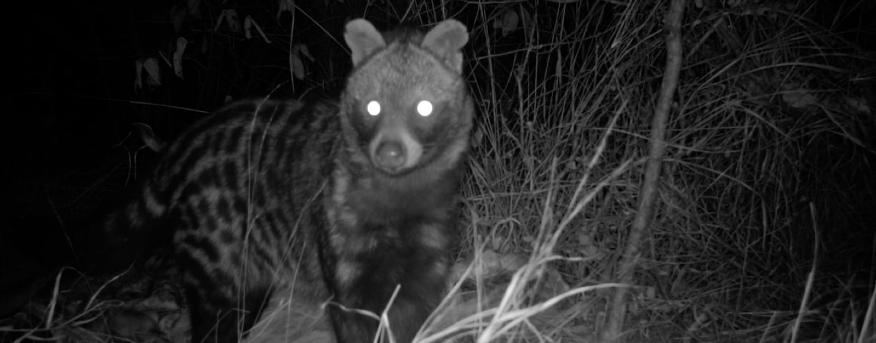
    With the help (and camera trap) of Spencer Gallant, a student at Bushwise, we set up a camera near the bushbuck carcass, hoping we’d get some images of the leopard coming back to feed.

    By this stage, we were all very excited to see if the leopard would return. We made a pact to leave the camera up, undisturbed, for a week before going to check and see what surprises awaited us. At the end of the week, we saw there was still so much meat left on the carcass, which meant the leopard probably hadn’t returned yet. So, we decided to leave the camera set up for another week, and quickly changed the SD card and batteries.

    Let’s take a look at what we discovered.

    A selection of the first week’s images

    Photos by: Spencer Gallant

    image

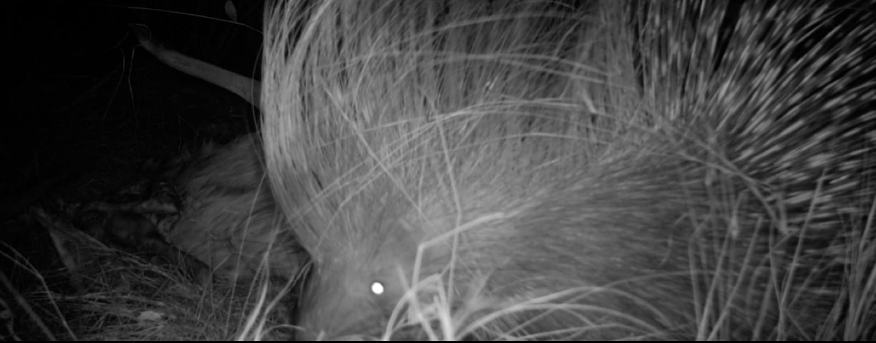
    A porcupine strolling by the camera.

    image

    An African civet posing for the camera close to the carcass.

    image

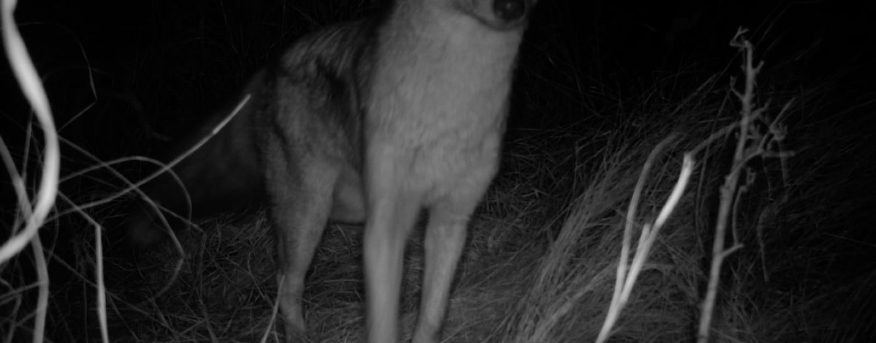
    A side-striped jackal curiously looking at the camera.

    As the images were loading on the laptop, there was excitement in the air. We went through roughly 600 images, but not a single one revealed a leopard. To say that everyone was a little disappointed would be the understatement of the year, but we remained hopeful that the second week’s batch would yield the images we were after.

    The second week’s images

    Week two seemed to drag on while we were waiting for the pictures, but as the saying goes, “All good things come to those who wait.” 

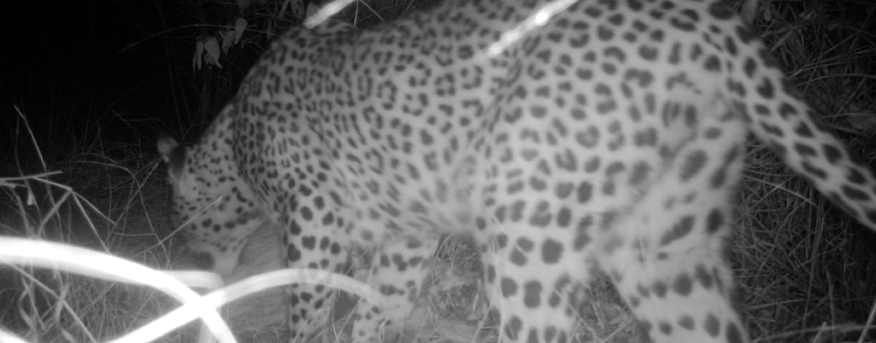
    There were cheers of excitement all around as the first images of the leopard came up on screen.

    image

    Photo by: Spencer Gallant

    At last, the leopard that we had all been waiting for.

    The leopard feeding during the early hours of the morning while everyone was asleep.

    All in all, it was a great experience for us students to see some of the animals that move around campus in the dark while we’re all asleep. Even though we don’t see them very often, we now know for sure they’re around, and probably see us far more than we see them.

    What creatures do you think you’d discover on campus after dark? There’s only one way to find out – join a course.

  • Talking trees

    Photo by: Zlicke Slabber

    BY: Ryan Mengel 

    This blog was written by one of our trainers, Ryan. With years of experience in guiding, Ryan shares some of the ways nature fascinates him most.

    Have you ever sat and appreciated the settling sound and sensation of wind moving through trees, disrupting the leaves? Would you say the trees are “talking”?

    image

    Photo by: Ben Klunder

    This image was taken pre-COVID-19.

    Plant communication is complex. And in recent years, incredible research has been done to help us understand the fascinating systems in the natural world. 

    Plants have evolved and developed a number of ways to communicate, both with their own species and with others. Plants are known to communicate by releasing pheromones into the air. 

    image

    Amazingly, many plants are even able to recognise whether their neighbours are of the same species or a competing one. And, some plants are even able to identify whether they actually share a “kinship” or direct genetic relationship with their neighbours.

    Plant roots share a symbiotic relationship with mycorrhizal fungi. The fungi connects the roots of different plants, creating a mycorrhizal network, which allows them to communicate and interact underground.

    image

    This relationship creates an enormous “web” for communication, much like the world wide web we are so reliant on today. It not only allows plants to gain the nutrients extracted from the soil and detritus by the fungi, but they are also able to communicate various chemical and electrical signals.

    So, the next time you feel a breeze or hear the trees “talking”, remember that you are only picking up a tiny part of the conversation.

    Visit our website to join a course where you can learn more about plant communication.
  • My best experiences as a guide

    BY: Jack Hutchinson

    This blog was written by one of our trainers, Jack. With over ten years of guiding experience, Jack shares some of his most memorable moments on the job.  

    As a guide your best and memorable experiences happen in your early years. Your first placement lodge, your first lion sighting, your first experience with a bad tempered elephant, your best and, unfortunately worst guests, etc. 

    But in over ten years of guiding, this is my most memorable sighting. 

    image

    It was a rainy, slightly miserable day with overcast clouds. It was dark, gloomy and cold. But we were optimistic and ready for anything. My guests were keen to see lions. On our concession (a subset of a reserve) in Kruger National Park we had good lion sightings if we could see them on the road or at least had tracks.

    Today we had nothing, no sign of them anywhere. Still filled with hope, we drove around trying to find anything that resembled a cat. 

    Our head guide and I were a bit competitive, in a friendly way. It was just a little fun with the guests on who will see the best stuff. So I was determined to beat him. If only I knew what was coming during that morning game drive. 

    It’s time to go off road!

    We were driving down one of the main roads out of the concession. We had spotted two male lions trotting down the road towards us. We were so excited that we had seen them before the other vehicle. It was nice bragging rights. The lions ran past us and we turned around and followed them. 

    image

    PHOTO BY: Ben Klunder

    Because of the rain, they had soaking wet manes, something I had never seen before. We followed them and they turned off the road. Luckily we were in the concession where we could follow them off-road. 

    We followed them to a marula tree, roughly 30 metres off the road. The one lion disappeared into a thicket so we lost sight of him, but the other lion was milling around this marula tree. 

    What’s that smell?

    I could smell something dead. Lions often scavenge, but I couldn’t see anything.

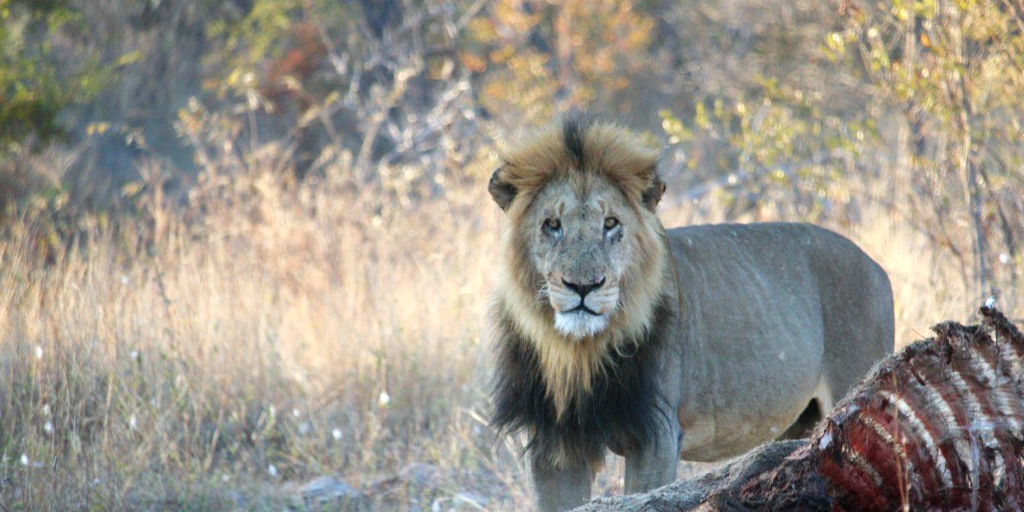
    I watched the lion carefully, his gaze tracking up the tree. I followed his stare. There in the tree was an old impala kill, left by a leopard. So now at least I knew what I was smelling. I looked again at the lion, his posture changed to what resembled a house cat ready to jump onto a table. I yelled at my guests, “This lion is going to climb this tree!” Before we could blink, there goes this 200-kilogram lion up the tree trunk and into the canopy for the dead impala.

    I mean, WOW! They don’t say that lions climb trees in textbooks. But here we are sitting with a full-grown male lion sitting on a branch you would normally see a leopard on, feeding on an old, dead impala. 

    Now with all the excitement going on, I had to call my head guide and share this with him. I called and guided him into the sighting. But the best part was watching this lion climb down.

    But I suppose jump down is a more accurate description. With a massive thump, the lion hits the ground. He strolls off with his trophy. 

    image

    PHOTO BY: Ross de Villiers

    After that sighting, we went straight home. Nothing else could beat that for the day. So when guides and guests asked me, “Do lions climb trees?” I always reply with “Yes, but they jump down”.

    Ready to start building your field guide experiences? Head to the Bushwise website to learn more.

  • Geology’s role in safaris

    BY: Darryn Murray, trainer at the Bushwise Mahlahla campus 

    So, your holiday is planned. You’re off on safari to one of Africa’s many wonderful game reserves, or national parks. 

    How will having an understanding of geology help you to find the ever elusive leopard, a particular bird species or maybe even the very sought after ground pangolin? Let’s start off by answering some questions.

    What is geology? And why would it play such a big role in a field guide’s career?

    Geology is the study of the composition, structure and history of the Earth. Planet Earth is made of rock composed of various minerals. By studying the geology of the area you’ll be travelling to, you can understand the various soil types that occur there and the vast array of wildlife that’s associated with them.

    image

    How does geology affect soil and wildlife?

    Soil is formed due to the natural process of weathering and erosion of rocks. The composition of the original rock gives us a better understanding of the type of soil that can be found in a particular area. The soils determine the types of vegetation as well as the densities that they can be found in.

    In turn, the various types of vegetation will determine the different browsers, grazers, birds and insects that will be attracted to them. The browsers and grazers will naturally attract predators (and scavengers), both big and small into the area.

    Certain species of plants attract certain species of insects, which attract their own predatory species such as birds and reptiles. All of these interactions are what make up a safari experience.

    Topography: What is it? And how will this help?

    The topography (shape and slope) of the landscape affects the quality of soils and where they are likely to be found. Generally, the tops of slopes are nutrient poor. The bottom of slopes are nutrient rich due to rainfall and other factors such as gravity carrying valuable minerals downhill.

    That’s why the bottoms of hills are likely to have a higher concentration of flora and wildlife. 

    image

    Water: What role does H2O have in this?

    The geology and topography explain how, why and what the soils do, but the rest comes down to water availability. Without a steady or constant water supply very few plants will grow. This will not be an ideal area for wildlife.

    Before heading out on your next safari, read up about the geology, topography and water supply in the area. Then study up on the preferred habitat types of your favourite animals. And who knows, it might mean better sightings on your next safari.

    image

    See the most interesting wildlife animals by joining one of our field guide courses

  • No shortcut to Trails Guide

    BY: Lindi Hutchinson, a trainer at the Bushwise Balule Campus.

    I remember my journey to become a full Trails Guide.  

    It was everything but easy.  There was a lot of sweat, tears and frustration.  I jumped from lodge to lodge in the hope of finding a quicker way to achieve the hours and encounters I needed.  

    I exhausted myself.  

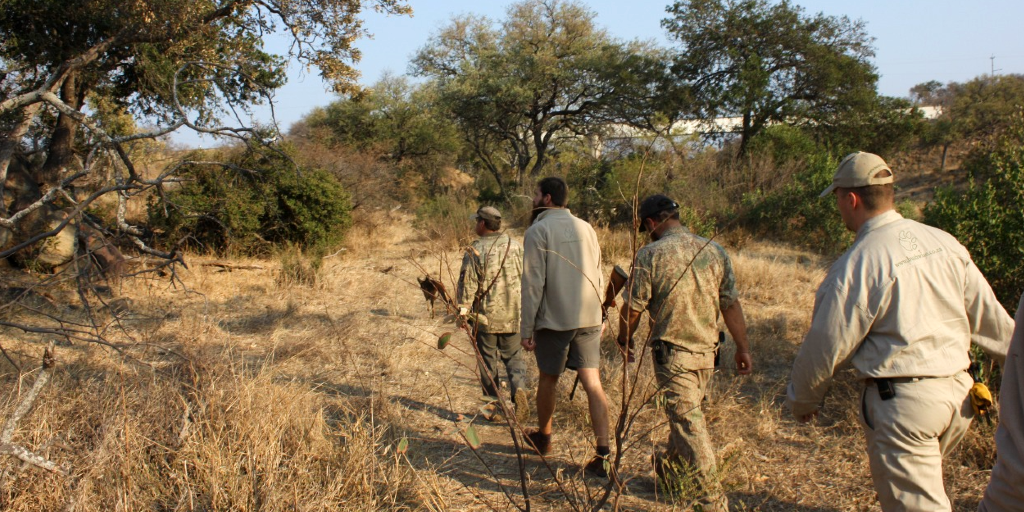
    In the end, I realised that if I had just stayed at the reserve where I first started guiding, it would’ve made my journey to trails immensely faster. I jumped around because I thought there must be an easier way than walking four hours a week with a full Trails Guide and guests. “Reaching 150 hours will take forever!” I thought. Sadly, every other lodge had other obstacles that slowed down my progress even more. There are no shortcuts and there is no easy way to fast-track the process.  

    image

    At the end of the day, a Trails Guide is responsible for the whole group’s safety and without the right knowledge, experience and alertness, things can go pear-shaped very quickly in a dangerous situation. That’s why trainees require a mentor when completing the hours and encounters needed to qualify as a professional Trail Guide. 

    In other words, you can’t achieve the full Trails Guide qualification on your own. You need mentors, other fully qualified Trails Guides and real guests to walk all the hours and encounters with.  

    It’s not like the FGASA Field Guide qualification that you can pretty much achieve on your own. A mentor is someone who is qualified as a FGASA SKS(DG) guide, FGASA Trails Guide or Professional Trails Guide, which requires 600 hours on foot, 300 encounters on foot, and tracker level 2. And, to find a lodge where a mentor works is almost impossible. Nowadays, it’s even difficult to find lodges where full Trails Guides work.  

    image

    The next problem is that there aren’t many of these qualified individuals who want to sweat in the sun during their off-time for someone else’s benefit, which is understandable.  This makes mentored hours valuable and expensive.   

    So, if you’re a guide at a lodge that has rifles, Trails Guides and a mentor – stay there! Work on your qualifications bit by bit. Don’t grow impatient. Offer payment and work hard. If you’re working at a lodge that lacks a mentor or even rifles, remember Lowveld Trails is near to the Bushwise campuses and they offer a lot of primitive trails that might fall over your off weeks.  Book, pay and learn.

    There is no shortcut to becoming a Trails Guide. It’s a slow journey – 4 years minimum. My advice? Work hard, have patience, never give up and remember that every little bit counts.