Category: Wildlife insight

  • Carnivore competition: it’s more than instinct

    BY: Louise Pavid, Bushwise Photographer and Videographer

    The age old adage of dogs chasing cats is something that extends as far back as our own genetic and ancestral memories. But what about cats chasing dogs – which in natural African landscapes, is a far more likely occurrence?
    image

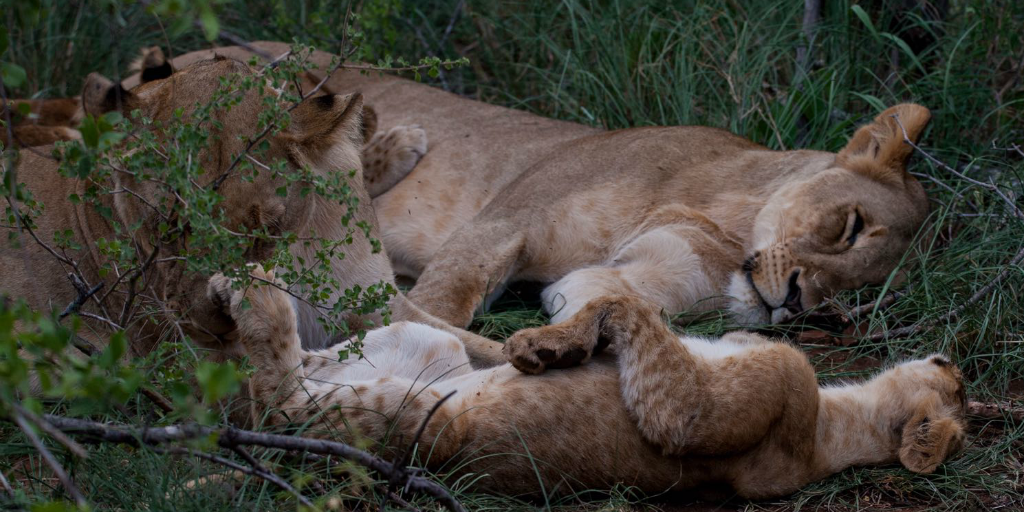
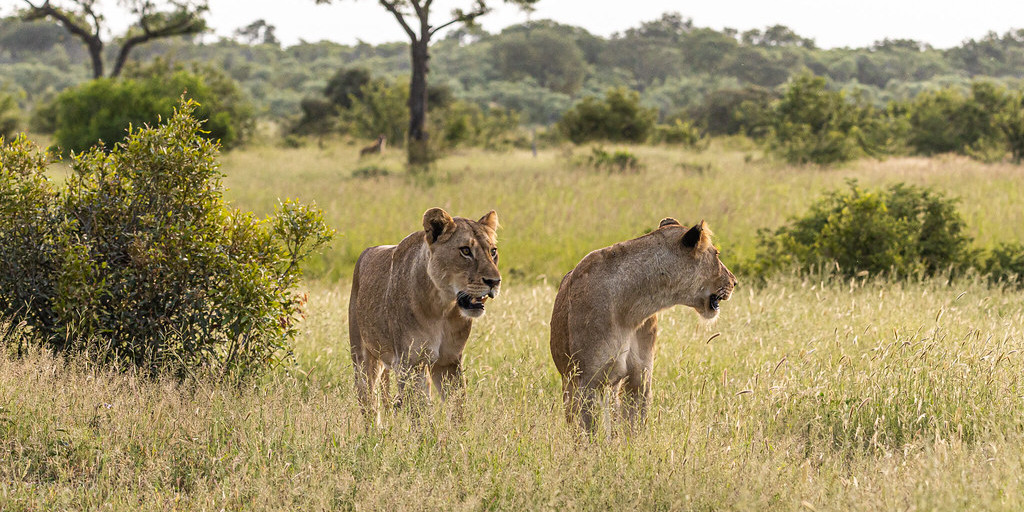
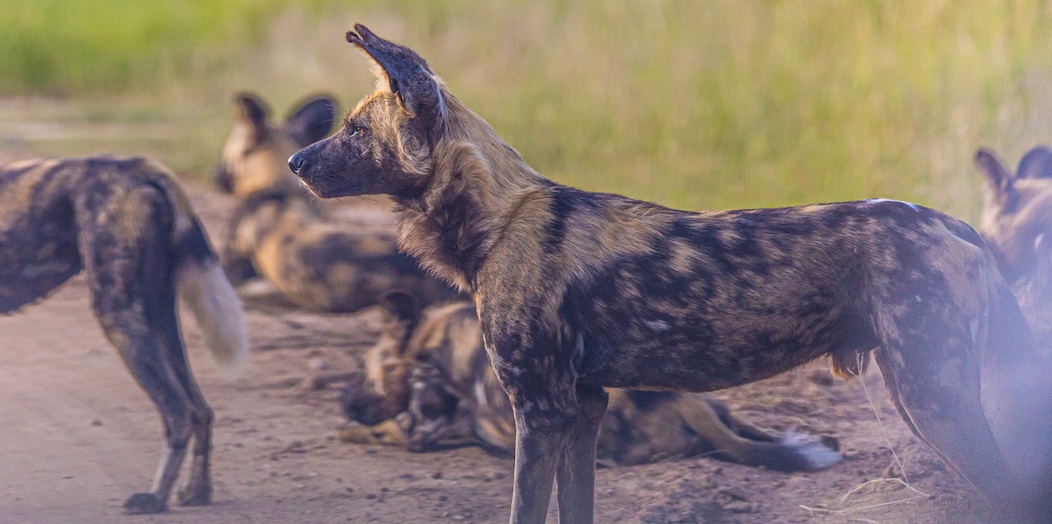
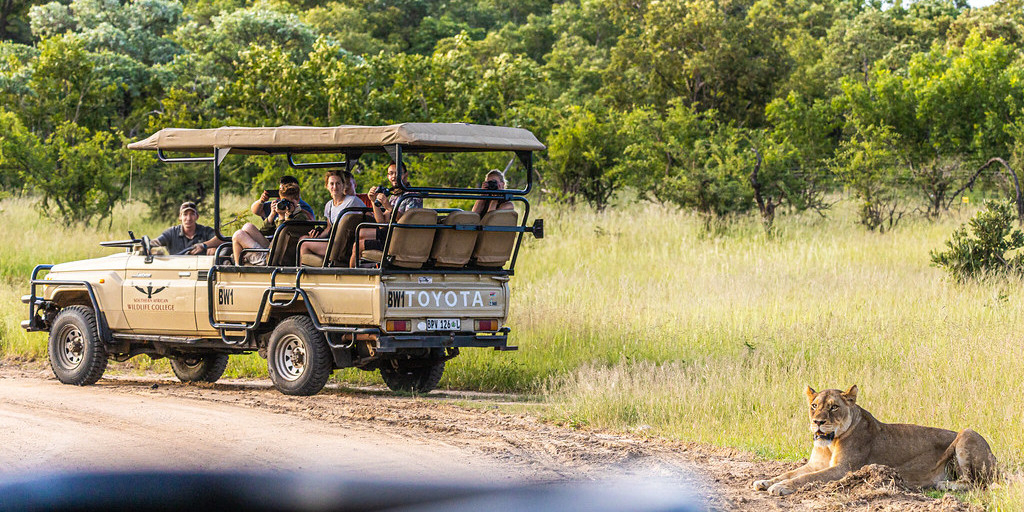
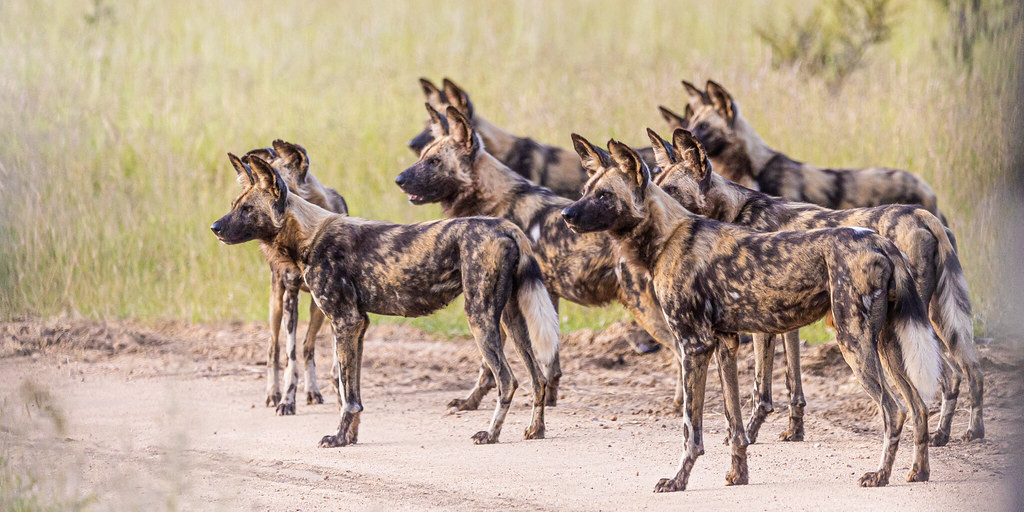
    Several weeks ago we were treated to an unbelievable sighting of the Birmingham Pride lions sneaking up on and chasing a large pack of wild dogs on the Southern African Wildlife College campus. Our hearts were in our throats and adrenaline coursed through us (and the animals) as the sighting unfolded! Fortunately, both the canines and felines went their separate ways, unscathed. But this is not always the case and often begs the question: “Why?”
    image

    Some may say, “oh, that’s just their instinct,” and leave it at that – as though instinct is some mysterious force that we as humans don’t quite understand. But this type of conflict and competition between predators goes deeper and is far more complex than just “instinct.”
    image

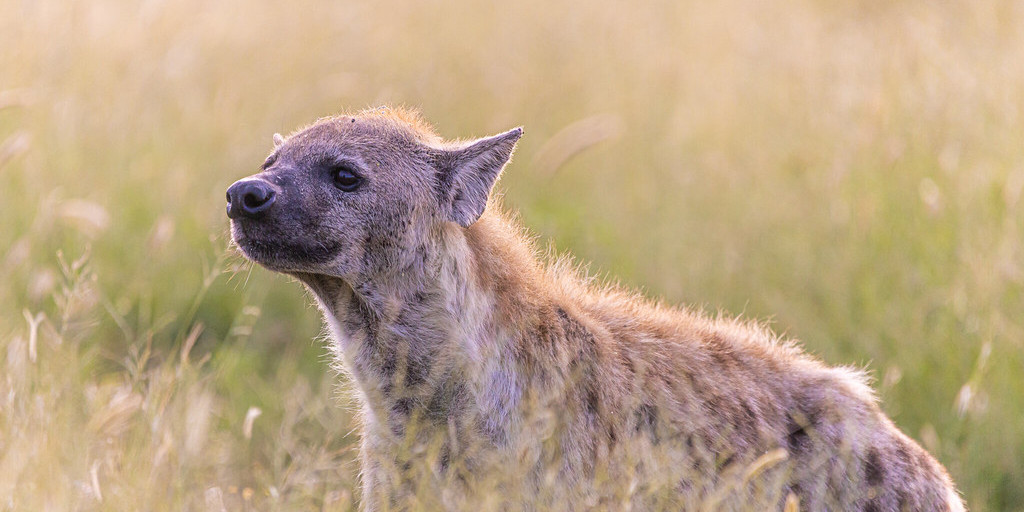
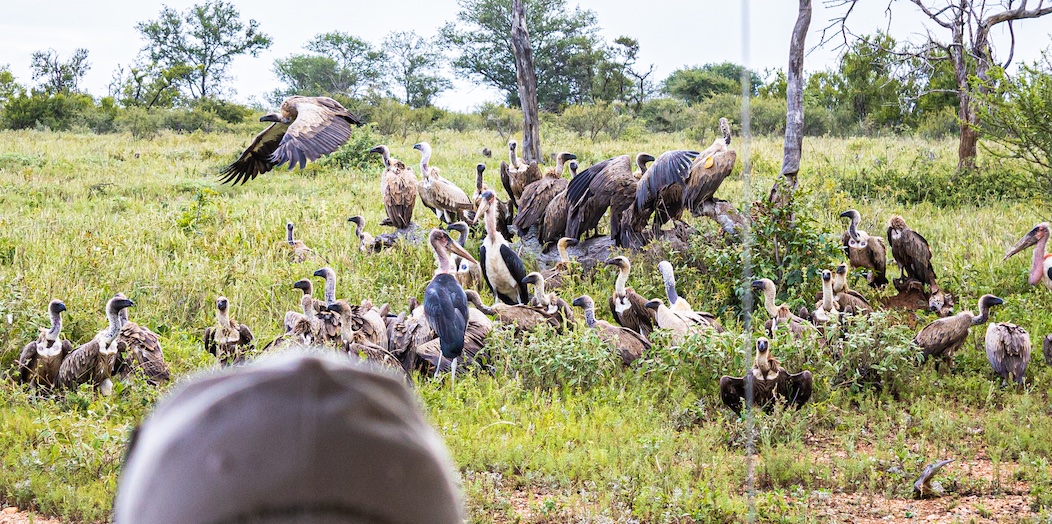
    To understand why cats chase dogs, dogs chase cats, jackals chase vultures, and vultures chase marabou storks, we need to take a closer look at the environments they inhabit and what resources within that environment they all need to compete for.

    Resource competition is just one explanation for interspecies competition – and it’s the one we’re going to explore today. On a Bushwise IFGA Safari Guide Course, you can learn about many other types of competition and ways predators interact, tolerate and avoid each other.
    image

    Within any ecosystem there is a trophic pyramid that details the exchange of energy between species and the niches they fill. Producers, like plants, are found at the bottom and are able to create their own food.

    Next comes primary consumers. These are animals including zebras, wildebeest, and impalas, who eat plants to fulfil their nutritional needs. After that come the secondary, tertiary and apex consumers: omnivores and carnivores that eat other animals for their energy and nutritional requirements. This is where the action really heats up.
    image

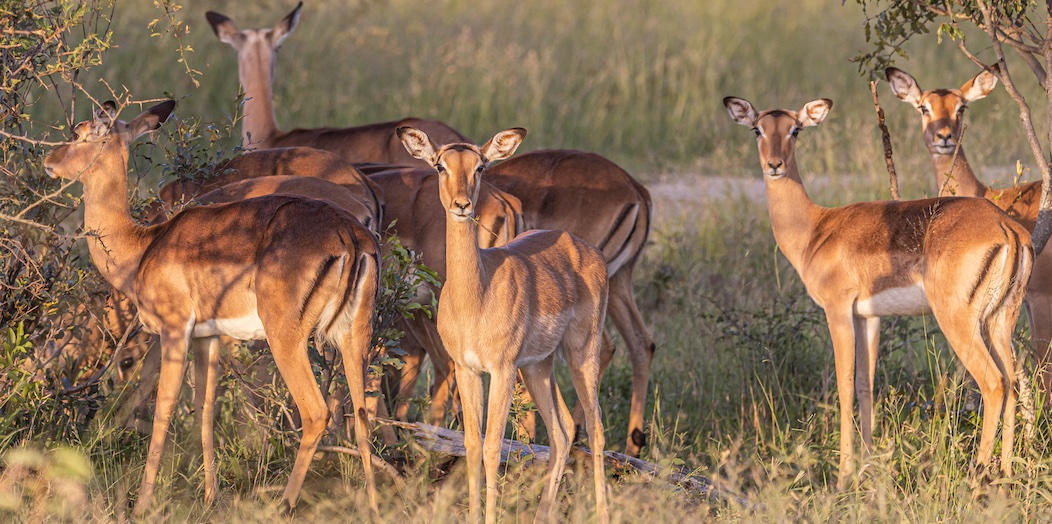
    Although adapted for different hunting techniques, predators like lions and wild dogs will still compete for some of the same resources. Because lions are much larger than wild dogs, they don’t always target the same prey species – but they can (for example, both species eat impala and wildebeest) – meaning they can compete for the same food source in the same area.

    If, for example, the lions are successful in killing an impala, local wild dogs would have to travel further and spend more energy searching for food.
    image

    Ultimately, if the lions can chase away or potentially kill a competitor (such as a hyena or wild dog) then they don’t need to work as hard, expending valuable energy, in search of good hunting. Why waste energy moving to a different location when the lions could just as easily push their competitors to a different area?
    image

    This cycle of conflict is as old as time and plays an important role in balancing the scales of any natural environment. And it’s not only seen among terrestrial predators. Scavenging birds like vultures and marabou storks not only compete against each other, but also with other scavenging species like jackals and hyenas (although hyenas are exceptionally good hunters in their own right).

    Maybe interspecies competition for resources can be boiled down to something as simple as instinct. But leaving it at that doesn’t do justice to the extremely complex natural systems that have developed over millennia to ensure the healthy balance of natural systems.

    Would you like to learn more about interspecies competition, and see Africa’s predators for yourself? Apply today and pretty soon you’ll be training in the Lowveld.

    #lion #gameranger #fieldguide #trailsguide #hyena #safari #wilddogs #fieldguiding #gamedrive #fieldguidecourse #fieldguides
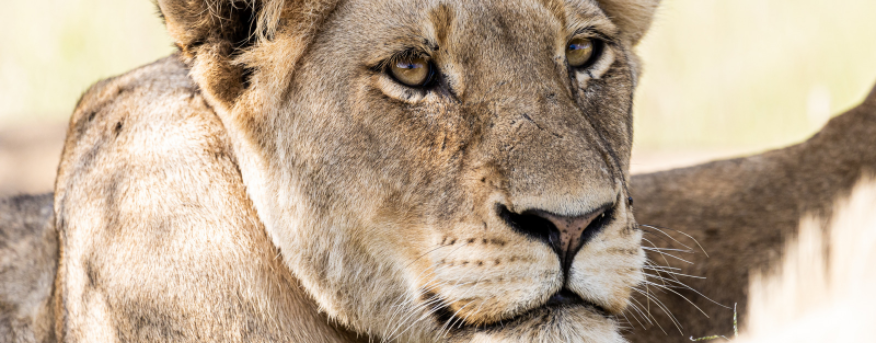
  • The Birmingham Pride

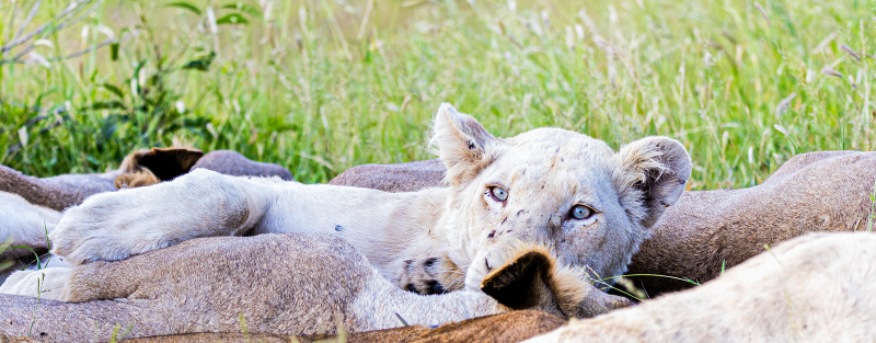
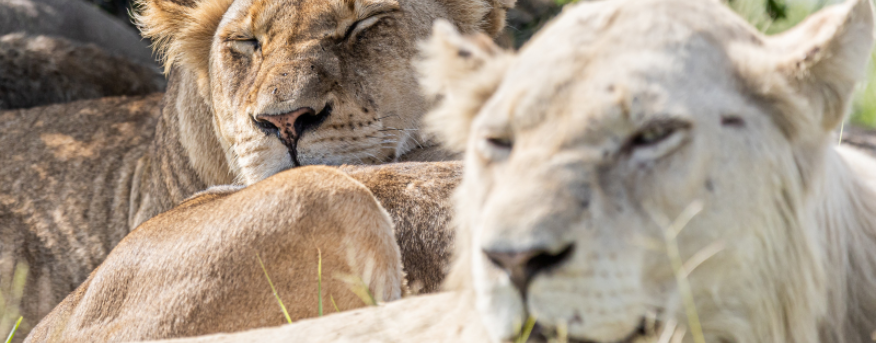
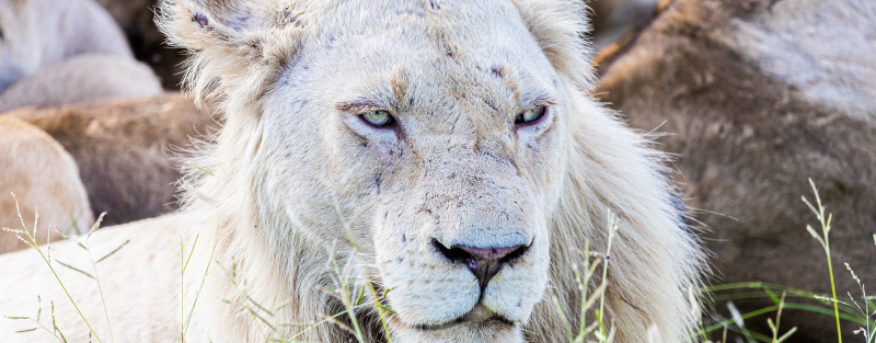
    Lions. Lions are without doubt the most sought after sighting for safari-goers throughout Africa. First timers and veterans alike will always be delighted at the sight of Africa’s largest cat. And even more so, the famed, revered and iconic white lions of the Timbavati.

    image

    But what is in a white lion? What makes a white lion, more than, their tawny counterparts? Why do some cultures believe that the white lions have devine or angelic powers and characteristics? I can tell you it doesn’t come from their behaviour. As much as we’d like to think white lions are more special, they are simply the same, regular, plain old lions we’ve seen time and time again.

    image

    Yet, there is something in their presence that captivates us, that elicits a sense of “specialness” that we attribute to them over others. This is all thanks to a rare genetic mutation.

    image

    White lions do not suffer from albinism, or the total lack of pigmentation in their skin, fur and eyes. Rather, they are leucistic, this means that the gene responsible for melanin production (melanin being responsible for pigmentation), functions differently to that of a tawny lion.

    image

    This particular gene mutation is a recessive trait inherited by lions which means that almost any lion in the region of southern Africa may carry the gene. However, the chances of the gene being expressed are quite low. Even if two wild, white lions were to mate and successfully produce a litter of cubs, there is only a one in six chance that a cub will be born leucistic or white. 

    image

    Vast amounts of research has been conducted on these unique cats and so far, their lighter colouration does not advantage or disadvantage them in any way. They are fully capable of fending for themselves in the wild despite their obvious lack of the usual coloured camouflage.

    No matter how you feel about lions, there is no denying the humbling sense of privilege that fills your being when their gaze washes over you, or when they stroll within meters of your safari vehicle, be they white or otherwise.

    “Find out more about Bushwise courses.

  • How to navigate using the stars in the savannah

    BY: Tasneem Johnson-Dollie

    How to navigate using the stars isn’t just something that’s nice to know when living or working in the bush – it’s vital! 

    Whether you’re learning to become a wildlife researcher or a field guide, your future career will mean living in or visiting remote locations from time to time.

    Yes, you’ll probably go out as part of a team, but how can you be sure that you’ll be able to find your way around if you happen to get lost?

    One way is to learn how to make use of your surroundings for navigation. Sound like something out of an adventure flick?

    Well it doesn’t have to be, because on a Bushwise Field Guides’ course you’ll learn the basic astronomy that will set you off on the right track. Here’s a little taste of what it’s all about.

    Astronomy class 101

    image

    Astronomy is the study of the universe beyond Earth’s atmosphere, including all of the objects that exist in space.

    It’s the oldest natural science. But, before the invention of the telescope in the seventeenth century, basic astronomy was focused on predicting the position of the sun, moon and planets.

    Today, it’s an out-of-this-world endeavour – literally – and includes the study of objects that we can see with our eyes or a telescope, and those that we can’t!

    If you sat in a modern-day astronomy class you’d get to:

    1. study the position and behaviour of the sun, moon and planets
    2. learn about the patterns in the stars and their uses
    3. gain an understanding of the physics of space and everything in it.

    Interesting astronomy facts

    image

    Most of our understanding of space comes from what we’ve learnt from Earth-bound observations, astronauts who spend small amounts of time in orbit, or probes and robots that are sent to do some interstellar snooping.

    Here are just some of the interesting astronomy facts that this field has filled us in on:

    1. The moon is lemon-shaped and only appears to be round from Earth.
    2. The planet Saturn would float on water.
    3. Mars has both the biggest volcano and the longest valley of all the planets in our solar system.
    4. You’d experience hurricane-like winds on Venus and these winds are growing stronger over time.
    5. Stars are the building blocks of galaxies, and the Milky Way galaxy is made up of around 300 billion stars.
    6. We’ll never be able to see the first population of stars ever created, because they’ve been moving away from Earth at an increasing rate since the beginning of time.
    image

    Luckily, there are around 5,000 stars and 88 constellations – a recognisable pattern of stars – that we can make out in the night sky. This means that navigation by the stars, a practice that has been around since ancient times, is still possible today. Here’s how.

    Navigation by the stars

    Star navigation can be even easier than using a compass. And some of the most interesting astronomy facts are the ones that allow us to navigate by the stars.

    Here are just three star navigation facts to fill you in on how to navigate using stars. You’ll learn more about these facts in a field guide astronomy class.

    1) Location, location, location

    image

    To navigate your way to your destination, you first need to know where you’re at. Basic field guide training will teach you how to keep track of your location as you move from place to place.

    This way, you won’t have to try to decipher your location in the dark, and you can get a head start on finding the stars used for navigation.

    2) Think of stars as lampposts

    As the night creeps on, we can see the stars moving around the sky. But some of them stay in position. These are the stars used for navigation.

    Think about the street in the city where you live, lit up by lampposts at the end of every day.

    These lampposts light your way, and can even help you see how far you’ve travelled from your initial position once you’re on the move.

    image

    Polaris (or the North Star) is one of these lamppost stars used for navigation.

    Navigation by the stars boils down to pinpointing Polaris in the night sky. To do this, you’ll need to spot a specific group of seven stars known as the Plough, or the Big Dipper.

    3) Become a starry-eyed dreamer

    Locating specific constellations can be tricky at first. Practise makes perfect, and it helps to get in touch with your creative side.

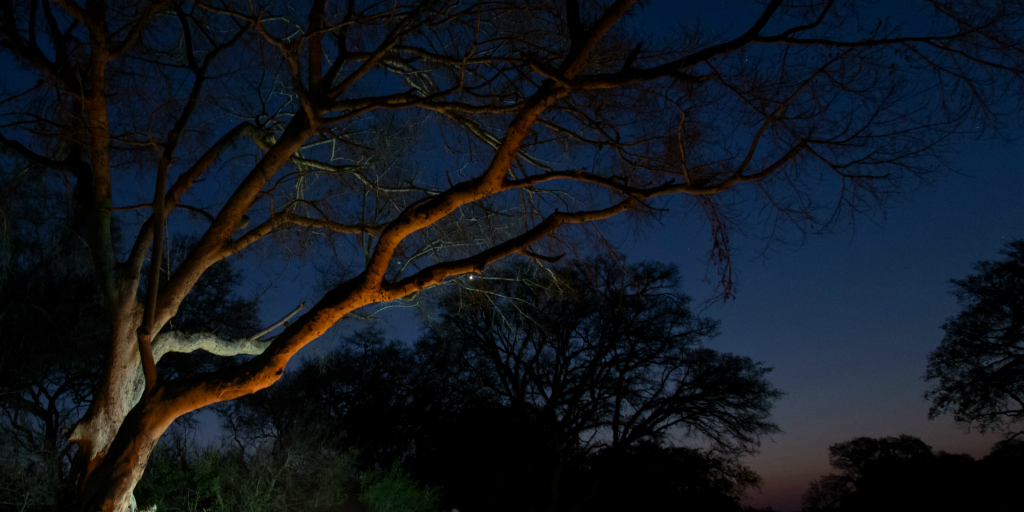
    Start off by spotting the Southern Cross,  a constellation of four stars that lights the skies of the southern hemisphere.  This arrangement of stars is also also known as Crux, and can point any traveller in the direction of the south pole.

    But how would one use this constellation for star navigation?

    Well, with a little imagination, you can link up the pairs of stars in the constellation, and imagine one short and one long line that intersect to make a  cross.

    image

    Now, focus on that longer line. The distance between the stars that make up this line is what you’ll use to figure out which way south is. How?

    Start by holding up your thumb and index finger to measure the distance between the two stars making up the longer  line. From the bottom-most star of the Southern Cross, move four times this distance away from the Southern Cross in a line that extends straight down from the cross itself.

    Now, look at the spot on the horizon that lies directly beneath your endpoint. You’ve found south!

    Not quite with us? Well, there’s another way to find south using the Southern Cross that may just clear things up.

    Look over to one side of the Southern Cross and spot the constellation Centaurus – one of the largest constellations in the sky which is said to resemble the mythological half-horse, half-man creature known as a centaur. Take note of the two brightest stars in this constellation. These are known as Alpha and Beta Centauri, and are amongst the brightest of all the stars in the sky.

    image

    These stunning sparklers act as pointer stars that can help you to more accurately pinpoint which direction south is. Here’s how:

    1. Extend the line linking the stars at the head and foot of the Southern Cross just like you did in the first example, let’s call this Line 1. Keep this line in your mind.
    2. Now, imagine a line linking Alpha and Beta Centauri. Find the midpoint of this line and drop a perpendicular line down from this point. This will be Line 2.
    3. The point directly beneath where Line 1 and Line 2 intersect is known as the south celestial pole, and moving in that direction will mean you’re heading south.

    How to navigate using stars in the bush

    image

    Star navigation in the bush uses all the same techniques you’ll learn in any basic astronomy class.

    But, navigation by stars in the African wild means that you’d also have to consider the terrain and safety considerations that go with moving through the savannah – like not stepping on a snake, or tripping over an antelope.

    Take a look at Bushwise’s IFGA Professional Field Guide course and see how you can learn how to navigate using stars while becoming a field guide.

  • Why geology matters in field guiding

    BY: Tasneem Johnson-Dollie

    For field guides, knowing about geology means that you can bring to life what many of your guests may take for granted – the ground! 

    Geology is important because all ecosystems are supported by the layers of rock that make up our planet. And if these rock layers could talk, what do you think they would tell us?

    Well, thanks to geology, we don’t have to guess at everything.

    In fact, the work done by geologists has filled us in on the timeline of the Earth, provided details of each historic period, and even given us a glimpse of the creatures who roamed the planet before.

    So let’s dig up some dirt about geology, and discover why it’s important to nature field guides.

    What is the study of geology?

    image

    Geology is the study of the Earth. Geologists focus on understanding the:

    1. physical structure of the Earth
    2. materials that make up the Earth
    3. history of the Earth
    4. processes that act on the Earth
    5. organisms that inhabited the Earth in the past.

    One of the most valuable things we’ve learnt from geology is how our planet, and the organisms that live on it, have changed over time.

    What is geology about?

    image

    If you were to ask the question, “What is geology about?” you’d probably be answered with another question, “Which field of geology do you want to know about?”

    This is because geologists work in a wide variety of fields from mining to waterworks and agriculture to construction.

    But, a general answer is that geology is about applying our understanding of the Earth to help us interact with it responsibly.

    And of course, there are geologists whose main job is to continue gathering information about the Earth, so there’s no telling how much our understanding will grow in the future.

    How do field guides use geology in the field?
    image

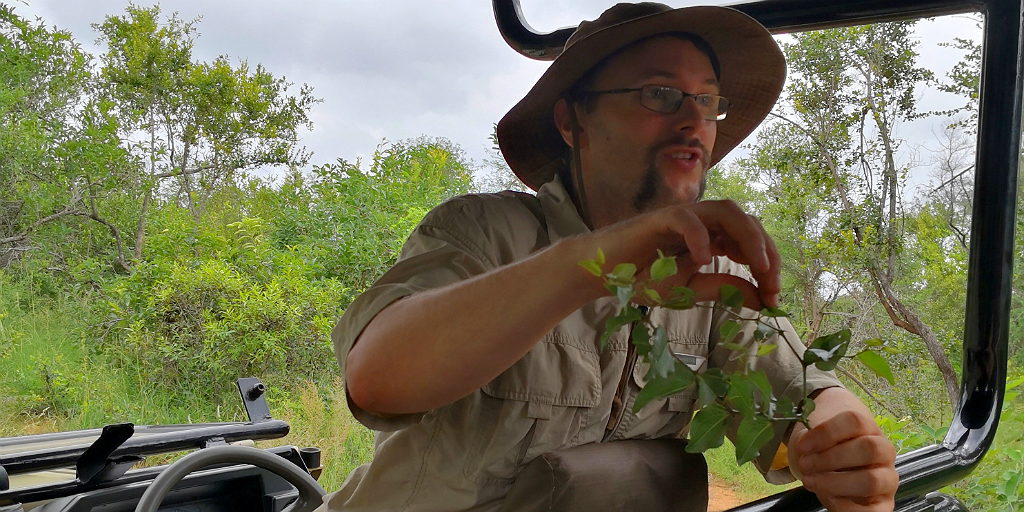
    When guiding guests along a bushveld trail, you can talk about all the trimmings – the trees, the plants, and the animals.

    But what brings it all together? What’s made up of the matter of yesterday, as well as the stuff of years gone by? The ground of course.

    The ground is a catalogue of time, bearing the marks of species gone by. And by using your understanding of geology out in the field, you can build on your guests’ understanding of nature and help them understand how every part of an ecosystem is connected.

    After all, how would the great acacia tree be able to withstand the winds in the savannah without its roots being anchored in the ground? How would termites build their galleries without the soil?

    image

    And, how would we ever be able to successfully grow our crops, or build our houses if we couldn’t understand the foundations they were set on?

    While the reason why geology matters in field guiding is clear, it also matters in so many other aspects of our lives, and we could all benefit from learning more about it.

    Find out more about Bushwise Field Guides’ online course for nature enthusiasts, and broaden your understanding of why geology matters in field guiding, and in life in general. 

  • Five of the biggest differences between field guides and game rangers
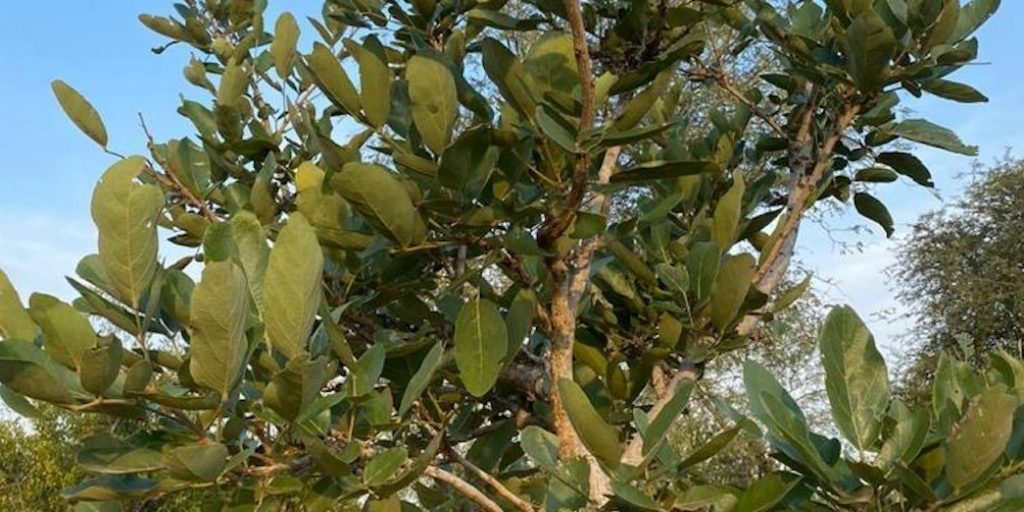
    BY: Tasneem Johnson-Dollie

    Looking to become a conservationist? Well, getting a feel for the differences between what game rangers and field guides do is a good place to start when planning for a career in conservation. 
    Yes, field guides and game rangers work at the same establishments, and they may even interact with each other on a daily basis.
    But field guide and game ranger jobs add to wildlife conservation in their own unique ways.

    Here are five of the biggest differences between field guides and game rangers that can help you to make up your mind, and get into a career that meets your expectations.
    1) Where do wildlife rangers and field guides work?

    image

    Both game rangers and field guides work in national parks, game reserves and private lodges.

    In fact, field guide and game ranger courses may offer their practical component in the exact same places.

    But, game rangers are more concerned with the maintenance of the wild spaces that make up lodges and reserves.

    Field guides, on the other hand, focus more on tourist activities – which means they’re most active in areas of the lodge or reserve where tourists are allowed to go.

    2) What field guides and game rangers do

    image

    Wildlife management became a key focus area in South Africa around the early 1800s. This sparked the establishment of game reserves, nature reserves and national parks.

    Here, people who were passionate about conservation could make a living working with wild animals in their natural habitats.

    Many of these establishments were run by individuals who had years of experience living in or visiting the bush. These pioneers came to be known as game rangers or wildlife rangers.

    The title just made sense, since the word “ranger” is used to refer to the “keepers” – or maintainers – of natural spaces.

    With their wealth of practical bush and wildlife knowledge, wildlife rangers were able to take tourists out into the wild.

    This made it easier for individuals with less – or no – experience in the wild to explore safely.

    Safari drives are still the most well-known of these early activities. But, over time, tourists wanted new ways to experience the wild, and the role played by game rangers developed into something much more specific.

    Today, the type of work done by game rangers still includes managing game reserves and collaborating with other reserve managers, as well as ecologists.

    image

    But if you decide to go into a career as a wildlife ranger, you’ll be expected to:

    1. manage animal populations and check for diseases
    2. maintain the reserve’s roads and fences
    3. manage water reserves, water erosion and alien plant growth
    4. ensure that the game reserve is run sustainably
    5. control threats such as poaching
    6. interact with the public and local communities, and add to their understanding of and contribution to conservation.

    As tourism in the country grew, other activities like bush walks became more popular. And, specialists who could provide the best guided experiences in the wild were even more in demand.

    But, with wildlife rangers already having lots of responsibilities that were essential to the well-being of the reserve’s plants, animals and economic well-being, they couldn’t take on much more.

    This is when the conservation career known as “field guide” came about. It was set up to see to the needs of tourists visiting reserves and to lighten the load for game rangers.

    Field guides were trained to:

    1. take tourists out on walking or 4×4 safaris
    2. provide a guided experience that adds to the guests’ understanding of natural environments and the animals that live in them
    3. assist wildlife rangers in their daily activities in the field whenever necessary.
    image

    And this is what you’d get to do if you decided to go into a conservation career as a field guide.

    3) What game rangers and field guides study

    Field guides and game rangers study similar topics but work towards different qualifications.

    Wildlife rangers need to have a tertiary-level qualification that’s relevant to conservation. This means that you’ll need to achieve at least a national diploma with a wildlife focus.

    Your game ranger studies should also equip you with everything you need to know about African ecosystems and their conservation.

    Field guides also need to have a good understanding of all the plants, animals and natural environments that make up African ecosystems.

    But, as an aspiring field guide, you’ll only need to complete the theory and practical components of a IFGA accredited field guide course to be able to work in the industry.

    So, being smart about the qualification you get is key in ensuring that you can land the conservation job you’re hoping for.

    4) Where to study field guide and game ranger courses

    image

    You can get involved in programs that gear your professional development towards game ranger jobs at any one of these South African institutions:

    1. Cape Peninsula University of Technology
    2. University of Cape Town
    3. University of the Western Cape
    4. University of South Africa (UNISA)
    5. Southern African Wildlife College
    6. Tshwane University of Technology
    7. University of Stellenbosch
    8. College of African Wildlife Management.

    And if you’re looking to land jobs as a field guide, you’ll need to achieve your qualification on a field guiding course that’s accredited by IFGA.

    Where would you go to do this?

    Well, there are many different field guide training providers. But, Bushwise Field Guides offers an award-winning IFGA Safari Field Guide course and boasts the highest pass rate in the industry. Not to mention that Bushwise has an employment guarantee that ensures all South African graduates will secure a role within six months of completing this course.

    And you could learn all you need to know about field guiding and gain comprehensive practical experience that adds to your employability in the field.

    5) How wildlife rangers and field guides make an impact

    image

    So how do field guide and game ranger jobs differ in the impact that they have in conservation?

    Well, despite the differences between these conservation careers, getting involved in either of them means that you’ll make a meaningful impact in the conservation of ecosystems.

    But, wildlife rangers are more focused on wildlife and reserve management. And, while they’re bound to interact with lodge and reserve guests from time to time, it isn’t the focus of their day-to-day activities. The work they do has a direct benefit for wild animals and their well-being.

    In comparison, a field guide’s main aim is to interact with tourists in an informative and engaging way, and assist in broadening their understanding of the wilderness. In this way, they build on the global community’s awareness of wildlife conservation and the role that each individual can play in it.

    Start your conservation career

    image

    So, which conservation career do you see yourself in?

    Well, now that you know the differences between field guide and game ranger jobs, you can have a clearer vision of where you’re headed.

    And this will make it easier to work towards the conservation career that speaks to your strengths and passions, and pick the field guide or game ranger course that will get you to where you want to be.

    Even if you’re still not quite sure, you could start out on a field guiding course, and build towards a career as a wildlife ranger in the future.

    Take a look at the Bushwise professional field guiding course and internship that make dreams come true for aspiring field guides or game rangers.

  • Understanding weather and climate from a field guide’s perspective

    BY: Tasneem Johnson-Dollie

    Understanding weather and climate is essential for field guides because it can tell you a lot about any natural environment. Let’s take a closer look at climate and weather from a field guide’s perspective. 

    Because weather and climate have an impact on natural environments (and everything that lives in them), understanding weather and climate is key in the work that field guides do every day.

    In fact, without this understanding, field guides wouldn’t be able to do their work quite as well.

    Let’s take a closer look at climate and weather in field guiding.

    What’s the difference between climate and weather?

    image

    “Weather” refers to the short-term, or day-to-day changes in the atmosphere. And “climate” tells us what the weather is like in a specific area. The National Centers for Environmental Information simply states, “Climate is what you expect, weather is what you get.”

    So, when you’re told that Cape Town has the perfect holiday-weather from December to February, you expect to soak up the sun while you tan on the beach. But when you travel to Cape Town, you’ll experience the day-to-day atmospheric conditions. This may be a strong south-easterly wind to knock your sunhat right off. These short-term fluctuations create a yearly pattern that adds up to the climate of the region over time.

    There are five major climate types:

    1. tropical
    2. dry
    3. mild
    4. continental
    5. polar.

    Learning about these weather and climate types can tell field guides a lot about how nature works, and allow them to keep an eye on the health of natural environments in real-time.

    Here’s why understanding weather and climate is essential for field guides.

    Understanding weather and climate from a field guide’s perspective

    image

    Since a field guide’s everyday activities involve analysing and interpreting nature, climate and weather fall under the basics of things you need to know to be good at what field guides do.

    But understanding climate and weather goes beyond being aware of when to wear a winter jacket and when to keep your shades at hand.

    In fact, because climate and weather are external forces that are felt by everyone – and everything – on Earth, they have a big impact on the way plants, animals and people live their lives.

    While the types of plants present in an area are key in setting up a certain type of climate, they’re also affected by the climate and weather in an important way.

    The reproductive system of plants is sensitive to changes in the atmosphere. As the weather shifts from winter to spring, plants begin their reproductive cycle. Similarly, wild animals sync their breeding season so that their offspring are born when the weather is at its warmest. This means that baby wildlife are born into a season where food and water is easier to find – giving offspring the best chance to survive and thrive.

    image

    And while people may reproduce all year round, climate and weather still have an impact on our daily lives in a significant way. Not only does the climate and weather play a role in the types and amounts of fruit and vegetables that grow, but adverse weather conditions – that are occurring more frequently around the world – affect where human beings can live and their long-term well-being.

    With climate and weather being strongly linked to the next generation of plants, animals and people, we can’t deny its importance in our everyday lives and in maintaining healthy ecosystems.

    For field guides, understanding weather and climate means getting to grips with how plants, animals and people function in the environments they live and grow in. And this is one of the best ways to truly grasp what’s going on in ecosystems around the world.

    Why keeping up with weather and climate change is key

    image

    Let’s face it, if you try learning about weather and climate from a 1950’s textbook, you’ll miss out on an avalanche of new information. You could even learn about weather and climate conditions that no longer exist. That’s because, when we compare weather and climate back then to what it is today, we’re talking about vastly different situations.

    For example, droughts have become much more common across the African continent. This has affected the length of the dry season and the amount of water present during the wet season.

    In keeping with what we know about how weather and climate changes affect natural environments, it’s no surprise that things on the African continent have changed in a big way due to climate change. Some examples are:

    1. Food productivity is a growing concern.
    2. Water has become even more scarce.
    3. People, plants and animals are being faced with more and more environmental challenges each year.

    This can be seen by the number of animals going extinct and the growing number of people faced with health challenges. While many of us have heard about the effects of climate change in Africa, weather and climate changes are being felt across the world. This means that every country is facing some sort of obstacle in the face of climate change. And if we want to see some positive change, we all need to get involved in efforts to address climate change where we live, as well as globally.  A good first step is learning about weather and climate change from the comfort of your own home.

    How to learn about weather and climate from home

    image

    You can learn about weather and climate by stepping outside, searching Google, or even talking about it with your friends and family. But how can you learn about weather and climate in a structured way that will leave you with some qualifications? By signing up for an online meteorology course!

    Meteorology is the scientific study of the atmosphere, which includes atmospheric processes like climate and weather. Further reading: Why World Meteorological Day 2020 is worth all the fuss

    Programs that offer a combination of online meteorology and online field guide training provide the perfect combination of theoretical information. They also make it easy to gain practical experience, because your theoretical knowledge will equip you for in-field work when you join a program. This opportunity is great for anyone looking to understand weather and climate in a meaningful way.

    These types of courses take the study of weather and climate to a convenient setting – your home. But more than this, they provide a supportive and interactive learning platform that’s delivered by experts in the field. You can start off on a good footing with Bushwise’s IFGA Nature Enthusiast online course. This is one of those courses online that will bring you up to speed on the science behind natural environments and the different types of weather and climate experienced in these areas. Then, take it up a notch and get involved in our IFGA Field Guiding online course, a course where you’ll gain a deeper understanding of weather and climate and become an accredited field guide too!

    How understanding climate and weather makes for better field guiding

    image

    And once you can confidently answer the question, “What is the difference between climate and weather”, and have a solid understanding of weather and climate as it applies to field guiding, what’s next? Making a positive impact on climate change! Since climate change is one of the biggest global challenges the world has ever faced, field guides who are tuned-in to climate and weather concerns are a valuable asset.

    Why?

    Understanding weather and climate makes conservation efforts and ecosystem management more effective and relevant. Without an understanding of weather and climate, we’d miss opportunities to do meaningful work in the wild. We wouldn’t get to build on efforts aimed at addressing climate change, or be able to predict and prepare for adverse weather events.

    But, one good thing about the seriousness of climate change is that it has brought change when it comes to getting educated about climate and weather.

    Learning about weather and climate is easier than ever before, and the study of these topics is a big part of sustainable efforts worldwide.

    Find out more about our online field guide courses, gain an understanding of weather and climate, and get involved in conservation efforts that will blow you away.

  • How the different leaf types tell an environmental story

    BY: Tasneem Johnson-Dollie

    Like leafing through your favourite paperback, browsing through the different leaf types in nature can tell you a story. It’s a story that will stretch your environmental know-how back to the very beginning. 

    We all know that leaves are structures found on plants of all kinds and are often green in colour. But, take a closer look and you’ll see that they are much more complex than that. In fact, there’s tons to look at when examining the different leaf types, including: types of leaf shapes, types of leaf margins, and types of leaf veins.

    Altogether, these features give us insight into how plants adapt to different environments, why some of them have outlived the dinosaurs, and why they’re probably the most important part of our environment today.

    How the different leaf types are classified

    Before we can understand the environmental story they tell, we’ve got to get a feel for the different plant leaf types. You can learn everything you need to know on online environmental courses, but let’s make a start by taking a look at how the different leaf types are classified.

    image

    Getting to know the different plant leaf types

    Scientists have come up with two broad categories of leaf types, namely, simple and compound. You can spot these leaf types in the following ways:

    1. Simple leaf types consist of a single, undivided leaf on a stem. This type of leaf can be seen on maple, oak, banana, guava, black cherry, black gum and sweet gum trees.
    2. Compound leaf types consist of multiple leaflets that are all attached to the same leaf stem. This type of leaf grows on neem, horse chestnut and baobab trees, and on rose, clover, desert cotton and poison ivy plants.

    Delving deeper into the different leaf types

    Once you’ve wrapped your head around these two plant leaf types, prepare for even more fun, because the different leaf types can be categorised even further! When examining them, environmentalists look at key features to tell the different leaf types apart.

    Here’s what it comes down to:

    image

    Types of leaf shapes

    There are tons of different types of leaf shapes. In fact, there are 16 different shape categories.

    Leaf shapes can be classified as simple shapes like linear – slender, narrow and long – or a more complex shape like lyrate – plant leaf types that are a similar shape to the harp-like instrument known as a lyre.

    Types of leaf margins

    Different types of leaf margins are another way of splitting these tree-trimmings into separate groups. Leaf margins are the area along the edge of the leaf. There are four categories of leaf margins:

    1. entire leaf: the margin of these are smooth and even around the entire leaf edge
    2. toothed or serrated leaf: these have a margin with a series of pointed “teeth” that go right around the edge of the leaf
    3. lobed leaf: the margin has one or many indentations that go less than halfway to the midrib – central vein – of the leaf
    4. parted leaf: these have indentations that go more than halfway to the midrib of the leaf.

    And finally, you can tell the different leaf types apart by comparing the different types of leaf veins.

    image

    Types of leaf veins

    The different types of leaf veins add to the difference in patterning that we see. Leaves can have two types of leaf veins:

    1. pinnate venation – where the veins stretch from the midrib to the leaf margin
    2. palmate venation – with veins that radiate in a fan shape from the leaf petiole (the stalk that joins the leaf to the stem of the plant).

    That’s a lot to remember! But together, these different leaf types have led us to discover heaps about natural environments.

    How the different leaf types tell us about nature

    Because plants grow in nature – unless we decide to place them in our homes or transplant them into our gardens – studying them is a great way to understand how organisms survive living outdoors.

    Scientists state that the leaves are the most important part of any plant, and that the main role of all the other plant parts – like the stems, trunk and roots – is to support the leaves.

    This is because all the different leaf types provide the plant with the water and food it needs to survive. Leaves are the best structures for the job too, because of all of their functional adaptations that separate them into the different leaf types.

    image

    The different types of leaf shapes, types of leaf margins and types of leaf veins allow plants to make the best of the supply of water, sunlight and nutrients in the environments where they live. This is why the different leaf types can tell us a lot about natural environments.

    And, since many of today’s plants have their beginnings rooted in prehistoric times, some of their characteristics also tell us about the plants and environments of the past. Without learning about the different leaf types, we may have never figured out that plants need water and sunshine to grow and survive.

    We may also never have found out that plants absorb lots of carbon dioxide from the air, and that they’re the reason we can breathe and survive in the Earth’s atmosphere today. In fact, because they can create food from carbon dioxide, they were able to outlast the dinosaurs when this gas flooded the Earth’s atmosphere,  as the result of violent volcanic explosions, meteors, or any number of events that caused the multiple mass extinctions.

    image

    And without being able to study the fresh and fossilised leaf types of plants that survived mass extinctions – like cycads – we’d know much less about what natural environments were like before human beings even set foot on the soil. This also means we’d be much further away from understanding how the conditions on Earth had to change to support human life, and how delicately balanced life on this planet really is.

    How to learn more about the different leaf types

    Plant leaf types have shed light on how life on Earth began and blossomed. And learning more about them may hold the key to understanding the future. Further reading: We should learn from the fascinating Apple-leaf tree

    So the next time you see a leaf flutter by, take heed. The answers to humankind’s biggest questions may be closer than you think, just flitting about in the breeze.

    Find out even more about our environment by signing up for one of Bushwise Field Guides online environmental courses and let the story unravel before your very eyes.

  • Are giraffes endangered? Their silent road towards extinction

    BY: Megan Colborne

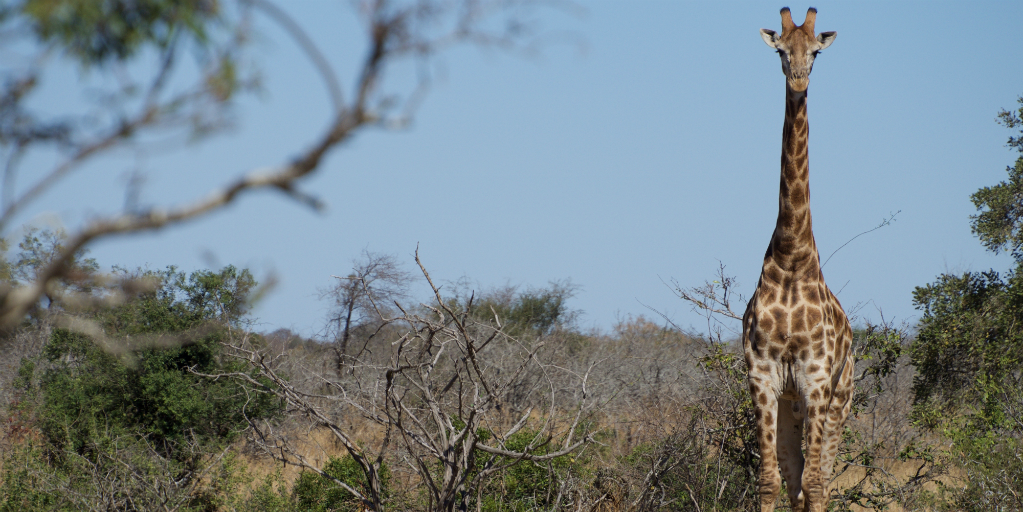
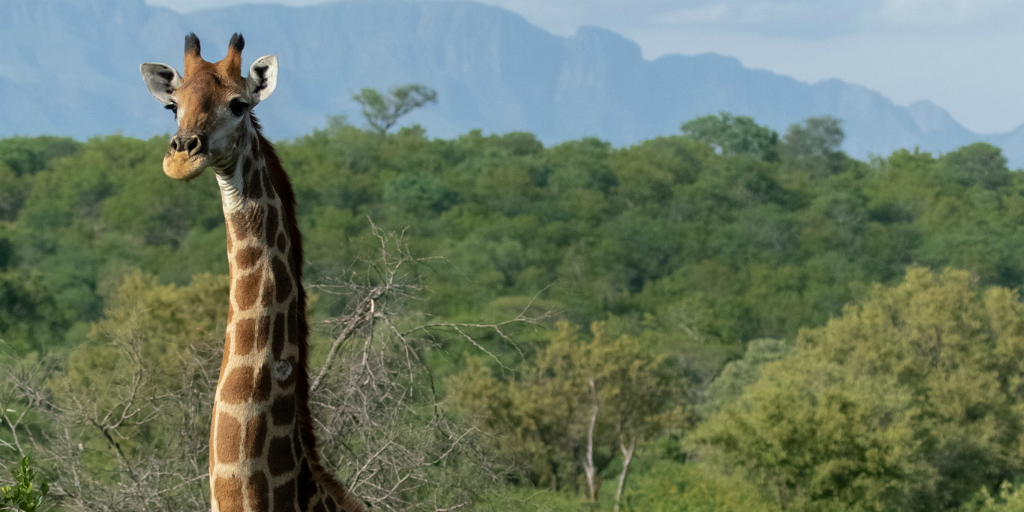
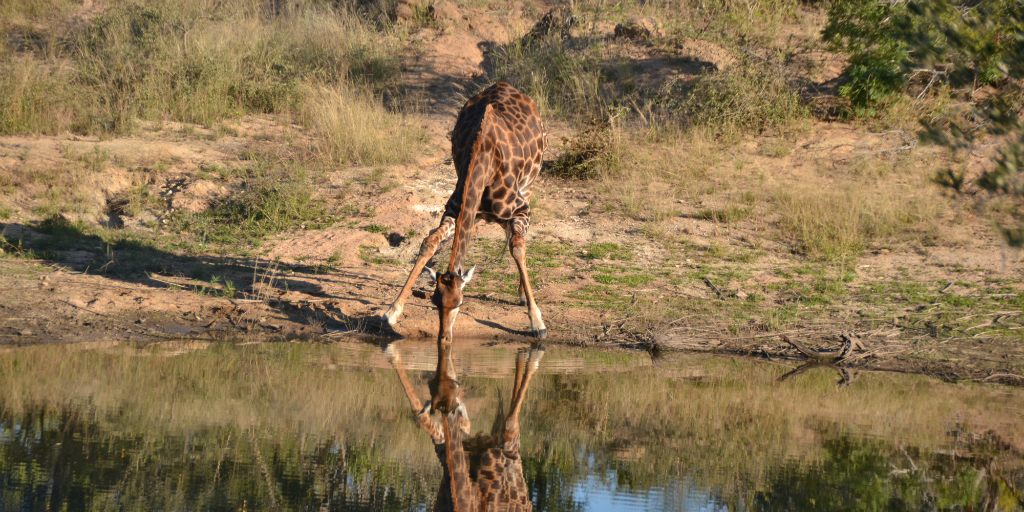
    Giraffes are probably one of the easiest animals to identify all around the world. This is really no surprise when you look at their distinctive lanky long legs and necks. But what could come as a surprise to most people is the answer to the question, “Are giraffes endangered?” 

    If you’re a field guide, keeping your guests entertained with folklore about how the giraffe got its long neck is an important part of your role, but it’s also your responsibility to keep them informed on the facts about giraffes too. Most people know that the giraffe is the tallest animal in the world. But what they don’t know is that these African animals play an important role in their ecosystem, and are often forgotten when it comes to conservation efforts.

    This lack of knowledge and conservation efforts is part of the reason why the number of these towering herbivores has plummeted over the last three decades, without anyone even really noticing. 

    Known as the silent extinction, it came as a shock to most when giraffes were suddenly labelled as vulnerable on the International Union for Conservation of Nature’s (IUCN’s) Red List in 2016. This after a survey found that nearly 40% of the population had been wiped out in just one generation. 

    A species is categorised as vulnerable by the IUCN when it’s clear that the animal is likely to become endangered – unless the circumstances that are threatening its survival and reproduction rates improve.

    Why are giraffes endangered?

    image

    Over the past 30 years, this African herbivore’s numbers have decreased by an alarming 30%.

    The cause of this massive decline? Habitat loss and fragmentation, poaching, as well as climate change are said to be the driving forces behind their declining numbers.And to make matters worse, very little is known about the behaviour of giraffe populations. With so many questions about giraffes left unanswered, how could anyone have seen this decline coming? 

    For example, we don’t really know how long they live, whether they travel long distances, what their cognitive abilities are, or even the real answer to the question: “Why do giraffes have long necks?”

    There have also been no long-term conservation efforts involving giraffe populations, which makes it difficult to know or predict what’s going to happen to giraffes in the future, or how much time we have left. In an effort to change the outcomes for giraffe populations, a group of conservationists are working tirelessly to figure out the mystery behind their rapid decline in Africa, and they’ve come up with some effective solutions. 

    Some of these efforts include giraffe counting, and tracking where and how far they roam. Through giraffe counting and tracking, we are able to find answers to questions like, “How many giraffes are there? Where are they? How far do they range? And how many species and subspecies are there?”

    Why are giraffes important?

    image

    So why are giraffes so important? 

    Giraffes are considered to be a keystone species in Africa. This basically means that they are essential to the survival of the ecosystems they live in. Without them, these ecosystems would begin to collapse and change completely. You see, because of their impressive height, giraffes eat the plants that other animals can’t reach. This promotes the distribution and growth of plants lower down, which are important for the survival of smaller animals.

    The survival of giraffes is also vital to the acacia tree. These two are so intertwined that some acacia tree seedlings can’t successfully germinate until they have passed through the digestive system of a giraffe.It’s also believed that the height of giraffes, paired with their excellent vision, allows them to spot predators and danger earlier than other animals, which can act as an early-warning system for other animals.

    Giraffe conservation: What can I do to help?

    image

    It’s important to educate communities on how and why we need to protect giraffe populations. When communities closest to giraffes are properly informed on how their actions affect giraffes, they are able to change their day-to-day practices in a way that will positively impact these herbivores. 

    An example of these day-to-day changes could be adopting more sustainable farming practices to minimise damage to land that could otherwise be inhabited by giraffes. Other measures that have been implemented to help in giraffe conservation include the reforestation of acacia trees. More acacia trees means more food. More food for giraffe populations means a greater chance of survival, which could help to increase their numbers significantly.

    If you love giraffes and other wildlife and want to work towards their conservation, think about joining a field guiding course with Bushwise. You could also sign up to the Nature Enthusiast FGASA Online Course today.

  • Can you identify a giraffe by its scat?

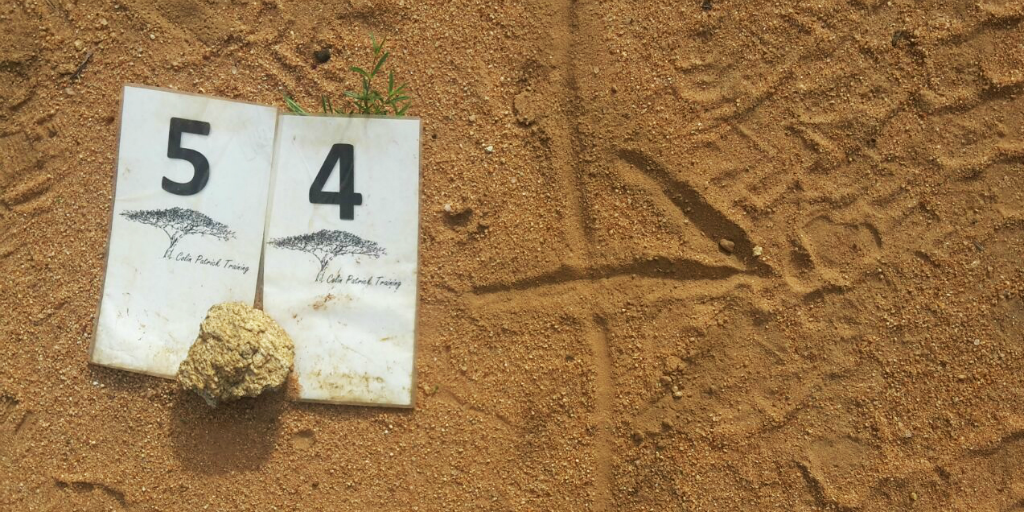
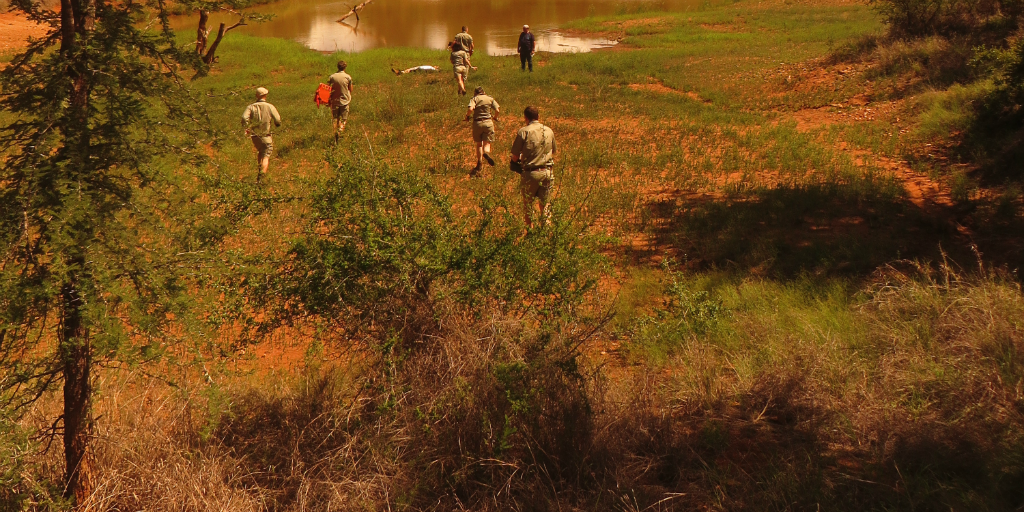
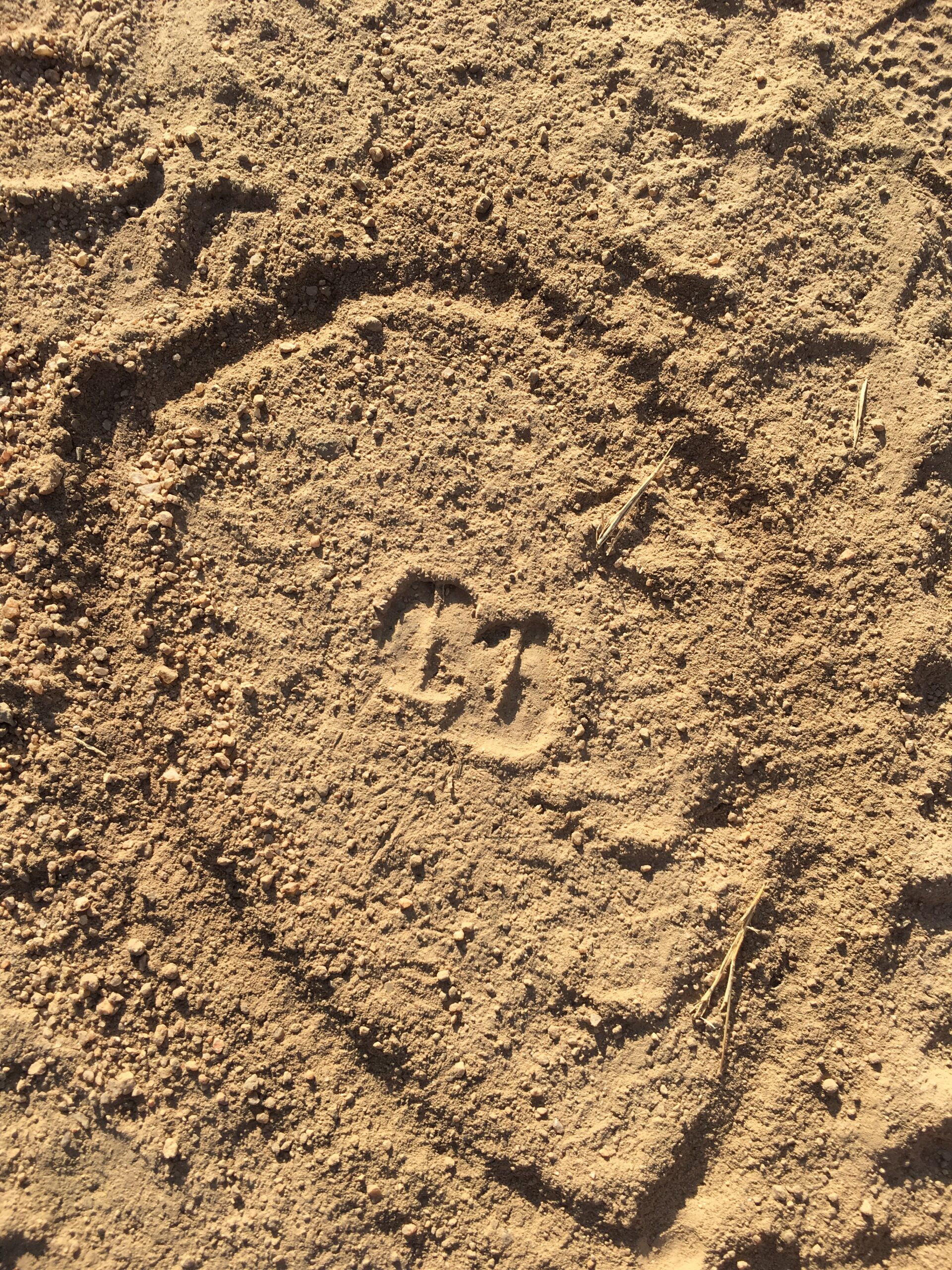
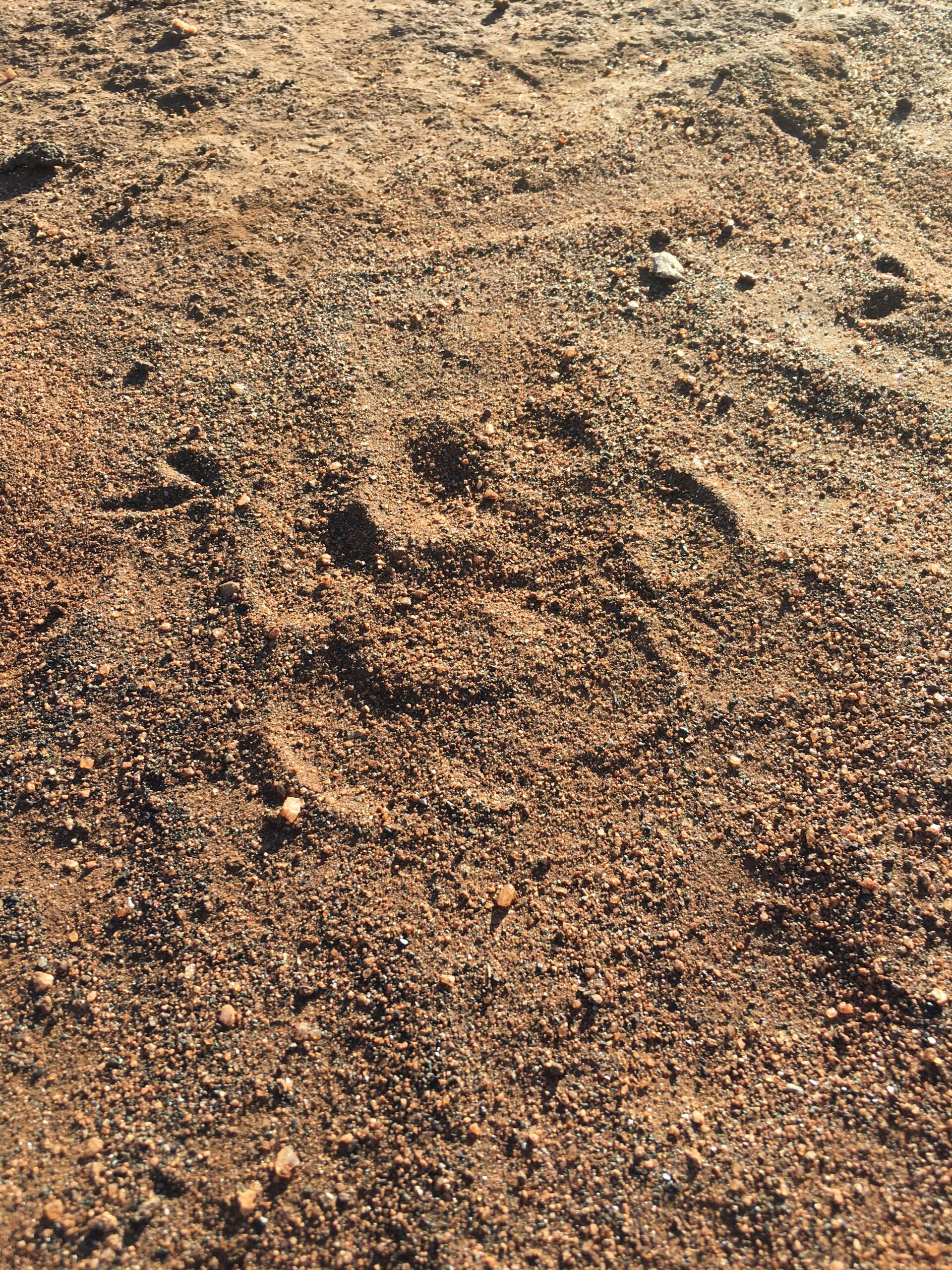
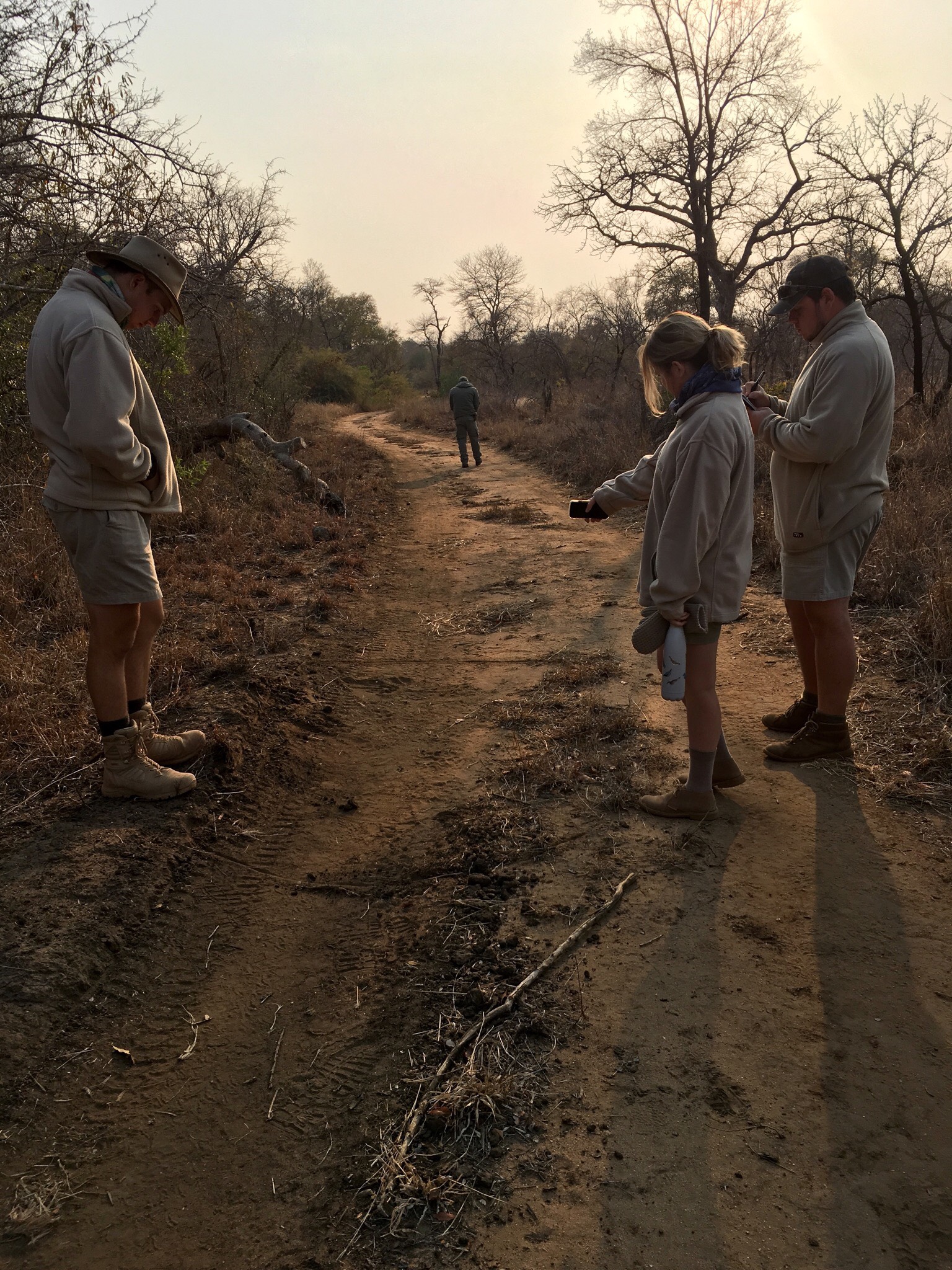
    or is it droppings……..Track and sign with Colin Patrick has officially been completed! It was an exciting week packed with learning new animal tracks, identifying animals by scat and trying to put together a story of what animals were previously in an area based on the tracks they’ve left behind.

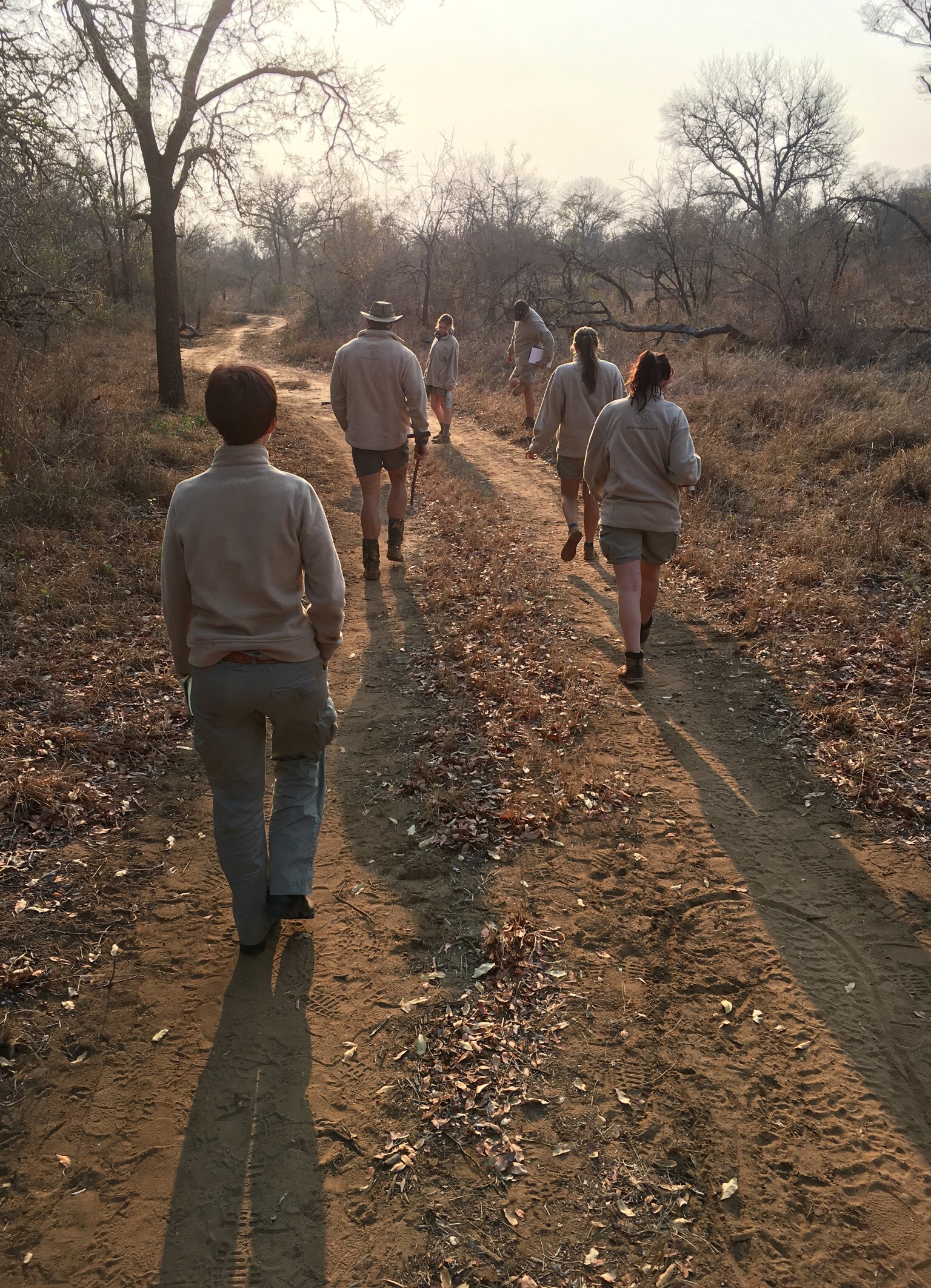
    The week began with setting out to find fresh animal tracks left in the dirt. Colin always carried his trusted walking stick, which he used to circle tracks for us to decipher. We all walked around together, circle to circle, and felt quite confident about our answers because we had done some intro to tracking with our trainers. As the week went on, however, we learned so many animal tracks that they all started to look the same. All of a sudden the tree squirrel and dwarf mongoose tracks seemed almost identical and the bushbuck and nyala tracks also looked very similar. Frustration turned to very low levels of self-esteem and we took a break from tracks for a bit.

    image
    image

    Colin brought his amazing anti-poaching, tracker dog, Annie, to demonstrate her tracking abilities and talk about tracking in terms of anti-poaching. We split into two groups and one group headed off into the bush to try and ‘hide’ from Annie. The group that stayed behind got to run (more like sprint) into the bush after the other group, following Annie’s lead. Annie is truly incredible and it was an awesome experience to watch her do her thing and follow the trail of humans. This was a much needed break, but the following day we got back to business. As Colin taught us to spot small differences in tracks, our spirits were raised and we all started feeling confident once again, just in time for our assessment.

    image
    image

    On assessment day, we started bright and early and waited eagerly for Colin to circle tracks that we would be tested on. We had a good time with it, and everyone in our group ended up receiving a tracking level! We ended assessment day with cooking some delicious boeries in the bush. It was an epic week and we are more than excited to continue to advance our knowledge of tracks.

    You can learn all about track & sign when you join a Bushwise safari guide course!

    Blog by Ellie Schwartz

    image

    #footprints #tracks #practical #fieldguiding #tracking #cybertracker #assessment #fieldguides