Category: Wildlife insight

  • Impala and wildebeest: iconic African antelope

    In this blog, Bushwise students Daisy Gleeson and Tyler Delhougne talk about two of their favourite African antelope species. Often overlooked on game drives, antelope are found across the world and play an essential role in the ecosystem. Let’s learn more…

    4 min read

    Antelope of the African bushveld
    image

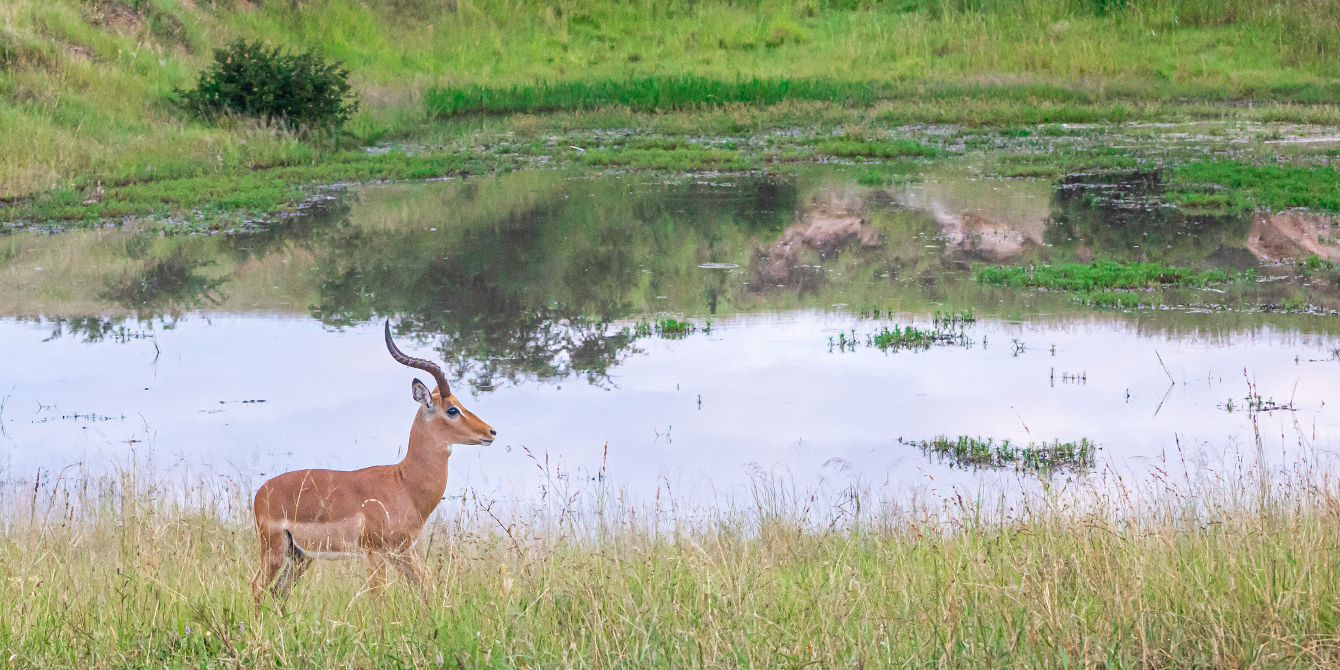
    There are about 91 different species of antelope on Earth, all of which have formed special adaptations and characteristics. 74 of these can be found in Africa, living in a number of biomes from the plains to  forests and jungles. 

    These animals are expertly adapted and are masters of camouflage and avoiding being caught. In this blog, we are going to go into more detail about the main antelope species that can be found in South Africa.

    The plentiful impala
    image

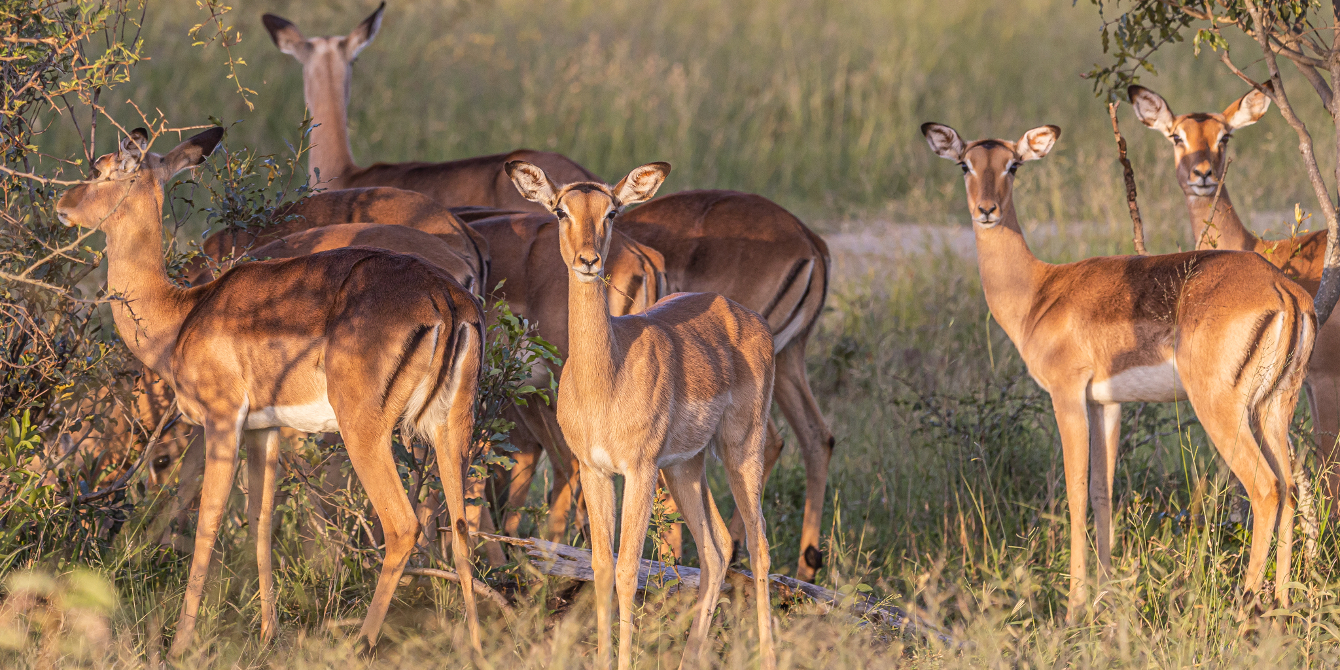
    We’ll start with the most common antelope found in southern Africa: the impala. There are roughly around 100,000 in the Kruger National Park alone. Fossil evidence from 6.5 million years ago suggests that the impala we see today have hardly changed; this is a testament to the fact that they are perfectly adapted to survive and thrive in the wild. 

    They use a camouflage tactic known as countershading, which is when an animal – in this case the impala –  is darker on the top than on the bottom. This works to their advantage as they appear two-dimensional to predators, which allows them to blend into the landscape. 
    image

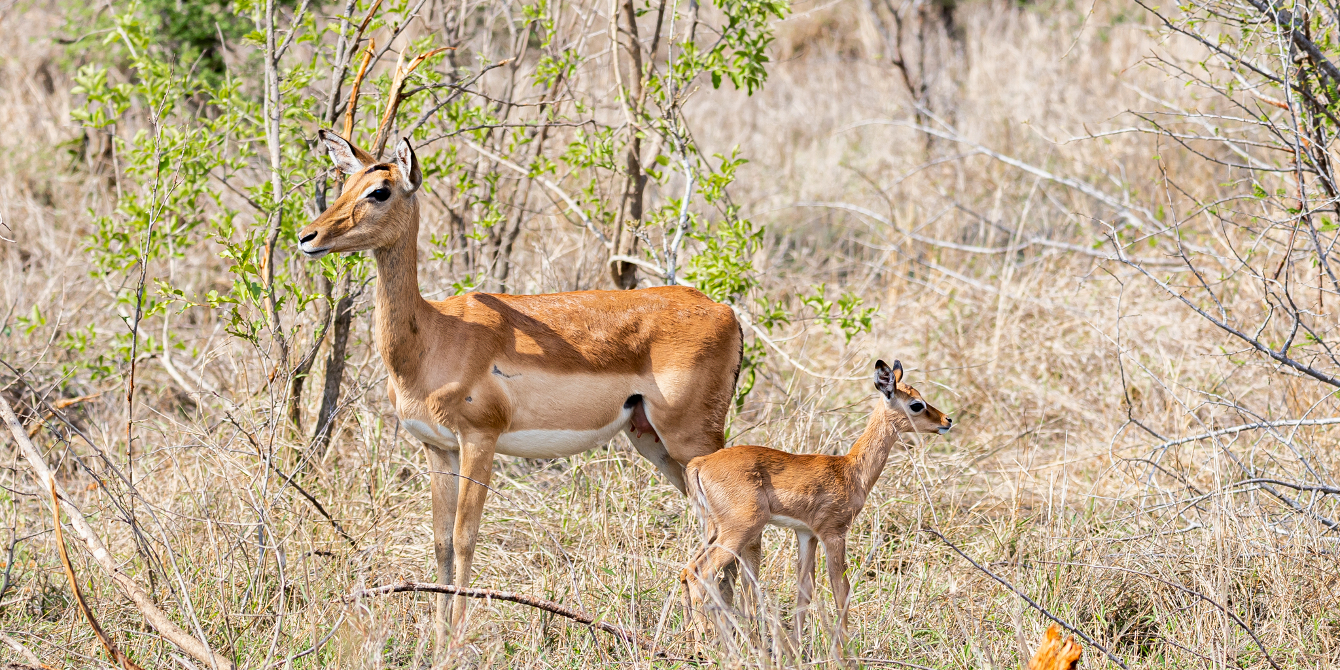
    Perhaps their most effective tactic in ensuring their survival is their successful breeding strategy. Whilst impalas are not territorial by nature, as they enter the rutting (breeding) season in May, male impalas will begin rounding up females to be part of their harem. He will then attempt to mate with each female, whilst simultaneously trying to defend his territory and fight off opposition males. 

    The rutting season lasts for about a month, by which time most of the female impalas will be pregnant. The gestation period is 6.5 months, which means that by November there is a huge flood of new-born impalas. Unfortunately, this will provide food for predators, but because there are so many new impala a large proportion of the babies will survive. Thus increasing the impala population, which is why it is one of the most successful African antelope.

    The unusual wildebeest
    image

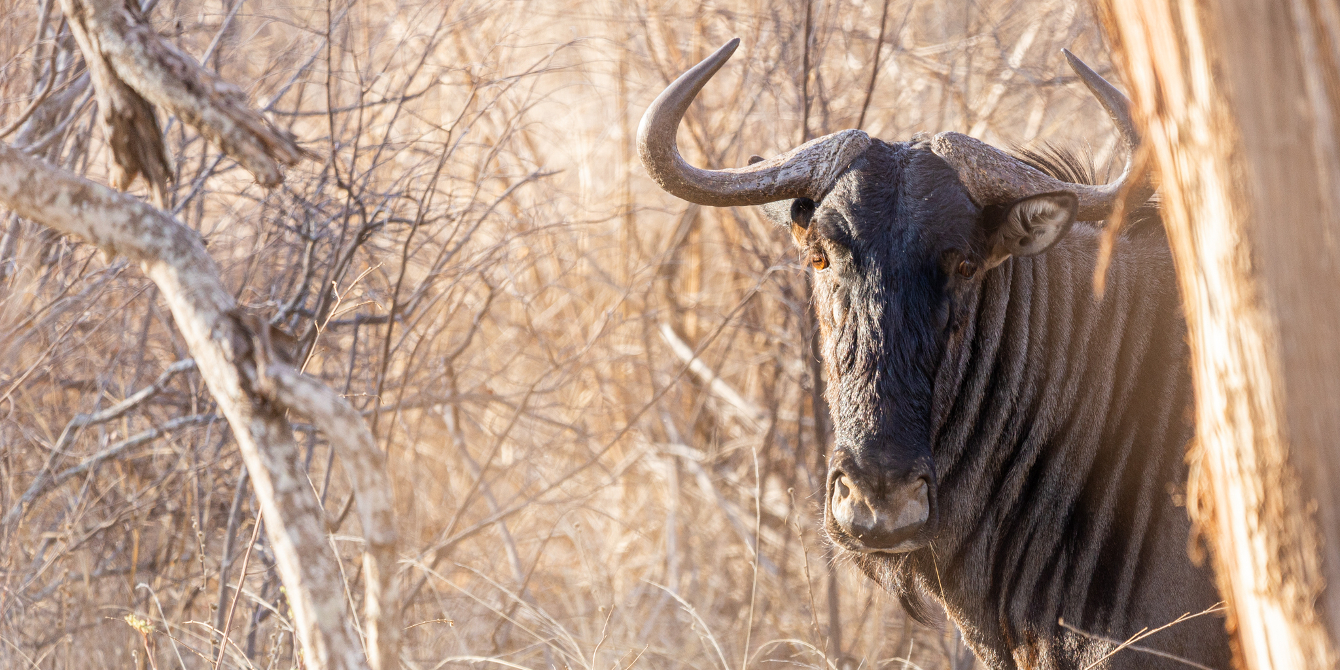
    Another common African antelope are blue wildebeest, which gather in open grassland areas, usually close to a water supply. They are easily identified thanks to their silvery-blue coat and curved horns, which both the male and female wildebeests have. 

    A black wildebeest is blackish-brown in colour and smaller in size, which is how you can tell the two apart. Unfortunately, the black wildebeest population was nearly made extinct in the 19th century as they were seen as pests and were hunted and killed for their hides and meat. Their numbers are gradually increasing,  but 80% of black wildebeest can only be found in private game reserves. 

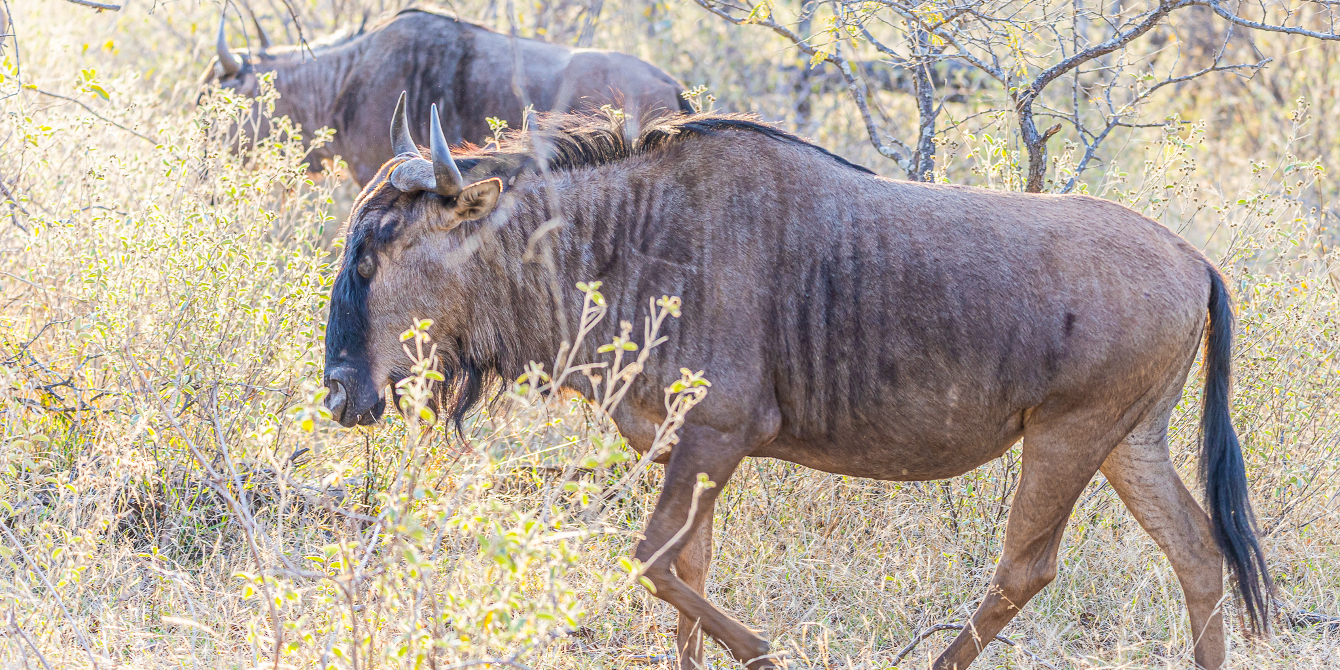
    As wildebeest are migratory animals, their body is specially adapted to allow them to run for long distances. Their backs are slanted downwards, with the shoulders situated fairly high on their body. 
    image

    Similar to the impala, they also have a fixed breeding season which takes place in winter, meaning that there is an influx of babies born between November and December. Being born at this time of year is beneficial as this is when the grasses are at their greenest which provides the calves with the best possible chances of survival.

    Because African antelope have adapted so well across the continent, keeping population numbers in check has proved to be a challenge. Sometimes game reserves lack the appropriate number of predators needed to keep the antelope herds low enough for the environment to support. Because of this, many game reserves have to be strategic with population management.

    On a game drive, you can never be guaranteed to see any of the big 5. However, you can count on the fact that you will come across an abundance of various different antelope species, and hopefully you will now look at them in a new light.

    Learn more about all the different animals that make up a functioning ecosystem, including African antelope. Apply today to join a Bushwise course.

    #wildlife #AdvancedRifleHandling #bushwise #fieldguide #safariguide #training #animals #tracks #apprenticefieldguide #safari #fieldguiding #tracking #trackandsign #gamedrive #guiding #fieldguidecourse #studying #fieldguides
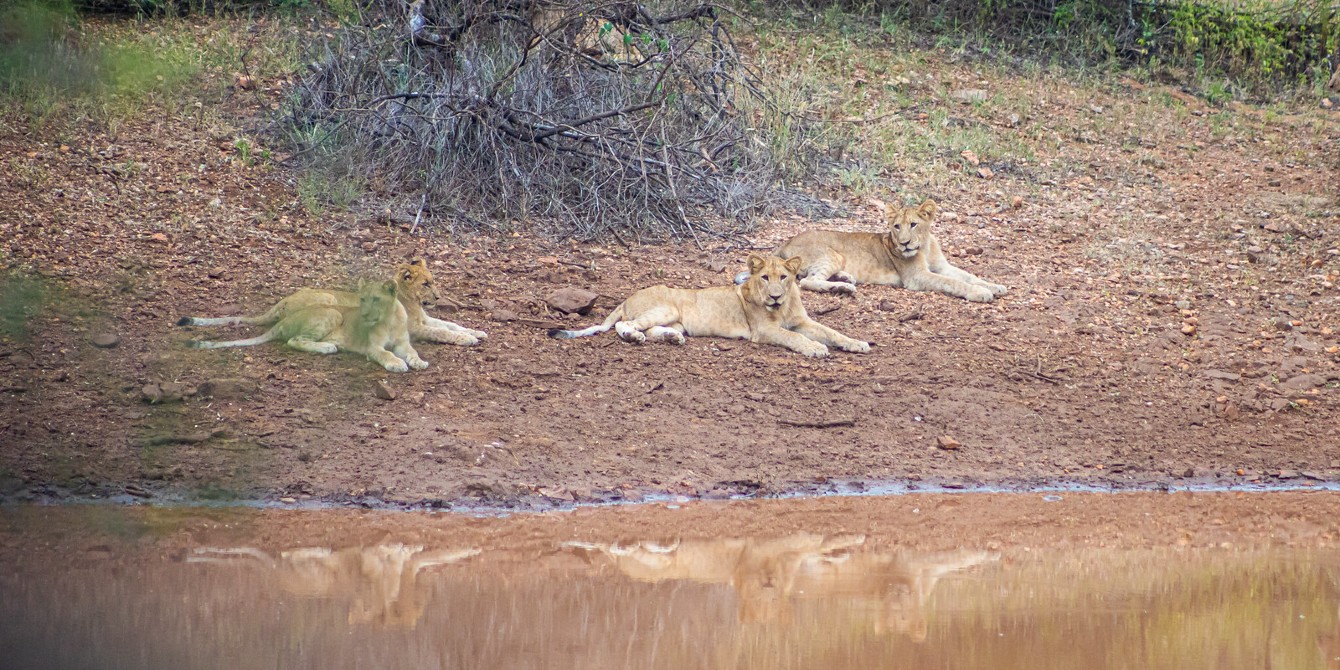
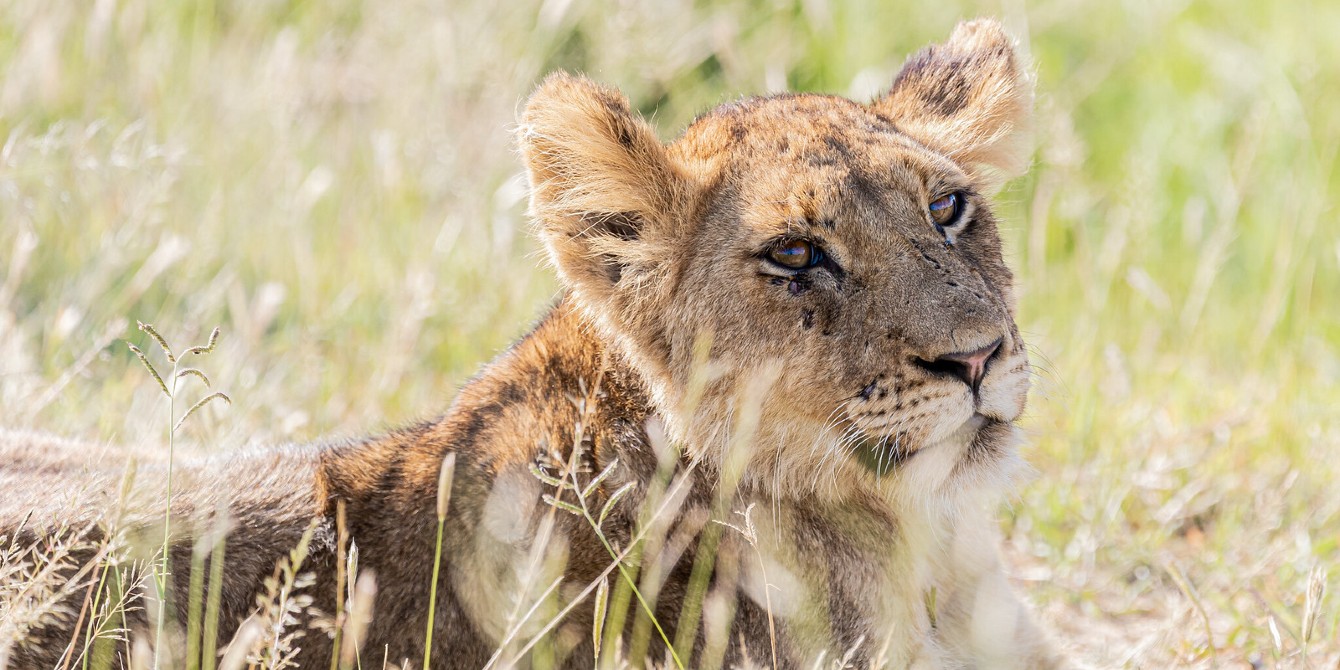
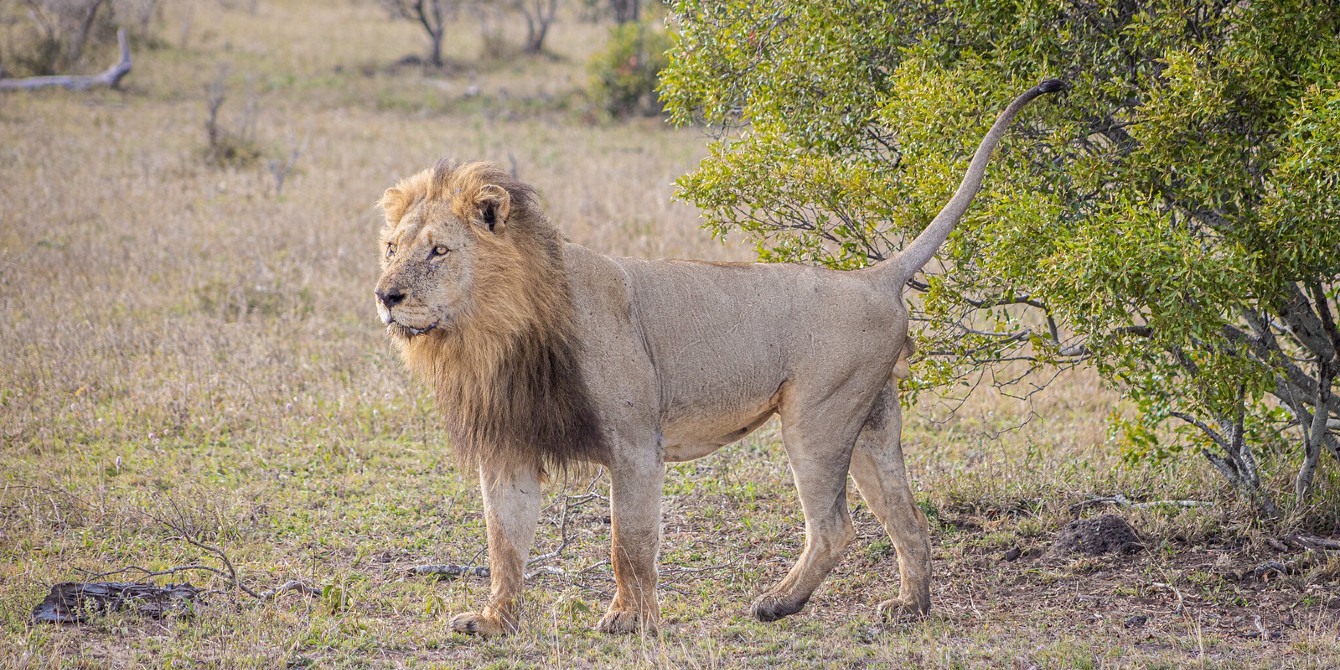
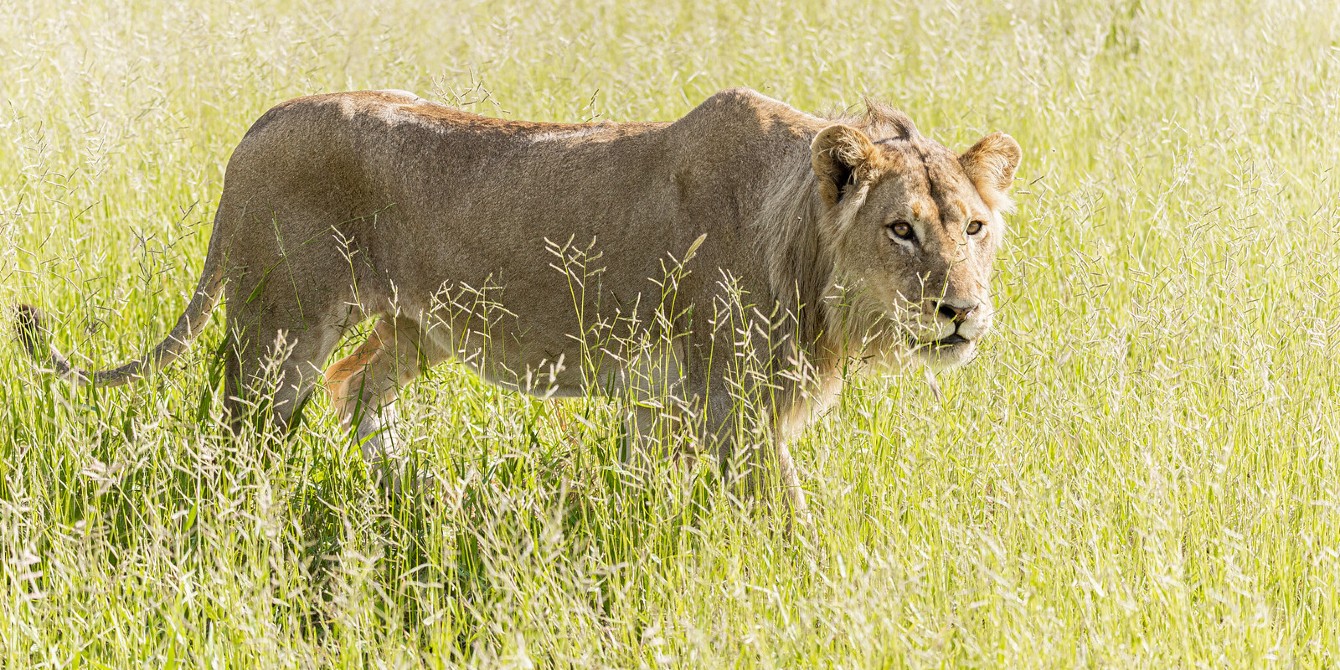
  • Are white lions a unique species? And more interesting facts about lions

    Let’s dive deep into facts about lions, from pride dynamics to hunting practices. This blog was written by Chulu Msofe, a Bushwise student. All facts shared in this blog are based on Chulu’s independent research.

    5 min read

    As field guide students, part of our training is understanding animal behaviour and habitats, which helps us know when and where to find specific animals. I am particularly interested in lions, so I thought I’d share some facts about lions and why they’re one of the most popular and intriguing species. 

    Lions are part of the Big Five

    image

    Tourists are always excited to see lions when they come to a safari in Africa – especially because they’re one of the Big Five. Lions were included on this list because they’re considered one of the most dangerous animals to hunt. 

    How do lions hunt?

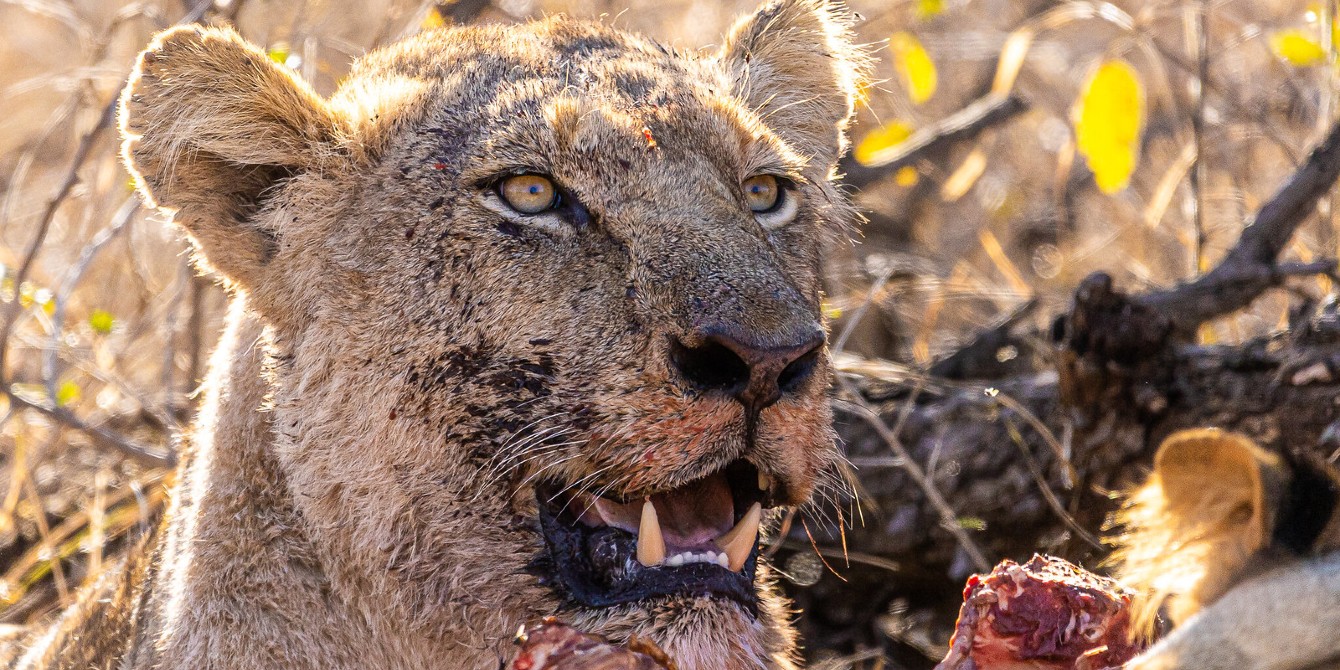
    Lions are carnivorous as they feed on herbivores – such as zebra and wildebeest – which provide them with the energy they need to survive. To catch their prey, lionesses work together and this teamwork increases their chances of success. They focus on prey that is sick or injured, or quite young and old because they know these will be easy to catch. This also helps to remove weak genes from nature, which allows only the strongest genes to survive. 

    image

    After finding their target, things get serious. They tend to shorten their distance to their prey by stalking them. If the prey turns and looks in the direction of the smell and detects that they are being hunted, the lions tend to freeze so as not to alert their prey that they are there. This process might continue until the lions are much closer. Tall dry grass provides good hunting cover for the lions because their coats blend well with the dry grass. 

    Lions may also wait by a water source because they know that while their prey is busy drinking water, they can seize this chance to catch them.

    Lion pride dynamics

    image

    A lion’s gestation period is about 110 days – about three and a half months. When it’s time to give birth, the lioness will leave her pride and go to a secluded place to give birth to the newborn cubs, who are born blind. After 3-15 days, the cubs start opening their eyes – which change colour until they are about three months old. 

    One of the interesting facts about lions is that the lionesses will stay close to her cubs for the first few weeks to make sure they are safe. To make sure the cubs aren’t caught by predators, the lioness will carry the cubs from place to place by the scruffs of their necks. 

    image

    After about six to eight weeks, the cubs are finally introduced to the pride and they greet each other by rubbing on each other’s necks. The adult lionesses of the pride will help each other raise the cubs – the cubs can even drink milk from their mother’s sister. This technique helps to increase the survival of the cubs by providing protection within the pride.

    Male lions are responsible for defending the territory, which ensures the survival of their cubs. They are responsible for duties such as territory patrol – which involves marking their scents and roaring. This helps to send a message to other male lions that this area has an owner that they’d have to fight in order to take it.

    When it comes to fighting, a lion’s mane will help to protect the neck and spine from the claws of other male lions during fierce fights. 

    When do male lions leave the pride?

    image

    After two or three years, male lions must leave their pride in order to keep their genes strong, which can’t happen if they mate with their sisters and cousins. 

    To survive in the wild, male lions might unite and form a coalition. Male lions from different pride can unite in order to increase their chances of success when hunting and defending their new territories from older territorial males.

    When a coalition of male lions take over a territory, they will often kill the cubs of the previous male(s). This then causes the females to go into oestrus, so the males get a chance to mate with the female lionesses and carry on their genes.

    Do lions roar?

    image

    Lions are the only cats whose roar can be heard up to several kilometres away – which gives a thrilling nighttime experience when they communicate with each other. They are also incredibly good hunters at night because of their good eyesight – which is about five times better than ours – which gives them the advantage to see their prey at night. 

    Are white lions a unique species?

    image

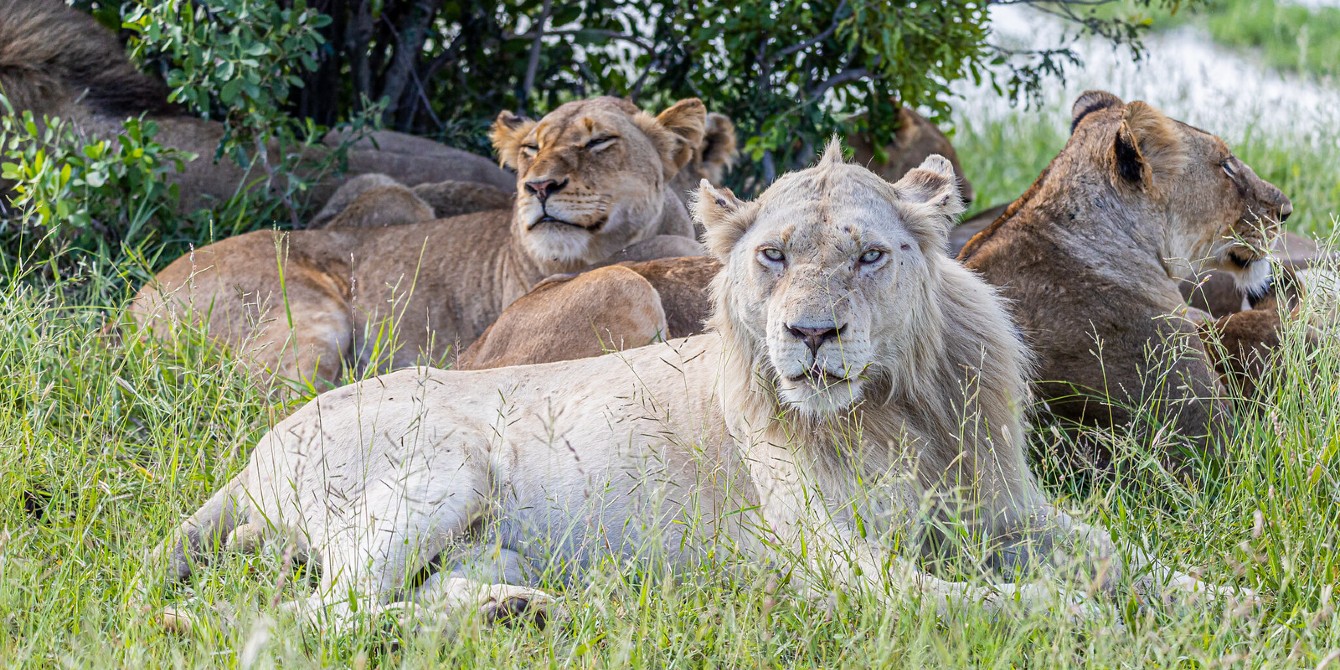
    You also get a type of lion called white lions. These lions are not a different species of lion – and they’re not albino lions either. Leucism causes these lions to lack their colour. They are only found in South Africa in the Timbavati region – which is why so many tourists from all over the world come and see them. 

    What did Lion King get wrong?

    When it comes to facts about lions, Lion King got a bit creative! You may remember the scene where Mufasa teaches Simba to hunt by using Zazu as a practice. Normally lion cubs already have hunting instincts; it’s in their blood. They are just supposed to sharpen it and the one who is responsible for teaching the lion cubs how to hunt is the female. 

    After being chased out of his pride, a male lion needs to go and find his own territory and he cannot come back to his birth pride as he cannot mate with her aunts and sisters. Simba and Nala would never have mated because they belong in the same pride.

    Lions don’t have a single life partner as the pride is typically made up of many lionesses so they male mates with those lionesses so they are polygamous not like Simba and Nala who were life partners. Last but not least lions are big eaters and they do not survive by eating bugs. They need to eat meat that contains protein which enables them to grow so they have to have a strong muscular body that will enable them to take down big prey.

    So there you have it! Chulu’s well-researched, and interesting facts about lions. Are you keen to learn more about lions and other members of the Big Five? Apply for a Bushwise course today.

    Blog by Chulu Msofe, photos by Louise Pavid

    #lion #wildlife #safariguide #animalfacts #africanwildlife #apprenticefieldguide #safari #sightings #fieldguides #factsaboutlions
  • South Africa’s predator guild… and the Springboks

    As the week built up to a Springboks rugby match, Bushwise students were lucky enough to observe two species from South Africa’s predator guild: lions and wild dogs.

    This blog was written by Jocene de Kock, who shares her experience as camp manager during one of the most exciting weeks on course so far!

    4 min read

    image

    The best lodges are often given their titles because of the amazing game that they see or the epic sightings that guests have or perhaps its the exorbitant amount of money that guests pay. But no one stops to appreciate all the effort that goes on behind the scenes.

    To run a lodge successfully and to the highest standard, you need to have an amazing team of housekeepers, chefs, front and back of house staff, and very importantly a general/camp manager to make sure that everything runs smoothly.

    The start of an incredible week

    image

    My week as camp manager did not start off as smoothly as I would’ve hoped with one of my fellow trainees unfortunately losing her phone on drive and our spare kitchen key with it. Even though we tried to retrace our steps to find her phone and the kitchen key, we had no luck. 

    So here we sit with four months of our course to go and one working kitchen key to share amongst sixteen people… This might not seem like a dilemma to most people, but when you have a group of serial coffee consumers and cereal munchers, every five minutes someone comes knocking on the door asking for “The kitchen key please!”.

    Lions: top of South Africa’s predator guild

    image

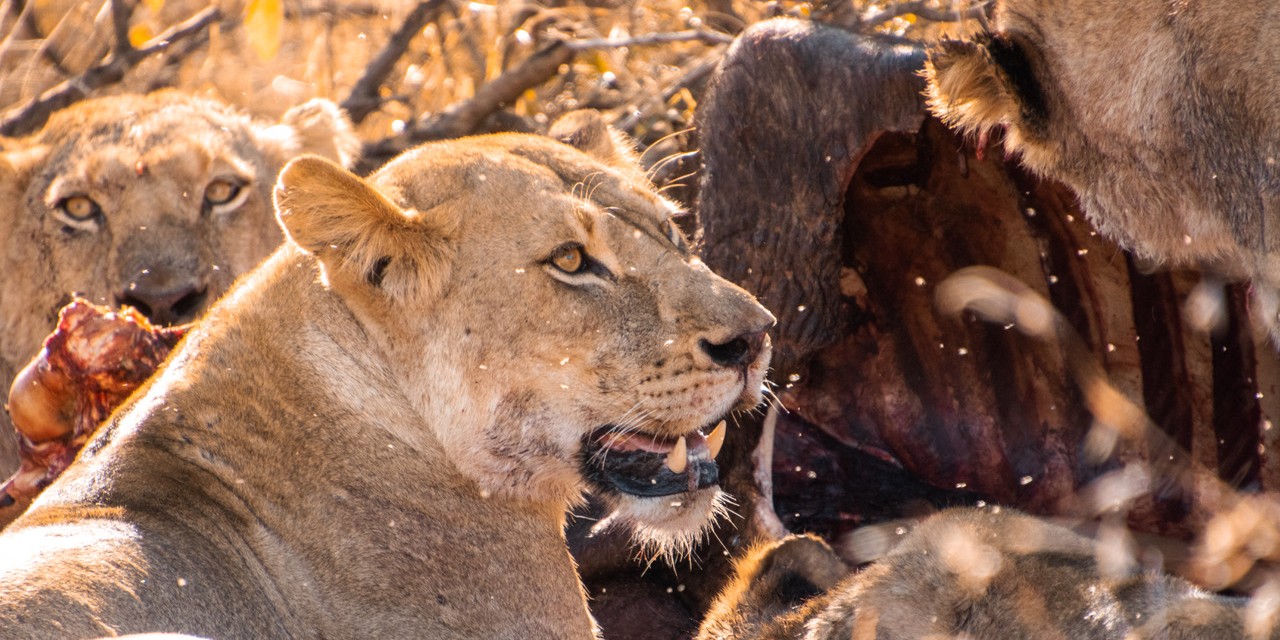
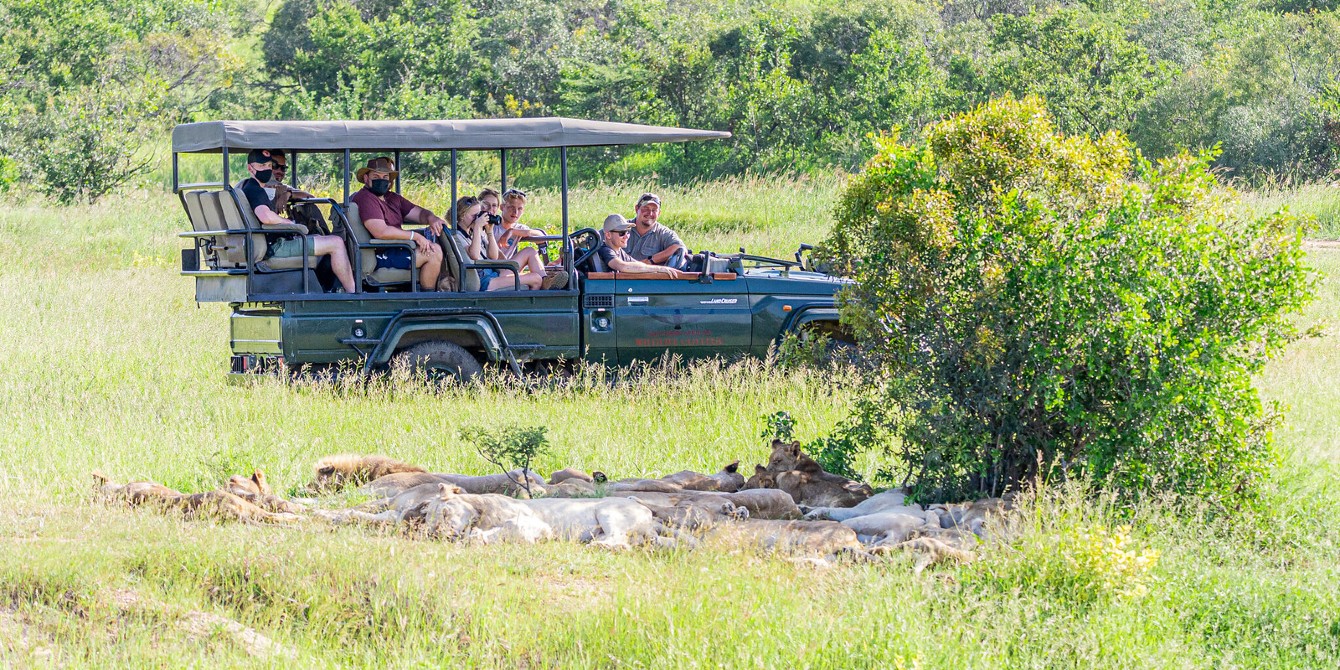
    The week took a drastic upturn on Wednesday morning when we had thirteen lions from the Breakaway pride (of the Birmingham pride) on a buffalo kill, all of them fighting over scraps. It was an intense morning with this being one of our first major sightings and naturally it was rather gruesome. 

    The lions were extremely vocal causing some of us to vibrate in our seats and the others to pull blankets over their heads. It was absolutely phenomenal to watch as they fed with one of the cubs emerging from within the carcass completely covered in blood.

    image

    Luckily for us the lions were extremely hungry so we got to visit them in the afternoon as well but with a much more relaxed setting as only a few were feeding. We decided that we had enough feeding action for the afternoon and so we went off and continued on the rest of our game drive. Everyone was so overjoyed with the amazing day that we had and no one could have bargained for how much better it was going to get… 

    The most endangered of South Africa’s predator guild: the wild dog

    image

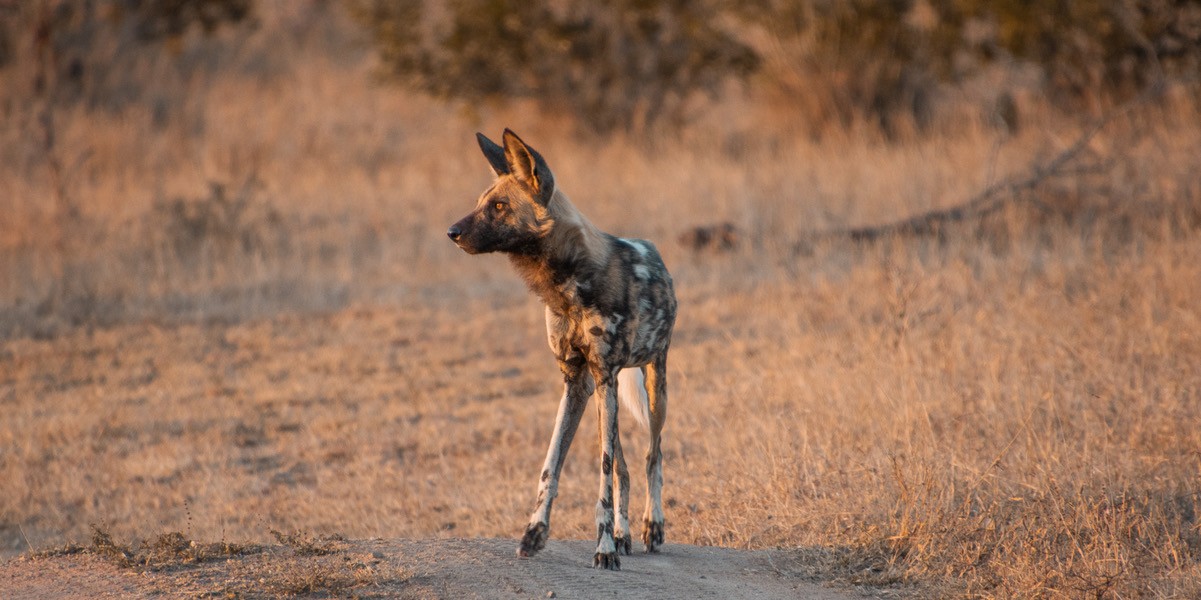
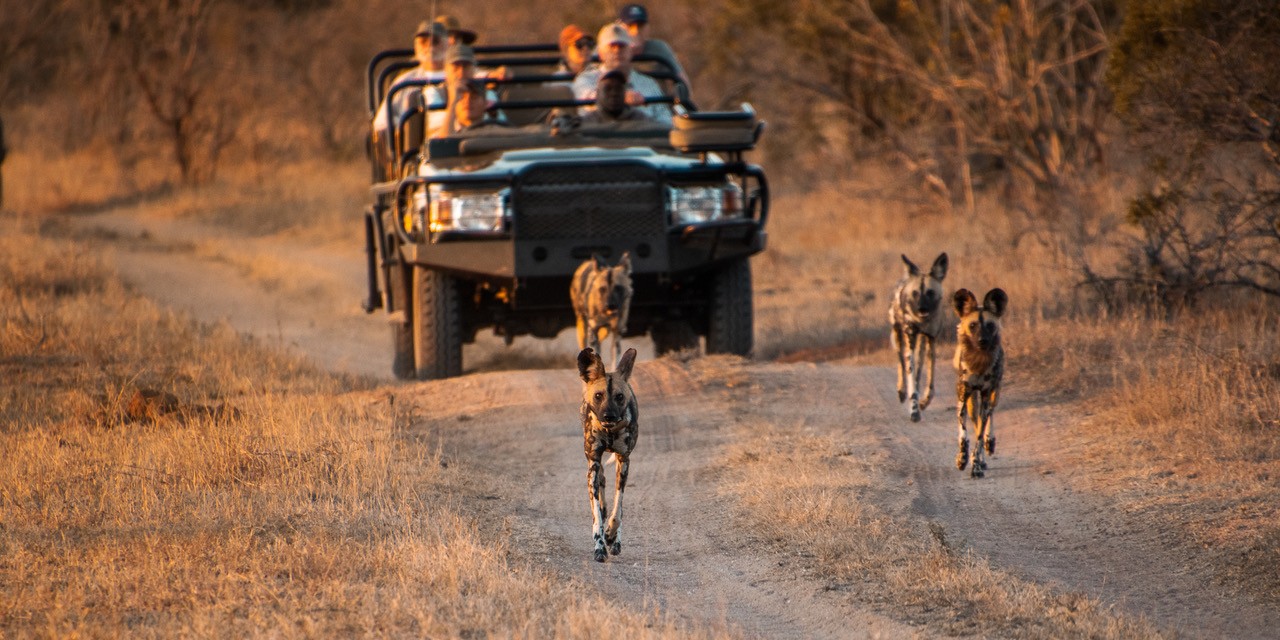
    En route to one of the dams, we suddenly got a call that a pack of wild dogs was running across the plains with a spotted hyena fumbling along behind them. We instantly turned around and all that we could see on the horizon were multiple dust clouds from highly mobile game vehicles also heading in the direction of dogs. 

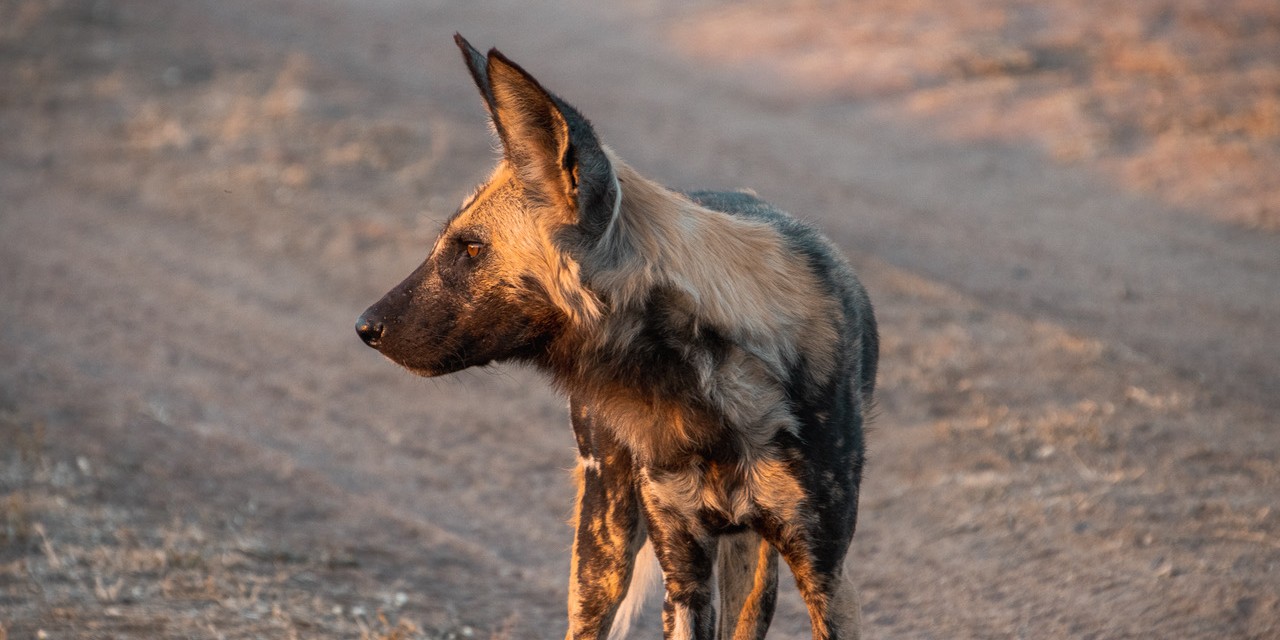
    Orders were given to “Put foot!” and best believe the ‘foot’ was ‘put’. We arrived in the nick of time to enjoy an amazing sighting of the dogs running past our car and briefly stopping to stand still and look over the plains at sunset. 

    image

    Most of us returned to camp completely overwhelmed and struggling to comprehend the insane afternoon we had just had. Everyone was bubbling over with delight which lasted for the rest of the week and the energy within the group was amazing. 

    Everyone was so excited to carry on the energy into sleep out on Friday night, but while we were writing our test on Friday morning a unanimous decision was made that, instead of a sleep out, a break in the boma seemed like a much better option. After all, our sleep out area was roughly 400m from the fresh buffalo kill and seeing as no one knew where the lions were, we thought it would be best to braai our food from the safety of our boma.

    A hopeful ending to the week

    image

    Unfortunately our epic week has to come to an end and all we can do is hope that the rugby this weekend goes well. Because if the Springboks lose against the Aussies then next week’s camp manager is going to have to do some emotional damage control. No one can cope with the highs of lions and wild dogs and the lows of a bad Rugby game all in one week.

    Even the Springboks’ loss that week couldn’t put a damper on the amazing sightings these Bushwise students had! Don’t you want to experience some of South Africa’s predator guild in the wild? Apply for a Bushwise course today.

    Words and photos by Jocene de Kock

    #lion #bushwise #safariguide #apprenticefieldguide #safari #wilddogs #endangeredspecies

  • What’s the difference between a cheetah and a leopard?

    Do you know how to tell the difference between a cheetah and a leopard? It’s true that they both have spots and are big cats, but there’s a lot more to know about these majestic cats.

    Read time: 5 mins

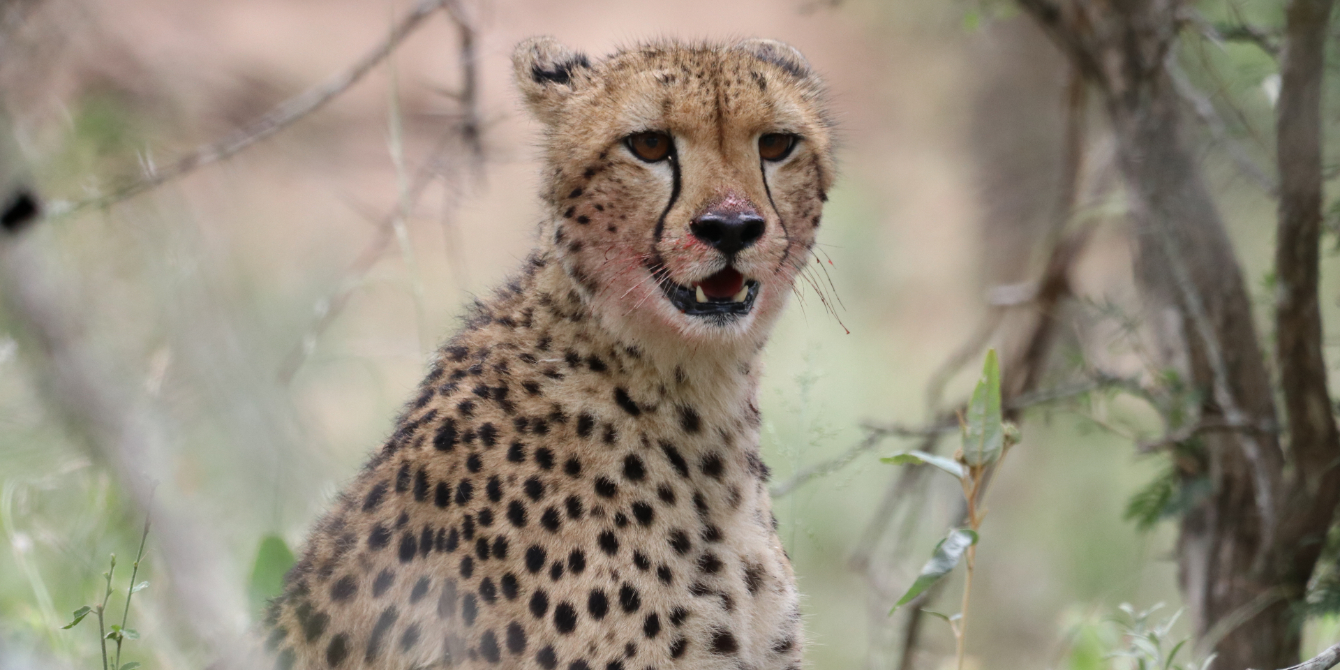
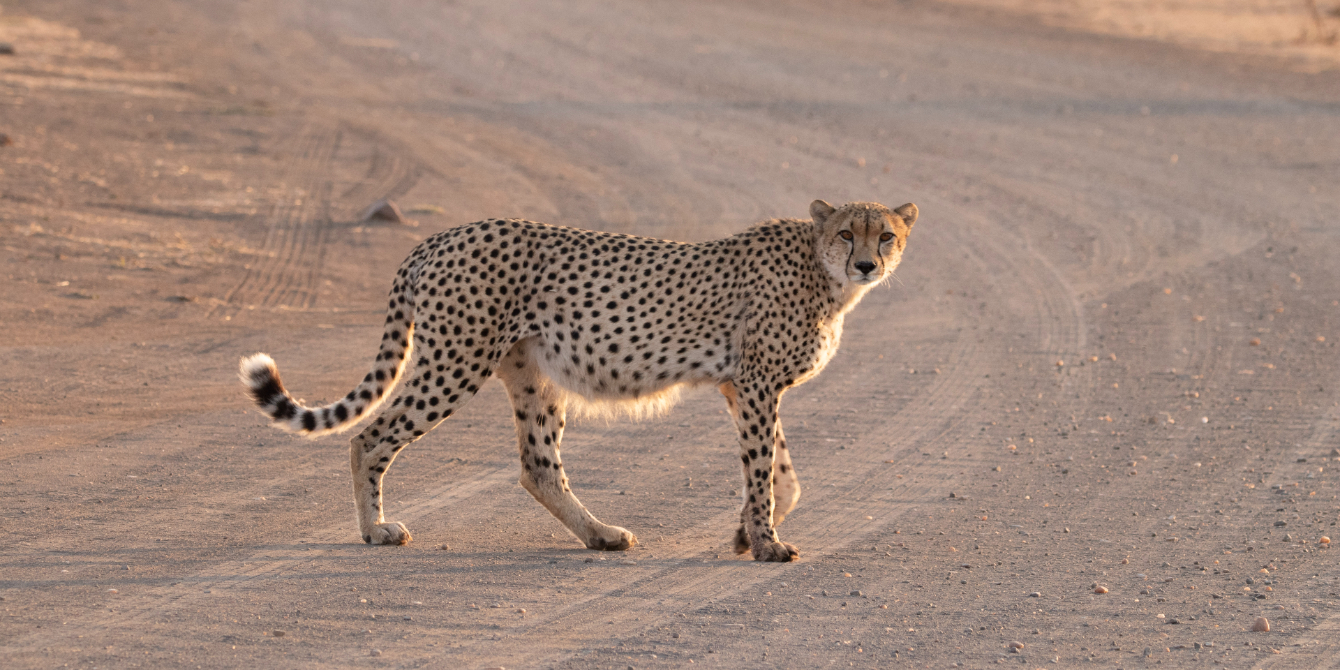
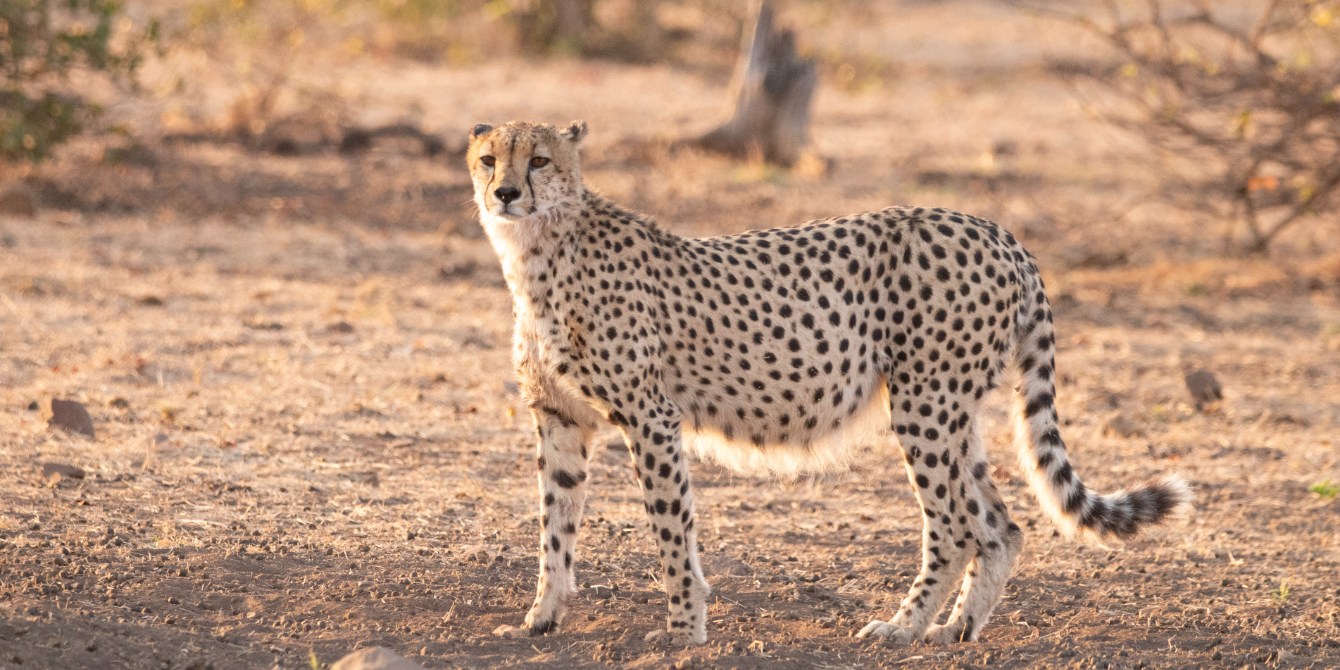
    Cheetahs have some very distinctive features that will catch your eye immediately. If you take a close look at their face, you’ll notice they have black ‘tear’ marks along their nose starting at the inside corner of their eyes. 

    Look for markings around a cheetah’s eyes

    image

    It’s believed that these black lines are there to help reflect sunlight out of the cheetah’s eyes. This is very important as cheetah’s hunt mostly during the day in order to avoid other predators such as the leopard, which hunts at night. A leopard’s eyes are well adapted to night-time hunting as their eyes absorb more light making them successful hunters.

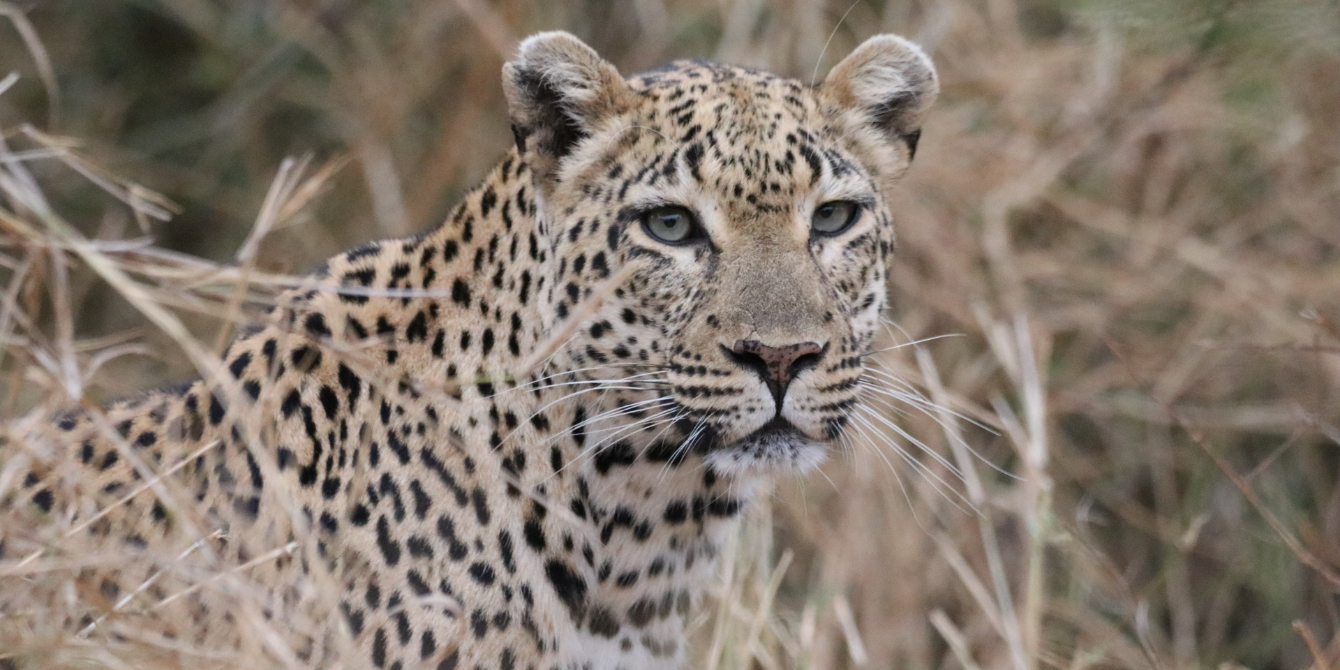
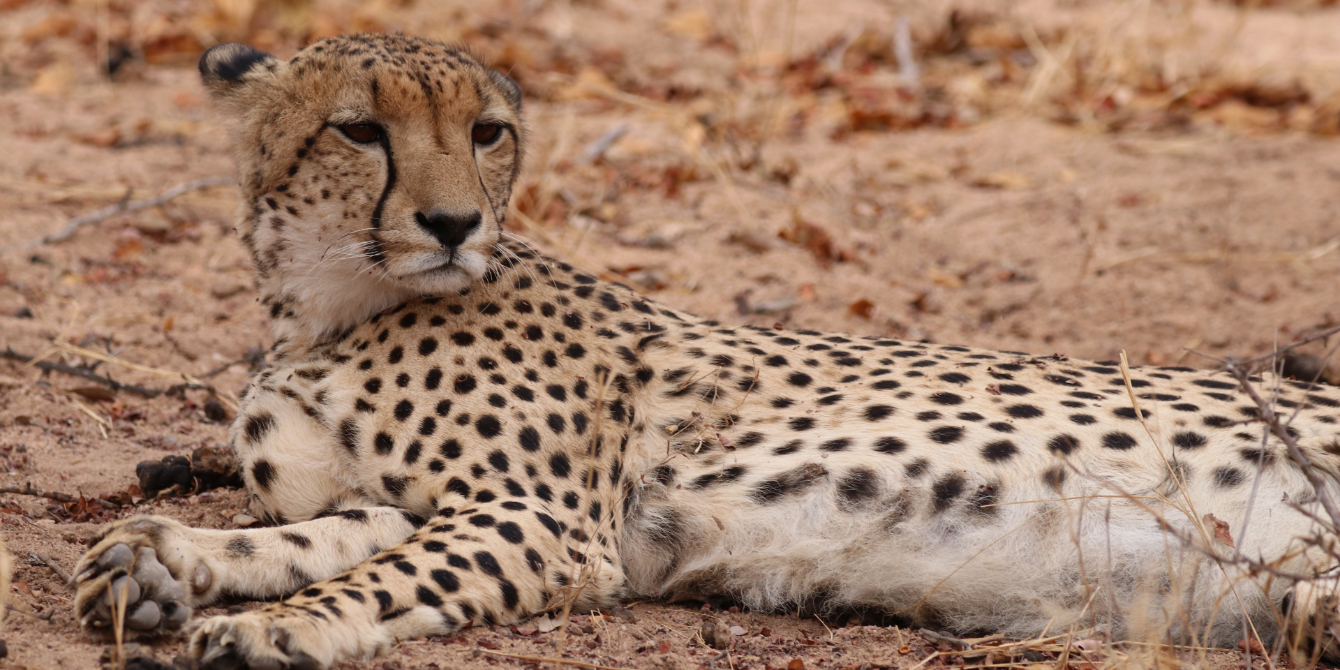
    The patterns on their coats is one way to tell the difference between a cheetah and a leopard. Cheetahs have unbroken, solid black spots which are usually oval or round in shape.  Leopards have rosettes which are rose-like markings with spots on their face and neck. 

    Rosettes on leopards vs spots on a cheetah

    image

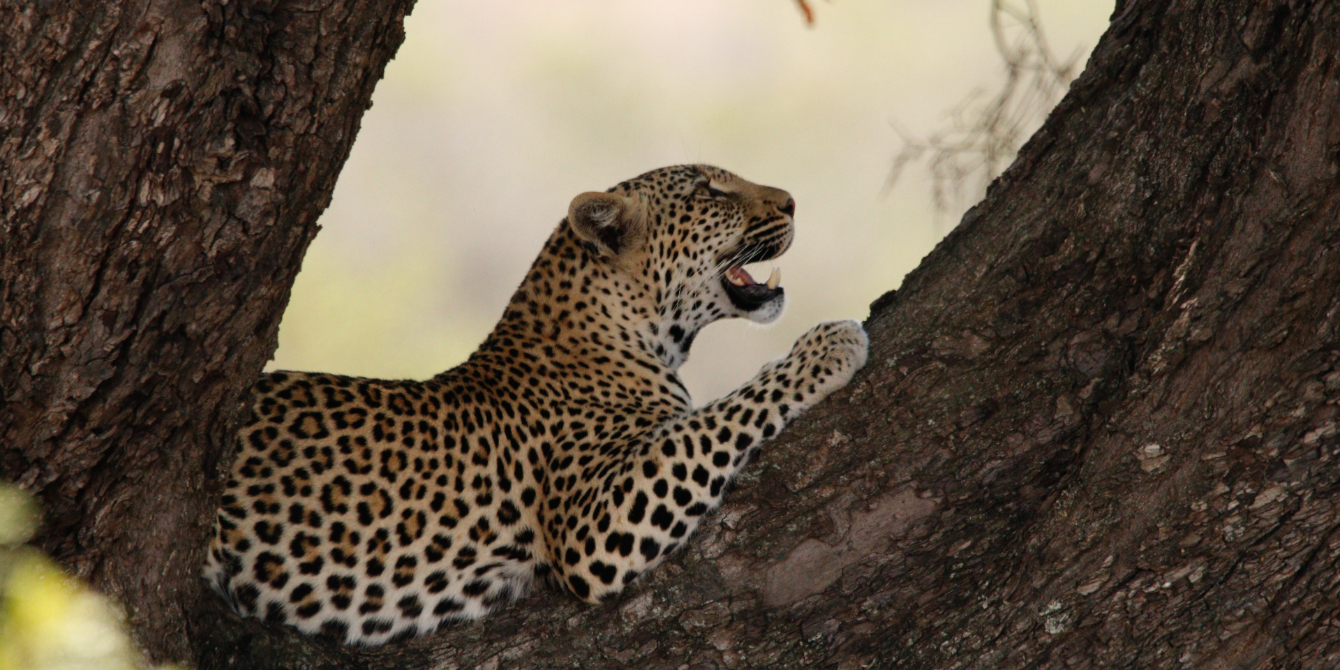
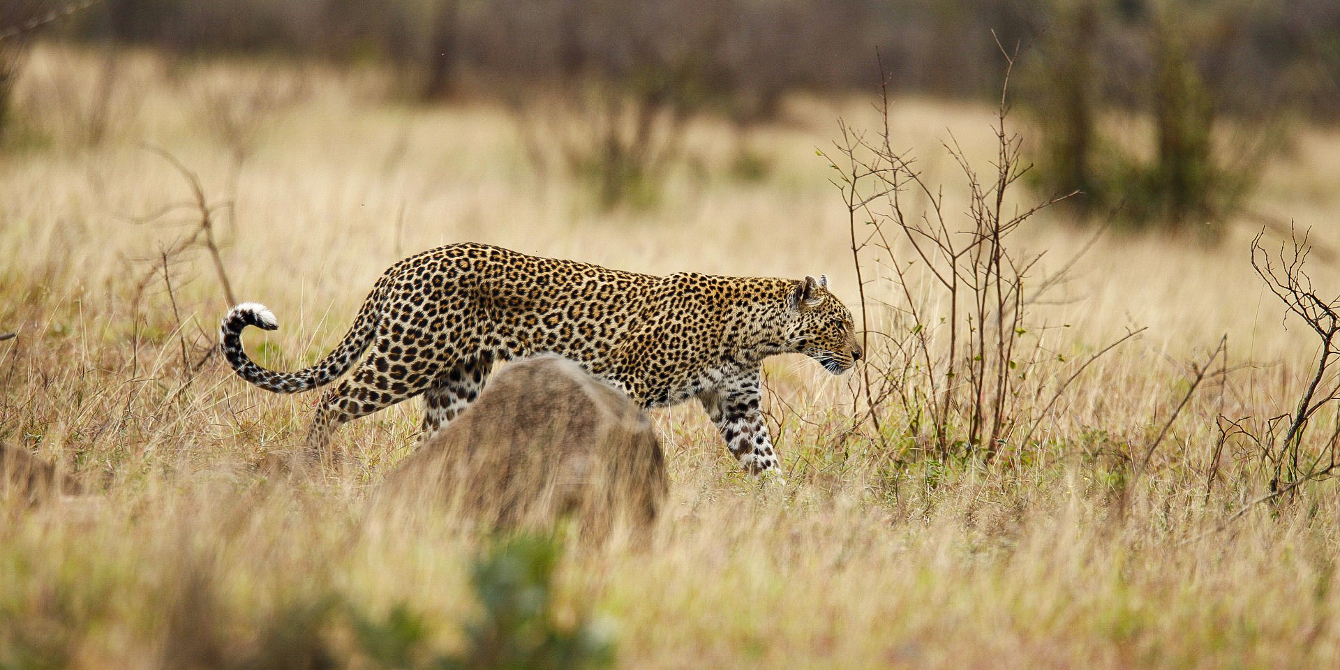
    The spots on a leopard’s neck look as if they have a necklace on. Aside from the different patterns they are also built in unique ways. The cheetah has a small, slender build with long legs and a rudder-like tail – they’re built to run at high speeds. In contrast, the leopard has a short, muscular build. This benefits them when it comes to climbing trees and swimming.

    An interesting fact about cheetahs is that they are the fastest land animals and can run at speeds of up to 100km/h within just three seconds and average about 87km/h while hunting. They cannot maintain these speeds for long as it may cause their brain to overheat. 

    Cheetahs are built for speed and agility

    image

    The leopard is more of an endurance hunter. They usually reach speeds of about 58km/h while hunting, but they maintain these speeds for a longer period while hunting.

    Due to these cats having been built for such different lifestyles, their claws do differ (although you might not want to get close enough to tell the difference between a cheetah and a leopard by looking at their feet!). 

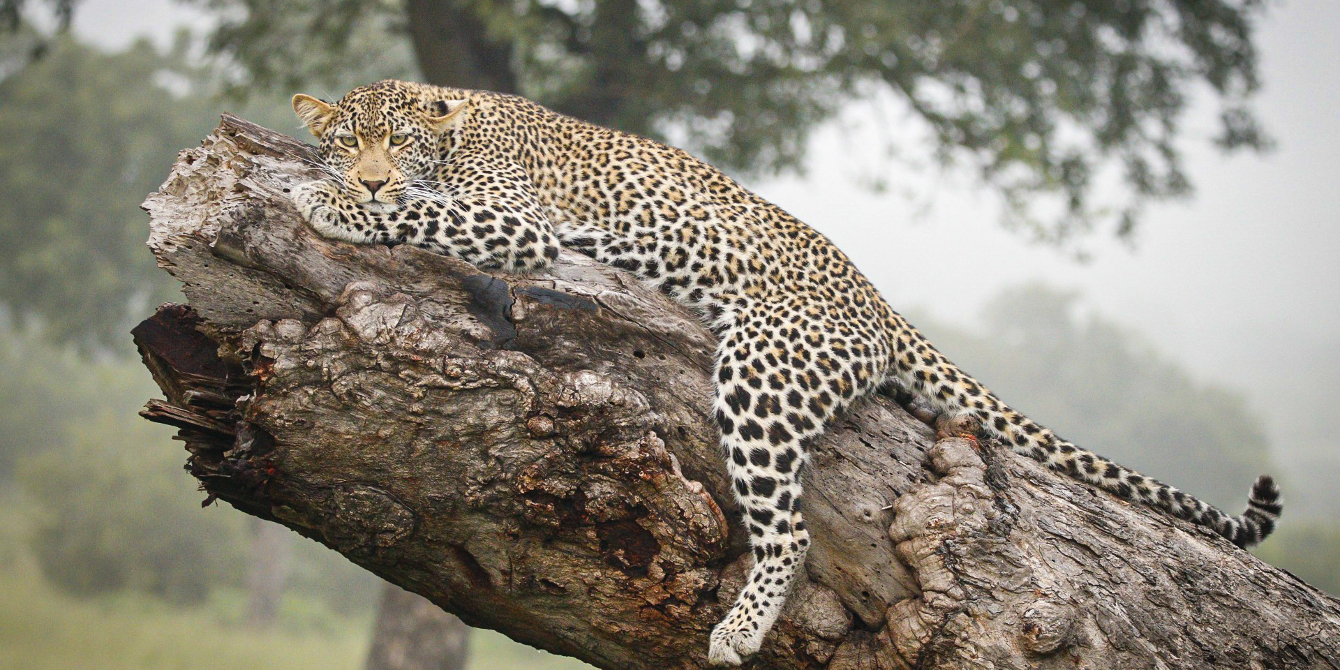
    Like all house cats, the leopard has retractable claws. This is beneficial in taking down prey and climbing trees, which is one distinctive characteristic for the leopard as they are the only big cats that can climb a tree with their prey. 

    Leopards are built to climb trees and stalk prey

    image

    The cheetah has dog-like claws, they are only semi-retractable. This makes them not as sharp as the rest of the cat family as they are not able to fully retract their claws – this is an amazing characteristic as these claws help the cheetah to keep grip when running at high speeds. These are two mesmerising and unique cats.

    Have you ever wondered why the elusive leopard is part of the African Big 5 but the cheetah isn’t? Well, if you think about it, the Big 5 were originally seen as the most dangerous and potentially deadly animals to hunt on foot. It makes sense to think that this bulky, deadly clawed, spotted cat would be one of them. 

    Are cheetahs a part of the Big 5?

    image

    But why not the cheetah? Well, the thing is, cheetahs are more passive cats that tend to avoid situations that could potentially put their own life in danger thus they are less likely to become a problem for hunters. By contrast, the leopard could quickly defend itself against a human, if it felt threatened or cornered. 

    If you think about the type of prey both these cats hunt, it will make more sense. Cheetahs are known for their speed as they do not have the same strength as a leopard when it comes to taking down prey. Though you will find both cats prey on antelope, it is the size that matters in this case.

    What about the prey difference between a cheetah and a leopard?

    image

    A cheetah is more likely to go for the smaller antelope, like impala, springbok or duiker but may also go for rabbits, birds and warthogs. This prey is fast but small so makes their chances of success much higher. 

    The leopard is not prey specific, they will hunt just about anything that makes an easy meal, be it antelope, warthog or even jackals. Their prey is mostly dependent on what they come across due to the type of vegetation they hunt and live in.

    Where do leopards and cheetahs hunt?

    image

    A leopard can hunt on almost any terrain due to their stalking method of catching prey. They are known as elusive which means they can sneak up on any unsuspecting animal and also disappear within a matter of minutes. This as well as their ability to camouflage in most vegetation makes them the ideal hunter. 

    The cheetah does not have the same luck. Due to their high-speed way of chasing down prey, they thrive in open grasslands and bushy areas. This gives them the space they need to reach their speeds and hunt successfully.

    Which is your favourite?

    image

    Next time you go into a game reserve and you come across a beautiful, spotted big cat, will you be able to tell the difference between a cheetah and a leopard? Always remember to look at the type of vegetation that is around as well as their spots and body structure. These are some fun tools to help you surprise many people with your knowledge!

    Interested in learning more interesting facts about wildlife? Make it your career – apply today for a Bushwise course!

    Words by Kirsty Greer, Bushwise student, with photos by Annie DuPre

    #bushwise #fieldguide #leopard #animals #safari #sightings #fieldguiding #endangeredspecies #gamedrive #guiding

  • Different types of bats: how many are there?

    Bats are the second-largest group of mammals, after rodents, and there are tons of different types of bats all around the world. How many different kinds you ask? Well, let’s find out. 

    All bats fall under the scientific name Chiroptera, a Greek word meaning “hand wing.” Bats can be found almost everywhere in the world. But these frequent fliers aren’t often seen because they’re nocturnal and spend their days resting in roosts and nights hunting for food.

    But these sleeping habits haven’t deterred scientists from finding out more about these winged creatures, and filling in the gaps about the different types of bats. Here are some interesting facts about bats. 

    Interesting facts about the different types of bats

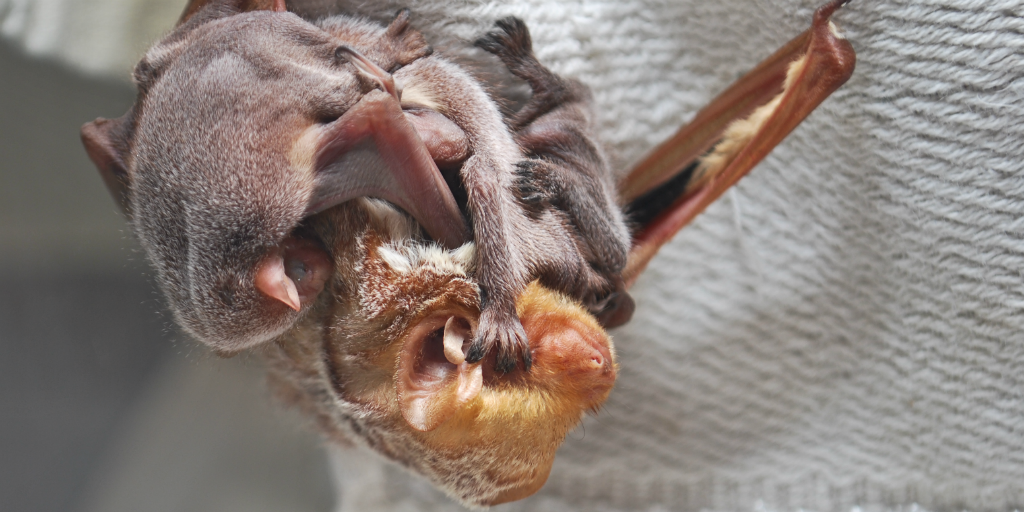
    1) There are over 1,400 different species of bats

    image

    Photo “Eastern Red Bat with three babies.” by Life Lenses

    And they all vary in size. Some bats – like the bumblebee bat – are the size of a small pebble, while others – like the giant golden-crowned flying fox – have a wingspan that measures 1.7 metres across. 

    Many are dark brown or black, but some – like the Honduran white bat – are white with yellow noses and ears. Some use echolocation to find their way around and others don’t. 

    2) There are two different categories of bats

    image

    Photo “Fruit bat” by Richo.Fan

    The many different types of bats are divided into two categories, microbats and megabats, according to certain characteristics.

    Microbats use echolocation to navigate. They do this by emitting sound waves that bounce off of objects back to the emitter, and indicate location. They are found all over the world (except in the polar regions) and eat insects like moths and mosquitos. 

    Most bats are considered microbats, including vampire bats – which are the only microbats that feed on animal blood instead of insects. 

    Megabats are different because they have smaller ears and don’t use echolocation to find their way around. But, their keen sense of sight and smell make up for this, and mean that they can still hunt and move around quite well at night. They also live in the tropics, and their diets consist of nectar, pollen and fruit. 

    3) Why do bats sleep upside down?

    image

    Photo “Sleeping bats” by YuvalH

    Not all bats hang upside down. But, some of the different types of bats do this when resting or sleeping.

    And while scientists can’t answer the question, “Why do bats sleep upside down?” with certainty just yet, it’s believed that because bats have to fall into flight, hanging upside down is the quickest and easiest way for them to set off. Especially when they need to make a quick escape! 

    4) Do bats bite?

    image

    Photo “Fruit Bat (flying fox)” by Mike’s Birds

    Certain types of bats – like the different types of vampire bats – bite in order to feed on blood. But these bats are known to sink their teeth into birds, cows, sheep, pigs and horses more often than humans.

    However it’s important to remember that, when provoked, even bats that don’t feed on blood will bite. Bat bites can be dangerous because they often contain rabies and other infectious agents. 

    But, because of their nocturnal nature, and their preference for secluded roosts, it’s not common for people and bats to run into each other. 

    How the different types of bats add to environmental conservation 

    image

    Photo “Mexican Long-Tongued Bat” by desertdutchman

    While bat bites may not seem so appealing, having bats around is actually great for the environment.

    In fact, microbats alone are responsible for eating millions of insects every night. This keeps insect populations from becoming too big – which is great, because too many bugs can have a negative impact on the environment.

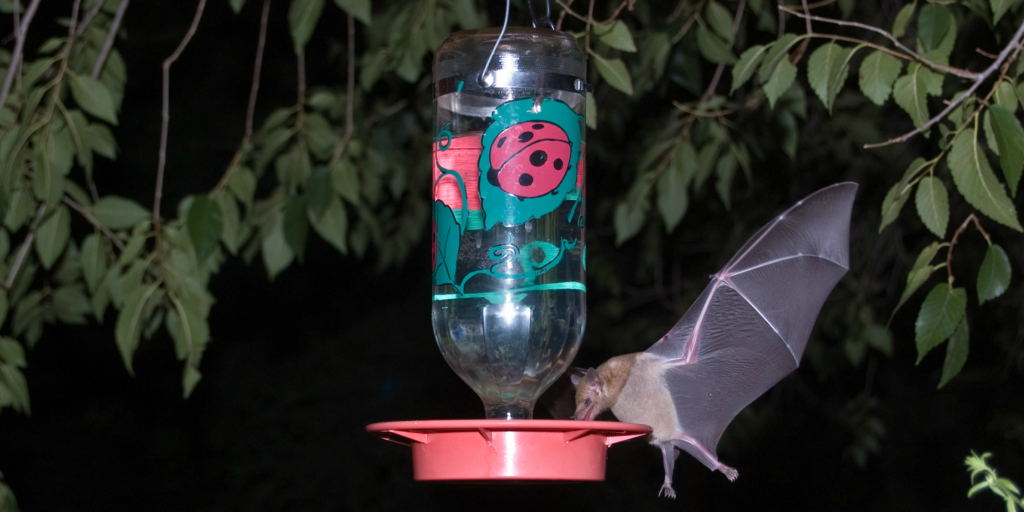
    Another interesting fact about bats that you may not have heard before, is the role they play in pollination. Megabats are partial to sipping on plant nectar, and play a big role in the life cycle of plants by unintentionally carrying pollen from one plant to the next. 

    image

    Photo by Karin Schneeberger alias Felineora

    Because of this, Megabats are responsible for the pollination of well-known and loved plant species, including bananas, mangoes and avocados. 

    But the role that bats play in the earth’s environment isn’t well understood by people across the world, and this has an impact on the survival of the different types of bats. 

    Human activity – like hunting, and the overdevelopment of natural environments – affects the well-being of bats, and the ecosystems they’re a part of. And as a result, the population numbers of the different types of bats is seen to be decreasing each year.

    This is why efforts to conserve bats have become a global priority

    image

    Original photo: “Bats flying” by USFWS Headquarters is licensed under CC BY 2.0

    How you can learn more about the different types of bats

    Aching for more interesting facts about bats? Wanting to make a start in a career in bat conservation?

    Well, there are wildlife courses on offer that will allow you to dig a lot deeper into the different types of bats out there, what they do in nature, and why bat conservation is key. 

    Take a look at our Wildlife Conservation Programs to see how you can grow your understanding of the different types of bats and add to their conservation. 

    Feature photo: “Bat by Cindy Parks

    BY: Tasneem Johnson-Dollie

    #gameranger #bushwise #safariguide #apprenticefieldguide #fieldguiding #bats #fieldguidecourse

  • All about the different types of grasses of Southern Africa

    Part of field guiding is uncovering the spectacular in something seemingly mundane – like talking about the different types of grasses of Southern Africa – for example. But you may be surprised by just how interesting the different types of grasses can be, and how important they are to our ecosystems. 

    While the rustling sound they make can set the scene for some pretty romantic moments, it’s not often that grasses themselves grab our attention. But without this type of South African vegetation we wouldn’t see all of the animals and other plants that call this country home. 

    There are some excellent online field guide courses that can fill you in on South African foliage. But while you’re here, let’s find out more about the different types of grasses of Southern Africa and learn some interesting facts about the grassland biome. 

    Why are grasses important?

    image

    The different types of grasses belong to the family known as Poaceae, which includes grasses, reeds and bamboos. Scientists have described grasses as being the most important plant species in the world. This is because:

    1. plant life outweighs all other lifeforms on Earth, and grasses make up around 20% of all plants on Earth – meaning they contribute to Earth’s ecosystems in a big way

    2. the different types of grasses can inhabit a diverse range of habitats all around the world

    3. grasses are useful to human beings in a variety of ways, like feeding cattle, providing fuel for cooking and heating, being used for medicinal purposes, and building structures. 

    And today, a good patch of lawn is even useful for keeping up with the Joneses! 

    But, imagine going on safari without spotting your favourite animals in a grassland biome. Or missing out on seeing the sights of Africa because of all the dust blowing around. Grasses are a big part of why we can all enjoy these African attractions. 

    There are more than 10,000 identified grass species in the world and many more that have yet to be classified. So, to stop us from getting tangled up trying to understand this type of South African vegetation, let’s tease through the different types of grasses by taking a look at their different categories. 

    The different types of grasses of Southern Africa

    image

    Today scientists classify the different types of grasses according to their spikelet structure, anatomy of the leaf blade, starch grain structure, cytology, embryo structure and photosynthetic physiology. This basically means that what matters is how the plants grow, how they look when they’re mature and how they produce and store their food. 

    This system has lead to the classification of eight sub-families within the different types of grasses of Southern Africa:

    1. Arundinoideae – reeds that grow in the tropics and Southern Hemisphere

    2. Bambusoideae – bamboos that are endemic to every continent except Europe and Antartica

    3. Ehrhartoideae – crop-type grasses including rice

    4. Pooideae – cereals (like wheat, barley oat and rye), as well as pasture grasses

    5. Aristidoideae – herbaceous grass-types found in the tropics, subtropics and temperate zones

    6. Danthonioideae – herbaceous to partially-woody grass types that grow in open grasslands, shrublands and woodlands

    7. Panicoideae and Chloridoideae – tropical grasses with specific adaptations that allow them to tolerate warm and dry habitats.

    These different types of grasses can be found growing all across Southern Africa, and come together in the wild to give the grassland biome a distinctly South African feel. But what is a grassland biome?

    What is a grassland biome and how do different types of grasses contribute to it?

    image

    Think of wide-open grassy plains where trees and shrubs may make an appearance but aren’t as prominent as the swathes of spiky grasses spread all around. What you’re seeing in your mind is the answer to the question, “What is a grassland biome?”. 

    But there’s a difference between the big grassy patch beside the park where you live and a biome that’s dependent on this type of South African vegetation. You see, the different types of grasses found in a grassland biome actually determines the types of animals that can survive in these wide-open spaces. 

    For example, the temperate grasslands of North America are home to the types of grasses that store nutrients in their roots for parts of the year, making it the perfect habitat for burrowing animals. In contrast, grasses found in the savannah grassland biome generally store nutrients in their leaves and makes this environment fitting for grazing animals. So a slight change in the different types of grasses growing in a grassland biome can mean seeing prairie dogs instead of elephants! 

    Besides setting the scene for the types of animals you’ll find in grassland biomes,  grasses are also some of the only plants that can grow in poor soils, recover after frequent fires, tolerate frost and cope with frequent grazing. This makes them a viable and vital part of grassland biomes in South Africa where these conditions are common. 

    Six interesting facts about the grassland biome

    image

    And just when you thought you couldn’t learn any more about the different types of grasses, here are six interesting facts about the grassland biome:

    1. Grassland biomes are also known as prairies, pampas, steppes and savannahs.

    2. 25% of the Earth is covered by grassland biomes.

    3. Because grasses grow in dense clumps, they prevent soil erosion by trapping the soil and preventing it from being washed away.

    4. Grasses have evolved to grow at their bases instead of their tips to protect themselves from grazing and fires.

    5. Grasses purify the air in the grassland biome by releasing oxygen and trapping dust.

    6. Giant bamboo is the largest variety of grass and can grow to be taller than 40 metres. 

    While grasses are part of one of the toughest families in the plant kingdom, there are quite a few things that affect the health of grassland biomes. 

    Environmental pollution and poaching are some of the major challenges facing grassland biomes today. And more and more of the grassland biome of South Africa is being affected each year. 

    So, where the grassland biome once stretched further than the eye could see, we’re now seeing bald spots dotting this type of terrain.

    How to learn more about the different types of grasses of South Africa

    image

    Getting to know more about the different types of grasses of South Africa is a great way to get involved in work that conserves grassland biomes. 

    Find out more about the Bushwise Nature Enthusiasts Online course, or our Field Guiding Online course, and learn more about the different types of grasses from the comfort of your own home.

    Article BY: Tasneem Johnson-Dollie

  • Mad for marula fruit: facts about the marula tree

    BY: Megan Colborne

    As a field guide, you need to be prepared for every type of question. From “what is a marula tree?” to “are African animals getting drunk from ripe marula fruit?” Whatever the question, we’ve got you covered on all things marula.

    Once you’ve completed your training at Bushwise Field Guides and are a fully qualified field guide, you will be responsible for the experiences of your guests. This is why it’s important to have a wealth of knowledge regarding fauna and flora. 
    What is a marula tree?

    image

    Original photo: Marula sunset” by krugergirl26 is licensed under CC BY 2.0.

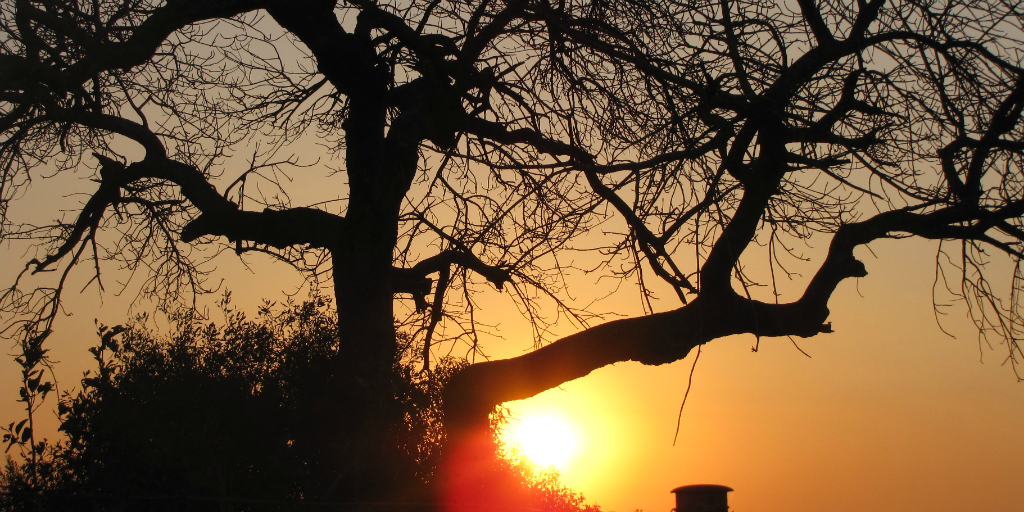
    The marula tree is a green, leafy tree that is resistant to drought so that each tree still manages to produce plenty of marula fruit during dry seasons.

    Known as “the king of African trees” the marula tree is a medium-sized tree standing tall at between 9 and 18 metres tall. This single-stemmed marula tree is found in 29 countries. Female trees bear up to 500 kilograms of fruit each year, while the male marula tree puts on a delicate floral display instead. 

    Yes, that’s right, there are both a male and female marula trees. 

    The marula tree is dioecious, which basically means that each tree has a specific sex. This led to the traditional belief that drinking an infusion made from the bark of a male tree would lead to the birth of a boy, while drinking a bark infusion from the female tree would result in the birth of a girl.

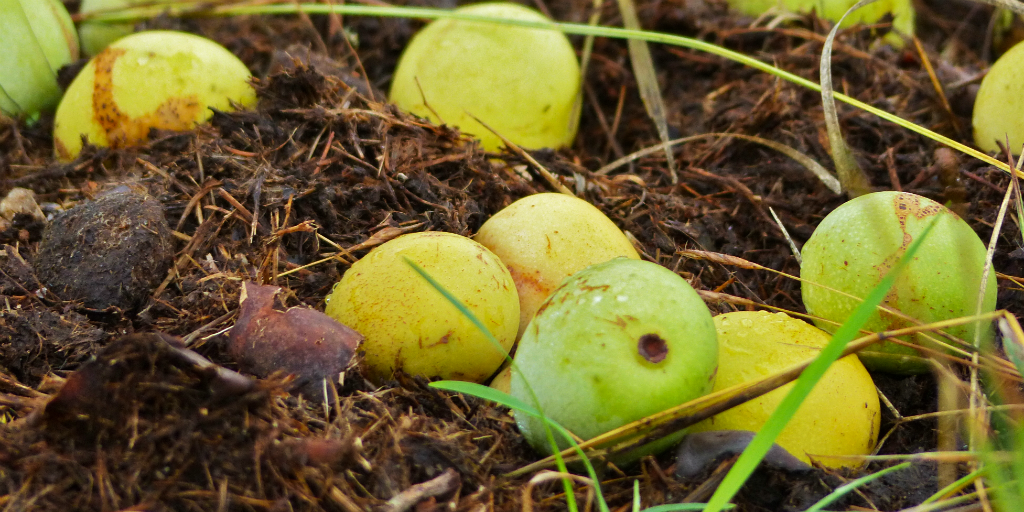
    The juicy marula fruit belongs to the same family as the mango and so it has similar properties. It has a yellow peel, white flesh and a large kernel, or pip, in its centre. 

    History of the marula tree 

    With a history dating back thousands of years, the marula tree has outlived many other trees, with archaeological evidence showing the tree being used as a food source as far back as 10,000 years BCE

    Over time, many legends have developed in Africa surrounding the marula tree and marula fruit. Local people began to refer to the marula tree as “the elephant tree” as they witnessed elephants travel far and wide to feast on the juicy marula fruit.

    Because of its history and importance in Africa, the marula tree is now protected by law in South Africa.

    Uses and benefits of marula 

    image

    Original photo: “Marula (Sclerocarya birrea) fruits on the ground”by Bernard DUPONT is licensed under CC BY 2.0.

    Nearly every part of the marula tree can be used in some way. 

    The bark of this powerful marula tree contains an antihistamine, is used to prevent malaria, and is also effective in the treatment of stomach issues. Chewing on the bark can also aid in facilitating digestion.

    As for the kernels of the marula fruit, when roasted they are known as the “food of kings”, and are regarded as a delicacy. The leaves of the marula tree are also used as a spice and in a salad dressing.

    The fruits of the marula tree can be eaten, either raw or cooked, and are commonly used to produce jam. When left to ferment, marula fruit can be used to produce various powerful alcoholic drinks.

    In Swaziland, this alcohol is used to make a home-made beer called Buganu.  In Namibia, Ombike is produced, and in Mozambique the fermented marula fruit is used to produce a wine called Ucanhe.

    However, none of these can outrank the internationally known cream liqueur, Amarula. Amarula is produced in South Africa using the marula fruit, alcohol and cream. Amarula is one of the best selling products in the world in this category!  

    Can elephants get drunk from eating too much marula fruit?

    image

    Original photo: Marula snack” by Chris Eason is licensed under CC BY 2.0.

    If tourists on your safari trip ask about African animals getting drunk from ripe marula fruit, don’t be alarmed. 

    This comes from the legend that elephants can get drunk after eating fruit that has fermented on the ground or even inside the stomach of the elephant. 

    So, does marula fruit make elephants drunk? While the marula fruit is an elephant’s favourite and this would make a great story, scientists have debunked this as a myth, so you’re unlikely to see a drunken elephant leaning against a marula tree for support.

    Learn more about the African marula tree and other fauna and flora by becoming a IFGA Safari Guide Course 6/12 Months at Bushwise. Join a Bushwise program today!

    Header photo: Marula Loop” by Chris Eason is licensed under CC BY 2.0.

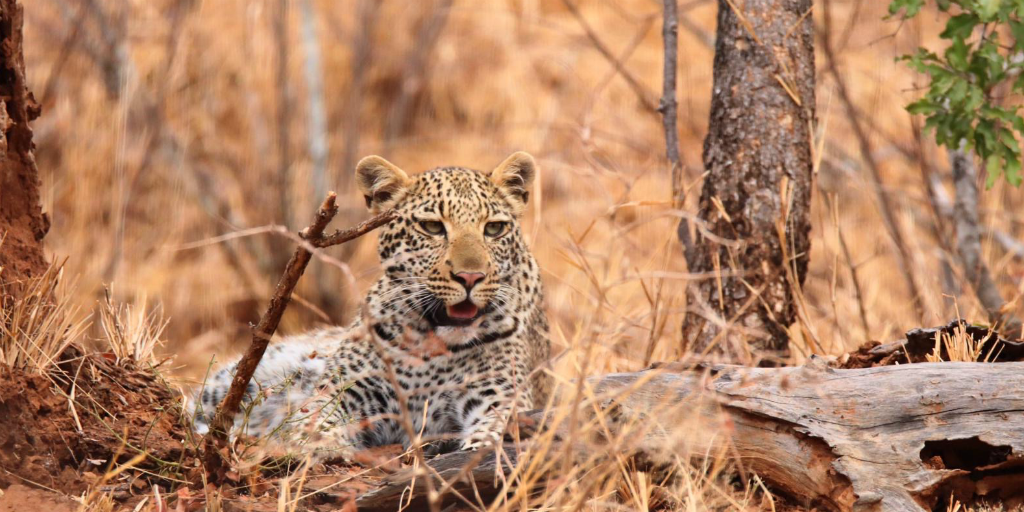
  • Leopard facts: how leopards are different from other types of big cats

    Fangs, claws and silky fur – big cats have so much in common. Get to know your big cat facts and understand exactly how leopards are different from other types of big cats.

    The word leopard comes from the Greek word leopardus – a combination of lion (leo) and panther (pardus). This points to the fact that from early on, leopards were considered a mix of two creatures, instead of being seen as their very own breed. 

    image

    But leopards have some striking features that make them stand out from the rest.

    How are leopards different from other types of big cats?

    Most big cats, including leopards, are classified in the genus Panthera. They’re the clawed cats of the wild that are among the biggest of their kind. 

    Without the unmistakable mane of the lion, or streaky stripes of the tiger, the leopard is a member of the big cat family that might not be quite as recognizable throughout the world, unless you’ve been on an African safari.

    But, these facts about leopards show why they’re just as impressive as any other member of the big cat family. Let’s leap into our first leopard fact and find out why leopards are just as deserving of attention as other types of big cats.

    image

    Leopards are the least social members of the big cat family

    Living in a pride – like lions do – isn’t what leopards prefer

    Leopards are considered the most mysterious, and least social of the different types of big cats. They shy away from interacting with other animals, as well as human beings. Because of this, we haven’t seen as much of the leopard’s way of life as we have of the lifestyles of other members of the big cat family.

    Each leopard has its own territory and signals other leopards to stay away by leaving scratch marks on trees, and strategically urinating or defecating in the area to leave a scent signal.

    These signs and signals aren’t just a warning for strangers. Leopards have strict rules that dictate when young leopards should leave their mothers and fend for themselves – usually when the cubs are around two years old. And once a cub has left its mother, she won’t take lightly to it coming back onto her turf.

    This member of the big cat family spends most of its life living alone. But there are two times in a leopard’s lifetime when you’d spot them socialising. 

    1. Leopards come together when they’re ready to mate.

    2. Young leopards will stick with mom until they’re independent, around the age of two.

    Their solitary lifestyle and secretive ways make it easier for this type of big cat to survive in many different environments.

    Leopards can live in many different places all over the world

    image

    Most members of the big cat family are happiest in a very particular type of habitat. Cheetahs and lions choose to chill out in the savannah, and lynxes like the cool climates of the forest. 

    Tigers and jaguars are more widespread across different types of habitats, but the leopard is the most adaptable of the entire big cat family. This type of big cat can live in warm or cold climates, in lush rainforests, arid deserts and almost every other habitat in between. But what makes them so adaptable?

    Well, leopards have quite a few things going for them:

    1. They’re good at acclimatising to different temperatures.

    2. They’re not picky eaters and can make changes to their diets that allow them to thrive in different environments – like swapping antelope for birds or rodents to survive. 

    3. They’re able to climb trees, and this allows them to tuck into their hunting haul away from other predators, upping their survival abilities.

    Despite these differences between leopards and other types of big cats, leopards often get confused with one other member of the big cat family – the cheetah.

    image

    The difference between a cheetah and a leopard

    People often mistake leopards for cheetahs. This makes some sense, since they’re both spotty wild cats with a shy streak.

    But, if you ever saw a leopard and a cheetah standing side by side, you’d immediately see the difference between these two members of the big cat family.

    Comparing these facts about leopards and cheetahs will fill you in on the difference between a cheetah and a leopard, and hopefully help you to tell them apart in the wild.

    1) One has a bulky build while the other is lean

    The leopard is a stalk-and-pounce predator – which means they creep up on their prey and then pounce on them. Because pouncing is a powerful procedure, leopards have bigger muscles, which contributes to their stocky build.

    Cheetahs take a different approach. They stalk their prey, chase them at high speed, and then trip them before going in for the kill. As the fastest land mammal, cheetahs are the members of the big cat family with the most streamlined bodies – their smaller muscles give them a leaner, lankier build.

    image

    2) Their heads are strikingly different

    Leopards have something that makes up for their lack of speed in comparison to cheetahs.

    Their much larger heads, like their bodies, are built that way because they house powerful muscles. These muscles give leopards an incredible bite force that far exceeds the bite force of a cheetah.

    3) Their markings aren’t the same

    image

    Cheetahs also have striking “teardrop” lines on their faces.

    And if that’s not enough to help you tell them apart, there’s another defining difference between a cheetah and a leopard. And it has to do with their spots.

    Both types of big cats have dots spread across their coats, but these markings are actually quite different. 

    Leopards’ black markings are called rosettes because of their rose-like shape. These rosettes vary in size, depending on where on the body they are found. Even black leopards have these distinctive markings, but they aren’t easily seen against the dark colour of their coats.

    In comparison, cheetah markings are solid spots that are similar in size all over their bodies.

    While it’s nice to know how leopards relate to other types of big cats, one of the most interesting relationships today exists between humans and leopards.

    The relationship between leopards and humans

    Original video: “Leopard helps adorable cubs cross the road in rare sighting | Adorable cubs cross the road” by Asad NewsHub Center is licensed under CC0

    There was a time when leopards were heard about more than they were seen, and the habitats of humans and leopards were separate.

    Human activity is the main reason why leopards are losing their habitats and being seen in public places more often.

    Of all the different types of big cats, leopards may be facing the biggest challenge regarding human activity. They’re the most widespread big cat in the world – which means that there are more opportunities for them to come into contact with human beings

    Because of the overdevelopment of natural environments, humans are taking over parts of the leopard’s natural habitat. 

    This has seen these usually secretive slinkers seeking food, water and shelter outside of their natural habitats. This can often lead to clashes between humans and leopards, and even fatal injuries.

    And this brings us to our final leopard fact. 

    image

    A look at the status of the leopard population today

    Today leopards are listed as vulnerable on the International Union for the Conservation of Nature’s (IUCNs) Red List, and the population is currently decreasing. This has seen these fascinating felines becoming the focus of many wildlife conservation efforts. 

    Losing any more leopards would have a major impact on many different ecosystems across the world.  A career in wildlife conservation is one way you can assist to protect the leopard population.

    Further reading: How to start a career in wildlife conservation

    Take a look at Bushwise Field Guides courses where you can learn more facts about leopards, and get involved in their conservation, as well as the conservation of other members of the big cat family.
  • How fast can a hippopotamus run and other gobsmacking hippo facts

    One of the savannah’s most dangerous creatures is short, fat, and a herbivore. What is it? A hippopotamus! And we have some gobsmacking hippo facts that’ll prove it. 

    Among the plumpest of Africa’s wild animals, hippos seem carefree, calm, and oh-so slow. But irritate these orb-shaped savannah occupants and you’ll be up against much more than you bargained for. Why? 

    Well, do you know the answer to the question, “How fast can a hippo run?” And do you think you’d want to be their prize at the finish line? Probably not. Here are some hippo facts that will fill you in on this feisty African pachyderm. 

    Are there different types of hippos?

    image

    Let’s start with one of the most important of the hippo facts: how many different types of hippos are there on Earth?

    The hippo population is made up of over 115,000-130,000 individuals that belong to two distinct species. 

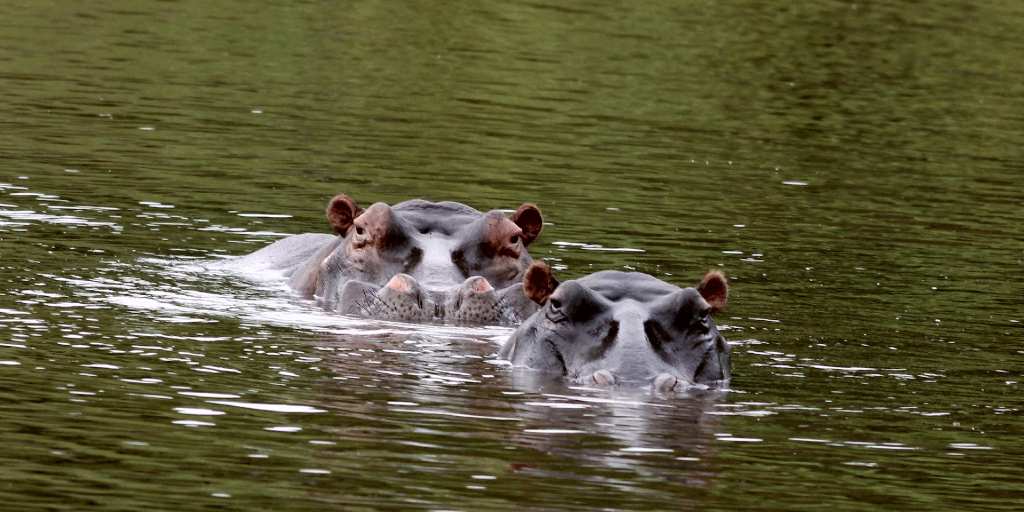
    Pictures of hippopotamuses (or hippopotami if you’re using correct Latin) usually depict the common hippo (Hippopotamus amphibius) – the animals of great girth we see wading in bodies of water on the African plains. 

    This species makes up the bulk of the hippo population, with over 100,000 individuals.

    So, what species can be found on the other side of the hippo family tree? Say hello to the pygmy hippo!

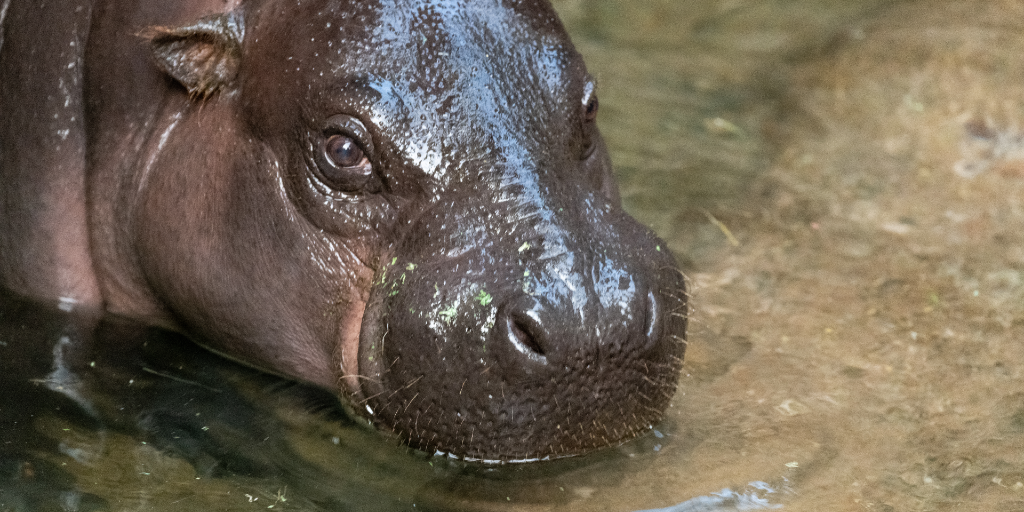
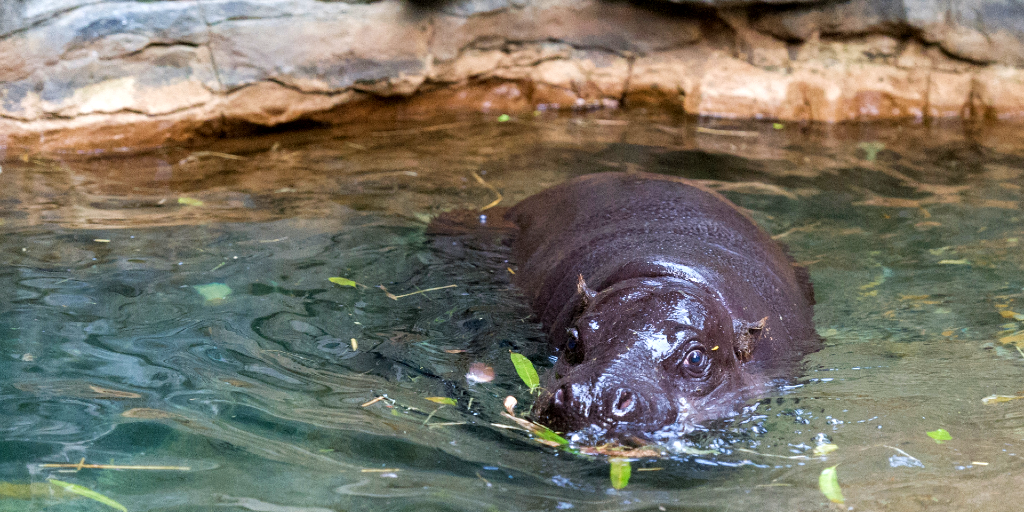
    The pygmy hippo (Choeropsis liberiensis) is the common hippos’ smaller cousin, and accounts for 2,000 of the world’s hippo population. 

    When perusing pictures of hippopotamuses of the pygmy species, you may pick up that they’re much more likely to be snapped outside of water. This is because pygmy hippos spend much less time in water when compared to their colossal cousins. 

    Here’s more hippo facts on the different types of hippos.

    Hippo facts about the different types of hippos

    image

    Original image: Pygmy Hippo Splashing by Eric Kilby is licensed under CC BY-SA 2.0

    1. The common hippo is found in almost ten different countries across sub-Saharan Africa – including South Africa – while the pygmy hippo can be spotted in no more than five sub-Saharan locations.

    2. Adult pygmy hippos weigh only one-quarter of the weight of a fully grown common hippo.

    3. While the common hippo is known for being aggressive, pygmy hippos prefer to flee. 

    4. It’s much harder to spot a pygmy hippo in the wild. Not only are there less of them, they’re also shy and usually live deep inside forested terrains. 

    Where do hippopotamuses live?

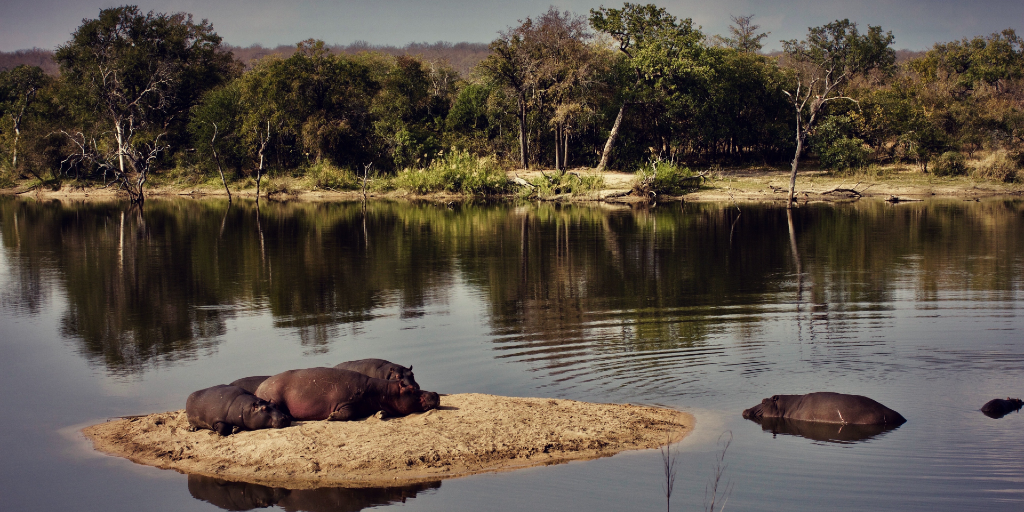
    The hippo population lives in wetlands, rivers and swamps in different regions of Africa. 

    If you search for pictures of hippopotamuses online, you’ll most likely see these creatures submerged in water or standing on land with a water source close by in the background. 

    And if you look beyond the wetness, you’ll see savannah vegetation or forest foliage as far as the eye can see. 

    This sets the scene for ideal hippopotamus habitats: plenty of water for lounging, plus tons of vegetation for grazing. 

    Hippos are herbivores and the common hippo can eat as much as 45 kilograms of vegetation a day. And even pygmy hippos are capable of eating large amounts of greenery at a time. 

    Because of this, hippo habitats need to have a steady supply of land and water plants on offer to allow these feasting floaters to eat their fill. 

    image

    Original image: Pygmy Hippo Swimming by Eric Kilby is licensed under CC BY-SA 2.0

    How much do hippos weigh?

    On average, adult human beings weigh just over 60 kilograms – which is also the weight of some newborn babies of the common hippo species!

    So, how much do hippos weigh after they’ve had some time to grow? Well, once it’s reached adulthood, the common hippo can weigh in at a meagre 1,000 kilograms, or tip the scales at a whopping 4,000 kilograms. 

    Their sizes differ depending on their gender, with females coming in at the lower end of the weight range. 

    While pygmy hippos have their own strengths, they can’t compete with the common hippo pound for pound. The weights of pygmy hippos range from 100 to 300 kilograms. 

    But even the smallest hippos could fall into the same weight category as a human-sized cement block. And imagine how much strength it’d take to get a heavy load like this moving?

    Now, consider the fact that even the heaviest hippos can run at car-like speeds – and when you’re over the shock, pick your jaw up off the floor before we set off to find out more hippopotamus running facts!

    image

    How fast can a hippopotamus run and other hippopotamus running facts

    If you’ve ever seen a hippopotamus running, count yourself lucky. 

    These bulging beasts prefer to only summon bursts of speed when absolutely necessary – but this doesn’t mean they can’t race you to the finish line. 

    In fact, some of the most astounding hippo facts are about these rotund creatures’ ability to keep up with a running human being. Here’s a glimpse into the sheer force of a hippopotamus running:

    1. Hippos can run at speeds of over 40 kilometres per hour.

    2. Over short distances, they can keep up with a sprinting human being.

    3. If they feel threatened on land they head for water – where they can move even faster and pose even more of a problem to their opponents. 

    What makes a hippopotamus dangerous?

    image

    Because pygmy hippos are more likely to flee than put up a fight, this hippo species isn’t a cause for concern – unless aggravated!

    But with their size and potential for speed, the common hippo makes for a formidable opponent out in the bushveld. 

    And the common hippo also comes with a whole host of personality traits that makes it more charming to watch from a distance than to ogle up close. 

    Here are just some examples of what makes a hippopotamus dangerous:

    1. Many people consider hippos to be calm and slow-moving creatures, which means that they can catch you off guard with their speed and aggression.

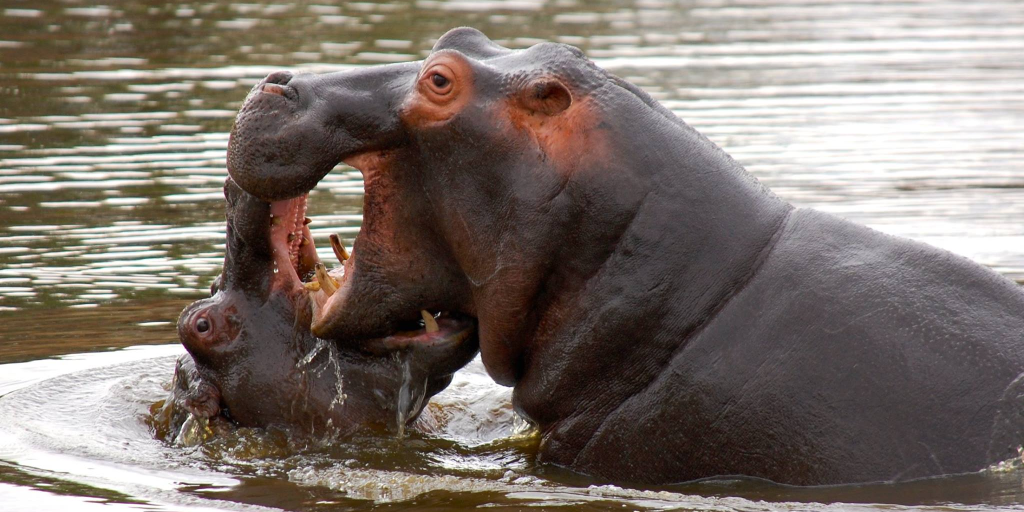
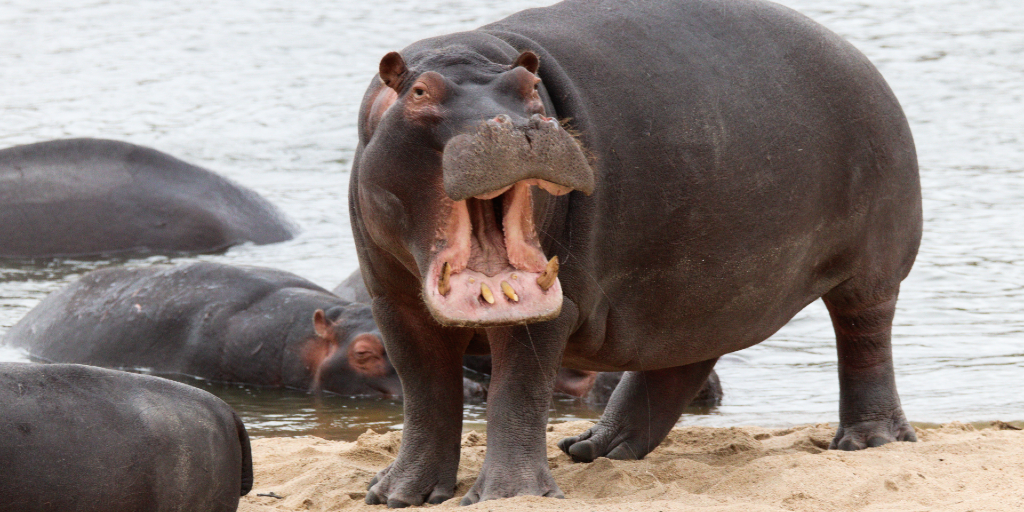
    2. You may see a hippo yawning or laughing and think that they’re expressing how sleepy or amused they are, but don’t be fooled. These are actually warning signs for you to stay away.

    3. Hippo calves can suckle on land or underwater. If disturbed while nursing, mother hippos can quickly become aggressive. 

    4. Hippos are more likely to attack people or other animals when they have less access to food, which can happen during droughts or due to land degradation – both of which are becoming more common.

    5. If a hippo starts running at you, there are only three ways to escape: climb something high, run in a zig-zag pattern, or jump over a sturdy barrier.

    Some sources report that hippos are more dangerous than lions, and may kill more people each year than crocodiles do. 

    What really makes the hippopotamus dangerous is human beings being unaware of how powerful and territorial these animals are. And our lack of knowledge may also be the reason why the hippo population is shrinking each year. 

    Is the hippopotamus endangered?

    image

    The common hippopotamus is listed as vulnerable on the International Union for Conservation of Nature’s (IUCN’s) Red List of Threatened Species.

    The main reasons behind the drop in the hippo population size are:

    1. poaching

    2. hippopotamus habitat destruction 

    3. land degradation – which has reduced the amount of foliage available for hippos to feed on

    4. global warming – resulting in more frequent droughts and less water for hippos to drink and bathe in. 

    This bombshell of a bushveld beast is one of those you’d shout out first if asked to list some African animals. So, can you imagine the African wild without the common hippo? By adding to wildlife conservation activities in the field you won’t have to. 

    On a Bushwise Field Guide course in the Limpopo bushveld, you’ll do research that builds on what we already know about the hippo, and adds to global contributions aimed at conserving them.

    Take a look at our wildlife conservation program and see how you can set foot in the African wild and learn even more hippo facts from an exciting – but safe – distance. 

  • Animal scavengers and the ecological role they play

    This article about animal scavengers is by Bushwise Trainer Wayne Lubbe. Based at our Mahlahla campus, Wayne is a highly qualified guide with NQF4, Trails Guide, ARF, Level 2 Wilderness First Aid, and additional specialties.

    Which animals are scavengers?

    image

    A scavenger is an organism that primarily consumes other organisms that have either died of natural causes or have been killed by a carnivore (meat-eating organism). It’s important to note that not all scavengers are the same and some scavengers are more than adequate and successful hunters.

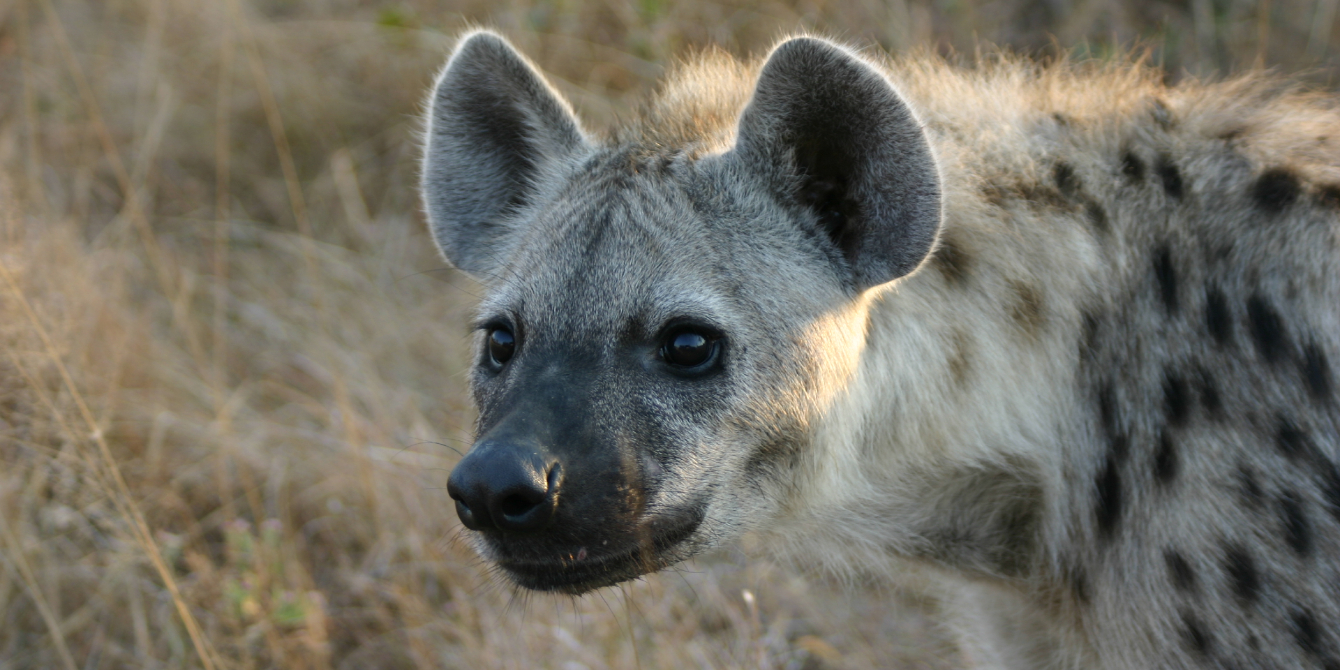
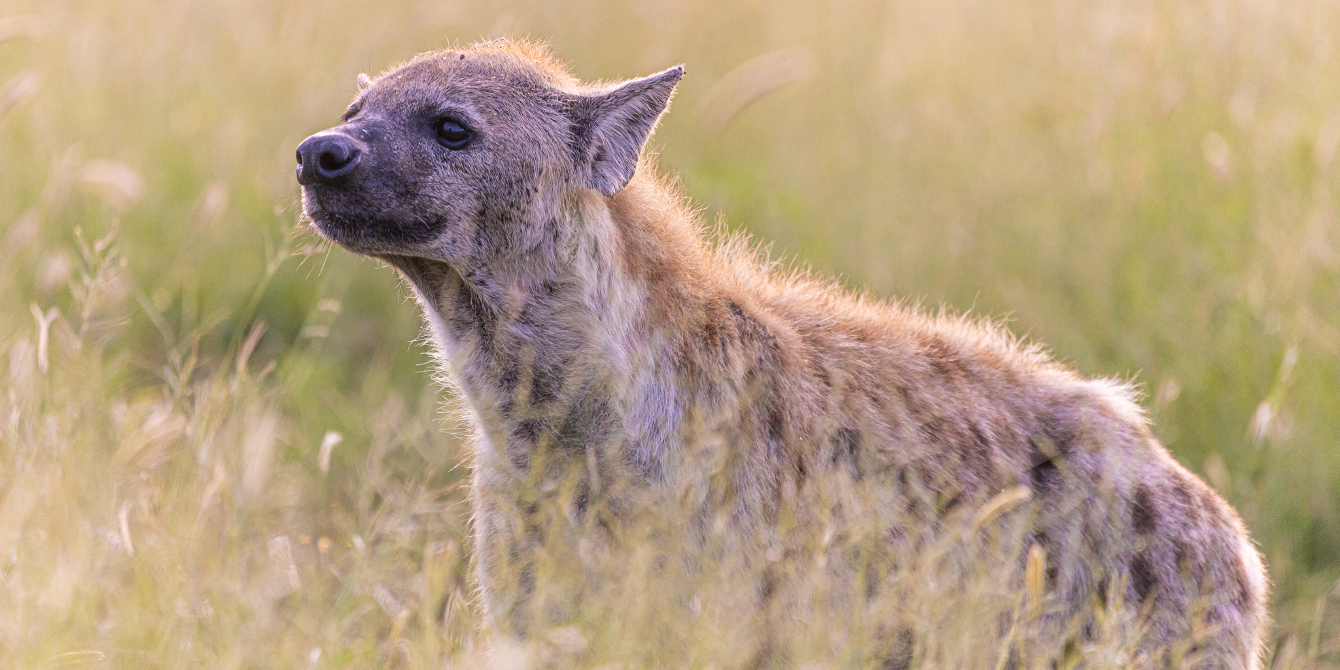
    The spotted hyena, for example, hunts 50-75% of their food. A clan of hyenas will work together to hunt antelope much larger than themselves – and they do this with a surprisingly high success rate, much higher than compared to a pride of lions. 

    image

    Spotted hyenas are opportunists that will eat carrion, when possible. Their digestive systems have been adapted to process bones, hooves and skin – rightfully earning them the title of “cleaners of the bushveld”. 

    Vultures are well-known scavengers

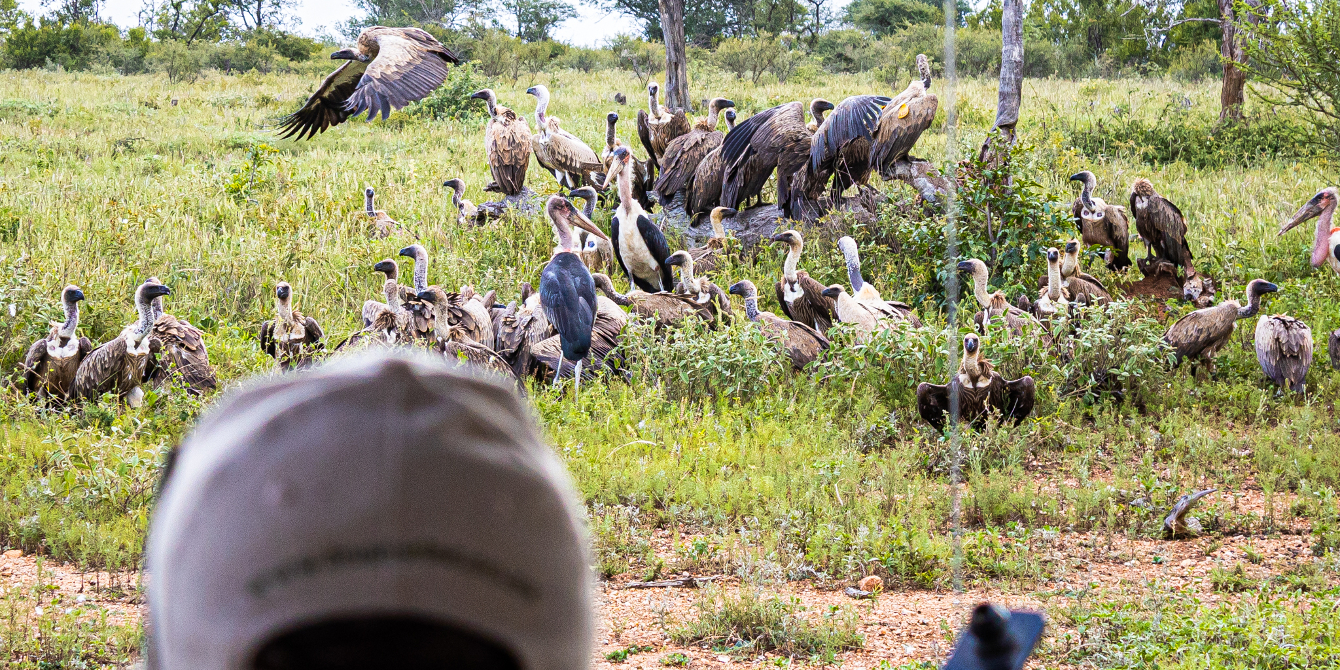
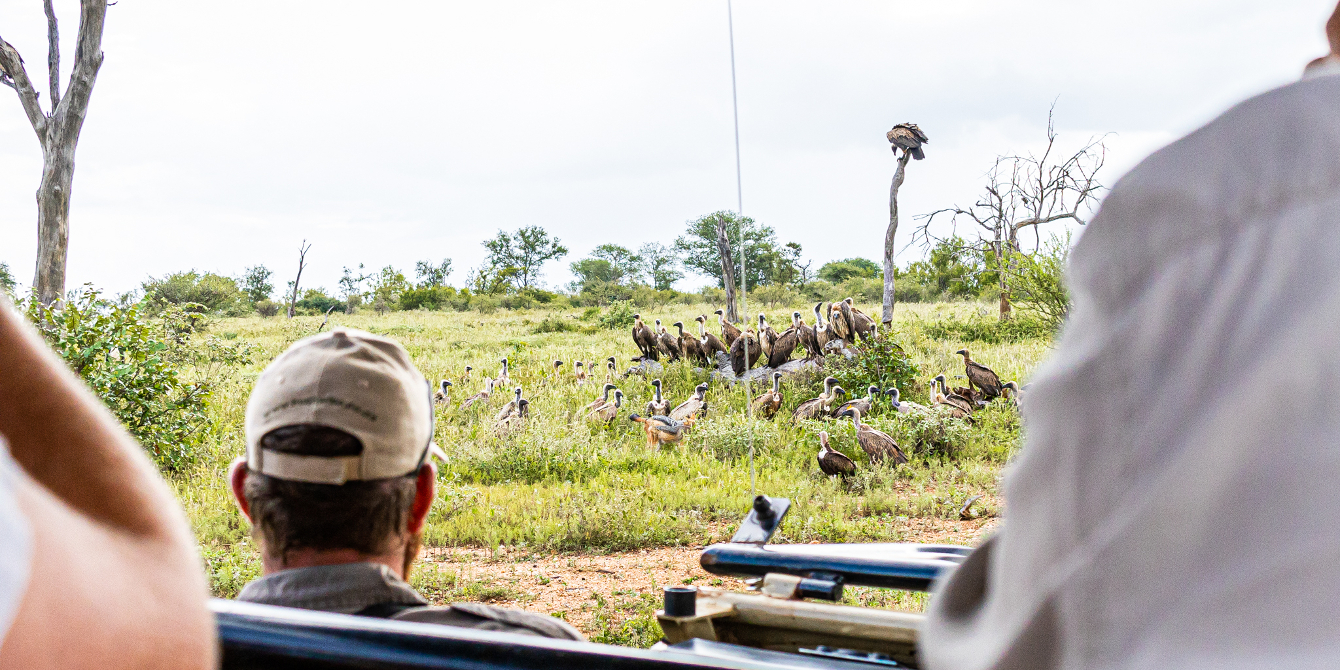
    An example of a true scavenger would be vultures, as they feed almost exclusively on carrion (dead animals). When it comes to feeding, each species of vulture has evolved into a niche system. 

    image

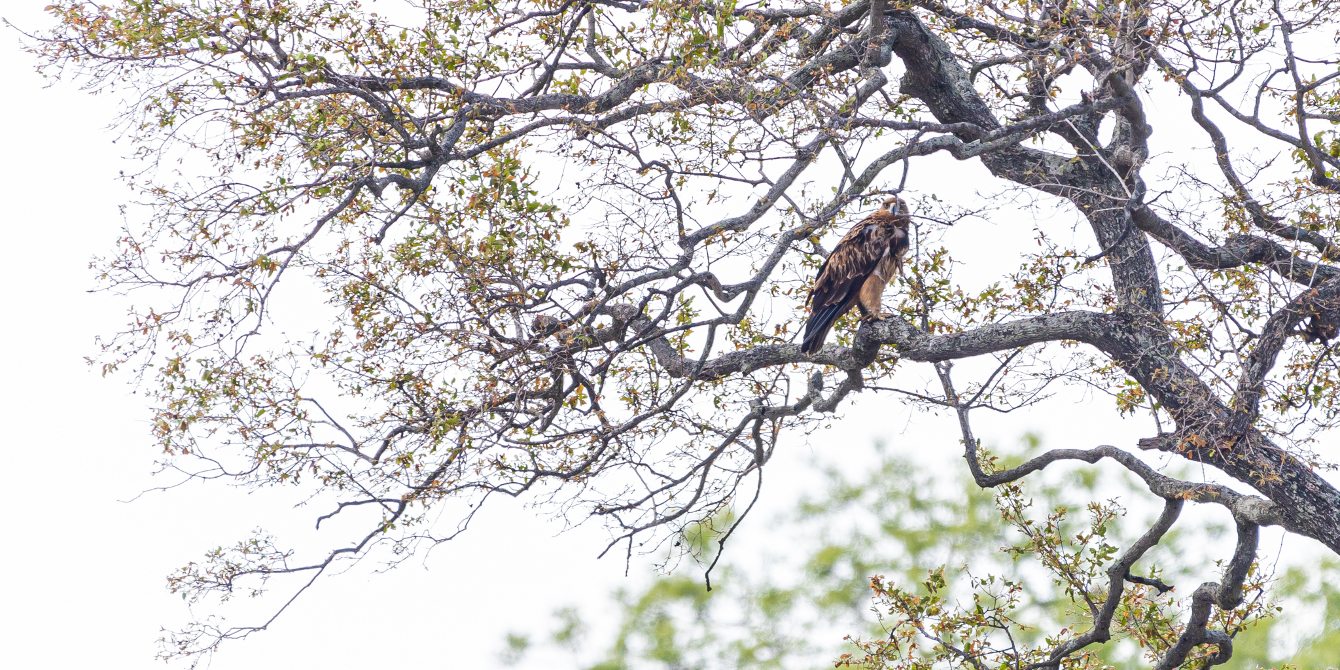
    Large vultures, such as the lappet-faced vulture, have large well-developed beaks capable of tackling tough skin, tendons and ligaments too tough for other vultures. One of the more commonly seen vultures are white-backed vultures. These vultures focus on eating the softer pieces of carrion, such as flesh, organs and eyes. 

    Lastly, you would find the hooded vulture. Smaller than the other vultures, they focus on picking off maggots and other insects associated with the carrion. Their beak shape and size resembles a pair of tweezers, which they use to pick off pieces of meat around bones and in areas where the larger beaked vultures aren’t able to reach.  

    image

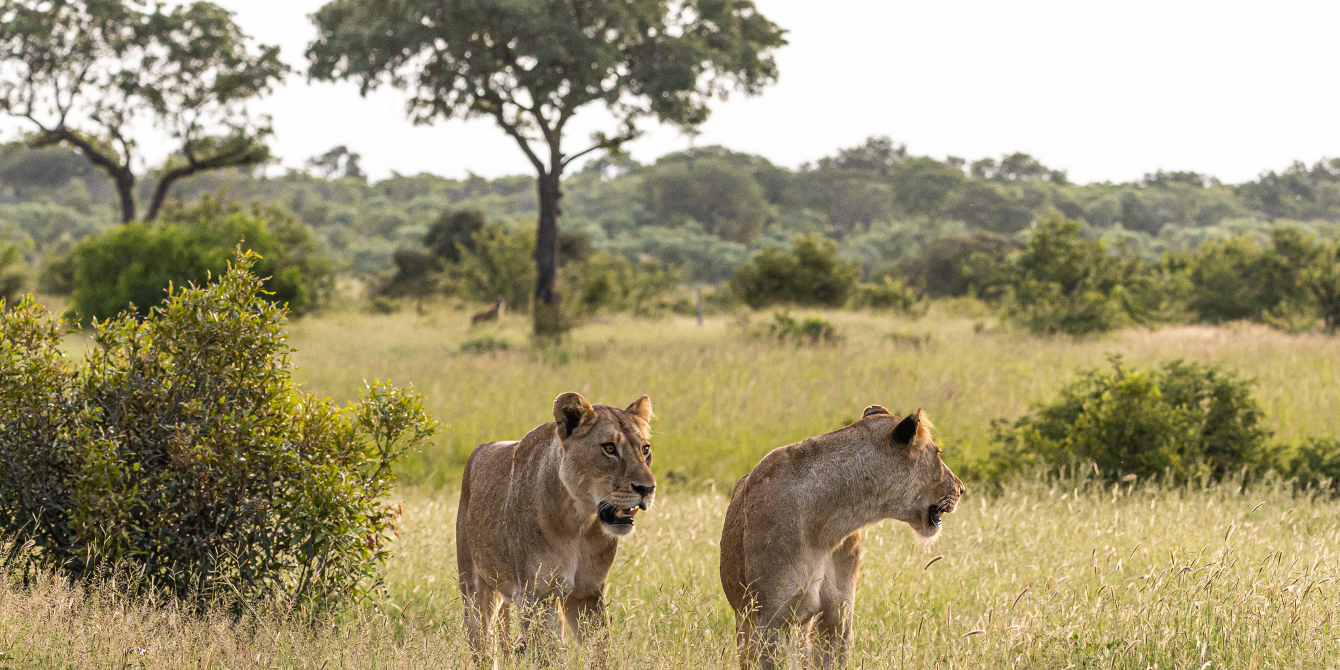
    There are many different bird of prey species you can encounter around a dead animal, including the vultures mentioned above and eagles such as the tawny eagle and the bateleur eagle. Mammals like brown and spotted hyenas, leopards, large and small spotted genets, civets, omnivorous warthogs and even the “king of the jungle” the lion will scavenge when an opportunity comes around.

    What role do animal scavengers play in the ecosystem?

    image

    Scavengers play an important role as they keep the ecosystem free of the bodies of dead animals and they speed up the process of nutrient recycling. Imagine an ecosystem without any scavengers – there would be an accumulation of rotting dead carrion and an explosion in the numbers of parasites, pests and diseases caused by rotting waste piling up. 

    Bacteria and other diseases would spread within the local environment and infect other animals, including livestock and humans. There would be a decline in healthy soil and plants caused by the waste accumulation, which in turn would influence the plant-eating herbivores. The meat-eating carnivores would have fewer and fewer herbivores to feed on and after a duration of time the fine balance of the food web would start to collapse. 

    What lessons can we take from animal scavengers?

    image

    The lesson we can learn from this is that nature is a well-maintained, self-sustaining organism that interacts with living and nonliving organisms in a harmonious way – which makes up the ebb and flow of life on Earth. 

    We as humans have a huge direct influence on the planet and life around us and should be considered the custodians of our wonderful planet. Each organism, no matter how large or small, serves a special role in the ecosystem. When removed from that role it has a devastating negative effect on the natural environment and eventually on humans in a direct or indirect way.

    image

    All things big and small are connected in a thriving ecosystem. Animal scavengers, while often looked down upon, play an essential role in maintaining a healthy planet. 

    Are you interested in learning more about how different animal species, including animal scavengers, interact in the Lowveld of South Africa? Apply today to join the next Bushwise IFGA Safari Guide Course 6/12 Months. You could be learning all this and more!

    #lion #Birding #bushwise #training #animals #apprenticefieldguide #safari #Assessments #fieldguidecourse #studying