Tag: #fieldguide

  • The resilience of the cheetah

    This blog was written by Eline Kemper, a Bushwise International Field Guide student. Each student takes a turn as camp manager, and writing a blog is part of the experience.

    4 min read

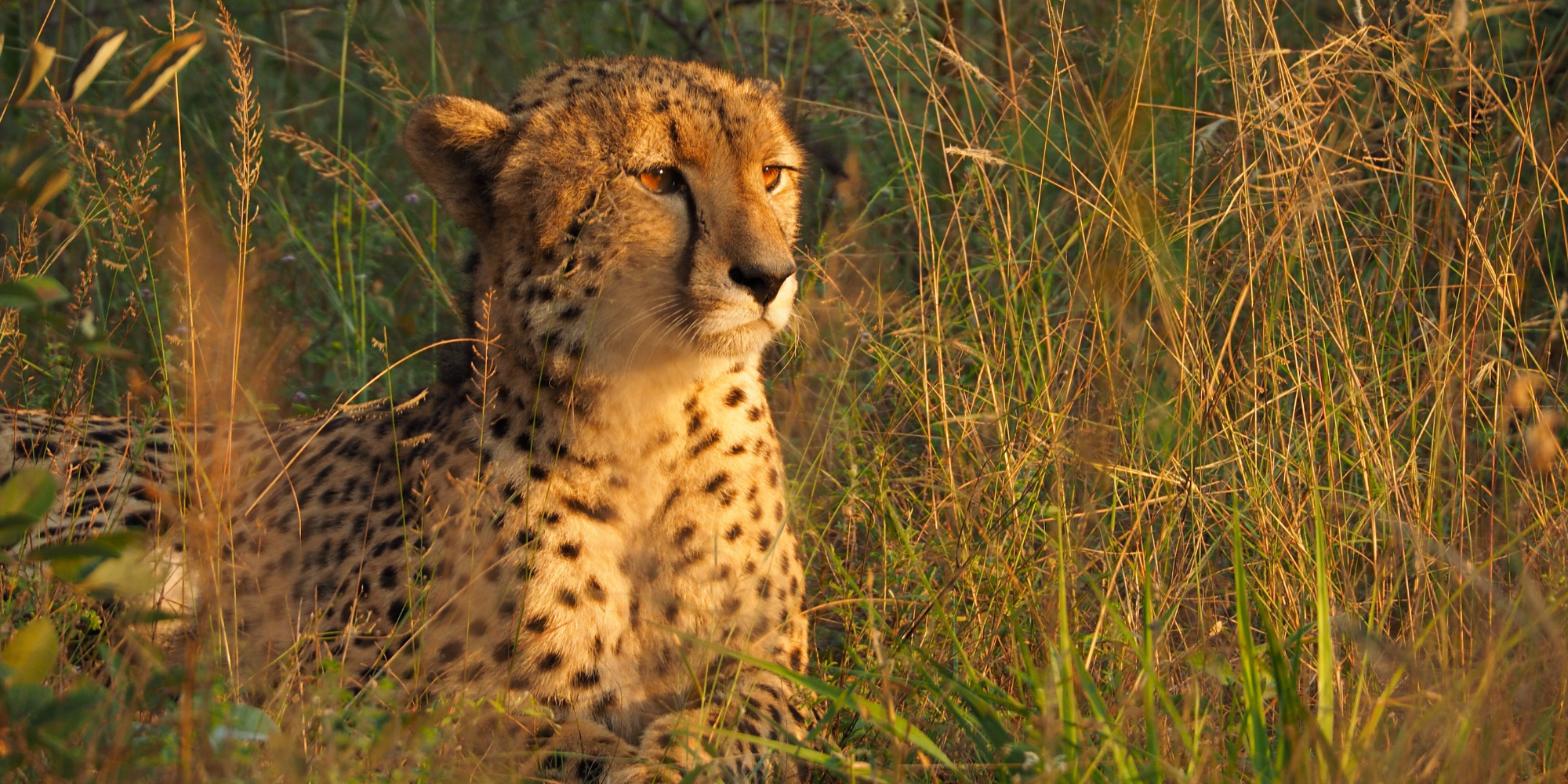
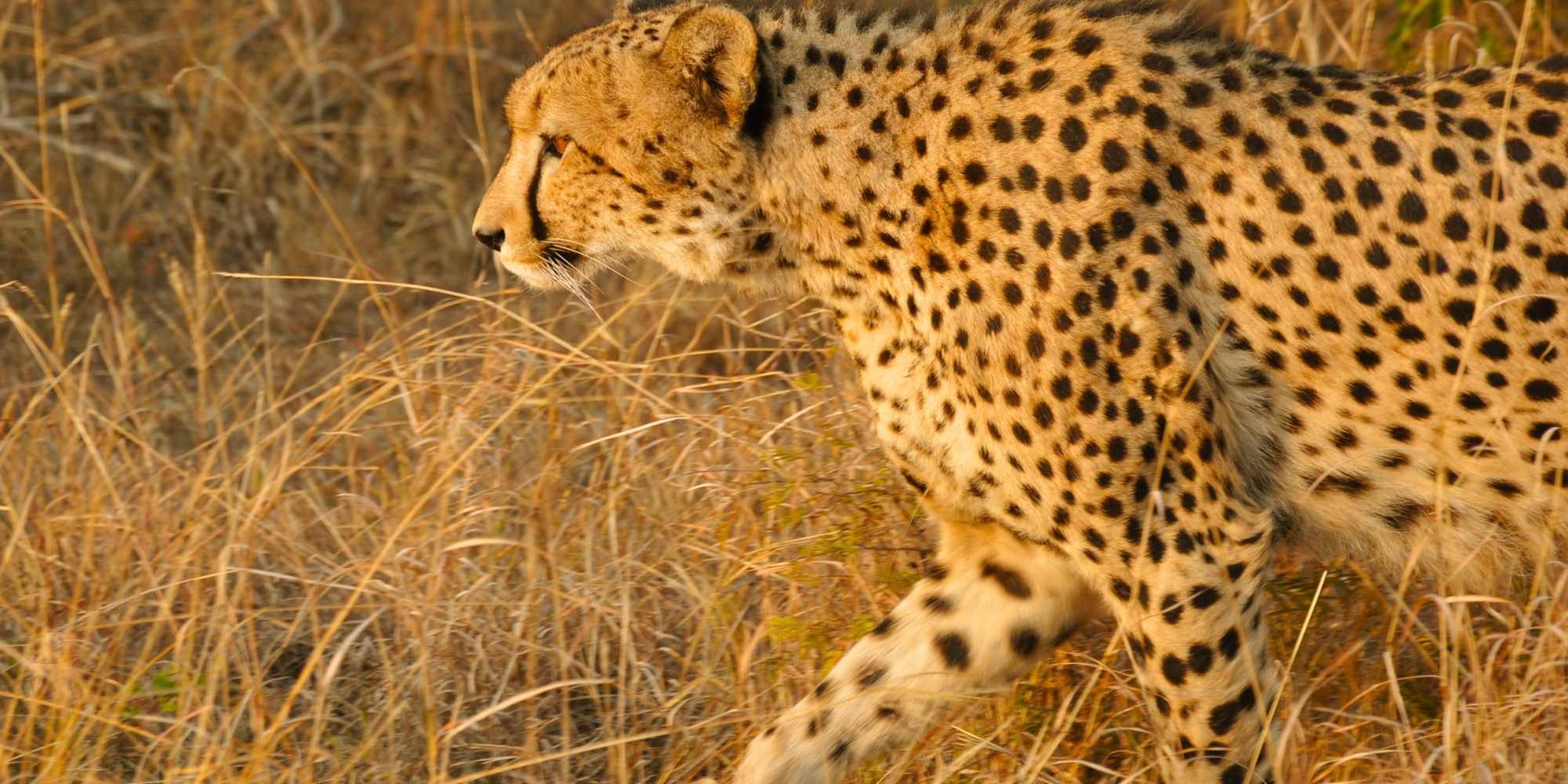
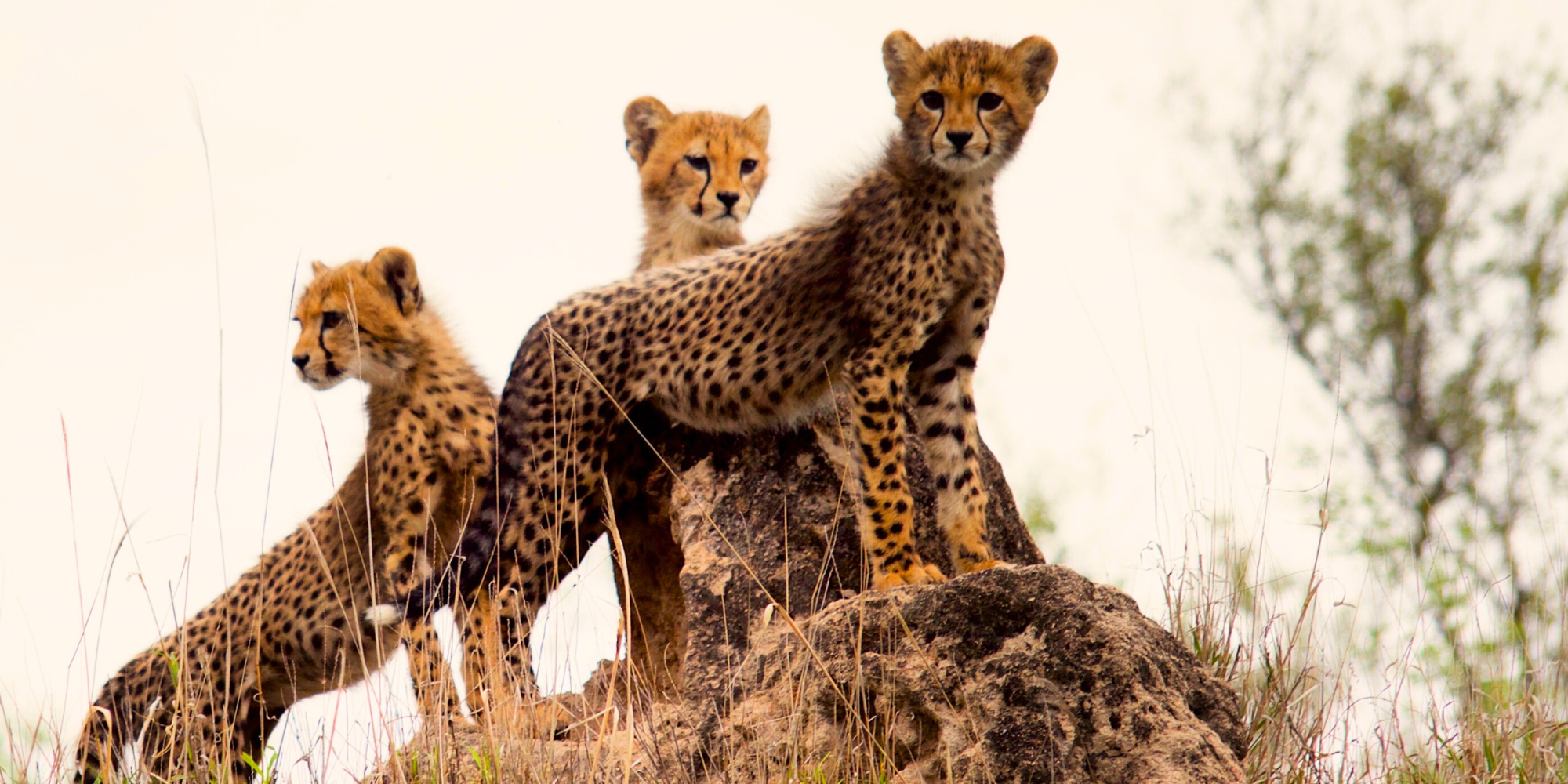
    I am currently enjoying my third semester with Bushwise and I have had the chance to see my favourite animal twice so far! Last week, we saw two juvenile cheetahs quite up close. We think they are brother and sister who only just left their mother. I have been waiting to see cheetahs out in the wild in South Africa for years, so I count myself very lucky. 

    It is the beauty of cheetahs that captured me first: their spots, tear marks, and honey-brown eyes. But, it was after I did my research on them that I came to appreciate them even more. I admire their personality, but especially their resilience, which is what I would like to share some information on with you in this blog.
    image

    Female cheetahs are solitary animals, except when they are raising their cubs. Male cheetahs can be solitary as well, but usually form coalitions. These coalitions consist of one or up to four other male cheetahs, usually their littermates. Males provide no parental care; this responsibility lies with the mother. Therefore, the primary key to the survival of cheetah cubs is the mother. Another reason why the mother is so important is because cheetah cubs are altricial at birth. 

    “Altricial” is one of the words I became familiar with during my last semester with Bushwise. It means that an animal is born in an undeveloped state; they are helpless at birth. Cheetah cubs have their eyes closed for four to 11 days after birth and have no locomotive competency. After 12 to 13 days they can start walking. And it is only after 18 months that the cubs reach their adolescence and are ready to become independent. 

    Currently, the cheetah population is decreasing rapidly. According to reports, there are approximately only 7100 cheetahs left in the wild and they lost 91% of their historic range due to habitat loss and fragmentation. 
    image

    The steep decline in cheetah populations is a result of several causes and one of them is their high offspring mortality. This high offspring mortality has different causes. For example, shortages of food and/or water, climate change, being killed by farmers, and the illegal trade. 

    Extreme poverty is one reason for the illegal trade in cheetahs. The other suspected reason is the desire for exotic pets in the Middle East. Nevertheless, the biggest cause of high offspring mortality is predation by lions and hyaenas. There is no exact estimated percentage of the overall mortality rate of cheetah offspring and the offspring mortality of cheetahs can also differ per area. 

    However, here are a few statistics that can give you an idea. A study on cheetah cub survival on the Serengeti Plains and in the Kgalagadi Transfrontier Park showed that 4.8% of the cubs that were born survived until their adolescence in the Serengeti Plains and 35.7% in the Kgalagadi Transfrontier Park. According to other research, the average percentage of cubs that survive until their adolescence is 30%. Thus, the mortality rate for cheetah cubs found in this research is 70%. 
    image

    According to M. Laurenson, “cheetahs suffer high offspring mortality rates compared to other large felids”. These percentages were alarming to me, but here comes the fascinating part: three traits of the reproductive physiology of the cheetah are thought to have evolved as an adaptation to their high offspring mortality. Namely: they can restart their oestrus cycle quickly after losing a litter, they have one of the shortest intervals between litters and they have a large litter size compared to other felids. 

    If a female cheetah loses a litter, her oestrus cycle restarts quickly. The female comes into oestrus and can be pregnant with young again within 19 days after losing her litter. Second, they have one of the shortest intervals between litters, compared to other large felids. And third, cheetahs have a large litter size compared to other felids. The average litter size of cheetahs is four, but their litters can range in size from one to eight cubs. Meanwhile, other felids have litters with an average of three, which ranges from one up to five.

    It is admirable how cheetahs, but also animals in general, evolve to become resilient to the challenges they have to deal with. I could write another 10 blogs on the cheetah, there is so much that is interesting about them, but for now, I am going to leave it here. I hope I will be able to do conservation work one day to observe their (resilient) behaviour and protect them. I believe doing the International Field Guide Course with Bushwise is a good place to start this journey! 

    Ready to make an impact in wildlife conservation? Explore Bushwise courses and apply today to start your journey in field guiding and protecting endangered species!
  • Wild encounters: A leopard on the prowl

    This blog was written by Keagan Rowe, a Bushwise International Field Guide student. Each student takes a turn as camp manager, and writing a blog is part of the experience.

    4 min read

    My week as camp manager was certainly eventful. While the duties of camp manager did not really require much extra thought as it mainly involved having the camp radio on your person at all times and letting everyone know when meals are ready. The week itself, however, was very interesting. 

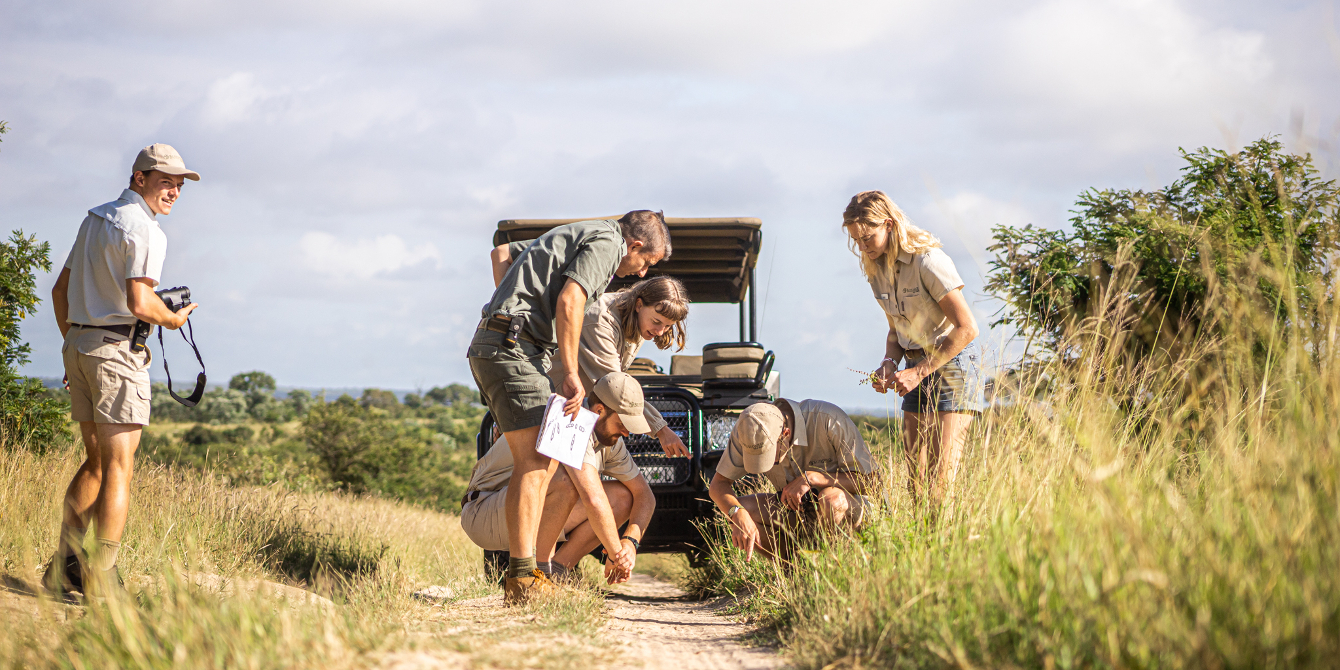
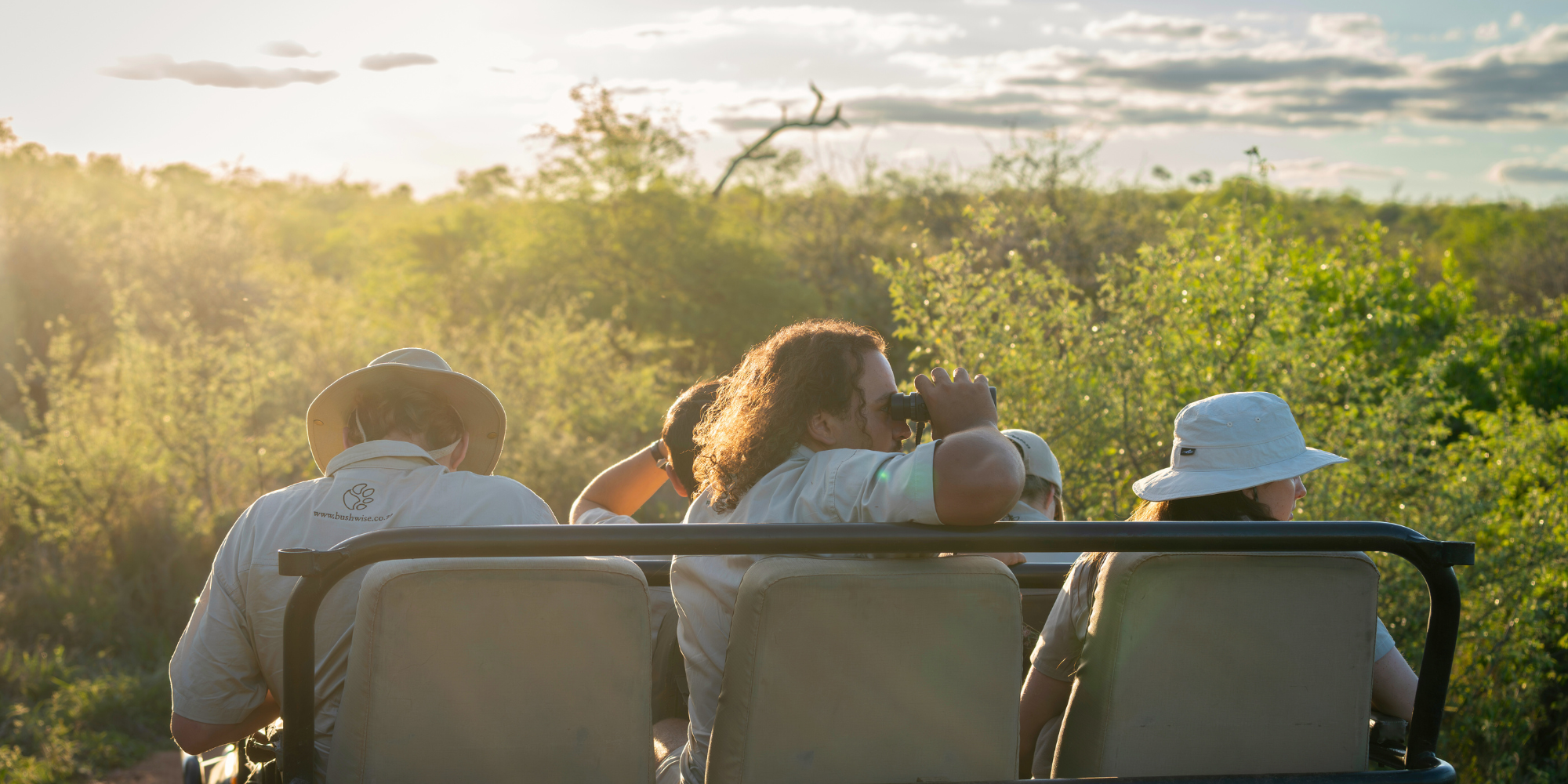
    This week marked the beginning of our practice drives where the idea is to attempt to mimic what you would be doing on a drive if you had guests on the vehicle. I must admit that going into the first drive, despite knowing that it is a practice and the idea is to learn from it, the anxiety to perform in front of your peers was certainly high and I feel like that sentiment was widely spread amongst the students. 

    image

    Despite the pre-drive jitters, I believe all of us did really well for a first attempt and it was fascinating to see the differences in everyone’s style of guiding. Even though this is very early on in our guiding experience you can already slowly start to see the kind of guides everyone will turn into. We have the style of educational guiding where facts and figures are integrated into what you are seeing, the culturally relevant guiding where what we are seeing gets related to the culture of the area and what animals mean to different people in the area, and we see the type of guiding where storytelling dominates the drive. 

    Now the guiding practice was already special, but what further enhanced our experience was the phenomenal sightings that we witnessed. You expect to see a lot while in the Sabi Sands, but to actually bear witness to some of the animals’ behaviours and how they interact was, and always will be, an otherworldly experience. 

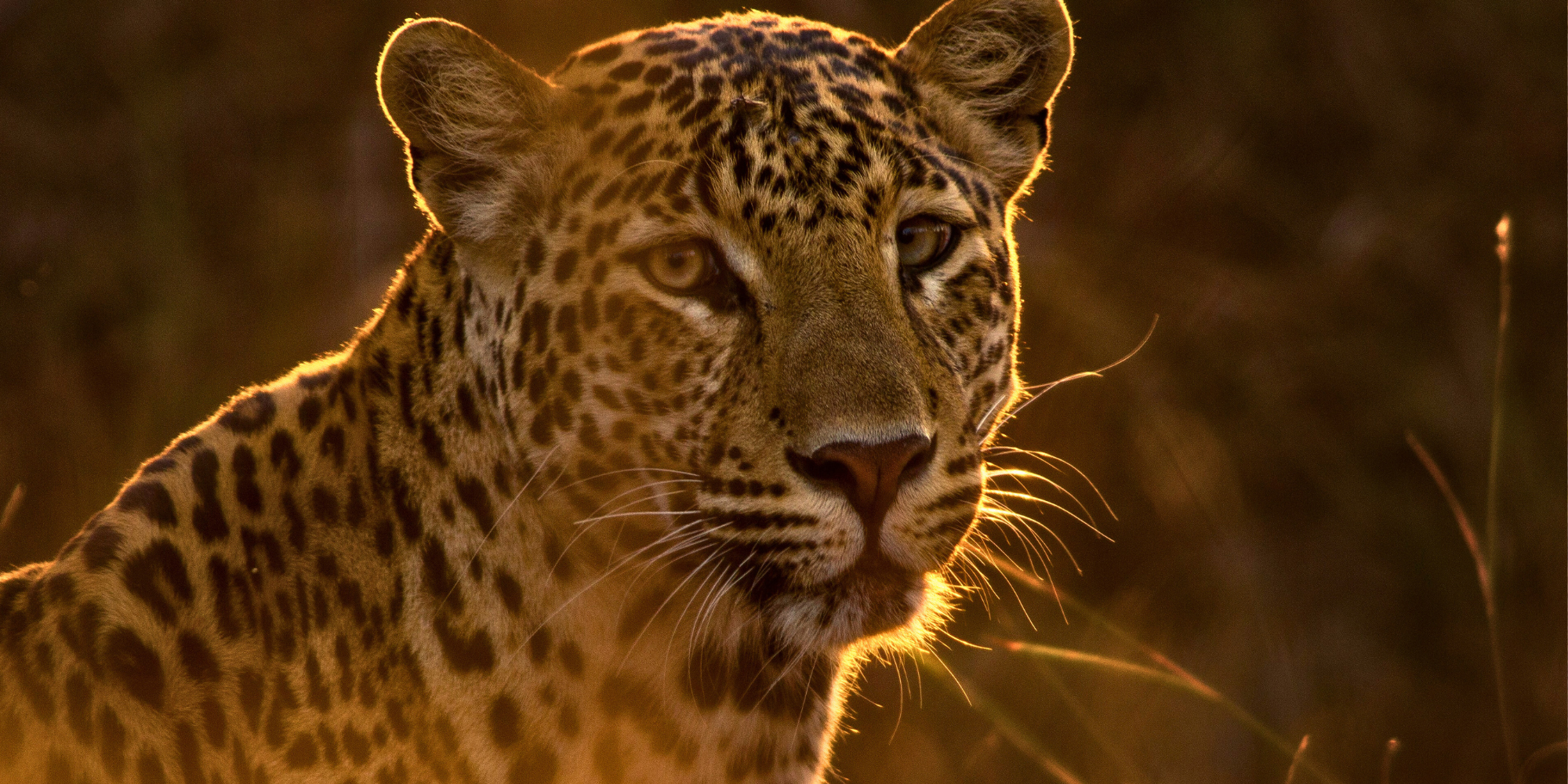
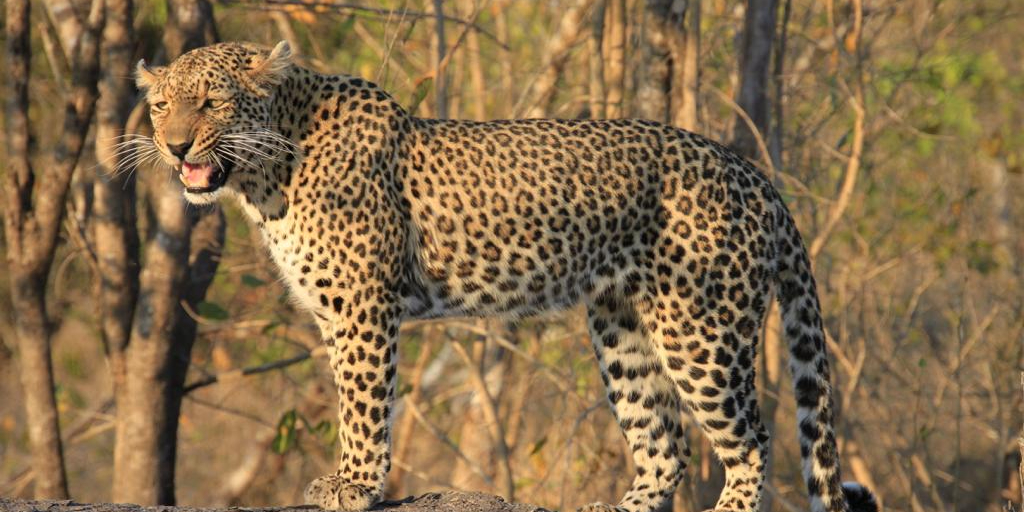
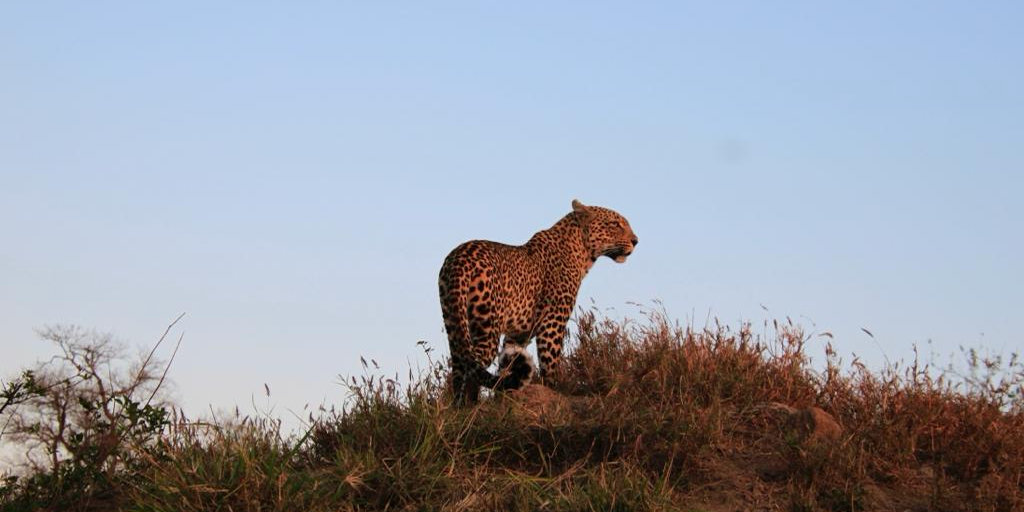
    One of the many sightings that stood out was when we found a female leopard who had just crossed into our concession from Lion Sands. We trailed her for a while and noticed her behaviour shift – she had caught wind of something she could prey on. We sat in silence and observed how the leopard assumed a low posture and began to slowly stalk whatever prey item she had smelt.

    With a bit of time and patience a rather large warthog had emerged from the bushes, at this point everyone on the vehicle started to speculate as to what was going to happen. “There is no way she will try and catch that warthog, it’s nearly as big as her,” was one of our observations. “But she looks skinny, maybe she hasn’t eaten in a while and has to take this chance,” said another. 

    image

    And so with our theories being expressed, now came the time to wait and see. What felt like only a few minutes was actually well over 40 minutes of us baking in the sun while watching the leopard take one small step closer every few minutes. But the sun didn’t bother us, and our patience felt like it could last an eternity – we needed to see what would happen next. 

    The time had come, the leopard was not going to be able to get closer than she already was, the warthog grazed unassumingly about eight meters away from one scary cat. The warthog looked

    up at the vehicle, turned his head slightly to the right and finally spotted the leopard. The warthog bolted away as fast as he could, letting out a grunt that one could possibly translate as “Oh crap”. The leopard had failed the hunt this time, but what a blessing it was to be able to witness the attempt. 

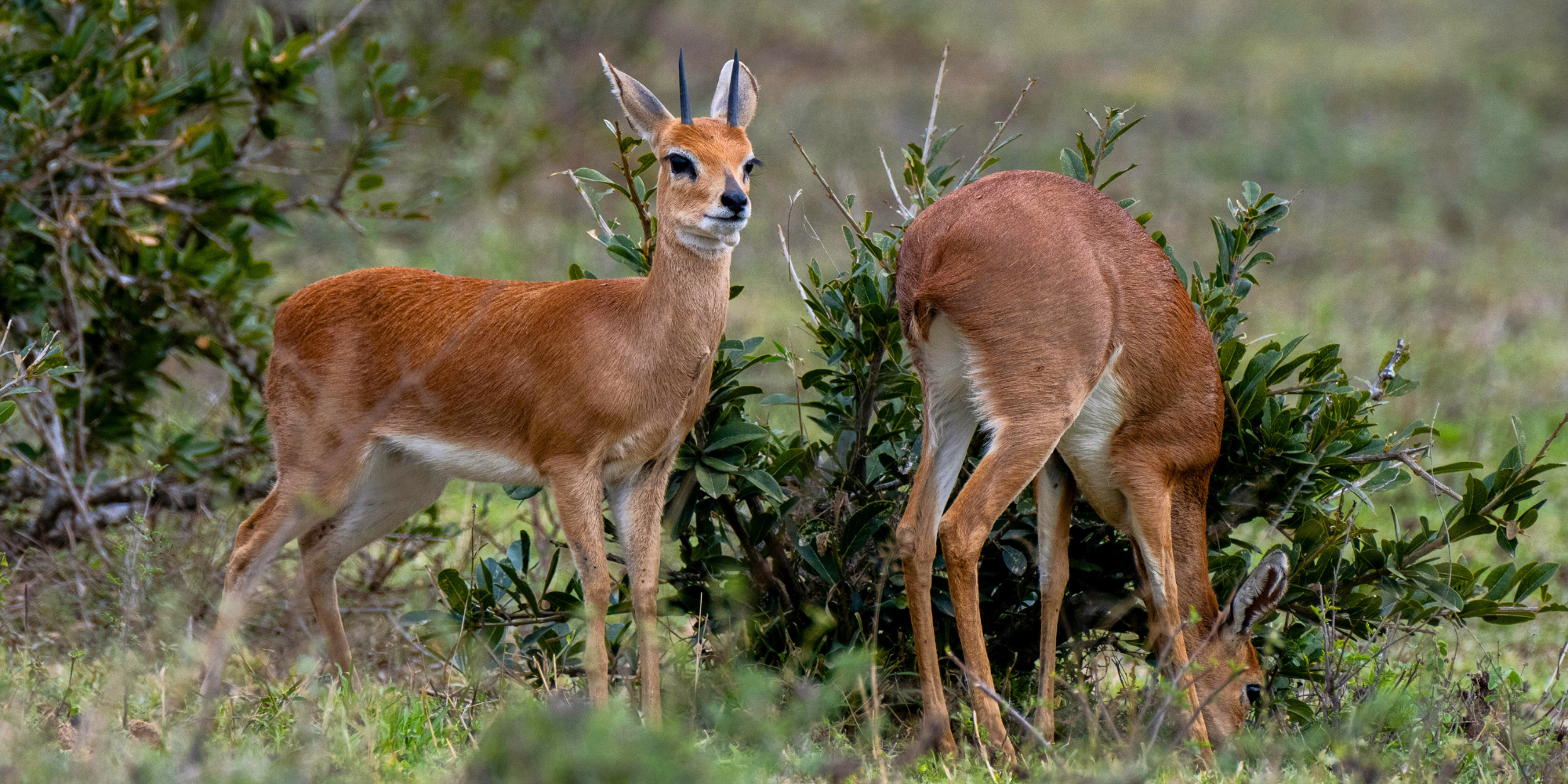
    While the leopard and warthog sighting was certainly a highlight for the week, it was far from the only one. We had a unique sighting that had great comedic value. We drove on the border of Lion Sands and came to a sudden stop when we saw a female steenbok not even six meters away from the road and us. Now this is strange behaviour from a steenbok as they normally run away when vehicles get too close – but not this one. 

    image

    We sat and watched in silence trying to determine how she could be this calm. It didn’t take long for the truth to come out – we saw her dig into the ground and she was munching on some subterranean bulbs. Our head trainer, Nic, then informed us that this steenbok was likely experiencing the effects of the plant’s psychoactive properties. 

    After getting our giggles out of the way, we observed the behaviour of this little antelope and turned it into a teaching moment of “what else can you see”, talking about how her eyes are glazed over, her posture is un-alert and so on and so forth. 

    There are many more things that could be talked about as there is never a dull moment while on this course. My take away from this week is that it really served as a reminder on why I am doing this and while I choose this career path. There is no other profession where you get to watch animals in their natural environments like this, and the ability to turn every sighting into an educational moment, or even a comedic moment, is so incredibly unique and unequivocally special that I couldn’t imagine a better way to spend my days. 

    Ready to turn your passion for wildlife into a career? Explore Bushwise courses and apply now to start your journey in the wild!

  • Building bonds, facing fears and embracing bush life

    This blog was written by Meere Malherbe, a Bushwise International Field Guide student. Each student takes a turn as camp manager, and writing a blog is part of the experience.

    3 min read

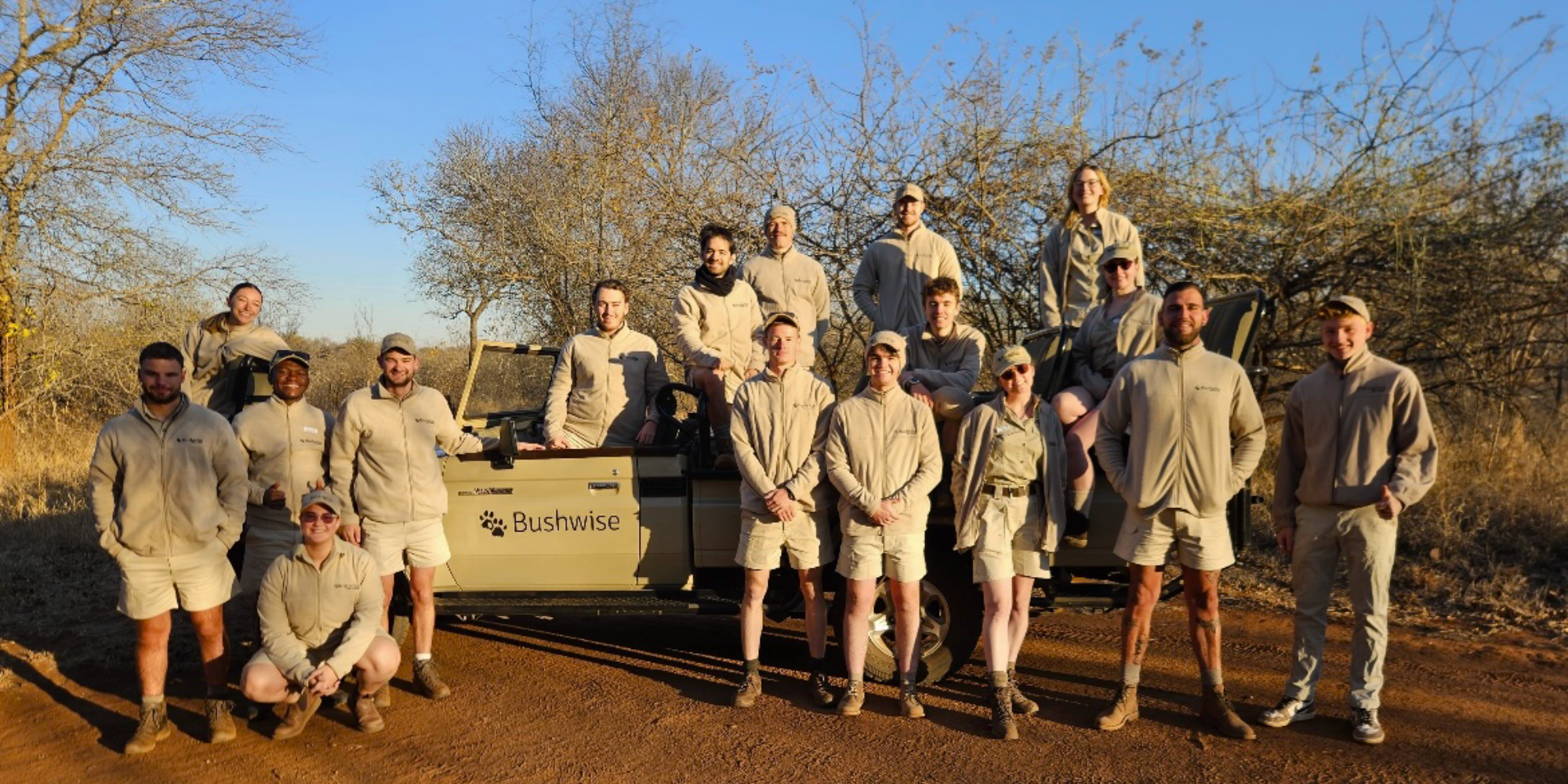
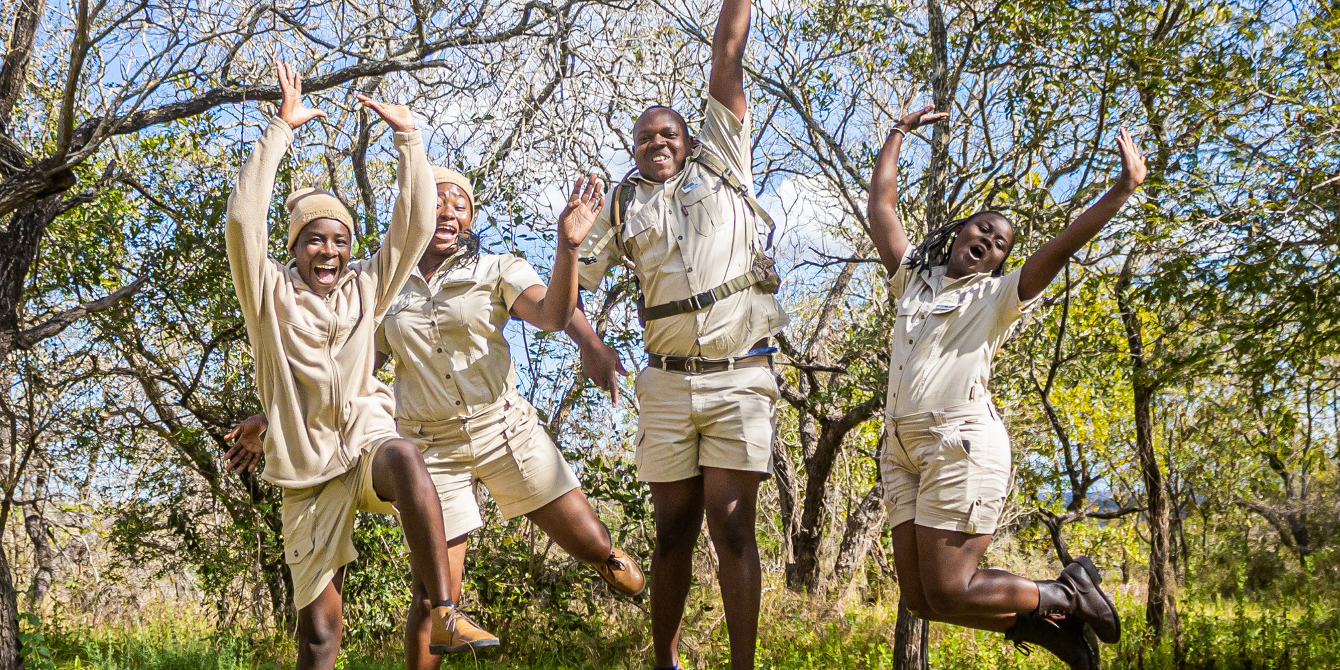
    It’s already the fifth week of being a Bushwise student. I can’t believe how time flies here. I can personally say that we’ve all grown closer and are a huge Bushwise family. We all look out for one another. I could not have asked for a better group! 

    Our week consisted of doing our presentations and our final lectures. Yes, that’s right, we are finally done with them! On Monday we did mammals, Tuesday was ethology, Wednesday was reptiles, Thursday was conservation management and historical human habitation. It has been a lot to take in for the past couple of days but at least we have each other. 

    image

    On Saturday night the group got together for a braai! It was a good way to end the week! Braais always takes me back home, where every night my family and I would spend a whole night laughing and enjoying each other’s company, and Saturday was exactly that! 

    Every day we’d set off on our early morning and afternoon game drives. I always look forward to these because you never know what you might see. Every day one or two students will get their chance at driving us around and talking about nature and all its glory. I can proudly say that everyone has been doing an amazing job so far and can’t wait for the next one! 

    On Wednesday, we had our reptile lecture, and got to go to the Hoedspruit reptile park. We all enjoyed a different scene for once, and learned quite a lot. We got to experience some close encounters with some of people’s biggest fears.  

    image

    Every night, all the students get together and learn all the bird calls, and come up with their own personal way of remembering them. There are so many different calls and some sound so similar. It’s spectacular to see how hard everyone has been working and all the effort being put into the days! We should all be proud of ourselves. 

    Every weekend we do get some time to ourselves which is always wonderful. A few of us will often drive to Gravelotte or Hoedspruit, usually just to enjoy a day out at a restaurant or paddle. Sometimes even just to stock up on snacks. 

    The days have slowly but surely started to warm up. Whenever we study in the classroom, we put on our swimsuits and just hop into the pool to cool down before getting back to do some studying. I have to say I am quite excited to experience how nature changes when spring comes around and all the leaves and plants start to sprout (It will make botany a lot easier). 

    image

    I have to be honest, the thought of being camp manager was like a constant worry that I had in the back of my head. I didn’t want anyone to feel that they needed to treat me differently, but as the time went on, I realised that nothing really changed. It felt like a normal week at camp. Being camp manager doesn’t mean that you don’t have to do your duties, but to make a good impression on others around you. 

    If anyone ever asked me if Bushwise is worth it, I would one hundred percent recommend it! It is so peaceful out in the bush, and it’s a great way to connect to nature and make amazing friends. Don’t wait till the last minute to do what you love, don’t be afraid to take that step in your life, you only live once. Make it worth your while! 

    Ready to embrace the wild and make lifelong friends? Explore Bushwise courses and apply now to start your adventure in nature!

  • From city streets to safari seats: My first three weeks as a Bushwise student

    This blog was written by Taylor Mee, a Bushwise International Field Guide student. Each student takes a turn as camp manager, and writing a blog is part of the experience.

    3 min read

    We’ve reached week three and I think it’s pretty safe to say we are really starting to settle into being full time Bushwise students. The 5am wake-ups, the intermittent phone signal, showering with frogs – it’s all becoming wonderfully familiar. 

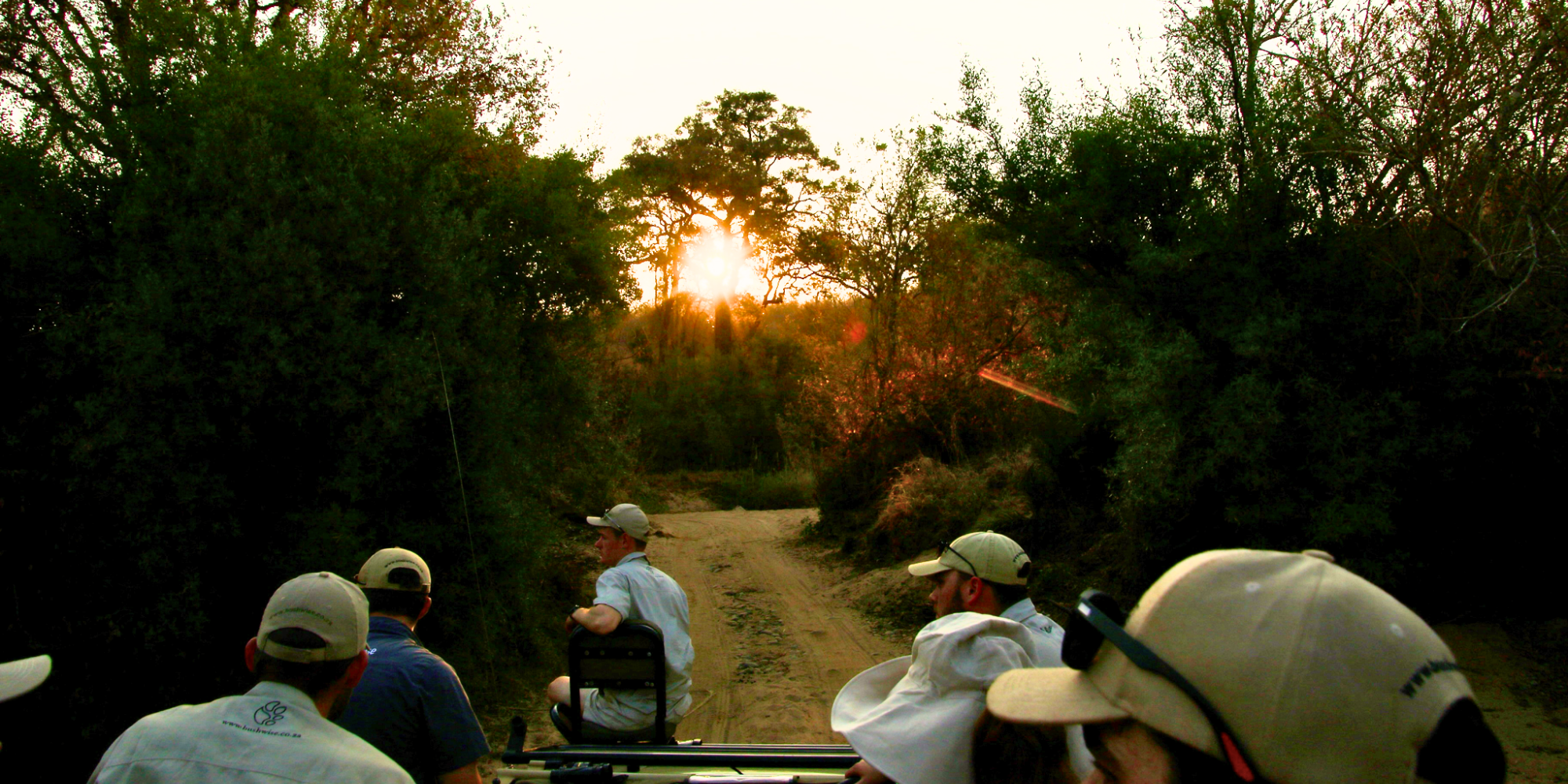
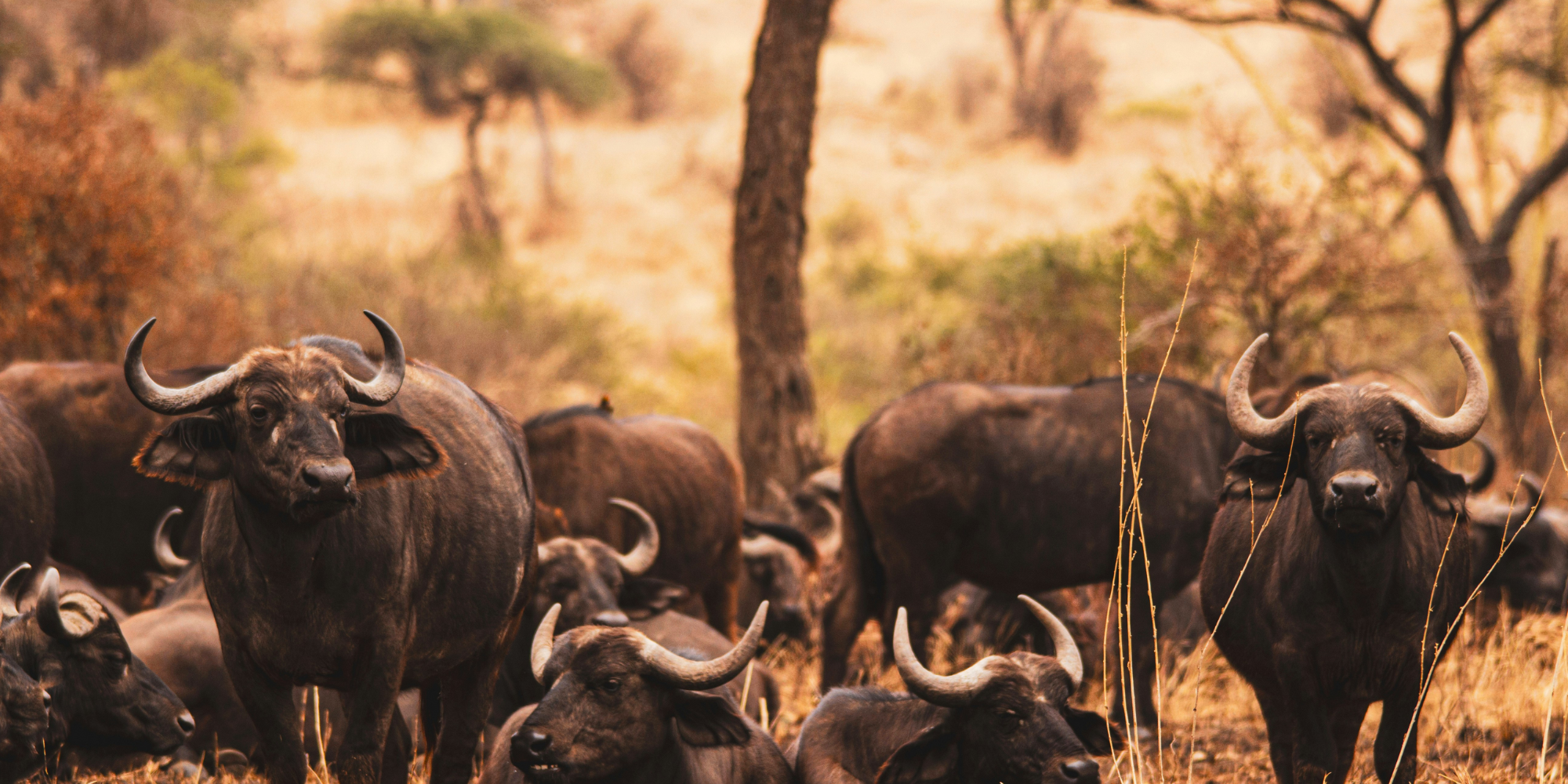
    Not long ago, I was drifting off to sleep to the delightful screech of mating foxes, and instead my eyes now closed after a “hard” day’s work to the distant call of a hyena. I say “hard” because being out here really feels like anything but hard work. Would I rather be sitting on the 77 bus, stuck in traffic, listening to some school kids shout about which TikTok they watched last night or be on the back of a game viewer, stuck behind a buffalo herd, listening to the wondrous sounds of the bush? Sorry, London, this man chooses Mahlahla. 

    image

    Amongst all the fun we’ve been having, it has also been a huge privilege and honour to be appointed camp manager for this past week and, in turn, become a shoulder to lean on for my newly adopted Bushwise family. 

    Our first exam week hit camp hard as I took over the reins, further extenuating the need for me to be a strong figure that my people could turn to in their toughest moments. But it was so encouraging to witness that seemingly nothing brings people together in a mutual act of support and solidarity quite like revising for, and attempting to pass, the first of your CATHSSETA exams

    It’s wild to think (excuse the pun) that in the short space of time we’ve been here, our knowledge base has already grown massively. Not long ago my field guiding mental database consisted of being able to provide a list of mammals commonly found in this part of the world – your giraffes, your zebra, of course your big five! 

    I don’t want you thinking I’m a fool, though! Don’t get me wrong I’ve watched my fair share of BBC Natural History Unit programmes, but there’s only so much information three series of Planet Earth can provide you with (we want series four please, Dave!). 

    image

    Now, however, if you want me to distinguish the difference between basalt and granite based soils, I can do so without a second’s hesitation. Need to know the cloud formation before a cold front hits? Hit me up! What taxonomic family does an Otter belong to, you ask? Mustelids people, they’re obviously mustelids. If by the end of the six months here I’m not able to distinguish a tree by a solitary lick of its bark or decipher which bird has flown past simply by listening to the flap of its wings, I’ll be incredibly disappointed – at this moment in time it feels like anything is possible thanks to the amazing experiences we are having and the training we are receiving.

    I also never thought I’d get so much continued joy out of looking at poo! The dogs walking in the hotspots of London won’t know what’s hit them when I return. We’ve already become so accomplished at identifying dung by its shape, colour and context that after six months here learning everything Darryn, Jason and Simone have to offer, I’ll have absolutely no hesitation in determining that it was the owner of the black labrador, approximately 8 months old, on a strictly dry food diet that didn’t pick up their dogs waste last Wednesday morning between 07:22 and 07:36 am.  You’re a welcome, officer. 

    image

    All in all, I think there is no doubt we can call semester one a success! New lifelong friendships are beginning to form, a whopping 8 modules worth of knowledge stored away (hopefully) forever and plenty of awesome sightings under our brown belts!

    It’s very sad to be hanging up my camp manager boots at the end of this hard week of studying. But I take one last look at the base, as I climb into the taxi taking us for a few well-earned days of relaxing in Hoedspruit, knowing that I’ve left Bushwise Mahlahla in a better place than I found it.  


    Ready to start your own adventure with Bushwise? Explore our courses and apply today to begin your journey in the African bush!

  • The subtle art of becoming a field guide

    This blog was written by Ryan English, a Bushwise International Field Guide student. Each student takes a turn as camp manager, and writing a blog is part of the experience.

    4 min read

    For as long as I can remember, I’ve wanted to work with animals, but I’ve never known exactly how. The idea of working in an office surrounded by walls and cubicles sounds like one of the layers of hell, so I have set out to find a way to be outside with animals for a living. 

    After finishing school, I decided to study zoology and natural science in university, but I had an itch to scratch with being back in the bush. Then it hit me when I spoke to my friends and family. Since you love telling people about animals so much, why don’t you do that for a while and see how you like it? Since that moment I knew being a guide in Africa would be my next adventure. 

    image

    Starting the process 

    The first step to following my aspirations of working in the bush was to leave my home city of Sydney, Australia, for South Africa where I would travel six hours from Johannesburg to the foot of the Klein Drakensberg, in the Limpopo province. More specifically, the Mahlahla campus at Bushwise

    Out here there are no streetlights, paved roads, noisy planes flying overhead or noise through the night. It’s peaceful from the onlookers perspective. After spending some time here you’ll soon realise how much is really going on. The walk from the dining room to my bedroom alone is an adventure at night with eyes flashing back at me, bushes rustling and figures seemingly disappearing into the pitch-black night. 

    The day is filled with birds calling to each other, antelope running around while keeping an eye on you and the honey badgers waiting in the termite mounds or in a hole for a chance to raid the fridge.

    image

    The more you listen to all the sounds, the more you realise how complicated and intertwined it all is. Then you are hit with the sudden reality: “I need to know every little sound out here and what it all means.” This is when I was almost hit with a slight wave of panic. 

    I only have 6 months to learn as much as humanly possible out here. I need to be able to educate and answer questions for guests who may have spent their whole lives wanting to come out here. And it needs to be entertaining! I don’t know what every bird sounds like or what the trees are, let alone the types of grass or the differences in footprints between animals we only hear about in Australia. This is going to be a huge 6 months of intense learning. It feels like everyone around me somehow knows more than me in every subject despite most of the group I’m with also being from other countries and continents. 

    Then one night, I realised: “This is a great thing, I can learn from everyone here, not just the instructors.” This realisation quickly sparked my competitive nature. I can and will become the best guide I can be and I’ll do my best to take the best parts of my peers around me to make Frankenstein’s guide. 

    image

    There was a catch, it’s not all just about animals when you are a guide in the bush. We need to be a driver, photographer, host, protector, medic, comedian all while being a beacon of knowledge. 

    Our first two weeks of class have been composed of classes that I would not have guessed when I began this path of leaving Australia. We did wilderness first aid courses, a hosting class on wine, and a photography class to help our guests. We need to be a multitool in the bush and we need to be good at it. 

    Once our people skills have been learned we can start to scratch the seemingly bottomless pit of knowledge about our environment. We need to navigate the stars at night, understand the weather without a forecast, predict where animals are by the shape of the land and the colour of the soil. This depth of knowledge is intimidating but I’m up for the challenge. 

    Just as I think I’m on top of the workload, we are given weekly prep tests that instantly humble me. With a minimum pass mark of 75%, this course might be the death of me but, I’ve spent too long wanting this and too much money to fail so it’s time to put my head down and work until I have achieved the best I possibly can. It’s not just about the mark, though, it’s about being the best I can be, even if I don’t top the class in test marks I’ll still be able to say I did my best and will shine when I’m finally in the bush with people who want to learn and look to me for the answers. This course is hard, but all the best things are.

    Explore Bushwise programs today and apply now to start your journey in the South African bush!

  • A sneak peek into my life as a Bushwise student

    This blog was written by Jason Peter Lizamore, a Bushwise International Field Guide student. Each student takes a turn as camp manager, and writing a blog is part of the experience.

    3 min read

    The first time we saw each other was at the airport. It was really early in the morning and all of us were so excited. On our way to the campus our driver, Blessing, was the funniest guy we could ever imagine. We had two stops where we could go and grab some snacks and drinks. The people in the back enjoyed the drive, while the people in the front (like myself) had the time of our lives.

    Blessing drove us safely to the campus. We arrived and I already felt like this is our time to become the best version of ourselves. The trainers welcomed us politely and introduced themselves to us. After that, Darryn said we had to do a lot of paperwork – the fun part. Then the trainers showed us our rooms. At first I wasn’t sure if I liked the room on the other side of the campus, but now I kinda enjoy it because I have a place a bit away from everyone (if I need a bit of space for myself or to study). I enjoy the walk in the mornings to the dining room because I get time to prepare myself for the energy everyone already has.

    image

    The first night we sat around the fire while Rose was preparing our food, we told our stories to each other and got to know the trainers a bit better, made a few jokes and so on. Rose, our cook, makes the most amazing, delicious food.

    The next evening she made her famous chicken pie (Darryn, Jason and Simone’s favourite meal).

    During the week we got to know each other a bit more and made a bonfire every night. I can gladly say, we will become really good friends. Everyone respects each other and we are holding together as a team.

    The trainers are really polite and fair. The way they teach us is more than I have expected. They go into very fine detail and go out of their way to explain stuff to us. Famous quote from Darryn: “We work hard and play hard.”

    image

    One evening, Meere, Jana (some of the students) and myself sat outside and had a nice chat and made some jokes. All of a sudden a porcupine came around the corner and tried to open the fridge. We chased it away and went to make ourselves some tea. I walked back to the shelf to get the cups (keep in mind, without a torch), I grabbed the cups, turned around and this porcupine stood right next to me, opened his quills and hissed. Ran back and Jana and Meere were dying with laughter.

    The first aid course was challenging at first, but really interesting. I knew a lot of things already and I am really proud to say that all of us passed the course! Andrew is a really passionate man and all of us look up to him.

    image

    Our campus at Bushwise is really beautiful and is filled with amazing, spectacular wildlife all around us. Being out in the bush is really a once-in-a-lifetime experience. I think I can speak for all of us – it makes us feel alive and important. We can learn so much and better ourselves. We will have a massive impact on how people experience the bush and I can’t wait to start my journey. This is, honestly, like a wish come true; to teach tourists about animals and what impact they have on our lives is going to be amazing.

    I can’t wait to have more experiences and grow together with Bushwise. 

    Ready to start your own adventure and create unforgettable memories? Learn more about Bushwise courses or apply now to join our community!

  • Following the signs: Learning to track elephants in the wild

    This blog was written by Kayla Pieterse, a Bushwise Professional Field Guide student. Each student takes a turn as camp manager, and writing a blog is part of the experience.

    3 min read

    A long, hot day. We walked almost 13 kilometers that day. Where could they possibly be? My body was exhausted and my water was running low. We kept going, still staying strong. Being cut by buffalo thorns was not the best. 

    This was the day of trailing with Colin Patrick, the legend. It all started with a cold morning drive in search for some tracks that were fresh. We suddenly stopped and there was a small branch laying on the side of the road. How is that even a track? How can Colin even say it was an elephant? How do we trust this? Those were all questions running through our mind. We got out of the vehicle and we started walking to the other side of the road. It was magical, there it was, a beautiful, clear track imprinted in the sand. So, we started walking and following those tracks. Each student got a chance to do this trail. It wasn’t easy as it was all of the students’ first time doing this. 

    image

    The time went by and everyone got used to how it works, what to look for and what signs to follow. Then my turn came. We were on the road, the tracks were crystal-clear… well, not for me. I could recognise one or two tracks of this beauty, but for some reason my eye just wasn’t used to this yet. Colin saw the confusion in my eyes and asked the next student to join me and help. It was as if he just knew exactly where this elephant was walking. I felt embarrassed. Colin said he could go on and I should fall back in line. We only had one turn so my heart started racing. 

    I wasn’t sure if I failed or not, but I knew that it didn’t go as planned. Everyone else did so well. How do they see these tracks and signs so easily? I was hoping to get called to try again, but time ran out and we went back to camp for breakfast. The afternoon was also allocated for trailing and we went back. The remaining students all got their turn. There was one student remaining, it was as if we started running, because there was fresh elephant dung, fresh leaves that were eaten, and there were clear tracks. The adrenaline was real; out of breath and no more water left at this stage. They are close, I can feel it! Colin called out my name. 

    image

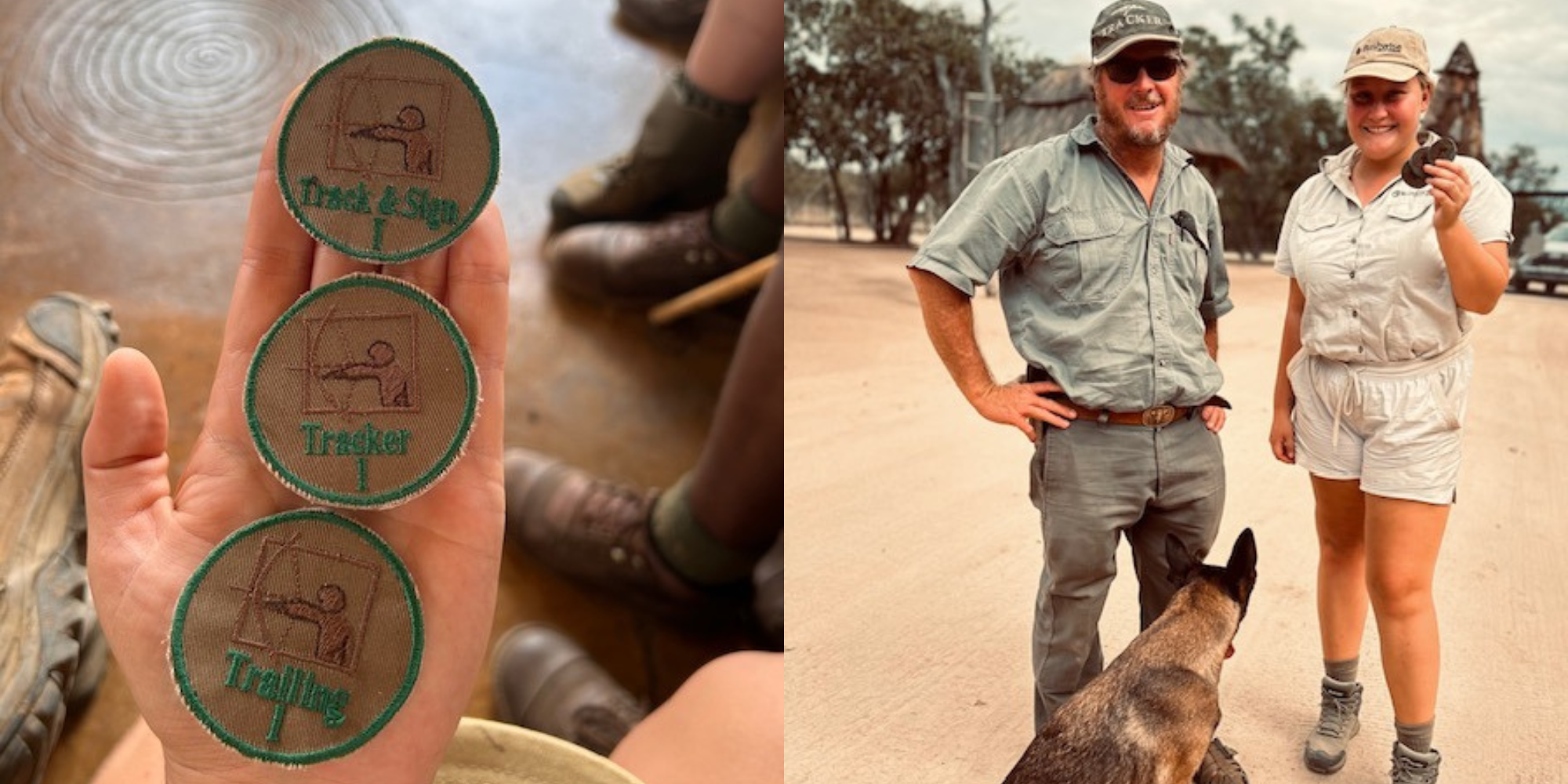
    This is it; it is your time to shine, girl. Colin said, “take it slow,” but after that adrenaline rush, I couldn’t even think straight. Suddenly, all those tracks became super clear, the dung was everywhere. Finally, we got to a river. I knew this time I did much better with this trail. As if I just knew where they were. So, Colin told me I did a good job, but they are on the other side of the river and we don’t have time to go there now. I was confident that I would’ve gotten them if we kept going, but everyone was too exhausted. It was a long and hot day. My confidence got boosted and I felt as if I could find anything. I was proud of myself. As I should be, because a few days later I got a tracker level one qualification.

    image

    Time will tell and even if everything doesn’t always work out the first time, do as Colin says – get back up and try again. Press your reset button and take things slow. Never doubt your first instinct. 

    Want to learn to track wildlife? Learn more about Bushwise courses, and apply now to begin your adventure in the bush!

  • Through the viewfinder: wildlife photography

    This blog was written by Skye Ludbrook, Bushwise student at our Mahlahla campus. Skye has a keen interest in photography and is currently completing the IFGA Safari Guide Course 6/12 Months.

    3 min read

    Looking through the viewfinder on your camera is an incredible ability. It replicates taking a split second out of a moment and viewing it from a completely different perspective.

    The power of a camera

    image

    Wildlife and nature itself are overwhelming things to experience. Seeing how all the branches of life work together to create a sensational whole and being able to feel that sensation through a picture is beautiful. When making use of the artistic medium, you open up many doors in terms of making your game drive the best possible experience.

    Photography is a particularly important part of my life. It allows me to express emotions and experience through a visual source. When I look through my viewfinder I find an open space where I can encourage my creative side. Creativity is a vital aspect that all people should have in their lives.

    Wildlife photography in particular, is an exceptional way of sharing information to people all over the world. As a guide one of our roles is to play a part in the conservation of the natural environment. I feel that photography is the best way to reach out about conservation.

    image

    Not only can you revisit that experience, but you also feel this sense of extreme focus. Taking photos of the environment around you allows you to feel abundantly engaged with what surrounds you and your experience. Over time those pictures will hopefully spark a focus on moments in your life that you never really focused on.

    As a guide it is important to try and know a little bit about all the aspects that come with the job. Having an understanding of photography is one of them as it will increase the quality of your drive for both you and most importantly your guests.

    Why photography is a useful guiding skill

    image

    By knowing how photography works, you can be both a guide to people starting out as wildlife photographers and most importantly to your guests who are trying to capture memories of their life changing experience.

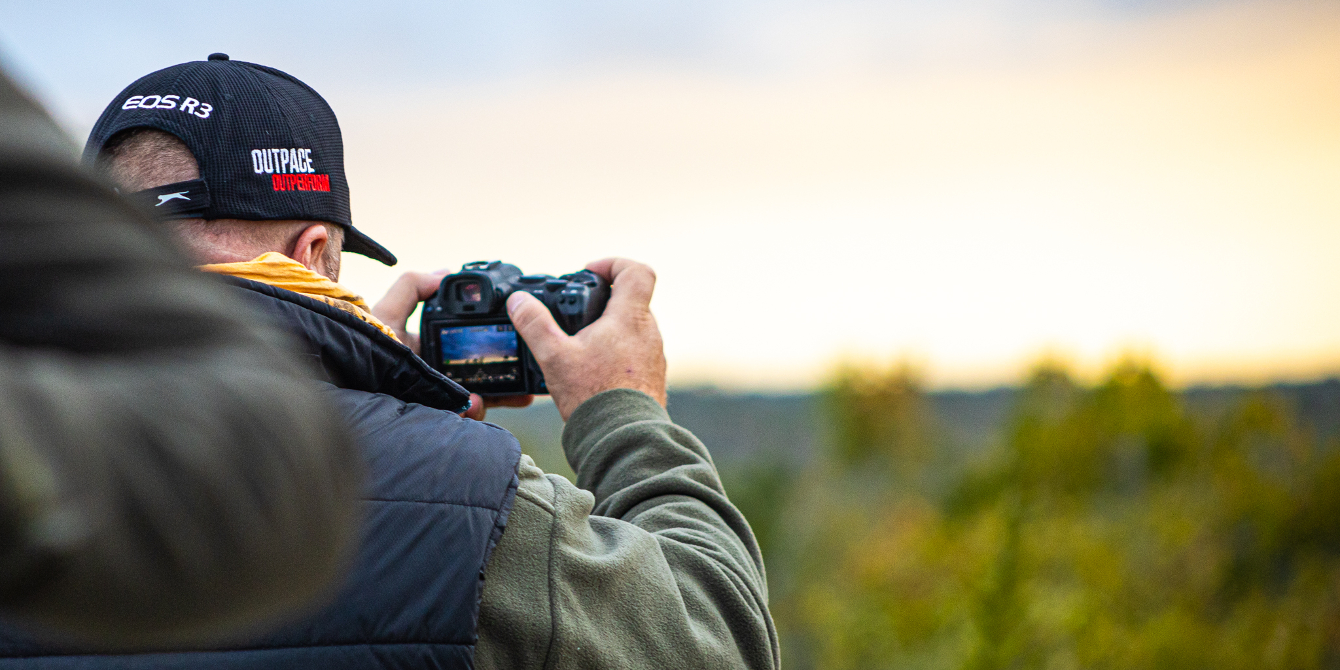
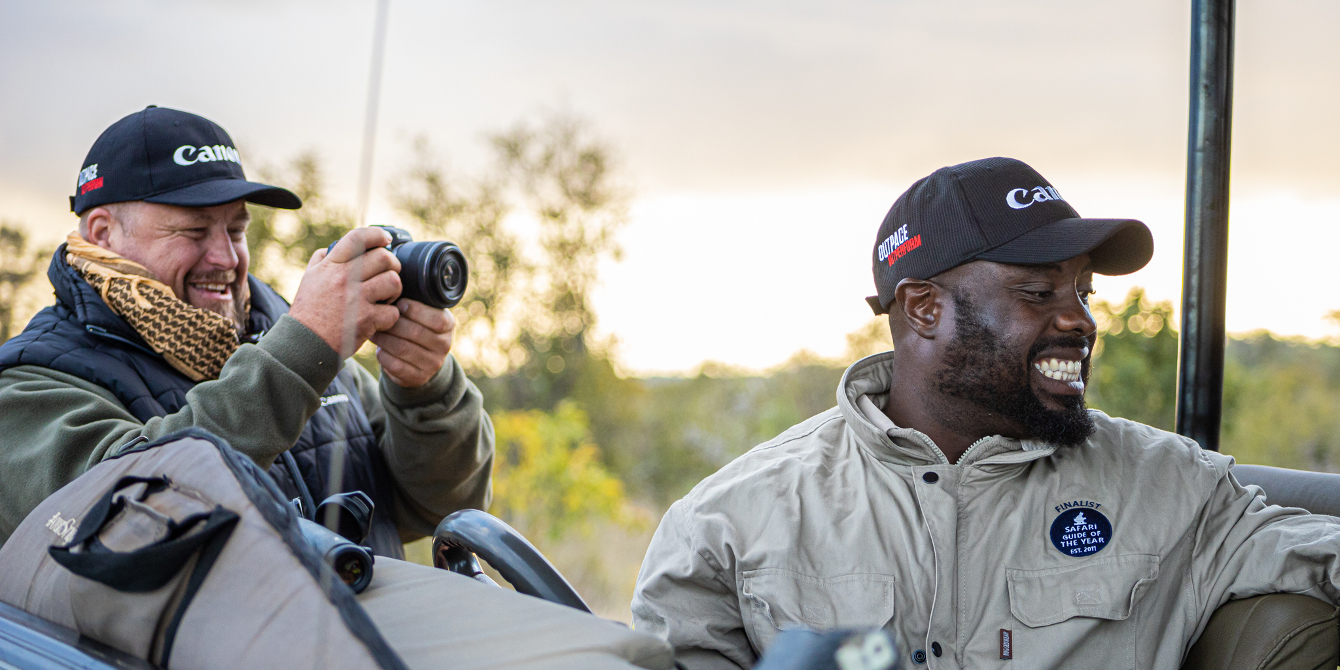
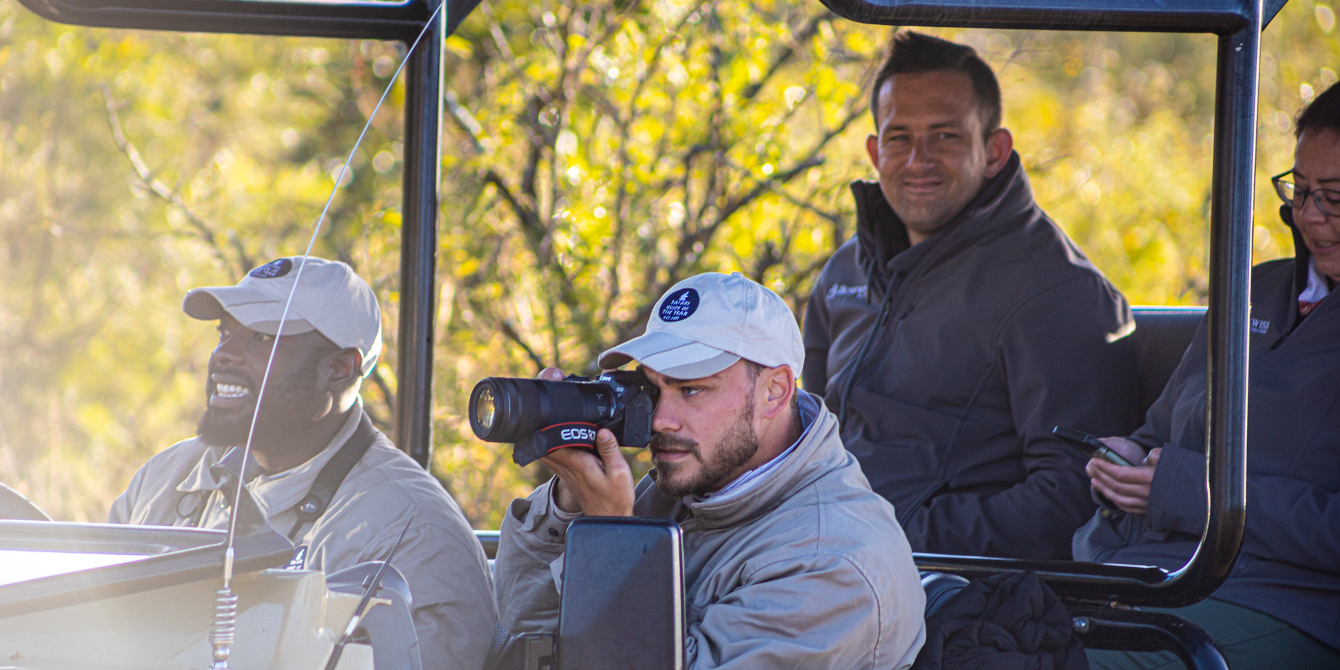
    You’ll be able to tell your guests what the best composition is for the image they want to take. You can guide them on the shutter speed (how fast or slow the shutter on your camera closes), the aperture they should set (the amount of focus the photo will show), and the ISO that should be used (this is dependent on the lighting you are in).

    Throughout your guiding career, you’ll learn and gain more experience. This time spent learning and growing your photographic skills will reflect positively on your photo outcomes and help you impart some of these skills to your guests.

    image

    By enriching their skills, you create an overall positive experience for them which they will carry with them for the rest of their lives. I look forward to seeing smiles on my future guests’ faces when they take an image they love.

    Capturing moments to last a lifetime

    image

    Wildlife photography can be as simple as sharing content you captured of amazing sightings or as important as sharing information about animals that are in danger and need saving. Our society absorbs information primarily through visual content. Using my abilities and passion for photography and the natural environment around me, motivates me to use it to my advantage.

    I love capturing moments and being able to share them with the inquisitive people that make up the world, and I hope you find your spark to make a difference through your viewfinder. If you need a little extra inspiration, consider applying for a Bushwise course and take your wildlife photography to the next level.

    Words by Skye Ludbrook, photos by Louise Pavid

    #lion #wildlife #gameranger #Birding #bushwise #fieldguide #safariguide #Exam #training #guidejobs #animals #apprenticefieldguide #safari #fieldguiding #gamedrive #guiding #fieldguidecourse #studying #fieldguides

  • I never thought I’d become a field guide

    Updated: Sep 10, 2025

    This blog was written by a current Bushwise student.

    3 min read

    My name is Queeneth Seepano, born and bred in Welverdiend, Mpumalanga. I am a person who is passionate about wildlife. But growing up I was an indoor person and I didn’t like being around nature, so I thought I would never want to be part of conservation.

    That all changed when I was selected in 2019 for the Bridging Course at the Southern African Wildlife College (SAWC), a partner of Bushwise Field Guides. It exposed me to a lot that I didn’t know about and it led to my interest in conservation.

    My first step into conservation

    image

    For a year, I was part of the RISE (Rural Initiatives for a Sustainable Environment) department at the SAWC. I worked as a coach in the ‘Coaching Conservation’ program, for kids in grades 5, 6 and 7 at a few primary schools.

    As a coach in this program, my eyes were opened and I saw how these communities, mostly the young kids, didn’t know much about the animals being protected or their importance in our daily lives. And I saw a reflection of myself when I was in school.

    It was a good feeling to educate these kids about conservation so they can grow up with a conservation-minded mentality. In that year, I was also exposed to guiding the kids around the Kempiana area. I fell in love with being out in the bush, especially the part where I was able to share my knowledge with these kids.

    Applying to join Bushwise

    image

    I then realised it was something I wanted to do for a living – sharing my knowledge with people, and helping them experience and enjoy nature.

    I didn’t have a qualification then, until I saw the scholarship posted at the college, wanting candidates to join Bushwise and the SAWC in their field guide training collaboration. At first, I was nervous to apply, but after my supervisor encouraged me, I did.

    I passed my interviews and started with the online learning course where only four of the six candidates would be chosen. I was lucky enough to be chosen by Bushwise. It was my happiest day ever when I received their email. Tears of joy were rolling down my cheeks.

    I joined Bushwise on 8 July 2022, where I am now completing my course as a field guide. Over the past three months, I have gained so much more knowledge.

    One of my best experiences so far

    image

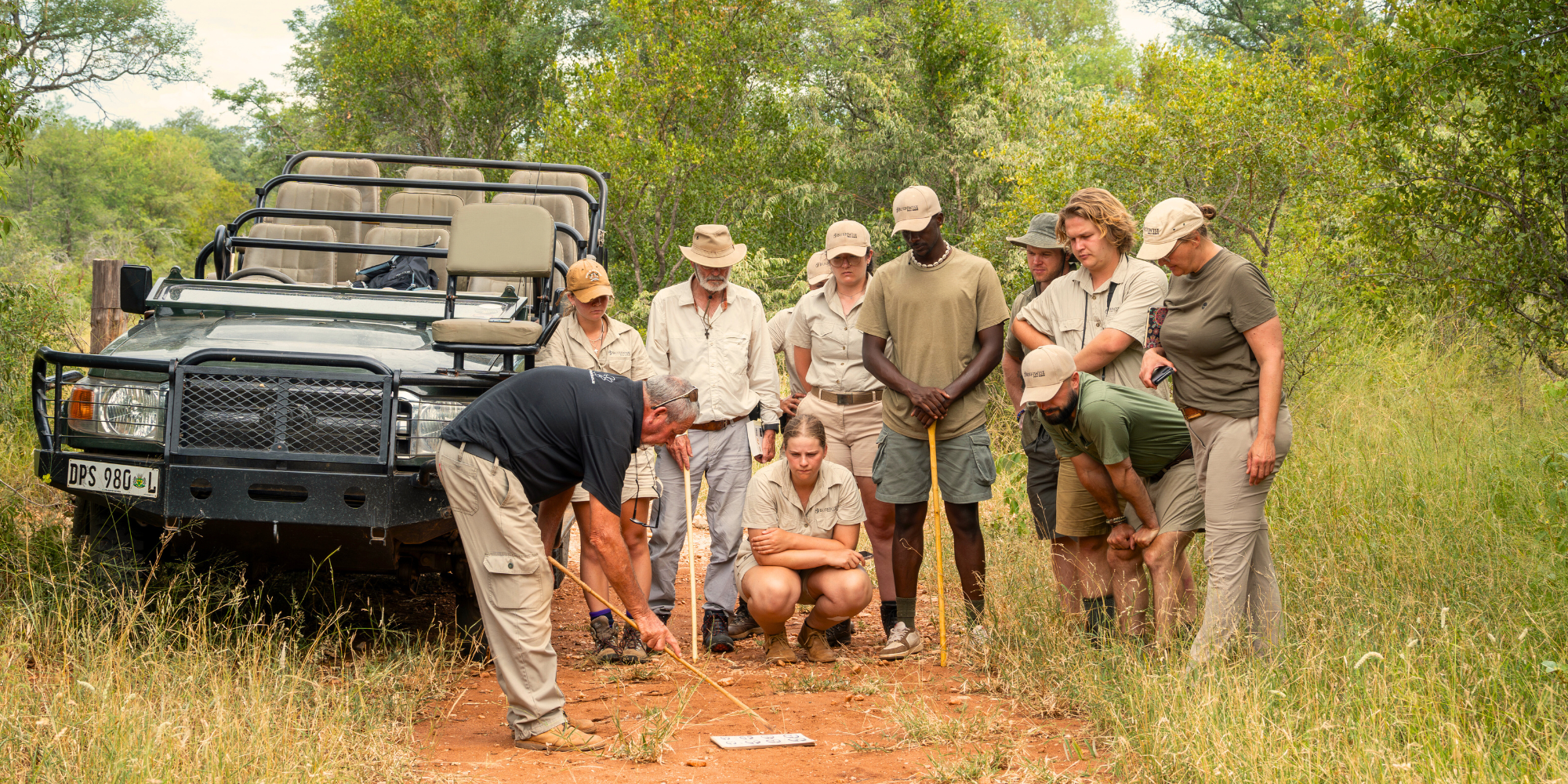
    A highlight of my time with Bushwise was the week in September when I was camp manager. It was a very busy week and quite tiring as we were learning about track and sign and trailing with Colin and Samantha Patrick. It was a very educational week for all of us. I was in group A who learnt track and sign with Samantha.

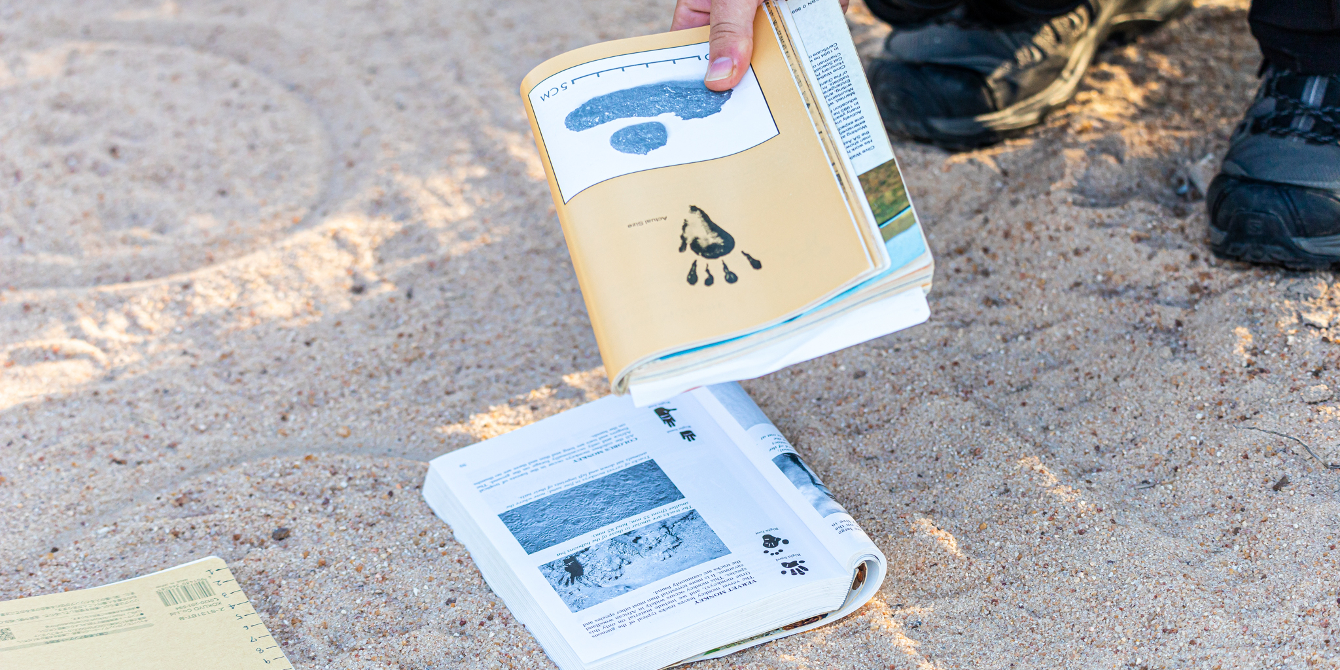
    Samantha made it easy for us to understand and see the differences between different tracks. I am still so amazed at how much we didn’t know about tracks. During that week, we thought we saw civet tracks, but they were actually jackal tracks. So Samantha showed us how we could differentiate between them.

    image

    Being out and examining tracks all week prepared us for our assessments. The little tracks like squirrels, mongooses, genets, you name them really drove us crazy. Even the impala, bushbuck, steenbok and duiker tracks twisted our brains into knots.

    But I am glad to say that at the end of this week, we all got our levels in track and sign. It was a very great week, I had fun. As camp manager I am very proud of my fellow students for making it through this week.

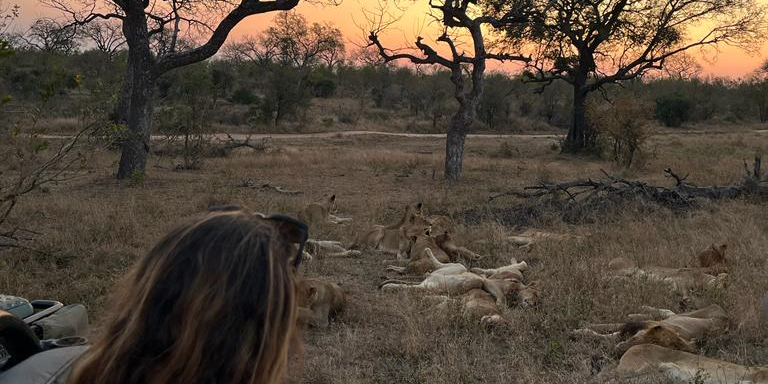
    It was a great week as we were able to see the pack of wild dogs, a herd of buffalo and pride of lions right outside the reception which is not far from the campus. It was a very amazing week all in all.

    What a journey it’s been

    image

    I must say Bushwise does push you to your limits to help you create a better version of yourself and prepare you for the real world. I am very happy with the efforts of everyone at Bushwise and all experiences I’ve been exposed to.

    Learn more about track and sign on our IFGA Safari Guide Course 6/12 Months.

    Words by Queeneth Seepano and photos by Louise Pavid and Queeneth.

    #AdvancedRifleHandling #bushwise #fieldguide #qualification #safariguide #Exam #training #animals #apprenticefieldguide #safari #fieldguidetrainer #fieldguiding #gamedrive #guiding #fieldguidecourse #studying #fieldguides

  • The Lowveld is lekker: living next to Kruger

    This blog was written by Menina Nightingale, a Bushwise student who’s currently studying at our Kempiana campus where we train future field guides in collaboration with the Southern African Wildlife College.

    3 min read

    Imagine being able to say that you live just outside of Kruger National Park. Our campus is on a reserve that’s part of the Greater Kruger National Park, so we can nip down to the Orpen Gate and go for game drives on the weekend. Just in case we don’t do enough of that during the week!

    image

    This also has its perks for planning adventures for our off weeks. Being right next to Kruger, I jumped at the opportunity to drive down to Sabi Sands with Jos, another Bushwise student. We were desperate to get some of the epic leopard sightings the area is so well known for. After four weeks of hard work studying for the final Bushwise exam, a week off to explore “the Sands” was much needed.

    Sure enough, the Sands met our expectations with leopard sightings that were out of this world! The whole of our first morning was spent in awe with a beautiful female, Kuchaba, rasping endlessly for her cub. The following days we were lucky enough to find her cub, a few other leopards, and even a male, Marieps. Nine leopard sightings and five different leopards all in one off week! Unreal. It’s fair to say that Sabi Sands definitely lived up to its expectations.

    image

    After the most relaxing week along the Sabi River near Kruger, it was time to get back to business, and start my week as camp manager – kicking it off with mock assessment drives at 6:00 on Monday morning. Everyone has been hard at work preparing for this week over the last few months and with mock assessments through the week and exam on Saturday,  the nerves were definitely noticeable.

    The mock assessment drives act as a practice run before our real drives next week. It was a quiet week for mammals, but – much to some peoples horror (or dread) – the birding was amazing.

    image

    Those that had morning drives had a great morning chorus to practise their bird call identification. We are also beginning to get all the migrants back – which is both very exciting and a bit daunting, as it adds to the birds we need to be able to identify. As it is the start of the mating season for some of the birds, we’re also beginning to see some flamboyant displays.

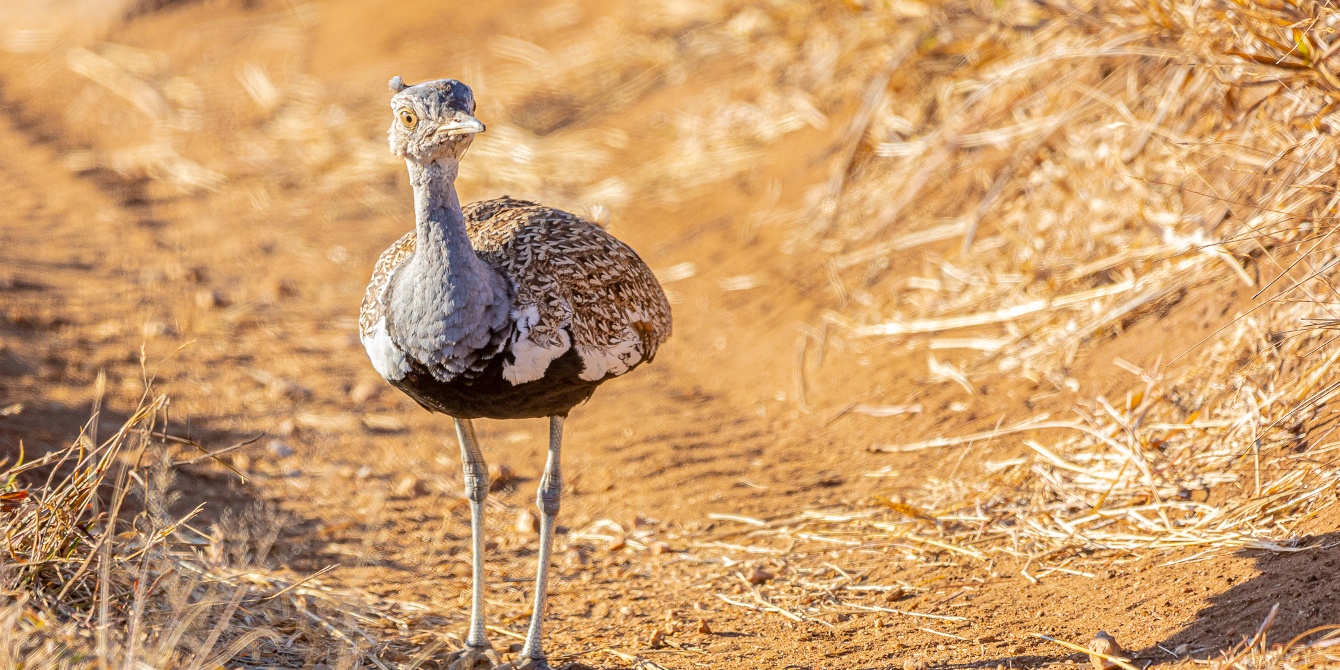
    An absolute highlight for me this week on a drive was getting to see the first red crested korhaan display dive of the season! As part of their mating ritual, the red crested korhaan displays both his brilliant red crest, from which his name is derived, but also an incredible aerial display.

    image

    This begins with a series of indicative clicks and high pitched vocal calls before he flies straight up into the air. Once up in the air, he stalls and locks his wings and falls to the ground. Right before he hits the ground, he flaps his wings to catch the fall. The bravest male, who will most likely find a mate, is the one who waits the longest to catch his fall.

    There was much excitement in the car for the rest of the drive back to camp. In between drives, we spent most of our time studying to get ready for the theory exam. A lot of flash cards were made and several late night study groups were had. After all the hard work, it was worth it to get through the exam, crack open a few beers, have a braai and watch rugby.

    image

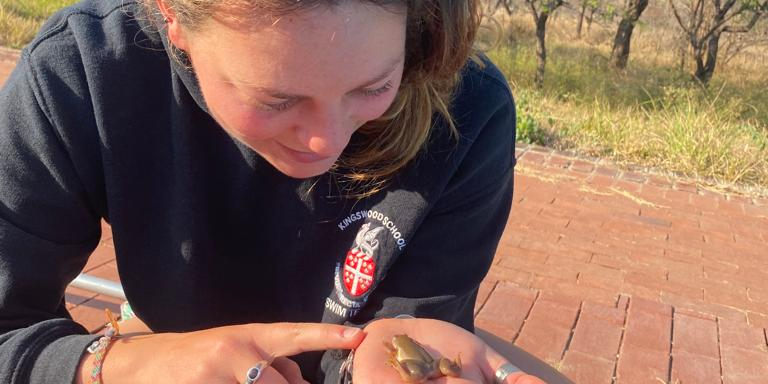
    The weekend ended with two reptile surprises and an amphibian rescue. A common platana was having a morning swim in the pool. With much hilarity, we executed a relocation mission back to the pond.

    A day later an alarming big spotted bush snake found its way into my and Daisy’s room. Keen to keep our distance, Ricardo, Trevor, Daisy and I tried to calmly talk it out of the room, but it ended up on my bed instead . Thankfully, he did eventually make his way off the bed and out of the room.

    In the very same afternoon a rock monitor lizard unexpectedly joined the lunch queue. Now that winter is coming to an end, we’re clearly getting all the reptiles back! What a week! The Lowveld really is lekker.

    Imagine a week where you see leopards, rare birds, reptiles and more. This could be you – and soon – if you apply for a course with Bushwise.

    Words and photos by Menina Nightingale (red-crested korhaan image by Louise Pavid)

    #wildlife #Birding #bushwise #fieldguide #qualification #safariguide #Exam #training #guidejobs #animals #safari #sightings #fieldguiding #tracking #endangeredspecies #Assessments #gamedrive #guiding #fieldguidecourse #studying #fieldguides