Tag: #fieldguide

  • Crunchtime to the Bushwise exam

    Updated: Sep 10, 2025

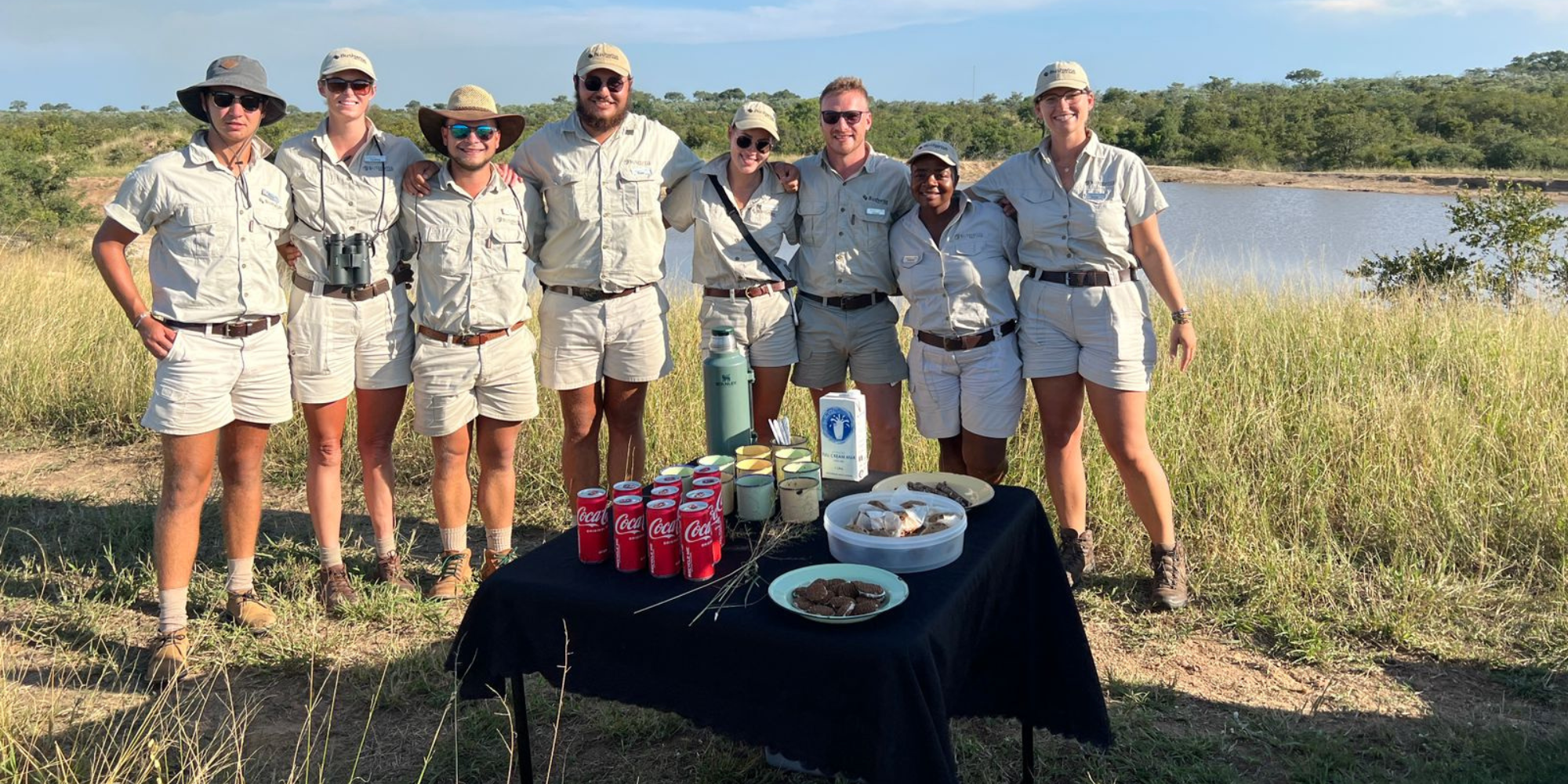
    It’s halftime on the Bushwise Professional Field Guide course, which can only mean one thing: Bushwise exams. In this blog, student Tyler Dan Delhougne describes the stress of studying in the bush, and the camaraderie that comes with it.

    2 min read

    Time management isn’t something that comes naturally for most, it’s a learned skill that takes years to develop. A skill that pays off best when utilised daily. My time as camp manager was certainly a test of these skills.

    A week under pressure
    image

    In a single week our class endured the heat of practical observations, “the battle of our senses” from tests on slides and sounds, the pressure of our second Bushwise exam, the fine tuning of blogs, and perhaps the hardest of all, the daunting task of maintaining a clean kitchen. Let me explain…

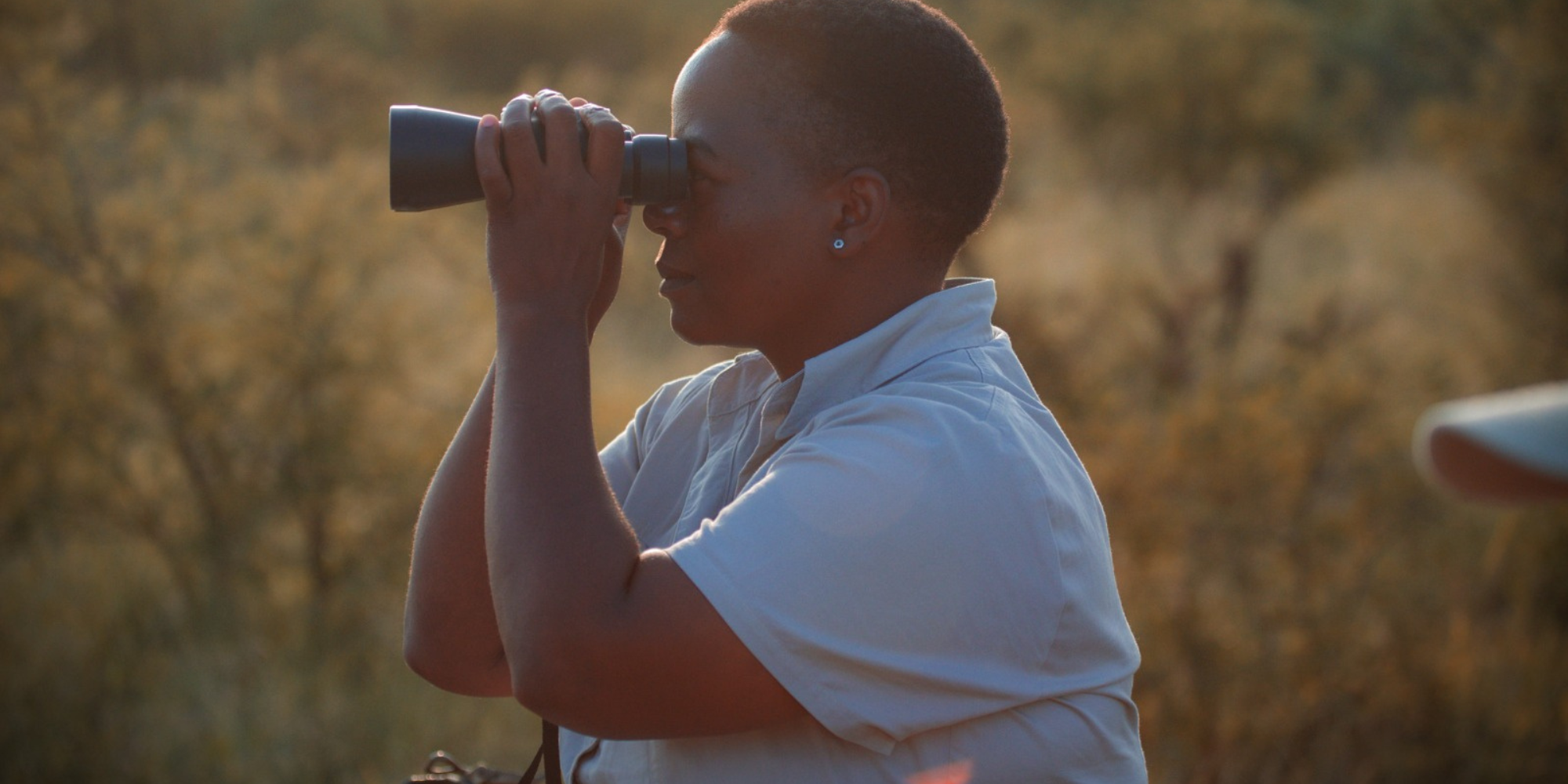
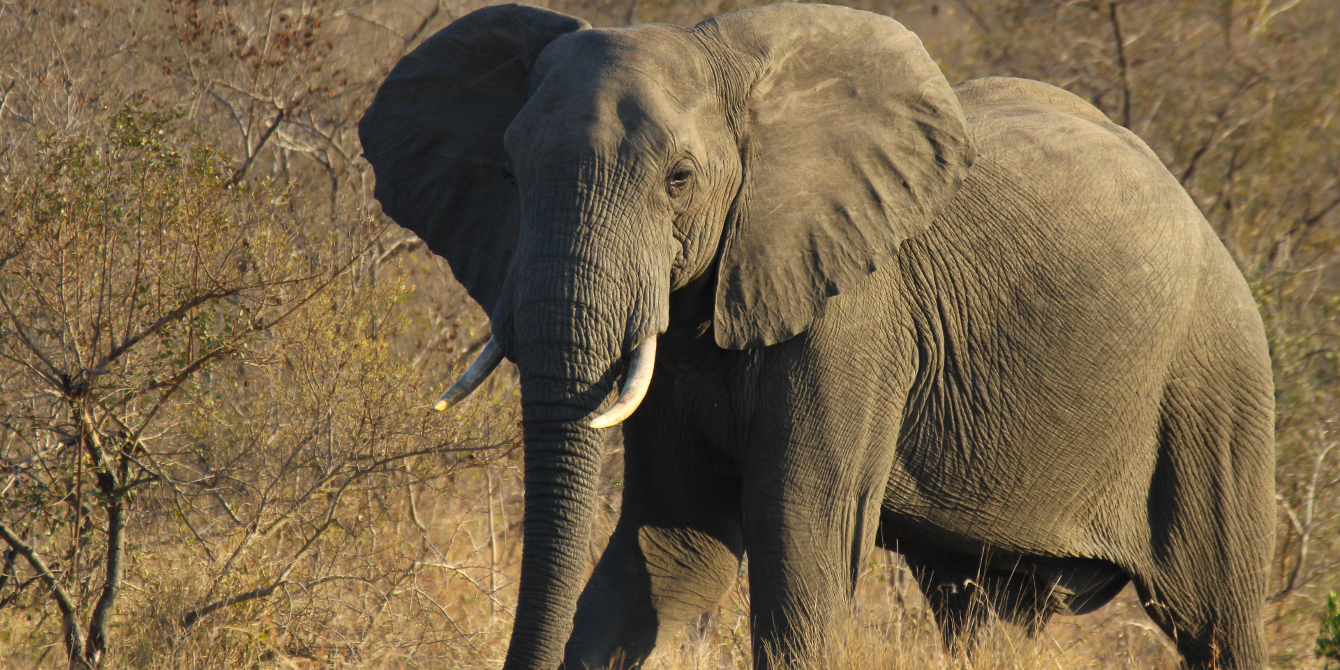
    Over the week we started our mornings by engaging in practical observations. In this exercise, the trainers walk into the African bush and place numbered cones at anything from a specific tree to the dung of a zebra. Then two by two we walk in their footsteps with pen and paper at hand to test both our knowledge of the bush and how we recognise things that are often overlooked.

    These practical observation sessions helped to prepare us for the test that awaited us later that week.

    Testing the ears and eyes
    image

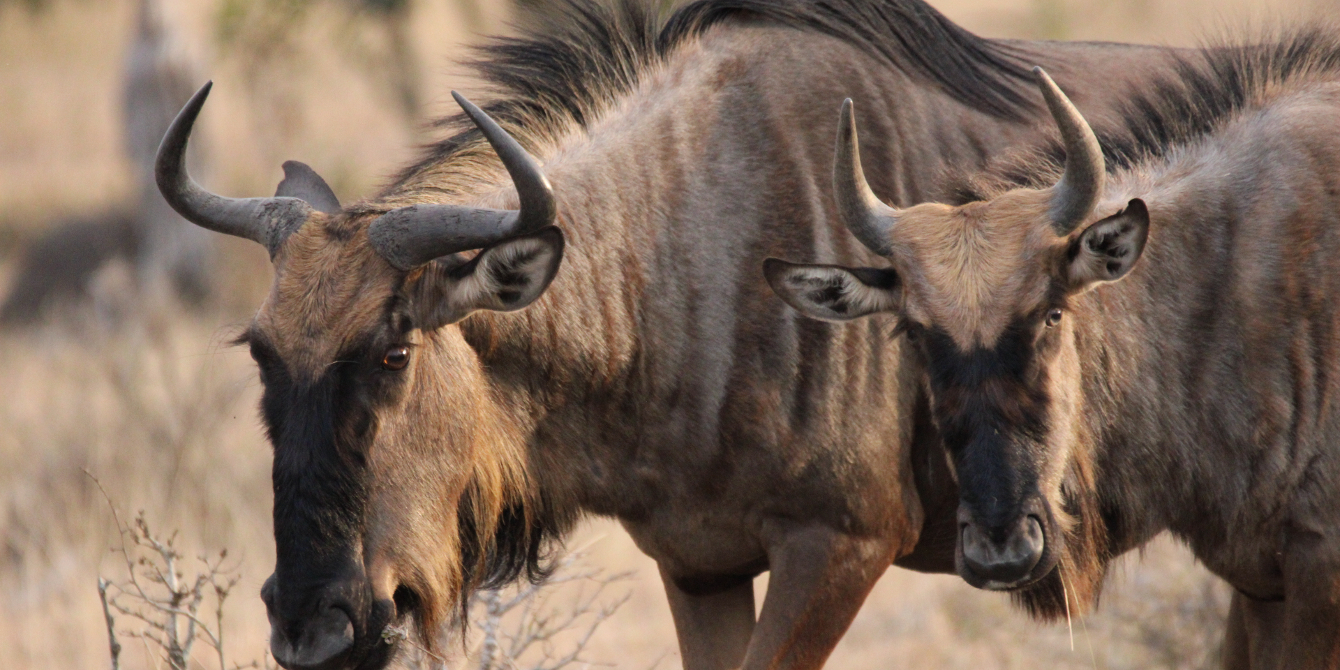
    After testing our sight and touch in the natural world, we all headed to the classroom to study slides and sounds. The croak of toads, the grunted “gnu” of a wildebeest, the colour of a boomslang and the features of a violin spider are all things we need to know for our big test at the end of the week, which will determine how well we see and hear the many different creatures that surround us in the savanna.

    We spent the week pushing ourselves to use our sense of touch, sound and sight for the test, while we also had the looming presence of our second Bushwise exam, which brought on a bit of fear and pressure in us all. This exam covered the second half of all our modules from amphibians, reptiles, mammals, birds, conservation management, ethology and even human habitation.

    Bonding over shared Bushwise exam stress
    image

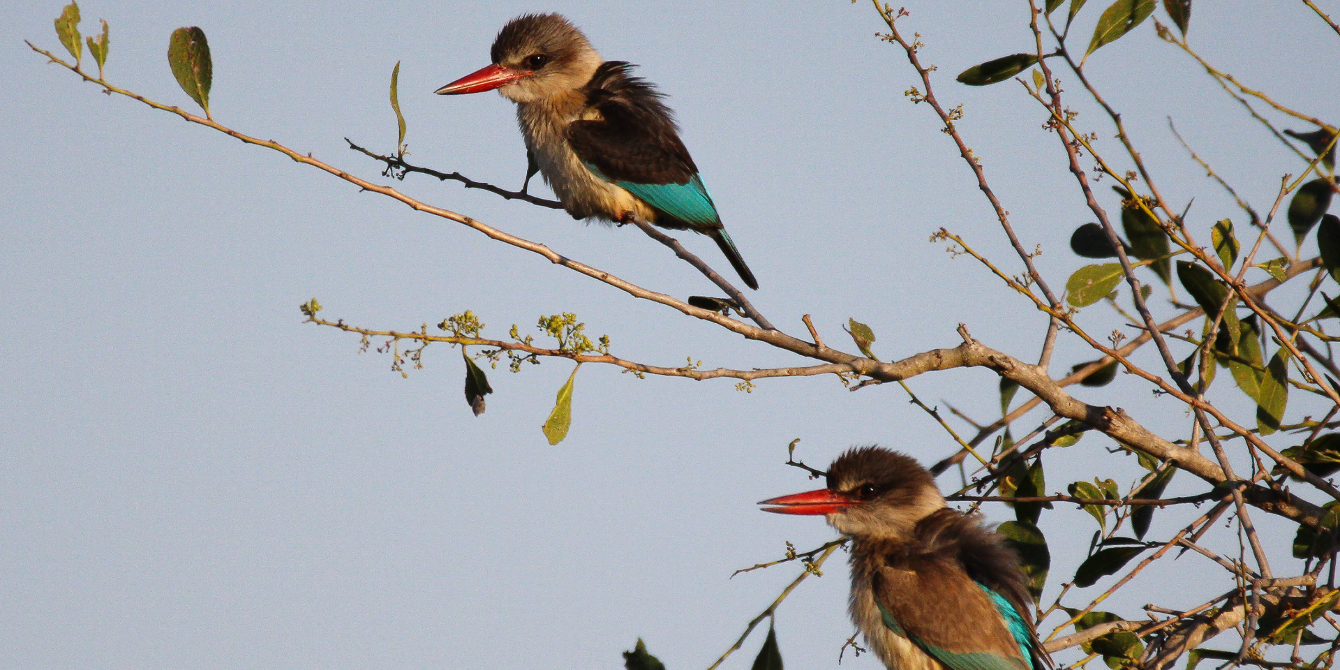
    Stressful would be an understatement for the week we faced, but it’s during times of great stress that we band together the best. As the week progressed, every one of us grouped together and hit the books hard. All helping each other conquer “the battle of the senses” as we called it. 

    For hours on end, all that could be heard from the tents was the calls of frogs and mammals and the flipping of flash cards. Small groups of students would also band together to walk around campus to better understand and identify the flora surrounding the camp. 

    It’s this bond we all shared together and the passion for the natural world that kept us going to survive this week. Not only had we survived, we came out victorious. 

    Like the phoenix, we arose victorious
    image

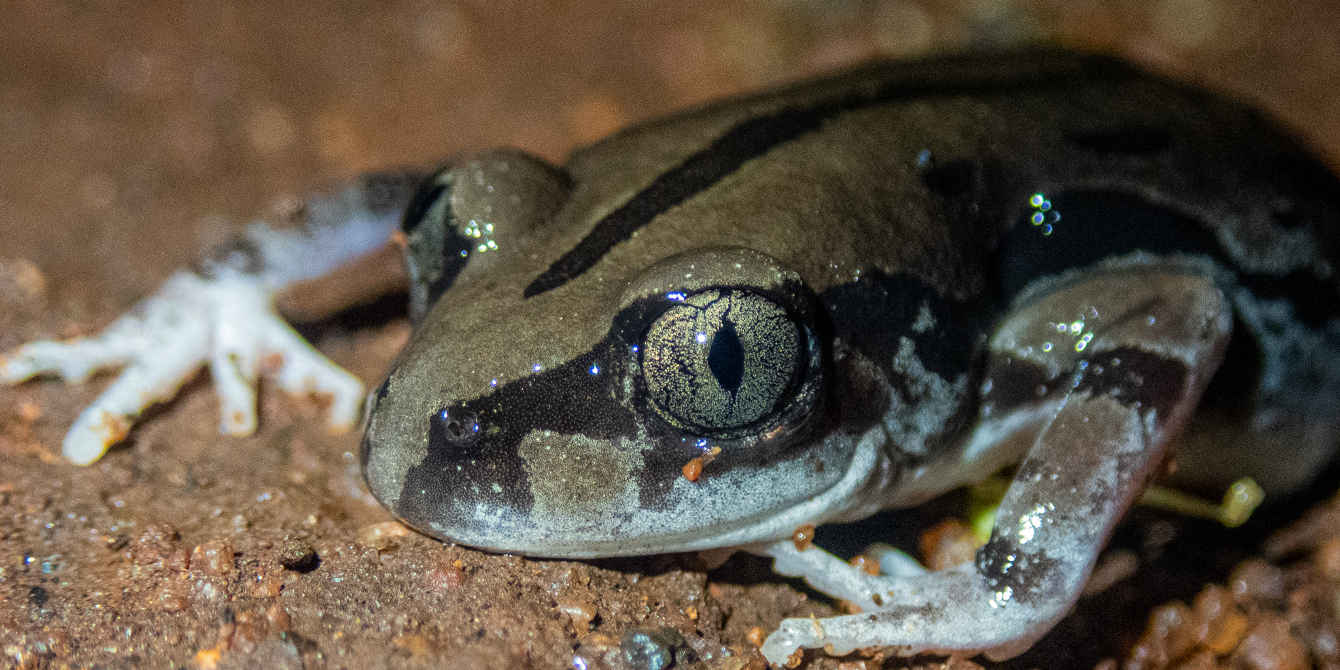
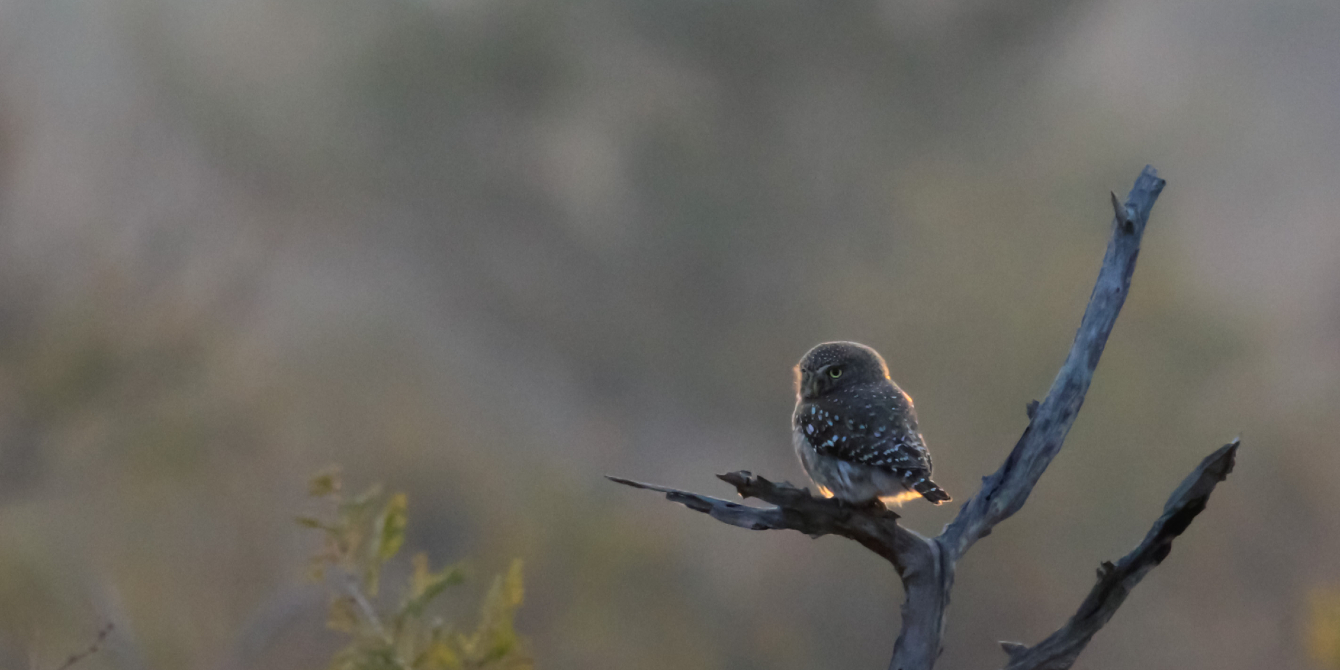
    Students who had originally been struggling with practical observation had amongst the highest scores in the class. Some who couldn’t tell between a banded rubber frog and a Bubbling Kassinas are now teaching others how to see the differences. We sat in each other’s rooms for hours coming up with entertaining and even silly ways of remembering different calls of frogs, toads and mammals.

    Though the week was hard and our plates full, we all emerged levels ahead of where we all once stood. Nothing is more satisfying than being able to sit outside day or night and identify every single creature that we are hearing around us. Just giving us another level of insight into the bush that we all know and love.

    All we had left to do now was learn how to clean our own dishes, but that’s a battle for another day.

    Imagine passing your big Bushwise exam, and realising you’re one step closer to your dream of becoming an African safari guide? It could be you. Apply today.

    Words and photos by Tyler Dan Delhougne

    #wildlife #Birding #bushwise #fieldguide #qualification #safariguide #Exam #training #guidejobs #animals #apprenticefieldguide #safari #sightings #fieldguiding #tracking #endangeredspecies #gamedrive #guiding #fieldguidecourse #fieldguides
  • Africa’s frogs: sightings from a lowveld campus

    About 115 species of frogs and toads can be found in South Africa. Naturally it’s quite difficult to find them all, but in this blog Bushwise student Kyla Jordan shares what she’s learned about Lowveld frogs.

    4 min read

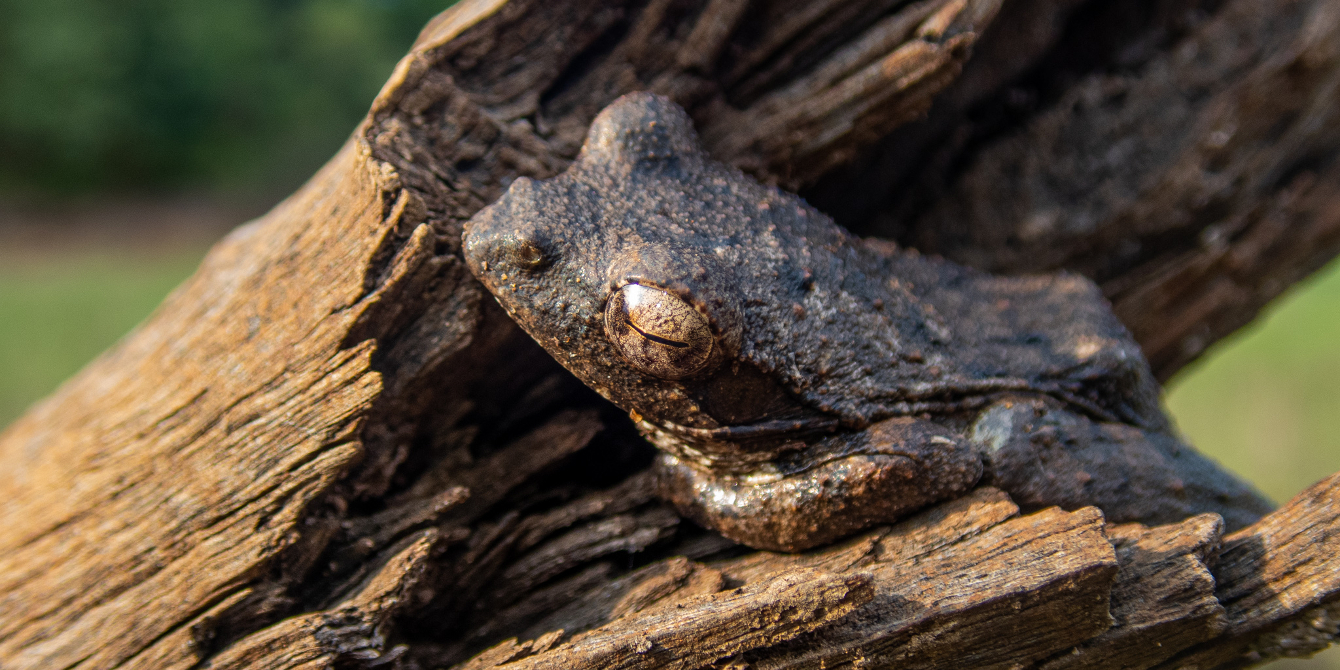
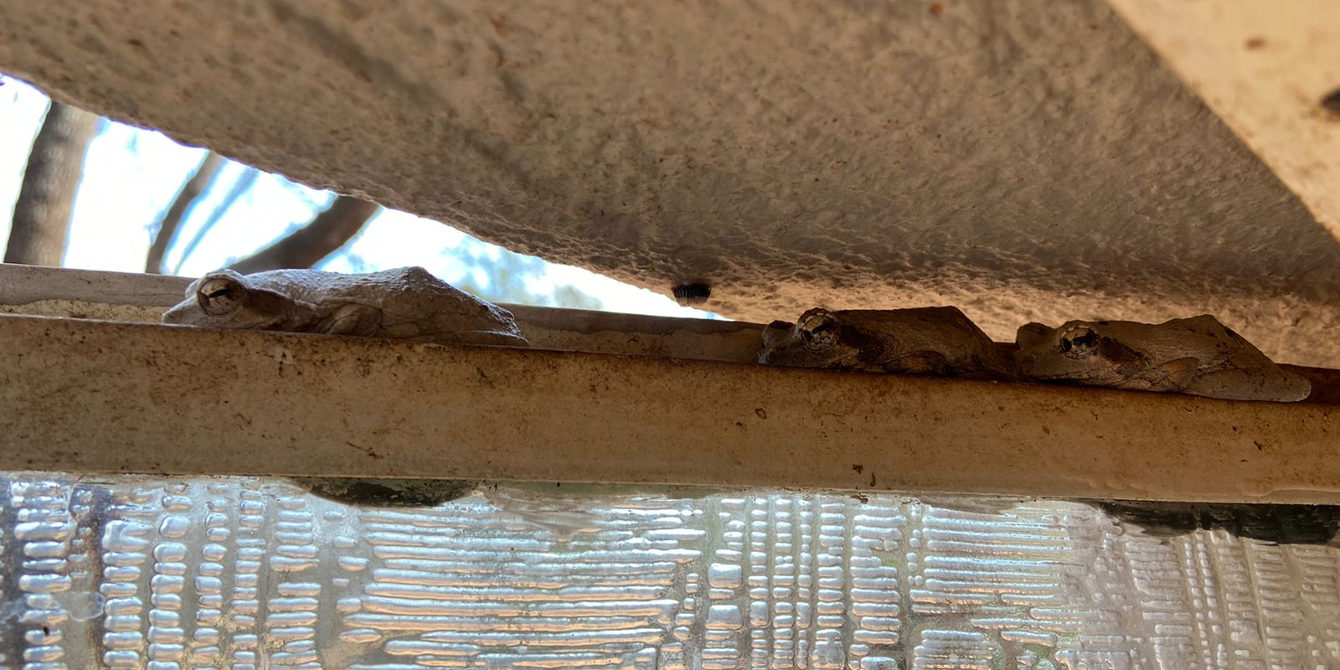
    We have seen many different species of frogs around our campus. We have a resident frog that we see every day in our rooms, bathrooms and the classroom. Our most commonly seen resident frog is called the foam-nest tree frog. We have three locals in our ladies bathroom which have been sleeping in the window from the start of our course!

    image

    Image by Kyla Jordan

    Like many frogs, foam-nest tree frogs have adapted to survive without water during the dry season (which in the Lowveld is winter). Like all amphibians, oxygen can pass through the frog’s highly permeable skin. This helps keep the frogs moist at all times. In order to survive during the dry season, frogs will enter into aestivation – a state of metabolic dormancy – which makes its skin resistant to evaporation.

    I particularly like that some foam-nest tree frogs are a stone white colour which means they’re able to camouflage with the toilet seat – giving you a nice big fright if you don’t spot them early enough. The three in our bathroom sleep all huddled up together and always look like they’re smiling, which is the cutest thing ever.

    Our resident frogs

    image

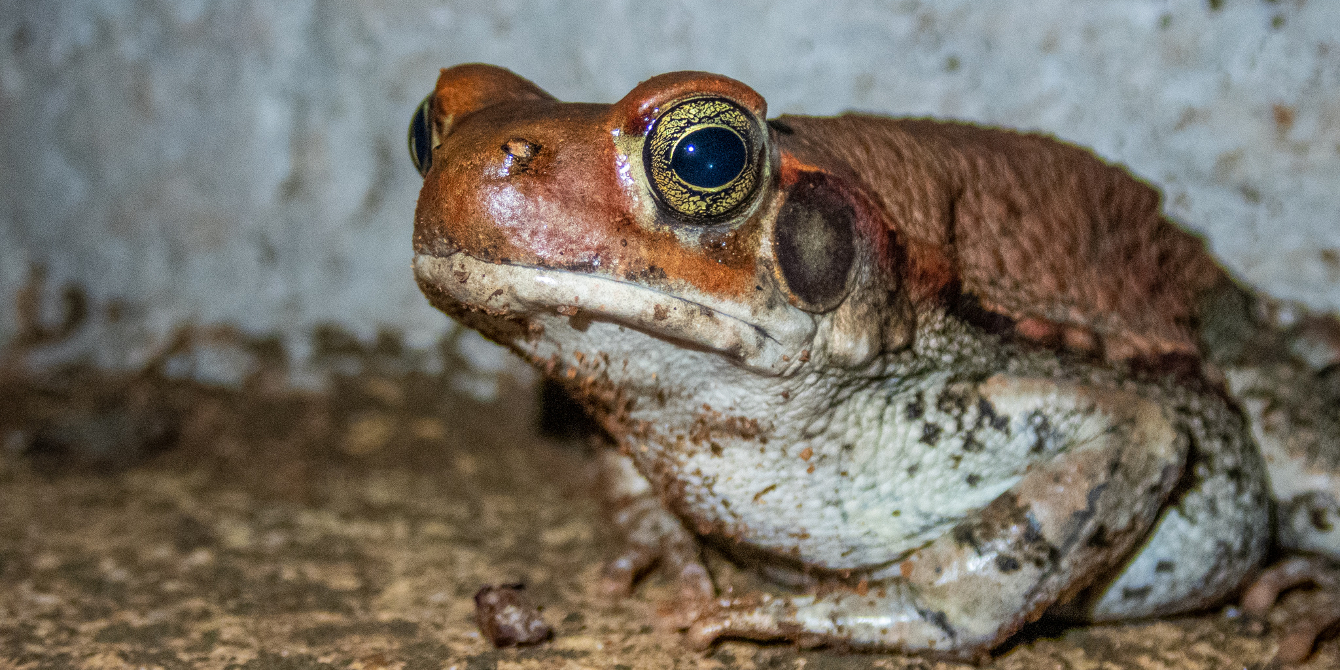
    My friend Shannon and I spotted a red toad one evening along our pathway to our room. Their call sounds almost similar to the giant bullfrog. This is not a frog but a toad. Frogs and toads are two completely different things. Frogs have long legs that are longer than their heads and body, which are made for hopping. 

    Toads have much shorter legs and prefer to crawl rather than hop. One easy way to tell them apart is to look at their skin – frogs have smooth, slimy skin where toads have dry, warty skin.

    What can frogs tell us about an ecosystem?

    image

    Frogs are considered to be an “indicator” species because they are the first to be affected by degradation of the environment. Their decreasing numbers may be a warning to us that conditions of the Earth are changing. Frogs also play an important part in the food chain as both predator and prey. Frogs control the insect population, which controls diseases such as malaria. They are also a very good food source for other animals. 

    Another cool thing about frogs is that some frogs use aposematic coloration (aka warning colours) to alert predators that they are foul tasting or poisonous. This protects them against predators. 

    What sounds do frogs make?

    image

    Frogs also have a variety of different calls. They have release calls, aggressive calls, satellite behaviour calls, time sharing calls and distress calls. 

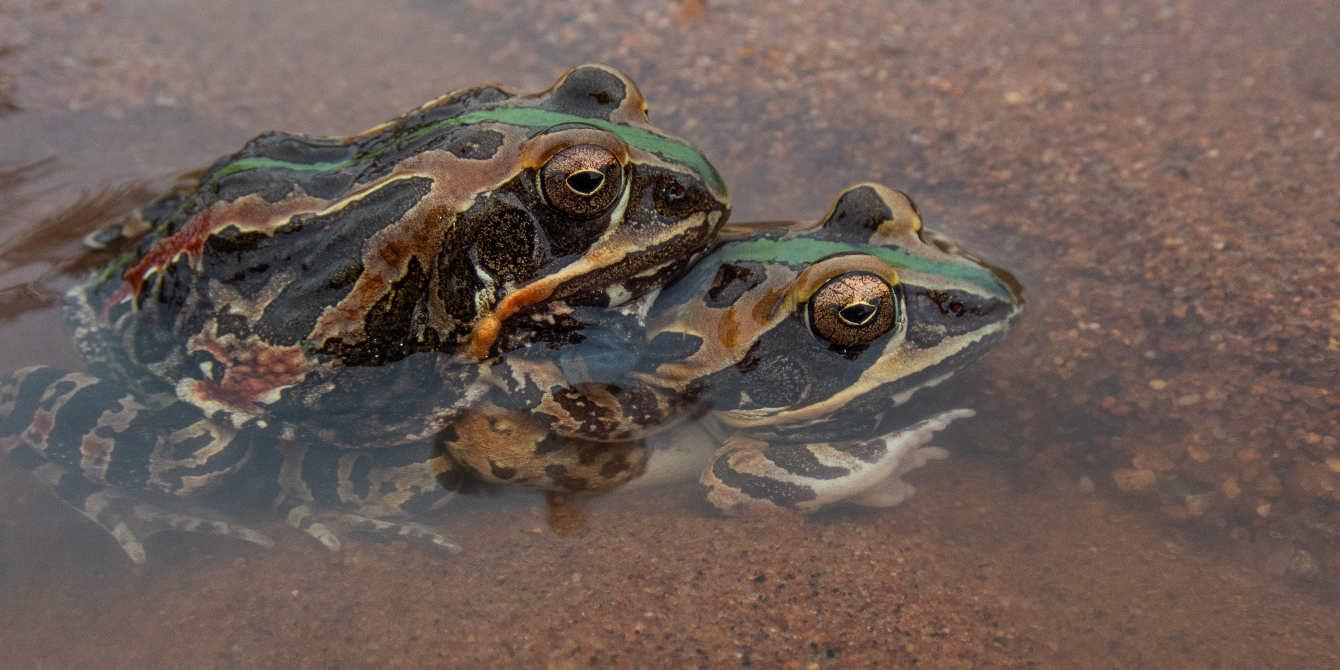
    Frogs give a release call when the male accidently clasps the wrong species or a female will use this call if she is not ready to mate. Aggressive calls are used in combat fighting. 

    Another interesting sound is used in satellite behaviour. Satellite behaviour is when a sexually matured male calls for a mate but a silent male sits nearby. The female approaches the calling male but the silent male intercepts and clasps her. 

    image

    If you hear frogs call in a song-like rhythm, this is the males calling and it’s a behaviour known as time-sharing. This allows them to actively spread out so that females can listen to the different calling males and know where to go. So the next time you hear frogs calling you know there is a reason for each different call.

    The frogs I’m looking forward to seeing

    We have not yet seen many frogs because of the dry season. But there are tons of species to be found here in the Lowveld. We can expect to see these species here around campus:

    1. Banded rubber frog
    2. African bullfrog
    3. Giant bullfrog
    4. Painted reed frog
    5. Bushveld rain frog
    6. Common river frog
    7. Broad banded tree frog
    8. Bubbling Kassina
    9. Plain river frog
    10. Mottled shovel nosed frog
    11. Brown backed tree frog

    All these species are likely to start showing up in the rainy season, which would be in summer, and that is just around the corner!

    Frogs play an important role in the ecosystem and they are such interesting animals to study. Are you interested in frogs like Kyla? Apply to join a Bushwise course and soon you could be learning about animals in their natural habitat!

    Words by Kyla Jordan, photos by Callum Evans unless captioned otherwise.

    #wildlife #bushwise #fieldguide #Exam #training #animals #tracks #tracking #endangeredspecies #fieldguidecourse #studying

  • My Bushwise journey: A dream come true

    This blog was written by Tsakani Precious Maluleke, a Bushwise Professional Field Guide student. Each student takes a turn as camp manager, and writing a blog is part of the experience.

    2 min read

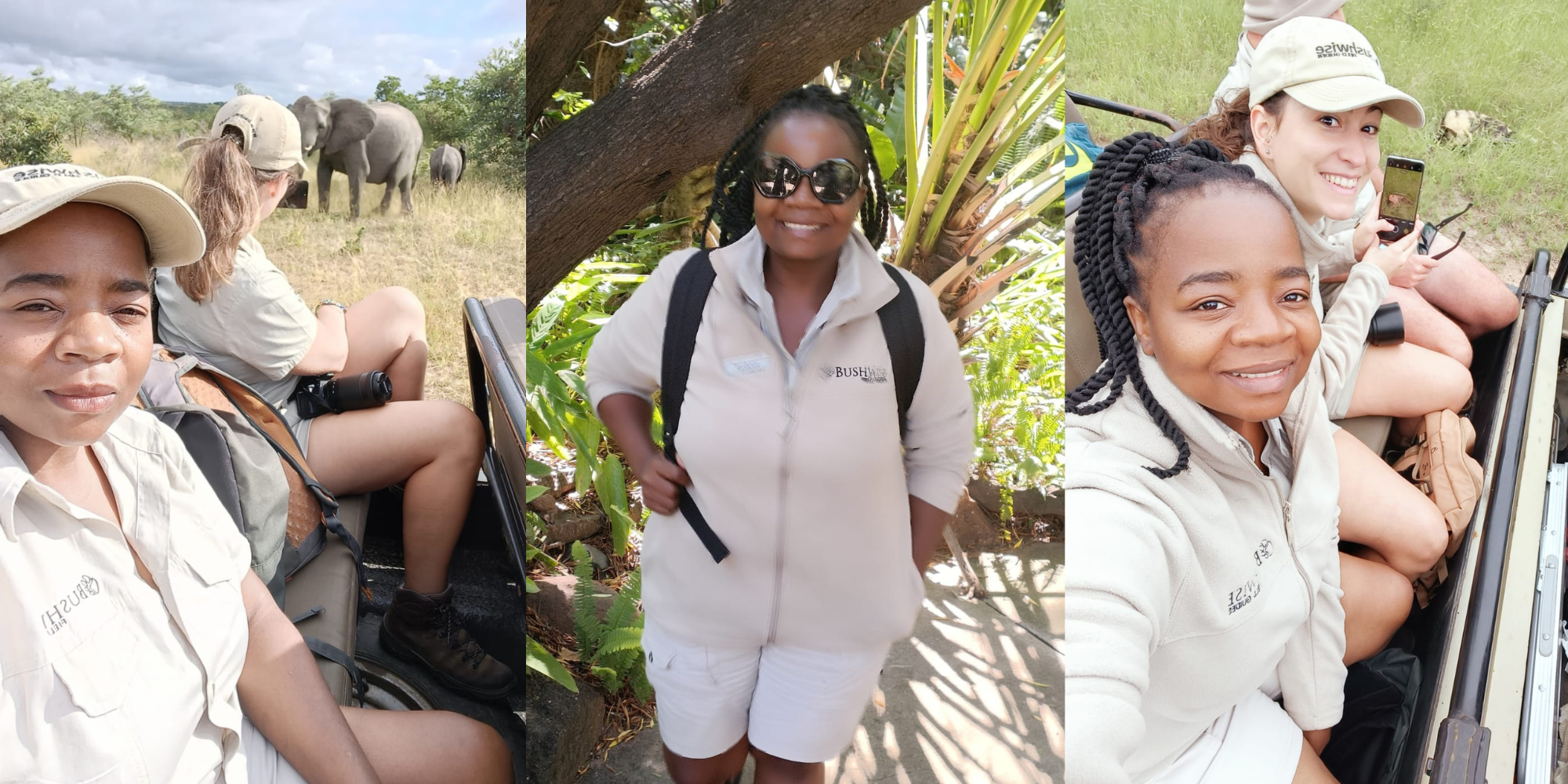
    Greetings everyone! My name is Tsakani Maluleke from Makuleke Village, and I want to share a very exciting chapter of my life with you. Over the past five months, I have experienced a journey that has not only broadened my knowledge but also deeply touched my heart.

    I have always loved nature and that is what led me to study Conservation Management, but I never thought I could find myself in field guiding. Last year in April I got a job as a housekeeper at The OutPost Lodge in the Kruger. It was during this time that I suddenly had this burning desire of wanting to be a nature guide.

    image

    On the 24th of August 2023, I went searching online for field guiding courses and I came across Bushwise. I enquired that day about their Field Guiding Online course for the April to June class and while still thinking about how I’m going to pay for this course a friend of mine sent me a document. It was a Bursary application form from Southern African Wildlife College (SAWC).

    I applied immediately and, to cut that story short, I ended up at the SAWC as a Bushwise student. This was a dream come true for me. The opportunity to learn and grow in this field was now the only thing I wanted. The SAWC, together with one of its UK-based supporters, Metamorphosis Foundation, and Bushwise, made it a reality.

    The course was intense and I learned so much in a very short space of time. From understanding the intricate ecosystems of our beautiful landscapes to mastering the skills needed to guide and educate others, every moment was filled with valuable lessons. The training not only expanded my knowledge but also honed my practical skills, preparing me for a future in guiding.

    image

    Beyond the studies, the people I met during this journey were truly remarkable. My fellow students, my trainers, the whole Bushwise team and the SAWC were all incredibly supportive and inspiring. We shared many unforgettable moments, from early morning game drives to late-night study sessions. These individuals have become like family to me, and I will treasure each moment we spent together for the rest of my life.

    Reflecting on these past months, I am filled with gratitude and joy. The experience has been nothing short of amazing, and it has strengthened my resolve to pursue a career in guiding and conservation. I am excited about the future and look forward to applying everything I have learned to make a positive impact.

    image

    Thank you to every organisation or every person who made this dream a reality, and for providing me with such an enriching and unforgettable experience. Here’s to many more adventures and to the continuous journey of learning and growing in the world of nature and wildlife!

    Ready to turn your passion for nature into a career? Learn more about Bushwise in-person and online courses and apply now to start your journey as a field guide!