Author: Bushwise Student

  • Elusive species of the Lowveld Part 1: Aardvark, pangolin and porcupine

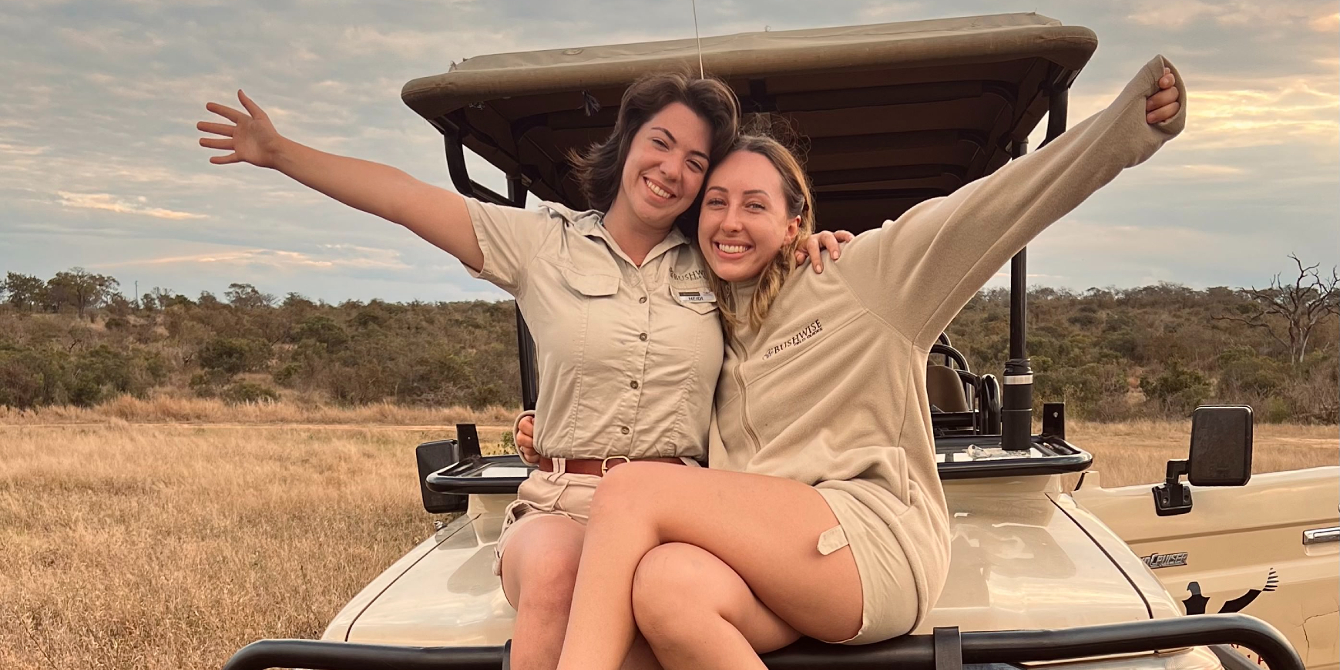
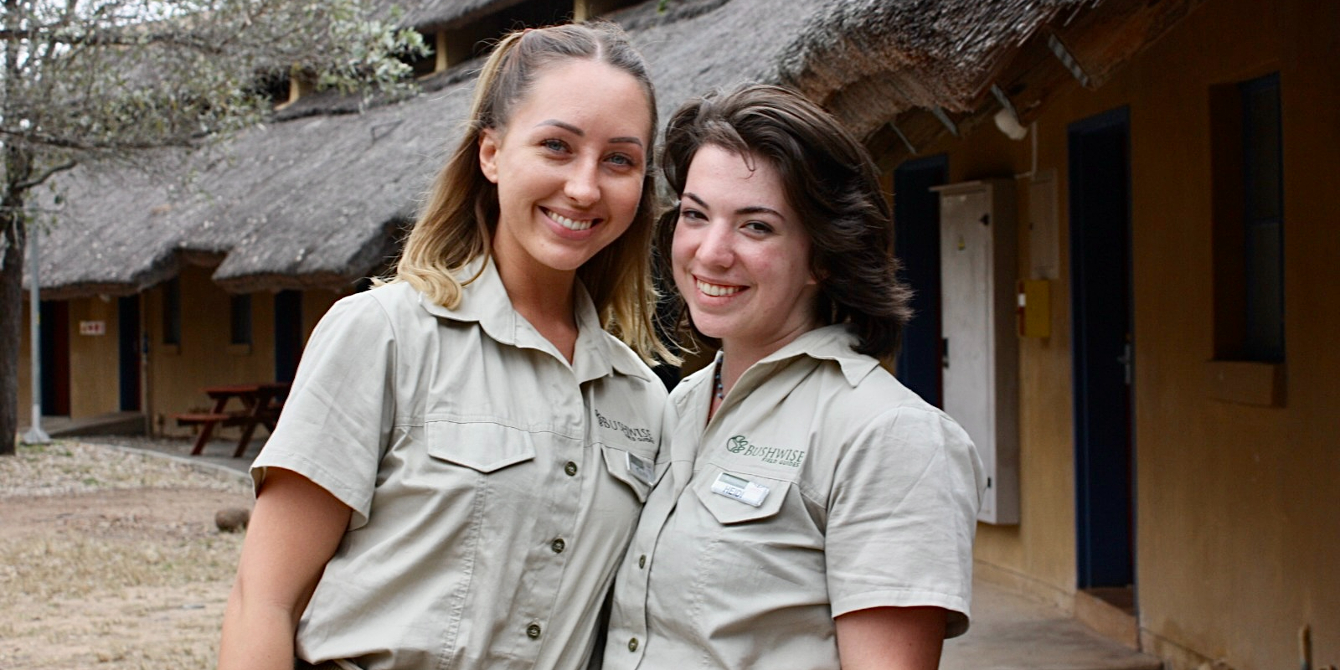
    This is the first blog in a series of two about elusive species of the Lowveld (read the second one here). It was written by Bushwise students, Menina Nightingale and Jocene de Kock as part of a special research project during their Professional Safari Guide course. All information contained in this blog is from Menina and Jocene’s research.

    3 min read

    The Lowveld is full of elusive species that you might be lucky to find if you pay a visit to areas such as the Kruger National Park, neighbouring private reserves, and northern reaches of KwaZulu-Natal, South Africa. Some of the least common, yet most special animals that you might find in the Lowveld are aardvark, pangolins and porcupines. Let’s learn more about these elusive and intriguing species!

    Aardvark 
    image

    One of the weirdest animals you’ll come across in the bushveld – if you’re really lucky – is the aardvark. These strange looking animals are notoriously hard to spot, normally only coming out of their burrows well into the night to feed on mostly ants and termites. The best chance to see one is either on a night drive or during winter in the Lowveld (June/July) as they tend to come out a bit earlier due to the cooler temperatures. An aardvark will by no means win a beauty contest, but there’s something about their odd appearance that definitely attracts people. Their habits are also very similar to those of pangolins and yet they are entirely unrelated and far funnier looking.

    Pangolins 
    image

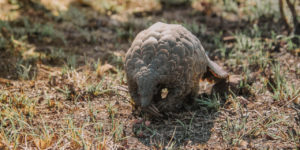
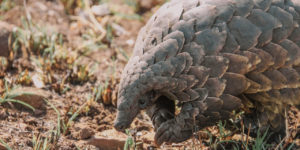
    Pangolins are one of the most elusive species that you might come across in a visit to the Lowveld. A sighting of one of these almost dinosaur-like creatures is truly a once in a lifetime encounter. Their elusivity is largely due to the fact that they sleep in underground burrows for up to 20 hours of the day and when they do appear from their underground homes to feed on ants and termites, it is predominantly at night. Pangolins are also highly endangered and very low in number so to see a truly wild pangolin involves a lot of time, patience and luck. 

    The majority of the pangolins that you might see on a visit to the Lowveld are normally involved in some sort of soft release program where you can make a (often sizable) donation to walk with one of these strange little creatures whilst they feed. The reason for these programs is largely due to poaching as pangolins are heavily trafficked for their scales and meat. Their rarity and elusiveness makes them a truly special and unique animal to see and if you do manage to find one it is definitely going to be a once in a lifetime experience! So take time to  savour the moment! 

    Porcupines
    image

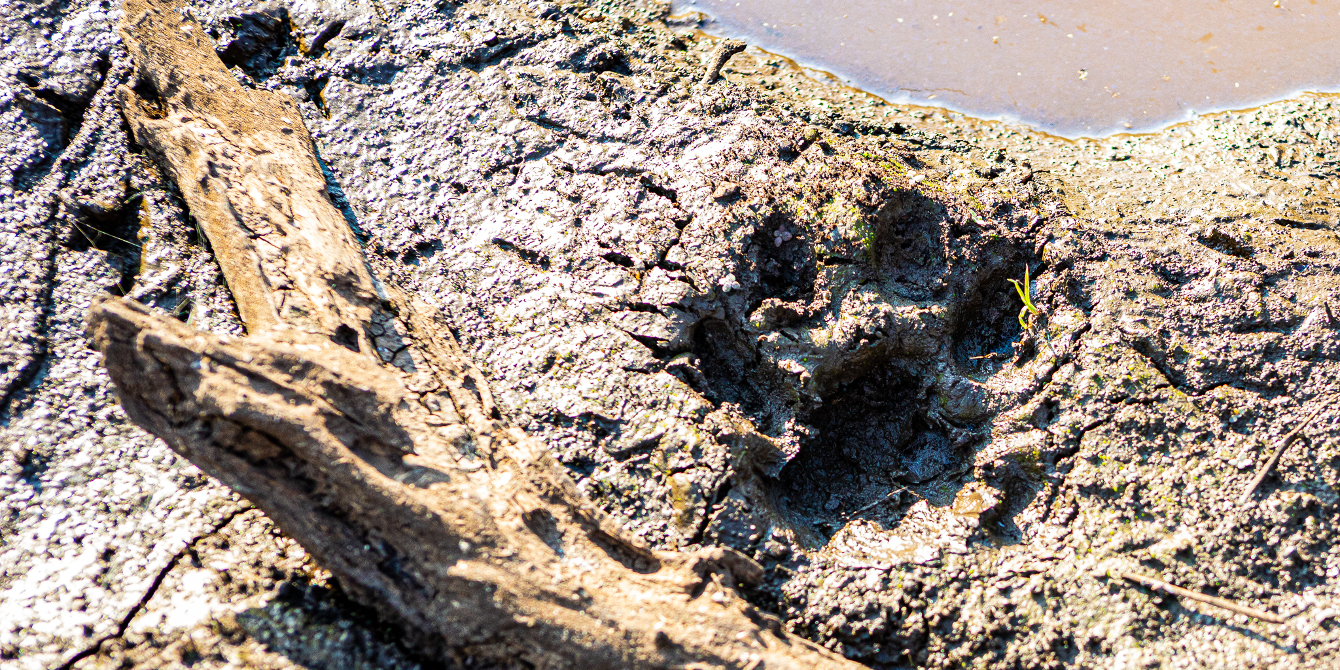
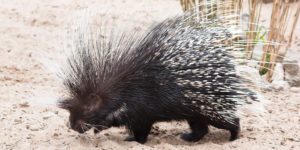
    Another of the bushveld’s most elusive species is the Cape porcupine, famous because of its unique spiny appearance. These unusual quills have brought tourists a lot of excitement  while they try to catch a glimpse at this bizarre secretive creature. You might be lucky enough to come across a loose porcupine quill on the ground or see their funny multi-padded tracks in the sand. 

    Often you will see the evidence of the elusive creatures but very rarely see them. Porcupines are the largest rodents found in Africa and part of the “Secret 7” and thus one of the more exciting things to spot on a safari. One of the reasons for their elusivity is due to their sleepy, nocturnal nature making it particularly difficult to see them during the day. Yet they do love to rummage in rubbish bins around camps for anything they can find, after all they are rodents so keep an eye out for them trying to get into your bins! 
    image

    Pangolin, aardvark and porcupine are famous due to not only their elusivity but also their unique appearance, which definitely puts them on the bucket list of sightings. If you do catch a glimpse of one of these amazing little animals, cherish it – and of course try and grab a photo.

    Would you love to see some of the Lowveld’s most elusive species? Join a Bushwise course and experience these and other incredible sightings. Start your wild career now.

    #wildlife #ifgaexam #AdvancedRifleHandling #bushwise #qualification #Exam #IFGA #training #animals #tracks #safari #IFGAGuide #sightings #fieldguiding #tracking #endangeredspecies #gamedrive #guiding #IFGAexam #fieldguidecourse #studying
  • The Lowveld is lekker: living next to Kruger

    This blog was written by Menina Nightingale, a Bushwise student who’s currently studying at our Kempiana campus where we train future field guides in collaboration with the Southern African Wildlife College.

    3 min read

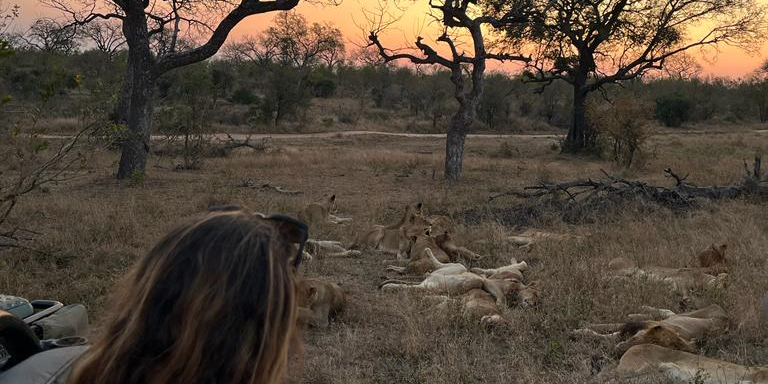
    Imagine being able to say that you live just outside of Kruger National Park. Our campus is on a reserve that’s part of the Greater Kruger National Park, so we can nip down to the Orpen Gate and go for game drives on the weekend. Just in case we don’t do enough of that during the week!

    image

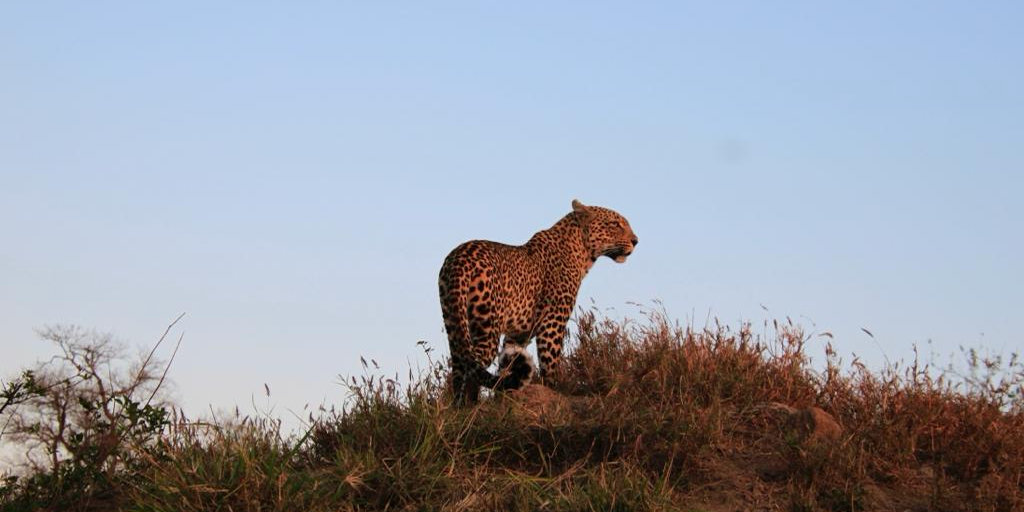
    This also has its perks for planning adventures for our off weeks. Being right next to Kruger, I jumped at the opportunity to drive down to Sabi Sands with Jos, another Bushwise student. We were desperate to get some of the epic leopard sightings the area is so well known for. After four weeks of hard work studying for the final Bushwise exam, a week off to explore “the Sands” was much needed.

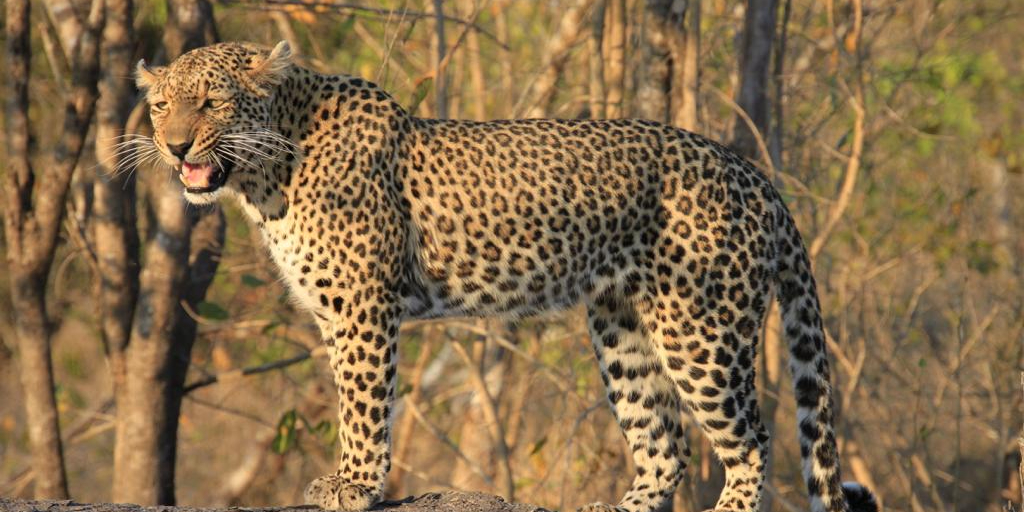
    Sure enough, the Sands met our expectations with leopard sightings that were out of this world! The whole of our first morning was spent in awe with a beautiful female, Kuchaba, rasping endlessly for her cub. The following days we were lucky enough to find her cub, a few other leopards, and even a male, Marieps. Nine leopard sightings and five different leopards all in one off week! Unreal. It’s fair to say that Sabi Sands definitely lived up to its expectations.

    image

    After the most relaxing week along the Sabi River near Kruger, it was time to get back to business, and start my week as camp manager – kicking it off with mock assessment drives at 6:00 on Monday morning. Everyone has been hard at work preparing for this week over the last few months and with mock assessments through the week and exam on Saturday,  the nerves were definitely noticeable.

    The mock assessment drives act as a practice run before our real drives next week. It was a quiet week for mammals, but – much to some peoples horror (or dread) – the birding was amazing.

    image

    Those that had morning drives had a great morning chorus to practise their bird call identification. We are also beginning to get all the migrants back – which is both very exciting and a bit daunting, as it adds to the birds we need to be able to identify. As it is the start of the mating season for some of the birds, we’re also beginning to see some flamboyant displays.

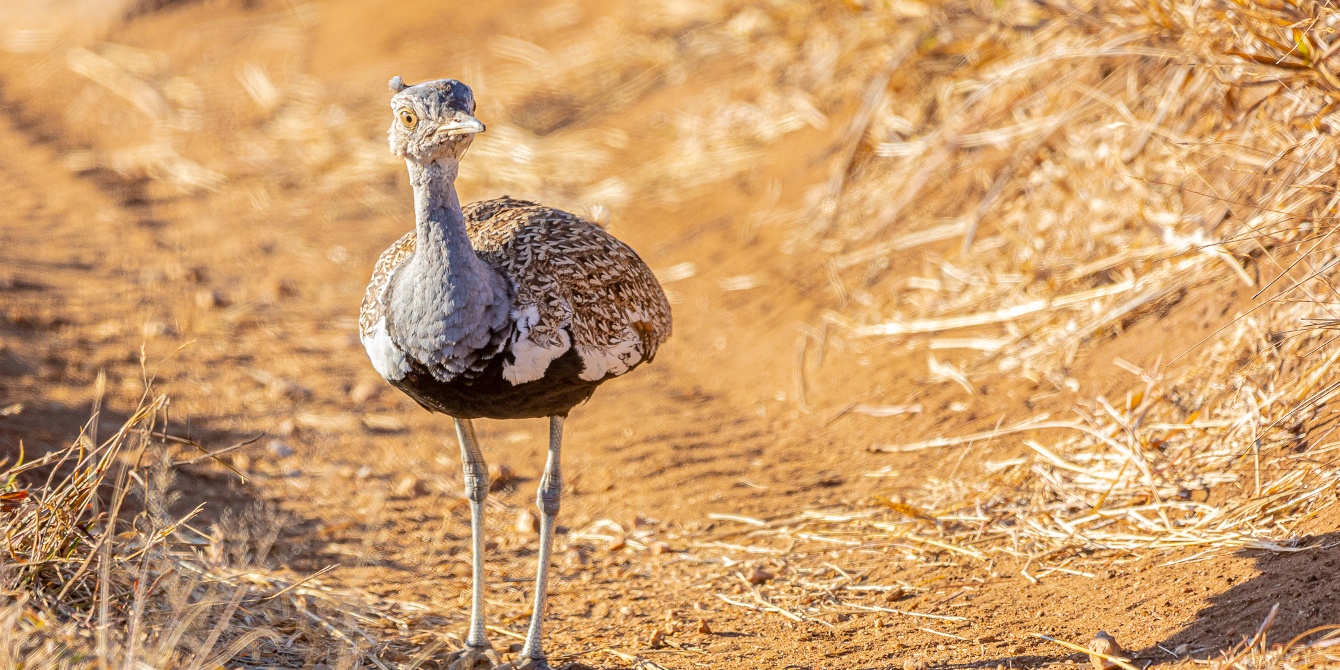
    An absolute highlight for me this week on a drive was getting to see the first red crested korhaan display dive of the season! As part of their mating ritual, the red crested korhaan displays both his brilliant red crest, from which his name is derived, but also an incredible aerial display.

    image

    This begins with a series of indicative clicks and high pitched vocal calls before he flies straight up into the air. Once up in the air, he stalls and locks his wings and falls to the ground. Right before he hits the ground, he flaps his wings to catch the fall. The bravest male, who will most likely find a mate, is the one who waits the longest to catch his fall.

    There was much excitement in the car for the rest of the drive back to camp. In between drives, we spent most of our time studying to get ready for the theory exam. A lot of flash cards were made and several late night study groups were had. After all the hard work, it was worth it to get through the exam, crack open a few beers, have a braai and watch rugby.

    image

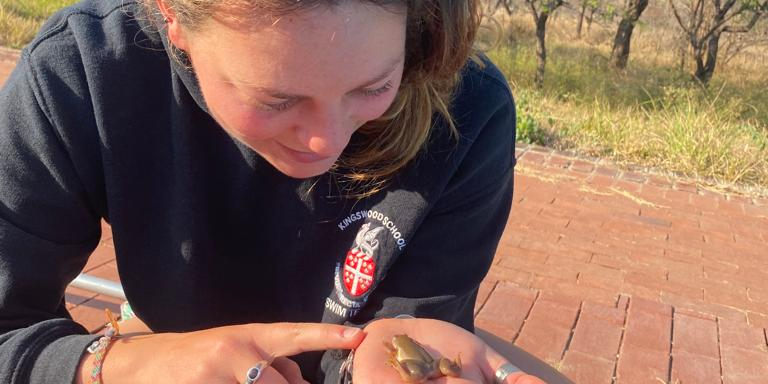
    The weekend ended with two reptile surprises and an amphibian rescue. A common platana was having a morning swim in the pool. With much hilarity, we executed a relocation mission back to the pond.

    A day later an alarming big spotted bush snake found its way into my and Daisy’s room. Keen to keep our distance, Ricardo, Trevor, Daisy and I tried to calmly talk it out of the room, but it ended up on my bed instead . Thankfully, he did eventually make his way off the bed and out of the room.

    In the very same afternoon a rock monitor lizard unexpectedly joined the lunch queue. Now that winter is coming to an end, we’re clearly getting all the reptiles back! What a week! The Lowveld really is lekker.

    Imagine a week where you see leopards, rare birds, reptiles and more. This could be you – and soon – if you apply for a course with Bushwise.

    Words and photos by Menina Nightingale (red-crested korhaan image by Louise Pavid)

    #wildlife #Birding #bushwise #fieldguide #qualification #safariguide #Exam #training #guidejobs #animals #safari #sightings #fieldguiding #tracking #endangeredspecies #Assessments #gamedrive #guiding #fieldguidecourse #studying #fieldguides
  • Crunchtime to the Bushwise exam

    Updated: Sep 10, 2025

    It’s halftime on the Bushwise Professional Field Guide course, which can only mean one thing: Bushwise exams. In this blog, student Tyler Dan Delhougne describes the stress of studying in the bush, and the camaraderie that comes with it.

    2 min read

    Time management isn’t something that comes naturally for most, it’s a learned skill that takes years to develop. A skill that pays off best when utilised daily. My time as camp manager was certainly a test of these skills.

    A week under pressure

    image

    In a single week our class endured the heat of practical observations, “the battle of our senses” from tests on slides and sounds, the pressure of our second Bushwise exam, the fine tuning of blogs, and perhaps the hardest of all, the daunting task of maintaining a clean kitchen. Let me explain…

    Over the week we started our mornings by engaging in practical observations. In this exercise, the trainers walk into the African bush and place numbered cones at anything from a specific tree to the dung of a zebra. Then two by two we walk in their footsteps with pen and paper at hand to test both our knowledge of the bush and how we recognise things that are often overlooked.

    These practical observation sessions helped to prepare us for the test that awaited us later that week.

    Testing the ears and eyes

    image

    After testing our sight and touch in the natural world, we all headed to the classroom to study slides and sounds. The croak of toads, the grunted “gnu” of a wildebeest, the colour of a boomslang and the features of a violin spider are all things we need to know for our big test at the end of the week, which will determine how well we see and hear the many different creatures that surround us in the savanna.

    We spent the week pushing ourselves to use our sense of touch, sound and sight for the test, while we also had the looming presence of our second Bushwise exam, which brought on a bit of fear and pressure in us all. This exam covered the second half of all our modules from amphibians, reptiles, mammals, birds, conservation management, ethology and even human habitation.

    Bonding over shared Bushwise exam stress

    image

    Stressful would be an understatement for the week we faced, but it’s during times of great stress that we band together the best. As the week progressed, every one of us grouped together and hit the books hard. All helping each other conquer “the battle of the senses” as we called it. 

    For hours on end, all that could be heard from the tents was the calls of frogs and mammals and the flipping of flash cards. Small groups of students would also band together to walk around campus to better understand and identify the flora surrounding the camp. 

    It’s this bond we all shared together and the passion for the natural world that kept us going to survive this week. Not only had we survived, we came out victorious. 

    Like the phoenix, we arose victorious

    image

    Students who had originally been struggling with practical observation had amongst the highest scores in the class. Some who couldn’t tell between a banded rubber frog and a Bubbling Kassinas are now teaching others how to see the differences. We sat in each other’s rooms for hours coming up with entertaining and even silly ways of remembering different calls of frogs, toads and mammals.

    Though the week was hard and our plates full, we all emerged levels ahead of where we all once stood. Nothing is more satisfying than being able to sit outside day or night and identify every single creature that we are hearing around us. Just giving us another level of insight into the bush that we all know and love.

    All we had left to do now was learn how to clean our own dishes, but that’s a battle for another day.

    Imagine passing your big Bushwise exam, and realising you’re one step closer to your dream of becoming an African safari guide? It could be you. Apply today.

    Words and photos by Tyler Dan Delhougne

    #wildlife #Birding #bushwise #fieldguide #qualification #safariguide #Exam #training #guidejobs #animals #apprenticefieldguide #safari #sightings #fieldguiding #tracking #endangeredspecies #gamedrive #guiding #fieldguidecourse #fieldguides

  • Africa’s frogs: sightings from a lowveld campus

    About 115 species of frogs and toads can be found in South Africa. Naturally it’s quite difficult to find them all, but in this blog Bushwise student Kyla Jordan shares what she’s learned about Lowveld frogs.

    4 min read

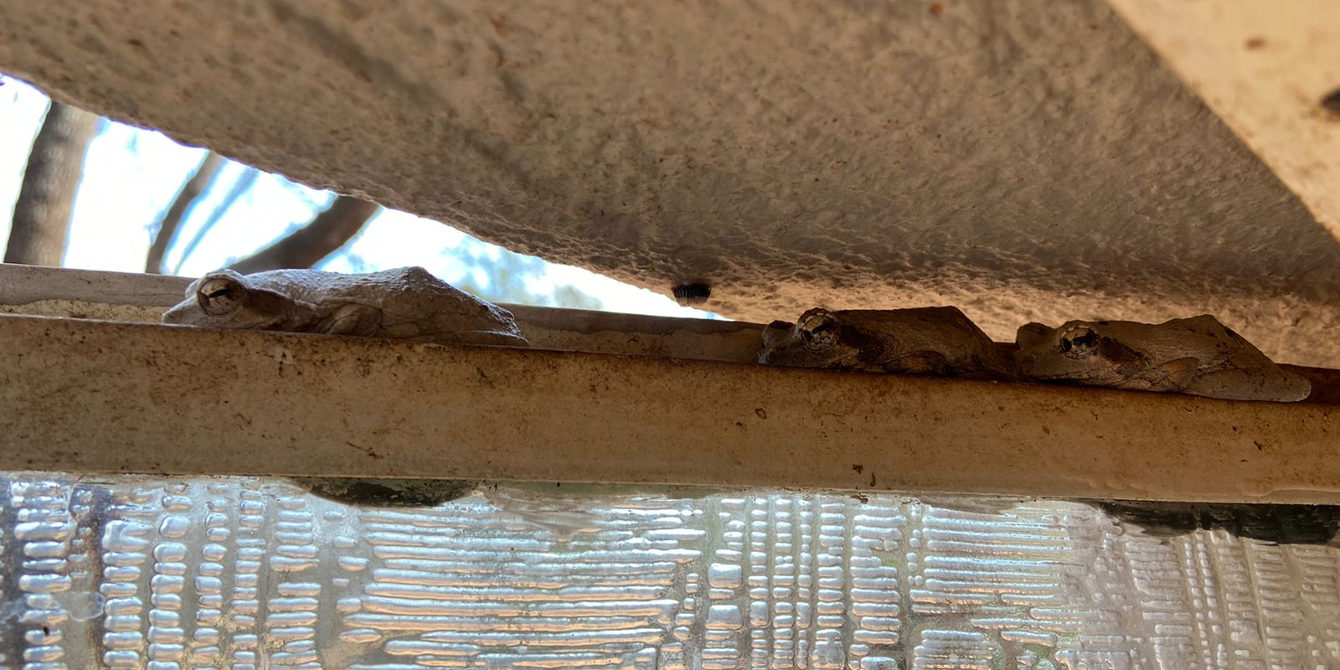
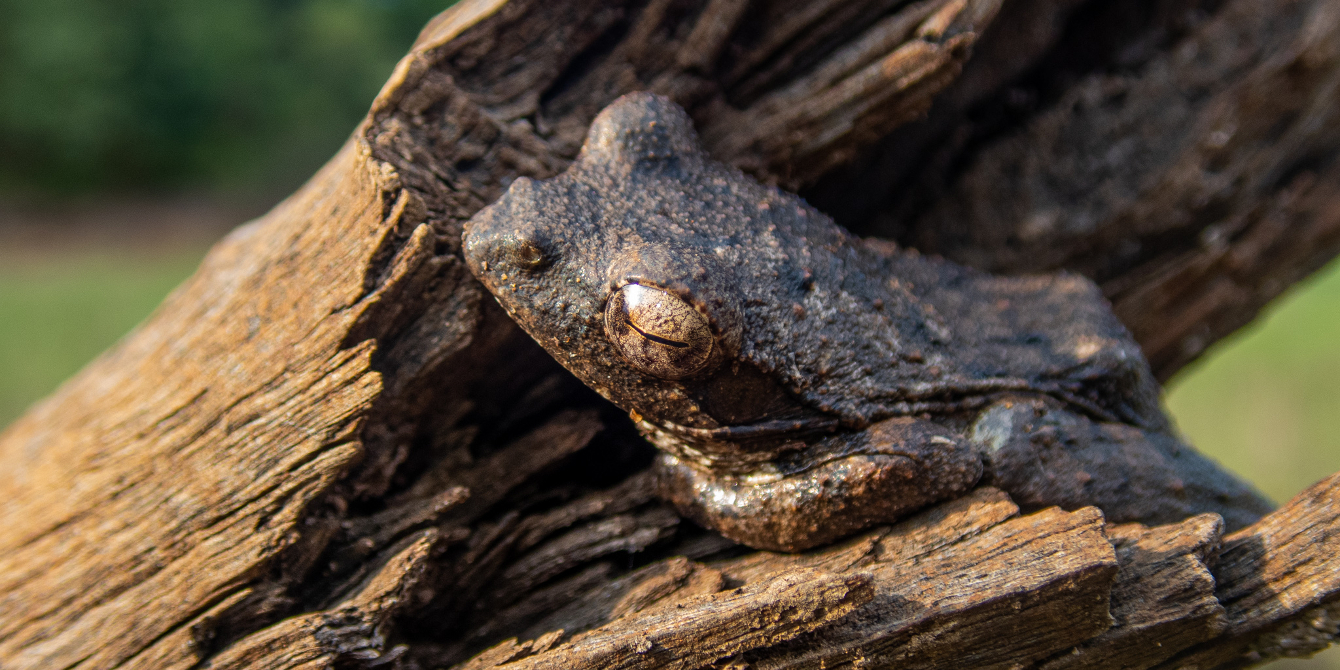
    We have seen many different species of frogs around our campus. We have a resident frog that we see every day in our rooms, bathrooms and the classroom. Our most commonly seen resident frog is called the foam-nest tree frog. We have three locals in our ladies bathroom which have been sleeping in the window from the start of our course!

    image

    Image by Kyla Jordan

    Like many frogs, foam-nest tree frogs have adapted to survive without water during the dry season (which in the Lowveld is winter). Like all amphibians, oxygen can pass through the frog’s highly permeable skin. This helps keep the frogs moist at all times. In order to survive during the dry season, frogs will enter into aestivation – a state of metabolic dormancy – which makes its skin resistant to evaporation.

    I particularly like that some foam-nest tree frogs are a stone white colour which means they’re able to camouflage with the toilet seat – giving you a nice big fright if you don’t spot them early enough. The three in our bathroom sleep all huddled up together and always look like they’re smiling, which is the cutest thing ever.

    Our resident frogs

    image

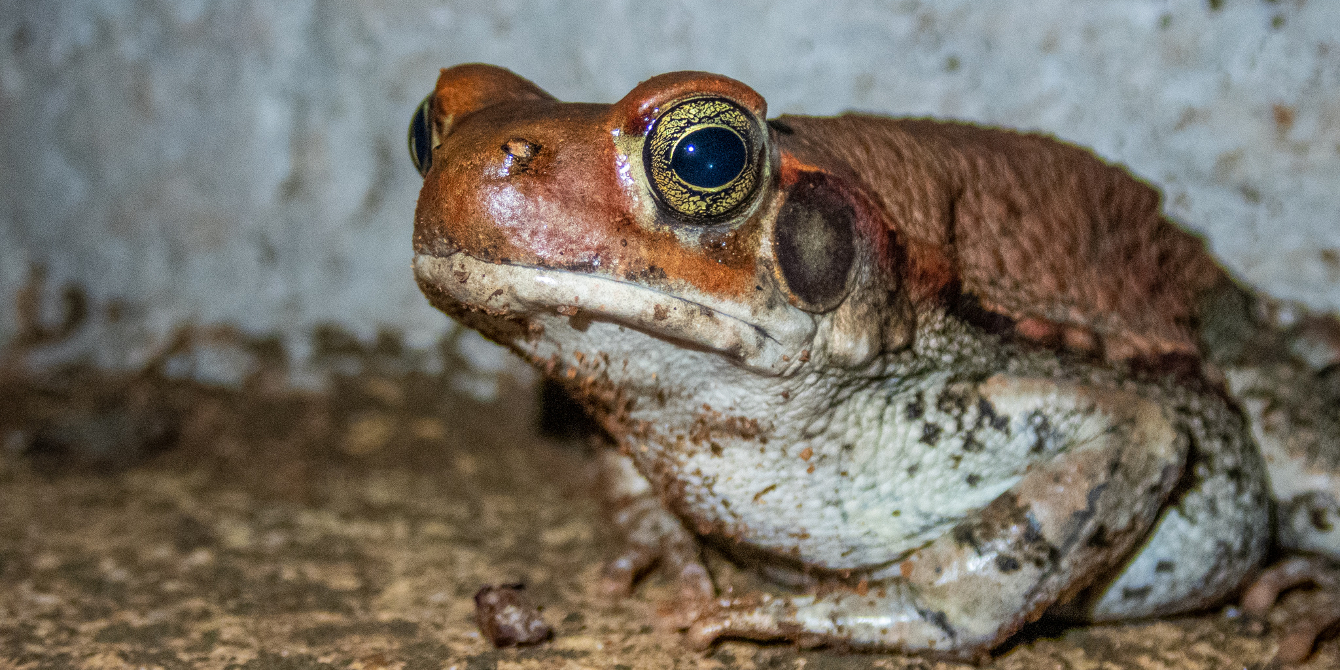
    My friend Shannon and I spotted a red toad one evening along our pathway to our room. Their call sounds almost similar to the giant bullfrog. This is not a frog but a toad. Frogs and toads are two completely different things. Frogs have long legs that are longer than their heads and body, which are made for hopping. 

    Toads have much shorter legs and prefer to crawl rather than hop. One easy way to tell them apart is to look at their skin – frogs have smooth, slimy skin where toads have dry, warty skin.

    What can frogs tell us about an ecosystem?

    image

    Frogs are considered to be an “indicator” species because they are the first to be affected by degradation of the environment. Their decreasing numbers may be a warning to us that conditions of the Earth are changing. Frogs also play an important part in the food chain as both predator and prey. Frogs control the insect population, which controls diseases such as malaria. They are also a very good food source for other animals. 

    Another cool thing about frogs is that some frogs use aposematic coloration (aka warning colours) to alert predators that they are foul tasting or poisonous. This protects them against predators. 

    What sounds do frogs make?

    image

    Frogs also have a variety of different calls. They have release calls, aggressive calls, satellite behaviour calls, time sharing calls and distress calls. 

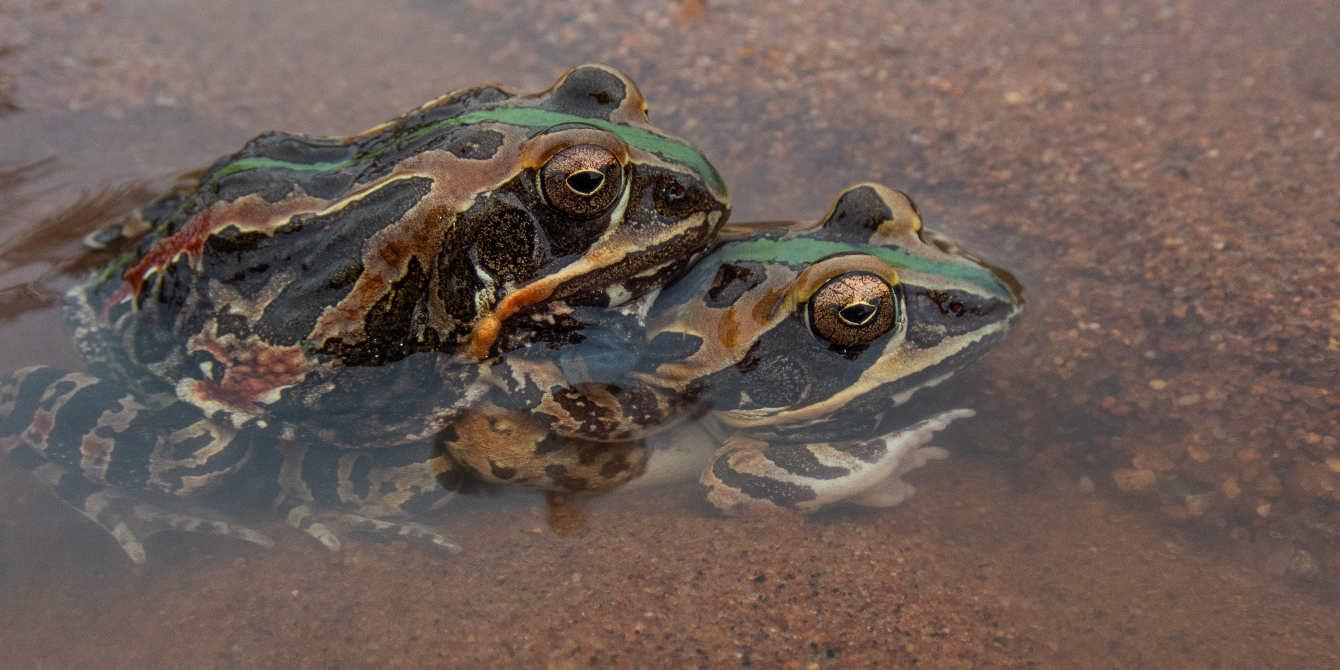
    Frogs give a release call when the male accidently clasps the wrong species or a female will use this call if she is not ready to mate. Aggressive calls are used in combat fighting. 

    Another interesting sound is used in satellite behaviour. Satellite behaviour is when a sexually matured male calls for a mate but a silent male sits nearby. The female approaches the calling male but the silent male intercepts and clasps her. 

    image

    If you hear frogs call in a song-like rhythm, this is the males calling and it’s a behaviour known as time-sharing. This allows them to actively spread out so that females can listen to the different calling males and know where to go. So the next time you hear frogs calling you know there is a reason for each different call.

    The frogs I’m looking forward to seeing

    We have not yet seen many frogs because of the dry season. But there are tons of species to be found here in the Lowveld. We can expect to see these species here around campus:

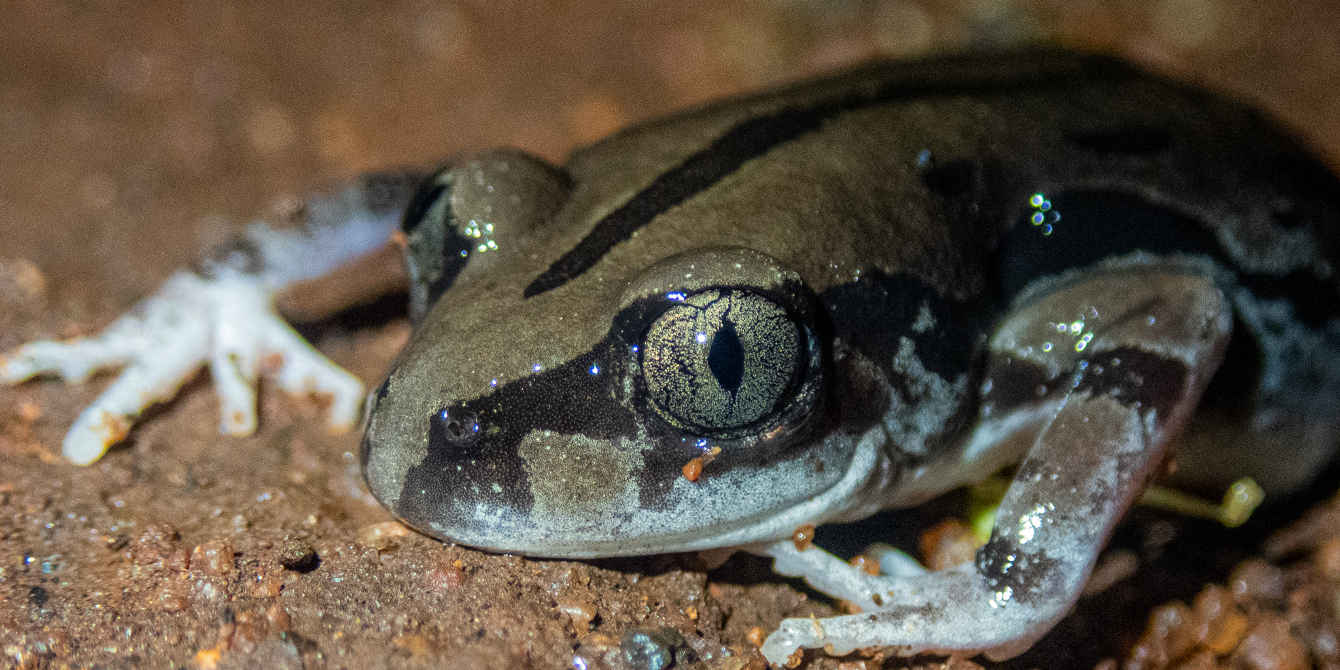
    1. Banded rubber frog
    2. African bullfrog
    3. Giant bullfrog
    4. Painted reed frog
    5. Bushveld rain frog
    6. Common river frog
    7. Broad banded tree frog
    8. Bubbling Kassina
    9. Plain river frog
    10. Mottled shovel nosed frog
    11. Brown backed tree frog

    All these species are likely to start showing up in the rainy season, which would be in summer, and that is just around the corner!

    Frogs play an important role in the ecosystem and they are such interesting animals to study. Are you interested in frogs like Kyla? Apply to join a Bushwise course and soon you could be learning about animals in their natural habitat!

    Words by Kyla Jordan, photos by Callum Evans unless captioned otherwise.

    #wildlife #bushwise #fieldguide #Exam #training #animals #tracks #tracking #endangeredspecies #fieldguidecourse #studying
  • Impala and wildebeest: iconic African antelope

    In this blog, Bushwise students Daisy Gleeson and Tyler Delhougne talk about two of their favourite African antelope species. Often overlooked on game drives, antelope are found across the world and play an essential role in the ecosystem. Let’s learn more…

    4 min read

    Antelope of the African bushveld

    image

    There are about 91 different species of antelope on Earth, all of which have formed special adaptations and characteristics. 74 of these can be found in Africa, living in a number of biomes from the plains to  forests and jungles. 

    These animals are expertly adapted and are masters of camouflage and avoiding being caught. In this blog, we are going to go into more detail about the main antelope species that can be found in South Africa.

    The plentiful impala

    image

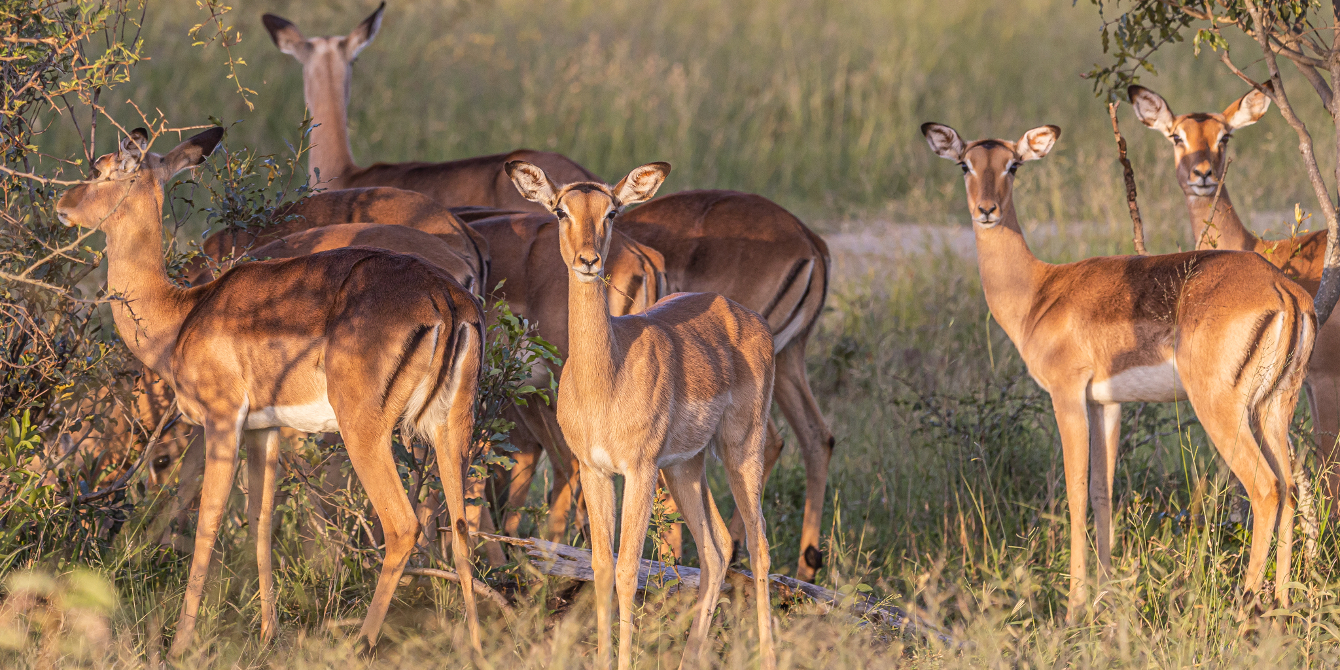
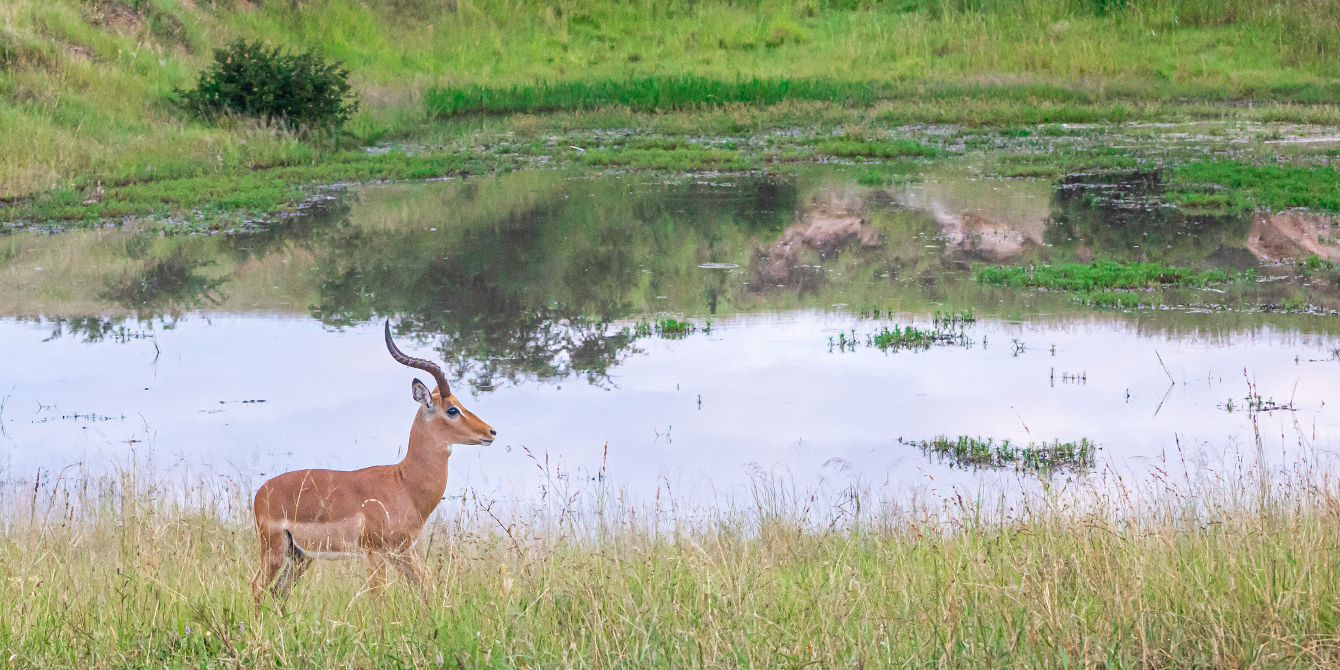
    We’ll start with the most common antelope found in southern Africa: the impala. There are roughly around 100,000 in the Kruger National Park alone. Fossil evidence from 6.5 million years ago suggests that the impala we see today have hardly changed; this is a testament to the fact that they are perfectly adapted to survive and thrive in the wild. 

    They use a camouflage tactic known as countershading, which is when an animal – in this case the impala –  is darker on the top than on the bottom. This works to their advantage as they appear two-dimensional to predators, which allows them to blend into the landscape. 

    image

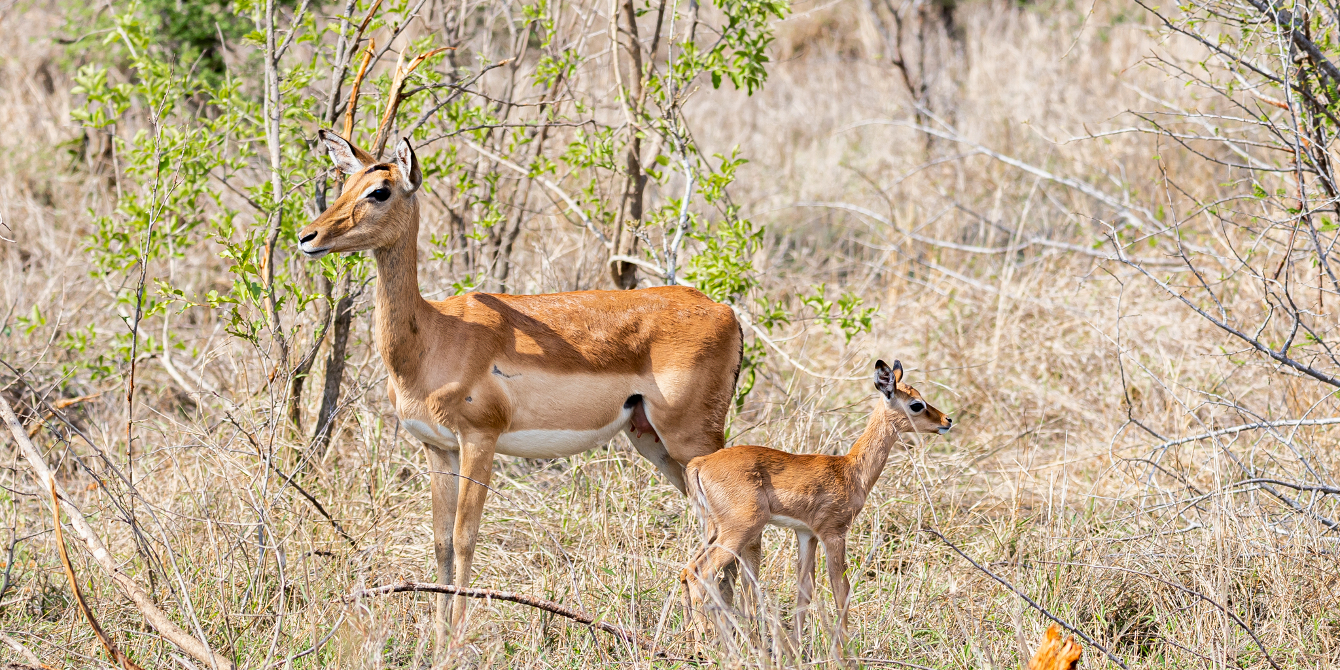
    Perhaps their most effective tactic in ensuring their survival is their successful breeding strategy. Whilst impalas are not territorial by nature, as they enter the rutting (breeding) season in May, male impalas will begin rounding up females to be part of their harem. He will then attempt to mate with each female, whilst simultaneously trying to defend his territory and fight off opposition males. 

    The rutting season lasts for about a month, by which time most of the female impalas will be pregnant. The gestation period is 6.5 months, which means that by November there is a huge flood of new-born impalas. Unfortunately, this will provide food for predators, but because there are so many new impala a large proportion of the babies will survive. Thus increasing the impala population, which is why it is one of the most successful African antelope.

    The unusual wildebeest

    image

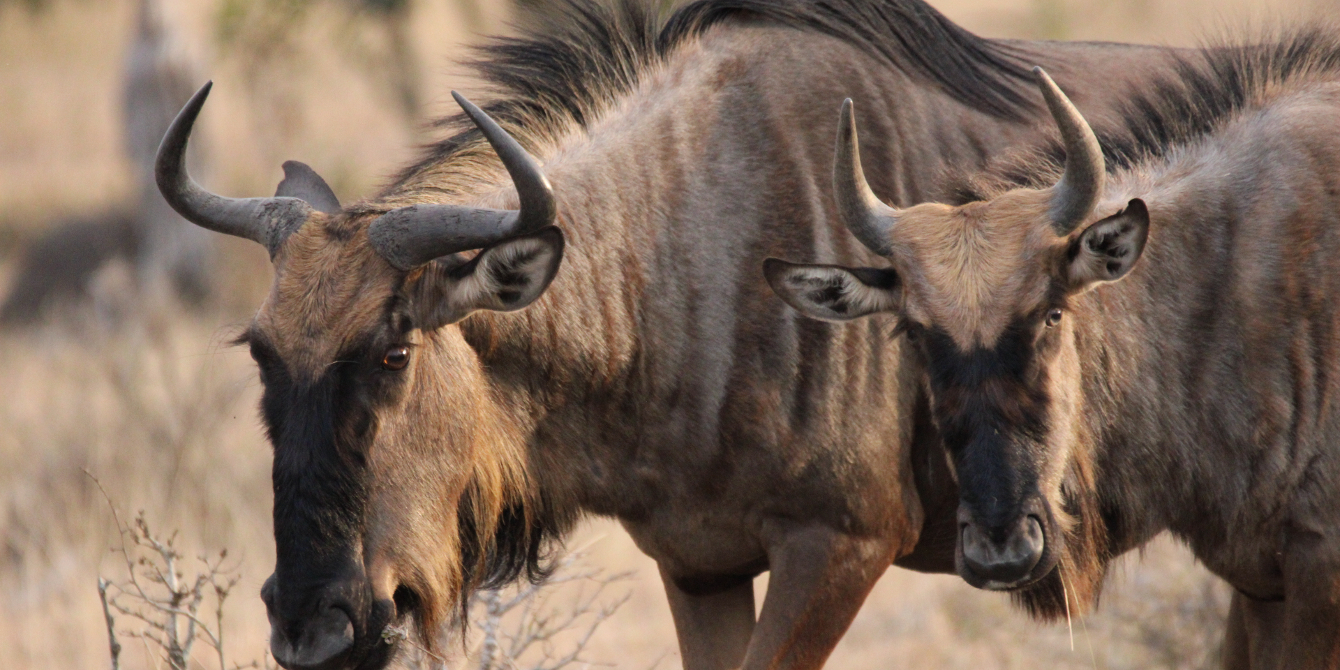
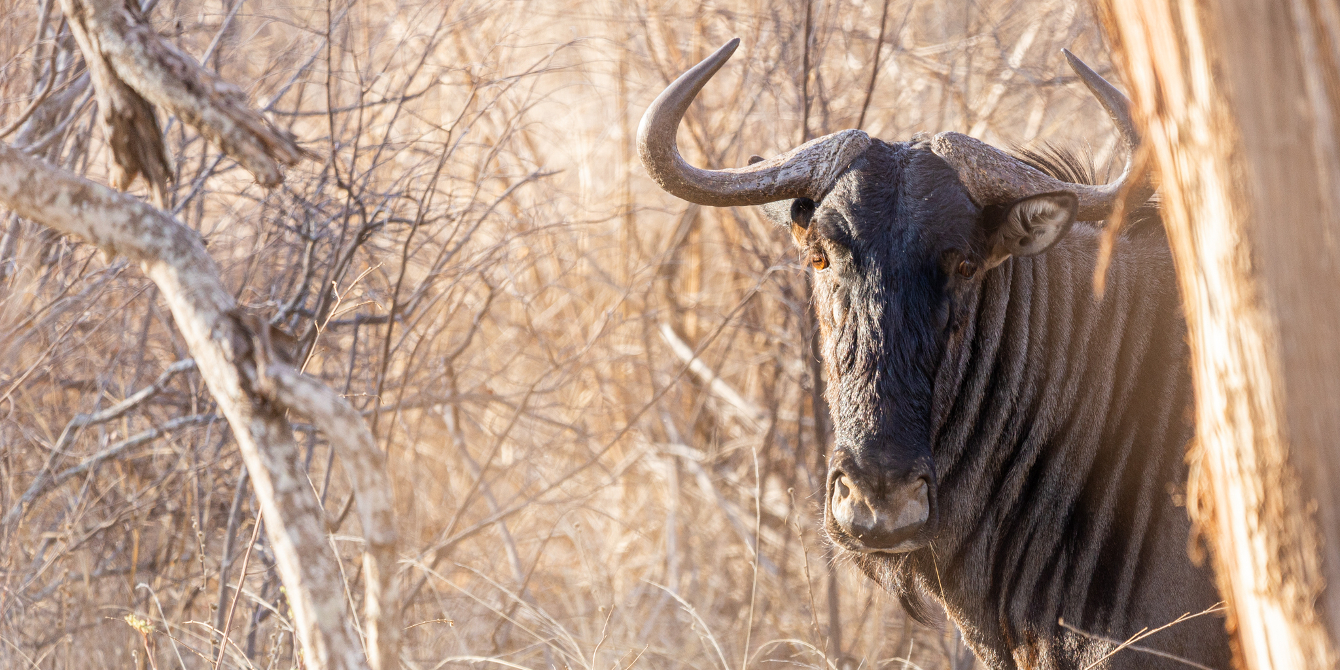
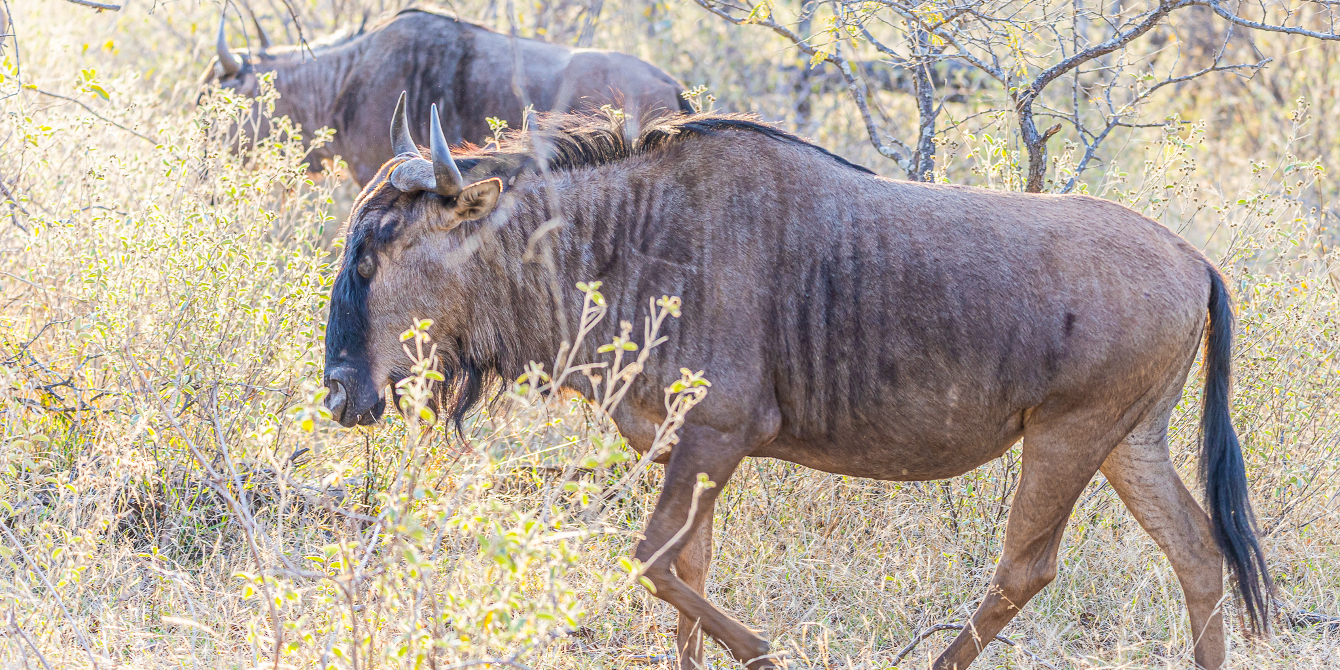
    Another common African antelope are blue wildebeest, which gather in open grassland areas, usually close to a water supply. They are easily identified thanks to their silvery-blue coat and curved horns, which both the male and female wildebeests have. 

    A black wildebeest is blackish-brown in colour and smaller in size, which is how you can tell the two apart. Unfortunately, the black wildebeest population was nearly made extinct in the 19th century as they were seen as pests and were hunted and killed for their hides and meat. Their numbers are gradually increasing,  but 80% of black wildebeest can only be found in private game reserves. 

    As wildebeest are migratory animals, their body is specially adapted to allow them to run for long distances. Their backs are slanted downwards, with the shoulders situated fairly high on their body. 

    image

    Similar to the impala, they also have a fixed breeding season which takes place in winter, meaning that there is an influx of babies born between November and December. Being born at this time of year is beneficial as this is when the grasses are at their greenest which provides the calves with the best possible chances of survival.

    Because African antelope have adapted so well across the continent, keeping population numbers in check has proved to be a challenge. Sometimes game reserves lack the appropriate number of predators needed to keep the antelope herds low enough for the environment to support. Because of this, many game reserves have to be strategic with population management.

    On a game drive, you can never be guaranteed to see any of the big 5. However, you can count on the fact that you will come across an abundance of various different antelope species, and hopefully you will now look at them in a new light.

    Learn more about all the different animals that make up a functioning ecosystem, including African antelope. Apply today to join a Bushwise course.

    #wildlife #AdvancedRifleHandling #bushwise #fieldguide #safariguide #training #animals #tracks #apprenticefieldguide #safari #fieldguiding #tracking #trackandsign #gamedrive #guiding #fieldguidecourse #studying #fieldguides
  • Celebrating my birthday in the African bush

    Willem (WH) was camp manager at our Mahlahla campus, a duty that every Bushwise student has at least once during a course. In this blog, WH explains the role of a camp manager, and also shares a very special birthday story!

    3 min read

    One may ask why do you appoint a student still studying to become an apprentice field guide as camp manager? Isn’t there an instructor (an experienced staff member) that supervises the activities on campus? After this the next logical question will be what does it entail? 

    What’s being a camp manager all about?

    image

    One of the aims at Bushwise is to simulate an environment that is as close as possible to a real-life lodge environment. This is essential because no one can teach a person to handle situations like being in charge of a group of people – this is only learnt through experience. The instructors then guide the students to become not only exceptional field guides, but also excellent lodge managers, head guides the list can go on. 

    Camp life in terms of hierarchy on the Mahlahla campus works as follows. There is an instructor on duty to which the camp manager reports to, while the remaining students report to the camp manager on duty. This type of system teaches people to take responsibility and learn accountability – which are key attributes that a field guide needs. 

    Taking on new responsibilities

    image

    As camp manager you have the responsibility to make sure that all of the teams on duty (kitchen, dustbin, classroom) complete their duties to a high standard. If some of the duties are not done or poorly done, then the camp manager is accountable. By implementing this system, the staff members are under less pressure, which means activities and general camp life run more effectively while upholding high standards.

    The students get randomly allocated a week that they have the duty of being camp manager. I usually do not have good luck, but I had the privilege to be camp manager during my birthday week. This was special because it all happened by coincidence. 

    As the week wrapped up…

    image

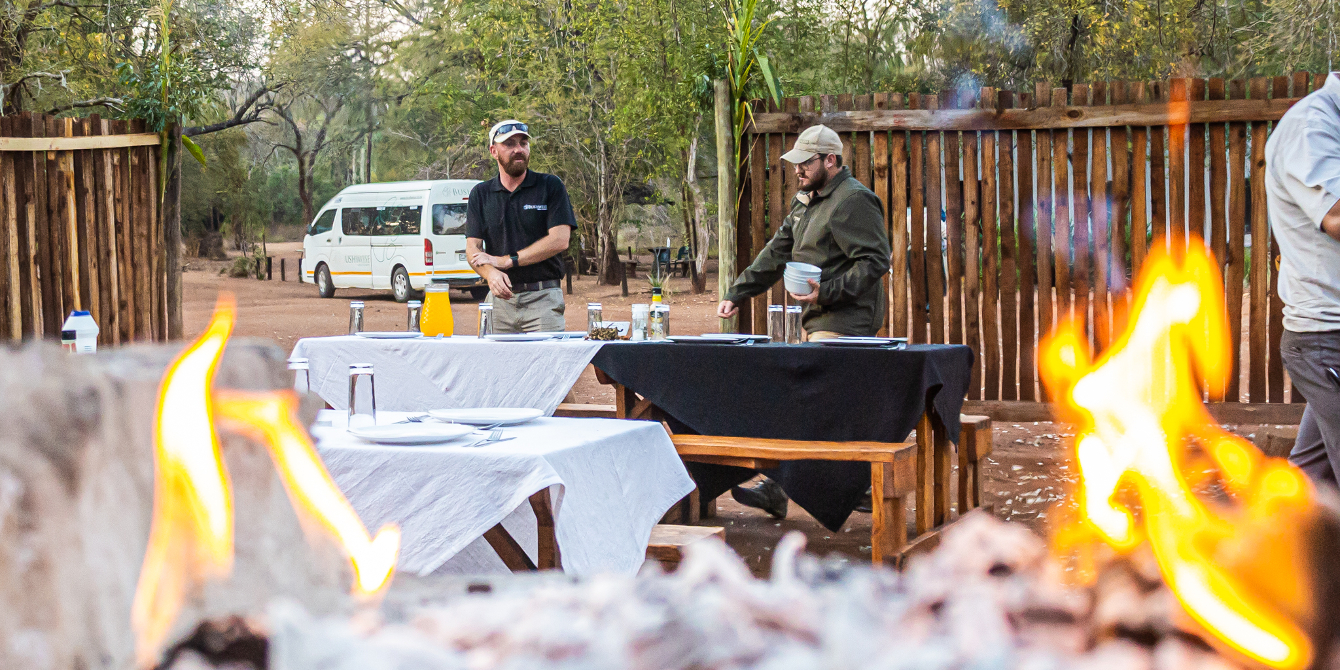
    My birthday was on Friday. Throughout the day I got good wishes from all of my fellow students as well as all the staff members. After dinner, Rose (the boss of the kitchen) called a meeting in the boma. As camp manager, I was startled by this because it sounded serious. 

    A million things raced through my head as to why she called all the students together. All of us stood there in silence not saying a word staring into the fire. ‘Too-whee-koo-whirrrr’ was the only sound rattling through my head as a fiery-necked nightjar called in the distance.

    image

    Rose came around the corner with a very small dim light in her hands. Before I could see what was in her hands the whole group burst out with ‘’HAPPY BIRTHDAY…’’. During that moment emotions took over my whole body! I had to bite my tongue to just not shed a tear as I did not see it coming. Rose handed me a cake to the sounds of my fellow students singing. The whole group had kept it a secret from me. I couldn’t have asked for a better birthday present!

    That realisation made me think. 14 people from across the country came to Bushwise – we’ve only been together for a little over a month. No one knew each other, but still there they were singing together and celebrating with me. That moment made me realise that I made some friends that would be a part of me for the rest of my life. 

    Grateful for these memories and connections

    image

    I didn’t come on this course with the expectation of making lifelong friends, but here we are. I know Bushwise, and especially the trainers, will help mold me as a person while helping me to equip myself with the necessary tools to become an exceptional field guide. Making lifelong friends along the way while spending time in nature has been a wonderful surprise. 

    When you’re with Bushwise, you’re with family. Wouldn’t you love to make friends and memories like WH? Apply for a course today and experience the magic of the bush.

    Words by WH Geerkens, photos by Louise Pavid

    #wildlife #AdvancedRifleHandling #gameranger #bushwise #fieldguide #stars #qualification #safariguide #training #guidejobs #animals #bestlodges #apprenticefieldguide #safari #fieldguidetrainer #sightings #fieldguiding #endangeredspecies #gamedrive #guiding #elephant #fieldguidecourse #fieldguides

  • Are white lions a unique species? And more interesting facts about lions

    Let’s dive deep into facts about lions, from pride dynamics to hunting practices. This blog was written by Chulu Msofe, a Bushwise student. All facts shared in this blog are based on Chulu’s independent research.

    5 min read

    As field guide students, part of our training is understanding animal behaviour and habitats, which helps us know when and where to find specific animals. I am particularly interested in lions, so I thought I’d share some facts about lions and why they’re one of the most popular and intriguing species. 

    Lions are part of the Big Five

    image

    Tourists are always excited to see lions when they come to a safari in Africa – especially because they’re one of the Big Five. Lions were included on this list because they’re considered one of the most dangerous animals to hunt. 

    How do lions hunt?

    Lions are carnivorous as they feed on herbivores – such as zebra and wildebeest – which provide them with the energy they need to survive. To catch their prey, lionesses work together and this teamwork increases their chances of success. They focus on prey that is sick or injured, or quite young and old because they know these will be easy to catch. This also helps to remove weak genes from nature, which allows only the strongest genes to survive. 

    image

    After finding their target, things get serious. They tend to shorten their distance to their prey by stalking them. If the prey turns and looks in the direction of the smell and detects that they are being hunted, the lions tend to freeze so as not to alert their prey that they are there. This process might continue until the lions are much closer. Tall dry grass provides good hunting cover for the lions because their coats blend well with the dry grass. 

    Lions may also wait by a water source because they know that while their prey is busy drinking water, they can seize this chance to catch them.

    Lion pride dynamics

    image

    A lion’s gestation period is about 110 days – about three and a half months. When it’s time to give birth, the lioness will leave her pride and go to a secluded place to give birth to the newborn cubs, who are born blind. After 3-15 days, the cubs start opening their eyes – which change colour until they are about three months old. 

    One of the interesting facts about lions is that the lionesses will stay close to her cubs for the first few weeks to make sure they are safe. To make sure the cubs aren’t caught by predators, the lioness will carry the cubs from place to place by the scruffs of their necks. 

    image

    After about six to eight weeks, the cubs are finally introduced to the pride and they greet each other by rubbing on each other’s necks. The adult lionesses of the pride will help each other raise the cubs – the cubs can even drink milk from their mother’s sister. This technique helps to increase the survival of the cubs by providing protection within the pride.

    Male lions are responsible for defending the territory, which ensures the survival of their cubs. They are responsible for duties such as territory patrol – which involves marking their scents and roaring. This helps to send a message to other male lions that this area has an owner that they’d have to fight in order to take it.

    When it comes to fighting, a lion’s mane will help to protect the neck and spine from the claws of other male lions during fierce fights. 

    When do male lions leave the pride?

    image

    After two or three years, male lions must leave their pride in order to keep their genes strong, which can’t happen if they mate with their sisters and cousins. 

    To survive in the wild, male lions might unite and form a coalition. Male lions from different pride can unite in order to increase their chances of success when hunting and defending their new territories from older territorial males.

    When a coalition of male lions take over a territory, they will often kill the cubs of the previous male(s). This then causes the females to go into oestrus, so the males get a chance to mate with the female lionesses and carry on their genes.

    Do lions roar?

    image

    Lions are the only cats whose roar can be heard up to several kilometres away – which gives a thrilling nighttime experience when they communicate with each other. They are also incredibly good hunters at night because of their good eyesight – which is about five times better than ours – which gives them the advantage to see their prey at night. 

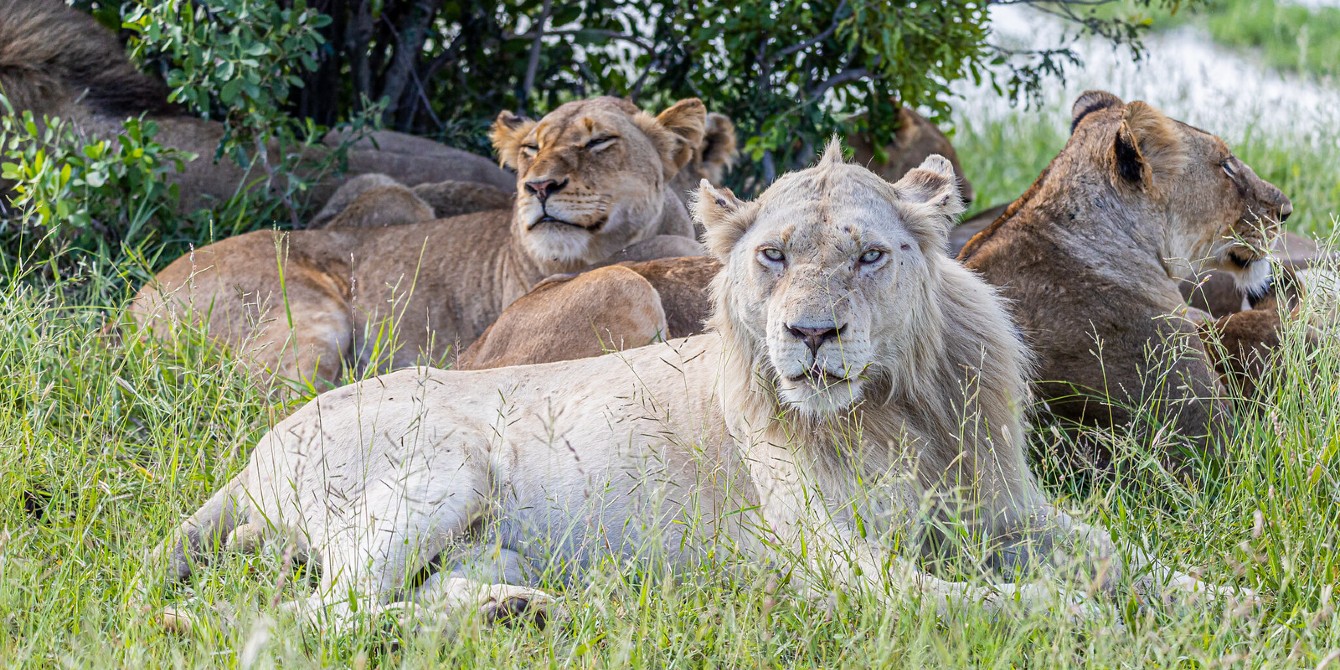
    Are white lions a unique species?

    image

    You also get a type of lion called white lions. These lions are not a different species of lion – and they’re not albino lions either. Leucism causes these lions to lack their colour. They are only found in South Africa in the Timbavati region – which is why so many tourists from all over the world come and see them. 

    What did Lion King get wrong?

    When it comes to facts about lions, Lion King got a bit creative! You may remember the scene where Mufasa teaches Simba to hunt by using Zazu as a practice. Normally lion cubs already have hunting instincts; it’s in their blood. They are just supposed to sharpen it and the one who is responsible for teaching the lion cubs how to hunt is the female. 

    After being chased out of his pride, a male lion needs to go and find his own territory and he cannot come back to his birth pride as he cannot mate with her aunts and sisters. Simba and Nala would never have mated because they belong in the same pride.

    Lions don’t have a single life partner as the pride is typically made up of many lionesses so they male mates with those lionesses so they are polygamous not like Simba and Nala who were life partners. Last but not least lions are big eaters and they do not survive by eating bugs. They need to eat meat that contains protein which enables them to grow so they have to have a strong muscular body that will enable them to take down big prey.

    So there you have it! Chulu’s well-researched, and interesting facts about lions. Are you keen to learn more about lions and other members of the Big Five? Apply for a Bushwise course today.

    Blog by Chulu Msofe, photos by Louise Pavid

    #lion #wildlife #safariguide #animalfacts #africanwildlife #apprenticefieldguide #safari #sightings #fieldguides #factsaboutlions

  • My life between the UK and South Africa

    This blog is by Daisy Gleeson, a Bushwise student who hails from London and has travelled between the UK and South Africa a few times in her life. Daisy shares her experience leaving a 9-5 job to pursue her dream of becoming an African safari guide.

    Read time: 5 mins

    Between the UK and South Africa

    image

    My first time in South Africa was in 2003, when I was six years old. Since then, I’ve been fortunate enough to go between the UK and South Africa more times than I can count. My parents grew up in Zimbabwe and I have family that live in Africa. 

    I grew up just outside of London, in the UK. When I was 17, I left school and entered the world of full-time employment. I worked within the hospitality, retail, insurance and service provider industries, but I couldn’t shake feeling unfulfilled. I started to wonder whether there was more to life than just working a 9-5 job to get by.

    image

    My parents split their time between the UK and South Africa (they have a house in George). Following a trip to visit them a few years ago, I knew that I had to find a way to come to South Africa and do something that was more than just a holiday. I started doing research online; not entirely sure what I was looking for, but hoping that I would find something.

    Initially, I liked the idea of a volunteer project, but the ones I found only lasted a few weeks, and I knew that wasn’t going to be enough time. During my online search, I came across Bushwise and I bookmarked the webpage in 2020. I kept coming back to it, reading the information over and over again, each time becoming more certain that this was the path I wanted to take.

    I knew Bushwise was for me

    image

    Due to Covid, my next trip between the UK and South Africa was only in February 2022; by this time, I had thoroughly researched Bushwise and their IFGA Safari Guide Course 6/12 Months. I sent my dad a message before I arrived explaining that I knew this was what I wanted to do, and he agreed that we could discuss it when I arrived.

    As my older sister had followed a more traditional route by going to university and then into a career, I was unsure about how they would take the news that I wanted to spend a year in South Africa studying to become a field guide. 

    However, when I spoke with them about it, they were so thrilled I didn’t even need to convince them at all. In fact, my dad was so jealous that I was almost certain he was going to try and join me and do the course as well. 

    My parents supported this huge decision

    image

    Whilst I was there, we stayed in the Pilansberg for a few days. On safari, I was looking at things in a new light. How did the guide conduct themselves? How did they get to the position they are in now? What is it really like to be a field guide? I was so inspired by the knowledge they had, and how they could notice things that most people wouldn’t even look twice at.

    Something I had not even considered before was that I could not actually remember a time when I had been on a safari with a female guide. I started to wonder why this was, and whether it would be difficult to succeed in an industry I had perceived to be dominated by men.

    Finally making my move between the UK and South Africa

    image

    I knew that the next course was going to start in July, so I didn’t have much time to spend worrying about the realisation that in just a few months time, I was going to leave life as I knew it behind and embark on a completely new adventure. 

    When I came back to the UK in March, I handed in my resignation at the job I’d been at for the past four years. The people there had become my family; but they understood that I was leaving to do something that I had dreamed of doing for a long time.

    One of the main concerns for both my parents and myself was how safe it would be for a young woman to travel to a different country alone. I looked into the Hoedspruit area, where I knew I would be staying, and reached out to a few of the other international students who I knew were going to be at the same campus as me. We all had the same questions, but we were all so excited about the prospect of living and studying in the African bush.

    image

    Now that I’ve been at Bushwise for nearly two months, I couldn’t be happier that I took the plunge and entered into the world of the unknown. Every day is different and full of new knowledge and experiences beyond what I could have ever imagined. I’m so grateful that the African bush is my new office. 

    It’s also exciting to be a part of the first Bushwise field guide course where there are more women than men, which to me, is a great indication that the future of the guiding world is shifting in a positive way.

    Isn’t it time for you to make the leap and change your career? Apply for a Bushwise course today and soon, like Daisy, you too could make your dreams come true.

    #gameranger #bushwise #fieldguide #qualification #safariguide #training #animals #apprenticefieldguide #safari #fieldguiding #gamedrive #fieldguidecourse #fieldguides

  • Living amongst wildlife in South Africa

    Part of becoming a field guide is living amongst wildlife, respecting their space as they respect yours. Have you ever seen a leopard at night? Shannon Scullion experienced this first hand recently – and it’s an experience few people will ever have!

    Read time: 4 min

    In the second week of being at Bushwise, I was allocated the task of being camp manager. I enjoyed this week particularly because I like taking care of people, which I’m realizing quickly is a big part of being a great field guide. 

    Taking on responsibility

    image

    I was responsible for making sure that all of the duties on campus were being done, such as taking out the bio bin, washing dishes after meals, and making sure that my fellow students knew what was for dinner and that I was available to help them with any problems that may come up. 

    I was also in charge of keeping a radio on me. That way I would be able to contact Rose the chef, or Vaughan our head trainer after hours. This reassurance of having this instant contact on me made me feel especially comforted one night on campus before I went to sleep. 

    When you’re living amongst wildlife

    image

    When we arrived at Bushwise, I was fully aware that we would be sharing our space for sleep and study with some wild critters. 

    Wayne, one of our trainers, showed us a presentation in this first week to help us understand what we could expect to see when living amongst wildlife over the next six months. This included spiders, snakes, scorpions, centipedes, ticks, porcupines, honey badgers, spotted hyenas, vervet monkeys, baboons and last but certainly not least, leopards. 

    Now I would be lying if I told you that this didn’t make me nervous, but coming from Australia where I would regularly encounter wildlife in my bedroom, I wasn’t too worried. I was excited to see all these things!

    What will we see next?

    image

    One night during my week as camp manager, after some hours of after-dinner studying and a shower, I got into bed to watch a movie. I was just about to drift off to sleep when I heard a loud, short noise that almost sounded like a car door closing. 

    I looked over at Sandra, my roommate. She was on the phone to her boyfriend and didn’t seem too fussed about the noise outside our bedroom. So, I settled and tried to go back to sleep. 

    What’s that sound?

    image

    A few seconds later, there it was again. I looked over to Sandra again and this time she was looking back at me. “What was that?!” she said. We waited in silence for the noise to reappear. It did. 

    As we were trying to figure out what it was, maybe a door having been left open and banging against a wall, the noise changed to a distinct and continuous rumble. We knew instantly then. It was a leopard just outside our bedroom door marking her territory! 

    image

    Instantly my mind started to race, I was freaking out. My mind even got me thinking, could this leopard open my door and come in here?! I knew this wasn’t logical, this is just one of the amazing things about living amongst wildlife. Still, hearing a leopard a few feet away from your bedroom door makes your mind start to run away with itself. 

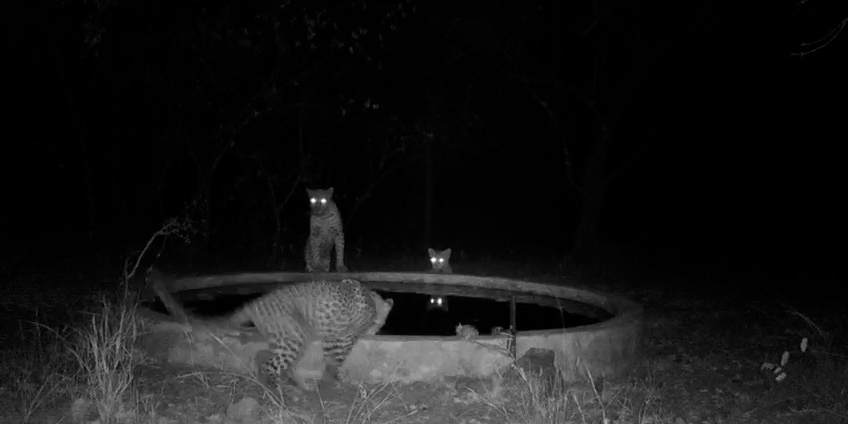
    I was just about to reach for the radio, just in case, when Sandra said excitedly, “Turn the lights off! Where is your torch?” We turned off the lights and I gave Sandra my best torch. We pushed ourselves up against the window and there she was, Mrs. Whiskers, her yellow eyes reflecting back at us. 

    Expect anything when living amongst wildlife

    image

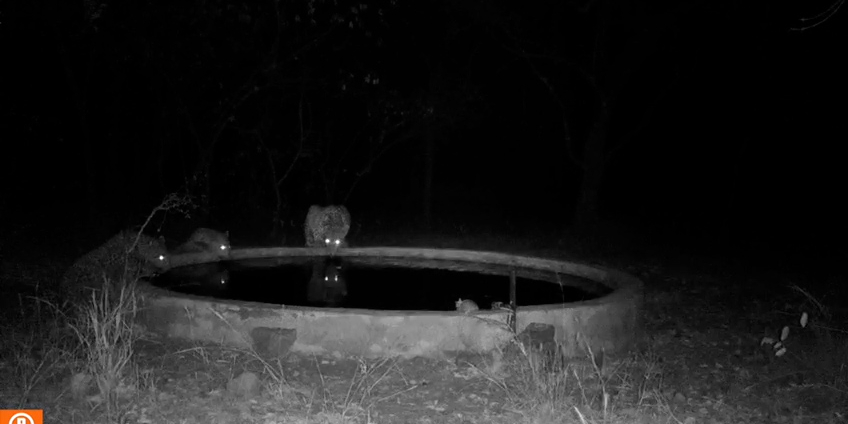
    She was the beautiful young female leopard that had been caught on Josh and Kerry’s camera trap that was set up by the waterhole at the other end of the campus a few nights before. We’d all named her Mrs. Whiskers. 

    I couldn’t believe it. It was incredible! I didn’t feel scared anymore. I was just in awe of this beautiful creature, and the fact that she was sitting a few feet away from us. I didn’t even need to use the radio, but it was still nice to have it. 

    Bushwise students learn about the importance of respecting wild animals while living amongst wildlife and creating safe places for people and animals to coexist. Wouldn’t you love to learn about wildlife, in a wild place like this? Apply for a Bushwise course today and start your career journey.

    Words by Shannon Scullion, photos by Louise Pavid

    #bushwise #qualification #trailsguide #training #animals #apprenticefieldguide #fieldguidecourse #studying
  • A bush camp in the African wilderness

    Have you ever wondered what it would be like to run a bush camp? In this blog, Bushwise student Chulu Msofe shares his experience as camp manager. This part of field guide training is important for gaining leadership and management skills.

    Read time: 4 mins

    We have just come back from our off week. Everyone’s excited to be back and learn new things and see what nature has to offer. This week was my week to manage the bush camp, which was the first time I’ve been in such a role. 

    image

    As a camp manager, I was responsible for making sure that the kitchen was stocked and if there were any shortages, I reported them to my superior. I was also in charge of the kitchen keys and chose a fellow student to have the spares in case something was needed when I wasn’t around. 

    On Monday we started the day with a beautiful sunrise and bird calls. Everyone was up having a cup of tea or coffee with some rusks and fruits by 6:00. At 6:30 we started our game drive, where we got to learn about trees. I like to call this a green day – where we get to learn about different plants and trees on our game drive

    image

    Queeneth was our guide for the day and she explained how animals benefit in different ways from trees. For example, elephants can eat different parts of the tree for food – such as fruits, leaves, roots, tubers and bark – and they can also use the tree as a water source.

    When we got back to camp, we had a lecture on birds – which I was quite excited about because I honestly love birds. Darryn was our trainer, which made the lecture even better because he’s also obsessed with birds. He gave us a lot of information about how to identify birds, where different birds are found, their foot structures, what kind of foods they eat and what kind of lifestyles they live. 

    We also learned some interesting facts about their behaviors like preening, which helps them to condition and maintain the function of their feathers.

    image

    On Tuesday, it was finally my turn to be the field guide. I woke up at 5:00, prepared the snack box for the drive, checked that everything was fine in the kitchen and did safety checks on the game viewer – making sure we had water, a hi-lift jack, a spade, a toolbox and a first aid kit on board in case of emergency. I was then ready to drive my fellow students in Group A (the guests). 

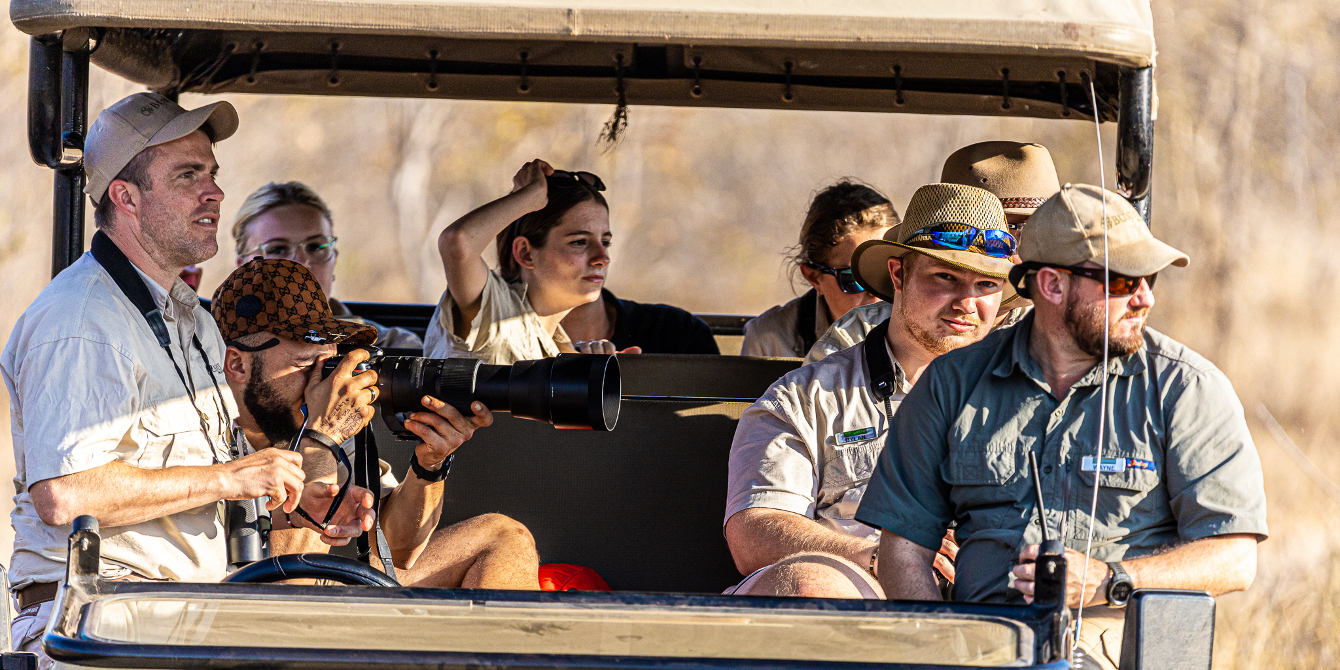
    I introduced myself as the guide and my trainer, Darryn, who was joining us. I was so excited to have my first guests on board. After coming out of the campus gate, we saw a herd of impalas and wildebeest. 

    I stopped and explained what I knew about them and gave my “guests” a chance to ask any questions. On my drive, we saw some interesting birds – like Bateleur eagles, a kori bustard and a red-crested korhaan – as well as some leopard tracks. 

    image

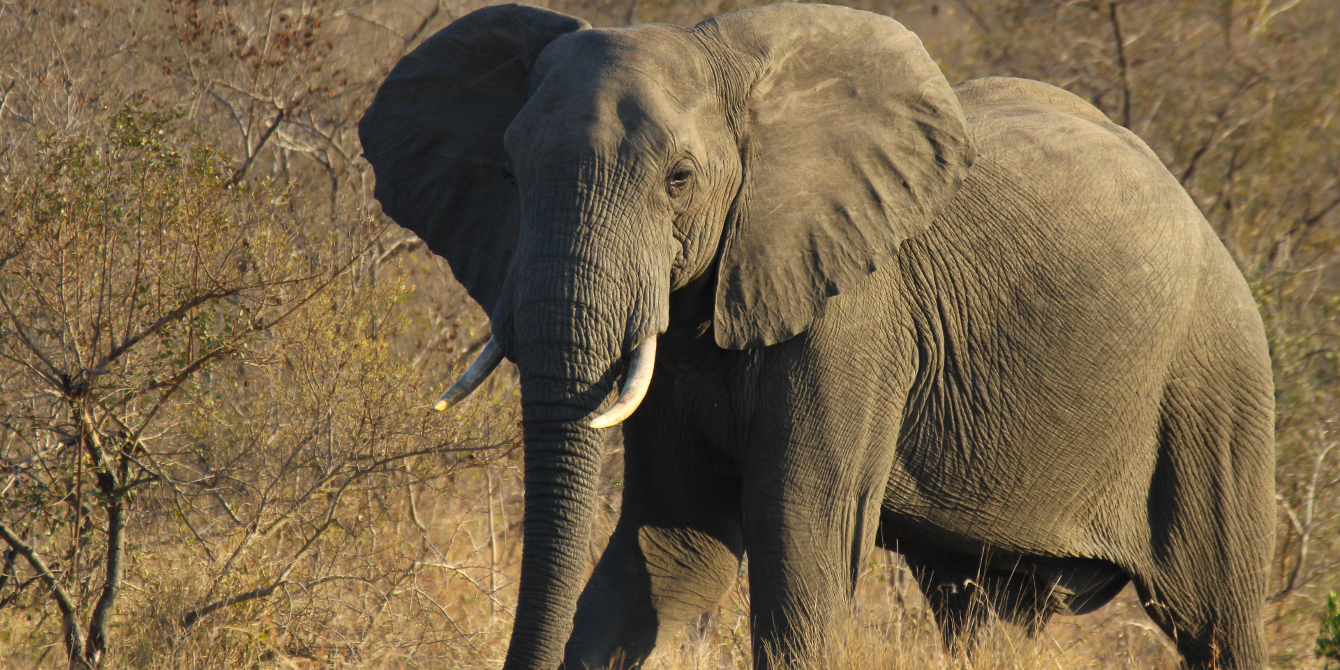
    Once we arrived back at the campus, we had a lecture on fish, which was quite interesting – but not as interesting as the birds for me. After having lunch, we went on our second game drive. This time our guide was Menina who brought us luck, as we saw a bachelor herd of bull elephants and a black-backed jackal. Group B, who was guided by Christian, saw a buffalo, which was also pretty cool. 

    On Wednesday, we had an epic sighting. We saw a bull elephant make a mock charge toward us in the morning and we finished off the day with lots of kudus thanks to Ricardo, who was our guide.

    We started Thursday with spotted hyena calls passing just by the side of the campus fence. Unfortunately, we weren’t able to find them during the morning drive. We went back to the bush camp early because it was a washing day for the game viewer. 

    image

    As camp manager, it was my job to supply the washing equipment – like the car’s shampoo and gloves for cleaning – and make sure everything was returned to the right place after cleaning. After our lecture, we had a bush walk where we studied civet, wildebeest and impala tracks, as well as identified some trees. I like walking in the bush because I feel much closer to nature. 

    On Friday, we did another uneventful morning drive. After lunch, we did placement talks and got some feedback on how well everyone is doing during the first semester. The day ended with having a braai at the bush pub. 

    image

    During my week running the bush camp, I discovered just how friendly and willing people are to help out. I also learned that being a good leader means being a team player, which helps people feel more comfortable to share their views and opinions with you. This will then help you to know if anything needs to be changed, and you can give them feedback if you tried out one of their suggestions. 

    Some of the tips I have are if someone has a complaint, don’t take it personally, and always be honest if you were wrong. This will strengthen communication within your team, which makes the job much easier. So far I have loved my week managing this bush camp and my time at Bushwise because it feels like we’re one big family.

    Live and learn in a bush camp in the African wilderness, when you join a Bushwise course. Apply today!

    #lion #gameranger #Birding #bushwise #fieldguide #stars #qualification #safariguide #sleepout #animals #apprenticefieldguide #safari #fieldguiding #gamedrive #guiding #fieldguidecourse #studying #fieldguides