Category: Student journeys

  • Sights (and smells) of the African bush

    Bushwise student Wes Chapman describes a recent experience in the African bush, where his senses were nearly overpowered!

    Camp manager blogs are written by our current students who each get a chance to lead and manage a group (of their fellow students) for a period of one week.

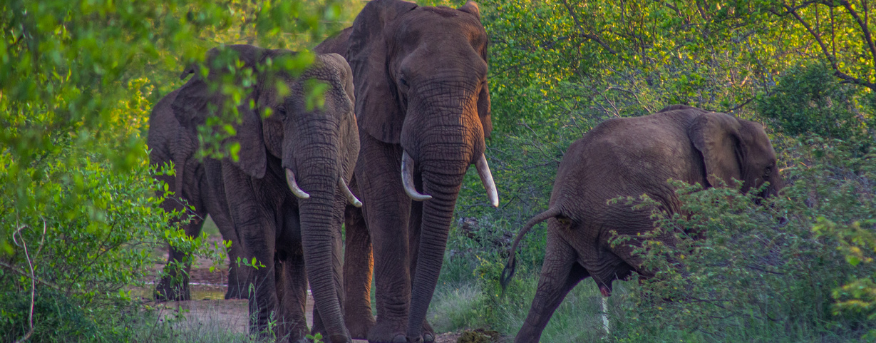
    Well, I must confess. I flew from the United Kingdom to the South African bush with the mindset that I was well-versed in wildlife. I would even have gone so far as to consider myself rather knowledgeable! I thought it was the right move, so to speak – well thought out and sensible for someone like me. It turns out I wasn’t as knowledgeable as I thought. The African bush is very much what I expected with regards to the big famous animals: elephants, lions, zebras etc… but that is the tip of the iceberg. Its complexity and beauty runs far deeper than I could have ever imagined. Was joining Bushwise the right decision? Abso-flipping-lutely!
    image

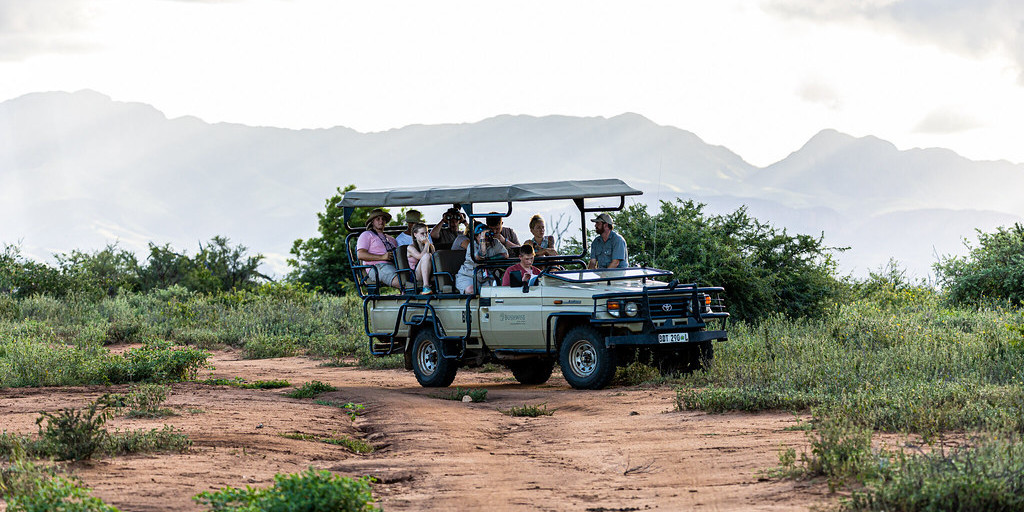
    For those who have spent any length of time in the bush I am sure you will agree that lots of the time it’s pure sensory overload. Trundling along in the game viewer with animals popping into your peripheral vision, birds calling and swooping overhead, sun or rain coming from above, ants crawling on your feet and the most astonishing catalogue of sights and sounds. Sensory overload comes from all angles.

    However, it is the sense of smell that I wish to say a few words about.

    I never realised how much I used my nose in day-to-day life – until I came here. Whether it be the overwhelming perfume of wild basil and wild anise or the ominous scent of a bull elephant in musth. But this week I smelled a smell that shall forever be on my mental smell shelf of smelliest smells!

    We were out, as usual, on our morning game drive, when we were informed about some lion activity a short way away. Apparently they had recently got themselves a hippopotamus! So, back to the camp we went to prepare. Now, the kill was apparently off the road so approaching by vehicle was not an option. A plan was devised for the trainers to have a first look and make a call as to whether it was safe for the rest of us to take a look on foot.

    And all went rather smoothly.
    image

    As we sat waiting for our trainers to come back in one piece, we saw countless vultures circling overhead in their infamous manner. There was definitely something dead nearby.

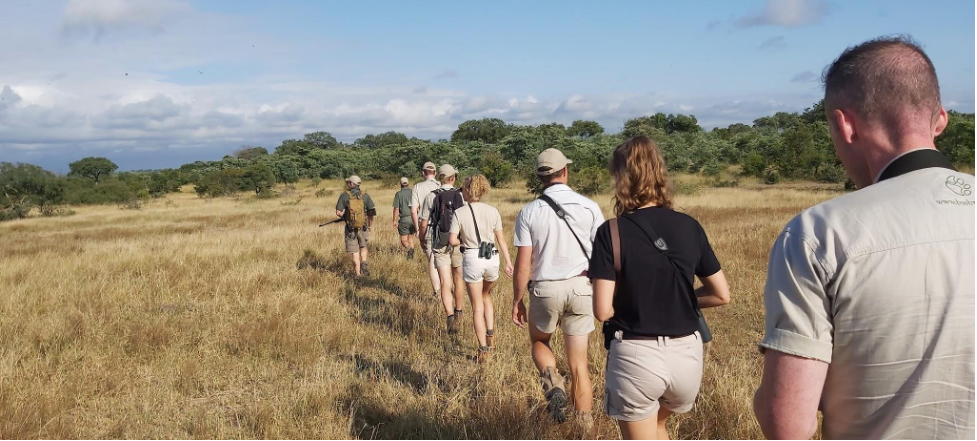
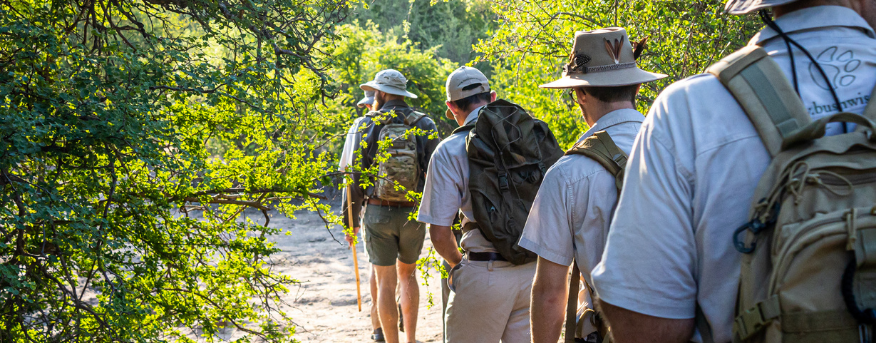
    The trainers returned, informing us that the lions had moved on, so we could safely view the carcass and scavengers. So, in single file we walked in silence. All our eyes focused on making sure we didn’t walk into sleeping lions or step on a snake in the grass (this was when I tripped over my own shoelace and lost my dignity, but that’s a story for another day!)

    Now, the heat was intense, and so were the flies landing on my face, but one thing hit me very obviously as we walked. The smell. It was absolutely foul. I used to work in veterinary environments, I am used to bad smells, but this took the biscuit!
    image

    Let me try and describe it for you. It smelt like a mixture of old fermenting meat that had been festering in the contents of a ruptured sewage pipe at the bottom of a biological waste dump. It hit me in the back of the nose and my eyes started watering. I could even taste it. I will never forget that smell. It was, after all, the smell of death.

    When we arrived at the carcass the hyenas were dragging the leather hippo skin away from the skeleton which had already been picked clean. They kept their distance though! To be at the site where such a large animal lost its life was quite powerful, yet the knowledge of the delicate balance of the ecosystem was obvious. The lions had been successful, they hunted and fed very well. In turn providing food for many more animals.

    To be there was humbling and once again it hit home that I am a rather small part of this world. I shall not forget it. My nose won’t in any hurry!
    image

    The bush amazes me every day, and it makes me wince to think how confident I was about this world just three months ago. The balance between life and death in the natural world is not limited to your screen as David Attenborough narrates it …

    It happens, and I am yet to scratch the surface of the complexity of its amazingness!

    Would you like to have some out-of-this-world experiences like Wes? Apply today and pretty soon you could be on a bush walk in South Africa.

    #fieldguide #safariguide #trailsguide #apprenticefieldguide #safari #sightings #fieldguidecourse
  • Sleepout: night watch in the African bush

    BY: Franco Hay

    Camp manager blogs are written by our current students who each get a chance to lead and manage a group (of their fellow students) for a period of one week.

    One of the main reasons I joined Bushwise and came to the bush was to escape the constant rush of the modern technology-driven world – and to reconnect with myself through the medium of nature.

    image

    Growing up I was very fortunate to have many avenues where I could enjoy the outdoors. From yearly holidays in the Kruger to playing in our garden during the week. Unfortunately, as I got older the constant immersion in nature slowly turned into an uncommon occurrence. As schoolwork and socialising became more important, time for silence and self-reflection disappeared. Until one day I turned around and realised that I couldn’t remember the last time I was truly quiet.

    I came to Bushwise intending to slow down and embrace silence. Unfortunately, it is not always that easy. Brand-new friends and learning soon dominated my time. Since I enjoyed the work so much and got along with the new friends so easily, I almost forgot that I had another goal for my time here. Luckily, after a few weeks, an opportunity arose that would force my hand – sleepout.

    image

    When I heard we would need to keep watch during the night on sleepout, I knew this was my chance to sit in true silence for a few hours – and I couldn’t wait. The moment the schedule was opened I volunteered for the watch, from 2 AM to 4 AM. This has always been my favourite part of the night. When it feels like the entire world is taking a big breath before dawn. The only few hours of the day when almost all people are asleep. The two hours where I would accomplish my goal – a goal I had become too scared to attempt.

    On a Thursday afternoon we packed our bags and headed out to the evening’s campsite. By 10 PM I was asleep. Just before 2 AM, I was awakened for my shift. Ten minutes later I was sitting with a cup of coffee in one hand and a spotlight in the other. You would assume that I would immediately be ecstatic to sit on my own in silence, like I had wanted to do for so long. However, sometimes if you have avoided doing something for long enough, just the thought of it can make you uncomfortable.

    image

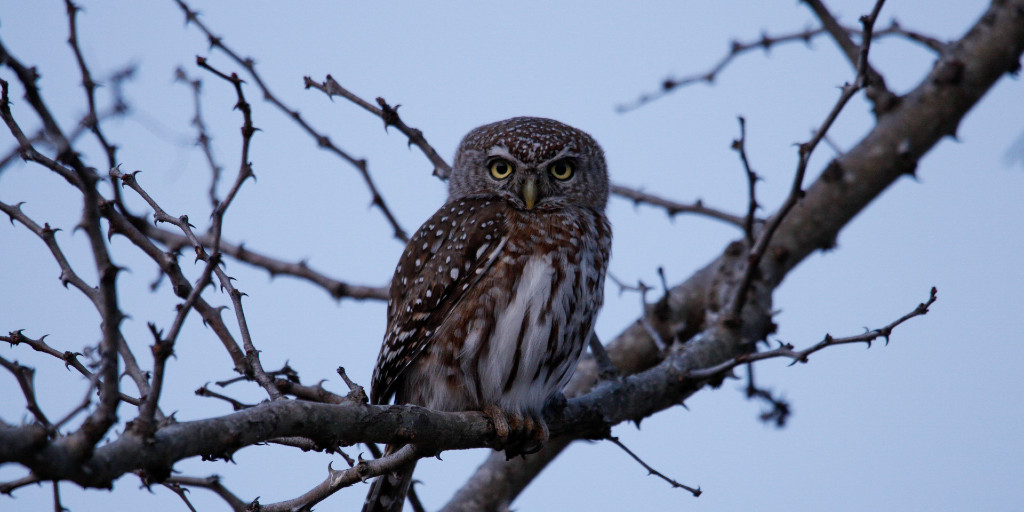
    So there I sat, and rather than enjoying the peace and tranquility, it was making me uncomfortable. I gave it five minutes, and then ten. But the silence was still too much for me. I was ready to go and wake somebody up to keep me company – until a pearl-spotted owlet started calling in the distance. My discomfort shattered like a mirror that had been hit by a rock, and I started to enjoy the sounds of nature around me. I could focus and do some self-reflection, with only the occasional sound to remind me where I was, and what I had decided to devote the rest of my life to.

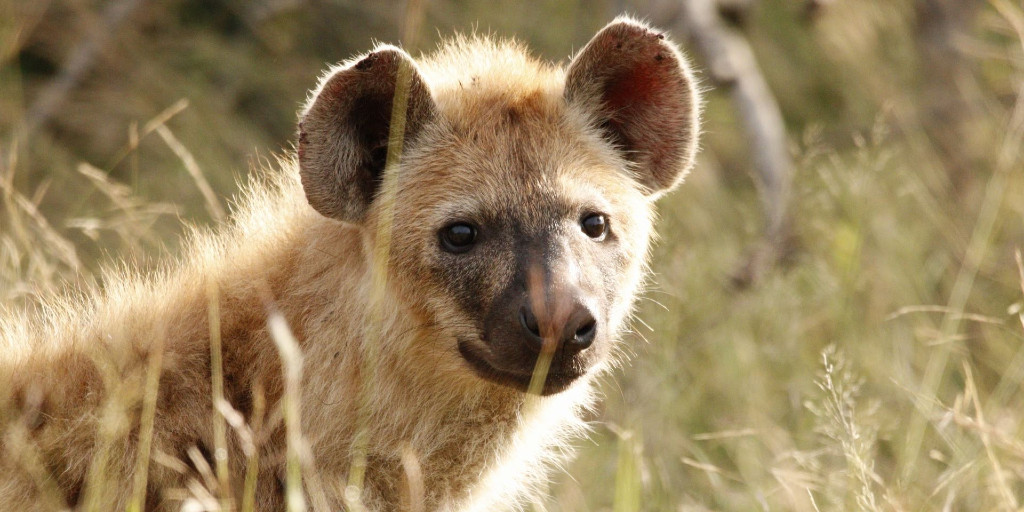
    However, the night on sleepout was not yet done with me. About an hour into my shift, when I started to relax and find myself again, I heard a sound that reminded me that nature is not only peace and silence, but also adrenaline. The sound was that of a hyena laughing – a hyena very close to the campsite. With only our spotlights and the moon for light, the three of us on watch duty started searching our sections of grass for the hyena. We knew we were safe and that it was only curious about the foreign smells in its home, but knowing something and believing it can be very different things. Over the next hour, we saw the hyena multiple times as it walked around the campsite investigating us.

    image

    I often forget how different it is seeing nature from the back of a safari truck compared to sitting in the middle of the bush, on sleepout, without anything to offer a false sense of security. However, interacting with nature on such a personal level is also the moment that I feel most alive.

    Does the idea of reconnecting with nature resonate with you? Would you like to have an experience similar to Franco? Apply today and soon this could be your story.

    #fieldguide #sleepout #apprenticefieldguide #hyena

  • A team effort: life with my Bushwise family

    BY: Wana Bezuidenhout

    Camp manager blogs are written by our current students who each get a chance to lead and manage a group (of their fellow students) for a period of one week.

    Starting the Bushwise Field Guide course is one of the best life choices one could make.  Not only because it’s a dream come true – it’s also the start of future and lifelong bonds with like-minded people. It’s the knowledge that is shared between passionate trainers and students that are eager to learn. It’s the excitement of seeing the growth in your fellow students in only one semester.

    So far during this course, we have experienced so much excitement and seen so much effort go into each and every day. We’ve spent days learning how life will be as a field guide and our daily game drives have delivered the best sightings. We’ve all become more aware of our surroundings and what nature has to offer us – trees, plants, grasses, birds, insects, and mammals.

    image

    From day one we immediately became one big “bush-loving” family. Each of us brought our unique personalities and thoughts. We’ve learnt how to work together and be team players – whether that means waking up at four in the morning to get coffee and snacks ready for the morning game drive, or helping team members change a flat tyre.

    One memory I will never forget was a morning where a few of us were sitting at the dining room table taking a short study break, when we heard the sounds of a car on the main road just outside the campus. After the heavy rain the previous day we knew the road would be wet, and the sounds coming from the car indicated that it was stuck in the mud. We decided to go outside and have a look, in case it was students coming back from town.

    image

    Three of us offered to help, and saw it wasn’t other students, but rather some of our neighbours in their bakkie (pickup truck). With a lot of muscle and some quick thinking, we managed to get their bakkie out, and sent them on their way. Covered in mud, the three of us returned to camp with a memory that will last a lifetime.

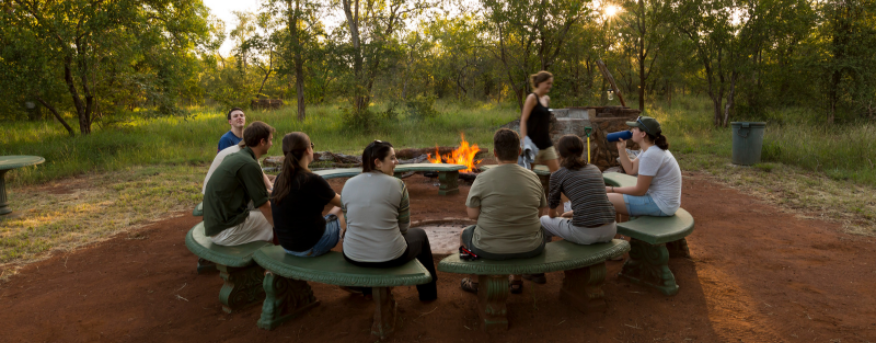
    There is not one moment in a day that I would replace. Every day has been full of memories and my fellow students have become family, so that even the silliest stories around the campfire are interesting. I have a smile on my face every night, often laughing so hard that my tummy still hurts the following day, simply from being a part of something so amazing.

    image

    Game drives will always be my favourite part of the day. This is where we learn the practical knowledge needed to become field guides. Lessons include knowing what to do in certain situations and how to share your knowledge with guests. Each student is given the opportunity to practice their game drives, and through each one we learn new things and see nature from their perspective.

    Being a Bushwise student definitely changes you for the better. It teaches you how to work together as a team and take on responsibilities. Take our camp duties as an example. Everyone is separated into teams and has specific duties allocated to their group on a weekly rotation basis. I’m enjoying being part of a big team of people with the same interests as me. It offers us the opportunity to see things from a different perspective while adding stories and sharing knowledge.

    image

    Every day at Bushwise is a gift, something unforgettable. I am truly blessed to be part of this wonderful “bush-loving” family. There is something new to learn every day. I’ve never found time spent in nature and its surroundings to be a waste of time. My wish is that I stay like this: having a love for nature and passing it on to each and every person I meet. Nature reveals beautiful parts of ourselves we could not find anywhere else.

    Do you want to find your bush family like Wana? Apply today and get started on a similar path towards becoming a field guide.

    #gameranger #bushwise #fieldguide #apprenticefieldguide #gamedrive #fieldguidecourse
  • Lions and hyenas and wild dogs – oh my!

    BY: Amelia Buckley

    Camp manager blogs are written by our current students who each get a chance to lead and manage a group of their fellow students for a period of one week.

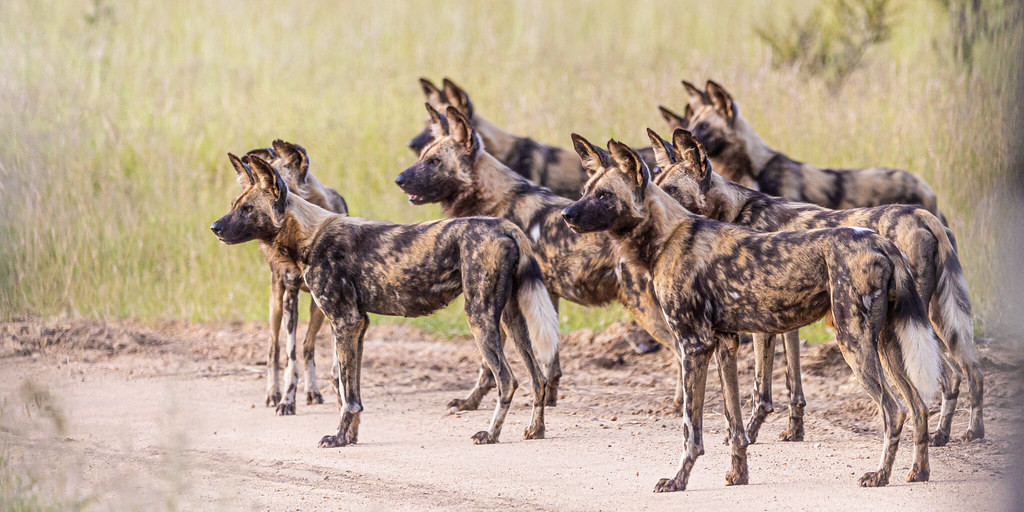
    This week with Bushwise we were treated to an unbelievable sighting in the Greater Kruger – an interaction between three of Africa’s apex predators: a pack of wild dogs, a clan of spotted hyenas, and a pride of lions.

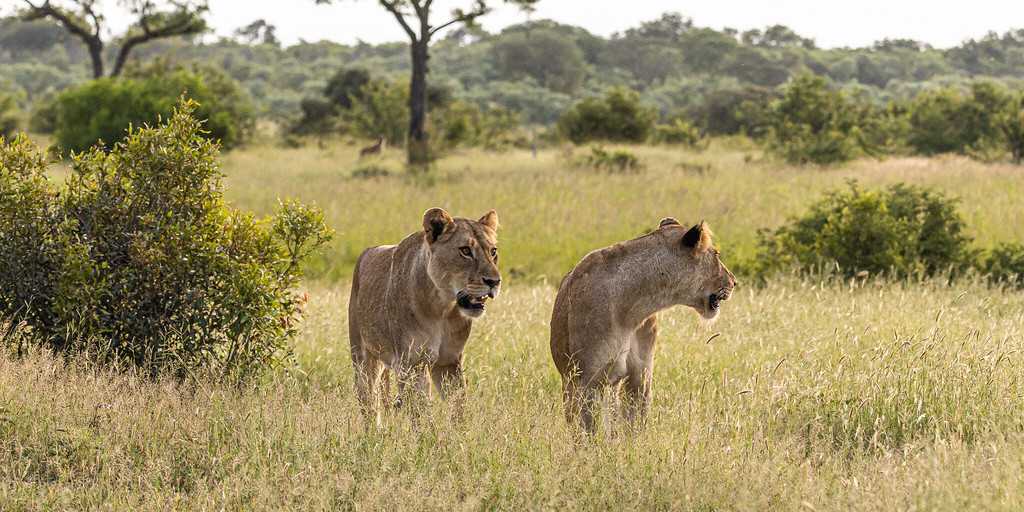
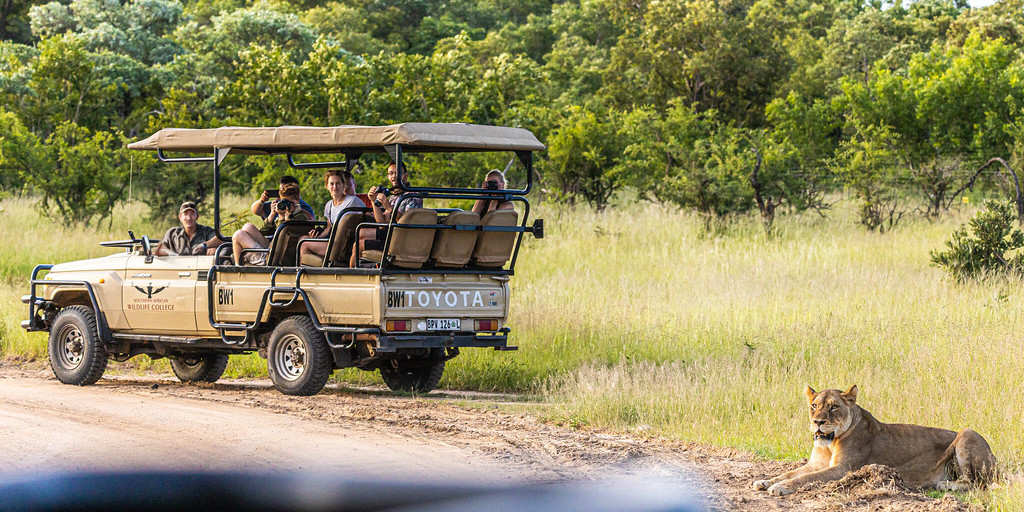
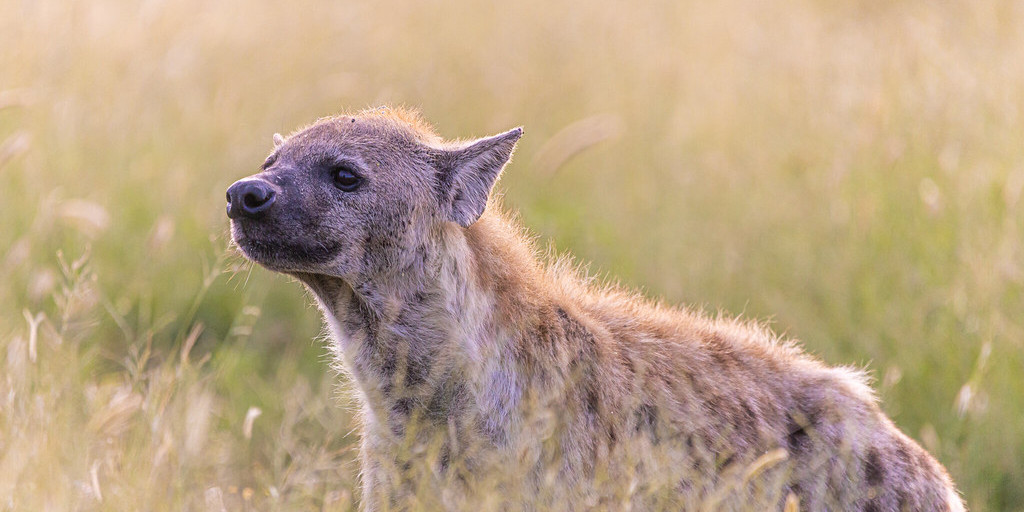
    Towards the end of a typical afternoon game drive we were heading back to campus when we suddenly spotted the heads of two lionesses on the move, with a spotted hyena trotting nearby. We were all super excited, as having hyenas near a pride of lions was bound to be interesting.

    image

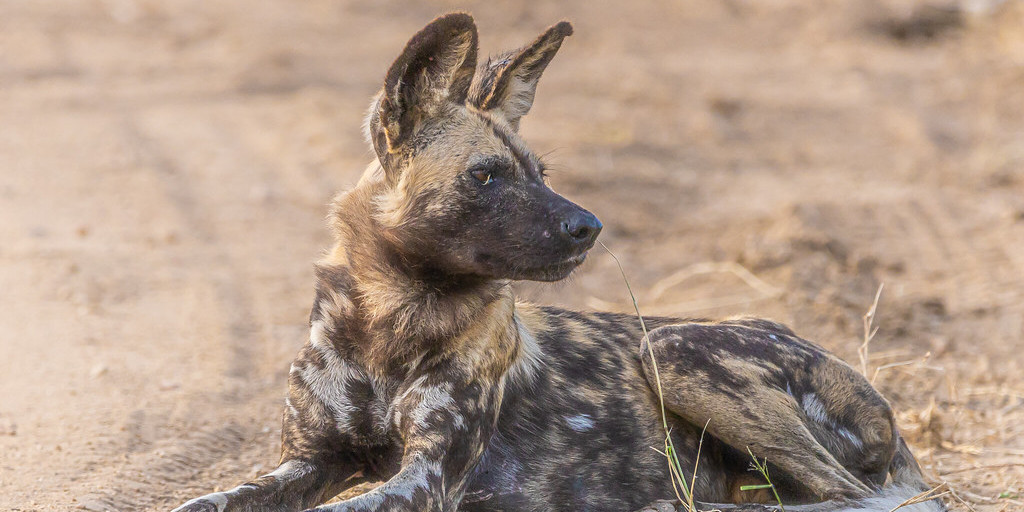
    We continued down the road, aiming to get a better view from around the corner. But when we turned the corner we came to an abrupt halt. There on the road in front of us were not the lions we expected – but a pack of wild dogs relaxing on the road! We couldn’t believe it. Wild dogs are one of the rarest and most endangered carnivores in Africa and are famously difficult to spot. And yet, there in front of us was a pack of 17.

    We pulled up to the left of the wild dogs, giving them plenty of space, and sat and watched them. We were all speechless with excitement, not quite believing our eyes. Suddenly one of the dogs stood up and the rest followed, and they started to walk down the road towards us. Holding our breath, we sat still in the car as the whole pack passed by – just a few metres from the car. After they disappeared around the corner we turned the vehicle around and followed them.

    image

    When we found them again they had stopped walking and were looking out over the bush. We then realised that coming down the road behind us was one of the hyenas we spotted earlier. As it got closer, one of the wild dogs broke off from the pack and ran towards it. In response, the hyena immediately turned around and ran back into the bush, clearly not wanting to pick a flight with the pack.

    A few moments later we hear the hyena reacting to loud growling coming from the lions we had seen earlier. We realised the clueless hyena must have run straight into the pride of lions and been told off for coming too close!

    We stayed with the wild dogs for a bit longer and they seemed to be settling down again. We then decided to head back towards the lions to see if we could see what had happened between them and the hyenas. As we rounded the corner, we spotted one of the lionesses standing on the road.

    image

    We parked alongside the road and silently watched as the rest of the pride came out from the grass to join the lioness. The whole pride then proceeded to walk down the road towards us.

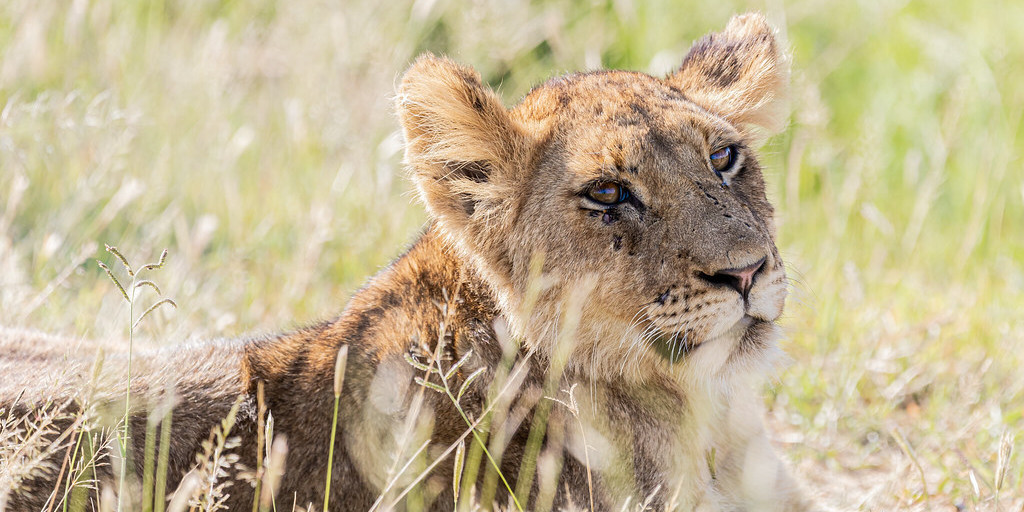
    I have never been so close to a lion – obviously from the safety of our vehicle and maintaining a respectful distance. It is an incredible feeling to be so close to an apex predator. A lion is bigger than you would imagine and they have a very memorable smell! The pride walked past, close to the game viewer. As they walked they turned their heads towards us and it felt like they were staring right into our eyes.

    They continued around the corner behind us and we quickly turned the car around. We knew the lions were heading towards the pack of wild dogs and would be coming up to them in a matter of seconds.

    image

    The pack of wild dogs suddenly jumped out of the grass onto the road. They were on high alert looking around – they knew something was coming. Then, from down the road, the lioness leading the pride spotted them. She began to chase them (lions are much larger and will attack wild dogs) and the pack scattered in two directions, running off into the long grass and alarm calling. The lioness stopped and looked back at her pride, who came trotting up to her. All the while the hyenas were calling out excitedly in the distance.

    As the sun began to set on another incredible day at Bushwise, the lions wandered off down the road and the bush quieted down. Already late for our dinner back at campus, we paused for a quick look at the beautiful sunset before heading back. All of us were in awe of what just happened – and too shocked to speak.

    image

    To see a pack of wild dogs is incredible in itself, but to see them first interact with a couple of stalking hyenas, and then hear a pride of lions scare off the hyenas before chasing the wild dogs (all in one sighting) was incredible – and an experience that I will remember forever.

    The relationship between these three apex predators is interesting. Hyenas are highly successful hunters, despite the common misconception that they only scavenge off others. All three species compete for similar resources – be it food or habitat. Lions killing wild dogs or hyenas is not uncommon. Wild dogs are the smallest and most endangered of the three species, making them the most at risk. To observe these predators interacting in real life, from so close a position, was one of the highlights of my time at Bushwise so far.

    Do you want to observe incredible predator interactions for yourself, like Amelia? Apply today and join the next cohort of Bushwise Field Guide students!

    #gameranger #fieldguide #lions #apprenticefieldguide #wilddogs #hyenas #gamedrive #fieldguidecourse
  • Learning the language of the African bush

    BY: Hannah Brandsma

    Camp manager blogs are written by our current students who each get a chance to lead and manage a group (of their fellow students) for a period of one week.

    The first few weeks with Bushwise Field Guides could not have been more exciting! For starters, we got out of the classroom and began doing morning and evening game drives. This meant we were up at 4:30am and in bed only by 11:00pm, depending on how much work and studying needed to be done in between.

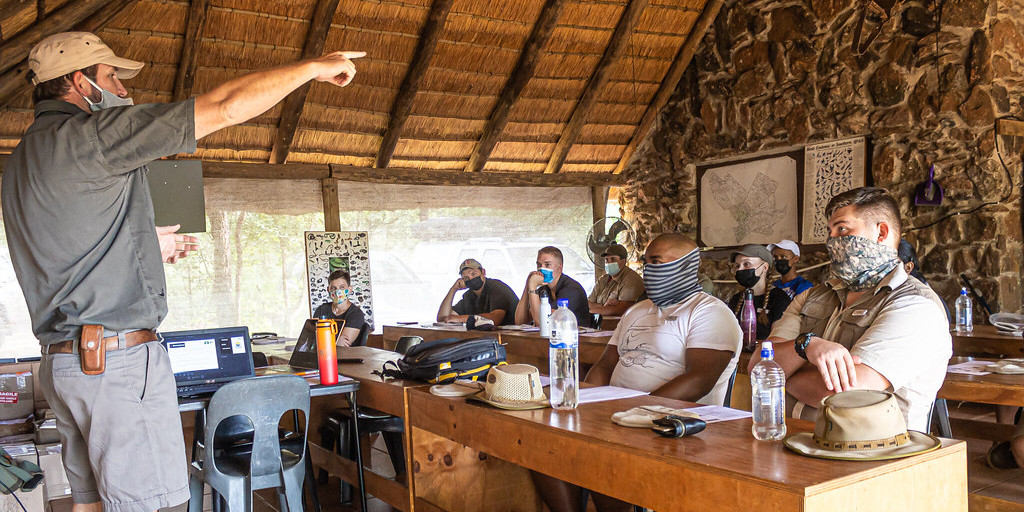
    Learning about the different aspects of the bush practically from game viewers and theoretically in the classroom has been an incredible experience for all of us. This is especially true for me, being from a big city. We have all started to learn this beautiful new language that very few are privileged to know – the language of the bush.

    image

    Photo by Hannah Brandsma

    Now this isn’t just any language that just anyone can learn. This language involves every sense you have as well as your knowledge and understanding of nature, and your ability to interpret what you observe.

    From interpreting the fresh tracks of a lion to listening to the sounds of the birds; from noticing the smallest broken twig to inhaling the unmistakable smell of an animal; each observation allows us to gain insight into what we see, smell, feel, and hear.

    We’ve tasted the fruits of the white berry bush, smelled the dung of a white rhino, heard the sound of red-billed oxpeckers and seen the difference between a male and female lion track. All of these letters of this very unique alphabet will eventually become our common language, for us to interpret to the visitors of this amazing landscape.

    image

    Photo by Hannah Brandsma

    I am also enjoying the amount of photographic content I am getting. This is a photographer’s utopia – no sighting or image is ever exactly the same. Through my lens I can take a snapshot that will freeze a moment in time, telling a story about a small piece of this landscape and the unique life and characters within it. From wildlife to wild flowers, the colour and variation is endless. I come back from every drive excited to go through my photos and share these amazing moments.

    We have all become acquainted with our wild neighbours that live with us on campus. There’s the honey badgers that help themselves to the leftovers in the fridge (who never seem to mind that we’re studying just a few metres away).

    There’s the security frogs that live in the toilets and around the doors of the bedrooms, sounding out the alarm when a human approaches (thankfully, they make sure the insect population is kept in check).

    image

    Photo by Louise Pavid

    There’s the occasional porcupine that comes to visit some nights. And of course Bounce, the habituated (but still very wild!) bushbaby who enjoys frightening students by jumping onto heads or shoulders while we walk under the trees.

    Our noisy neighbours are a bit more distant. From camp we hear the laughter of zebras and the clan calls of hyenas. Sometimes we can even hear a lion pride announcing their movements. Training with Bushwise is an experience like no other, with the sounds and sights of the bush on our doorstep.

    What makes this whole new adventure one thousand times better are the people with whom I’m sharing these amazing stories and sights. We have all become good friends, with laughs, jokes and banter through thick and thin.

    image

    Photo by Louise Pavid

    I’m surrounded by these insanely amazing people who I’m so fortunate to call friends, and I feel as though we have been through so much together in such a short time. They are always ready with a quick joke – but just as ready to offer help when it’s needed.

    Without the people I am training with (the trainers and my peers) it would be simply a good experience. These humans have made these first few weeks absolutely unforgettable and I am grateful that I am here with them. I can’t wait to see how we evolve over the next few months. The fun and memories are only just beginning!

    Do you want to start making memories that last a lifetime, and learn the language of the bush like Hannah? Apply today and get started!

    #Birding #fieldguide #apprenticefieldguide #fieldguidetrainer #trackandsign #gamedrive #fieldguidecourse
  • We don’t know these roads yet

    Some images in this article were taken pre-COVID-19. 

    BY: Danelle Ferreira

    Camp manager blogs are written by our current students who each get a chance to lead and manage a group (of their fellow students) for a period of one week.

    My first week with Bushwise at the Southern African Wildlife College (SAWC) can only be described as all other things in the African bush – wild!

    Things were thrilling from day one. As I drove in the gate towards campus, a lion sighting was reported on our student group chat. Rushed, excited, and a little bit unsure, I drove straight past the lions right by the side of the road on my way to the reception. Perhaps not boasting too well for my skills as a possible future field guide…

    But my disappointment was soon forgotten as I was greeted by friendly faces. The Bushwise students are from all over the place. Some flew halfway round the globe to start a new career path, while others have practically only moved down the road. Being the new Bushwise group at the SAWC campus meant finding our footing in a new and exciting environment.

    image

    Photo by: Louise Pavid

    The possibilities and unknowns of the new campus and concession have provided so many opportunities for us as a group. We have implemented procedures that work for us and it has really enriched our learning experience and sparked curiosity.

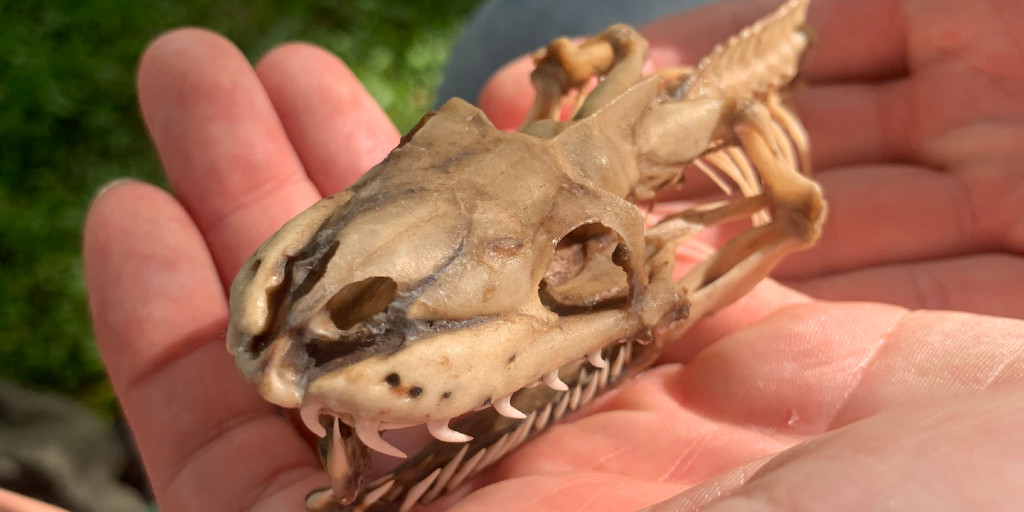
    During my week as Camp Manager, we started off with some necessary admin, our first aid course. Guides must be prepared for anything in the bush and know how to react quickly and safely! The week rounded out with a reptile orientation course, which was much less gruesome than I anticipated.

    image

    Photo by: Danelle Ferreira

    Throughout all of this, I still had to fulfill my camp manager duties, such as welcoming guests and external trainers, checking them in and out, and handling other small admin tasks. This has proven to be great exercise for my people skills – which is an essential part of becoming a high-quality guide!

    On Saturday we practiced tyre changing exercises. During this training, we had an unexpected visit from an elephant bull – our first close encounter – which was handled safely and respectfully by the trainers. This experience definitely made the group hungry for more.

    Although the first half of our week was busy, I was constantly aware of how calm everything and everyone around me was. That observation reminded me again of one of the reasons that I joined the Bushwise IFGA Safari Guiding course, and why we all love the Lowveld.

    image

    Photo by: Danelle Ferreira

    After a long week of training, Sundays are generally spent studying or relaxing. On our first Sunday, However, we received a message from one of the trainers saying to gather our cameras and binoculars and meet him at the gate in five minutes. No one hesitated – when you get a message like that from a trainer, you jump to it!

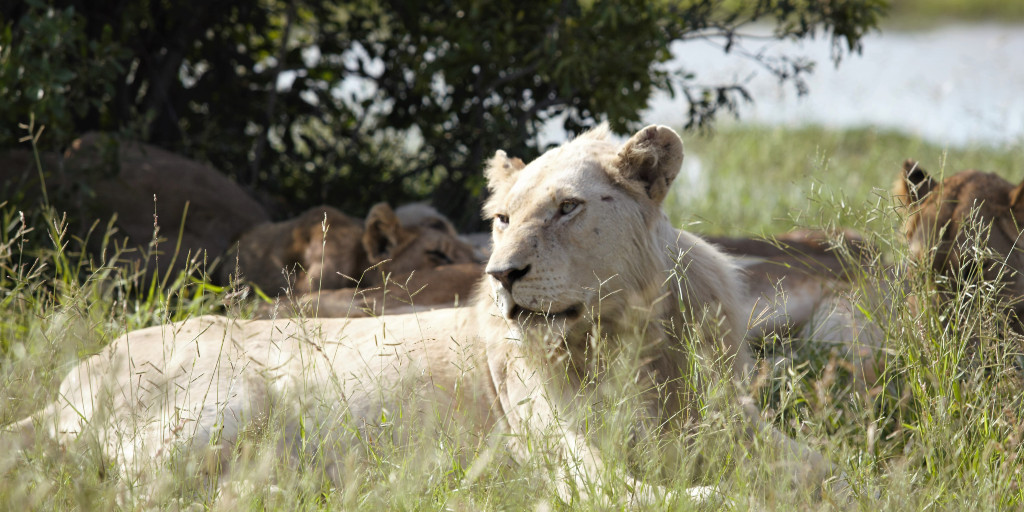
    We didn’t know it – but we were about to be treated to a sighting of the world-famous Birmingham pride with its two white lions. This was many of the students’ first sighting of white lions in the wild. This day certainly took the cake for me, as it is a rare occurrence and something that we had certainly hoped for.

    With the excitement of the previous day still in my head, on Monday we set off on our first mock game drives. This is the time when students get a chance to drive a game viewer vehicle, sometimes for the first time. I was one of the first to go, and definitely felt nerves again as I had on day one.

    image

    Photo by: Louise Pavid

    On that drive, I didn’t go 10 meters without learning something new, and this has been the case every drive since.

    All in all, week one was quite the learning curve. I’m experiencing and learning so much. Each student in the group brings unique skills and attributes to the program, and learning from each other is helping us all become better guides. At times it has been overwhelming, but mostly very insightful for my expectations of the guiding industry.

    For all prospective students – watch this space – we are brewing up a conservation storm here at Bushwise!

    Do you want to have life-changing experiences like Danelle? Apply today and secure your spot in an upcoming Bushwise course.

  • Hitting the ground running

    Some images in this article were taken pre-COVID-19. 

    BY: Suvania Govender

    Camp manager blogs are written by our current students who each get a chance to lead and manage a group (of their fellow students) for a period of one week.

    In just two short weeks, the lives of 16 enthusiastic nature lovers have been irreversibly changed. We arrived at the Bushwise Mahlahla campus, the place we would call home for the next six months, on a hot Friday afternoon, eager to see what awaits us and to meet the people with whom we would share this extraordinary journey.

    In the Bushwise Field Guide course, I fully expected to meet like-minded people who I could get on with. What I did not expect, however, was just how easily and naturally the bond between us would form.

    image

    As the first few days passed and the magic of the bushveld engulfed us, we very quickly became our own little family of sorts. Together, we were ready to take on whatever was in store for us… and there was a lot in store.

    I could say we began to settle into a routine, but as I have quickly learned, you can never truly have a set routine when living in the bush! Anything can (and will) change in a moment’s notice. In short, life in the bush means constantly expecting the unexpected.

    Side note, this is also the reason why you will see every true bush person with their signature Leatherman at hand, prepared for anything and everything.

    image

    This “expect the unexpected” lifestyle wasted no time in teaching us the ways of the bush. From excellent sightings of mammals, birds, reptiles, and other animals, we’ve been going nonstop since our arrival. We’ve learned about trees, grasses, game viewer maintenance, camp duties, and much more. It has already been the experience of a lifetime, that none of us are likely to forget any time soon.

    A story that I will never forget, and that I will be telling around bonfires for the rest of my life, took place on the third day of student game drives. We were wrapping up an afternoon drive and heading back towards camp for supper. Mealtimes were undoubtedly everyone’s favourite time of day, thanks to camp Masterchef Iris, so we were very eager to get back in time.

    We decided to take a river crossing that would be the shortest way home, but the river had other plans for us. As can happen on river crossings, one of our tires became stuck in the soft sand, just on the edge of the riverbank. Even with the nine of us on the game viewer pushing as hard as we could, we still could not budge the vehicle, so it was time to call for backup.

    There we stood on the banks of the river, muddy and with adrenaline coursing through us, telling stories while waiting for backup to arrive. While it might have seemed scary, we knew everything would be fine, and completely trusted our trainers and fellow students to help us out. I can honestly say that that moment is one that will be with me forever.

    We finally saw the approach of rescuers in the other game vehicle. Together, with 16 students and two trainers, we had enough manpower to get the vehicle moving out of its stuck position. With one great push we were out of the river and on the other side.

    Wet and hungry, but in the highest of spirits, we drove back to camp with the first of many jaw-dropping bonfire stories in our back pockets.

    image

    This story is just one of the best things that has happened in the first weeks of training. It has been an exciting start to the journey to becoming certified through Bushwise Field Guides. With momentum like this, it is impossible to guess the kinds of stories I will have at the end of this course.

    Every morning at Bushwise I wake up grateful for this amazing, one in a million opportunity I have been given. Every night I go to sleep in awe of the absolute glory of the bush and all that comes with it, including the incredible people I get to share it with. These two weeks have been some of the most incredible days of my life, I truly cannot wait to see what the rest of this journey has in store for me!

    Do you want to have incredible life-changing experiences like Suvania? Apply today and join one of our future Bushwise IFGA Safari Guide courses and start making memories.

  • A Nature Nerd’s Paradise

    By: Callum Evans

    Callum, a Bushwise graduate, looks back on all the weird and wonderful, small and elusive animals he spotted during his time with Bushwise Field Guides.

    When I arrived at Bushwise for the Bushwise IFGA Safari Guide course, I was prepared to see a decent amount of animals and plants. But during my time there, I was completely blown away by the sheer diversity of life that I encountered. 

    With the Greater Kruger National Park being famous for large and iconic mammal species, smaller life can be overlooked. From butterflies to frogs to birds, the bushveld really is a nature nerd’s paradise. 

    Birds in paradise

    image

    Photo by: Callum Evans

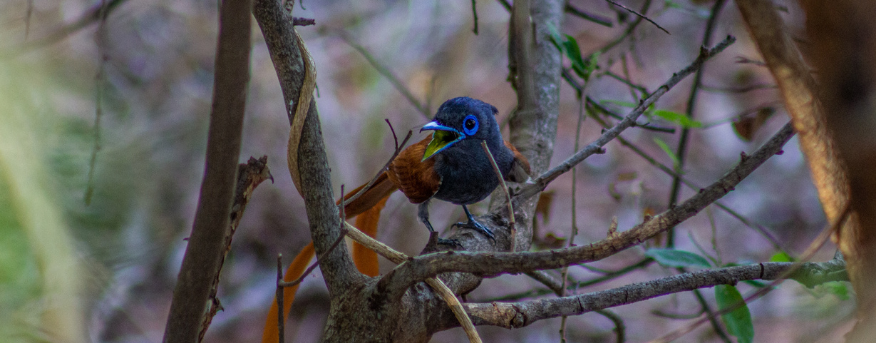
    As a keen birder, I was very excited to look for birds in this area and it definitely exceeded my expectations. Within five months I recorded 180 bird species. This included 15 I had never seen before, like yellow-bellied greenbuls, Retz’s helmet-shrikes and ashy flycatcher. 

    Perhaps the most exciting part about birding is the chance to find a bird party, with multiple species moving together feeding off the same food source. Here you’ll see chinspot batis, southern black tit, black-backed puffback, long-billed crombec and red-billed hornbill.

    The large iconic birds like a saddle-billed stork, martial eagle, bateleur, and white-backed vulture are always thrilling to see. I was also lucky enough to spot southern ground hornbill and kori bustard in Kruger. 

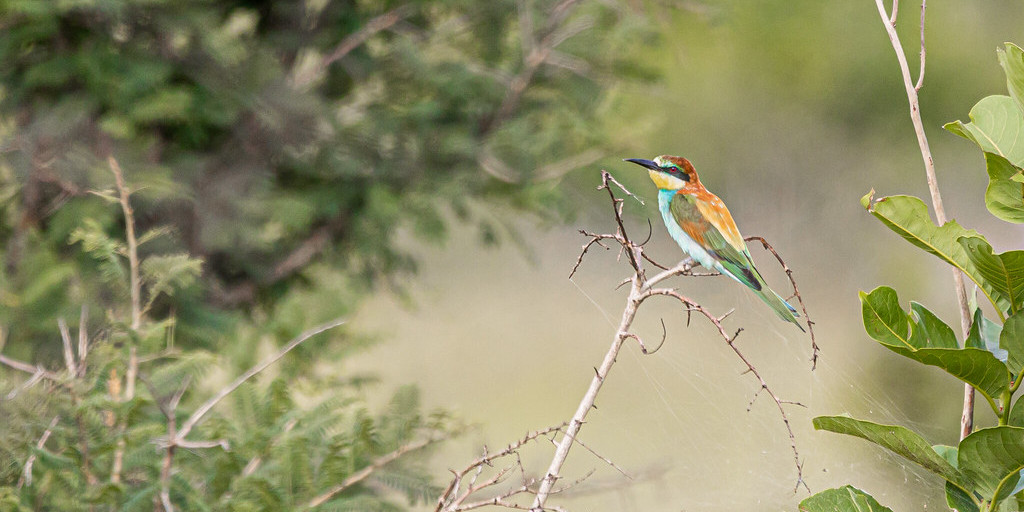
    In December, the migrant species arrived, including broad-billed rollers, violet-backed starlings, Levaillant’s cuckoo, European bee-eaters, and red-chested and diderik cuckoos. Then the iconic woodland kingfisher joined the summer symphony.

    Chorus of frogs

    image

    Photo by: Callum Evans

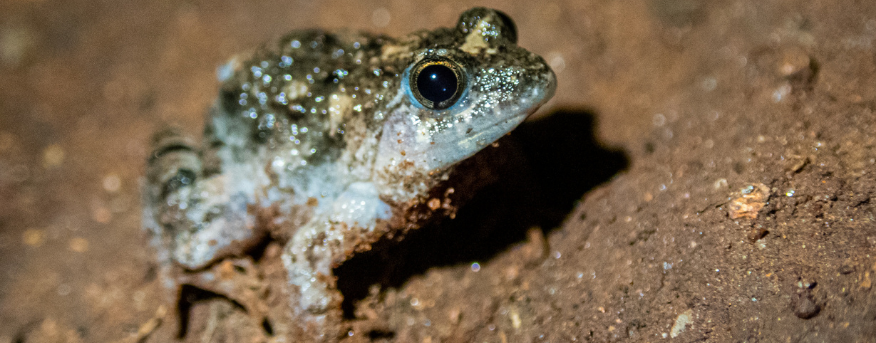
    Frogs fast became a passion of mine thanks to Bushwise Field Guides. Throughout the Field Guide Training course, southern foam nest frogs and red toads were regular visitors to our rooms. Then the rains brought some really exciting new frogs and soon, the dam came alive with a cacophony of different species. 

    Bushveld rain frogs moved through campus at night and the reeds were dominated by brown-backed tree-frogs and broad-banded grass frogs. The tiny bubbling kassina was harder to spot but its call was very distinctive nonetheless. I even spotted an African bullfrog near campus. Ornate frogs were breeding and banded rubber frogs emerged.

    Elusive reptiles

    It was harder to spot the reptile species here. However, slowly but surely, I was able to see a number of species, especially the striped and rainbow skinks, and the Turner’s thick-toed and Wahlberg’s geckos. 

    image

    Photo by: Callum Evans

    Small bushveld and spotted sand lizards were very skittish, shooting away as soon as we approached. The larger species of lizard, like rock monitors, were more visible with the rains. Water monitors prefered to hide around water sources and giant plated lizards could at times be seen basking on rocky outcrops. 

    The rains also triggered leopard tortoises to start moving around, while marsh terrapins are present in almost every body of water. Nile crocodiles were perhaps the most easily seen reptile, while snakes were the hardest to see. 

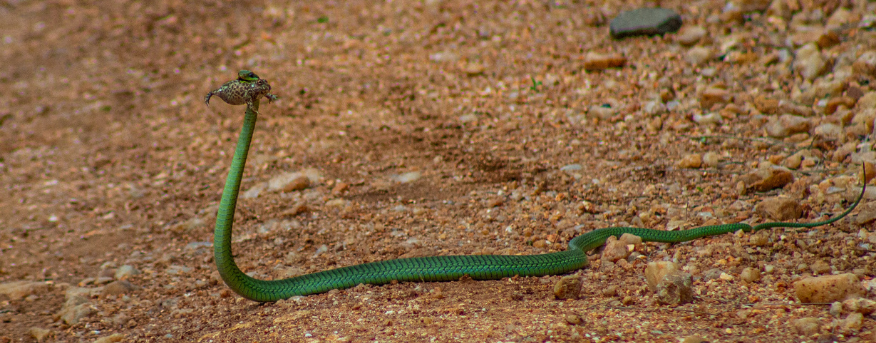
    I personally only encountered four snake species in the area. This included two Mozambique spitting cobras, two small puff adders and a tiny stiletto snake. I was also extremely lucky to watch a large boomslang catch and swallow an ornate frog. 

    Insects and arthropods abound

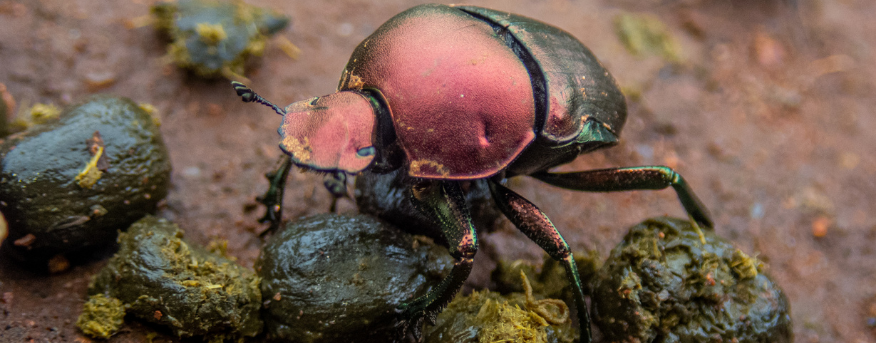
    Out of all the animals, it is the insects and other arthropods that truly make an ecosystem work. In particular, after the rains, beetles could be found everywhere. Giant longhorns and ground beetles walked all over the place, especially at night. As the course went on, more and more dung beetles appeared. 
    image

    Photo by: Callum Evans

    Perhaps the most bizarre one I saw was an ant’s guest beetle, with large and bizarrely structured antennae shaped like broad feathers. Millipedes were some of the most easily seen arthropods, while the centipedes tended to be more elusive. 

    Even in winter, there were plenty of insects to be seen. Butterflies, like the yellow pansy, blue pansy, African monarch and guineafowl could be seen easily throughout the year. Columns of Matabele ants and harvester termites could be heard at night.

    Spiders are ever present in the bushveld, whether it is the unobtrusive wall spiders or water spiders, or the golden orb web spiders in their impressive webs. The homes of community nest spiders adorn many of the trees in the area and the burrows of golden baboon spiders can be easily seen on the ground. 

    A few nights, scorpions made their presence known. I spotted three species: an olive lesser thicktail, a Jones burrowing scorpion, and a shiny burrowing scorpion. 

    My favourite arachnid was the tiny velvet mite. They are bright red with a dense coat of hair and are only seen directly after a heavy downpour.

    Mammals come out to play

    image

    Photo by: Callum Evans

    Of course, the high numbers of mammals in this region complete the picture. I was lucky to see dozens of species of mammals, from a Mauritian tomb bat to elephants. 

    The Greater Kruger National Park offers a great chance to see large numbers of mammals moving through a spacious and relatively continuous system. 

    I saw large groups of grazing mammals in the open savannas, most notably zebra and wildebeest. Big herds of impala, as well as kudu, nyala, and waterbuck would often congregate along riverine areas. I also witnessed some rarer antelope species in the Lowveld, including sable, klipspringer and a Sharpe’s grysbok. 

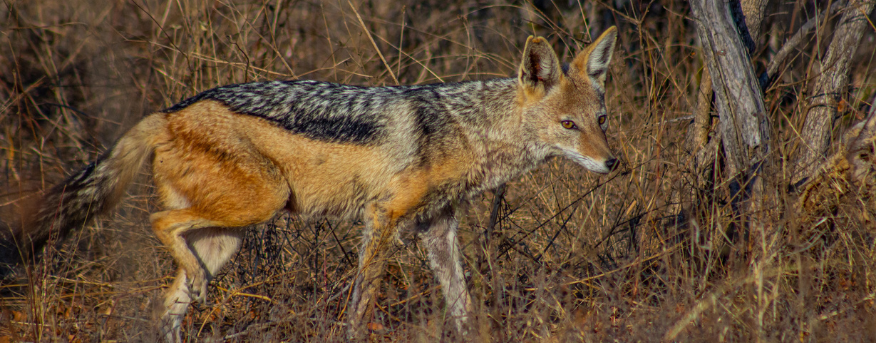
    Wherever large numbers of herbivores occur, there will always be predators. The Kruger region has some of the highest densities of large predators, especially big cats, in Africa. I saw lions, cheetahs, and leopards on a number of occasions. I also had some really memorable sightings of spotted hyena and black-backed jackal, including seeing the young of both species. 

    image

    Photo by: Callum Evans

    Some of the rarer nocturnal species I saw include African wild cat, honey badger, civet, porcupine and thick-tailed bushbaby. Perhaps my most memorable mammal sighting on the course was encountering a pack of African wild dogs in the Kruger and getting to spend over an hour and a half observing them. 
    These sightings were all incredibly special. I count myself very fortunate to have seen these interesting, beautiful and at times bizarre creatures while I was at Bushwise. It really was a special journey learning about the amazing biodiversity that the Lowveld holds.

    Do you want to experience Lowveld wildlife like Callum has? Apply today to join one of our Bushwise Field Guide courses and kick-start your guiding career.

  • Transforming into a safari guide

    BY: Sanette Jonker

    One of our Bushwise IFGA Safari Guide course students looks back on her experience and discusses the lessons that she will take forward in her new career.
    There were two weeks left for us on campus, a place that had become home.

    As the first good rains fell in the Lowveld and the bush changed, I couldn’t help but think of our journey and how we too were transformed – we had blossomed as the trees had blossomed and filled with knowledge as the dams had filled with water.

    image

    In mid-December, we had the ultimate test of what we had learnt at Bushwise: our theory exams and practical evaluations. Our trainers’ hours and hours of pouring out knowledge, and students’ hours and hours of absorbing it, had finally arrived.

    It was the week of Final practical drives, proving that we were worth the badge and had the knowledge to be field guides.

    By the time the practical drives came, we had all written our Bushwise exams and had just a few practical evaluations remaining.

    You could feel the tension in camp-like pressure mounting before a thunderstorm. 

    Students were frantically deciding on routes, washing vehicles late in the evening and early mornings, preparing snacks and ensuring we remembered everything we were taught over the course.

    image

    We all love nature, that is why we chose to do the Bushwise IFGA Safari Guide Course. But there is so much more to guiding than driving a vehicle and finding animals. You have to remember that everything you do has a consequence. 

    One of the first things we must consider and be aware of when we are in the bush is safety and respect. Safety and respect for ourselves, our peers, our guests and mother nature. 

    It is a great honour and responsibility to be able to guide in a Big 5 area, and this comes with rigorous training and evaluations.

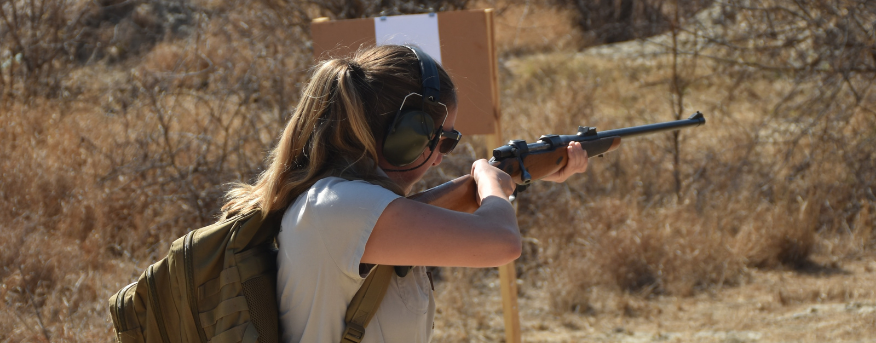
    For example, when we were trained in Advanced Rifle Handling and Viewing Potentially Dangerous Animals (ARH and VPDA), we learnt the importance of animal comfort zones. We were also taught the basics of animal behaviour to better understand when it is safe and ethical to approach a sighting without altering the animal’s behaviour. It is equally important to know when to leave the animal alone. 

    image

    Safety – for both you and the animal – is paramount. 

    This was instilled in us, as well as the respect for the animals’ space and comfort. You cannot conduct either ARH or VPDA if you do not practice safety and respect. That is why so much of our training focused on learning more about wild animal behaviour, how to avoid getting yourself into an unfavourable situation and how to safely extract yourself from such situations.

    Honestly, the course and this journey was a ride and a half! I truly believe that each one of us now calls the bushveld home.
    Is home a place? In my mind it is a feeling!

    As we go forth into the field guiding industry, I hope we continue to learn and thrive in this place we love.

    Do you want to feel at home in the South African bush like Sanette? Apply today to jump start your field guiding career.

  • Wander the wild: bushwalk

    BY: Louise Pavid
    The images in this article were taken pre-COVID-19.
    image

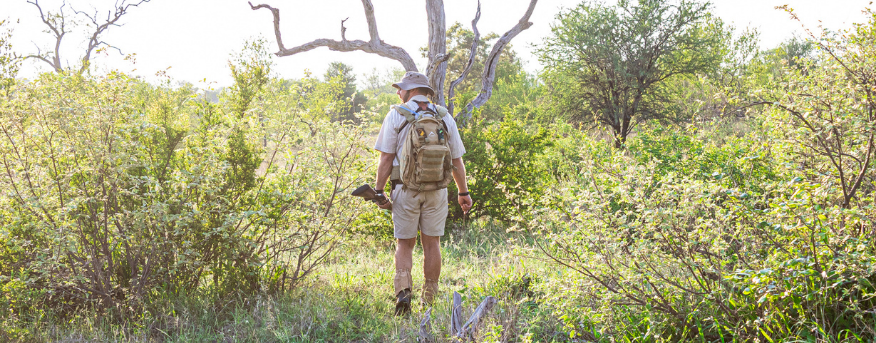
    Being on foot in the wild touches a primal, ancestral and seemingly forgotten part of our human genetics. In today’s modern, fast-paced and instantly gratified lifestyle, it’s easy to neglect the places we come from. It’s easy for us to say that we invade the animals’ home when on safari, but conveniently deny that Homo sapiens were born in the wild too.

    image

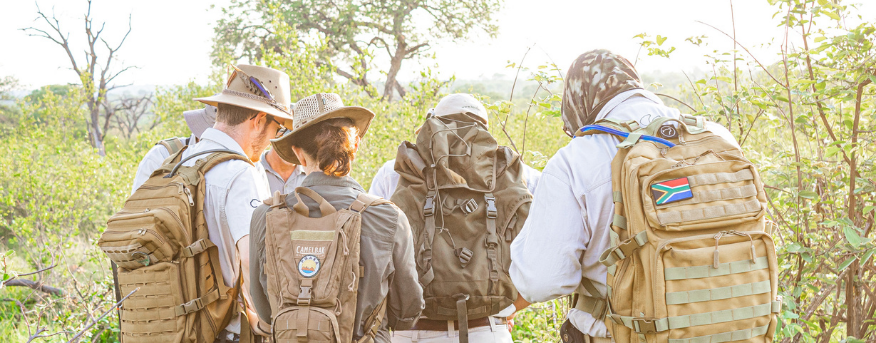
    The totally immersed and connected spirit between modern human and pristine wilderness becomes almost overwhelming in the vulnerability of on-foot wanders with nothing but the clothes on your back and a litre of water. This connection not only humbles you, but sharpens your senses, opens your mind and invigorates your body.

    image

    The light touch of humid air, the warm embrace of sunny skies, and the niggling scratches of sticks and thickets are nature’s touch. Resounding bird calls, the crunch of soil under your feet and the breaking branches of surrounding trees add audible clarity and quieten down busy minds. Shifting movements, flashing colours and cascading landscapes sharpen your vision and bring attention to easily unnoticed details in the wild.

    image

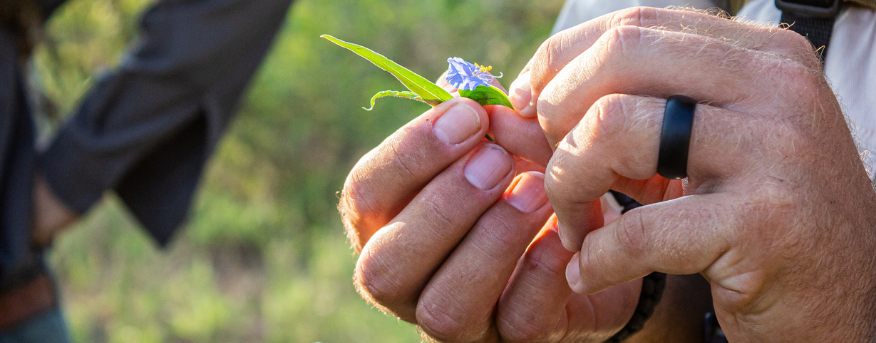
    The gifts of nature spill from a myriad of natural wonders. Blue commelina flowers not only delight our eyes, but provide relief from irritation. The clear and healing liquid produced by the flower has been used for centuries as nature’s eye drops. Before pharmaceuticals, there was only the wilderness and all its secrets laid bare for us to discover.

    image

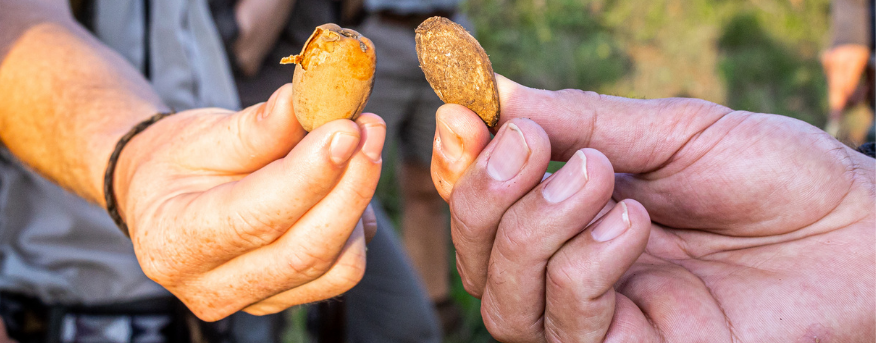
    The wild provides resources in ways that aren’t always obvious. Torchwood seeds are what sparked the iconic tree’s name. The oil contained within them burns long and slow. The flames bring with them safety, warmth and light, which are necessary for a night out in the wild.

    image

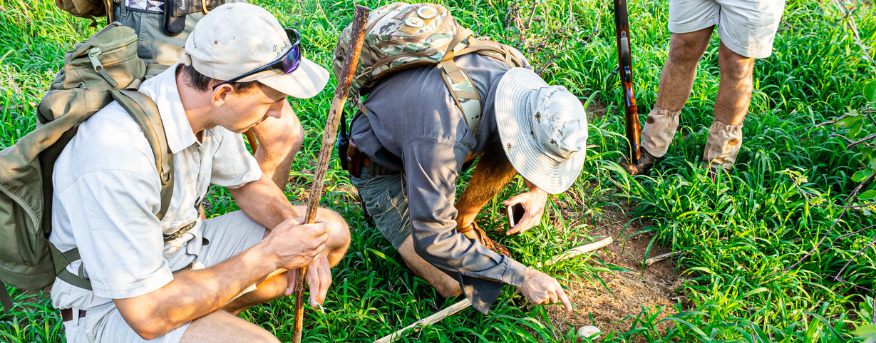
    Discovering the undiscovered is made possible only when you can take a closer look at what’s happening underfoot. Mushrooms flourish in hidden spaces, connected by a vast subterranean network called the mycorrhizal. Mycelium are the tendrilous threads of this network that reach out underground. This network is similar to the complex neural network of animals, and is the Earth’s nervous system that all plant life depends on for survival.