Category: Student journeys

  • The inside scoop on being a camp manager

    BY: Anton Fritz

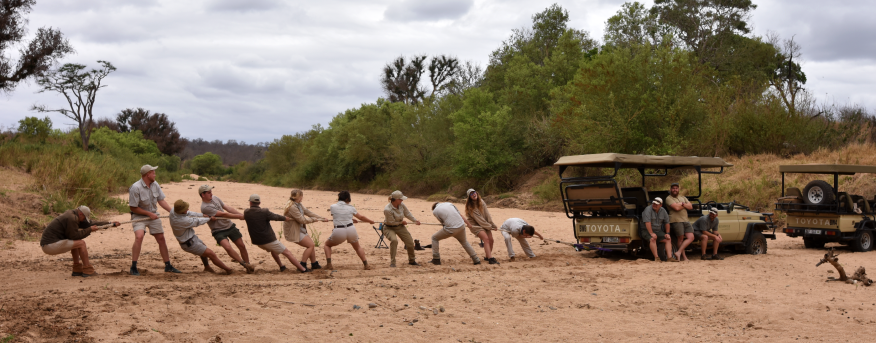
    Camp manager blogs are written by our students who each get a chance to lead and manage a group (of their fellow students) for a period of one week.

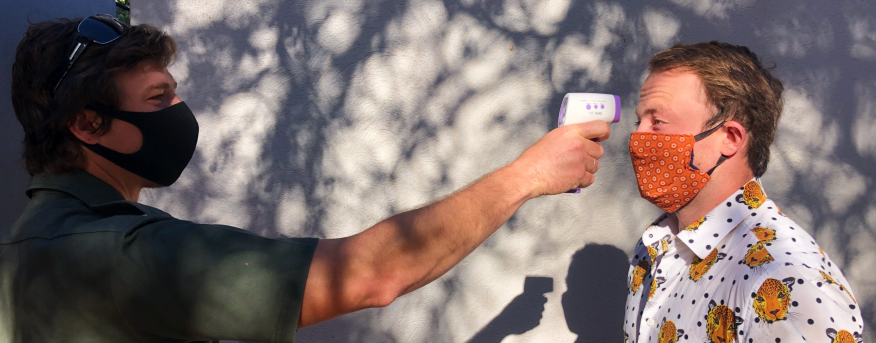
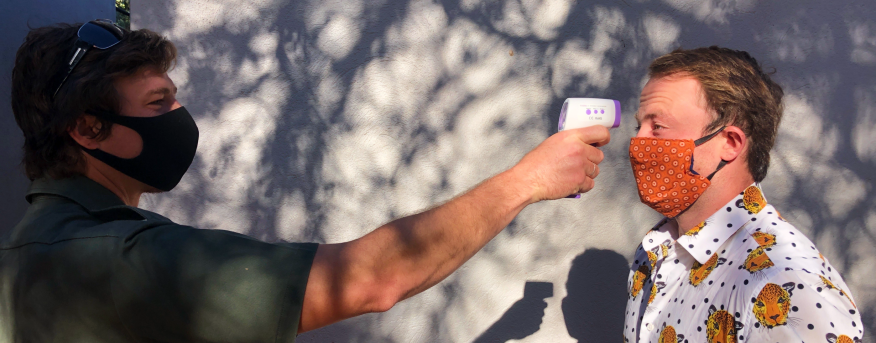
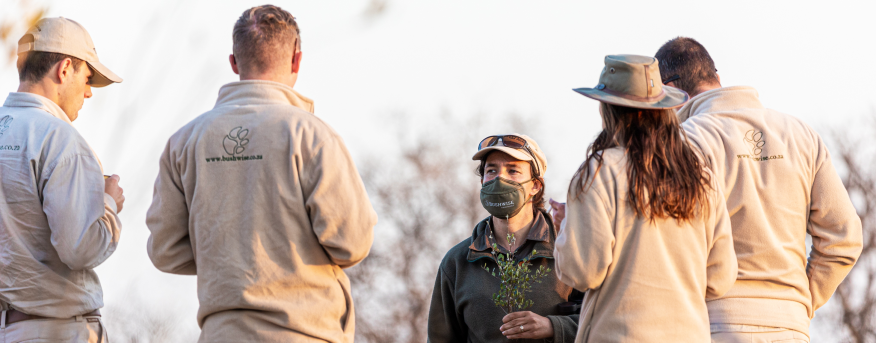
    I expected my role as camp manager to involve being the link between the students and trainers – relaying announcements, taking everyone’s temperatures as part of Bushwise’s COVID-19 health and safety protocols, and ensuring chores were being done. The experience was almost what I expected, but I learnt that while leadership looks glamorous from the outside, it can mean being responsible for everything, while in control of nothing!
    image

    I also passed on announcements like changes to our schedule, posted information on the classroom board (like the expected weather for the day and the meals planned), welcomed and made coffee for guests, and checked on chores. Making sure that everyone pulled their weight and completed their assigned duties could be a hassle!

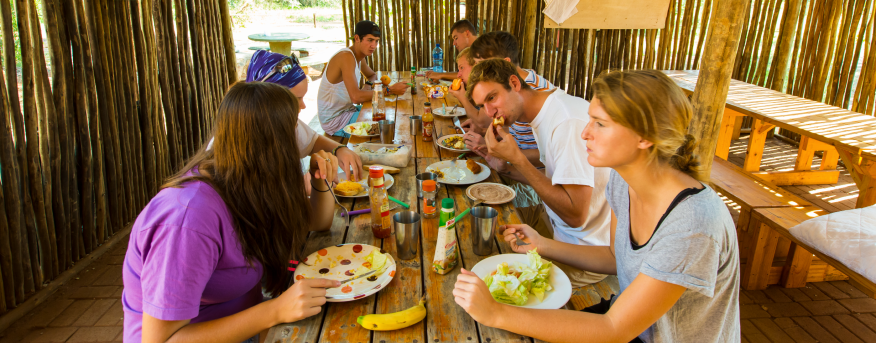
    Getting to be the host for a night was the most exciting experience. I decided on a semi-formal dinner, so I dressed up the classroom with tablecloths, candles, potted plants, and decorative skulls (to add a touch of Halloween to things). 
    image

    This image was taken pre-COVID-19.

    I also asked the other students to dress up, and to sit with students they don’t usually get to spend time with. With soft jazz playing in the background, we all performed mock toasts. 

    It took over two hours to prepare everything, and I had to acquire the decorations all on my own, but the night was a success. Effort goes a long way!

    I’d been finding it a significant challenge to make sure everyone got their chores done during the week – some students were harder to convince than others! So, I decided to address the class at dinner. 

    I told them about the importance of chores being done, and that being asked to do your chores shouldn’t be taken personally. Secondly, I reminded everyone that we all live here together, so every person is responsible for cleaning up after themselves. 
    image

    There were times when my role felt overwhelming, and the only resolution was to get assistance from the trainers. But being a camp manager contributed to my goals by teaching me that no matter where I end up, I will know how to lead people. 

    Before joining Bushwise, I had never been to South Africa, nor had I even been on the African continent. Now, I’m aiming to pass this course with flying colours and get employed as a field guide. I would be happy to work at a lodge, or in research, but my ultimate goal would be going into anti-poaching work of some kind. 

    Don’t just take it from Anton, find the answers to what it’s like to be a camp manager for yourself!
  • My week as the camp manager

    BY: Daniel Kriedemann

    Camp manager blogs are written by our students who each get a chance to lead and manage a group (of their fellow students) for a period of one week.

    As expected, the week was busy! Even more so for me because of the duties that come with being a camp manager. It was a great challenge, though, and I really enjoyed the extra responsibilities – which included hosting a fun evening for everyone on Wednesday night, welcoming guests to the camp, and overseeing the duties of the rest of the students.

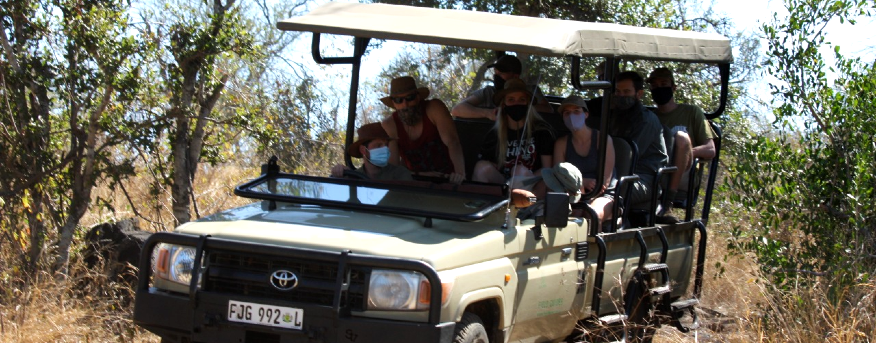
    The week was also filled with game drives. We had two three-hour drives each day from Wednesday to Friday, which gave everyone an opportunity to be the guide for their group.

    image

    Photo by: Ben Klunder

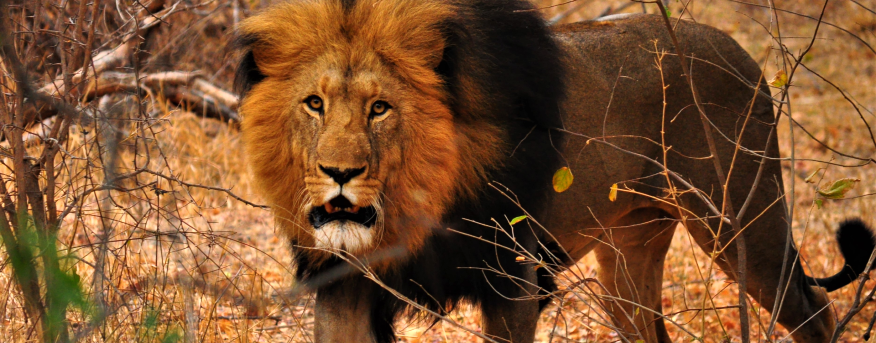
    The students were split into two groups. Both groups had excellent sightings of rhinos and elephants, and the highlight of the week’s sightings were three massive male lions walking through the dry Mohlabetsi riverbed. 

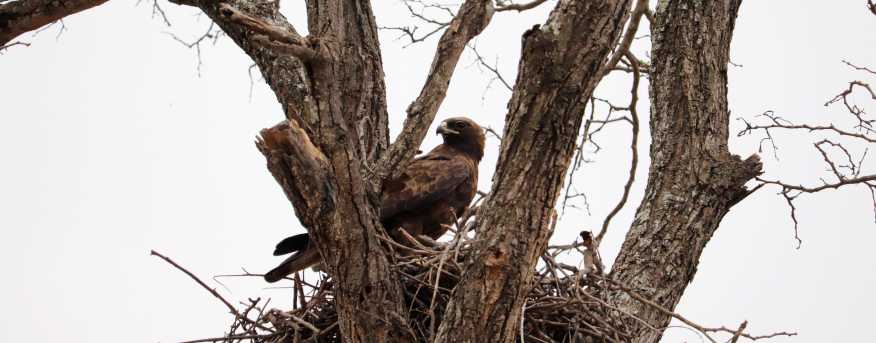
    With a week full of brilliant sightings, the students were ready to appreciate all the “little” wonders that the bush has to offer too. We’ve been learning about birds recently, and were super excited when we witnessed two Wahlberg’s eagles mating in the reserve! 

    These birds are intra-African migrants and have just recently arrived on the reserve for breeding. We also had spectacular close-up sightings of a pair of saddle-billed storks, and the other group was lucky enough to observe one of them feeding on a catfish! 

    image

    Photo by: Donald Fraser

    Aside from all the sightings, we also did revision on our knowledge of trees and grasses, in preparation for our practical assessment on botany in a few weeks.

    On Wednesday morning, our head trainer, Jack, took four students on a bush walk  – myself, Zilcke, Adam and David – and it was amazing! We encountered a breeding herd of elephants only 20 metres away, as well as a black rhino only 30 metres away! It’s always a treat to see large mammals up close, while taking in the surroundings of the African bushveld on foot.

    That same day, during the evening drive, we spotted the three huge male lions again. It was awesome to be able to follow them on the road for about 45 minutes. We were late for dinner, but it was worth it!

    image

    After dinner, I decided to host a quiz night. The questions were on birds, mammals and reptiles. My group edged out the other group, beating them 8-7 in the end! It was a really fun evening.

    My experience as the camp manager was a welcome challenge. It was one of the best weeks I’ve had so far –  especially the braai that we had on Friday, to celebrate Heritage Day in South Africa. It was another successful week and I look forward to what the next few have to offer.

    Big mammal sightings, game drives and quiz nights – now that’s what we call a safari experience with a twist! Join a course now.

  • The first signs of summer in Limpopo

    Photo by: Callum Evans

    The images in this article were taken pre-COVID-19.

    BY: Matthew Nash

    Camp manager blogs are written by our students who each get a chance to lead and manage a group (of their fellow students) for a period of one week.

    The past week has been a very eventful and interesting one for all the students. Half of us  completed our Track and Sign training at Colin Patrick Training, and the other half did their Advanced Rifle Handling (ARH) training at a nearby farm. 

    image

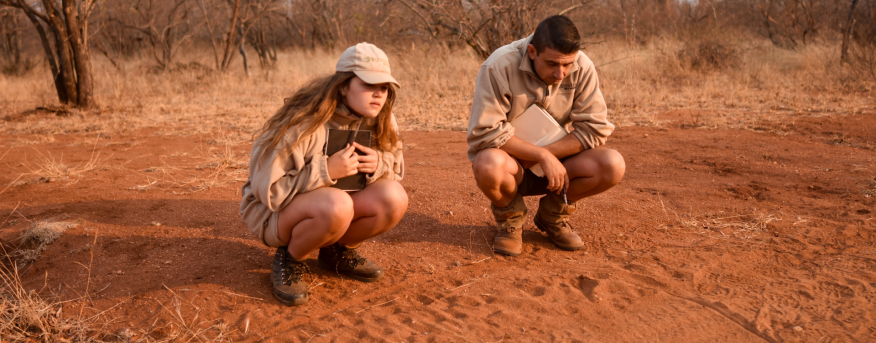
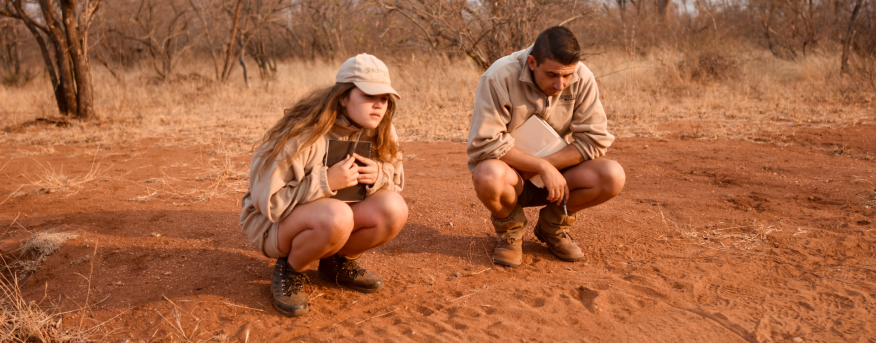
    Colin Patrick shared his wisdom with us on an awesome adventure of tracking different species throughout the Greater Makalali Game Reserve. We found and learned about many different tracks that most of us had never seen before. 

    With the seasons changing,  summer made its first appearance with a thunderstorm on Saturday. Summer in Limpopo is wet, hot and humid; while winter is dry. 

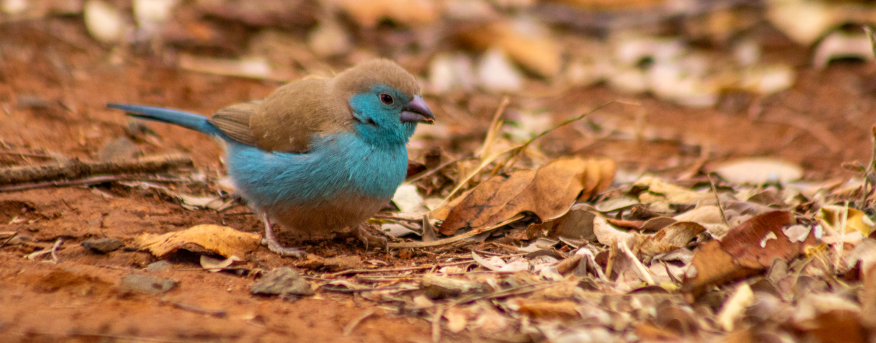
    It was beyond awesome and refreshing to have the rain back in full force again. The rain brings a “clean slate” for the camp and our environment changes drastically.  Trees start to produce flowers and fruit, which means more birds and insects make their way back to their nests. 

    image

    Photo by: Callum Evans

    And, with more oncoming thunderstorms, our rivers, dams and watering holes will begin to fill and bring a new atmosphere back into the bush. During this time, you’re likely to spot larger gatherings of animals coming to watering holes to drink during the heat of the day. 

    The calls of the birds create a constant ambience wherever you go, and provide an awesome chance for all of us to learn and expand our passions and knowledge. 

    image

    Now that we’re nearing the end of our third semester, we’re starting with our 4×4 training, which is exhilarating. We are embarking on journeys to new and exciting places we have not yet seen, which allows us to experience a whole new set of environments and challenges. 

    The work is not over yet and there are so many more interesting things we are yet to see and learn.  I can’t wait for the final stretch of this journey; and then it’s time for us to start our careers! 

    See how the journey ends for yourself. Join us in the safari.

  • Being a leader

    BY: Spencer Gallant

    Camp manager blogs are written by our students who each get a chance to lead and manage a group (of their fellow students) for a period of one week.

    I was excited to be the camp manager and get the chance to show my leadership skills. I’ve always seen myself as someone who leads by example, and I was ready to show that in my new role. 

    image

    We spent the week split into two groups. One group went off to Track and Sign training and the other group, which I was in, tried out rifle handling. Since we spent the majority of the week studying two different subjects, the students remained divided into their groups even while we were all on camp. This meant we didn’t get to spend much time together as one big group, but I still had fun as the camp manager. 

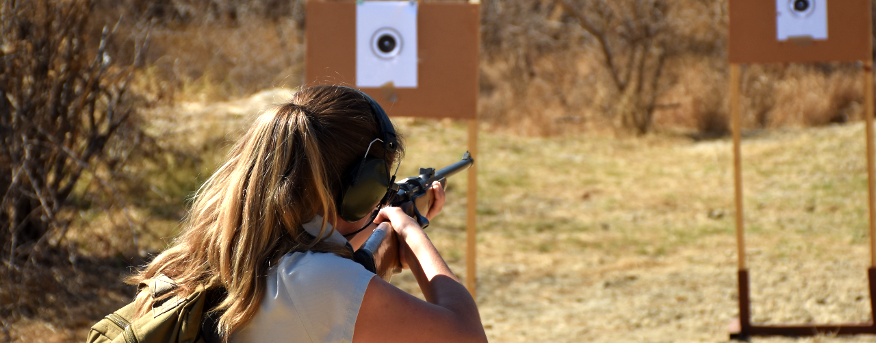
    On Tuesday and Wednesday, my group went to the shooting range in Tzaneen to get our rifle competency training. I was very nervous because I had never shot a gun in my life, and was more focused on the shooting than being the camp manager!  

    image

    Photo by: Carl Louis Steenkamp

    This image was taken pre-COVID-19.

    I loved heading out of camp and getting a change of scenery, but Friday was the best day of the week. We went to practise shooting the rifles ourselves at a private farm nearby. And, even as someone who has never used a firearm before, my nerves quickly turned to excitement as the day went on. When it was my turn to shoot, the nerves were completely gone and I was very accurate! 

    The energy and positivity everyone had at the range was so great that it became one of my favourite days of the entire course. I had so much fun. 

    image

    On Saturday, we had a mock bird assessment to test our knowledge. Birds have gone from being a topic I wasn’t much interested in at the beginning of the course, to a hearty passion of mine as soon as I learned more about them. It was great to see how I’ve progressed since I started the course. 

    I did well in the test, and got another chance to lead by helping my fellow students with their bird knowledge. 

    All in all, this week went by smoothly. Even though I  only got to be the camp manager for one week and didn’t get to do as much as I would have liked to, I did the best I could with the time I had and that’s all anyone can do!

    Do you want to practise your leadership skills out in the safari too? Join a course now.

  • Campus after dark

    Some images in this article were taken pre-COVID-19. 

    BY: Darryn Murray

    This blog was written by Darryn, one of our trainers. Here, Darryn shares a story about creatures on campus.

    While sitting around the campfire in the evening after a busy day of learning, writing tests and doing activities like safari drives, we at Bushwise are treated to the sounds of lions roaring in the distance, jackals, hyenas – and every so often, leopards – calling in the darkness, with the feeling of the crisp bush air surrounding us.

    image

    Photo by: Ben Klunder

    Recently, at about 11:00 pm one evening, I heard a commotion in the car park. I walked out onto my porch, armed only with a torch, to investigate the noise. All I could see moving about in the torchlight was a bushbuck. 

    Early the next morning, a few of us did a bit of CSI-type investigating.  The bushbuck I spotted the night before had been attacked by a leopard on campus! 

    Footprints, drag marks in the sand and a few drops of blood were all the clues that we had to work with. 

    Not long after we discussed the signs we found, we spotted the bushbuck, still alive and walking gingerly near the dam on campus. A day later, however, he succumbed to his injuries not far from where he had been seen the day before.

    image

    With the help (and camera trap) of Spencer Gallant, a student at Bushwise, we set up a camera near the bushbuck carcass, hoping we’d get some images of the leopard coming back to feed.

    By this stage, we were all very excited to see if the leopard would return. We made a pact to leave the camera up, undisturbed, for a week before going to check and see what surprises awaited us. At the end of the week, we saw there was still so much meat left on the carcass, which meant the leopard probably hadn’t returned yet. So, we decided to leave the camera set up for another week, and quickly changed the SD card and batteries.

    Let’s take a look at what we discovered.

    A selection of the first week’s images

    Photos by: Spencer Gallant

    image

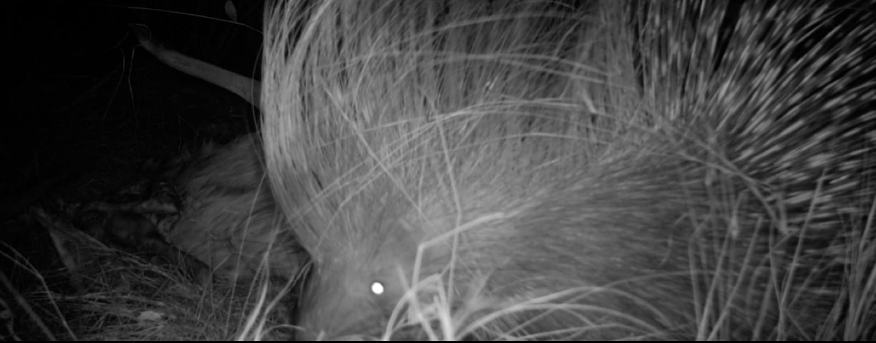
    A porcupine strolling by the camera.

    image

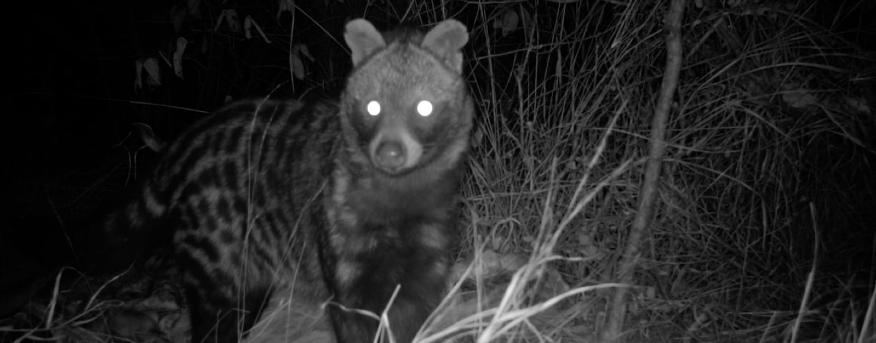
    An African civet posing for the camera close to the carcass.

    image

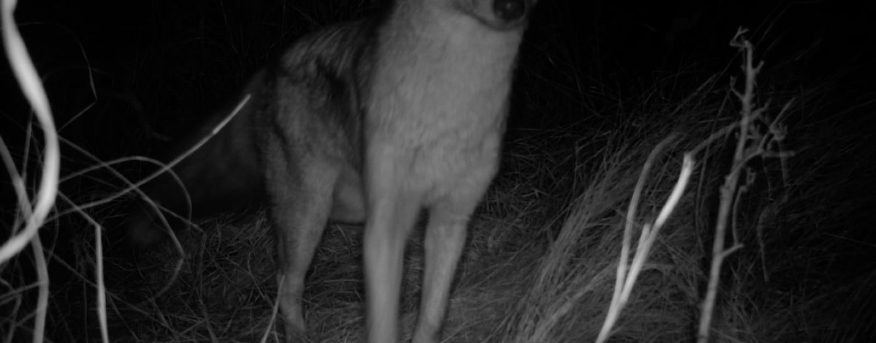
    A side-striped jackal curiously looking at the camera.

    As the images were loading on the laptop, there was excitement in the air. We went through roughly 600 images, but not a single one revealed a leopard. To say that everyone was a little disappointed would be the understatement of the year, but we remained hopeful that the second week’s batch would yield the images we were after.

    The second week’s images

    Week two seemed to drag on while we were waiting for the pictures, but as the saying goes, “All good things come to those who wait.” 

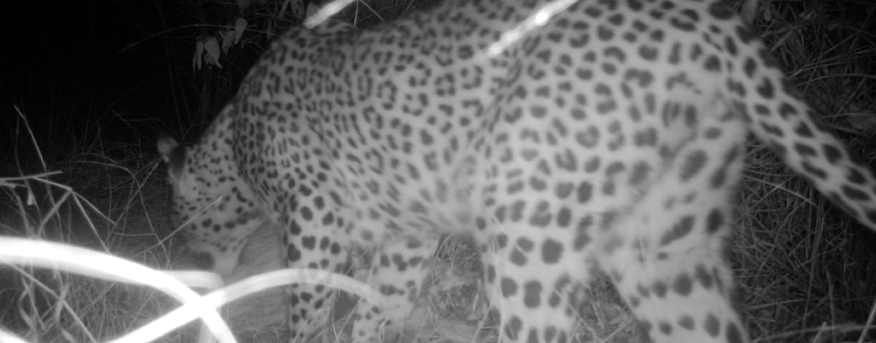
    There were cheers of excitement all around as the first images of the leopard came up on screen.

    image

    Photo by: Spencer Gallant

    At last, the leopard that we had all been waiting for.

    The leopard feeding during the early hours of the morning while everyone was asleep.

    All in all, it was a great experience for us students to see some of the animals that move around campus in the dark while we’re all asleep. Even though we don’t see them very often, we now know for sure they’re around, and probably see us far more than we see them.

    What creatures do you think you’d discover on campus after dark? There’s only one way to find out – join a course.

  • A manager is nothing without their team

    This image was taken pre-COVID-19. 

    BY: Donald Fraser

    Camp manager blogs are written by our students who each get a chance to lead and manage a group (of their fellow students) for a period of one week.

    We started week nine with refreshed minds, as most of us students on the Balule campus had chosen to go away for our semester break. Two students stayed behind to keep things running smoothly, and welcomed the newest member of our Balule family, Louise Pavid, a wildlife photographer and videographer.

    image

    Photo by: Donald Fraser

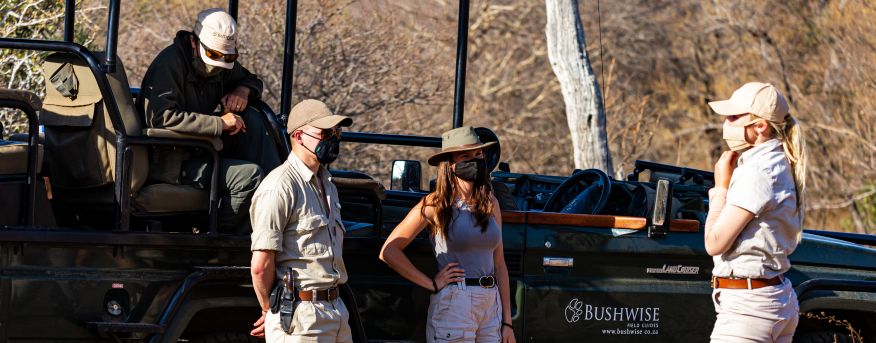
    I’ve had prior management experience, so I knew that being the camp manager was not going to be an easy task. I had lots to remember, like keeping the students going with their morning snacks (milk, cereal and rusks), ensuring COVID-19 protocols were followed, checking the safari guides were ready for their driving slots, and staying in touch with the students’ duties during the week. 

    I hoped I would be able to learn how different it is to manage people in this type of environment compared to the corporate one I was previously in (I worked in the financial industry). 

    image

    Reflecting on the week now, I think managing people remains mostly the same no matter which industry you’re in. You still need to ensure that students, like coworkers, work well together, and that tasks are delivered no matter what circumstances you face. 

    As a camp manager in the bush, I learned that you’ve got to be the first one up in the morning, and the last one to go to bed at night – after ensuring that everything is ready for the next day. And, as a manager, you need to understand that most of your hard work will be done behind the scenes, where nobody will stand and applaud you for what you’re doing!

    image

    Photo by: Donald Fraser

    My most challenging task as camp manager? Hosting a fun evening for the students wins hands down! Everything I planned for the evening went smoothly at first. I prepared a braai (barbeque) for the students, but then one of our lead instructors noticed that the meat we prepared was cooked on Tamboti wood, which secretes a substance that is poisonous to humans! The reality of the situation quickly set in. I engaged with our chef (now my hero) and we made a new plan for dinner. 

     The night wouldn’t have been a success without our teamwork, and it taught me that a manager is nothing without the support of their team.

    I would still like to end up as a type of manager, like a lead trainer for field guides, or even an  area warden. Even though a big part of a manager’s job involves putting out “fires”, it’s still the best feeling to see teams come together. But for now… bring on the reptile and bird exams!

    Interested in joining a Bushwise Field Guides course to gain more clarity on your future? Contact us.

  • The last bits and pieces of semester two

    By: Ben Klunder

    Camp manager blogs are written by our students who each get a chance to lead and manage a group (of their fellow students) for a period of one week.

    Out on safari, we’re always talking about the adaptability of flora and fauna. And humans are no different. We Bushwise students start the semester fresh, after a quiet, lovely off-week, but as soon as that last week before the semester break comes around, we unintentionally wind down. Being camp manager around this time challenged me to adapt. 

    image

    Photo by: Ben Klunder

    Camp manager 101: Get up early

    It’s an honour being camp manager and leading a team. Usually, in the last week of the semester I snooze my alarm several times and scrape into my lecture at 07:29 am. But as camp manager, I had more responsibilities, like taking temperatures and making sure all my “guests” had their breakfasts: snacks, rusks, cereal, sugar, soy milk, milk… This is good practise for what will happen in the lodges one day. With those chores done at 07:29 am, I got into lectures!

    The weekly agenda

    The last week of the semester was a good one. On Monday, we had lectures on amphibians, arthropods and fish, followed up by a morning trip to Tzaneen. On Wednesday, we went on two drives and saw a lion around 200 meters from camp, which was amazing.

    image

    Photo by: Ben Klunder

    Almost off-week

    On the Wednesday before our semester break, it was my turn to host the fun event and I enjoyed myself. We split up into two groups and did a quiz based on surprising facts about each other in the student group – I won’t go into the details! 

    Snake orientation

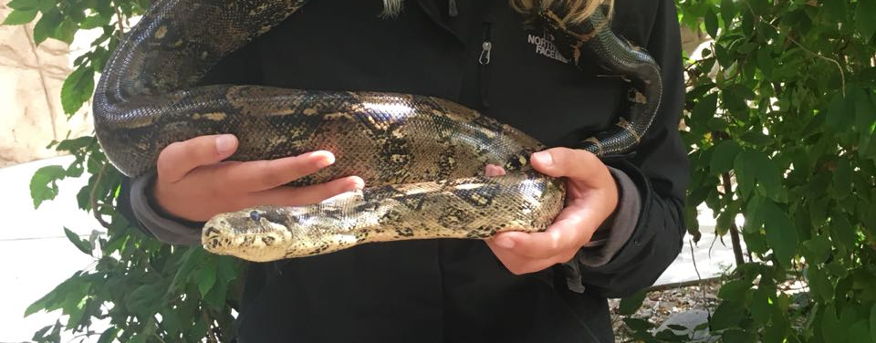
    On Thursday, we had reptile orientation. By the end of the lecture, with a brilliant demonstration of snake behaviour, we learned that snakes don’t bite on purpose, out of aggression, or for fun. A snake won’t attack unless provoked. 

    Ready to learn how to adapt, and tackle new challenges like Ben did? Join a Bushwise Field Guides course.

  • Exciting moments in the bush

    This image was taken pre-COVID-19. 

    BY: Brandon Eckelberry

    Camp manager blogs are written by our students who each get a chance to lead and manage a group (of their fellow students) for a period of one week.

    My week as camp manager included some awesome sightings. To start, we had staff from the Hoedspruit Reptile Centre give us a presentation on snakes and other reptiles. 

    image

    I got to help dissect the carcass of an olive grass snake. It was really cool to see the inside of the snake, and while we were dissecting it, we discovered a skink’s tail in its stomach! If that sounds a bit gruesome, not to worry; the skink might have released its tail and most likely escaped the snake attack. 

    As we examined further down the snake’s body, we discovered that it had experienced a blunt force injury, like something stepping on it. The organs near the snake’s tail were fatally damaged. 

    image

    When we were done with the dissection, the trainer brought out live snakes. He had three snakes with him: a puff adder, a boomslang and a snouted cobra.

    But that wasn’t the end of the week’s wild experiences. The next thing I found exciting was spotting a leopard on campus, not once, but twice in three days! 

    The first sighting was about 10:30 at night. I was coming back to campus with fellow students Tilly, Megan and Mathew. As we drew closer, we spotted a female leopard on the road. We watched, with a flashlight, as it moved slowly into the bush, and it watched us for a good 10 minutes, too! 

    image

    On the second sighting, a few of us were outside on the porch when we heard a duiker cry out. We knew it had been attacked. One of the students, Spencer, has a trail camera. So a few of us walked down to spot the kill and set up the camera. Within 30 minutes, a leopard came and took the duiker into the thicket.

    I had a good time as camp manager and learned a lot from the experience. I’m excited to see how much more I can still learn. 

    Want to have a wild bush experience like Brandon? Get in touch with us.

  • It’s not just about the Big Five

    BY: Nico Brits

    This blog was written by Nico, one of our trainers. Here, Nico shares his experiences with guests, and why it’s important that field guides point out finer details in the bush.

    It can feel like a lot of pressure, having to deliver on all of your guest’s expectations as a field guide. More often than not, when guests are asked what they would like to see, they’ll say “the Big Five”. This can be a big ask, since they aren’t all located at one spot in the reserve!

    image

    This image was taken pre-COVID-19. 

    As guides, we do everything in our power to deliver on guests’ expectations. We can get so focused on finding the Big Five that we drive past a lot of the smaller things that make it possible for these sought-after animals to survive. 

    We are very quick to race out of the lodge in the mornings, on our first game drives for the day, to see if we can tick all the boxes for a perfect guided experience as quickly as possible. And yes, for guests that visit Africa for the first time, seeing the Big Five on a morning drive is great, but the experience is so much more incredible when guides take the time to show guests how everything is connected.

    image

    Photo by: Ben Klunder

    Creating an unforgettable experience is what we should be trying to achieve. Watching two vervet monkeys playing in a tree can be more memorable than two lions sleeping in the shade. 

    That’s why, a good tip for any guide when leading a tour, is to spend some time driving around, pointing out details that might be easy for your guests to overlook. 

    For example, mention elephant-feeding signs, or trees that have been pushed over by elephants. Then, when you eventually see the incredible giants during your tour, they could be feeding on the same species of tree that you pointed out. This goes a long way to enhance your guests’ experience.

    image

    Photo by: Ben Klunder

    As guides and guests alike, we can get lost in the hype of the Big Five and miss other amazing interactions taking place around us. 

    But when you slow things down, you start to appreciate the finer details. Something as small as termites fixing their mound, after it was broken up by an aardvark, can create a memorable moment. 

    Ready to become a field guide? Head to the Bushwise website to see what our courses have to offer.

  • Another busy week in the bush

    BY: Ross de Villiers

    Camp manager blogs are written by our students who each get a chance to lead and manage a group (of their fellow students) for a period of one week.

    Taking over the duty of camp manager was an exciting opportunity for me. I got to experience what it’s like to be in a leadership position. Our group is a tight-knit bunch, so everyone performed their duties to the best of their ability, which made my job easier.

    Duties as camp manager

    image

    As the camp manager, you’re required to check the group’s temperature twice a day, once in the morning and again in the evening.You must also ensure that all duties around camp are done. 

    One of the most fun tasks as the camp manager is that you get to host an event of your choice on the Wednesday evening. On my hosting night, our group watched a funny movie and enjoyed hot chocolates. We had a blast!

    Tracking and shooting

    image

    This image was taken pre-COVID-19.

    We had a very busy and exciting week ahead of us. The students were split into two groups. Group A was tasked with learning their tracks and signs at Colin Patrick Trainers, and group B set off to the shooting range in Tzaneen to acquire their rifle competency certificates. 

    The week of tracking has been one of the many highlights of the course so far.

    The bush walk

    image

    This image was taken pre-COVID-19.

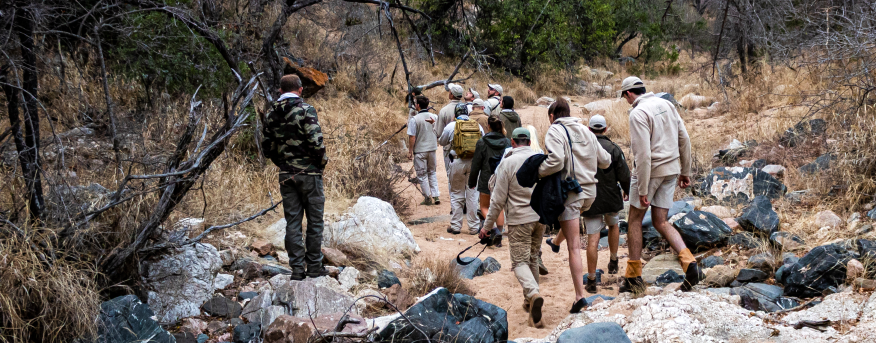
    On Sunday, four of us went on a bush walk with Jack Hutchinson, a Bushwise trainer. On the walk, we encountered a black rhino and her young. 

    It was exhilarating to see a rhino in real life and it made me realise just how grateful I am to be having this experience.

    We’re hoping that next time we’ll see a leopard! 

    Want to learn more about the Bushwise course Ross is taking? Head over to our website.