Author: Bushwise

  • Staying long-term in South Africa as an international student

    South Africa is a beautiful country with incredible biodiversity, awe-inspiring landscapes, rich cultures and fascinating history. It is the ideal place to begin your conservation career, which is why many international students join Bushwise field guide training courses. We have had students from the United Kingdom, Australia, Japan, Peru, France, Germany and the United States – to name a few. 

    Many international students join us for six months or a year on our Bushwise Professional Field Guide course; or for just two months on our 60-day Safari Guide course. In fact, on a typical course, between 20-40% of our students are international. After graduation some of them do a work placement, find a job or head back to their home country. Whatever their plan is, one of the most common questions we get from our international students is: 

    Can I stay long term and work as a field guide in South Africa?
    image

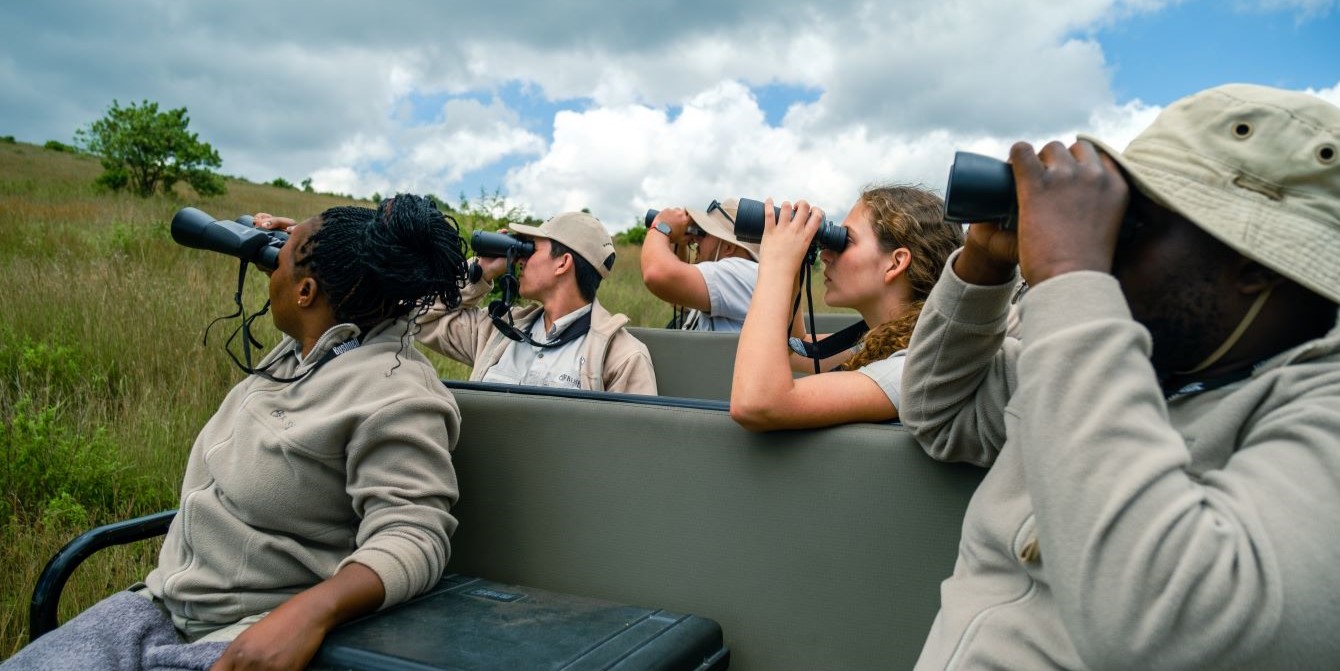
    We completely understand the desire to stay and work in South Africa. To do so you need skills and qualifications and typically a business to support or sponsor your work visas (Bushwise does not sponsor work visas). Our international students who have done this successfully have either been offered jobs by South African companies or chosen a different visa route. 

    It’s also possible to start your own safari, tour guiding, or travel company in your home country and bring guests to South Africa as a freelance guide. 

    Types of visas

    On each course since 2015, 40-70% of our international students have been offered permanent positions. Some of these were able to secure work visas, others were able to get volunteer visas, exchange visas or critical skills visas. 

    Work visa

    To stay long term and work in South Africa, you need the correct work permit or work visa. There are a few options currently available, including critical skills visa, general work visa and visitor’s visa with permission to work. Check the current list for updates

    Most South African businesses prioritise hiring local South Africans. It is also for this reason that getting a work visa in South Africa requires significant documentation and motivation. In the last few years, the visa laws and requirements for foreigners have become stricter. It is extremely hard and quite challenging for foreigners to now get permanent employment – however, it is not impossible.

    On our Professional  Field Guide course, international students come in on a study visa. This allows them to get their South African driver’s licence and PrDP – a requirement to register as a guide and take paying guests on a game drive. This is also why we can offer all our students work placements if they pass and are between 21–39. 

    Companies want highly experienced, well-trained individuals to fill roles. This is why we encourage international students to join our 50-week course, which also gives you the work placement opportunity and helps build your professional network. The greater your skillset and the more connections you make in the industry, the greater your likelihood of being sponsored by a local company.

    Volunteer visa
    image

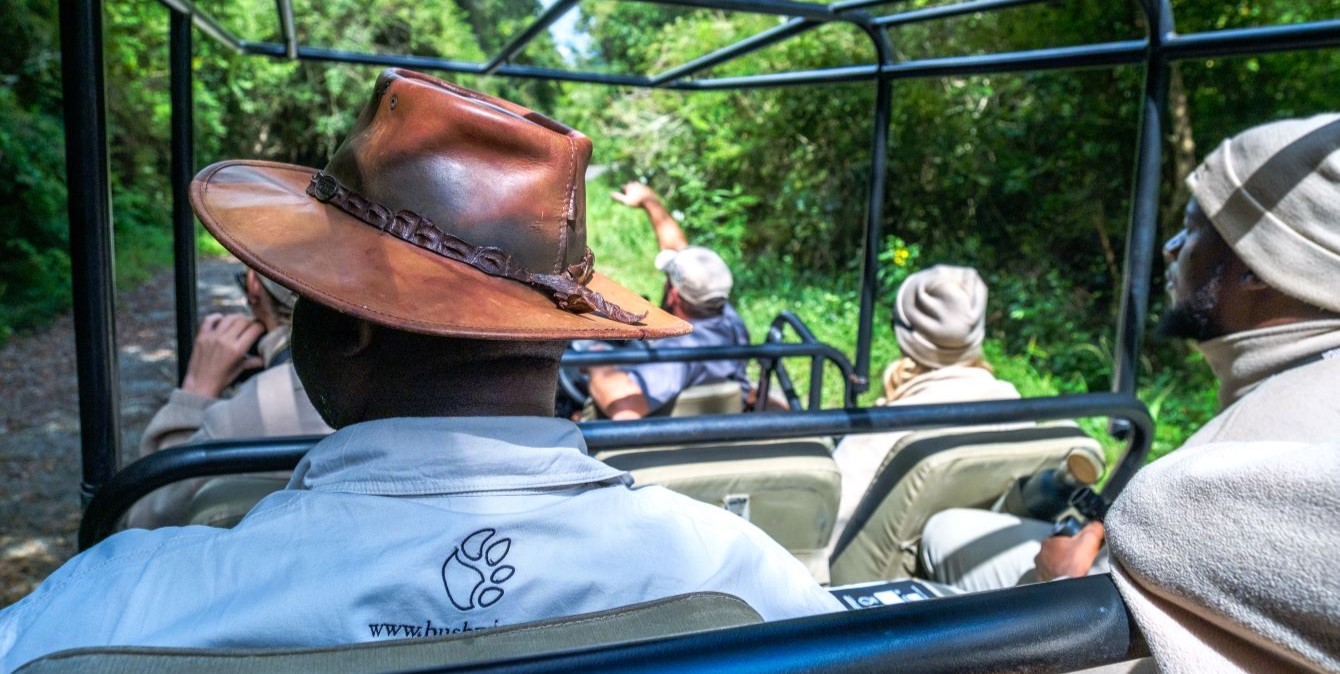
    Another option is a volunteer visa, which allows you to stay and do charitable or voluntary work for a period of up to three years. As the title suggests, you can’t be paid to work while on a volunteer visa.

    Even though you can’t get paid while on a volunteer visa, this may still be a great option if your goal is to spend a few years in South Africa and gain valuable experience. Bushwise work placement options include NGOs and conservation volunteer organisations, so this could be a very attractive option. Time also changes many things, and an opportunity may present itself while you’re volunteering.

    Critical skills visa

    A critical skills visa is for a candidate trained in certain industries as specified by the South African government (see the August 2022 gazette for a list of skills). An applicant must prove that they have the experience, skills and qualifications indicated, which may include membership in a professional body. If you have previous training or degrees in one of the skills listed by Home Affairs, this is one way to remain long term in South Africa. 

    Study visa

    Another option is to continue your studies by pursuing a degree, and getting a study visa. South Africa has many excellent universities and educational institutions that offer conservation or game management programs, for example. If you are considering a career that’s more academic or research-based, this may be an excellent option to stay for a few more years. A study visa will also allow you to work part-time while studying full-time. 

    Business visa

    Depending on your background, you may be able to apply for a business visa, which allows an individual to move to South Africa to open a business or invest in an existing one. If you are planning to start your own safari company or open a lodge, for example, this could be a possibility. But it is much more complicated and requires notable financial investment. 

    Applying for a visa to stay in South Africa
    image

    When you join Bushwise you will likely do so on either a visitor’s visa (for less than 90 days for the 60-day course) or a study visa. In a few cases you can apply for a change of status for a new visa and remain in South Africa. But most likely you will have to travel back to your home country to submit the documentation and await a response. 

    We cannot offer legal advice

    We hope it goes without saying, but just in case. We cannot give legal advice on your visa applications, we can just share our insight from working with international students in the past. Please review the current information on websites for South African Department of Home Affairs or VFS Global, or speak directly with an immigration services company for assistance.

    We hope this article has helped you get some ideas about ways to make your field guiding dreams come true. As this is a blog and things do change, we can’t take responsibility for outdated information contained here. Remember that there are many opportunities and possibilities to make your dream career a reality, and the best way to start is by getting experience and building your skillset. 

    We are here to answer any other questions you may have about Bushwise courses. Just send us an email and we’ll be in touch!

    #lion #lodges #wildlife #gameranger #Birding #bushwise #qualification #leopard #guidejobs #animals #bestlodges #hyena #safari #sightings #wilddogs #fieldguiding #endangeredspecies #gamedrive #elephant
  • The Fascinating World of Acacia Trees: Diversity, Cultural Significance and Medicinal Uses

    This blog about acacia trees was written by Bushwise Professional Field Guide student Maddy Prior. As part of their training, each student submits a researched blog based on a topic of their choice. Opinions contained in these blogs are the student’s.

    5 min read

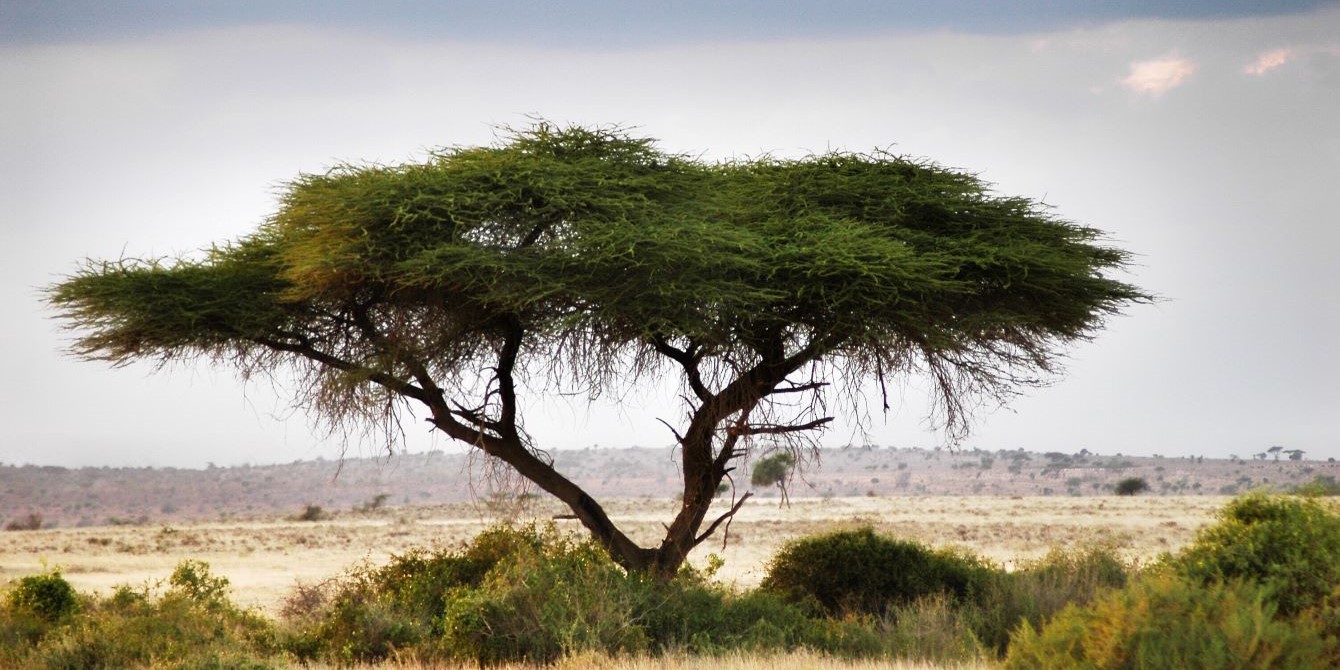
    For many, acacia trees have been synonymous with Africa, long before they were named by Philip Miller, an English botanist, in 1754. Being British, I’m sure I’m not alone when I say that the word Africa conjures up images of the sprawling plains of Kenya and Tanzania dotted with these short, umbrella-shaped trees, offering those small patches of grass shelter from the Sun and wind. The Lion King may be to blame for this romantic imagery, or Out Of Africa, or indeed the majority of nature documentaries following the Big Five. 

    The Iconic Acacia Trees of Africa

    image

    While I write this in South Africa, I feel for the often overlooked landscapes of the Lowveld, which hold about 29 of the acacia species – now divided into two genera, Vachellias and Senegalais. The word acacia is derived from the Greek word akis meaning thorns – which makes little sense now that the only true acacias are now found in Australia where they lack thorns. The thorny versions are plentiful in Africa, but other species are also found across Asia and America. 

    The Iconic Acacia Trees of Africa

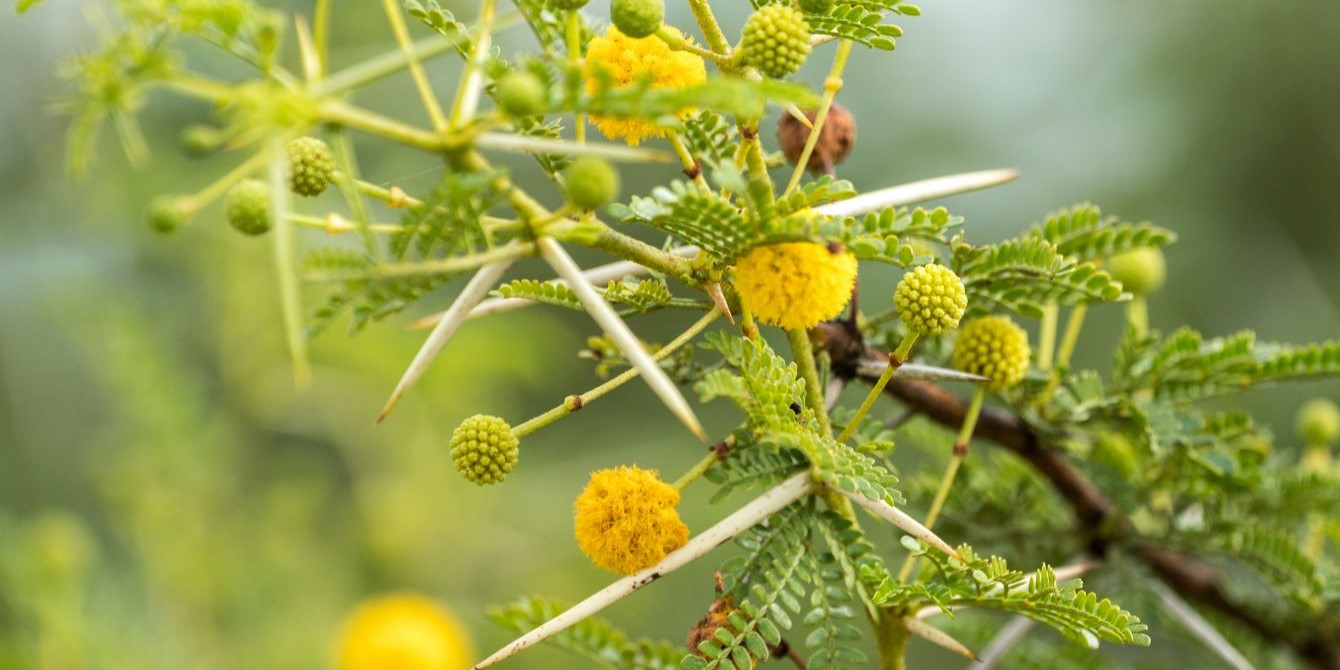
    Although only classified into two genera, there is a great deal of diversity in Vachellias and Senegalais. A useful trick to differentiate between the genera is to examine the thorns. Vachellia thorns are straight and grow in V-shaped pairs and produce rounded, often bright yellow flowers.

    Senegalias produce hooked thorns and flowers in spikes of yellow, cream and white. These soft, inviting flowers attract a plethora of pollinators: the obvious insects one would expect, such as bees and wasps, but some larger and surprising. 

    Acacia Trees: Their Pollinators and Consumers

    image

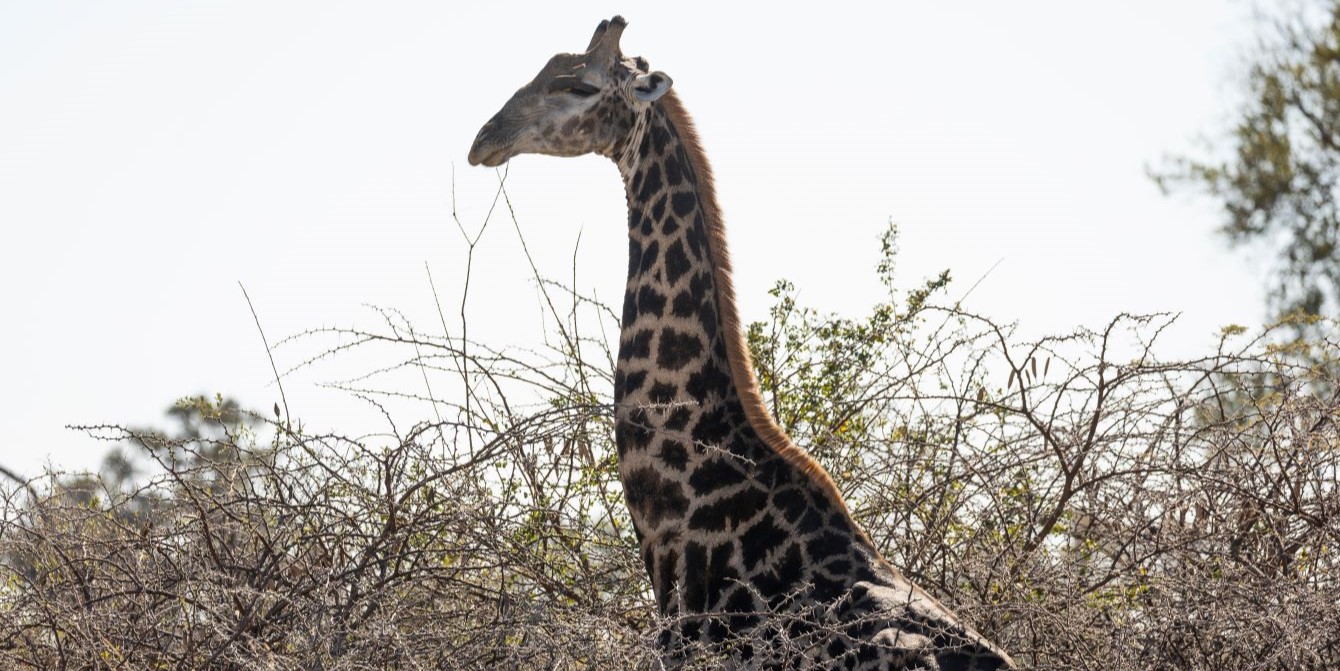
    It is thought that the giraffe is in the principal pollinator of the knob thorn tree (Senegalia nigrescens) which flowers between August and November. This knobbly tree is a favourite of the long-necked browsers, who collect the flowers’ pollen on their faces as they feed on the fine leaves, and then transport this pollen to the next knob thorn they browse from. 

    The name of this tree comes from the characteristic knobs that the thorns stem from, and the larger woody bumps that cover the trunks and branches of older trees. Elephants are known to eat the branches as well as foliage, and several species of monkey eat the flowers. Knob thorn trees are used by cavity-nesting birds. And the quality of the wood makes the tree attractive to carpenters to make furniture and parquet flooring. This is a tree with many consumers.

    Cultural Significance and Traditional Uses

    image

    Vachellias and Senegalias are just as iconic for the people of South Africa as for foreigners, and undoubtedly more important, holding great cultural significance and acting as key components of traditional practices and beliefs. 

    Vachellia karroo, or sweet thorn, is the most widely-distributed tree in South Africa, and is particularly dominant in the Nama Karoo and Grassland biomes. But it is also found in the Savanna, where it provides nutrition for many species. The seed pods are enjoyed by monkeys and various species of butterfly larvae, grey go-away birds feed on the flowers, and ground-up seeds have traditionally been used as a coffee substitute. 

    The leaves of the sweet thorn are also a valuable source of fodder for the game species and the livestock of communities in these areas, upon which many of their livelihoods depend. The evergreen nature of Vachellia and Sengalia made them a reliable source of food and shade for shepherds existing in such harsh, arid environments. 

    The uses of these trees are far more diverse than just sources of food. The wood of Senegalia Senegal was used by ancient Egyptians to craft boats, furniture, and even sarcophagi, with gum of the tree (taken from the sap) used to make bandages for wrapping the mummies to go into them. The ancient Egyptians also blended the gum with dates and honey to create a contraceptive paste, the lactic acid of the dissolved gum acting as a spermicide. 

    Medicinal Properties of Acacia Trees

    image

    Gum acacia is still used today by people in Sahara/North Africa as a food source, 6 ounces of which can sustain an adult for a day, and to treat various ailments, such as stomach ache. A tea made from the leaves is said to treat coughs, and the leaves themselves can be applied to wounds and inflamed areas on the body as a natural remedy. 

    The roots of Vachellia nilotica (or gum Arabic) have even been used in medical treatments to fight cancer and tuberculosis, and its leaves to treat Alzheimer’s disease. The leaves of Vachellia erioloba (Camel thorn) can also be applied to wounds to relieve pain, once burnt and ground into a powder. 

    Defence Mechanisms: Ants and Chemical Signalling

    Because acacias are so widely used by both humans and animals, they have developed various defence mechanisms to protect themselves. Certain species of Vachellia (e.g. Vachellia karroo, or sweet thorn) have formed a mutualistic relationship with acacia ants (e.g. Crematogaster mimosae), whereby the ants inhabit the swollen thorns that cover the branches of the trees, providing them with protection. If a browsing animal begins to feed on the leaves of the tree, the ants will swarm and irritate its face, thus causing the animals to move off to a more appealing bush. 

    As an extra measure to protect their delicate foliage, acacia trees will release chemical signals when being browsed, which are carried by the wind to other trees of the same species in the surrounding area, which will stimulate the production of tannins in these trees and the one being browsed. High concentrations of tannins in the leaves will make them unpalatable to browsers, dissuading them from eating the foliage. 

    To delve deeper into the captivating world of Acacia trees and expand your knowledge of wildlife and conservation, embark on an educational journey with Bushwise.

    #wildlife #bushwise #fieldguide #qualification #Exam #animals #apprenticefieldguide #safari #ifga #sightings #fieldguiding #guiding #fieldguidecourse #studying #fieldguides

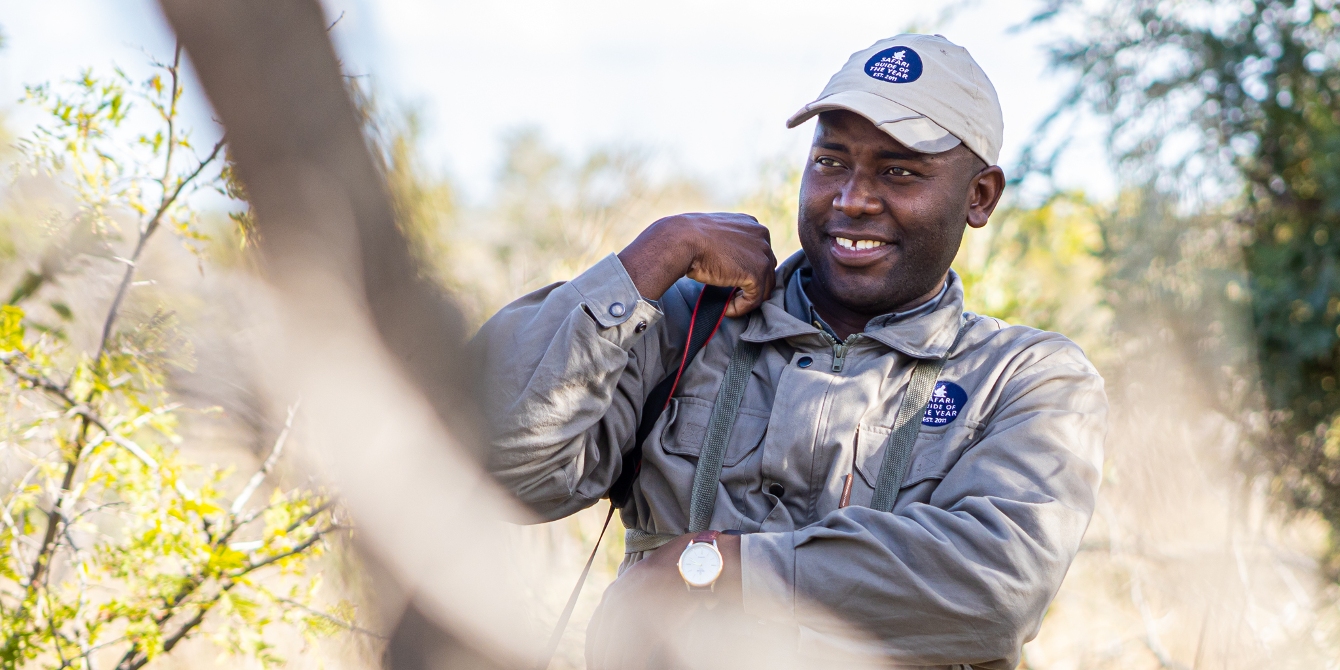
  • A Pioneer in the industry: Bushwise’s Pioneer Moyo a finalist for Safari Guide of the Year 2023

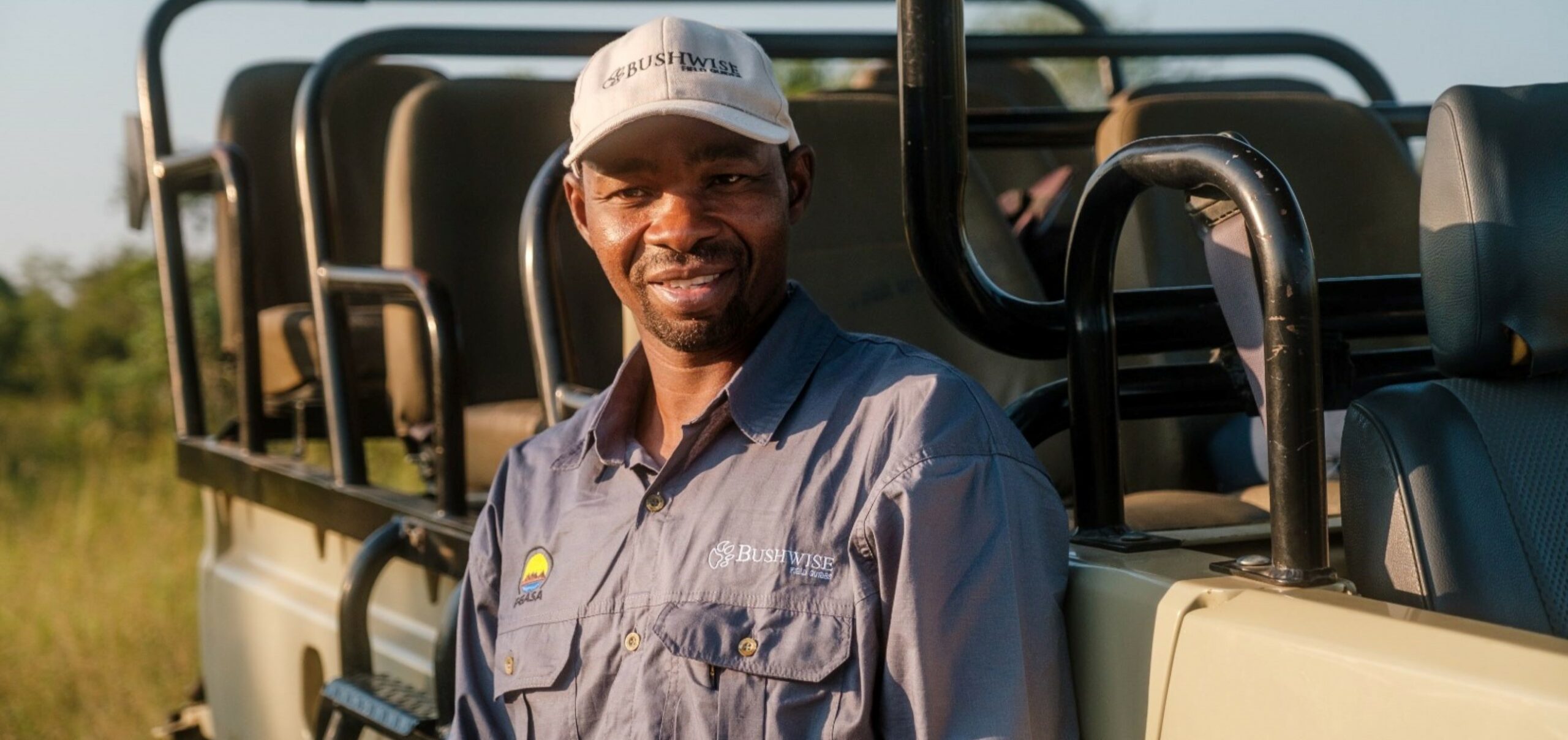
    If you’ve ever had the opportunity to observe Pioneer Moyo in the field, his philosophy quickly becomes clear: when sharing bush experience, you never stop learning. There’s never enough knowledge you can absorb. It’s a never-ending process and as a guide, you must be constantly curious. 

    Students, fellow field guides, mentors and others in the industry lovingly know Pioneer Moyo as “Pines.” His skills and knowledge in bushcraft are inspiring – he has a magical way of presenting information to his students – imparting essential lessons and lifelong skills to budding field guides. 

    Pines began his guiding career in 2007 and joined the Bushwise Field Guides training team last year. He is recognised across the industry as a leader, mentor and teacher to students and peers alike. Bushwise students will, without hesitation, attest that Pines goes beyond the call of duty to provide extra training, tutoring them on bush craft in his free time. 

    Pines’s advice: never stop learning

    image

    Pines has brought so much value to the field guide industry over the years. This nomination and place amongst the finalists for Safari Guide of the Year is a well-earned recognition of his contribution and devotion to developing future field guides.

    According to Pines, “being one of the contestants for Safari Guide of the Year means a lot. Sharing this experience and meeting other experienced guides in the field is really important – but it’s also about encouraging the young guides that are getting into the guiding industry. I’d like to thank all my mentors and workmates – and the Bushwise team – for their support.”

    Over time as he has gained experience and knowledge, Pines has also earned an impressive array of qualifications. These include Professional Field Guide, Assessor, Professional Trails Guide, Trails Guide Mentor, Specialised Knowledge and Skills in Birding, Specialist Track & Sign, and Tracker Level 3.

    This is the second year in a row that a Bushwise trainer has made it to the final competition for this prestigious award. Bushwise’s staff, students and trainers have been overjoyed to hear of Pines’s nomination and will closely follow the competition. 

    Bushwise Director Eugene Relling commented, “Pioneer as the second senior trainer in a row to be selected as a finalist for this competition just goes to show the calibre of training our students are receiving. This makes me feel proud to say that the next generation of guides are being trained passionately and ethically with Bushwise.”

    The Bushwise team is proud of you, Pines!

    image

    In last year’s competition hosted by Bushwise, our Head Trainer Nico Brits was awarded Best in Hospitality and Best on Camera. When asked about Pines, Nico says, “I wish Pioneer all the best of luck – what a great honour it is to be nominated and be part of the Top 5 for Safari Guide of the Year. I think he will go really far and do really well. He will do Bushwise and himself very very proud.” 

    It’s a true honour for Bushwise to have another of our talented trainers join the finalists for Safari Guide of the Year. We can’t wait to watch the event unfold this coming June at Kapama Private Game Reserve in the Greater Kruger!

    Join us in supporting Pines as he competes for the crown of Safari Guide of the Year 2023! Follow us on Instagram for updates.

    #wildlife #gameranger #bushwise #fieldguide #safariguide #safari #fieldguidetrainer #fieldguiding #guiding

  • Why do a 60-day safari guide course?

    We often hear the question from prospective students, “Which field guide course should I do?” At Bushwise we offer two core in-person options: our 6- and 12-month Professional Field Guide course and our 60-day Safari Guide course. 

    Both are immersive wildlife experiences where you can earn your CATHSSETA as well as additional qualifications, but there are some important distinctions and reasons why you might choose one over the other. In this article and its companion article “Why do a 6- or 12-month field guide course”, we’ll help you decide which program is right for you.

    Determining your purpose: why do you want to do a field guide course?

    image

    This is an essential question to answer for yourself. Are you hoping to enter the safari industry, work in conservation, or simply experience the African bush and learn more about wildlife? Do you have plans to go back to your home country or job after you finish, or do you want to stick around and find a permanent guiding position? 

    I want a career as a field guide. If this is your answer, you could do our 60-day Safari Guide course. You’ll earn your CATHSSETA qualification, Bushwise Field Guide qualification, and other essential accolades to get you set up for a job. But instead of doing a short course, you may want to consider our 6- or 12-month Professional Field Guide course. The reason? Gain additional qualifications (up to 8 certificates), build a huge knowledge base, get work experience, and develop a professional network in the industry.

    I want to get into conservation. Our short course is a great way to start a career in conservation. Not only will you add valuable qualifications and skills to your CV, which translate well into conservation jobs, you’ll also get a taste for field work and studying wildlife in their natural habitat. Many international students also choose to graduate from Bushwise and then go on to work in a conservation or ecotourism role back home. 

    I just want an amazing wildlife experience. Then 100% this is the course for you! You probably have an idea in your head of the kinds of things you’ll see and learn in 60 days in the African bush. This is so much more than you can imagine. Living in the bush, waking up to the sounds of nature, observing wildlife every day, studying animal behaviour, diving completely into the experience – in just two months you’ll walk away with more knowledge than you ever imagined. Not to mention lifelong friendships, lasting memories, and a newfound appreciation for our wild world.

    Time: can you commit months or just weeks to training?

    image

    This is perhaps the easiest question to answer, depending on where you are in life and whether this course is part of your career development or more of a sabbatical or gap year experience.

    My time is limited – two months is the most I can commit. If this is your answer, then the 60-day course is absolutely for you. It’s a condensed and immersive course, which means every single day is full of learning and experience. Not a moment will be wasted as you dive into learning about animals and developing new skills. This is one way to make your sabbatical or gap year/semester experience truly worthwhile.

    I have flexibility – I want to put the time in to get the most out of this experience. If this is your answer, you should consider our Professional Field Guide course. Simply put, more time means more qualifications, more experience, more skills and more memories. Head over to our other article to learn more about why this is the best choice for you.

    Sightings: what are you hoping to see?

    Life in the bush is not static, constant or predictable. It’s always changing, showing us something new and surprising at every turn. There are days when all you’ll see are birds and insects, but the unique observations you make that give you so insight into the wild world around you that you can’t help but feel in awe.

    Over 60 days, depending on the time of year you join the short course, you could see a change in seasons, the birth of baby animals, migration of bird species, shifts in the night sky, the blossoming of a tree, or any other natural phenomenon. Consider the time of year and the season when you book a course, and also consider if you’d like to see more. This may help you decide whether you are comfortable with a two-month experience or if you’d rather extend it to 6- or 12-months.

    Qualifications: how will a 60-day safari guide course drive your career development?

    image

    To work as an entry-level field guide, you’ll need the essential qualifications that our 60-day course can offer you. This, at the very minimum, means getting your Apprentice Field Guide qualification. Both of our in-person courses allow you to earn this. But, as with any industry, jobs become more and more competitive, and you need to have additional skills and experience. So it’s worth it to consider how much you want to bolster your CV, based on how much time you have to commit.

    On our 60-day course you can earn:

    1. CATHSSETA Nature Site Guide (NQF2) 

    2. Bushwise Safari Guide

    3. Wilderness First Aid certificate

    4. Reptile Handling certificate

    5. CyberTracker Track & Sign certification

    Think you need more? See why you should do a 6- or 12-month course instead.

    Other things to consider when choosing a field guide course:

    Your age when joining a course. On the Bushwise Professional Field Guide course, you have the option of adding on a 6-month work placement. Placements are not guaranteed for anyone over the age of 39, due to restrictions in the guiding industry. If you are able to find a placement during the course, you can extend your experience. Participants who are under 21 years old (18–20) will only be able to do non-guiding placements, also because of age restrictions for the professional driving permit (PrDP) – learn more here. 

    The kind of visa you need. If you’re coming from abroad, this may be an important consideration. International students on our 6- and 12-month program will need study visas. Bushwise will provide the necessary letter from your education provider, but the rest of the process is up to you – as it would be with any study abroad experience. On the short course, for people coming from most countries, you’ll only need a visitor’s visa. This is typically received on arrival in South Africa for 90 days. Chat with our enrollment team to learn more.

    It’s your choice! When it comes down to it, choosing the right course for you is really up to you. Take some time to read through the course descriptions, check out our FAQs, watch some testimonials, read some reviews, join a virtual or on campus open day, and reach out to our enrolment team.

    The only person who can make this decision is you, but we’re here to help! No matter which course you choose, it’s going to be a life changing experience, and we can’t wait to meet you.

    Learn more about our courses here, or sign up for our next Virtual Open Day to ask all your burning questions!

    #wildlife #bushwise #qualification #Exam #training #animals #fieldguidetrainer #fieldguiding #endangeredspecies #Assessments #guiding #fieldguidecourse #studying

  • Addressing Desertification: Solutions for a Greener Future

    This blog about desertification was by Bushwise Professional Field Guide student Kholofelo Sebola. As part of their training, each student submits a researched blog based on a topic of their choice. Opinions contained in these blogs are the student’s.

    3 min read

    What is desertification?

    Desertification is the process by which an arid or semi-arid landscape is degraded over time, due to various factors including climatic variations and human activities. Or in short, it’s when land that was one type of biome turns into a desert biome.

    image

    A huge issue that many countries are facing is the fact that there are large pockets of land that are going through this. Observing rain and vegetation in the Kruger National Park, there is no sign or record that has shown land turning into a desert – thankfully due to the fact that the ecosystem is being well managed by conservationists and ambassadors of the natural environment.

    Desertification often occurs in areas with heavy farming, where land is stripped over time of top soil and protective vegetation. Desertification also makes land almost impossible to farm, and attempting to farm in this land can cost a lot of money for special technology. When desertification makes land totally unfarmable, farmers will then have to sell their land and leave the area. This can lead to localised food shortages. 

    Desertification and habitat destruction

    When landscapes erode due to desertification, this causes habitat destruction. In general the destruction of habitat and desertification may also contribute to the loss of biodiversity. While some species may be able to adjust to the environmental conditions, many others will not be able to do so and so they will suffer from population decline and possibly extinction. 

    With both the farmers and animals not being able to use the desertified land, migration of both humans and animals may take place. This might then result in a clash between the wildlife and humans which will lead to policies changing for land use. 

    There are so many reasons that cause desertification, but one that stands out in the landscape around Kruger National Park is mining. Large amounts of resources have been extracted, which cause pollution in nearby areas. 

    What can we do to prevent desertification?

    image

    One way to decrease desertification is to keep nature reserves intact and protect the habitat of many animals and plants. To do this, there should be proper areas allocated for farming commercially and mining. Resources should also be committed to technology to support sustainable farming.

    Rehabilitation efforts in places that are already affected by desertification may help ensure the restoration of these affected ecosystems. This will also prevent this issue from becoming even more widespread. A much more proactive response would be reforestation whereby indigenous plants and trees are planted in those areas. This is quite important to slow down global warming and maintain natural balance. 

    Out of everything that has been said, education must not be left out because it is an important tool that needs to be utilised in order to help people to understand the best way to use the land and what exactly they must do to avoid destroying it.

    Learn more about desertification and ways we can prevent habitat erosion, when you do a course with Bushwise. Apply today and start your wild career journey!

    #bushwise #safariguide #habitatfragmentation #desertification #apprenticefieldguide #ifga #endangeredspecies #Assessments #habitatdestruction #conservation #studying

  • Addo, Kruger and Tswalu: top South African safari destinations

    4 min read

    When planning a safari to South Africa, there are a few iconic destinations that spring to mind. If you want to see a diversity of wildlife and ecosystems but you can only go to three spots, we’d recommend Kruger National Park, Addo Elephant National Park and Tswalu Private Game Reserve.

    Kruger is the most well-known wildlife reserve in southern Africa, and it’s the third largest protected area on the continent. Addo is known for its elephants, but did you know you can also see whales and sharks along its coastline? Finally, Tswalu is the largest privately protected conservation area in South Africa – it’s also an important site for pangolin research!

    All three of these protected areas are home to the Big 5 and more, and all boast incredible scenery, 5-star lodges and warm hospitality. Let’s take a closer look at these South African safari destinations. 

    Snapshot of Kruger

    image

    Due to its size and diversity of wildlife, Kruger is a key conservation area in southern Africa. Kruger was established in 1898 to conserve wildlife in South Africa. It is managed by SANParks (South African National Parks) and is a world leader in environmental protection policies and practices.

    Driving through the park you will get to see dozens of habitats and vegetation combinations, from mixed woodland to rocky hills and open savannah. These habitats support a significant diversity of life. In addition to the Big 5, you can find nearly 150 other mammal species. Kruger also hosts hundreds of plant, reptile, amphibian, insect and bird species. 

    Where is Kruger National Park?

    Kruger is located along South Africa’s eastern interior border with Mozambique. It forms part of the much larger Limpopo Transfrontier National Park, which includes land in Mozambique and Zimbabwe. Kruger is nearly 2 million hectares in size, making it South Africa’s largest national park and the third largest protected area in Africa.

    Snapshot of Addo

    image

    Addo Elephant National Park is the third largest national park in South Africa. It stretches from Darlington Dam in its northwest corner all the way to the coastline of the Indian Ocean. Its habitats include mountains, dams and lakes, thicket, indigenous forests, and coastal dunes. 

    Because of its unique landscape encompassing both land and sea, it is the only Big 7 park in the world – home to elephant, rhino, buffalo, lion, leopard, whale and shark. When Addo was established in 1931, it was just 2,000 hectares with 11 elephants. Today, it is over 180,000 hectares and its elephant population is over 600. 

    Where is Addo National Park?

    Addo Elephant National Park is located in the Eastern Cape province of South Africa, about an hour from Gqeberha (Port Elizabeth). Access to the park is easy from the airport, especially if you stay at a lodge that offers pick up and drop off. 

    There are many beautiful and luxurious lodges to choose from. A popular one just outside the park gates is Camp Figtree (also just an hour from Gqeberha). Or if you’re on a budget, stay at a nearby backpackers or within the park at one of the SANParks camps.

    Snapshot of Tswalu

    image

    Last but certainly not least, is the Tswalu Kalahari Reserve. This is the largest privately protected nature reserve in South Africa with 114,000 hectares. It’s a key attraction for those looking to experience the wonders of the kalahari within the boundary of South Africa. 

    In 1999 this area was taken over by the Oppenheimer family, who committed to returning previously overgrazed farmland to its original state. They’ve since reintroduced a number of species, and visitors can see the Big 5 in addition to diverse and elusive species like pangolin, black-maned lions, brown hyena, meerkats and oryx.

    Where is Tswalu Private Game Reserve?

    Tswalu is located in South Africa’s Northern Cape province near the Botswana border, north of Kimberley and Upington. Its unique landscape consists of savannah and desert. Because Tswalu is privately owned and managed, accommodation is exclusively at three luxury camps: Motse, Tarkuni and Loapi. 

    Are you planning a visit to one of these incredible safari destinations? What if you could work at a place like this? Don’t limit your safari to a vacation – make it your career.

    #lion #AdvancedRifleHandling #bushwise #fieldguide #safariguide #trailsguide #training #guidejobs #animals #tracks #hyena #safari #fieldguidetrainer #sightings #fieldguiding #tracking #endangeredspecies #guiding #elephant #fieldguidecourse #studying #fieldguides

  • Bushwise Field Guides and aha Hotels & Lodges invest in upskilling students from local communities

    We are pleased to announce an exciting new initiative between Bushwise Field Guides, aha Hotels & Lodges and Mankwe Gametrackers to offer fully-sponsored safari career training and employment to students from local communities in South Africa. 

    Under this initiative, Bushwise will provide comprehensive field guide training to eight local students every six months, who will then go into positions at aha lodges around the country and with Mankwe Game Trackers in the Pilanesberg. The partnership hopes to train and employ approximately 40 candidates over three years, while promoting skills development and transformation in the wildlife tourism industry. 

    image

    Bushwise is a leading field guide training provider located in Hoedspruit, South Africa near the Kruger National Park. 

    aha Hotels & Lodges is the tourism property management company of Tourvest, operating a portfolio of properties in South Africa and Zambia. 

    Mankwe Gametrackers is the largest outdoor adventure activity in the North West Province, operating game drives, bush walks and numerous other activities in and around the Pilanesberg National Park. 

    According to aha Hotels & Lodges CEO Graeme Edmond, “We are very excited to have the first candidates arriving in a few weeks’ time. These candidates will go on to become full-time employees in our lodges, and we hope that they will continue to grow with us for many years to come. This partnership is a vital initiative to ensure that the communities which our lodges serve continue to benefit from and be the guardians of conservation in this country.”

    The first group of eight future field guides will begin their training in January 2023 in the Greater Makalali Game Reserve, home to the aha Makalali Private Game Lodge and Bushwise’s Mahlahla campus. Uniforms have been generously sponsored by Ruggedwear®, an industry-leading bush wear provider based and manufactured exclusively in South Africa.

    image

    Bushwise Director Eugene Relling commented, “It’s amazing to see our leading tourism brands coming together to create ambassadors of the natural world. What makes this transformation project even more special is that these ambassadors will be given permanent employment.”

    The training provided by Bushwise will include field guide qualifications, track and sign, trailing, 4×4 driving, guiding ethics, conservation, community engagement, first aid, and more. After graduation, participants will go on to work at lodges around South Africa including aha Makalali Private Game Lodge, aha Thakadu River Camp, Mankwe Game Trackers and Nkambeni Safari Camp. 

    “This partnership is about opening doors and creating opportunities for these young men and women that we hope will be life changing for them. We look forward to working with aha and Bushwise to make their dreams a reality,” said Ruggedwear® Managing Director, Howard Rogerson.

    Over the next three years we will closely follow the journey of these students in this exciting new initiative. For regular updates, follow Bushwise, aha Hotels & Lodges and Ruggedwear®.

    #upskilling #gameranger #ahahotelsandlodges #bushwise #qualification #safariguide #ruggedwear #training #guidejobs #localcommunities #apprenticefieldguide #safari #cybertracker #gamedrive

  • The best way to become a field guide

    So you want to become a qualified field guide? Fantastic! This career is challenging, fascinating, and incredibly rewarding. In this article, we’ll help you understand how you can start a career as a field guide – also known as nature site guide or safari guide. Let’s start with IFGA, which is the cornerstone of Bushwise’s field guide training courses.

    What is IFGA?

    IFGA stands for the International Field Guide Association. IFGA defines professional standards for the world’s leading wildlife and safari guides. It was created by and for guides across the globe to establish stronger standards and higher expectations for qualified guides. Bushwise is the exclusive IFGA training provider in southern Africa.

    How can I become a qualified IFGA guide?

    Guides can become IFGA qualified in two ways:

    1. For new guide candidates, by earning their qualifications with an IFGA-certified training provider. For example by joining our 60-day Safari Guide course or our 6- and 12-month International Field Guide course.

    2. For existing guides, an IFGA-certified assessor can conduct an assessment onsite or at their training campus.

    Bushwise is the exclusive southern African IFGA-certified training provider, and our trainers are IGFA assessors. Our IFGA courses will allow you to become a CATHSSETA qualified nature site guide and offer the opportunity to work internationally as a guide.

    What is CATHSSETA?

    CATHSSETA stands for the Culture, Arts, Tourism, Hospitality and Sport, Sector Education Training Authority. This body governs professional qualifications in the mentioned industries, including in field guiding.

    Bushwise curriculum for field guide training is aligned with the IFGA standards and Bushwise is accredited with CATHSSETA. This combination means Bushwise offers the most internationally-applicable field guide training, which is also nationally recognised in South Africa.

    What is NDT?

    NDT is South Africa’s National Department of Tourism. CATHSSETA Nature Site Guide (NQF2) is the basic qualification which everyone needs in order to register with NDT as a legal guide. This is your entry-level qualification which will then allow you to apply for work as a nature guide.

    These books will prepare you to be able to write the NQF2 theory. All the modules are covered by the one exam, each exam varies.

    1. Your pack will include a logbook and an information book about IFGA and the different IFGA qualifications.

    2. NQF2 study material which is a training manual consisting of many different modules (including taxonomy, insects, birds, grasses, trees etc.)

    3. A guiding skills manual on guiding etiquette and a workbook used together with the training manual to help you study.

    What is covered in the Bushwise field guide course?

    image

    Our in-person courses cover the following topic areas and more, in addition to significant time in the field getting practical experience. Topics include:

    Guiding and Hospitality

    To excel as a guide, you must master the subtleties of hospitality, guest hosting, experience planning, and tourism fundamentals. Acquire the soft skills necessary to offer your guests an exceptional experience.

    Flora and Fauna Identification

    From the smallest insect to the largest elephant, and from ferns to towering trees, discover what makes various species of flora (plants) and fauna (animals) distinctive. Develop a deep appreciation and understanding of biodiversity and the vital roles each species plays within an ecosystem.

    Animal Behavior

    Why does a lion roar? How do impalas communicate? What does it mean when an elephant flaps its ears? Ethology, the study of animal behavior, helps us comprehend the reasons behind animal actions. Enhance your storytelling skills by interpreting animal behaviors for your guests in real-time.

    Viewing Potentially Dangerous Game

    In our field, it is crucial to identify warning signals from potentially dangerous animals and know how to respond safely and appropriately to ensure the protection of your guests, the animals, and yourself. Training emphasizes respect and strong guiding ethics when dealing with dangerous game.

    Vehicle Skills & 4×4 Driving

    Vehicle-based game drives are a cornerstone of field guiding. We provide training on vehicle mechanics and safety, including proper 4×4 and off-road driving techniques. A manual license and driving experience are required. Participants over 21 must obtain their PrDP to transport guests.

    Advanced Rifle Handling

    Learn to handle a rifle safely and competently, with an emphasis on using it only as a last resort. Rifle handling is part of your training to become a trails guide and covers rifle and ammunition theory and practice. Successful participants will receive a SASSETA certificate.

    Track & Sign and Trailing

    Experience the thrill of interpreting the “bush newspaper” by examining animal tracks and understanding the stories they tell. Learn to identify various tracks and signs, follow animal footprints, and decode the messages left behind.

    Additional Modules

    Our curriculum aligns with IFGA, CATHSSETA, SASSETA, CyberTracker, and other institutions. Additional modules cover subjects such as wilderness first aid, reptile handling, survival and navigation, conservation management, habitat rehabilitation, and more.

    image

    In order to obtain any of the CATHSSETA qualifications (ie, Nature Site Guide NQF2), you will need to complete a written theory exam as well as then complete a practical assessment/exam.  You cannot obtain any CATHSSETA qualification without doing this. Both components are included in your Bushwise course.

    Practical Assessment:

    The practical assessment is NOT the same as practical work experience. You do not need to have any prior practical working experience in order to do the practical assessment. You will, however, need to have a broad knowledge of the area in which you are going to be conducting your practical assessment.

    Before being practically assessed/examined for any level:

    • You need to be affiliated with an accredited training provider like Bushwise.

    • You will need to have a valid first-aid certificate

    • You will need to have handed in your workbook to the assessor/training provider

    The assessment is only one day and it consists of taking the assessor on a guided nature experience, in a limited geographical area (either with or without paying clients). If you are not on a course with an accredited training provider, then your practical assessment/exam should be done either in the area you are currently working in or the area that you will be considering working in, as it is a site-specific assessment. Remember, our IFGA and CATHSSETA accredited assessors can assist with this assessment as well – learn more here. If you are not on a course with an endorsed training provider, you will need to contact the assessor directly to organise your assessment (Bushwise can also assist with this).

    #1 Option: Study in the bush!

    Your first option in obtaining your field guide qualification is to go on a course with a CATHSSETA accredited training provider (like us!). By attending a course you not only attend daily lectures to assist you for the theory exam, but you will also gain a lot of practical knowledge regarding all the different aspects of the bush, which will be beneficial for your practical exam, as well as providing you with some experience.

    You will also be trained by experienced staff with working backgrounds and knowledge on what is expected of a nature guide, working at a lodge, who will be taking paying guests on a guided experience within the bush. The Bushwise trainers combined have over 100 years of working experience.

    #2 Option: Joining an online field guiding course!

    If you don’t have time to join an in-person course, you can also consider beginning your training through an online program. Bushwise offers three online courses, the longest of which (at just 12 weeks) gives you the basis you need to pass the CATHSSETA NQF2 theory exam.

    Because real trainers (experts in their field) run the online courses, and there are other student from around the world with you, you’ll have fascinating interactions as you learn all about nature and wildlife. The flagship online course we offer is the Bushwise Field Guiding Online course. This is also included in your preparation for either of our in-person courses.

    Once qualified, what are your options? 

    Once you have completed both theory and practical you will qualify as a CATHSSETA Nature Site Guide (NQF2).  This entitles you to legally guide in the SITE in which you were declared competent to guide (i.e. where you did your practical). A site is a game reserve, national park, or nature reserve for example.  As a site guide, you cannot conduct a guided experience throughout a province or over the entire country.   You are restricted to the sites in which you have been declared competent to guide in.   

    CATHSSETA and Bushwise will provide you with your certificate and a letter which will enable you to register with NDT (National Dept. of Tourism). This is who you must be registered with in order to guide legally.

    Bushwise is accredited with CATHSSETA (culture, arts, tourism, hospitality and sports sector education and training authority). Once you are fully qualified, we will load your achievements onto the CATHSSETA database. Once we have done this, it can take anytime from 3 – 6 months before certification from them, and this is also dependent upon if we have received all the required documentation from you (certified ID/passport and highest education).

    What else is required once I have my qualification in order to work as a Field Guide?

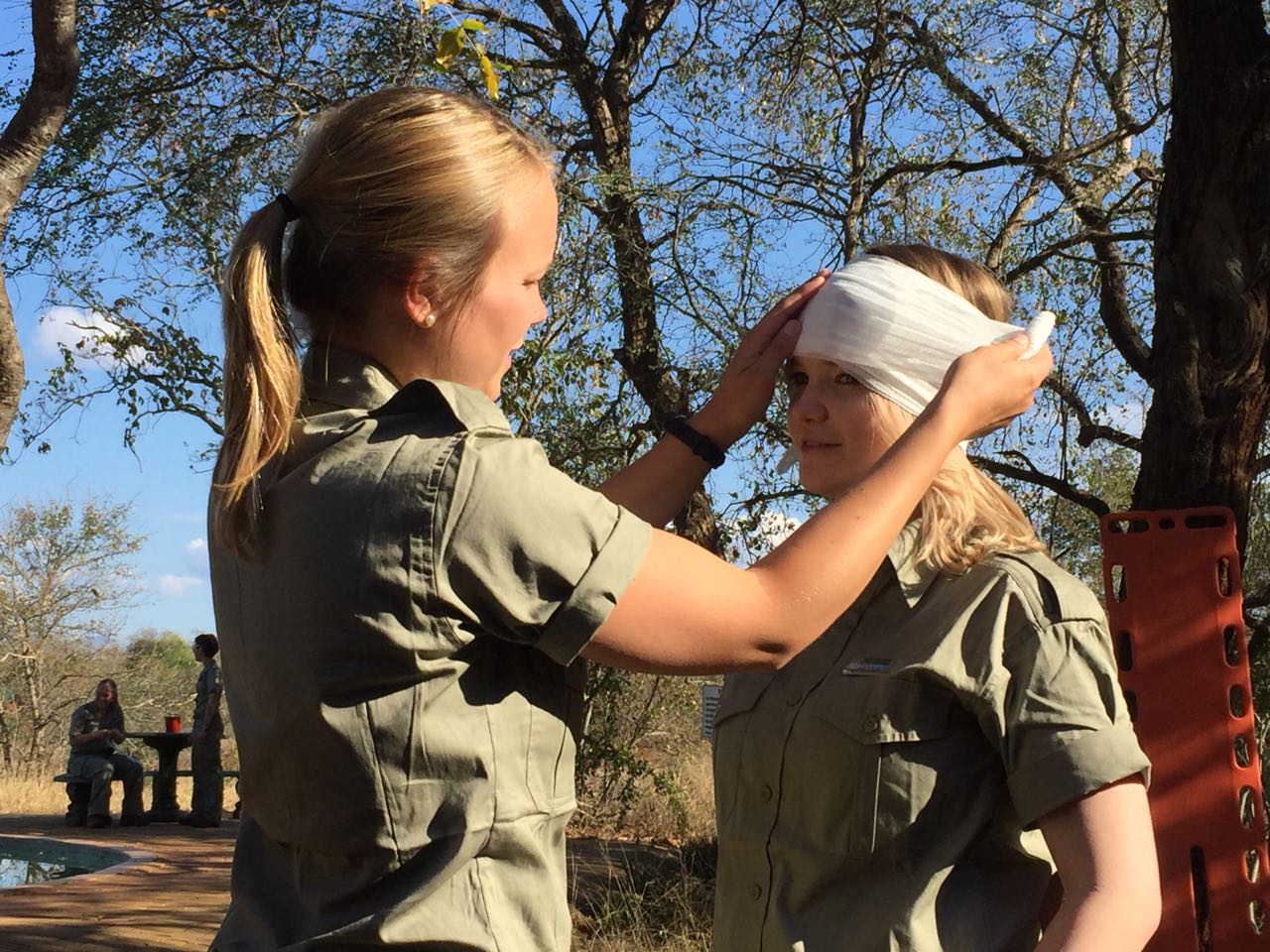
    You will need a valid Level 1 First Aid certificate. This covers basics such as shock treatment, CPR, basic sprains, burns, wounds, bleeding and bandaging etc.) is needed before any CATHSSETA certificates will be issued.  You do not need to have this prior to joining, but you will need to get it either during study or once study is completed before you will be issued with your certificate.

    Some training providers include this in their course, the first aid training provider must be registered with the Department of Labour. You will also not be able to register with NDT without a valid first aid certificate and the international first aid is not accepted by NDT.

    image

     Bushwise has built a reputation as a leading training provider in the safari industry based on our exam pass rate average, employment rates and level of professional and high-quality training. We offer one of the most comprehensive courses available.

    The course has been designed to develop highly skilled professionals in the exciting industry of field guiding. The aim of the course is to provide a well-rounded and specialised education and the training is specifically intended to provide the vocational skills and qualifications required by employers in South Africa and the wider Southern Africa region.

    #apprenticefieldguide #ifga #fieldguide #fieldguiding

  • 10 ways to make your next safari unforgettable

    Whether an African safari is high on your bucket list, or you’ve been on dozens of game drives, you want to make the most of your experience. Soaking in the summer sun, watching elephants greet each other with their trunks, listening to the low sounds of a lion’s roar in the distance. 

    From the friendly greeting of your safari guide to the amazing stories around the campfire, these are the moments that make a safari unforgettable. How can you make the most of it? Here are our top tips for the best bush holiday ever.

    4 min read

    1. Arrive prepared

    image

    Doing a bit of research ahead of time can make your trip that much more enjoyable. Where are you heading for your safari? Is it winter or summer there? What types of animals are you likely to see (and equally, what won’t you see)? 

    It’s always good to have a bit of knowledge before arrival to get the most out of your experience. This will also help you prepare some fun questions to ask your guide. 

    2. Follow a packing list

    Packing the appropriate clothing and supplies is key. No one wants to be cold or driven mosquito-crazy. Most lodges can provide you with packing recommendations. Morning game drives can be cold, even in the winter, so bring layers! Insect repellent and sunscreen are essential in the bush. 

    Check out our guide’s guide to essential gear.

    3. Appreciate the little things

    image

    A lot of people want to see the big, impressive or endangered species when they come on safari. And while you may see many of these animals, you’re not always going to see the Big Five on every game drive or bush walk. 

    But the bush has so much more to offer! From hundreds of species of birds, reptiles and arthropods to a myriad of plants and trees, and of course smaller, unique mammals, there’s so much more to see. It’s really the small things that bring the wild to life, if you take time to appreciate them.

    4. Practise your photography

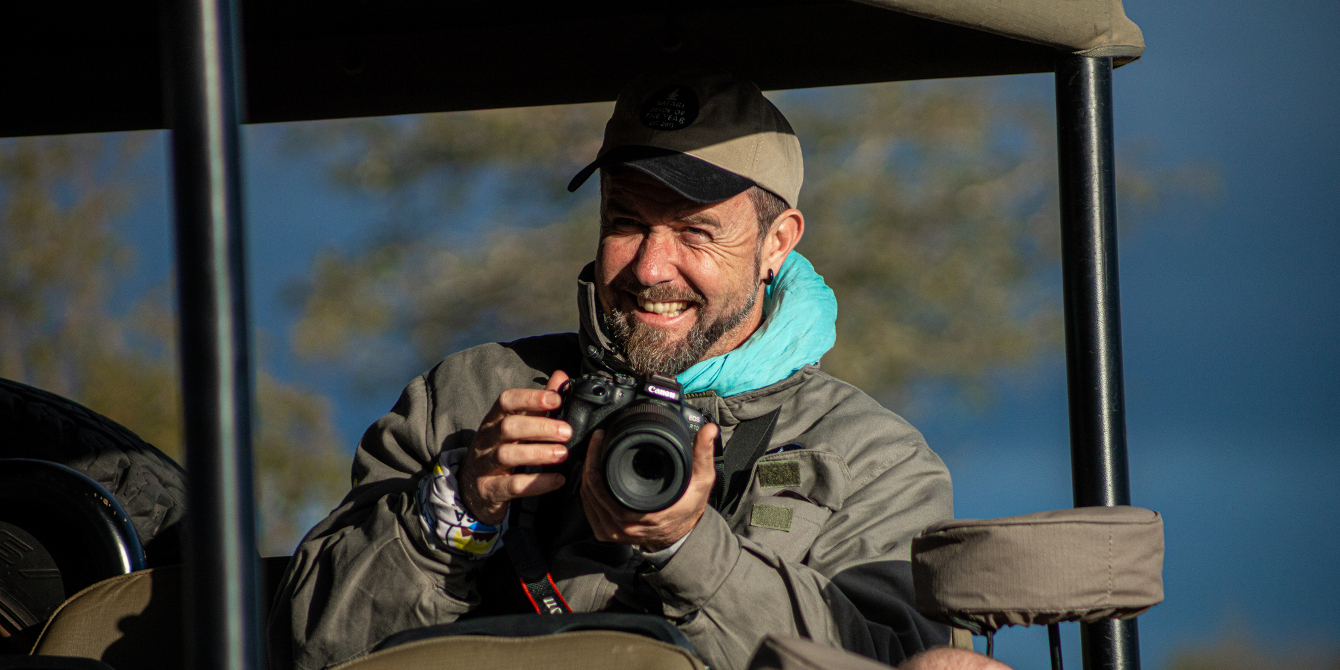
    Wildlife photography is a special skillset. At Bushwise we have many students that love to practise this art (in fact, we teach wildlife photography in our course). As with any skill, practice makes perfect. And it takes a lot of patience to get the perfect shot. 

    You don’t want to miss that yawning hippo photo because your shutter speed was too slow! Test your skills by taking photos of household pets, or even at a sporting event – somewhere with lots of action and movement.

    5. Put the camera down (occasionally)

    image

    Amazing photos really do make lasting memories, but don’t forget to live in the moment! We often see something happen with safari guests who visit for a week or more. Eventually, they leave the camera behind for a game drive or two – to experience each sighting as fully as possible. Between all the amazing photos you capture, be sure to occasionally set your camera aside and take in the experience with all of your senses.

    6. Seek out moments of silence

    There’s something incredibly fulfilling about finding a quiet corner and enjoying the silence. Bush holidays often go by way too quickly, full of excitement and action. Make the moment last by finding time for a quiet reflection. 

    Listen to the sounds of the bush – the birds, the insects, the distance sounds of mammals. Try and hold on to that special feeling, long after your safari ends.

    7. Look down

    image

    When you’re on a game drive, you’re constantly scanning the surroundings for animal movement. It takes a lot of focus to actively look for wildlife, but don’t forget to check out what’s happening on the ground.

    Animals leave tracks and signs everywhere, and interpreting their messages is like reading the morning paper! How cool would it be to see a lion paw print, or evidence from an elephant feeding? Point out anything interesting to your guide, it might just lead to a sighting.

    8. Look up

    South Africa hosts hundreds of bird species – up to 900 have been recorded! If you develop an interest in birding, there’s no such thing as a quiet game drive. Sitting by a waterhole on a summer’s day can lead to you seeing dozens of species in a short amount of time. Challenge friends and family to see as many different birds as possible.

    9. Get to know your guide

    image

    One of the best parts of a safari is having an excellent safari guide. Becoming a safari guide takes a lot of work and training, so these individuals definitely have some great stories to share. They might even know individual animals (like resident leopards) or know a secret spot to see some elusive species.

    An accomplished field guide really knows their stuff and interprets the wild world around them, making each sighting more interesting. Ask them questions – they love to talk!

    10. Have fun!

    Let’s be real – this is actually safari tip #1 – so go for it. Have fun, keep an open mind, laugh at the cheeky baboons and melt into a puddle over the baby elephants. And just imagine it: what if you could have a safari career?

    #lion #lodges #wildlife #gameranger #bushwise #fieldguide #stars #trailsguide #sleepout #leopard #animals #tracks #hyena #safari #sightings #wilddogs #fieldguiding #tracking #endangeredspecies #trackandsign #gamedrive #guiding #fieldguides

  • Snapshot of Etosha National Park

    When one thinks of iconic, vast African landscapes inhabited by massive herds of plains game, one thinks of Etosha National Park (Etosha). 

    3 min read

    image

    Etosha gets its name from the massive Etosha Pan, which covers nearly a quarter of the park’s surface. This huge space is home to hundreds of different species including endangered animals. 

    About Etosha National Park

    Etosha is one of the largest protected areas in Africa, located in the northwest corner of Namibia. At 22,270 sq km (8,600 sq mi) Etosha has a surface area to match that of New Jersey or Slovenia. It’s slightly larger than Kruger National Park, but with far fewer roads, camps and people, and a landscape dominated by expansive salt pans. 

    image

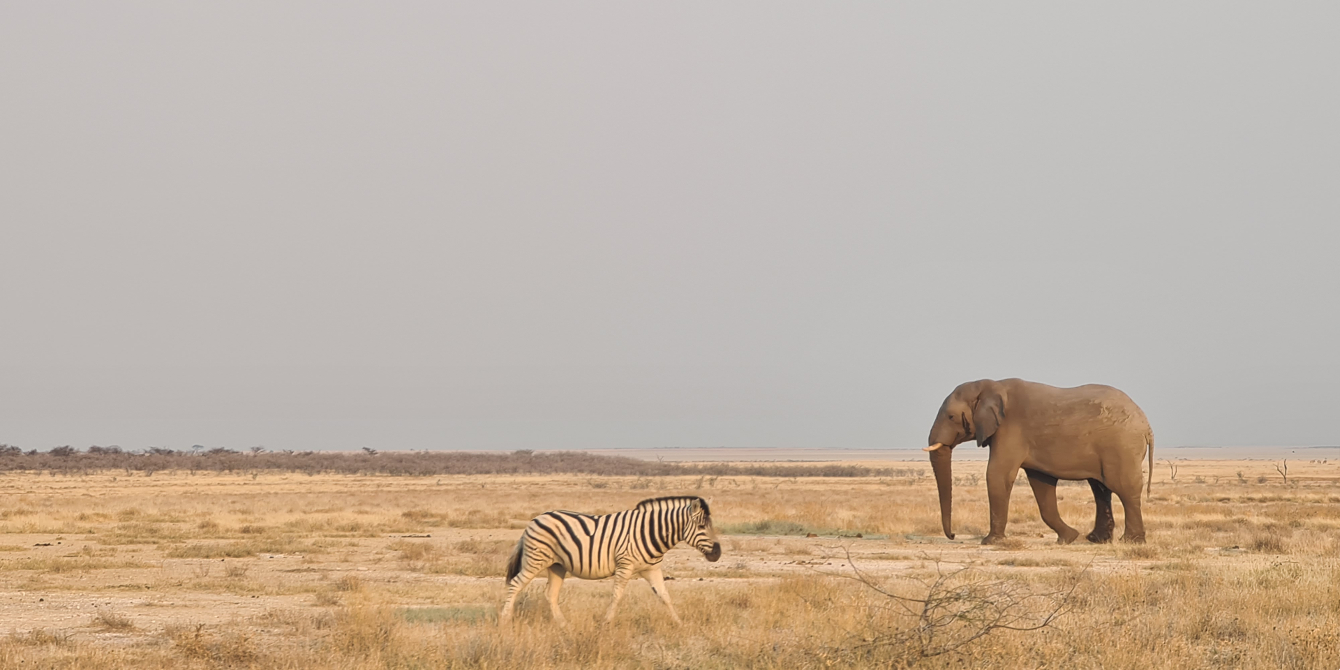
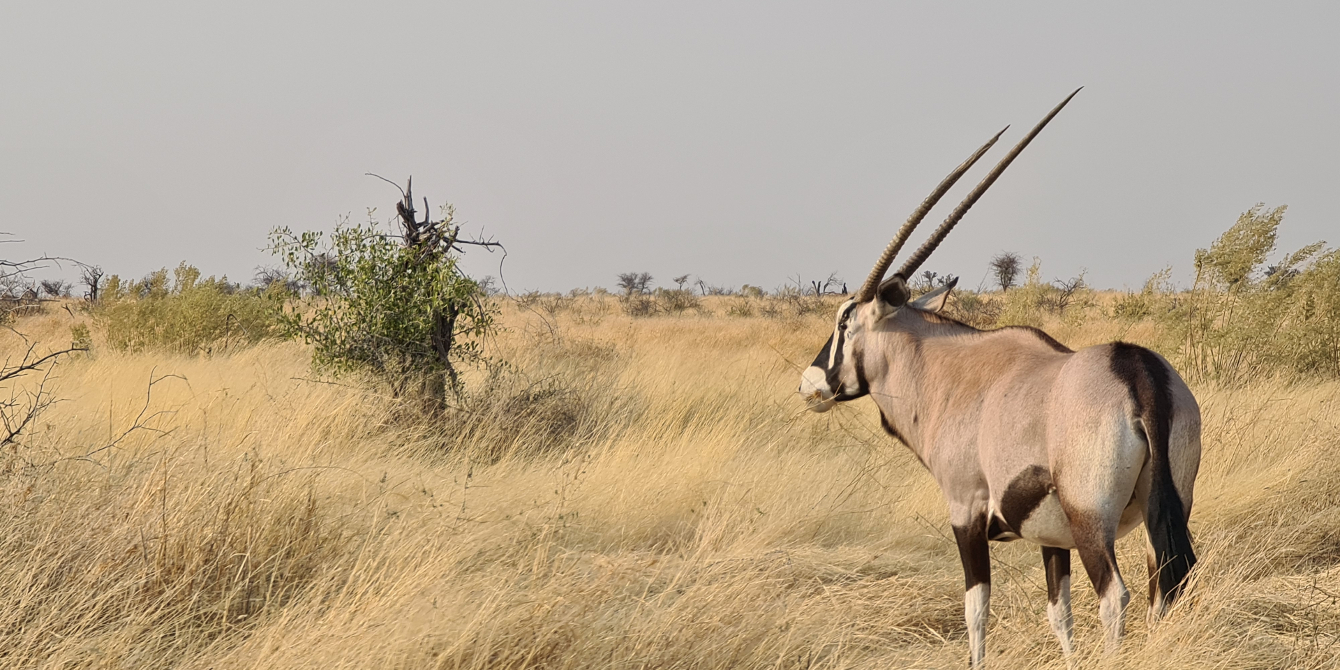
    This park is famous for its abundance of wildlife. Many of these species specialise in surviving in the park’s unique habitats, such as the prevalent salt pans. Species you might see on a safari in Etosha include: 

    1. Elephant

    2. Rhino

    3. Giraffe

    4. Lion

    5. Oryx

    6. Leopard

    7. Caracal

    8. Bat-eared fox

    9. Brown and spotted hyena

    10. And many more

    Etosha National Park accommodation

    image

    There are six major camps inside Etosha. All are near the park’s main roads and are managed by Namibian Wildlife Resorts (a government agency). These are:

    1. Dolomite Camp

    2. Okaukuejo Camp

    3. Halali Camp

    4. Namutoni Camp

    5. Olifantsrus Camp

    6. Onkoshi Camp

    Of these camps, Olifantsrus is only camping and self-catering. Okaukuejo, Halali and Namutoni camps have camping areas as well as chalets, restaurants and swimming pools. Onkoshi and Dolomite are the newest camps and have more luxury-style accommodation. All camps have floodlit waterholes for excellent game viewing. Private luxury accommodation is found just outside the park’s boundaries.

    Safari in Etosha

    There are a few different ways to experience Etosha, depending on your budget, interests and length of stay. Certainly the most affordable is to stay within the park at the campgrounds and conduct your own self-guided driving safari. You might get lucky and see everything on a self-drive. 

    image

    But, as with African safaris, going with a field guide is highly recommended. These professionals have spent a lot of time in Etosha and are familiar with the landscape and animals. Trained safari guides will have a much better idea of where certain animals spend their time, and will have daily updates on animal movement. 

    If you’re trying to see something special, consider booking a guide while you’re in Etosha. You might also want to join one of the camp’s extra activities, such as a photographic or aerial safari.

    Consider a career as a safari guide

    Did you reach this page because you love wildlife and nature? Have you ever considered turning your passion into a career? Bushwise offers 2-, 6- and 12-month wildlife courses where you can become a qualified safari guide. Imagine working in a place like Etosha! It’s not an impossible dream. Make it possible with Bushwise.

    #lodges #wildlife #AdvancedRifleHandling #gameranger #bushwise #fieldguide #safariguide #trailsguide #animals #tracks #safari #fieldguidetrainer #sightings #fieldguiding #tracking #endangeredspecies #trackandsign #gamedrive #guiding #elephant #fieldguides