Author: Bushwise Student

  • Finding purpose within my passion as a nature enthusiast

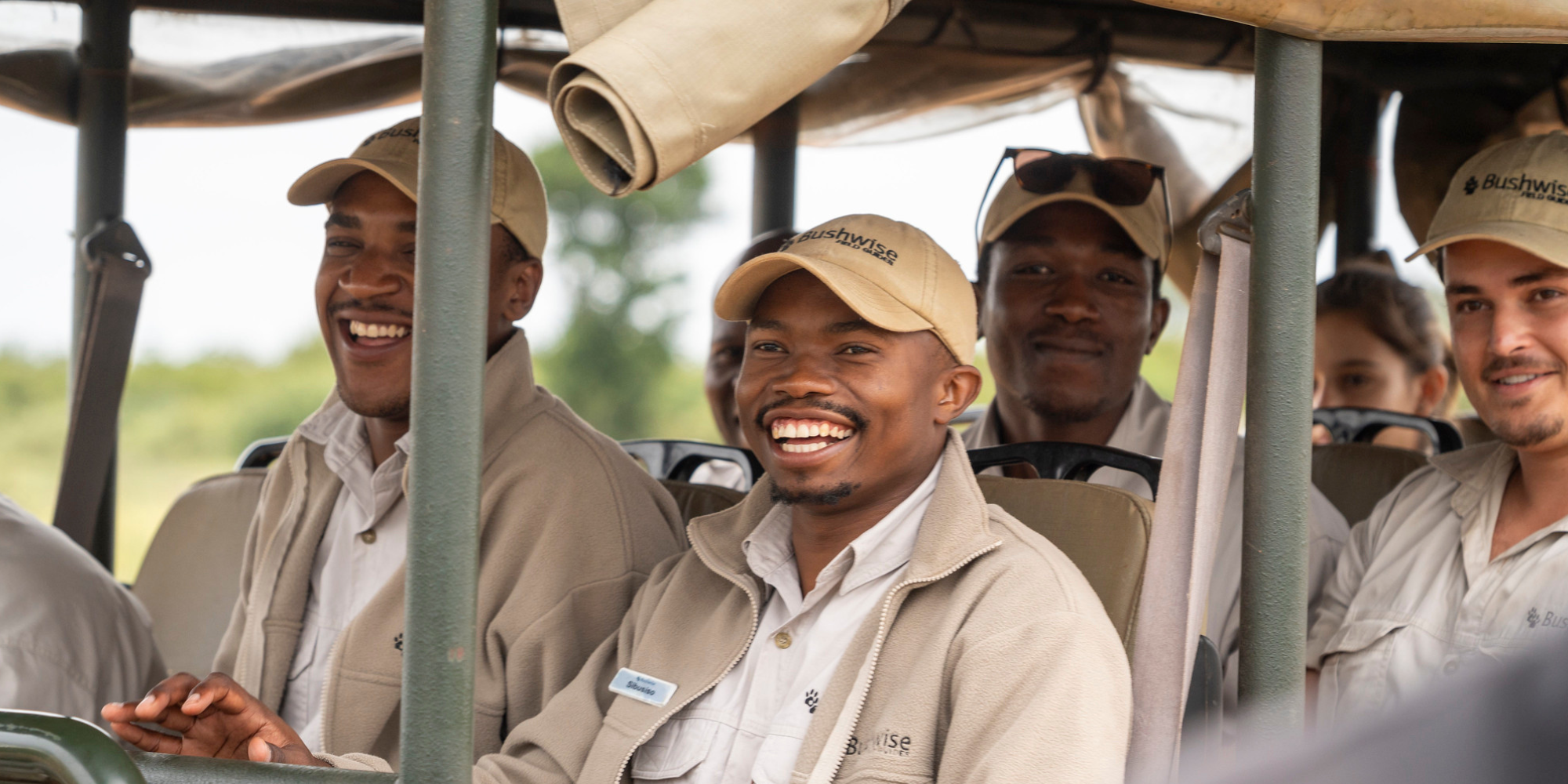
    This blog was written by Sibusiso Ngwenya, a Bushwise Professional Field Guide student. Each student takes a turn as camp manager, and writing a blog is part of the experience.

    3 min read

    My name is Sibusiso Ngwenya from Mpumalanga, also known as the place of the rising sun. Born and raised in a village called Mahushu next to Kruger National Park, Numbi Gate. The love for nature has been among my biggest passions from my childhood days until today. Growing up next to the Kruger National Park, one of the biggest National Parks in the world has been a great inspiration and fuel to my love for nature. 

    Over the years I have been searching for opportunities to be part of the nature industry with no luck until I came across the beautiful opportunity that Tourvest together with Bushwise presented to my community. I took the initiative like everyone else in my community to apply for the opportunity and we were all called to come for an interview, but luckily I was selected with few others. When I got a call that I have been selected, I was extremely happy knowing that my dream of being part of the nature industry will now become a reality. 
    image

    Since the first day I arrived at Bushwise, it has been an interesting and life-changing learning experience. Everyday there’s something new that I learn. Like any other place where people come together, there are minor challenges that I have also come across, but the joy and beautiful things so far have made sure those challenges do not have a huge impact in my life. 

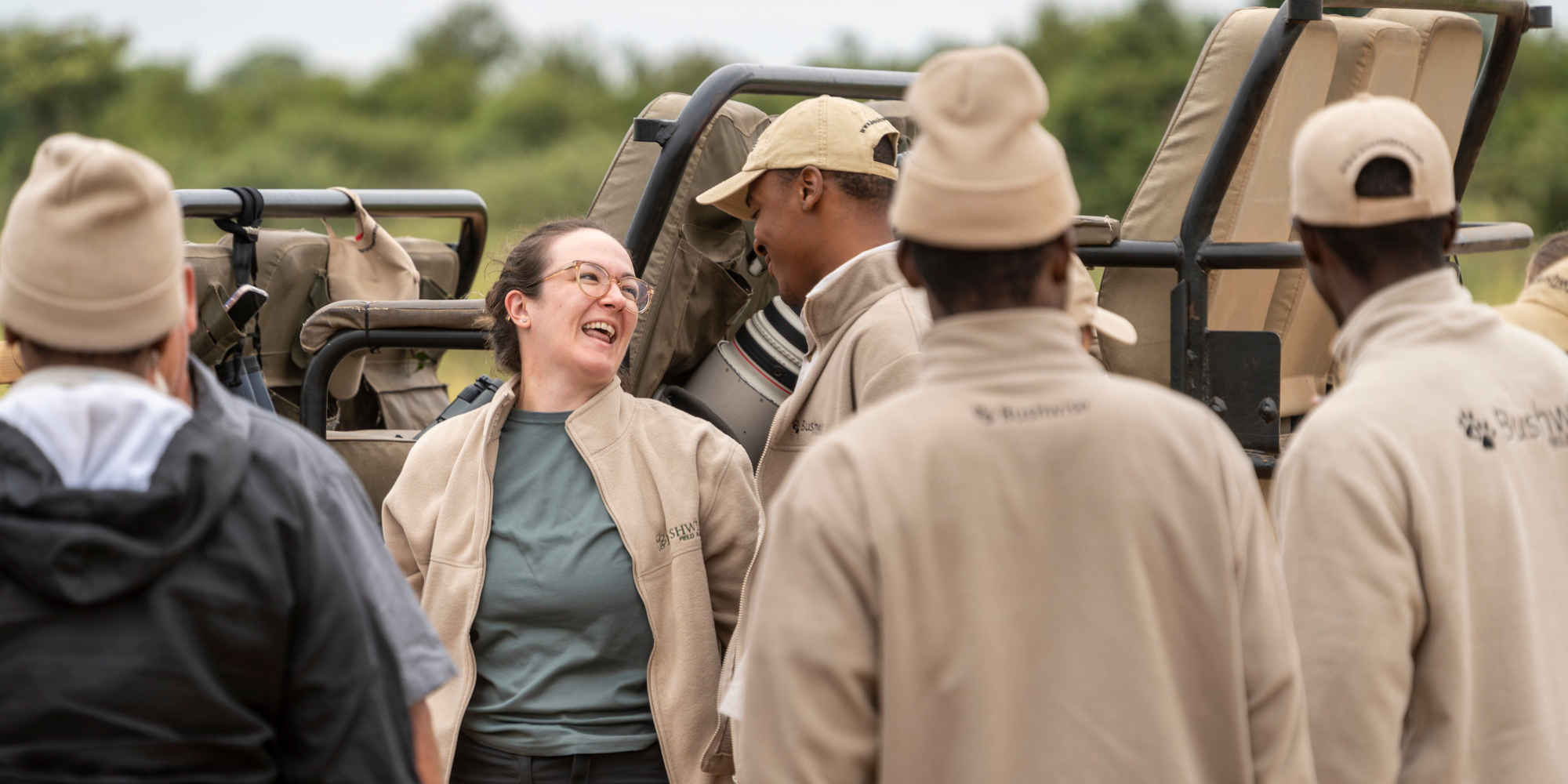
    Coming across people from different walks of life, cultures, races and more has also been a great blessing to me. It has helped me in understanding that we are all different in this world but it is important to put our differences aside and work together to achieve a common goal. This has been a good platform to sharpen most of our skills that the industry requires like communication, teamwork and more. Being a camp leader and group leader was also one of my biggest highlights for the course and my best experience so far, it was not easy but it was enjoyable. 
    image

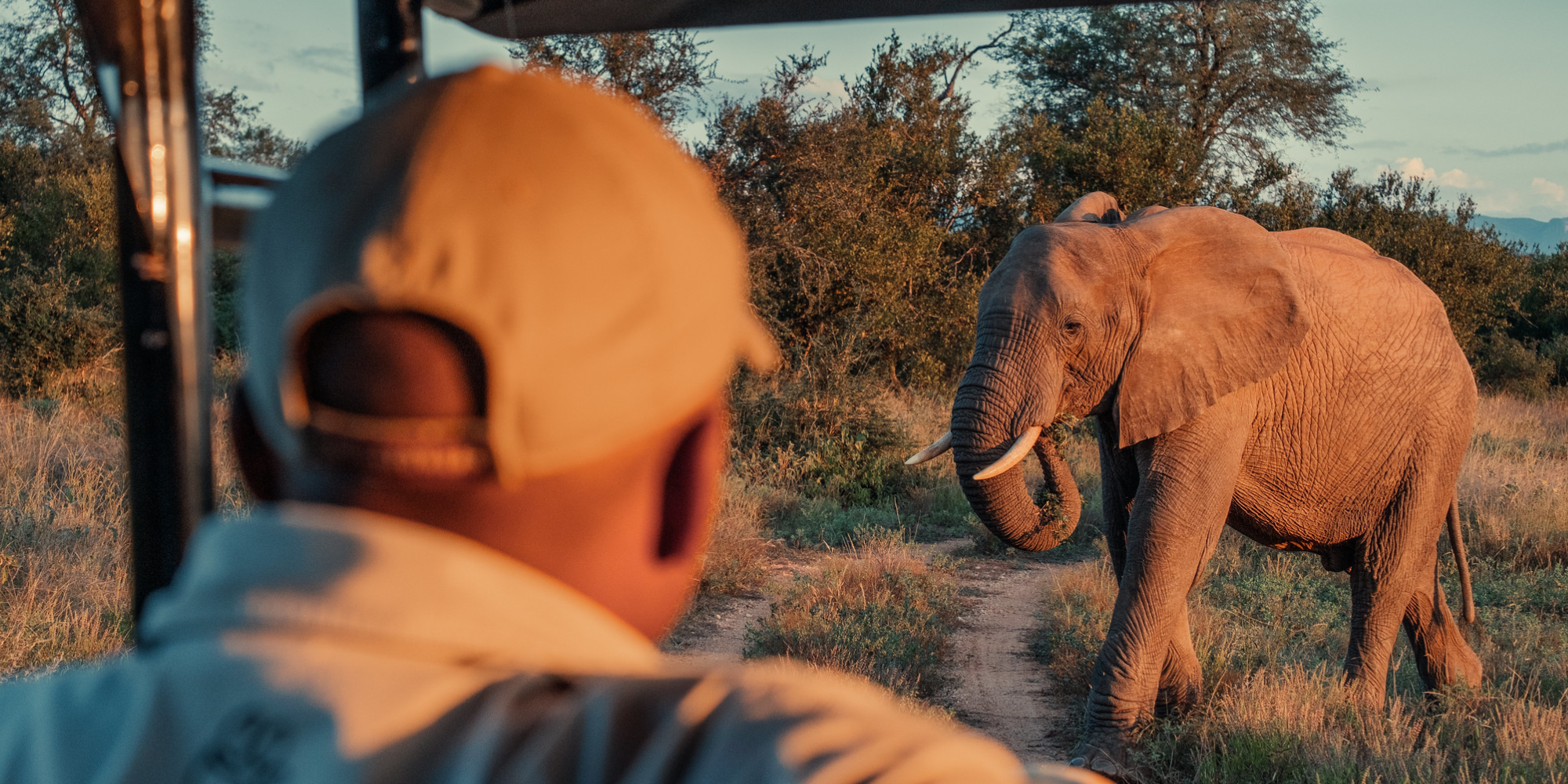
    Over the months we had numerous beautiful sightings on our game drives and even on our campus. One of the best sightings was a day when we were having our tea break in the morning at Makalali Game Reserve and a big elephant came and walked in front of us, it was a scary yet interesting sighting because it did look at us. Our instructor told us to stand still and enjoy the moment, the elephant won’t attack and it happened exactly that way. I liked all the modules, I even failed to choose one. My driving skills have also been sharpened more and more together with my guiding skill. Snake handling, hospitality, 4×4 driving and wheel changing, first-aid and more that are essential in our guiding career. I’m also looking forward to the upcoming training and opportunities. 
    image

    Bushwise is one of the best training institutions ever. I have met a lot of amazing people. I’m looking forward to becoming one of the best field guides in the country and in the continent at large. One of the best lessons I have learned is that anything you want in this life is possible only if you put your mind and energy to it consistently. 

    Explore Bushwise programs today and kickstart your journey into the world of nature conservation. Apply now!
  • Unleashing our secret weapon: How dogs are fighting poaching in South Africa

    This blog was written by Keenan Rencken, a Bushwise Professional Field Guide student. Each student takes a turn as camp manager, and writing a blog is part of the experience.

    4 min read

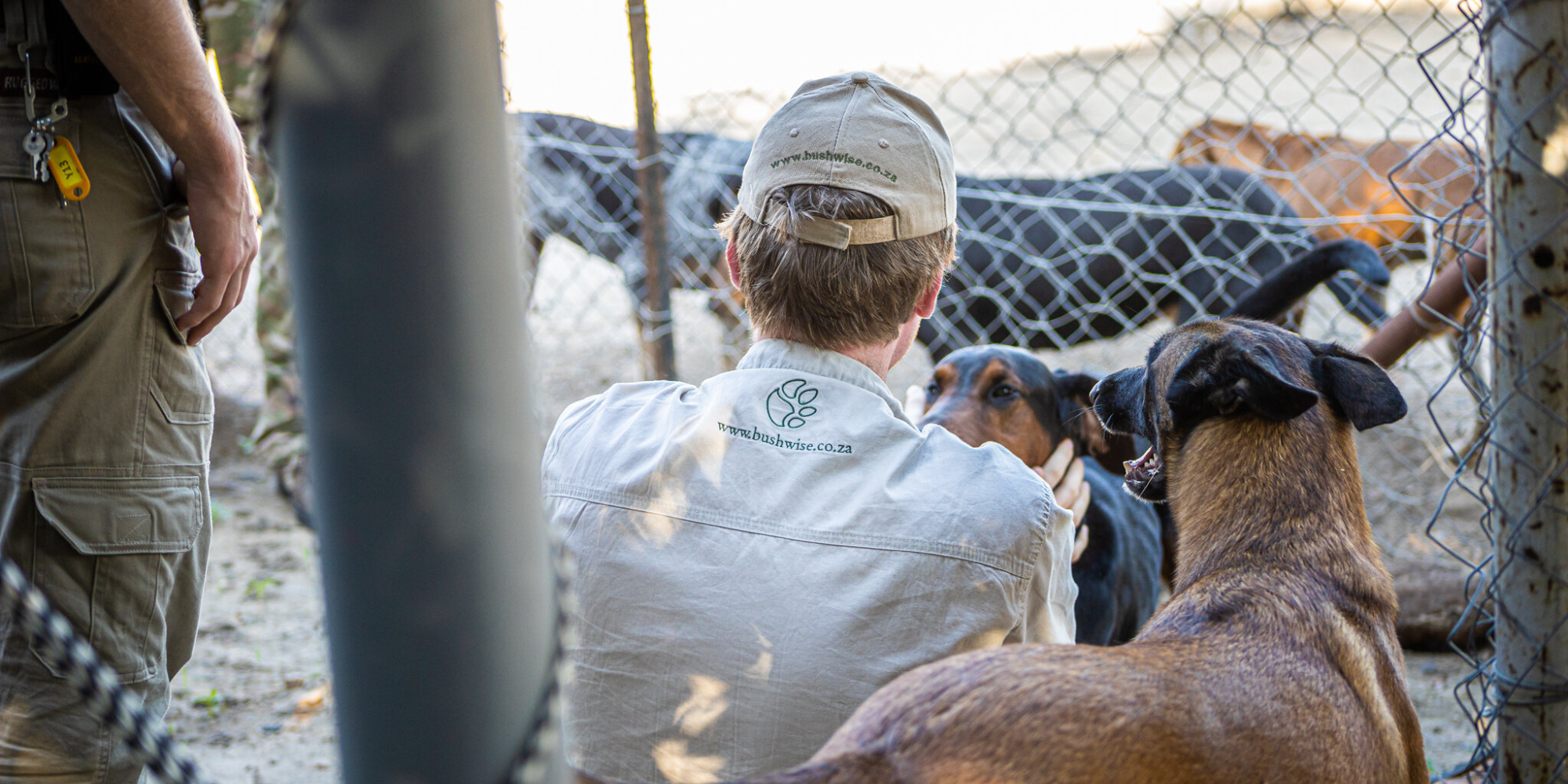
    Since an early age I have had an undeniable passion for dogs, their innate abilities to learn various commands and the utilisation of various breeds for specific functions. Growing up on a small holding on the north coast of KwaZulu-Natal, I had the opportunity to have several dogs and see many of them in action. The first dog to have a profound impact on my life was a border collie. I was intrigued by his intelligence, natural or genetic disposition to listen and his fierce loyalty to his loved ones. 

    Tapping into these traits that various breeds have allows us a select opportunity to tailor dogs for certain requirements. This fascination of mine has led to many hours of researching dogs and understanding the psyche behind them. Dogs, like humans, need a “purpose”, and like many of these breeds their jobs have become redundant. However, their abilities to do things that people, or even technology, still at this present time cannot do, gives dogs the opportunity to be at the forefront of stopping and deterring poachers.  Dogs, therefore, have a strong place in conservation and the protection of South African wildlife

    image

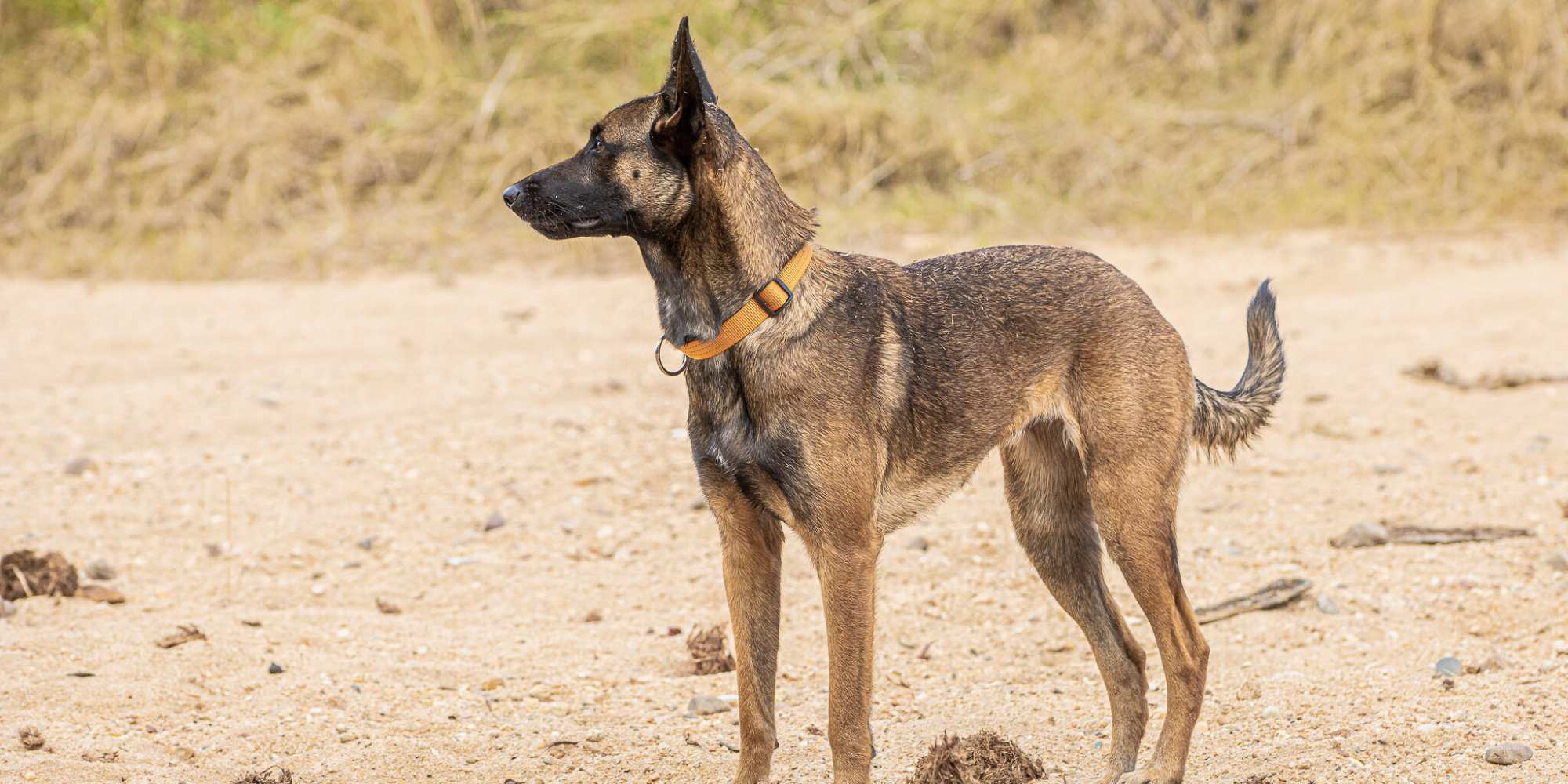
    Before the Bushwise course I had an opportunity to see the Manyoni K9 unit in action. The things that I took note of were the undeniable bonds between the handlers and their canines. Secondly, every dog was treated differently – what motivated them, how they were trained, what they were used for – ensuring that the dog received positive reinforcement even if it was slightly off the mark. Their handlers are so in tune with these dogs that they can sense whether the poacher is within a 100m radius or if the scent has been lost. Whether they are trained to track pangolins or a specific person in a vehicle, these vital resources (which can cost anything upwards of 100K) have an important role to play in the conservation of that area. 

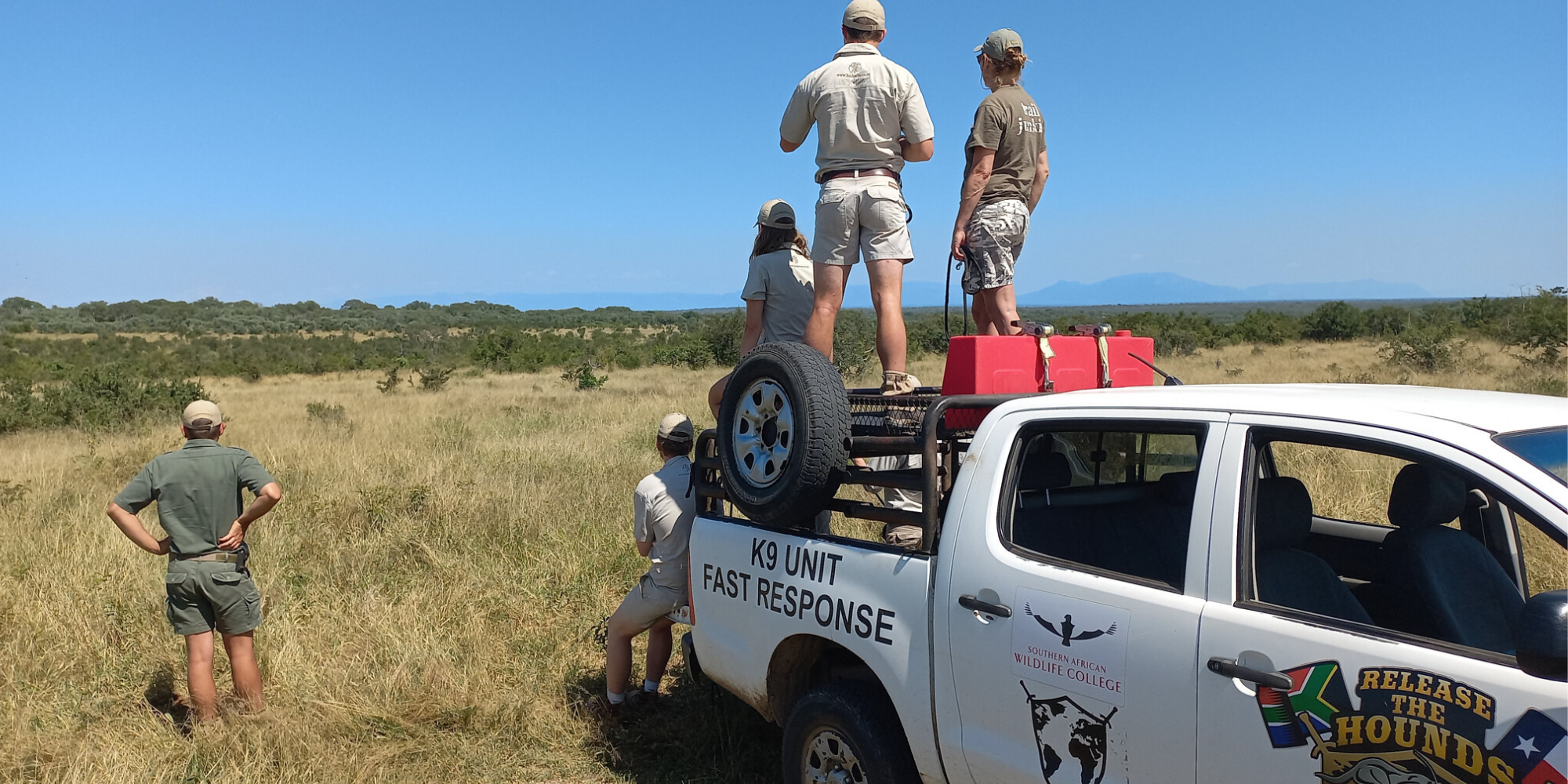
    Since I joined Bushwise doing my 6 months Field Guide Course, I have come into contact with many of the dogs that are at the K9 unit just below our Campus at SAWC in Hoedspruit. Whether it be in passing on a game drive as the dogs are out on their morning training activities, on campus while the dogs get some socialisation and exposure to various sights and smells of the campus or at night hearing them howl while I lie in bed. These are all things I treasure and cannot wait to experience on the course. 

    image

    There have been several breeds that I have been in contact with, each utilised slightly differently. Bloodhounds have been in operation all over the world, primarily in use of tracking, often on old trails. However, due to their size, in recent times they have been crossbred with dobermanns to ensure that they are a little sleeker to fit the helicopter, and for increased stamina and endurance. The German shepherds and malinois are used more on new and shorter tracks as well as for the apprehension of poachers. 

    The K9 unit at the SAWC campus has been the pioneer for handler-free pack running dogs. These are usually hounds such as the “Blue Tick”, “Red” and “Walker Treeing” variety. These are used specifically on fresh tracks due to the pace that the pack is able to track. Dogs (5-8) are flown by helicopter to the point at where the poachers were lost and fitted with tracking devices and GPS harnesses. From this point they are released and the armed handlers remain in the helicopter while the dogs trace the scent of the poachers. The helicopter follows the dogs and will be alerted by their behavior and GPS movements. Once the poachers are apprehended, the dogs are rewarded and taken back to camp. This ability to let the dogs loose with no handler ensures a faster apprehension. This is a “game changer” with something where time is of the essence. 

    Some statistics that have been taken from Feb 2019- Dec 2022: 

    • 81 rhino saved 

    • 193 arrest made 

    • 88 weapons removed

    These statistics show an increase in apprehension from 10% to over 60% when off-leash or on-leash dogs are utilised. These dogs are seen as a great asset in the fight against poaching. Not only are the dogs carefully selected, they are also paired with the appropriate ranger. This is seen as a “must” for a field ranger to competently do his job. 

    image

    As is evident, these canines ensure efficiency and effectiveness in the apprehension of poachers due to their ability to pick up on subtleties such as perimeter intrusions, ability to follow tracks and their ability to apprehend. This tool is fundamental to the success of the park’s efforts and ensuring the longevity of animals for future generations. With all these added efforts I feel we have barely scraped the surface of human/canine potential. And with a dog and handler relationship being more and more recognised for higher successes, this can only go up. 

    Explore Bushwise programs now and become part of the solution to safeguard our wildlife.

  • Igniting a passion for wildlife conservation in my village

    3 min read

    My name is Khoza Honest from Worcester village, Ga-Sekororo. I’m 25 years old. I went to Mmalesiba Secondary School and completed my matric in 2020. I have been making a living since my younger age by looking after village elders’ cattle so that I would be able to provide for myself since my mother was not able to work due to her health condition.

    That boosted me to help her out with minor things as I was not putting demand on her. I enjoyed looking after the cattle – it gave me an adventure in the forest as I used to fetch the cattle each and every day after school. The forest taught me so much, and I realised how connected we are with nature and that made me start to develop the instinct to want to know more.

    image

    I started with the aim of wanting to explore what the forest was offering me. Unfortunately, it was not easy for me due to lack of resources and discouragement from some of the community members. They kept on teasing me that those things are not meant for me, but there was one thing that kept on playing in my mind – that they do not know what they are talking about.

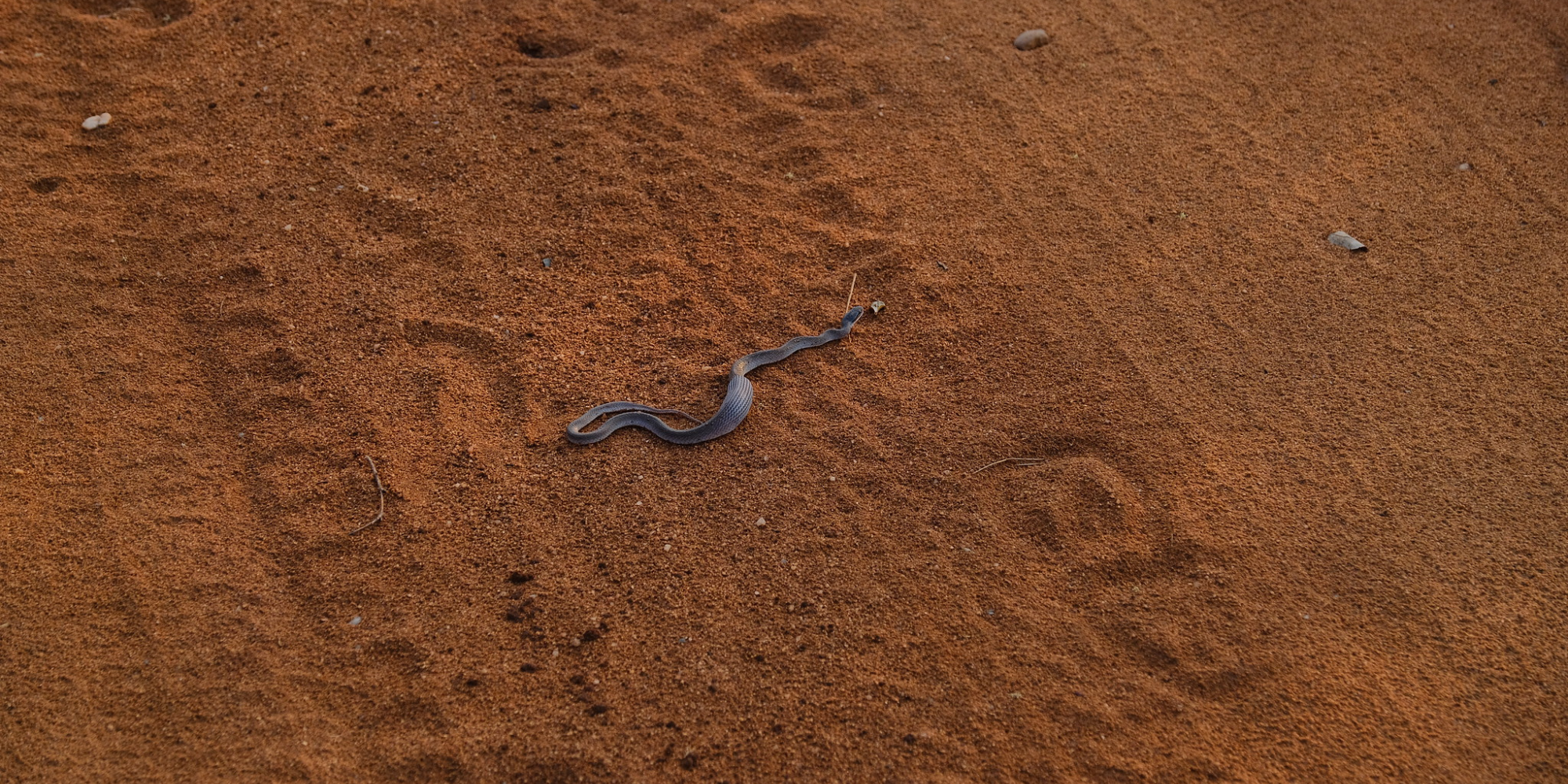
    I used to catch snakes at home and release them in the forest. Particularly brown house snakes and puff adders, and that was not sitting well with my mother. She did not like what I was doing. One day she came across a Mozambique spitting cobra and she called me. When I got there, I told her that I could not catch that one because it was too fast and it would spit at me. They killed it and I was not happy with that.

    image

    Sometimes I was surprised when some people questioned me about things regarding nature. It made me realise that I’m not the only one who loves to know more about the wild. After experiencing nature firsthand, I’m motivated to cultivate a love for it and seek answers rather than passively accepting its revelations.

    All this personal experience made me start looking for ways that could help me further the little knowledge I already had. I had applied to a few institutions for nature conservation, unfortunately, it did not go as expected until I came across Bushwise. But I did not have financial muscle at that time. 

    image

    I decided to approach one of my community leaders about my goals and he told me that he would approach me if he came across a scholarship. In 2023, I was working at Makalali Private Game Lodge under conservancy doing fence maintenance. After that, he did as promised and introduced me to the Tourvest scholarship through Bushwise. That time I already knew that this is what has been waiting for me and I told myself that I’m going to take this opportunity to make changes to my village so that they would be able to know the importance of nature. 

    Ready to embark on a transformative journey of your own? Explore Bushwise courses here! 

  • Answering Mama Africa’s call: My journey to wildlife conservation

    This blog was written by Luke Rauby, a Bushwise Professional Field Guide student. Each student takes a turn as camp manager, and writing a blog is part of the experience.

    3 min read

    At age 21, I find myself sitting on a patio outside my tent, which I now call home for the next six months, overlooking the expansive bushveld of the greater Kruger. How on earth did a boy from the Winelands of the Western Cape end up here? Back when my parents were young, dumb, and broke, they were guiding overlanding trips through Southern Africa. It was during this time that they met, and a few years later, I arrived. 

    image

    I grew up in a small town called Riebeek West in the Western Cape. My Father is an architect and my mom worked in tourism for a long while before becoming a full-time mother. My grandfather on my dad’s side owned a game farm outside of Kimberley in the Northern Cape, which I grew up visiting from a very young age. He taught me a lot about the complexities of the African bush, and this is where my love for the bushveld was born. 

    With my parents’ background in overlanding, I was very fortunate to go on many family trips across Southern Africa and to see the most amazing things at a young age. From this early age, my love and interest in nature continued to grow. I was never the child who wanted a PlayStation or had any interest in anything indoors. You would always find me outdoors chasing the chickens or finding eggs in birds’ nests up dangerously tall trees. 

    image

    I matriculated from Paarl Boys High School, and like most teens nowadays, I had no idea what I wanted to do with my life. I was, however, very passionate about rugby and pursued a career in the sport I loved most. After two years of playing rugby full-time, I had sustained too many injuries, and it was no longer safe for me to continue. During high school and playing rugby after, I was so caught up in the rat race of life. I never had time to visit the bush like I did when I was younger, and slowly, I started to forget what it was like. 

    When rugby didn’t work out, I decided to chase money and moved to Cape Town. I enjoyed the pretentious life of a city boy for about a month until I realised something just didn’t seem to feel right, but I couldn’t put my finger on what it was. The city was driving me crazy, but I had no idea what else to do. This unsettling feeling sat with me for a while. 

    image

    One day, a few months later, I got an invite from an old friend from school to visit him on his game farm in the Karoo. It was on that farm, while sitting under a starlit night sky around a crackling fire in the veld, that I heard it. I heard Mama Africa’s whisper, calling me back to where I belonged. To the place where generations of my family had always found themselves – the African Bush.

    I knew instantly that the bush was where I wanted, and needed, to be. It was the part of my soul that was missing. A month after visiting my friend’s farm I heard about Bushwise. And, to make a long story short, here I am, sitting on my patio outside my tent which I now call home for the next six months, overlooking the expansive bushveld of the greater Kruger. 

    Explore Bushwise courses and embark on a journey of your own. Apply now to start the adventure!

  • A life-altering adventure at the Southern African Wildlife College

    This blog was written by Reggie van der Westhuizen, a Bushwise Professional Field Guide student. Each student takes a turn as camp manager and writing a blog is part of the experience.

    3 min read

    As the sun dipped below the horizon, casting a golden tone across the vast African wilderness, I found myself standing on the doorstep of a life-altering adventure. Little did I know that my role as the camp manager at the Southern African Wildlife College (SAWC) for Bushwise would unfold into a week of wild experiences including: driving assessments, tree explorations, and a newfound fascination with bird calls. With 31 ambitious students from all across the globe, our journey towards becoming nature guides unfolded like the pages of a fascinating novel, I became not only a camp manager but also a proud member of the “Black-Backed Puffbacks,” a name that echoed the spirit of tents 15,16 and 17…

    image

    The week started with the anticipation of driving assessments that would test our capacity as future nature guides. After departure we navigated the rugged terrain of SAWC, learning the art of 4X4 driving. The adrenaline-fueled moments were not only a testament to our individual capabilities but also served as the foundation of teamwork. 

    In the classroom, we delved into the world of trees, immersing ourselves in the study of various species and their leaf structures. With our newfound knowledge, we ventured into the wilderness alerted on all fronts to the subtle whispers of the bushveld. The connection between theory and practice became evident as we identified trees, deciphering the language of leaves that spoke volumes about the ecosystem we have always been a part of. 

    image

    One of the highlights of my journey as of yet, was exploring the bird calls – an art that proved both intriguing and challenging (was maybe a case of the more I hear it the less I know it). The symphony of birdlife filled the air as we learned to distinguish the amazing tunes, our ears became finely tuned instruments capable of distinguishing a black-backed puffback from a black headed oriole. The fascination with bird calls was also a reminder of the delicate balance that sustains ecosystems. Every organism has a role to play in this wonderful ball we call earth, it is honestly mind blowing. 

    We 31 students became united by a common passion for nature, we formed a unique bond that transcended borders and cultural differences. The birth of our group, the “Black-Backed Puffbacks,” was marked by laughter, shared discoveries but more so mischief, like the bird we called ourselves after, we became a symbol of resilience and adaptability, navigating our life in the bush through brotherhood. 

    image

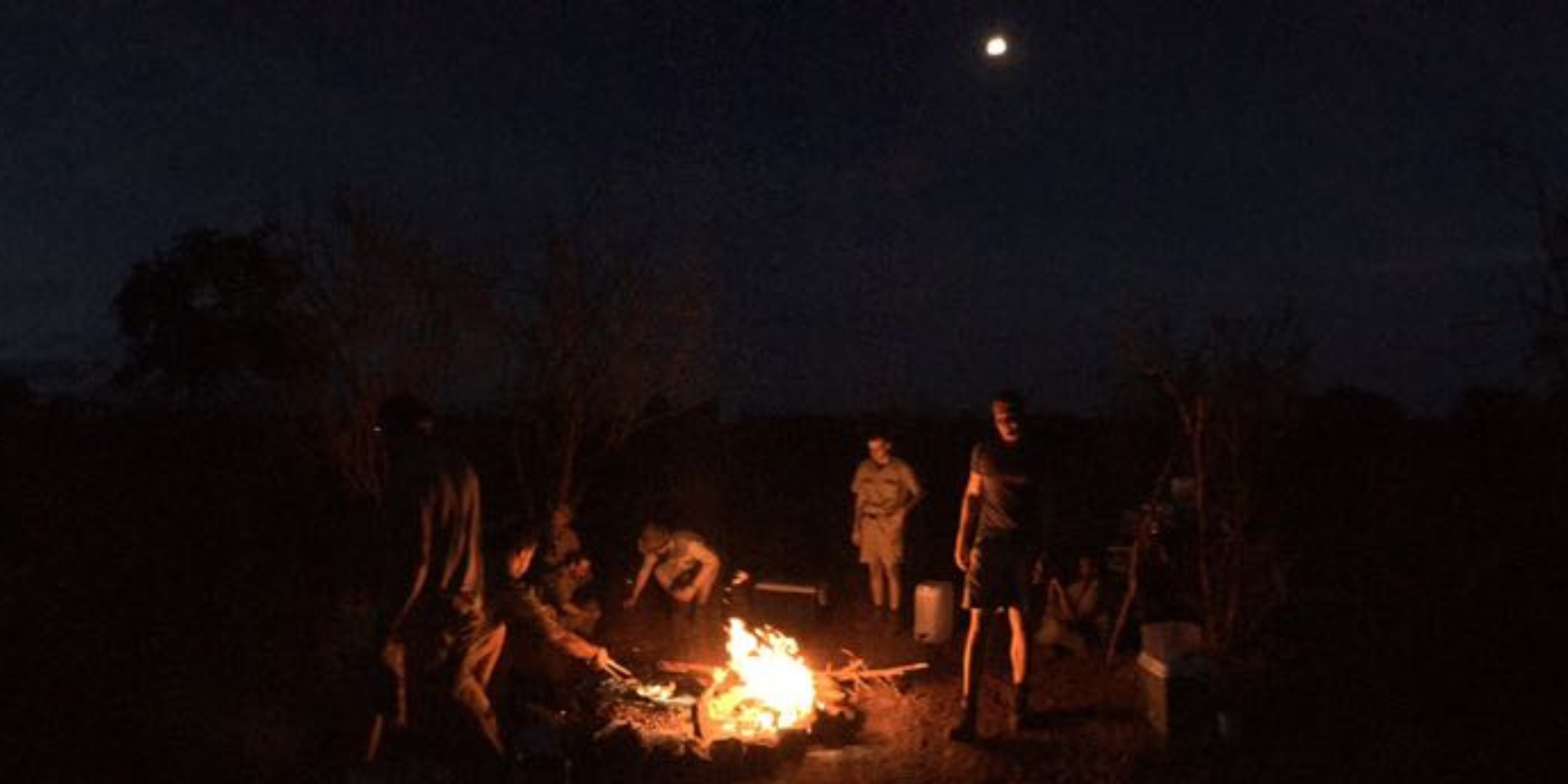
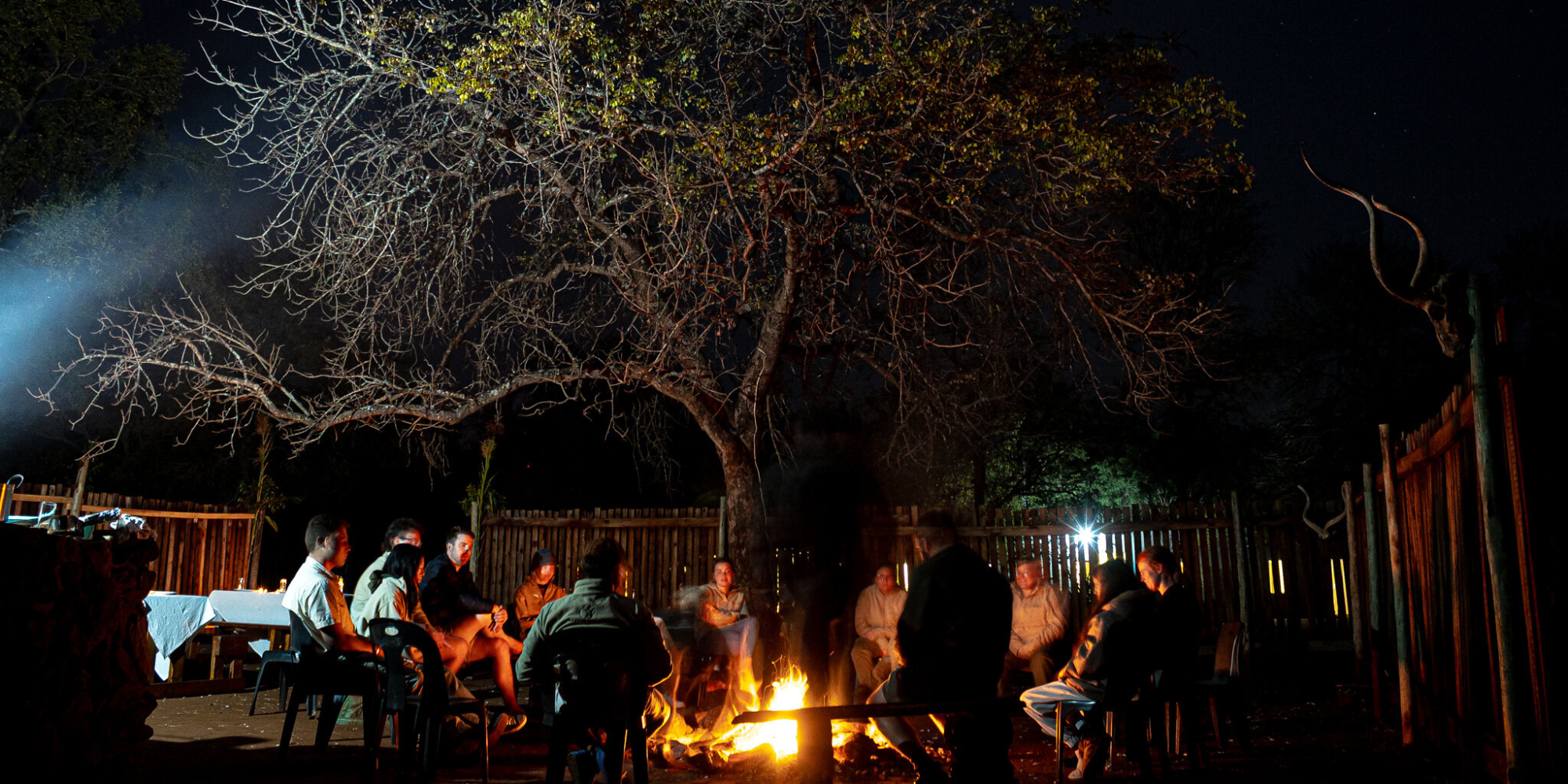
    The evenings around the campfire (mainly Saturday nights) became an environment for everyone to be themselves, and you tell me what is more beautiful than that? The diversity within our group became a source of strength, enriching our understanding of the natural world and creating a global perspective on LIFE.

    As the week as camp manager drew to a close, I found myself reflecting on the profound impact this experience had on my journey as a future nature guide. The challenges, the moments of fun, and the bonds forged during this week were not just chapters in a training program; they were the building blocks of a lifelong adventure in understanding and protecting our planet’s natural wonders. In the heart of the African wilderness, I discovered not only the secrets of trees and bird calls but also to hurry up and slow down – the true essence of the Black-Backed Puffbacks. PS – To any members of the Black-Backed Puffbacks if you are reading this, I love you gents. 

    Ready to embark on your own wildlife adventure? Explore more about Bushwise on our website!

  • “Wild dogs? On the airstrip? Yeah I’m coming!”

    4 min read

    This blog was written by James Frost, a Bushwise Professional Field Guide student. Each student takes a turn as camp manager and writing a blog is part of the experience.

    Two weeks. Just two weeks in the bush and everything seems to have happened all at once.

    I am James Frost, a ‘fake Aussie’ as one of my new friends has named me recently. Half Australian, half South African and all human, I was born in Australia and then moved to South Africa, which is the opposite direction to most people. We’ve been at Bushwise on the Southern African Wildlife College (SAWC) campus for two weeks and have had some pretty incredible experiences.

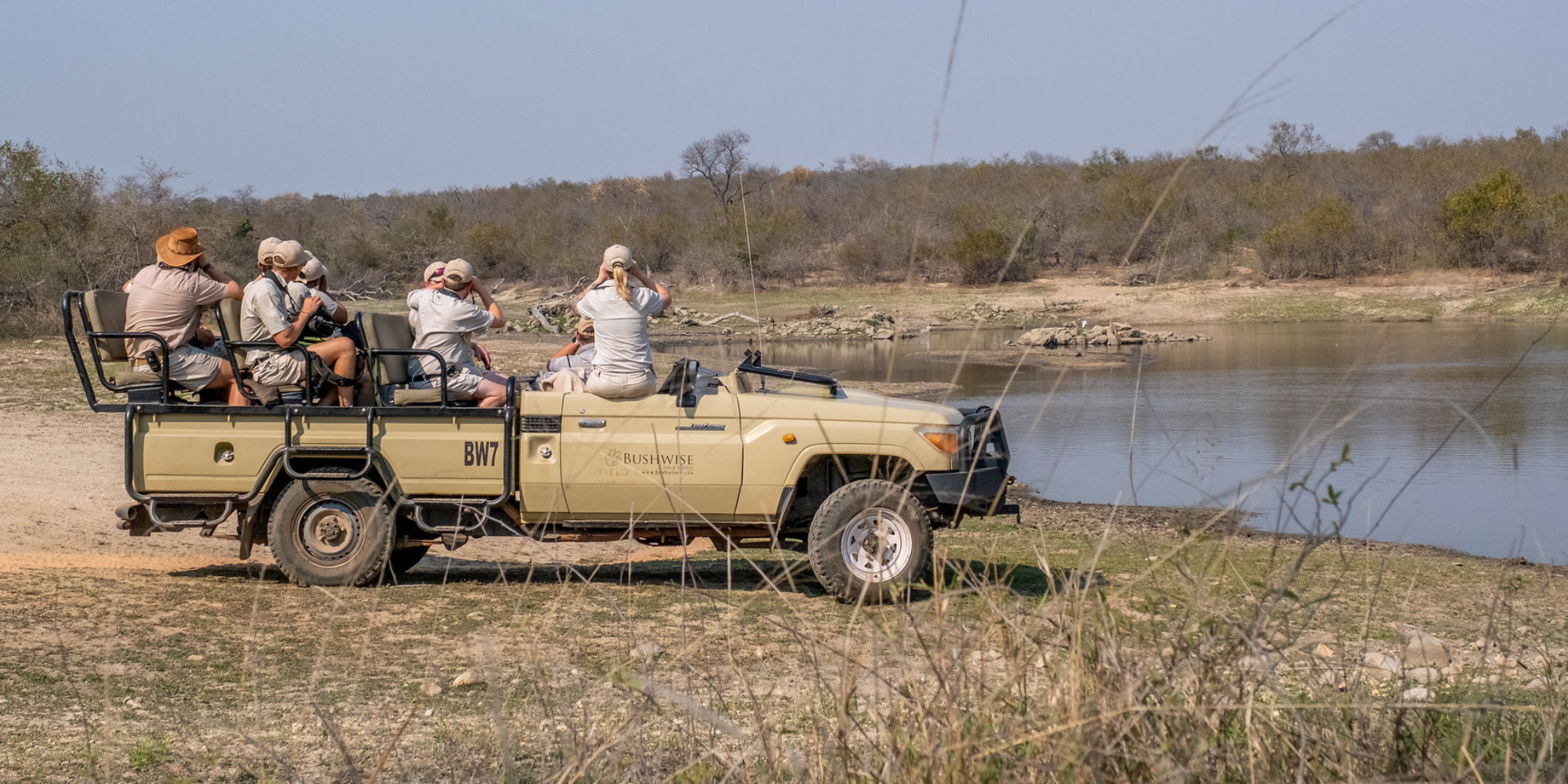
    After doing some serious theory busting for the first week, we finally started doing our first game drives. Each vehicle had a trainer with them and six members of each driving group had about an hour each to drive throughout the concession that SAWC is based on. I had the first go on Tuesday morning and we hadn’t been driving for more than fifteen minutes when we came upon some wild dogs. 

    image

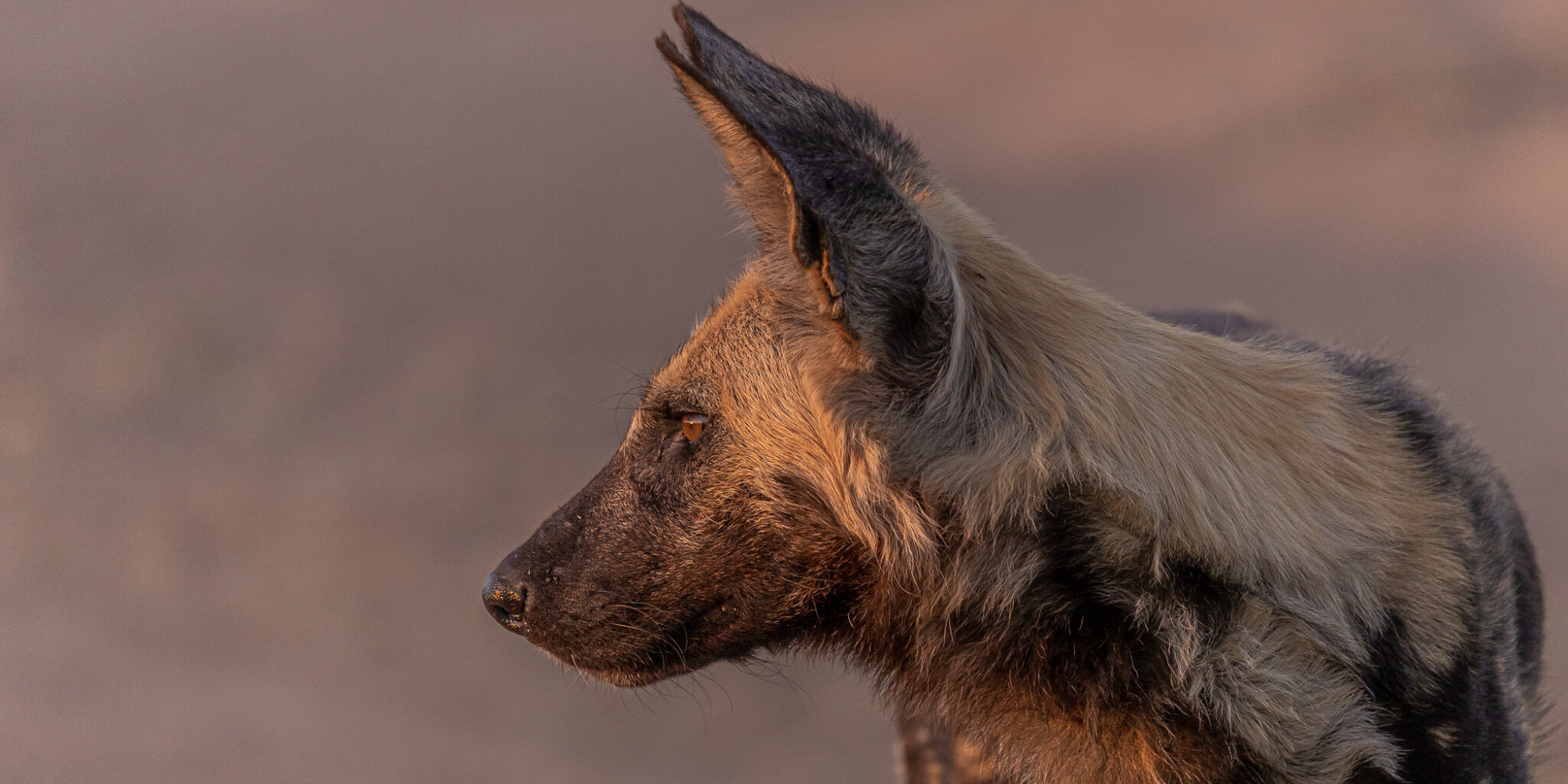
    These dogs are a part of the Orpen Pack and their alpha male has very floppy ears, one of the ways to identify them as wild dogs have massive home ranges that they traverse. These home ranges can be as large as 1000km² however, 500 – 600km² is more common. The dogs will traverse this range regularly, often covering great distances in a day. A big pack like the Orpen Pack hunts once a day most of the time. Impala is one of their favourite foods and mostly they will target smaller antelope. However, there are reports of certain packs going for much larger prey like buffalo but this is very rare behaviour. Melchize and I have affectionately named the Orpen Pack alpha male ‘Floppo’ due to his ears. 

    It’s not the first time we had seen this particular pack either. They made a kill right on the fence line on Monday evening. Myself and three others watched it happen. Although, to be fair, we barely saw any of it. An impala burst out of the scrub, bolted across the airstrip and hit the fence at full speed. All four of us immediately turned to look in the direction she came from. And then the dogs came, dead silent and would have looked quite scary had they not been bouncing above the tall grass like painted dolphins. 

    image

    Once the front runner was in the clear it caught up to the impala who had gotten up and was a little dazed. There was a slight scuffle as another dog caught up as well, a single anguished call from the impala ewe and then dead silence. None of us could get decent photos because it was so dark but soon all of us had a chance to see one of the rarest sights on the planet. Quite often the dogs start feeding before their prey is fully dead and will tear into it with wild abandon. Our trainers have told us stories of dogs eviscerating prey on the run and the guests looking rather sick upon witnessing their brutality.

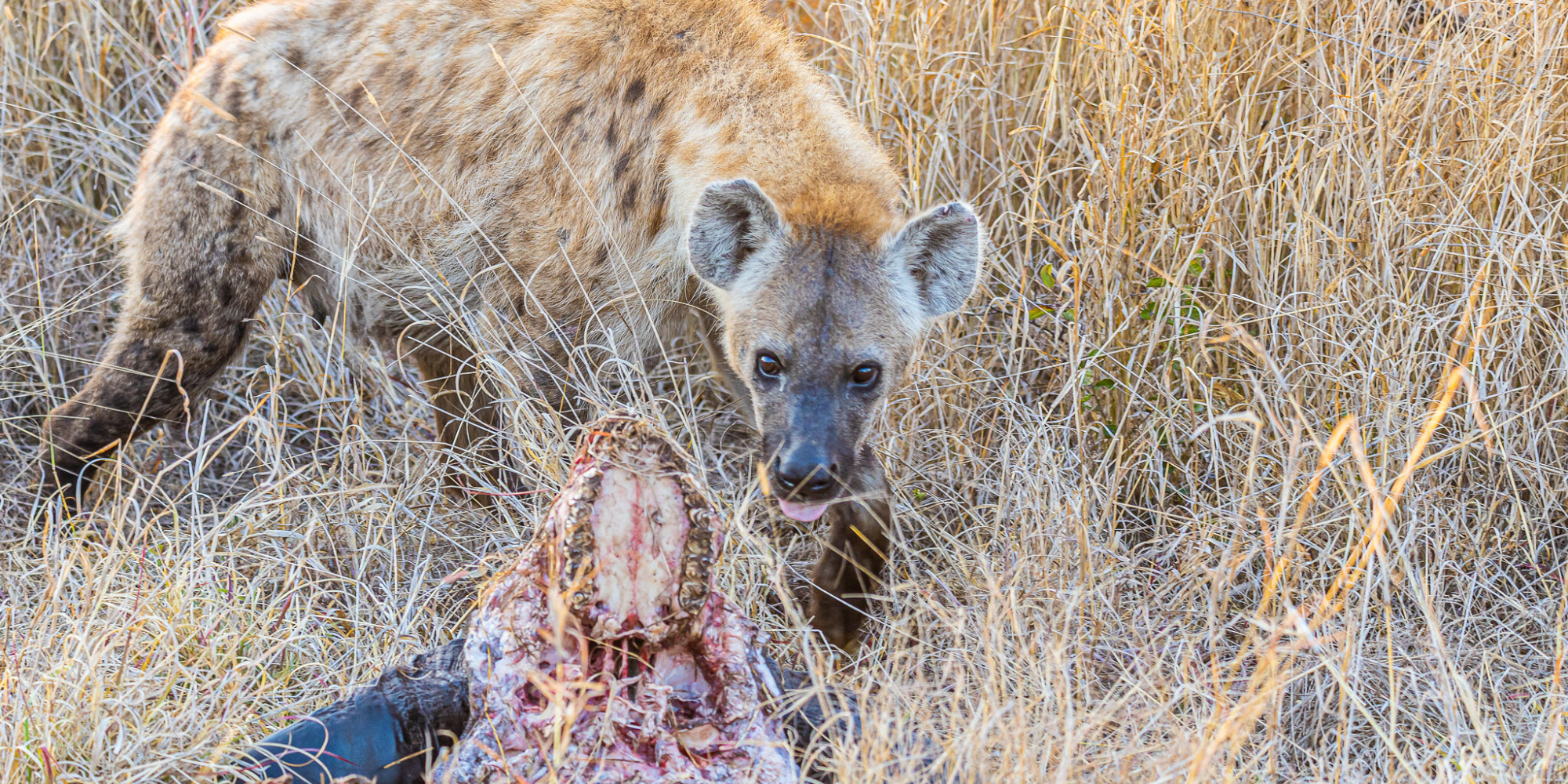
    By the next morning there was nothing left of the carcass and the dogs, after greeting me in the morning, were off and had made it quite a distance away from campus when we finally caught up to them. They were spread out, buried in the long grass snoozing off their meal from the night before. I was driving, as I mentioned previously, and we crept past them slowly when, out of the bushes, appearing like a breaching whale was a spotted hyena. 

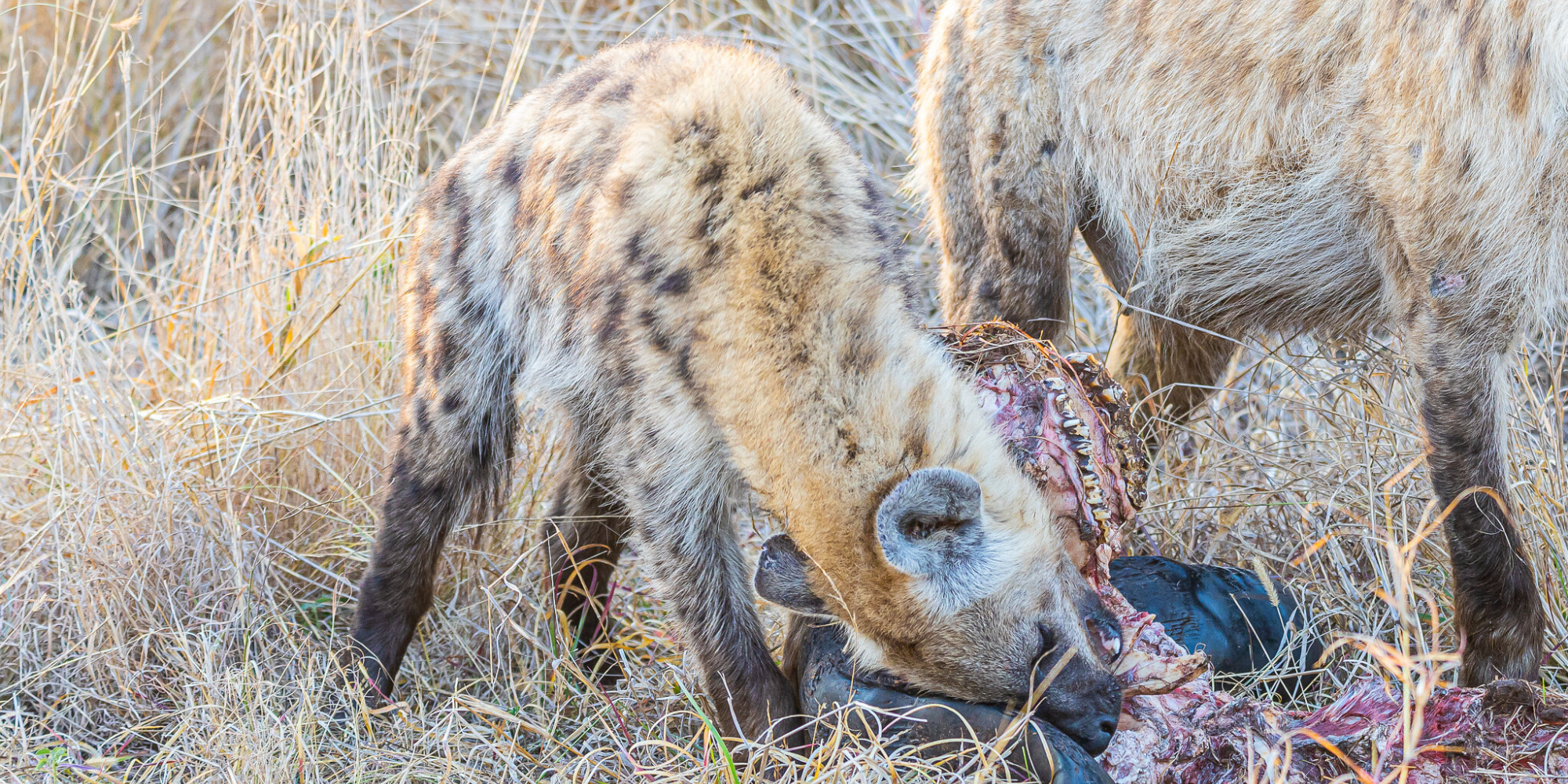
    From what I’ve observed in the last few days and from what I’ve been told by Fred (one of our trainers), hyenas follow dogs around hoping to glean scraps from their meals. The dogs aren’t a fan of this and will harass the hyenas, driving them away from their kills. We were fortunate enough to see this on Sunday night when the dogs first appeared. Yes, we saw the pack three days in a row. The younger dogs had backed a hyena against a bush and were really bugging it. 

    image

    Eventually the hyena found an opening into the bush behind it and soon the dogs got bored and went off for a nap. This particular hyena next to our vehicle was looking rather concerned. She was looking for the dogs very carefully and was also staying downwind of them. This meant that she roughly knew where they were at all times. She was careful to stay near enough to them that she could follow them when they started hunting but just far enough away to avoid suspicion.

    Just three days. That’s all it took to learn an incredible amount about one of the rarest creatures on the planet. We saw them hunting (briefly), saw them playing and relaxing. Saw the interspecific competition with hyenas, even had a chance to see how they reacted to an elephant running through their midst. If I’ve taken anything away from the past two weeks it’s that there’s going to be a lot of experiences, a lot of insane little moments that need to be respected, shared and treasured. Both with the animals and with the friends we’ve made.

    Would you love to experience wildlife firsthand like James? Apply today and make it a reality!

  • Get to Know the Mongoose

    image

    This blog was written by Ryan Sakinofsky, a Bushwise IFGA Safari Field Guide student. Each student takes a turn as camp manager, and writing a blog is part of the experience.

    Read time: 3 mins

    No one is quite sure of the plural of mongoose, is it mongooses? Mongeese? Mongera? Well according to a trusted source (Google), it is mongooses. 

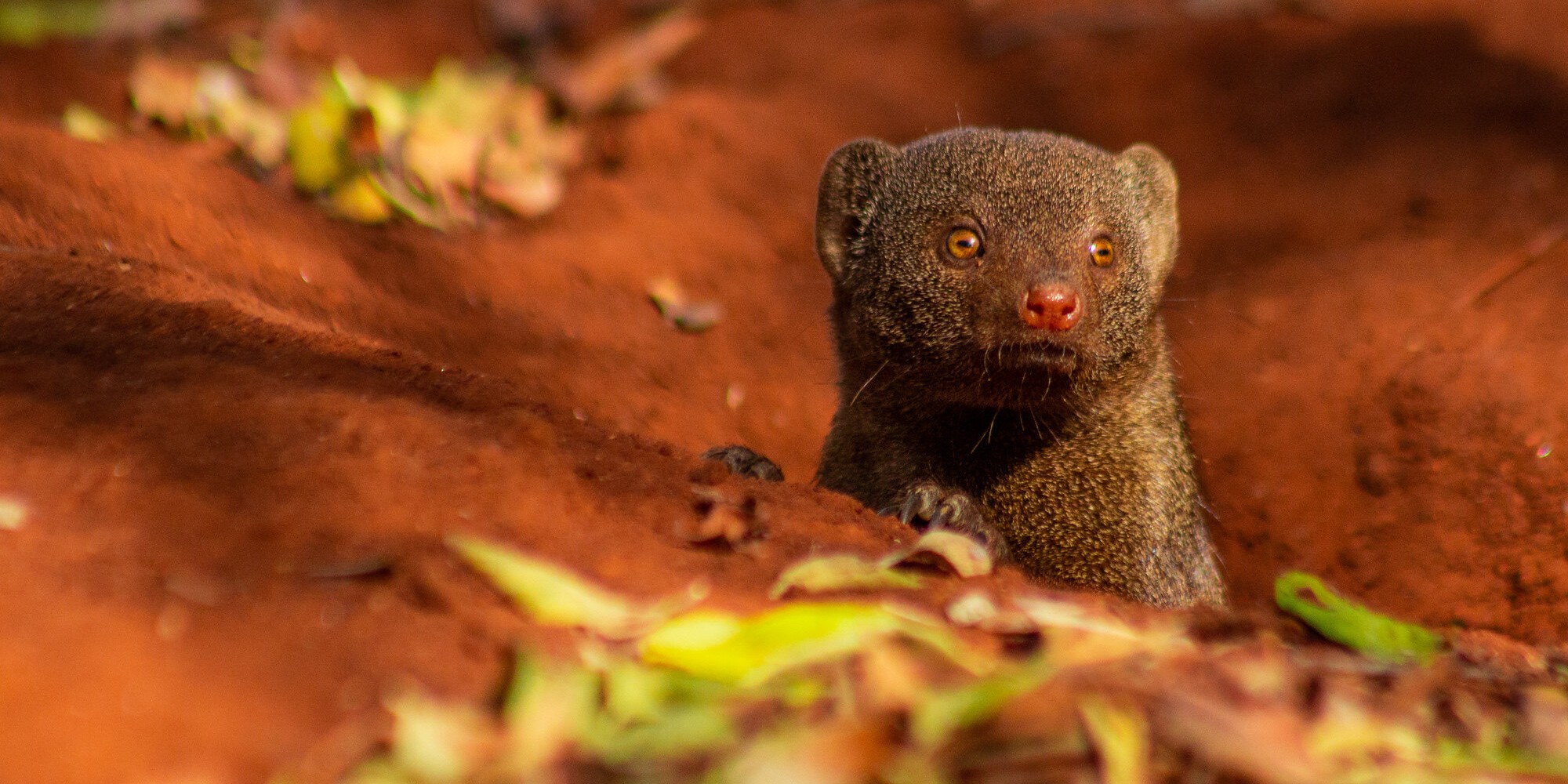
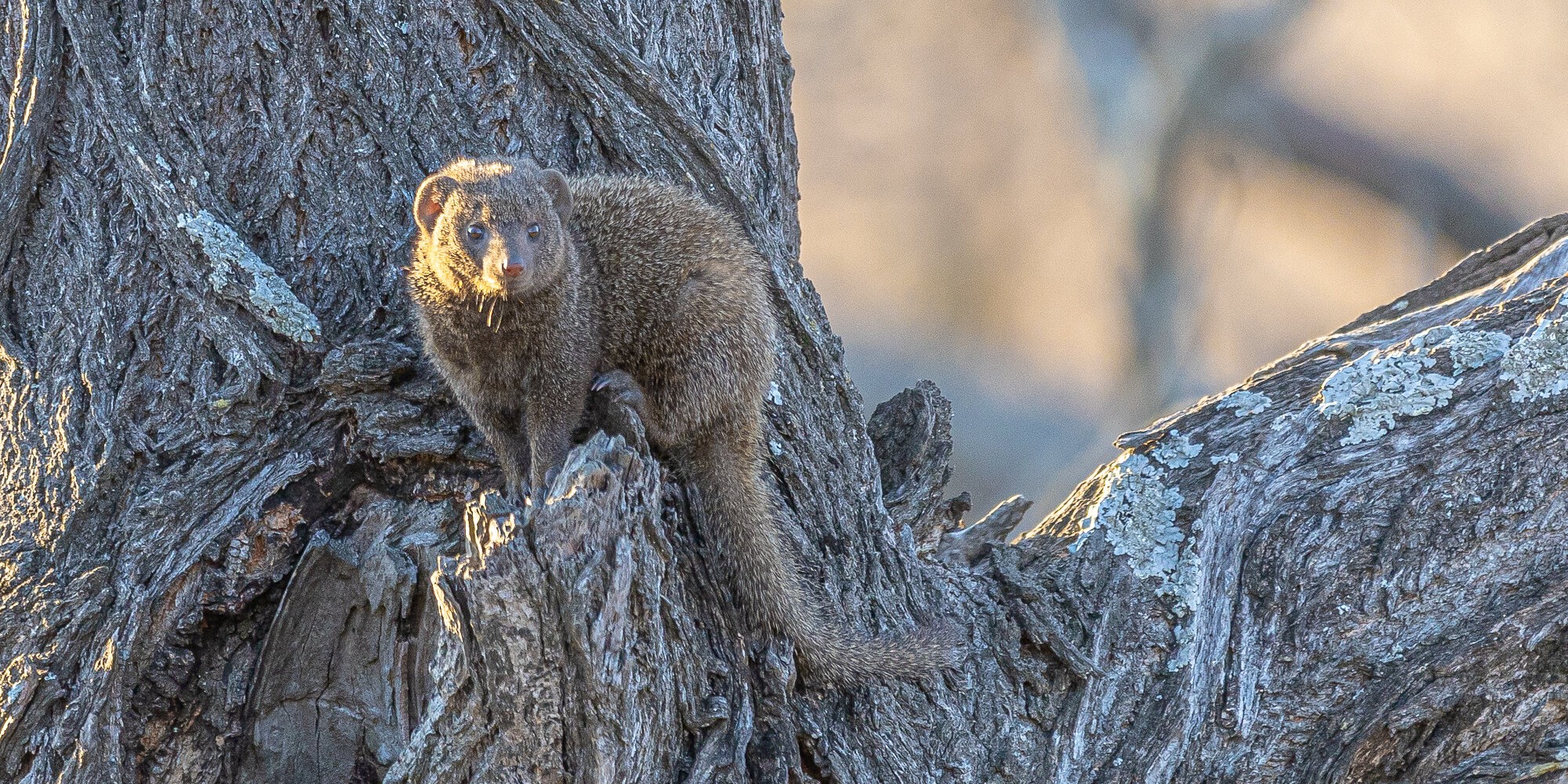
    Mongooses are small carnivores well known for their long tails, agile bodies, small ears and pointed faces that are adapted for burrowing. Mongooses occupy many habitats from forest to savannah. They have a wide range of behavioural traits, whether they live in social groups or are solitary individuals.

    Mongooses belong to the family Herpestidae, which includes all mongoose species as well as suricates. Those who have visited the Mahlahla Campus have undoubtedly caught a glimpse of our cutest residents, the dwarf mongooses.

    Since arriving at Bushwise in July, we have spotted or seen tracks of: 

    • dwarf mongoose (Helogale parva)

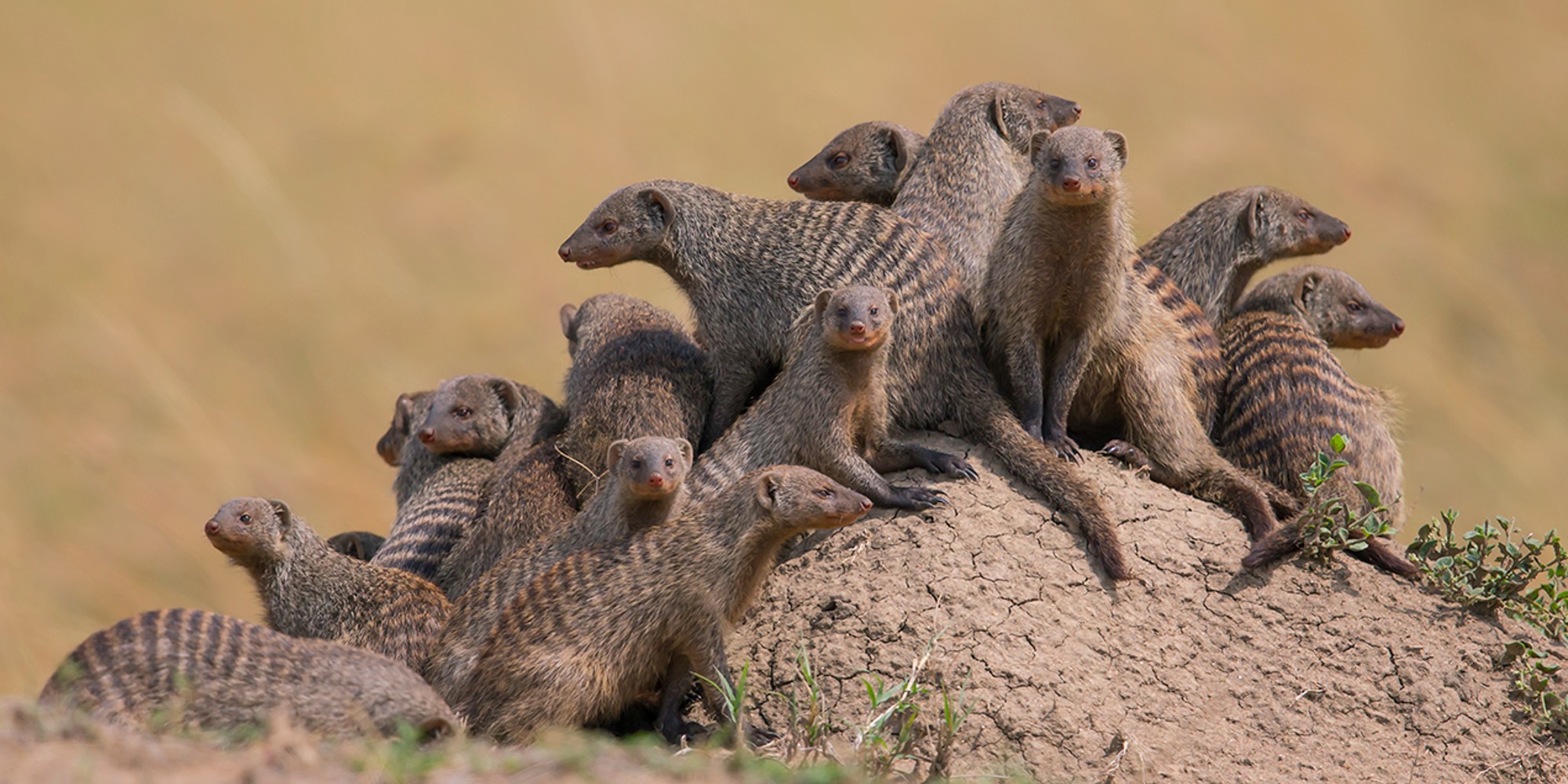
    • banded mongoose (Mungos mungo)

    • white tail mongoose (Ichneumia albicauda)

    • water mongoose (Atilax paludinosus)

    A mongooses’ place in the food web

    Ecologically, mongooses are important links in food webs acting as secondary consumers. They consume insects, rodents, and even birds. Mongoose get eaten by larger carnivores – known as tertiary consumers – such as jackals, hyenas, eagles, and other birds of prey. However, a major threat to the mongoose species is the wildlife and traditional medicine trade. 

    Unfortunately, many conservation measures are focused on large species and not the smaller species we have. There is a method in the madness though as larger species need more space and resources and by conserving areas that are suitable for them, many of the smaller species will be conserved as well.

    image

    Mongoose business

    The social mongoose species – dwarf and banded – live in large family groups called a business. Individuals within the business will all contribute to its success. Individuals will groom each other – known as allo-grooming – to strengthen social bonds. Social mongooses are even known to mark each other with secretions from the anal glands which means that the business will have a very distinct smell and members can recognize each other. 

    Members of the business will also assist in the raising of the young which ensures that most young make it to adulthood. Most importantly, there is safety in numbers and social mongooses will often mob potential threats to intimidate them and cause them to flee.

    The birds and the mongooses

    Dwarf mongoose has mutualistic relationships with many insectivorous birds, such as fork-tailed drongos, lilac-breasted rollers, shrikes, and hornbills. Drongos are exceptionally useful to the mongooses as they alert the mongoose to any potential predators in the area. In exchange, the birds eat any insects that are disturbed by the mongooses while they forage. 

    However, drongos are exceptionally good at mimicking the calls of other birds and animals and will sometimes mimic the alarm call of the mongoose! The mongooses scatter, leaving the drongo to feast on the insects they left behind. It is fair to think that the mongooses would get annoyed with the drongos for cheating them out of a meal, but the drongos are smarter than that and rarely cry wolf.

    image

    Mongooses are intelligent. They see the value in working with insectivorous birds and using them as alarm systems. Those that do work with birds have less of a need for sentries which means each individual gets to spend more time foraging. 

    Social mongooses

    Recent research has shown that yellow mongooses (Cynictis penicillate) in residential areas can learn how to solve puzzle boxes and can do the puzzles quicker over time. Additionally, social mongoose species as well as the suricate (Suricata suricatta) show a wider variation in their communication signals compared to the slender mongoose, which is solitary.

    Many of us, myself included, have previously seen mongoose species as something cute and entertaining to watch, but once they disappear into the long grass or back into their burrows, we never really give them a second thought. Mongooses are intelligent, socially adept creatures. I have had the pleasure of observing them every day on campus, and I know that many future students will get as much joy out of watching our smallest mammal residents as I do.

    Join us out here and be part of the next group of Bushwise students discovering all the new and incredible things there are to see in the African bush.

  • Late Nights And Early Mornings

    image

    This blog was written by Zac Newman, a Bushwise IFGA Safari Field Guide student. Each student takes a turn as camp manager, and writing a blog is part of the experience.

    Read time: 3 mins

    Turns out I can be a morning person

    Monday morning I woke up early to open the kitchen for the students completing their mock drives that morning. Due to the earlier game drive times this week, the morning jobs were done earlier than usual.

    By now most people know around camp that I can be a bit grumpy in the morning. However, due to this earlier-than-usual wake-up (4:00), I found myself becoming a bit of an “early bird gets the worm type of” guy. Setting up breakfast items like tea and coffee, whilst filling the urns forced a wake up making the morning drive much more enjoyable. 

    image

    Botany walks

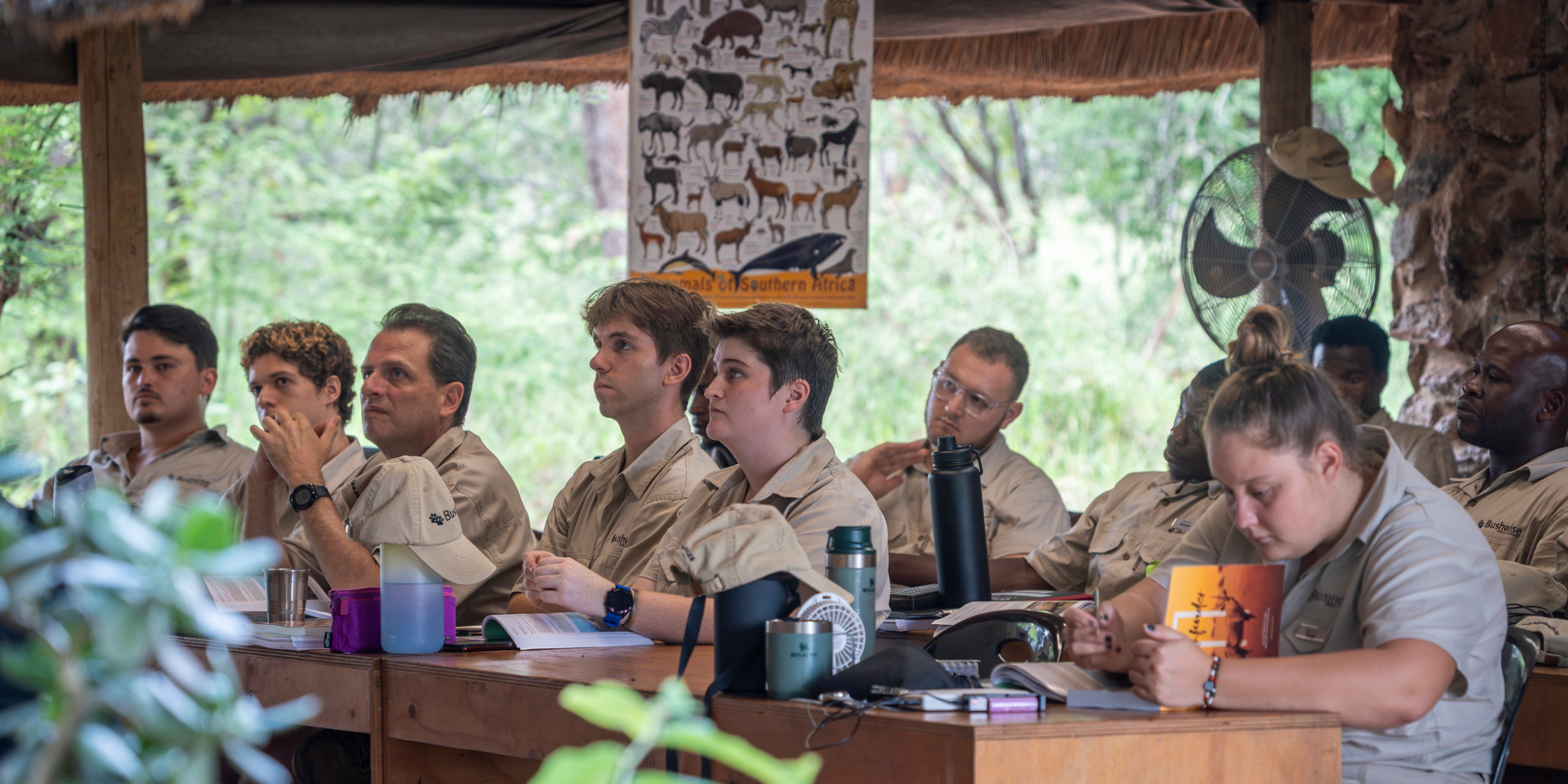
    Throughout the week, we had been revising for the botany exam which was on Friday. Because of the panic, some students had gotten themselves into (myself included), several students led botany walks around the campus which were organised with my co-camp manager because of his knowledge of the trees and plant life all around. This greatly helped most students pass the exam on Friday. 

    And if you are thinking “Zac did everyone go thirsty during this practical assessment?”, I would say no. I was up on the day at the crack of dawn making hot boxes for the group… and despite them not being used, it was a success.

    Discovering quirks of the industry

    When managing the camp, there are several responsibilities that you have. There is the obvious job of opening and closing the kitchen as well as ensuring it stays clean. Then there are other things to consider like having a strong leadership attitude when there are problems within the group and making sure they are resolved as smoothly as possible. This includes problems being brought up to you or discovering them yourself. 

    Toward the end of the week, I was given responsibility for the camp radio, which luckily I did not have to use as there were no medical emergencies, snakes, or other issues. Although I did look important carrying it, the only noise that was ever heard from it was the occasional low battery beep in the late evening. 

    image

    As the end of the week came to a close, all students had a bird exam to write early on a Saturday morning meaning that the kitchen had to be open late the night before. Late nights and early mornings, as I found out that day, are something that will be a big part of the industry and not the most pleasant. However, making that small sacrifice is majorly worth it and not an opportunity to pass up because of a bit of sleep deprivation. And anyway who needs sleep… not me. 

    My week as camp manager was enjoyable and a great learning opportunity. It will hopefully majorly benefit me going forward in this line of work – which we have learned this week can be very tiring but worth it. 

    Out here we’re constantly discovering new things about the birds, plants, and animals that call the African savanna their home. Join us where the wild becomes home.

  • Dogs, but Wild

    image

    This blog about wild dogs was written by Allison Sponder. Special topic blogs are written by Bushwise students during their course, and all facts included are based on their research.

    Read time: 4 mins

    African wild dogs are my absolute favourite and have been for quite some time – long before I even thought I would witness them in person. Unfortunately, I think many people either do not realise just how fascinating they are, both as individuals and as a pack, or have been misled by misinformation. 

    What’s in a name

    For quite some time, but even more so recently, there has been a push to change the common name from wild dogs to painted wolves. Many people think the name wild dog makes them sound basically like stray dogs, which is one reason there are many misconceptions about them. While I understand the thought process, I also believe we should rethink why the term “wild” or even “dog” has such a negative connotation. Although wildly different, they do share similarities to our domestic breeds of dogs. People both underestimate domestic dogs and misunderstand wild dogs, but that’s a whole other issue. 

    Coats 

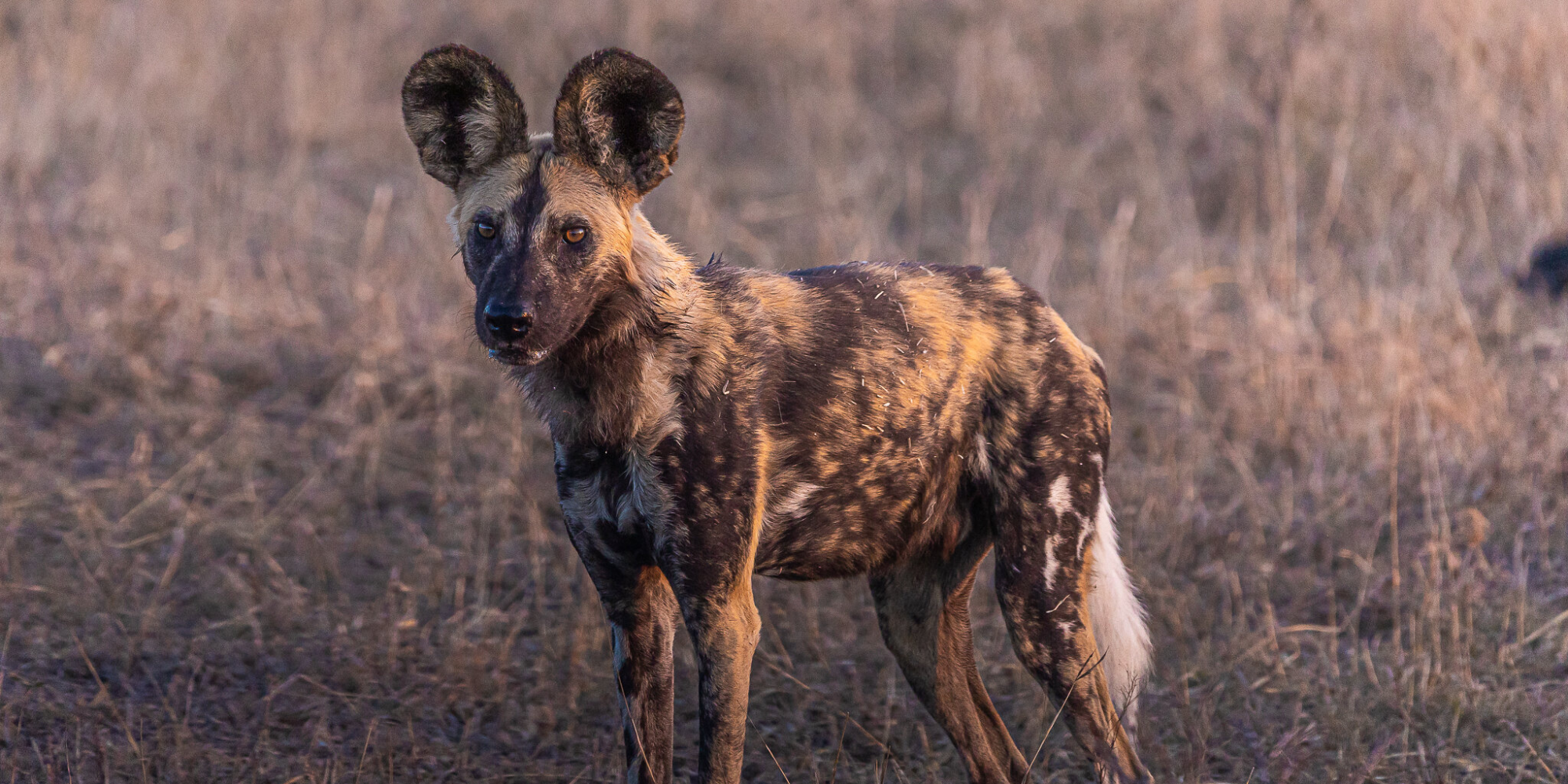
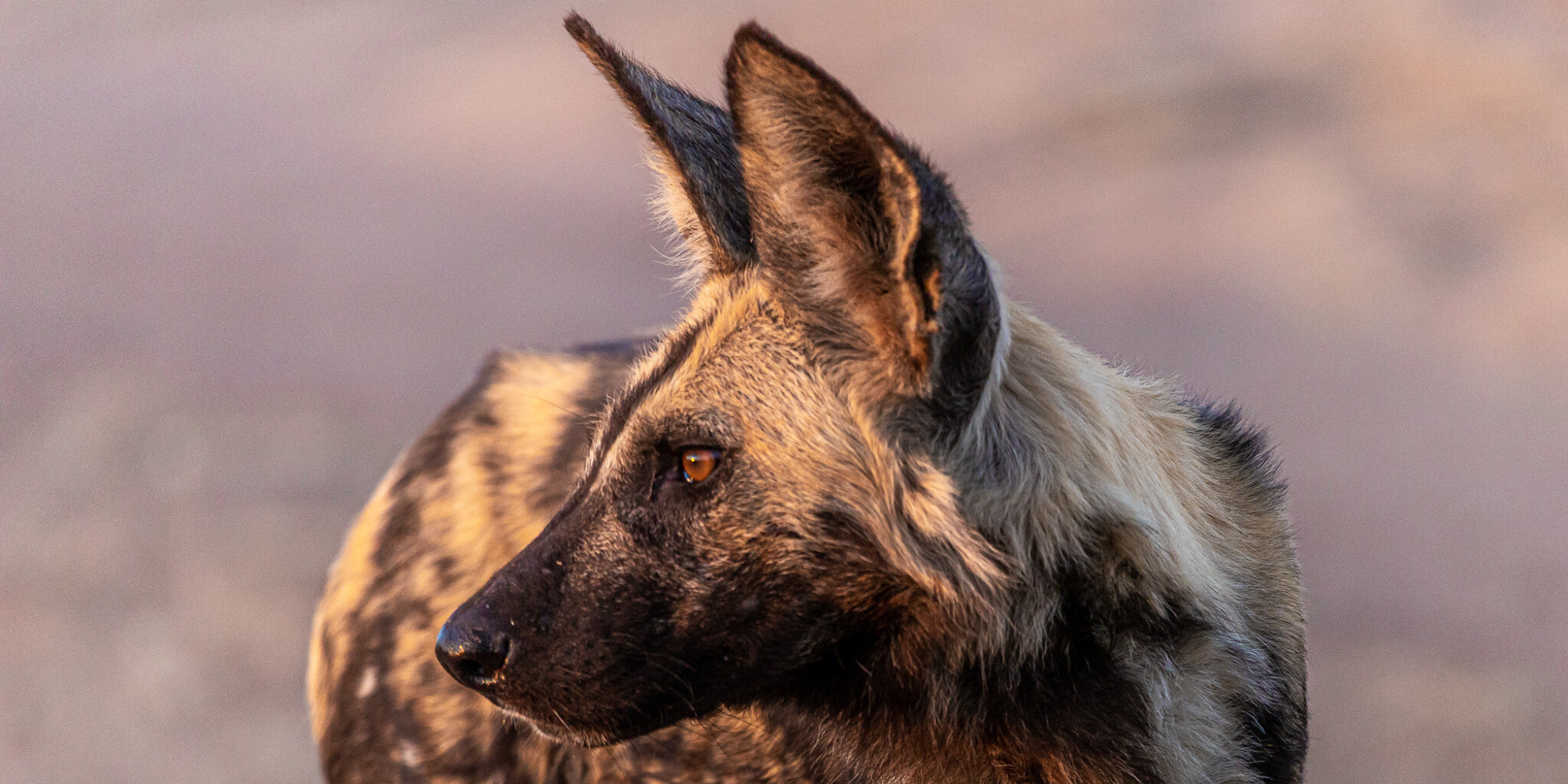
    Wild dogs are fantastically unique, both in terms of behaviour and physical characteristics. The coat colour of wild dogs is highly varied; it can include red, black, white, yellow, and brown. Each individual has a completely different fur pattern that can be used to identify them. Some of the dogs have larger patches of white fur on them – which I personally find just stunning. 

    image

    They have large, rounded ears, almost seemingly too big for their body. They are not large in size; they are actually quite similar in size to many domestic dogs, weighing anywhere between 18–36 kilograms and roughly one metre in length. Their lifespan is roughly 10–12 years as well. 

    Wild dog packs

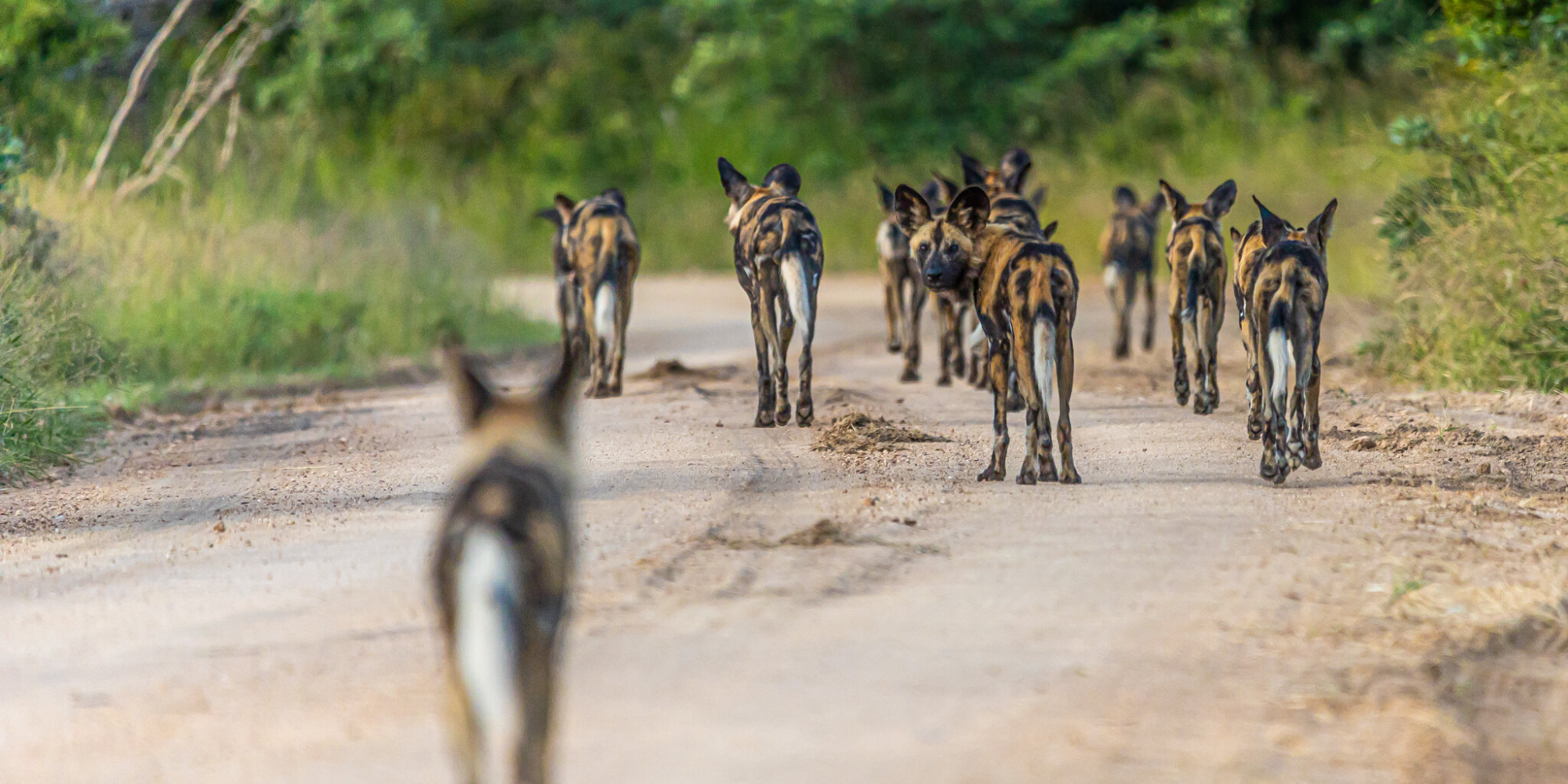
    Each individual not only has their own look but their own personality as well. Which makes for quite an interesting pack. The packs can consist of anywhere from two to 30 dogs, but generally a minimum of six dogs is ideal for consistent successful hunting. 

    The female alpha is in charge of the entire pack, making many decisions and choosing where to den. The alpha male and female are the only two dogs allowed to breed in a pack, but the priority of the group is to take care of the entire pack. All of the dogs look after each other, care for each other even when sick or injured, and take care of the pups. 

    image

    Everyone in the pack will look after the pups. When the pups are still denning, and it is time to hunt, generally the alpha female will stay with the pups. The rest of the pack will head off on a hunt, and after they are successful, they will return and regurgitate the meal for the pups and mother. After the pups are old enough to join in on hunts, they will be allowed to eat first at a kill. 

    Wild dog hunts

    One of the most fascinating behaviours exhibited by wild dogs is their hunts. They practise something unknown to most other species, democracy

    Okay, it’s not that complex. However, they have been observed basically voting on whether or not to pursue a hunt. They do this by sneezing. If the majority of the pack sneezes, the hunt will be a go. Mind-bending! 

    The hunt itself is also unique. Firstly, they are one of the most successful predators in the area with roughly 80% of their hunts ending in a kill. Although wild dogs can rely on surprise and quick bursts of speed, they generally take a different approach. These individuals have unmatched endurance even at high speeds, up to 60 kilometres per hour. They often will chase their prey until it exhausts and can no longer run. They eat quickly in order to consume as much as possible as fast as possible, because unfortunately for them, there is a good chance a much larger and more powerful predator is lurking nearby ready to steal the kill. 

    image

    Wild dog packs eat a variety of things and the size of their prey generally depends on the size of the pack. They generally consume small-to-medium-sized antelopes such as impala, and warthogs, but can even take down wildebeest, kudu, or small buffalo – although quite rare. 

    There is so much to observe and learn about this species. Their behaviour, social structure, and capabilities endlessly fascinate me. Not to mention, they are stunning. Unfortunately, they are quite endangered with only around 6,600 individuals left in the wild. One of the biggest threats to these dogs is the loss of habitat, one pack can cover a range of roughly 1,500 kilometres which is incredibly large. Since habitat is shrinking constantly, they are running out of room to roam which means they are also running into other predators and in conflict with humans, specifically farmers. There are many efforts in place to conserve them, however we still have a long way to go.

    Out here we’re constantly discovering new things about the birds, plants, and animals that call the African savanna their home. Join us where the wild becomes home.

  • Look Up…

    image

    This blog about astrology was written by Henlo Lourens. Special topic blogs are written by Bushwise students during their course, and all facts included are based on their research.

    Read time: 4 mins

    “Keep your eyes on the stars”, “we are truly children of the stars”, and “look to the stars and from them we learn”, are just a few thought-provoking words that demonstrate the beauty and symbolic importance that comes from understanding and learning about these celestial bodies. This blog is about not only the stars, but also the importance of understanding them as a field guide.

    Every culture on Earth has at some point looked to the stars for practical information and answers to the biggest of questions. A lot of what was first known is wrapped up in stories and passed down through generations. If we look at the invention of the telescope for example, it can be argued that Galileo’s invention was the result of all the questions asked and the astonishing predictions of what the stars mean, where they come from, and the general fascination that comes from the beauty of the night sky.

    image

    Learning about the Southern Cross

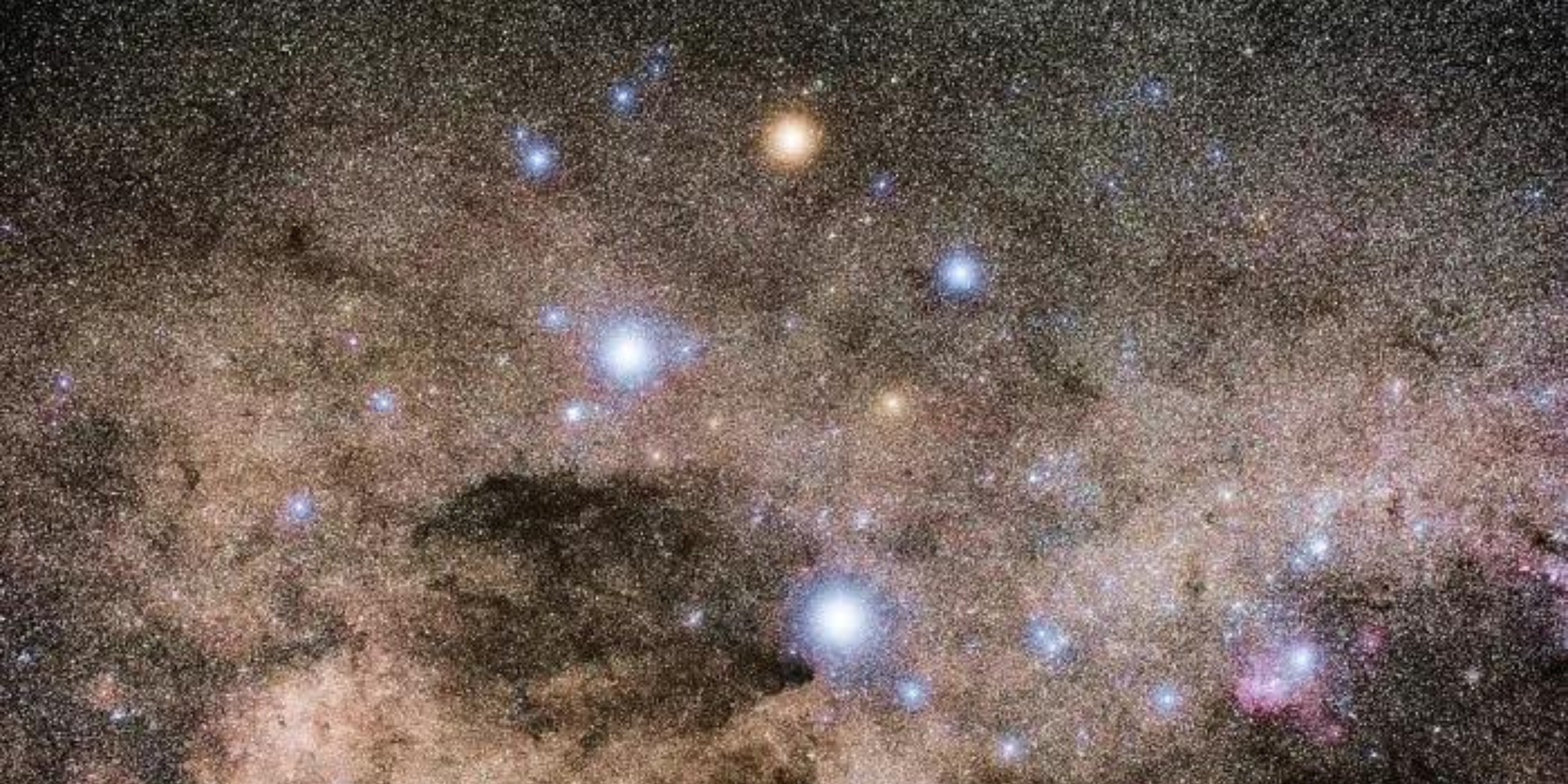
    During the numerous game drives that happened during the winter when the sun set early, we conducted lessons about astronomy and more specifically about the Southern Cross. 

    As field guides, it is important that we understand how to use the Southern Cross and constellations alike as not only a way of direction but to also further our understanding and local knowledge of ancestral beliefs and societal influences that come from the speculations and beliefs of others. In doing so, we as field guides can create conversations about these celestial bodies. As well as encourage a new understanding and passion for astronomy. 

    I personally enjoy trying to see comets and learning about meteors. It really delights me when I get the opportunity to study the night sky and expand my knowledge about astronomy. I have always been fascinated by conversations about astronomy, and getting to know the different ideas and beliefs around astronomy that have been constructed from the questions asked by people. 

    image

    Traditional beliefs about the Southern Cross

    Within different traditional belief systems, the Southern Cross is more than just a way to find the southern point. The bright stars of the pointers and the Southern Cross were often referred to as a metaphorical group of giraffes by the Zulu, who traditionally believe that giraffes travel across the heavens to keep track of the location of the moon and the stars. 

    Among the Venda, these giraffes were known as Thutiwa. In October, the giraffes are believed to be moving above the trees on the evening horizon, reminding people to finish their agricultural objectives of planting crops. 

    The Karanga people believe the stars are the eyes of the dead. This gives them great solace in finding hope and trust for their protection.

    image

    Experiencing the night sky at Bushwise

    During our course, we were able to experience the night sky on numerous occasions. One of my favourites was when we had a sleepout, where we were fully immersed in the environment and nature as a whole. 

    I found it particularly calming to look up at the stars and think about the challenges and achievements that I have experienced. I personally found happiness and a feeling of gratitude in having the opportunity to learn about the world we live in and appreciate the togetherness of both having my fellow students and my greatest passion in one place. 

    We get to experience so much peace and fulfillment when we take a moment out of their busy life to simply look up. Join us out here to experience it for yourself.