Author: Bushwise Student

  • The Life & Habits of Black-Backed and Side-Striped Jackal

    image

    This blog about black-back and side-striped jackals was written by Jordan Grove. Special topic blogs are written by Bushwise students during their course, and all facts included are based on their research.

    Read time: 3 mins

    I will be sharing some interesting facts about both the black-backed and side-striped jackal. Both animals are found in various parts of the country, with the black-backed jackal being more prevalent. I will be focusing on the appearance, habitat, diet and breeding behaviours of each.

    Appearance

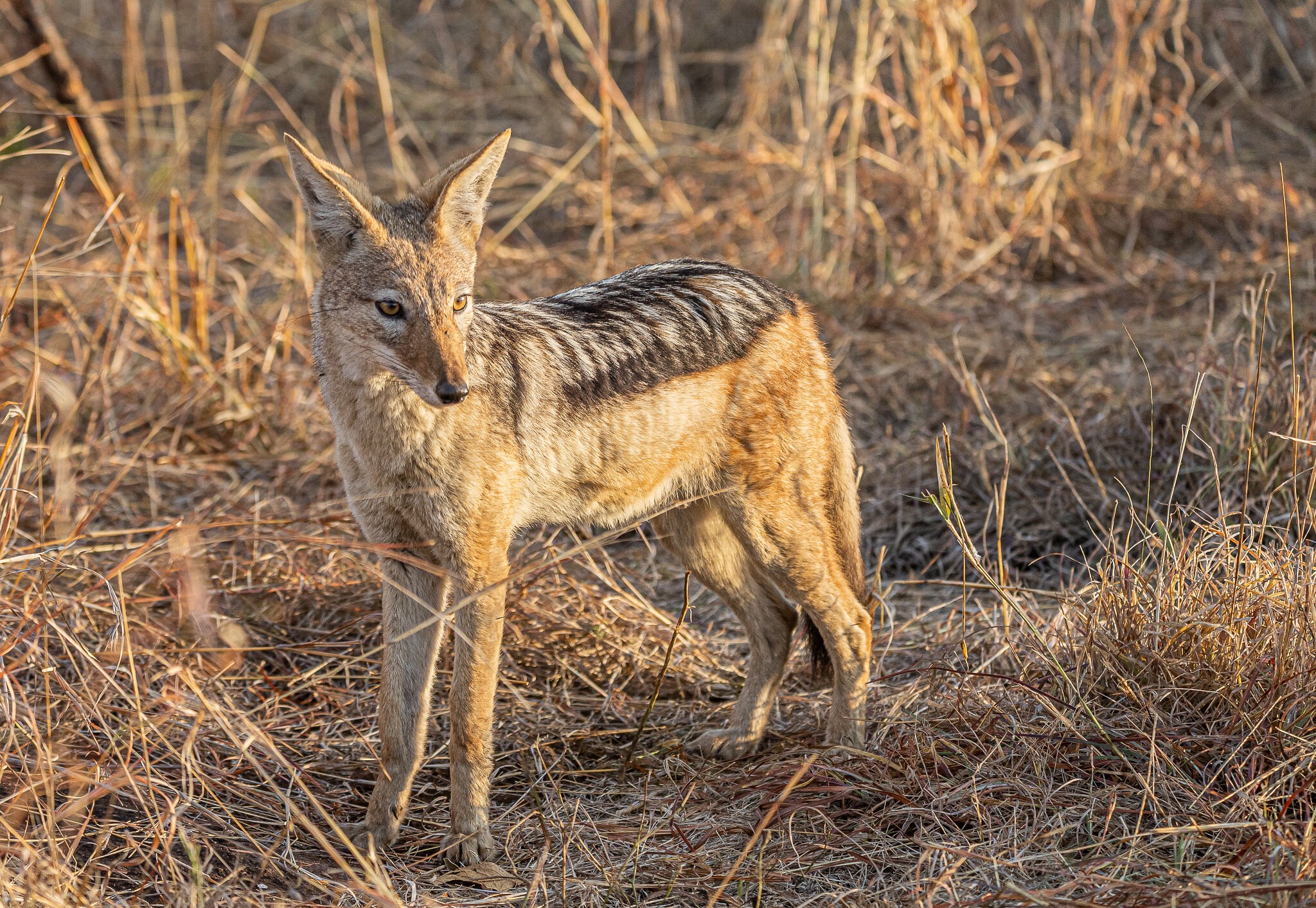
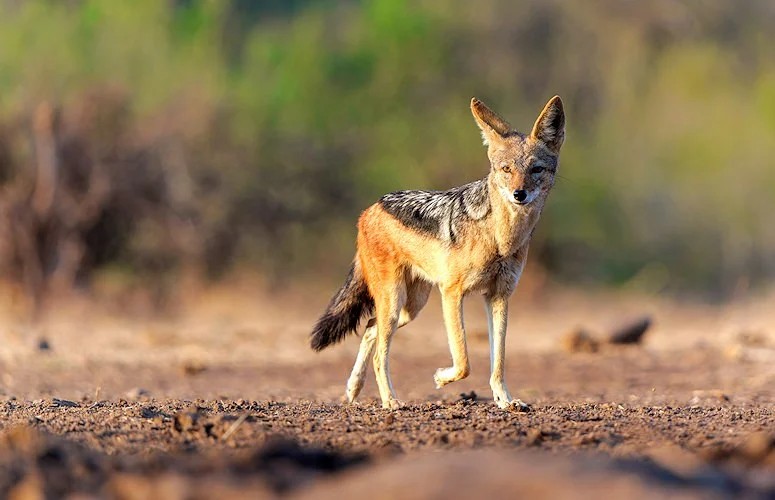
    The black-backed jackal has a distinctive dark black patch on the back, starting at the neck and running down to the base of the tail. The rest of the body has a rusty, reddish colour which stands out more in thick grass, making them easier to spot. They usually weigh between 8–10 kilograms. And in terms of their call, they have a unique wailing call which is difficult to mistake for most other animals. 

    In contrast to the black-backed jackal, the side-striped jackal has a more doglike appearance and is also larger, weighing up to 14 kilograms. They have grey-brown fur, with faint white stripes on their sides. Their tails are dark with a white tip. And their call is an almost owl-like hoot or a loud scream when threatened. 

    Diet and habitat

    Black-backed jackals are far from being picky eaters. Besides scavenging, they feed on almost anything, including insects, fruit, lizards, rodents and sometimes two jackals will form a pair to hunt larger prey such as impala. 

    As a result of their widespread diet and being generally adaptable, they are found in many areas and habitats. The only areas that they do not thrive in are dense forests, as they prefer areas which are more open – possibly to give them more visibility of potential threats such as leopards or lions – when foraging and resting in these open areas.
    image

    Similarly to the black-backed jackal, the side-striped jackal scavenges for food. Being omnivores, their diet consists of small mammals like rodents, invertebrates like millipedes and other insects, and plants, mainly fruits. They are very opportunistic and will also scavenge from the kills of other animals. Hunting happens at night, either alone or in pairs, but they can be found in groups of up to twelve when they are in a good feeding area. 

    Breeding habits 

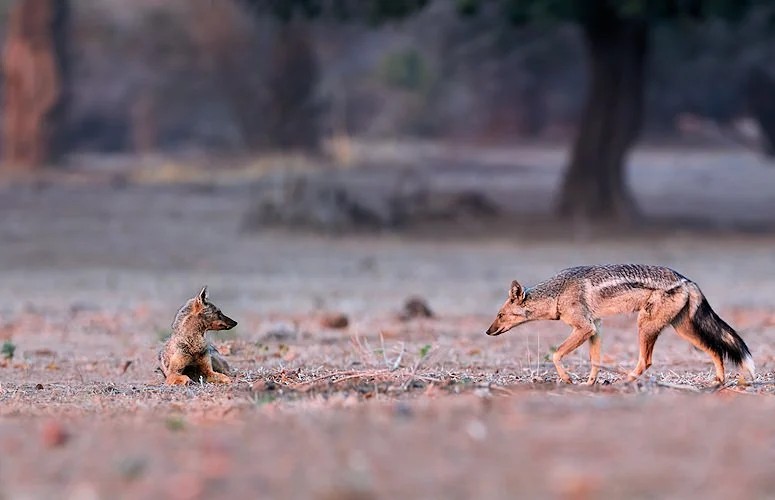
    The black-backed jackal forms a monogamous pair, sharing the same mate for life. After a gestation period of two months, a litter of between one and six pups are born, usually between August to October. 

    The pups are generally born and raised in protected areas such as abandoned termite mounds, where they at first suckle from their mother and then feed on regurgitated food from their parents for the first three months of their lives. They stay in the same territory as their parents until they are old enough to establish their own territories. 
    image

    Side-striped jackals are territorial and can live in family groups or in some cases on their own. These family groups consist of up to seven jackals and are dominated by the breeding pair, who are also monogamous and pair for life. Side-striped jackals reach reproductive maturity at between 6–8 months. 

    Breeding season for side-striped jackals depends on where they live, but it is usually between June and November. After a gestation period of around 57–70 days, 3–6 helpless pups are born and nursed by their mother for between 8–10 weeks. At 11 months, the pups will leave their home to establish their own territory.

    And there you have it — nature’s dynamic duo, the black-backed and side-striped jackals. Next time you’re in their neck of the woods, listen for the echoes of their wails and hoots. 

    Join us out here at Bushwise where the faces and calls of the African bush will soon begin to feel like old friends. 
  • The Weekly Events of a Bushwise Student

    This blog was written by David Lubbe, Bushwise Professional Field Guide student. Each student takes a turn as camp manager, and writing a blog is part of the experience.

    Read time: 3 mins

    The past week was quite interesting and busy, to say the least. 

    Lion Kill Sighting

    The week started very early for a few of the students because of the mock assessment drives that started on Monday. Emma kicked it off with a brilliant game drive; not only delivering an outstanding performance, but also the best lion sighting possible. 

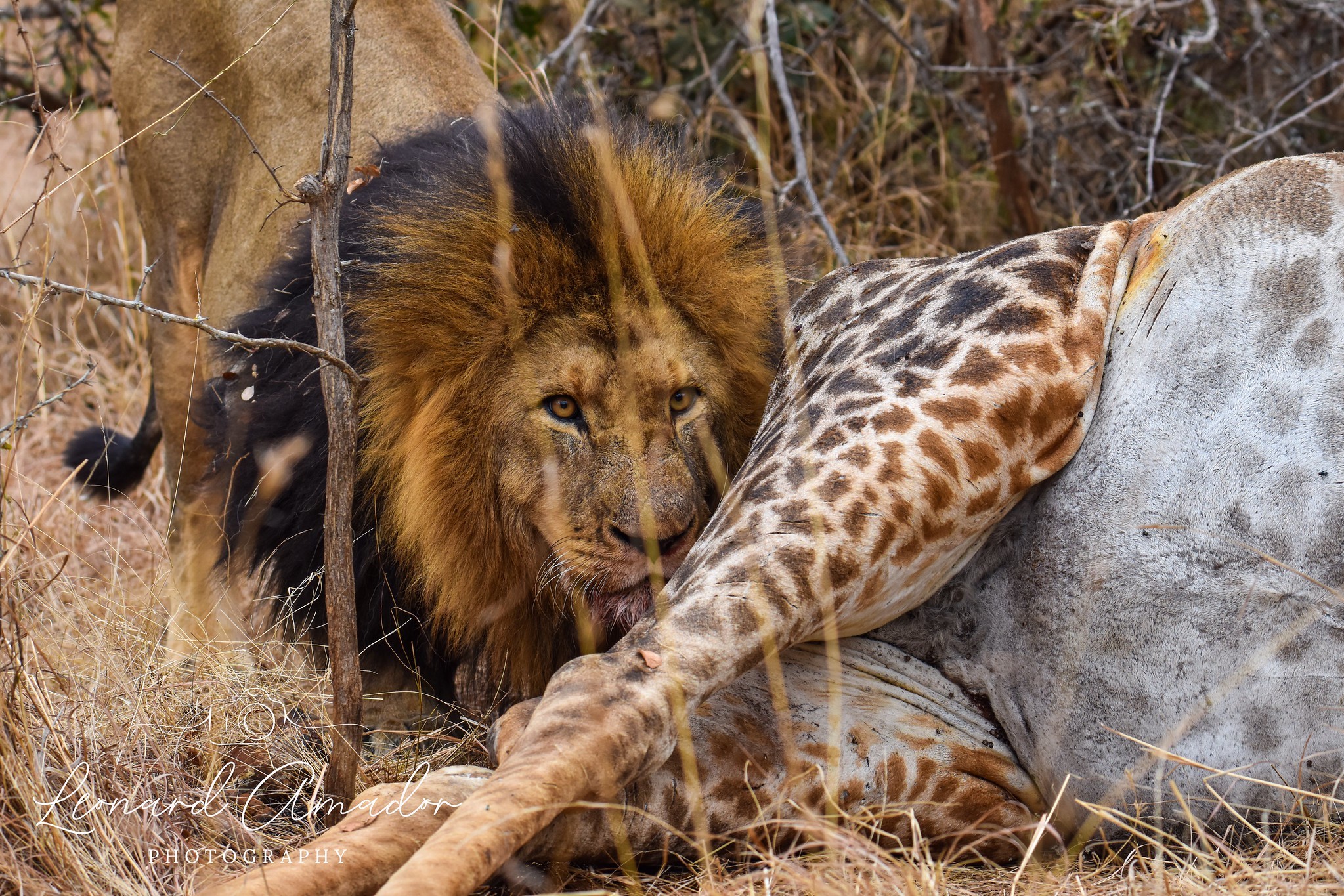
    We were on our way to make a coffee stop when FP, our new trainer, observed signs of something being dragged across the road. So being prospective field guides, we started investigating these signs, and sure enough, lions took down a giraffe and were busy feeding nearby. 

    As soon as we pulled into the sighting, two cubs appeared. They were the cutest things you could possibly imagine. We sat with these lions for a while and so the time came for us to make way for other guides with guests to inspect these little ones. 

    image

    On Wednesday, one of the afternoon drives got yet another black rhino sighting. Here at the Mahlahla campus, we have quite the thing for finding black rhinos! This was a truly great way for the last pair of students to complete their mock drives.

    No One Likes Writing Exams

    Thursday and Friday were used to refresh our memories of all the modules we did over the last two semesters in preparation for the IFGA exam on Saturday. We did quick recap sessions per module and asked questions if we did not understand something. This all took place in the mornings. After lunch, we were given the rest of the day off to go and study. 

    The tension on campus was high due to the stress of the test and everybody was putting in a lot of effort. It was tough to communicate with anyone mostly because they were glued to their textbook. We were all just looking forward to letting our hair down after the test. Saturday arrived very quickly.

     We all wrote the test, and just before lunch (chicken nuggets and muffins), we got word from the trainers that we had all passed! The only thing I can say is that there was a collective sigh of relief. 

    Rugby and braaing… need I say more?

    It must have changed the wind direction or kickstarted the wind again because there was suddenly a w energy at camp. We all decided that the pool was our best move and had a great and relaxing time there. Then we had the brilliant idea to braai in the immense heat and we succeeded. Once everyone was done eating and the dishes were washed, we got ready to go to Mahlahla Lodge to relax and watch the Springboks play against Ireland. 

    image

    We all got to the lodge and started playing pool with people from Siyafunda and were having the best time. Then the time for rugby came and the tension started all over again. The place erupted whenever the referee did something ‘wrong’ and when the Irish scored points. Once we lost against Ireland, the mood was a bit sour. We all decided that the best idea was to all just go back home and go to bed. 

    To be honest, I wouldn’t mind it if this week repeated itself – well except the whole test stuff and the Springboks losing, but otherwise, it was a successful week. 

    Out here even exam week can be filled with fun. No two days in the bush are the same. Take our introductory online course to learn more!

  • Get To Know The Black And White Rhino

    This blog about rhinos was written by Nokwanda Mthembu. Special topic blogs are written by Bushwise students during their course, and all facts included are based on their research.

    Read time: 4 mins

    image

    What is a rhino? 

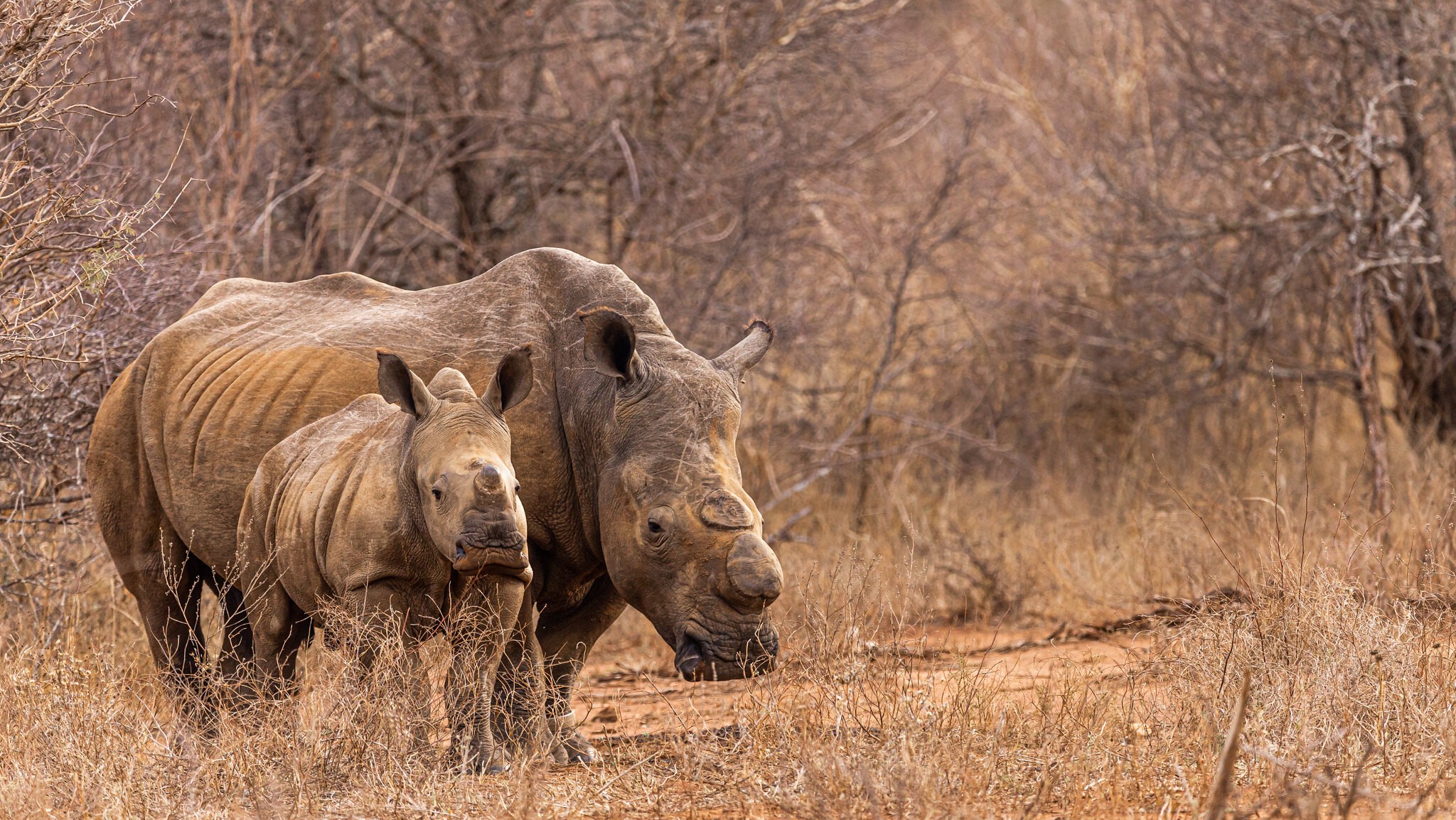
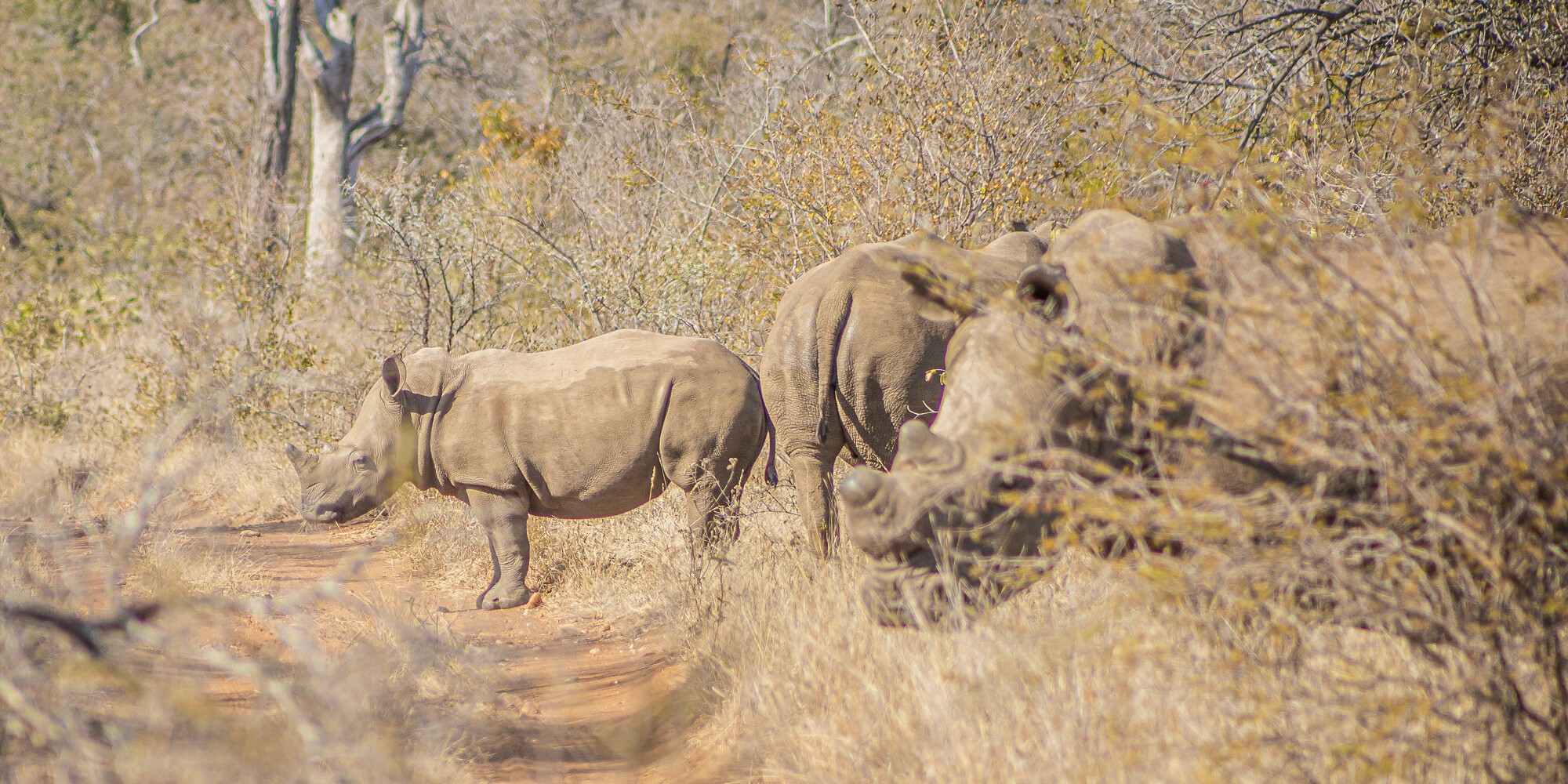
    A rhino is an abbreviation for rhinoceros. Rhinoceros are large herbivores which means they feed on plant matter and grass and they are characterised by their horned snouts. The word rhinoceros comes from the Greek word rhino which means nose and ceros means horn. Some have one horn and others have two horns. There are five species of rhino, including two African rhino species – the black and white rhinos – and three Asian rhino species which include Javan, Sumatran and greater one-horned rhino which is the only rhino with one horn.

    Fun facts

    • Rhinos sometimes chew soil (geophagia) to supplement mineral deficiency.

    • A collective noun for a group of rhinos is a crash of rhino.

    • Rhino horn is made of keratin, the same protein which forms the basis of hair and nails.

    image

    The difference between the black rhino and white rhino

    Rhinos don’t get their names from their skin colour. They are all grey in colour, but this depends on the soil colour of their environment as they often roll in mud and soil to help them keep cool in the summer heat.

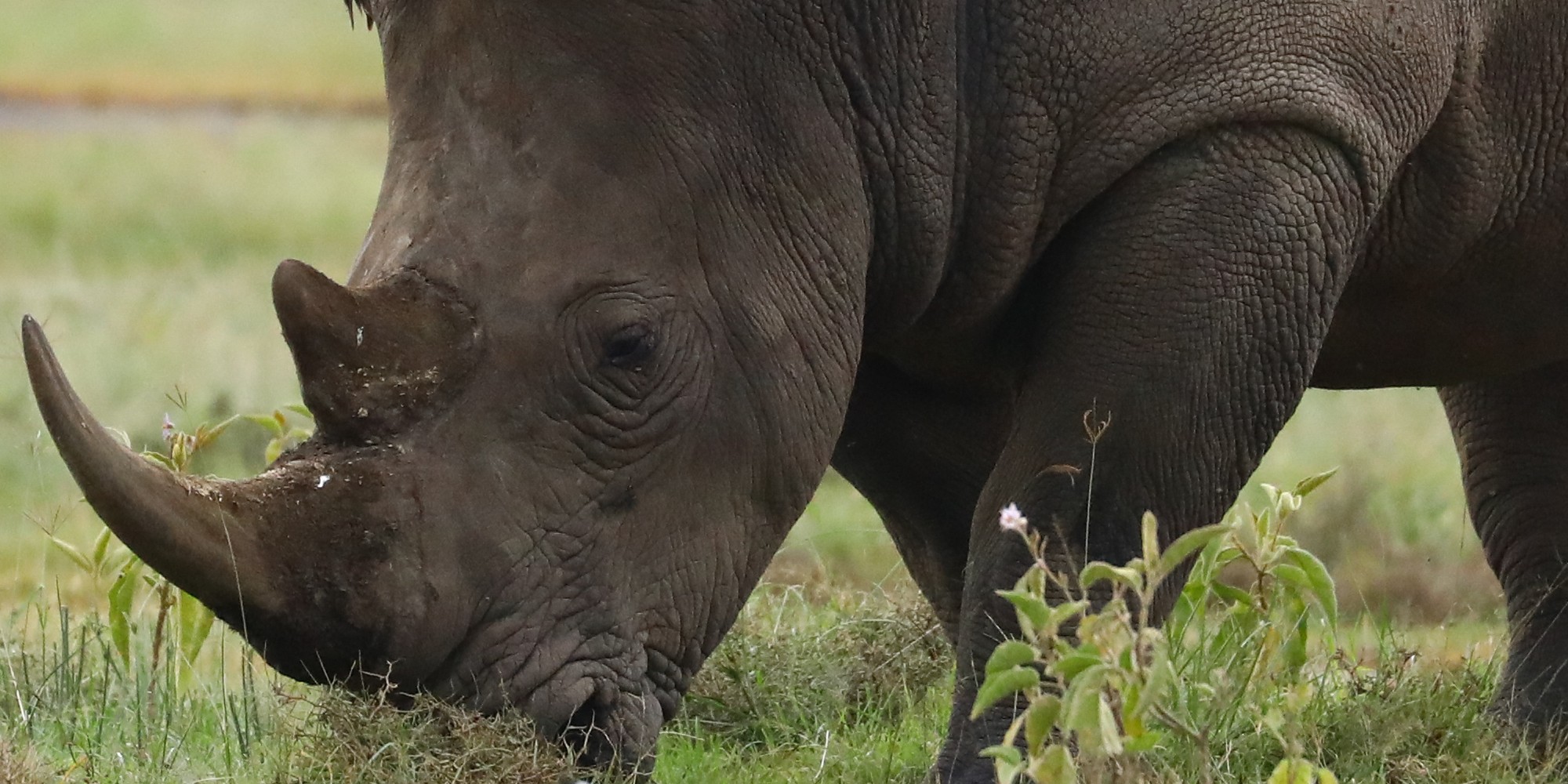
    The white rhino got its name from a misinterpretation of the Dutch name for white rhinos was widj neushoorn, which means wide rhinoceros – referring to its wide upper lip. However, early English settlers misunderstood widj for white, which is how they got their name. The white rhino is the second-largest land mammal on Earth. 

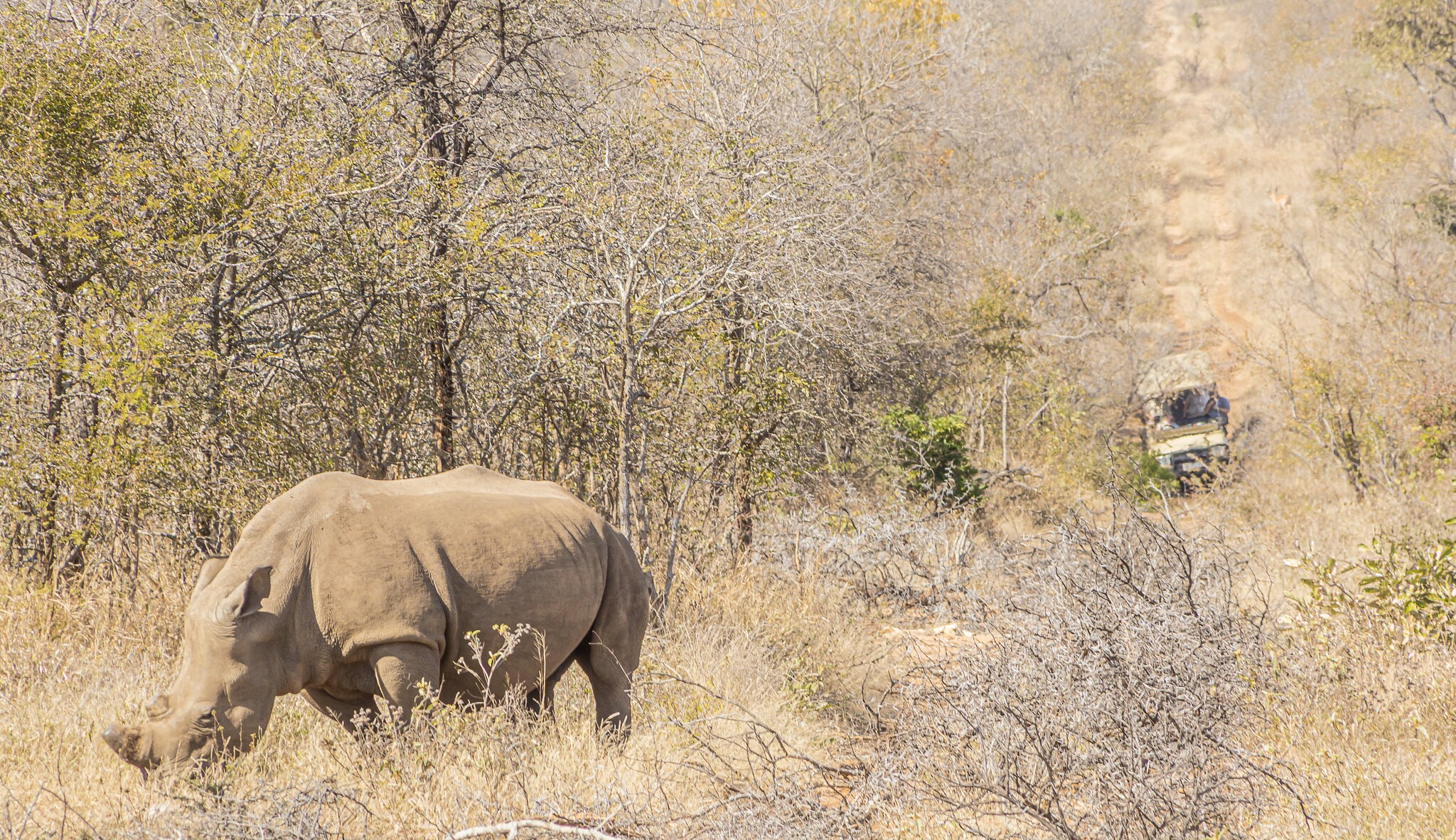
    In contrast, a black rhino can be distinguished from a white rhino by its hooked upper lip and is smaller overall. They also have a shorter head which they carry higher up on the shoulders to accommodate their browsing habits. Their ears are also smaller and rounder. The head of the white rhino is long and carried low – frequently only a few centimetres above the ground because they are grazers and grass makes 99% of their diet. 

    image

    Black rhino prefers woodland with thickets and permanent water, while the white rhino prefers grassland and savanna. White rhinos also do not like closed forests or thick bushes.

    Territory marking

    Rhino bulls are territorial, and they occupy clearly defined territories which they defend against neighbouring bulls. Younger bulls are allowed to remain within a territory if they remain submissive. 

    To mark their territory, the bull will patrol well-used paths to establish and reinforce boundaries. While patrolling, he will spray urine backwards on the bushes. He will also rub his feet in the urine to get some of his scent on his feet to spread it as he walks. 

    The bull also uses the same spot to defecate; these spots are called middens. Everytime after defecating, he will kick open his dung using his hind legs to indicate to other bulls that this is his territory. 

    The cows and the subordinates males can use the territorial bull midden, but they won’t kick open the dung to show respect to the territory bull. If another bull comes and uses the midden and kicks open the dung, this is taken as a challenge to the bull occupying the territory. Bulls will fight using their horns, which means fights can get deadly.

    image

    Bushwise black rhino sighting 

    We were out on our afternoon drive. It was still early on our course and we were focusing on botany, learning how to identify trees and grass. After an hour of driving, we were looking for a nice spot to stop to enjoy some coffee and look at the beautiful African sunset when our trainer Daryn suddenly shouted, stop stop stop!!! Black rhino, there on the plains! Quick turn around!!! 

    I couldn’t believe my ears. I had never seen a black rhino before. Imelda quickly turned the game viewer around and we went towards the black rhino. It was a very big male with a massive horn busy browsing. Even though it was starting to get dark and we were still quite a distance from him, he immediately reacted to our presence. 

    Rhinos have very poor eyesight; they can only see well at a very close range and can see movement at a greater distance. But their senses of hearing and smell are well developed, but they depend on the direction of the wind to carry sounds and smells to them. 

    After we had switched off the engine, his ears started moving – rotating independently in all directions to collect all the sounds around him. We all remain seated, watching him. There was no wind blowing, so while he knew that there was something out there because he’d heard the rolling engine, his poor eyesight and the lack of wind meant he didn’t know what had made it. 

    After a few minutes, he took a few steps, he was so curious – his ears were busy collecting sounds. He then took a few more steps until he was behind a small bush and he hid himself there. It was so funny because he thought that because he can’t see us, we also can’t see him. But we certainly could see his massive horn sticking out of the bush and also his giant body.

    Want to learn more? Check out our online course that helps you to gain valuable wildlife knowledge!

  • Have You Heard About The Bird?

    This blog was written by Emma Matthews, Bushwise Professional Field Guide student. Each student takes a turn as camp manager, and writing a blog is part of the experience.

    Read time: 4 mins

    image

    Cape Townians in 40-degree weather and life u-turns

    It is the aftermath of a sweltering Saturday, and the coolest place I can find seems to be the simple rondavel that has been my home for the last 10 weeks. The Capetonian in me is still in shock – seriously questioning my decision to voluntarily submit myself to the 40+ degree weather we’ve had this past week — only the beginning of summer apparently! 

    Yet, I find myself questioning what the alternative would have been had I followed through with 2023’s ‘plan’ to move to the UK and work in a nursing home. Simply put, I would have been miserable no doubt, homesick and freezing cold. No, I came out the winner with this last minute decision to go out on a limb and combine two of my greatest passions: hospitality and nature. It took many years longer than it should have to walk this path, but I have had my expectations exceeded daily, and every day serves as an opportunity for growth.

    My reign as ‘camp damager’ 

    On that note, as part of Bushwise tradition, each student takes a turn at running the show as weekly camp manager. My turn landed up coinciding with the introduction of our new trainer FP, the beginning of the Rugby World Cup, Bushwise Open Day, and a whole week dedicated solely to the existence of birds. 

    My reign as ‘camp damager’ (as we’ve affectionately coined it) had no real hiccups — besides a rogue honey badger in the fridge and resident porcupines through the bio-bins. But making sure things run smoothly and no one burns the place down is usually easiest after a week of holidays, so I do believe I got lucky.

    The underestimated art of bird watching 

    Bird week had our trainers visibly ecstatic – like kids at Christmas. I honestly believe they had the best time of us all as we competed to beat the last course’s record of species sighted over the week. At one point a leopard was seen, but “if it doesn’t have an oxpecker on it, we’re not stopping”. 

    Roaring winds and scorching heat put our goal out of reach by mere single digits, but you won’t find a sore loser in me. There is a serious art to birding, and it is something I look forward to building on in the years to come. Trees at least stay still, as well as mammals to a certain degree, but you really need to have your wits about you and be on constant alert to get the most out of a day looking for birds.

    Birds aside, our first week back in Semester 3 was a winner with the climax definitely being Thursday’s visit up Mariepskop to ‘go birding’ in four different biomes. The beauty of having such a small group of nine means we all fitted on one Cruiser and were able to share in the same sense of awe as we encountered the beauty that surrounded us. From the hurricane-force gales that were unable to deter the peregrine falcons on top of the mountain to the tranquil forests filled with elusive birds and Sykes monkeys, we were repeatedly awestruck. 

    Open day in 40-degree weather

    Since the previous 60-day group left at the end of last semester, we have had the campus to ourselves, and we’re reaching the stage of becoming a small family — albeit a rather crazy one after sharing one vehicle for 12 hours. I believe we were able to convey this sense of comradery to all the visitors at the most recent Open Day — which of course had to happen in 40-degree weather! The heat deterred no one and I do believe we may be seeing some of those faces on a more permanent basis at Bushwise again at a later point.

    South Africa looks set to destroy Romania in the Rugby World Cup tomorrow, and put everyone in a cheerful mood to enter the new week where we begin with mock drives as preparation for our IFGA practical finals. Theory finals are in a week’s time, and then we will finally be able to let our hair down a bit, just in time for our new group of 60-day students. I want to say that the stress is overwhelming everyone, but we have been so well-prepared to get to this point that I believe my whole group will ace it.

    image

    In summary, I can’t say I’ve ever really had much direction in my life. A decade spent waitressing was always a hand-to-mouth way of living for me. I really enjoyed it, but I always felt stagnant. The sheer amount of knowledge and skills acquired over such a short time here has been unfathomable. I’m finally putting my brain back to work and gearing up to embrace my 30s at year-end. With each week, I’m closer to realising my potential and I look forward to what the rest of the year has to bring.

    Ready to go out on a limb and pursue your dreams of living a wilder life? Join us out here at Bushwise for the start of something special. 

  • Amphibians Disrupting Our Class On Amphibians

    This blog was written by Ethan Tooch, Bushwise Professional Field Guide student. Each student takes a turn as camp manager, and writing a blog is part of the experience.

    Read time: 4 mins

    When I was told that I was camp manager for the week, I immediately started to stress about all the responsibilities I would suddenly have. I thought of all the potential arguments and little problems I might have to solve, but luckily my stint as camp manager went by without a hitch. 

    In fact, I feel as though I connected even more with my peers and that we all grew closer as a team. I helped out wherever I could because a good leader leads by example and I wanted to be as good a leader as I possibly could. I also enjoy helping wherever I can because some of the best conversations and laughs I’ve had here have been around the wash up area while doing dishes. 

    This week was also our last week with Wayne at Mahlahla before he moved to SAWC, which was quite sad as we have had such a good time with him. Fortunately, we made the most of our last drive with him by dipping our feet in the river and having some fun which was such a cool experience and brought us all even closer. 

    An exciting week of sightings

    It was a lucky week for epic sightings. We were fortunate enough to finally see not one but two different leopards on two different days! The first sighting was only seconds long but still exciting. We took a chance and went to the dam hoping that he might go for a drink, but he never showed up. The second leopard we spotted stuck around long enough for all of us to get some half decent photos. 

    image

    We also got lucky on the way to Nkorho gate with our first spotted hyena which was desperately trying to perform a prison break from Makalali so he could go and cause chaos somewhere else. 

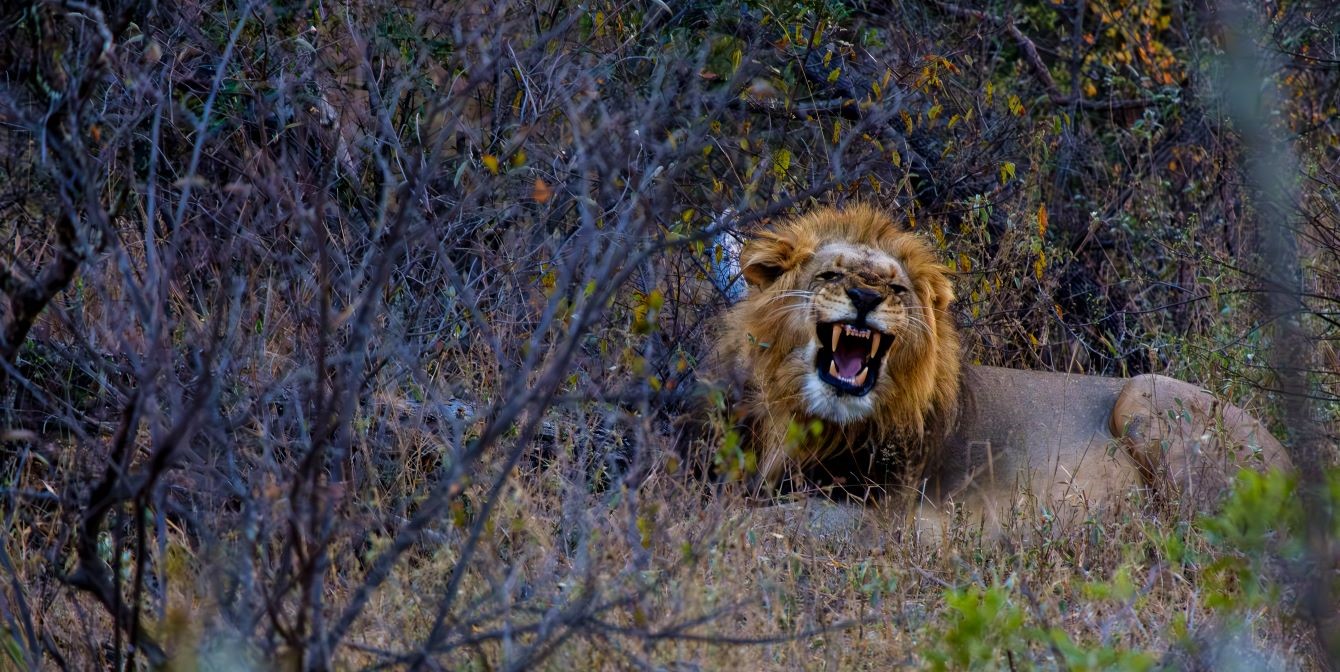
    We were also blessed with our first big male lion right after one of our coffee stops. We were too busy trying to identify a tree when someone shouted that there was a lion sitting there behind it. We were so focused on the tree that we all had tunnel vision and wouldn’t have seen the lion if someone hadn’t got distracted and looked elsewhere. 

    Later in the week, we spotted an even bigger male lion with a huge, dark mane on the way to Main Gate for our morning drive. It was sitting along the fence line in Karongwe and was very photogenic in the beautiful, golden morning light. Unfortunately for the guides from Karongwe, he stopped posing for the cameras and lay down as soon as they arrived on the scene. 

    Fred the foam nest tree frog

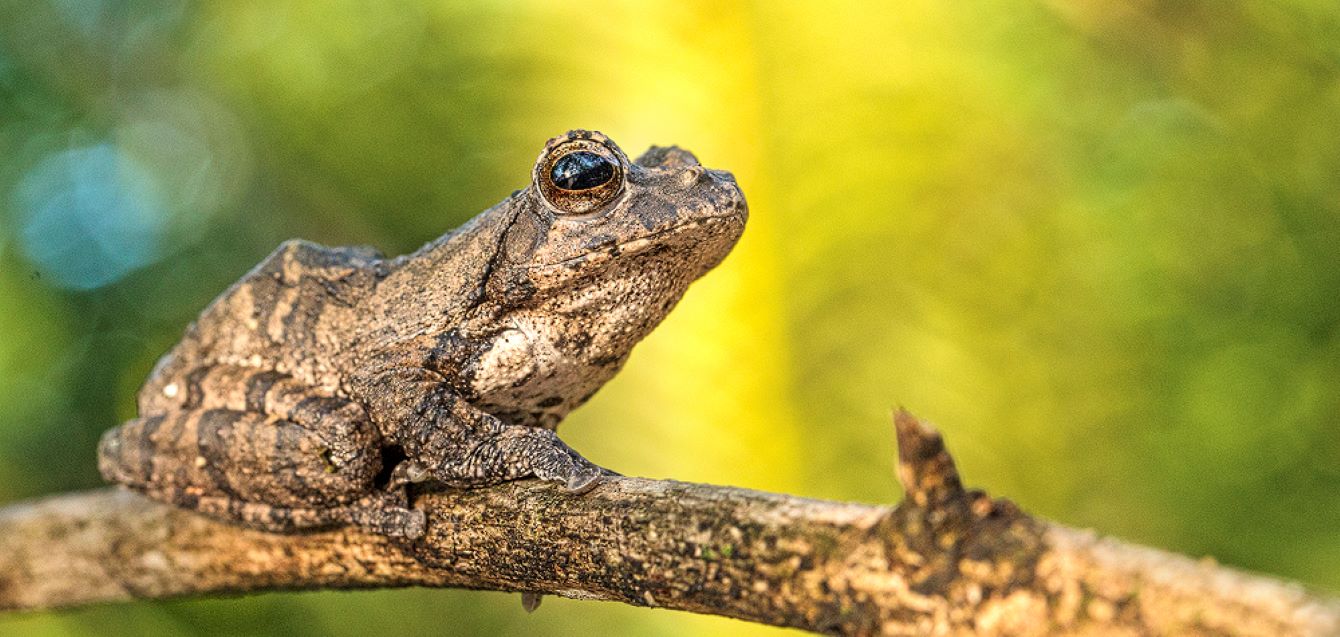
    One funny thing that happened right before our amphibians lecture was when I went to turn on the fan and found our new class resident Fred the foam nest frog. Talk about good timing right before the lecture. 

    image

    Unfortunately, he didn’t stick around long enough for us to use him as a demonstration for frog behaviour as he made a break for it as soon as I went near him and started hopping around the classroom. He was promptly expelled from class in the form of me picking him up and taking him outside to find a new home. This didn’t last long as he was back the next morning. I guess he can stay there as long as he pays rent and doesn’t cause any problems. 

    Embracing our inner crocodiles

    On another note, the sun has finally decided to start heating up a bit so we have been spending a lot more time at the pool. We have figured out that crocodiles have the right idea by getting in the water for a quick dip to cool down and then getting out and basking in the sun. The pool is so cold that we all just jumped in, got straight out before we froze, lay in the baking sun until we were dry and hot again and then jumped right back in to cool off once again. Hopefully I can survive the intense heat because coming from Canada I’m definitely not used to this. 

    Being camp manager made me realise that I have what it takes to lead a team and that I also enjoy doing it. I feel as though the best leaders are the ones that make sure a team is getting along, running as smoothly as possible and know how to have fun while still maintaining professionalism. I may not go into the guiding industry because I am interested in doing conservation work but I know that no matter where I go I can always step up to the plate and lead if I am needed. I’ve always known that I wanted to be out here in the bush and now that I’m here I’m as happy as I’ve ever been. Overall it was a really amazing week that was jam packed with lots of good times and laughter.

    Dreaming of early morning game drives, hot summer days next to the pool and learning all about the South African bush? Join us out here at Bushwise and start living your wildest dreams. 

    #wildlife #IFGAlevel1exam #bushwise #qualification #IFGALevel1 #training #animals #apprenticefieldguide #safari #IFGA #sightings #fieldguiding #endangeredspecies #Assessments #guiding #IFGAexam #fieldguidecourse #studying

  • Getting To Know The Wildebeest

    This blog about wildebeest was written by Ella Dean. Special topic blogs are written by Bushwise students during their course, and all facts included are based on their research.

    Read time: 4 mins

    What IS a wildebeest? 

    Well, they are in fact antelope and part of the Bovidae family, they are grazing herbivores and one of the most abundant antelope in Southern Africa. They can run up to around 80km/h and over 1.5 million wildebeest take part in the great migration each year. They are also a part of Africa’s Ugly 5 – which I believe is totally unfair. 

    So, why do they look so cool? They’re a natural cocktail of anatomical features. Heads that resemble a cow, body and tail of a horse, and the legs of a gazelle. All of these aspects along with strong genetics and blood lines make them one of the most successful mammals in Africa. 

    Blue vs black wildebeest

    As of this moment, there are two different species of wildebeest. The blue wildebeest, Connochaetes taurinus, and the black wildebeest, Connochaetes gnou. There are a couple of notable physical differences that we can observe, mainly their size – black wildebeest are shorter – the shape of the horns – black wildebeest have horns that point outwards which is a sign of their more aggressive nature – and of course the colour of the coat – where their names come from. The blue wildebeest have five official subspecies, while the black currently have no named subspecies. 

    The behavioural differences are slightly more profound. The black wildebeest do not migrate as the blue do, and so are much more territorial. Mature black wildebeest bulls set up their own territories through which female herds often pass. These territories are maintained throughout the year. 

    Protected by laws in South Africa, the black and blue wildebeest cannot be on the same property or reserve. The two species both share similar territories and are genetically close enough to be able to reproduce with one another. However, as the black wildebeest is smaller than the blue wildebeest, black bulls often get chased away from breeding with both black and blue cows, which threatens the survival of the black wildebeest subspecies.


    Golden wildebeest

    image

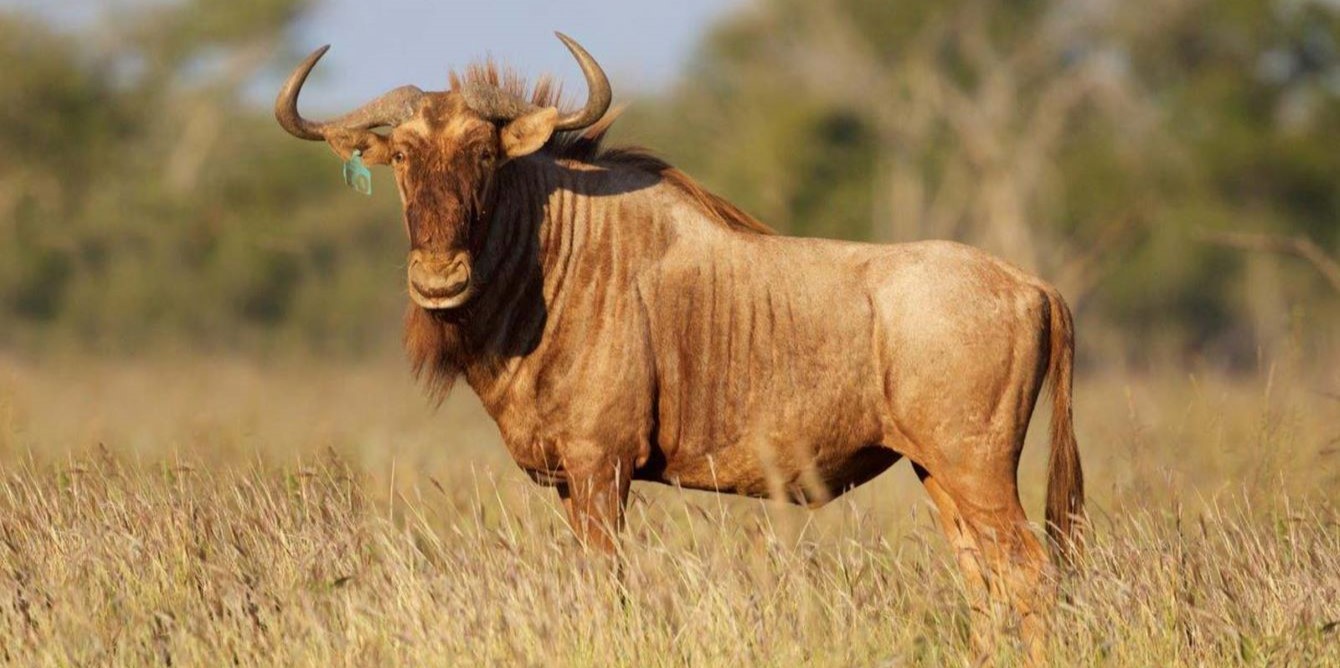
    This is the golden gnu – another native African name for wildebeest. A common misconception is that they are a mix between blue and black wildebeest. It is in fact a genetic morph of the blue wildebeest. 

    The first golden wildebeest bull was captured by Alec Rough in the early 1990s on the game farm Swinburne, in the Limpopo Valley, the area where the majority of Golden Wildebeest originate from. They formed an integral part of the large migratory herds that moved freely from South Africa to Botswana. 

    The Great Migration

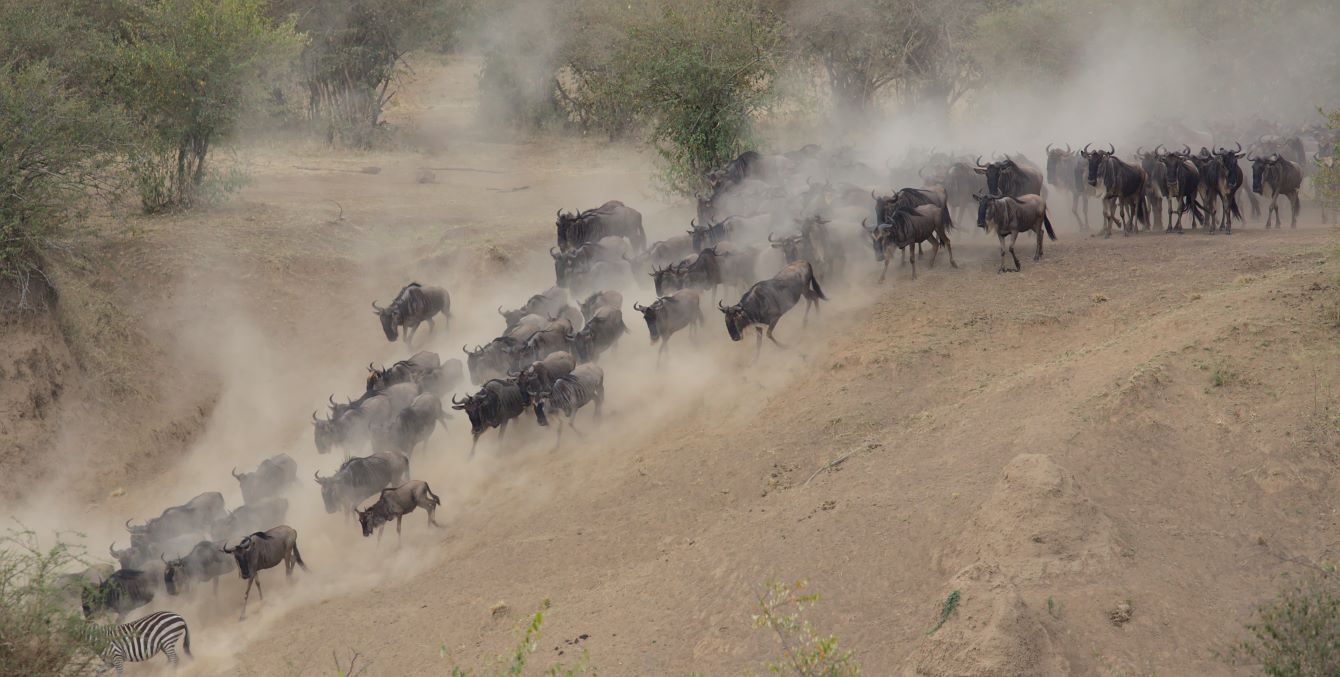
     The blue are part of the Great Migration which I mentioned early. It is the largest overland migration in the world. The herds move in a clockwise direction up from the south of the Serengeti, briefly leaving Tanzania to spend time in the Masai Mara in the north, before heading back to start the journey again. 

    image

    During the migration, it is estimated that about 250,000 wildebeest die every year as a result of predation, drowning, thirst and exhaustion. These animals have only one thing in mind, and that is the finish. They will stop at nothing. This causes many erosive and destructive issues along their course. 

    The science behind a wildebeest’s sneeze 

    Another interesting thing to know about wildebeest is their parasitic relationship with bot flies – more specifically, nasal bot flies. Nasal bot flies are obligate parasites; this means they cannot complete their life cycle without parasitising their hosts. When nasal bot flies inhabit an animal it is known as myiasis – the parasitic infestation of the body of a live animal by fly larvae (maggots) that grow inside the host while feeding on its tissue.

    How do they get inside a wildebeest you might ask.

    So, let’s do a timeline. Bot flies lay their eggs on grass, the wildebeest then eat the grass and pick up the bot fly eggs in their nose. The ova hatch and the larvae migrate throughout the nasal cavity and sinuses, feeding on mucus and debris. Once the larvae complete their growing phase, they migrate back to the nasal cavity where they are sneezed out. And as we may have all noticed, and might have overlooked, wildebeest are often found sneezing and shaking their heads quite a bit. Something you can look out for the next time you see them doing this. 

    The bot flies create lesions in the brain, cardiovascular system, eyes and sinuses. Although this may all seem very dramatic, no serious harm is done to the host in most cases. And so, although this is currently considered a parasitic relationship, with evolution and time, it may soon be considered commensalism instead.  

    So as you can see wildebeest are pretty amazing animals. And they play an important part in the ecosystem and are far more interesting than you might have thought. So next time you see one, take a few minutes to admire these creatures – and look out for their sneezes. 

    Join us out here at Bushwise to learn more unusual and interesting facts about all the creatures – big and really small – that call the South African bush home. 

    #wildlife #IFGAlevel1exam #bushwise #qualification #Exam #IFGALevel1 #training #animals #apprenticefieldguide #safari #IFGA #sightings #endangeredspecies #guiding #IFGAexam #fieldguidecourse #studying

  • Camp Manager Week: Tyre Changes, Returning Birds & A Broken Foot

    This blog was written by Jess Lind, Bushwise Professional Field Guide student. Each student takes a turn as camp manager, and writing a blog is part of the experience

    Read time: 3 min

    And so it begins on Monday morning and at 4:30 am. The alarm goes off, and somehow I manage to crawl out of bed and turn it off. It’s a new day and I am camp manager this week. I walk to the kitchen in the pitch black hearing the sounds of my fellow students snoring away. No sounds of birds are heard yet – I mean why would I hear that? It’s freaking 4:30 am! I unlock the kitchen and set up the coffee station – which thankfully means one thing … back to bed. 

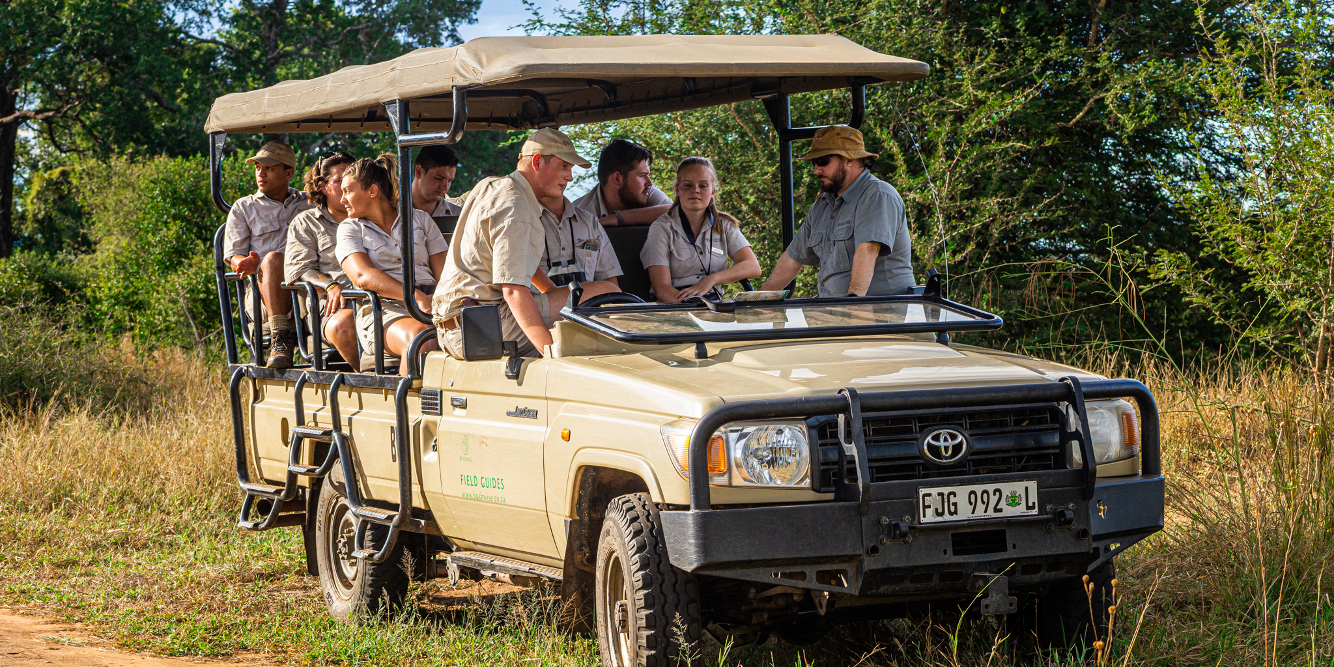
    The day truly begins at 6:30am when we depart for this week’s game drives. Our second time doing our 3-hour drives so nerves are high. Pro tip: stay away from the non-morning people during this time! Everyone meets at the cruisers waiting to defrost from their slumber and the trainers arrive with loads of enthusiasm and energy … where do they get it from?

    image

    The birds return from their holidays

    We drive out into the bush, and it never gets old. The animals are waking up and some are going to bed after a long night. The birds begin chirping and in that moment we all know, we are exactly where we’re supposed to be! 

    This week we had the most incredible sightings – cheetahs, lions, spotted hyenas, elephants! But let’s not forget about our small fellas like the most beautiful butterflies. We also couldn’t have been more excited to see the birds who have just come back from their holiday. Some birds migrate over different seasons and now that spring is approaching, it’s like we have entered a new world because we’re seeing new birds that weren’t here when we started the course. 

    Feeling like a baddie

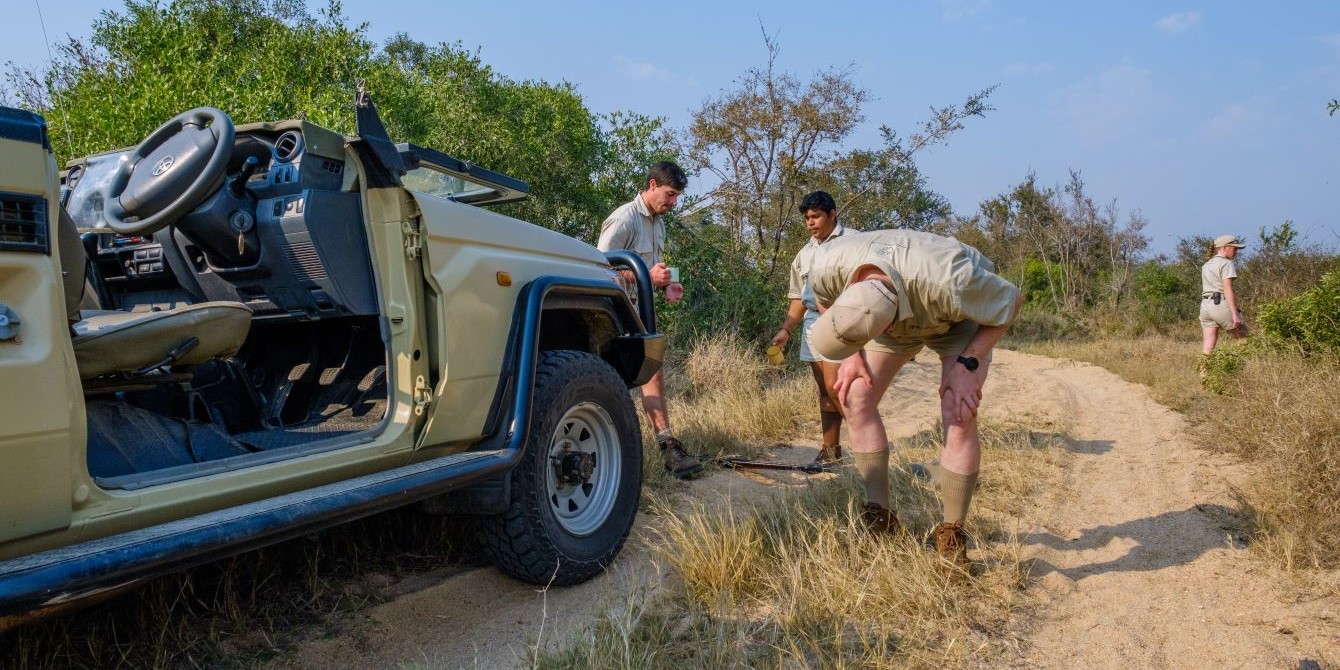
    This week also involved us learning to change tyres on drives, and if you are anything like me, this is not something you were taught growing up. (I 100% think it should be). But my parents raised a strong woman, so I was determined to get it right! 

    And I did it, with a bit of difficulty – but hey we can’t all be perfect on our first try. Doing such a simple task made me honestly feel like a badass. I felt empowered and if anyone that hasn’t changed a tyre before is reading this, I encourage you to learn. 

    image

    The trick to being camp manager

    Being camp manager also means that people come to you with problems they need help with to solve and luckily for me that’s my expertise. But after hearing the same problem – cups being left on the table after meals – it gets hard to keep your cool. It’s such a small thing, but nobody seems to just wash them when they’re done. 

    That’s where being camp manager comes in. Do you lose it and shout at everybody? – very tempting sometimes. Or do you try your best to keep your cool and politely tell everyone for the 10th time to work as a team and pack the cups away? 

    Broken feet and termites

    Being camp manager also means you are in charge of the walkie talkie. So it’s your job to report anything you should be worried about or something the trainers should know. They always say “Don’t worry! Nothing serious will happen.” But this week it did! 

    My fellow student happened to have a wee accident – and by wee I mean she broke her foot in two places! Can I just take a moment to say how strong she was? She did not let a single tear leave her eyes!!! I would be crying buckets if it were me.

    There are so many things I could write about, but I would fill a book. Being camp manager has taught me responsibility, dedication and, most of all, teamwork. After spending some time watching termites build their home, I realised we are a lot like them. Everyone has a role to play and things can only be achieved greatly if we work as a team!

    That’s all from me for this week so goodbye for now!

    Be part of the fun that is campus life when you join us out here at Bushwise to learn and experience all the cool things the South African bush has to offer.

    #IFGAlevel1exam #AdvancedRifleHandling #bushwise #qualification #Exam #IFGALevel1 #training #apprenticefieldguide #safari #IFGA #fieldguiding #Assessments #gamedrive #guiding #IFGAexam #fieldguidecourse #studying

  • Lessons About Courage From The Wild

    This blog about buffalo was written by Leah Deonath. Special topic blogs are written by Bushwise students during their course, and all facts included are based on their research.

    Read time: 4 mins

    Surviving the rinderpest catastrophe

    The year 1889 marked a disastrous event that affected entire populations of both wildlife and people across Africa. The cause was a virus called rinderpest which came from cattle carrying the virus being brought in from India. Wild as well as domestic populations were ruined – with around 90% of all hooved animals dying. This led to famine together with the increase of thickets in grasslands. This in turn created a breeding ground for tsetse flies which in turn brought about an outbreak of sleeping sickness. One of the populations that was severely affected was the African buffalo (Syncerus caffer).

    The African buffalo is a heavy, cattle-like mammal with massive horns. Some people refer to single male buffalo as “dagga boys” and they are known for their strong-willed, stubborn and resilient characteristics. If you could ask a lion how difficult it is to take one down, I’m most certain it would say something along the lines of, “It takes guts to take the buffalo by the horns. Literally.” 

    The tenacious nature of ‘dagga boys’

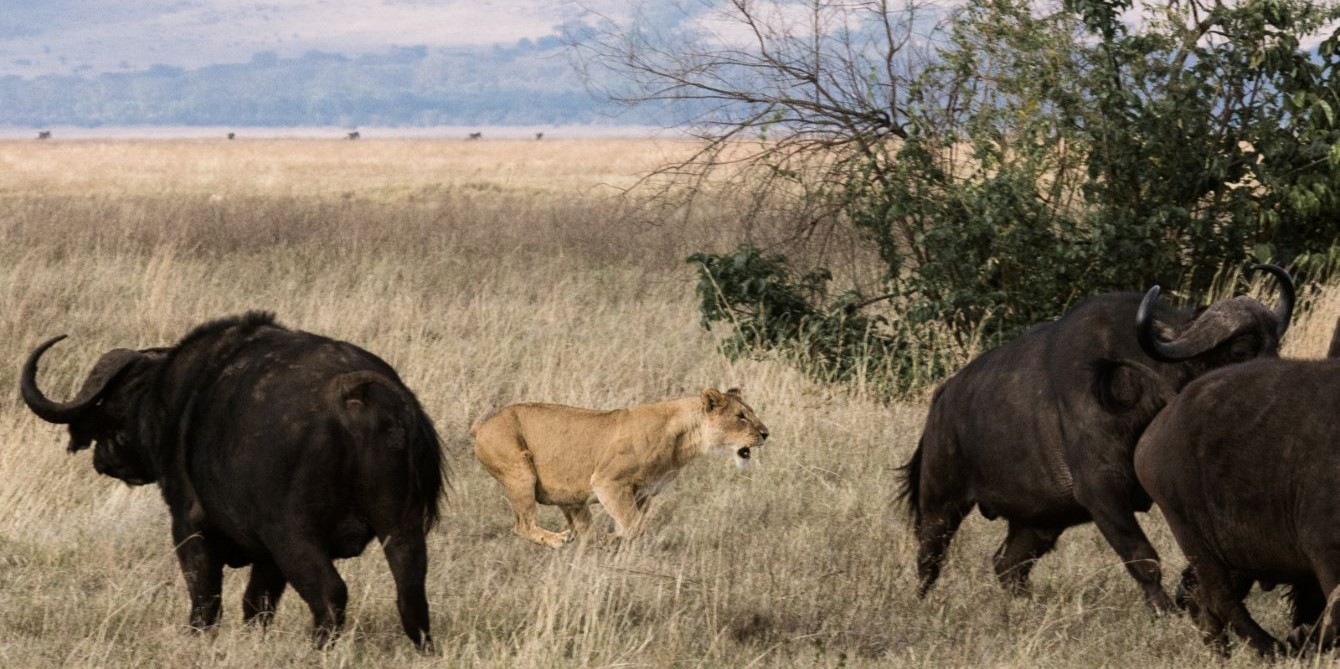
    Whilst working with Wildlife Act on an internship at Hluhluwe-Imfolozi Game Reserve, I remember watching a pride of four male lions trying to take down an old male buffalo. After seeing them fail numerous times, I was amazed by how a single buffalo at such an age was able to dodge and escape the claws of not one but four adolescent lions! 

    image

    Since it was quite late in the evening, we had to leave the next morning, we heard that the old guy took his last breath around 3am. Of course, it was inevitable, however, I still think about how long that buffalo held out. This is why I think of buffaloes in a new light; they don’t go down without a fight. They know that their life is worth fighting for, no matter the odds. 

    Earning the title Black Death

    As a member of Africa’s Big Five, buffaloes remain notorious for their aggressiveness and brutality towards humans. Buffaloes kill more hunters on the Africa than any other animal. Since they have good memories, they can hold a grudge and wait for their opportunity to charge as soon as they get a chance. 

    Writer James Clarke tells the story of how his friend was mauled by a buffalo that had been shot 11 times. As it fell around 8 metres away from them, they assumed it was dead and proceeded to take a picture of the hunt. No one expected the dagga boy to suddenly get up and take his revenge before his own death. 

    It is because of this tenacity and aggression that buffaloes have earned a name for themselves as the Black Death. The highest level of danger is when a buffalo is wounded or cornered, but I still wouldn’t want to bump into even a placid buffalo on foot. 

    Game drive encounters

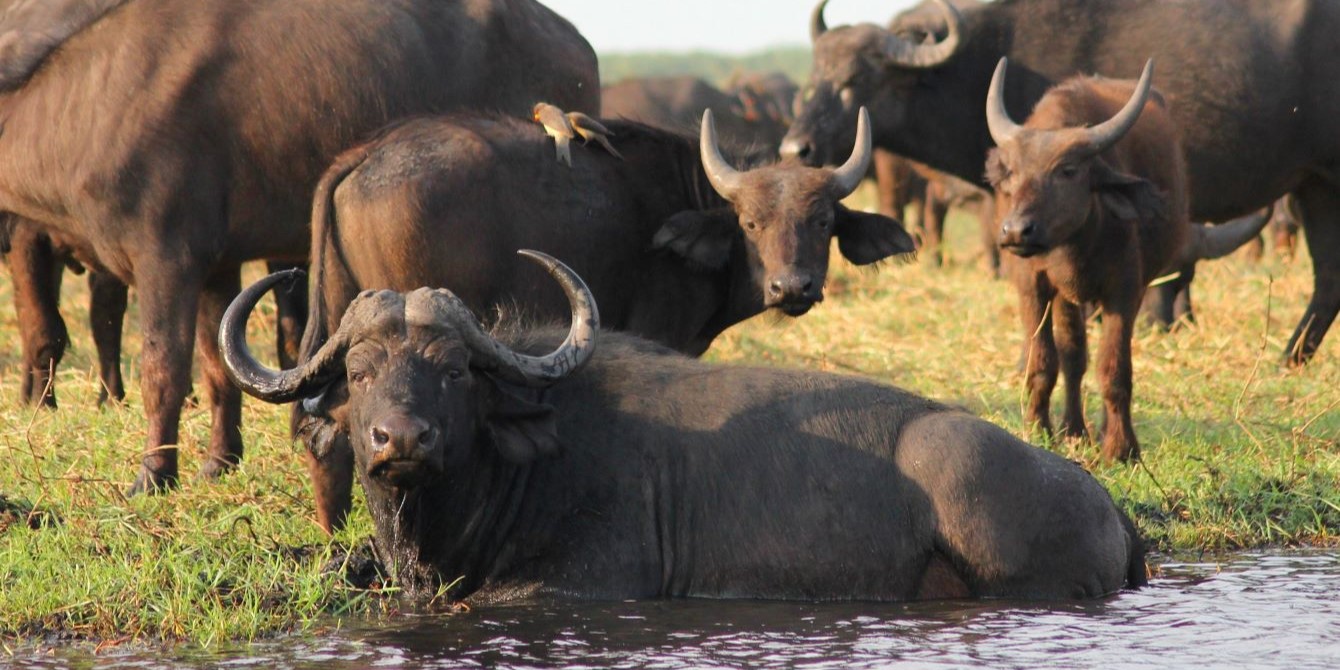
    During my first ever game drive, the first animal I saw was a buffalo wallowing in a muddy pool. Mud baths help protect the skin against the sun and insects as well as cool down during scorching hot days. Buffaloes must drink regularly as they are incredibly dependent on water. They spend a huge amount of their time grazing. A master bull usually overlooks the herd which is led by an old female. Females have smaller, less developed horns compared to males. 

    image

    Buffaloes are loyal animals that can protect, sympathise with and empathise with injured members of their herd. I really admire their devotion to one another, their strength and bravery. Even though buffaloes have a bad reputation, there are certain qualities they possess that are praiseworthy. 

    Thankfully rinderpest was not able to fully eradicate the African buffalo. Not even a deadly virus could take these guys down completely. So next time you may be feeling defeated, think about our dagga boys out in the wild and charge courageously forward anyways. 

    Ready to be inspired by Africa’s resilient wildlife? Join us out here at Bushwise and experience the untamed world for yourself.

    #wildlife #IFGAlevel1exam #bushwise #qualification #trailsguide #Exam #IFGALevel1 #training #animals #safari #IFGA #sightings #fieldguiding #Assessments #gamedrive #guiding #IFGAexam #fieldguidecourse #studying

  • Wild Week as Camp Manager: Exams, Game Drives And Sleepouts

    This blog was written by Julian Payne, a Bushwise Professional Field Guide student, during their week as camp manager.

    Read time: 3 mins

    This week was a very big week for us on the SAWC campus. It was full of game drives, a big exam, a sleepout and the start of the new semester. This new semester offered a transition from mainly classroom and theory work to the next phase of the course which is full of animals and game drives! Needless to say, we’re all very excited for that part. 

    Returning from off week

    We had just come back from our first off week. Everyone had plenty of stories and experiences to share from trips back home, Kruger trips (the first for many), trips to town, or the fun they had while staying on campus and hanging out together. It was really nice to see how everyone came back refreshed but also excited for what is to come. I myself noticed that this was the first time I had come back from a break from either school or work and been happy about being back. Truly a sign of how much I enjoy what I’m doing here and that I am finally on the right path in my life. 

    image

    However, there was not much time to dwell on my off week or talk to my friends about theirs as we had our official IFGA exam halfway through the week. This exam was the last of the theory exams that we had been working on since getting to campus last month. Everyone got into full study mode pretty much the moment we arrived back on campus. 

    Between the in-class review sessions with the trainers and the study groups we formed, most people felt quite good going into the exam. We also had a couple of game drives as well which was a nice break from studying. Especially since those drives were quite eventful with some beautiful elephant, ostrich and even rhino sightings. 

    Sleeping out in the bush

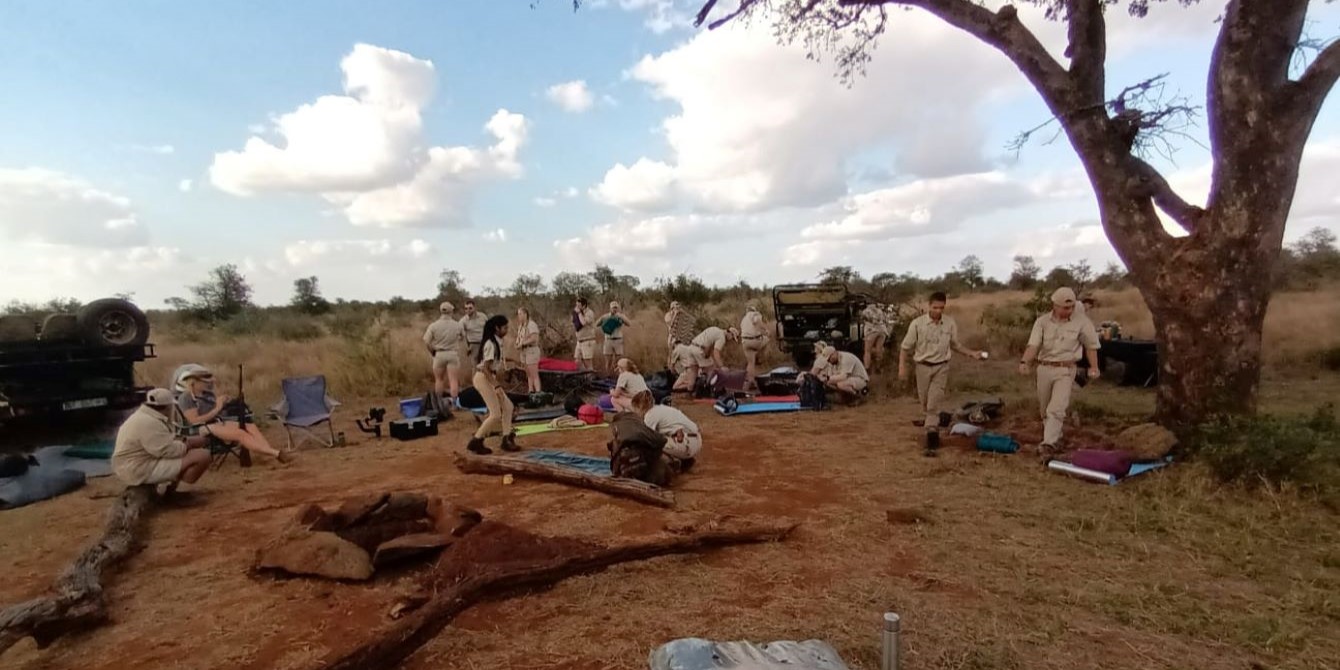
    In the afternoon after we took our exam, we headed to our first sleep out. This meant that we would be sleeping under the open sky inside Kruger, which was something we were all super excited for – albeit a bit nervous. It was especially nice as the weight of the exams and weeks of studying was off our shoulders. 

    Once at the campsite under a big marula tree, we set up camp, made a fire, had dinner, sat around the campfire, played a bird game, and just enjoyed nature and each other’s company. Throughout the night we were fortunate to hear hyenas, jackals and a couple of birds. 

    image

    What’s next for the Bushwise students

    Now that the IFGA theory is out of the way, we have started studying for the next phase of the course which is all about learning the animal slides and sounds from mammals and birds all the way to frogs and insects. And while this feels like a daunting task, I personally can’t wait until I know all of these because the bush will look and feel quite different once it isn’t full of “random” animals and sounds, but rather things we actually recognise and know stuff about. 

    This new term will also be the start of more in depth 3-hour game drives that will really allow us to challenge ourselves and see what leading a full game drive is all about. 

    This was not the easiest week to be a camp manager as I had to balance the managerial duties as well as the studying and staying on top of everything. However, as there are always two camp managers, we split up the duties and together we were able to make sure that things were going smoothly so that everyone could focus purely on studying. Plus, we have an amazing group of students here that I am glad to call my friends that all take part in helping each other and making sure everything goes well. 

    Experience the thrill of sleeping under the stars and hearing jackals call as you chat around the campfire late into the night with new found friends out here at Bushwise

    #wildlife #IFGAlevel1exam #bushwise #qualification #IFGALevel1 #training #animals #safari #IFGA #sightings #fieldguiding #Assessments #guiding #IFGAexam #elephant #fieldguidecourse #studying

  • Impala: Far more interesting than you’d think

    This blog about impala was written by Danel Hart. Special topic blogs are written by Bushwise students during their course, and all facts included are based on their research.

    Read time: 3 min

    The savannah biome is home to one of the most common species of antelope in Southern Africa. The name impala in Latin is Aepyceros melampus – which means “antelope with high horn and black feat.” Impalas play a vital role in the ecosystem, especially as they are a major food source for all the predators – such as leopards, lions, cheetahs, hyena, wild dogs, caracal and jackal – roaming around in the savanna biome. 

    Survival skills

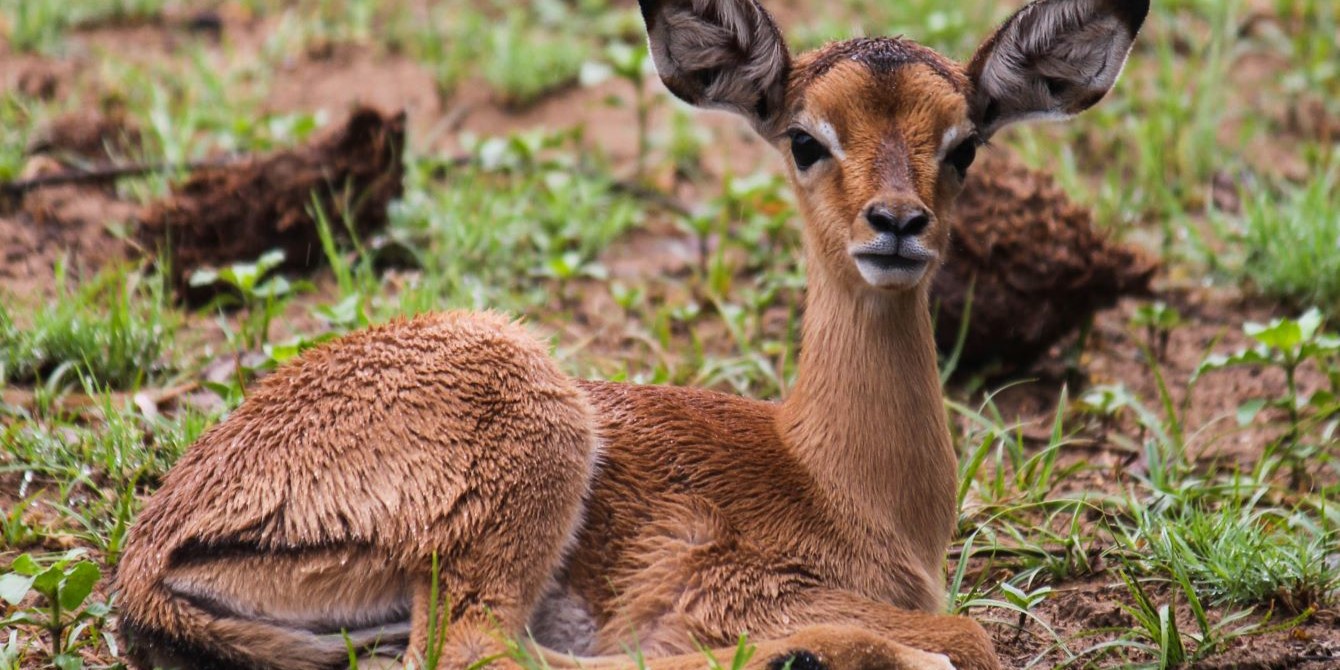
    Early in the summer, a lot starts to change. New life begins to appear and because impala – especially newborn impala – are a major part of predatory diets, the bush becomes very active. But not to fear, because there are so many newborn impalas, a large number will survive until adulthood. Their high birth rates are one of the reasons why they are the most successful antelope species in Southern Africa. 

    image

    Another reason why they are so successful is because they are mixed feeders. They mostly eat grass in the summer months and shrubs in the winter months. This allows them to have abundant food sources during the whole year.

    They also use countershading as a way to camouflage from different predators of different sizes. The top of their body is mostly darker than the rest of the body. The darker brown/red colour on their back fades into a lighter colour on their sides and then to a white on their stomach. This is a big advantage for the impala because it helps them to blend into the environment. 

    Impalas have very sharp senses; their sense of smell is acute and their hearing and sight are also very well developed. However, their main defence mechanism is safety in numbers and without that they are very vulnerable. Even with all these acute senses they still rely on each other. 

    Believe it or not an exciting impala sighting

    We had a game drive a week or so ago. We saw an impala ewe on her own. This raised a lot of red flags for us as new guides because this is not normal! This ewe was standing alone next to a bush and she was not eating, she was on high alert. Her ears were up straight, her eyes piercing and scanning through the grass and the bushes. She was constantly backing up into the bush to make sure nothing grabs her from the back. Doing full 180 degree scans of her surroundings. We knew that this ewe must have been separated from the herd during a predator chase. This shows just how vulnerable an impala can be when separated from its herd. As new guides at Bushwise, we used this as our time to investigate and learn about the behaviour of impalas when there are predators around. 

    image

    We chose to drive up the road past the impala that was standing alone. We heard a couple of alarm calls from birds while making our way up that road. About 700m away, we found the rest of the impala herd sticking close together and every single impala in that herd of about 40 was on high alert. As we passed, one of the impalas sounded an alarm call and all of them scattered into the bushes in a matter of seconds. The next day other students called in a lion sighting in that same area. This must have been the thing that had scared the impalas we saw.  

    Even though impalas are a common sighting, they are far from boring. Uncover the captivating world of the savanna biome with us at Bushwise! Delve into the intriguing dynamics of the bush firsthand and experience the wonders waiting to be explored.

    #wildlife #bushwise #qualification #Exam #training #animals #safari #ifga #sightings #fieldguiding #guiding #fieldguidecourse #studying #fieldguides