Author: Bushwise Student

  • Silence of the Hyenas

    This blog about hyenas was written by Anthea Hall. Special topic blogs are written by Bushwise students during their course, and all facts included are based on their research.

    Read time: 4 mins

    Hyenas. Creepy? I’d say so. 

    Have you ever wondered how hyenas can just creep up on you without you even knowing they are there? Well do I have a story for you. 
    image

    A short lived career as a lookout

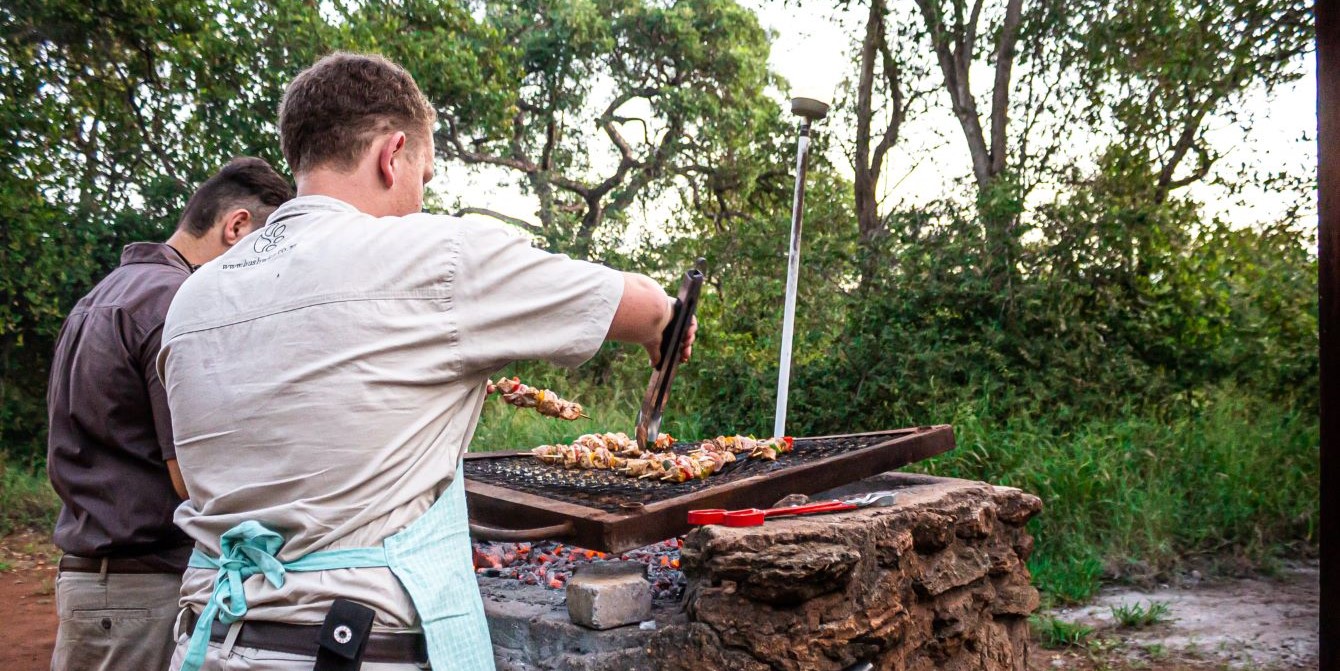
    When I was about 13 years old, I went to stay at Hluhluwe-Umfolozi – a Big Five game reserve that contains only unfenced camps – with my family. We were staying in a rustic cottage with a nice big deck. The only problem was that the braai was situated off the deck, which meant that someone had to be the lookout when we wanted to braai. 

    Now I had – and still have – a healthy respect and maybe even a little fear of hyenas, so I was not too keen on being lookout. But of course by the time we needed to braai, my brother and mother had gone off on their own mission, so I was left to be the lookout for my father. 

    I sucked it up, gave myself a little pep talk, grabbed my torch and off we went. I could only stand just outside the door to the deck as that was as far as I could encourage myself to go, but that was far enough. My father went to the braai and I started my duty as lookout. 

    I shone the torch in front of me, there were no hyenas to be seen. I was getting confident. This wasn’t too bad. I kept looking around and I couldn’t see anything. But as soon as I shone the torch behind me, there, staring at me with his head on the deck, was the biggest hyena I had ever seen. Granted I was 13 so everything looked big to me, but I still got the fright of my life and ran inside. That was the end of my lookout career for that holiday. 

    Going beyond the Lion King stereotype

    A lot of people don’t like hyenas. This could be because of the way that the media represents them – like in the Lion King where the hyenas are the bad guys and are associated with death and destruction. 

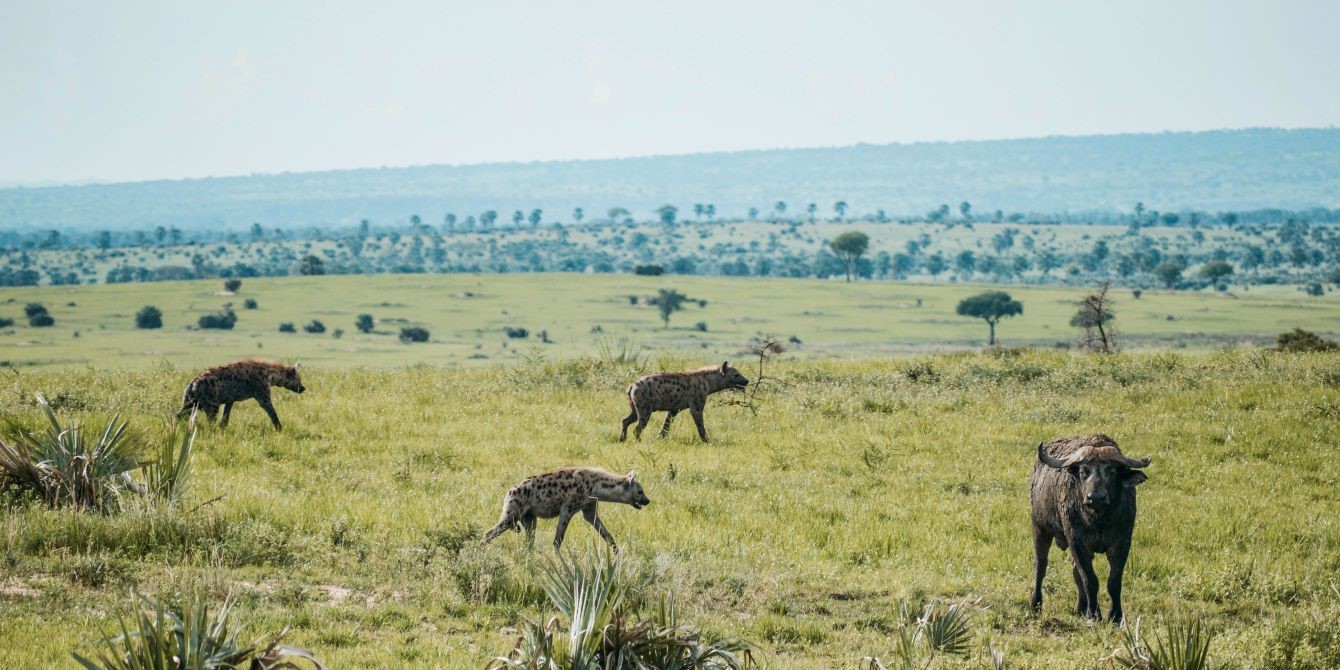
    But in actual fact, hyenas are highly intelligent creatures – who even monitor vulture activity to locate their next meal. They have strict social hierarchies which allow them to hunt effectively in a pack to take down difficult prey. 
    image

    Hyenas are way ahead of lions when it comes to locating carcasses because of their advanced sense of smell which allows them to smell a carcass up to 4 kilometers away – which is why they can smell your braai. They also have really good hearing and can hear an animal being killed as far as 10 kilometers away. 

    There is a common misconception that hyenas are only scavengers and don’t hunt, but that is not completely true. They hunt as much as 73% of their food, but prefer not to waste energy on hunting when they can feed on carcasses instead. 

    That being said, hyenas play a vital role in eradicating decomposing carcasses. This not only prevents the spread of disease, but it also recycles valuable nutrients needed by plants to grow. Hyenas have incredibly powerful jaws and strong stomachs that allow them to break down all parts of the body except hair. This allows them to find nourishment from what other predators deem valueless.

    Night and day

    Hyenas are mostly nocturnal animals. This means that while they can be seen during the day, they will appear to be cautious of people and harmless, but as soon as night falls, they become self-confident animals and are incredibly bold. This is partly because they have a highly developed sense of smell and hearing, and excellent night vision which allows them to locate food with incredible accuracy – such as a braai 4 kilometers away!

    And because hyenas are opportunistic, they aren’t afraid to steal a piece of boerewors from the braai when they find it– even if it is on fire. This is quite funny to see because they let out a yelp and a giggle – which tells me the prize was well worth the pain. 

    I think hyenas should be given more credit for the roles they play in our environment and the vast array of skills that they have when it comes to hunting and scavenging. They are such unique and complex creatures and there is still so much we have yet to discover about them. Even though I still see them as creepy, through coming to Bushwise I have developed a newfound respect for these animals and their mysterious way of life. 

    Itching to get out there and experience the mysteries and magic of the Africa bushveld for yourself? Join us out here at Bushwise where the sounds of hyenas laughing and lions roaring will be the soundtrack of your new adventurous life. 

    #wildlife #bushwise #qualification #Exam #training #animals #apprenticefieldguide #hyena #safari #ifga #sightings #fieldguiding #Assessments #guiding #ifga #fieldguidecourse #studying
  • Wildlife Adventures and Leadership Lessons

    Read time: 3 mins

    This blog was written by Goodwill Manzini, Bushwise Professional Field Guide student, during their week as camp manager.

    A little about me 

    My name is Goodwill. I come from Cottondale Village near Andover Nature Reserve. My passion for wildlife started at a young age because my childhood was surrounded by natural environments.

    When I was growing up, you would always find me in front of TV watching wildlife documentaries, trying to educate myself about organisms, weather and landscape and on how they are working together to form the bubble of life. 

    I believe that as a field guide you need to be knowledgeable about ecosystems so that you can instil an appreciation of nature into your guests and try to get them to be as passionate as I am about nature. I also plan to take all the knowledge that I’m learning from SAWC and Bushwise and pour it back into my community. 

    First camp manager of the course

    At the start of the week, I was assigned the duty of camp manager. Everything was still new to us, and we were so full of nerves and doubts. Being the first student camp manager of the course made me feel so special and honoured. By the end of the week, I had learnt a lot and improved my managing skills. 

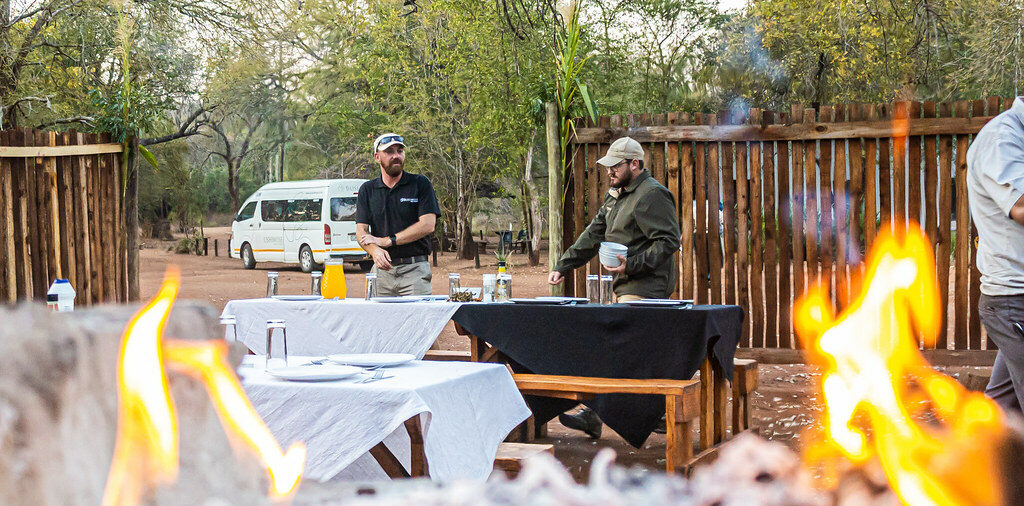
    At the end of every night Delight – who is the chef for the Bushwise students – and I made sure the fire was put out safely. This is something people don’t often think about, and they often just walk off without checking if anyone will take care of the fire. 

    image

    Game drive encounters

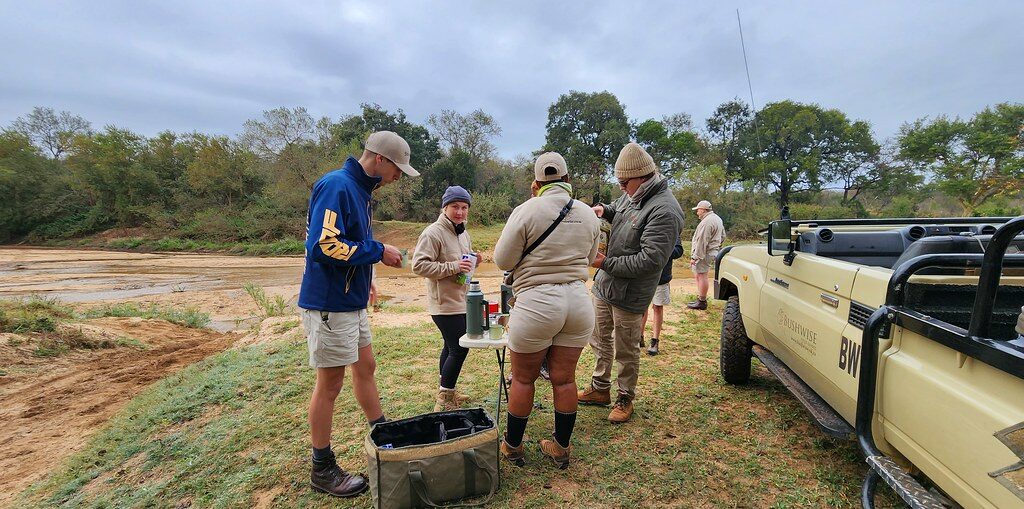
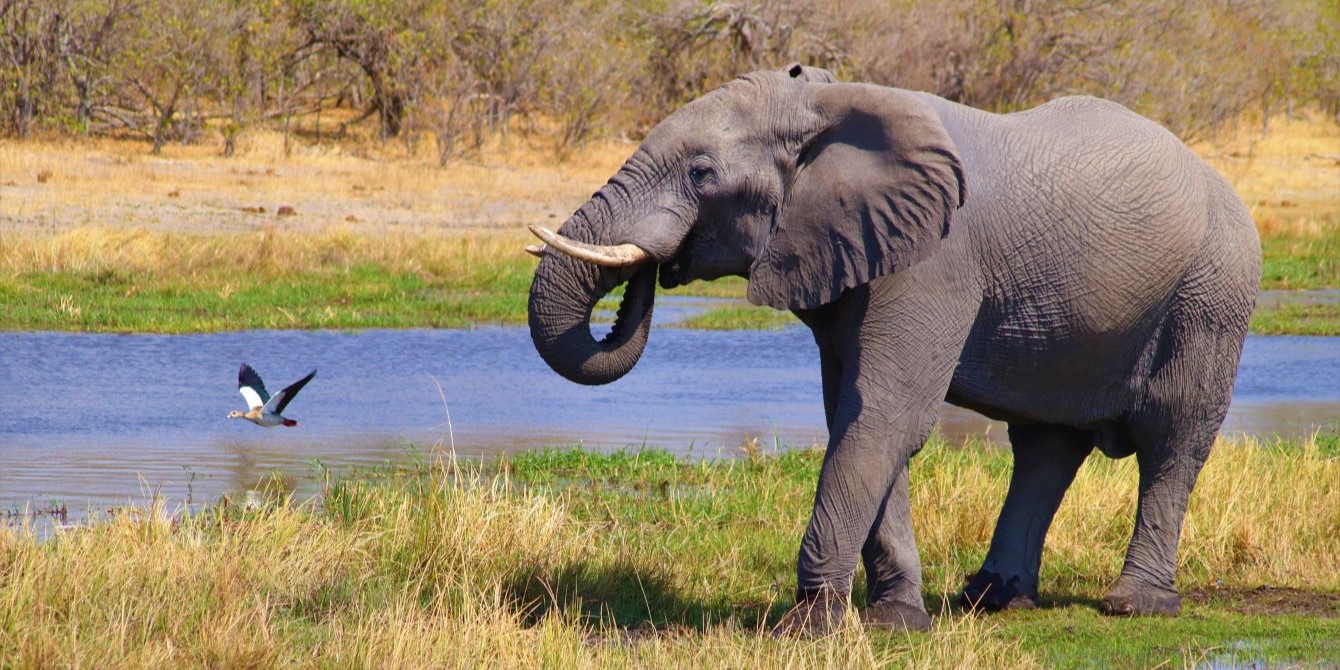
    On Monday, we went on two game drives where we had some great sightings of three elephant bulls (Loxodonta Africana) feeding. We also saw some hippopotami, who went from the land to the water and one of them went up every couple of seconds. I think this was to check what we were up to and to keep his or her partner safe. We were able to enjoy this a lot because we used this area for our coffee break. 

    During our second week, we had the opportunity to visit the famous Hoedspruit Reptile Centre. We were lucky enough to witness a black mamba feeding. 

    We also got a chance to talk about traditional beliefs and medicinal uses of plants when we came across an interesting marula tree (Sclerocarya birrea). We talked about how tribes like the Tsonga people use this tree to communicate with their ancestors, and how every part of the tree has a use. For example: 

    1. The bark is used to treat diarrhoea and dysentery.

    2. The fruits are used to make a jam.

    3. The skin of the fruits can be used as a replacement for coffee.

    4. The nuts are used to make cosmetic products.

    5. The Venda nation uses the tree to identify a baby’s gender.

    Lessons from being camp manager

    I have really learnt a lot from being camp manager and how to guide people. Normally I am a dominant person, but I have never really had to lead any group in a big way. Even though this task did not really require me to lead or guide people too much, it still gave me a taste of how it feels and should be done. After experiencing what I have in these last two weeks, I now am even more excited to reach my dream of becoming a field guide.

    Embark on your own journey of discovery with Bushwise Field Guides. Uncover the wilderness, build leadership skills and nurture a passion for nature. 

    #wildlife #bushwise #qualification #Exam #training #animals #apprenticefieldguide #safari #IFGA #sightings #fieldguiding #endangeredspecies #Assessments #guiding #IFGAexam #elephant #fieldguidecourse #studying
  • The Marula Tree – The Tree Of Life

    This blog about marula trees was written by Aldo Louw. Special topic blogs are written by Bushwise students during their course, and all facts included are based on their research.

    Read time: 3 mins

    An African sunset, sipping on an Amarula liqueur somewhere in the beautiful breathtaking bush on a game reserve in South Africa. This might be the picture that pops into your mind when the name marula is mentioned. But there is so much more about this tree than the memorable Amarula liqueur that is made from the tree’s fruit. 

    Beyond Amarula 

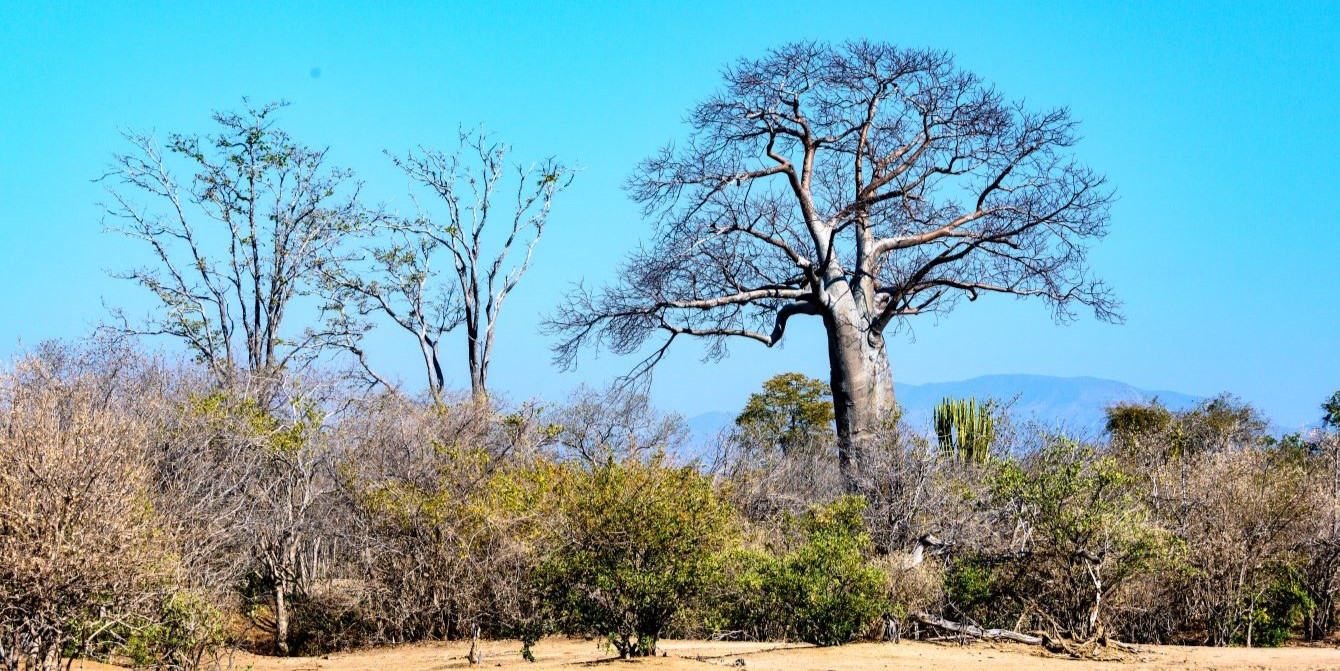
    The marula tree stands 18m tall and the bark is a greyish colour. On the young branches, the bark has a smooth appearance, while on the older branches it appears to be flaky in patches. 

    The leaves are unevenly compounded with 7 to 13 pairs of leaflets plus a terminal one that is near the end of each branch. Even though the young trees are frost-sensitive, marula trees are drought-resistant and one of the fastest growing trees in South Africa , growing up to 1.5 m per year. 

    These trees can be found in the Lowveld and Kruger National Park. They prefer to grow in the savanna or bushveld. Tall grass, baobabs and fever trees can be found growing close to them. 

    image

    Cultural significance and traditional beliefs

    This beautiful tree’s history extends back to more or less 10,000 years and there is evidence that even then the fruit and nut-like kernels were an important food source. The tree has a specific sex (deciduous and also dioecious) which led to many traditional African beliefs about the tree. One such belief is that using the powder of the bark or the flowers to make a tea from either the male or female tree influences the gender of the baby you will have. 

    Versatile uses

    The marula tree is quite a useful tree as it has so many uses. The most obvious – apart from the tasty liquor – being that it can act as both a shelter and a food provider for animals and humans alike. But let’s take a look at some of the more interesting uses for this tree:

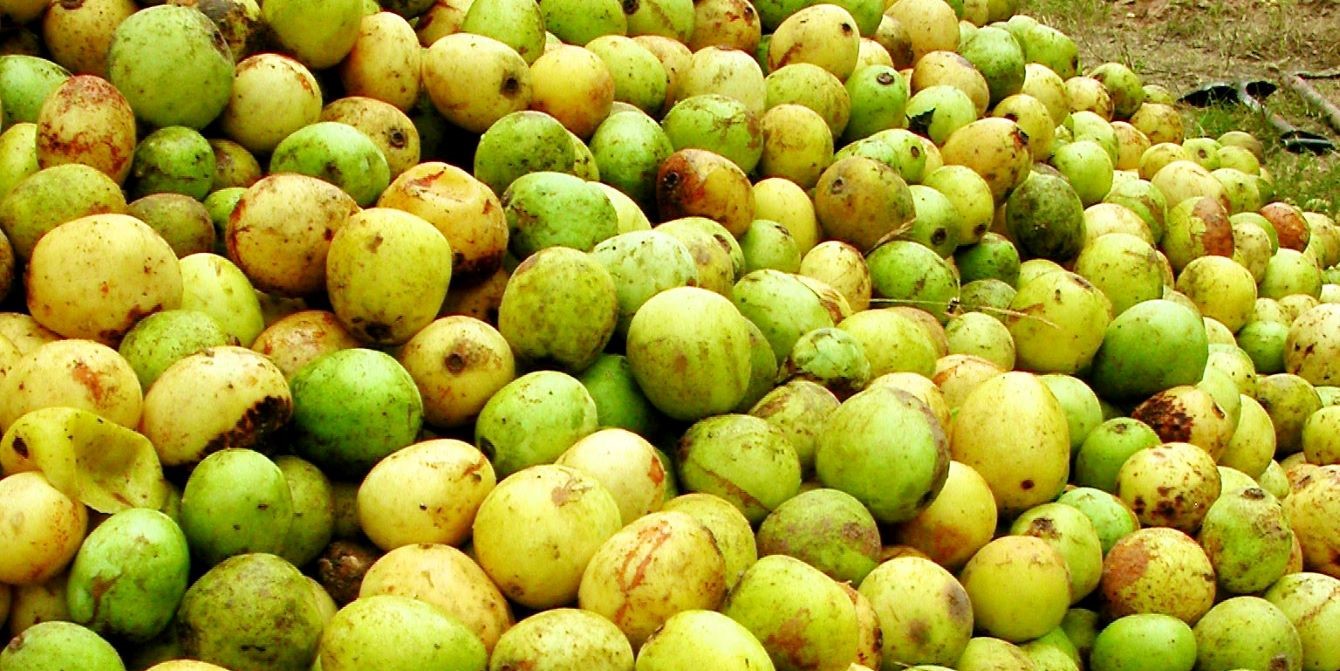
    1. The inner bark off the tree can be used to make a decent rope, the light reddish brown wood makes lovely furniture and the skin of the fruit can even be burnt to use as a substitute for coffee and snuff. 

    2. The flowers are 50 to 80mm long sprays with sexes on separate trees. 

    3. Apart from the Amarula liqueur, the fruit is also used to make a semi-sweet wine, beer and even jams and jelly. 

    4. This led to a very funny story of elephants and baboons getting drunk when eating the marula fruit which has fermented while lying on the ground. This was proven to be a myth by scientists, therefore no elephants or baboons will soon be seen walking funny and experiencing a hangover. 

    image
    1. The fruit are yellow and fleshy with a large stone and ripens from January to March. It has 4 times more vitamin C than an orange and is a good source of calcium, magnesium, phosphorus and potassium. 

    2. The seed from the fruit consists of 2-3 nuts that are rich in oil and protein, that can be eaten either raw or roasted. 

    3. The oil from the nuts makes an excellent skin treatment. 

    4. Cattle and game benefit from the leaves, bark and fruit. 

    5. A tea can be made with the bark from the tree to treat diarrhoea. 

    6. Chewing the leaves can reduce heartburn. 

    7. Using the bark in a brandy tincture can help as a preventative for malaria. 

    8. The inner bark has antihistaminic properties and can be used against insect bites or even those hairy caterpillars that can burn you when accidentally gets in contact with your skin. 

    9. An extract from the leaves works wonders for abscesses and burns. 

    The marula tree is the ultimate multi-tasker in the African wilderness. From giving animals and humans a place to live and find a snack, to dishing out remedies for stuff like tummy troubles and insect bites, this tree does it all. No wonder it’s called the “Tree of Life.” So, next time you sip on that Amarula drink, remember, there’s a whole lot more to this tree than meets the eye.

    Deepen your appreciation for the natural wonders of South Africa’s wilderness by joining us out there at Bushwise Field Guides.

    #bushwise #qualification #Exam #safari #ifga #fieldguiding #Assessments #guiding #fieldguidecourse #studying
  • The Bushveld Has Its Own Time

    This blog was written by Bradley Blouw, Bushwise Professional Field Guide student, during their week as camp manager.

    Read time: 3 min.

    A freak cold front passed over the Lowveld this week; apparently it is extremely rare for temperatures to reach below 10° C. I had thought that I’d escaped the harsh Free State winters only to find myself wearing three layers in the Lowveld anyways! The cold front moved through and brought rain, making for one miserable week. However, the homely food by the resident chef, Delight Mpofu, instantly warmed everyone up again. 

    From Dwarf Mongooses to Cane Rats

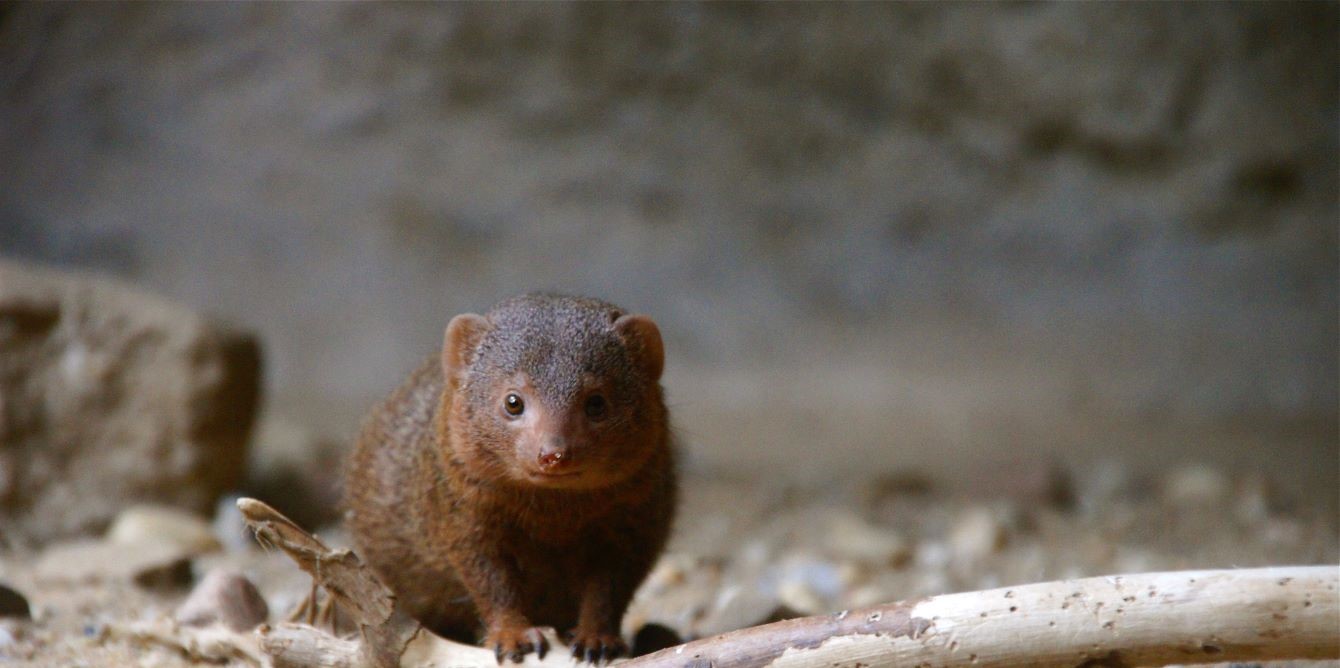
    Every morning we take a stroll through the Southern African Wildlife College, and the short 8-minute walk is always filled with all sorts of little creatures. Thus far, the cutest sighting has been a band of dwarf mongoose; I often stop and just watch them scurrying about. 

    image

    Other daily sightings include francolins, magpie bush shrikes, southern red- and yellow-billed hornbill birds, grey go-away-birds, a resident blue-headed tree agama who lives just outside the classroom and the huuuuuge cane rats that live near our tents. You can often hear rustling through the grass but seldomly see as they are nocturnal rodents.

    And let me not forget about the birds. You’ll also often catch one of the students gazing out the window admiring one of the many many birds we have to get to know for this course.

    Meet Simon, the Colorful Foam-Nest Tree Frog

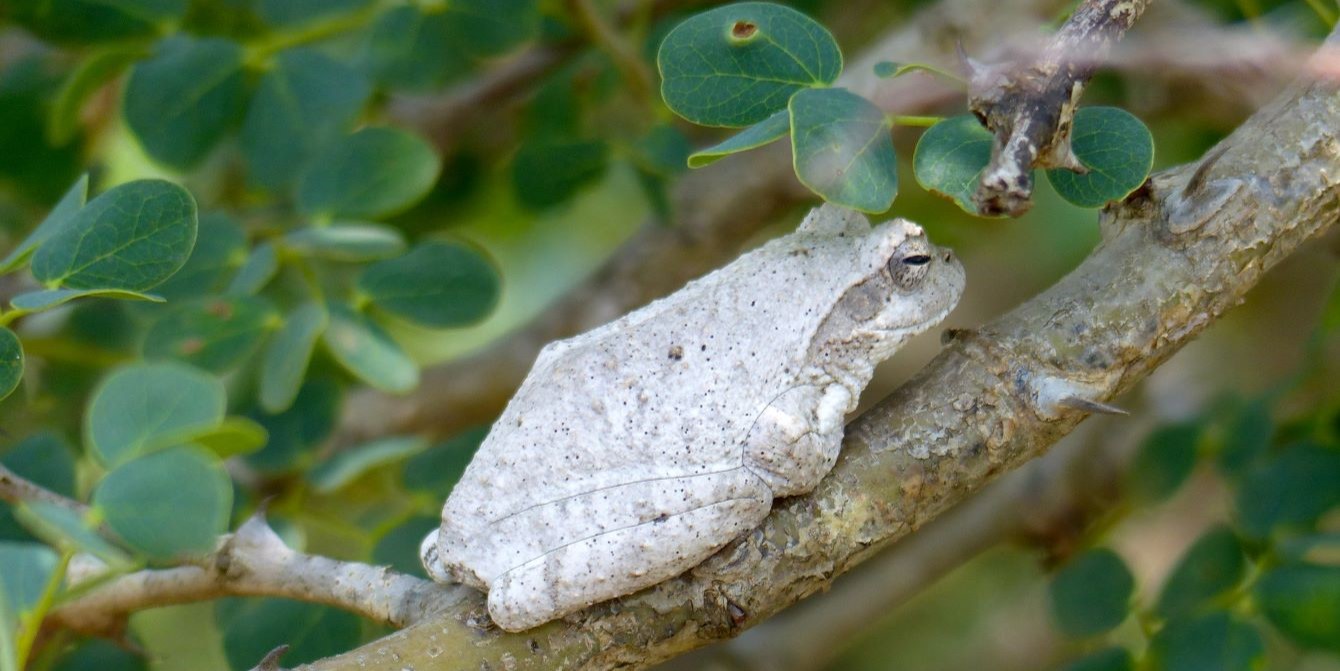
    The closest thing we have to pets out here would be the fauna that decided to make our tents their tents too. There is a foam-nest tree frog that has made itself very comfortable on our porch; we promptly decided to name him Simon. 

    image

    An interesting fact about Simon is that he is able to change his body colour, although it is nothing like the mechanism found in chameleons. When Simon is active and hunting at night, he is a bright green and black colour, but when he comes back to rest during the day, he is a pale white colour. 

    This phenomenon is called thermoregulation by colour change. As the name implies, it helps with the regulation of body temperature, and amphibians rely on the environment to help them regulate their body temperature.  

    We always get nervous when Simon leaves the safe confines of our tent to go hunting at night, only to be relieved when we spot him back on his little perch above the porch.

    Anticipating Spring in the Lowveld

    After the rains that fell about a week and a half ago, there are already signs of new growth on the trees and the scorched grasses. With the temperatures steadily increasing again, we have already had a brown house snake removal on campus and – with the aid of UV lights – a few scorpion sightings at night, which are all signs that spring is well on its way. With the changing of the seasons upon us, I am nervously excited to see what spring has to offer in the Lowveld.

    Sounds like an epic experience? Join a Bushwise course and you could find yourself waking up to the Bushveld each day, too!

    #wildlife #bushwise #qualification #Exam #training #animals #apprenticefieldguide #safari #IFGA #sightings #fieldguiding #endangeredspecies #Assessments #fieldguidecourse #studying
  • Embracing Change: My Journey to Become a Field Guide

    This camp manager blog was written by Ryan Sakinofsky, Bushwise Professional Field Guide student.

    3 min read

    Leaving the City Behind for a Big Adventure

    Driving down the long, dusty, corrugated road to Mahlahla campus, I felt my life was being shaken up literally and figuratively. I left Johannesburg’s bustling, noisy, dirty streets for a new adventure. As I stopped on the bridge crossing the Makhutswi River, my thoughts meandered back six months to when I decided to change my whole life in the musty basement parking at work. 

    I thought back to when I was a student at the University of the Witwatersrand and how different my life was compared to the life I had imagined for myself. As a student, I studied animal, plant and environmental sciences, and I wanted to work in the last few wild spaces we have left and to never ever work in an office. Then life happened and even though I had been working in the corporate world, I managed to find my way back to the bush and it was like everything in my life was new again.

    Settling in: Welcome to Mahlahla campus

    image

    I arrived at the gates to campus and waited for the dust to settle and for my eyes to stop shaking from the corrugations before opening the gate and driving in. I was welcomed by the trainers: Darryn, Wayne and Pioneer and our camp mom, Claudia. The passion they have is contagious and it was not long before we were all settled and feeling content. 

    The next day brought a whirlwind of admin. I was given the honour of being the first camp manager for the Professional Field Guiding Course, and we were split into groups for our camp duties. It was quite nerve-wracking as I was expecting many teething issues from my colleagues, but I was pleasantly surprised to find that any issues were easily sorted. 

    Our subjects for the week were Introduction for Field Guiding, Radio Procedures, Geology and Weather and Climate. It took us a few days to figure out that these subjects weren’t so scary and, given enough time, we began to appreciate the time spent in the classroom  – especially on the unusually cold winter days.

    First game drives and wildlife encounters

    image

    We were all eagerly up before the sun on Wednesday for our first game drive. The air was electric, and we were so full of energy we could have pushed the vehicle the 5km to Makalali Main Gate. This week we learnt about the red bush willow (Combretum apiculatum), the russet bush willow (Combretum hereroense) and the knobthorn (Senegalia nigrescens). My personal favourite tree this week was the knobthorn as it is easily identifiable by the knobs on the trunk that look like spines. Unfortunately for me, the spines are lost when the tree reaches maturity. 

    One of my personal highlights was stopping at a dam on the first morning and watching a baby hippopotamus (Hippopotamus amphibius) ride on its mother’s back to go underwater. We learnt how young hippos are very vulnerable out of the water and will stick close to their moms for protection. 

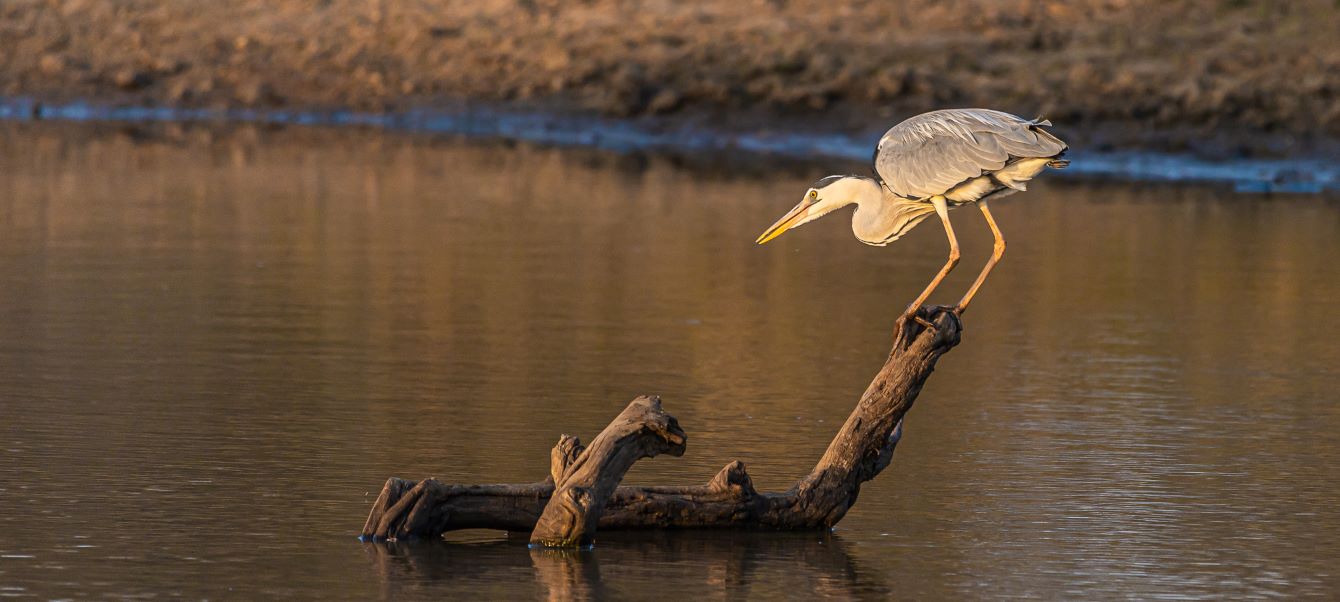
    We also witnessed how territorial grey herons (Ardea cinerea) are when we watched one chase a great egret (Ardea alba) repeatedly around the dam. The pied kingfishers (Ceryle rudis) were giving us a show by doing spectacular dives into the dam to catch a fresh breakfast. The pinnacle of the game drives was finding a pride of lions (Panthera leo) on our way out of the reserve on our first night drive. This was the start of the three-day lion streak we all enjoyed. The next morning, two young males gave a spectacular display of a contact call, which is how members of a pride locate each other once they have been separated.

    Learning the responsibilities of a field guide

    image

    As crazy as this week has been, it reminded me that as as a field guide there will always be the need to step up and manage a situation. From giving people tasks to making sure a job is done or just being there for someone who needs to vent or needs a reassuring word or two. I know that the next six months of my life are going to be a rollercoaster and I am here for the ride.

    Loved this blog? Follow more field guide student experiences in our weekly Bushwise blogs.

    #wildlife #AdvancedRifleHandling #bushwise #qualification #safariguide #Exam #training #animals #apprenticefieldguide #safari #sightings #fieldguiding #Assessments #guiding #fieldguidecourse #studying
  • Life in the Wild: Embracing Adventure and Discovery in the Bush

    This blog was written by Joel Wicks, Bushwise Professional Field Guide student, during this week as camp manager. 

    The day began at 4 in the morning when my alarm blared throughout my tent and of course woke my roommates long before it affected me. I woke up with my duvet completely off and in shock at the first low temperatures I had felt since being in Limpopo. 

    Embracing the chilling beauty of Limpopo’s mornings

    image

    As I walked out the door, I realised that this was far from the heat I was used to waking up to. I took just two steps out the door before turning around and getting both my fleece and beanie. I had made it to the kitchen only partially frozen, but as soon as my hot coffee was finished I was ready for yet another amazing day in this incredible place. 

    The first day of new drive groups was silently shivering as we drove through our  concession of the Kruger National Park – which still makes me smile. The thought that I am living in part of the Kruger and falling asleep to hyena and lion calls – and even the resident fiery necked nightjar each night, it’s truly something I’ll never get tired of. 

    Wildlife from impala to Sterling’s wren warbler

    image

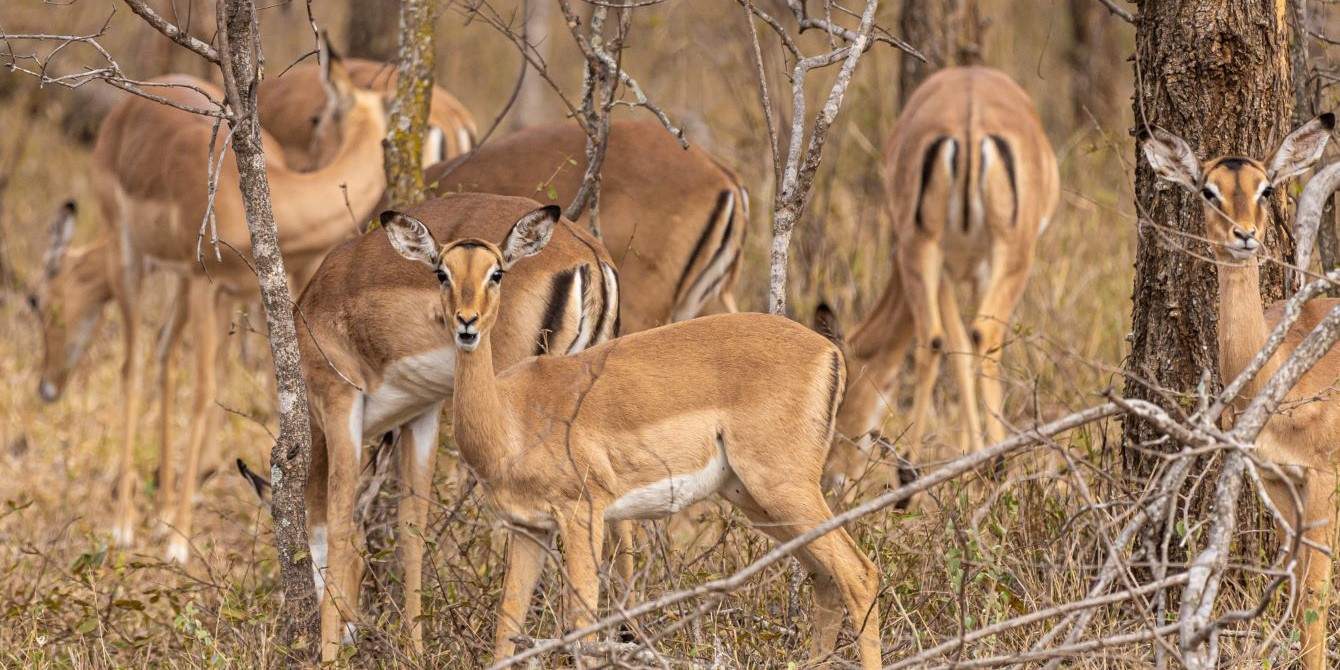
    We quickly settled into our new groups and it wasn’t long before the laughs started, our first sighting. As per usual was a small bachelor herd of impala. Although they’re so common that our previous trainer referred to them as the money back guaranteed antelope because if you don’t see one, you should get a refund, one cannot ignore they’re incredible animals with complex social structures. Even though they’re so common, we haven’t even scraped  surface of what we can learn about these antelope. 

    The next sighting happened to be a female African stonechat, a small bird that’s not too brightly coloured, but the excitement that fills me when seeing a bird I haven’t yet added to my list is a feeling I strive for each day. The more time you spend in the bush, the more your interest in birds begins to grow. I arrived here in search of leopards and elephants, and today I am more focused on finding the Stierling’s wren-warbler.

    Camp management and camaraderie

    Throughout the week, our drives continued, and we all got to witness just how far each of us have come since being here, the knowledge we’ve gained and the friendships that have grown are clear in each day and each drive. Sibusiso and I have realised that being a camp manager is not as easy as it seems. We need to wake up long before our fellow students in order to make sure that the kitchen is open and there is enough hot water for the much needed morning coffee, and take out bread with jams and peanut butter for a quick morning snack. This all sounds relatively easy until you add in the fact that we have to do it most mornings at 4:30 when the sun hasn’t eben risen and most mornings come with a light rain – which can some times be dreadfu, but there’s still nowhere I’d rather be each morning.

    Bird calls and beyond: The sounds of nature

    image

    The weekend came quickly and with it the bird slides and sounds exam, I had just finished my drive and after cleaning my hot box, I made my way to my friend’s tent to do some studying. We went over each call at least three times. With 126 calls, you can imagine that this wasn’t a quick study session, we quickly began noticing the unique features of each individual call and eventually we were naming every bird call we heard with confidence. 

    It was like learning to ride a bicycle. At first you start falling a lot – and I mean a lot – but once you got it, you just want more. Now as I walk through campus or even while on a drive, I realise just how much I overlooked the calls I hear on a daily basis. 

    Once the exam had finished, everyone quickly hurried to the sign out book and it wasn’t long before most of us were on our way to Hoedspruit to gather enough snacks for the upcoming week as well as grab some lunch while we were there. Once we had all gotten our supplies and eaten lunch, we hopped in the car and made our way back to campus, blaring music and speaking about the past week and what is yet to come. 

    Once we reached the college gates, we turned the music down to enjoy the drive through the bush to get to our campus. As we drove we were greeted by squirrels, birds, impala and even elephants, it was the perfect end to the day.  

    Each day in the lowveld is a new adventure, an adventure that I never want to end. Keen to start your own adventure? Join Bushwise and have an incredible experience, every day, just like I have.

    #wildlife #bushwise #fieldguide #qualification #safariguide #Exam #training #animals #apprenticefieldguide #ifga #sightings #fieldguiding #Assessments #guiding #fieldguidecourse #studying #fieldguides
  • Understanding the savannah biome

    This blog about the savannah biome was written by Rachel Ogle, while completing her Bushwise Professional Field Guide course. Facts and insights contained in this blog are based on student research.

    The savannah – home of the iconic big five and sunsets to die for – all in all one of the most incredible places on Earth. “A biome is a broad ecological spatial unit representing major life zones of large natural areas, and defined mainly by vegetation structure, climate as well as major large-scale disturbance factors (eg. fire)”. This is the definition of a biome in the IFGA learner manual. There are nine distinct biomes in South Africa, the largest one of the nine is the savannah biome.

    How is the savannah biome different from the other biomes found in South Africa?

    image

    In total, there are nine distinct biomes in South Africa. The biomes are the:

    1. Fynbos Biome

    2. Succulent Karoo Biome

    3. Desert Biome

    4. Forest Biome

    5. Nama Karoo Biome

    6. Grassland Biome

    7. Albany Thicket Biome

    8. Indian Ocean Coastal Belt 

    9. Savannah Biome

    Each biome can have many bioregions, the savannah has six in total. The Savannah Biome is truly unlike any other, sometimes you may not even realise that you have entered it due to the fact that it is quite diverse in terms of vegetation, climate, soil type and even terrain. This is also the reason why such a large amount of organisms and features (both biotic and abiotic) are able to inhabit this area. 

    The Savannah Biome has many types of vegetation consisting mostly of tall trees and an abundance of bushes, and during the dry seasons, most of the vegetation dries up and adapts to the environment. This is what makes the biome so unique, its ability to prosper even in the most dire conditions. 

    What is the savannah? And where is it found?

    image

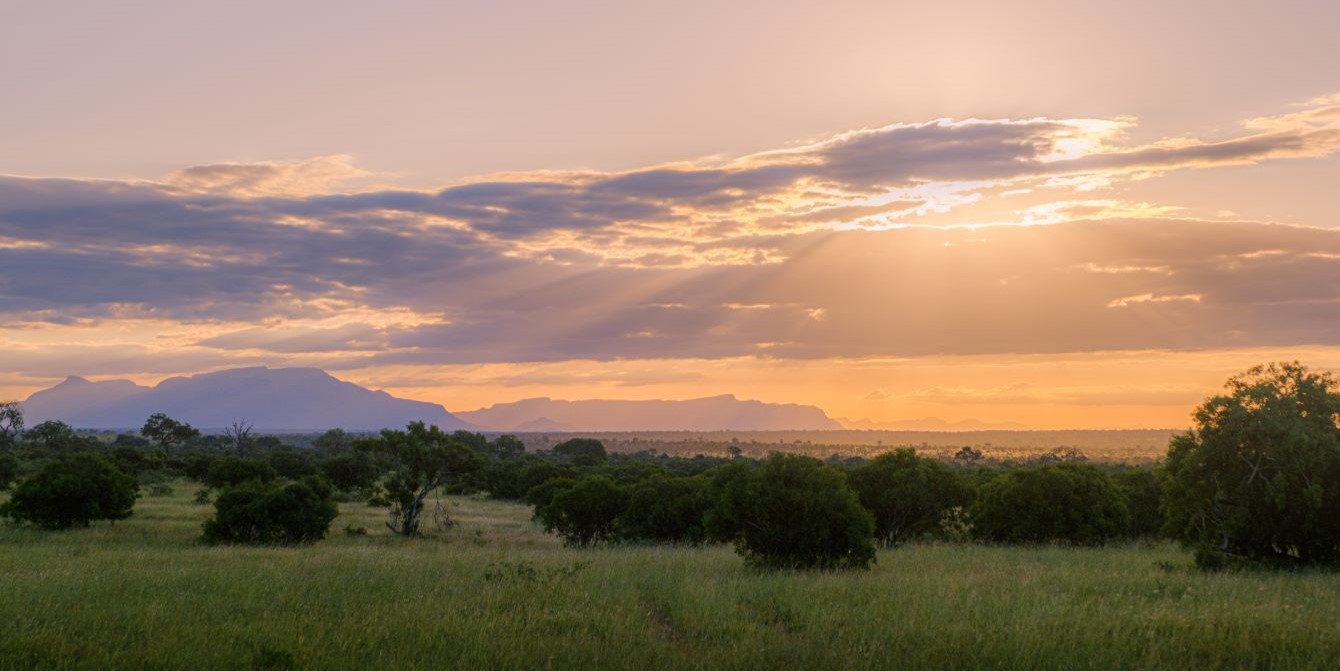
    The savannah is a shrubby grassland with somewhat of a light canopy of trees (where the vegetation is more tropical). The savannah has two different seasons, one very dry season in the winter, and a very wet season during the summer between December and February. Each bioregion is different. For instance, the Central Bushveld Bioregion has a very high number of vegetation types. Whereas the Kalahari Duneveld Bioregion has a very low level of vegetation; in fact, some would say it has the least vegetation units in regard to the rest of the bioregions. The six bioregions are the Central Bushveld Bioregion, the Mopane Bioregion, the Lowveld Bioregion, the Sub-Escarpment Bioregion, the Eastern Kalahari Bushveld Bioregion and the Kalahari Duneveld Bioregion. 

    When we think of the savannah we often think of the Serengeti, or one of the other vast plains of Africa that we often see on Nat Geo Wild, but what we don’t often acknowledge is that the savannah occurs not only in Africa but also in South America, Australia and even a small part of India.

    What species can you find in the savannah?

    The savannah has a wide range of species due to the sheer diversity of the environment. Everything in the environment from geology, soils, climate, vegetation and landscape features. These are the things that tell you what species you are able to find in an area. You can find mammals, amphibians, birds, arthropods, birds, trees and grasses. Some flagship species of the savannah are both the black and white rhino, plain grass frog, baboon spider, ground hornbill and marula trees.

    Why is it important as a guide to know the savannah?

    image

    It is important to know the environment you work in, not only because it is your job to specialise and share the knowledge of the land, animals and how they all work together in “the circle of life”. But also for safety and educational reasons. So considering the fact that most guiding happens in the savannah, it would definitely be a smart move to not only know, but keep on educating oneself on the Savannah Biome.

    Love learning about our natural landscape and the role each species plays in the environment? Consider joining a Bushwise online course to learn more!

    #southafrica #bushwise #biomes #apprenticefieldguide #safari #africa #fieldguiding #savannah #guiding #studying

  • Exploring nature: Change will start with me

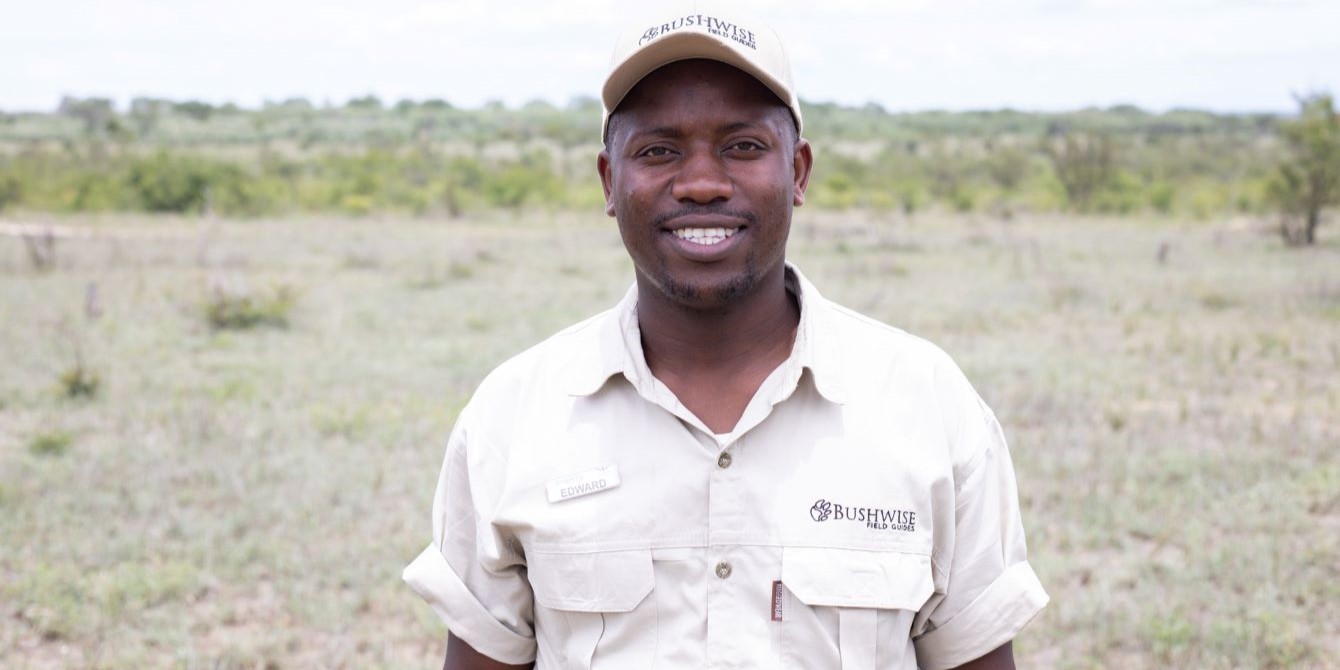
    This blog was written by Edward Tivana, during his turn as camp manager on the Bushwise Professional Field Guide course.

    My name is Edward and I’m from Timbavati village. I have been passionate about nature (guiding) since I was young. It started when we used to watch 50/50 on SABC 2 “where you belong” in our community. During that time, there was no television at home but one of our community members had a television. So every evening we went there as a group to watch the black and white television with a big aerial that you had to operate with your hands rather than a remote.

    I think change will start with me

    Now that I’ve grown up, I think back to where it started, and it makes me proud of what I’m doing right now and the passion I have for wildlife. I will give information to people about our beautiful nature, and teach young people about nature and how it plays a role in our daily life.

    For me, being a guide is not a job but rather a career. I’m looking forward to changing people’s lives or behaviour with nature – particularly young people from different communities because changing one person’s life can make a difference! My guiding is not only about nature but changing the way that people play a role in preserving it. I have realised that most people do care about our wildlife, but there are no people around them to teach or educate them about it, especially in the local communities.

    Becoming camp manager

    image

    As we know, everything has the beginning “from child to an adult” – so I feel so special and honoured for to have the opportunity to grow from just a student to camp manager for the week. In life I’ve learnt that everything has a history which will always be true. I’m saying this because during my week as camp manager I asked myself the question: where am I right now during my management? And the answer is: I’m in Kruger National Park. This context helps me to better understand how important nature is, especially in this historic reserve, and where I would have been without it.

    Kruger National Park

    Kruger began in 1898 as Sabie Game Reserve, proclaimed by the late president of Transvaal Republic, Paul Kruger. In 1926 it mergeed with other land to become Kruger National Park. Paul Kruger came with an idea that some parts of Kruger must be no hunting zones. The first warden was James Stevenson Hamilton, and he had the job of removing people out of prohibited areas and local people gave him the name “skukuza” meaning ‘clearing the area’.

    In 1927, the Kruger was opened to the public and only three cars were allowed to enter the park a day at an entrance fee of 1 pound. So it gives me an understanding that one person can make a difference and now we are proud of our wildlife community because of the difference Paul Kruger made. Today Kruger is 20 000 square kilometres, how crazy is that?

    Observing unique animal interactions

    image

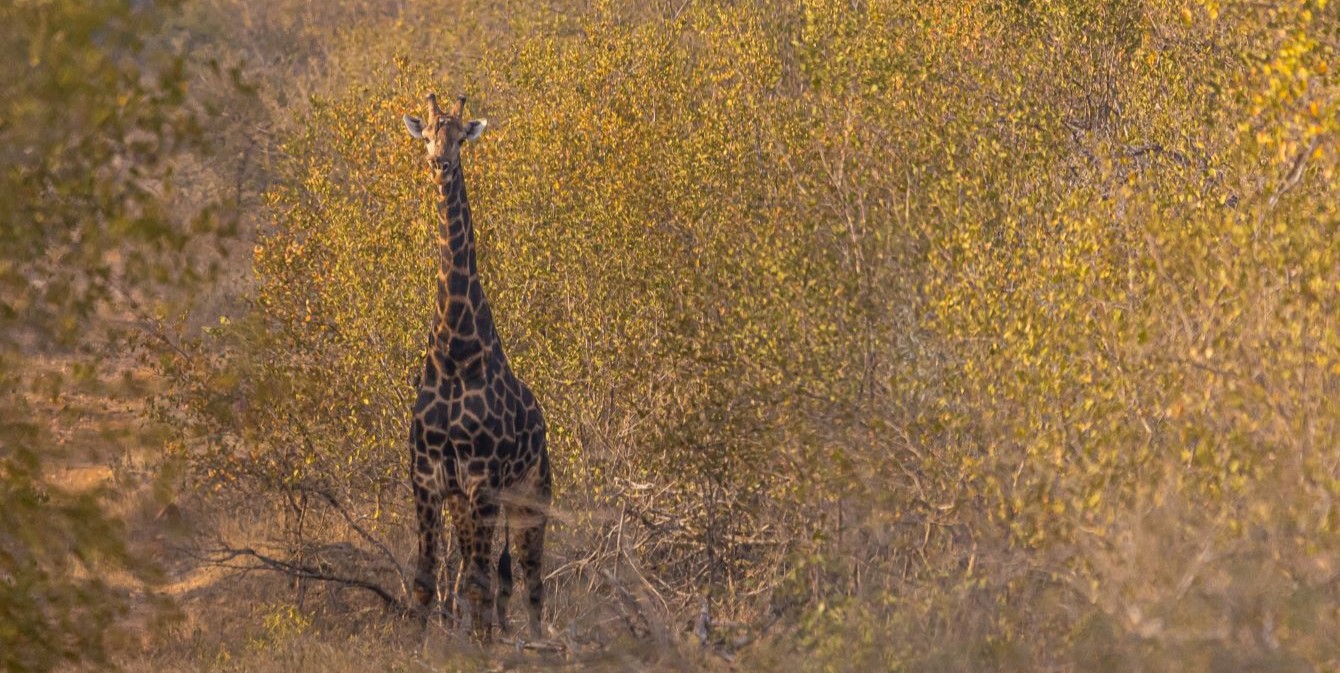
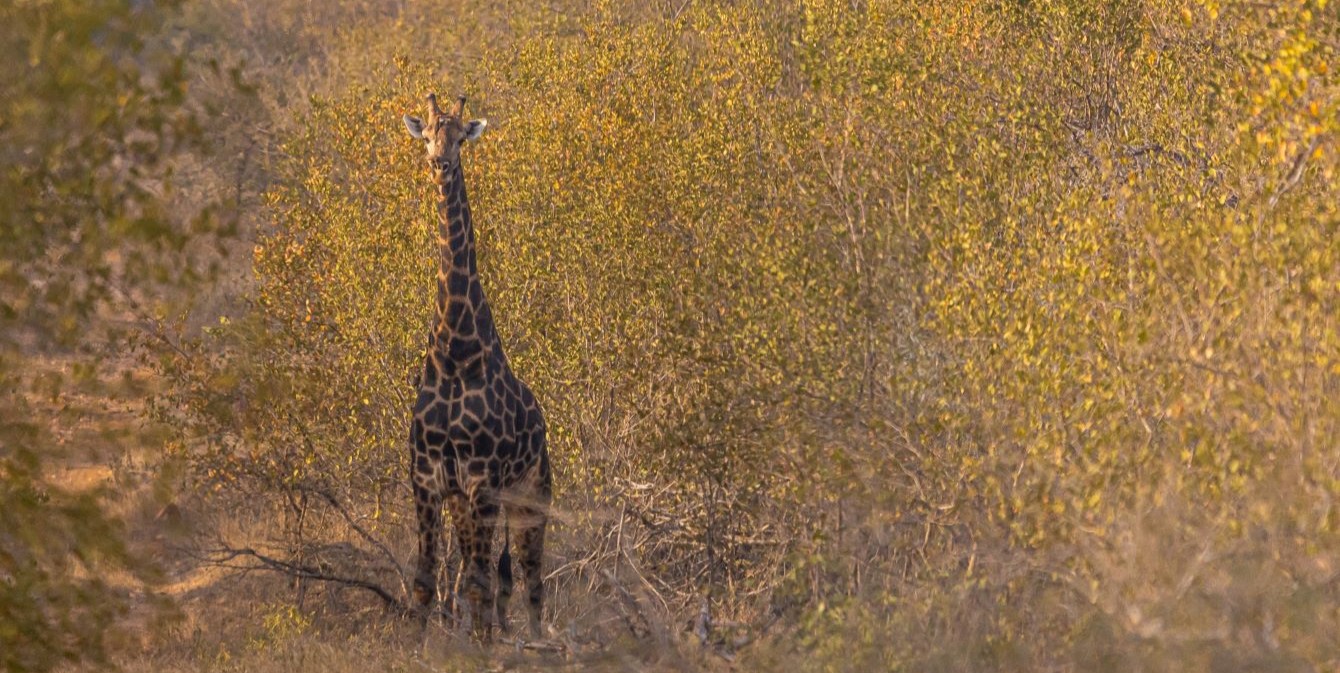
    On our Monday morning game drive we got to see the impala in their rutting season which was awesome as they chase one another while growling, zebras fighting, elephant bulls full of mud, wildebeest fighting for dominance and marking their territory, and the journey of giraffes.

    The experience and sightings have been fantastic. At last we saw the big dagga boy (buffalo at the camp and had a sighting of Burchell’s starling and fork tailed drongo where the drongo was trying to steal food from the starling. On my last drive, I really enjoyed seeing a steenbok for the first time and a group of buffalos making their way towards our pan.

    There isn’t a grave big enough to bury all the knowledge I’m gaining from this course and all sightings I’m getting to experience. I’m also so grateful to experience being a camp manager as it is giving me the opportunity to learn how to be a manager and the different roles I have to play.

    Every been curious about Kruger National Park, its history and animals, like Edward? Learn all about the protected areas in South Africa on a course with Bushwise.

    #wildlife #AdvancedRifleHandling #bushwise #qualification #Exam #training #animals #apprenticefieldguide #ifga #sightings #fieldguiding #Assessments #elephant #fieldguidecourse #studying
  • Unveiling the Fascinating World of Warthogs

    A blog about all things warthog, by Bushwise Professional Field Guide student Emma King. Researching and writing a blog about a conservation topic or species of animal is part of Bushwise student training.

    Before we hop into what warthogs are and their many fantastic facts, let me tell you about the very funny story which my topic stems from. My family has many crazy stories concerning animals that happened to us throughout the years, but the one that always makes people laugh the most is when my little brother, who was 3 years old at the time, ran up to a baby warthog at Moholoholo Rehabilitation Centre and pulled its upright tail. The centre was unhappy to say the least and so were my parents but the more you think about it the funnier the story gets. 

    Now that’s enough storytelling, let’s talk about why you are really here and that is to get to know and understand this spunky and wonderful animal. 

    What is a warthog, or should I say who is Pumba?

    image

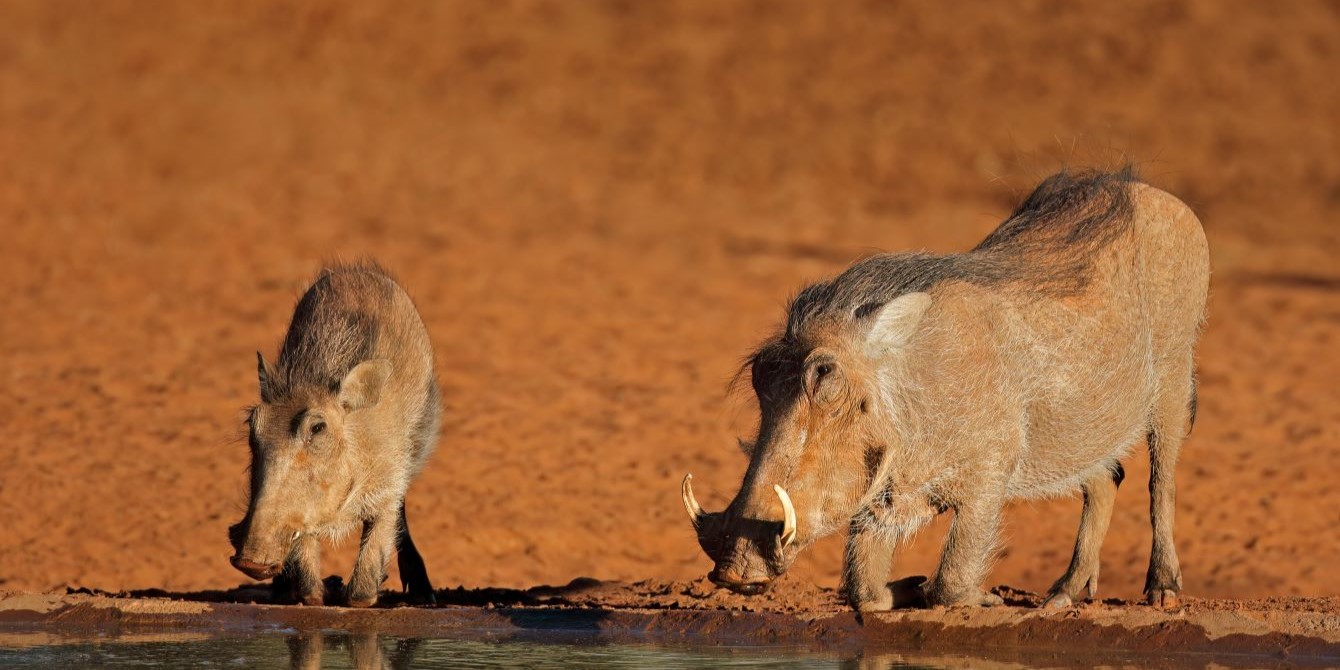
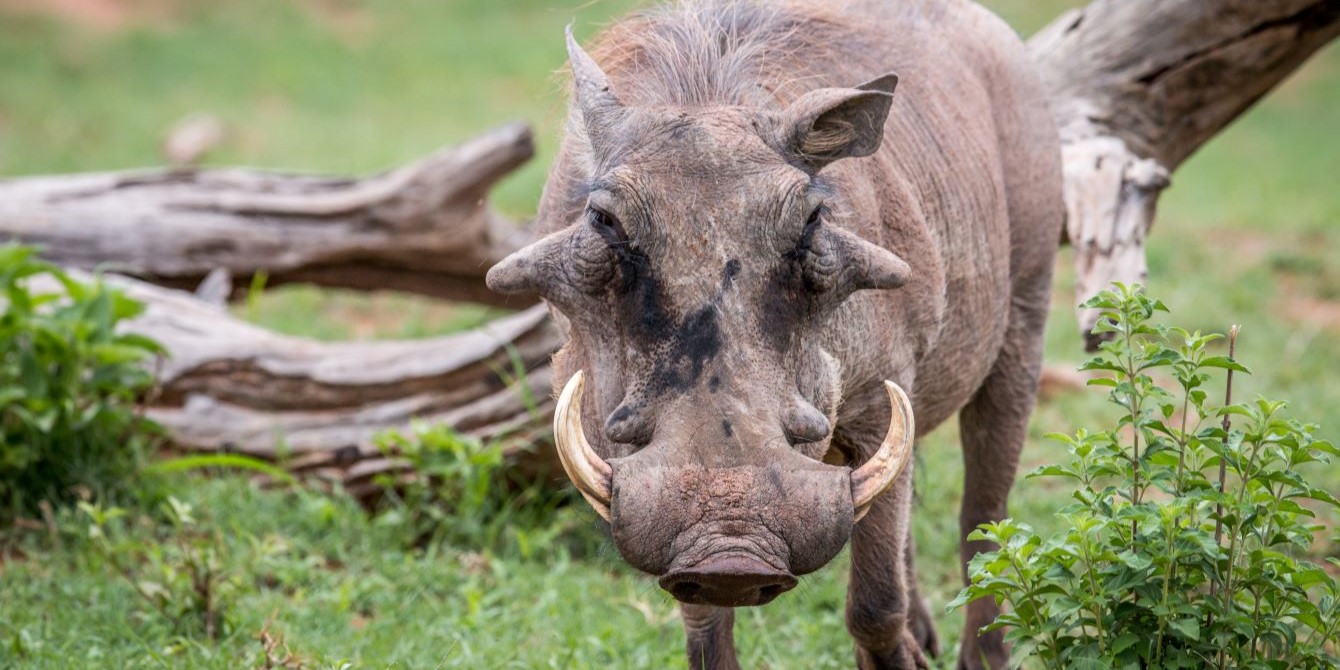
    A warthog (Phacochoerus sundevallii – southern Africa; Phacochoerus Africanus – west and north Africa ) is a small grey herbivorous mammal who can live to the ripe old age of 15 years in the wild. 

    Their cuteness factor increases when they go down onto their front hooves. They permanently have a look that says ‘don’t mess with me’ primarily due to their upturned tusks and their stocky stance. They are actually quite intelligent but often stop mid run as if they forgot what they were doing. 

    Their heads are flat and covered in warts, hence their name. They have large nostrils and they typically squeal, snort and grunt. They are hooved animals whose tracks average 8.5 cm in length when it comes to the forefoot and 7.5 cm with the hind foot. A warthog has very little hair with only a mane down their spine and a tuft of hair at the end of their straight tail. The bristle-like hair varies between black, brown and yellow.

    These adorable but unpredictable characters thrive in open grasslands, woodlands, vleis and floodplains across Africa but also occur in the desert parts of Kenya, Ethiopia and Somalia. The subspecies of this desert dwelling warthog is Phacochoerus Aeliani. 

    When watching warthogs, you will see that they are social animals that stay in a family group. The group is usually made up of one mature boar with one to two females (sows) and their piglets. The group usually only stays in this social environment for no more than two years. Males do break away into temporary bachelor herds.

    Why do warthogs have tusks?

    image

    Warthogs use their tusks for fighting, defending and digging. The tusks are enlarged canine teeth. They have two pairs of tusks, a lower pair and a longer upper pair. Their tusks can grow to a length of around 25 cm and are made of ivory, the same material that elephant’s tusks are made of. Ivory is known for being very strong which helps them keep their tusks intact, well more-or-less, during fighting.

    ‘Warts and all’ as the old saying goes …

    The warts are like haphazard-shaped balls made of bone and cartilage. That’s why these warts are used for protection during fights – and to store fat. 

    What about baby warthogs? 

    image

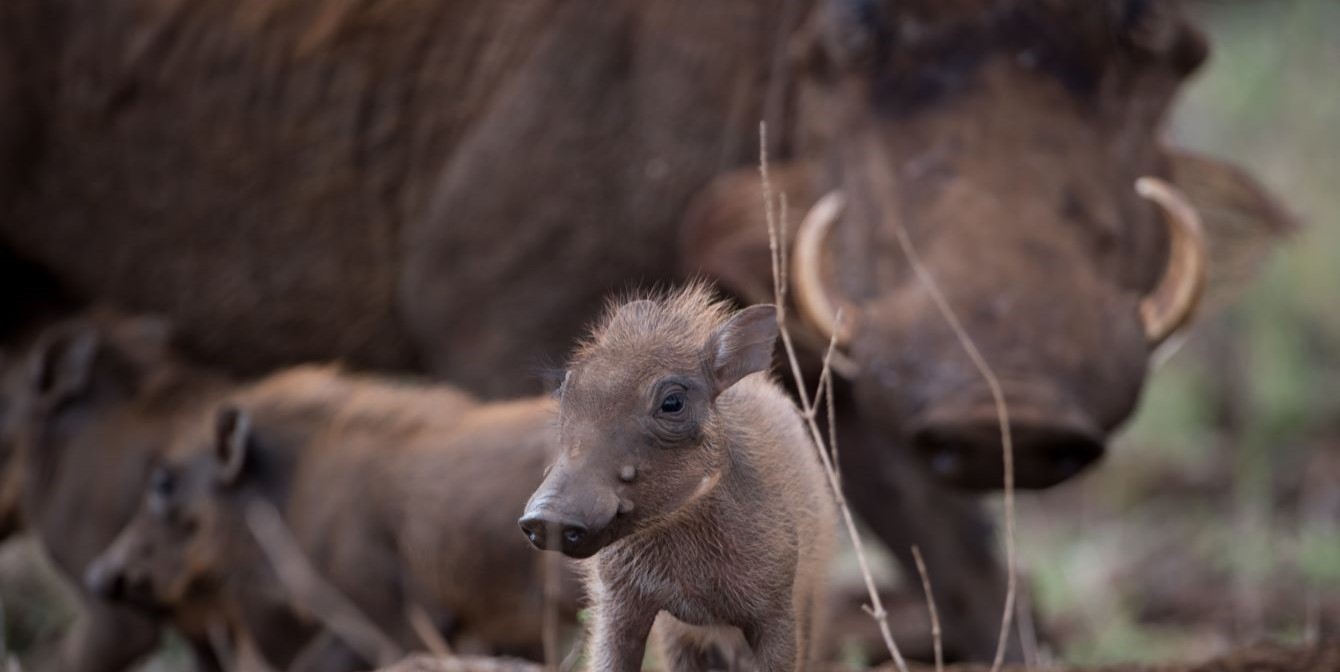
    Baby warthogs are called piglets. A sow usually gives birth to two to three piglets but can have more in one litter. Mom protects her piglets by chasing them into their den or a burrow and reverses in after them so that the threat encounters her tusks first. 

    More interesting facts about warthogs:

    1. The boar has more prominent warts than the sow, but beauty is in the eye of the beholder. 

    2. A warthog has knee pads as it often kneels on the ground to eat, this is because its short and muscular neck cannot get its head low enough to the ground to eat while standing – and here I thought they were doing yoga. 

    3. Warthogs are great foster parents and sows are known to foster and nurse piglets if they have lost their own. 

    4. They love to be groomed! Warthogs allow vervet monkeys, banded mongooses and birds to groom them and remove insects. 

    5. They love rolling in mud.

    6. They are very fast! Warthogs can reach up to 48 km/h. This helps them make a quick getaway from predators or charge you at a heck of a speed. They run with their tails straight up. 

    Warthog or bushpig? 

    image

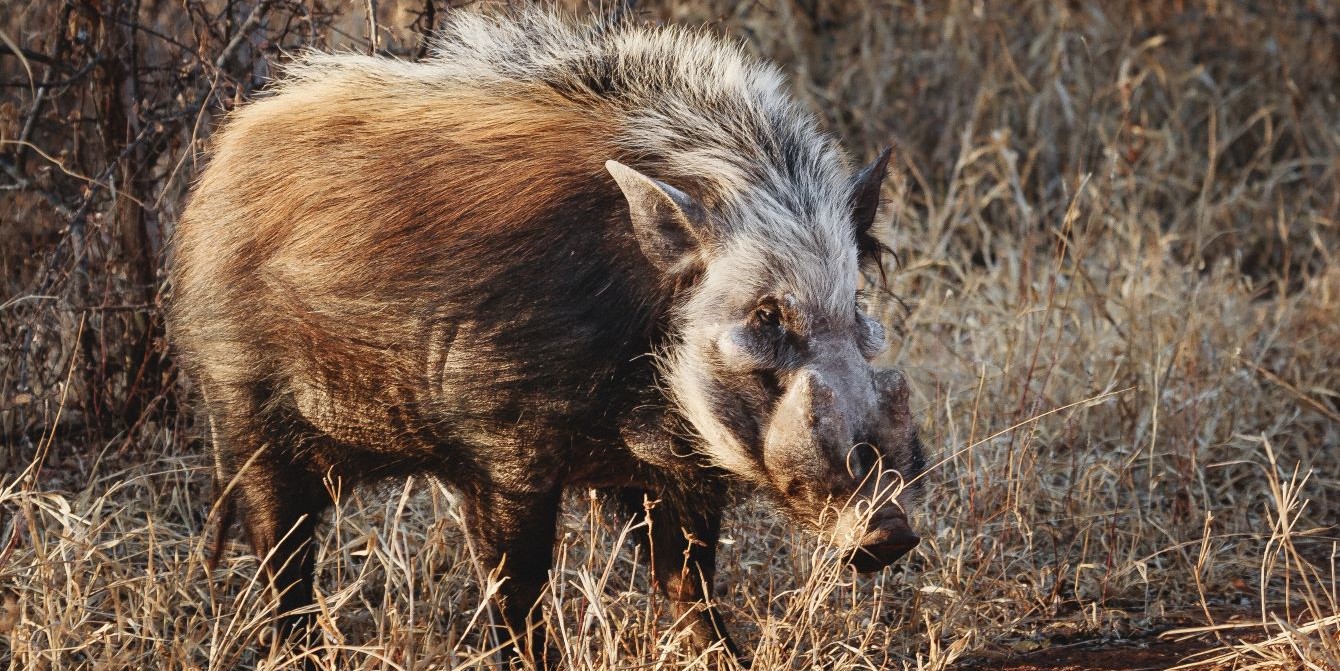
    Warthogs and bushpigs differ in that they are found in different habitats. The bush pig’s tusks are shorter and less visible, and bushpigs are omnivorous whereas warthogs are herbivorous. The bushpig lives in more dense habitats than the warthog.

    The bushpig has a coat of coarse hair that is reddish to dark brown, sometimes black. They do have yellowish hair on their legs, lower jaw and which sometimes extends past the lower jaw.

    I don’t know about you but I think that warthogs are pretty cool animals! Want to learn more about them? Consider joining a Bushwise course and making wildlife and conservation your career!

    #wildlife #AdvancedRifleHandling #bushwise #qualification #safariguide #Exam #animals #apprenticefieldguide #safari #IFGA #sightings #fieldguiding #Assessments #guiding #fieldguidecourse #studying
  • Explore the diverse biomes of South Africa

    This blog about South Africa’s biomes was researched and written by Bushwise Professional Field Guide student Ziphozonke Zwane. 

    The classification of biomes is based on the prevailing climatic conditions and dominating plant life types. Large-scale patterns in the global plant cover can be seen in biomes, where plants and animals coexist to some extent. Although other environmental factors are occasionally significant, moisture and temperature substantially influence plant establishment and survival – so biomes generally coincide with climatic regions.  

    Each biome includes a distinctive collection of plant and animal species in addition to a distinctive general appearance. The general plant traits provide a distinctive visual signature that makes it possible to identify the biome. 

    The nine diverse biomes found in South Africa are:

    1. Savannah 

    2. Grassland

    3. Fynbos

    4. Forest

    5. Desert 

    6. Albany thicket

    7. Coastal dune

    8. Nama karoo

    9. Succulent karoo

    Savannah

    image

    Life in the savannah is distinguished by its animals, vegetation and seasonality. I believe this biome is one of the most pristine ecosystems because all of the lives that are so intricately intertwined. A sizable number of animals, sporadic trees and drought-tolerant grasses can all be found in this biome. The ecology is shaped by herbivores, predators that eliminate the weak, and insects that pollinate the region. As a result, it is one of the most distinctive macro habitats on Earth, rich with biodiversity.

    Grassland

    The KwaZulu-Natal interior, the Eastern Cape and South Africa’s high central plateau are where the grassland biome is most prevalent. Despite the fact that the terrain is largely level and rolling, there is a real escarpment. The vegetation cover is primarily determined by the amount of rainfall and the degree of disturbances, such as fire and grazing, which also result in the absence of trees.

    Fynbos

    The Cape Floral Kingdom, one of the six plant kingdoms on Earth, is known as the Fynbos biome, which is located in the westernmost part of South Africa. Of the six kingdoms in existence, the Cape Floral Kingdom is the smallest and is wholly contained within a single country. It is distinguished by its high endemicity, with 68% of plants only found in the Cape Floral Kingdom, and high species richness (8,700 species). Fynbos and renosterveld are the two main types of vegetation found in the biome. Fynbos needs to be burned frequently to survive, however, fires started at the incorrect season or too frequently will cause the species to go extinct. The renosterveld is dominated by members of the daisy family, notably the renosterbos.

    Forest

    image

    The smallest biome, with less than 0,25% of South Africa’s land area covered by forests. Only frost-free regions with significant winter or summer rainfall can support forests. They can be found up to 2,100 metres above sea level. Forests are typically fragmented and can be found everywhere from the high-altitude Drakensberg to the coastal plains. 

    Desert

    The desert biome receives a low annual rainfall and is found in hot and arid regions. The flora does not grow very tall, and the soil layer might be either stony, gravelly or sandy. Desert species have evolved to the highly dry climate, and day and night temperatures can differ significantly. 

    Albany thicket

    The Albany thickets is primarily located in the Albany area of the Eastern Cape. The term subtropical thicket refers to a closed shrubland to low forest where evergreen, sclerophyllous, or succulent trees, shrubs and vines predominate, many of which have stem spines. There is typically little herbaceous cover, it is often nearly impenetrable, and there are typically no layers. The vegetation types found in the thicket biome have been referred to as transitional thicket since they exhibit floristic similarities to many other phytochoria and are found in almost all of the formal biomes. 

    Coastal dune

    image

    The KwaZulu-Natal and the Eastern Cape’s Ocean Coastal Belt is a zone of coastal dunes and grassy plains that extends from sea level to around 600 metres above sea level. The amount of rain that falls on average each year varies from 819 to 1,272 mm and peaks in the summer.

    Nama Karoo

    In the central plateau of South Africa’s western half is the nama Karoo biome. Being the second-largest biome, with a landscape that includes both flat-topped mesas and vast sandy plains. In general, the summers and winters in this region are windy, hot and very cold. This area is home to a wide range of different life forms, with dwarf shrub vegetation predominating.

    Succulent karoo

    The 116,000 km squared succulent Karoo biome is located in southern Namibia and stretches from the southwest through parts of the Western Cape’s northwestern region. There are around 6,400 plant species of which 40% are endemic. This biome’s diverse habitat types are what contribute to its tremendous biodiversity. The plants are subjected to below-average winter rainfall and excessively hot summers. Over time, succulent plants have developed unusual coping mechanisms to maximise their survival in this tough environment.

    For a single country, South Africa has relatively diversified vegetation. It is fascinating how each biome differs from the others by having a distinctive characteristic that makes it stand out. Given that each biome is distinct, travellers can experience a variety of wildlife.

    Don’t miss the opportunity to join Bushwise in South Africa on an unforgettable safari course and immerse yourself in the wonders of nature across the country’s distinctive biomes. Join Bushwise!

    #wildlife #AdvancedRifleHandling #bushwise #qualification #safariguide #Exam #training #animals #apprenticefieldguide #safari #ifga #sightings #fieldguiding #tracking #endangeredspecies #Assessments #gamedrive #guiding #fieldguidecourse #studying