Author: Marketing Team

  • My best experiences as a Field guide – Part 4

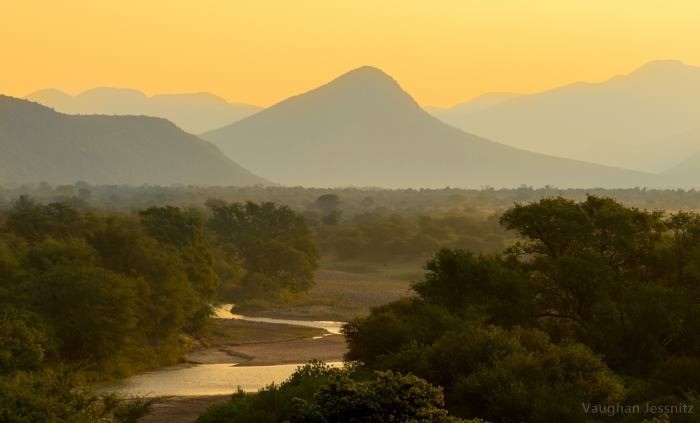
    Lee was at Entabeni Game Reserve around the same time I was there and what a legend…One of the perks of living and working as a field guide must be the days off when there are no guests in camp and sometimes, at the right lodge, at the right time the ability to go and appreciate what we have on our doorstep becomes available.

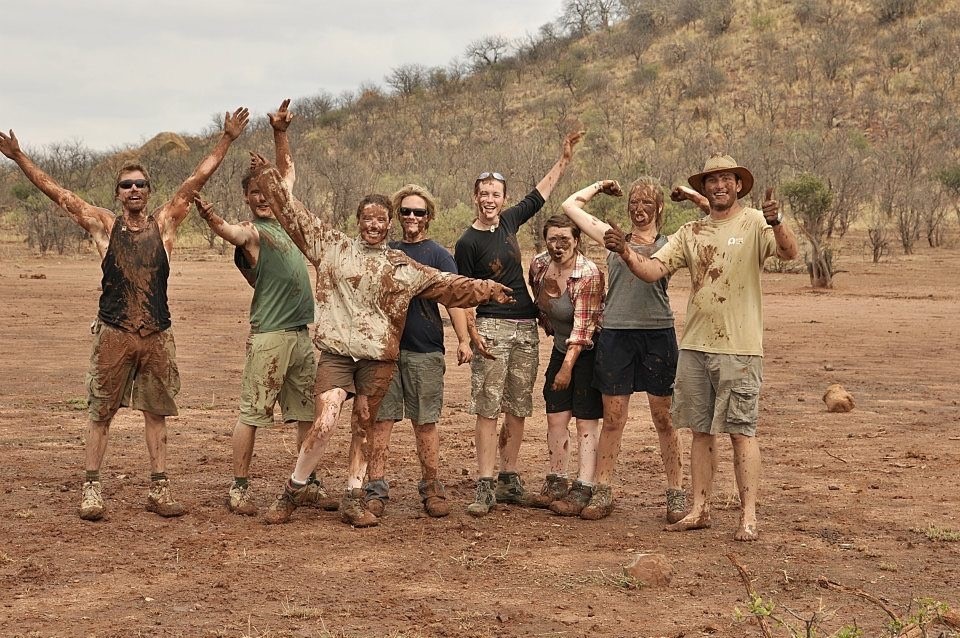
    Of these “team building sessions”, one of my all-time favourite bush memories took place on a moonlit night on the back of a game viewer with fellow guides J-P and Dan belting out the lyrics to a Blink 182 song to an appreciative audience of wildebeest and zebra on the plains of Africa. It is moments like those that remind us that the life we lead as a field guide is one of the most special that we can have, not only for the amazing animal encounters, the stunning birds, the front row seats to the epic show, but more importantly for the incredible people we meet along the way, that we get to spend our indecently long working hours with and create memories to last a lifetime with.

    image

    Team building

    Lee & I both share many similar interests, but where I taper off and stay in the comforts of what I know, he continues and challenges himself in nearly every element of the natural world! Thus, it goes without saying I have learned a great deal from him, and will still learn a great deal more from him! It’s certainly not often one finds people in the little corners of the world that fill their niche to the brim, and Lee is one of those people, ever energetic, ever enthusiastic and fascinated about the natural world around him.

    image

    Tracking

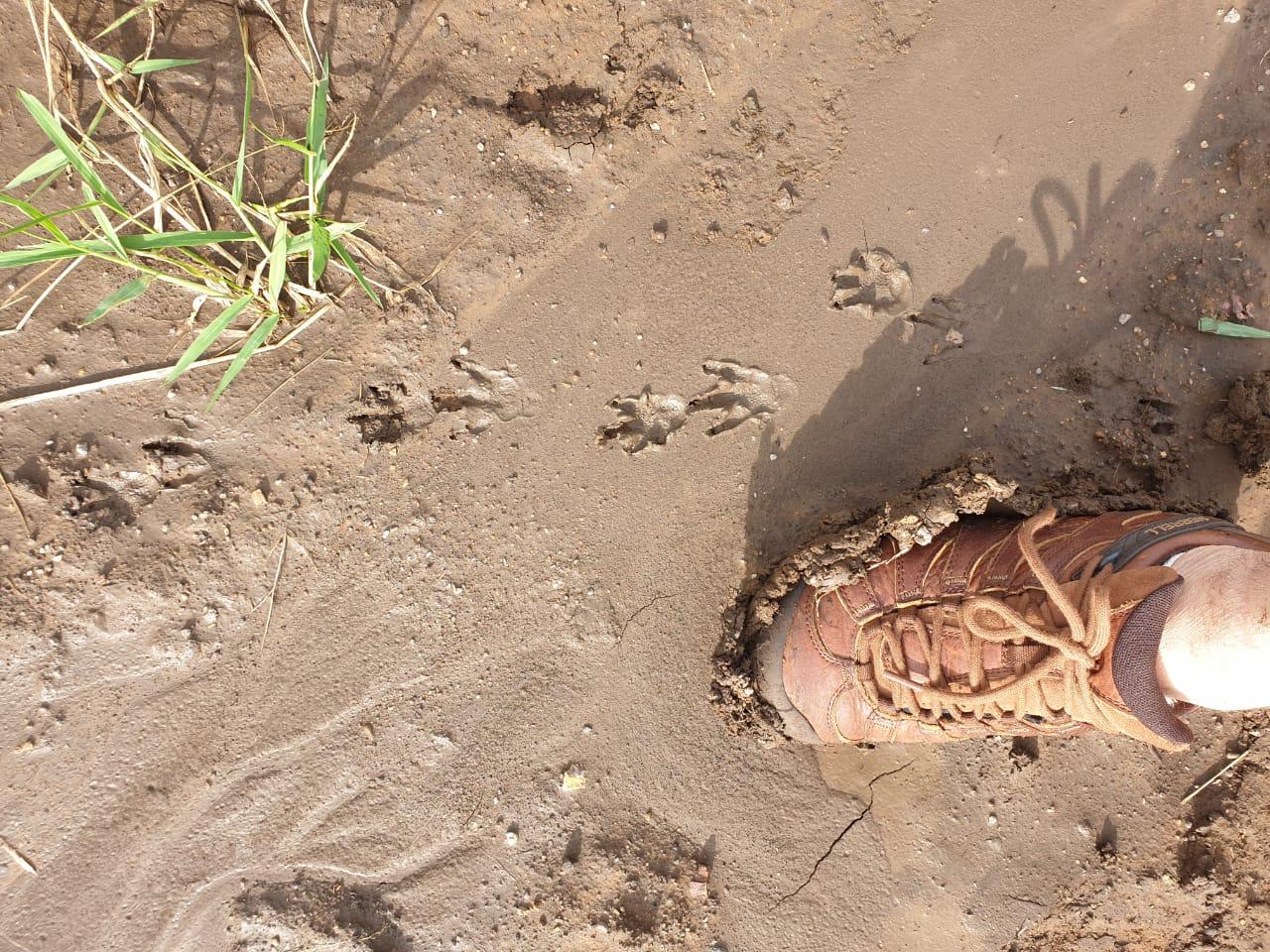
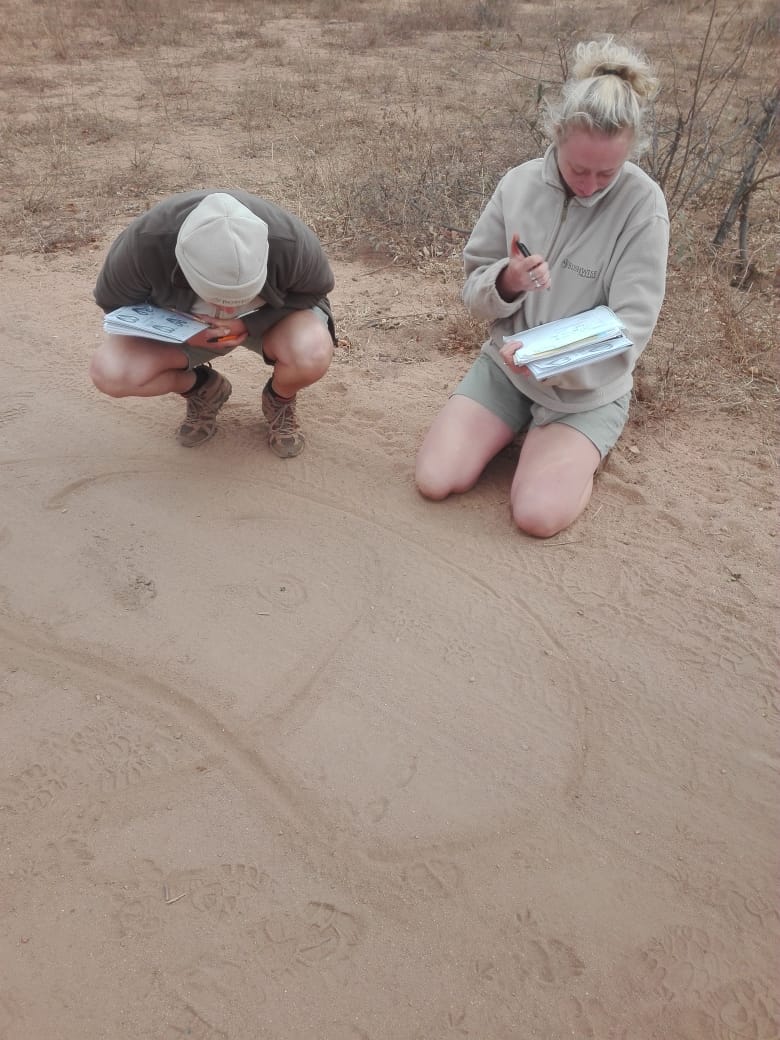
    Be it hours spent sifting through photos of insects, to discussing the differences of tiny mongoose tracks, with a little bit of birds and birding, geology, botany and even some hilarious guitar sessions all mixed in after a long day in the sun!

    Many great moments we have already shared in our usually fleeting encounters with each other, often focusing on topics of a natural or scientific kind, but the best memories so far with him have been once all the work is done and it’s time to kick back and have some fun!

    Blog by Vaughan Jessnitz

    image

    #fieldguide

  • What is that track?

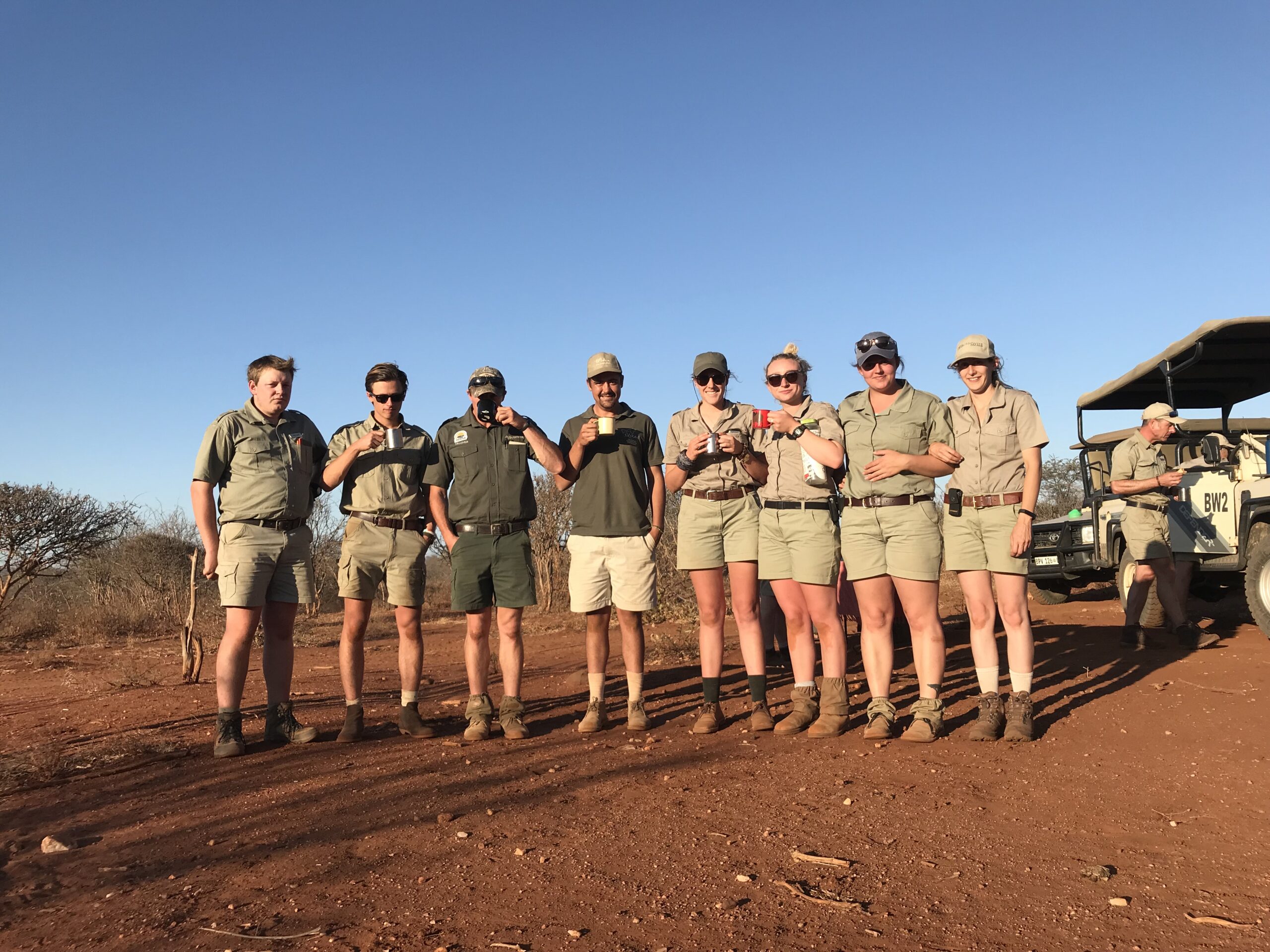
    What a week! It is officially the end of week two of semester two. Our Bushwise group split up this week with half of us going to Tzaneen to do their rifle competency and dry runs for Advanced Rifle Handling, while the other half of us spent the week with Colin Patrick and K9 Annie doing Track and Sign. I had the joy of spending my week with the latter.

    First semester I probably could have gotten a few tracks correct; things along the lines of elephant, lion, zebra, and giraffe. The most basic of tracks. After just a few short days with Colin, I can honestly say that my eyes have completely opened to the huge and never-ending world of track and sign, and I am absolutely in love.

    Day one we started off by having one of the best life lessons we could have learned from Colin. The takeaway from that chat was one simple quote: “True success comes from the subconscious mind.” I think this quote has been forever ingrained into my brain. My understanding is that when you let doubt cloud your subconscious mind, you can talk yourself out of something that you know is true and correct. Such a simple sentence can be applied to many aspects of life, but especially for track and sign.

    image

    Photo by Devlin Loader

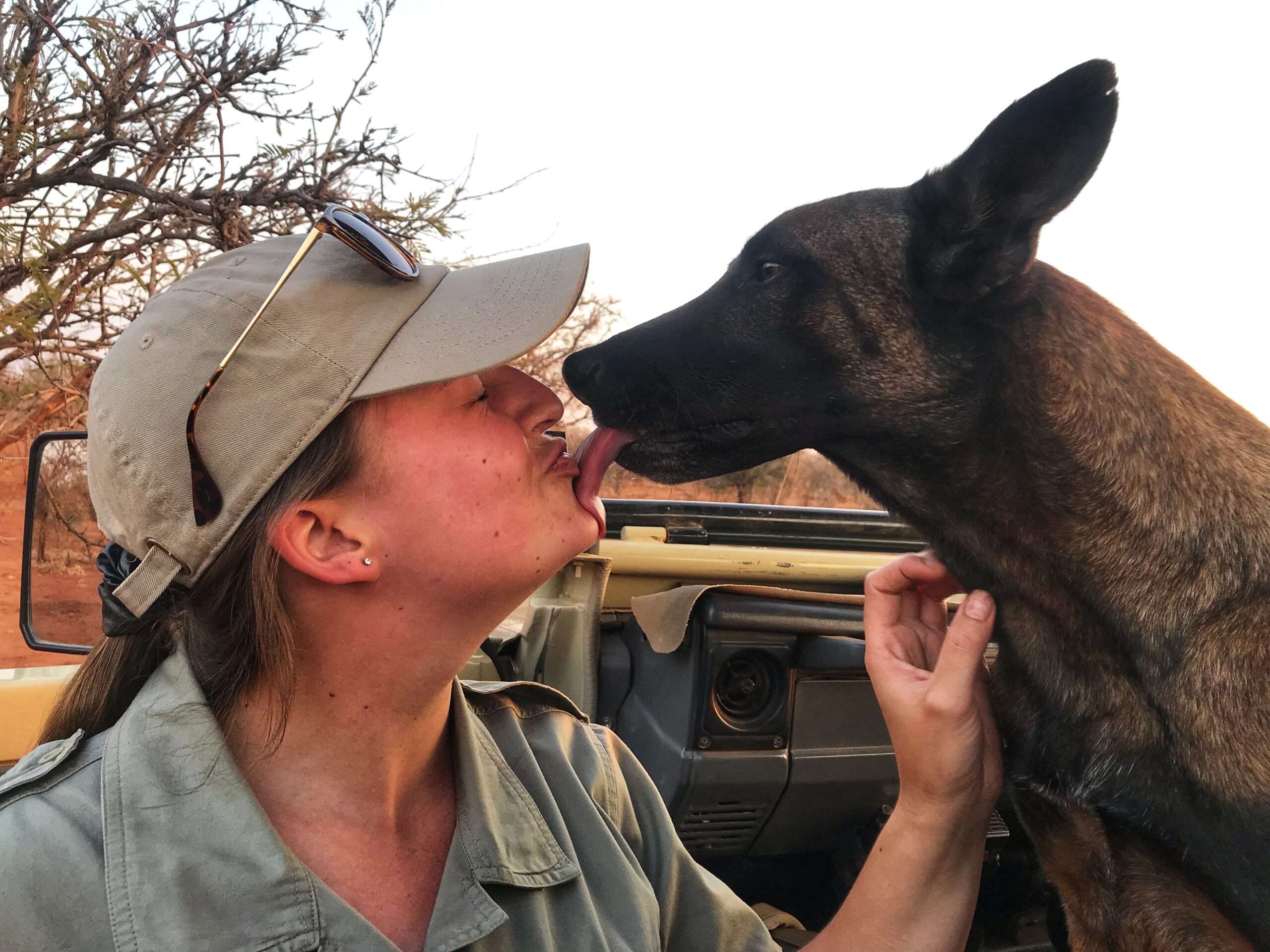
    Before I talk too much about the track and sign and the Colin portion of the week, I have to give a huge shout out to Colin’s dog, Annie. We got the pleasure of spending the week with her and I can only speak for myself, but I fell head over paws in love. Annie is a tracking dog that lives and works with Colin. She has gone through intense training to be able to track poachers, criminals, and animals alike. The love that she has for Colin is unbreakable. I could write my entire blog all about Annie. But, I will refrain from that to tell a less exciting story from the week.

    image

    Photo by Lara Coldrey

    As the days spent in the reserve with Colin and Annie passed, we found ourselves learning more and more every day. If I look back now to before this week, the amount of information that I was able to learn in such a short time is incredible. Every day we added new tracks to our brain bank of tracks, and every day the mini-assessments that Colin gave us became easier and easier.

    After 5 days of staring at tracks, soaking up every word from Colin we were ready for the actual assessment. We started with the practical on Friday afternoon. Excitement, nervousness and a little bit of confidence were in the air as we all got off the vehicle and got ready to jump straight into the deep end of whatever tracks Colin could sneakily find for us. We continued the assessment on Saturday morning as light is a factor and we sadly ran out of it Friday afternoon.

    image

    Photo by Vaughan Jessnitz

    After walking a million circles around tracks, staring, we had all submitted our final answers and could breathe deeply again because we had survived our first Track and Sign assessment. As eager as we were to receive our results we had a celebratory braai in the bush recapping the best moments of the week and waiting not so patiently to hear what we all hoped would be good news.

    One lucky member of our group knew his results before the rest of us, as he got ALL 50 questions correct, rightfully earning himself only the SECOND Level 4 Track and Sign Certificate received by a student on the first try in the history of Bushwise. What an accomplishment that Martin earned, and as a group, we could not be happier to be a part of his achievement.

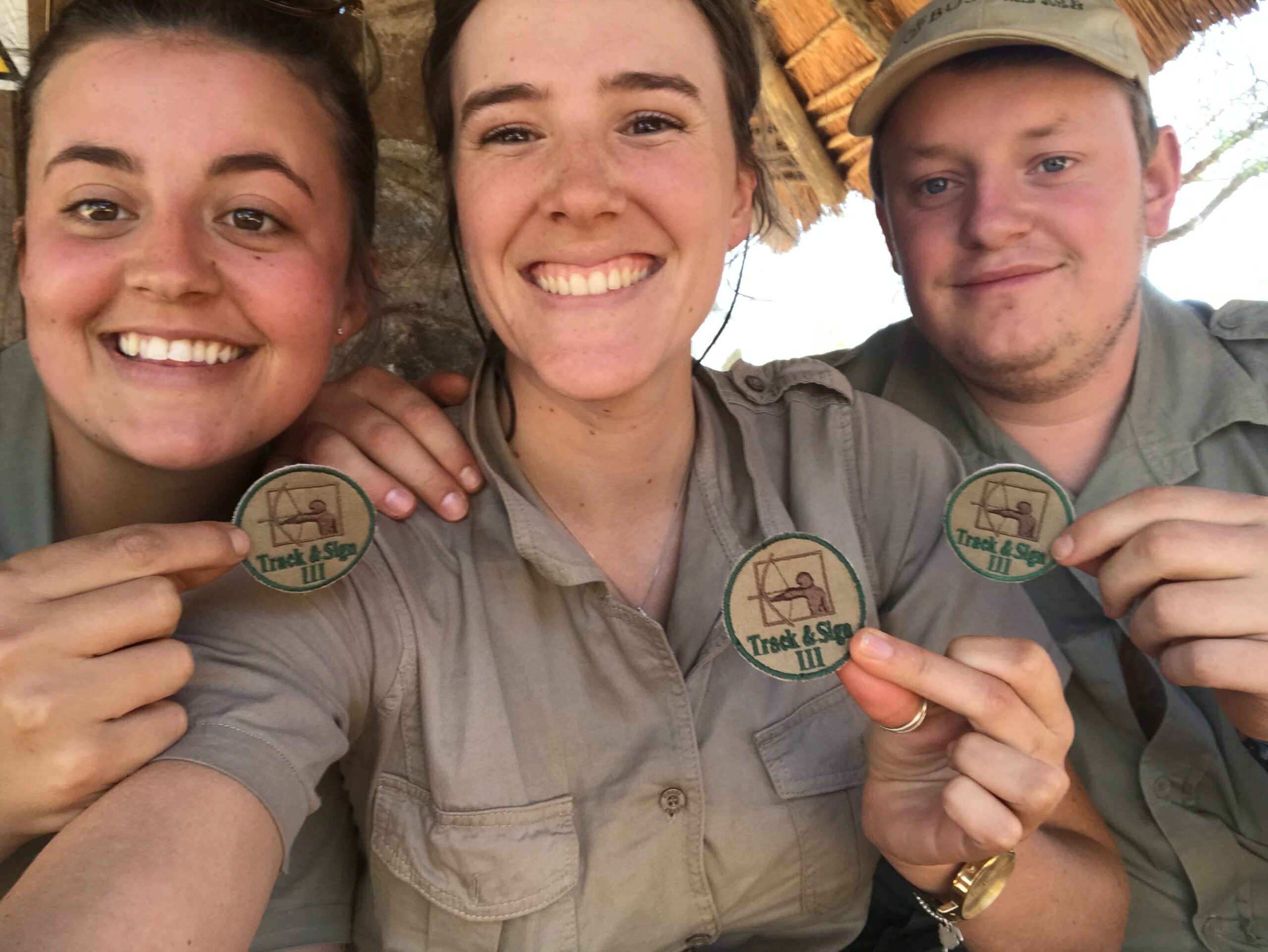
    The moment finally came to find out our scores. By the skin of my teeth, I nervously waited for Colin to announce my level… and to my surprise, all the hard work from the week paid off with a Level Three Track and Sign qualification!

    image

    Photo by Lara Coldrey

    Being a South African born, American raised human being that made a quick and easy decision to come back to my roots. I could not be surer that I made the right decision moving back home, coming to Bushwise, and living my absolute best life in the African bush.

    As the groups are now going to switch, the rifle group will get the joy of opening their eyes to the world of Track and Sign and I cannot wait to watch their excitement, with a little bit of jealousy as I know exactly what they are going to learn and experience this upcoming week.

    Blog by Shawn Gardner

    image

    Shawn Gardner

    #cybertracker #trackandsign #tracking #tracks

  • They BEE-long here

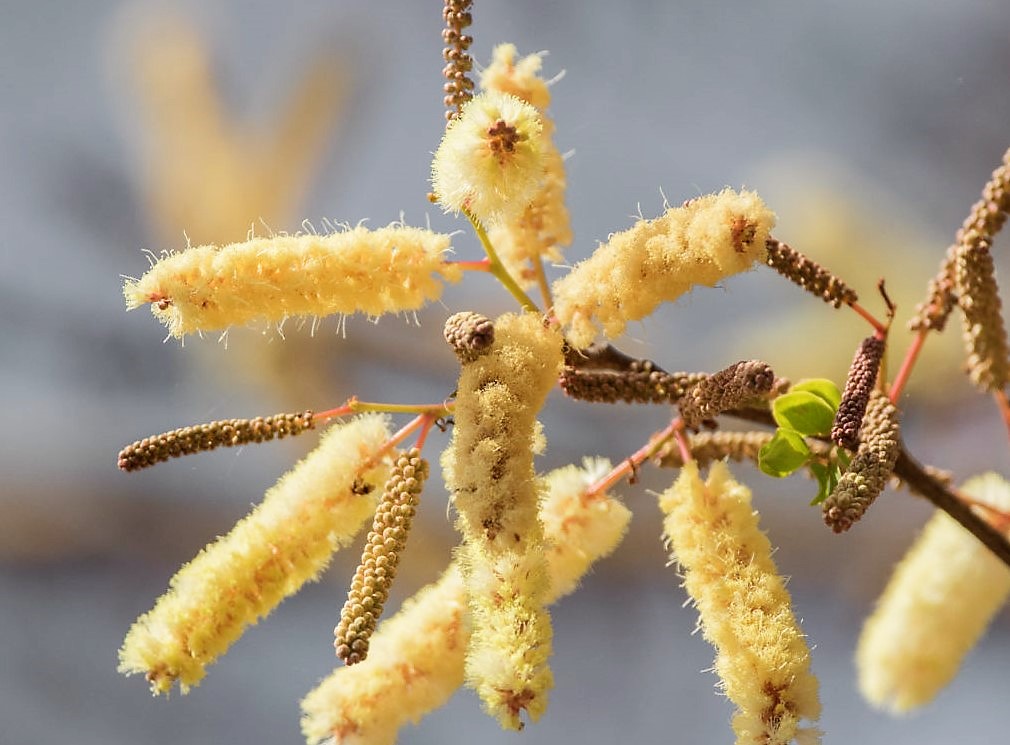
    With Spring around the corner in South Africa, officially only starting on the 23rd of September, the Lowveld has started taking to its gorgeous yellow and red colour as thousands of Knobthorn and Boer bean trees start to flower. Along with the millions of flowers come the many different insects and amongst them one of the most important to our very survival, bees.

    image

    Knobthorn flowers

    image

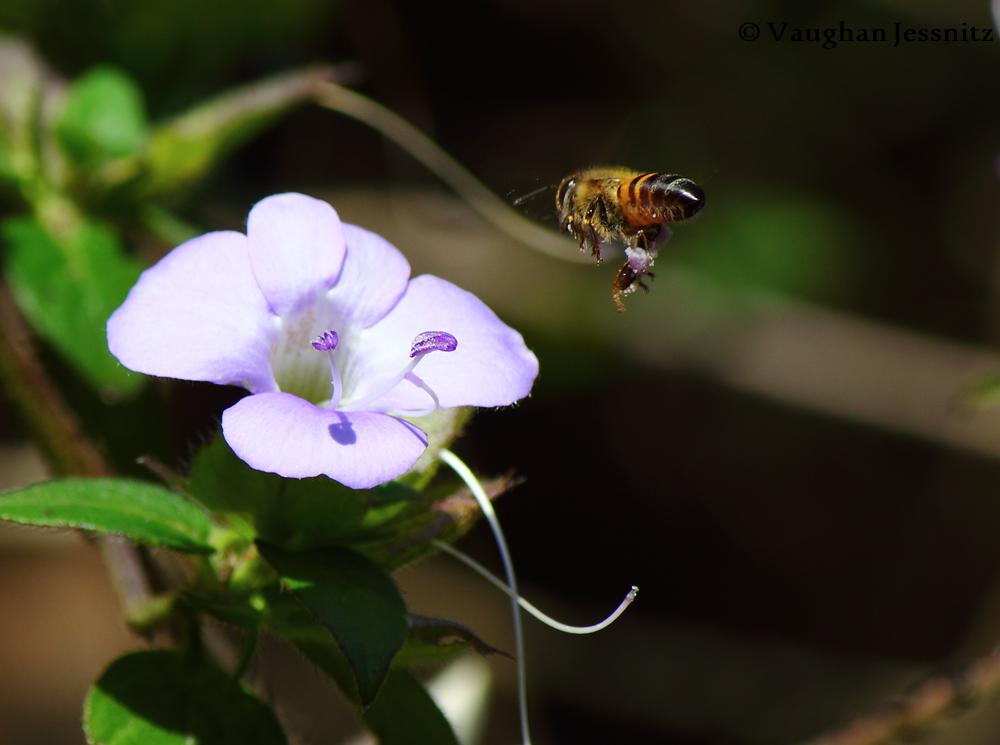
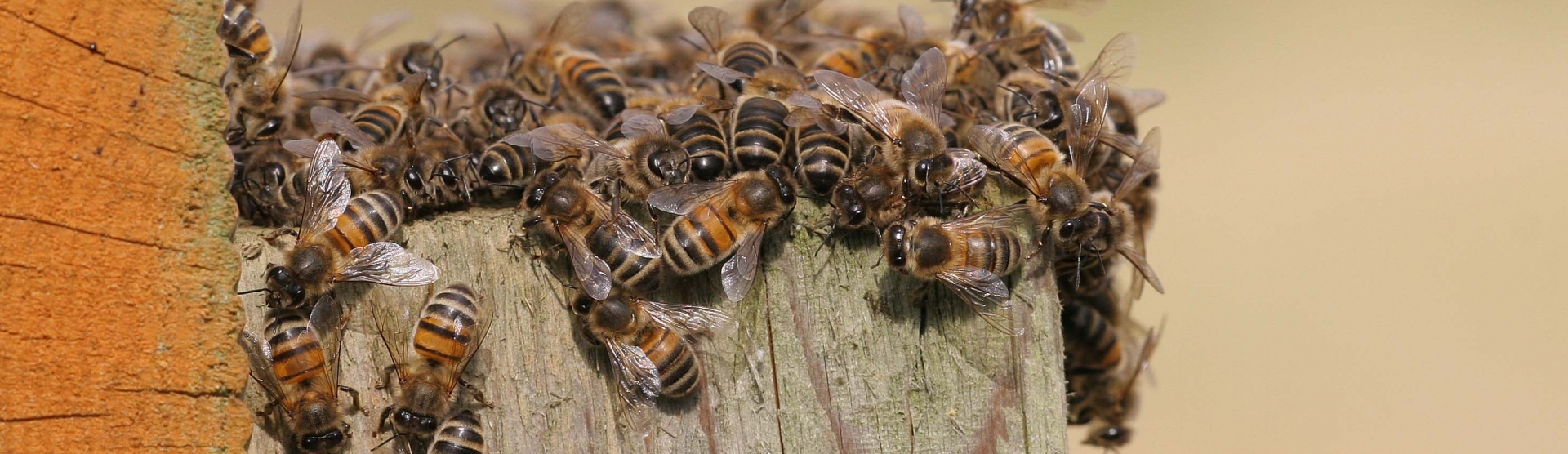
    “If the bee disappeared off the face of the Earth, man would only have four years left to live.” Whether this statement was actually made by Einstein or not, it is still a serious cause for concern and has raised many eyebrows over the years. It’s BEE-lieved that the Northern hemisphere bee populations have reduced with as much as 45%. This is an enormous percentage as one-third of all the world’s food crops are pollinated by bees. These food crops are not only utilised by us as humans but our livestock, as well as many other butterflies, bugs, birds and mammals. Although the South African populations have not decreased by such drastic numbers yet, many bee populations and species are already under threat.

    image

    Honey bees (c) Margaret Holland

    Here, both on campus and in the field we see a variety of different insects, birds, butterflies and even bats also playing their vital role in pollinating various plants. Bees are what we refer to as apex pollinators and are responsible for pollinating up to 90% of all wild plants, and are therefore in need of our support. Continuous agricultural practices such as monocrops are one of the many threats to bee populations but various pesticides along with climate change are said to be amongst the most threatening to most species. We as conservationists can only do so much to protect our beautiful black and yellow friends and can, therefore, make use of a few simple ideas and tricks to save bee lives.

    image

    Photo by Sharin Myburgh

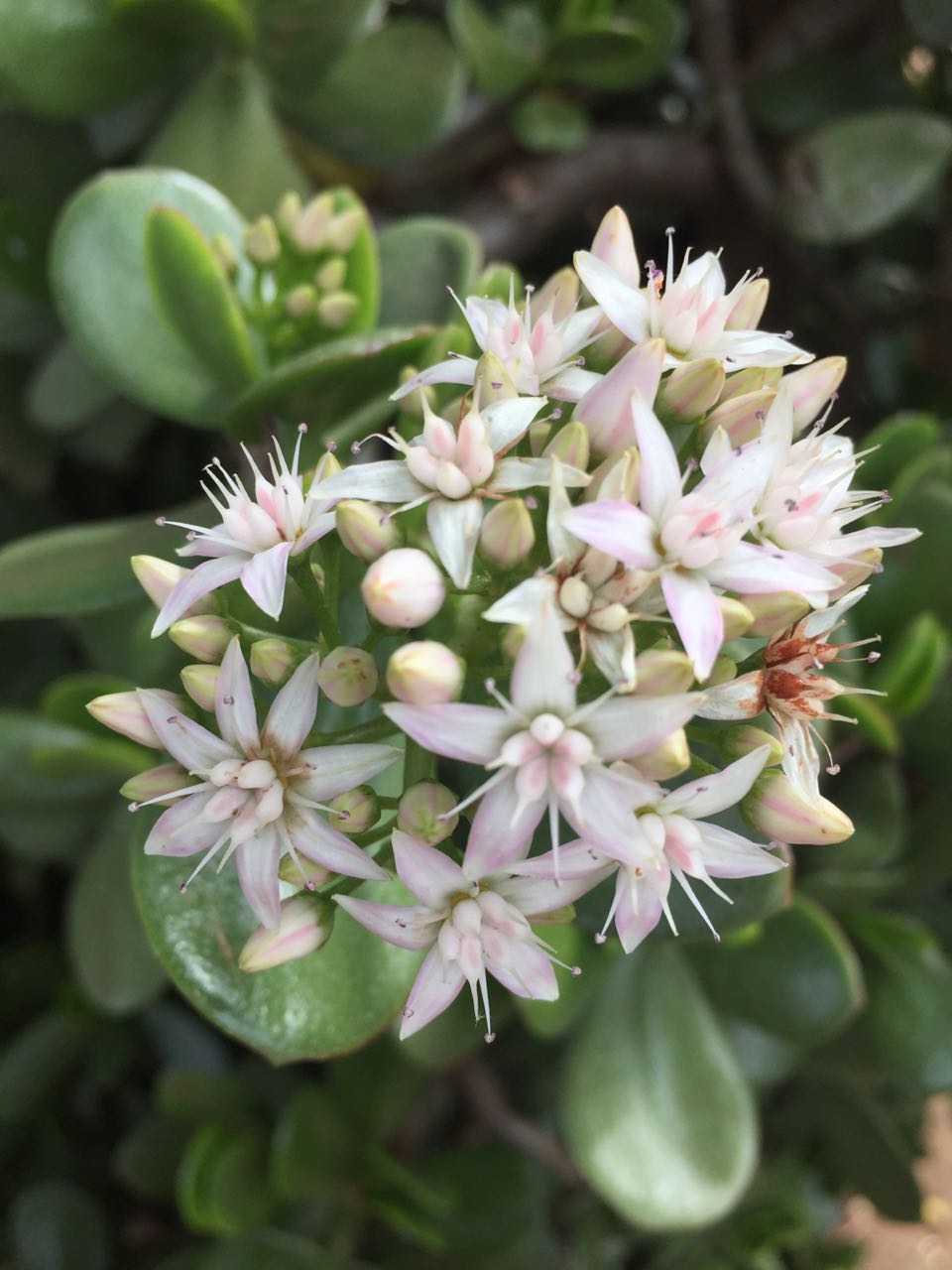
    Just like most animal species in both cities and the bush, bees rely on water and it’s a great idea to have either shallow standing or running water made available to them. Planting indigenous trees and flowers provide the perfect habitat and snack for bees. Plants such as basil, sage, thyme or lavender is regularly available and take little effort to grow in your garden or a plant pot. I have very recently moved into my own accommodation on the Bushwise Mahlahla campus and spend most of my weekends working in the garden. I currently have various flowers growing in and around the garden and our campus “veggie” garden is being prepared with many other plants dependent on bees. Nectar feeders are also great ways to attract both birds and bees but to ensure bees do not drown in nectar feeders a fine net or even shade cloth can be placed over the entrance to prevent bees falling inside while still allowing them access to the sweetened water.

    image

    Plenty bees on campus when the aloes on-campus start flowering

    Although various ideas are currently being tested on how to feed the continually increasing human population, no sustainable methods have yet been perfected, so, therefore, it is important that you and I as both guide and conservationists make the continuous effort to save their lives and all other species that depend on them.

    Blog by Edward Smith

    #bee #bees #honeybee

  • 4 x 4 Challenges in the start of Semester 2

    The second semester started with a steep hill, but luckily we came prepared and were already in low range.

    After our first week off, it was so good to be back on campus and see all the familiar faces and getting back into the rhythm of the bush.

    We started the week off with a long session of 4×4 theory that was accompanied by an intense heat that we as students have not encountered before during the course. We learnt a lot about how important it is to know what your vehicle is capable of, and especially how important it is as a field guide to know how to deal with rocky terrains that you have to cross when you have guests with you on the game viewer. Monday ended with a chilly splash in the pool and the realization kicked in that it is only August and that the months ahead are going to be even hotter.

    Tuesday, group A had 4×4 training and group B (which I am in) and group C had our first official practical drives. We got first-hand experience of being in control of the safari and entertaining the guests. Our trainers only stepped in when they had some extra information to add, which was quite challenging, but at the same time a new and good experience that made me realize that confidence is key.

    image

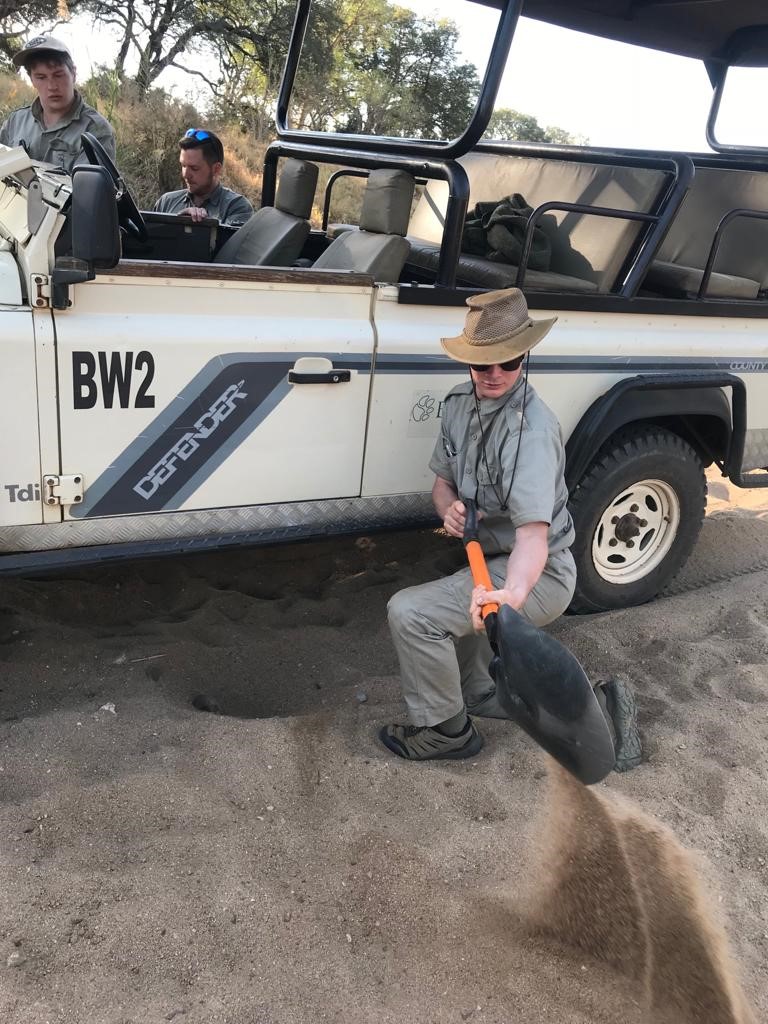
    Will Riley digging a hole, photo taken by Shawn Gardner

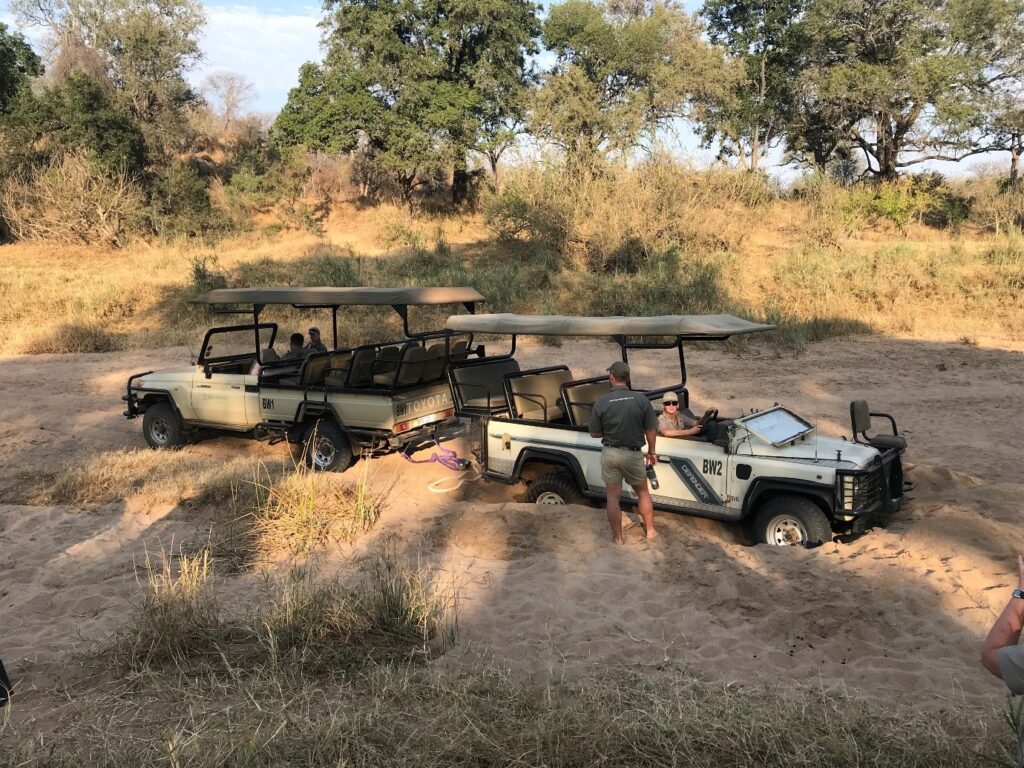
    Wednesday my group had 4×4 training that was facilitated by Mark Frazer from Nostophobic Adventures, which consisted of driving up and down a steep rocky road while the game viewer was in low range. The most important thing that we had to remember was to not touch the clutch and after a bit of practise, everyone got the hang of it. In the afternoon we did kinetic recovery training which was definitely the highlight of the training. We dug holes in the river bed (which we ethically covered up afterwards) so that the Land Rover could get stuck and had to be recovered by the Land Cruiser. Everyone got the opportunity to be the recoveree and to be recovered. It was an adrenaline-pumping experience and everyone enjoyed it a lot.

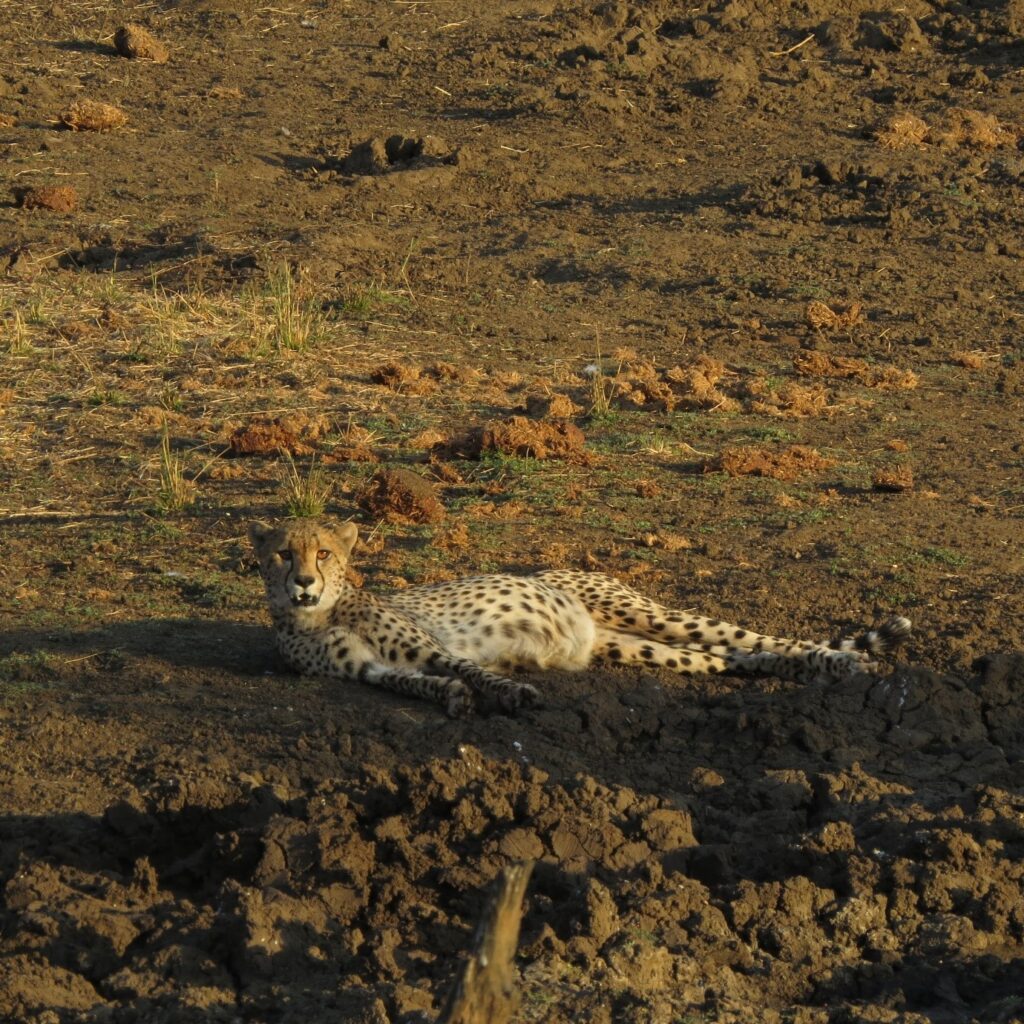
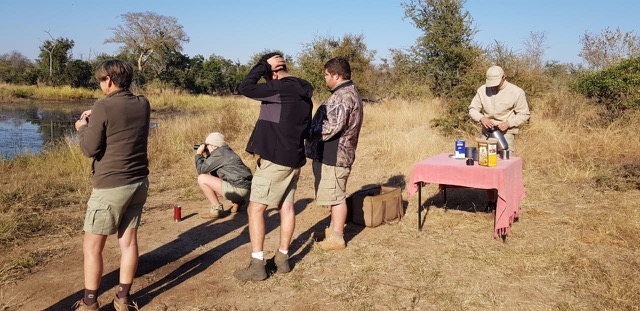
    Thursday, was definitely the best day of the week. We had practical drives and had a lot of laughs thanks to our wonderful field guide Petru. We drove up to a dam to stop for our coffee break and found a female cheetah chilling next to the water. This was an incredible sighting. We stayed there for almost an hour just watching her lying down and getting used to us. After a while, she realised that we weren’t a threat and turned her back to us so that she could keep a lookout for any other enemies that could sneak up on her. This was by far the best drive that group B has had so far.

    image

    Kinetic recovery training taken by Lara Coldrey

    Friday we had our 4×4 practical assessment, where we met our assessor Andre De Clerk from Low Range SA. He gave us a lot of tips and everything went well.

    Saturday we wrote our 4×4 exam and after that, we had the day to ourselves. I went to town and during that time I gave my responsibilities over to my “bungi” (bungalow buddy), Shawn Gardner, who had her hands full dealing with some sneaky snakes. They found four on campus, a mfezi (Mozambique Spitting Cobra), a vine snake, a worm snake and a marble tree snake. There’s a saying in South Africa “Saturdays are for the boys”, but in our case, it’s more like “Saturdays are for the snakes”. What a fast and good way to make 20 students more cautious of where they walk.

    image

    Cheetah taken by Lara Coldrey

    This semester is going to be filled with a lot of practical activities and looking back on this past week, I am sure that the next few weeks are going to be an adventure to remember. 

    Lara Coldrey

    image
  • My Best Experiences as a Field Guide – part 2

    Vaughan’s stories continue:

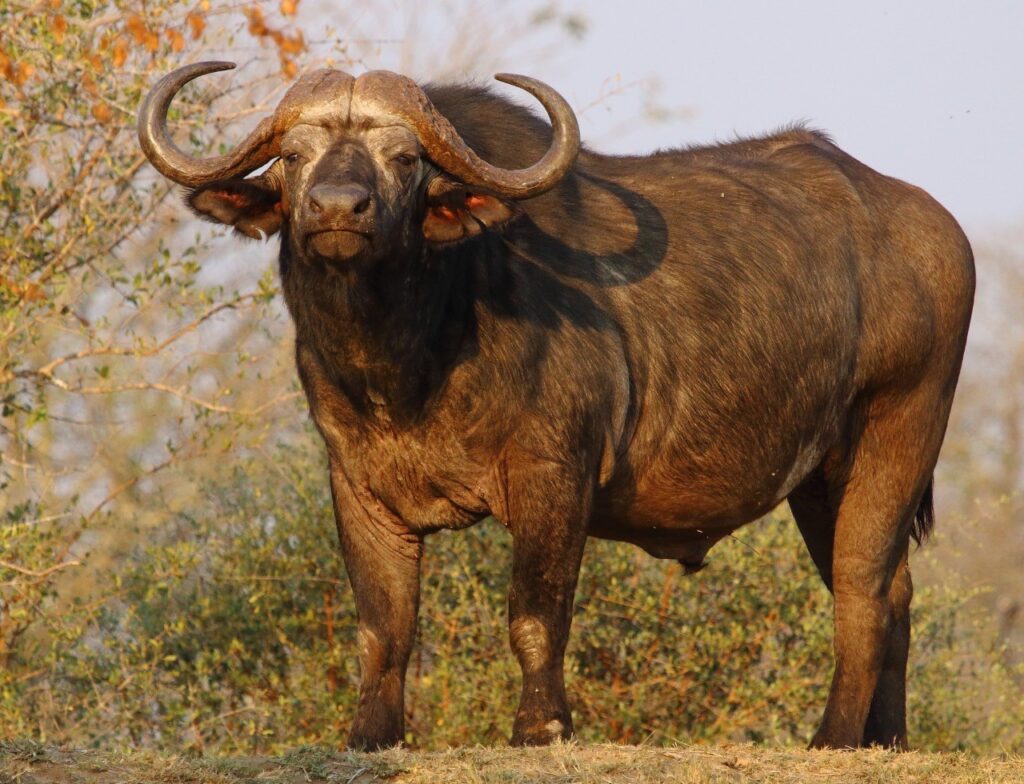
    This was not the only encounter I enjoyed with Sam, there are too many to mention, some of which were even more hair raising (which could explain my thick and luscious locks), like the time we were leading a walk tracking some buffalo.

    image

    Cape buffalo

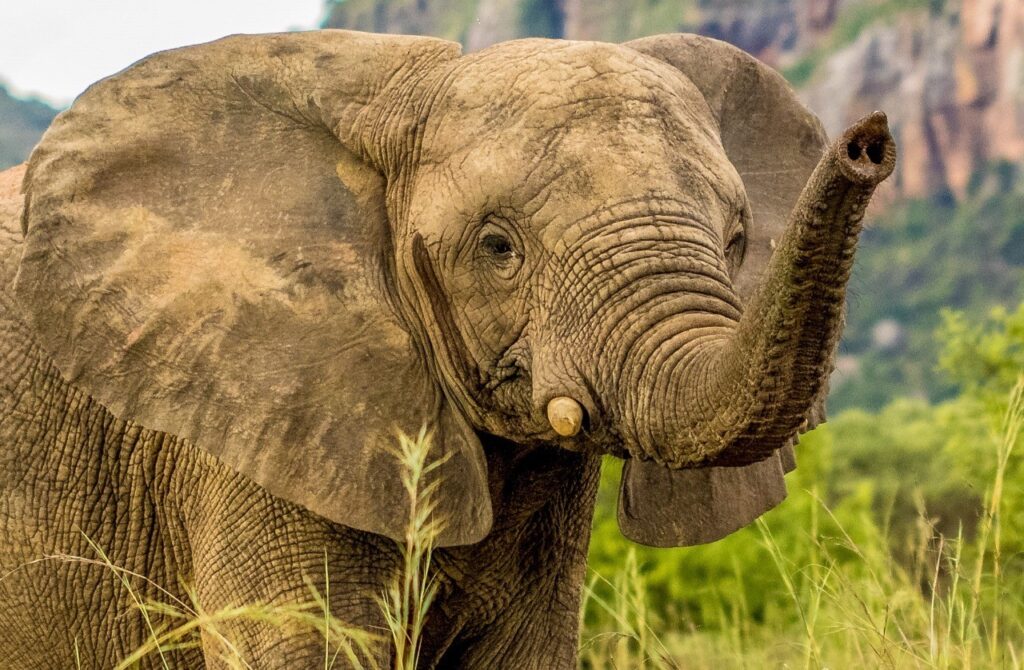
    The property we were walking on bordered an infamous Game Reserve, where they kept many semi-tame animals. One such animal happened to be an elephant, who I’m sure was known by name, but when we bumped into him on a bushwalk that morning we didn’t know it. He had broken into our property overnight and whilst exploring his new domain bumped into us as we were doing our tracking. Seeing a human in a strange environment was, for him, probably a delightful surprise. However, we were not ready for such a friendly elephant. 

    There is a significant and somewhat key difference between approaching a wild elephant and approaching a tame one. So when “Nellie” decided to come up to us it caused mass confusion, it was not a charge like a wild elephant, his body language was telling us he was a happy elephant, happy to see us and happy in our presence, almost like he was hoping for a cheeky treat or two from our backpack. Sam immediately recognized him as “Nellie” from next door and that we might be in trouble. There was no time to explain but luckily the look on Sam’s face told me he had probably dealt with this animal before. I immediately sought higher ground, a classic evasive tactic. So the two of us, together with our guests clambered up a sizey termite mound, in the nick of time as “Nellie” arrived in the spot we had been standing. Fortunately “Nellie” appeared to be unable to join us on the termite mound, this did not stop him from trying, however, and the more we tried to convince him otherwise the more determined he became to climb the mound. The more profanities were spewed in his direction the more focussed he became on joining us. Interestingly he still wasn’t showing any signs of aggression, it was almost like we were a perfectly ripe strawberry that was taunting him by sitting, noisily, just out of reach.

    image

    ‘Nellie’

    We soon realized that standing our ground was a stalemate and decided to duck over the other end of the termite mound and beat a hasty retreat to the next termite mound before “Nellie” realized what was occurring. As we reached the next point of cover, we could see he had discovered our ruse, and was slowly, but thoroughly, tracking us as we had done with the buffaloes earlier. The ordeal came to an end after a lot of jogging, and guests not fully understanding why we were impersonating meerkats on each termite mound we found, before eventually making it back to camp, out of breath and having learned that on the odd occasion despite the golden bush rule of “DON’T RUN” running might just be the best option.

    image

    Until the next story…..

    Blog & photos by Vaughan Jessnitz

  • My best experiences as a Field Guide – Part 1

    Those of you who know me will know that my hatred of blog writing stretches further than the reach of an ancient Baobab. I have ducked and dived, bobbed and weaved, crawled and swam, and yet I cannot escape the dreaded responsibility. However, looking back over my time as a field guide there are certain stories that deserve to be shared. 

    Being a field guide and spending your life running wild in the African bush for so many years you are bound to collect a tale or two, but the age-old question is where to begin. None of the moments that follow can necessarily be described as my best or worst experiences, however, any experience survived is one that must have had a positive outcome. Be it learning from my mistakes, sharing priceless moments with great people, and even more memorable moments with greater animals. But something that is without question absolutely the best thing about working in the bush is some of the characters that become a part of your life. The tales that follow are some of my favourite recollections with some of my favourite people in the bush. In order to protect the identity of the individuals involved and to try to avoid causing a wild scandal or two all of the names and places featured below may or may not have been cunningly disguised. 

    image

    Sam from Mohlabetsi safari lodge was a legend. He contributed to some of my greatest early experiences on Balule Nature Reserve. Sam was a small bloke, quiet, yet witty beyond measure. We spent many happy hours together in the bush tracking big and dangerous animals. A few more notable moments do, however, spring to mind.

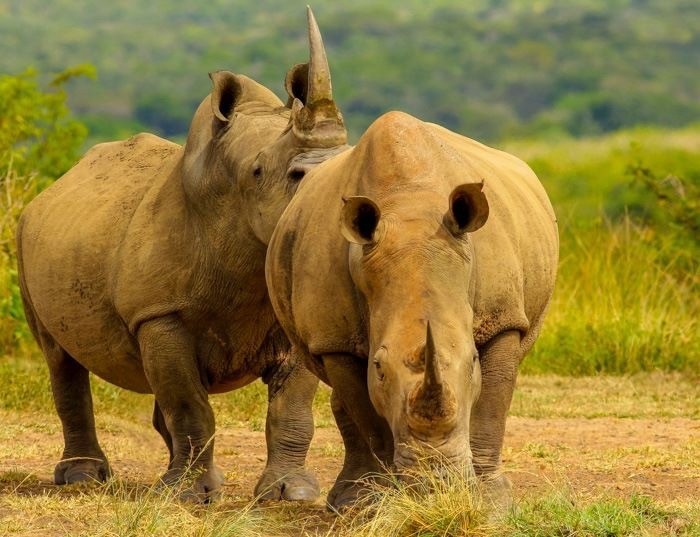
    A normal morning bushwalk involving the two of us, together with my tracker Roger,  tracking some white rhinos, turned into a moment I will never forget. The tracks seemed to age with every passing minute as they wound through the dry bushveld terrain, tracking these two magnificent beasts was proving tricky, to say the least. However, the enthusiasm of our Swedish guests kept us motivated to persevere. All three of our noses were to the ground as we followed track by mysterious track. This took us straight through a steep drainage line we assumed that the rhinos had gone straight across. So, without thinking twice we barrelled straight down after them. Little did we know that our valiant beasts, without Swedish enthusiasm to spur them on had paused for a nap at the bottom of the drainage line. And we only discovered them once the whole troop of us were also inside the drainage line mere feet away from them! 

    Somehow we had managed to stroll within bare metres of them without them ever becoming aware of our presence. Nonetheless we were sitting in quite the predicament. Myself, Sam,  Roger, and an unnamed guest or four, froze in our tracks with the three musketeers trying to figure out what to do next and the guests inevitably noticing our silent dilemma. There was no way around it, we were stuck. We all knew that if we made a move; spoke a word; or did anything at all; the pair of snoozing rhinos would wake up. Even a change in wind direction could affect the outcome. What made this moment so memorable to me, was neither the adrenaline, nor the predicament we were in, but rather the length of time we took dwelling, with no idea, on what to do next. It felt like hours passed as we stood there frozen, becoming increasingly fluent in “military esque” sign language as we silently debated the merits of the various options available to us. Unfortunately it seemed wholly unlikely that any of these options would result in the continued peaceful slumber of the rhinos. Eventually we agreed to sit down, we had barely creaked our stiff knees to the ground when one of the rhinos popped up, spun around and looked straight at us. Not exactly what we had been hoping for. 

    image

    Sam and I were in the front, Roger held the fort at the back and the guests were sandwiched between us. This positioning was key because one of the guests took it into their head’s to run. Now Roger, it should be said, is the opposite of Sam, he was built like the proverbial brick shithouse. And as the guest stood up to flee all Sam and I saw from the front was a poor, pale, middle-aged Swede being yanked to the ground by his belt accompanied by a calm, noble voice just saying: “take a picture”. By this time the second rhino (oh yes remember there were two) had also jumped up, but it seemed they were as stumped by the situation as we were. It was their turn to ponder what to do next. Then one of the rhinos started to walk closer to us, more inquisitive than aggressive. It was at this moment that we noticed that the best escape route for the rhinos was a little game path leading out of the drainage line, that regrettably sat behind us. It seemed the rhinos had noticed this too, for as we sat there quieter than mice, the two huge animals slowly and cautiously walked past us trying to get a good whiff to see what exactly we were. At this point, even the least religious amongst the group was making a set of ‘just in case’ amends. For as we sat there these two huge rhinos could nearly touch us. After a brief inspection they decided that the way out was a more interesting option than turning us into little bundles of mincemeat and proceeded with a snort as they both trotted on past us and up the hill.

    With a great sigh of relief, we all have a memory never to be forgotten.

    Blog & photos by Vaughan Jessnitz, senior trainer

    image

    #fieldguide #rhinos #bushwalk #sighting #gamedrive

  • The week of ‘firsts’

    And so the excitement starts….

    This was the week of firsts, our first lectures, our first drives and our first test.

    Our week started off with having an overload of information forced into our brains, from what makes you a professional field guide, to the anatomy of how trees and grasses sustain themselves in this harsh African environment.

    We were thrown into the deep end with having to do our very first game drives and I was 1 of the first to get behind the steering wheel! What a scary and thrilling feeling that was.

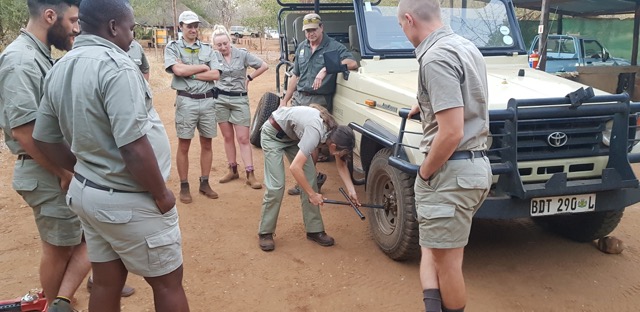
    However, before we play ‘field guide’, we had to know the ins and outs of the vehicle, which included changing a flat tire…. What a mission that was! You would not expect a tire to be so heavy, but we managed to get it changed and was ready for the next day’s adventure.

    image

    Tyre changing practice – photo by Georgie Stewart

    We went into the reserve in the early morning hours right before sunrise. The morning chill was quite intense and we had to cover ourselves with blankets, beanies, gloves and scarves on the open 4×4 safari vehicle. 

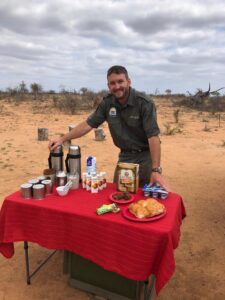
    During our drive we where shown the different kinds of botany, tracks and even investigated some dung to determine which animals were in the area. We stopped for our coffee break, where we enjoyed the beauty of nature and lisiting to the sounds of birds chirping away in a distance.

    image

    First morning coffee break – photo by Georgie Stewart

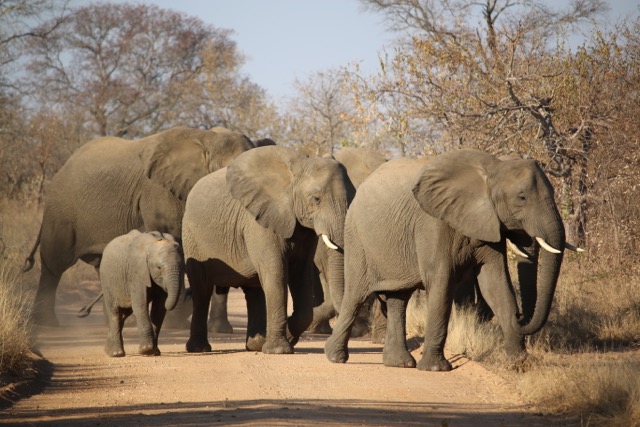
    Arriving back at camp, we had brunch made by our very own Bushwise Chef. Thereafter it was back to the reserve for our afternoon drive. We had the privilege of having the most amazing encounter with an Elephant heard. The elephants were quite curious and come up close and personal to investigate this weird looking animal (the bakkie). Having found that it was just us enjoying their presence, they soon moved off into the bush.

    image

    Majestic elephants – photo by Georgie Stewart

    On our way back to camp, we had the most unexpected sighting. About 4 kilometers from the camp gate a leopard was seen strolling along the fence line. Unfortunately we could not get a good look as he soon darted off into the thicket of the bush. It is true what they say “You never know what you might encounter around the next corner”.

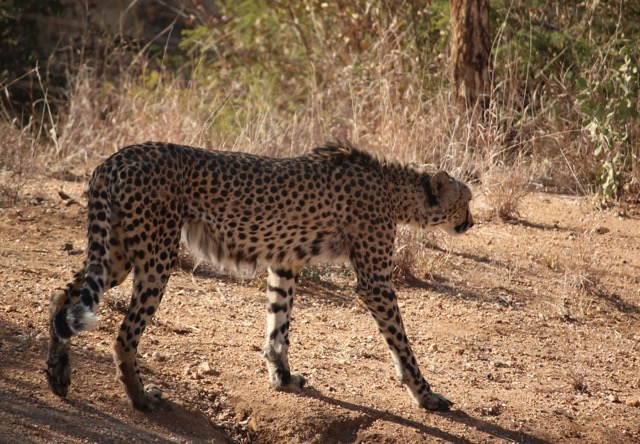
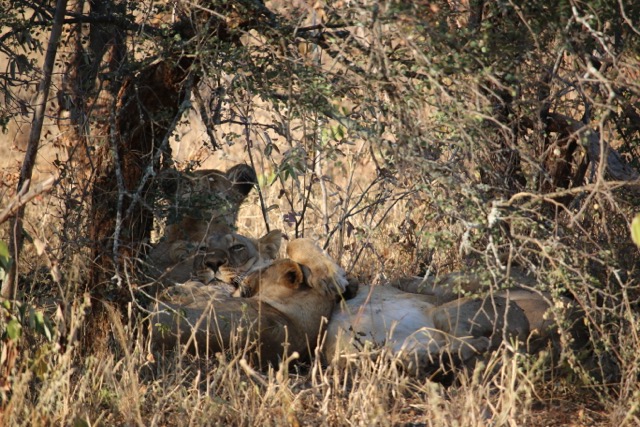
    The week came to an awesome end as we had a wonderful sighting of a cheetha along with some lazy lions. We are truly blessed to be able to enjoy nature at its best everyday!

    image

    Cheetah – photo by Georgie Stewart

    image

    Lion pride – photo by Georgie Stewart

    Speaking of firsts, have I mentioned that we are writing our first test this week?? Most of the weekend was spent with everybody’s nose in the books trying to learn as much as possible.

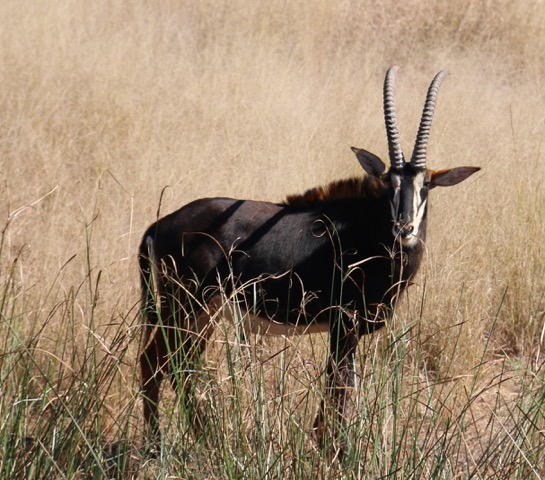
    After studying, it was time for bed. However, the resident Sable decided to give me the fright of my life as I was heading back to my room. There was a russel in the grass, but I did not think much of it. The next moment he came face to face with me in the path way! I don’t know who got the biggest fright, but he dissapeared before I had time to even realise what had just happened.

    image

    Sable on campus – photo by Georgie Stewart

    There is never a dull moment when living in the bushveld!

    Blog by Elandri du Plessis

    image
  • Passing Pangolins

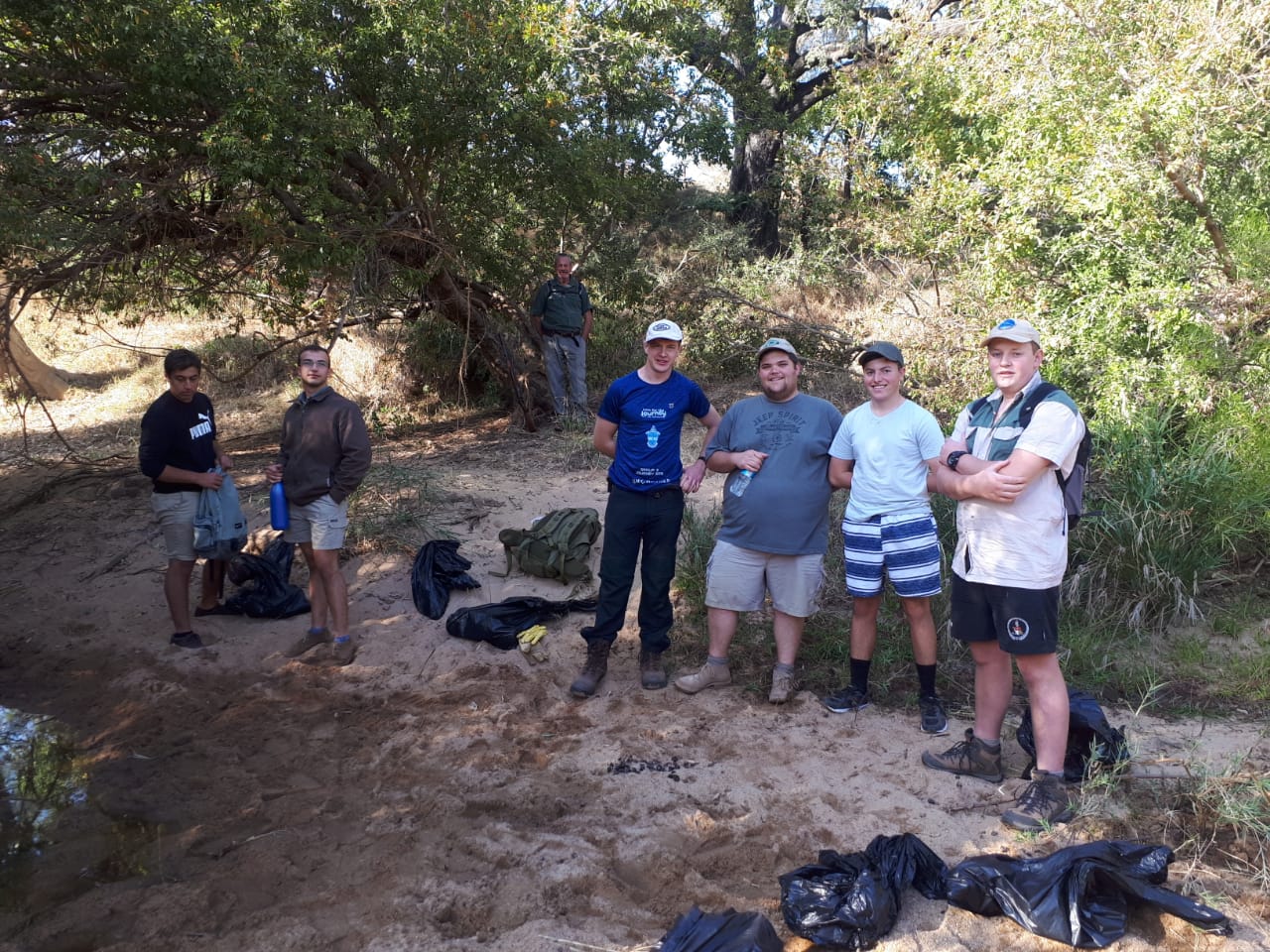
    The class of July 2019 started our first day getting to know 22 new names and faces, getting a feel for campus life and starting paperwork. The campus rung out with many “what’s your name again?” as we all settled in and attempted to memorise new slightly nervous looking faces. The next day brought new ventures for the international students as they ventured into Polokwane to register for traffic numbers at the department of transport. The remaining nationals got a taste of bush life, going on a litter safari, picking up any litter along the riverbed. The evening was spent getting to know a few more faces and introducing ourselves during the Welcome braai.

    image

    Making new friends

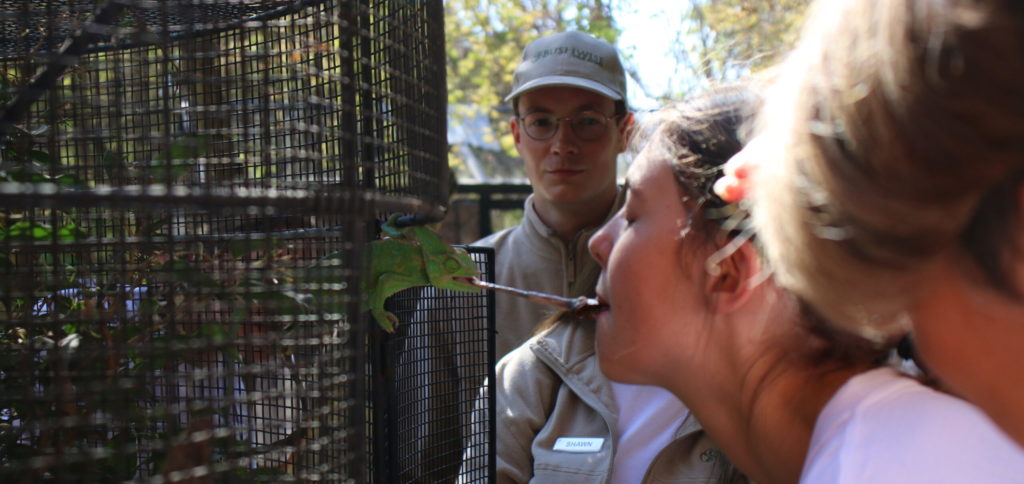
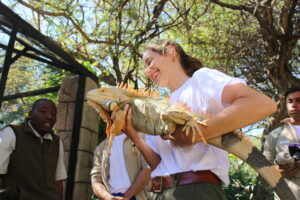
    The third day we all ventured out to the reptile park, learning about reptiles. We had a lecture on dangerous snakes before being allowed to handle them. A few lucky victims fed chameleons, with a twist… they fed live cockroaches from their mouths. One student got a taste of bug life when a cockroach burst in his mouth. After the adventures of the morning, a trip to khaki fever came next, where we all picked up our uniforms. The start of our official look.

    image

    Getting up close with some reptiles

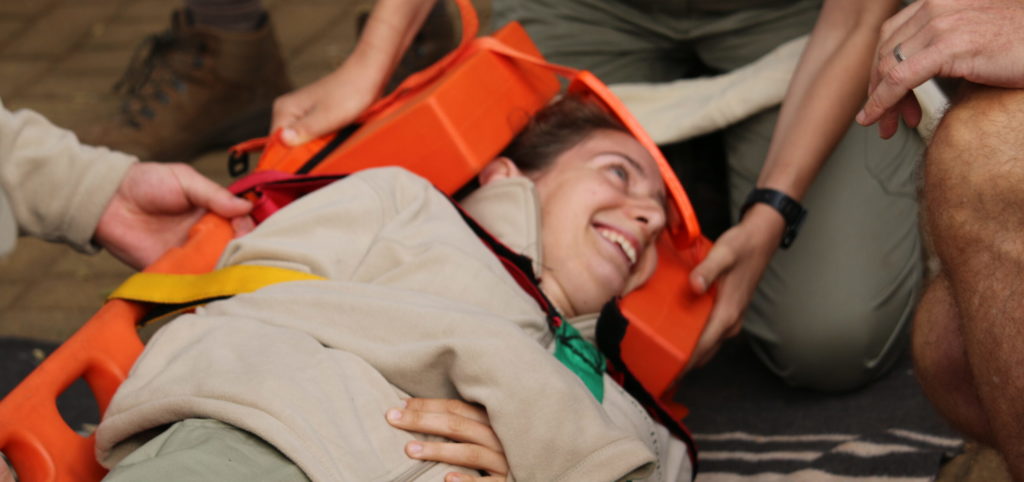
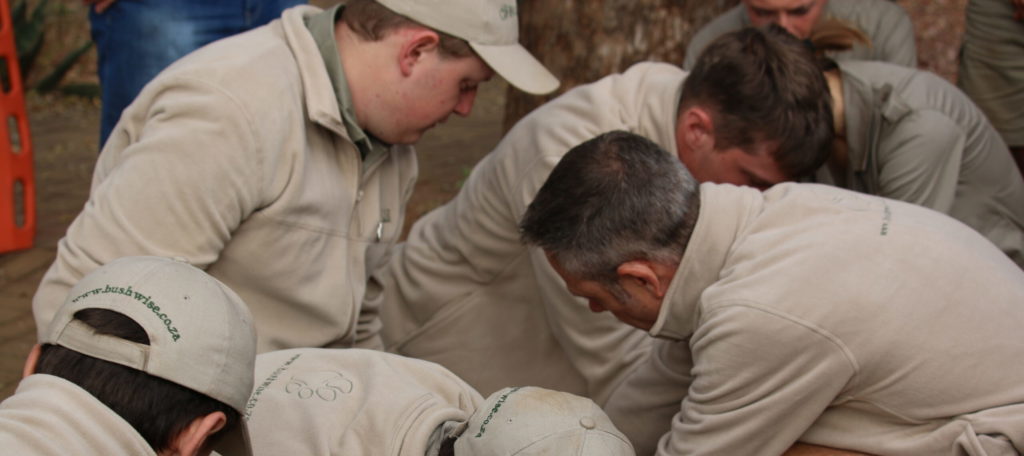
    Friday and Saturday were spent in the classroom gaining our first aid qualification. Many victims were chosen, and “bites” administered amongst other injuries as group members rushed out into the “wild bush” to find the patients. Stretchers came and went, CPR performed, and treatments administered as the classroom teemed with life. With everyone restored to life and full health, Saturday evening was spent at the local pub after everyone had all passed their first aid exam.

    image

    Hand on first aid training

    image

    First aid training

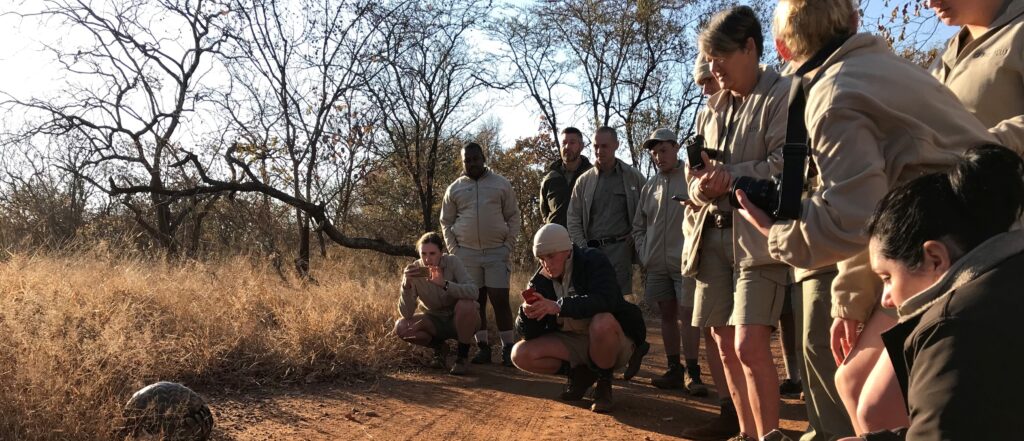
    The highlight of the week, however, came when everyone was studying hard on the first official lecture when a pangolin came to class. The lecture abandoned as the surprised students rushed out to witness this amazing spectacle. The pangolin had been found near an electric fence, and was rescued and  shown to the students before being released as a preventative measure, much to the delight of all. For many, it was their first encounter with a pangolin. Passing pangolins has been the best start to our first official week, and all are excited to see where the next few months lead too.

    image

    Passing Pangolin

    Blog by Sam Parker, photos by Georgie Stewart

    image
  • In the bush you’ve got to be comfortable with your Neighbours

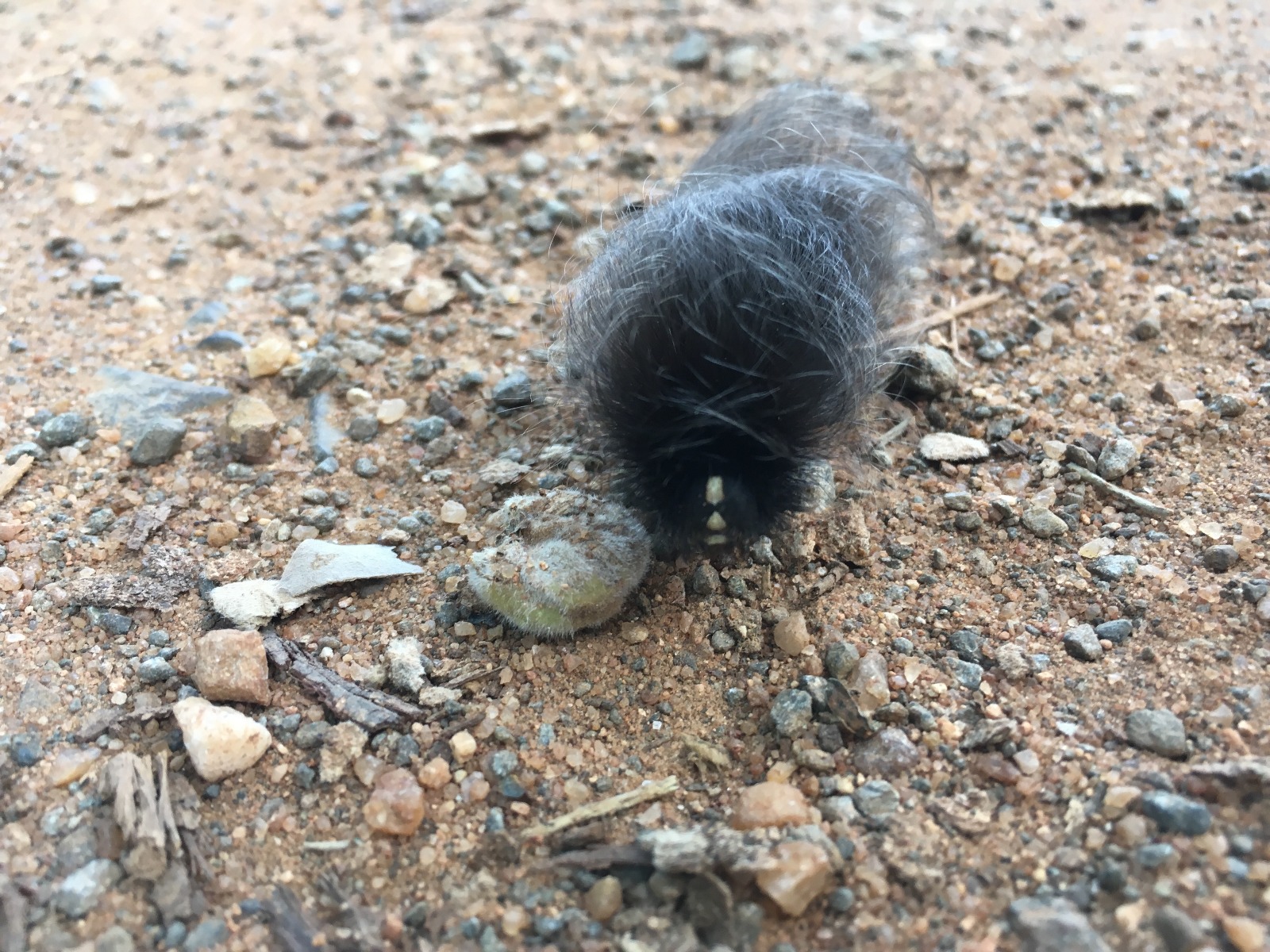
    Creepy crawlies are what we call them in the UK, you read stories as a kid about hungry caterpillars, are told about friendly bees that make honey and sing songs about spiders going up drainpipes. That’s alright for back home, but out here in South Africa the caterpillars eat poisonous milkweed which the Monarch Butterflies retain through metamorphosis so are also poisonous, the Bees are killers potentially, even the elephants don’t mess with them and many of the spiders that like to live in your house are venomous enough to put you in hospital!

    image

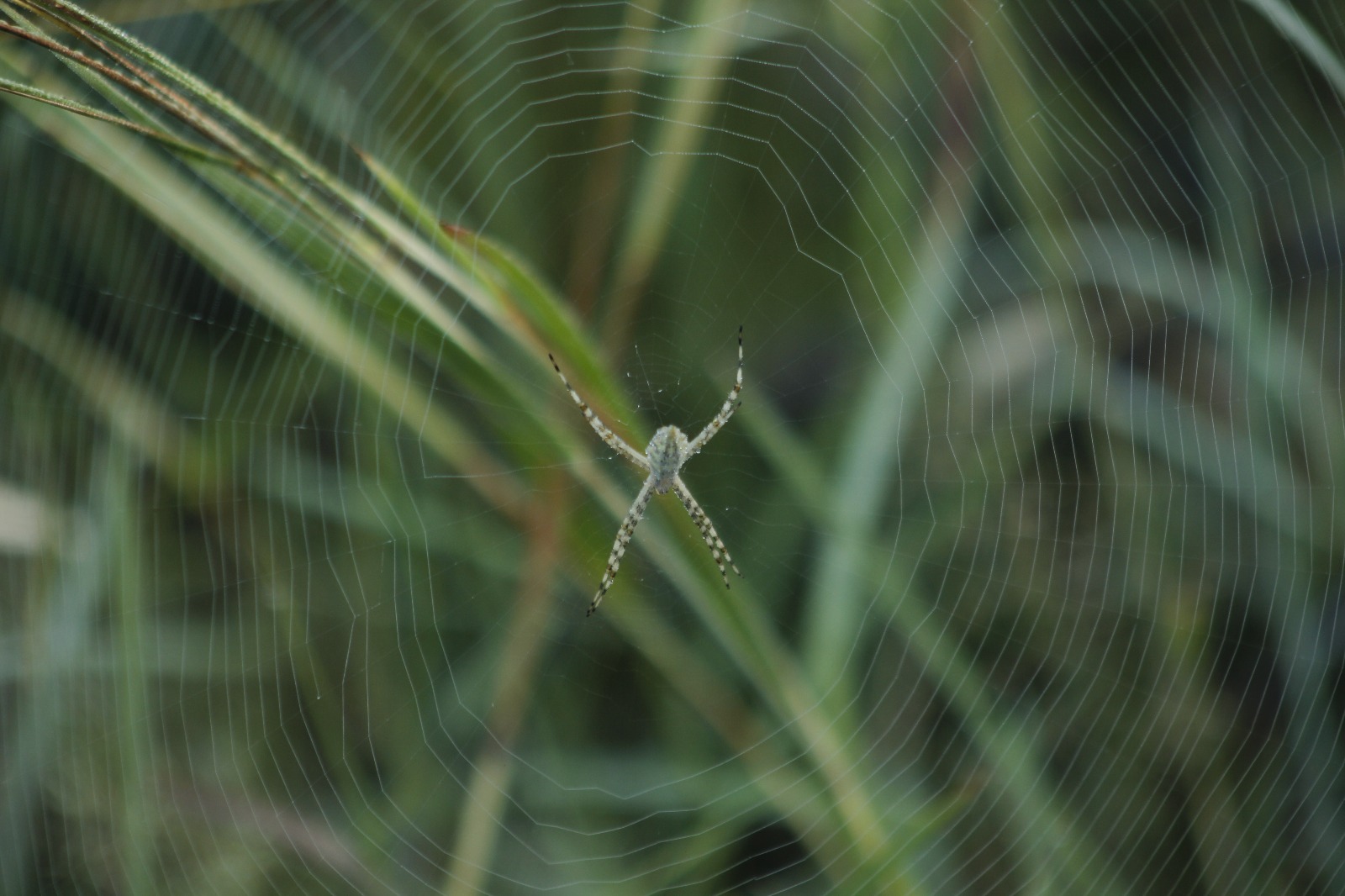
    This may seem a little scary, but then the UK’s wildlife does seem relatively tame compared to a lot of places around the globe. We might respect ours a little more if it could kill us, but ours is just as amazing and dramatic when you pay attention to it. It’s the same out here in the Bush the big animals are obvious, plainly dangerous if you get on their bad side. You really need to pay attention to what’s on your doorstep or living under your bed, tiny little Button Spiders and Sac Spiders, so highly venomous it seems a bit overkill for the flies and other small insects they eat. The big spiders like your Orb Web Spiders are pretty much harmless to humans, but still it’s not fun accidentally driving through their massive webs that can stretch across the roads.

    image

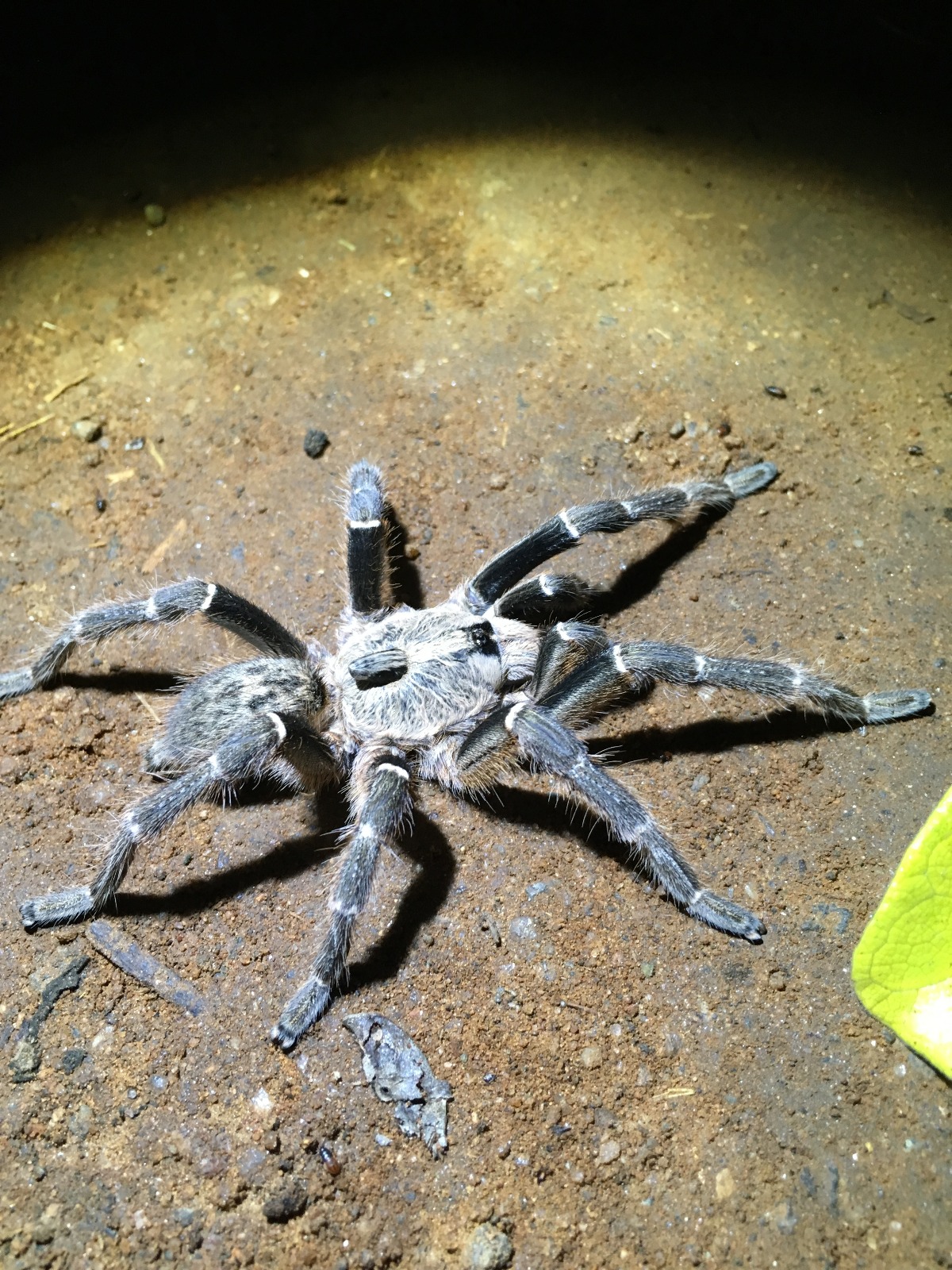
    Another large spider that is a ground-dwelling hunter, the Baboon Spider which can live potentially 20 years and is a protected species here. The females dig holes in the ground lined with silken web and live their whole lives inside them, whilst the males are more mobile hunters that have to search for their lady loves lair.

    image

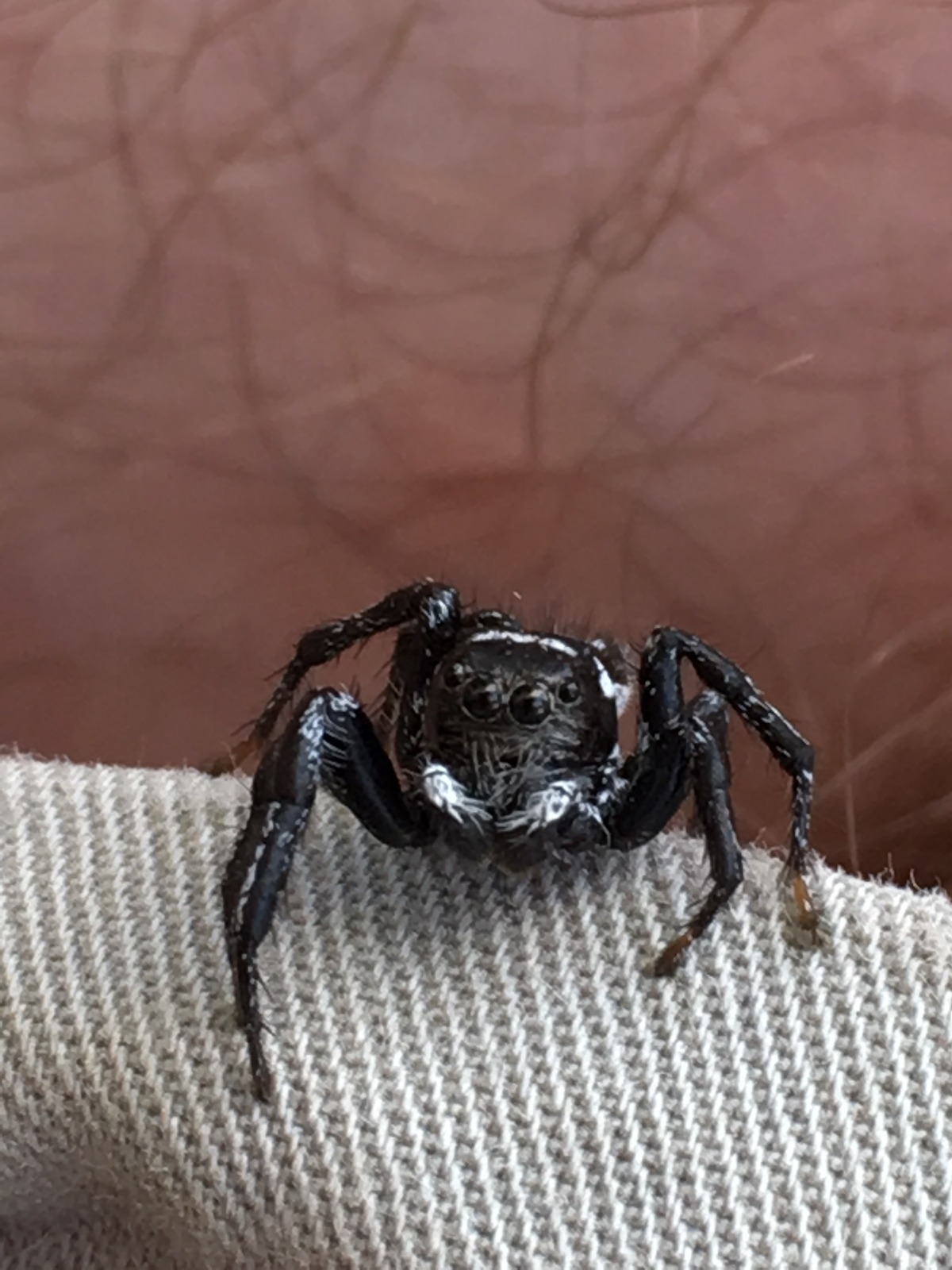
    One of my favourite types of spider is the Jumping Spider family, small little dudes that have an incredible powerful leap, the equivalent of us jumping over at least a 3-story building. Completely harmless to humans but deadly little hunters in their own right, they come in a huge variety of colours and occur in numerous different countries. There are thousands of species you’d have to spend your life studying them to be able to identify and individual species. For some reason I seem to have made friends with them, having had about four so far just appear on me and just hang about being awesome for a while.

    image

    Inside at night, a mosquito net is very useful especially  during the summer here, to avoid those mozzies, moths and other biting critters. The moths here are mostly similar to any others, but there are several that break the mould and are quite impressive such as the King Monkey Moth. 

    image

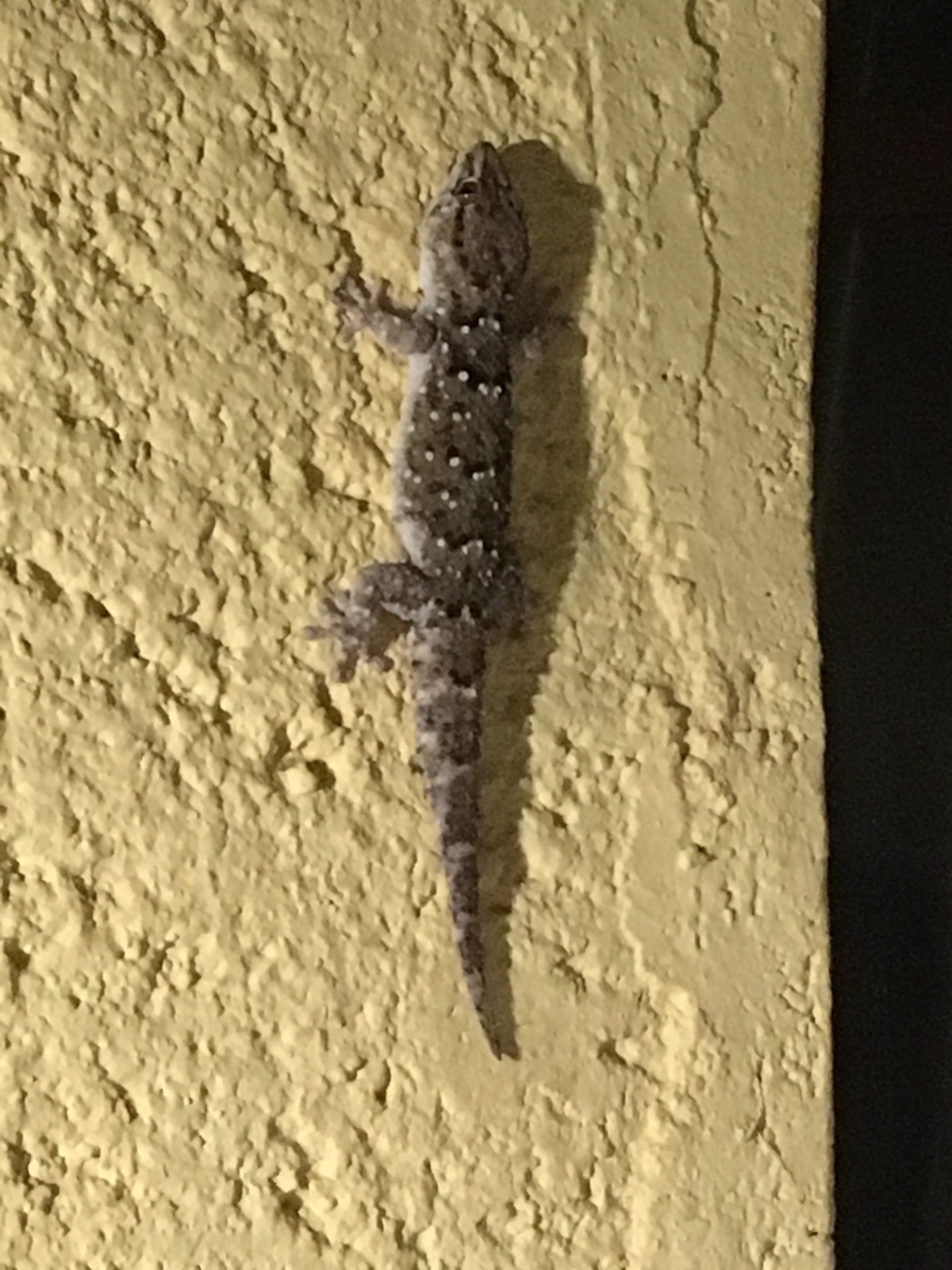
    The insect life that swarms around the lights outside does mean that you get some more friendly house guests in geckos, big ones such as Turner’s Tubercled Gecko, that do a great job eating some of those moths and mozzies. Then there are tiny little ones that you find inside your mosquito net! This fella I found one morning as I woke up, tailless but Geckos can regrow them as it’s a predator defence mechanism. I tried to release him into the wider realms of my room to go about his life, but a few days later I found him again inside my mosquito net. 

    image

    This is just a little slice of the day to day since I began Bushwise back in January, I haven’t even gone into the skinks, frogs, beetles and bats that live on campus, as well as the several snakes that have made an appearance. It’s mid-April now and winter is starting to set in here in South Africa, the general temperature is declining and with it, the activity of a lot of the insects and reptiles will do so as well.

    So if you find yourself out in the Bush, remember, the big animals are obvious, look closer at those smaller things living around you and who knows you may be surprised by what you discover!

    Blog and photos by Jack Broadley – currently on his work placement

    image

  • Practical trails course, what an experience

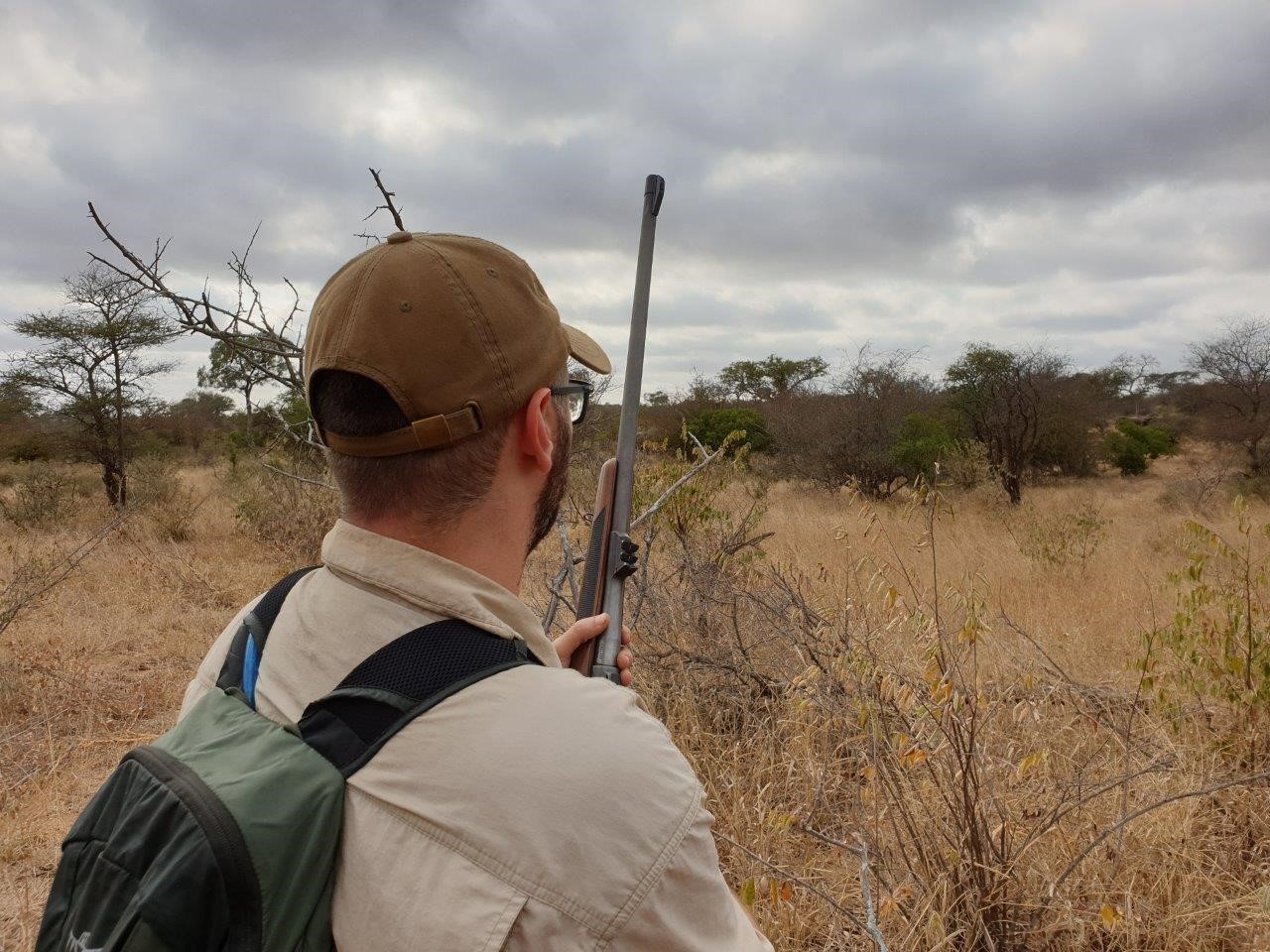
    These two weeks at Lowveld trails were to get our apprentice trails guiding. This means that after gaining our ARH (Advanced Rifle Handling) & passing our theory on trails guiding we needed to get some practical experience and assessment. This was done with a 12 day course where we take turns operating as a back-up guide, fully equipped with a bolt action rifle and the responsibility that comes with that.

    Note: Some pictures you might see are of us holding rifles while viewing animals or holding skulls or skeletons of animals. At no point are we hunting!!! At no point are we attempting to kill an animal in any way. The reason for our rifles is as a last resort measure in case an animal charges and we are unable to dissuade it from this charge. The motto of a trails guide is to view animals and educate people on them without intentionally disturbing the animals.

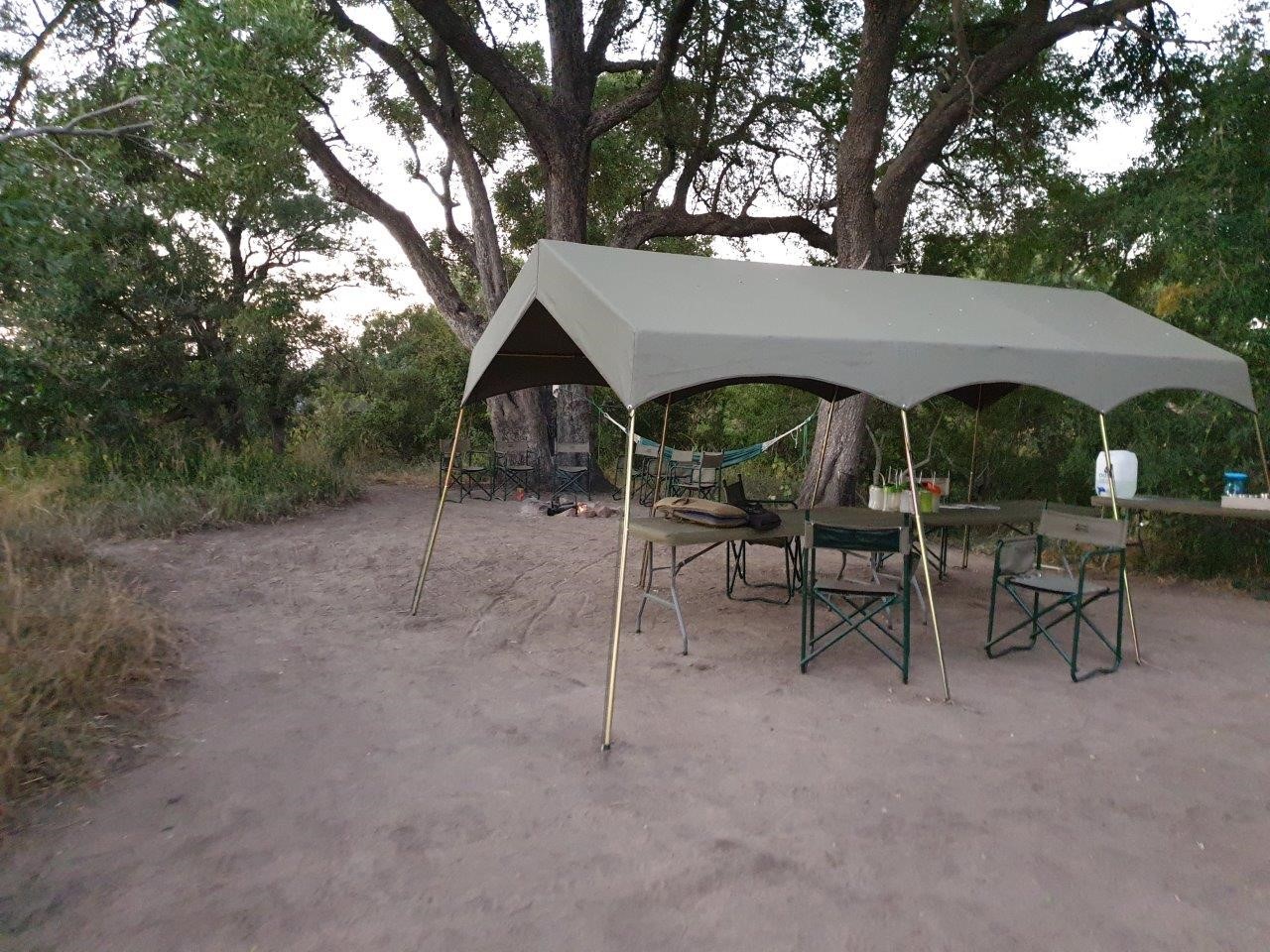
    On Tuesday the 4th of June we set off on our 12 day trails course. We were able to grab some breakfast in town before heading out and around 12 we arrived at the reserve in Kruger with Wayne and Brendan who head up Lowveld Trails. Here we split up into our two groups with group 2 going directly on the 3 night primitive hike (i.e. no base camp, carry all your food and equipment and sleep under the stars while taking turns on watch duty). We drove on to our base camp, this camp was insane!!!! It’s so nice being out in a camp again.

    image

    Base camp

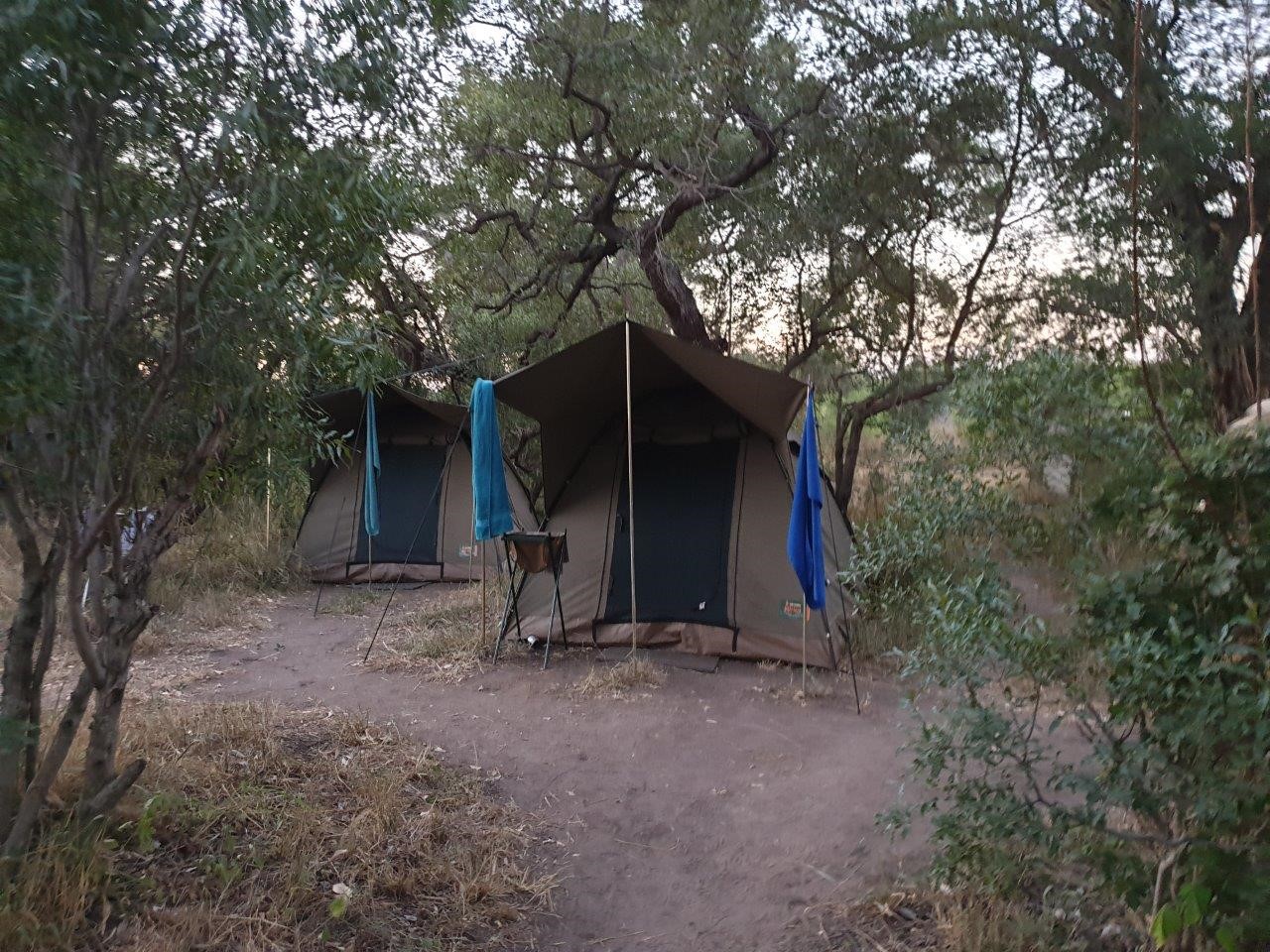
    image

    Base camp tents

    We got briefed on the proceedings and learned that we do primitive when the other group arrives in 3 days, after our primitive we go to a different reserve and into an old farmhouse. I am not sure whether I am going to prefer that or not, the luxury, aka hot shower, nice beds and flushing toilet, will be nice but not sure if I will prefer that over the nice rustic outdoors feel.

    Anyway that afternoon we went on our first hike, it was only a short one of about 2 hours but I was to be the backup guide. This means I was carrying a loaded rifle and having the responsibility of a back-up guide!!!! It was fucking amazing!!!!! I was very nervous at first but that soon dissipated and I could enjoy the experience, especially when we had our first encounter with an elephant herd!!!! We saw them on the other side of the drainage line and after testing the wind and ensuring we were approaching from downwind, we headed through the drainage line to the other and got to within 40m of the elephants and watched them eat for a while. Wayne provided me with an escape route into the drainage line and said I was to take the group down it if shit hit the fan, luckily it didn’t and I was charged with leading the group out of the encounter. Later that day Mersin (my once roommate at Bushwise) spotted what he thought was more elephants but ended up being a group of 5 rhino, again we approached downwind and got to within roughly 40m. As they were grazing in our direction we only stayed a few mins before heading out again without them being aware of our presence, a perfect encounter. Overall I would say this was an amazing first day and an amazing first experience at being a back-up guide even though I didn’t do the briefing.
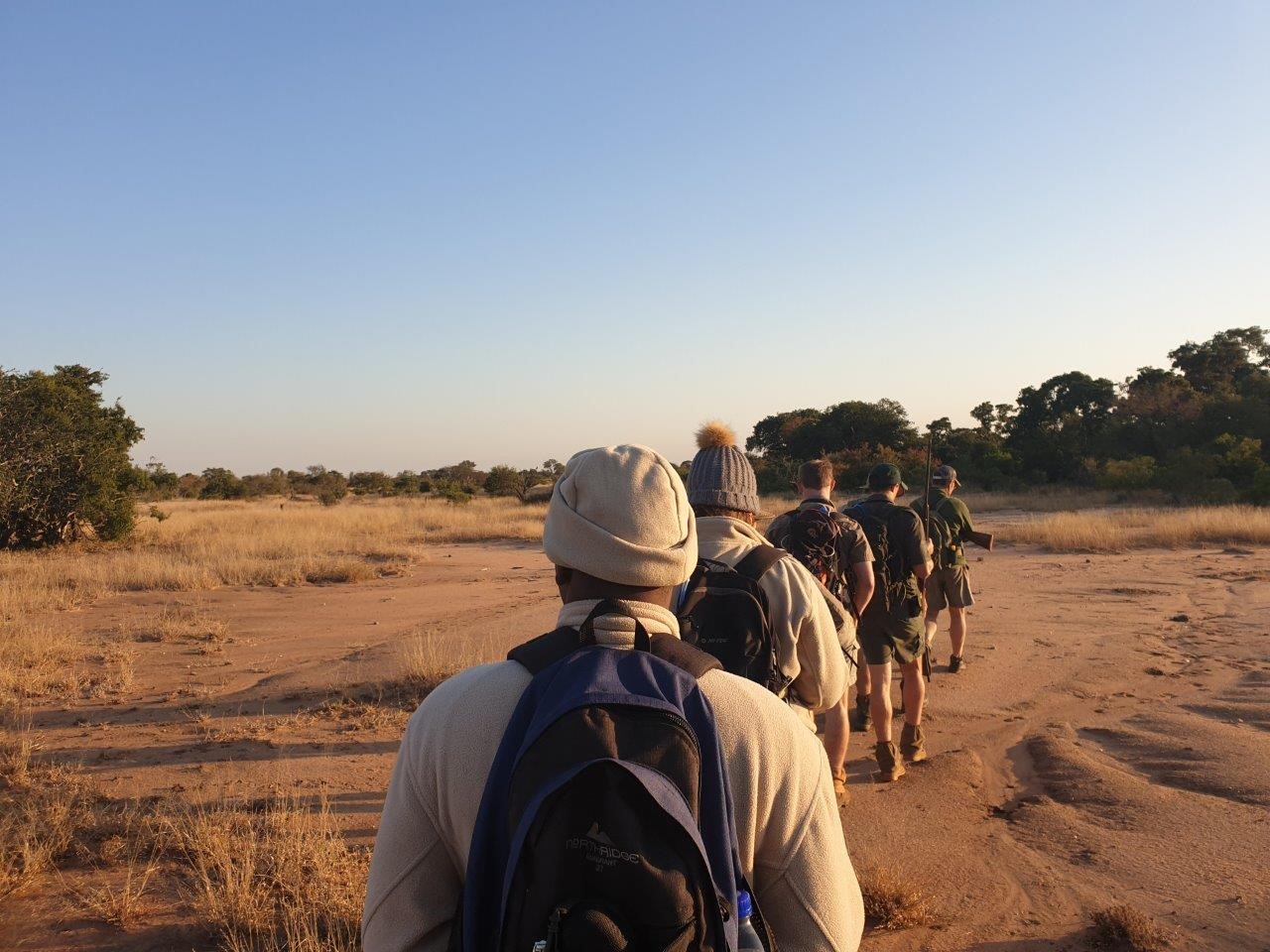
    image

    On foot through the bushveld

    image

    One of the Elephant sightings where I was acting as back-up

    Sleeping in tents was pretty intense but it was amazing, we had Kudu fillet and Boerewors (the South African version of Bratwurst) for dinner, grilled on the open fire and we sat around the campfire until about 21.00 (pretty much midnight for us these days). During the night you can hear the Hyena and it’s an experience going to the toilet in the middle of the night with hyena calling what sounds like only meters away. This kind of set the tone for the next few days. All we saw for the first 6 days were Elephant and Rhino but it was amazing to see those. One of the evenings we were sitting around the campfire and the entire evening we heard a herd of Elephant feeding in the drainage line about 5 meters behind us and at some time they passed right by us!! We also covered some tracking, botany and other relevant topics for both Trails and general guiding. We also learned from every encounter we had in terms of what and what not to do in those situations and how to use the elements in our favor. Afternoons were filled with siesta and filling in our logbooks, evenings with sitting around the campfire and going to bed around 9/10 pm.

    On the 4th day as the other group came back into the camp and after we had lunch together, we packed our bags for the 3 night primitive hike. Sightings during these days were similar as before and nights were quiet with nothing coming into camp, though we knew not to relax as there are plenty of stories of other types of sleep outs. I got very lucky on my walks where I was acting as back-up, as we tended to see animals on those days. This was great as it is a much different experience when you are carrying the rifle and responsibility as opposed to being a guest. You never want to need to shoot an animal but you are responsible for the guests and if any harm comes to them you are in a world of hurt, yet at the same time if you are too trigger happy and shoot an animal without giving it the benefit of the doubt then you will be in a world of trouble as well. The key is to read the animal’s behavior and be able to act accordingly to avoid any negative outcome on either side.
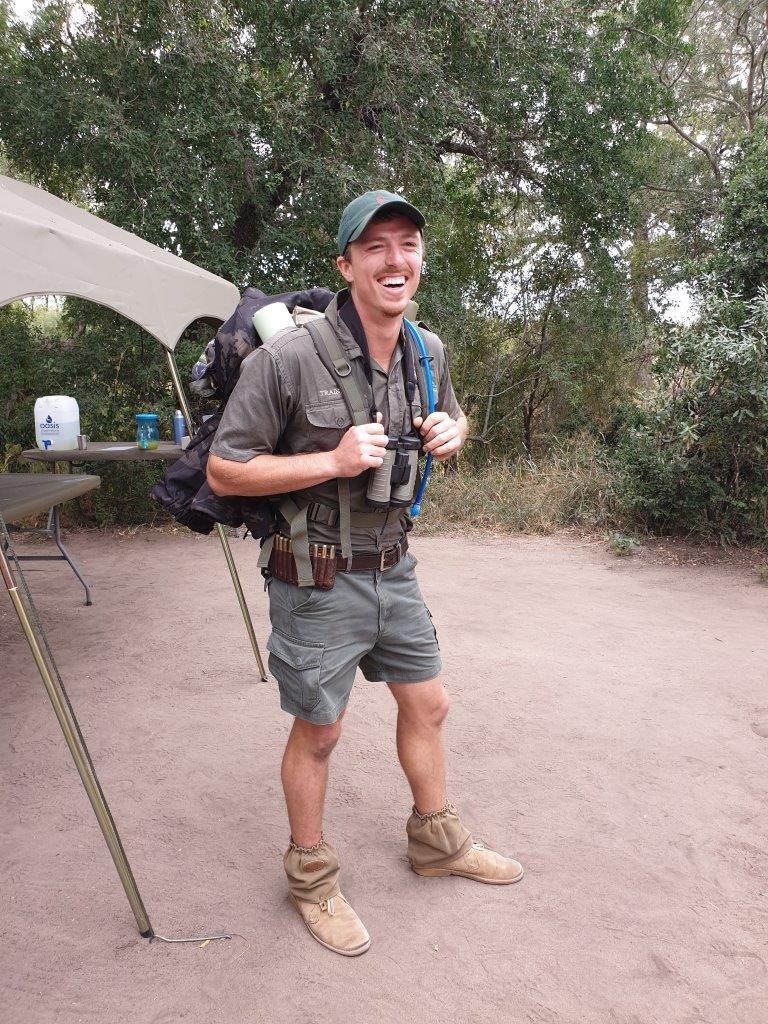
    image

    Our trainer Ed ready for primitive trails, he looks like that kid from Up

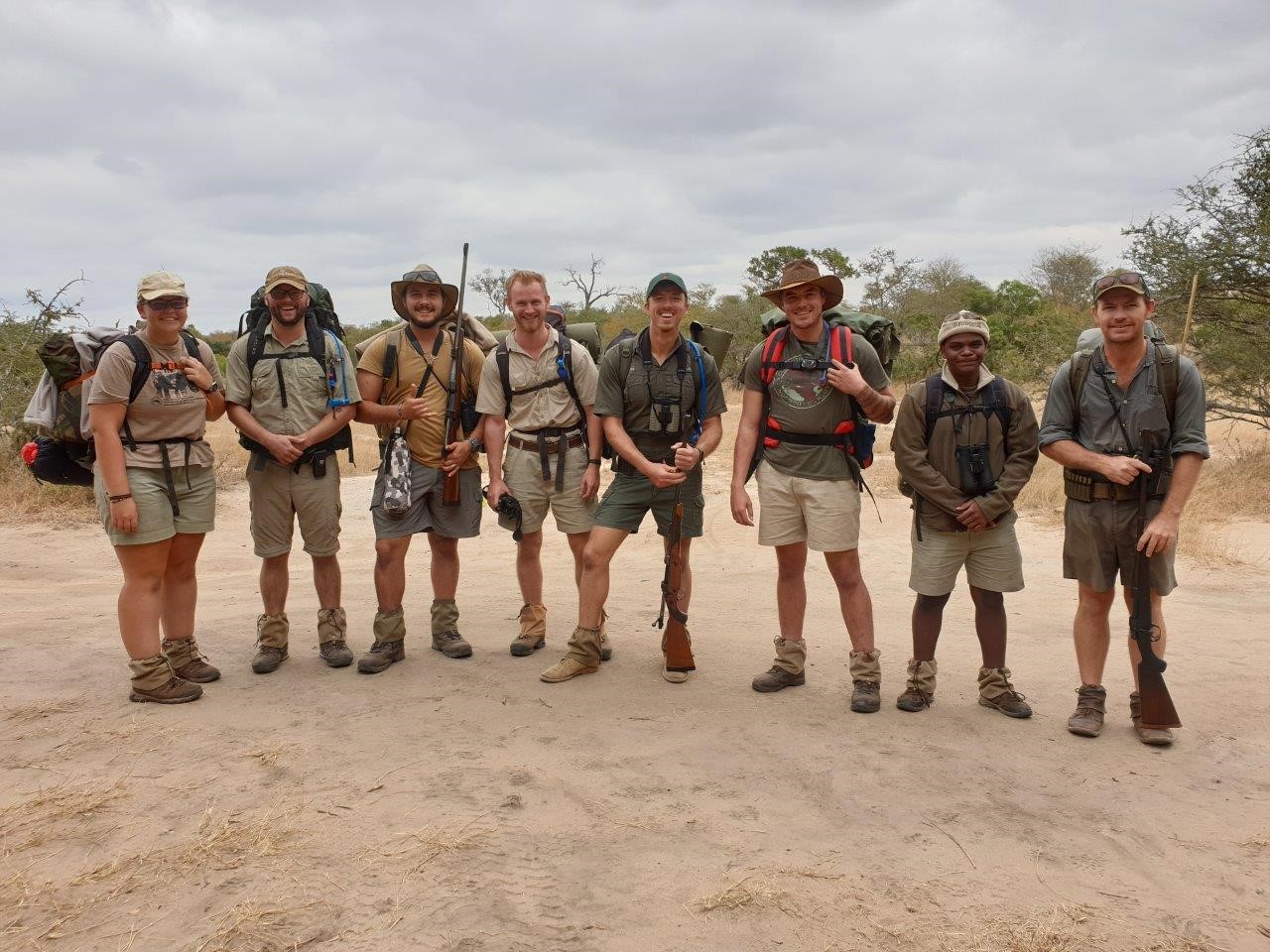
    image

    Group picture

    Overall primitive was amazing and although it was tough, especially trying to stay aware and scanning your surroundings whilst hunched over with the weight of the heavy backpack. We slept in river beds and hiked through terrain few people ever truly see. In general the terrain is very flat, this makes walking super easy, especially compared to the hobbly bogs of Ireland. It did make me miss Ireland though and cannot decide which I prefer. Effort wise and especially risk of twisting an ankle S.A. is definitely the better one as I struggle with the steep inclines of Ireland in terms of breathing, especially with the heavy packs, similarly after my torn ligaments my ankles are very week and I tend to twist them very easily, falling in the process. That said, I find the scenery here quite boring at times and miss the rolling hills, waterfalls and views of Ireland or other hilly/mountainous areas. This was punctuated on the last day when we had the Drakensberg mountains in the distance, this made the hike 10x better. What makes the bush so remarkable though is the animal presence everywhere, even when you don’t see them and not just the big 5 but all the birds and small critters as well.

    On the last day we made our way to our camp and promptly packed up and left for the other reserve to stock up on supplies and sweets. After this we went to the farmhouse. It was definitely nice to have a proper toilet, shower and bed, though at the same time it took away a lot of the outdoorsy nature of our 12 days, still not sure which of the two groups is the lucky one here.

    The first three days at the reserve we saw no big game but that changed on the 4th day when I was backing up again, this day we saw Lions as we were tracking a White Rhino. Over the next few days we actually saw a decent bit and we managed to round off our entire big 5. The best of the sightings though came the afternoon after the first Lion sighting…

    Stalking the Stalker

    It was a windy and cloudy afternoon, perfect weather for this ambush predator as it masks their movements through the bush. Wayne, our guide, told us that it was often days like this that this predator would go out and make several kills and stash them up trees for later consumption. As we were tracking Buffalo we came across some really fresh tracks and decided to stalk this stalker, they were leopard tracks. From where we found them they moved into a drainage line and we meandered in and out on the trail of this leopard. From the size we assumed we were on the trail of a male leopard and as we moved to catch up with it we could follow its path in our head based on the Squirrel alarm calls moving off into the distance. After about 15 mins we came to a bend in the drainage line with steep embankments, the Lead stopped and they were pointing down into the drainage line but I could not really catch what they were saying as I was 4th in the line. Out of nowhere comes a massive roar and I see our Lead shoulder his rifle and almost at the same time I saw a white tipped tail disappear into the bushes and caught a glimpse of the leopard bound off into the distance. What a sighting!!! This is often normal with Leopard in that you hardly ever see them, especially on foot. Normally if they become aware of you they will simply disappear into the bushes and you will not even know you walked straight past them. For it to have come out means we must have disturbed it and the reason became clear shortly after when somebody pointed to a nearby Knobthorn tree and asked ‘What is that in the tree‘. It turned out to be an 8 week old leopard cub in the tree. What we believed was a male turned out to be a female and we accidentally caught it at it’s den. This was now a highly dangerous situation and something that we would normally avoid if we would have been aware of it. Although it was also probably one of the cutest sightings ever, we made so to not make any move towards the cub as the mother was likely observing from somewhere nearby. We decided to move off and let mother and cub reunite. What a sighting and what lesson to learn, if the group had been any smaller or the Lead had been on their own there is no doubt that the leopard would have continued on her charge and gone for the kill, one of the many reasons to never approach a mother with child, regardless of the species.

    The rest of the days passed very similar to the previous ones and we had great fun around the campfire every night and enjoyed our time out in the bush, all too soon the trip came to an end and we had to pack up and head back for one last night at Bushwise campus before each of us headed on to our separate placements. Below some more great pics of our time on trails.

    Blog and photos by Jelle Linssen

    image

    #trailscourse #fieldguide #walkingtrails #trailsguide #lowveldtrails