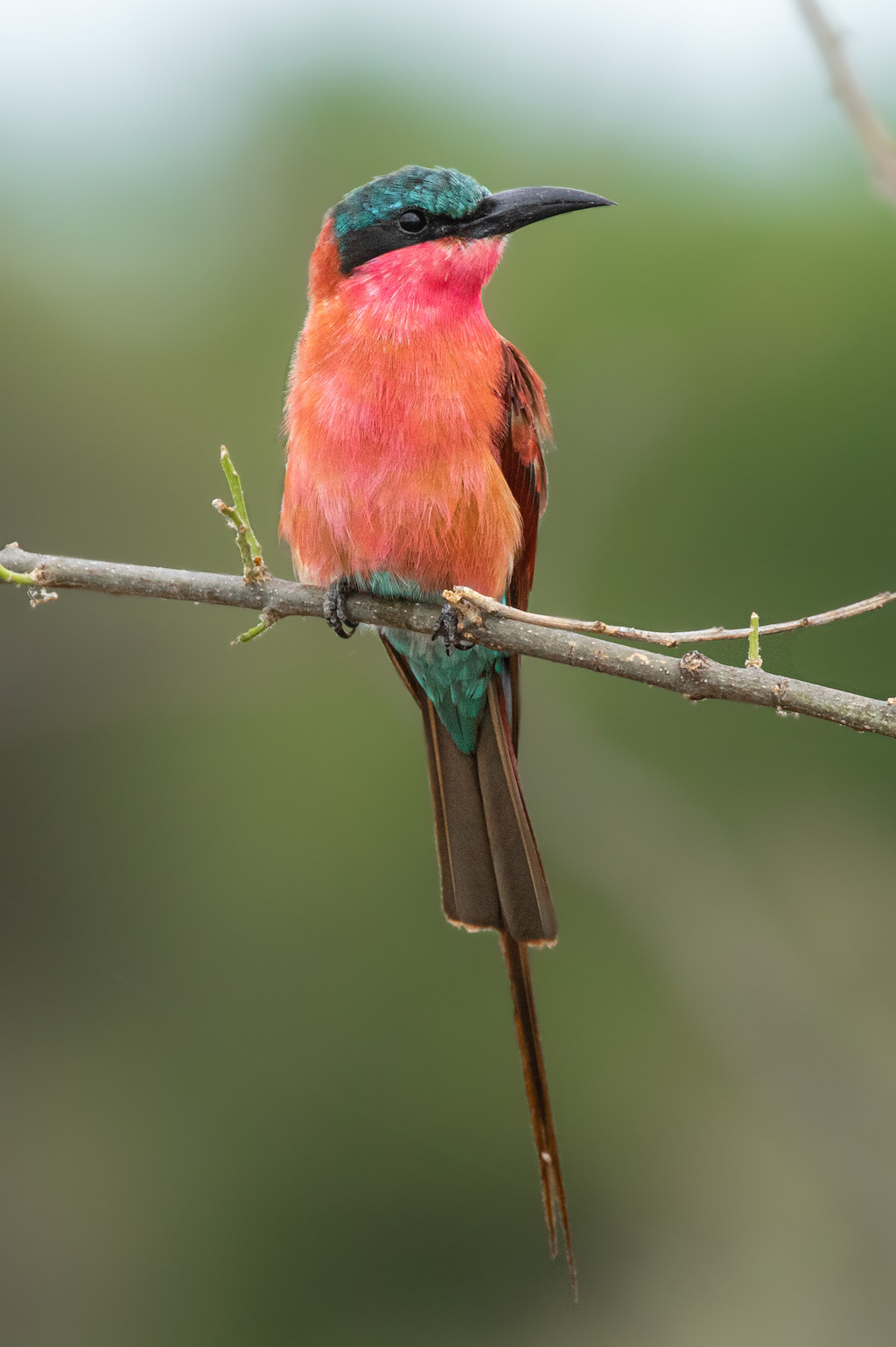
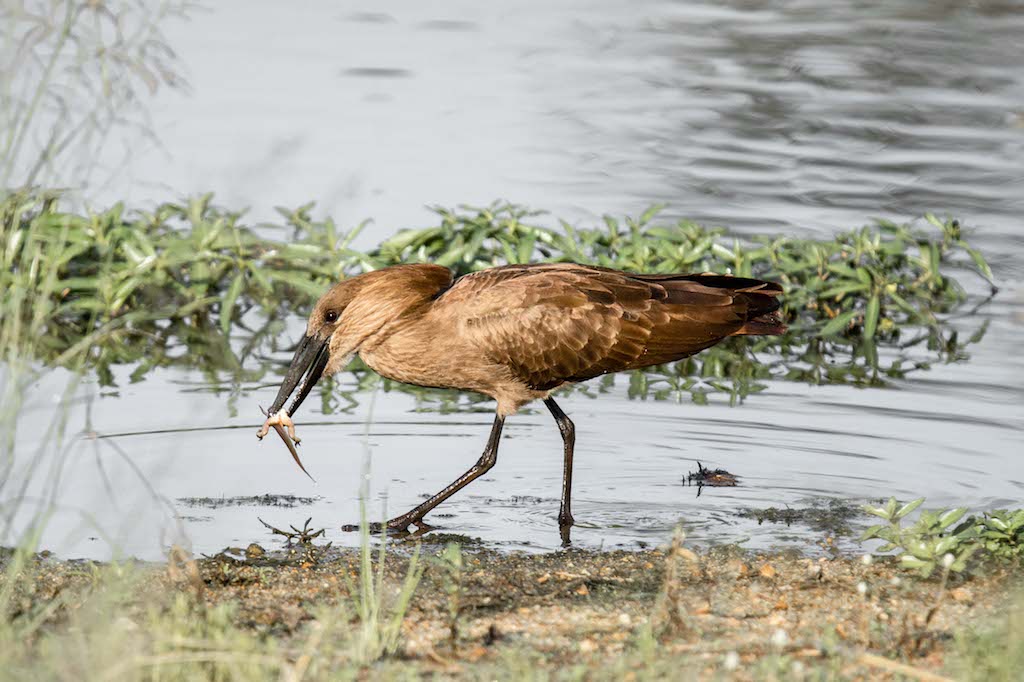
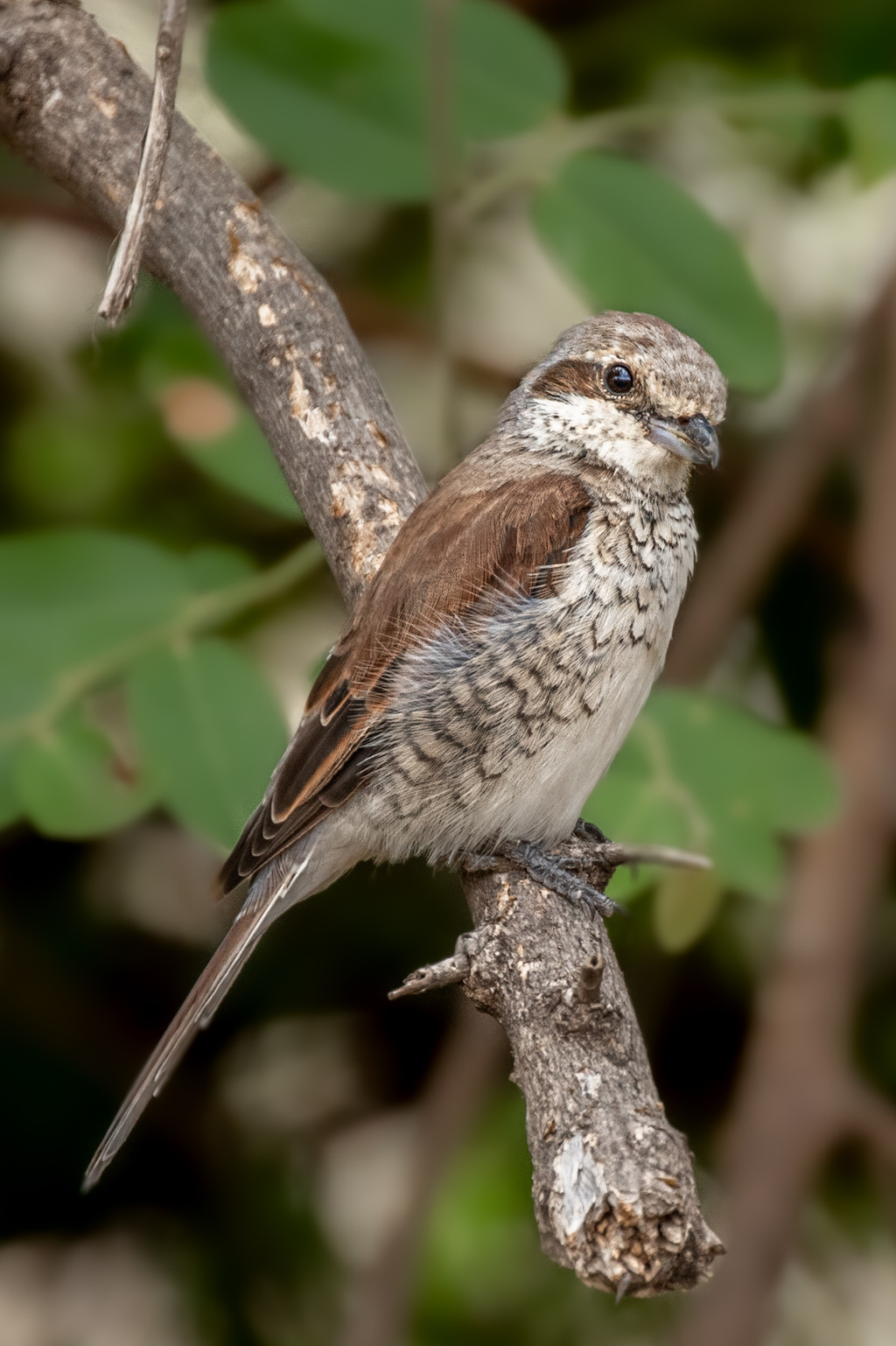
Take a moment to think about going a day without seeing, hearing or tasting that one thing that gets you up and going in the morning. To many of you reading this, it might be that first taste of your cup of coffee, to some, maybe a beer. To others, it might be the sound of your kids or wife shouting “I love you” before leaving home for work, school or university. To most, it might be the taste, smell and sight of breakfast. To a bush lover and bird fanatic, these sights and sounds are birds. Not every bird but very specific birds you only see during specific times of day, season or year.
To a person who has the incredible privilege of calling the bush their home, having the opportunity of waking up on Mahlahla campus surrounded by an ocean of green you soon start noticing when your ‘’something’’ goes missing. Living on campus you soon start becoming accustomed to the bird pecking on your window, the sound of sable horns smashing together as they fight for dominance, monkeys running over your roof or specific bird sounds calling from across your breakfast table. Once any of these go missing you soon start asking why.
With the change of season, we also welcome the change of temperature and like most would know this, in turn, has an effect on vegetation in and around cities as well as in the bush. To the untrained eye, with the cold, the bush goes yellow and with the heat comes the green and rain. Having a closer look there is so much more that takes place over these seasonal changes. As it gets hotter conditions do not only become more favourable for carnivores who can now feed on fatter, healthier antelope having fed on thicker more lush green trees and grasses. It also becomes more favourable for insects who can now pollinate and feed on wildflowers who in return will be fed on by reptiles and themselves again fed on by birds. The list could go on and on as all living organisms are connected to one another in some way or another.
The incredible chain reaction of all things connected is what triggers birds to migrate yearly. Migration can simply be defined as a predictable seasonable movement to and from a single destination once in a calendar year. The answer to why birds migrate could simply be to increase their chances of survival but why are we all here and do what we do? To breed!
Southern Africa is home to more than 100 migrating bird species who can all be divided into three different categories being: Palearctic, intra-African and altitudinal migrators. Although most of these would migrate to Africa/Southern Africa to ensure a constant or improved food supply aiding in their survival to breeding, many would migrate just to breed.
That is exactly what many of the new arrivals did at the start of summer. During these prime conditions, common resident species also make use of the abundance of food and daylight to find mates and breed. It can be assumed that they would be just as vocal and active if not more during this time as it is their place of birth. It is during this time that I first noticed that the overabundance of new birds in the area almost forced resident species to go silent to almost non-existent. Keeping a closer eye and ear to what I saw and heard I could only assume that my prediction was correct as resident species were not as active and present as before the breeding season started. It wasn’t until the end of March when migrating species became silent after returning home that I began to notice resident species ‘’speaking up’’ once again. Proving that there might be some truth to my assumption.
Nature is simply incredible and how all is connected and still manages to balance out between all animals will always blow my mind. Research has proven that breeding birds need 30% more energy during the breeding months which gives a fair idea of how much extra food is available during the summertime. What surprised me even more, is how an extra 4,5 billion migrating birds, consisting of only 100 species to Southern Africa each year could still find their own extra 30% of energy equivalent in food. While at the same time, forcing resident populations to go into hiding. The only way to notice these differences is to start looking at what’s new in your garden. I urge you all to do the same.
Depending on your answer, this will determine what course is best for you.
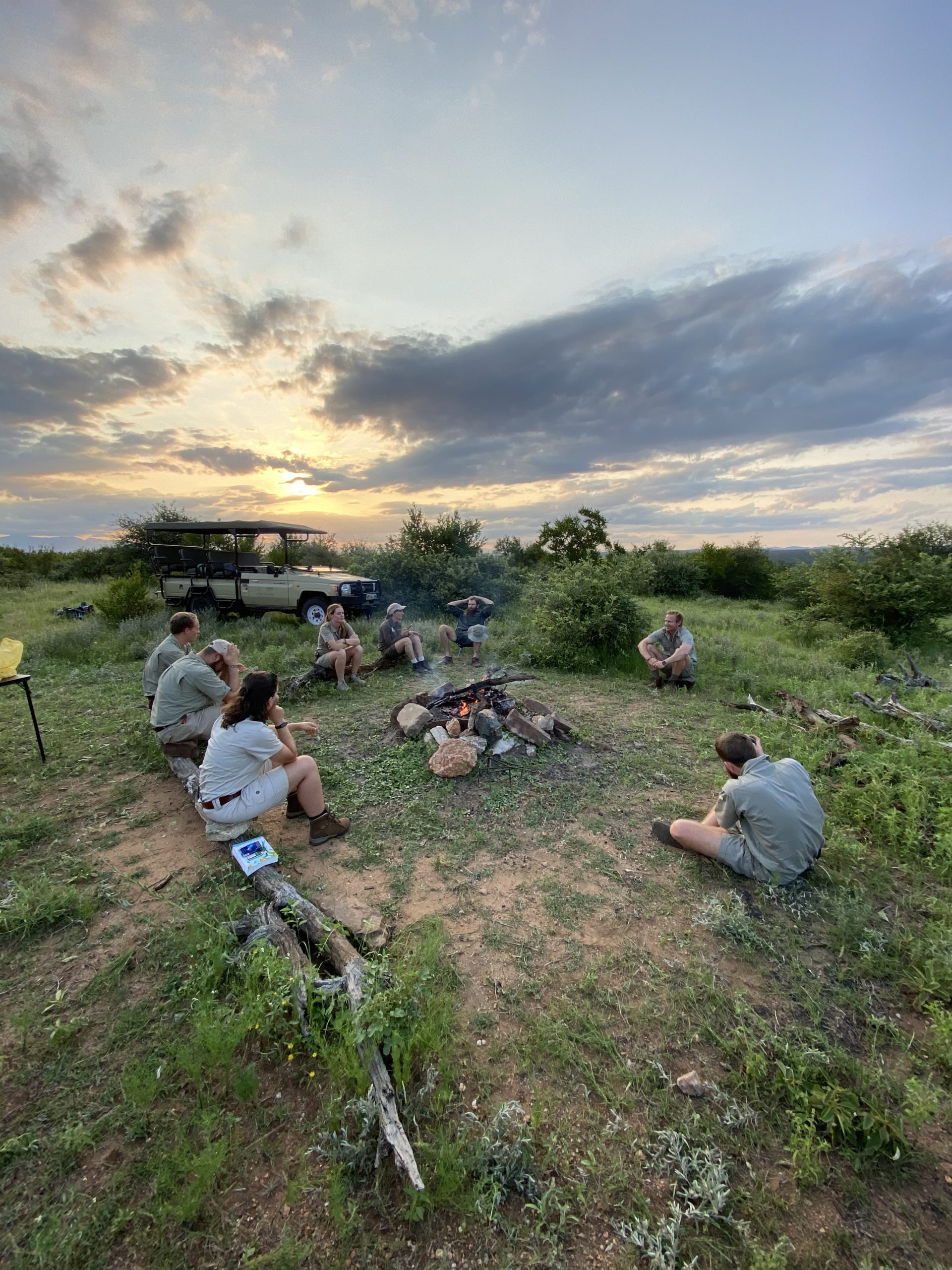
Sleepout – Photo by Andi Dill
Career ambitions
For career-driven motivations, the long term, comprehensive course will be your best option for the following reasons:
More practical experience and training
More inclusions like sleep outs and trips to other game reserves which is beneficial
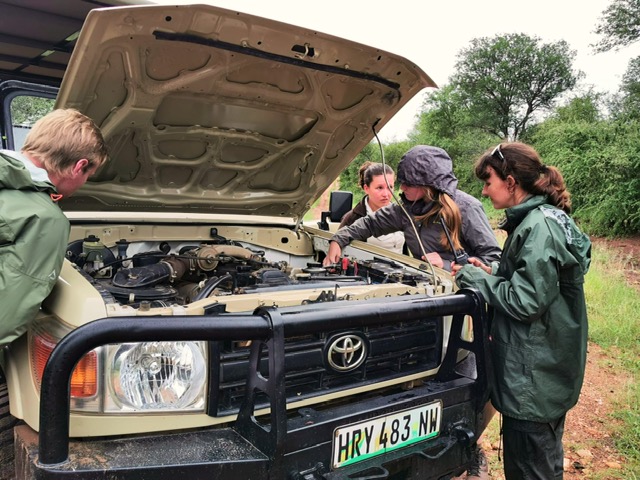
Additional skills like basic vehicle mechanics, camp management and bush walks
Additional qualifications like birding specialist, tracking and hospitality training
The inclusion of a work placement gives you an opportunity to gain working experience
These aspects will make you an overall better-qualified guide with more skills and qualifications. This, in turn, will make you more marketable and employable as an Apprentice Field Guide at entry-level.
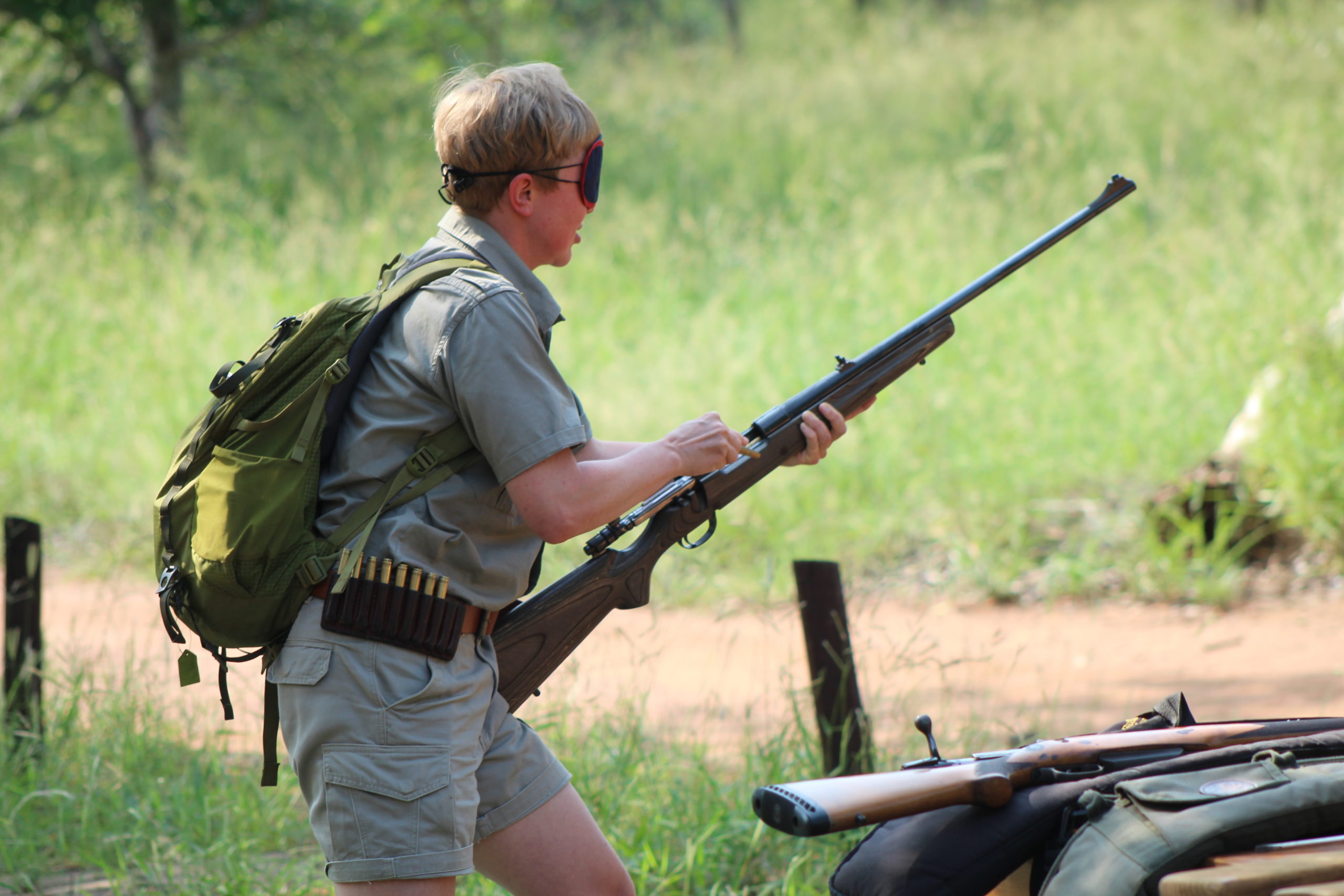
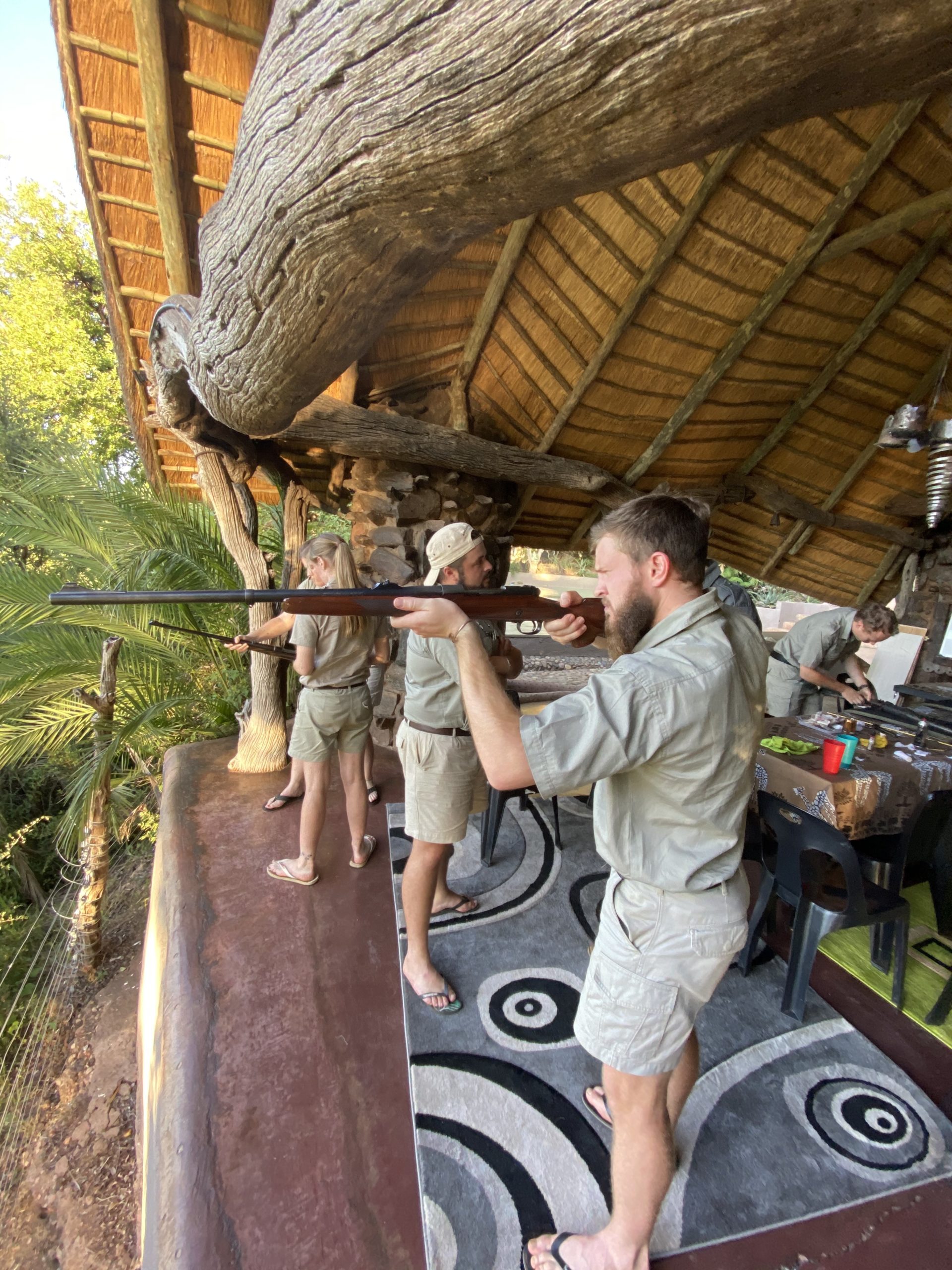
Rifle handling drills – photo by Tommy Curely
Important tips for international students
The work placement is very important for international students as this gives them a foot in the door, a chance to gain working experience and an opportunity to impress potential employers. As a foreigner, this will help because job guarantees are very difficult.
On a shorter course, you would attend on a tourist visa. On the Bushwise professional field guide 23 or 50-week course you would attend on a study visa. With a study visa, it also allows international students to apply for a South African driver’s license and then later get their public drivers permit. Without this, you cannot do a guiding work placement, register as a field guide or try to look for work as a field guide who takes paying guests on safari.
Other factors to consider
It is important to know your budget, investigate what additions are included and what you hope to gain. There are indeed shorter field guide courses available and their prices reflect what is offered so they need to be compared.
Take the cost of a course and divide that by the number of days or the duration of the course to see the daily rate. This way you can compare the daily rate. A short course may ‘look’ cheaper’ but they offer less and are in fact more expensive when working out the daily rate.
Check carefully to see what you gain after each course in order to get a good idea of how qualified and experienced you will be afterward how many certifications/qualifications you could gain.
Find out who the trainers are and what qualifications and experience they bring to the table.
Get direct feedback from students who have done the course
Do a training course in the area you hope to work in
Employers are looking into what certificates you have gained so that they do not need to do additional training with you on tracking or 4×4 driving skills etc.
Employers want to see if you have any working experience. Doing a short course will not provide you with any work experience and graduates have struggled to find employment based on this
Game drive – Photo by Alistair Dyason
What sets Bushwise apart from others
We are the most comprehensive course available with NO HIDDEN costs
We have the best value for money based on what we offer.
We guarantee six-month guiding placement too ALL students between 21 – 39 years old
We offer a free recruitment service to our alumni after the course and throughout their guiding careers
Students @ heart is our motto. Your success is our success
The time is now to start this gratifying and fulfilling career as a field guide and live a quality of life most can only dream about.
How many of us get excited by the thought of World Meteorological Day? While the answer may be “not many”, this annual awareness day is worth us all giving a big whoop, because it’s all about the world we live in.
World Meteorological Day started in 1950. It’s a day dedicated to the World Meteorological Organisation for the work they have done to address climate change. To gain an appreciation for this day, we have to get to know what the World Meteorological Organisation is, what it’s done, and how it makes an impact.
What is the World Meteorological Organisation?
The World Meteorological Organisation is a specialist sector of the United Nations (UN). And their work is all about monitoring and responding to weather, climate and other environmental concerns on a global scale.
Simply put, these are the guys who tell us how hot it is today compared to 20 years ago, and whether we should be concerned or not.
But how good a job could this organisation be doing if many of us haven’t heard of it before?
Well, the World Meteorological Organisation has done so much in so many different locations across the world, that many of us may not have been able to keep track.
This unassuming operation has taken on our biggest global challenge – climate change – with a determination that can’t be played down.
Getting to know more about the causes of climate change can help us to focus on what the World Meteorological Organisation actually does.
And since the biggest driver of climate change is human activity, it’s probably best that we start there.
What are the top causes of climate change?
Human activity is the biggest cause of climate change today, particularly the use of fossil fuels like natural gas, oil and coal.
Human activities contribute to climate change in the following ways.
1) Land degradation
The world depends on fossil fuels for its energy needs.
Extracting fossil fuels from the Earth often means digging deep, which affects the natural environments that house these natural resources.
An example of this is acid mine drainage. Mines house exposed sulphur-containing materials. When water from rain or rivers flows through or over these materials, it becomes acidic. This acidic water flows into the ocean where it can affect the health of marine ecosystems.
And digging deep also requires heavy machinery like bulldozers and tractors. This type of machinery burns fossil fuels and these produce emissions that contribute to greenhouse gases, and up the impact of climate change.
The world is working on ways to replace fossil fuels with renewable energy sources – like sunlight – that can prevent further land degradation. But this move is not fast enough to keep up with global energy demands, so it’ll be some time before the world can stop extracting fuels from the Earth.
And, with the ever-increasing global population, we’re set to burn even more fossil fuels over the next few years.
So what does this mean for our weather?
Photo by: Vaughan Jessnitz
2) Increasing greenhouse gas emissions
Well, the weather we experience every day is affected by the by-products of burning fossil fuels – known as greenhouse gases.
But these gases aren’t just produced by burning fossil fuels. Many are produced naturally by different processes taking place on Earth.
For example, oxygen is essential for all living things on Earth. And after using that oxygen to fuel our bodies, we breathe out the by-product, carbon dioxide (CO2).
CO2 is one of the many greenhouse gasses that are needed to trap the sun’s heat in the atmosphere, instead of it being reflected back into space.
So greenhouse gases themselves aren’t a problem. On the contrary, they’re one of the reasons that Earth is a warm enough place for living things to survive.
But processes that produce massive amounts of greenhouse gases are cause for concern.
With industrialisation and global population growth, the amount of greenhouse gases being produced by human activity is clogging up our atmosphere, and trapping too much heat.
And this is why global temperatures have soared over the last few decades, and literally changed the world we live in.
As the world heats up, more water evaporates off of the oceans, rivers and lakes, producing water vapour.
Today, water vapour accounts for most of the greenhouse gases in our atmosphere. And this is quite concerning since water vapour is also the most effective greenhouse gas, trapping more heat than any other.
3) Polluting the air and water
Climate change means less water on the ground. But air pollution takes this even further.
Water vapour that mixes with abnormally high concentrations of other greenhouse gases – like carbon dioxide, sulphur dioxide, and nitrogen oxides – becomes more acidic.
This water vapour is part of the Earth’s water cycle. When this water vapour precipitates and falls back down – most often as acid rain – it affects the environments it enters. Marine life in oceans, rivers and lakes can also be affected by this polluted water.
And we’ve even seen the freshwater stored in glaciers melting away more rapidly due to global warming. This water enters the ocean, causing sea levels to rise. But it also means that there is less freshwater available to support life on land.
With a global population that’s growing at an increasing rate every year, the impact of these causes of climate change is expected to steadily increase.
And the World Meteorological Organisation is trying to keep things under control.
How are they doing this?
Studying the impacts of climate change
A huge chunk of what we know about climate change – the causes and the consequences – is thanks to the work of the World Meteorological Organisation.
This isn’t just because they follow weather patterns, it’s because they’ve been able to do so on a global scale.
They’ve helped us to understand Earth’s climate in a comprehensive way. This understanding helps us to pinpoint concerns, focus global efforts, and make our efforts more impactful.
And their contribution to keeping an eye on climate change became clear with their press release in 2019.
Communicating the impacts of climate change
The 2019 World Meteorological Organisation press release alerted the world to the fact that we had just experienced a decade of exceptional global heat and high-impact weather.
This press release also emphasised the strong impact of climate change on water, leading the organisation to launch a focused theme for World Meteorological Day 2020: Climate and Water.
Without the rich supply of research and analysis that the World Meteorological Organisation has to offer, will the global community really know where to start when it comes to curbing the causes of climate change?
And the World Meteorological Organisation doesn’t just talk the talk. They’ve set up programs all over the world to assist countries in building their climate change resilience.
By collaborating with countries all over the world, to collect data, compile findings and develop recommendations, they assist vulnerable countries in responding to climate and weather concerns in the best ways possible.
These programs focus on agricultural and flood management, capacity development, and disaster risk reduction, to name a few.
And they’ve produced some great results.
In many cases, this has meant invaluable progress. Take for example the way they assisted Haiti in 2010.
How global collaboration got Haiti back on track
Haiti – one of the countries with limited economic resources in the western hemisphere – experienced a major earthquake in 2010.
This earthquake caused serious damage, particularly to the infrastructure on the island, which included the Haitian National Meteorological Centre (CNM).
As a country with high vulnerability – likelihood of exposure – to severe weather conditions, Haiti depended on its meteorological centre. Without it, the country wouldn’t have been able to forecast adverse weather conditions and respond to them timeously.
But with the assistance of the World Meteorological Organisation, the global meteorological community collaborated to re-establish meteorological services in Haiti.
The organisation also partnered with Environment and Climate Change Canada to develop a project called Climate Services to Reduce Vulnerability in Haiti.
This project busied itself with setting up a new CNM headquarters, providing training programs for CNM forecasters, and supplying the technical equipment needed to make the CNM function successfully.
The World Meteorological Organisation then established a project office in Haiti, to assist with the running of the project and coordinate with local project partners.
What would the world be like without the World Meteorological Organisation?
Without an organisation with this amount of global clout, we may not have recognised the true impacts of climate change, and the urgency with which it needed (and still needs) to be addressed.
We may not have been able to respond in the wake of natural disasters, and we probably wouldn’t be able to cope with the rapid amount of change caused by global warming.
Bushwise Field Guides offers courses that can help you to wrap your head around meteorology. By learning about meteorology, you can gain a new appreciation for World Meteorological Day 2020, and the organisation that’s keeping its eye on our climate.
Well not only have we come racing to the end of yet another interesting, jam-packed week, but also to the end of term two. It’s been an amazing term, the first week dealing with the rifle handling and competency test. Then straight into Track and Sign week, where some of us managed to work out what and where certain animals had passed by, what had taken place and where it was off to, others of us, were still left a little in the dark as to what the marks left in the substrate were and intend to improve our reading of sign in the future. Week three got us back into the rhythm of getting our practical drive skills and knowledge up to date, which now brings me to this forth week where I, acting as Camp Manager took over the reins
Week four started off with our usual Bushwise tests, this time consisting of mammals and ethology. I believe, from all the chatter after the tests that everyone had put in the needed time and can tick these off with a pass. The new lectures, Monday afternoon, ecology and Tuesday morning, arthropods, were absorbed with great interest and amazement as to how these little critters work. Tuesday afternoon had us all one after the other delivering our oral presentations. These were very interesting as entertaining, leaving both students and trainers thinking about this ever-changing amazing world of nature surrounding us.
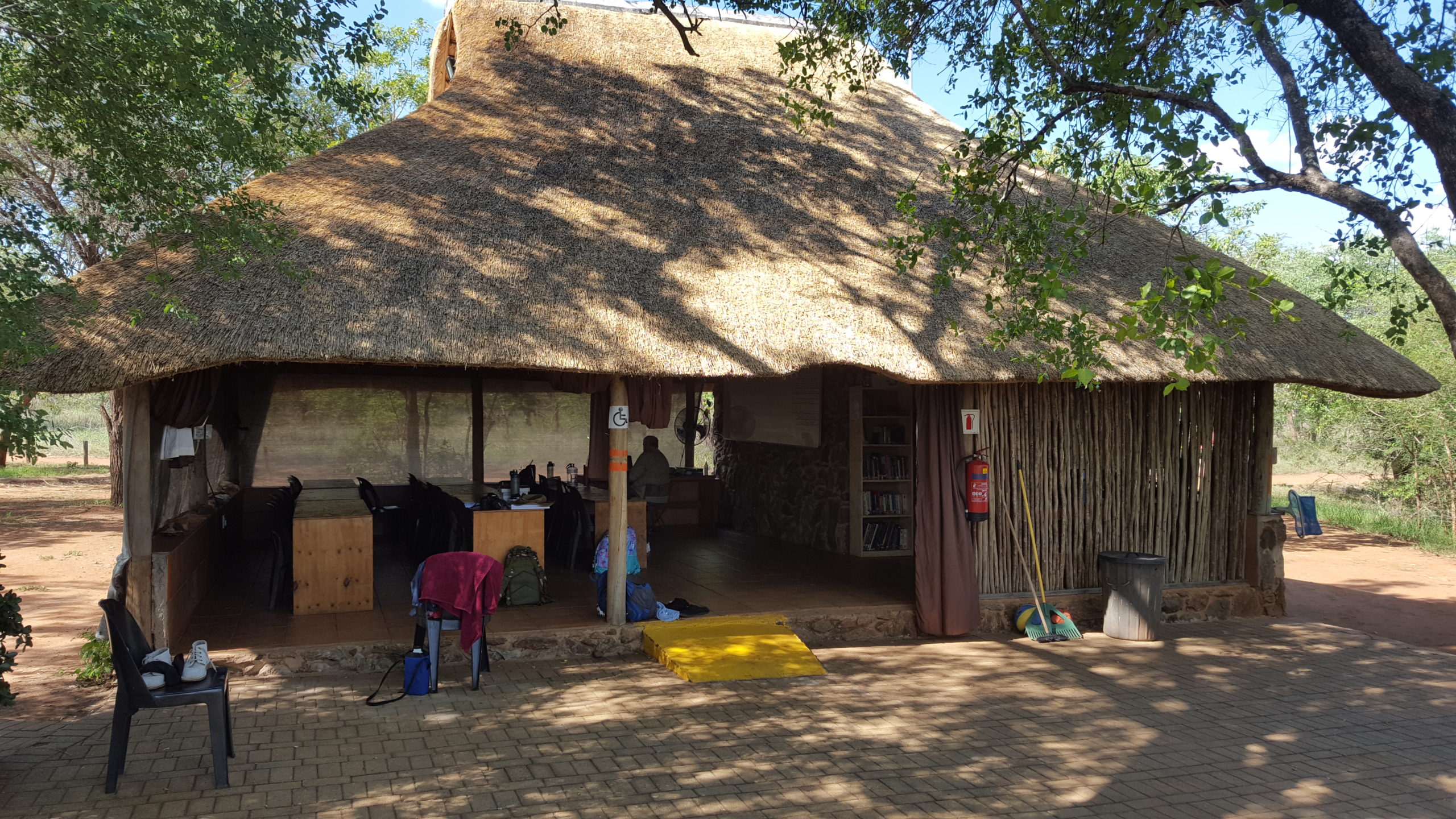
Mahlahla campus classroom
Wednesday had us doing some reserve work, where we visited a site that needed to be cleared of long discarded bits of wire, fencing and the normal “left-behind” telltale signs of human existence. The afternoon was spent in a far more vibrant and upbeat mode as we collected our things together, packed the vehicles and headed out into the reserve for a sleep-out. This being our second time we found our campsite with all its designated areas, kitchen, fireplace, firewood and sleeping area set up in no time. A wonderful time was had by all and went off without any incidents.
Thursday morning we returned to campus, cleaned ourselves up a bit, brunched and headed off into the reserve again, this time to clear back vegetation encroaching onto the roads. This was very successful and rewarding knowing how much it is going to impact on our future drives and the lack of scratches.
We got an early start, 5.45 am on Friday to do our practical observation test, which consisted of animal tracks as well as all the surrounding vegetation. Besides a few obvious silly mistakes we all did pretty well and were happy with our performances. We received our termly feedback from our peers in the afternoon and then we were off, to spend our week off from campus norm to do as we felt necessary, be it a break from the continuous pressure of get all the information in for Mondays tests, going home for the missed comforts, or staying on campus to concentrate on getting our module workbooks up to date.
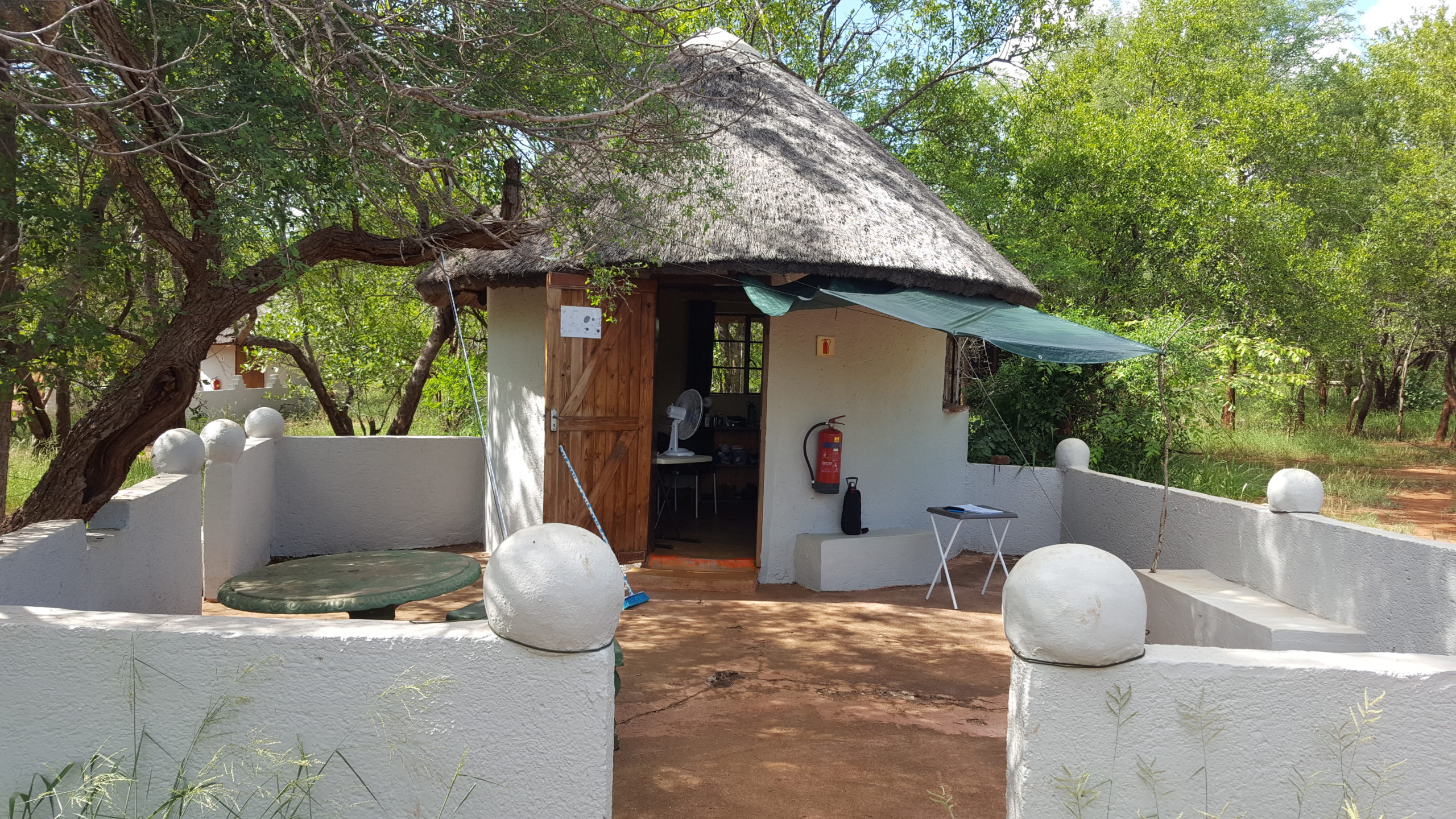
Mahlahla campus bungalow
All in all, though, another wonderfully informative term has flown by with so much to reflect on, take your time in getting here term three, there is no need to rush.
Having just finished a long, arduous but very rewarding week with Colin Patrick, doing track and sign everyone in the group did well in acquiring a Track & Sign level. The week began with the international students (Ank, Chloe, Alex, and Sophie) departing for Hoedspruit to do their learner’s license test in order to acquire a South African driver’s license and PDP. Whilst they were away on their town trip the rest of us (Matthew, Benno, Zander and myself) remained behind and helped with some lodge work in terms of preparing one of the guest rooms for a visitor that evening. This afforded us a taste of what it will be like for us in the future in terms of what is going to be required of us beyond the realms of filed guiding and more into lodge work and hospitality. Monday as a whole proved to be a great “somewhat relaxed” start to the week knowing what was to be forthcoming with us tackling the subject of rifles.
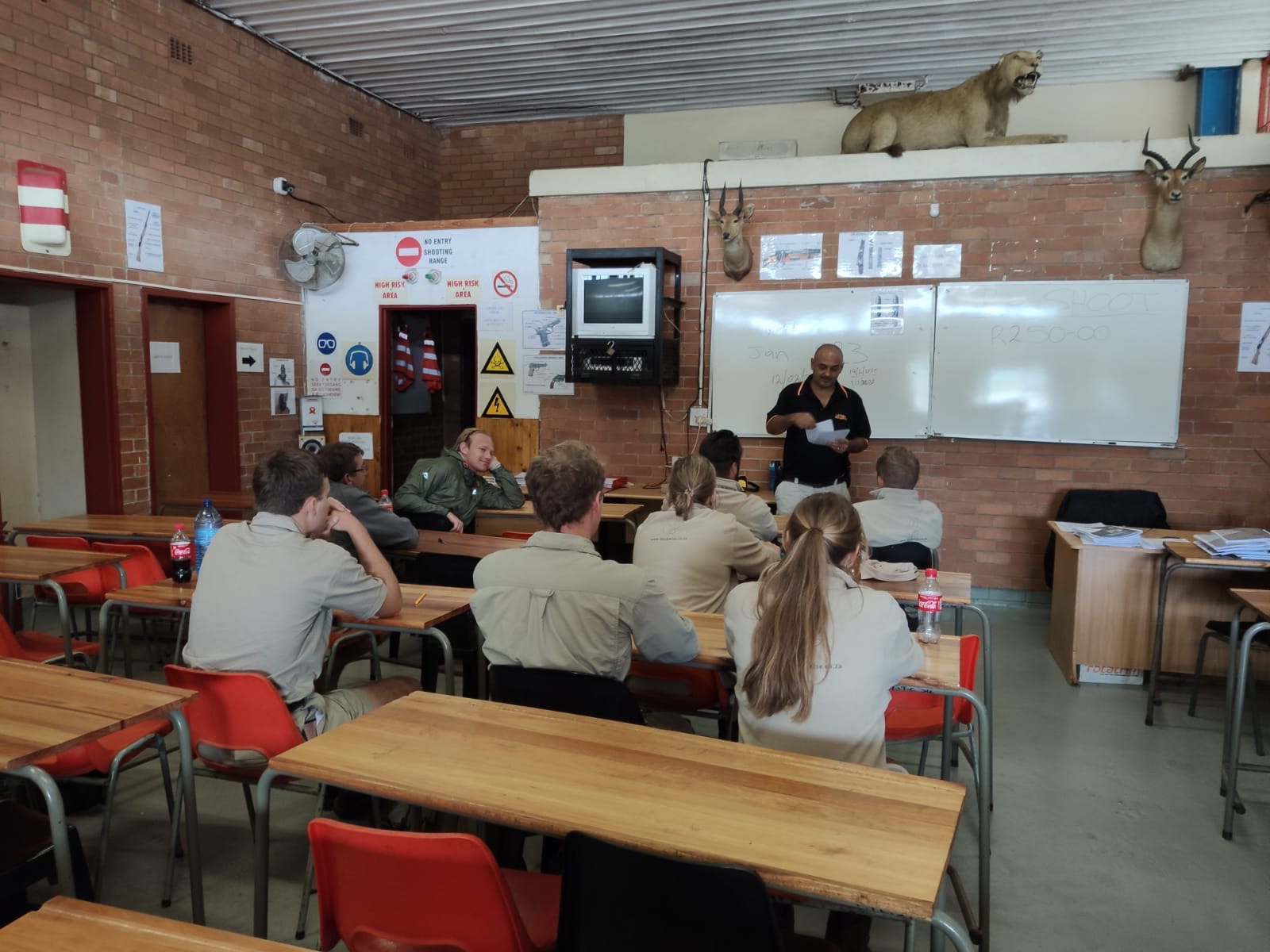
04:30 am and the FIRST alarm sounds, the start of the week has begun. After a brief cup of coffee and a dash of cereal we departed for the long trip to Tzaneen to complete a course through Letaba Tactical Firearm Training.tThis would span over both the Tuesday and Wednesday in order to complete the necessary theory tests and physical assessments to be deemed competent to acquire the licenses needed for a guide to carry a rifle on bush walks. Very tired and using the motivation of this being the last week before our second leave cycle we soldiered on to Tzaneen. Upon arriving we met Jan, from Letaba Tactical Firearm Training who would be looking after us and guiding us through the next two days. What a character he was! A laugh a minute kinda guy and we all kicked off amazingly with an instant dose of much-needed energy. Orders were made for vetkoek and mince for lunch the first day, for most of the foreign students it was their first experience, it went down a treat! Over these two days, we did the summative assessments (tests) and a physical competency test of which we had to fire 10 rounds of both a .22 and 223 rifle into a piece of paper twelve meters away. It was broken up into theory on Tuesday and Shooting on Wednesday.
Firearm competency classroom work – Photo by Ank Lubberink
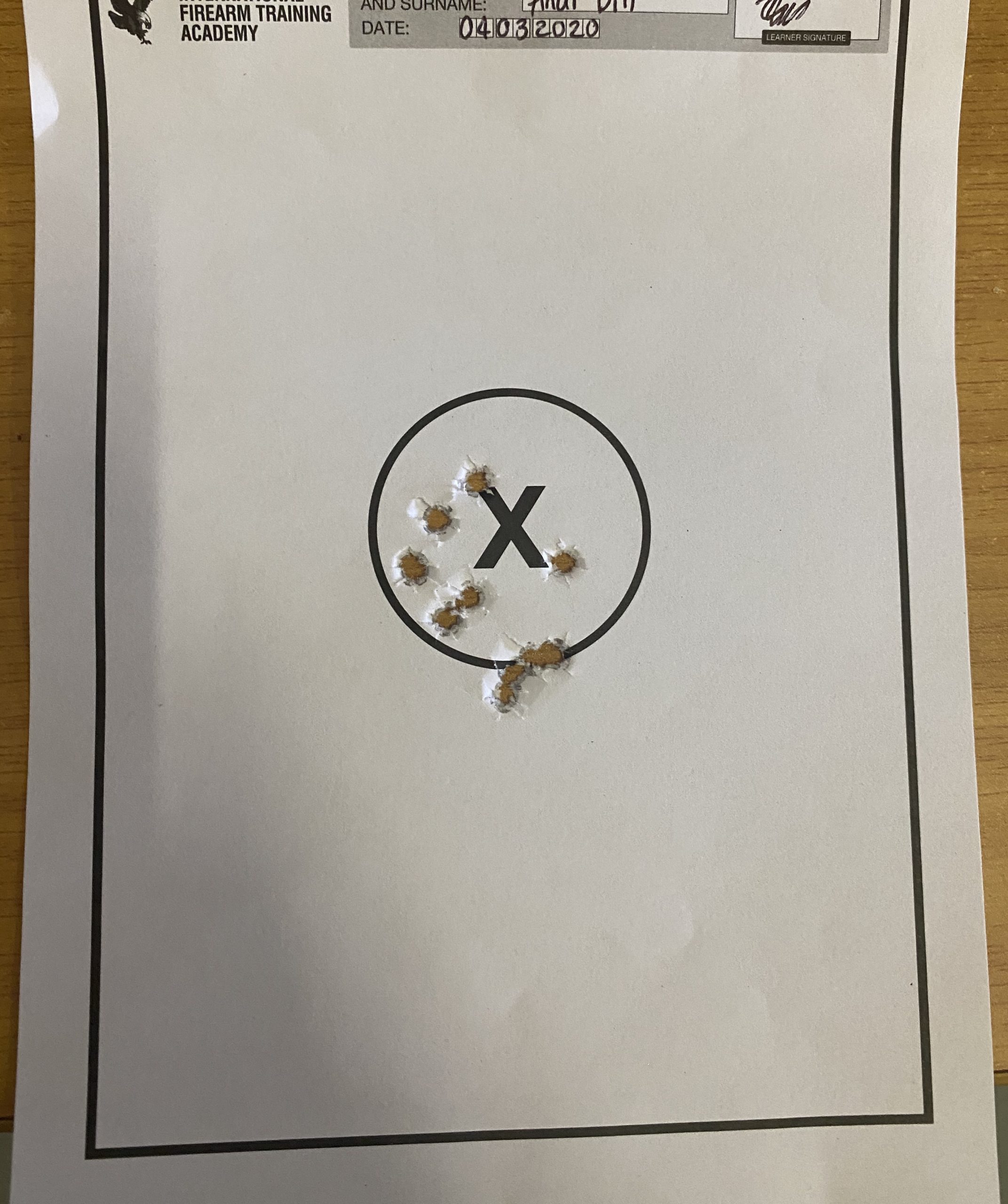
Wednesday arrived and after another early morning and long voyage to Tzaneen, the “action” was about to get underway with most of us firing a firearm for our first time. We went into the range one by one with all of us being deemed competent, the competitive nature took over and we had a friendly competition for the best grouping which much to my shock I actually won. Following that we made our way back knowing we would be one step closer to the next off week.
My grouping with a .22 Rifle
Thursday arrived and it was feedback day, which afforded us a bit of a “lie-in” in comparison to the last two days. Basically, feedback sessions are held at the end of each semester and a great way to see how you are doing as a student and for you to give feedback. The feedback sessions all went well and we then broke for lunch and had some time off (which is always welcomed by the students) before the rifle lecture, During the rifle lecture hosted by Jack, we furthered our knowledge about rifle handling and were presented with the chance to actually handle and get used to the loading processes with dummy rounds. Everyone enjoyed this and started the quest to build muscle memory with handling rifles.
Benno showing how it’s done during the first of our dry runs
Friday arrived and one step closer to that leave week. A fun activity was planned for us in the morning to see where we stand with birds and botany in the form of a bird call and a bird slide test as well as a botany observation test around campus. It was really great to get a grip on just how much our knowledge has grown in the weeks being here. Everyone did fantastically well. The rest of the afternoon was spent relaxing and planning ahead for the week off and reflecting on what has passed this semester. When I personally look back at the semester I am filled with a sense of fulfillment and happiness at both what I have learned and the furthering bonds of what is now my new family.
No matter how fast you are – no one will outrun their past. So make sure the next step you take, adds on to the legacy of what was years before.
Remember the name Colin Patrick. This is a man that I believe could probably track a flying insect in the air and still tell you if it went left or right or looked up or down. That is how good he is. Semester 2, week 3. The week of track and sign with Colin Patrick.
One thing Colin made me realise is how tracking can take a person back in time, and how our society has changed. These days people are walking around with tunnel vision. They are so focused on their phones while walking, or they can’t hear what is going on around them because they have earphones in their ears. Where we are, in the bush, you cannot walk around like that, because if you do, you are a dead man.
Colin asked us how many lion tracks we need to see in our life to be able to know for sure that it is a lion. We all said maybe five or six. But we were all wrong, he simply said ‘never enough times.’ And during this week we found out what he meant.
The first day I think most of us were thinking “is this guy making this stuff up?”, because we can’t see that track or how can he know the rhino was looking to the left. After a few days, we finally got into a rhythm and built up some confidence, thinking we were all great trackers. But then he pushed our limits and slammed our confidence right back to rock bottom. At this point in time, I told myself that I’m going to drive over the next scrub hare I see, just so it cannot leave a track. Scrub hare – 4, Zander – 0. Let’s not even to talk about the birds (which all look the same). I got as far as identifying them as a bird until Colin hit me with (the second most hated sentence for the week other than scrub hare) “be more specific”.
It was a hot and tiring week being out in the field all day long. Wednesday was a full day in the African bush. Halfway through the day we stopped and made brunch in the bush, with an hour and a half to spare to catch up on a siesta before hitting the soil again.
My favourite part of the week was when we got a chance to take our mind off things. We did some anti-poaching training with Colin, and his dog (second wife) Annie. He asked us who wanted to be “poachers” and they would go hide so that Annie could find us. Myself, Matt, Andi, Benno and Jack went in as poachers. We walked, in circles, zig-zagged our way through the bushes trying to trick the dog. Jumping and running in circles and different directions. I was so sure I was going to trick this dog and that she really was going to struggle to find us. Meanwhile, back at the ranch Andisa’s (Andi) allergies started to kick in and just as we sat down to hide, he sneezed a few times blowing our whole cover. It was a cakewalk for Anni to find us.
The week came to an end and we did our Track & Sign assessments, all hoping to get a level. Just remember.
Rule number 1. Why is it a Civet track? Because it is a Civet track.
Rule number 2. Trust your gut. Go with your sub-conscious. But no, we would write the correct answer, then scratch it out and write something else.
During the assessment, you want to beat yourself up because of the stupid mistakes you make and for not following your gut. ALWAYS STAY WITH YOUR FIRST ANSWER. I think that is something we all learned this week as well. Despite everything, we made it and we officially got our track and sign level badges.
Celebrations took place at Mahlahla Lodge where there was a Karaoke night. Myself, Matty and Sophi aren’t only trackers, apparently we can sing as well. Because we are in Africa, Matty and I sang “Can you feel the love tonight” from Elton John in the Lion King. Our audiences’ hearts melted while they sang together with us while swinging left and right with their cellphone flashes on. Sophi on the other hand who’s hips didn’t lie – shook up the crowd with “Waka Waka” by Shakira.
Good news for all the audience is that we are planning on bringing out an album. We are still finalising agreements with Bushwise, GVI and Mahlahla. Watch this space.
After a well-deserved rest week, we started our week in-full-force with taxonomy and bird tests. One way to get back into studying very quickly. We then continued with mammals and ethology lectures, extremely interesting chapters which nevertheless gave us a hard time as the scientific names of the different orders and families of mammals can be complex.
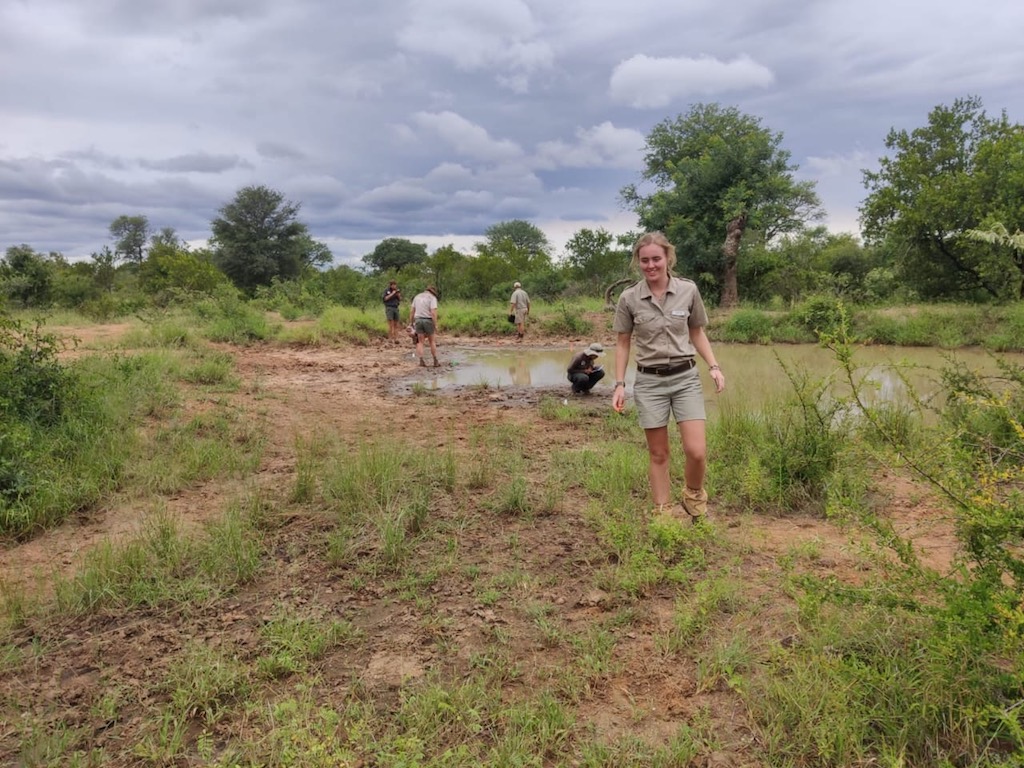
The few days before and after our return were quite rainy, so the Makhutwe river started flowing again, turning into a real torrent, signaling the return of the hippos in front of campus. After the rain comes the sun and with it the butterflies. We took the opportunity to identify butterflies in the reserve during which it was relatively easy to move away from the primary purpose of the mission and find oneself trying to identify and photograph each arthropod encountered. We also took advantage of the return of the water on Friday afternoon to go onto the banks of the river where we enhanced our knowledge of trees and birds while enjoying the calm of the bush.
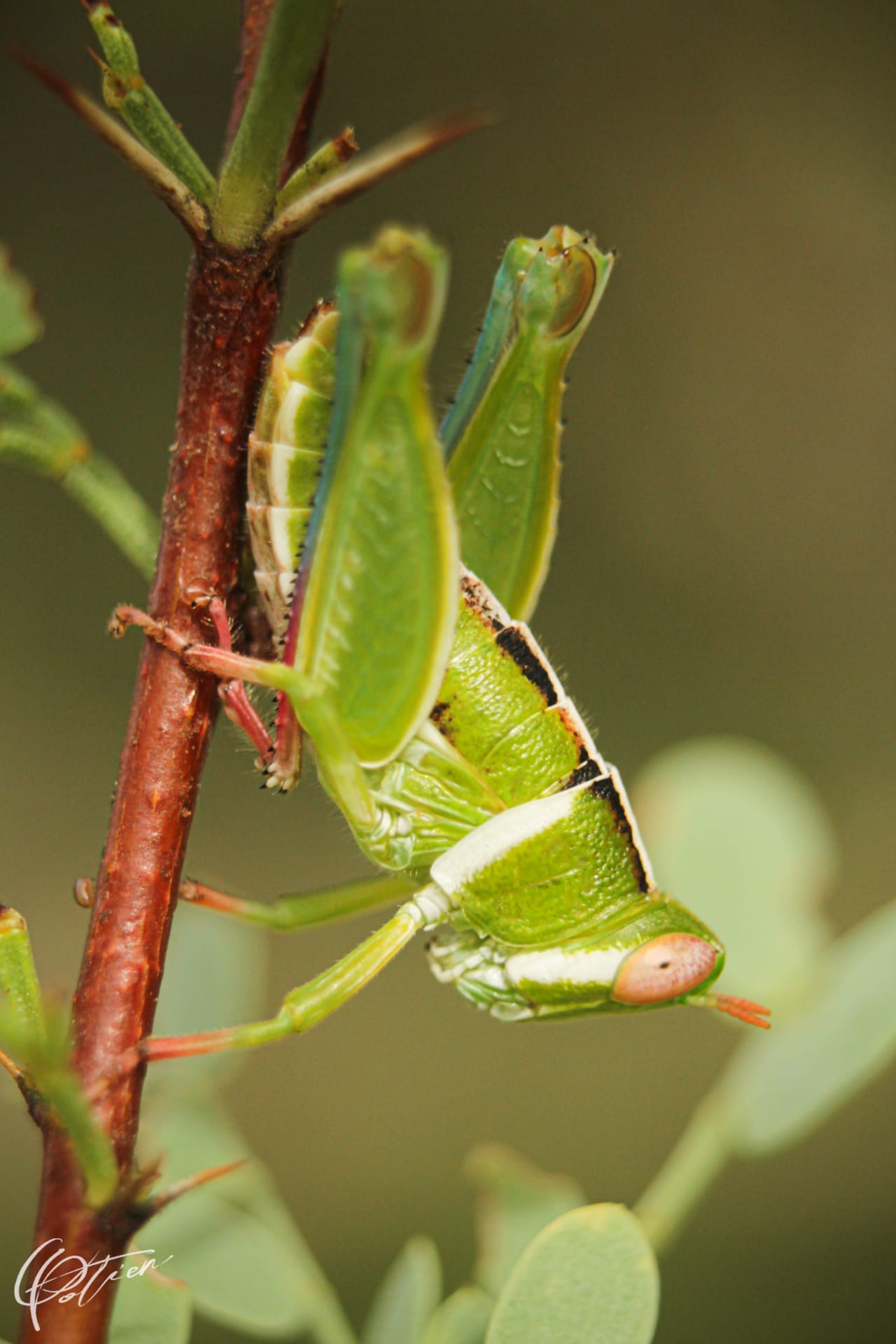
Colourful grasshopper
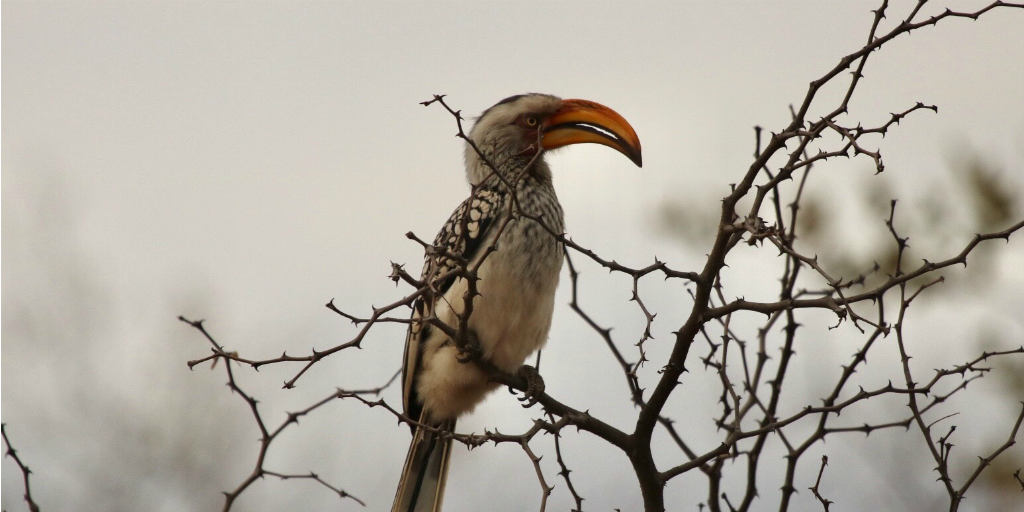
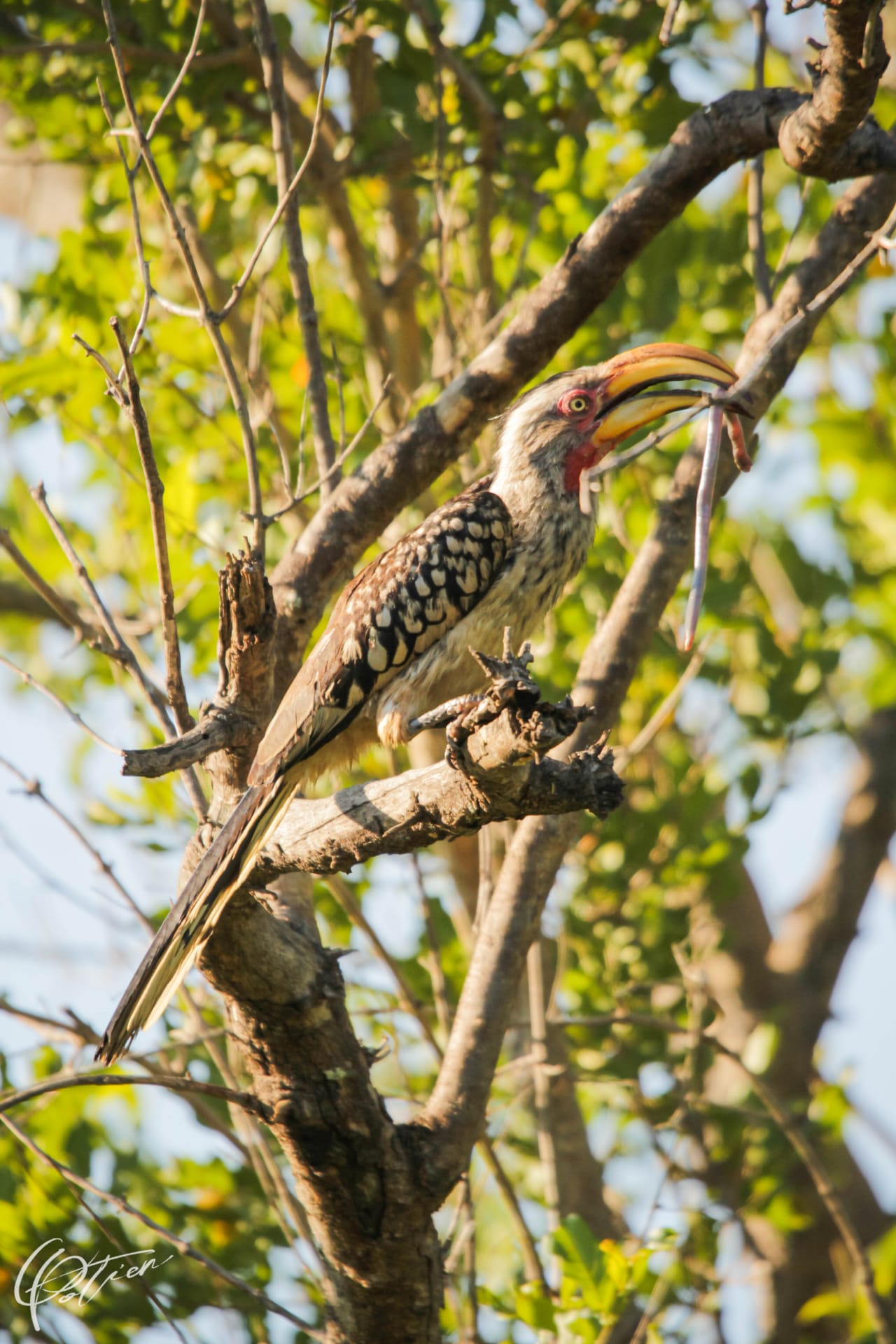
Yellow-billed hornbill
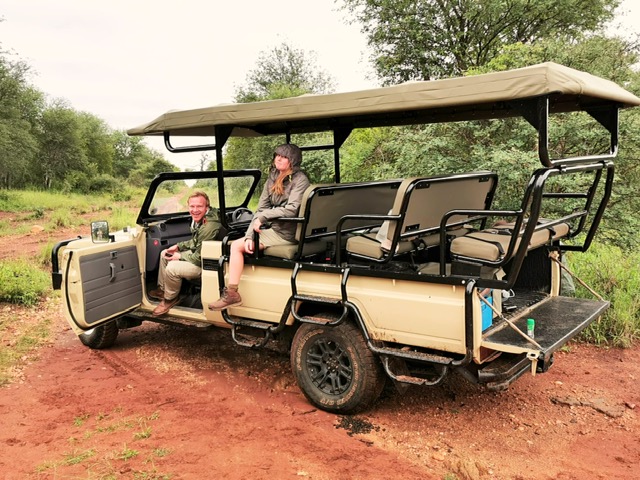
This week we started our practical driving techniques. We were divided into small groups of eight students between two vehicles. So, while some enjoyed the comfort of the Land Cruiser others had to deal with the old Land Rover. Except for Alexander who seems to enjoy this car very much and took great pleasure in handling it. In these practical sessions, we learned to put our knowledge to the test which has been acquired in recent weeks about wildlife in order to entertain our guests as well as drive safely in the rough terrain. Some already seem very comfortable in this field and look like trained field guides already. This was quite impressive.
Zander & Sophie on game drive
oh dear…………….
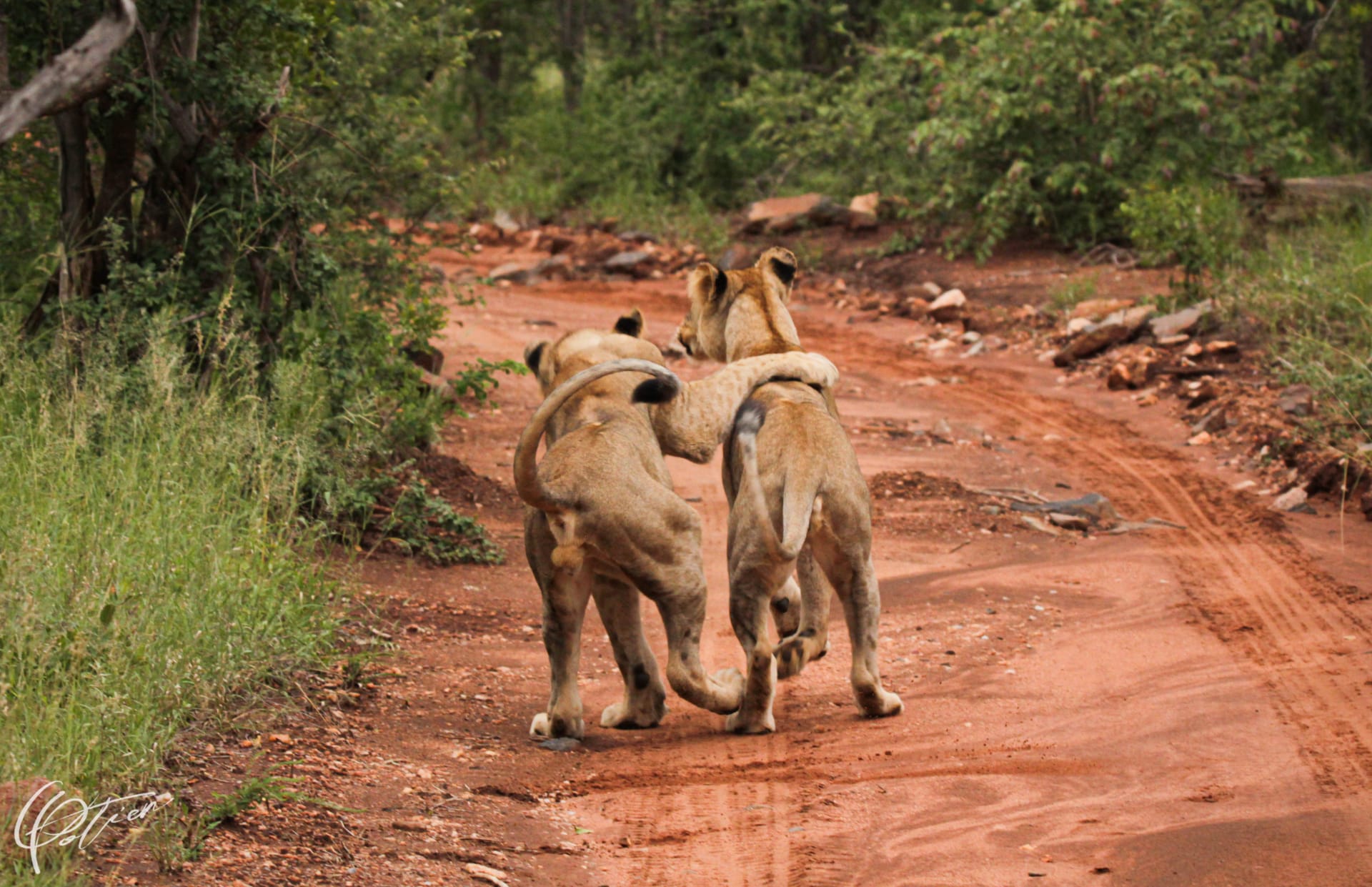
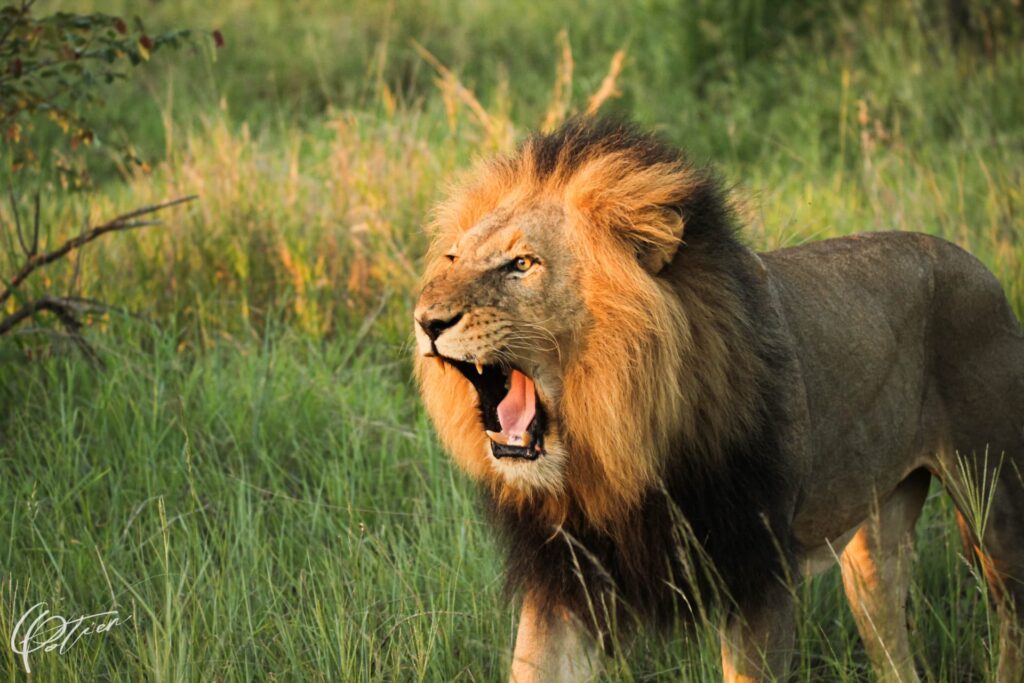
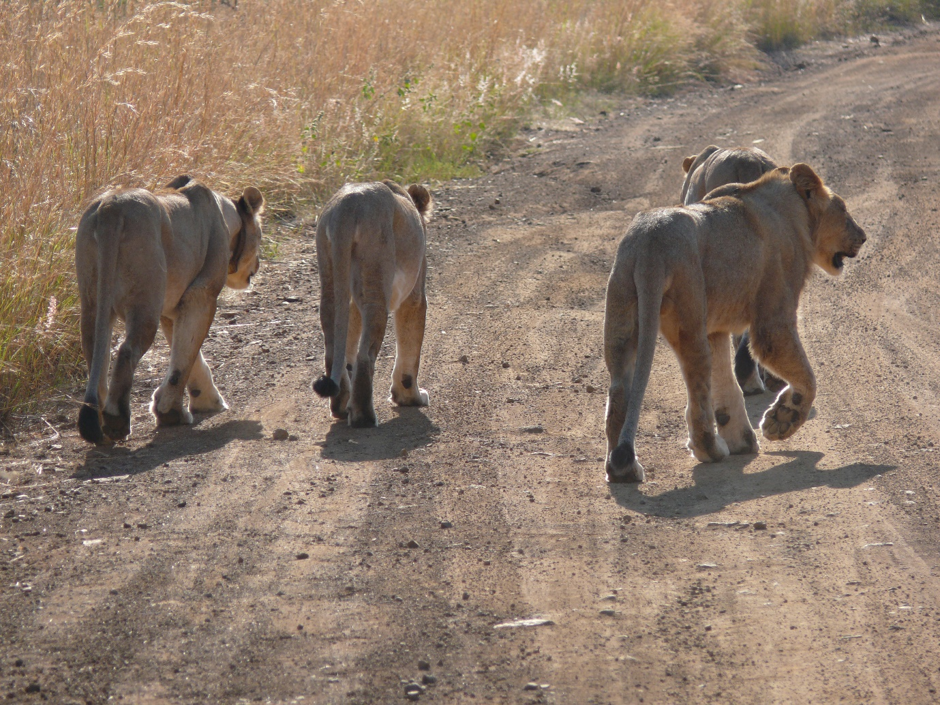
Finally, during these drives, the two groups were able to observe several lions including two magnificent males who offered us a superb show that many were expecting with great impatience. To such an extent that some, such as Zander our lion fan, could no longer contain his anticipation.
Young lions playing
Lion king
It was a full week full of discoveries that marked the beginning of this second semester, which I hope will be as incredible as the first. We wish you all a good day and look forward to what the next week will reveal for us from the Toro campus.
Whenever we get a new group of students at our Bushwise campus, I will ask them a very specific question in their very first lecture. My first question to them is: Why do you want to become a field guide?
With great enthusiasm, they start giving their answers. I write down each person’s answer on the whiteboard as they give it to me. The answers always include something like this:
I just love the bush,
I love animals,
I don’t want to work in an office but rather outdoors,
I grew up on the farm and in the bush and therefore I want to also work in the bush.\
I love to work with animals.
I want to conserve wildlife.
The answer that I really want to hear from the Bushwise students will become clear at the end of my story.
I was still working as an Apprentice Field and Trails guide at a five star Lodge in the Pilanesberg National Park, when I was allocated a group of tourists from West Australia. They were a very adventurous and excited bunch, some of the men looked like those very rugged outback Aussies with their thick moustaches and beards.
Our safari started off a little dodgy as they asked me if they can possibly get an ‘Authentic African black’ guide. I replied apologetically that unfortunately the only black guide is on his off-week and they will just have to make do with me. Riddled with disappointment their next question was: ”So how long have you been guiding?” Because I was already 39 years of age and well experienced in people skills that I acquired in my corporate career, I answered the following: “Allow me to take you on your Safari for the next three days then you can tell me how long you think I have been guiding.” They agreed.
Off we went on our first game drive. I knew the reserve like the back of my hand because I grew up in the area and spent countless days exploring it while trying to satisfy my insatiable desire to learn more about the wonderful natural environment. During the many hiking trails I did there, I scouted every nook and cranny of the unspoilt wilderness. I knew where different animals could be found so I was not concerned about finding any of those iconic African animals that they came to see.
Pride of lions
I used my knowledge and skills to create anticipation and suspense. For this, I employed cultural history, folklore, tracks and signs, and interesting facts on how certain plants, insects, and birds helped our forefathers to survive during their ox-wagon treks across the African savanna.
I showed them the intricate interrelationships between what they saw, smelt, touched, and could hear and how the harmony of nature ensures the survival of the species they dreamed of seeing here. I also told them stories of special encounters I had with animals and used charm, humour, and showmanship to entertain them throughout the activities.
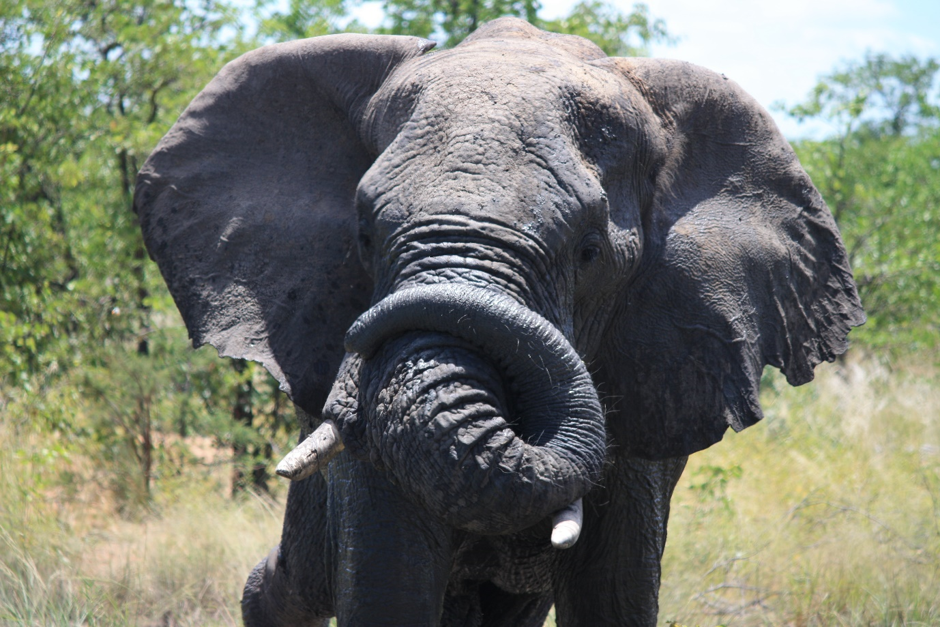
Bull elephant
On their very last game drive back to the lodge, one of the men with a thick moustache suddenly asked me to stop. I stopped the vehicle and turned off the engine. He was sitting right next to me on the passenger seat and as the rays of the setting sun cast shades of gold across his face and beard, he said he wants to say something to me on behalf of the whole group. He continued to tell me how amazing their time here with me was and how much they appreciate all the smaller things that I opened their eyes to. While the tears rippled over his rough cheeks into his moustache, he handed me a white envelope and said thank you very much for a fantastic time. The rest of the group echoed a chorus–like “thank you” and started to applaud.
It was very hard for me to not also become a bit teary, but the pride in my heart drowned any tear trying to well in my eyes. With this pride, I asked the question: “So, what is the verdict? How long do you think I have been guiding?” They replied: ‘It must be for many years.” I just smiled and said that I enjoyed every second with them and told them that from now on the Aussies from West Australia will be my favourite guests.
I never told them that I have only been guiding for around 2 months!
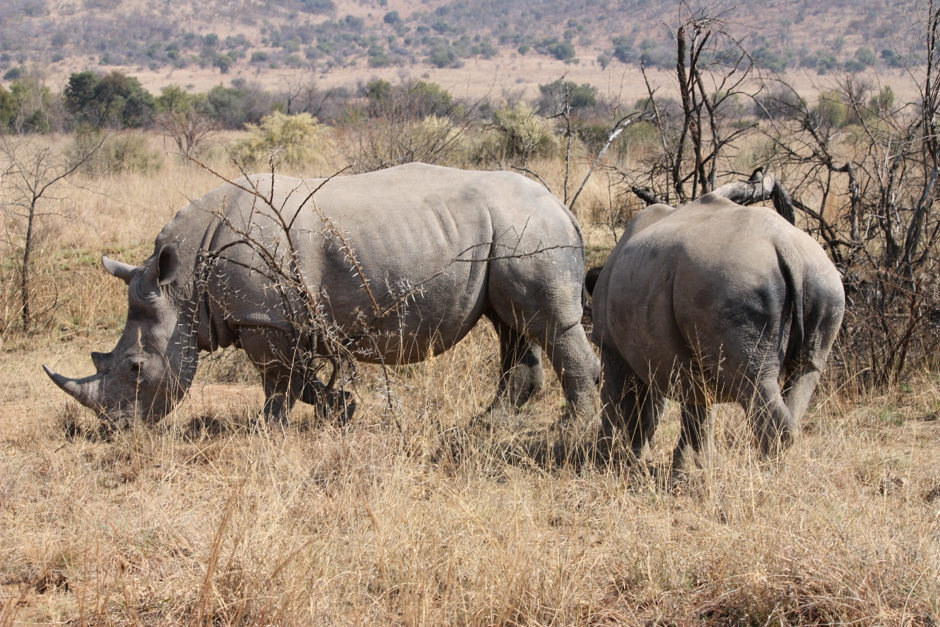
White rhino
Although I showed them all of the big five and plenty other general game, and they gave me one of the biggest gratuities ever, I know that for my guests it will always be about seeing the big stuff.
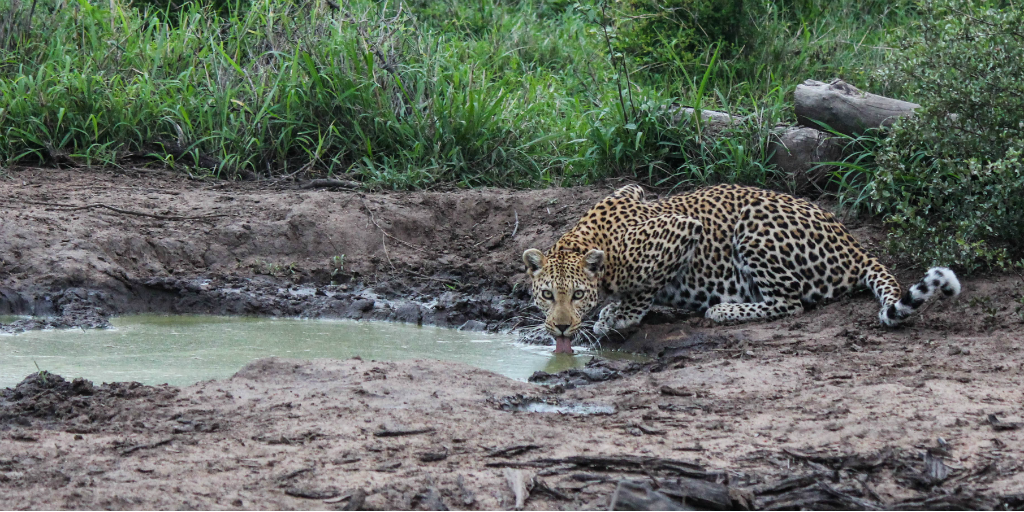
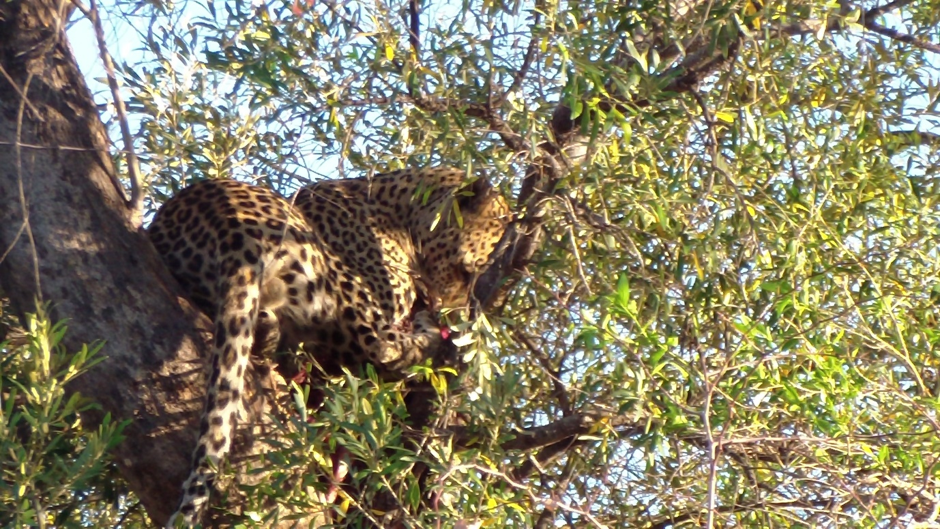
Leopard
For me, however, it is all about the people on my game viewer. Ensuring that they get the most memorable experience through entertaining, fun-filled activities while lining their experience with a subtle tread of how everything they experience should be conserved by their responsible custodianship of the natural environment.
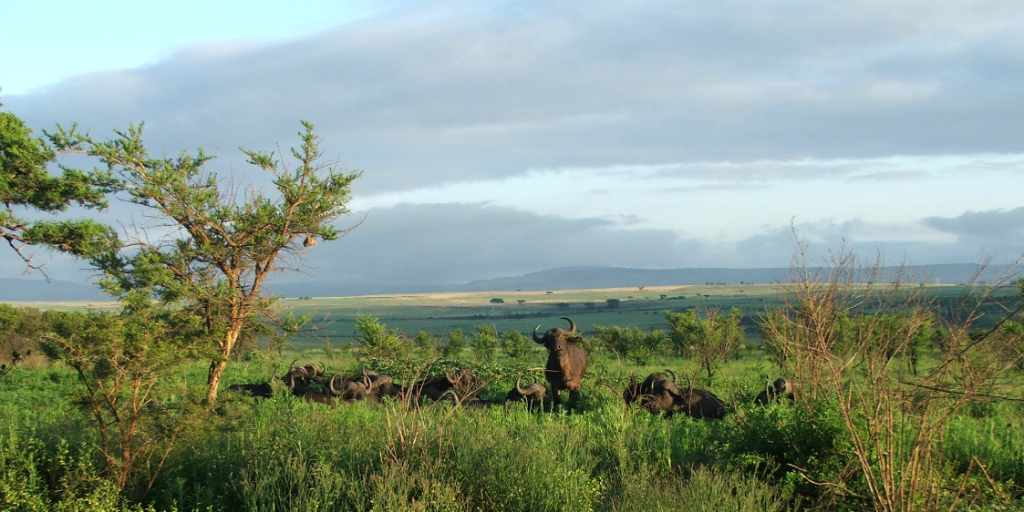
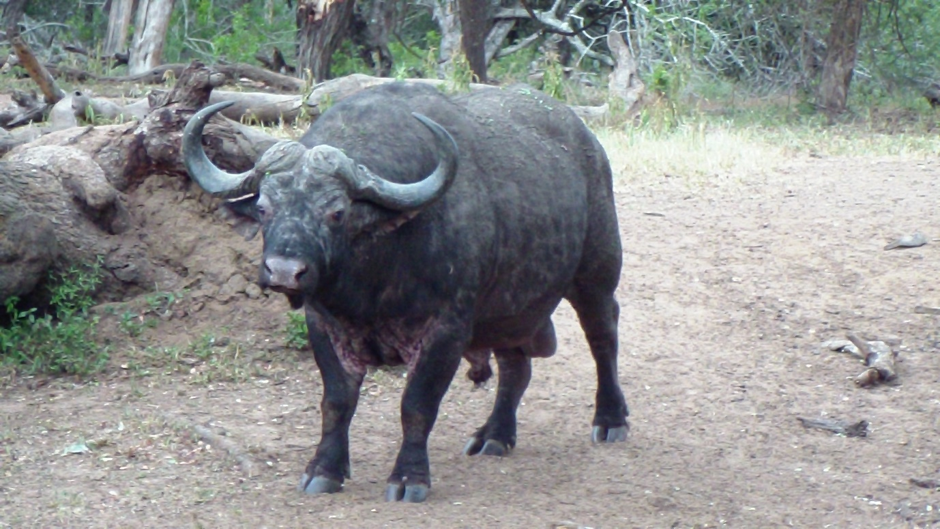
Cape buffalo
So what is the answer I am looking for from the Bushwise learners? I want to hear that the reason why they want to become field guides is that they love dealing with people, meeting new people or want to educate people about the natural environment. Your guests are the most important aspect of field guiding, not the animals nor your knowledge about them.
We started our week with a workshop on photography. This included how to make use of the light and find new perspectives when taking photos. With a few avid photographers in our group, we quickly became familiar with the specific terms and how to use the camera to capture that perfect shot. Unfortunately, we had to be patient before we could put our new knowledge in practice, as we continued with lectures about taxonomy and birds. The lectures provided us with even more new knowledge, and I’m sure we’re all looking forward to using this knowledge during our first practical guiding exercises.
On Tuesday afternoon we went on a bushwalk through the reserve and did some birding along the way. Our goal was to slowly walk from our game vehicle to Kirsti’s Dam and back, but the moment we reached the dam we got a call to head back to camp as soon as possible. As it turned out Trevor had heard and seen some lions right next to our camp and was urging us to come and see them. Unfortunately, they were gone by the time we arrived.
Photo by Sophie Pyper
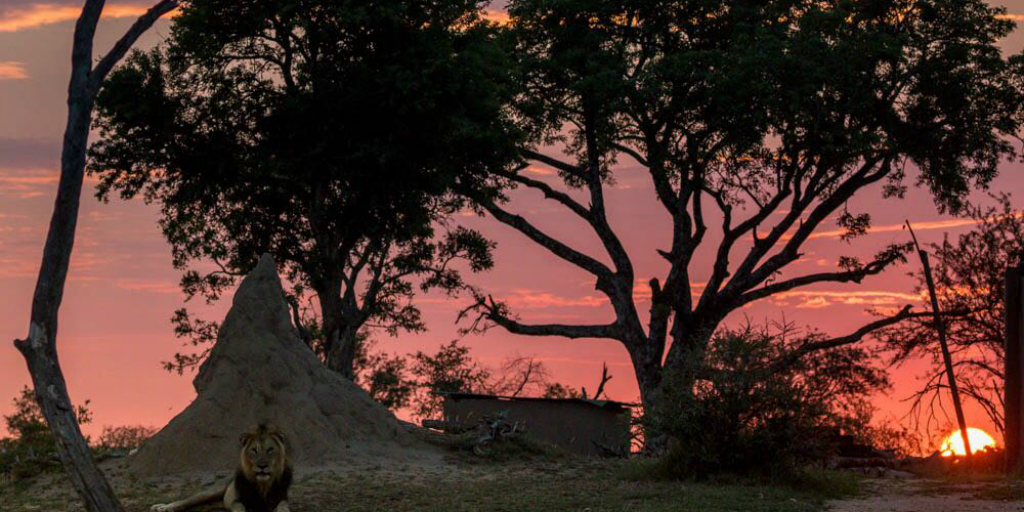
On Wednesday it was time to pack our bags for our first sleep out under the stars in the dangerous game territory. Just down the road from the Toro campus, there is a beautiful lookout-point where we decided to stay for the night. After settling in, we started the fire and had ourselves a nice braai. As night started to fall, we spotted a pride of four lionesses coming out of the thicket for a drink, down by the Makhutswi River. As the lionesses were drinking, the sunset and the sky turned pink, orange and purple, with a small white moon. We could not have asked for better luck.
We had set up a schedule to keep watch, with a different team every two hours. My turn was from 3:00 AM until 5:00 AM, which meant an early morning, but seeing the sun come up over the Lowveld made it all worth it. After some coffee and tea, we packed up our things again and headed back to camp.
Photo by Ank Lubberink
We ended the week with two more game drives, done by two of my fellow students (Andi and Sophie). Both game drives resulted in some great sightings of mammals, birds, plants, reptiles and arthropods; which we by now know how to place within the taxonomic tree of life ;).
Photo by Ank Lubberink
Photo by Ank Lubberink
We are now packing our bags for our first off week. Everyone has made plans to visit friends or family while some will be relaxing not too far from our newfound home for the next coming months.
Another early start this week with our first two exams, botany and introduction to guiding. Students were nervous but after a solid study session on Saturday and Sunday we were ready and we all think we did well, just waiting impatiently for the results!
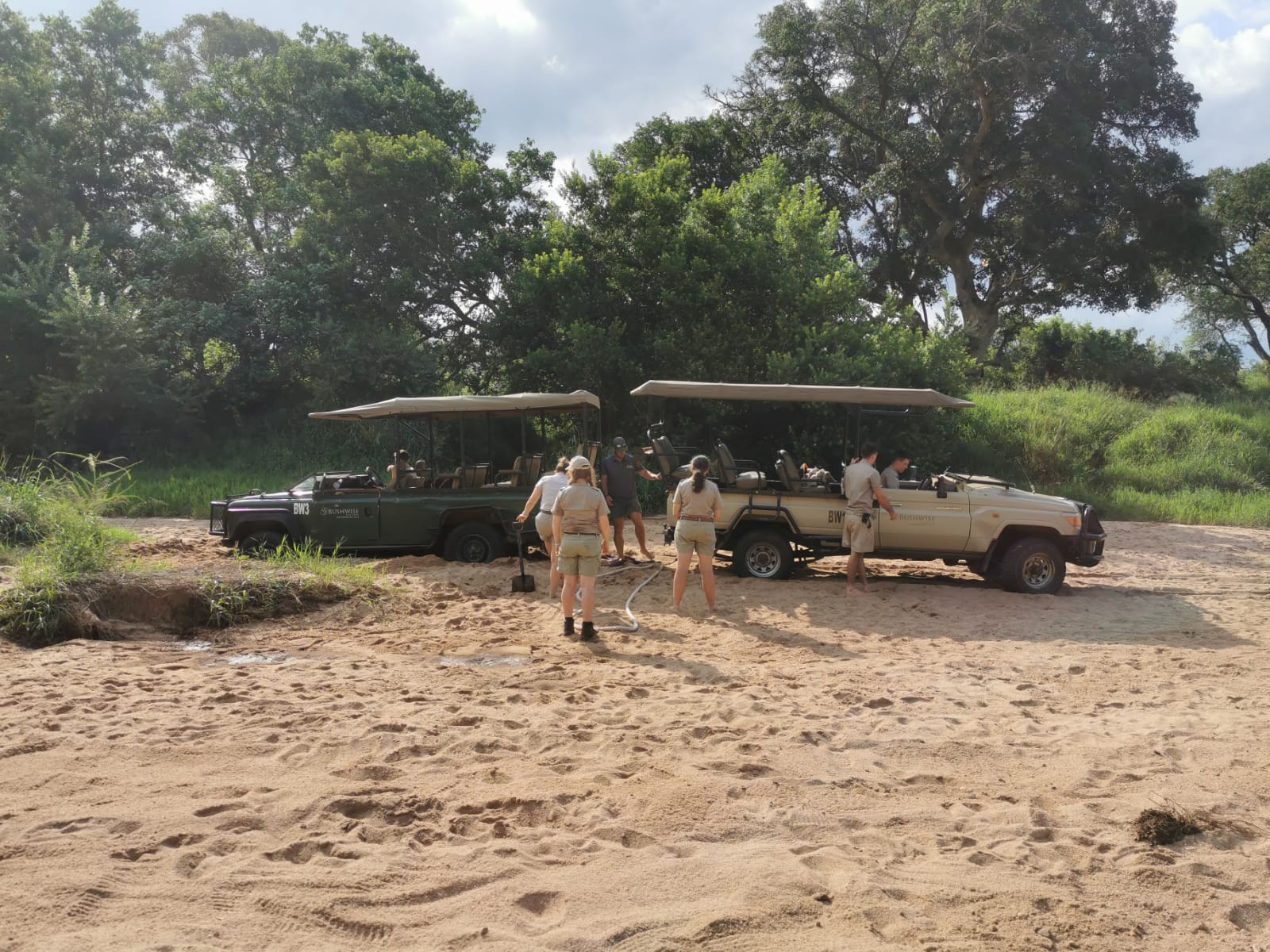
That afternoon we started our 4×4 training course with a lot of theory and A LOT of paperwork to complete. That’s one thing they don’t advertise about bush life – paperwork, paperwork, paperwork! Once that’s out of the way the real fun can start with the practical training. We were taught how to go up and down steep inclines in a game viewer safely, and we also learnt how to recover a vehicle that had got stuck, which I must say is a lot of fun.
4 X 4 training, vehicle recovery
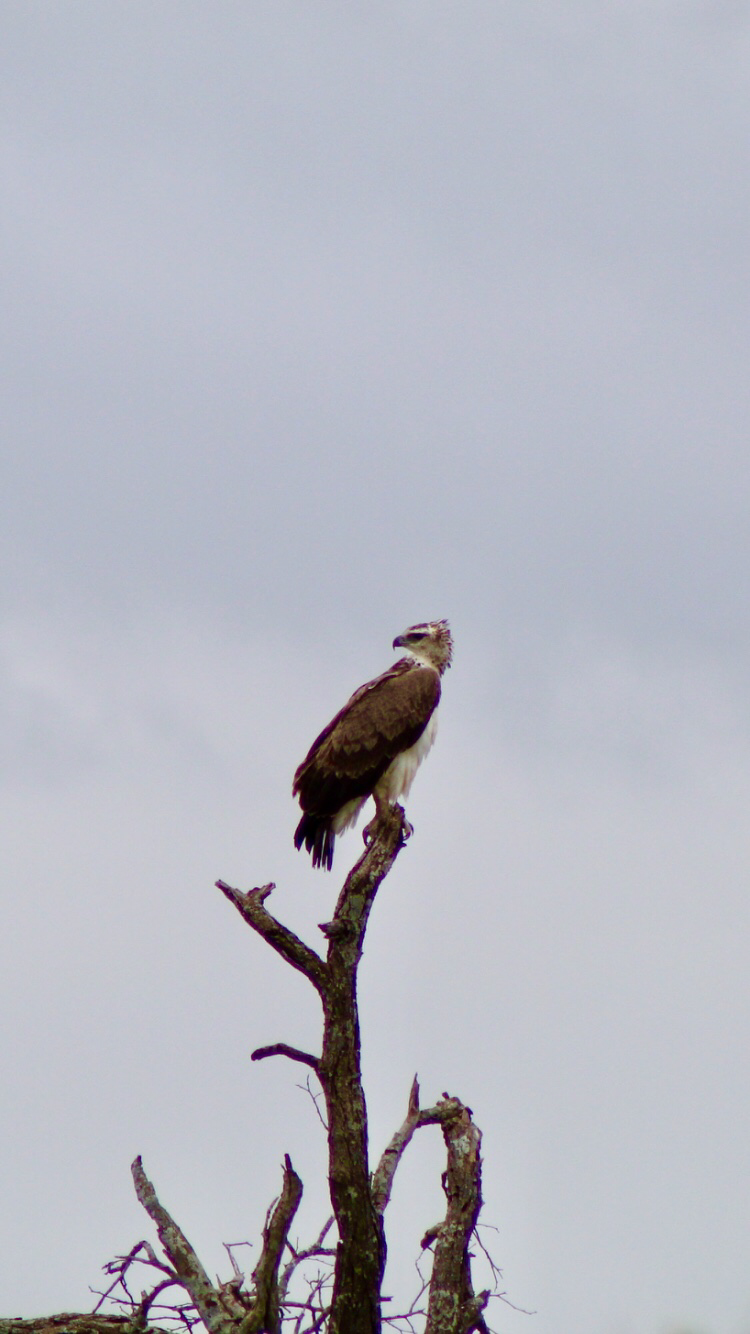
While some groups were doing the 4×4 practical course, the other groups were out in the best classroom the world has to offer, the bush. Some groups were lucky enough to get some great sightings of the Tembe pride of lions, some saw cape buffalo, there was a wonderful sighting of elephants and one group even saw four white rhino. So that’s 4/5 of the Big 5 and we’re not even a whole semester in. I actually saw a cheetah the other week but nobody believes me. My personal wildlife highlight this week was definitely getting to see a young martial eagle perched on a dead tree and an African fish eagle in the space of ten minutes!
Juvenile martial eagle
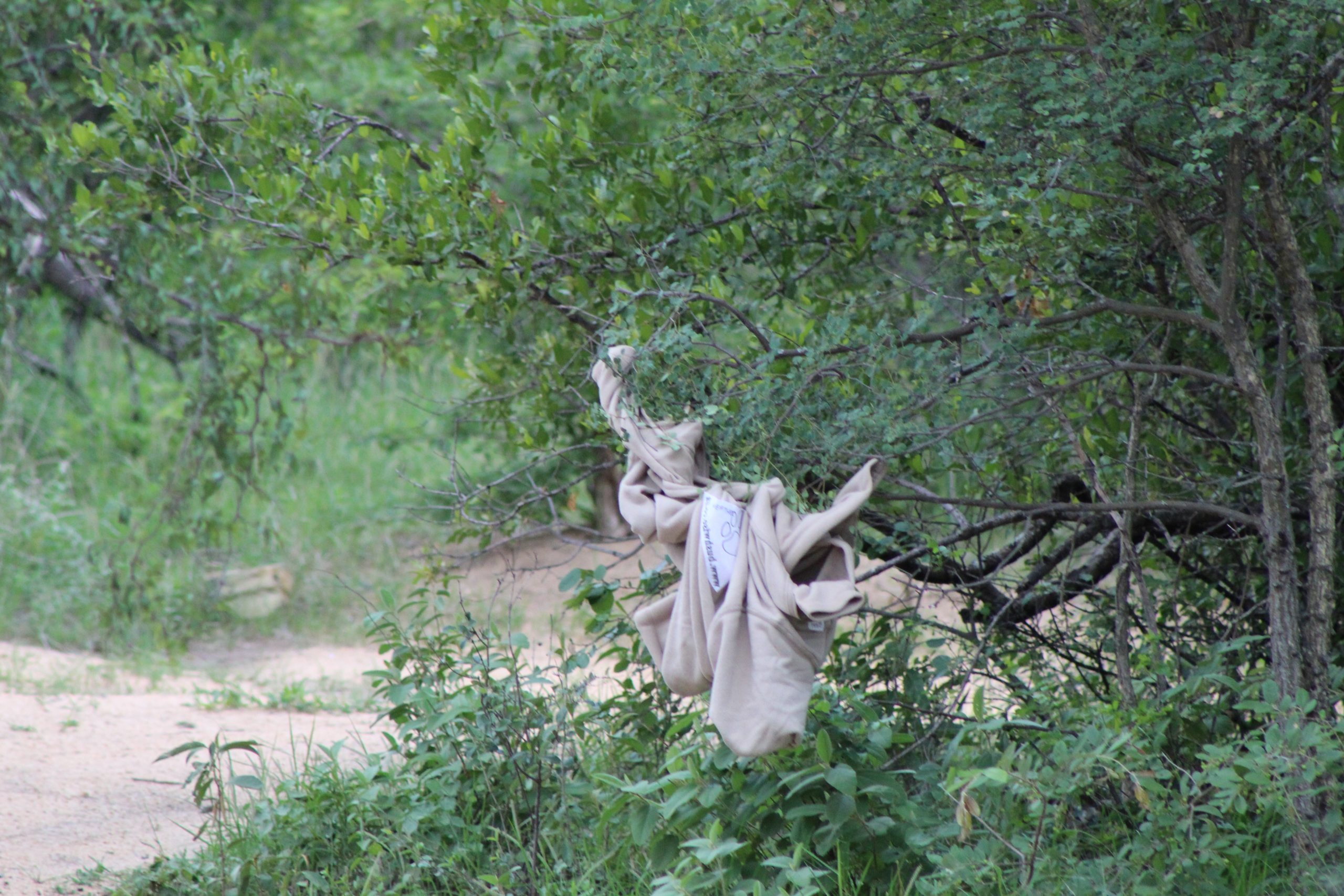
While out on practical drives we learn so much. Apart from the animals, we learn all about the fascinating plants and trees we have in the area. One common tree we have is called a knobthorn, and as the name suggests it is covered in thorns. Driving through the bush you have to be careful not to get snagged on these thorns because they can really hurt! One student however obviously wasn’t paying much attention and suddenly wondered where on earth her fleece had disappeared too. We came back down the road and a few seconds later…