Category: Course updates

  • 10 ways the IFGA App could change the game for guides

    Let’s be honest: field guiding is one of the most rewarding careers in the world. But building a successful long-term career in the industry hasn’t always been straightforward.

    For most guides, there hasn’t been a clear way to track their professional growth, showcase experience, or stand out in an increasingly competitive job market. While guides have worked hard to develop their skills, the tools needed to manage and advance their careers simply haven’t kept pace.

    The International Field Guide Association (IFGA) has launched its free IFGA App to solve this challenge for guides and the broader industry as a whole.

    Whether you’re currently studying with Bushwise, already working in the industry, or looking to take the next step in your career, here are 10 ways the IFGA App could make life a whole lot easier:

    1. Build your professional profile from day one

    Most guides spend years building experience before they have a clear way to showcase it.

    With the IFGA App, you can start creating a professional profile on your phone while you’re still training on campus, helping you document all your milestones to demonstrate your growth over time.

    2. No more paper logbooks

    If you’ve ever had to dig through notebooks looking for hours, species records, or licence information, you’ll appreciate this one.

    The app allows you to log and store your experience digitally, keeping everything organised and easily accessible.

    3. Your achievements are all in one place

    Qualifications, licences, logged hours, certifications and career milestones can all live within a single platform.

    Instead of managing multiple records, you’ll have one professional profile that grows with your career.

    4. It becomes easier for employers to find you

    Landing your next opportunity often comes down to visibility.

    The IFGA App allows guides to create professional profiles that can be viewed by recruiters and employers looking for qualified talent, helping you get noticed by the right people.

    5. You can see how you’re progressing

    One of the biggest challenges in any career is knowing where you stand.

    Through IFGA assessments, certifications, and global live leaderboards, guides can benchmark their progress and work towards clear professional goals.

    6. There’s a pathway beyond your first guiding job

    The app supports progression through different levels, including IFGA Guide, IFGA Advanced Guide, IFGA Ambassador, and the specialised Head Guide Certificate.
    In other words, it’s not just about getting into the industry – it’s about building a long-term career within it.

    7. Different doors can open

    Not every guide wants the same career path.

    Whether you’re interested in lodge work, freelancing, private guiding, or eventually moving into management, the platform helps create greater visibility and access to opportunities.

    8. Head guides get better tools too
    The benefits don’t stop with individual guides.
    Head guides can use the platform to monitor compliance, track licences, manage teams, and keep important information organised in one place.

    9. Less admin means more time doing what matters

    Let’s face it: nobody gets into guiding because they love paperwork.

    By digitising many of the administrative tasks that guides and lodges deal with every day, the app helps reduce unnecessary admin and simplify daily operations.

    10. It brings the industry together – for free

    Perhaps the most exciting part is that the app creates a shared ecosystem for students, guides, assessors, recruiters, and lodges.

    Instead of everyone working in separate systems, the industry becomes more connected, transparent, and accessible.

    An exciting future for guiding

    The IFGA App isn’t trying to change what makes guiding special.
    Great guiding will always come down to people, passion, conservation, and unforgettable guest experiences.

    What the app does offer is a modern way to support those things — helping guides build stronger careers, helping lodges operate more efficiently, and helping the industry move forward together.

    Best of all, both IFGA membership and the app are completely free.

    Whether you’re just starting your journey with Bushwise or you’re already an experienced professional, now is the perfect time to see what the future of guiding looks like.

    Ready to explore?

  • How to identify birds using the GISS method

    How to identify birds using the GISS method

    Birdwatching is one of those skills that becomes more rewarding the longer you do it. At first, all the fluttering wings and quick movements can feel overwhelming, but once you know what to look for, patterns start to appear. The GISS method is one of the best tools to help you get there.

    GISS stands for General Impression of Size and Shape. It’s a method used by guides, rangers, and birders around the world to identify birds quickly and confidently, even with only a short glimpse. Instead of fixating on tiny markings, GISS encourages you to take in the whole bird – its size, its proportions, how it moves, and where it’s found. Here’s how it works.
    General
    The “General” part of GISS refers to your first impression. What’s the bird’s overall look and feel? Is it elegant and slender like a heron, or compact and busy like a sparrow? Sometimes, your instinctive sense of a bird can be the most accurate clue. The more time you spend watching birds, the sharper that instinct becomes.
    Impression
    “Impression” focuses on the bird’s movement and personality. How does it behave? Is it gliding effortlessly, darting between branches, or bobbing its tail as it walks? Behaviour can tell you a lot — for instance, wagtails are known for their characteristic tail-bobbing, while hornbills tend to move deliberately through the trees. Watching how a bird acts in its environment often gives you just as much information as what it looks like.
    Size
    Size can help narrow things down quickly. Compare the bird to others nearby or to something familiar. Is it smaller than a dove? Bigger than a starling? Size can be deceptive depending on distance, so use it as a rough guide rather than a strict rule. Still, it’s a good way to eliminate possibilities — a bird much larger than a sparrow, for example, isn’t going to be one.
    Shape
    Shape is one of the most reliable identifiers. Look at the silhouette — long neck, short tail, broad wings? Raptors tend to have sturdy bodies and hooked beaks, while swallows are streamlined for fast flight. Even without colour, an experienced guide can identify a bird just by its outline against the sky. Practising this skill takes time, but it pays off quickly once you start noticing patterns.
    Using GISS in the field
    When you’re out in the bush, you rarely get the luxury of a perfect view. Birds hide in thick foliage or take off before you can grab your binoculars. The GISS method helps you make quick, confident identifications using what you can see in the moment. Start with your overall impression, watch how it behaves, note its size and shape — and only then, if you can, check colours or markings to confirm your guess.
    Developing your bird identification skills takes patience and practice, but it’s one of the most rewarding parts of spending time in nature. Each sighting sharpens your observation skills and deepens your connection to the natural world.
    Want to turn your passion for wildlife and the bush into a career? Learn more about Bushwise’s professional wildlife courses and start a career in the safari, conservation, or tourism industries.
  • Bushwise and Sabi Sabi

    Launch Ranger Academy to Empower Local Communities and Foster Education

    Bushwise Field Guides and the Sabi Sabi Collection are proud to announce a new initiative to train the next generation of field guides through the Sabi Sabi Ranger Academy in South Africa’s Greater Kruger National Park. This initiative will sponsor students from local rural communities to complete field guide training, equipping them with valuable skills and providing them with career opportunities.

    Starting in July 2024, Bushwise will train aspiring field guides from South Africa at Greg’s Camp within Sabi Sabi Private Game Reserve. The Sabi Sabi Foundation and their community development partner the Gillespie Foundation will sponsor eight students per year from local communities in each training group, beginning with four students this July. This initiative unites two organisations committed to community development and conservation, enhancing career opportunities and offering an immersive ranger training experience.

    Bushwise will train candidates according to the International Field Guide Association (IFGA) standards and CATHSSETA requirements. Students will undergo six months of formal training, followed by a six-month work placement in South Africa or internationally. Upon graduation, our goal is that these newly qualified field guides will be recruited by Sabi Sabi or other luxury lodges.

    Sabi Sabi and Bushwise are dedicated to instilling community and conservation values in future guiding generations. The pandemic and other global events underscored the critical role of local tourism in conservation and highlighted the dependence of game reserves on neighbouring communities for sustainable initiatives. The Sabi Sabi Ranger Academy is a key step in these organisations’ mission to respect culture and history and conserve the land for the future.

    Bushwise is the leading field guide training provider in South Africa. It is the exclusive IFGA training provider in Southern Africa and consistently produces world-class guides through its CATHSSETA accredited courses.

    Sabi Sabi has provided life-changing experiences to guests and residents alike since 1979. They have built a world-renowned guiding team, offering holistic experiences in the bush. As Sabi Sabi expands into the Sabi Sabi Collection, they recognise the importance of growing from within and providing a platform for the next generation of rangers, trackers, and conservationists.

    Media Enquiries: Annie DuPre (annie.dupre@gviprograms.com) and Jacques Smit (smit@sabisabi.com)

    gallery imagegallery image

  • Responsible Resource Use: Bushwise and the SAWC

    “We all must be aware of, and take responsibility for, how we live and what we use.” — the Southern African Wildlife College

    Do you ever feel overwhelmed by the challenges facing our planet? Many people want to make a difference but struggle to know where to start. In fact, there are many changes you can make in your daily lives and at your place of work. One of these is through the practice known as responsible resource use. In collaboration with the Southern African Wildlife College (SAWC), Bushwise students are taught about this concept and learn how to apply it in their daily lives.

    What is responsible resource use (RRU)?

    As many areas of the world become increasingly urban and commercialised, there are increasing threats to the longevity and sustainability of our natural resources. Scarcity, inflation and degradation pose serious risks to our natural ecosystems and habitats; this is something that those of us in the wildlife, conservation and ecotourism industries see every day. 

    Responsible resource use is a concept that goes beyond the sustainable use principle. It means that to conserve our natural resources, we must use these resources in morally responsible ways. These decisions should be rooted in science and directed towards positive action to improve the quality of our soil, water and biodiversity (the SAWC). 

    To determine if a practice qualifies as RRU, we ask if it fits the four guiding principles:

    1. Is it holistic?

    2. Is it ethical?

    3. Is it regenerative?

    4. Is it inclusive?

    The UN Under-Secretary says this about responsible resource use: “Problems of resource scarcity are related to changing patterns of consumption and production, with developing countries moving from agricultural to industrial ways of life, while wealthy countries continue to consume more and more natural resources.” — Achim Steiner, UN Under-Secretary and Executive Director UNEP

    image

    Responsible Resource Use, the SAWC, and Bushwise

    Through our collaboration with the SAWC, Bushwise students participate in an RRU training module. The course aims to introduce students to the concept of RRU and entrench it widely as a way of thinking about all resource use activities, whether in their personal life or in their future jobs. 

    RRU is a step beyond sustainable use thinking, which has grown in popularity over the last 40 years. It is holistic, inclusive, needs-driven and Afro-centric. During this course, students are introduced to the theoretical background of RRU and given tools to apply it to their home and workplaces, to make tangible changes and improve the use of resources.

    At the end of this module, students should understand both the conceptual framework and the real-world implementation in conservation and urban landscapes and in the context of present-day African society. Through interactive site visits, students observe the big picture of ecosystem services, including how human populations use those services and resources.

    image

    Practical experiences in the field

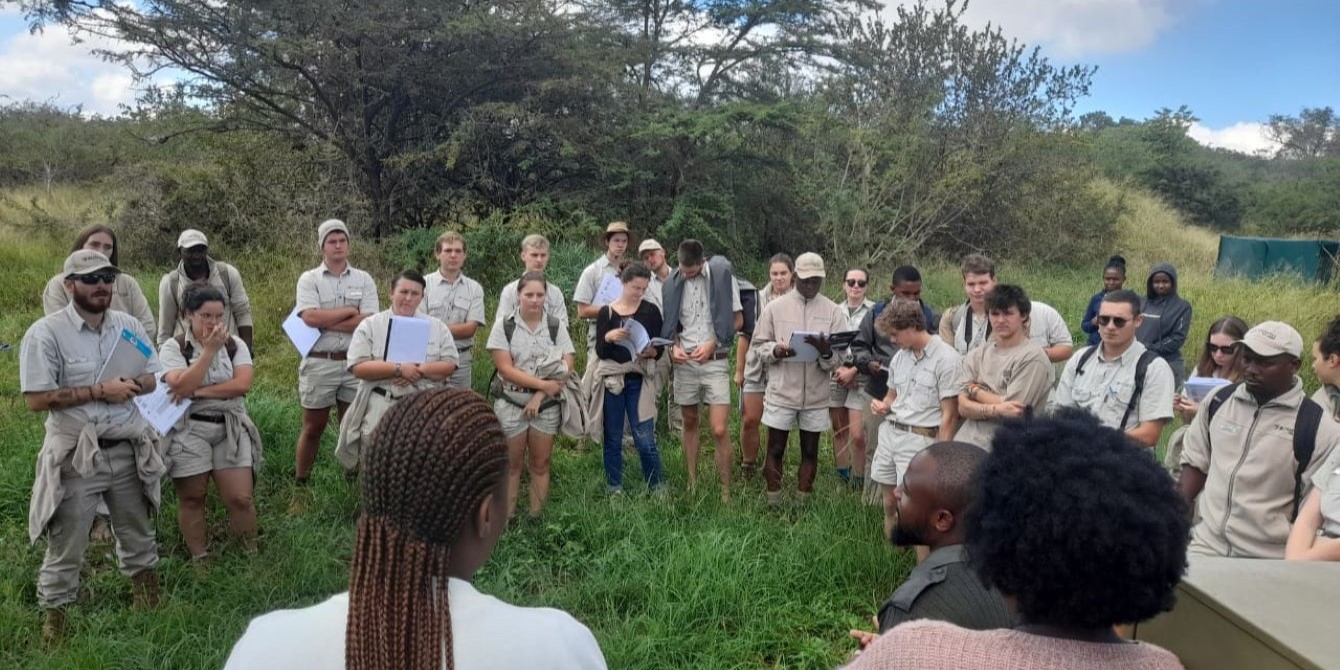
    During this module, students go to different sites near Kruger National Park and learn how companies and organisations incorporate responsible resource management in their activities. We encourage debate and discussion among the students about how we live, what we consume and use, and how we dispose of our waste. 

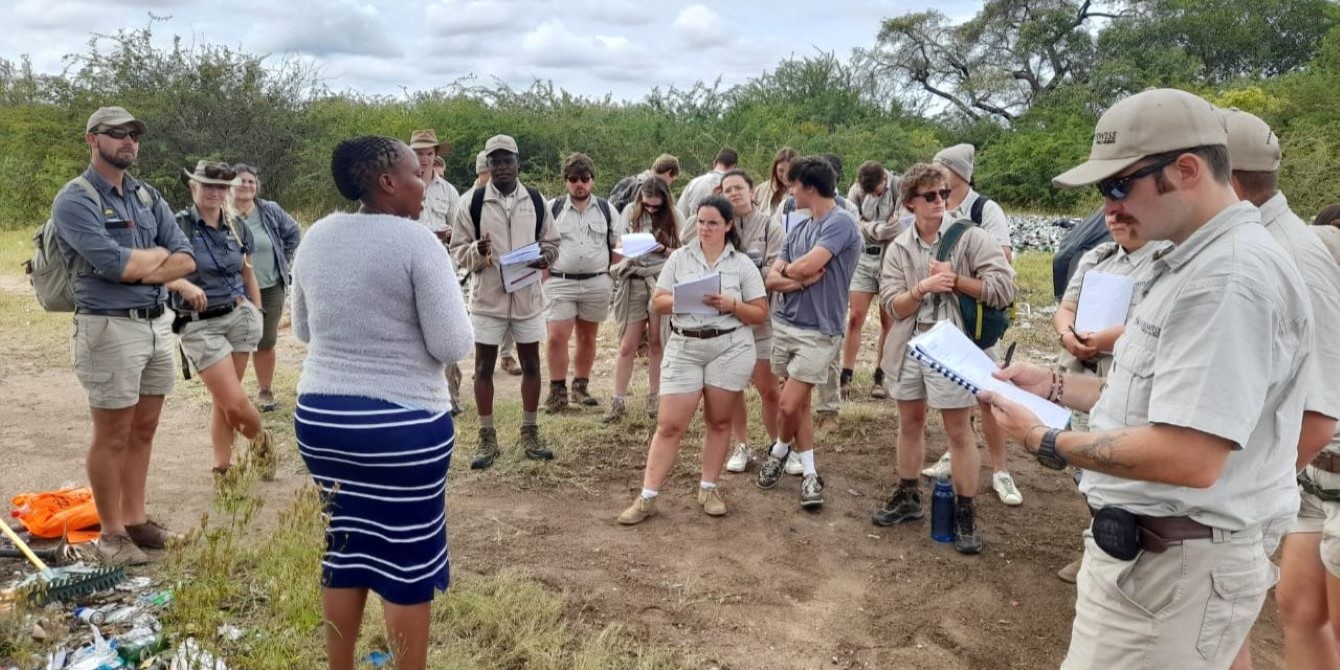
    In May 2023, Bushwise students participated in this module and alongside their instructors from the SAWC, went to three unique sites to learn about their RRU practices. The sites we visited were Wild Olive Tree Camp, Mzansi Genetics waste site and Nyeleti farming. Each one of these places has incorporated responsible resource use in an amazing way, which we use as an example of what these practices truly mean and the impact they could have.  

    1. Wild Olive Tree Camp was born out of the local community, where there is significant overlap for social and economic applications of RRU. On this site visit, students learned how Wild Olive Tree makes responsible decisions for resource management, and how they minimise their environmental impact.

    2. Mzansi Genetics Waste Site is a registered waste dumping site in Welverdiend, the community bordering Kruger and the Manyeleti. The owner of this waste site collects and sells trash as an income generator. This is an opportunity for students to understand RRU from an economic and ecological perspective, including how to properly recycle and how to prevent air pollution that comes from burning trash.

    3. Nyeleti Farming is located in the agricultural sector and is a great example of the confluence of social, ecological and economic influences in RRU. The farm is relatively small at only 14 hectares, and all of its waste is returned to the soil as compost (they send no trash out of the farm). They plant many different vegetables and many of the resources are used responsibly, including water irrigation across the plantation. 

    We are proud to continue this responsible resource use training alongside the SAWC, as our Bushwise Professional Field Guide students train to become the most responsible, ethical guides they can be. Watch this space to see how the next cohort of field guide students learn about RRU!

    A special thanks to the SAWC for the information and photos contained in this blog.

    #bushwise #qualification #Exam #training #apprenticefieldguide #fieldguidetrainer #ifga #Assessments #fieldguidecourse #studying

  • Reflections on the recent Bushwise class and their journey as Field Guides

    This blog was written to the current graduating class of Bushwise field guides. It’s a farewell, good luck and see you again soon from Bushwise trainer Sophie Barrett.

    This has been the largest simultaneous cohort of Bushwise students that we have ever had. To say that the training team had zero nerves about how this would turn out at the start would be as unreasonable as a flying warthog.

    Preparing for Success: Welcoming the Largest Cohort of Bushwise Students

    image

    I can remember prepping to ensure a smooth start when the students first arrived. With 30 on the one campus, even handing out books had the potential to be unbridled chaos. Little did we know that our cunning plan to set out the books and label the desks with student names to allow that first session to run a bit smoother would dictate the seating habits of 30 field guides in training for the next six months.

    The course can be intense and stressful at times, I am sure that the students would agree with me there is a huge amount to learn whether it is the rainfall and flagship species of the different biomes; or how to interpret previously invisible tracks on the ground; or how to identify a bird (or even a frog) by its call alone – there is limited time to catch your breath. 

    And somehow in amongst all of this, the students are finding time to form bonds and friendships that will last them a lifetime.

    Bittersweet Endings: Assessments Completed, Departures Looming

    image

    That makes the approaching end of the course bittersweet. With the assessments, both theory and practical, that have been a constant companion for our students finally out of the way, there is space to relax and revel in the wonders of the bush around them, but somehow also little to distract them from their approaching departure and separation. As a trainer, I cannot help but be excited for the students and the adventures that await them.

    Our students stand at the edge of one of their most exciting adventures yet. They are about to join a world where they will find themselves at the heart of memories that will be spoken about all across the globe and treasured by their makers for years and years to come. 

    Their daily office companions will include leopard cubs, rainbow coloured birds and therapeutic elephants, and the most exciting part for me is that every day – no matter how many years they spend in this industry – offers a chance for them to learn something new.

    Privileged Mentors: Reflecting on the Growth of Apprentice Field Guides

    image

    As trainers it has been a privilege to have a part in the journey of all of our students. We are proud beyond words to see how they have grown and flourished into apprentice field guides and whilst the next step for our students is exciting, it can be intimidating too. I hope they know that they can continue to count on us for support, advice and mentorship and that they will share the highlights with us too! 

    As we say goodbye to the students, we contend with a mixture of emotions: sadness to see our students leave; pride at their accomplishments; and excitement to share in their adventures going forwards as they continue to grow, develop and flourish in the industry.

    One of the great joys of being a field guide is that there are endless possibilities ahead of you, and as we send our students into the world, we hope that they will be ambassadors and custodians for all of the incredible aspects of nature, helping us to protect and be amazed by it for years to come.

    Learn from incredible trainers like Sophie, and make life-long memories of your own, on a Bushwise course.

    #wildlife #bushwise #qualification #safariguide #Exam #training #animals #apprenticefieldguide #fieldguidetrainer #ifga #endangeredspecies #Assessments #guiding #fieldguidecourse #studying

  • Staying long-term in South Africa as an international student

    South Africa is a beautiful country with incredible biodiversity, awe-inspiring landscapes, rich cultures and fascinating history. It is the ideal place to begin your conservation career, which is why many international students join Bushwise field guide training courses. We have had students from the United Kingdom, Australia, Japan, Peru, France, Germany and the United States – to name a few. 

    Many international students join us for six months or a year on our Bushwise Professional Field Guide course; or for just two months on our 60-day Safari Guide course. In fact, on a typical course, between 20-40% of our students are international. After graduation some of them do a work placement, find a job or head back to their home country. Whatever their plan is, one of the most common questions we get from our international students is: 

    Can I stay long term and work as a field guide in South Africa?

    image

    We completely understand the desire to stay and work in South Africa. To do so you need skills and qualifications and typically a business to support or sponsor your work visas (Bushwise does not sponsor work visas). Our international students who have done this successfully have either been offered jobs by South African companies or chosen a different visa route. 

    It’s also possible to start your own safari, tour guiding, or travel company in your home country and bring guests to South Africa as a freelance guide. 

    Types of visas

    On each course since 2015, 40-70% of our international students have been offered permanent positions. Some of these were able to secure work visas, others were able to get volunteer visas, exchange visas or critical skills visas. 

    Work visa

    To stay long term and work in South Africa, you need the correct work permit or work visa. There are a few options currently available, including critical skills visa, general work visa and visitor’s visa with permission to work. Check the current list for updates

    Most South African businesses prioritise hiring local South Africans. It is also for this reason that getting a work visa in South Africa requires significant documentation and motivation. In the last few years, the visa laws and requirements for foreigners have become stricter. It is extremely hard and quite challenging for foreigners to now get permanent employment – however, it is not impossible.

    On our Professional  Field Guide course, international students come in on a study visa. This allows them to get their South African driver’s licence and PrDP – a requirement to register as a guide and take paying guests on a game drive. This is also why we can offer all our students work placements if they pass and are between 21–39. 

    Companies want highly experienced, well-trained individuals to fill roles. This is why we encourage international students to join our 50-week course, which also gives you the work placement opportunity and helps build your professional network. The greater your skillset and the more connections you make in the industry, the greater your likelihood of being sponsored by a local company.

    Volunteer visa

    image

    Another option is a volunteer visa, which allows you to stay and do charitable or voluntary work for a period of up to three years. As the title suggests, you can’t be paid to work while on a volunteer visa.

    Even though you can’t get paid while on a volunteer visa, this may still be a great option if your goal is to spend a few years in South Africa and gain valuable experience. Bushwise work placement options include NGOs and conservation volunteer organisations, so this could be a very attractive option. Time also changes many things, and an opportunity may present itself while you’re volunteering.

    Critical skills visa

    A critical skills visa is for a candidate trained in certain industries as specified by the South African government (see the August 2022 gazette for a list of skills). An applicant must prove that they have the experience, skills and qualifications indicated, which may include membership in a professional body. If you have previous training or degrees in one of the skills listed by Home Affairs, this is one way to remain long term in South Africa. 

    Study visa

    Another option is to continue your studies by pursuing a degree, and getting a study visa. South Africa has many excellent universities and educational institutions that offer conservation or game management programs, for example. If you are considering a career that’s more academic or research-based, this may be an excellent option to stay for a few more years. A study visa will also allow you to work part-time while studying full-time. 

    Business visa

    Depending on your background, you may be able to apply for a business visa, which allows an individual to move to South Africa to open a business or invest in an existing one. If you are planning to start your own safari company or open a lodge, for example, this could be a possibility. But it is much more complicated and requires notable financial investment. 

    Applying for a visa to stay in South Africa

    image

    When you join Bushwise you will likely do so on either a visitor’s visa (for less than 90 days for the 60-day course) or a study visa. In a few cases you can apply for a change of status for a new visa and remain in South Africa. But most likely you will have to travel back to your home country to submit the documentation and await a response. 

    We cannot offer legal advice

    We hope it goes without saying, but just in case. We cannot give legal advice on your visa applications, we can just share our insight from working with international students in the past. Please review the current information on websites for South African Department of Home Affairs or VFS Global, or speak directly with an immigration services company for assistance.

    We hope this article has helped you get some ideas about ways to make your field guiding dreams come true. As this is a blog and things do change, we can’t take responsibility for outdated information contained here. Remember that there are many opportunities and possibilities to make your dream career a reality, and the best way to start is by getting experience and building your skillset. 

    We are here to answer any other questions you may have about Bushwise courses. Just send us an email and we’ll be in touch!

    #lion #lodges #wildlife #gameranger #Birding #bushwise #qualification #leopard #guidejobs #animals #bestlodges #hyena #safari #sightings #wilddogs #fieldguiding #endangeredspecies #gamedrive #elephant

  • Why do a 6- or 12-month field guide course?

    We often hear this question from prospective students: “Which field guide course should I do?” At Bushwise, we offer multiple in-person courses, with our flagship being our 6- and 12-month Professional Safari Guide course. We also offer other professional courses ranging from 27 days to 3 months.

    Why do you want to do a field guide course?

    This is an essential question to answer for yourself. Are you hoping to enter the safari industry, work in conservation, or simply experience the African bush and learn more about wildlife?

    Do you have plans to go back to your home country or job after you finish, or do you want to stick around and find a permanent guiding position? 

    image

    If you want a career as a field guide, we highly recommend that you join our 6- or 12-month course. The reason? It’s a pivotal move in your career development as you earn essential qualifications and more (up to 8 certificates) and build a huge knowledge base. The 6-month work placement will set you up for success, as you gain real-world experience and develop your professional network. This program also comes with our employment guarantee (an industry exclusive for eligible graduates), access to our Bushwise recruitment program, and contacts through our alumni network.

    If you want to get into conservation, you need an innate curiosity for our natural world and an ability to ask probing questions and find answers. Our 12-month conservation and IFGA guide course will help you develop a strong base of wildlife knowledge, and you’ll gain real-world experience on a placement at a conservation organisation.

    I just want an amazing wildlife experience. If you’re looking for a gap year experience, then this is definitely the best way to immerse yourself in wildlife. But if you want a shorter sabbatical or semester-long experience, it might be worth checking out our 60-day safari guide course. This short course runs multiple times throughout the year, making it a bit easier to fit into a busy schedule than our long course, which only has start dates in January and July. 

    Can you commit months or just weeks to training?

    This might be the easiest question to answer – it really comes down to where you are in life, and whether this course is part of your career development or more of a sabbatical or gap year adventure.

    If you have time and want to make the most of it, then the long course is the way to go. The extra months give you more qualifications, more practical experience, more skills, and more memories. Like any apprenticeship or college programme, the longer you commit, the better prepared and more confident you’ll be when starting your career as a field guide.

    If your time is limited and two months is the most you can commit, then the 60-day short course is your best option. It’s a condensed, immersive programme where every day is packed with learning and hands-on experience. You’ll still come away with valuable skills and meaningful insights – and if you’re curious, you can read more in our article on why this course might be the perfect fit for you.

    image

    What are you hoping to see?

    Life in the bush is not static; it is not constant or predictable. It’s always changing, showing us something new and surprising around every turn. There are days when all you’ll see are birds and insects, but the unique observations you make that give you so insight into the wild world around you that you can’t help but feel in awe.

    When you join a 6- or 12-month course, you’ll experience the full change of seasons in the bush. From witnessing the first growth of spring, to the arrival of baby impala and other herbivores, the denning of wild dogs, changes in the night sky from winter to summer, adaptation of species to shifting weather patterns, and much more. There’s something hugely profound to be said for witnessing nature change over the course of a year. If you have the time to commit, this is definitely the way to go for the most impactful observations.

    What qualifications can you earn?

    This is our longest and most intense training program, which provides you with the essential skills and qualifications you need to enter the industry and so much more. We believe in going “beyond the books” in our training, which means you’ll gain both practical and soft skills to make you the best guide you can be. If you really want to stand out from the crowd with a CV full of qualifications, backed by your personal experience and insight, this is the course for you.

    image

    On the Bushwise Professional Safari Guide course, you can earn:

    1. CATHSSETA Nature Site Guide (NQF2) 

    2. Bushwise Professional Field Guide

    3. SASSETA Firearm Proficiency

    4. Advanced Rifle Handling certificate

    5. Wilderness First Aid certificate

    6. Reptile Handling certificate

    7. CyberTracker Track & Sign and Trailing certifications

    8. NQF4 knowledge

    9. And much more

    Don’t feel like you need all this? See why you should consider our 60-day course instead.

    image

    Other considerations

    Your age when joining a course. If you’re over the age of 39 with family commitments, our 60-day course may be more attractive to you. On our 12-month course, work placements are not guaranteed for students over the age of 39 (due to restrictions in the industry). Older students also sometimes find the shorter course to be easier to fit into their lives, which may be more settled than our younger students who are more often fresh out of high school or college. That’s not to say we don’t have older students doing our long course! Anyone from 18 and above is welcome to apply.

    The kind of visa you need. If you’re coming from abroad, this may be an important consideration. Our longer course requires a study visa for international students. On the 60-day course, for people coming from most countries, you’ll only need a visitor’s visa. This is typically received on arrival in South Africa for 90 days. Chat with our enrollment team to learn more.

    It’s your choice! When it comes down to it, choosing the right course for you is really up to you. Take some time to read through the course descriptions, check out our FAQs, watch some testimonials, read some reviews, join a virtual or campus open day, and reach out to our enrolment team. The only person who can make this decision is you, but we’re here to help! No matter which course you choose, it’s going to be a life-changing experience, and we can’t wait to meet you.

    Learn more about our courses here, or sign up for our next Virtual Open Day to ask all your burning questions!

    #wildlife #bushwise #qualification #safariguide #Exam #training #guidejobs #animals #safari #fieldguidetrainer #fieldguiding #fieldguidecourse #studying

  • Why do a 60-day safari guide course?

    We often hear the question from prospective students, “Which field guide course should I do?” At Bushwise we offer two core in-person options: our 6- and 12-month Professional Field Guide course and our 60-day Safari Guide course. 

    Both are immersive wildlife experiences where you can earn your CATHSSETA as well as additional qualifications, but there are some important distinctions and reasons why you might choose one over the other. In this article and its companion article “Why do a 6- or 12-month field guide course”, we’ll help you decide which program is right for you.

    Determining your purpose: why do you want to do a field guide course?

    image

    This is an essential question to answer for yourself. Are you hoping to enter the safari industry, work in conservation, or simply experience the African bush and learn more about wildlife? Do you have plans to go back to your home country or job after you finish, or do you want to stick around and find a permanent guiding position? 

    I want a career as a field guide. If this is your answer, you could do our 60-day Safari Guide course. You’ll earn your CATHSSETA qualification, Bushwise Field Guide qualification, and other essential accolades to get you set up for a job. But instead of doing a short course, you may want to consider our 6- or 12-month Professional Field Guide course. The reason? Gain additional qualifications (up to 8 certificates), build a huge knowledge base, get work experience, and develop a professional network in the industry.

    I want to get into conservation. Our short course is a great way to start a career in conservation. Not only will you add valuable qualifications and skills to your CV, which translate well into conservation jobs, you’ll also get a taste for field work and studying wildlife in their natural habitat. Many international students also choose to graduate from Bushwise and then go on to work in a conservation or ecotourism role back home. 

    I just want an amazing wildlife experience. Then 100% this is the course for you! You probably have an idea in your head of the kinds of things you’ll see and learn in 60 days in the African bush. This is so much more than you can imagine. Living in the bush, waking up to the sounds of nature, observing wildlife every day, studying animal behaviour, diving completely into the experience – in just two months you’ll walk away with more knowledge than you ever imagined. Not to mention lifelong friendships, lasting memories, and a newfound appreciation for our wild world.

    Time: can you commit months or just weeks to training?

    image

    This is perhaps the easiest question to answer, depending on where you are in life and whether this course is part of your career development or more of a sabbatical or gap year experience.

    My time is limited – two months is the most I can commit. If this is your answer, then the 60-day course is absolutely for you. It’s a condensed and immersive course, which means every single day is full of learning and experience. Not a moment will be wasted as you dive into learning about animals and developing new skills. This is one way to make your sabbatical or gap year/semester experience truly worthwhile.

    I have flexibility – I want to put the time in to get the most out of this experience. If this is your answer, you should consider our Professional Field Guide course. Simply put, more time means more qualifications, more experience, more skills and more memories. Head over to our other article to learn more about why this is the best choice for you.

    Sightings: what are you hoping to see?

    Life in the bush is not static, constant or predictable. It’s always changing, showing us something new and surprising at every turn. There are days when all you’ll see are birds and insects, but the unique observations you make that give you so insight into the wild world around you that you can’t help but feel in awe.

    Over 60 days, depending on the time of year you join the short course, you could see a change in seasons, the birth of baby animals, migration of bird species, shifts in the night sky, the blossoming of a tree, or any other natural phenomenon. Consider the time of year and the season when you book a course, and also consider if you’d like to see more. This may help you decide whether you are comfortable with a two-month experience or if you’d rather extend it to 6- or 12-months.

    Qualifications: how will a 60-day safari guide course drive your career development?

    image

    To work as an entry-level field guide, you’ll need the essential qualifications that our 60-day course can offer you. This, at the very minimum, means getting your Apprentice Field Guide qualification. Both of our in-person courses allow you to earn this. But, as with any industry, jobs become more and more competitive, and you need to have additional skills and experience. So it’s worth it to consider how much you want to bolster your CV, based on how much time you have to commit.

    On our 60-day course you can earn:

    1. CATHSSETA Nature Site Guide (NQF2) 

    2. Bushwise Safari Guide

    3. Wilderness First Aid certificate

    4. Reptile Handling certificate

    5. CyberTracker Track & Sign certification

    Think you need more? See why you should do a 6- or 12-month course instead.

    Other things to consider when choosing a field guide course:

    Your age when joining a course. On the Bushwise Professional Field Guide course, you have the option of adding on a 6-month work placement. Placements are not guaranteed for anyone over the age of 39, due to restrictions in the guiding industry. If you are able to find a placement during the course, you can extend your experience. Participants who are under 21 years old (18–20) will only be able to do non-guiding placements, also because of age restrictions for the professional driving permit (PrDP) – learn more here. 

    The kind of visa you need. If you’re coming from abroad, this may be an important consideration. International students on our 6- and 12-month program will need study visas. Bushwise will provide the necessary letter from your education provider, but the rest of the process is up to you – as it would be with any study abroad experience. On the short course, for people coming from most countries, you’ll only need a visitor’s visa. This is typically received on arrival in South Africa for 90 days. Chat with our enrollment team to learn more.

    It’s your choice! When it comes down to it, choosing the right course for you is really up to you. Take some time to read through the course descriptions, check out our FAQs, watch some testimonials, read some reviews, join a virtual or on campus open day, and reach out to our enrolment team.

    The only person who can make this decision is you, but we’re here to help! No matter which course you choose, it’s going to be a life changing experience, and we can’t wait to meet you.

    Learn more about our courses here, or sign up for our next Virtual Open Day to ask all your burning questions!

    #wildlife #bushwise #qualification #Exam #training #animals #fieldguidetrainer #fieldguiding #endangeredspecies #Assessments #guiding #fieldguidecourse #studying

  • Getting involved in conservation work

    3 min read

    Starting a career in conservation can be a fulfilling and exciting journey for those with a passion for wildlife and the environment. From wildlife research to park management and conservation education, the opportunities within the conservation industry are vast and varied. 

    Here at Bushwise, we have seen many people take the first step towards their dream careers in conservation through our field guide training programs – but what are the other ways to get involved with conservation? Let’s find out.

    What qualifications do you need for conservation?

    One of the key steps towards a career in conservation is to gain the necessary education and training. This could come in the form of a degree in biology, environmental science or wildlife management. Many aspiring conservationists choose to study environmental science or similar subjects in college, learning about the natural world and the various threats facing wildlife and their habitats. 

    After graduation, there are a variety of paths one can take to enter the conservation field. Some choose to work for a conservation organisation, conducting research and monitoring species populations in the field. Others may work for government agencies, helping to implement conservation policies and regulations. Still others may choose to enter academia, teaching the next generation of conservationists and conducting cutting-edge research to better understand the environment and its challenges.

    What if I didn’t study conservation – can I still work in the industry?

    image

    Even if you didn’t start with a degree in conservation or biology, there are many practical training courses available. Field guide courses, such as the ones offered by Bushwise, provide hands-on experience in the field, as well as in-depth knowledge of the natural world and its conservation. Many of our students have gone on to successful careers in conservation, both in their home countries and abroad.

    Ten popular careers in conservation

    1. Conservation biologist

    2. Wildlife biologist

    3. Ecologist

    4. Park ranger

    5. Environmental educator

    6. Safari guide

    7. Conservation manager

    8. Zookeeper

    9. Environmental scientist

    10. Conservation field researcher

    Another great way to get involved in conservation work is to volunteer. Many organisations offer volunteer opportunities, ranging from park maintenance and wildlife monitoring, to community education and outreach. These programs not only provide valuable experience, but also offer a chance to give back to the environment and help conserve the world’s wildlife for future generations.

    Working in conservation can be a rewarding and challenging career, but it is also crucial for the survival of many species and ecosystems. The challenges facing conservation today are complex and multifaceted, from climate change to habitat destruction and poaching of endangered species. Conservationists play a crucial role in protecting wildlife, preserving habitats, and educating people about the importance of conservation.

    How can I get involved in conservation work?

    image

    The best way to get involved in conservation is to start by exploring your own interests and passions. What kind of work do you find most fulfilling? Do you prefer working in the field, or would you rather work with communities and educate people about conservation? Once you have a clear idea of what you want to do, you can then start exploring the various training and educational opportunities available.

    At Bushwise Field Guides, we offer a unique way for individuals to enter the conservation industry – through our safari guide training programs. Our courses are based in the Greater Kruger National Park and Greater Makalali Game Reserve, and provide students with an immersive experience in the African wilderness. Through hands-on training and practical experience, our students gain a deep understanding of the natural world and the challenges facing conservation today.

    Regardless of the specific path chosen, a career in conservation offers the opportunity to make a real difference in the world, working to protect and preserve the natural world for future generations. 

    Whether you choose to work in the field conducting research, behind the wheel of a game viewer leading guided safaris, in an office advocating for conservation policies, or as an educator inspiring others to join the cause, there are a multitude of ways to get involved and make a positive impact in the world of conservation. The future of wildlife and the environment depends on it.

    By enrolling in a practical training program like the ones offered by Bushwise, you’re taking the first step towards a career in conservation. Learn more about conservation jobs here.

    #wildlife #AdvancedRifleHandling #gameranger #bushwise #fieldguide #safariguide #training #guidejobs #animals #safari #fieldguidetrainer #fieldguiding #tracking #endangeredspecies #gamedrive #guiding #studying #fieldguides

  • Going on an African safari

    Embarking on a safari adventure is a bucket list experience for many, and for good reason. The opportunity to see some of the world’s most incredible animals in their natural habitat is truly unforgettable! However, for those who are new to the world of safari, it can be overwhelming to know where to start. 

    4 min read

    As an avid lover of nature and wildlife, I had always dreamed of going on an African safari. And after months of research and planning, I finally made my dream a reality by embarking on a journey to the Serengeti for the Great Migration! It was an unforgettable experience that I would highly recommend to anyone considering a safari.

    But before I get ahead of myself, let me take a step back and share the planning process I went through. 

    Choosing a safari destination

    image

    First, I had to decide where to go on my maiden safari voyage. The options are endless, with stunning national parks and wildlife reserves all over Africa. It really depends on what you’re hoping to see, what time of year you’re going and what your budget is. 

    Popular safari destinations

    1. Maasai Mara National Reserve, Kenya

    2. Serengeti National Park, Tanzania

    3. Mana Pools National Park, Zimbabwe

    4. Mala Mala Game Reserve, South Africa

    5. South Luangwa National Park, Zambia

    6. Ngorongoro Crater, Tanzania

    7. Kruger National Park, South Africa

    8. Chobe National Park, Botswana

    9. Etosha National Park, Namibia

    10. Amboseli National Park, Kenya

    I ultimately chose the Serengeti for the Great Migration, but I also considered other options like the Maasai Mara in Kenya, the Ngorongoro Crater in Tanzania and the South Luangwa National Park in Zambia. Each of these locations offers unique wildlife viewing opportunities.

    Once I had a general idea of where I wanted to go, I had to consider the time of year. This is important because different times of year offer different migration patterns, weather conditions and animal sightings. For example, the Great Migration in the Serengeti occurs from late May to early July, and from late October to early November. I chose to go in July, when the wildebeest were crossing the Mara River and there was a higher chance of seeing predators like lions and hyenas.

    You can’t plan any trip without considering your budget and travel style. Do you want a luxury safari with all the bells and whistles, or do you prefer a more budget-friendly option? I chose a mid-range option that offered comfortable accommodations and knowledgeable guides, while still allowing me to stay within my budget. 

    I also decided early on that I would prioritise having an excellent safari guide, even if it cost me a bit more, as I really believe the guides make all the difference on safari!

    Deciding what to pack for a safari

    image

    Next, I had to think about what to pack. This was a bit challenging, as I wanted to make sure I had everything I needed for a comfortable and safe experience, but I also didn’t want to overpack and have to lug around heavy bags. And don’t forget, sometimes you’ll be on small aeroplanes that only allow soft bags (no roller bags), so you need to consider how to really minimise your weight! 

    I did some research and found that safari outfits are typically light and neutral in colour to blend in with the environment. This helps to decrease the chance that animals with colour vision will see us. I also made sure to pack sunscreen, insect repellent, a hat and a good camera.

    An excellent safari guide? It’s a no-brainer!

    The importance of a good safari guide cannot be overstated. A guide with extensive knowledge of the area, wildlife and local culture can greatly enhance your experience and make it even more memorable. I made sure to find a guide who was experienced, knowledgeable, and had great reviews. It was worth the extra effort to ensure that I had a great guide who would help me make the most of my time in the African bush.

    Finally, safety and security are always a concern when travelling, and Africa is no exception. I did my research and made sure to choose a reputable tour company that had strong safety and security measures in place. Travelling all the way across the world, I wanted to be sure I was in safe hands. I also made sure to follow all recommended travel precautions, such as getting vaccinated and having comprehensive travel insurance.

    Have fun planning your African safari

    image

    Overall, planning an African safari for the first time can seem daunting, but with proper research and preparation, it can be an unforgettable and life-changing experience! It certainly was for me. From the stunning scenery and incredible wildlife encounters, to the cultural immersion and personal growth opportunities, a safari is truly a once-in-a-lifetime adventure. 

    So no matter where you choose to go for your first safari experience, make sure to plan your trip with care and consideration. Then sit back (in your game vehicle), relax and let the magic of the African bush unfold before you!

    Learn more about how to plan for your first African safari using our comprehensive guide, found here. 

    #lion #wildlife #AdvancedRifleHandling #gameranger #bushwise #fieldguide #safariguide #leopard #training #animals #hyena #safari #fieldguidetrainer #sightings #fieldguiding #tracking #endangeredspecies #gamedrive #guiding #elephant #studying #fieldguides