Category: Course updates

  • Feeling the changes

    As we all returned from our respective destinations after an off week, for many of us (well, me at least) there was distinct trepidation. This wasn’t going to be our final term at Bushwise; but it was undoubtedly going to be our most important, with all aspects of our assessments in it.

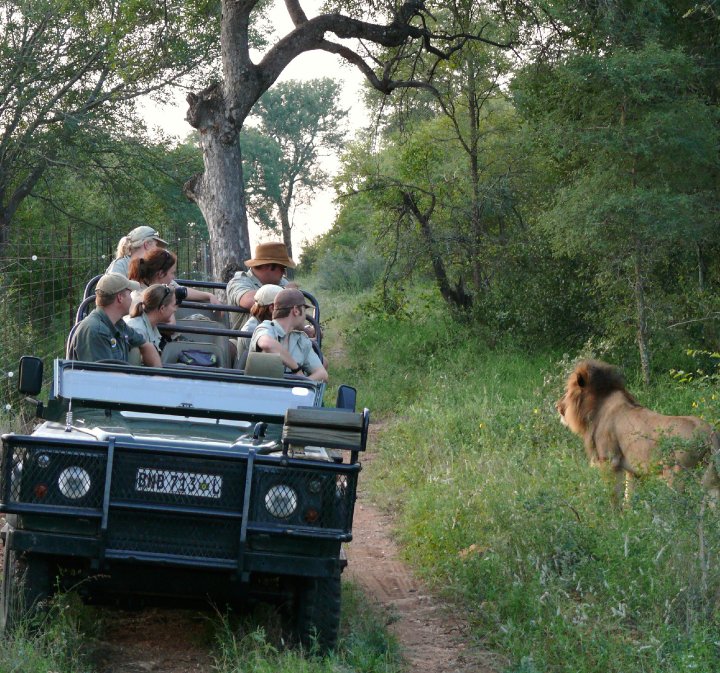
    First up was our mock assessment drives, our final chance to iron out any kinks and polish our presentations for game day. Despite the positively volcanic berg winds bringing things up to 40C. any of us were hoping for nice, slow drives so we could stop to talk about just about every tree, birds, and a pile of dung, Makalali was unobliging with this request.  As an overall group, we saw a lion pride with cubs, a cheetah mother and her offspring, the reintroduced pack of painted wolves and perhaps rarest of all, a team on Pidwa witnessed a caracal pounce on a spurfowl. e wasn’t the only one eating well, as the exponentially increasing decadence of assessment Phuza stops (local name for where you have your coffee/tea stop on morning drives or sundowners with later afternoon drives) becoming almost three-course meals, Rose finally had some competition in the kitchen.
    image

    Game drive @Will Riley

    Escalating Phuza stops and impending exams weren’t the only change being felt though. The weather was initially savagely hot but a merciful break came through with our first taste of the rains. Whilst this and subsequent showers since haven’t yet been enough to rejuvenate the bush from straw-yellow to verdant-green, it was enough to trigger small changes. 

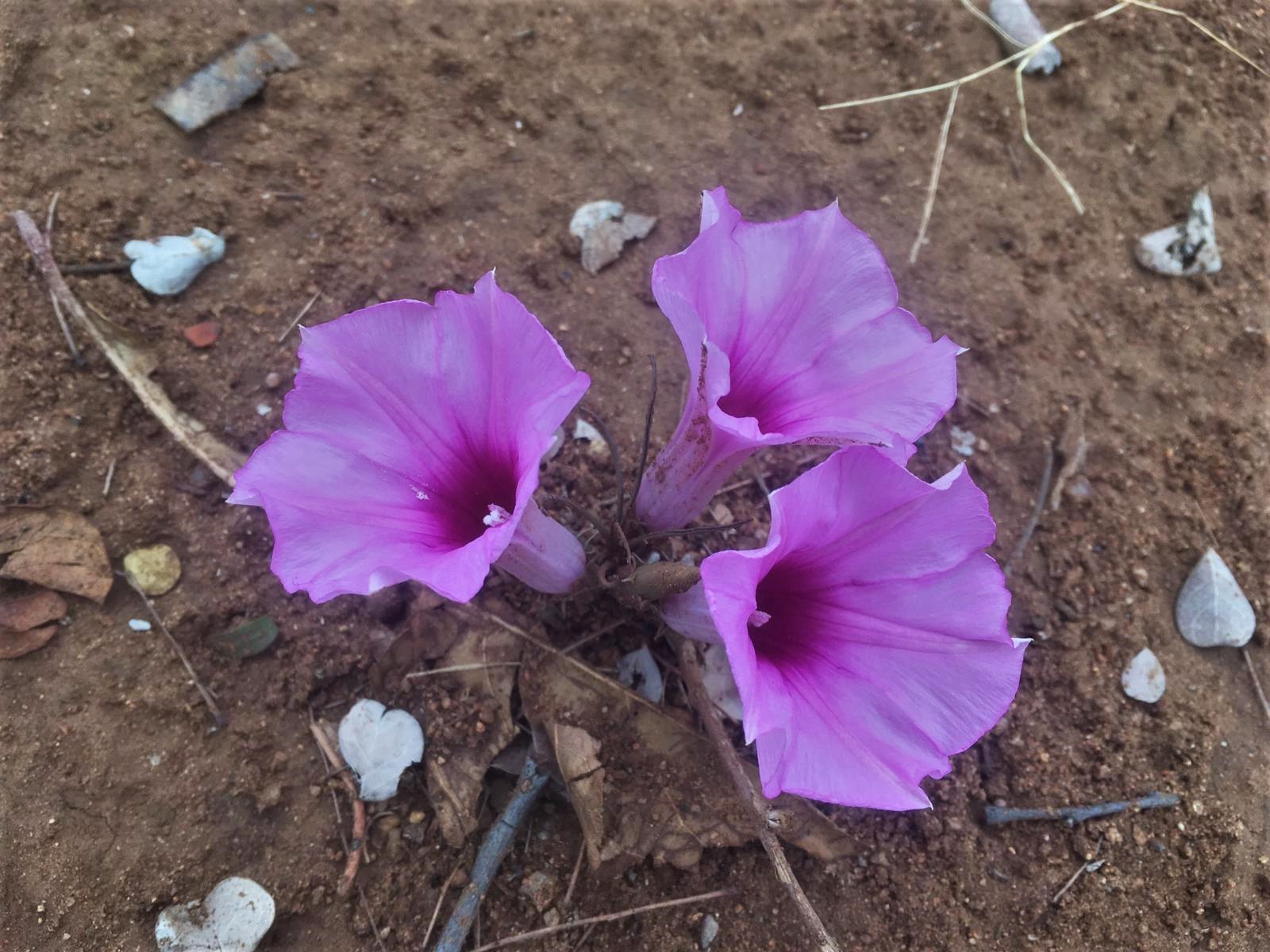
    Flowers began to pop up and some of the trees are looking leafier, even if the grasses are still pale husks barren of any nutrition. The calls across the sky are now mixing up too, as our Little, and White-fronted Bee-eaters are now joined by their European cousins hawking for dragonflies and grasshoppers after a no-doubt tiring migration. Just the other day we may have had a tentative first glance at what might have been the first European Roller…
    image

    A burst of colour in the bush @Will Riley

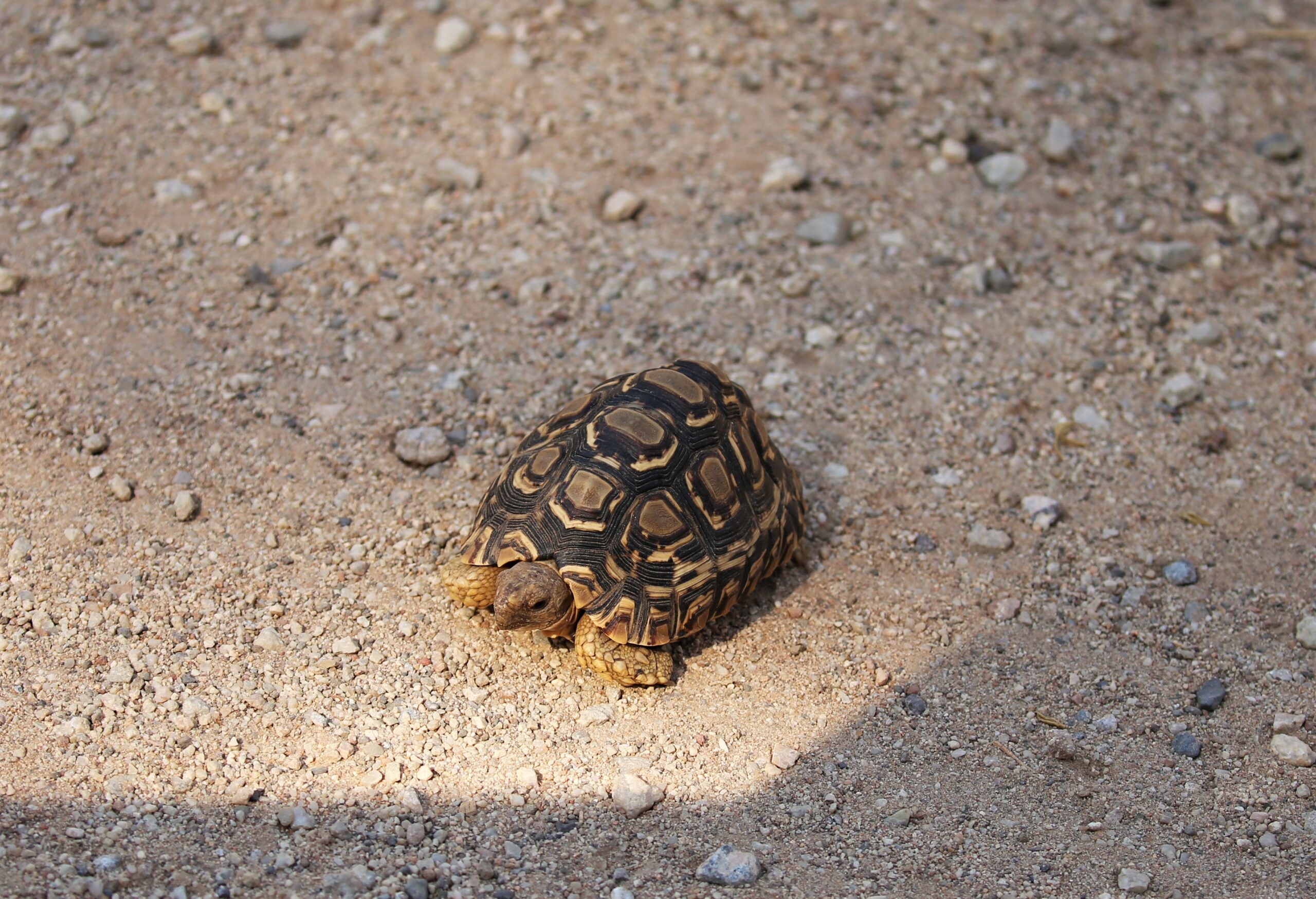
    The residents too began to emerge. At night Plum dung beetles whir noisily over your head like an interloping attack helicopter. Giant millipedes ooze out of the termite mounds and dead trees and begin to trundle placidly through the moribund grass. On one drive we even found a Schlegel’s blind snake attempting to burrow its way inside one of the termite mounds. But the most frequent reptile sighting with the rains is of the Leopard tortoises. South Africa’s largest tortoise, the only one that can swim, and one of the ‘Small 5’. To find one on a drive is a great experience for both guests to get some close-up photographs, and for the guide to flex some knowledge on this familiar species that can often get the box ticked for reptiles on assessment drive. Fingers crossed there will be plenty more in coming weeks!
    image

    Leopard tortoise @Will Riley

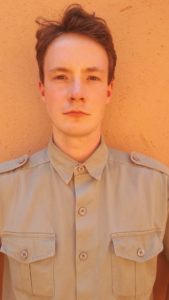
    Will Riley
    image
  • Letting go of control can be a good thing

    The most terrifying part about joining Bushwise is letting go of control. You have all the power to determine whether or not you will be successful in the field or the classroom but have to give that control up when it comes to the work placement. I have always had a very linear vision of how my life has to go and for the past two years, I knew I would be at Bushwise post-graduation. Now, as the course comes to an end I am faced with the reality that I have no idea what is next. 

    image

    All of the staff have been supportive of each and every one of us, which in retrospect can’t be easy considering we all wish to go in completely different directions. Unfortunately, it took me a bit too long to trust the judgement of others, experienced in the field, regarding where I should end up. Instead, in an American fashion, I strong-armed my way into an interview where I believed I was meant to be. After a day I realized the terrifying reality that maybe I don’t know what is best for me right now. The potential placement was amazing, beautiful, filled with passionate people, it checked all my boxes but still, I was haunted by the feeling that I simply could not fit into this puzzle. 

    For about 6 months Sharin has been reiterating that sentiment to me but I refused to listen. I am happy for that in a lot of ways as there will no longer be the question of what if or comparison made based on these imaginary boxes to checked. I am sad to have wasted any time or energy of any individual involved but alas here we are. The difficult American is asking for a backup plan! 

    image

    That is just the thing about the bush- you can’t always expect things to work out the way you want them to. You take what the bush gives you and trust me when you fight it, it ends up hurting. You may often hear people saying “The bush provides” and it really does! I have had an extraordinary experience learning with epic sightings and making friends for life. The next six months will provide too. Of that I am sure. Putting that kind of faith into another person’s hands was just not easy for me. Have I learned my lesson? I would say yes. 

    I would also say thank you for all of the patience that has been given to me over the past six months and my (at times) uncontrollable desire to be in control.

    Mara Vinnik

    image
  • Pangolin sighting a highlight

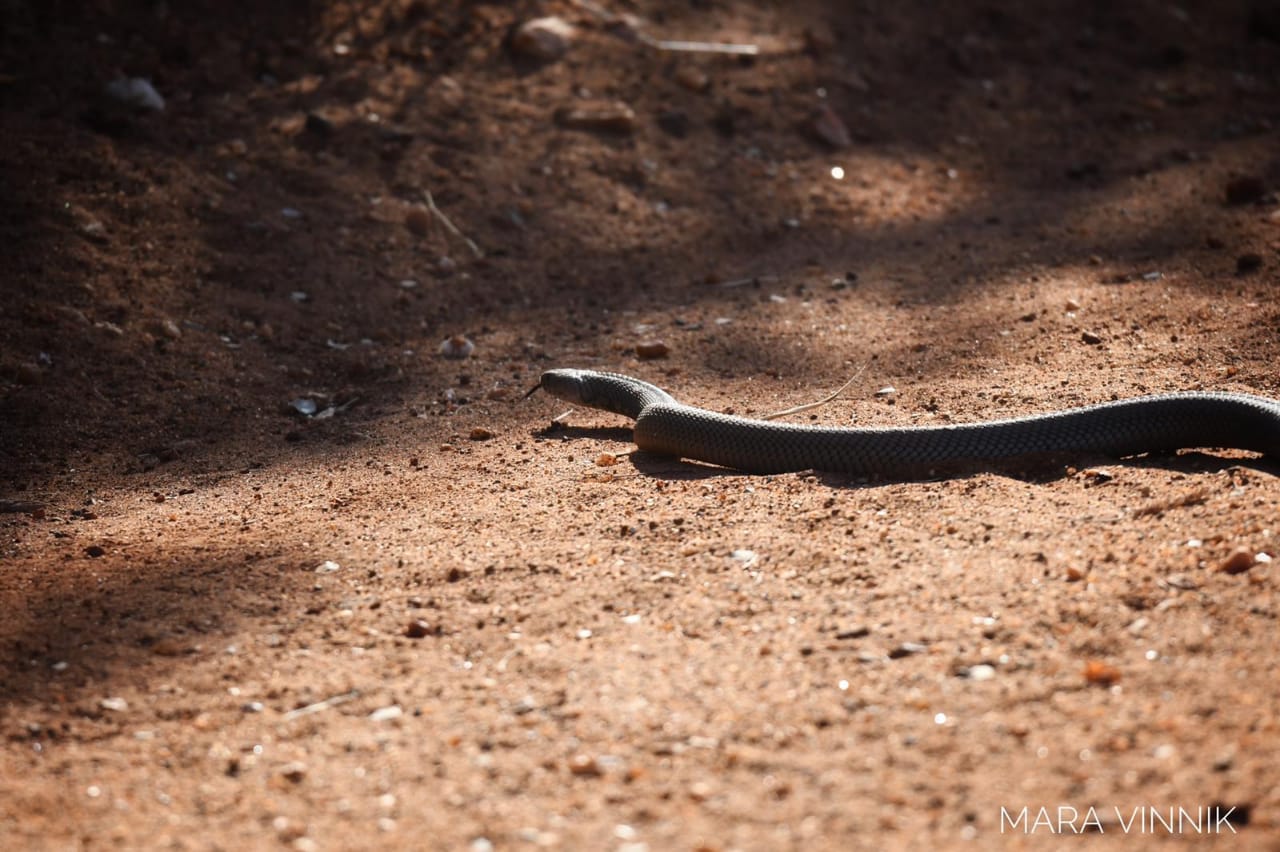
    The third semester is in full swing and we are all ready to take it on. I’ve enjoyed capping off each night with a cup of coffee as I focus on studying. In the bush, you need to be aware of your surroundings and always check dark corners in your room carefully, especially if it is hot. A ‘not so welcome’ visitors got into my room – a ‘Mfezi’ (Mozambique spitting cobra). It only took four minutes for him to crawl in my room as I went to the bathroom. I left my door open and when I came back I heard something moving towards my cupboard. The first time round I couldn’t see what it was because the floor is painted black, but as I move closer I noticed the movement and the head shape. I then went outside to tell another student, of course, they did not believe me at all, as I was very calm. Earlier that day we also saw a Vine snake by another student’s cabin, but one of our trainers was able to move it away safely. We all know each other quite well now, our strengths and weaknesses, likes and dislikes, and it feels like home. We are all one big happy family.

    image

    Mfezi – Mozambique spitting cobra

    image

    Every time I travel back home, I share my encounters with friends and family. They all envy me and know how lucky I am to do this. I love sharing special moments with them during my time at Bushwise. One thing I did miss during the off week is the sunset view! Back home there are lights everywhere it’s difficult to appreciate the sunset the stars.

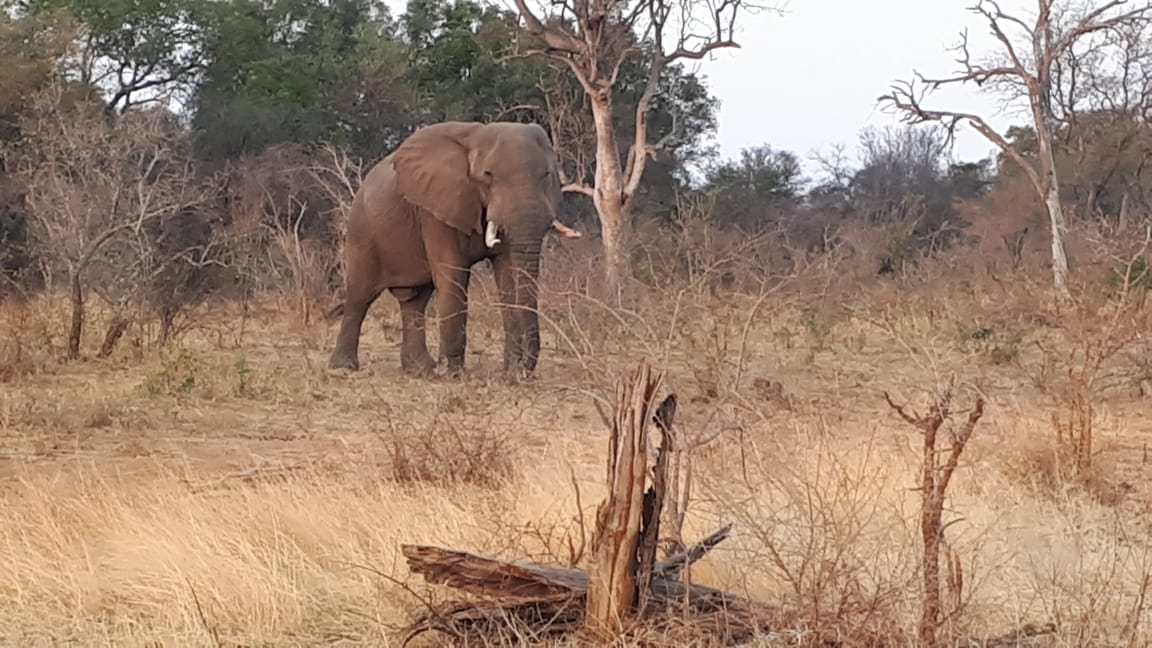
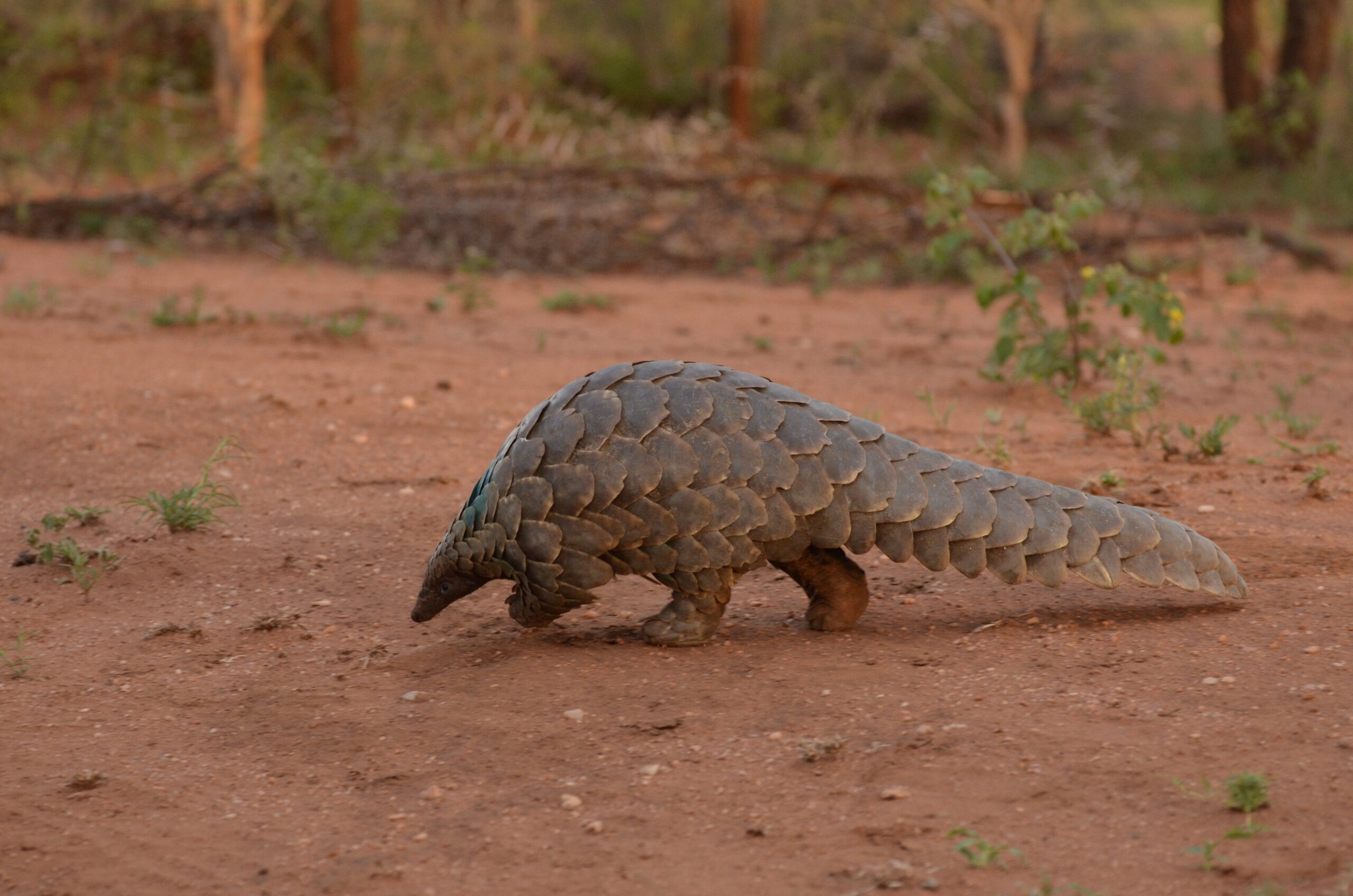
    We also had our long-awaited first game drive for the semester. As the drive progressed we came across a herd of Elephants as always led by the oldest and largest matriarch. The biggest highlight of the drive was when we came across a Pangolin, it was my first time ever seeing one. This is an extremely rare animal to see in the bush. It is also the most trafficked animal in the world. They are critically endangered and need to be protected as much as possible. We were incredibly privileged to see this as many people living and working in the bush may never even see one.

    image
    image

    A lot is happening this week, I’ve been nominated for Adventure Guide Award at the Lilizela Awards 2019. I will be flying to Pretoria for the interviews and in a few weeks after, I’ll be heading to the main event, it will be a delight to achieve the award. From there we will be awaiting the National Award Ceremony to take place in November.

    We’re very busy with lectures and game drives. One interesting class was when we were being taught about South African wines and food pairing. As a guide you are sometimes expected to host your guests in the evening and being able to recommend excellent South African wines for your guests will no doubt impress them and add to their experience

    My time here is very experimental. I get to learn a lot in and out of class, I took baking and cooking lessons from the kitchen staff and in that, I have found my new hobby. I made banana bread take back home and everyone loved it.

    image

    EXAMS, EXAMS, and more EXAMS. We’ve started writing exams, this calls for sleepless nights, and late-night cups of coffee.  

    Daniel Mogale

    image

  • Spotlighting spotted cats

    ‘Friday PM-BOTANY REVIEW’, these words stood etched onto the board in the ‘not so functional’ whiteboard markers that never quite work properly, but always give an ounce more of ink just at the right time as if they know and thus avoid being thrown away. I have always had a passion for the bush, all things big or small, but one particular area I can never quite hold in the same regard as Ecology or Geology is Botany, especially on a Friday afternoon after a long week.

    The day finally arrived and we set off in ‘Lequesha’, the name of the legendary Ed Smith’s cream coloured Land Rover to cover all the plants and trees we could find. Several floral species (and hours) later we found ourselves along the Makhutsi river at a Phuza stop grazing on some Buttermilk Ouma rusks. It was at this point that I made my intentions clear to the group that I wished to ride on the tracker seat and use the spotlight as we made our way back to campus.

    image

    Tracking is a major passion of mine and it was not the first time you would catch me on the tracker seat of the Landy examining the soil for tracks as we bumble along. As I mentioned earlier, I appreciate all things big and small but there was only one thing on my mind. I wanted to see a leopard.

    The drive back was quiet with only a Scrub Hare and bushbaby. As we exited the main gate and drove through a small game area on the neighboring crocodile farm before hitting the main Harmony road back to campus. I contemplated returning to the inside of the vehicle luckily I dissuaded myself remembering that I was told “there are leopards on the crocodile farm”… at that moment!.

    image

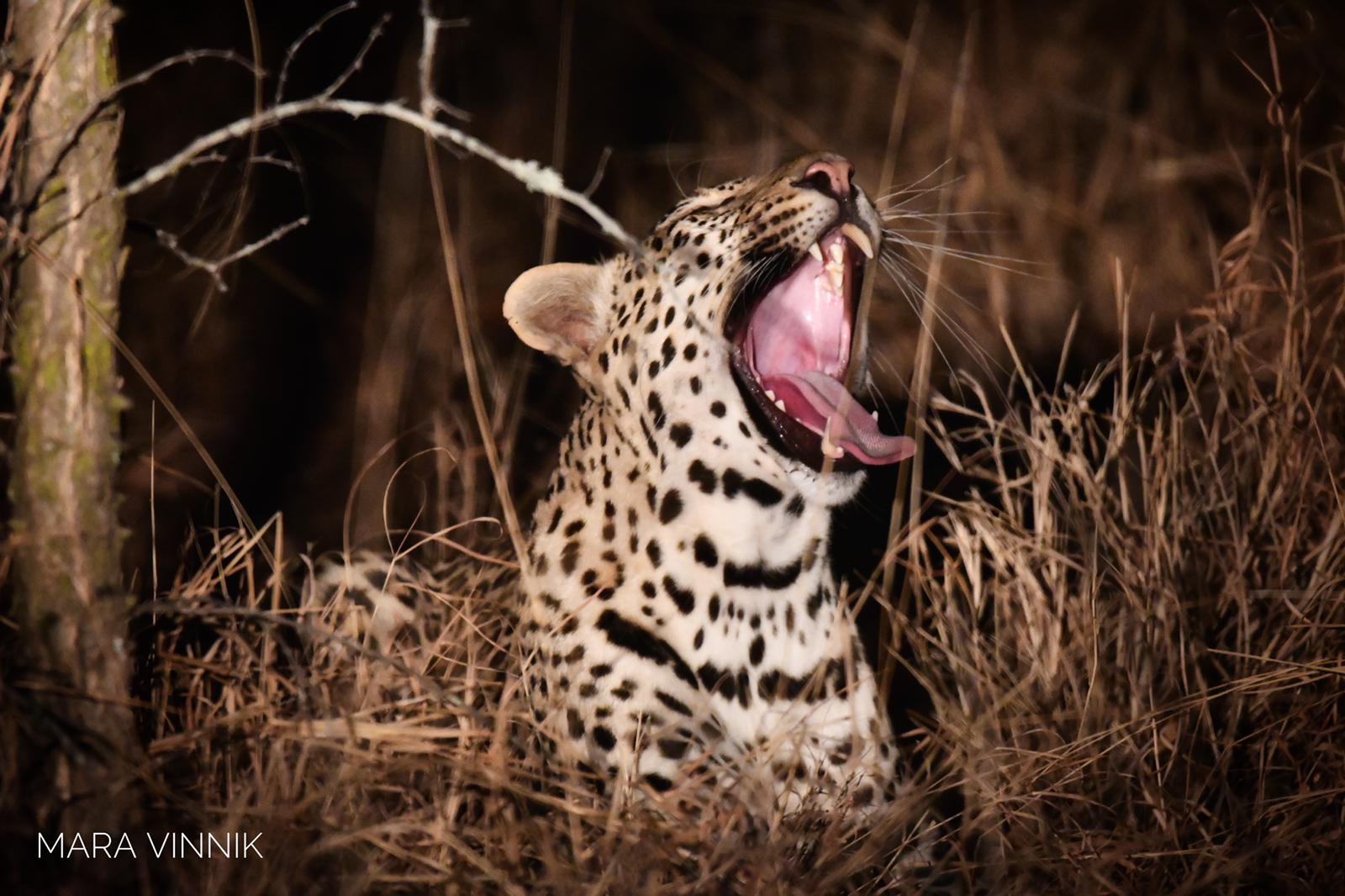
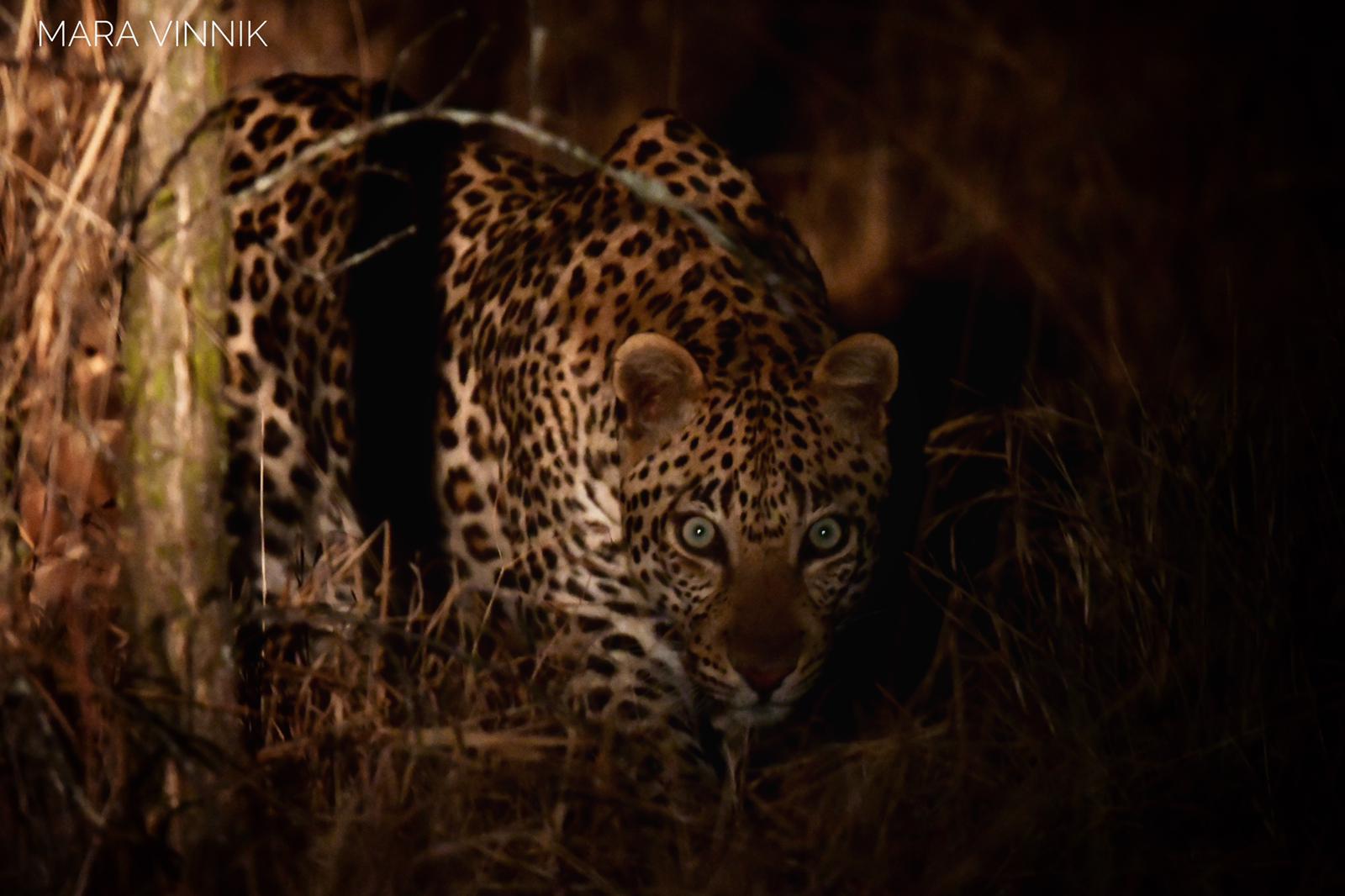
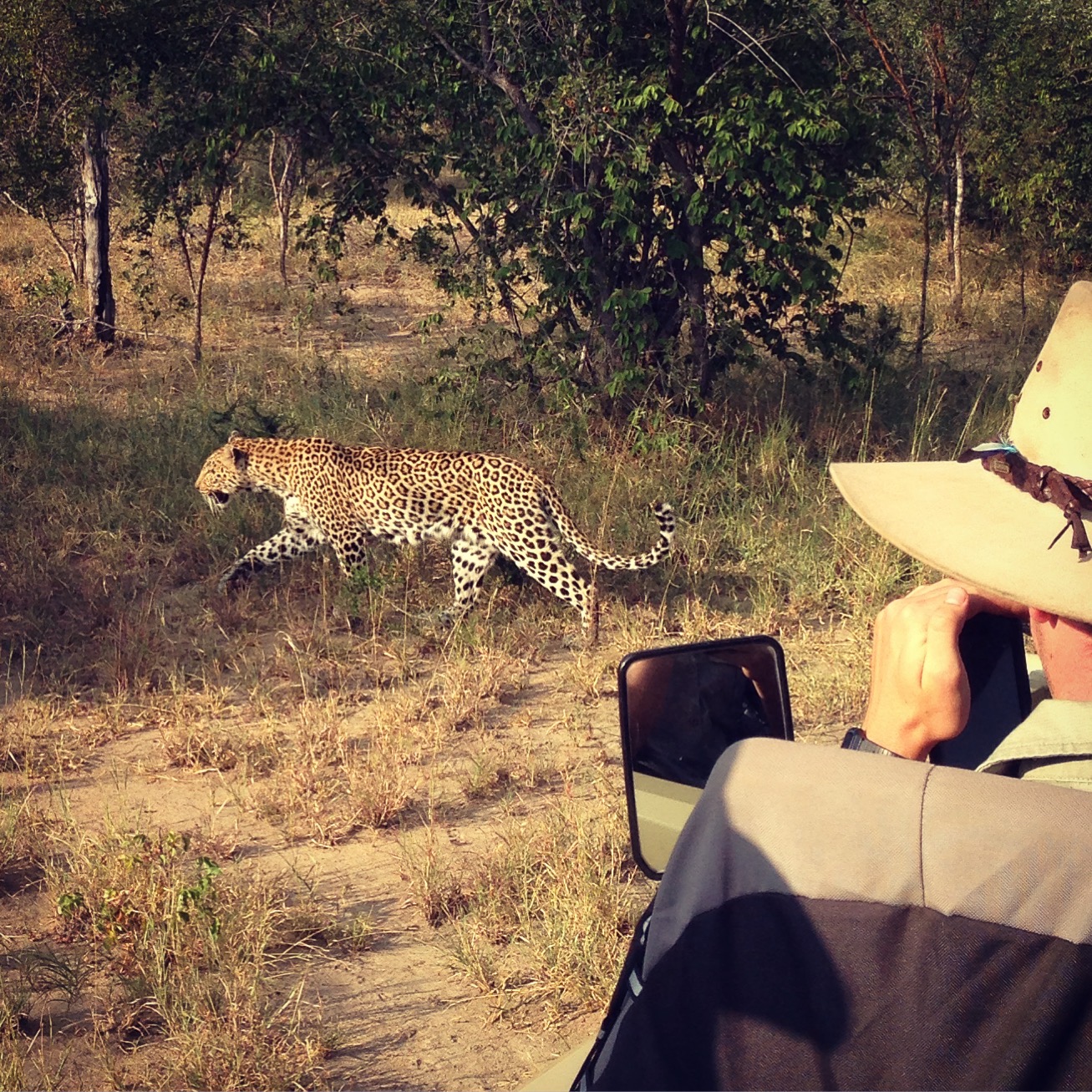
    A quick flash of the spotlight to the right and the unmistakable spotted yellow frame of a leopard appeared. There is something special about seeing a leopard, an indescribable feeling of awe and amazement. She was very relaxed and we spent almost an hour completely alone with her before she moved off for her evening hunt.

    image

    When sitting on the tracker seat, you are totally exposed to everything around you and you become one with the bush. This was truly the feeling I had as we sat about 12 meters from the leopardess. As she looked me right in my eyes, a primitive feeling brought me right back to ‘our’ roots and reiterates that human beings are not quite at the top of the food chain.

    Blog by Jamiel Malherbe

    image

    #fieldguidetraining #gamedrive #leopard #sightings

  • How to navigate a tricky situation with dangerous game

    Humans have been super predators for some time, and animals have thus developed an instinctive understanding of this fact which in turn has led to various responses to humans in terms of this understanding. Essentially animals do not want confrontation with a super-predator such as humans and would rather avoid humans than make physical contact!

    image

    Secondly, animals respond to threats, therefore if there is no threat there should be no response. If an animal perceives a threat it will be forced into action and respond accordingly! If the threat is removed by some or other means, the response will change, therefore the idea is to interact in such a way that the animal does not know about you, or if unavoidable, perceives no threat from you.

    Regardless if you are guiding on foot or are vehicle-based, taking into account the above-mentioned the key aspect is-stay out of trouble! With this in mind, the training at Bushwise Field Guides places heavy emphasis on – the wisest choice is to stay out of trouble!

    Should you find yourself in an unforeseen situation that is potentially dangerous, understand what the animal is doing and why it is reacting in a given way, but most importantly, you must also understand where your safety margins are and only operate within those safety margins!

    image

    With this being said, understanding animal behaviour is of paramount importance. Aspects such as species characteristics, sex of the animal, previous experience and environmental conditions all play a major role in the make-up of the animals’ standard behaviour patterns and thus will usually behave in terms of the norm for that species. However, this behaviour can be influenced by the surrounds in which it has to act, e.g. available cover, slope, the density of vegetation, the distance of the threat, to name but a few.

    Often these factors determine the outcome of a confrontation, for example, animals will flee upwind since they will be able to both see and smell what is lying ahead of them, an important consideration when considering an escape route for an animal.

    Another ‘pearl of wisdom’, strange as it may sound, talk to the animal! This often will defuse a situation as animals are susceptible to verbal communication, and while not understanding your language, are capable of reading the tone of your voice and the implied message!

    image

    Fundamentally the skill of staying out of trouble should be practised unconditionally to avoid sticky situations. I believe that the true skill of the bush is to not buy safety by means of shooting your way out of trouble, but rather to move through the bush with minimum interference, a principle that is invoked throughout the 50-week course provided by Bushwise Field Guides.

    Until next time, safe guiding.

    Trevor Myburgh

    #fieldguide #gamedrive #safari

  • In nature, nothing is perfect and everything is perfect

    This last week we were treated to an amazing opportunity to visit a raptor rehabilitation centre near Dullstroom. With great anticipation, we set out on our two-and-a-half-hour journey. While driving over the escarpment and the majestic Drakensberg, with faces pushed up against the windows of the minibus, we strained our necks in the hope of catching a glimpse of the ever-elusive Taita Falcon. A near threatened and incredibly rare falcon species that is associated with cliffs and gorges and dwells on the sheer cliffs of this mighty mountain range. Alas, we didn’t get a glimpse but the anticipation was half the fun.

    image

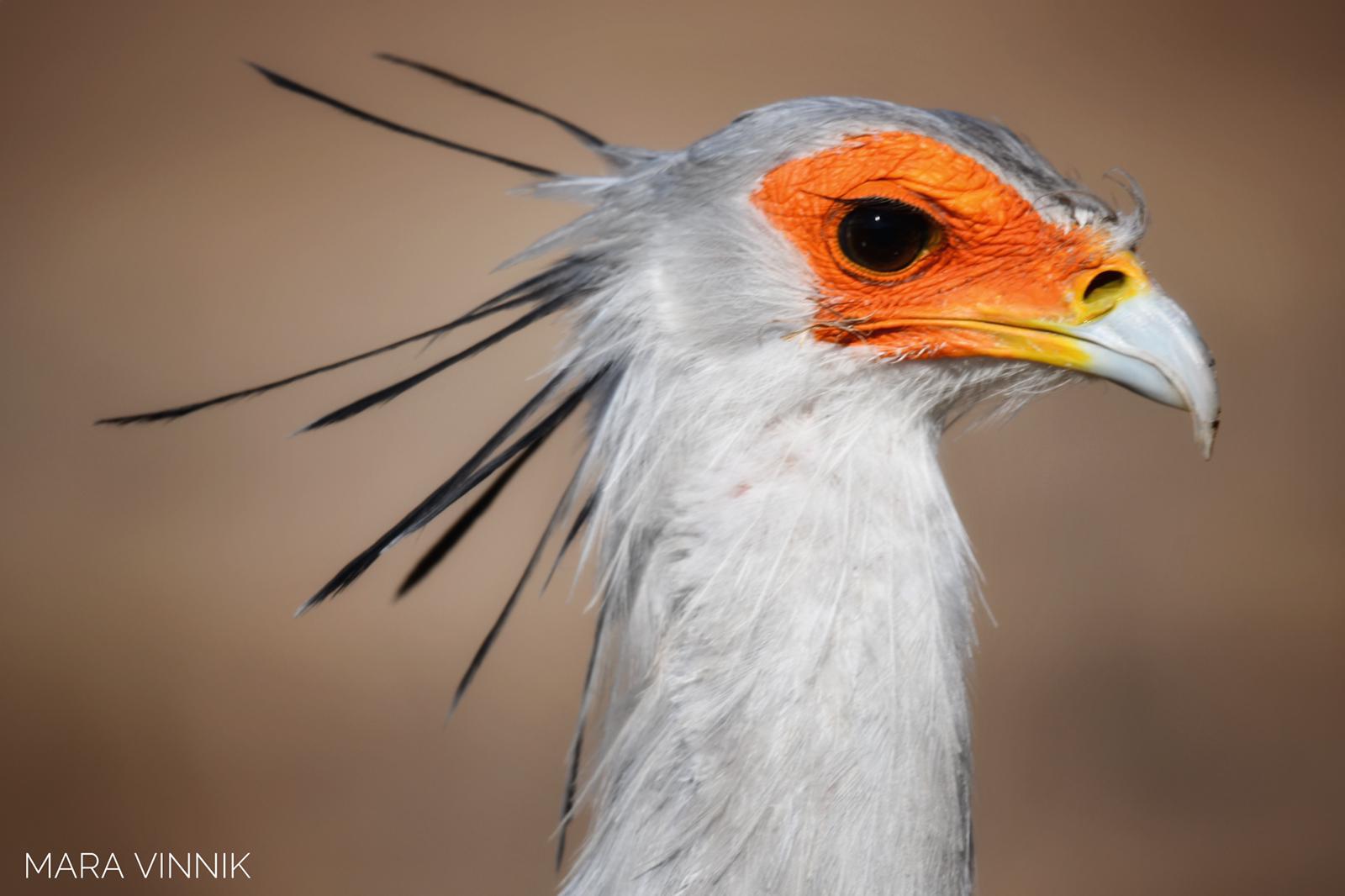
    Snake hunting Secretary Bird with a killer kick

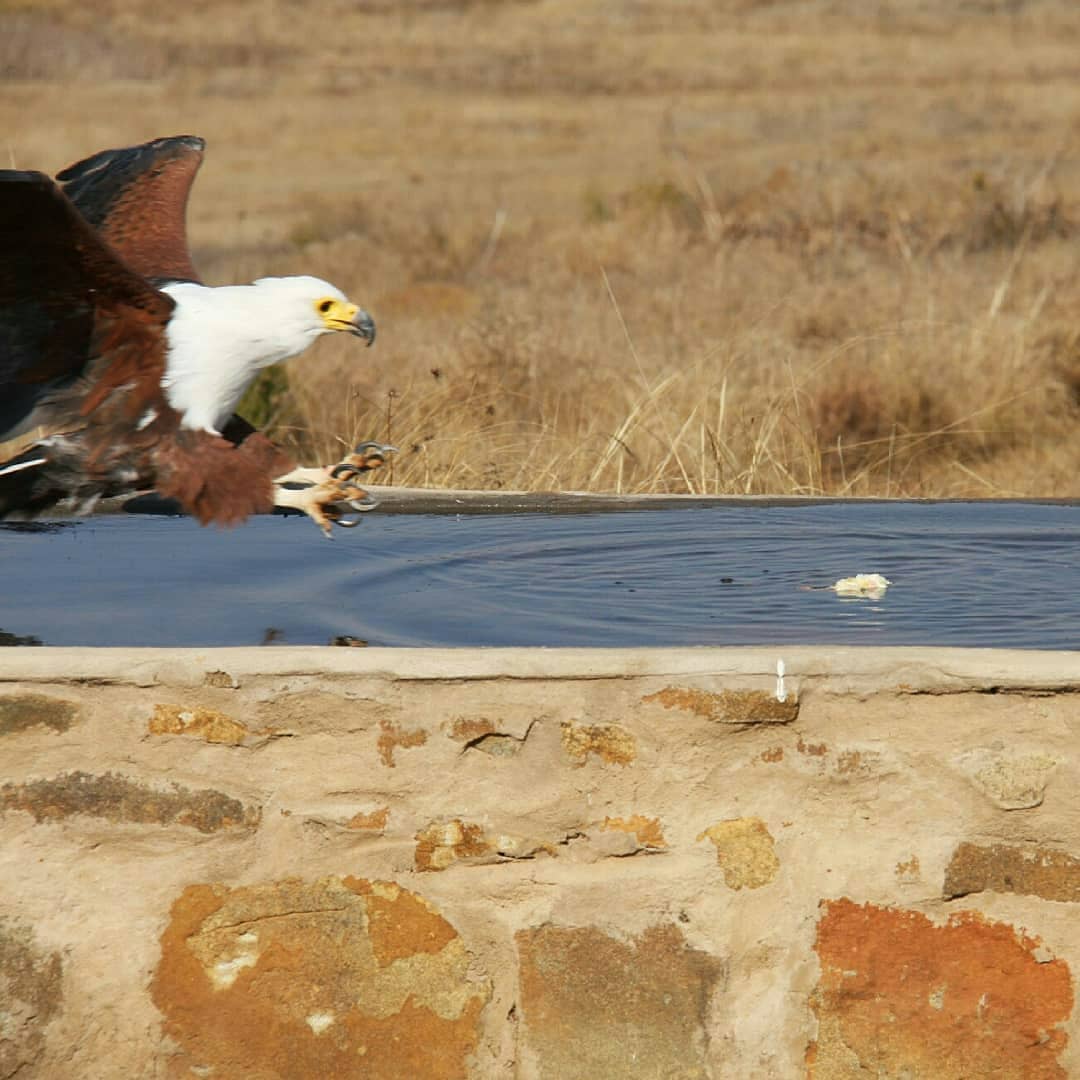
    On arrival at the rehabilitation facility, we were greeted by a wonderful woman that oozed passion, energy and a love for everything about raptors together with an exemplary example of a Lanner Falcon that was busy in the last stages of being released back into the wild. The falcon put on a wonderful display for us. Stooping, diving, and hunting at breakneck speeds. What an amazing creature, perfectly built for its surroundings. Thereafter, we were treated to a wood owl display as well as an up-close opportunity to experience the power, precision, and energy of an African Fish Eagle. Wide-eyed we watched as it swooped down to catch prey out of a waterhole, not more than 10 meters away. We were treated to other bird displays that were equally amazing. But what was comforting to know was that these birds were in the best possible care and if there is a possibility to release them back into the wild, the passionate and tireless staff at this facility, ensures it does indeed happen. What a wonderful afternoon. Thank you Bushwise.

    image

    Fish eagle catch its prey

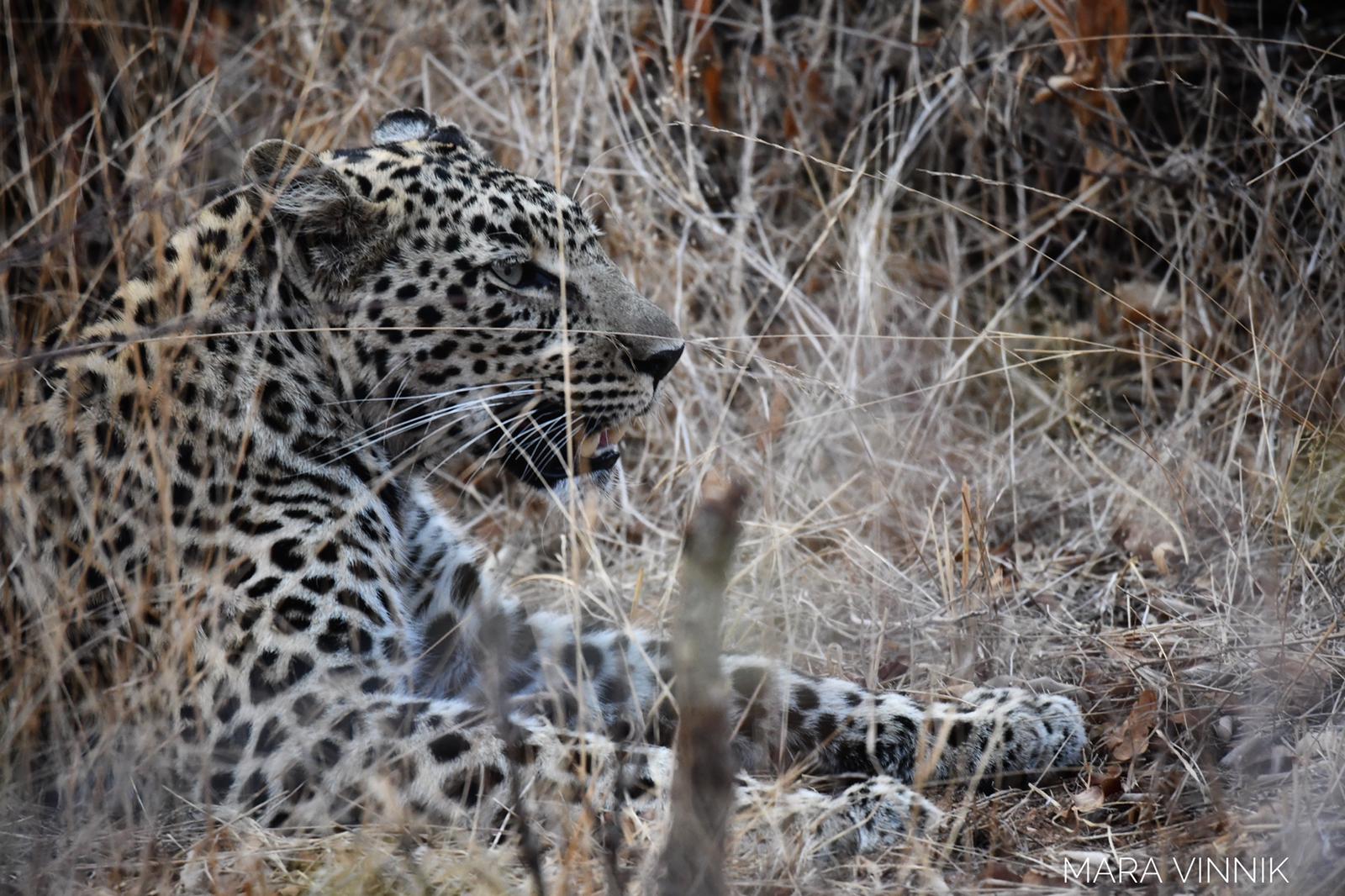
    The last part of the week was reserved for practical drives. It’s always a favourite for ‘us’ field guide students. On Friday, it was my turn to sit in the guiding hot seat. It’s amazing how nature at times can be the master of concealment. Then, at other times it reveals herself to allow you to see the myriad of life, energy, and power it has on show. This particular drive was just that; power, energy, and survival of the fittest. An hour into my drive we had the amazing luck to be in the company of the “prince of predators”, a leopard. For an hour we were privileged to watch him as he walked back and forth from his kill sight. He had killed an impala and had cached his prey in a Knob Thorn tree to guard against other predators from stealing his hard-earned meal. The exhilaration, one gets from being in the presence of such a perfectly designed and beautiful creature is breathtaking.

    image

    Prince of predators

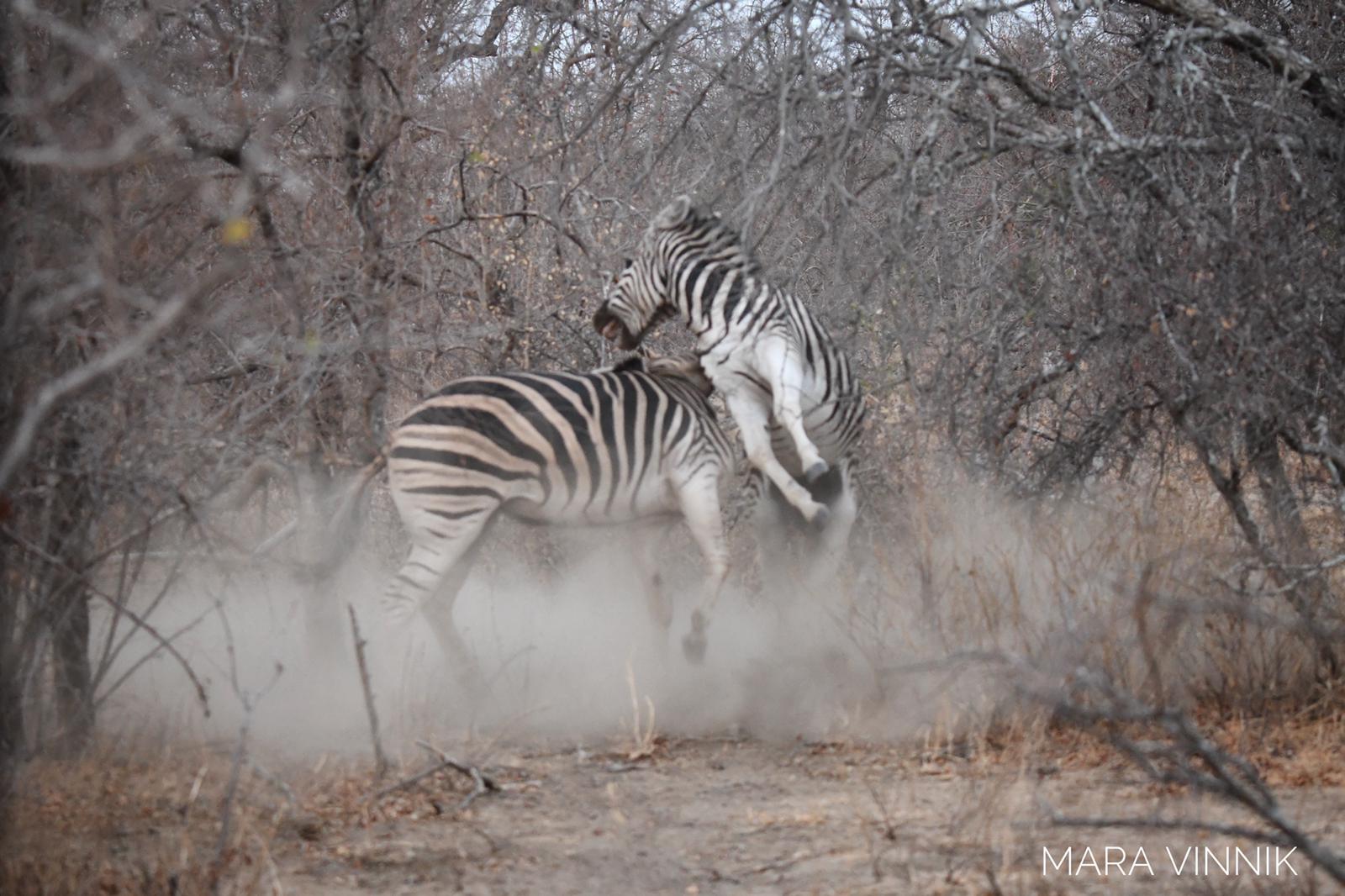
    After finally leaving him to his own devices, we were happy to make our way back to campus. After all what could beat an intimate leopard sighting. Answer: A zebra sighting. What a zebra sighting you say? Yes, a zebra sighting that paled everything we had experienced that afternoon. Within minutes of leaving the leopard, we came across five zebra stallions. Their testosterone levels going through the roof. We found ourselves in the middle of a fight for mating rights. Nature does not look after “sissies” (softies). These guys were going at each other hammer and tongs. No punches pulled. A fight to the bitter end. Hooves were flying. Kicks to the head, powerful bites to the body and neck. Rearing onto their hind legs giving all they had. Over and over again. It was relentless. At one stage the dust was so thick around us we couldn’t see. We were caught up in the heat of the battle. Bones were broken, gnashing of teeth, hooves drumming and cries of pain. It was pandemonium. The energy was thick in the air. You could cut it with a knife. Amongst all this power and emotion, over my shoulder, I heard these four words, “best game drive ever!” That pretty much summed it up. Now we could drive back to campus with the warm feeling of knowing why we want to be here and why this course is so important to us. What a way to end another eventful week at Bushwise. I can’t wait for the next chapter.

    image

    Take no prisoners

    Never give up on nature, you never know when you will be rewarded. If you put in the hard work you will reap the rewards.

    Blog by Martin Steyn

    image
  • Record breakers in the animal kingdom

    As humans, we recognise our champions and those with very special achievements with a gold medal or a Nobel Peace Prize. Some humans with other very special abilities or special physical features are recorded in the Guinness World Records book. But for millions of years, long before modern humans, the champions in the animal world were already setting some amazing records that remain unmatched by humans. Here are only a few examples that will hopefully trigger your interest in finding out more about the other record breakers of nature.

    The strongest

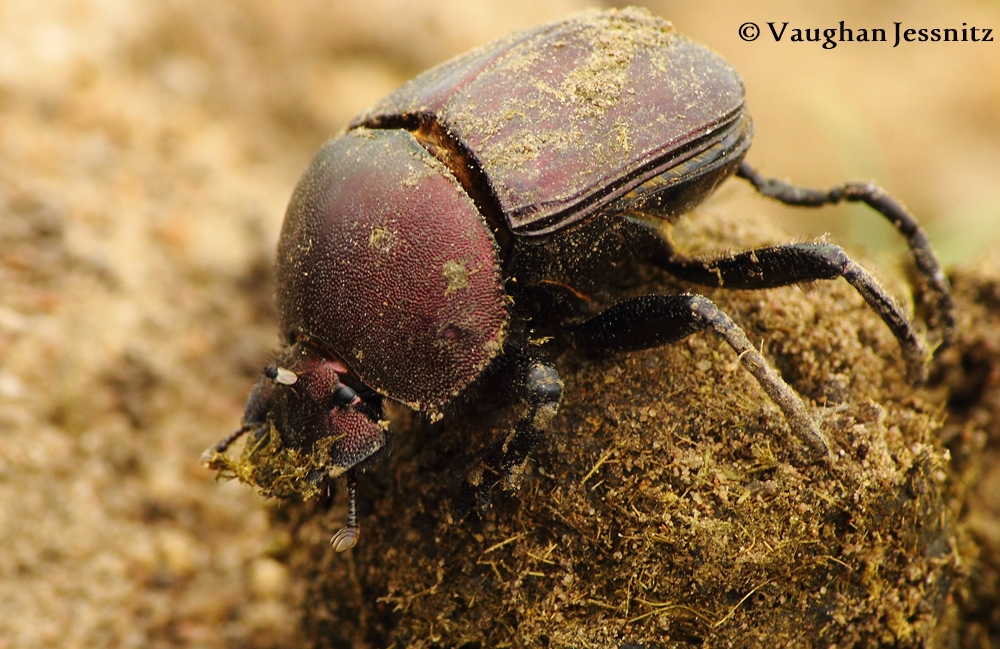
    The current strongest man on earth is Hafþór Júlíus  Björnsson. He weighs 193 kgs and can deadlift 1041 pounds or 520 kgs. That is about 2.7 times his own body weight. But when you compare that to a much smaller creature like a dung beetle or rhino beetle, it becomes very clear that Bjornsson can’t compete with these guys. It is said that dung beetles can push 850 to 1100 times their own body weight. Although a beetle cannot lift 520kgs. they can lift more weight in relation to their body size. This is because muscle strength increases in proportion to the surface area of a muscle’s cross-section and not from a larger volume or mass. This also means that relative to the volume or mass of a muscle, its strength rating decreases the bigger it gets. This law of physics turn the dung beetles into true champions and record breakers.

    image

    Best eyesight

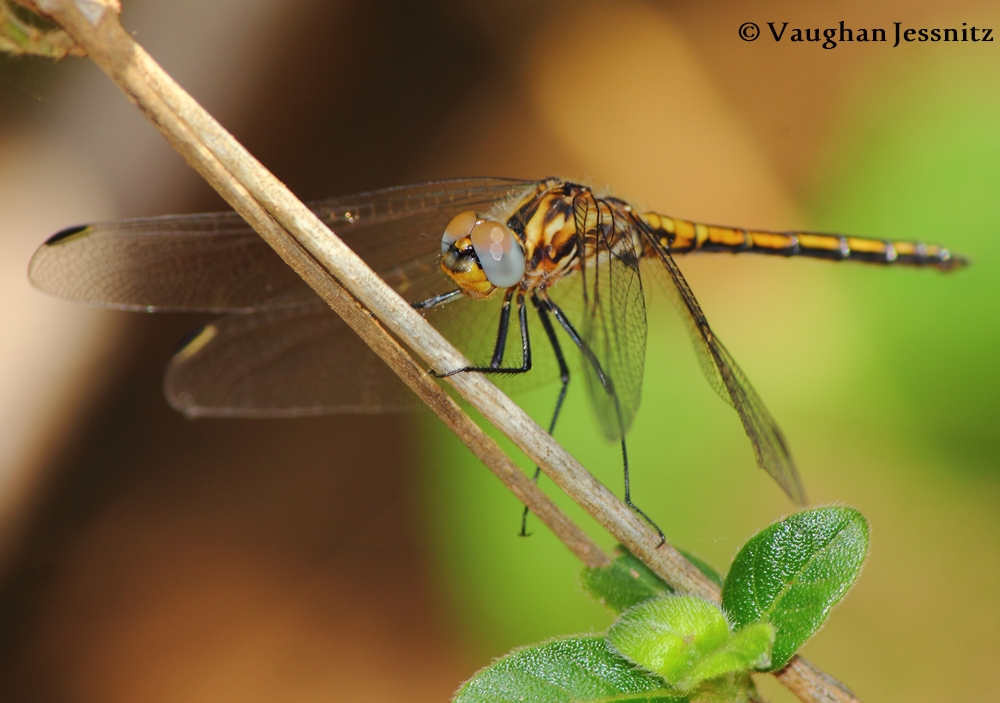
    Dragonflies have two large compound eyes, each with thousands of lenses, and three simple eyes with lenses called ocelli. These eyes allow them to see up to 200 frames per second. In comparison, humans can only see around 12 -16 frames per second. This gives dragonflies the ability to see a three-dimensional hologram-like image and they see this in slow motion. This comes in very handy as they hawk other insects in mid-air. Because they spend a lot of time around water they also have other adaptations in their eyes to prevent them from falling into the water like other insects. While other insects’ sight gets confused by the reflection of the sunlight from water, dragonflies have evolved to counter that visual error. They achieve this by having special horizontal facets in the middle of their eyes that enable them to still distinguish between the darker horizon and the lighter sky. Basically it means their heads always stay level with the horizon. These abilities make dragonflies the record holders of vision.

    image

    The loudest

    A jet aircraft or Boeing 737 taking off generates 90 -150 dB. Just imagine what 230 dB. sounds like. This eardrum bursting noise is produced by Sperm Whales. These calls can travel up to 500 miles underwater. They produce a series of clicking noises that can reach as high as 230 dB. making it the loudest animal in the world. These whales are the Olympic champions of the animal sound world.

    The high jump champions

    Fleas can jump 220 times their body length and they can jump around 30 thousand times in a row. This means that if they were human-sized then they would be able to jump over the Eiffel Tower with an acceleration force of 140G. That’s an acceleration rate 50 times greater than a rocket taking off into space. To help them to achieve this great feat they have an elastic pad made of a protein called resilin. This functions like a tensed spring that release and catapult fleas into the air. To brace them when lifting off they have spiny gripping structures that cover the fleas’ feet and shins.

    In conclusion:

    These record-breakers have been around for millions of years and evolved special adaptations to be able to survive in the hostile natural habitats and out-compete competitors. Their phenomenal feats leave our abilities as humans lacking far behind although we constantly try and mimic these abilities within our own world.

    Blog by Gerhard van Niekerk

    Resources

    https://www.google.co.za/search?biw=1366&bih=625&tbm=isch&sa=1&ei=dGNvXZqRDJHeasmbgMAF&q=telecoprids&oq=telecoprid&gs_l=img.1.0.0i24.325874.328780..330872…0.0..0.414.3302.2-2j7j1……0….1..gws-wiz-img…….35i39j0i67j0j0i10j0i10i24.v3jKVe2XBOw#imgrc=-vL78D43oPeewM:

    https://www.google.co.za/search?biw=1366&bih=625&tbm=isch&sa=1&ei=wmRvXa78KcSUa4KahJgC&q=thor+the+mountain&oq=thor&gs_l=img.1.0.35i39j0l9.122999.124138..126653…0.0..0.455.1438.3-3j1……0….1..gws-wiz-img.WCj_4c8A-tc#imgrc=EaYf_WlUDrlotM:

    https://www.google.co.za/search?biw=1366&bih=625&tbm=isch&sa=1&ei=RGVvXYfNEYS4gweOgZWQAw&q=dung+beetle&oq=dung+bee&gs_l=img.1.0.0l10.129045.131432..133233…0.0..0.423.2769.3-7j1……0….1..gws-wiz-img…….35i39j0i67.crUsKAONVq0#imgrc=NHm5pNorE6RFUM:

    https://animals.mom.me/strong-animals-relative-sizes-5690.html

    https://www.animalwised.com/the-10-highest-jumping-animals-in-the-world-943.html

    https://www.brainfacts.org/thinking-sensing-and-behaving/vision/2012/image-of-the-week-dragonfly-eyes

    https://www.livescience.com/12794-high-jumping-fleas-secret-shins.html

    https://www.google.co.za/search?q=dragonfly+eyes+facts&source=lnms&tbm=isch&sa=X&ved=0ahUKEwixmv6J3LbkAhWxrHEKHSyID7MQ_AUIEigB&biw=1366&bih=625#imgrc=Z5xcVRJHq9CDXM:

    https://www.google.co.za/search?q=dragonfly+eyes+facts&source=lnms&tbm=isch&sa=X&ved=0ahUKEwixmv6J3LbkAhWxrHEKHSyID7MQ_AUIEigB&biw=1366&bih=625#imgrc=yBTrjwZeLFsInM:

    https://showme.co.za/secunda/lifestyle/nature-outdoors/7-things-you-never-knew-about-dragonflies/

    https://thepointsguy.com/news/quietest-aircraft-in-the-sky/

    https://onekindplanet.org/animal/flea/

    #recordbreakers #fastest #besteyes #strongest #animalkingdom #loudest

  • What is that track?

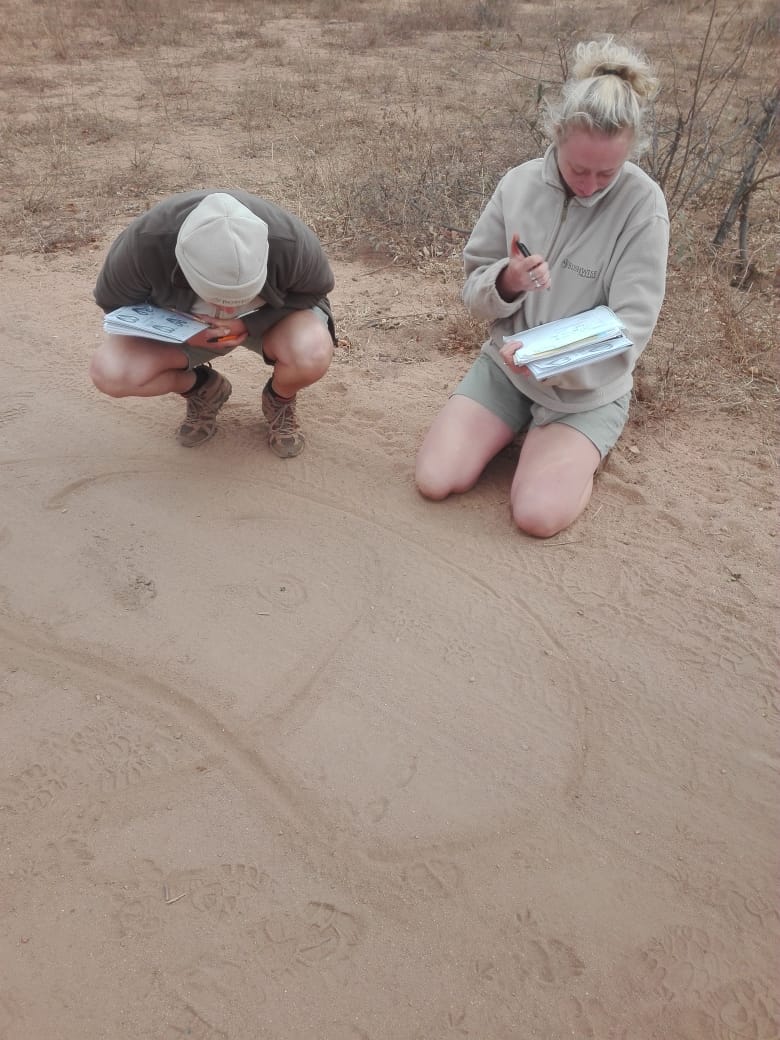
    What a week! It is officially the end of week two of semester two. Our Bushwise group split up this week with half of us going to Tzaneen to do their rifle competency and dry runs for Advanced Rifle Handling, while the other half of us spent the week with Colin Patrick and K9 Annie doing Track and Sign. I had the joy of spending my week with the latter.

    First semester I probably could have gotten a few tracks correct; things along the lines of elephant, lion, zebra, and giraffe. The most basic of tracks. After just a few short days with Colin, I can honestly say that my eyes have completely opened to the huge and never-ending world of track and sign, and I am absolutely in love.

    Day one we started off by having one of the best life lessons we could have learned from Colin. The takeaway from that chat was one simple quote: “True success comes from the subconscious mind.” I think this quote has been forever ingrained into my brain. My understanding is that when you let doubt cloud your subconscious mind, you can talk yourself out of something that you know is true and correct. Such a simple sentence can be applied to many aspects of life, but especially for track and sign.

    image

    Photo by Devlin Loader

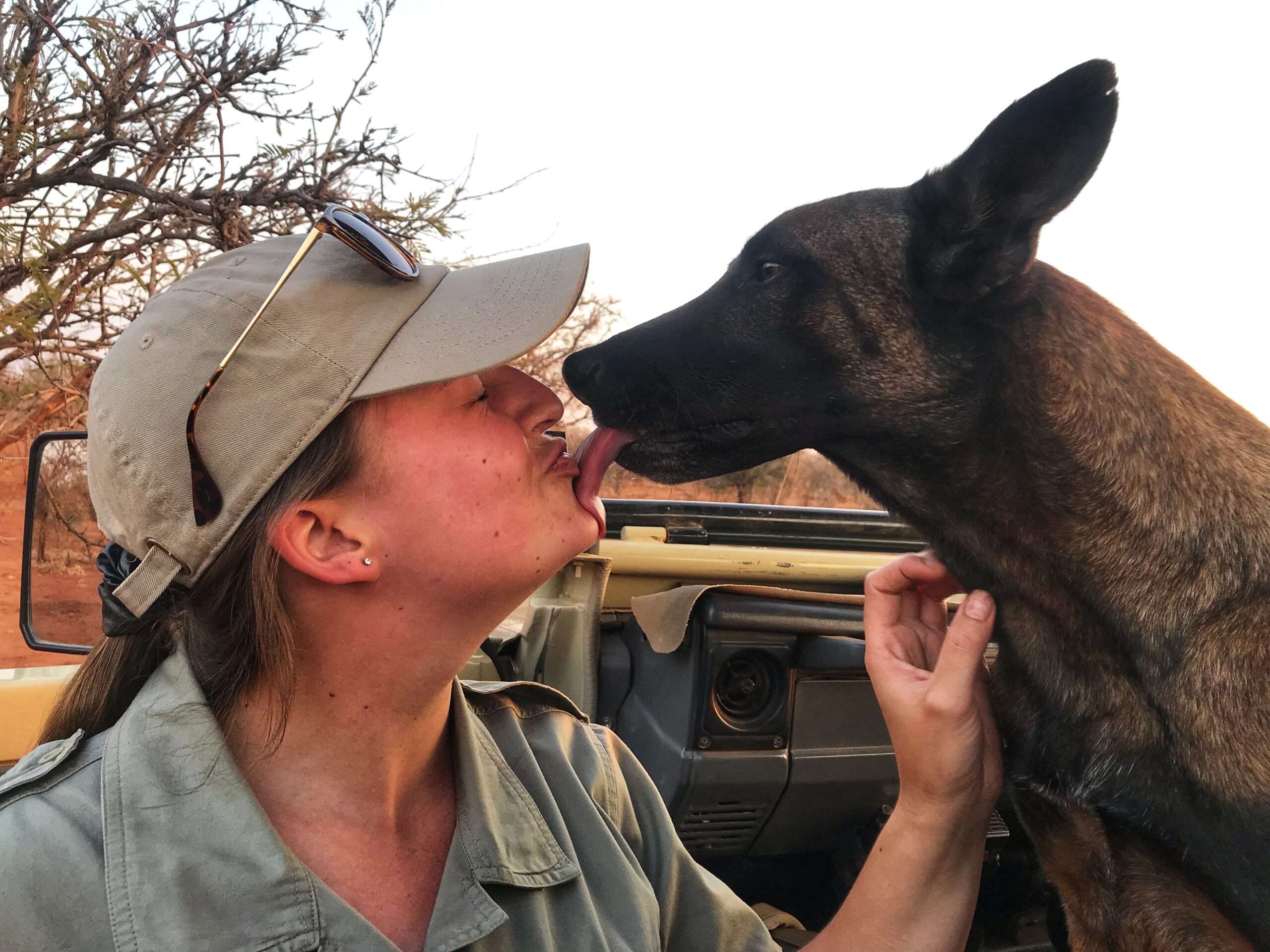
    Before I talk too much about the track and sign and the Colin portion of the week, I have to give a huge shout out to Colin’s dog, Annie. We got the pleasure of spending the week with her and I can only speak for myself, but I fell head over paws in love. Annie is a tracking dog that lives and works with Colin. She has gone through intense training to be able to track poachers, criminals, and animals alike. The love that she has for Colin is unbreakable. I could write my entire blog all about Annie. But, I will refrain from that to tell a less exciting story from the week.

    image

    Photo by Lara Coldrey

    As the days spent in the reserve with Colin and Annie passed, we found ourselves learning more and more every day. If I look back now to before this week, the amount of information that I was able to learn in such a short time is incredible. Every day we added new tracks to our brain bank of tracks, and every day the mini-assessments that Colin gave us became easier and easier.

    After 5 days of staring at tracks, soaking up every word from Colin we were ready for the actual assessment. We started with the practical on Friday afternoon. Excitement, nervousness and a little bit of confidence were in the air as we all got off the vehicle and got ready to jump straight into the deep end of whatever tracks Colin could sneakily find for us. We continued the assessment on Saturday morning as light is a factor and we sadly ran out of it Friday afternoon.

    image

    Photo by Vaughan Jessnitz

    After walking a million circles around tracks, staring, we had all submitted our final answers and could breathe deeply again because we had survived our first Track and Sign assessment. As eager as we were to receive our results we had a celebratory braai in the bush recapping the best moments of the week and waiting not so patiently to hear what we all hoped would be good news.

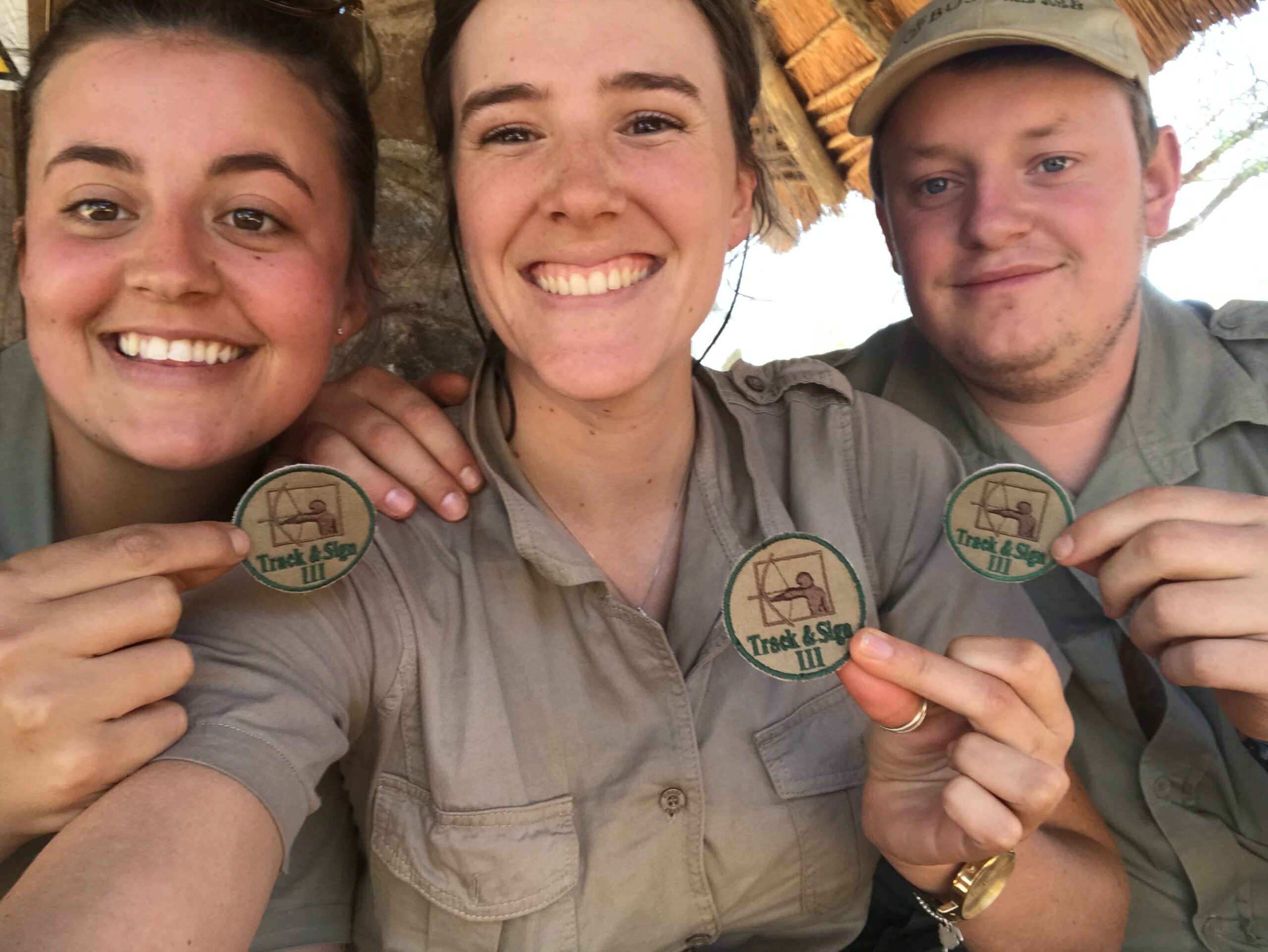
    One lucky member of our group knew his results before the rest of us, as he got ALL 50 questions correct, rightfully earning himself only the SECOND Level 4 Track and Sign Certificate received by a student on the first try in the history of Bushwise. What an accomplishment that Martin earned, and as a group, we could not be happier to be a part of his achievement.

    The moment finally came to find out our scores. By the skin of my teeth, I nervously waited for Colin to announce my level… and to my surprise, all the hard work from the week paid off with a Level Three Track and Sign qualification!

    image

    Photo by Lara Coldrey

    Being a South African born, American raised human being that made a quick and easy decision to come back to my roots. I could not be surer that I made the right decision moving back home, coming to Bushwise, and living my absolute best life in the African bush.

    As the groups are now going to switch, the rifle group will get the joy of opening their eyes to the world of Track and Sign and I cannot wait to watch their excitement, with a little bit of jealousy as I know exactly what they are going to learn and experience this upcoming week.

    Blog by Shawn Gardner

    image

    Shawn Gardner

    #cybertracker #trackandsign #tracking #tracks

  • They BEE-long here

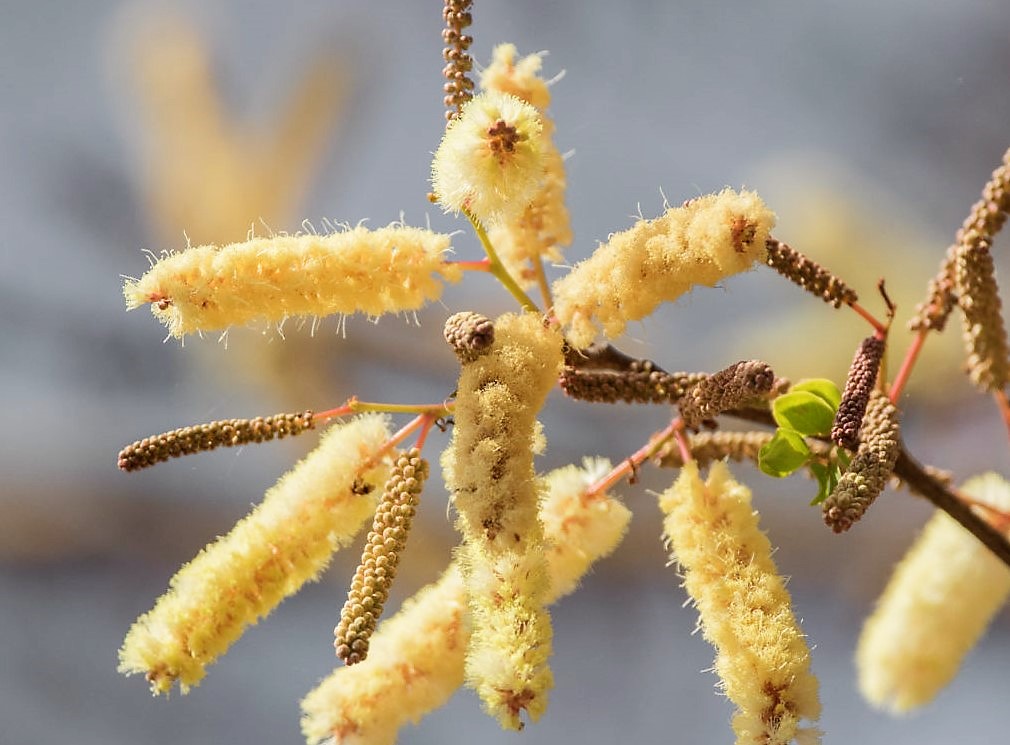
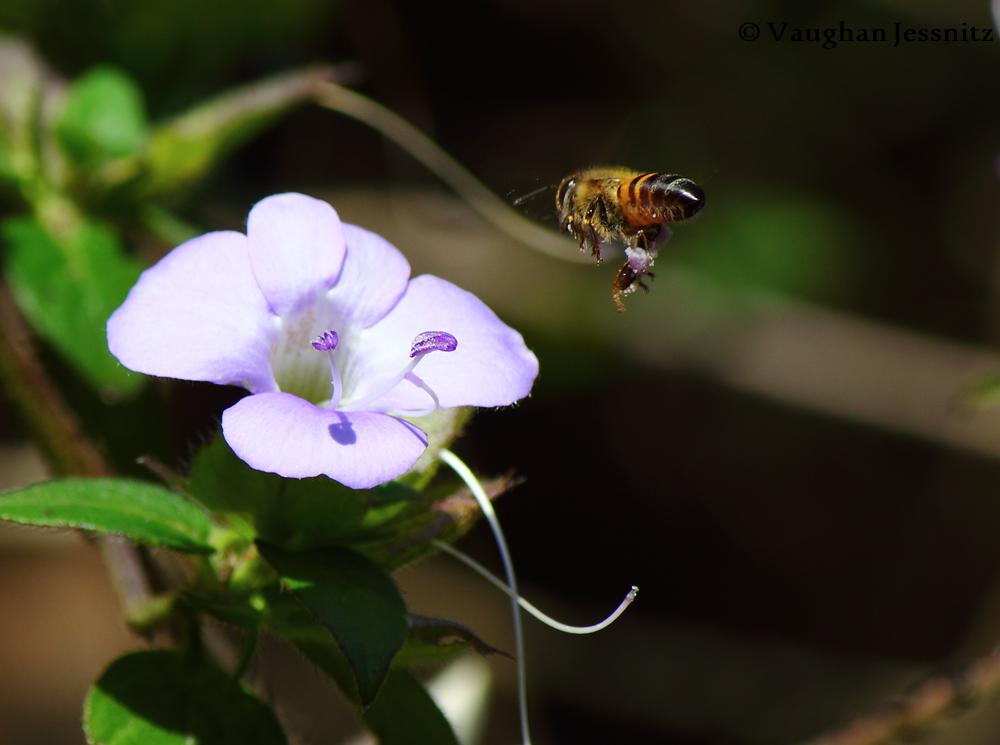
    With Spring around the corner in South Africa, officially only starting on the 23rd of September, the Lowveld has started taking to its gorgeous yellow and red colour as thousands of Knobthorn and Boer bean trees start to flower. Along with the millions of flowers come the many different insects and amongst them one of the most important to our very survival, bees.

    image

    Knobthorn flowers

    image

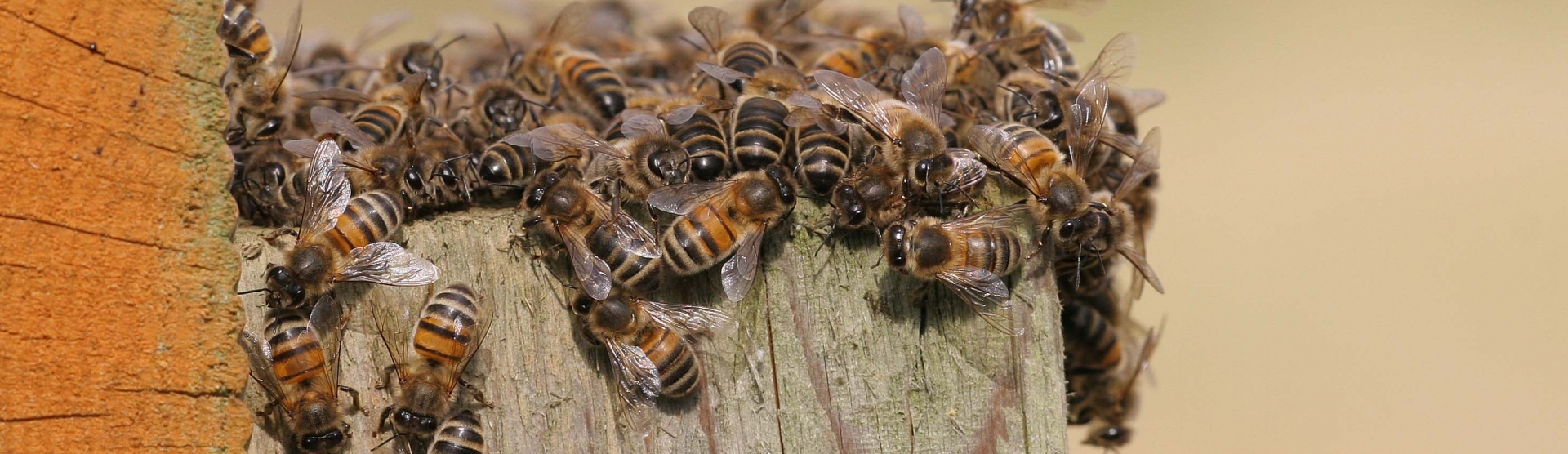
    “If the bee disappeared off the face of the Earth, man would only have four years left to live.” Whether this statement was actually made by Einstein or not, it is still a serious cause for concern and has raised many eyebrows over the years. It’s BEE-lieved that the Northern hemisphere bee populations have reduced with as much as 45%. This is an enormous percentage as one-third of all the world’s food crops are pollinated by bees. These food crops are not only utilised by us as humans but our livestock, as well as many other butterflies, bugs, birds and mammals. Although the South African populations have not decreased by such drastic numbers yet, many bee populations and species are already under threat.

    image

    Honey bees (c) Margaret Holland

    Here, both on campus and in the field we see a variety of different insects, birds, butterflies and even bats also playing their vital role in pollinating various plants. Bees are what we refer to as apex pollinators and are responsible for pollinating up to 90% of all wild plants, and are therefore in need of our support. Continuous agricultural practices such as monocrops are one of the many threats to bee populations but various pesticides along with climate change are said to be amongst the most threatening to most species. We as conservationists can only do so much to protect our beautiful black and yellow friends and can, therefore, make use of a few simple ideas and tricks to save bee lives.

    image

    Photo by Sharin Myburgh

    Just like most animal species in both cities and the bush, bees rely on water and it’s a great idea to have either shallow standing or running water made available to them. Planting indigenous trees and flowers provide the perfect habitat and snack for bees. Plants such as basil, sage, thyme or lavender is regularly available and take little effort to grow in your garden or a plant pot. I have very recently moved into my own accommodation on the Bushwise Mahlahla campus and spend most of my weekends working in the garden. I currently have various flowers growing in and around the garden and our campus “veggie” garden is being prepared with many other plants dependent on bees. Nectar feeders are also great ways to attract both birds and bees but to ensure bees do not drown in nectar feeders a fine net or even shade cloth can be placed over the entrance to prevent bees falling inside while still allowing them access to the sweetened water.

    image

    Plenty bees on campus when the aloes on-campus start flowering

    Although various ideas are currently being tested on how to feed the continually increasing human population, no sustainable methods have yet been perfected, so, therefore, it is important that you and I as both guide and conservationists make the continuous effort to save their lives and all other species that depend on them.

    Blog by Edward Smith

    #bee #bees #honeybee

  • 4 x 4 Challenges in the start of Semester 2

    The second semester started with a steep hill, but luckily we came prepared and were already in low range.

    After our first week off, it was so good to be back on campus and see all the familiar faces and getting back into the rhythm of the bush.

    We started the week off with a long session of 4×4 theory that was accompanied by an intense heat that we as students have not encountered before during the course. We learnt a lot about how important it is to know what your vehicle is capable of, and especially how important it is as a field guide to know how to deal with rocky terrains that you have to cross when you have guests with you on the game viewer. Monday ended with a chilly splash in the pool and the realization kicked in that it is only August and that the months ahead are going to be even hotter.

    Tuesday, group A had 4×4 training and group B (which I am in) and group C had our first official practical drives. We got first-hand experience of being in control of the safari and entertaining the guests. Our trainers only stepped in when they had some extra information to add, which was quite challenging, but at the same time a new and good experience that made me realize that confidence is key.

    image

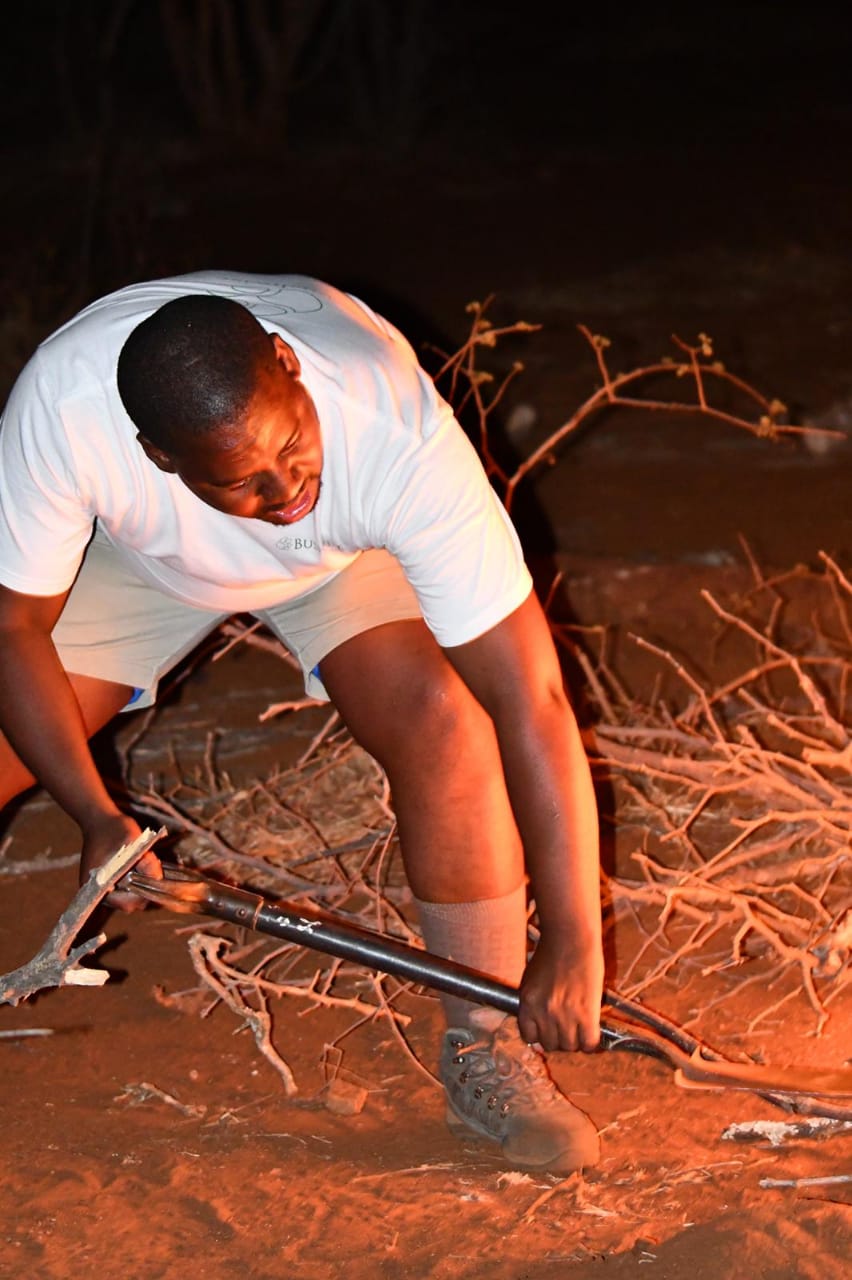
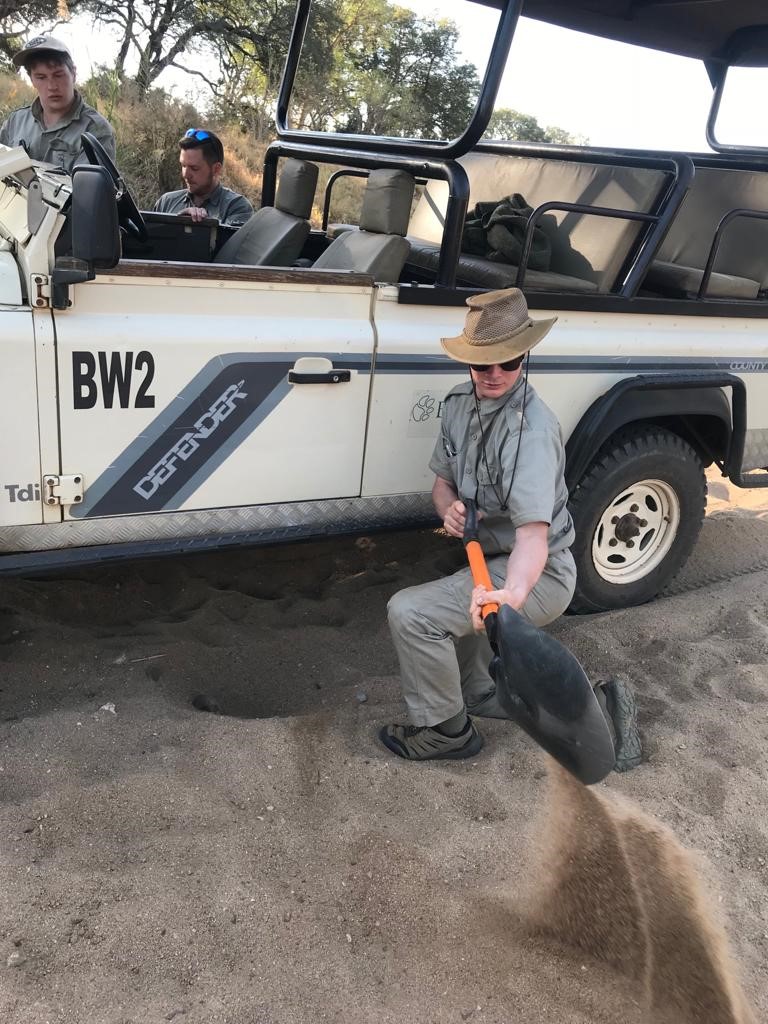
    Will Riley digging a hole, photo taken by Shawn Gardner
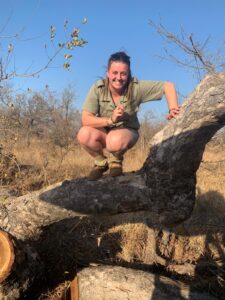
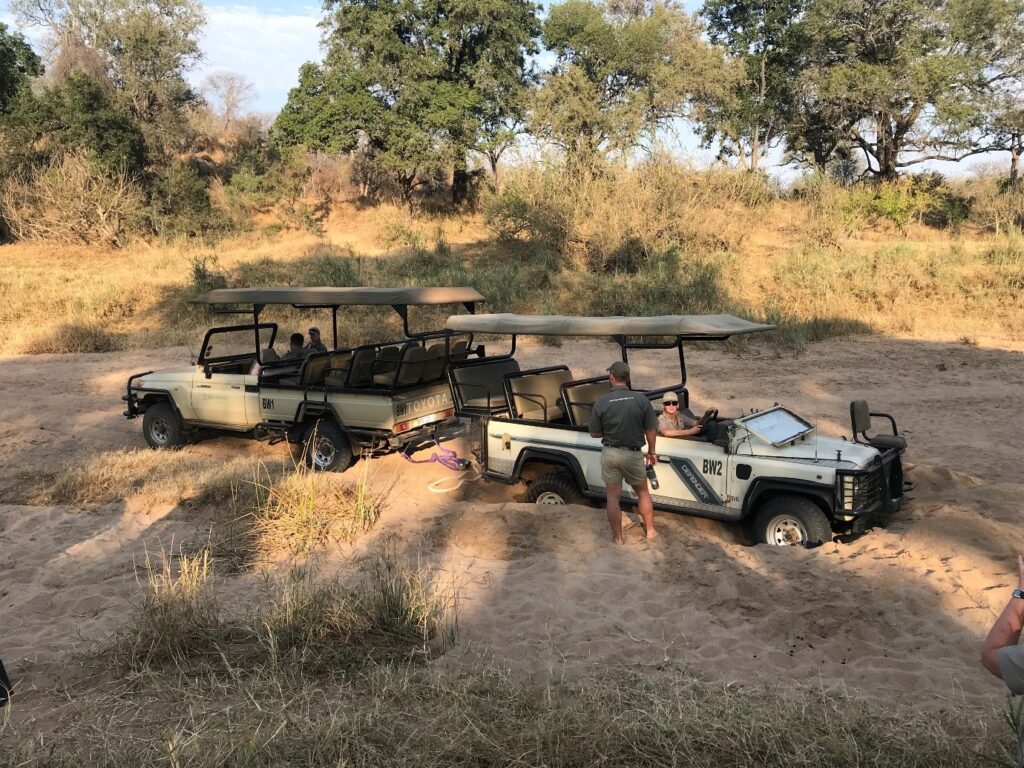
    Wednesday my group had 4×4 training that was facilitated by Mark Frazer from Nostophobic Adventures, which consisted of driving up and down a steep rocky road while the game viewer was in low range. The most important thing that we had to remember was to not touch the clutch and after a bit of practise, everyone got the hang of it. In the afternoon we did kinetic recovery training which was definitely the highlight of the training. We dug holes in the river bed (which we ethically covered up afterwards) so that the Land Rover could get stuck and had to be recovered by the Land Cruiser. Everyone got the opportunity to be the recoveree and to be recovered. It was an adrenaline-pumping experience and everyone enjoyed it a lot.

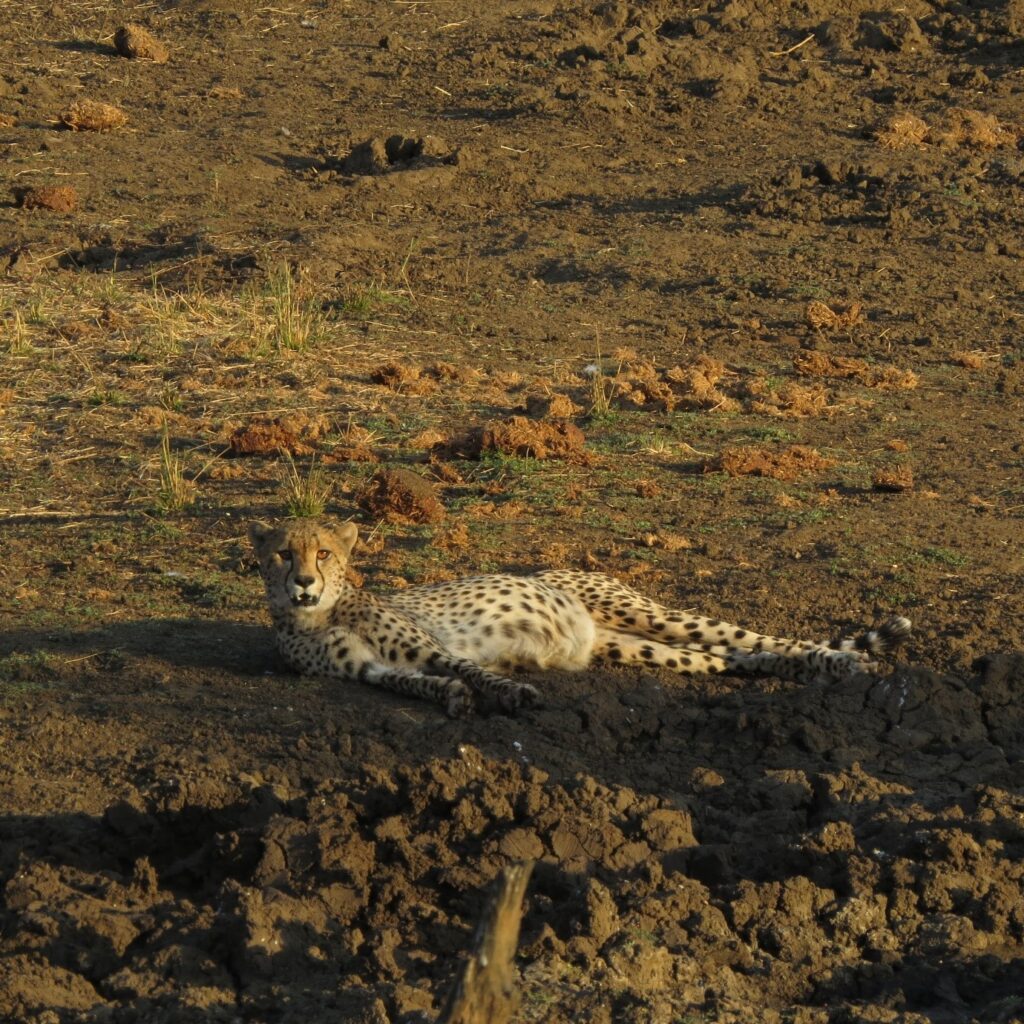
    Thursday, was definitely the best day of the week. We had practical drives and had a lot of laughs thanks to our wonderful field guide Petru. We drove up to a dam to stop for our coffee break and found a female cheetah chilling next to the water. This was an incredible sighting. We stayed there for almost an hour just watching her lying down and getting used to us. After a while, she realised that we weren’t a threat and turned her back to us so that she could keep a lookout for any other enemies that could sneak up on her. This was by far the best drive that group B has had so far.

    image

    Kinetic recovery training taken by Lara Coldrey
    Friday we had our 4×4 practical assessment, where we met our assessor Andre De Clerk from Low Range SA. He gave us a lot of tips and everything went well.

    Saturday we wrote our 4×4 exam and after that, we had the day to ourselves. I went to town and during that time I gave my responsibilities over to my “bungi” (bungalow buddy), Shawn Gardner, who had her hands full dealing with some sneaky snakes. They found four on campus, a mfezi (Mozambique Spitting Cobra), a vine snake, a worm snake and a marble tree snake. There’s a saying in South Africa “Saturdays are for the boys”, but in our case, it’s more like “Saturdays are for the snakes”. What a fast and good way to make 20 students more cautious of where they walk.

    image

    Cheetah taken by Lara Coldrey

    This semester is going to be filled with a lot of practical activities and looking back on this past week, I am sure that the next few weeks are going to be an adventure to remember. 

    Lara Coldrey

    image