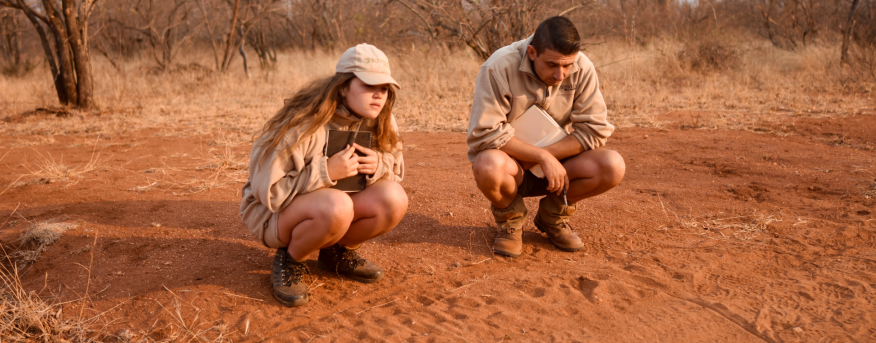
Category: Wildlife insight

  • Explore the diverse biomes of South Africa

    This blog about South Africa’s biomes was researched and written by Bushwise Professional Field Guide student Ziphozonke Zwane. 

    The classification of biomes is based on the prevailing climatic conditions and dominating plant life types. Large-scale patterns in the global plant cover can be seen in biomes, where plants and animals coexist to some extent. Although other environmental factors are occasionally significant, moisture and temperature substantially influence plant establishment and survival – so biomes generally coincide with climatic regions.  

    Each biome includes a distinctive collection of plant and animal species in addition to a distinctive general appearance. The general plant traits provide a distinctive visual signature that makes it possible to identify the biome. 

    The nine diverse biomes found in South Africa are:

    1. Savannah 

    2. Grassland

    3. Fynbos

    4. Forest

    5. Desert 

    6. Albany thicket

    7. Coastal dune

    8. Nama karoo

    9. Succulent karoo

    Savannah

    image

    Life in the savannah is distinguished by its animals, vegetation and seasonality. I believe this biome is one of the most pristine ecosystems because all of the lives that are so intricately intertwined. A sizable number of animals, sporadic trees and drought-tolerant grasses can all be found in this biome. The ecology is shaped by herbivores, predators that eliminate the weak, and insects that pollinate the region. As a result, it is one of the most distinctive macro habitats on Earth, rich with biodiversity.

    Grassland

    The KwaZulu-Natal interior, the Eastern Cape and South Africa’s high central plateau are where the grassland biome is most prevalent. Despite the fact that the terrain is largely level and rolling, there is a real escarpment. The vegetation cover is primarily determined by the amount of rainfall and the degree of disturbances, such as fire and grazing, which also result in the absence of trees.

    Fynbos

    The Cape Floral Kingdom, one of the six plant kingdoms on Earth, is known as the Fynbos biome, which is located in the westernmost part of South Africa. Of the six kingdoms in existence, the Cape Floral Kingdom is the smallest and is wholly contained within a single country. It is distinguished by its high endemicity, with 68% of plants only found in the Cape Floral Kingdom, and high species richness (8,700 species). Fynbos and renosterveld are the two main types of vegetation found in the biome. Fynbos needs to be burned frequently to survive, however, fires started at the incorrect season or too frequently will cause the species to go extinct. The renosterveld is dominated by members of the daisy family, notably the renosterbos.

    Forest
    image

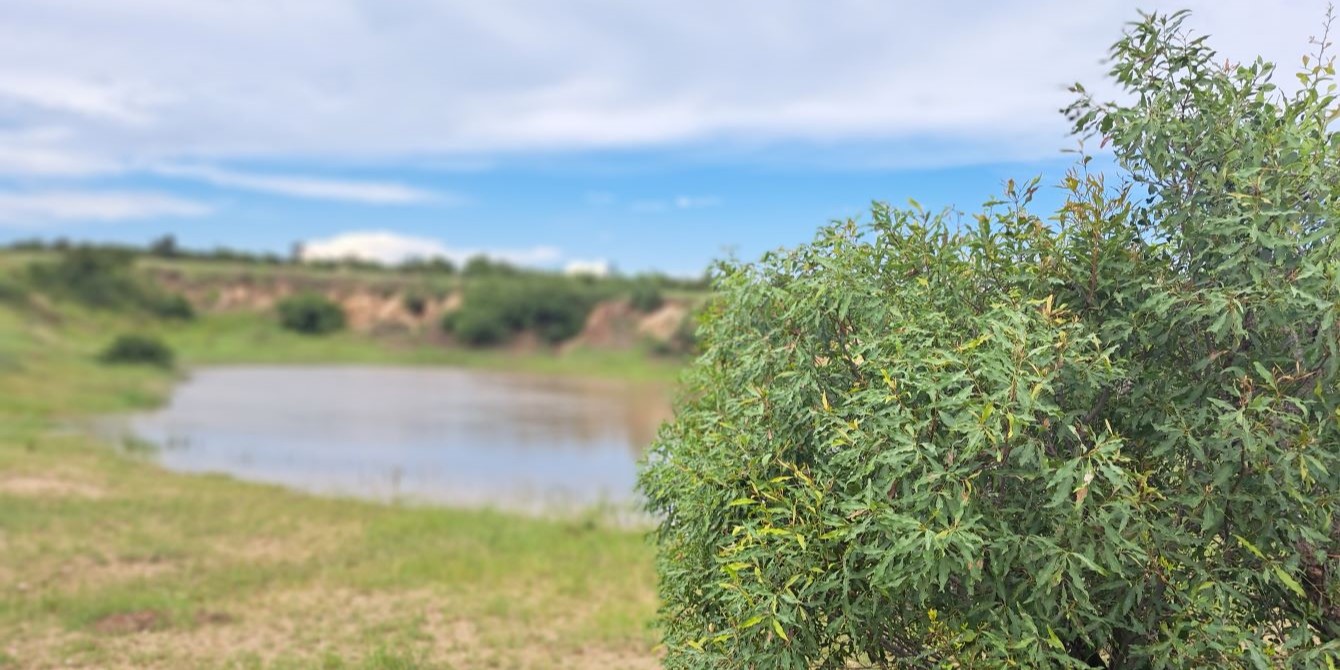
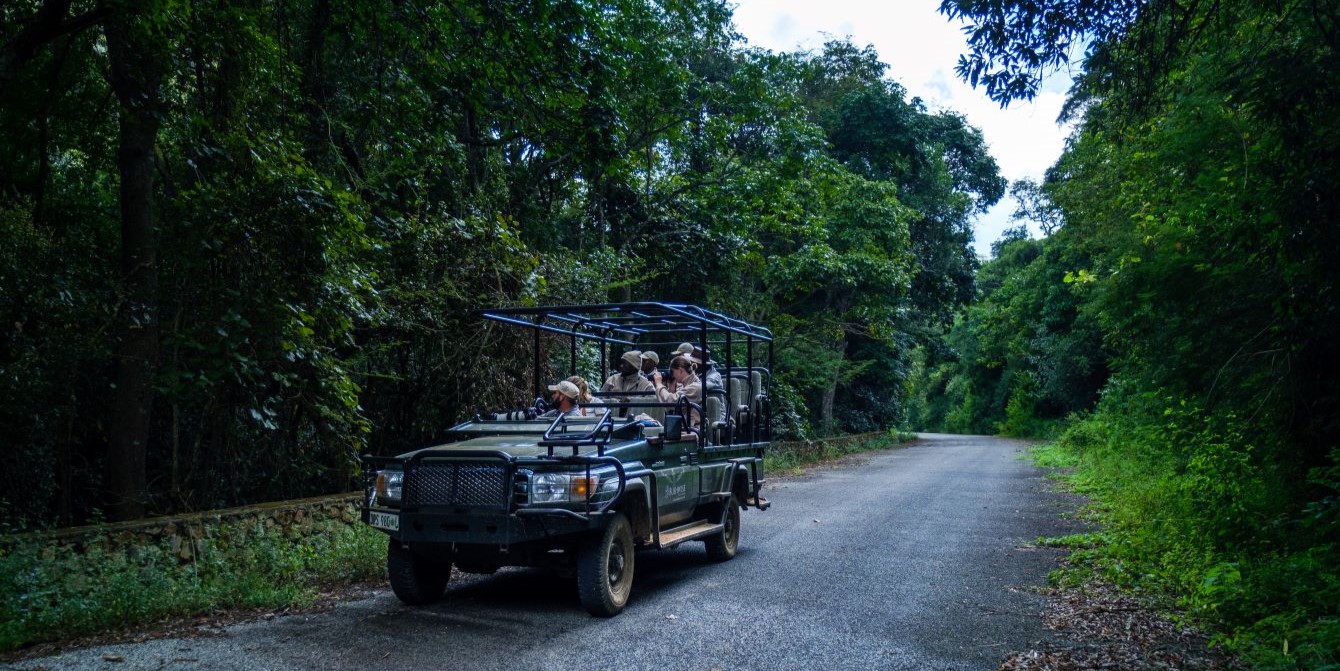
    The smallest biome, with less than 0,25% of South Africa’s land area covered by forests. Only frost-free regions with significant winter or summer rainfall can support forests. They can be found up to 2,100 metres above sea level. Forests are typically fragmented and can be found everywhere from the high-altitude Drakensberg to the coastal plains. 

    Desert

    The desert biome receives a low annual rainfall and is found in hot and arid regions. The flora does not grow very tall, and the soil layer might be either stony, gravelly or sandy. Desert species have evolved to the highly dry climate, and day and night temperatures can differ significantly. 

    Albany thicket

    The Albany thickets is primarily located in the Albany area of the Eastern Cape. The term subtropical thicket refers to a closed shrubland to low forest where evergreen, sclerophyllous, or succulent trees, shrubs and vines predominate, many of which have stem spines. There is typically little herbaceous cover, it is often nearly impenetrable, and there are typically no layers. The vegetation types found in the thicket biome have been referred to as transitional thicket since they exhibit floristic similarities to many other phytochoria and are found in almost all of the formal biomes. 

    Coastal dune
    image

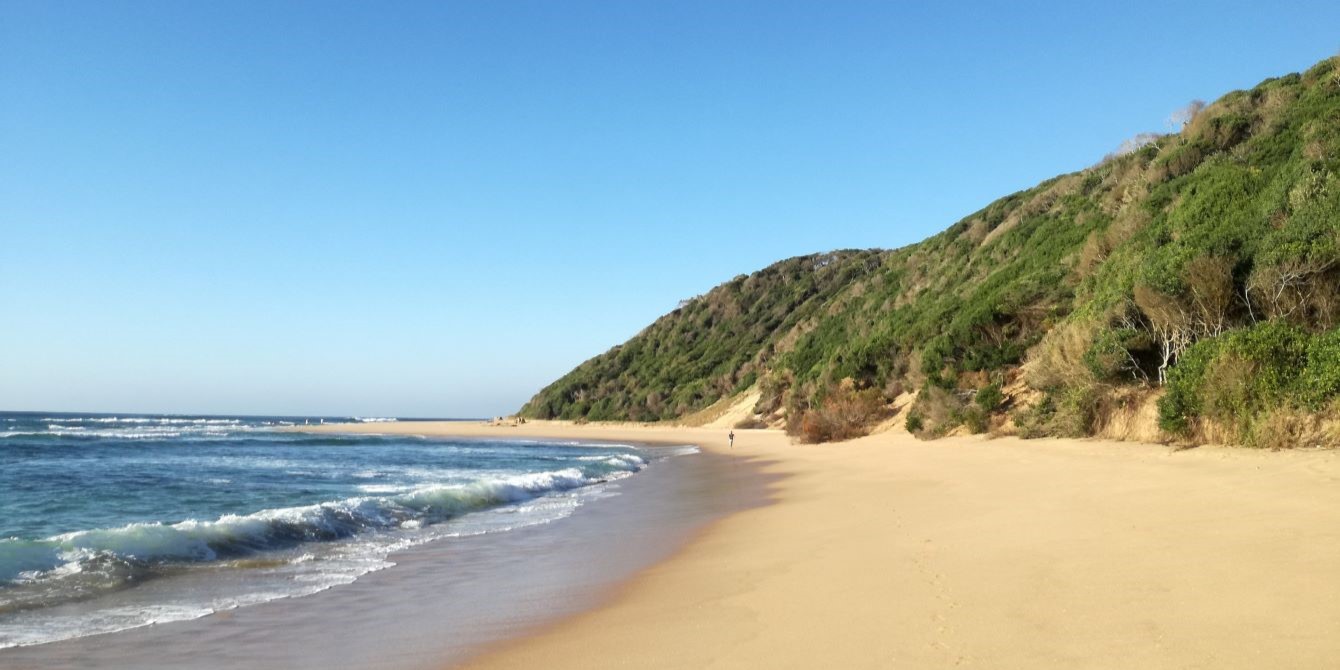
    The KwaZulu-Natal and the Eastern Cape’s Ocean Coastal Belt is a zone of coastal dunes and grassy plains that extends from sea level to around 600 metres above sea level. The amount of rain that falls on average each year varies from 819 to 1,272 mm and peaks in the summer.

    Nama Karoo

    In the central plateau of South Africa’s western half is the nama Karoo biome. Being the second-largest biome, with a landscape that includes both flat-topped mesas and vast sandy plains. In general, the summers and winters in this region are windy, hot and very cold. This area is home to a wide range of different life forms, with dwarf shrub vegetation predominating.

    Succulent karoo

    The 116,000 km squared succulent Karoo biome is located in southern Namibia and stretches from the southwest through parts of the Western Cape’s northwestern region. There are around 6,400 plant species of which 40% are endemic. This biome’s diverse habitat types are what contribute to its tremendous biodiversity. The plants are subjected to below-average winter rainfall and excessively hot summers. Over time, succulent plants have developed unusual coping mechanisms to maximise their survival in this tough environment.

    For a single country, South Africa has relatively diversified vegetation. It is fascinating how each biome differs from the others by having a distinctive characteristic that makes it stand out. Given that each biome is distinct, travellers can experience a variety of wildlife.

    Don’t miss the opportunity to join Bushwise in South Africa on an unforgettable safari course and immerse yourself in the wonders of nature across the country’s distinctive biomes. Join Bushwise!

    #wildlife #AdvancedRifleHandling #bushwise #qualification #safariguide #Exam #training #animals #apprenticefieldguide #safari #ifga #sightings #fieldguiding #tracking #endangeredspecies #Assessments #gamedrive #guiding #fieldguidecourse #studying
  • The Fascinating World of Acacia Trees: Diversity, Cultural Significance and Medicinal Uses

    This blog about acacia trees was written by Bushwise Professional Field Guide student Maddy Prior. As part of their training, each student submits a researched blog based on a topic of their choice. Opinions contained in these blogs are the student’s.

    5 min read

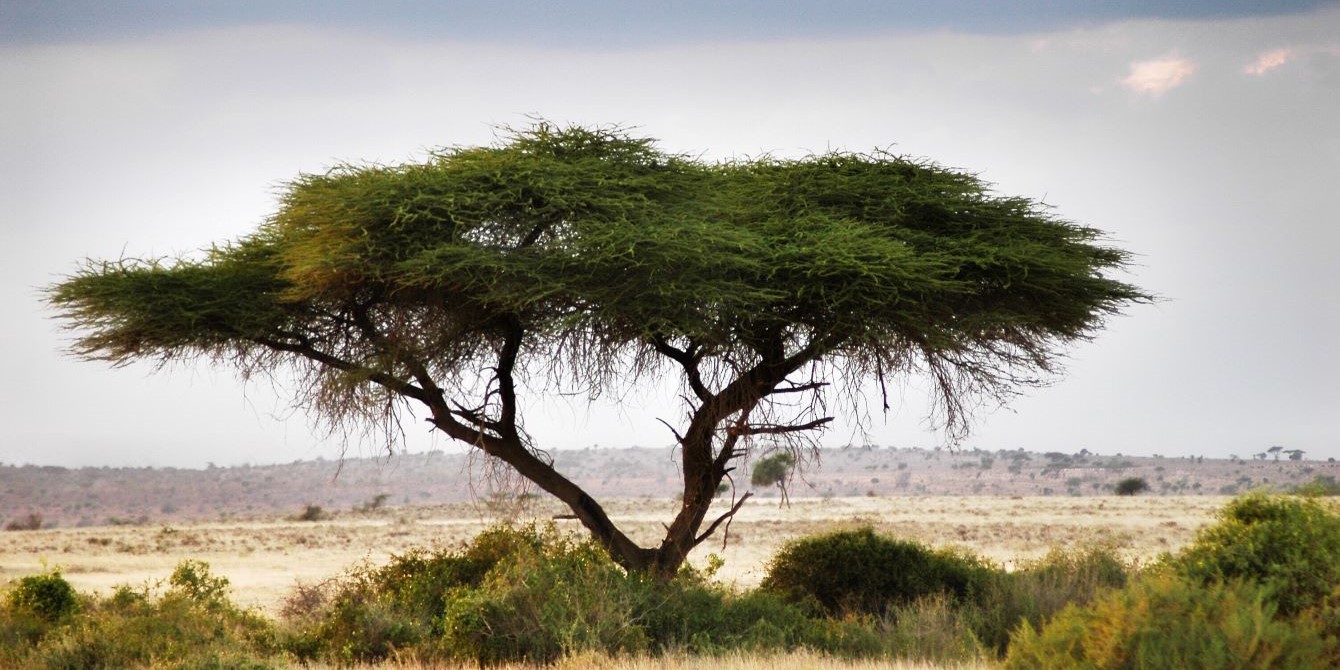
    For many, acacia trees have been synonymous with Africa, long before they were named by Philip Miller, an English botanist, in 1754. Being British, I’m sure I’m not alone when I say that the word Africa conjures up images of the sprawling plains of Kenya and Tanzania dotted with these short, umbrella-shaped trees, offering those small patches of grass shelter from the Sun and wind. The Lion King may be to blame for this romantic imagery, or Out Of Africa, or indeed the majority of nature documentaries following the Big Five. 

    The Iconic Acacia Trees of Africa

    image

    While I write this in South Africa, I feel for the often overlooked landscapes of the Lowveld, which hold about 29 of the acacia species – now divided into two genera, Vachellias and Senegalais. The word acacia is derived from the Greek word akis meaning thorns – which makes little sense now that the only true acacias are now found in Australia where they lack thorns. The thorny versions are plentiful in Africa, but other species are also found across Asia and America. 

    The Iconic Acacia Trees of Africa

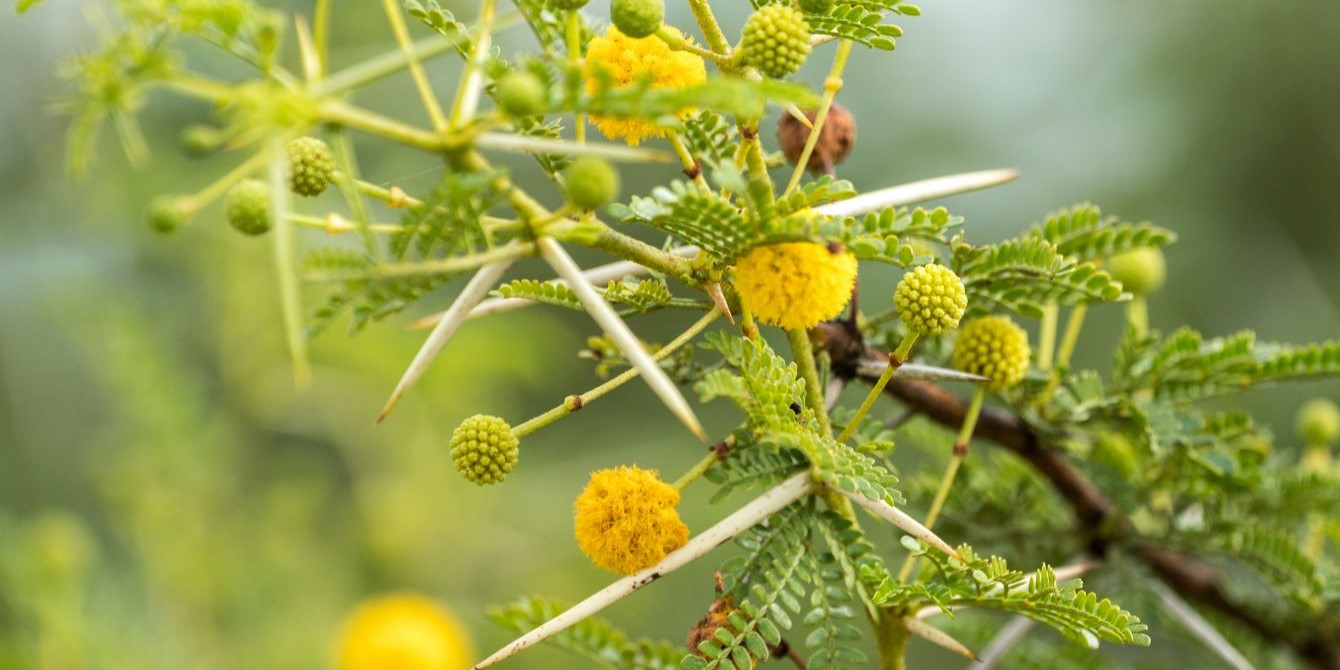
    Although only classified into two genera, there is a great deal of diversity in Vachellias and Senegalais. A useful trick to differentiate between the genera is to examine the thorns. Vachellia thorns are straight and grow in V-shaped pairs and produce rounded, often bright yellow flowers.

    Senegalias produce hooked thorns and flowers in spikes of yellow, cream and white. These soft, inviting flowers attract a plethora of pollinators: the obvious insects one would expect, such as bees and wasps, but some larger and surprising. 

    Acacia Trees: Their Pollinators and Consumers

    image

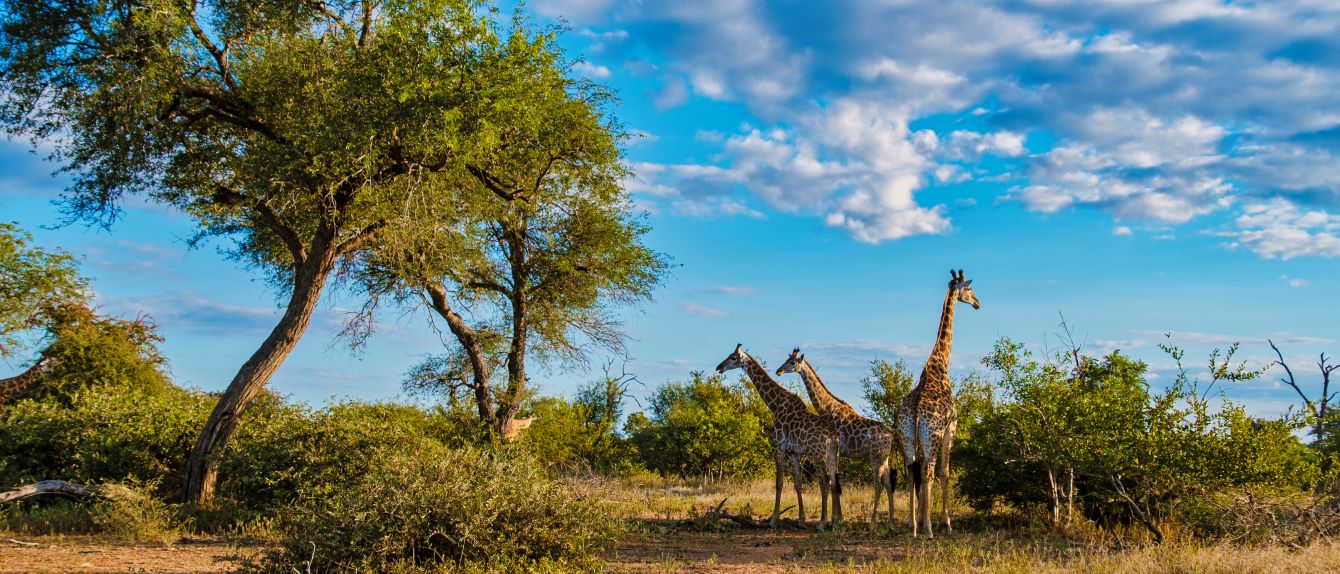
    It is thought that the giraffe is in the principal pollinator of the knob thorn tree (Senegalia nigrescens) which flowers between August and November. This knobbly tree is a favourite of the long-necked browsers, who collect the flowers’ pollen on their faces as they feed on the fine leaves, and then transport this pollen to the next knob thorn they browse from. 

    The name of this tree comes from the characteristic knobs that the thorns stem from, and the larger woody bumps that cover the trunks and branches of older trees. Elephants are known to eat the branches as well as foliage, and several species of monkey eat the flowers. Knob thorn trees are used by cavity-nesting birds. And the quality of the wood makes the tree attractive to carpenters to make furniture and parquet flooring. This is a tree with many consumers.

    Cultural Significance and Traditional Uses

    image

    Vachellias and Senegalias are just as iconic for the people of South Africa as for foreigners, and undoubtedly more important, holding great cultural significance and acting as key components of traditional practices and beliefs. 

    Vachellia karroo, or sweet thorn, is the most widely-distributed tree in South Africa, and is particularly dominant in the Nama Karoo and Grassland biomes. But it is also found in the Savanna, where it provides nutrition for many species. The seed pods are enjoyed by monkeys and various species of butterfly larvae, grey go-away birds feed on the flowers, and ground-up seeds have traditionally been used as a coffee substitute. 

    The leaves of the sweet thorn are also a valuable source of fodder for the game species and the livestock of communities in these areas, upon which many of their livelihoods depend. The evergreen nature of Vachellia and Sengalia made them a reliable source of food and shade for shepherds existing in such harsh, arid environments. 

    The uses of these trees are far more diverse than just sources of food. The wood of Senegalia Senegal was used by ancient Egyptians to craft boats, furniture, and even sarcophagi, with gum of the tree (taken from the sap) used to make bandages for wrapping the mummies to go into them. The ancient Egyptians also blended the gum with dates and honey to create a contraceptive paste, the lactic acid of the dissolved gum acting as a spermicide. 

    Medicinal Properties of Acacia Trees

    image

    Gum acacia is still used today by people in Sahara/North Africa as a food source, 6 ounces of which can sustain an adult for a day, and to treat various ailments, such as stomach ache. A tea made from the leaves is said to treat coughs, and the leaves themselves can be applied to wounds and inflamed areas on the body as a natural remedy. 

    The roots of Vachellia nilotica (or gum Arabic) have even been used in medical treatments to fight cancer and tuberculosis, and its leaves to treat Alzheimer’s disease. The leaves of Vachellia erioloba (Camel thorn) can also be applied to wounds to relieve pain, once burnt and ground into a powder. 

    Defence Mechanisms: Ants and Chemical Signalling

    Because acacias are so widely used by both humans and animals, they have developed various defence mechanisms to protect themselves. Certain species of Vachellia (e.g. Vachellia karroo, or sweet thorn) have formed a mutualistic relationship with acacia ants (e.g. Crematogaster mimosae), whereby the ants inhabit the swollen thorns that cover the branches of the trees, providing them with protection. If a browsing animal begins to feed on the leaves of the tree, the ants will swarm and irritate its face, thus causing the animals to move off to a more appealing bush. 

    As an extra measure to protect their delicate foliage, acacia trees will release chemical signals when being browsed, which are carried by the wind to other trees of the same species in the surrounding area, which will stimulate the production of tannins in these trees and the one being browsed. High concentrations of tannins in the leaves will make them unpalatable to browsers, dissuading them from eating the foliage. 

    To delve deeper into the captivating world of Acacia trees and expand your knowledge of wildlife and conservation, embark on an educational journey with Bushwise.

    #wildlife #bushwise #fieldguide #qualification #Exam #animals #apprenticefieldguide #safari #ifga #sightings #fieldguiding #guiding #fieldguidecourse #studying #fieldguides
  • The secrets of being a cheetah

    This blog about cheetahs was written by Bushwise Professional Field Guide student Dominique Minnaar. As part of their training, each student submits a researched blog based on a topic of their choice. Opinions contained in these blogs are the student’s.

    Read time: 4 minutes

    “Acinonyx jubatus”, a diurnal predatory machine designed purely for speed. Commonly known as the ‘cheetah’ – who should not be challenged to a game of poker, and yes, we’ve made all the jokes on our drives! Puns aside, there is actually much more to this mammal than meets the eye.

    Built for speed

    image

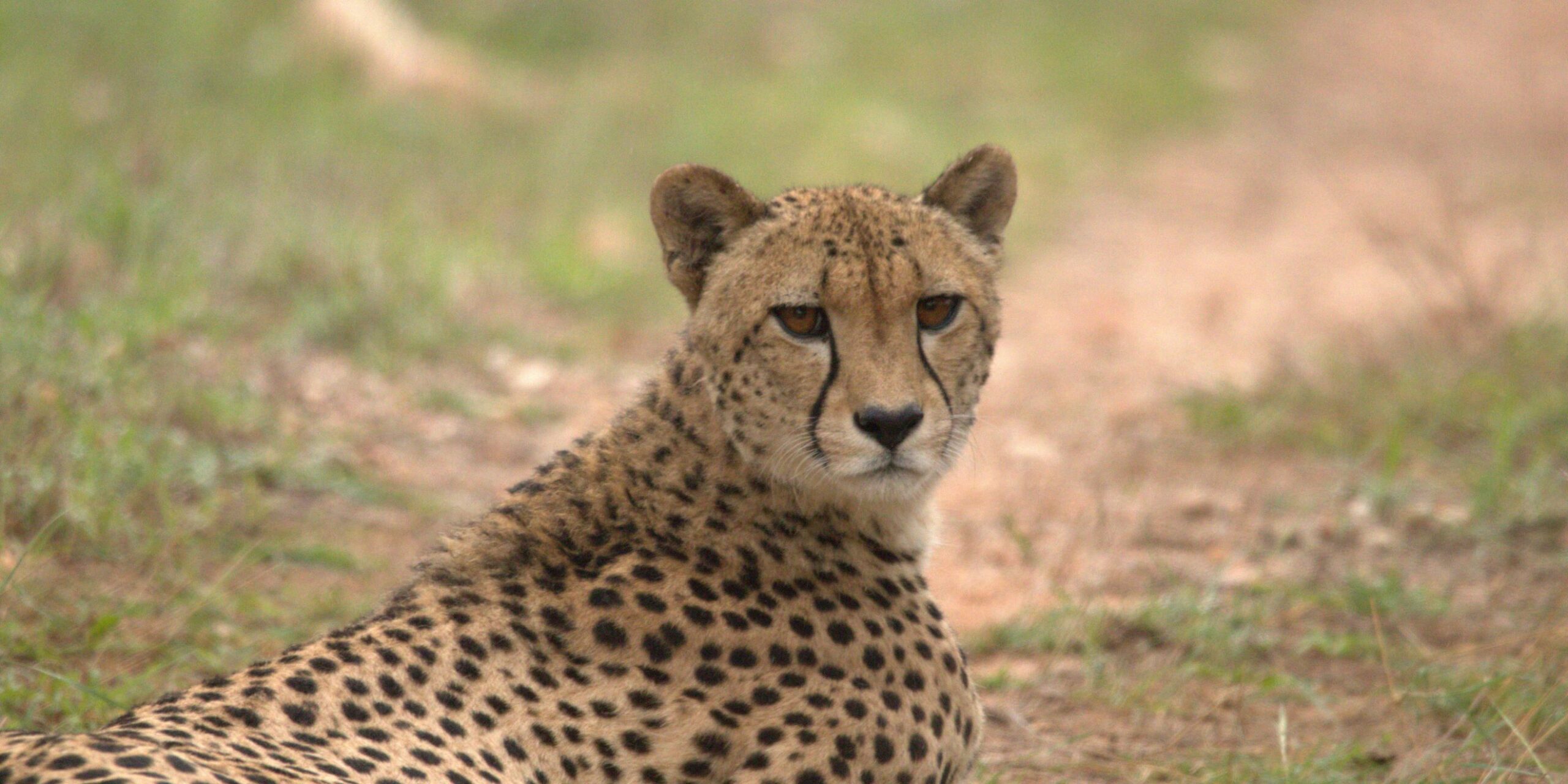
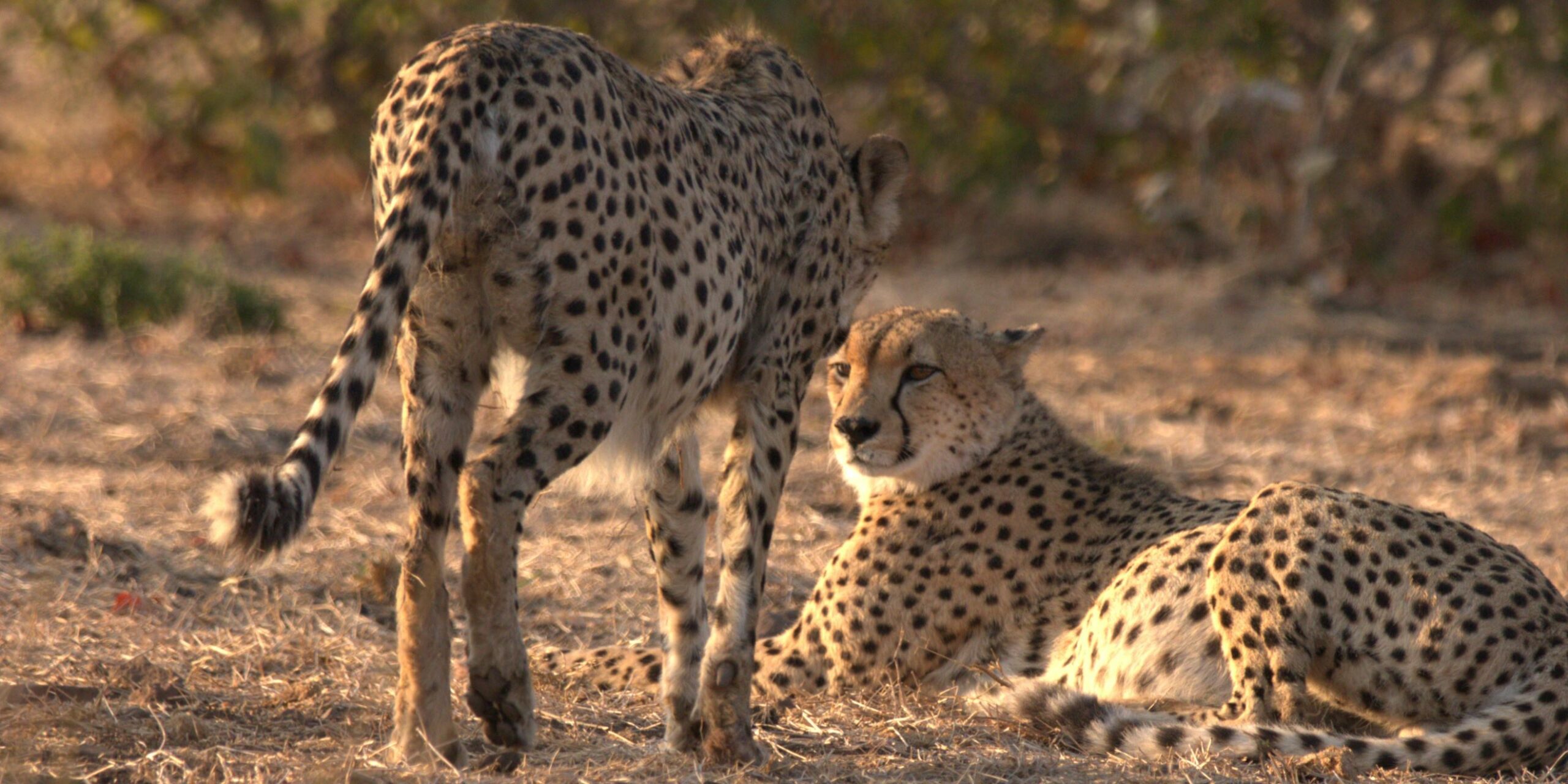
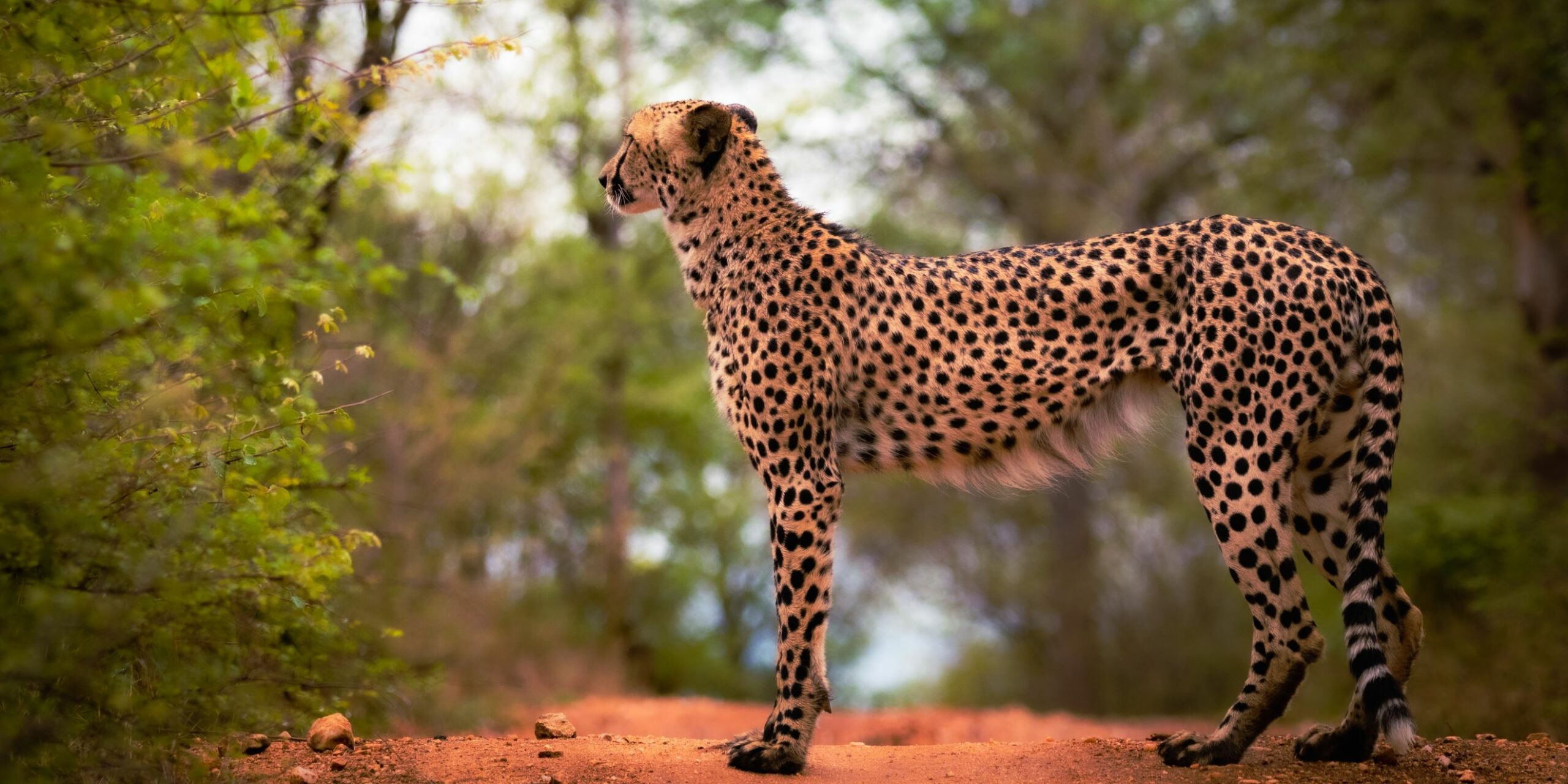
    The cheetah is an animal that is specifically built to master the art of speed, making it stand out in a unique way from Southern Africa’s other popular wild cats. Weighing between 40–60 kg and having a slender frame, gives this predator the ability to reach speeds of about 75–100 km/h during full sprint, making them the fastest land mammals – and no, they didn’t cheat to achieve this. 

    Like any machine, these animals were manufactured with suitable components to boost their capacity for acceleration. Long flexible spines and legs enable the cheetah to take wide strides while running. The tail acts almost like the rudder of a boat or a steering wheel of a car, as it assists the animal in balance, ensuring the cheetah can change direction sharply. The skull and ears are quite small and streamlined, making the head lighter, kind of like an arrow. 

    Have you ever noticed the size of a cheetah’s chest relative to the rest of its body? It sticks out and is noticeably larger than their stomach area. Why? Again, think of a vehicle, where does the engine lie? It has its very own compartment, right? This concept applies to the cheetah as well. 

    A cheetah’s chest accommodates its very own internal powerhouse – the lungs and heart. These organs are enlarged to maximise oxygen intake, increasing the speed at which they can run. The heart’s ability to pump more blood combined with lungs of a higher capacity is perfect for increased oxygen flow. 

    But hang on, it doesn’t stop there 

    image

    These lightning-fast creatures also have bigger nasal cavities and aerodynamic nostrils. Sounds pretty cool, but why is it beneficial? Allow me to clarify. These two characteristics improve the flow of air, also maximising oxygen intake. This is in order to enhance breathing during full sprint and facilitate breathing during suffocation of captured prey. 

    So far so good, however there is a downside to this. Just like any machine, you will always find your pros and cons. Due to the larger nasal cavities, there is reduced space for teeth. As a result, the dentition of a cheetah is much smaller in size compared to other predators.

    Time for hunting tactics

    A cheetah’s astonishing sprint lasts only for a short moment, therefore cheetahs will start a chase only once they are within a 100 metre or so range to their prey. Cheetahs generally hunt in open plains and use tall grass as cover while they stalk their prey. They do not eat immediately, but rather rest first because they are still exhausted from the chase. That is why cheetahs usually target isolated prey and drag them to nearby shade. Otherwise they’ll eat where the prey falls. 

    Unfortunately, this method makes cheetahs prone to easily losing their kills. As mentioned before, cheetahs are diurnal, meaning they hunt during the day. By hunting at times when other carnivores (such as lions) do not hunt, they avoid competition for food, giving cheetahs a higher chance of obtaining a successful kill. 

    image

    Did you know that cheetahs can purr? How’s that for a big house cat? (Seriously though … don’t let that purr fool you. It’s only cute until you realise that these creatures are a little more wild than your average purring feline house pet.) This characteristic makes cheetahs different from other wild cats, like the leopard. That’s one way to differentiate the two! Just don’t get too close to find out … 

    Cheetahs are painted with distinct black ‘’tear marks’’, running down its face from its eyes. I love this feature because there are so many stories that people come up with about how those marks came to be, which is super fun to share and hear around a campfire at night. 

    Some believe it’s the stains left behind by a mourning mother who lost her cubs. Others say that years ago cheetahs would weep because they were mocked by other predators for being slow and small, which encouraged them to improve their speed, and it’s now a symbol of how they came from the most mocked hunters in the animal kingdom to the fastest, most admired predator. 

    What stories have you heard? 

    It’s absolutely thrilling seeing this incredible animal, my heart raced with excitement the first time I saw them on our game drive! Next time you come across one, I’m certain you will see it through different eyes … unless it was too fast to catch a glimpse of. 

    Love stories about wildlife? Get more by joining our mailing list. Find the sign up sheet at the bottom of this page.

    #safariguide #animals #cheetah #bigcats #endangeredspecies #safarianimals

  • Tracking lions: A print in the sand

    A story about tracking lions with Bushwise students, by Annie DuPre. 

    Read time: 4 min

    The vehicle slowed to a stop as James leaned over the passenger door, staring intently at the ground next to our tyres. Vaughan turned the engine off as James contemplated the freshness of the tracks he’d seen. A knowing nod was exchanged between the two and they hopped out of the game viewer to get a closer look. 

    image

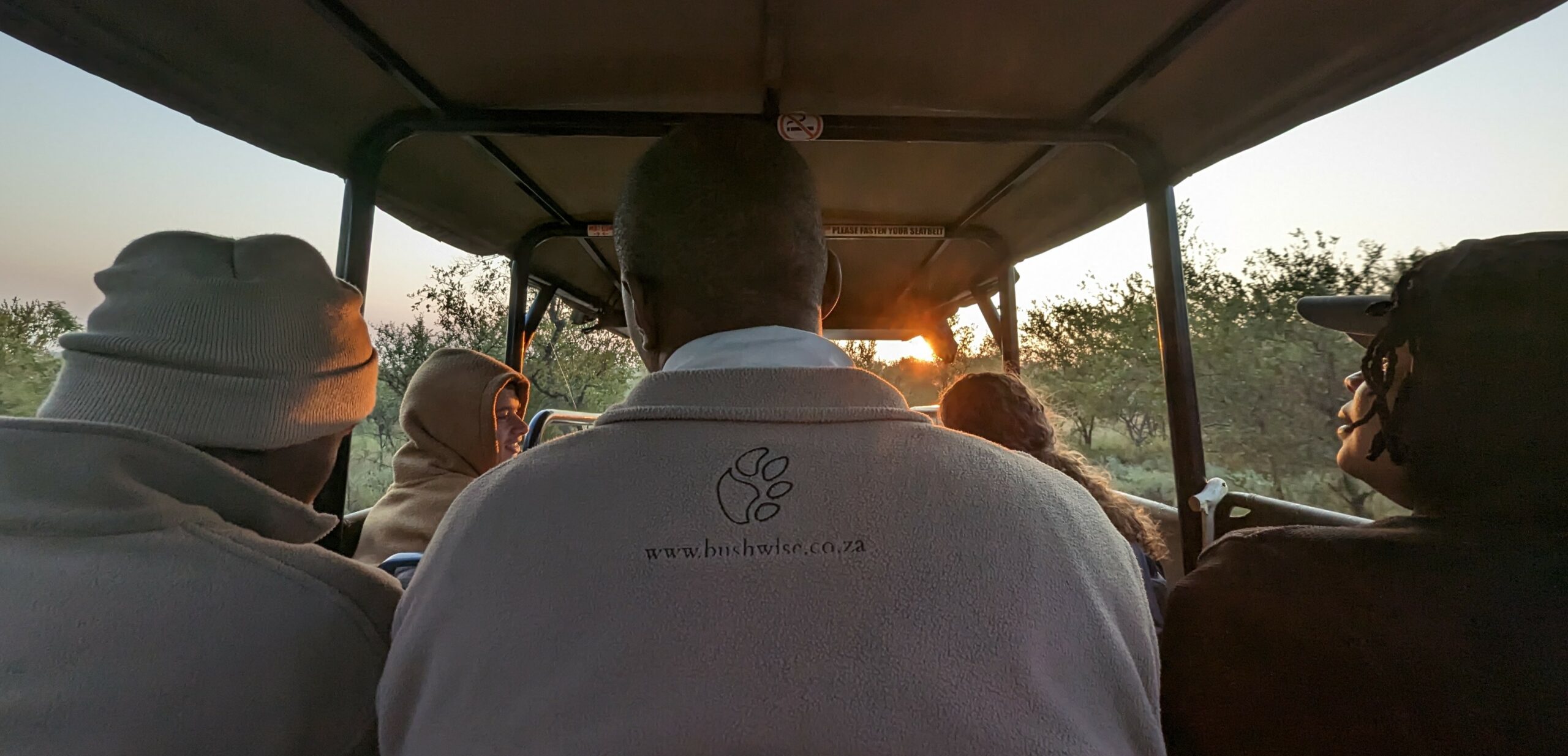
    There I sat, sandwiched in the back row of the game viewer, breathing in the crisp morning air. When you arrive last to a game drive – just like with any family car trip – you get the back row, middle seat! But I didn’t mind. Sitting among eight Bushwise Professional Field Guide students, I was simply taking in the experience. 

    These eight students all share a similar purpose – studying to become qualified field guides and follow their dreams of working in the guiding industry. But they are also eight incredibly unique individuals – in the back I sat between Emmanuel and Greyton; in the middle row were Bongani, Kutlwano and Naledi; and in the front were Max, Kathleen-May and Dominique. 

    A diversity of backgrounds, ages, cultures and communities all blended together for six months in the South African bush. At first glance, you may not expect such a group to become lifelong friends – but here they were. As I watched them laugh together and test each other’s birding knowledge, I was moved by the incredible connection that had been made in a matter of weeks in the bush. 

    Vaughan’s voice snapped me out of my daydream. “Let’s track some lions!”

    If you want to get Bushwise students to move quickly, tell them it’s time to hit the trail. It’s certainly one of the most immersive and unique bush experiences you can have – getting into the mind of the animal, anticipating its next move, learning how to trail while remaining silent and vigilant, recognising tracks and signs and – just maybe – seeing the actual animal. 

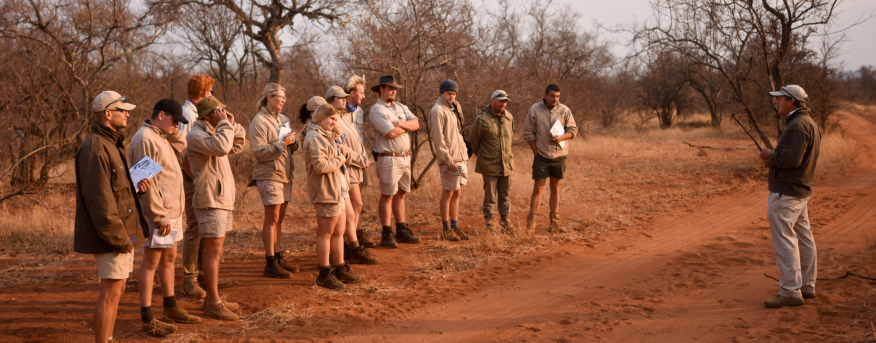
    I hopped out of the vehicle and joined the students, who by this time were circled around a set of beautiful lion tracks, perfectly preserved in the road’s red sand. Backpacks were strapped on, walking sticks in hand. Vaughan began by discussing the freshness of the tracks (very) and things to consider (walk single file, stay behind the rifle, don’t run and listen to instructions). 

    The plan for the morning was this: students would take turns following the trail of the lions with James’s guidance. Vaughan would follow behind them, leading the rest of the students and explaining the process as we went. 

    image

    Bongani quickly volunteered to trail the lions first. He set off, slowly and meticulously checking the ground for tracks, following the movement of the pride. The tracks could tell us so much about their activity – from the places where they had been playing, to where they had napped, to a scent marking made by a territorial male. 

    For hours we followed in the footsteps of the lions – at times seeming to go backwards, circling around ourselves, visiting the same intersection again and again. Sometimes when you trail, it feels like the animal has played a game with you by making the path as complicated as possible. And then there are moments when something just *clicks*, and you find yourself moving with ease in the animal’s footsteps. 

    After Bongani, Greyton took his turn, and then Max, Emmanuel and Dominique. Each student displayed skills in the process, learning from James and Vaughan and picking up new clues on what the lions had been up to. 

    By 10am it was properly warm and sunny when Vaughan suggested we pause for coffee and rusks. I looked at my watch. In the three hours since we had started this adventure, we had only walked two kilometres. 

    But as anyone who’s ever been on a trail in the African bush will tell you, it’s not about covering long distances or getting exercise. It’s about experiencing the natural world from an animal’s perspective; noticing the little things like how grass is bent after an elephant has walked past; identifying insects and birds along the way; and learning how to “read the bush newspaper” in the tracks and signs left behind by wild residents.

    Our morning of tracking was coming to an end. We hadn’t found the lions – the verdict was that they were likely hiding in a thick section of bush where they had bedded down for the day – but we’d seen and learnt so much. As we made our way back to the vehicle, smiles and fist-bumps were silently exchanged between the students. A successful morning out, shared between friends and colleagues, growing in their field guiding career with each and every footstep.

    Spending time out here in the bush is just as much about finding yourself as it is about finding wildlife. Ready to explore a career in nature? Apply for a Bushwise course today.

    #bushwise #safariguide #trailsguide #apprenticefieldguide #cybertracker #fieldguidecourse

  • Discover the Traditional Uses of Euclea: Magic Guarri and More

    This blog about guarri plants was written by Bushwise Professional Field Guide student Bridget Malepe. As part of their training, each student submits a researched blog based on a topic of their choice. Opinions contained in these blogs are the student’s.

    We have different species of guarri trees in the Lowveld – namely the magic guarri, Natal guarri, common guarri and blue guarri. I will only mention the ones I grew up knowing from my village – the magic and the Natal guarri. 

    Magic guarri (Euclea divinorum) 

    The genus name Euclea comes from Greek mythology, where the goddess Eukleia was the personification of good repute and glory. The specific name divinorum is in reference to the plants used by sangomas in the parts of Africa. 

    It is an evergreen small shrub that grows mainly in drainage lines and sodic areas. The bark is smooth and gray, but it cracks when the tree gets older. The tree bears clustered berries seasonally which are favoured by birds. The leaves are not favoured by most animals as they have an unpleasant smell, but you may find kudu feeding in it mainly in dry seasons. 

    Traditional remedies with guarri

    The use of the plant is widely used in traditional remedies hence the divinorum part of the Latin name alludes to this trait too. Decoction of the roots can be used on babies to treat the depressed fontanel, while the infusion can treat infertility, pregnancy pains, abdominal pains, bilharzia, toothache and earache. 

    An ointment prepared from the crushed dried roots materials is rubbed over the body to control convulsions or powder added to soft porridge can treat diarrhea. 

    Growing up fetching water from the Olifants River, we used to put some of the branches on the surface of the bucket to act as a lid to prevent the water from splashing out. The guarri can be used to put out fire in the bush. It is also used by trackers as it takes time to dry out due to the waxy coating on the leaves, so that when animals brush through it they disturb the water, giving an indication of how recently they went by. 

    Creative uses of guarri branches

    image

    The branches are also used in often creative ways such as a toothbrush, paint brush and water detector. To create a toothbrush you must break the branch, peel the bark, chew the end until the fibers separate and then use it to brush your teeth with the ashes of a leadwood willow tree as a toothpaste.

    Back in the days guarri branches were used to detect water. To do this, you would break off a Y-shaped branch, with the shorter parts in each hand and the tail facing outwards. The tail will dip downward if there’s any water underground while surveying. 

    Growing up we used to collect the berries from the tree and put them in a plastic bread bag. We’d seal the bag, crush the berries, open a small hole in a corner and drink the juice. We also used to make extra cash for ourselves by collecting berries for a family that made beer out of the berries. 

    Of all its many uses, the guarri is not used for the most obvious – firewood. This is because it is believed that the tree has supernatural powers. Some tribes believe that when you hang a bit of the guarri branch on your doorstep it works as a lucky charm and wards off evil spirits and witches. 

    Natal guarri (Euclea natalensis)

    The Natal guarri also occurs in my guiding area. It may be confused with magic guarri but the leaves of the Natal guarri are hairy and less wavy. It grows in full or partial shade with fertile soil and moderate to good water. The fruits are more edible than the magic’s. 

    Just like the magic guarri, the Natal guarri is used as medicine. The decoction of the bark and the roots can treat worms, stomach disorders, toothache, chest pains, urinary tract infection and abnormal skin growth. It can also be used as a toothbrush. 

    I grew up knowing these trees and I witnessed most of its uses. I learnt to appreciate them. It’s so fascinating that one plant can do so many things. 

    Did you know there were so many uses for guarri? Learn all about medicinal plants and their connection to local cultures when you experience a Bushwise course.

    #bushwise #fieldguide #qualification #Exam #training #apprenticefieldguide #ifga #fieldguiding #fieldguidecourse #studying #fieldguides

  • The great giraffe debate: how many species are there really?

    This blog about giraffes was written by Bushwise Professional Field Guide student Emily Cowling. As part of their training, each student submits a researched blog based on a topic of their choice. Opinions contained in these blogs are the student’s.

    4 min read

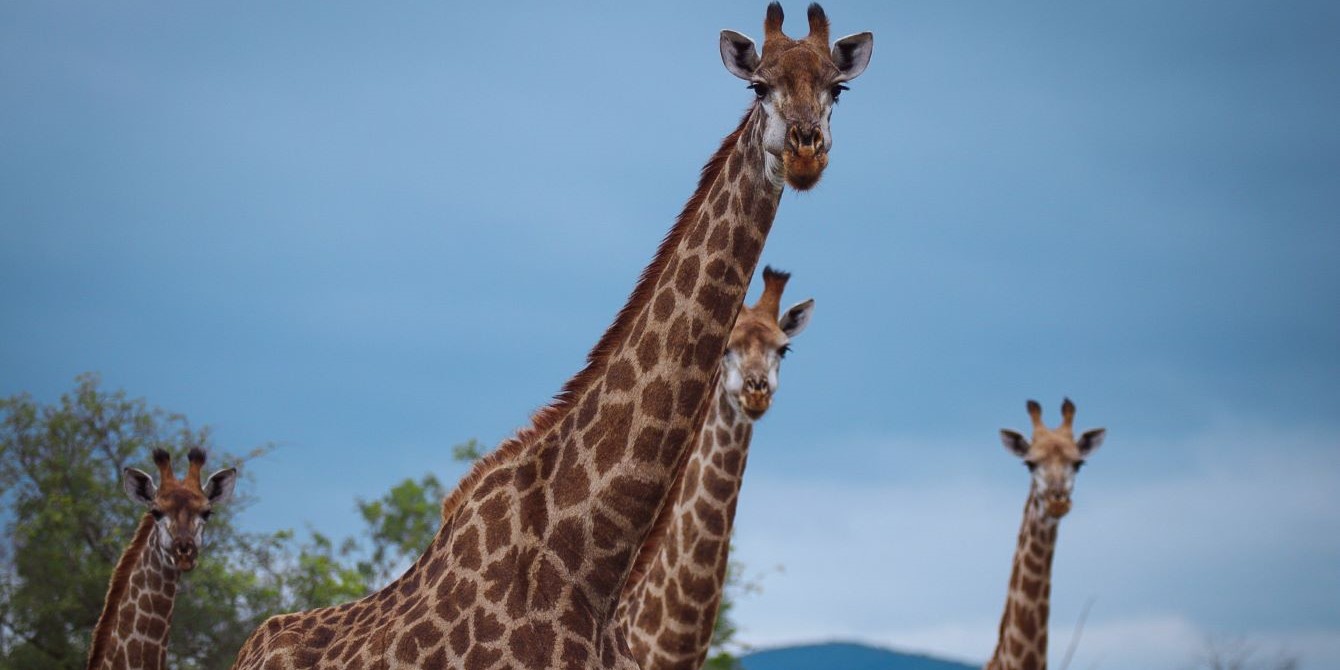
    When it comes to Africa or even the world, there are few animals more iconic than the giraffe. While some minds may spring to elephants or lions, it won’t take long for them to arrive back at the giraffe with its elegant morphology, long sloping neck, beautiful patchwork pattern, and slow, measured walk. 

    However, for anyone who has observed a giraffe galloping, there is no doubt they can look ungainly and as though they may be about to topple over should they corner too fast. And, as the world’s tallest living land animal, this can seem alarming. Giraffes measure in at somewhere between 3.7 and 5.5 metres meaning you might have to stack three people to be eye to eye with a giraffe! 

    One species or four? The ICUN vs Giraffe Conservation Foundation

    image

    But you don’t need to stand eye to eye with a giraffe to identify it. I daresay it is one of the most easily recognisable animals and because of this, you could be forgiven for thinking it is just one species. Yet, is this correct? 

    The answer seems to be neither yes nor no, or perhaps the answer is yes or no depending on who you want to listen to or who you think is most credible. The IUCN is considered a global authority and if you were to ask them, they would tell you that there is just one species of giraffe. Of course, it is worth noting that this was back in 2018 so perhaps things are changing – even if we have yet to hear about it. But despite this being a global authority, not everyone agrees with them. 

    Contrastingly and, confusingly, the Giraffe Conservation Foundation maintains that there are four species, a vast contrast to the ICUN. And then if you were to Google the seemingly simple question, the first answer you would get would give you the same answer as the ICUN. To make this more complicated, if you scroll down and check a few websites, it will quickly become apparent that not everyone agrees. There seems to be a plethora of conflicting opinions. Perhaps in the future, a consensus will be reached but, for now, you will have to pick a side. 

    Giraffe’s patchwork pattern: More than just aesthetics

    image

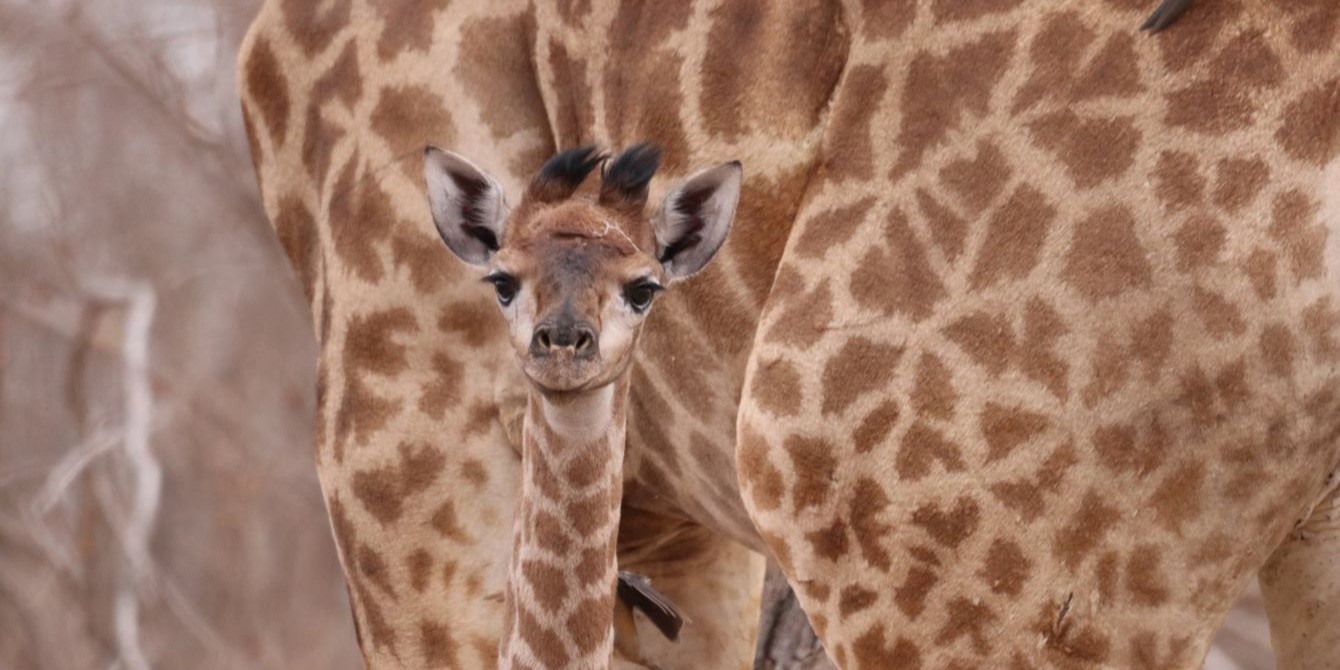
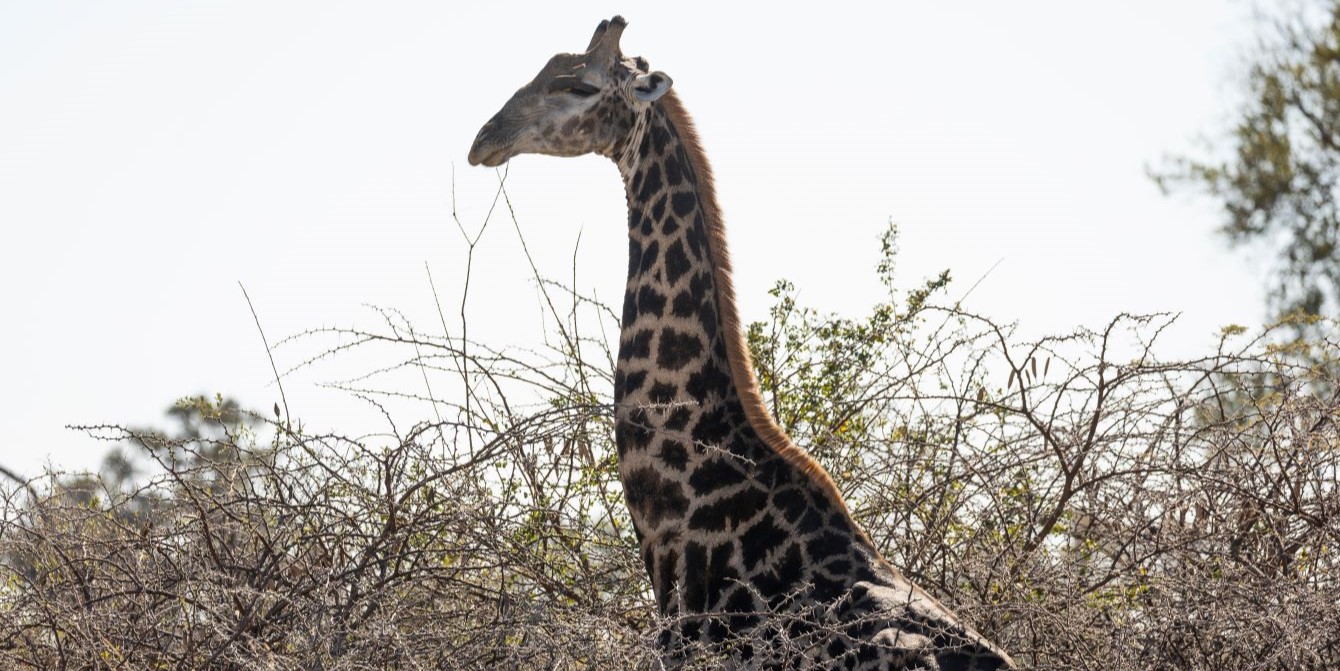
    Getting back to the fact that they are one of the most easily recognisable animals on the planet, one would be remiss not to mention their spots. This patchwork pattern is not there just to be aesthetically pleasing, it is highly functional. As with many other species, it helps them to camouflage by breaking up their outline making them harder to spot. But there is more to it than just camouflage. It also helps to regulate the giraffe’s temperature – under every dark patch is a system of blood vessels, as the blood flows through them they emit heat which helps to keep the body cool. 

    Ossicones: The unique protrusions on a giraffe’s head

    An equally interesting, but perhaps less obvious feature when one thinks of a giraffe is the protrusions on their heads. Protrusions? Aren’t they just horns like an impala? – most people will ask. A fair assumption but unfortunately not a correct one. These bumps on their heads are not horns in the sense that many African antelopes have horns. They are actually bony protrusions called ‘ossicones’ and these are directly fused to their skull. 

    Myths and legends: The fascinating stories surrounding giraffes

    image

    There is no doubting what fascinating animal giraffes are. So it should come as no surprise that there are dozens of beliefs and myths surrounding them. Many of them revolve around the giraffe’s most amazing and identifiable feature, its long neck. One states that once God had created all of the animals, he spoke to them. As he did, the giraffe stretched high in the air to hear him more clearly, and, as a reward, he was given a long neck to reach the best food on the highest branches.

    Another beautiful story is that when the Earth was created all of the animals were given a purpose, all except the giraffe. The giraffe noticed this and was deeply saddened. He had no skills but because of his height, he was always staring up at the sky. One day, the other animals noticed this, and the giraffe was finally given his purpose. According to the myth, the sun was always getting lost and so the giraffe’s purpose became to guide it, making sure it was never lost again. The giraffe did such a good job that the constellation we know as the Southern Cross was rearranged so that it would always point in the direction of the sun. Long ago this constellation was known as the giraffe. 

    The moral of the story is quite beautiful, everyone has something to set them apart. Everyone is unique, just like each giraffe and their unique patchwork pattern. Want to learn more about giraffes? Join Bushwise to gain a deeper understanding of these incredible creatures and their place in the animal kingdom.

    #lion #wildlife #AdvancedRifleHandling #bushwise #qualification #safariguide #Exam #animals #safari #ifga #sightings #endangeredspecies #gamedrive #fieldguidecourse #studying

  • Discovering the striped world of zebras: Facts about their adaptations, behaviour and ecology

    This blog about zebras was written by Bushwise Professional Field Guide student Thato Kgosi. As part of their training, each student submits a researched blog based on a topic of their choice. Opinions contained in these blogs are the student’s.

    4 min read

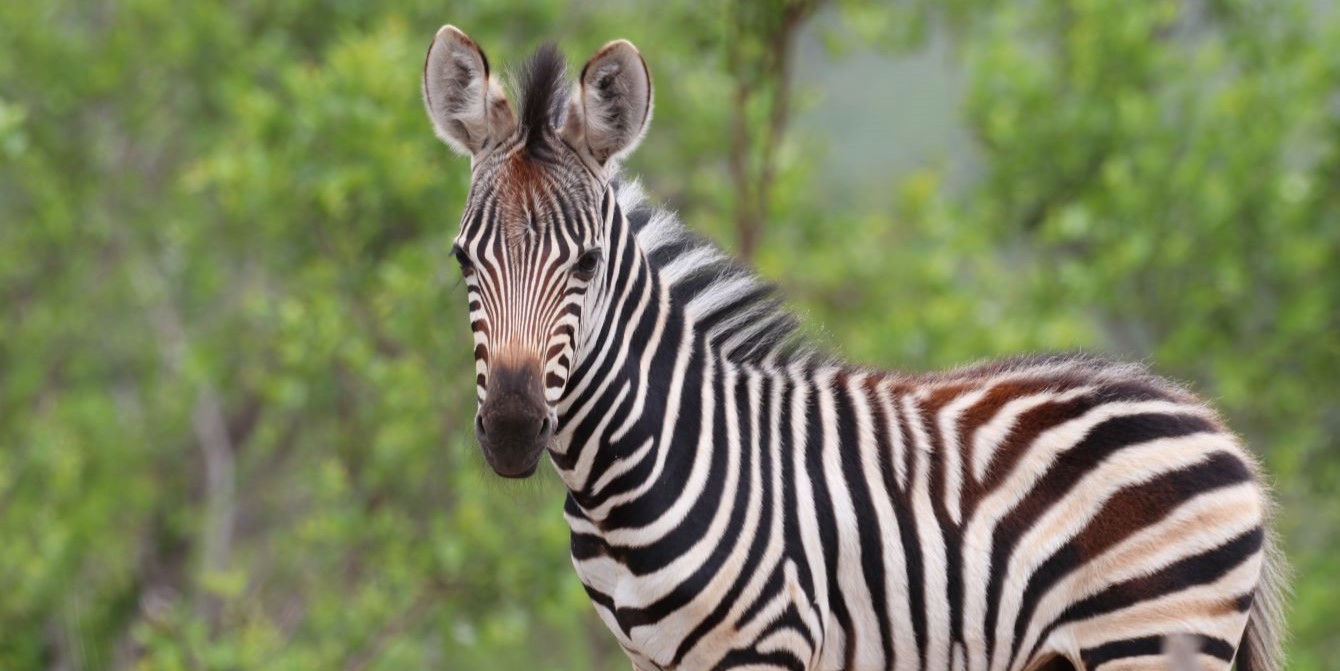
    Zebras are distinctive African equines with black and white striped coats. There are three living species: the plains zebra (which we see here in the Lowveld), Grevy’s zebra and the mountain zebra. As a member of the equus family, zebras are most closely related to horses and donkeys. 

    Zebras main protection against heat comes from their stripes. The contrast between black which soaks up sunlight and white which reflects it, helps them to remain cool. In fact, all absorb around 30% of the sun’s rays and their patterns dispel the rest. Their stripes also provide extra camouflage on very hot days, enabling them to blend into the distorted, shimmering landscape so predators can’t see them from a distance. 

    image

    Some stats about zebras:

    1. Height : 1,35 metres 

    2. Weight: 320 kilograms 

    3. Lifespan: 20 years

    4. Habitat & distribution: Open woodland, scrub & grass. 

    5. Home rage: 110–220 kilometres

    6. Gestation: One year (360–390 days)

    7. Number of young: Single foal

    8. Food: Grazers, occasional browsers

    9. Zebra droppings are similar in shape to, but much smaller than, horse droppings

    White and black or black and white?

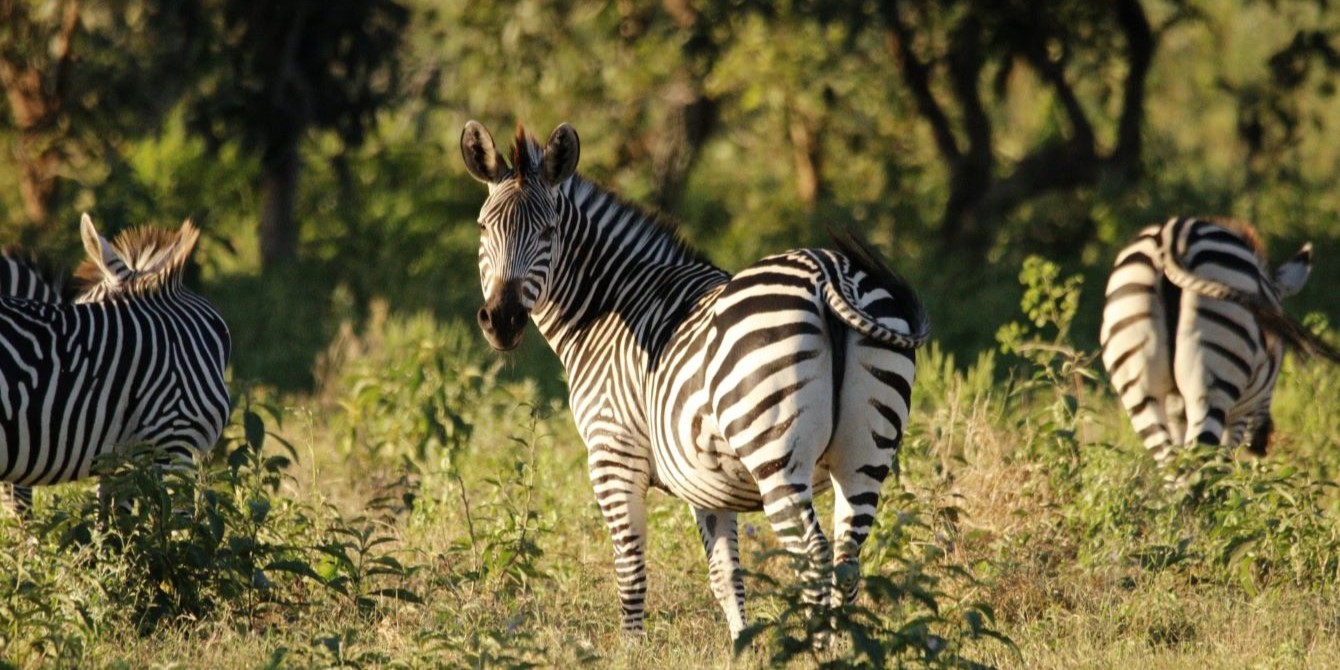
    Each zebra has a unique stripe pattern, a barcode, or fingerprint so to speak. When a young zebra is born, the mare will screen her foal from any other zebra until her own stripe patterns have imprinted on the youngster, ensuring recognition. The plains zebra has characteristic “shadow stripes” between the black and white stripes of the rump which gives the body a dirty chestnut colour. 

    The tail of the zebra plays an important role in swatting flies. To differentiate between male and female zebras, there are distinguishing features such as a thin black stripe from the legs to the tail for the males and a wider black wedge for the females. Both sexes have black muzzles containing a flexible upper lip which is used to pull grass towards their incisors and bite it off.

    What do zebras eat?

    image

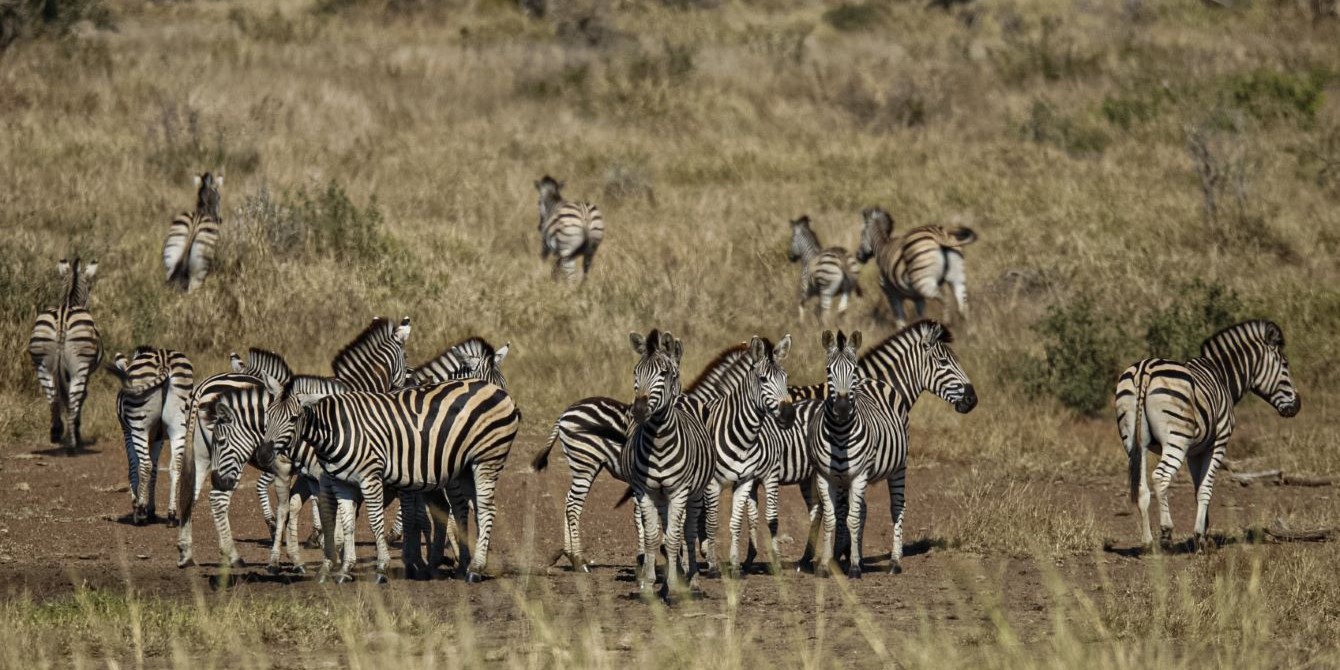
    Zebras are unselective bulk feeders. Eating a lot of fibre means they require a regular supply of water to facilitate digestion. Zebras must drink daily and are seldom further than 10 kilometres from water. Zebras are picky when it comes to drinking water and will take the time to make sure they are drinking clean water. This need for clean water causes them to migrate to new areas when their current water source is not suitable. As they do not have a set territory, different groups of zebras will come together in spots that are ideal for grazing and drinking water.

    Zebras are renowned for their ability to graze on the grassy landscape while being watchful for potential threats. They have a heightened sense of smell, sight and hearing which makes them aware of their surroundings. They tend to feast on short, green grass that sprouts after a fire or after rainfall, but can also manage with tall, coarse vegetation. The grassland succession process involves the taller grass being cropped down to a length more suitable for the needs of wildebeest and other antelopes, which the zebras are often found in close proximity to due to their expertise in detecting predators.

    Zebras are hind-gut fermenters. Lacking the four-chambered stomach of a ruminant, zebras pile all their often fibrous food into one gut which digests via fermentation. The breakdown  of cellulose is less effective than with a ruminant but they can digest large amounts of food faster. Large quantities of gas are released as a byproduct and this inflates their bellies so that they always  look fat and healthy. This is also the cause of the flatulence experienced when zebras take fright and run away.

    What noise do zebras make?

    image

    A zebra’s bray is very similar to a donkey’s bray. It starts at a low  growling sound and builds into something that sounds like a high squeal. When alarmed, zebras make a high pitched and repeated “kwa-ha-ha”, an iconic call of African bushveld. 

    Zebras are dust-bathers and frequently roll in loose dirt, probably to do with parasite control and thermoregulation. Interesting facts about zebras: Zebras sweat to keep their bodies cool when it’s hot. They have a special protein that helps move the sweat away from their skin faster. Zebras are often hunted by lions, which are their biggest predator..

    These are just some of the fascinating facts about zebras that you’ll learn on a Bushwise course. Find the right course for you!

    #wildlife #AdvancedRifleHandling #bushwise #qualification #Exam #training #animals #safari #ifga #sightings #fieldguiding #tracking #fieldguidecourse #studying #fieldguides

  • Animal scavengers in the African bush

    This blog was written by Bushwise Professional Field Guide student Campbell Baker. As part of their training, each student submits a researched blog based on a topic of their choice. Opinions contained in these blogs are the student’s.

    3 min read

    What’s a scavenger? 

    A scavenger is an animal that feeds on carrion, dead plant material or refuse. Scavengers have always had a bad reputation. Often viewed as the villains of the wild. But by nature all carnivores are opportunistic feeders, ready to eat any meat available, and it’s a stroke of luck to find food where the hard work of hunting has already been done for them. Scavengers have perfected this strategy, and have been able to be successful in their tough world. 

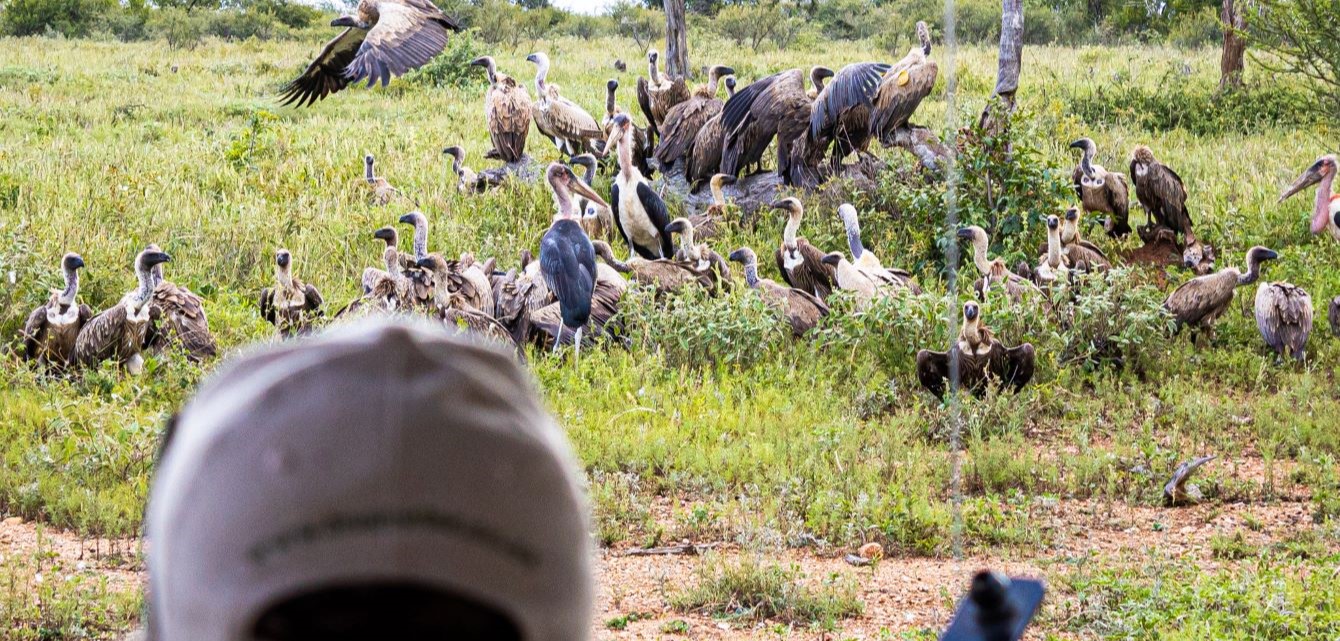
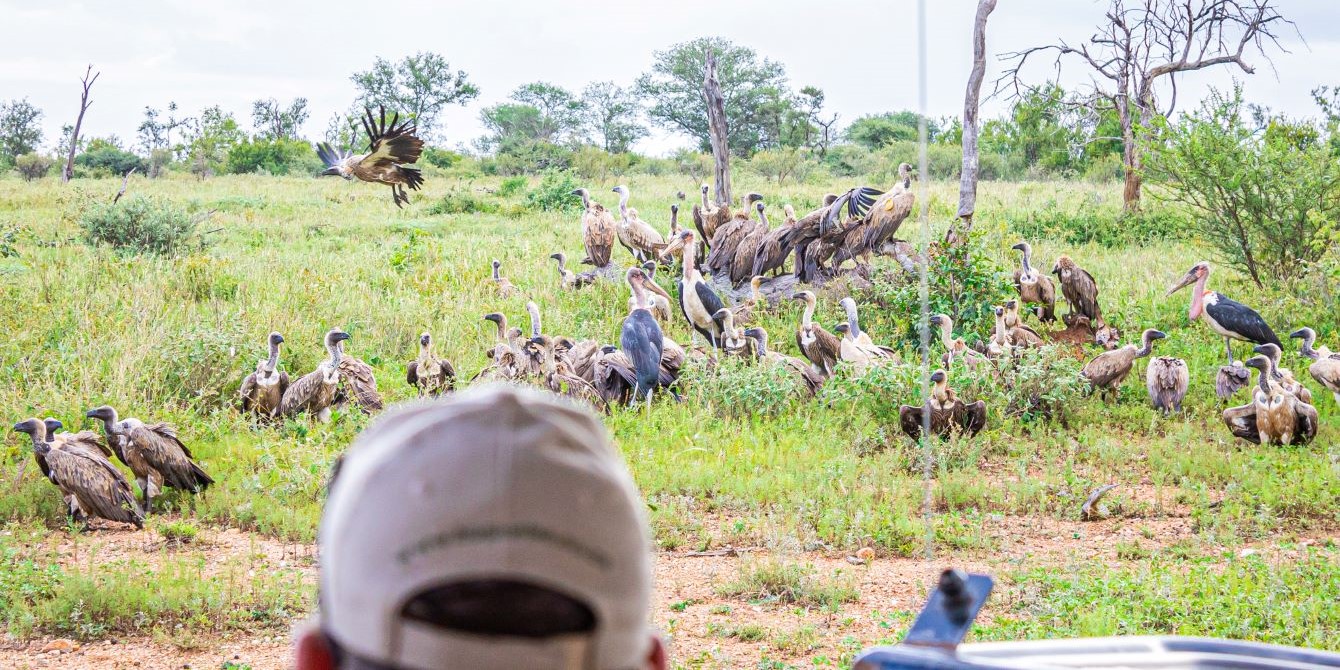
    South Africa – and more specifically the Kruger National Park – has many scavenger species, the most famous being hyenas, vultures, jackals and marabou storks. 

    I’ve found that hyenas are the most underappreciated and disliked of South Africa’s carnivores. But if you were to look at the perfect evolution and adaptations for a scavenger – a hyena is what you would end up with! Perfect with jaws and neck muscles that make light work of meat and bones. Contrary to popular belief, up to 90% of a hyena’s diet consists of animals that they have hunted themselves.

    A valued vulture hierarchy

    image

    Vultures are primarily scavengers and almost never prey on live animals. One of the only times vultures will kill an animal is if the animal is either very sick or wounded. Vultures do not have talons or beaks that have been well adapted for killing prey; their strong beaks have rather been adapted for tearing. The bald head is a common feature of most vultures, and it doesn’t occur by mistake. An absence of feathers on their heads allows vultures to feed and put their heads into carcasses without feathers getting matted by blood.

    At abandoned carcasses, there is a known hierarchy. Hyenas are at the front of the queue, followed by other mammalian scavengers – like jackals – and then vultures. Even between vultures and other scavenging birds of prey, there is a hierarchical order. This order is usually based on strength of beak and size. Beak strength is important in the vulture social order as some vultures do not have the beak strength to get through thick animal hides. 

    The role of invertebrates in scavenging 

    image

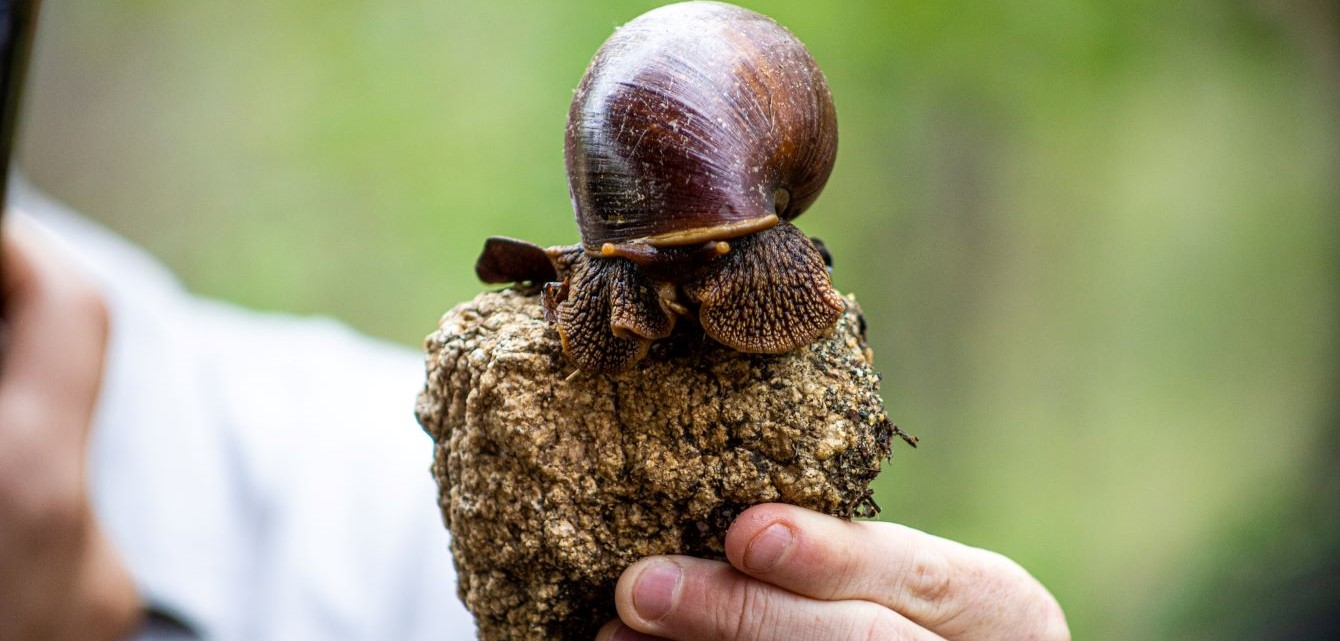
    Although vertebrate scavengers are efficient and effective, about 10% of medium to large carcasses are undiscovered or unused by vertebrate scavengers, and an even higher percentage in areas where hunting is prevalent. These carcasses and the remaining matter of other carcasses are consumed by insects and arthropods. The aptly named carrion beetle is the most well-known for this behaviour, but all omnivorous and carnivorous invertebrates feed on carrion and carcasses.

    Scavengers are more important to an ecosystem than many think. Not only do they keep the habitat and landscape clean of carcasses and even the bones of animals, but they also break down organic matter and recycle them back into the ecosystem aiding the nutrient cycle.

    Without scavengers, the decomposition of animals would be much slower in the wild, and carcasses would become a breeding ground for wildlife diseases. And an increase in wildlife diseases could reduce the  animal population rapidly.

    Even scavengers are at risk

    image

    Even though scavengers are a vital link in the natural world, somewhere between 400–800 vultures are poached each year around the Kruger National Park. Vulture populations cannot deal with these yearly losses. These vultures are often killed by means of poisoning of carcasses, which not only kills vultures but any other scavenger that happens upon the carcass.

    I believe scavengers are both beautiful and fascinating. Now more than ever the scavengers of Southern Africa need to be protected and appreciated for their vital role within the ecosystem and the Kruger National Park.

    Do stories like this interest you? Learn more by subscribing to our newsletter or checking out our other blogs!

    #wildlife #bushwise #qualification #Exam #animals #hyena #safari #ifga #sightings #fieldguiding #endangeredspecies #Assessments #gamedrive #guiding #fieldguidecourse #studying
  • Slither, crawl, hiss: All about reptiles

    This blog was by Bushwise student Kutlwano Mahube. As part of their training, each student submits a researched blog based on a topic of their choice. Opinions contained in these blogs are the student’s.

    What is a reptile? A reptile is a vertebrate animal of a class that includes snakes, lizards, crocodiles, turtles and tortoises. They are distinguished by having a dry scale skin and typically laying soft-shelled eggs on land.

    Key characteristics of reptiles

    1. They are vertebrates, meaning they have backbones.

    2. Their bodies are completely covered with scales.

    3. They either produce shelled eggs or bear live young.

    4. Most reptiles have a Jacobson’s organ in the roof of their mouth.

    5. They all have at least one lung.

    image

    Interesting facts about reptiles

    1. They evolved from amphibians.

    2. There are three orders of living reptiles in South Africa.

    3. Chelonia (shield) = Tortoises, terrapins and turtles.

    4. Squamata (scaled) = Worm lizards, lizards, skinks and snakes.

    5. Crocodylia = Nile crocodile.

    6. They have scaly skin.

    7. There are very few plant-eating reptiles.

    8. Most have three chambered hearts.

    9. In some reptiles, sex (male or female) is determined by temperature during egg incubation.

    10. They are cold blooded (Ectothermic).

    Difference between Reptiles and Amphibians

    The biggest distinction between reptiles and amphibians is the way in which they are born into the world. Reptiles hatch from tough, hard-shelled eggs. When they are born, they look like smaller versions of their adult selves. They are capable of basking and hunting for food right away. 

    Amphibians come from jelly eggs, although there are some species that reproduce through live birth. These creatures have three stages of development – except newts, which have four. Generally, they lay their eggs in large groups in water, while some lay them in water-filled plants or puddles on leaves throughout the year and others breed at the same time of year in a mass.

    What reptile species do we see in South Africa?

    image

    In South Africa there are roughly 517 described species – which include 151 snakes, 338 lizards, 14 tortoises, six terrapins, five turtles and one species of crocodile.

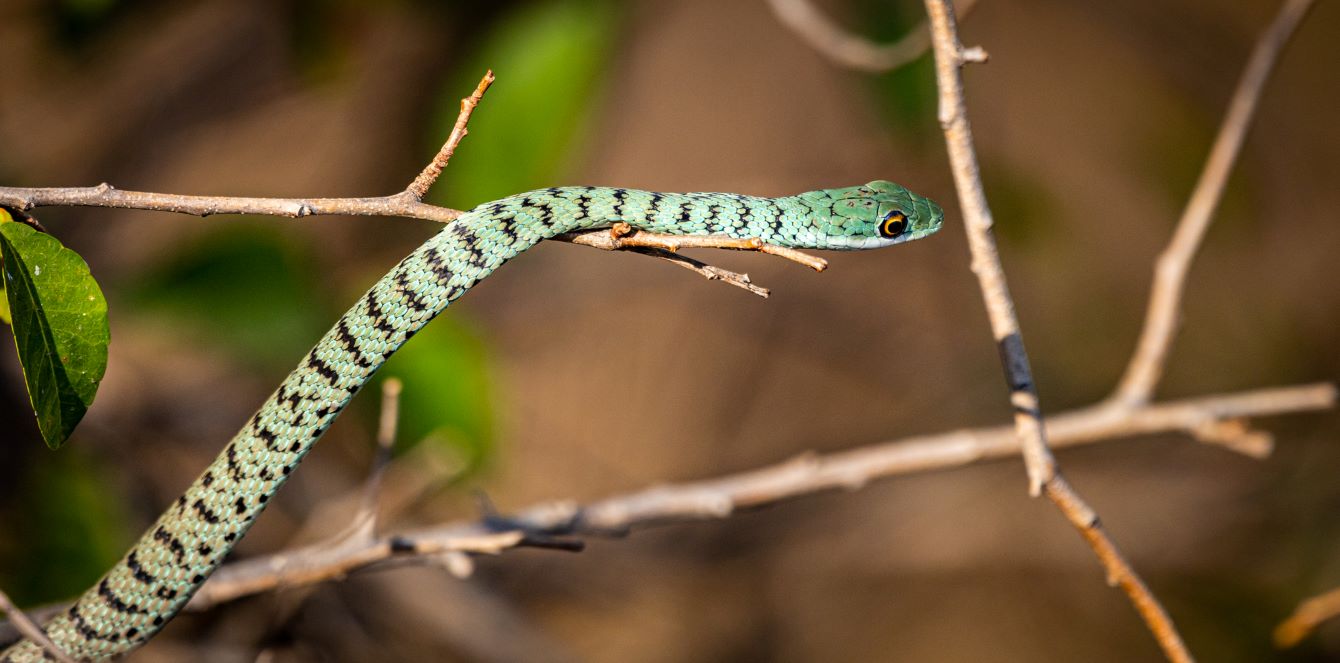
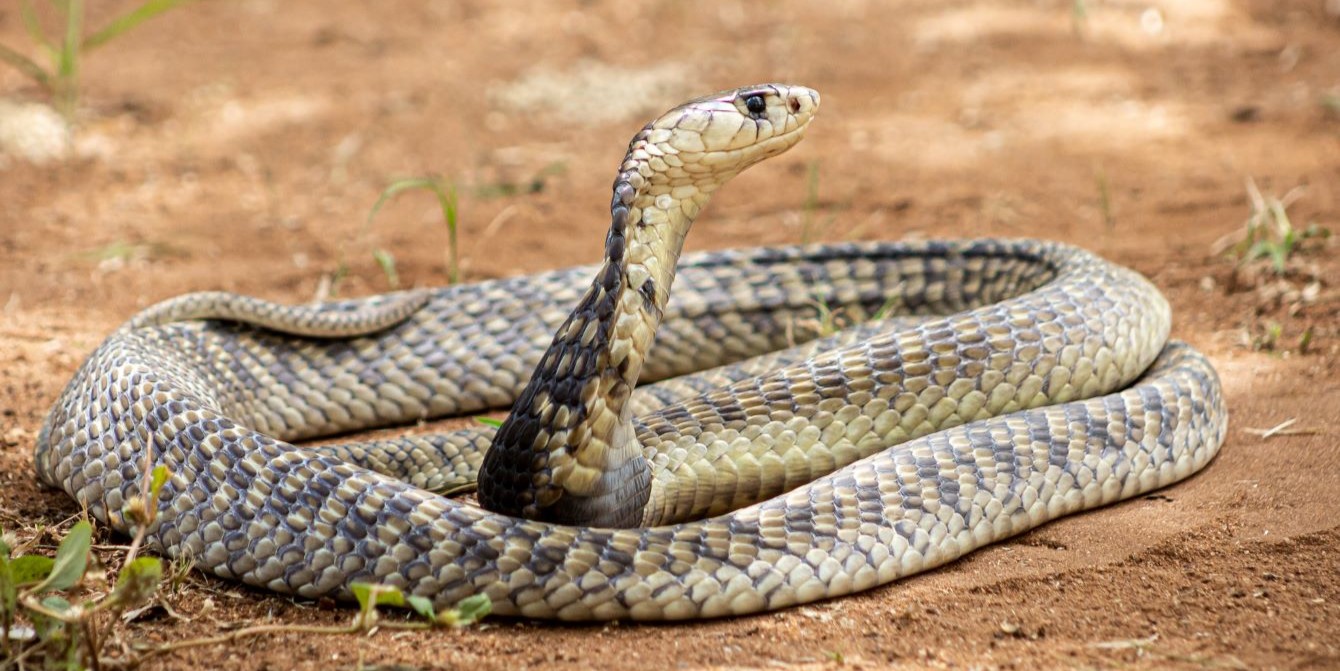
    In the Lowveld, visitors are bound to come across a range of reptiles during their walks through their gardens. Regular sightings here include snakes, ranging from the commonly recorded Mozambique spitting cobra and black mamba to the spotted bush snake and twig snake.

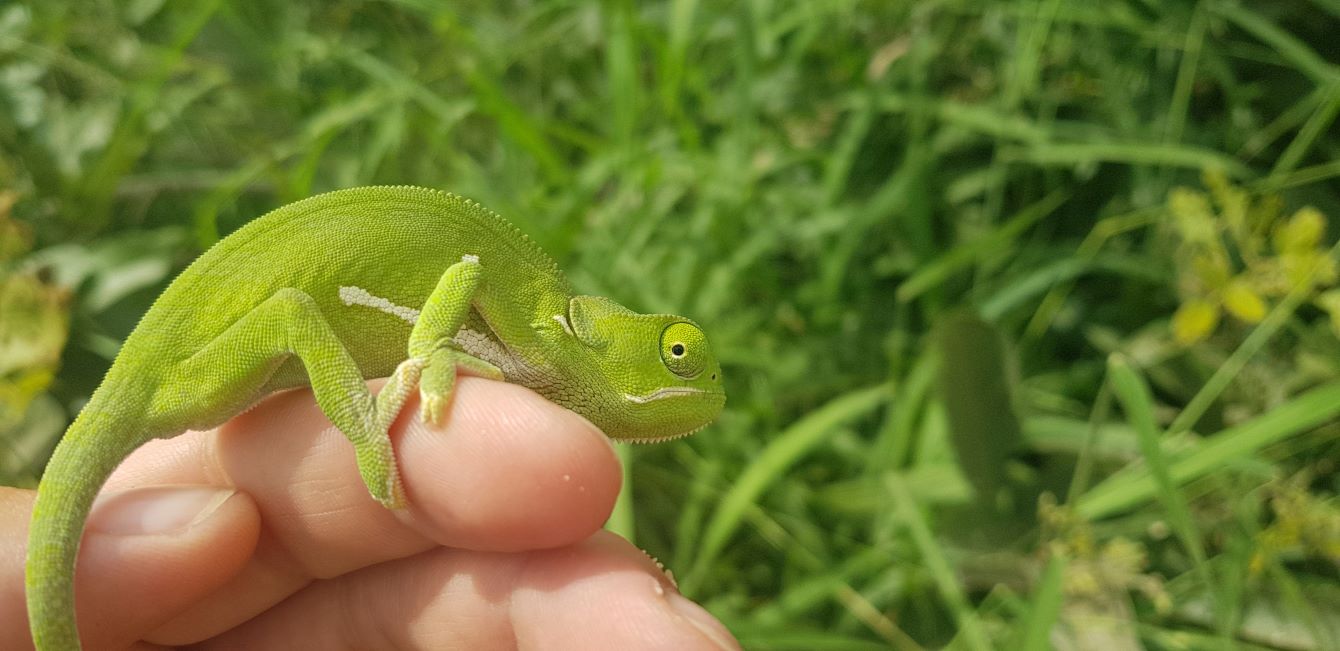
    You can spot swimming tortoises– the leopard tortoise – which is part of Africa’s small five as well. You can also find the slow-moving chameleons with its lightning-fast tongue that is accurate over a relatively long distance.   

    Are there any venomous reptiles?

    Some reptiles, mostly snakes do have venom which they use to subdue and digest their prey. These are the types of venom they possess.

    1. Haemotoxic: This venom causes continued bleeding because it stops blood from coagulating. These snakes have grooved back fangs. One such snake is the boomslang.

    2. Cytotoxic:The venom leads to tissue destruction around the site of the bite, with localised bleeding. The snakes have hollow hinged front fangs. One such snake is the puff adder. 

    3. Neurotoxic: This type of venom affects the nervous system and causes paralysis of the muscle – difficulty in breathing, nausea and vomiting. These snakes have fixed front fangs. One such snake is the rinkhals.

    What role do reptiles play in the ecosystem?

    image

    Reptiles form an important component of the food web in the ecosystem. They fill a critical role both as predator and prey species. Some of the important functions they perform include seed dispersing, controlling insect populations like ants, among other things. Crocodiles also prevent the overpopulation of fish in coastal regions and wetlands, which is pivotal in keeping the aquatic ecosystem healthy and balanced. Antivenom is also developed from taking the venom from snakes processing and modifying it and then turning it into a drug.

    Enjoy this blog? Get interesting stories delivered right to your inbox when you sign up for our newsletter.

    #wildlife #AdvancedRifleHandling #bushwise #qualification #safariguide #Exam #animals #ifga #fieldguiding #tracking #endangeredspecies #guiding #fieldguidecourse #studying
  • Animal tracks and tracking

    This blog about tracking animals was written by Francois Theron. With years of guiding experience, Francois shares his knowledge on tracks and tracking in the bush.

    There are hundreds of species of endangered animals living across Africa, and tracking wildlife and monitoring endangered species are essential to their conservation.

    Tracking animals is like learning to read. First you start with your ABCs, then you work your way up to simple sentences, then paragraphs and, finally, books. With more and more practice, you can read difficult books. And the same goes for tracking.

    image

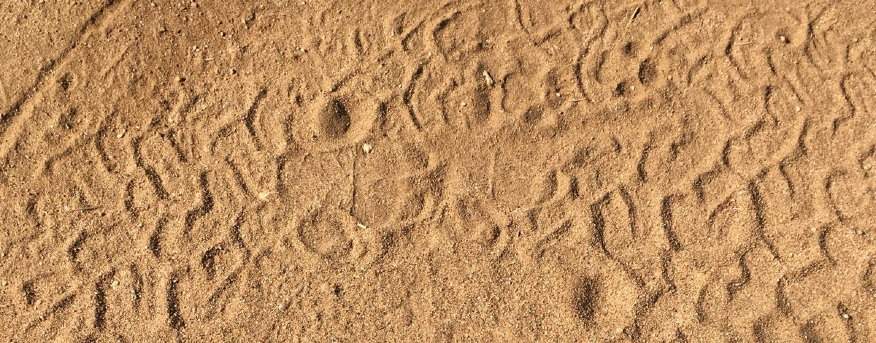
    A track, print, or geological mark is made and then slowly worn down, or built upon, by the forces of natural erosion and gravity. In wildlife tracking, the first thing to learn is knowing where to look. 

    Earth is like a manuscript of tracks that gets added to every day. Table Mountain is a geological track, the Limpopo River (also known as the Crocodile River) is a track, and so is the Drakensberg escarpment. 

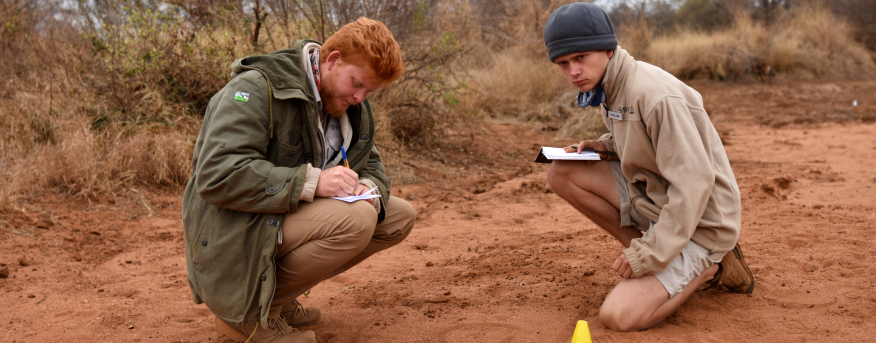
    A track is a window into the past of an animal’s life. Imagine the ground as if it were a manuscript of the animal’s movements through life. Learning to read these tracks will help you understand how animals move within an area, migrate, and evolve over time.

    Parts of a track

    image

    When a track is made, an organism’s heel slides into the ground, registers and pulls out. No track will be straight and level. There’s always some angled component either from the foot pressing down or pulling out.

    The softer the soil, the greater the slope of the track. This affects how we measure a track and helps us tell the difference between a lion track and a leopard track for example. 

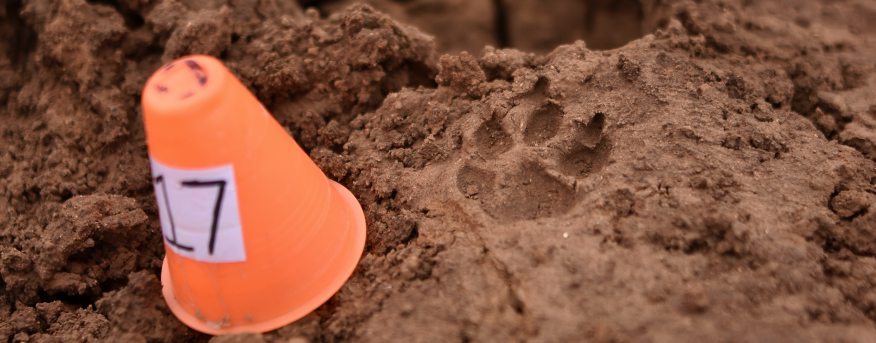
    Lions and leopards both have one large pad with three clear lobes under their paws. Another telltale sign is that cats also have retractable claws. Once a track has been identified as belonging to either a lion or leopard, the simplest way to tell which animal it was left by is by its size. 

    image

    The weight and sex of the animal plays an important role here. An adult male lion can reach between 150 and 260 kilograms, making it the heaviest of Africa’s cats. They also have large and wide front paws. A male lion’s front paw track can measure up to 14.5 centimetres in length, while a female’s track will measure around 13 centimetres.

    An adult male leopard weighs around 30 to 70 kilograms; a substantial difference to its bulkier feline cousin. This gives leopards the agility necessary to climb and pull prey up in trees. A male leopard’s tracks are longer and wider measuring up to nine centimetres long on the back foot, while a female’s back foot track will be about eight centimetres long.

    Measuring a track

    image

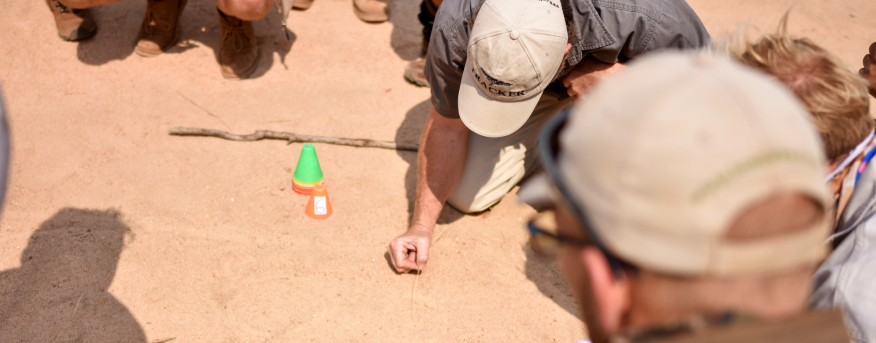
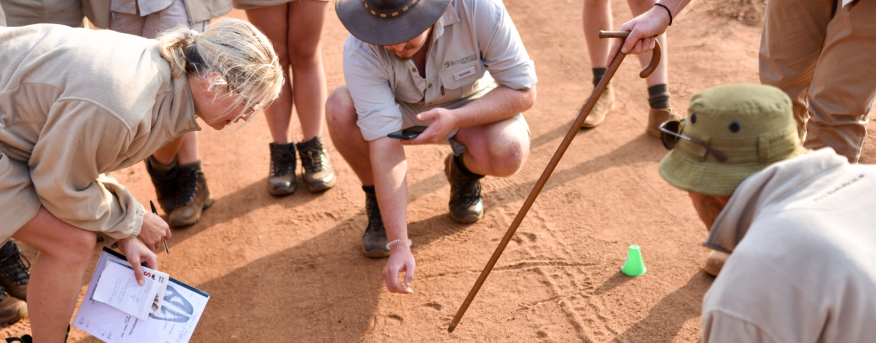
    You will need to measure the length and width of all four tracks (two in humans). When measuring animal tracks, the readings between tracks are measured from toe to toe because animals walk with their toes first. In humans, we measure tracks from heel to heel because we land heel first.

    1) Establish the line of travel

    This can be done by the eye if the tracks are clear, or by placing and connecting strings along the track.

    2) Length of the track

    Measure the length of the track.

    3) Width

    Measure the widest part of the track.

    image

    4) Stride

    This is measured from the heel of one foot to the heel of the other foot.

    5) Straddle

    If you draw a line of travel between the left and right heels, the distance between them is the straddle.

    6) Pitch

    The pitch is the degree to which the foot angles out from the line of travel. At the widest point of the track, draw a line bisecting the track along its axis. The distance from where the line exits the front of the foot to the heel line is the overall pitch.

    7) Overall stride

    This is measured from heel to heel. Thus, there is a left overall stride and a right overall stride. Comparing these two can help you determine the orientation of the animal.

    8) Determining orientation

    The dominant side of the animal makes a short step (punch), while the non-dominant side makes a long step (feeler). So if you try walking blindfolded, you’ll circulate towards your dominant side.

    image

    Classification of tracks

    1. Clear print: When you can see the track clearly in soft soil, with all toes visible.

    2. Pattern classification: When there is no clear print, you must identify the track by its general shape and size.

    3. Track card: You can use a basic track card to help identify animals.

    Bonus: Bird tracking

    Here are some useful hints to keep in mind when identifying bird tracks:

    1. Ground birds: Spend most of their time on the ground and show a walking gait.

    2. Perching birds: Spend most of their time in trees – shows a hopping gait.

    3. Mix: If a track shows both hopping and walking gaits, it probably belongs to a bird that splits its time between trees and the ground, like a crow.

    Aging Tracks

    image

    The single biggest cause of track degradation (and thereby aging) is weather fluctuation. Gravity is also a major contributing factor, as well as the type of soil the track was made on. 

    The only way to learn how to calculate the age of a track is to observe how a track degrades over time, given the soil conditions. Different types of soils are classified between one and ten, with soft sand being one and hard clay being ten (in other words, a scale of soft to hard soil). 

    You must estimate the soil classification first. Then, keep an accurate record of weather changes while observing a track over time. Weather conditions to be aware of include temperature, humidity, wind, precipitation and hours of direct sunlight on the tracks.

    Are you ready to test your track knowledge? Join us in the bush and help us identify animals in Africa.