Category: Wildlife insight

  • Cheetah – The Fascinating, Ferocious Feline

    This blog was by Bushwise Professional Field Guide student Aeden Kuhl. As part of their training, each student submits a researched blog based on a topic of their choice. Opinions contained in these blogs are the student’s.

    5 min read

    You might know it as ingulule, duma, jagluiperd – or, simply, cheetah. The word cheetah is actually derived from the Hindi word chita, meaning “spotted one”. The scientific name is Acinonyx jubatusthe. Acinonyx is most likely derived from merging two Greek words; akinitos meaning motionless, and onyx meaning nail, in reference to the cheetah’s semi-retractable claws. 

    What makes this speedy cat stand out from other species?
    image

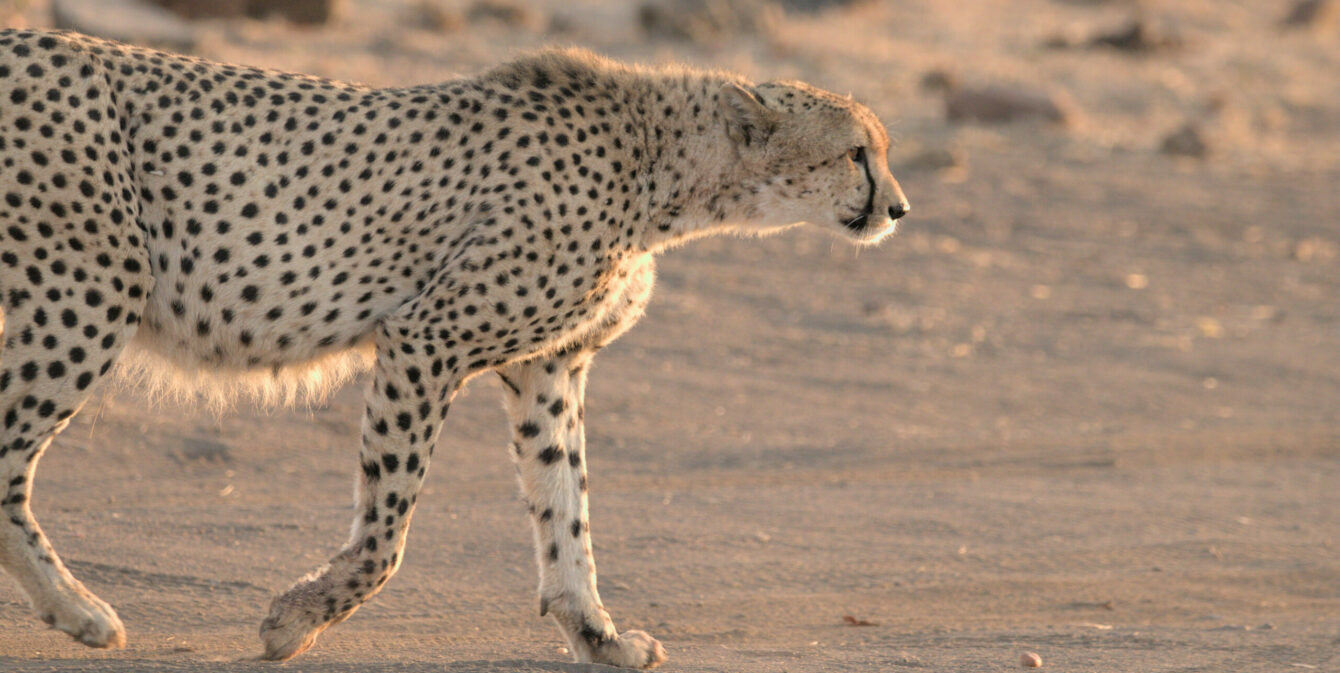
    When people think of big cats, the animals that often come to mind are lions, tigers, leopards and cheetahs. However, this isn’t entirely correct, as the cheetah is the lone living member of the genus Acinonyx, whereas the other cats mentioned are members of the genus Panthera. The main difference between these genera is the ability to roar; cheetahs lack the floating bone known as the hyoid, which means they are incapable of roaring and instead are known to purr contentedly, or make chirping sounds between a mother and her cubs.

    Another minor-yet-noticeable difference between these cats are their claws – cheetahs are one of only four cat species that have semi-retractable claws, which help in high-speed pursuits as they offer extra traction and grip when moving at such accelerated speeds.

    How fast can cheetahs really run?
    image

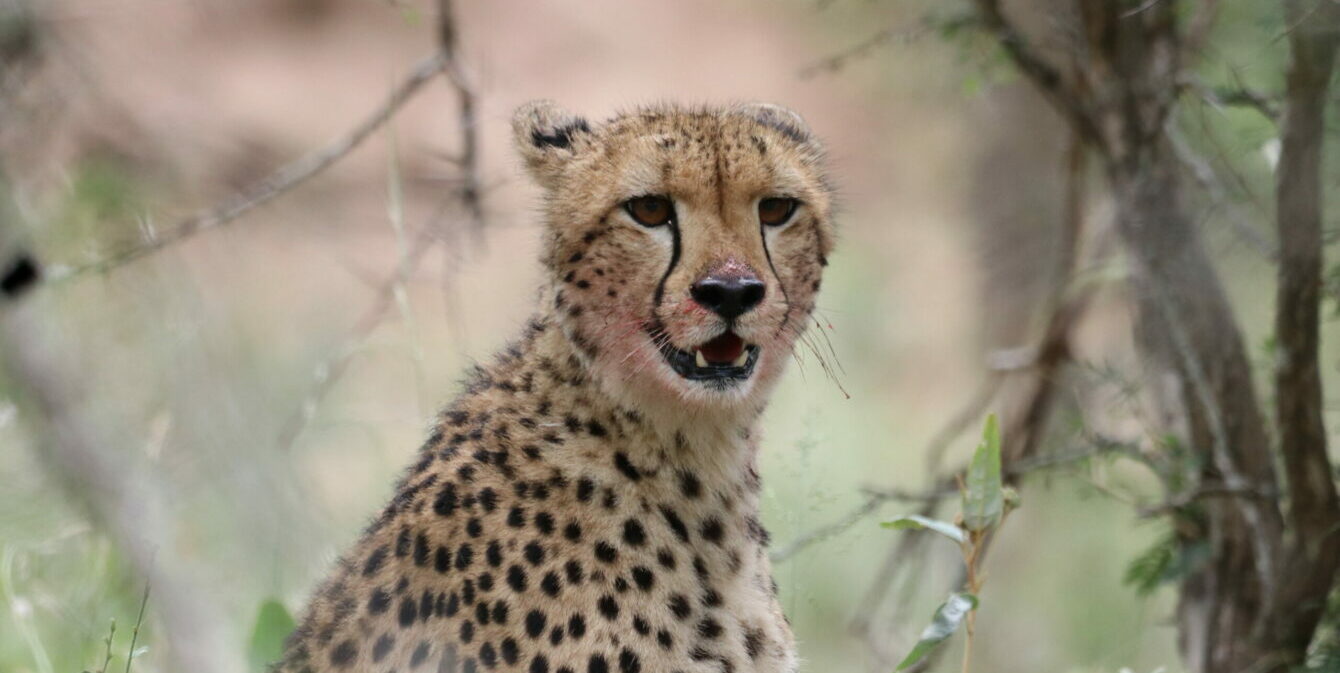
    The sleek, graceful frame of a cheetah is quite literally built for speed, with small heads, long slim legs and flat rib cages, their slender forms minimise wind resistance and lend themselves to being as aerodynamic as possible. Aside from this, they have loose shoulder blades that can store and release energy almost like a spring, and their long tails often act as a rudder, helping to steer and allowing for sharp turns at breakneck speeds. Even their internal organs are made with speed in mind, as their large nostrils and enlarged lungs and heart grant them the ability to pump oxygen more efficiently, ensuring the ferocious feline doesn’t run out of breath while chasing down its prey.

    To date, the fastest speed achieved by a cheetah was by a nimble female by the name of Sarah at the Cincinnati Zoo in Ohio in 2012. Sarah was recorded during a 100-metre sprint doing a top speed of 98 kilometres per hour, flying through the 100-metre dash in a whopping 5,95 seconds – nearly 4 seconds faster than that of Usain Bolt’s 100 metre world record sprint, and more than double his top speed!

    What’s the difference between cheetahs and leopards?
    image

    In the past, cheetahs were often referred to as the ‘hunting leopard’ by nobles, because they could be tamed and used for a sport known as coursing. Knowing this, along with the fact that both cheetahs and leopards are spotted big cats, it’s understandable why these two felines are often confused.

    As mentioned above, cheetahs are built for speed, having sleek and slender bodies while sacrificing much of their muscle mass to be as swift and agile as possible. This means cheetahs often only weigh as much as 72 kilograms; whereas leopards are bulky, robust cats. Although cheetahs stand taller at the shoulder, leopards often weigh in as much as 100 kilograms.

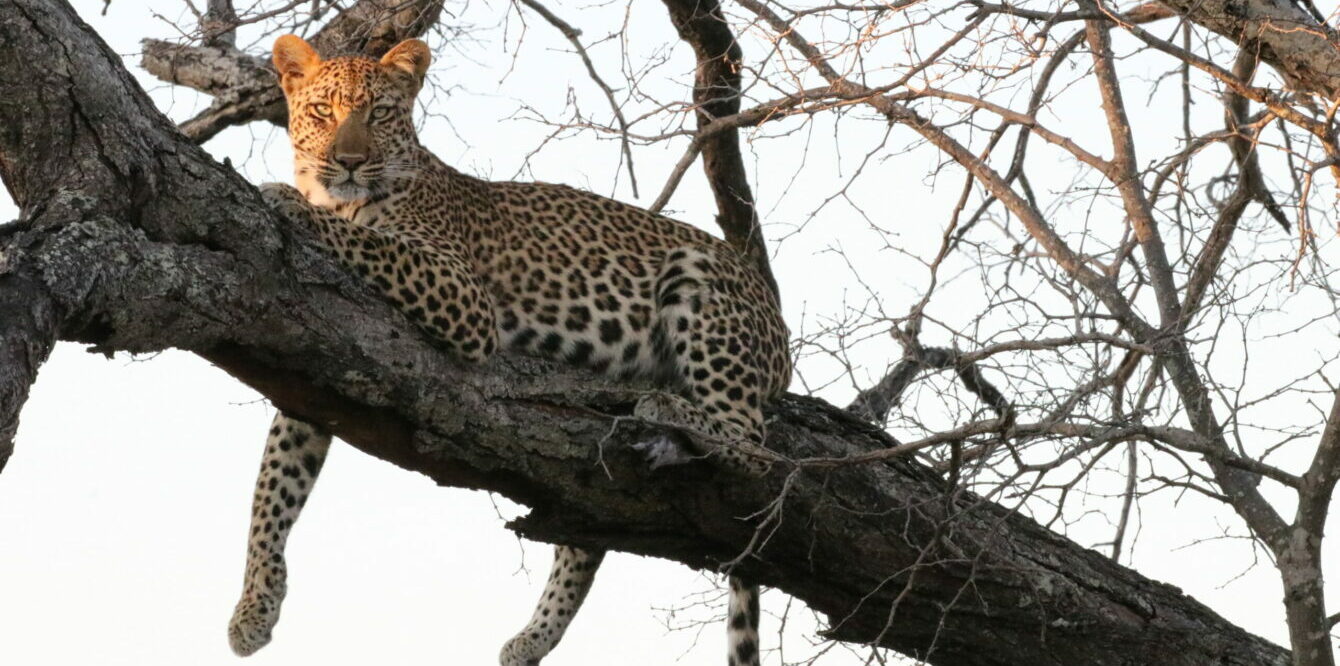
    Since leopards are such burly beasts, they can easily stalk and ambush their prey, pouncing on them from the long grass before carrying them up onto branches to protect their kill from any scavengers. Cheetahs make use of their speedy stature when hunting, either dashing after their prey until they tire them out, or swiping at their legs, intentionally tripping them up before delivering the final blow of a bite to the neck. Once they’ve made the kill, they need to eat as quickly as possible as they have neither the energy nor the body strength to fight off any prowling predators or scavengers.

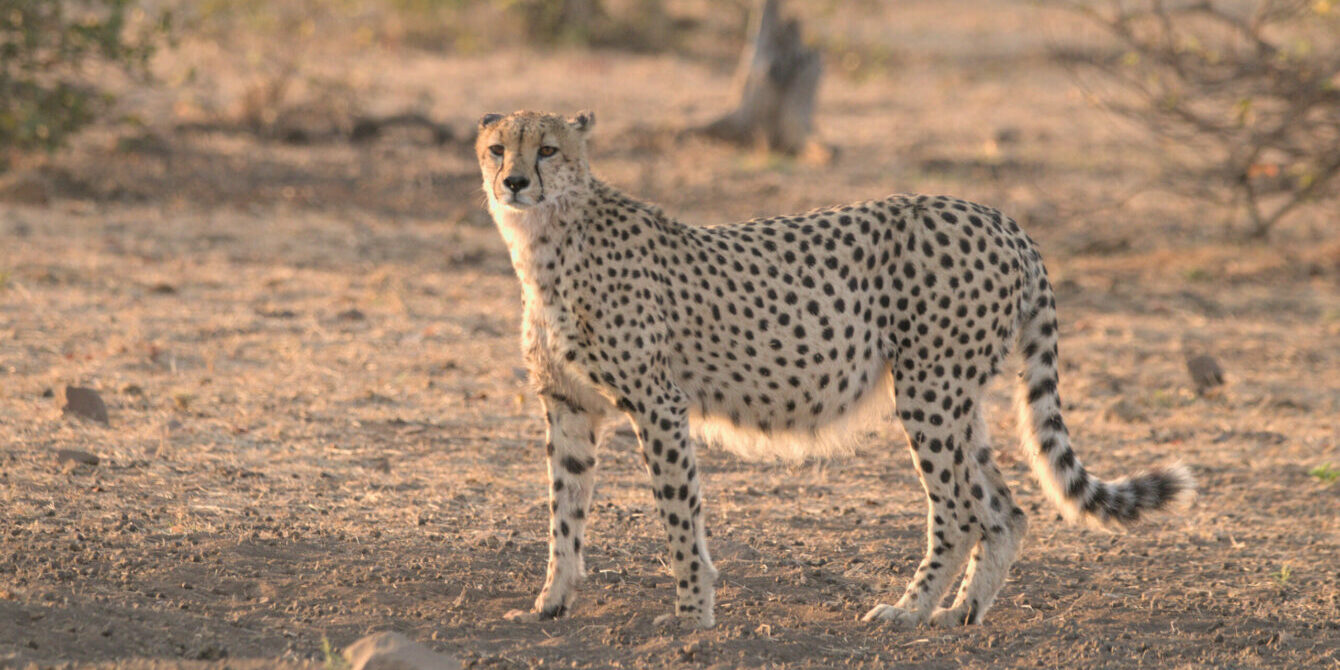
    From a distance, leopards and cheetahs are easily mistaken, as neither are particularly big and both are covered in spots. On closer inspection however, telling them apart is fairly straightforward. The spots on cheetahs are typically uniform and solid, where leopard spots are not spots at all – instead they are known as ‘rosettes’, due to the resemblance they bear to roses. These rosettes are irregular in size and shape, and can be found splotched across the body and face of leopards. The face of cheetahs is also distinctly different in that the spots previously mentioned do not cover their face, but rather they have recognisable black ‘tear lines’ stretching from the inner corner of their eyes down to the corners of their mouths. These marks are known as “malar stripes”, and are thought to help absorb sunlight and reduce any glare into the cheetah’s eyes whilst hunting. Speaking of eyes, the eyes of these two cats are also notably different, with leopards having bright green or bright blue eyes, and cheetahs having rich, golden-amber coloured eyes.

    How endangered are cheetahs, and why?
    image

    Cheetahs have teetered on the brink of extinction and, fortunately, bounced back several times over the last few decades, however the population of wild cheetahs has shown a steady decline over the years. According to the Red List of Threatened Species created by the International Union for Conservation, cheetahs are currently assessed as being a Vulnerable Species, with barely more than 6,500 mature individuals worldwide. As of 2022, there was a projected population size reduction of 37% between 2017 and 2032 – which is more than 2,400 cheetahs lost over a period of 15 years! This number is hugely consequential considering how few cheetahs we have left in the world.

    The main factors endangering cheetahs today are unfortunately caused mostly by humans. The destruction of habitat and diminishing prey are all a direct result of human population growth, as the more people there are in the world, the more space we occupy, which leaves less and less natural areas for wildlife – such as cheetahs – to inhabit. On top of this loss of natural territory, the growing demand for illegal pets all around the world means that cheetah cubs are trafficked out of Africa at an estimated rate of 300 cubs per year.

    Aside from human encroachment and greed, cheetahs face problems within their own populations in terms of breeding and reproduction, as they have a relatively low rate of reproductive success. Having such a diminished population size also leads to circumstances of inbreeding, which greatly reduces the size of the gene pool and in turn leads to other problems like harmful mutations or decreased genetic variability.

    Alongside this, since cheetahs are so slight in comparison to other predators roaming the plains, they’re often at a disadvantage in terms of hunting, and will easily lose a kill if they come face-to-face with stronger predators. Their cubs are also easy prey for hyenas or lions, adding to the difficulty they encounter when it comes to successful breeding.

    With so many issues facing cheetahs of today, it’s crucial that awareness is raised and spread to prevent this majestic creature from ending up as merely a display in the extinct animals section of museums.

    Love cheetahs like Aedan? Learn all about them, and even see them for yourself, on a Bushwise course. Apply today!

    #bigcat #wildlife #safariguide #wildcat #ifga #guidejobs #wildanimal #cheetah #safari #gamedrive #fieldguides
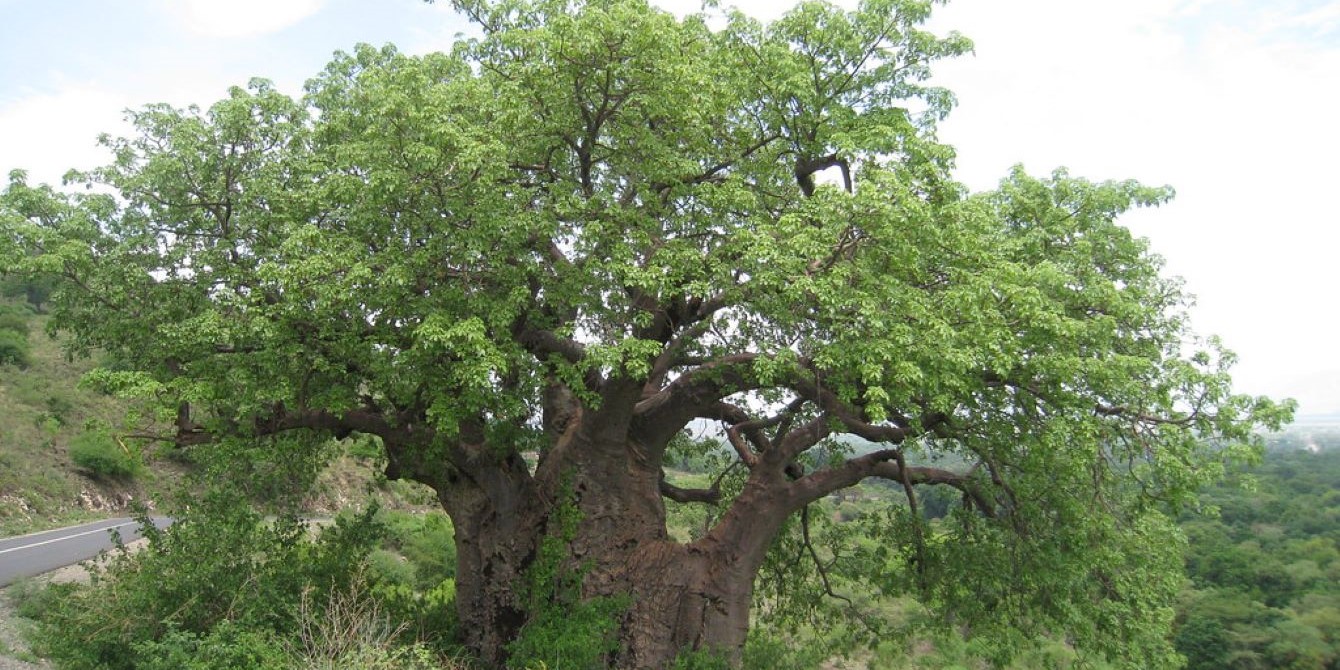
  • Baobab: The mighty and iconic upside-down tree.

    This blog was written by Bushwise Professional Field Guide student Elea Gourgousse. As part of their training, each student submits a researched blog based on a topic of their choice. Opinions contained in these blogs are the student’s.

    5 min read

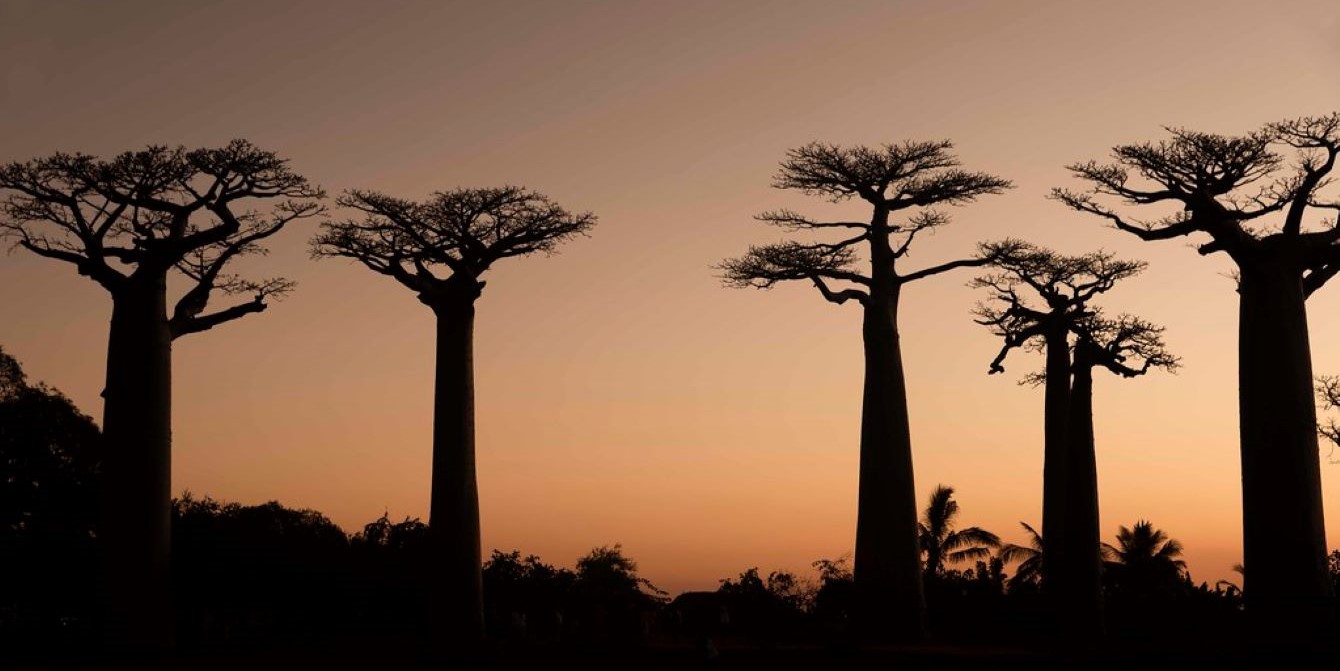
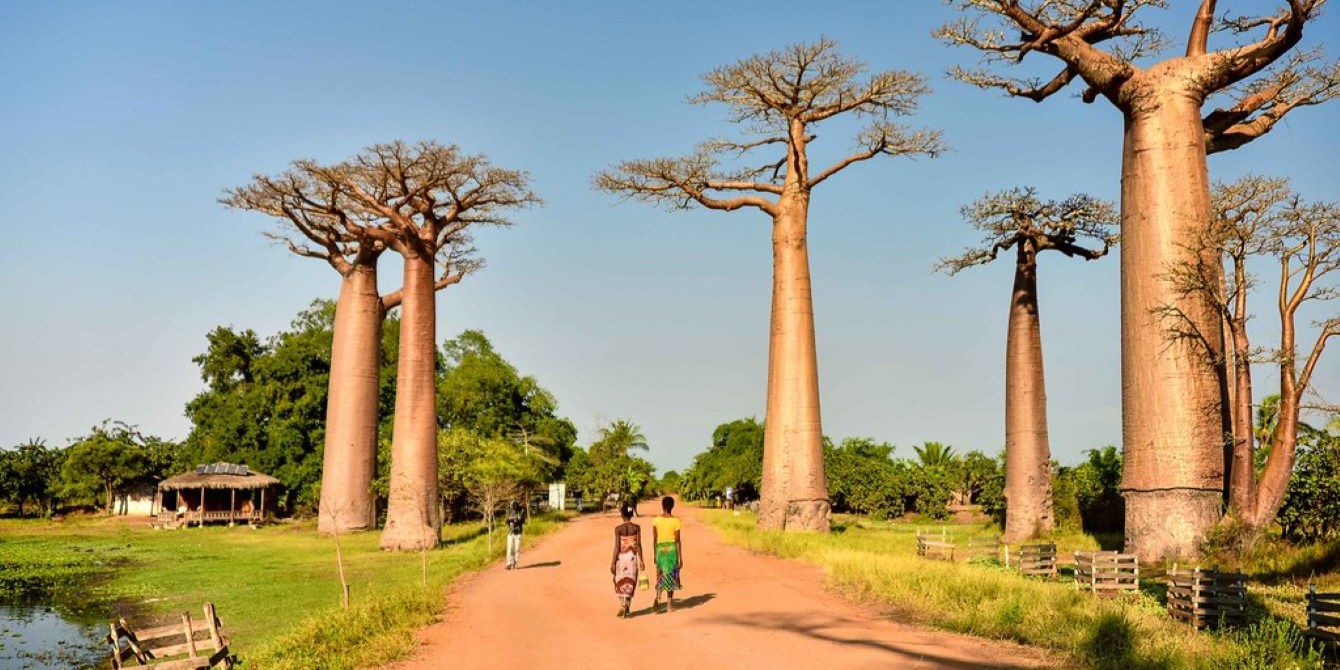
    The iconic baobabs are trees like no other. A thick trunk rises to support thin branches. They are deciduous, which means during the dry season, their bare branches look like a gnarled root system, and make these trees look as if the tree was growing upside down.

    Why are baobabs important? 

    The baobab is a key species in an ecosystem. They play a key role in helping to keep soil conditions humid and also promote nutrient recycling. They also prevent soil erosion. And the baobab is an important source of food, water and shelter for various birds, reptiles and insects. 

    A mature baobab tree will create its own ecosystem. For example, monkeys and warthogs are fond of fruit and seed pods, birds can make a home in the cavity of the bark or make their nests in the huge branches. Bush babies and fruit bats will drink baobab nectar. And other wildlife like elephants sometimes eat the spongy baobab bark, which provides moisture during times of drought.

    After a long walk through the summer’s heat, this tree will be your best friend. You find shade and a drink – as the cavities in the tree act as reservoirs for rainwater. The seeds within the fruit from the tree can also be sucked to relieve thirst. And who knows, if you stop for a drink, you might even get lucky and spot something exciting. 

    Where can you see baobab trees?

    image

    There are nine different species of baobab trees. One is from Australia, six from Madagascar and two species are native to mainland Africa. All these species are situated in low-lying, arid regions. 

    In Africa, you find baobabs growing above hot, dry shrublands. In Madagascar, baobabs are pioneers of the dry deciduous forests in the western side of the island. In Australia, they live in open savanna woodlands. All these regions go through a short wet season and long, hot, dry season. Most trees would not survive in these conditions, but baobabs can grow.

    What beliefs exist about baobabs?

    The baobab is surrounded by many superstitions. Here are some of my favourites:

    1. Many cultures believe that an evil spirit lives in the tree’s white flowers. If anyone plucks these white flowers, the evil spirit will cause a lion to them.

    2. In Zambian culture, women are not allowed to eat baobab fruit during the beer-brewing process, as it is believed that this will cause the beer to go bad.

    3. Baobabs are considered to be a fertility tree.

    4. For the East African people, it is believed that Resa, the lord of rain, stays in the top branches of an enormous baobab in order to support the sky.

    5. And my favourite is a Bushman legend. In the beginning, the creator decided to hand out seeds and plants to the animals of the world for them to cultivate. The baobab was issued to the hyena, but because she was upset about being last in the queue, she decided to plant it upside-down.

    Nutritional uses of baobab: 

    1. People can eat almost each part of this tree, including roots and small sprouts. 

    2. The baobab’s fruit has a citrus flavour and is enjoyed by monkeys and humans. 

    3. The leaves can be boiled and used as spinach, and even the flowers are edible. 

    4. You can mix water and powdered fruit pulp to create a refreshing drink. Some people snack on roasted seeds or use them to brew a coffee-like drink. The pulp can be used in juices to add flavour. The pulp is rich in vitamin C – about 10 times that of oranges

    5. Baobab seed powder is sprinkled on food for added nutrients and as a natural preservative.

    image

    Medicinal uses of baobab: 

    1. Traditional beliefs said the baobab have been used to treat almost any disease including malaria, tuberculosis, fever, microbial infections and dysentery. 

    2. The leaves and fruit pulp can be used to stimulate the immune system and fight against fever. 

    3. It is said to have a lot of healing properties : antimicrobial, anti-inflammatory, antimalarial, antidiarrheal and antiviral. 

    4. The leaves can also be useful for treating anaemia and asthma.

    Others uses of baobab: 

    1. The hollow bark of the baobab tree can provide homes for a lot of animals like reptiles, insects and birds. Foliage sometimes can be eaten as fodder for livestock.  

    2. The bark is harvested extensively for its fibrous qualities. Strips can be rolled into a tough yarn and used in many different ways such as sacks, fishing nets and also clothes. 

    3. Bushmen also used the bark to create traps.

    4. The twine is also used occasionally for the strings of musical instruments. Its wood is used for fuel and timber. 

    The landowners of The Sunland Baobab decided to build a pub inside the hollow centre of this tree. It was around to be 22 metres tall and 47 metres in girth. The landowners decided to close the pub to prevent soil erosion around the tree and The Sunland Baobab unfortunately died in 2017.

    Are they protected or endangered? 

    image

    In 1941, the baobab was included in the list of protected trees by the Forest Act in South Africa. However, the six Madagascar baobab species are both on the IUCN Red List, three as endangered and three as near threatened. The African and Australian species are not assessed but may become a problem without surveillance.

    Global climate change may be playing a role in the loss of these trees. A rapid increase in baobab deaths in southern Africa have been noted. Of the world’s 13 largest baobabs, 9 have collapsed and died. For such ancient trees, their death and breakdown is remarkably rapid. Baobab trees simply crumple into a pile of papery fibre when they die. If a hot fire passes through, it would probably remove any evidence of the tree’s existence. This devastating loss reminds us of the impact of climate change on biodiversity.

    Through this Bushwise course I’ve learnt more about the value of such incredible species. We should protect and conserve these beautiful trees. We can also find a beautiful individual at the gate of our campus!

    #wildlife #bushwise #fieldguide #qualification #safariguide #Exam #training #safari #ifga #sightings #fieldguiding #tracking #Assessments #guiding #fieldguidecourse #studying #fieldguides

  • Addressing Desertification: Solutions for a Greener Future

    This blog about desertification was by Bushwise Professional Field Guide student Kholofelo Sebola. As part of their training, each student submits a researched blog based on a topic of their choice. Opinions contained in these blogs are the student’s.

    3 min read

    What is desertification?

    Desertification is the process by which an arid or semi-arid landscape is degraded over time, due to various factors including climatic variations and human activities. Or in short, it’s when land that was one type of biome turns into a desert biome.

    image

    A huge issue that many countries are facing is the fact that there are large pockets of land that are going through this. Observing rain and vegetation in the Kruger National Park, there is no sign or record that has shown land turning into a desert – thankfully due to the fact that the ecosystem is being well managed by conservationists and ambassadors of the natural environment.

    Desertification often occurs in areas with heavy farming, where land is stripped over time of top soil and protective vegetation. Desertification also makes land almost impossible to farm, and attempting to farm in this land can cost a lot of money for special technology. When desertification makes land totally unfarmable, farmers will then have to sell their land and leave the area. This can lead to localised food shortages. 

    Desertification and habitat destruction

    When landscapes erode due to desertification, this causes habitat destruction. In general the destruction of habitat and desertification may also contribute to the loss of biodiversity. While some species may be able to adjust to the environmental conditions, many others will not be able to do so and so they will suffer from population decline and possibly extinction. 

    With both the farmers and animals not being able to use the desertified land, migration of both humans and animals may take place. This might then result in a clash between the wildlife and humans which will lead to policies changing for land use. 

    There are so many reasons that cause desertification, but one that stands out in the landscape around Kruger National Park is mining. Large amounts of resources have been extracted, which cause pollution in nearby areas. 

    What can we do to prevent desertification?

    image

    One way to decrease desertification is to keep nature reserves intact and protect the habitat of many animals and plants. To do this, there should be proper areas allocated for farming commercially and mining. Resources should also be committed to technology to support sustainable farming.

    Rehabilitation efforts in places that are already affected by desertification may help ensure the restoration of these affected ecosystems. This will also prevent this issue from becoming even more widespread. A much more proactive response would be reforestation whereby indigenous plants and trees are planted in those areas. This is quite important to slow down global warming and maintain natural balance. 

    Out of everything that has been said, education must not be left out because it is an important tool that needs to be utilised in order to help people to understand the best way to use the land and what exactly they must do to avoid destroying it.

    Learn more about desertification and ways we can prevent habitat erosion, when you do a course with Bushwise. Apply today and start your wild career journey!

    #bushwise #safariguide #habitatfragmentation #desertification #apprenticefieldguide #ifga #endangeredspecies #Assessments #habitatdestruction #conservation #studying

  • A scrub hare isn’t a bunny! And other interesting scrub hare facts

    This blog was written by Naledi Letshwiti, currently a Bushwise Professional Safari Guide student. The information contained in this blog is based entirely on Naledi’s research.

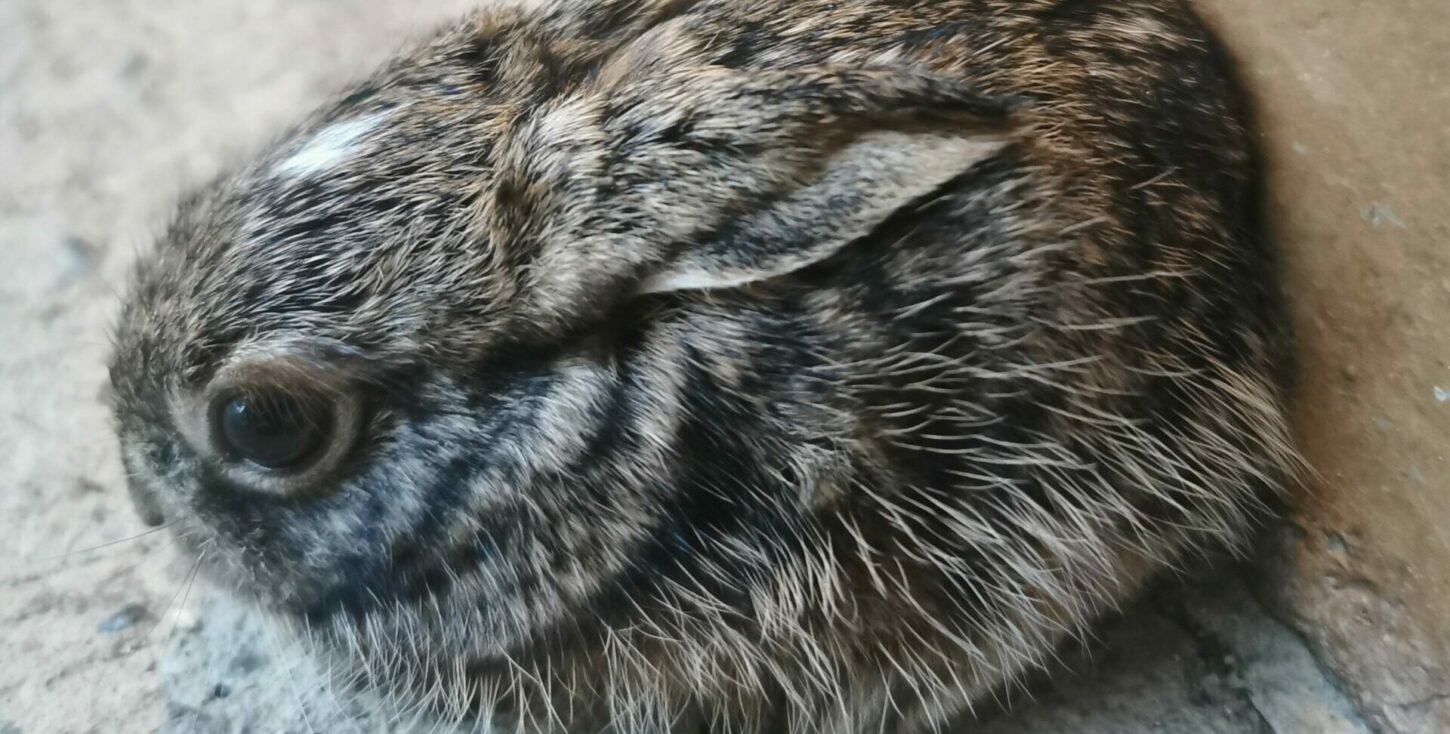
    Because scrub hares are cute and furry, many people mistaken these beautiful bunnies as a normal rabbit but they are not. Scrub hares have greyish upper parts and very long ears. They have long strong back legs and large hind feet with hair in between the pads. Their grizzled grey back with flecks of black on its coat helps the hare to camouflage itself during the day.

    Even though these scrub hares and rabbits belong to the same family – Leporidae – they are not the same and differ a lot. Scrub hares are much larger in size than rabbits and their ears and hind legs are longer as well. Scrub hares live alone or in pairs in above- ground nests, whereas rabbits often live together in groups of up to 20 in underground tunnels known as warrens.

    Are scrub hares active during the day or night?

    image

    Scrub hares are nocturnal, although they can be seen on overcast days. They do not live in burrows but live in hollows pressed by their bodies under bushes. These hares enjoy habitats with open grasslands and thickets with patches of grass land in between. They use these long-grass areas to hide during the day and to build a shelter, called a form, used for shelter for their young.

    They are very good at hiding from predators during the day and often create a small dent in the ground and lie flat motionless, with their ears tucked back to their shoulders. By doing so, it makes it harder for predators to detect them due to their colouration that blends with scrubland and vegetation.

    What do you call a scrub hare baby?

    Baby scrub hares are called leverets. These hares are born precocial – meaning they are fully furred, eyes are open and can already move around moments after being born. They therefore have the ability to escape from predators minutes after being born. This is important as the young ones don’t get much parental care from their mothers. If danger approaches, the mother will run off leaving the young to care for itself. A mother will care for her babies until they are about a month old, then leave them to fend for themselves.

     A scrub hare’s lifespan is about 8 years, not usually more than that, and can weigh up to 2-3 kilograms with males being slightly smaller than females.

    The funny thing about scrub hare poop…

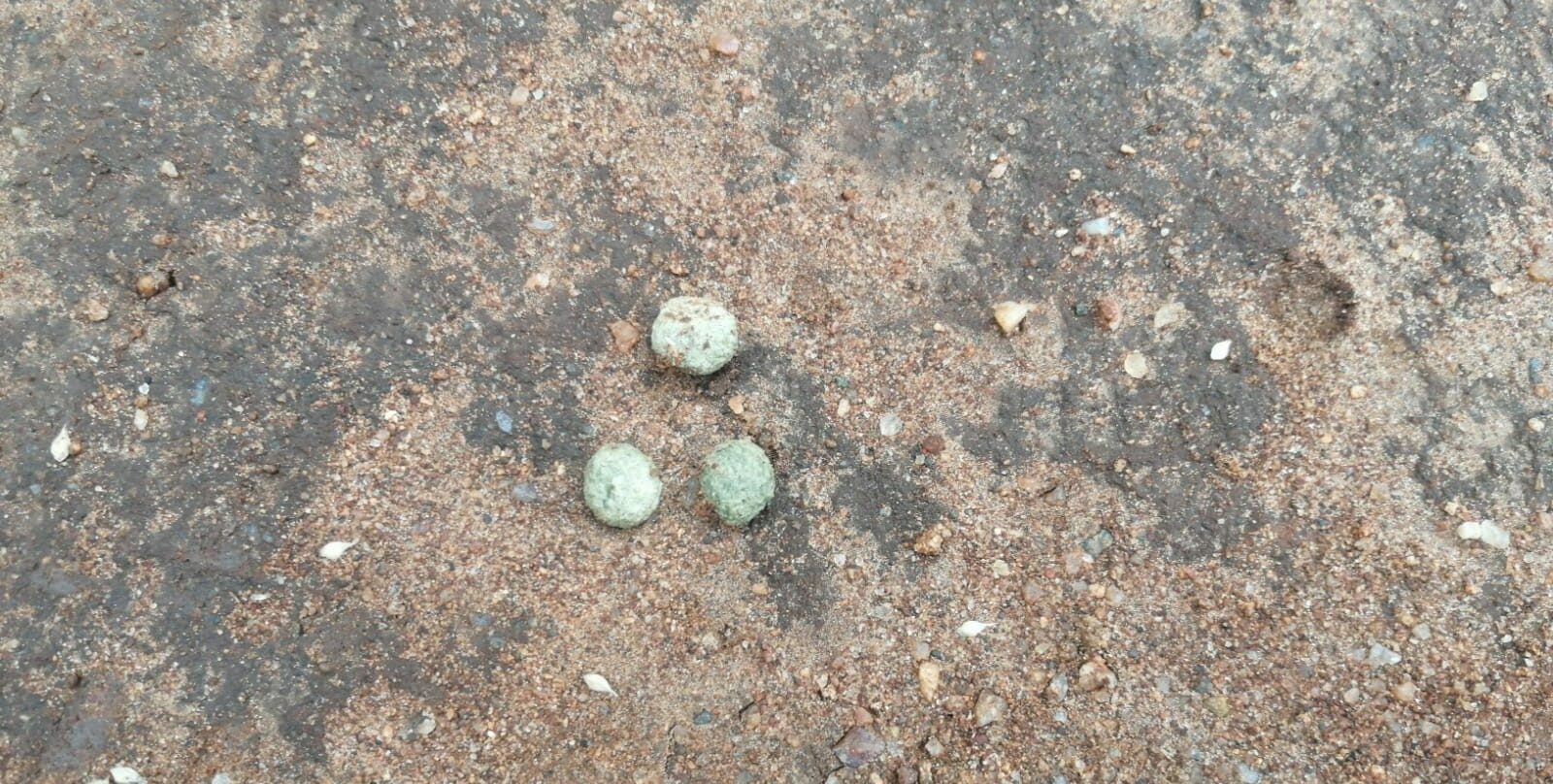
    These amazing grazers feed on green vegetation that makes their droppings pale green to yellow, oval shaped pellets measuring at approximately 12 mm in length. However, they actually process their dung twice. After initially defecating, they turn around and eat it, then it comes out again after all nutrients are absorbed. This strange habit is called coprophagia

    image

    How fast can a scrub hare run?

    Scrub hares are renowned for running in front of cars at night, zigzagging as they run. This zigzagging run is presumed to be a way of avoiding capture. They are incredibly fast with an average speed of 60-70 kilometres per hour. That is very beneficial for them because they might escape from unseen obstacles or challenges such as a predatory attack.

    In conclusion every life is very important – be it a plant, animal, insect or human – as they all play a crucial role in the ecosystem. So take care of and respect nature.  

    Did you learn something new about scrub hares? From mammals big to small and everything in between, learn about it all on a Bushwise course.

    #wildlife #AdvancedRifleHandling #bushwise #qualification #safariguide #Exam #training #animals #safari #sightings #fieldguiding #endangeredspecies #guiding #fieldguidecourse #studying #fieldguides

  • Aardvarks in the African Savanna

    Explore the mystery and beauty of aardvarks with this blog by Bushwise student Zander Kok, who wrote this blog based on his own research. Learn about their habits, behavior and role in the African savanna ecosystem, and gain a new appreciation for these unique creatures.

    3 min read

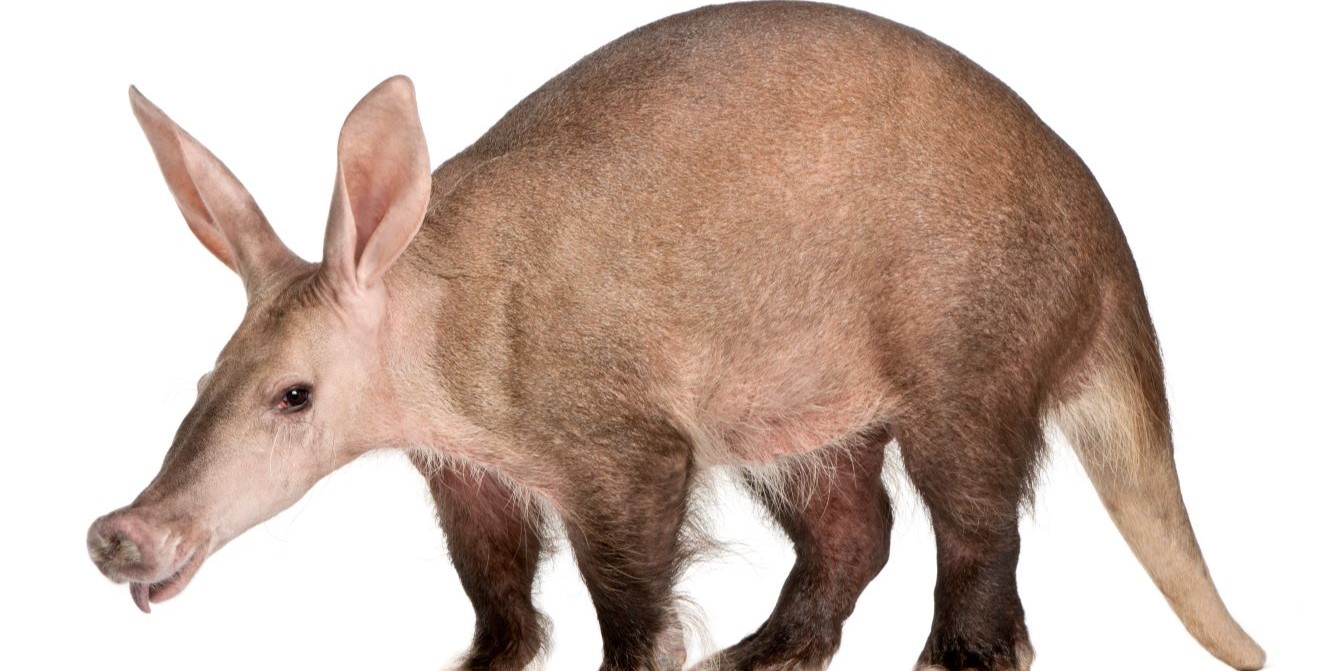
    Because they are nocturnal and rarely seen in daytime, an Aardvark is a very special and rare animal to see in the wild. In the winter months they get active before sunset because termites are less mobile in those months. So, it is an easy way for them to get a meal. 

    An aardvark is a medium-sized animal that uses its claws to burrow into the ground. It has a pig-like snout and its tail looks almost rat-like. No other animal is related to the aardvark. It has short front legs with hoofed claws that it uses to burrow holes with, while its back is arched.  

    Where did the aardvark get its name?

    image

    The aardvark got its name because its species is known for digging large burrows. The word ”aard” is the Afrikaans word for earth, and the second part of its name “vark” is the Afrikaans word for pig because of its appearance and its pig-like snout. 

    Aardvarks sometimes make a growling or sniffing sound. If an Aardvark is in captivity, then they do not make any noise, but they are always loud when digging. 

    Male and females can be told apart by some colour differences. Females have a lighter tail, sometimes it almost looks white, while males are darker. They weigh 40-70 kg (130-180 lbs) and are about 60 cm (24 inches) tall. They can be up to almost two metres (6 feet) long, with their tails making up about a third of this. 

    What do aardvarks eat?

    The aardvark is known for eating termites and ants in the dry season. Aardvarks have also been found with pulp seeds and sweet melons in their stomach. They also sometimes eat cucumbers. The cucumbers that Aardvarks eat are known as the African cucumber and can be found in the woodlands of South Africa, Namibia, Botswana and Zimbabwe. 

    The aardvark uses its long claws to burrow into termite hills and then uses its long protractile tongue – which is covered in thick, sticky saliva – to trap its prey. Aardvarks actually have a distinctive smell due to this diet. This is because termites spray a foul-smelling chemical substance as a form of defense, which gets on the aardvarks and makes them a bit stinky!

    Where do aardvarks live?

    image

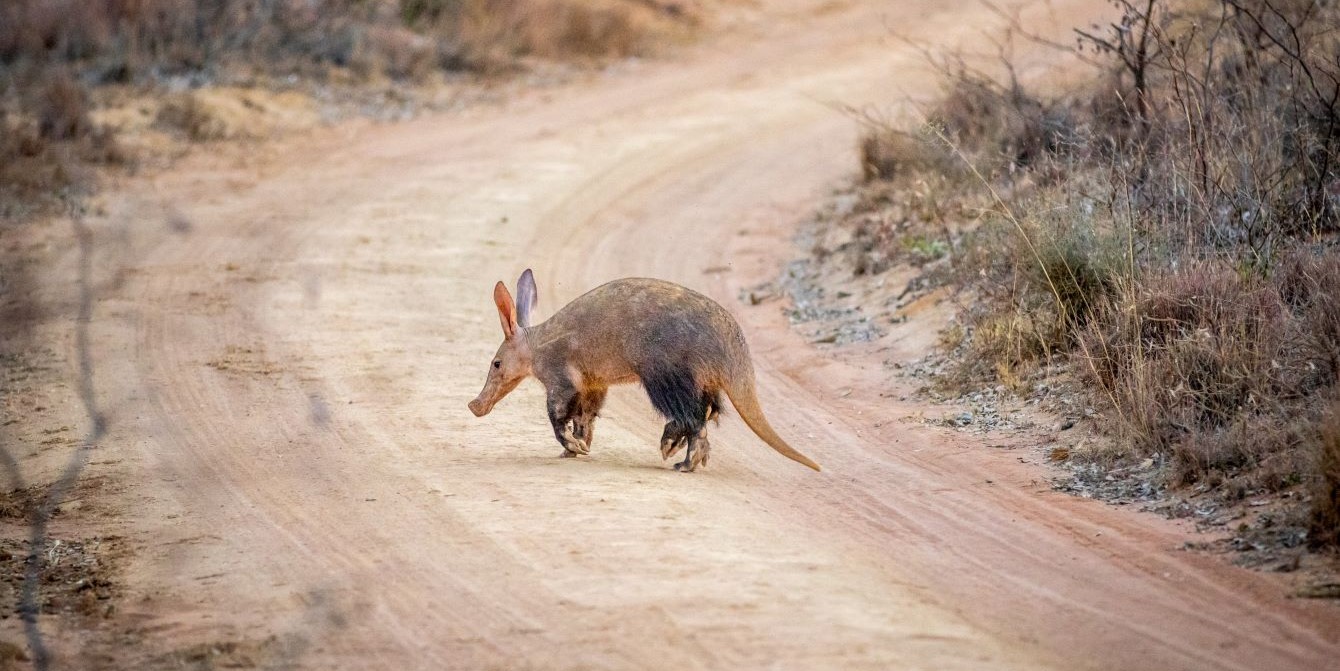
    Aardvarks live in Sub-Saharan Africa, and they prefer open bushveld and savannah areas. Aardvarks spend most of their day sleeping in their burrow holes underground. An aardvark’s home range is between 2-5 square kilometres. Aardvarks are really rare to see. The best chance to see one of them would be on a night drive in open terrain in the South African winter season. 

    If you go on a night drive in open areas, look for termite hills. The aardvark mostly feeds at night and moves around 2-15 kilometres in five to ten hours looking for food. If it finds a nice nest to feed on, it will feed there for many hours. 

    The aardvark’s mating season starts in July and lasts until September. A female aardvark’s gestation period is approximately 7 months.Young aardvark will stay with their mother until they are able to dig holes on their own which normally happens when they are 7 months old. 

    What hunts aardvarks?

    The aardvark has a few natural enemies – including honey badgers, dogs and all bigger predators. The young are sometimes caught by pythons and hyaenas, and lions sometimes try to dig them up. 

    Unfortunately, the greatest danger that the aardvark faces is humans. They are killed in some places for meat and their hide can be used like leather. The hide was historically used by people from the Voortrekker days to make ox straps. They may also be targeted because they dig under fences and dam walls. Aardvarks are not considered endangered at the moment, but their total numbers are vulnerable and in some areas they have gone extinct. 

    Learn about unusual, rare, and endangered animals on a Bushwise Professional Safari Guide or Safari Guide course. Find out more and apply today!

    #wildlife #bushwise #qualification #safariguide #Exam #training #animals #safari #sightings #Assessments #gamedrive #fieldguidecourse #studying

  • The real life magic of magic guarri

    This blog is by Bushwise Professional Safari Guide student Molly Swan. As part of their training, each student submits a researched blog based on a topic of their choice. 

    3 min read

    South Africa is known to many as a place to visit to see stunning animals such as elephants, rhinos, lions and cheetahs. But if you look closer, you can see and learn so much more. As you immerse yourself, you start to feel calm and revived and you start to ask, why do I feel this way and why does nature have this effect on people? 

    Those who are spiritual find a deep connection here in the bush and some refer to it as magical. Healing medicinal properties and sacred cultural beliefs stare you right in the face in the form of trees, plants and flowers.

    The magic guarri tree

    image

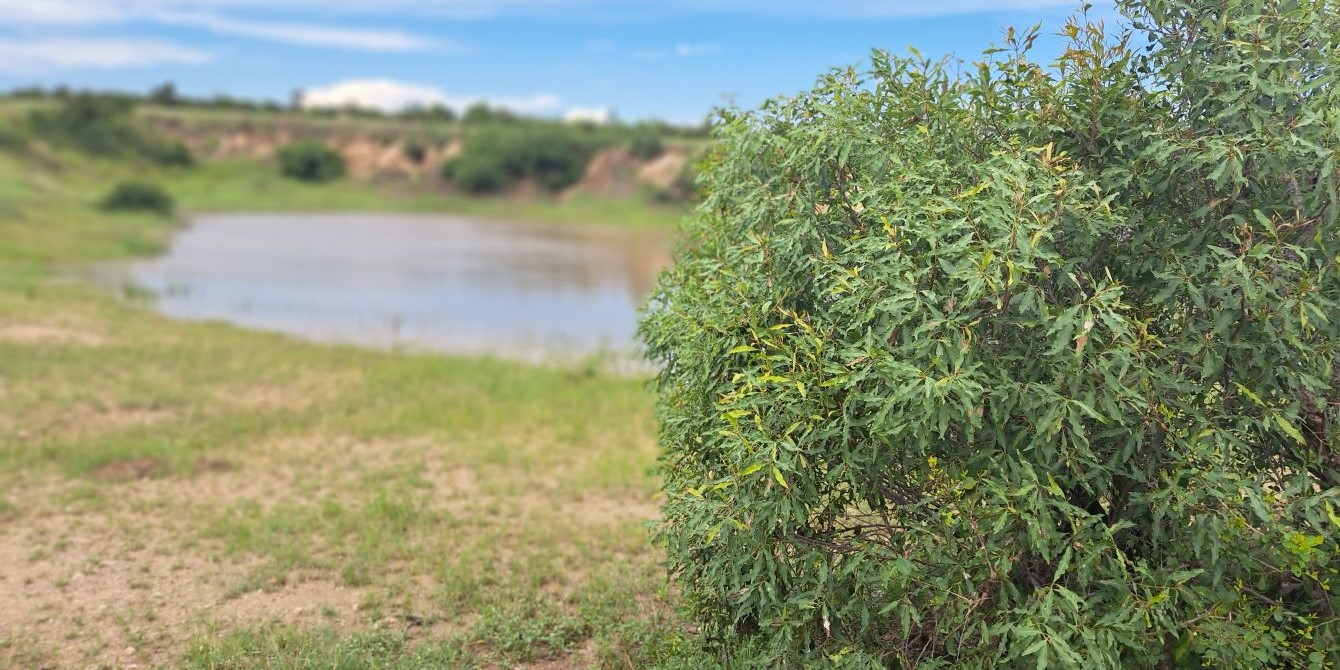
    The magic guarri tree is found all over the bushveld and holds many secrets in its sacred and medicinal ways. Its scientific name is Euclea divinorum. Euclea comes from the Greek word for ‘famous’ (referring to the fine wood) and divinorum is a reference to the medicinal diviners in Africa.

    You will often find it alongside thorn bushes, and it does not discriminate with soil type which is why you can spot so many along thickets. You will know it’s a magic guarri because of its dense shrub shape, its pronounced wavy leaves and clusters of berry shaped fruit. The bark also has a greyish-greenish appearance that is lighter than other varieties. 

    Birds and kudu enjoy snacking on the guarri tree, but most other animals stay clear of this one due to its unpleasant taste.

    But why is it called the magic guarri? 

    image

    The Zulu culture believes that if you chop down the entire plant their whole kraal – an enclosed shelter for huts or cattle – will be destroyed. In other cultures, they will hang a piece of the branch at the entrance of their homes to repel witches and evil spirits. It is also believed that if you carry a piece of the plant with you, it will bring you good luck, and it might even help you find that special animal you have come all the way to South Africa to see. 

    Making an infusion or powder from the roots of the tree, the guarri is said to have many medicinal properties. These include but are not limited to treatment for headache and toothaches, constipation, diarrhoea, convulsions, and infertility. It can also relieve abdominal pains and pains during pregnancy.

    Practical uses of guarri

    image

    One of the most creative ways you can use the guarri is by using it as a toothbrush. Scrape away the outer bark of the branch and expose the green. Then place the branch in your mouth and start chewing, you will then notice the ends start to separate into nature’s own toothbrush. Of course, if nature provides a toothbrush, it must also provide toothpaste? Indeed, it does! From the ash of the leadwood tree – which is now a protected tree.

    The roots are also used in other creative ways such as using the dark brown dye for basket ware, brewing beer and even lipstick. The fruit from the tree makes a beautiful purple dye. Because the wood is hard and somewhat heavy, it used to be used to make fence posts, mine props, hoes and railway sleepers. 

    The magic doesn’t stop here. If a fire breaks out and there is no fire truck nearby, you can use one of the guarri’s branches with leaves on it to beat out the fire. This works because of the shiny, waxy coating on the leaves that do not fall off easily. It looks similar to a broom when in action. 

    There are indeed three other types of guarri that we have seen here in the Lowveld: common (Euclea undulata), blue (Euclea crispa) and Karoo (Euclea ovata). Just as beautiful but perhaps not as ‘magical’. 

    So next time you are in the bush look for the magic guarri and see what luck it brings you!

    #wildlife #ifgaguide #bushwise #qualification #safariguide #Exam #training #animals #apprenticefieldguide #safari #sightings #fieldguiding #tracking #endangeredspecies #guiding #ifga #fieldguidecourse #studying

  • This blog is toad-ally awesome

    This blog about toads in the Lowveld was written by Bushwise student Brandon Leong.

    3 min read

    Toad-ay I explored the wonderful world of our amphibious friends and there were a number of things that really hopped out at me! There is just one small problem with that fact though which is that toads don’t actually hop! That would be the frog, whom they are often mistaken for. And this is just one of quite a few differences between these two amphibians.

    What’s the difference between frogs and toads?

    image

    For the longest time, I thought that frogs and toads were the same thing. That maybe they were simply called frogs in some parts of the world and toads in others. But here is a brain twister for you: All toads are frogs but not all frogs are toads! The reason for this is because they both fall into the same scientific order of Anura. It gets a little deeper as “true toads” are classified into the family known as “Bufonidae”. I never stopped to consider just how different these two amphibians were from one another.

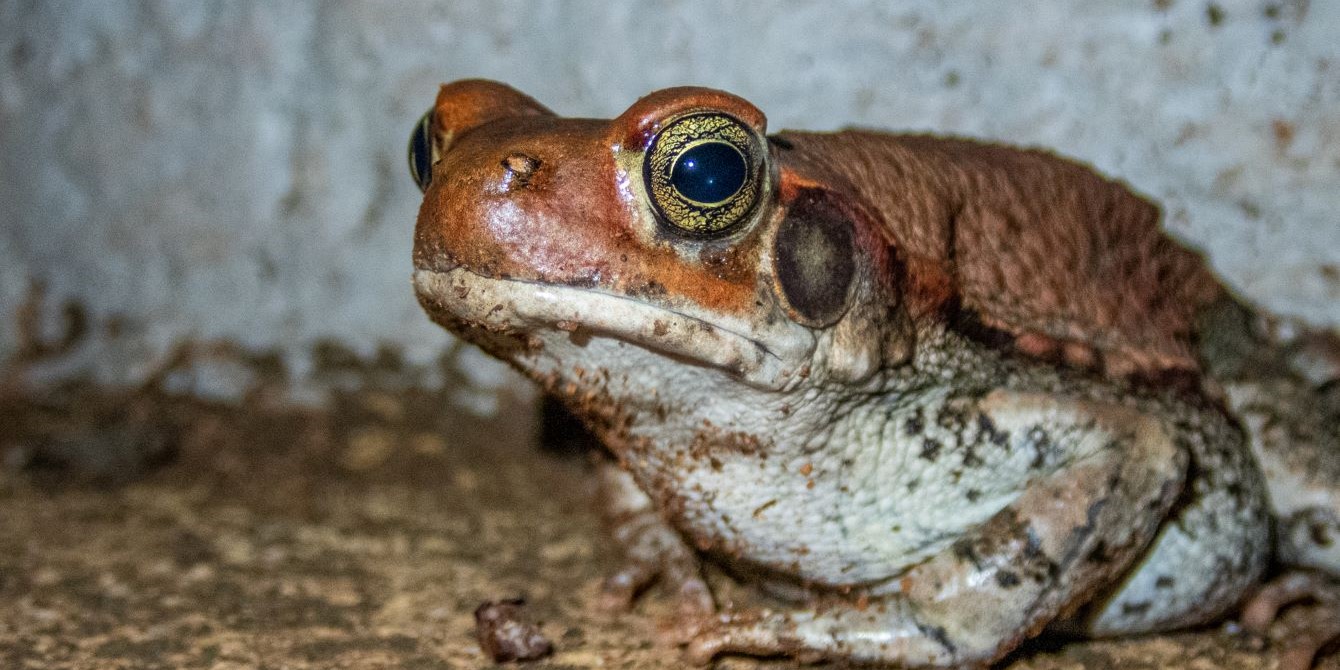
    Let’s start with the obvious, their appearances. Frogs tend to look wet and smooth. Their bodies are covered with all sorts of wonderful colors.

    Toads are the complete opposite! They have dry thick skin that usually has bumps on it. These bumps are glands that secrete a smelly and foul-tasting fluid. Toads are usually brown – which makes figuring out who’s who a whole lot easier!

    The next big leap into differentiating the two is their movement. Toads actually prefer to walk around with their little legs as opposed to their moist friends – although they can hop small distances when they feel like it. Frogs are more equipped to hop and swim, and even do little cannon balls right into your swimming pool. 

    If you are anything like me, you would like to think you could find toads with little mushroom hats riding around in go-karts with plumbers, but that’s more of a distant dream. In reality, they like to live in woodland areas as well as damp environments like garden ponds, where they lay their eggs during breeding season. 

    What’s in a toad’s diet?

    image

    When toads get hungry, they have a number of options in the great buffet of the wild. They find sustenance in a carnivorous diet consisting of crickets, flies, spiders, grubs, mice, rats, rodents and wait for it…OTHER TOADS AND FROGS. Pretty much anything that moves and can fit in their mouths. They have excellent sense of taste and may even spit out something that they do not find to be too delicious

    As I mentioned earlier, toads actually have a pretty nifty defense mechanism. They secrete a toxin that looks like a white milk from their bumpy skin glands. The milk tastes disgusting to any predators that may want to have a go at some “toad in the hole”. (I had a dog once that learnt the hard way that toads don’t taste very nice.) But in the animal kingdom taste is not everything and some animals do not mind the toxins. Animals such as snakes and birds of prey find them rather delicious and an important part of their diet!

    Talking about eating toads reminds me of a book I read a few months back called, “Eat The Frog First” which is a fitting title for toads as they taste TERRIBLE to humans too ! So if you were forced to eat a toad, at what time of the day would you do it? First thing in the morning is ideal, that way you won’t be dreading having to eat a toad all day! That’s something to think about. (NB: I don’t recommend eating a toad).

    Toads are toad-ally awesome. I hope we can all sleep better at night now knowing more about toads.

    The Lowveld isn’t just mammals and birds – learn about all the other amazing creatures, like toads, on a Bushwise Professional Safari Guide course.

    #wildlife #bushwise #qualification #training #animals #IFGA #sightings #tracking #endangeredspecies #guiding #fieldguidecourse #studying

  • Antelope – What makes Kruger run

    This blog was written by Bushwise student Reuben Genders, as part of his Professional Safari Guide course. All research was compiled by Reuben. 

    4 min read

    Kruger National Park is a massive park – one of the biggest in Africa and one of the most famous ones. This is due to the vast amount of wildlife in the park with biodiversity like no other place on Earth. One type of animal that is a massive presence is antelope. 

    Types of antelope found in Kruger National Park

    image

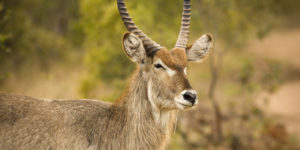
    There are estimated to be 21 antelope species in Kruger – including:

    1. Kudu

    2. Impala

    3. Wildebeest

    4. Eland

    5. Sable 

    6. Waterbuck

    7. Tsessebe

    All found in the different habitats of Kruger, all playing a role in the balance of the biodiversity.

    What makes antelopes unique?

    Antelopes are known for their curving horns and beautiful coats. They are agile and fast creatures with an acute sense of smell and sound. They are often found in small herds, although some species – like impala – can have herds that reach over a hundred antelope. As grazers and browsers, antelope are the gardeners of the park keeping the park’s terrain in check through their feeding patterns.

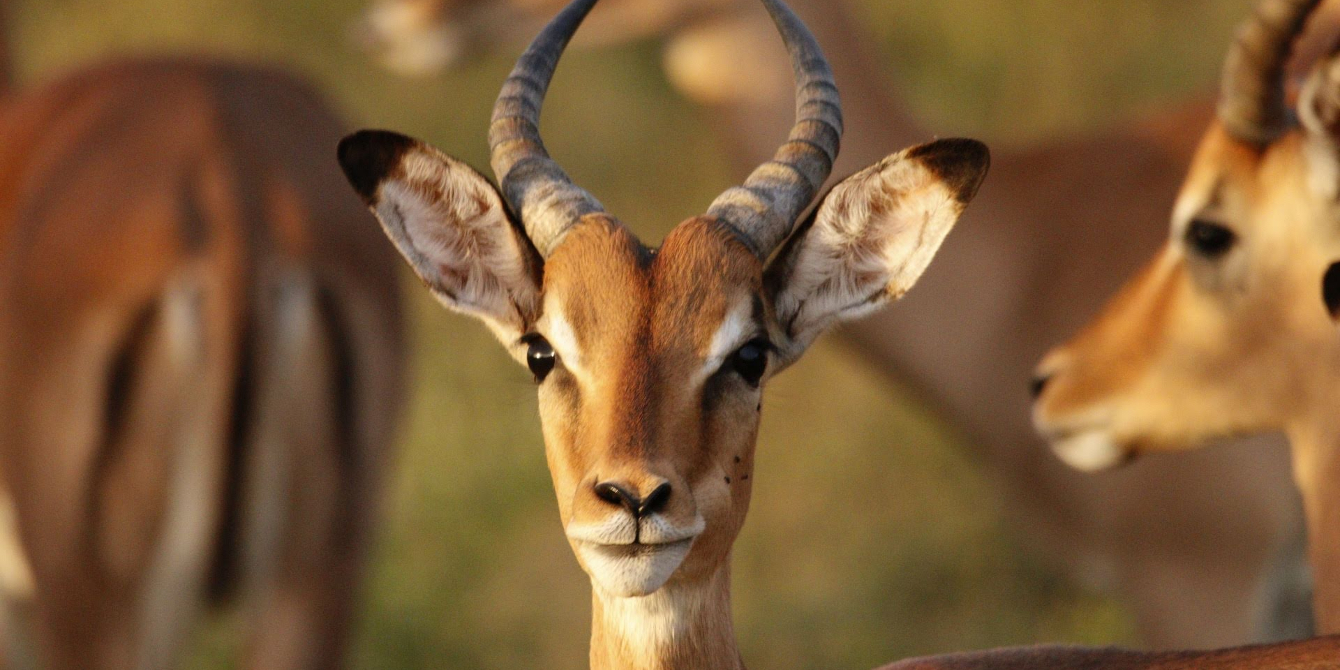
    An antelope that contributes the most to Kruger and is the favourite meal of many carnivores is the impala. The impala – also known as the “happy meal of the bush” because of the black M on its rear – is easily the most common large animal in the park. Its adaptation to the lowveld is second to none and there are over 13,000 adult impalas in Kruger. Impalas are found in two herds: a breeding herd is a harem which consists of ewes, lambs and one ram; and a bachelor herd which consists of rams only. 

    image

    Impalas raise the hair on their body to trap air close to their skin. This helps insulate their body heat which keeps them warm in cold environments. Impalas also have black glands called metatarsal glands on their ankles that are unique to the species. Its actual function is still under debate, but it is believed that when impalas are dispersed the gland gives off a scent that helps the herd regroup.

    My favourite antelope…

    My favourite antelope found in Kruger is the nyala. They are often found in the thicket in small herds. There is great sexual dimorphism (meaning visual distinction between sexes) between male and female nyalas. Females are chestnut in colour with white stripes along their back and males have a brilliant grey coat with many white markings and yellow legs that look like socks. Nyalas are the friendliest of antelope, and it is believed in some cultures that nyalas were humans in past lives.

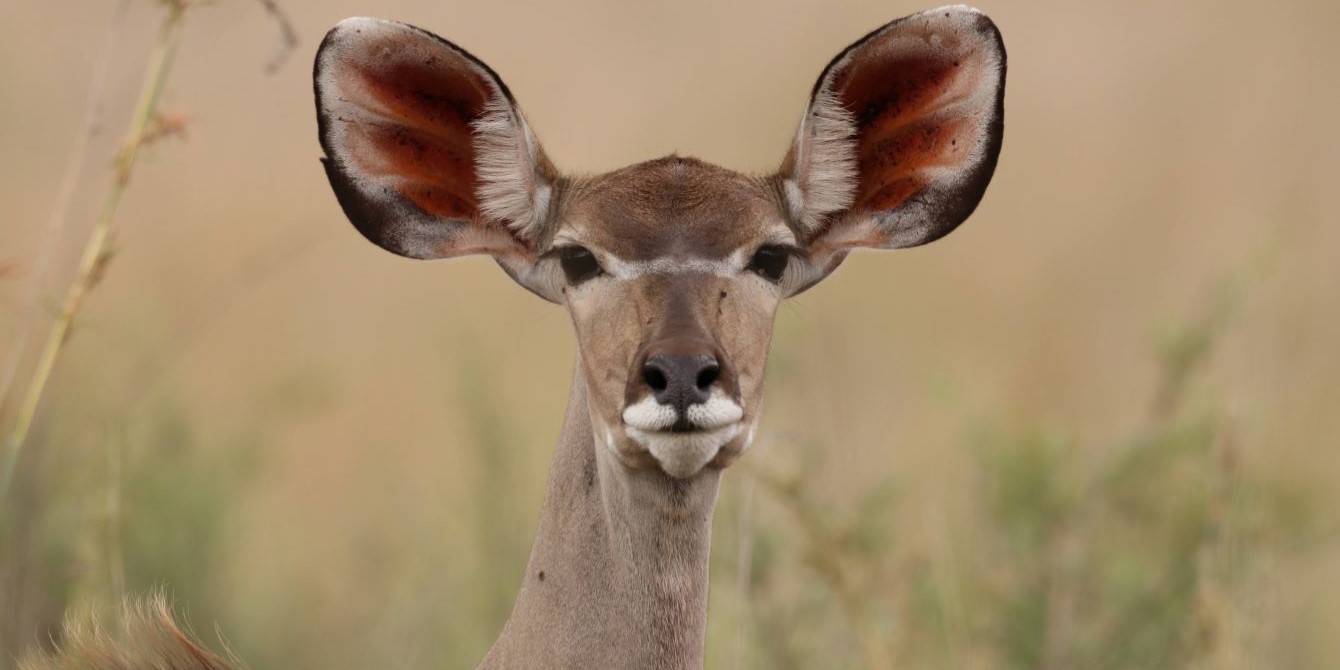
    When people think of antelope in Kruger, one of the first to pop up is the kudu. They are majestic antelopes that always catch your eye. Known as the grey ghost of the bush, kudu are extremely athletic and can jump up to 3.5 metres up in the air. The males typically have spectacular, spiralling horns that reach sizes of up to 1.8 metres long. They are the second largest antelope in southern Africa and tend to live in groups of half a dozen in the thickets.

    image

    The largest antelope you will find in Kruger is the eland. They are grey in colour with small, twisted horns and can weigh up to 800kg. Despite their size, they are athletic jumpers and can easily clear fences of 2 metres. It is rare to see an eland in the park as there are only 300 in the whole park.

    Antelope play a vital role in the Kruger National Park as the main food source for most large carnivores in the reserve such as the big cats and wild dogs. Without antelope, there would be no wild dogs, lions, cheetah or leopards in Kruger National Park. They are animals that often get overlooked in favour of the Big 5. 

    However, if people stopped and watched these animals, they would notice how amazing and elegant they are, and how perfectly adapted they are to their environment. So next time you go to Kruger and get upset that you only saw antelope, be grateful that those antelope were there and enjoy the experience.

    Antelopes come in all shapes and sizes – so do field guides. Are you interested in making the wilderness your classroom? Join a Bushwise course and you can!

    #wildlife #AdvancedRifleHandling #bushwise #qualification #Exam #ifga #animals #safari #ifgaguide #sightings #Assessments #gamedrive #guiding #ifgaexam #fieldguidecourse #studying

  • Exploring the Night Sky near Kruger National Park: Uncovering the Legends of the Southern Skies

    As a newcomer to the Southern Hemisphere, the night sky above South Africa was so different from what I was used to. The stars were brighter and more vivid, and the constellations more intricate. I was initially intimidated by its complexity, but eventually I came to find it comforting. It was a reminder that, despite being so far away from home, I was connected to something greater than myself.

    4 min read

    What the Night Sky near Kruger Looks Like

    image

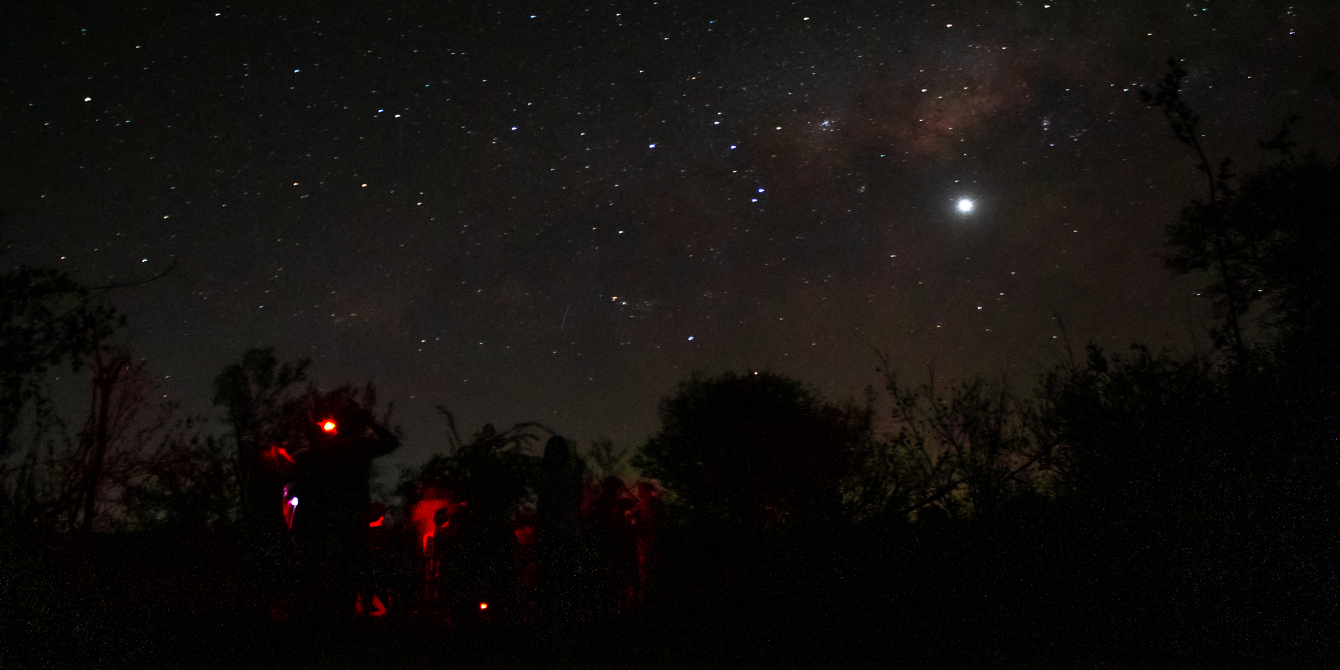
    The night sky near the Kruger National Park is incredibly vivid. In the winter months, it’s filled with a blanket of stars that stretch across the horizon. The Milky Way is clearly visible, a blanket of bright stars twinkling against the dark sky. 

    During the summer months, the sky is still filled with stars, though they appear to be a bit more scattered. The Milky Way is still visible, but the stars appear more concentrated in the middle of the sky.

    Constellations seen in the southern hemisphere

    The constellations you can find in the southern hemisphere include: 

    1. Crux (Southern Cross) 

    2. Orion 

    3. Centaurus 

    4. Scorpius 

    5. Canis Major

    Why am I so interested in the night sky? Because I’m on a 6-month field guide training course with Bushwise, and one of our modules is astronomy! We’ve learnt about the stars and I’ve been amazed by all the stories I’ve heard about the constellations. I want to share a few of my favourites with you here.

    Exploring local folklore

    image

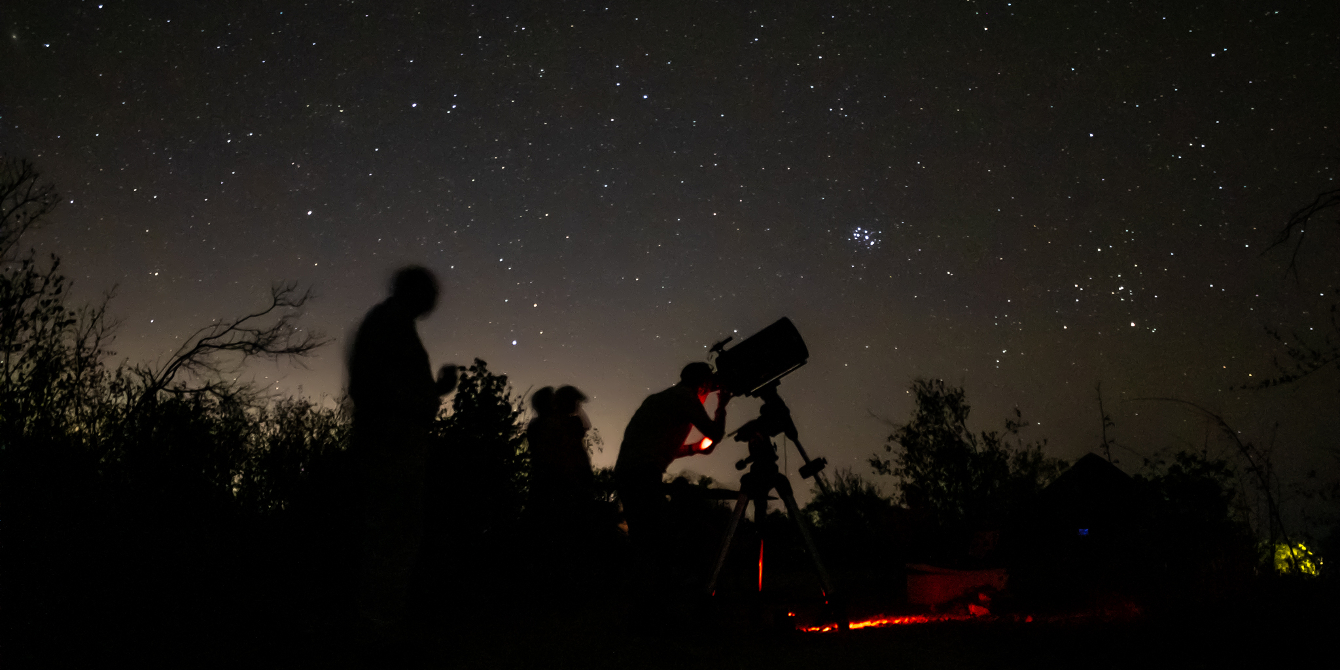
    The Zulu people have a story about the seven stars of the Pleiades star cluster, also known as the Seven Sisters. According to their legend, the stars were seven sisters who were so beautiful that their father put them in the night sky so that everyone could admire them. They are said to represent the spirits of the deceased who are looking after the living. To this day, people still look to the stars for guidance and comfort.

    I’ve been especially intrigued by the stories behind the constellations of Orion and Centaurus. According to ancient Greek mythology, Orion was a giant hunter who was placed in the night sky after his death. Centaurus, on the other hand, is a constellation of two stars, Alpha and Beta Centaurus, and is said to represent a centaur from Greek mythology. 

    I’ve also heard the Sepedi story of the Milky Way. There was once a young woman whose beloved was stolen away by the gods. She was so heartbroken that she wept and her tears created the Milky Way. This is just a small fragment of the myths around stars and constellations here in the southern hemisphere. 

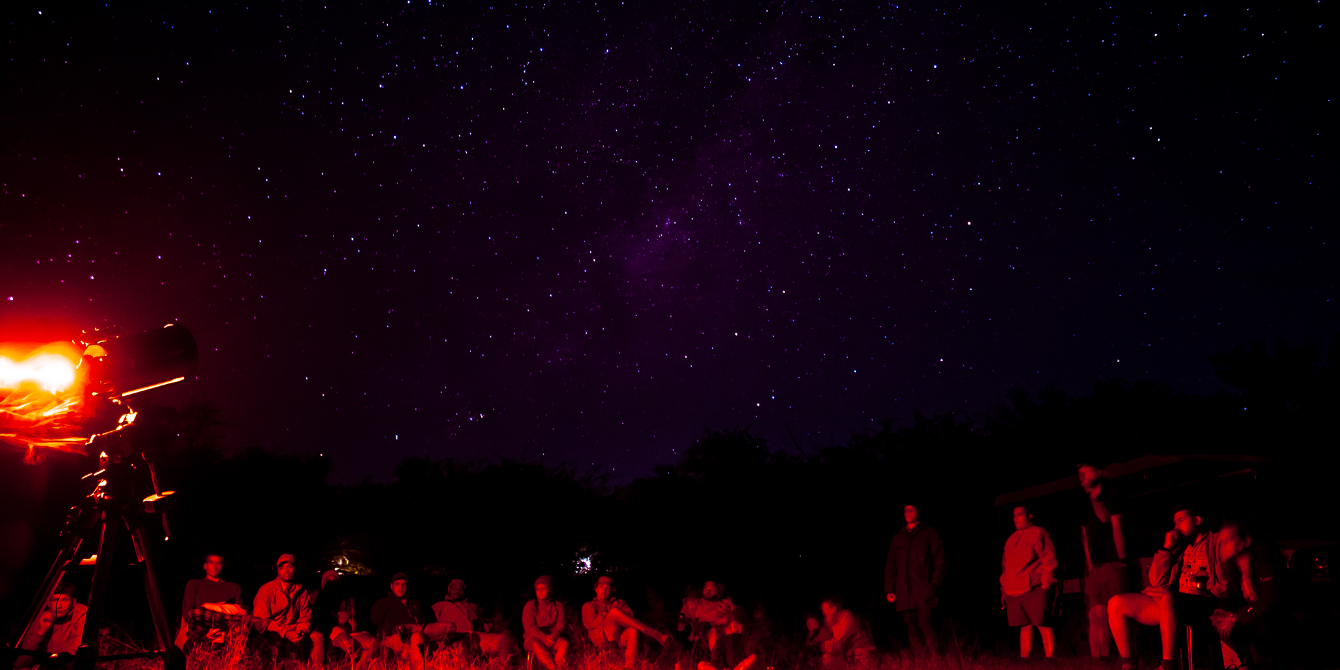
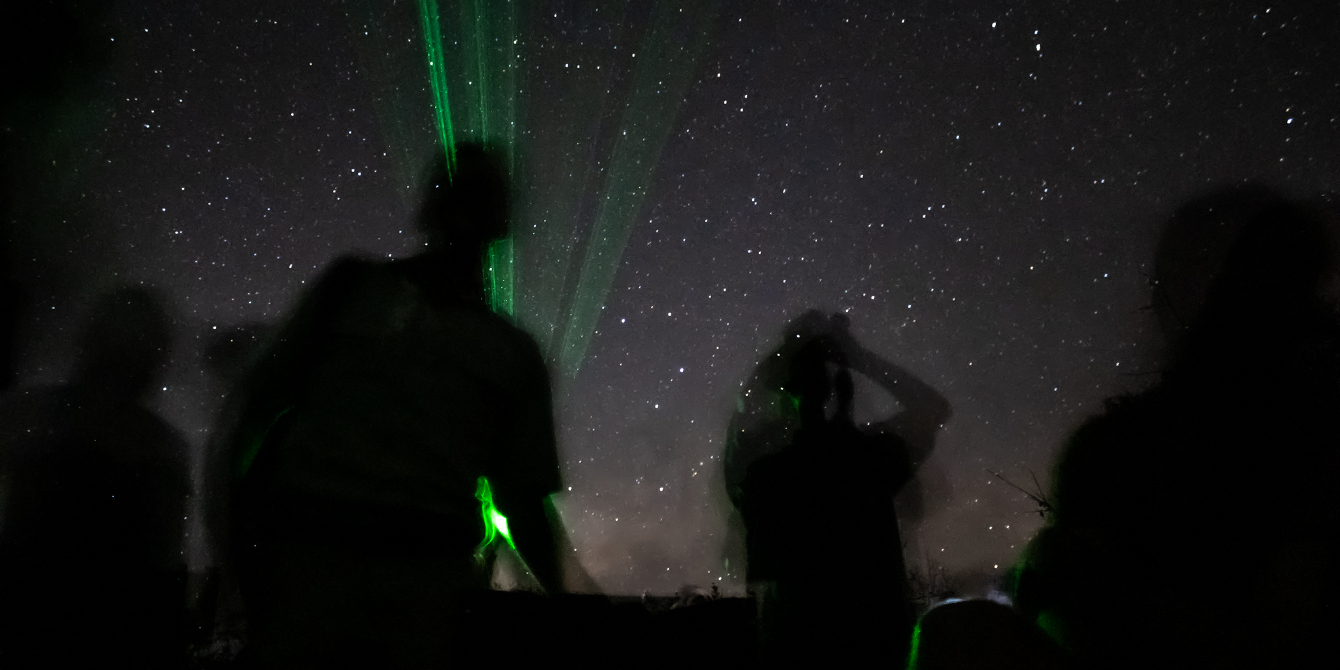
    I’ve found there’s so much depth and beauty in these beliefs! It makes going on a night safari that much more fascinating. It’s also really fun to use one of those red light pointers to scan the sky and discuss constellations.

    The night sky and navigation

    image

    People living around the Kruger National Park have been using the night sky to navigate for centuries. They used the stars to help them identify their location and direction, and to find their way in the dark. This skill was passed down through generations and is still used by locals today. 

    Another thing about navigation that’s totally fascinating is the way dung beetles use the night sky. Scientists have found that these little creatures use the light of the Milky Way to orient themselves when they are rolling their balls of dung. It’s amazing to think that something so small can use starlight in this way. 

    The wonders of the night sky 

    image

    I’m amazed by the night sky here in the bush. No matter how many times I look up, I’m always blown away by its beauty and complexity. I’m in awe of how the stars have served as a source of inspiration and comfort to so many cultures, and how they still hold powerful meaning today. 

    It’s incredible to think that the stars I see in the night sky near the Kruger National Park have been seen by generations before me. As I look up, I feel connected to the past and the future, to the stories of those who have gone before, and to the generations yet to come. I am filled with a sense of wonder and awe, knowing that I am part of something so much greater than myself.

    Learning about the stars with Bushwise has been a rewarding experience. The instructors make the material easy to understand, and listening to them is always enjoyable. I’m always engaged and interested in the material, and it’s been a great way to discover more about the night sky near the Kruger National Park and to connect with the stories that we’ll carry on.

    Are you curious to learn more about the southern sky? Join Bushwise to gain a deeper understanding of the stories behind the stars and constellations.

    Words by Bushwise writer, images by Louise Pavid

    #wildlife #bushwise #fieldguide #stars #safariguide #sleepout #safari #sightings #fieldguiding #trackandsign #fieldguides

  • Bushwise recommends: Podcasts on nature and wildlife

    4 min read

    Podcasts are a great way to stay connected to conservation and nature through news and stories. But the sheer number of wildlife-related podcasts available can be quite intimidating. To make things a bit easier, we’ve collected our top recommendations in the following categories:

    1. for safari lovers

    2. for conservation news

    3. for engaging stories

    4. for wildlife in your backyard.

    We’re pretty sure this list will inspire you to download some episodes. Following nature news is an important part of being an informed field guide, or simply keeping connected to our natural world. We hope you enjoy our recommendations.

    Podcasts for safari lovers

    image

    Safari Stories

    This light-hearted podcast comes from two safari and tourism experts, co-founders of the travel company Trunks & Tracks. In it they share amusing stories of what life is like as a safari guide living in the African bush. From humorous tales to hair-raising close encounters, this podcast is a fun and entertaining listen.

    Talking Bush, Safari & Luxury Travel

    Another one created by a safari company, this podcast is a series of informal and fun interviews with experts from across the continent. Guests include experts like wildlife filmaker Kim Wolhuter, professional guides like Douglas Dichana from the Masai Mara, and many more. This podcast transports you directly to the African bush.

    Podcasts for conservation news

    image

    Mongabay Newscast

    Mongabay is a conservation and environmental science news platform. Every other week, they release a new podcast covering relevant and current issues across the world, from wildlife trade to river biodiversity and nature photography. If you’re looking for something that dives a bit deeper into critical issues, this is your podcast.

    Call of the Wild

    If you’re looking for a podcast that directly connects the critical environmental issues of today with actionable steps you can take to make a difference, this is it. A WWF production, Call of the Wild brings in experts from every industry, not just conservation to talk about the threats facing our planet. Start with the episode featuring Sir David Attenborough!

    Living on Earth

    This podcast about climate change, ecology and human health comes from National Public Radio’s PRX. Topics covered recently include COP27, lobster fishing and protecting the Amazon. Quite a varied podcast that really takes deep dives, directly facing our role as humans in threatened environments. 

    Podcasts for engaging stories

    image

    BBC Earth

    The BBC does what it does best in this podcast: telling incredible stories in an engaging and entertaining manner. Blending science, human experience and nature while taking you to lesser explored corners of the Earth, this podcast will take you on a captivating journey. It’s enlightening and humorous, a welcome combination.

    Species

    The name says it all with this one. Each episode focuses on one species of animal (although they also occasionally have a subject matter focus). They’re short, usually just 15–25 minutes, so you can absorb a lot of information without spending too much time. With over 200 episodes there’s plenty to take in.

    This Wild Life

    Hear directly from people working in the conservation industry, who share their trials and tribulations, funny experiences and animal insight. Subjects covered include protecting the last wild horses in America, to women in field guiding, to the plight of turtle hatchlings. They also discuss wildlife job paths to conservation and current events.

    For wildlife in your backyard

    image

    UK Wildlife

    Even if African wildlife is far far away for you, there’s still a lot to discover in your own backyard. If you happen to be based in the UK, the UK Wildlife podcast is an excellent way to connect to nature at home. Their broadcasts range from the role of individual species to wildlife news updates.

    The Field Guides

    You already know we love the name! This podcast is aimed at bringing you on the trail with its hosts, exploring wildlife habitats and interesting species in North America. While the episodes aren’t as regular as others, you can look back into the archives and listen to stories about snowy owls, hellbender salamanders, coyotes and more.

    Urban Wildlife

    This one challenges the misconception that wildlife only exists in isolation from us, by diving into the weird and wonderful things you can find living in cities and towns. From Philadelphia to Zanzibar, this podcast will encourage you to think differently about the world right outside your window.

    Notable mentions

    Need more podcasts? Here are a few of our other favourites.

    Conservation Careers

    Impact: the Conservation Photography Podcast

    My Life, Wildlife

    Higher Calling Wildlife

    Wildlife Observer Network

    Our Wild World

    Get Birding

    Into the Wilderness

    Wild Crimes

    On Wildlife

    Costing the Earth

    If we missed your top nature or wildlife podcast, send us a message! We’d love to hear from you:  info@bushwise.co.za

    Words by Annie DuPre, photos by Louise Pavid

    #wildlife #fieldguide #safariguide #animals #apprenticefieldguide #fieldguidetrainer #sightings #fieldguiding #endangeredspecies