Category: Wildlife insight

  • A year of sightings: Bushwise 2022

    Every New Year brings with it a sense of anticipation and hope. Hope for dreams to be fulfilled, hope for new opportunities and hope that we will learn and grow with each passing day.

    4 min read

    Words and photos by Louise Pavid.
    image

    Last year was certainly one to remember, a new Bushwise campus brought with it exciting new dreams, fulfilment and growth. Aside from this, the wildlife we call our neighbours certainly left their mark. Being fortunate enough to see the famed Birmingham Pride on my first ever trip to the Southern African Wildlife College (SAWC) left me humbled. 

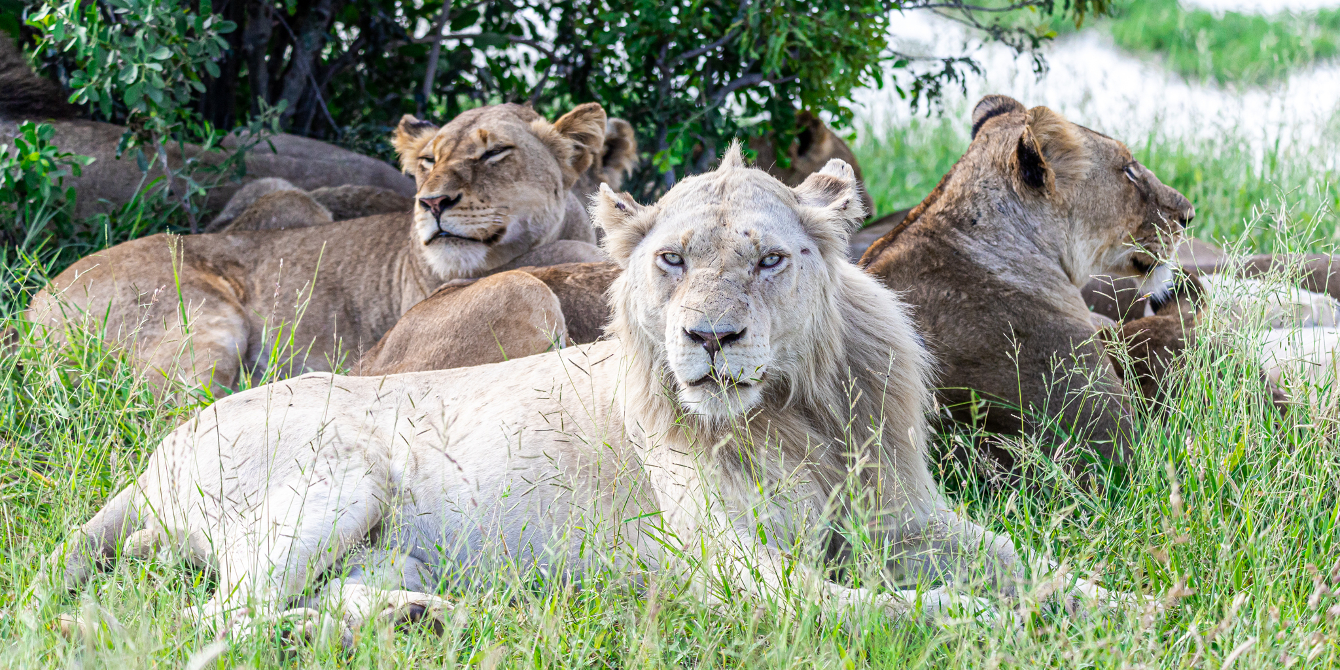
    What makes this pride particularly famous and so sought after by many safari-goers is seeing the rare, genetic trait for leucism carried by the lions of the Timbavati – put simply, white lions. We were fortunate enough on this day to see both the young male and female, brother and sister. The stunning white coats and blue-grey eyes are a remarkable sight.
    image

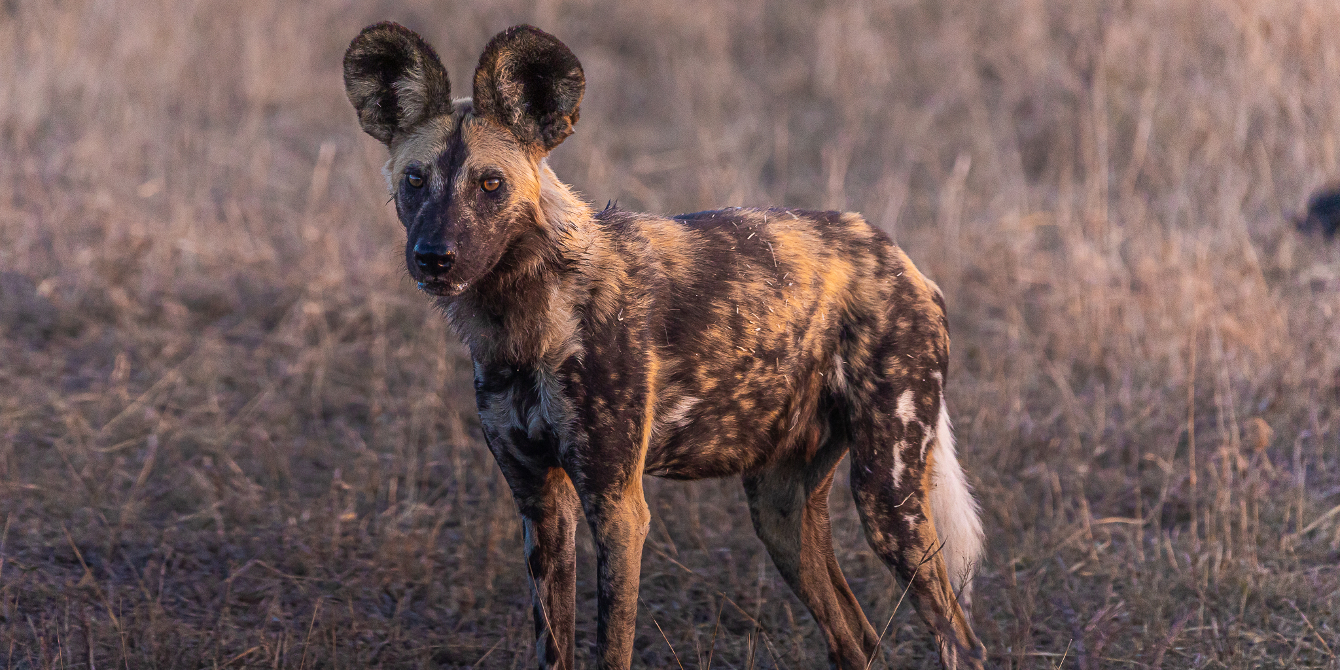
    Not even a week later, we were treated to another astonishing sight on the SAWC campus. A massive pack of wild dogs, approximately 17 members strong – including one with a very distinct set of ‘floppy’ ears. The dogs carpeted the road in front of us, gently interacting and playing in the fading light of dusk. We had heard rumours of lions a bit further down the road from us. But the students’ excitement of seeing the wild dogs (for many of whom this was their first sighting) convinced us to stay with these highly endangered animals. 

    While watching, the peaceful atmosphere was shattered by the sound of thudding paws. Out of nowhere, a huge lioness stormed past the safari vehicle at full sprint, heading straight into the middle of the pack. Soon dogs and lions were scattered everywhere. Fortunately both the canines and felines walked away unscathed.
    image

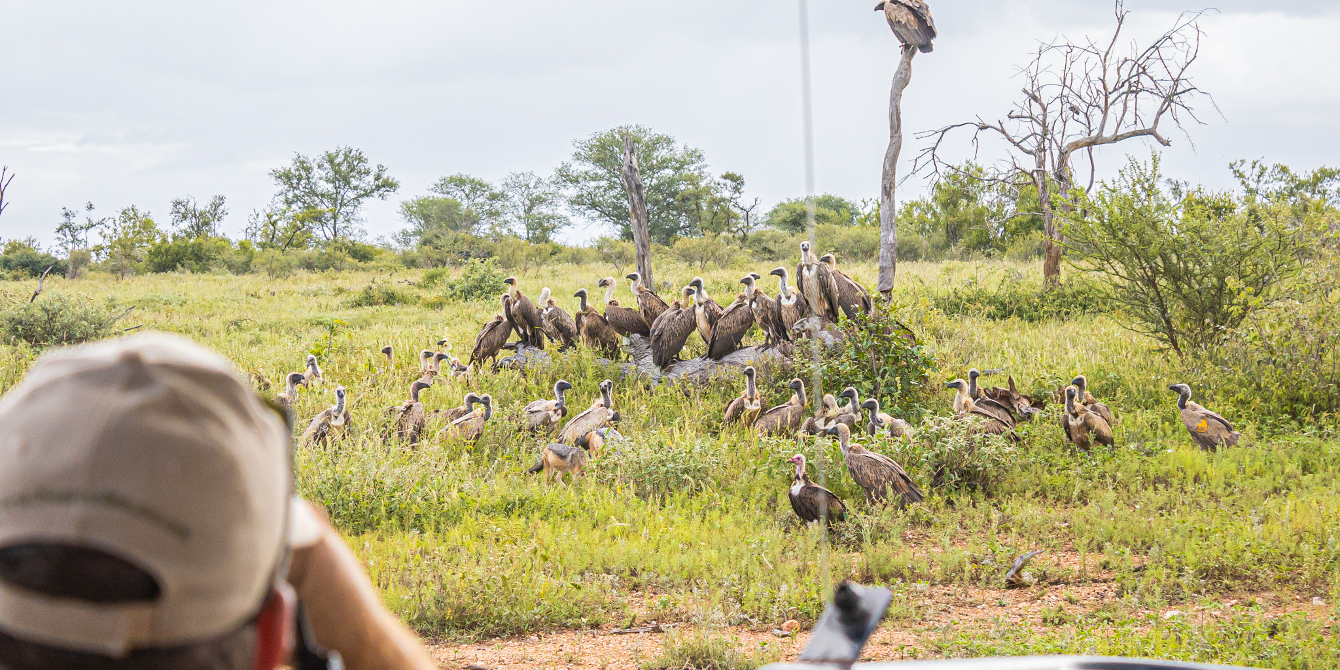
    Vultures circling the skies above you can only mean one of two things. Either the vultures are using thermal lift from warm air currents to reach flying altitude, or more interestingly, they are descending to scout out the potential for a meal. Vultures feed exclusively on carrion, and an abundance of their presence in trees during the day is a great indicator for a kill. After spotting just such a collection of scavenging birds, we took a drive over to investigate. Not five minutes after we arrived, two large male cheetahs emerged from the bush, bellies round and swinging. The vultures descended and the feeding frenzy began. Feathers flew and prehistoric squawks filled the air as vultures and jackals battled over the remains.
    image

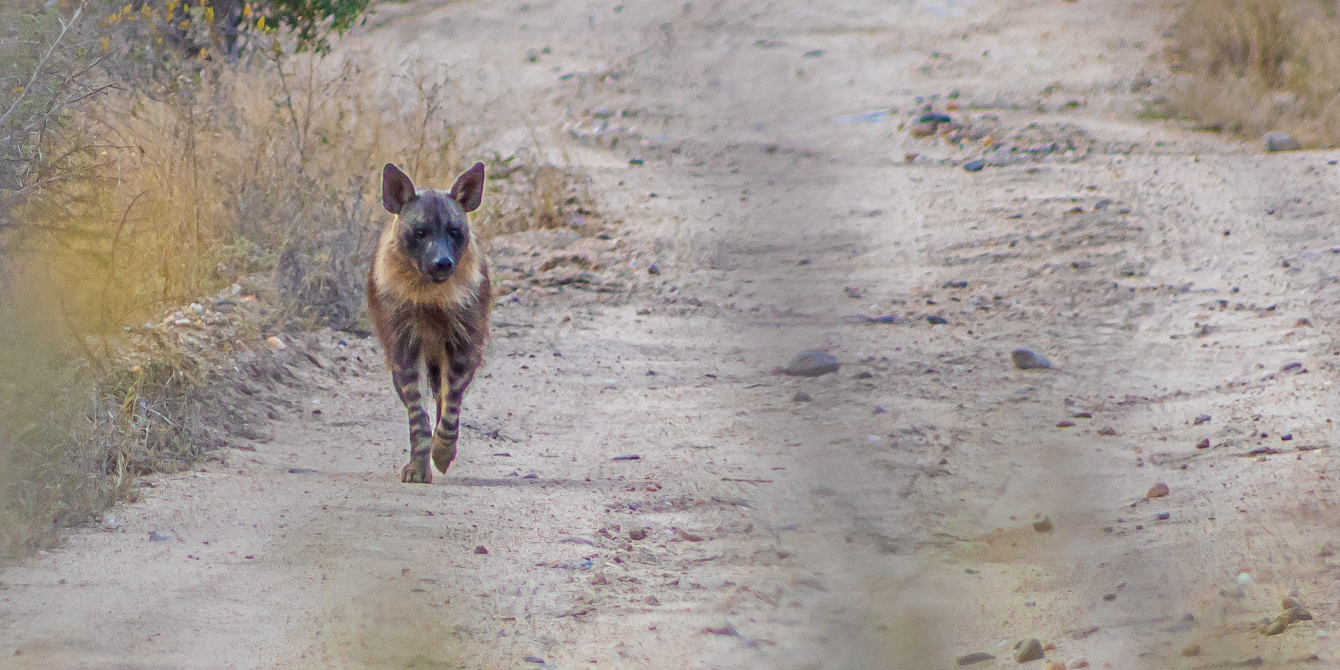
    There are four recognised species of hyena in Africa. Spotted or ‘laughing’ hyenas are by far the most common and easily seen on safari. But seeing one of the others can be tricky given their highly elusive natures. In 2022 however we were treated to several amazing brown hyena sightings. One in particular took us all by surprise. 

    While parked off listening to a talk about termite mounds, a large black shape caught the corner of my eye. I turned my head and there it was, just standing in the road without a care in the world. This is by far the best brown hyena sighting I have ever had throughout my years in the bush. This relaxed individual approached the car before quietly slinking into the bush.
    image

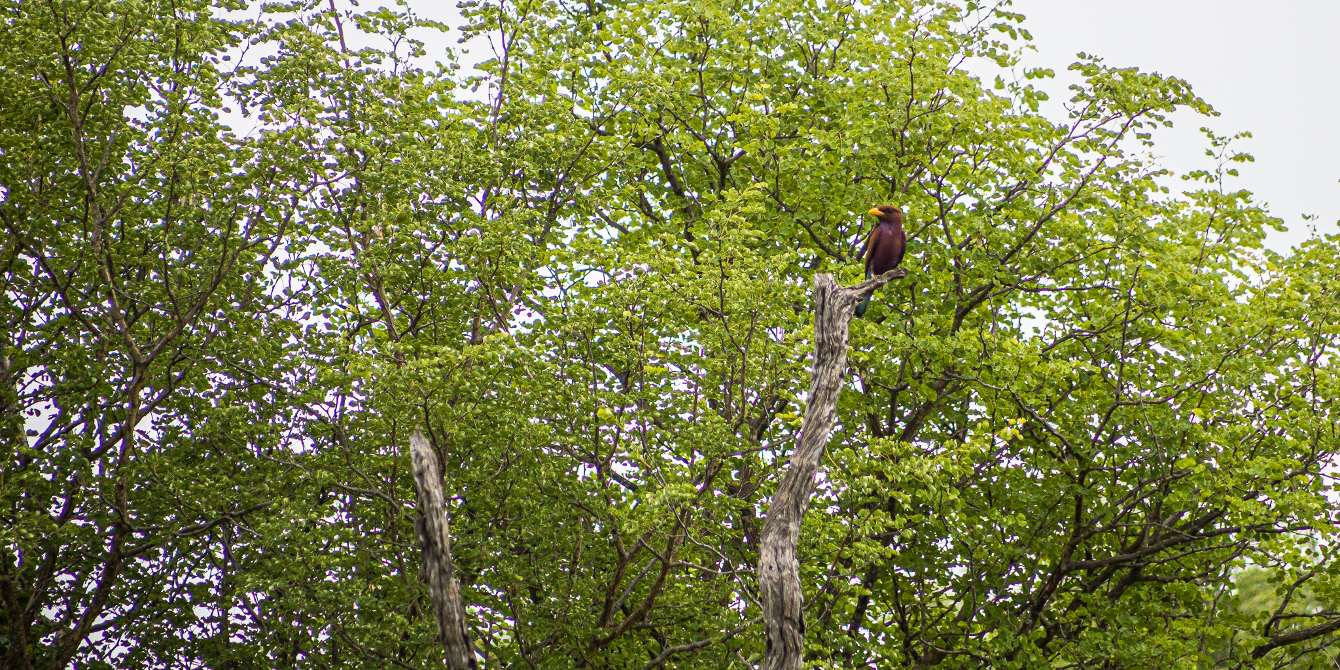
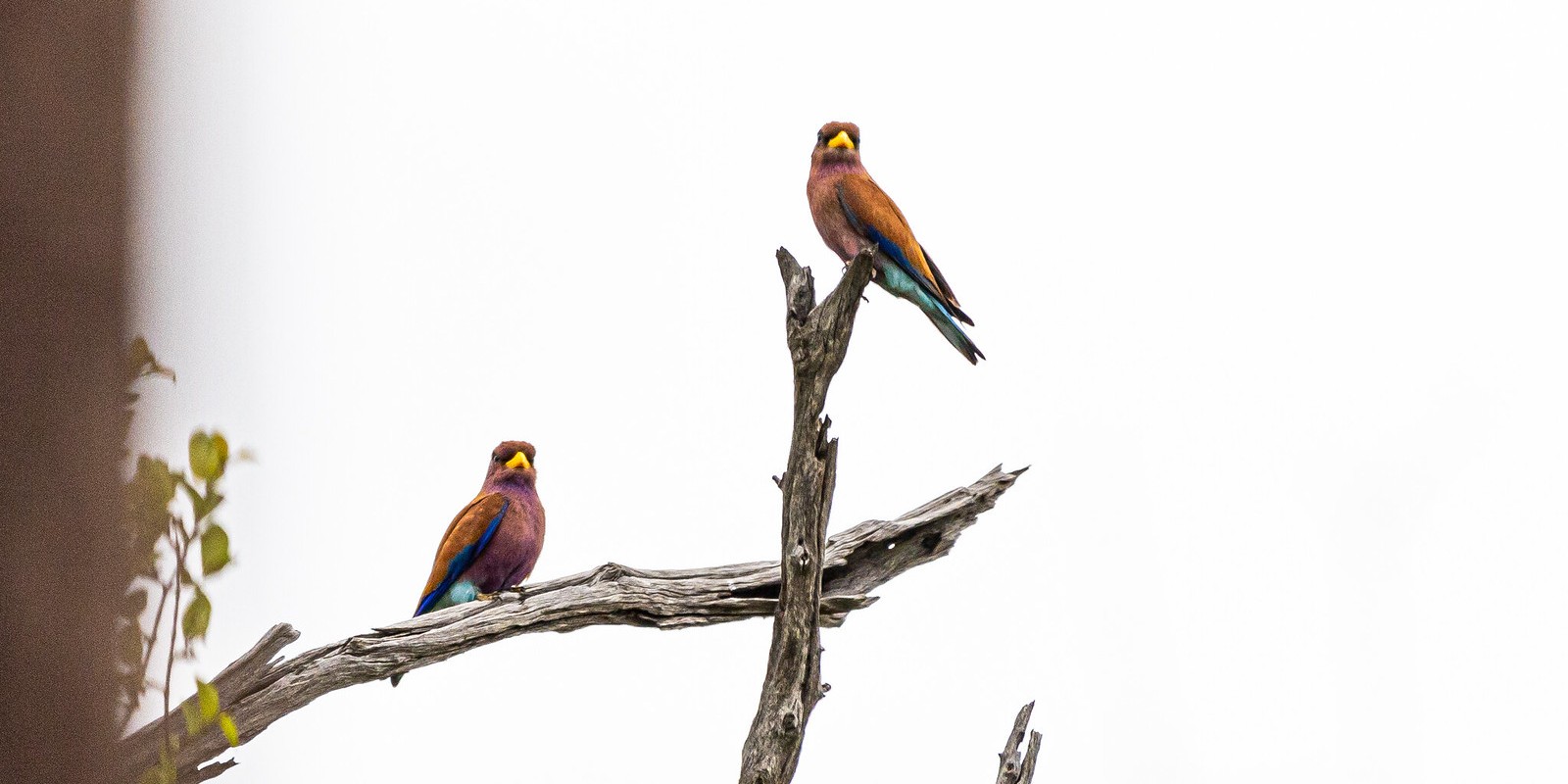
    Birds abound in South Africa, especially during our summer months when many migrants arrive to breed and feed on the plethora of insects, amphibians and reptiles that emerge after the first rains. One such bird is the broad-billed roller. We are extremely fortunate to have a nesting pair on the Greater Makalali Private Game Reserve. Broad-billed rollers are a rare sight and often get birders twitching with excitement! This is the second year I have been fortunate enough to see these strikingly bold-coloured passerines.
    image

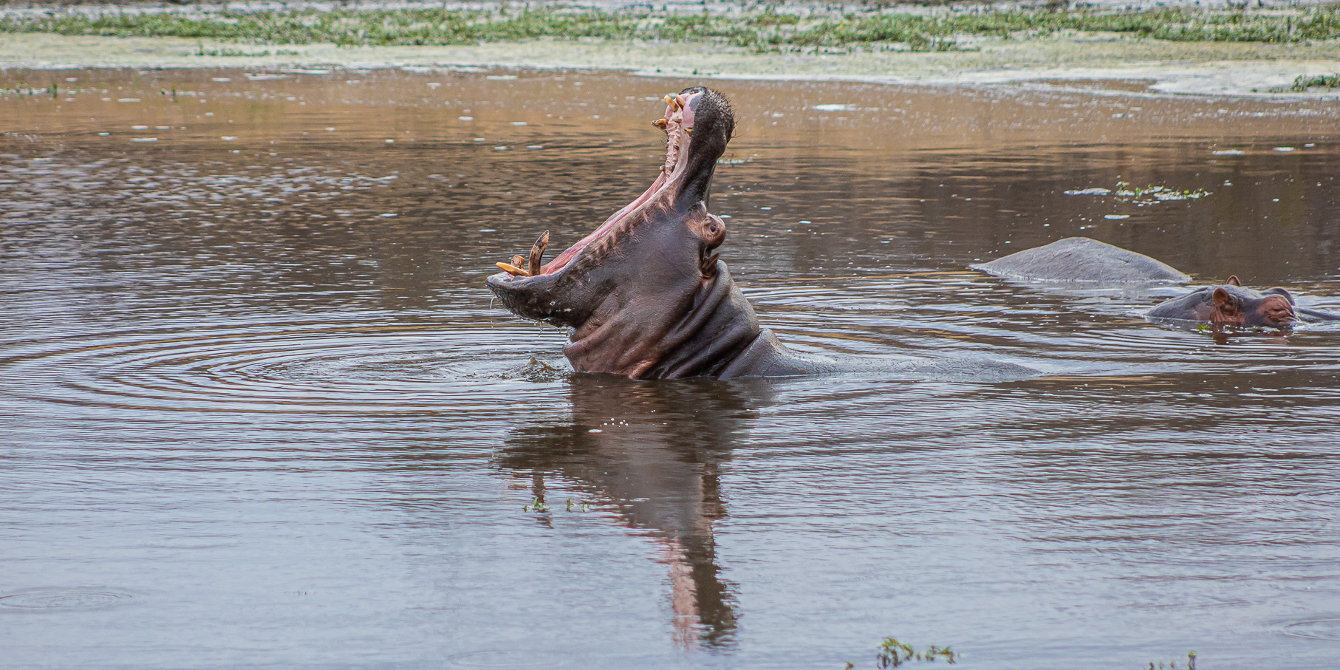
    Finally, what’s a year without a little conflict? An animal favourite of ours is a large hippo bull that lives in one of the dams at Makalali. He’s a regular for many of our game drives and has recently begun to share his little pond with two female hippos and a cute young calf. One cool afternoon we sat peacefully watching the hippos. 

    The bull yawned, showing us his impressive tusks, blew bubbles out of his nose and even performed his dung-spray scent mark – all this to make sure we knew who the dam really belonged to. The two hippo cows and calf were relaxed and minding their own business when out of nowhere, the huge bull stood and attacked one of the cows. 

    To this day we still have no idea what provoked the attack. A few theories between the trainers circulated regarding the oestrous of the females and the proposition that one female was preventing the bull from mating with the other. Without actually speaking to them however, we will never know. In the end, it all calmed down, the scorned female was fine and we left the dam still reeling with adrenalin from the interaction.

    Every year has something new and exciting if you look hard enough. What will 2023 bring us? Only time will tell.

    #wildlife #gameranger #Birding #bushwise #fieldguide #safariguide #trailsguide #guidejobs #animals #safari #fieldguidetrainer #sightings #fieldguiding #tracking #endangeredspecies #trackandsign #gamedrive #guiding #fieldguidecourse #fieldguides
  • Africa’s iconic Big 5

    This blog about the Big 5 was written by Ricardo Strydom, a Bushwise student on our Professional Safari Guide course. As part of their training, students research a topic and submit a blog.

    3 min read

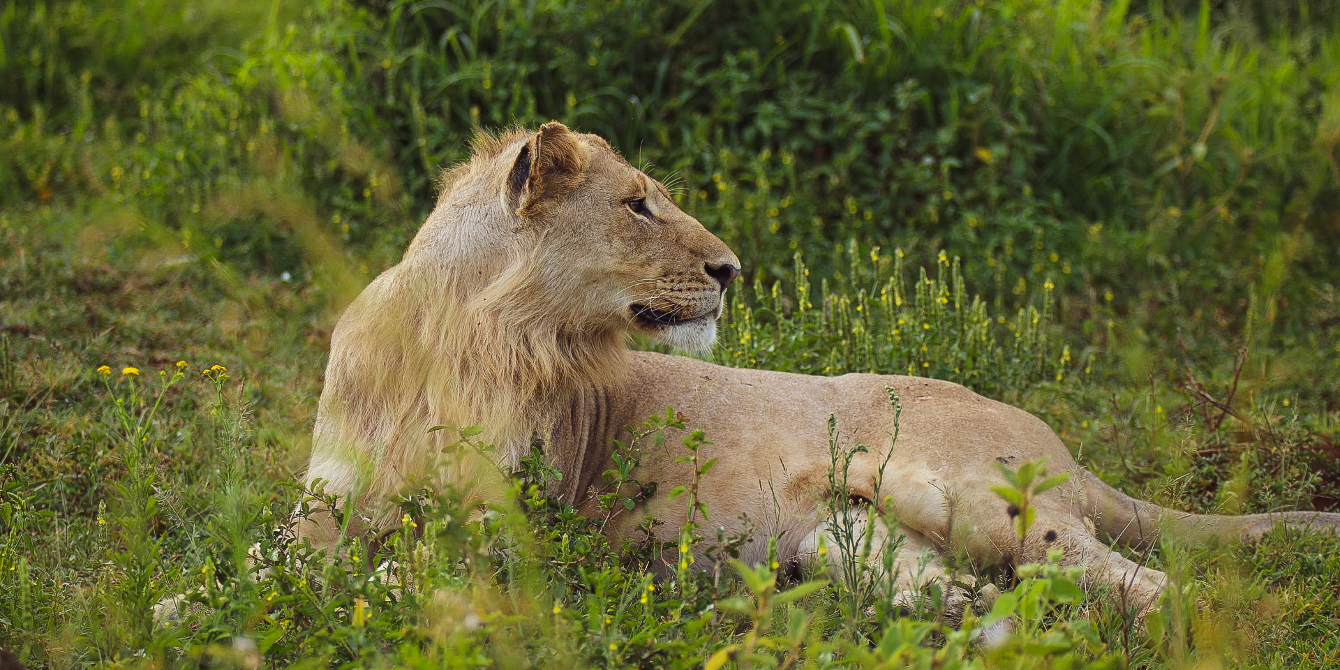
    Here in Africa there is a group of five animals referred to as the Big Five. These animals include lions, leopards, African buffalo, African elephants and rhinos. The term originally comes from the 19th century when trophy hunters identified these five animals as being the most dangerous and difficult to hunt on foot. 

    Today the phrase is more commonly used by the safari and game viewing industry as some of the five most exciting animals to see while in the area where they roam. So now rather than shooting with guns, the main priority for tourists is to shoot them with their cameras.

    The mighty lion

    image

    Lions (Panthera leo) are found in India and in most savanna and grassland ecosystems throughout the continent of Africa. Male lions are iconic for their impressive manes. They will often roam separate from the females and cubs patrolling and protecting the borders of their territory. Female lions are the primary hunters and will provide food for the pride. 

    There are an estimated 23,000 lions left in the wild due to a drastic reduction in rangeland – that’s a 75% decline in the last 50 years.

    The secretive leopard

    image

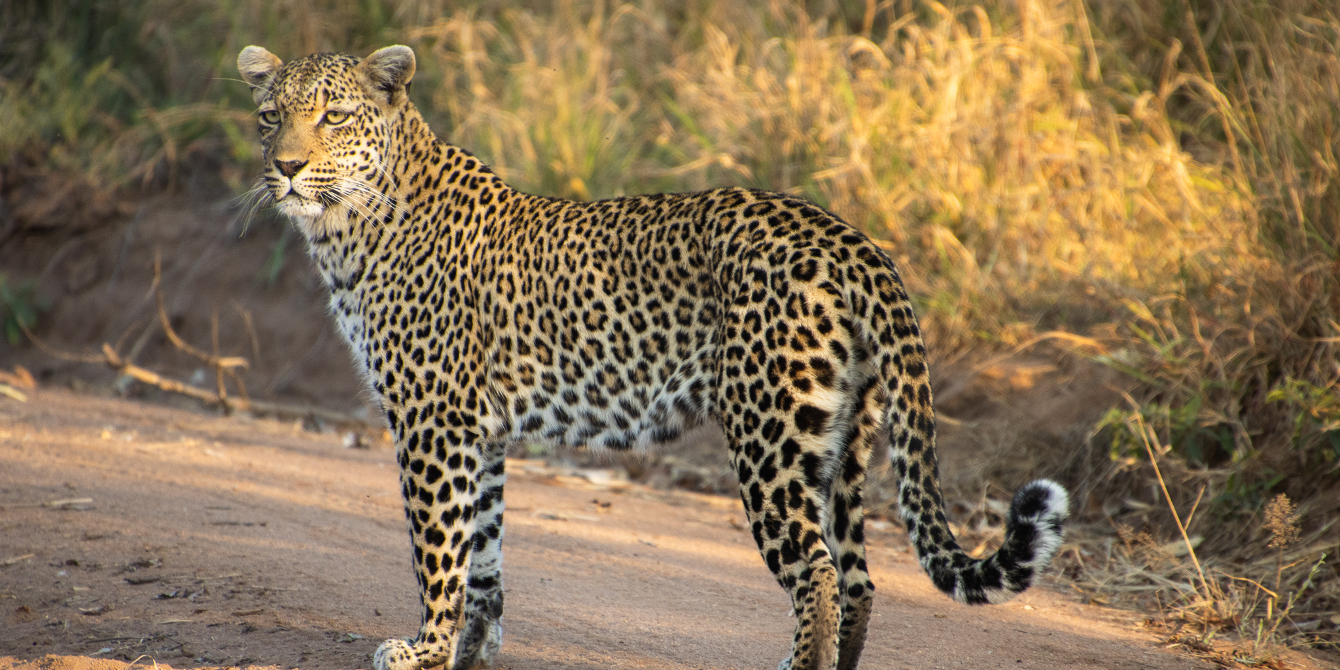
    Leopards (Panthera pardus) are another large feline cat in the group. They are known for their beautiful rosette spotted coats and can often be found relaxing in trees – their spots help them blend in with the leaves. They are solitary creatures Unlike lions, leopards are solitary creatures and only come together to mate.

    They are nocturnal and will spend their nights hunting. Once they have caught their prey, they will often pull their prey up into a tree to eat it so as to keep it away from tricky hyaenas who may try to steal it. They are classified as vulnerable and decreasing.

    The intimidating buffalo

    image

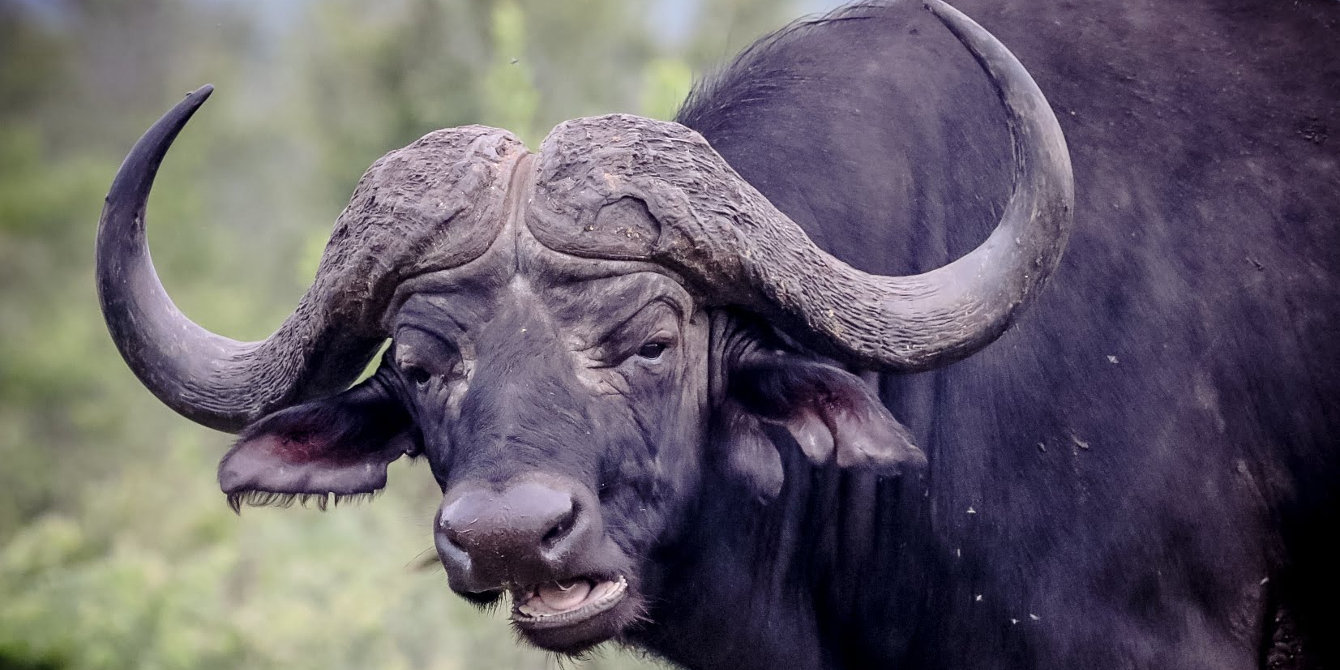
    African buffalo (Syncerus caffer) have been determined as the most dangerous of the big five. This may be surprising given that they are bovids – meaning they’re related to everyday cattle. When buffalo are injured, they will become aggressive and circle around to counterattack whatever injured them, which often results in death. 

    When they charge, unlike a lion who will roar or an elephant that will trumpet and flap its ears, they will remain still and then charge with no discrimination for what stands in their way. Buffalo are classified as near threatened, so currently risks to them are less than the other members of the Big 5. 

    The wise elephant

    image

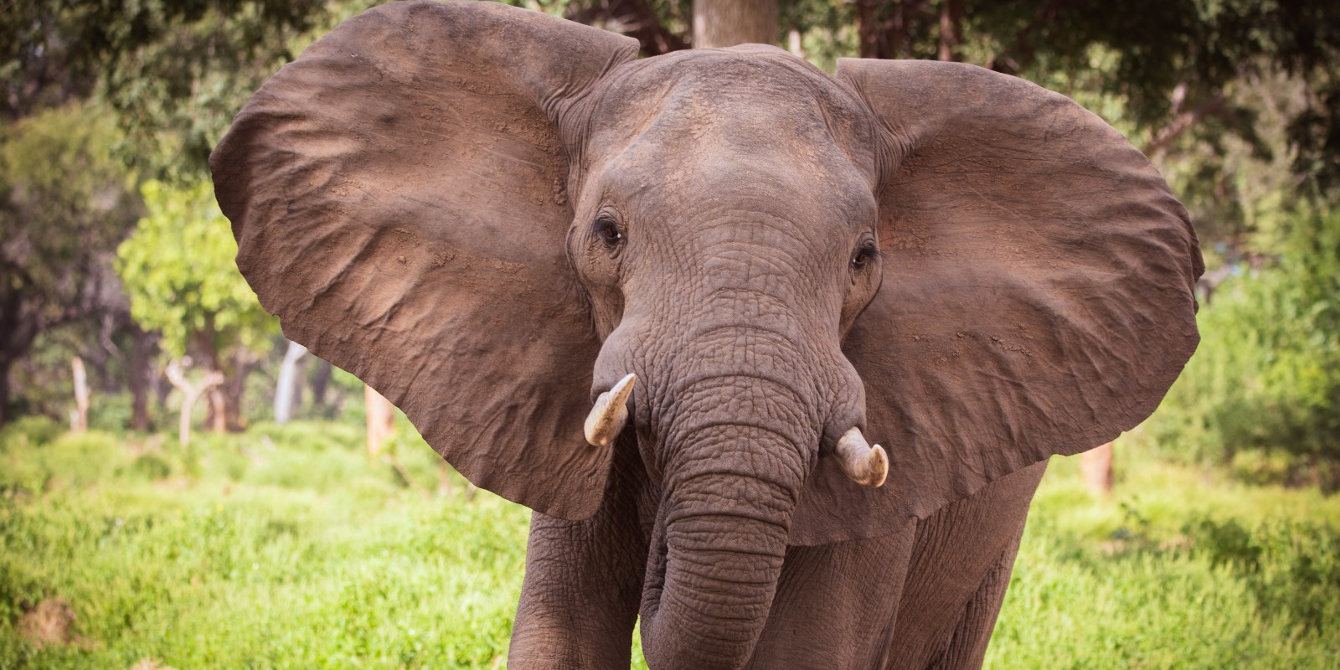
    Then there is of course the biggest land mammal in the world, the African elephant. The danger the African elephant poses is obvious due to its sheer size. There have been several cases of elephants trampling people or charging at vehicles. But this is not the natural behaviour as elephants are rather laid back and relaxed. 

    We all know the saying, “an elephant never forgets” and when people do an elephant harm or their family they will remember and their behaviour towards people might change. Elephant herds are led by a female which is called a matriarch. Male bulls will either be solitary or roam in bachelor herds meeting up with females occasionally at watering holes or to mate.

    The prehistoric rhino

    image

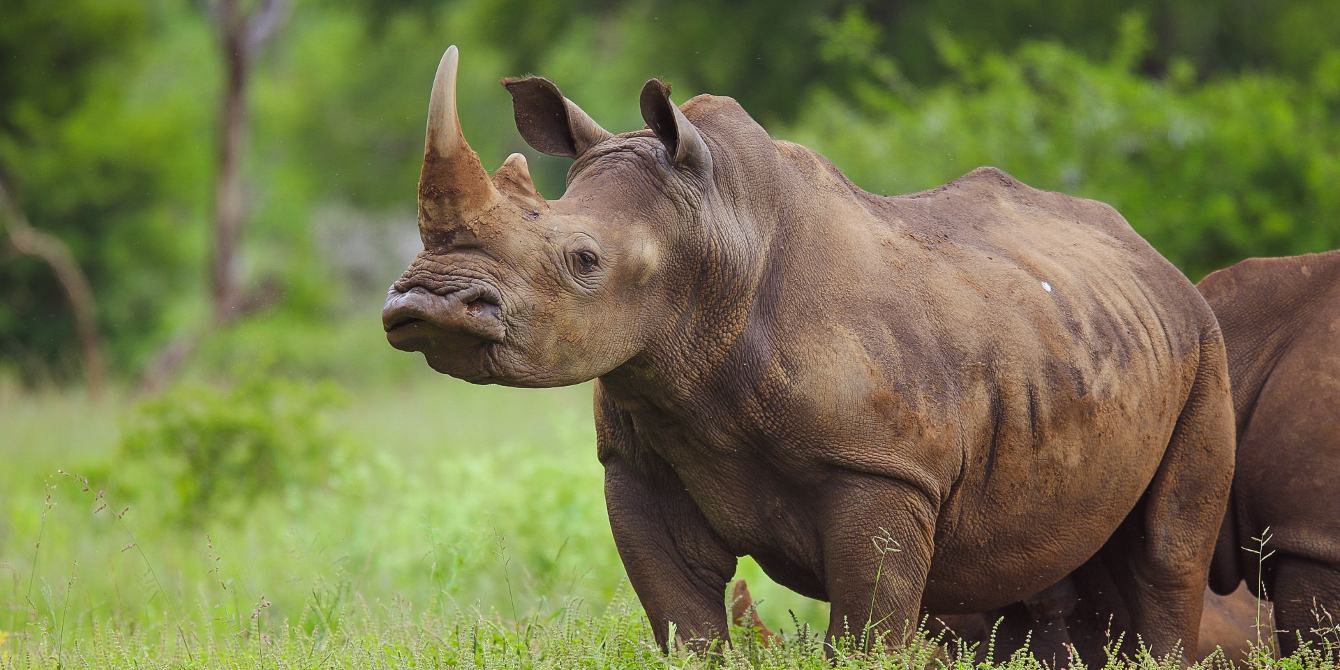
    Last but definitely not least is the rhino. We get two types of rhino in Africa, the blackand the white rhino. The black rhino is a browser with a hooked lip. It is known as being more solitary and aggressive. The white rhino is bigger and is a grazer with a wide mouth to graze. Poaching has put rhinos on the endangered list. While rhinos are poached for the medicinal value of their horns, the horn is made up of keratin – similar to our fingernails or hair – and thus has no proven medicinal value.

    Honourable mention: hippo

    Another dangerous animal not included in the big 5 but that deserves an honourable mention is the hippo. Hippos are the African animal that kill the most people. Even though they are herbivores, a hippo encountered on foot could possibly be a fatal experience especially when encountered with a calf.

    See the Big 5 in person on a Bushwise course. Check out our wildlife courses here!

    Words by Ricardo Strydom, photos by Annie DuPre

    #wildlife #gameranger #Birding #bushwise #fieldguide #qualification #safariguide #trailsguide #training #animals #safari #ifga #sightings #fieldguiding #tracking #endangeredspecies #guiding #ifgaexam #elephant #fieldguidecourse #studying

  • THE SMALL THE SHY AND THE UGLY

    This blog was written by Kerry Ross and Joshua Judd, who did their Bushwise Professional Safari Guide course at our Mahlahla Campus. The information contained in this blog is based on Kerry and Josh’s own research.

    4 min read

    The small, the shy and the ugly

    Sounds like the title of a classic Western right? Not this time, but I do think of a really cliché high school grouping system when I think of these unorthodox groups of animals. You all know about the Big 5 – the popular kids. Today we are going to dive a little deeper into the lesser known nature groups, namely the Small 5, the Shy 5 and the Ugly 5.

    The Small 5

    image

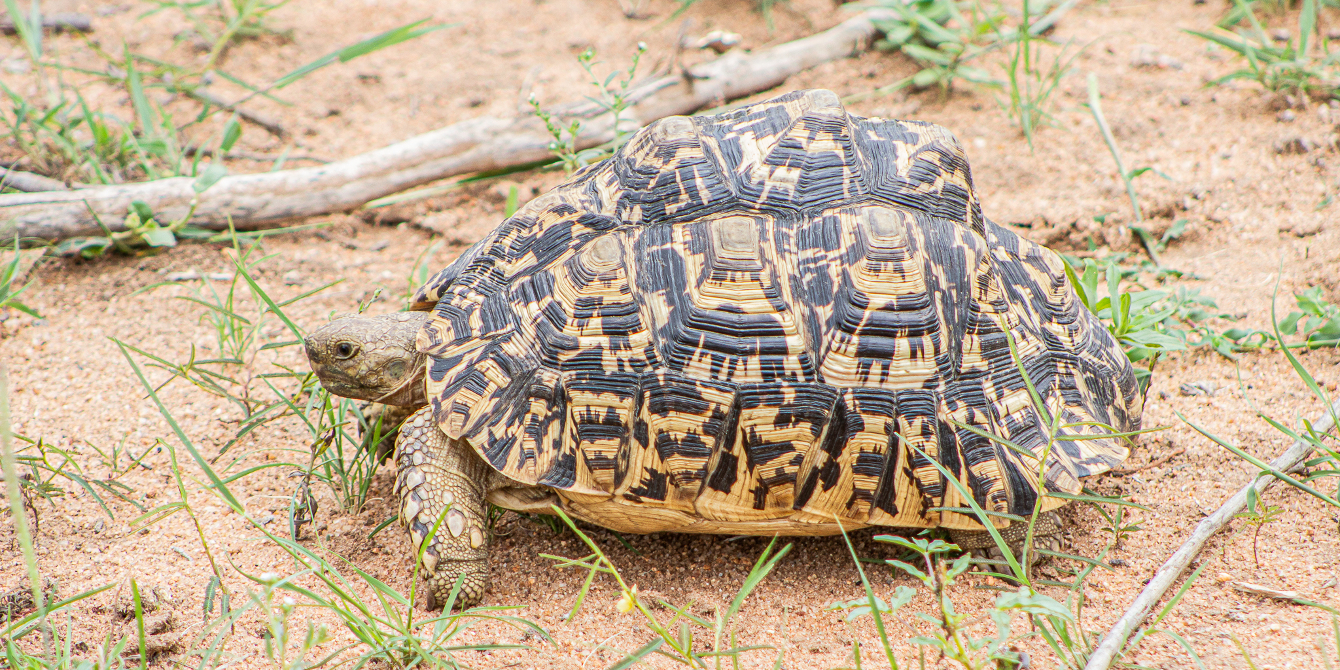
    In all seriousness though, the Small 5 are too adorable. Thrown together due to their relationship in name to the Big 5, the elephant shrew, rhino beetle, leopard tortoise, red-billed buffalo weaver and the mighty antlion may not be anywhere near their various counterparts in size, but they certainly are as effective in their respective environments at survival. 

    Take the elephant shrew, his trunk-like long nose is the reason he was named after his counterpart, the African elephant. His nose is designed to enable this little creature to clear pathways together with its paws in order to lure insects to eat. 

    I think we would be remiss if we did not mention the mighty antlion – what a mighty little critter. He certainly cannot roar, but wow can he hunt! You might have come across his cone-shaped pit many times in your gardens. Once another ant gets stuck in the pit, it cannot climb out, and as it struggles to, the movement of the sand shifts the prey down the cone. Once the ant comes to a halt in the centre of the hole, the antlion pounces and collects his spoils.

    The Shy 5

    image

    Next we move onto the Shy 5. As beautiful as they are elusive, these five secretive animals are sought after by many nature enthusiasts the world over. Let me introduce you to these lovely animals: the meerkat, aardvark, porcupine, aardwolf and bat-eared fox. All of our animals are nocturnal except one. 

    We have only been blessed enough to find meerkat and porcupine. Still in the search of the elusive aardvark, aardwolf and bat-eared fox. Do not get me wrong just because we have not managed to get a glimpse of the aardvark, we bear witness to the evidence he leaves behind after he uses his powerful claws to dig two feet into a termite mound in 15 seconds! Now that is lightning fast excavation. 

    In doing this he also plays a huge part in creating homes for other burrow dwelling animals such as warthogs and mongooses, even the African Shelduck uses these burrows to lay it’s eggs in! Once the Aardvark has dug his tunnel into the termite mound he uses his extra long tongue to get into the termite tunnels and eat his preferred evening meal.

    The Ugly 5

    image

    Last but most certainly not least no cliché high school movie would be complete without the loners. These loners are grouped together because, well, as the name suggests they are just plain ugly, but also secretly some of our favourites! 

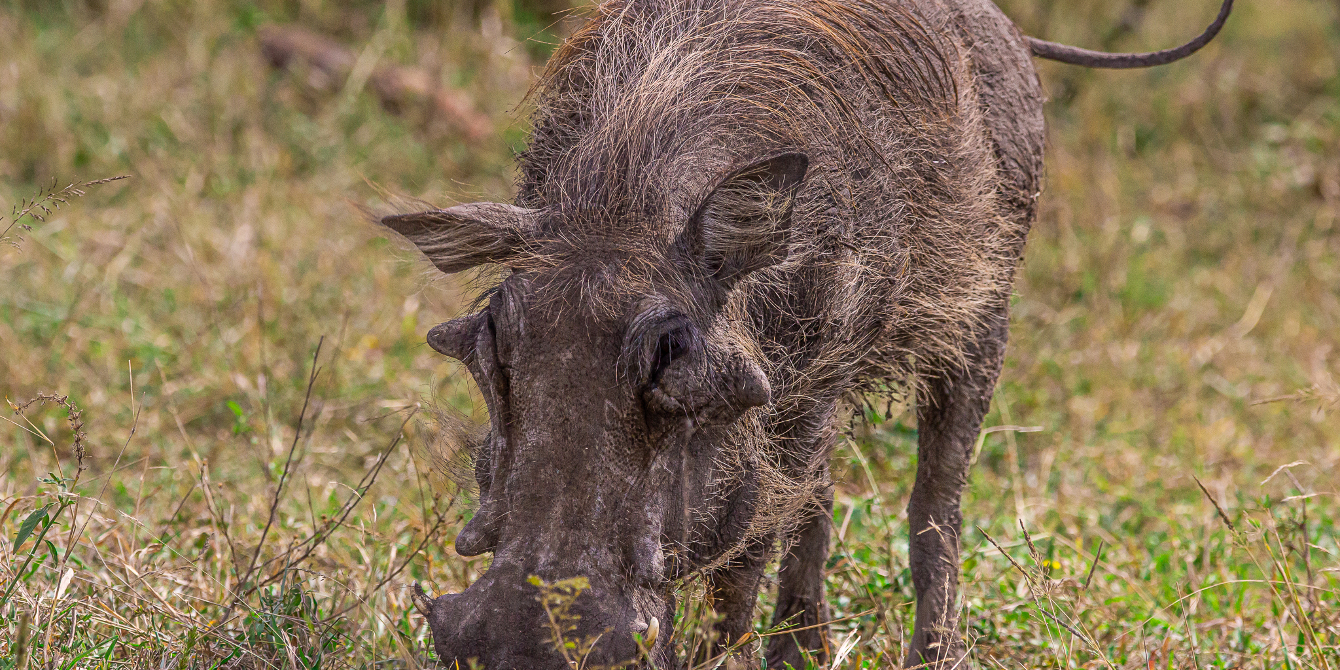
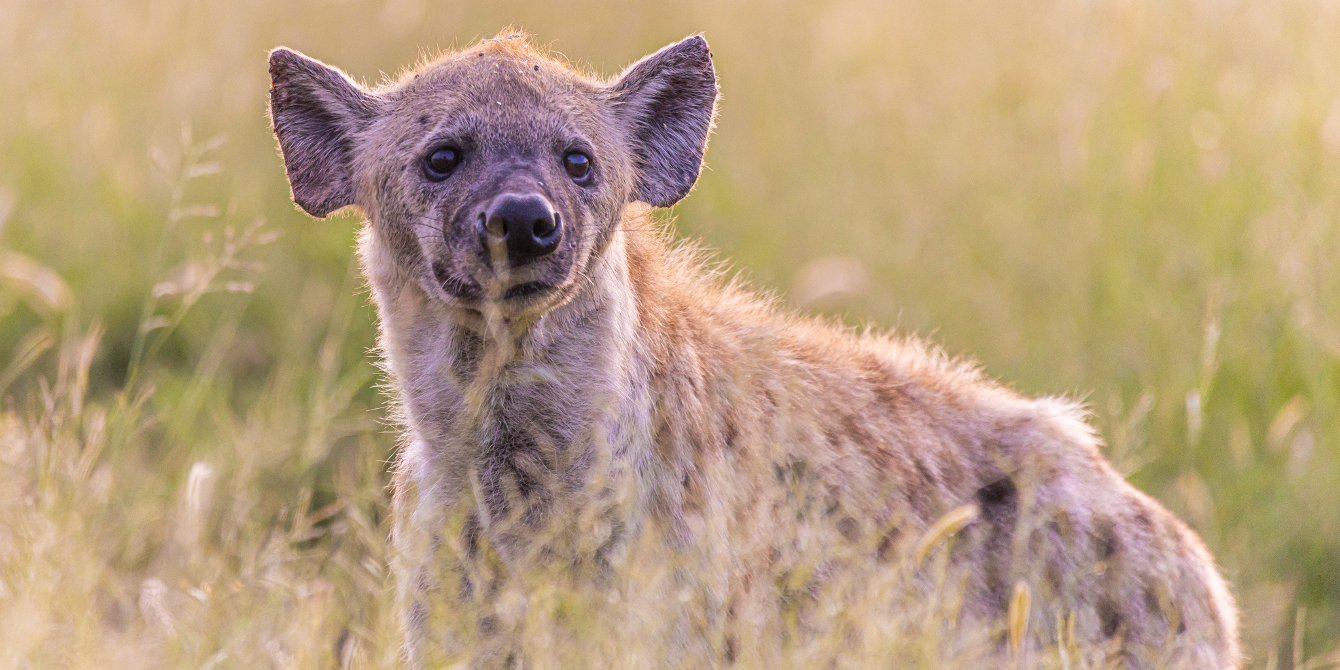
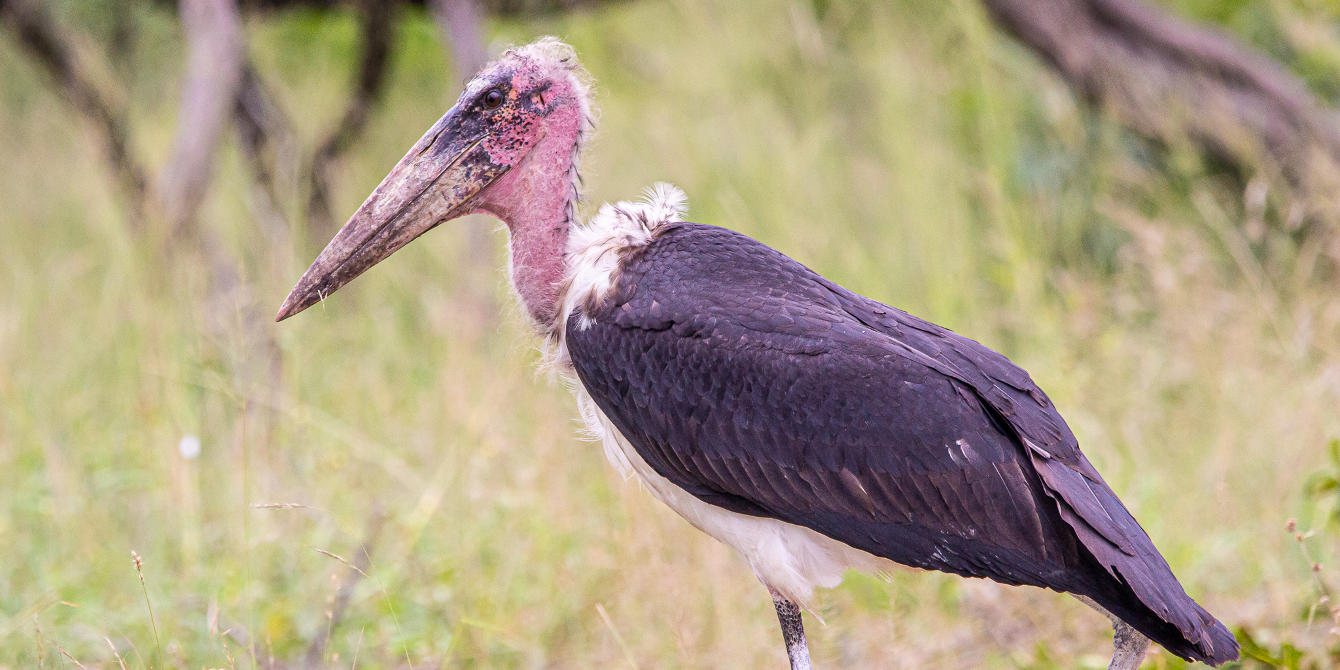
    The Ugly 5 consists of five animals that certainly will by no means be winning any beauty contests but all offer something totally unique which really just makes us love them more! Hyaena, warthog, marabou stork, vulture and wildebeest. 

    image

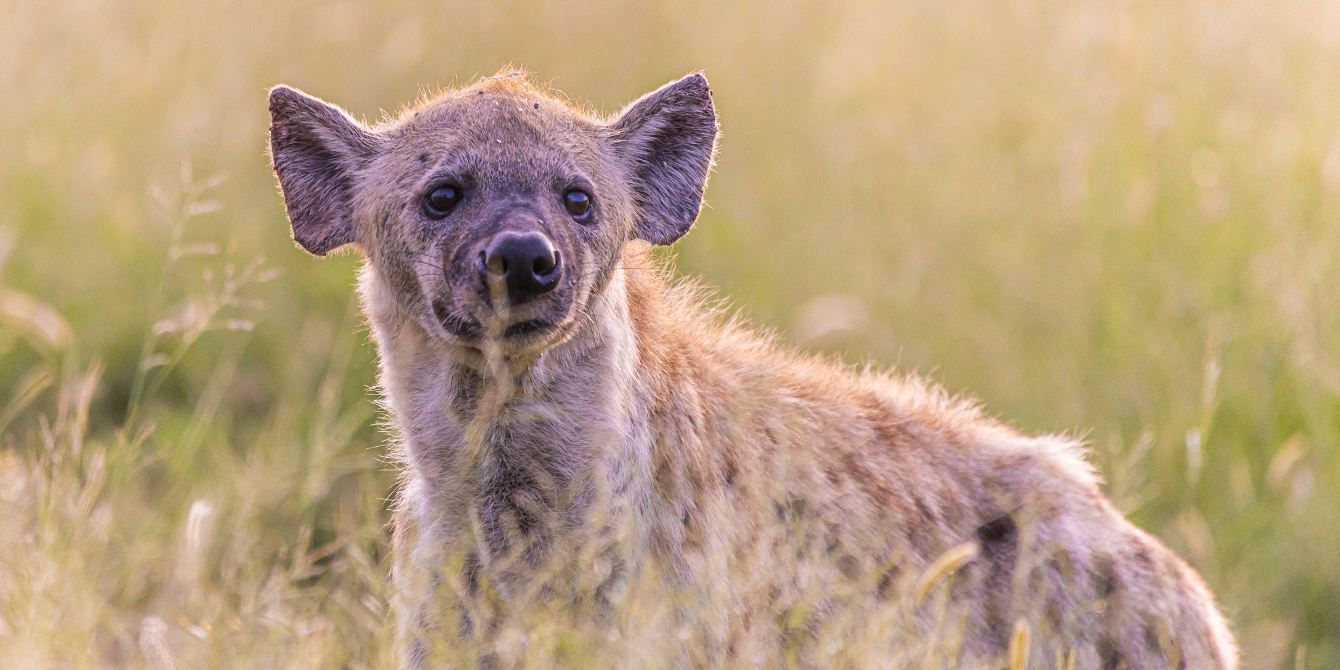
    Let’s dive right into our favourite of the group, the spotted hyena. A scavenger by nature with a very strange stance this group of giggling animals are actually more closely related to cats than dogs – strange but true!) What we love most about our spotted friends is their epic jaw power. Jaw power is measured in PSI and the hyena’s PSI comes in at 1100! To put that into perspective, lions have a PSI of around 650. This epic jaw power enables them to crush through most bones without too much of a problem. 

    As we are both avid birders we just want to take a closer look at our beautiful bird on this list, the marabou stork. Now if we were giving away a prize for the ugliest bird I have seen in South Africa, the Marabou stork would be in first position no questions asked. 

    image

    Now what on Earth is that thing under his beak? It is a sac but this sac is special, he uses it during courtship rituals. It connects directly to his left nostril and allows him to produce a guttural croaking sound. 

    So if you get a chance to come to Africa on safari, look past the Big 5 and towards our more overlooked, equally as special creatures that make up this entire ecosystem!

    Learn more about all of these amazing creatures on a Bushwise course.

    #wildlife #gameranger #bushwise #fieldguide #trailsguide #guidejobs #animals #apprenticefieldguide #hyena #safari #sightings #wilddogs #fieldguiding #endangeredspecies #gamedrive #guiding #fieldguidecourse #fieldguides
  • Elusive species of the Lowveld Part 2: Secretive cats

    This is the second blog in a series of two about elusive species of the Lowveld (read the first one here). It was written by Bushwise students, Menina Nightingale and Jocene de Kock as part of a special research project during their Professional Safari Guide course. All information contained in this blog is from Menina and Jocene’s research.

    3 min read

    In this blog about elusive species, we look at some of the smaller secretive cats and cat-like creatures that make up a large part of the “Secret 7” – servals, genets and civets. Let’s learn more about these elusive and intriguing species!

    Elusive cats

    image

    When you think of elusive cats (and cat-like mammals) the first that always comes to mind is, of course, a leopard. This big cat is a sighting that many tourists might revisit South Africa just to tick off a sightings list. Forming a big part of the Big 5 – this elusive cat has become an extremely exciting sighting on a game drive. 

    But in some of the private reserves, it isn’t necessarily hard to spot one of these majestic animals (with the assistance of a well-knowing field guide!). Despite this, it is always fun, and arguably even more rare to bump into one of the more secretive small cats (and cat-like mammals) that roam the bushveld – civets, genets and servals.

    Civets 

    image

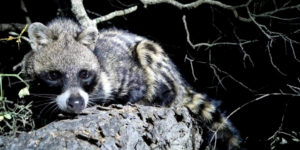
    Civets are relatively common inhabitants of the bushveld. Often you will see their tracks and signs, but less often will you catch a glimpse of one of these sly cats. On a drive, you will likely come across their perfectly round little paw prints crossing the sandy roads and you might even come across one of their ‘civitrys’ – where they will come and defecate regularly to mark their territory.


    The main reason they are so hard to see is they are strictly nocturnal. They largely spend their time up in trees resting during the day to keep out of harm’s way. Being relatively small, high in the canopy and very dark in colour a daylight sighting of one of these is nearly impossible. A more likely time to catch a glimpse of one is in the evening as the sun is setting where they will descend from trees and begin the search for food, feeding largely on insects, insect eggs and sometimes even frogs.

    Genets

    image

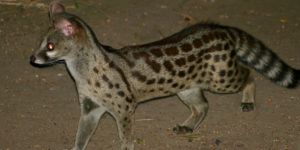
    Although genets very often hang around campsites or lodges, and like most of the other smaller predators, are largely nocturnal, it’s not always easy to find these small spotty animals. These shy little cat-like mammals are very hard to spot particularly during the day. In daylight hours they will spend their time sleeping in aardvark burrows, hollowed out tree stumps or even in rabbit burrows. Similar to a civet they will emerge after dark to hunt using their partially retractable claws to catch rodents, birds, bats, snakes and scorpions! Once out on a hunt, they are more active and the chance of seeing one isn’t impossible on a night drive. 

    Servals 

    These cats, whilst nocturnal hunters, can emerge during daylight hours often seen in long grass where they can blend in nicely. They are a beautiful cat to spot with long slender bodies, tall legs and large dome-like ears. Servals can travel up to 60 km in a night and very seldom stay in the same area, so populations at one time in an area are never very concentrated. 

    Servals are almost harder to spot than a genet due to the large distances they travel. Unlike genets, servals  don’t scavenge near lodges or camps; they are much more secretive even at night when hunting. They are stealthy hunters and make use of an effective pounce technique using their strong springy legs which allow them to reach heights of 3.6 metres in one pounce. This is what earned the title of most efficient hunter of all the cats! Spotting one in action would be a thrilling sight to see. 

    Keep your eyes open and keep looking for elusive species!

    image

    Perhaps it is the mystery of what these strange creatures get up to in the dead of night, or perhaps it is because they are rarely seen that makes them such an exciting spot on a game drive. Seeing one of these elusive little animals is definitely worth some bragging rights amongst wildlife enthusiasts – and even guides and trackers. 

    You could be on a night drive, watching a serval stalk through the bushes, very soon! Join a Bushwise course and make your career all about wildlife. Apply today.

    #wildlife #ifgaguide #AdvancedRifleHandling #bushwise #fieldguide #qualification #Exam #ifgaexam #leopard #training #animals #apprenticefieldguide #safari #IFGA #sightings #wilddogs #fieldguiding #endangeredspecies #Assessments #gamedrive #guiding #fieldguidecourse #studying

  • Elusive species of the Lowveld Part 1: Aardvark, pangolin and porcupine

    This is the first blog in a series of two about elusive species of the Lowveld (read the second one here). It was written by Bushwise students, Menina Nightingale and Jocene de Kock as part of a special research project during their Professional Safari Guide course. All information contained in this blog is from Menina and Jocene’s research.

    3 min read

    The Lowveld is full of elusive species that you might be lucky to find if you pay a visit to areas such as the Kruger National Park, neighbouring private reserves, and northern reaches of KwaZulu-Natal, South Africa. Some of the least common, yet most special animals that you might find in the Lowveld are aardvark, pangolins and porcupines. Let’s learn more about these elusive and intriguing species!

    Aardvark 

    image

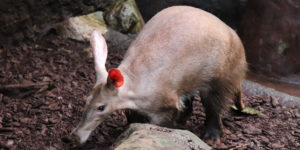
    One of the weirdest animals you’ll come across in the bushveld – if you’re really lucky – is the aardvark. These strange looking animals are notoriously hard to spot, normally only coming out of their burrows well into the night to feed on mostly ants and termites. The best chance to see one is either on a night drive or during winter in the Lowveld (June/July) as they tend to come out a bit earlier due to the cooler temperatures. An aardvark will by no means win a beauty contest, but there’s something about their odd appearance that definitely attracts people. Their habits are also very similar to those of pangolins and yet they are entirely unrelated and far funnier looking.

    Pangolins 

    image

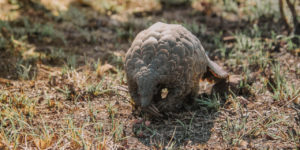
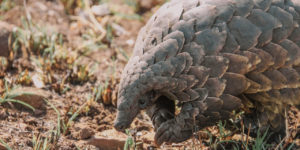
    Pangolins are one of the most elusive species that you might come across in a visit to the Lowveld. A sighting of one of these almost dinosaur-like creatures is truly a once in a lifetime encounter. Their elusivity is largely due to the fact that they sleep in underground burrows for up to 20 hours of the day and when they do appear from their underground homes to feed on ants and termites, it is predominantly at night. Pangolins are also highly endangered and very low in number so to see a truly wild pangolin involves a lot of time, patience and luck. 

    The majority of the pangolins that you might see on a visit to the Lowveld are normally involved in some sort of soft release program where you can make a (often sizable) donation to walk with one of these strange little creatures whilst they feed. The reason for these programs is largely due to poaching as pangolins are heavily trafficked for their scales and meat. Their rarity and elusiveness makes them a truly special and unique animal to see and if you do manage to find one it is definitely going to be a once in a lifetime experience! So take time to  savour the moment! 

    Porcupines

    image

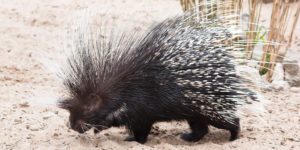
    Another of the bushveld’s most elusive species is the Cape porcupine, famous because of its unique spiny appearance. These unusual quills have brought tourists a lot of excitement  while they try to catch a glimpse at this bizarre secretive creature. You might be lucky enough to come across a loose porcupine quill on the ground or see their funny multi-padded tracks in the sand. 

    Often you will see the evidence of the elusive creatures but very rarely see them. Porcupines are the largest rodents found in Africa and part of the “Secret 7” and thus one of the more exciting things to spot on a safari. One of the reasons for their elusivity is due to their sleepy, nocturnal nature making it particularly difficult to see them during the day. Yet they do love to rummage in rubbish bins around camps for anything they can find, after all they are rodents so keep an eye out for them trying to get into your bins! 

    image

    Pangolin, aardvark and porcupine are famous due to not only their elusivity but also their unique appearance, which definitely puts them on the bucket list of sightings. If you do catch a glimpse of one of these amazing little animals, cherish it – and of course try and grab a photo.

    Would you love to see some of the Lowveld’s most elusive species? Join a Bushwise course and experience these and other incredible sightings. Start your wild career now.

    #wildlife #ifgaexam #AdvancedRifleHandling #bushwise #qualification #Exam #IFGA #training #animals #tracks #safari #IFGAGuide #sightings #fieldguiding #tracking #endangeredspecies #gamedrive #guiding #IFGAexam #fieldguidecourse #studying

  • On the trail: wildlife sightings on foot

    This blog was written by Francois Theron, Header Trainer at our SAWC Campus near the Kruger National Park. Francois is especially passionate about animal track and sign, and trailing wildlife on foot. Let’s learn more from his expertise!

    3 min read

    Track & sign and trailing: what’s it all about?

    image

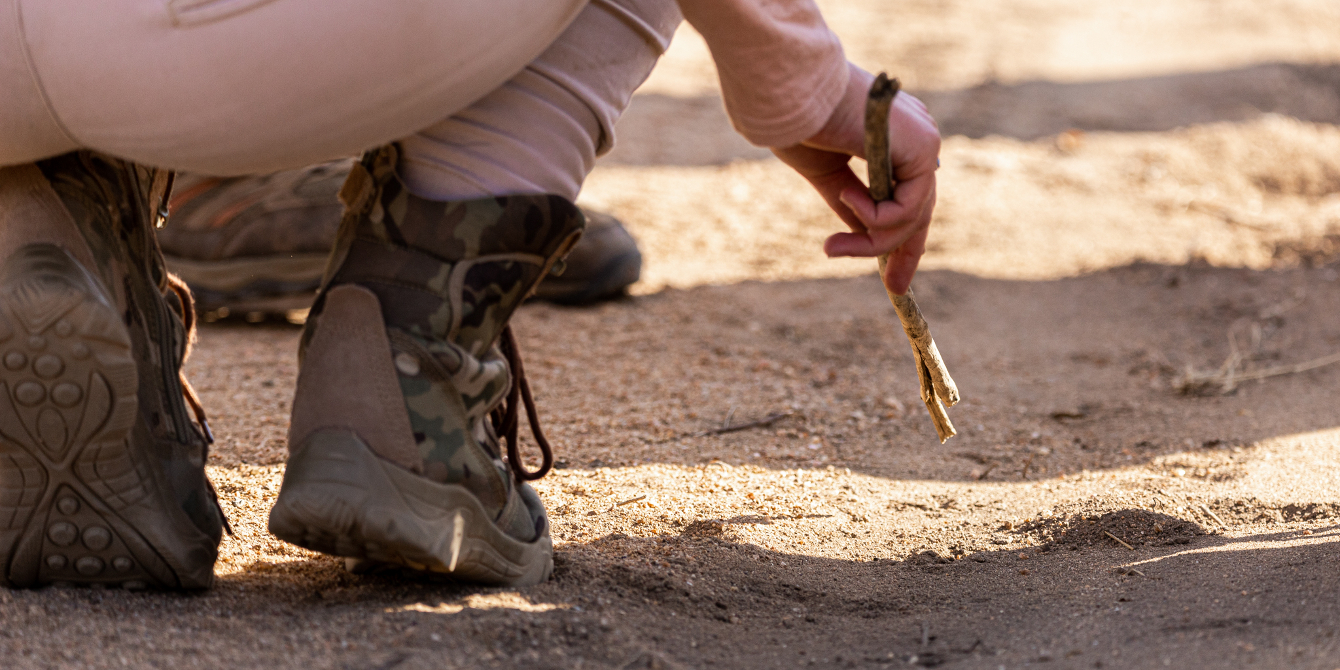
    On each Bushwise course, our students are exposed to the art of tracking. We train them in track and sign (understanding how to interpret messages left behind by animals) and trailing (following an animal’s tracks to try and find it without disturbing it). 

    These skills are truly a form of art. It’s the ability not only to correctly identify a track, but also to successfully follow that track. It’s something that you cannot learn in books or by listening to someone else explaining how to do it, you have to physically go out in the bush and do it yourself. And with tracking – like many other things in life – it’s where you learn more from your mistakes than from your successes. 

    For a period of about two weeks, Bushwise teaches its students the foundation of tracking and trailing. Some of them will show the natural ability for the art of tracking. We teach them how to successfully track an animal and how to handle a potentially dangerous situation once the animal has been tracked. 

    image

    At Bushwise we physically take the students out on mentored trails to teach the importance of not disturbing the animals in their natural environment, and how to safely walk their guests through the bush. These mentored trails will give students the opportunity to log both hours on foot and dangerous encounters – which count towards completing their Trails Guide qualification. 

    It also means that when Bushwise alumni approach dangerous game on foot, they will be mentored to a level where they instinctively start taking things like the direction of the sun and wind, the animal group structure and the animal’s activities into consideration while trailing. 

    image

    So, what does it mean to go on a trail? Well firstly to become a trails guide you will have to be mentored on trails on how to approach potentially dangerous game and if you do approach them or walk your guests into sighting, how to do it safely and with as little disturbance as possible to the animal. The main aim is to view the potentially dangerous animal without disturbing that animal’s natural behaviour and give your guests that feeling of viewing dangerous game on foot. 

    For me, going out on trail instead of an open vehicle safari creates a feeling of being more exposed to the bush and that you connect with the natural environment on a different level. You start noticing more sounds and seeing smaller things that you would have not noticed on a vehicle bound safari. This opens your senses, and your natural instincts slowly start coming back. 

    image

    Although trails guides are required to carry rifles in areas where you will find potentially dangerous animals, this is only as a very last precautionary measure. The trails guide’s abilities to read the bush and interpret early warning signals of dangerous game is vitally important. 

    This is where your skills of identifying tracks, bird calls that might indicate the presence of dangerous animals, feeding signs left behind by animals, smells etc. come into play. These all give you the advantage of track and encounter animals successfully and safely. 

    Want to learn how to track an animal successfully in the African bushveld? Join a Bushwise course and this could be part of your career!

    #wildlife #AdvancedRifleHandling #gameranger #bushwise #fieldguide #safariguide #trailsguide #training #animals #tracks #apprenticefieldguide #safari #fieldguidetrainer #fieldguiding #tracking #endangeredspecies #trackandsign #gamedrive #guiding #fieldguidecourse #studying #fieldguides
  • Kruger National Park: history and wildlife

    This blog was written by Siphiwe Khoza, Bushwise Field Guide student. Siphiwe is one of the scholarship students studying under our collaboration with the Southern African Wildlife College. All information included here is from Siphiwe’s research.

    4 min read

    Where is Kruger National Park?

    image

    The National Park is located in Mpumalanga and Limpopo provinces in South Africa, and in the south of Zimbabwe and west of Mozambique. It is close to two million hectares in size, and it now forms part of the Great Limpopo Transfrontier Park. 

    The Kruger National Park was first established by Paul Kruger in 1898, but it wasn’t until 1927 that it was open to visitors. 

    Kruger National Park is the third largest-protected area in Africa and recognised as a key conservation area for endangered species like black and white rhino, African wild dogs and elephants as well providing habitat for other mammals, fish, birds, reptiles, amphibians and a variety of different plant species.

    Kruger and history

    image

    Kruger National Park has more than 300 archaeological sites of Stone Age humans. Cultural artefacts have been found that show that Homo erectus lived in Kruger National park 500,000 years ago. Thulamela and Masorini – two archaeological sites within Kruger – display this evidence which include San rock art and there are about 100 other sites where you can view these paintings. 

    The Nguni people also lived in the area and their clay pots and graves serve as evidence of their time in the area. They later moved to the neighbouring communities to conserve the Kruger National Park and become what it is today.

    The role of Kruger for local communities

    image

    Kruger National Park plays a big role for the wider South Africa community by creating jobs and business opportunities in the tourism sector. The park also runs empowerment programs such as curio selling projects, contractor development programs and used for educational purposes’ it is a conservation and research centre used to study the animals and wildlife. Kruger National Park contributes millions to South Africa’s GDP including tax revenue which benefits the economy of South Africa.

    According to SANParks, Kruger National park respects the customs, beliefs and peace with people that were moved from the reserve by giving back the resources in a sustainable way. 

    Communities sometimes get free entry or a discount to enter the reserve at the lowest rate, buy animal meat at a discount price and also are given the opportunities to visit the graves of their loved ones and perform their rituals inside the reserve, harvesting marula fruits and medicines from plants in a correct method. 

    Wildlife in Kruger National Park

    image

    Kruger National Park is a home to the Big 5 (lion, leopard, rhino, buffalo and elephant) as well as 100s of different birds’ species, reptiles, amphibians and other mammals. 

    Wildlife needs to be protected and used sustainably for the future generations. Animals play a significant role in the stability of the environment, ecosystem and our lives. Without animals, our existence is impossible.

    Animals and plants are also a major source of medication, which we depend on, and plays an important role to support the web of activity in the functioning ecosystem. Without pollinators, there will be no reproduction of plants, and animals including human beings cannot survive without plants.

    Learning about and experiencing wildlife is entertaining and rewarding, including learning about the history and cultures of different people who lived in Kruger National Park. This attracts many people, including tourists from around the world, to visit the natural environment, which benefits the economy of the country.

    Bushwise campuses are located near the Greater Kruger Region – learn more about our campuses here. 

    Words by Siphiwe Khoza, photos by Louise Pavid

    #lion #wildlife #AdvancedRifleHandling #bushwise #fieldguide #qualification #safariguide #trailsguide #Exam #animals #apprenticefieldguide #safari #sightings #fieldguiding #tracking #endangeredspecies #Assessments #guiding #elephant #fieldguidecourse #studying #fieldguides
  • Migratory birds in South Africa

    This blog about migratory birds in South Africa was written by student Shannon Scullion, part of our Bushwise Field Guide course.

    4 min read

    One of things that I have always loved about the South African bush is the birdlife. Spotting and identifying birds is one of the major highlights for me at Bushwise and in the bush in general. 

    As a child, my family and I would head to Kruger National Park every Christmas holiday for about 2 weeks of bliss. My dad in particular had an incredible passion and knowledge of birds in South Africa. He taught me that even in the hottest part of the day when everyone else is praying for an unlikely glimpse of a leopard sleeping in a tree or a pride of lions in a dry riverbed, there are always weird and wonderful birds flying around that are often overlooked. 

    Migratory birds returning to South Africa

    image

    There are about 850 species of birds in South Africa, of which about 100 are migratory. These migratory birds spend their lives in a number of ways from travelling between mountain and ground level, to flying throughout the African continent or even across borders and oceans. They only spend some of their time in South Africa, usually in spring and summer. The lengths these birds go to survive and reproduce always leaves me with a sense of disbelief and wonder. 

    Every year, thousands of Palaearctic-African migrants travel to South Africa, coming all the way from Asia and Europe. They begin arriving in August, just in time for spring. Research by National Geographic revealed that up to 4.5 billion birds, representing around 185 species, fly from Europe and Asia in the north to southern Africa and back every year. 

    For birds, migrating is about surviving

    image

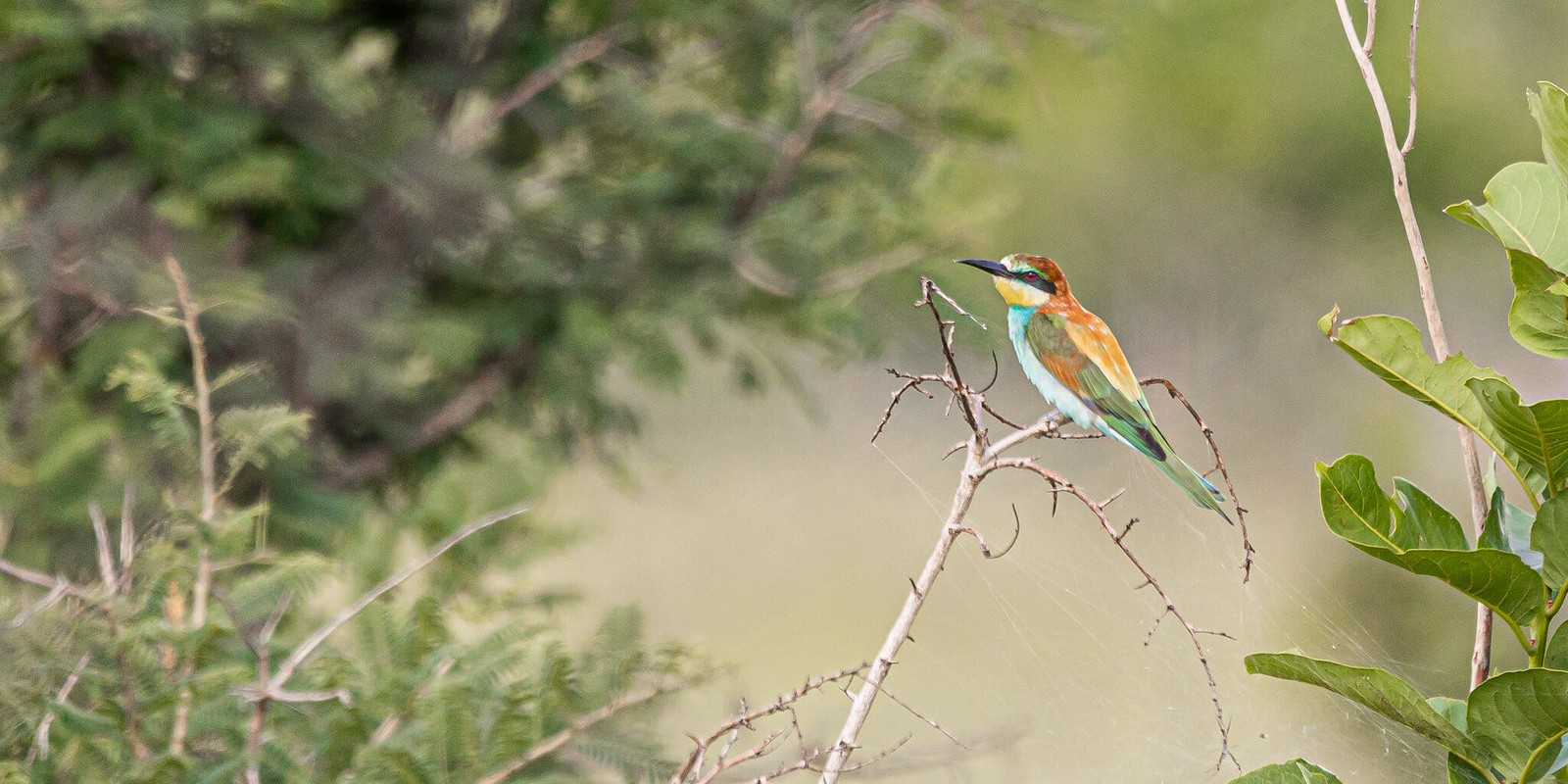
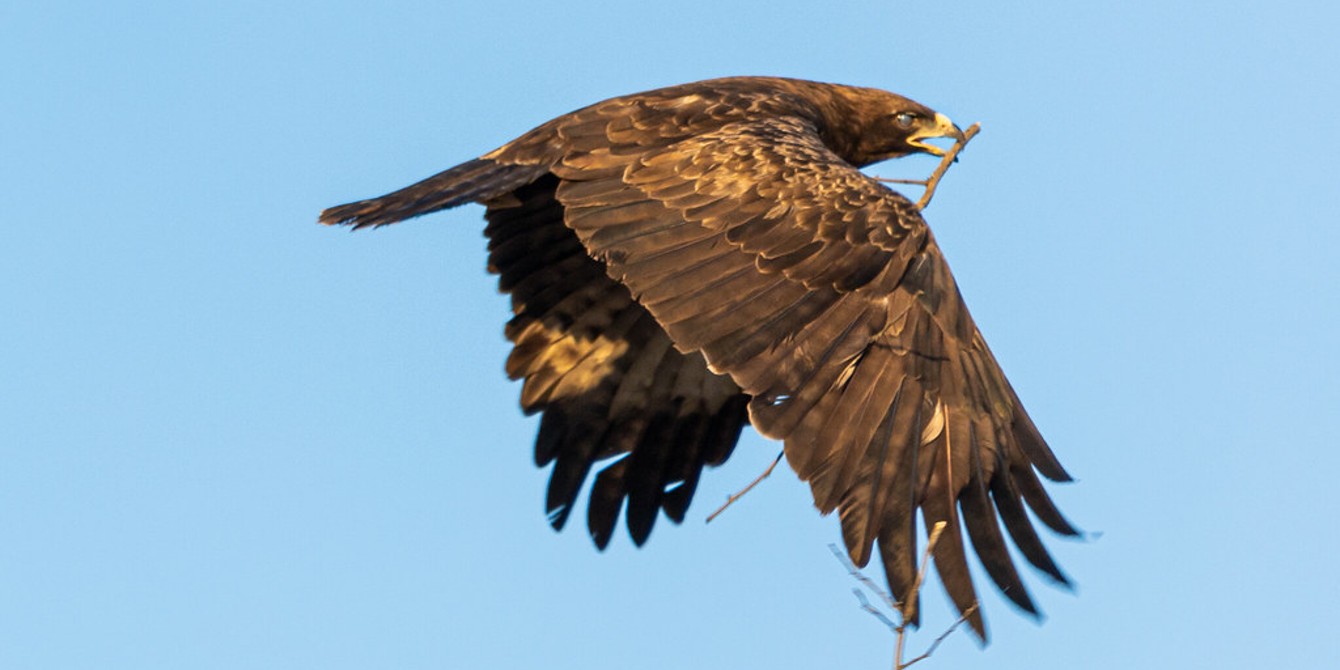
    They travel all this way to improve their chances of survival during seasons when conditions become unfavourable. Most of them are insect- or seed-eaters, travelling thousands of miles as the seasons change to seek out these precious resources. Some of these types of migratory birds we can expect to see in South Africa include numerous waders, steppe eagle, steppe buzzard, white stork, European roller, European bee-eater and barn swallow.

    Another category of migratory birds are the Intra-African migrants, 35 species of which have been recorded in South Africa. These birds will land in South Africa coming from Northern or Central Africa to breed. These migrants are chasing the differing rainfall patterns around Africa, coming to South Africa for the summer rainfall and abundance of food. While they are here, they will spend their time breeding, often returning to the same place as previous years to brood using their unfathomable memories. 

    The return of summer migrants

    image

    I’ve written this blog in October, at the beginning of spring. Some of the intra-African migratory birds that have already returned are the Wahlberg’s eagle, red-chested cuckoo and yellow-billed kite. A monogamous pair of Wahlberg’s eagles will have one to five nesting sites in their territory and will use the same nests for up to 28 years!

    I’m still keeping an eye out for the rest of the birds who we can still expect to see as it continues to heat up here in the Lowveld. These include the African reed warbler, greater striped swallow, African pygmy kingfisher, Diederik cuckoo, southern carmine bee-eater and woodland kingfisher. The one I’m most excited to see is the woodland kingfisher – a stunningly colourful and vocal bird that is our sign that summer has well and truly arrived in the bush. Every year, they announce themselves within a day or two of the 8 November. 

    Migratory birds can travel up to tens of thousands of kilometres on their annual journeys. Their survival is dependent on the availability of well-connected networks and chains of undisturbed habitats along their migration routes. They need these routes to refuel, rest and feed. Sadly, habitat degradation, fragmentation and loss are a huge threat to these birds. 

    Celebrating World Migratory Bird Day

    image

    World Migratory Bird Day is a day that brings awareness and starts the conversation about one of the many reasons we all need to come together to protect and conserve the natural environment. This year’s theme is light pollution, something that also impacts migratory birds’ journeys by disorientating them when they fly at night. 

    So, I will leave you with a request, please be mindful at night and turn all of your lights off so that these incredible travellers can make it safely back to us this year! 

    Learn more about birds, from the endemic and rare to the migratory and exotic, on a Bushwise course.

    #Birding #bushwise #qualification #migratorybirdday #safariguide #training #birds #apprenticefieldguide #fieldguidetrainer #worldmigratorybirdday #birdlife #migratorybirds #fieldguides
  • Africa’s frogs: sightings from a lowveld campus

    About 115 species of frogs and toads can be found in South Africa. Naturally it’s quite difficult to find them all, but in this blog Bushwise student Kyla Jordan shares what she’s learned about Lowveld frogs.

    4 min read

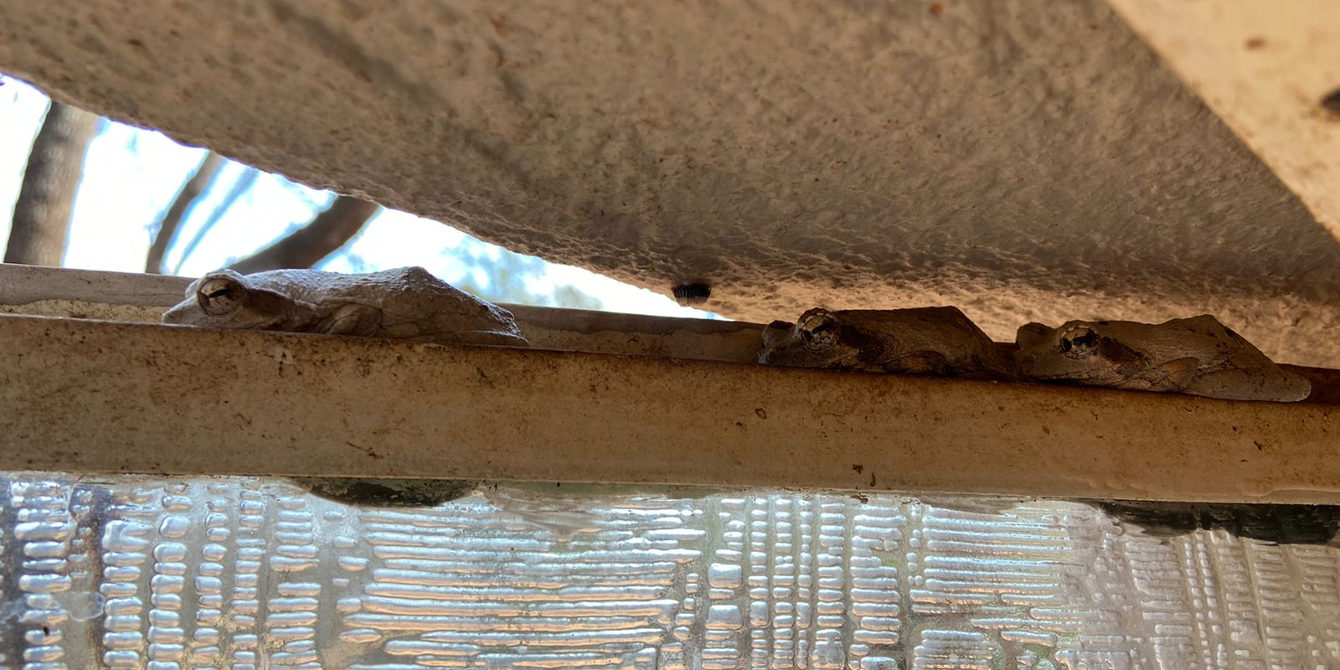
    We have seen many different species of frogs around our campus. We have a resident frog that we see every day in our rooms, bathrooms and the classroom. Our most commonly seen resident frog is called the foam-nest tree frog. We have three locals in our ladies bathroom which have been sleeping in the window from the start of our course!

    image

    Image by Kyla Jordan

    Like many frogs, foam-nest tree frogs have adapted to survive without water during the dry season (which in the Lowveld is winter). Like all amphibians, oxygen can pass through the frog’s highly permeable skin. This helps keep the frogs moist at all times. In order to survive during the dry season, frogs will enter into aestivation – a state of metabolic dormancy – which makes its skin resistant to evaporation.

    I particularly like that some foam-nest tree frogs are a stone white colour which means they’re able to camouflage with the toilet seat – giving you a nice big fright if you don’t spot them early enough. The three in our bathroom sleep all huddled up together and always look like they’re smiling, which is the cutest thing ever.

    Our resident frogs

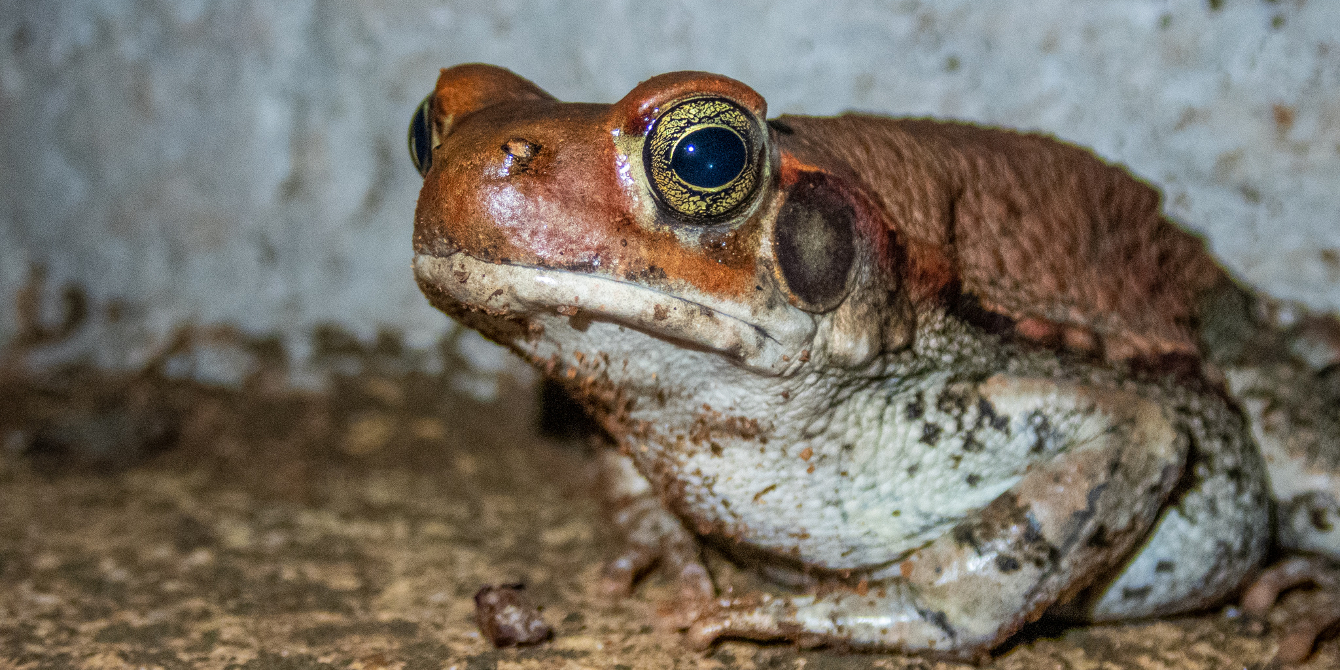
    image

    My friend Shannon and I spotted a red toad one evening along our pathway to our room. Their call sounds almost similar to the giant bullfrog. This is not a frog but a toad. Frogs and toads are two completely different things. Frogs have long legs that are longer than their heads and body, which are made for hopping. 

    Toads have much shorter legs and prefer to crawl rather than hop. One easy way to tell them apart is to look at their skin – frogs have smooth, slimy skin where toads have dry, warty skin.

    What can frogs tell us about an ecosystem?

    image

    Frogs are considered to be an “indicator” species because they are the first to be affected by degradation of the environment. Their decreasing numbers may be a warning to us that conditions of the Earth are changing. Frogs also play an important part in the food chain as both predator and prey. Frogs control the insect population, which controls diseases such as malaria. They are also a very good food source for other animals. 

    Another cool thing about frogs is that some frogs use aposematic coloration (aka warning colours) to alert predators that they are foul tasting or poisonous. This protects them against predators. 

    What sounds do frogs make?

    image

    Frogs also have a variety of different calls. They have release calls, aggressive calls, satellite behaviour calls, time sharing calls and distress calls. 

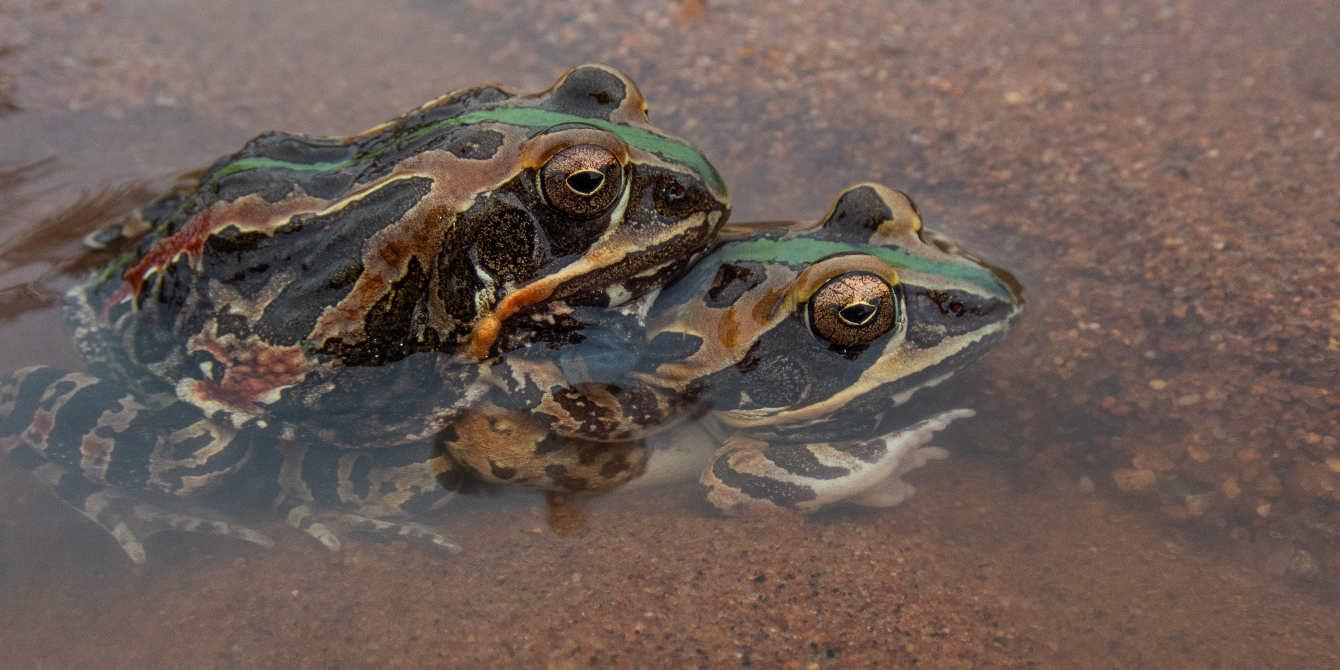
    Frogs give a release call when the male accidently clasps the wrong species or a female will use this call if she is not ready to mate. Aggressive calls are used in combat fighting. 

    Another interesting sound is used in satellite behaviour. Satellite behaviour is when a sexually matured male calls for a mate but a silent male sits nearby. The female approaches the calling male but the silent male intercepts and clasps her. 

    image

    If you hear frogs call in a song-like rhythm, this is the males calling and it’s a behaviour known as time-sharing. This allows them to actively spread out so that females can listen to the different calling males and know where to go. So the next time you hear frogs calling you know there is a reason for each different call.

    The frogs I’m looking forward to seeing

    We have not yet seen many frogs because of the dry season. But there are tons of species to be found here in the Lowveld. We can expect to see these species here around campus:

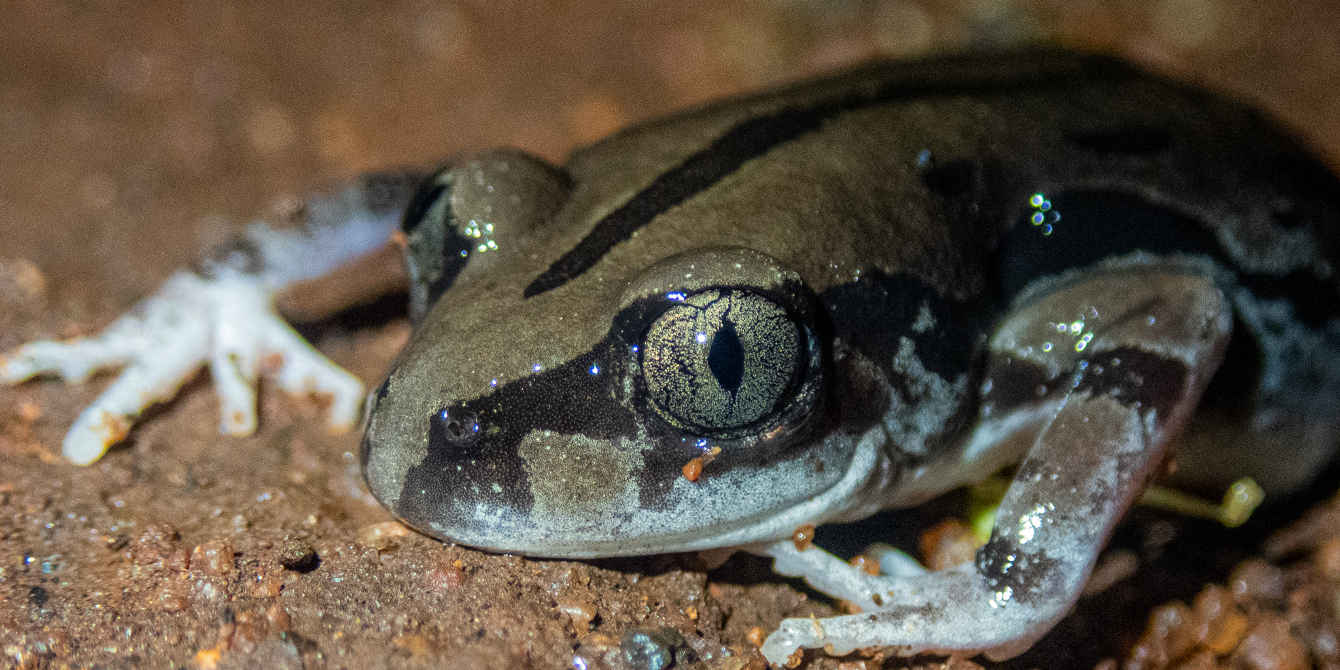
    1. Banded rubber frog
    2. African bullfrog
    3. Giant bullfrog
    4. Painted reed frog
    5. Bushveld rain frog
    6. Common river frog
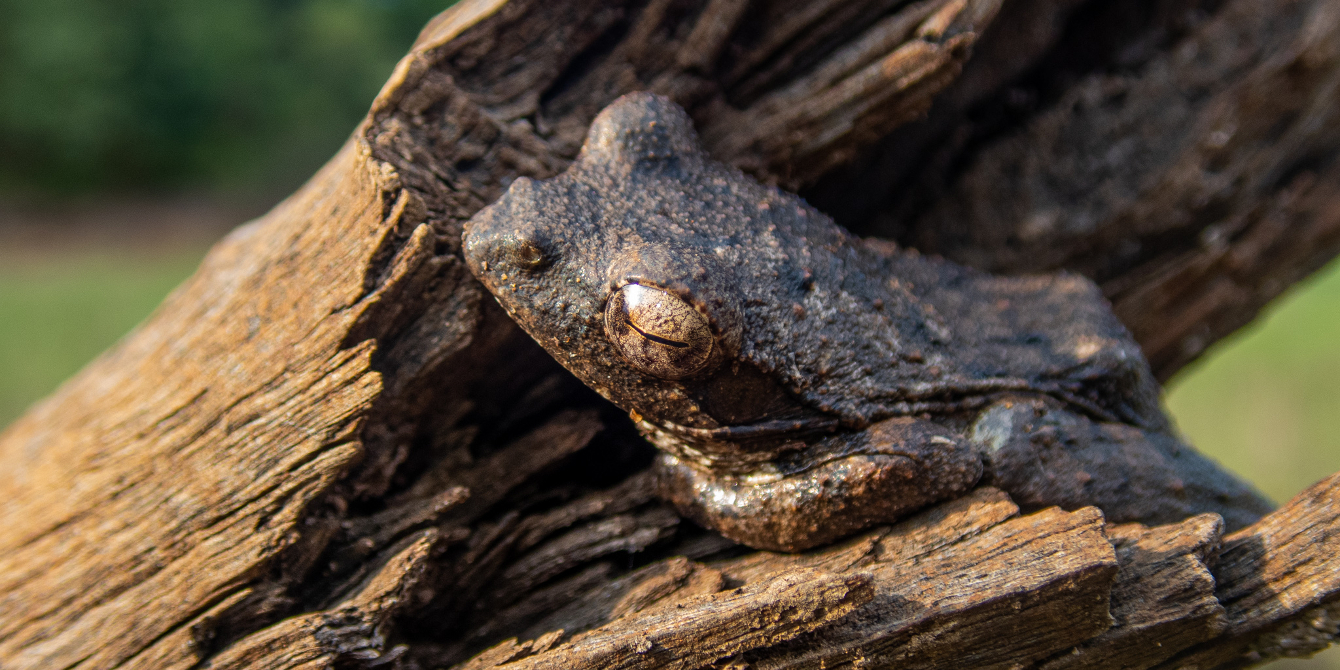
    7. Broad banded tree frog
    8. Bubbling Kassina
    9. Plain river frog
    10. Mottled shovel nosed frog
    11. Brown backed tree frog

    All these species are likely to start showing up in the rainy season, which would be in summer, and that is just around the corner!

    Frogs play an important role in the ecosystem and they are such interesting animals to study. Are you interested in frogs like Kyla? Apply to join a Bushwise course and soon you could be learning about animals in their natural habitat!

    Words by Kyla Jordan, photos by Callum Evans unless captioned otherwise.

    #wildlife #bushwise #fieldguide #Exam #training #animals #tracks #tracking #endangeredspecies #fieldguidecourse #studying

  • Anthropomorphism and the safari experience

    In this blog, Bushwise award-winning trainer Nico Brits discusses anthropomorphism (the act of attributing human qualities to animals) on the African safari. Does it have a place in guiding? Let’s see what Nico has to say about it…

    3 min read

    As a guide and trainer, anthropomorphism is something that I must deal with more than I would have thought. Not only with guests and students but for some reason for myself as well. I would like to share two experiences where anthropomorphism was prevalent in my career.

    What is anthropomorphism?

    image

    In simple terms relating to animals, anthropomorphism is when we attribute human emotions, traits and intentions to animals.

    From what I have learnt and experienced in my years of guiding and training, is that nature is brutal but also incredibly beautiful and amazing. We often like to imagine ourselves in the situation animals are in. This could be good for us because we feel certain emotions that we would not get otherwise. 

    For example, have you ever watched a great nature documentary where a baby animal got lost and despite all the odds stacked against it, it managed to survive? This gives us this feel-good emotion that lifts us up. So then why is anthropomorphism a bad thing?

    The role anthropomorphism plays

    image

    Before we get to why anthropomorphism can be negative, I would like to share an experience from my early days of guiding when I started to realise the role anthropomorphism plays with the guest that I’m guiding. This all played out within a single sighting where guests had the feel-good emotion as well as extreme sadness. 

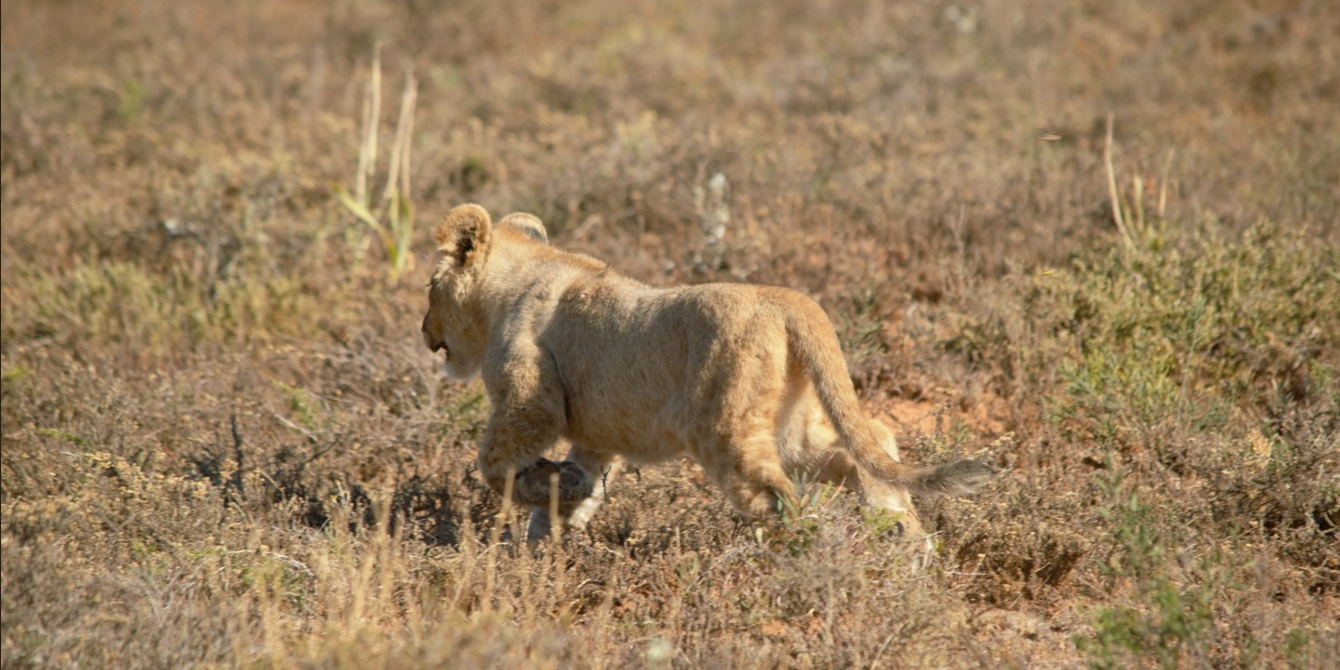
    We were out looking for lions one morning and in particular lion cubs. This was a special request from the guest as I have told them that one of the prides has a 5-month-old cub. After about an hour, one of my colleagues found the pride and we did not hesitate to join them. 
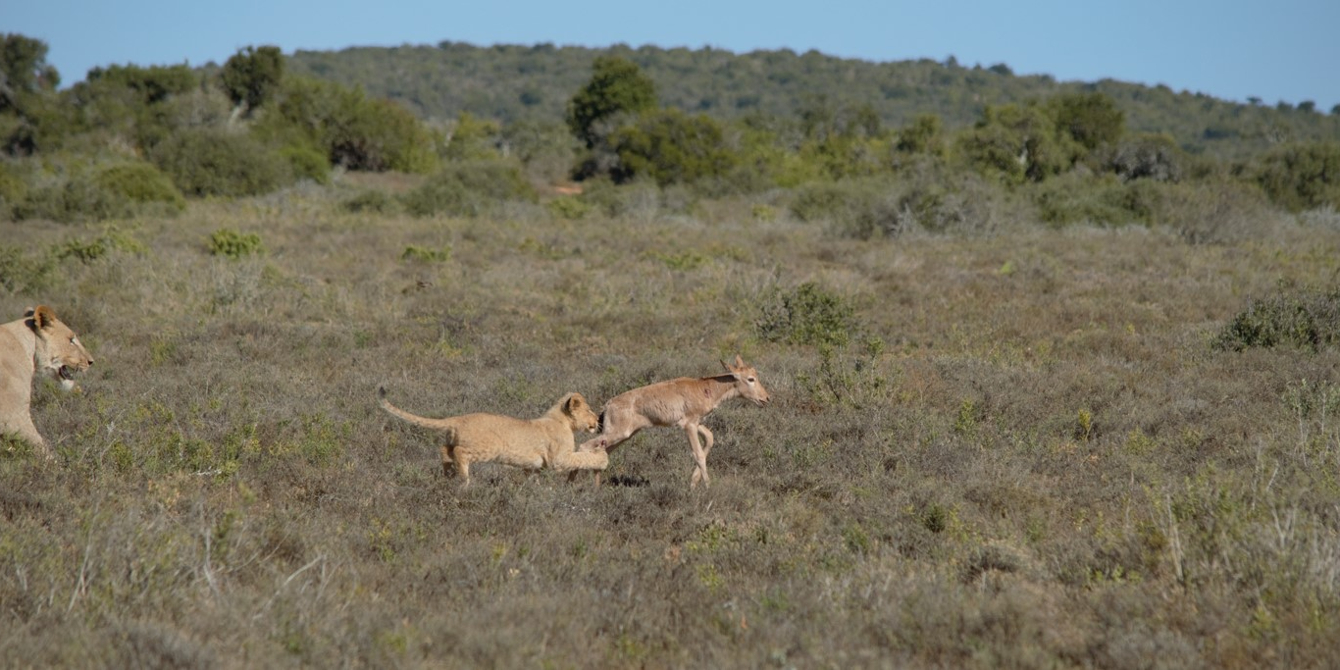
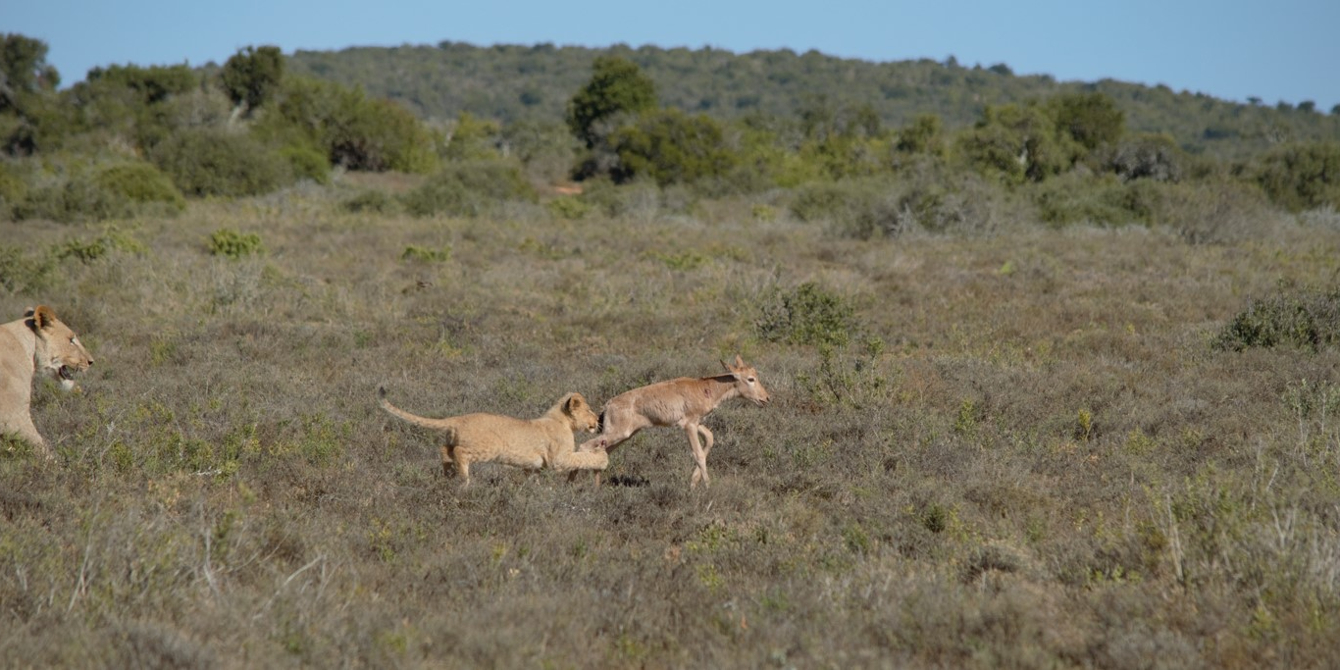
    As we approached the sighting, we drove past a brand-new red hartebeest calf that was probably less than 48 hours old, just lying in the grass.
    image

    As we were watching the hartebeest, we could also see the lions walking in its direction. Already I could hear the guest saying, “Oh NO”, “NO NO NO”, but as we were watching the lions did not notice the little one and proceeded to walk straight past. There were cheers all round the vehicle and very happy faces. 

    But as quickly as the feel-good emotions for this baby hartebeest came, it left even quicker when the hartebeest got up and was spotted by the lions. This all ended with the lionesses catching the hartebeest calf and not killing it, but letting the cub learn to take it down and play with it. We eventually left without knowing what the outcome was – even though we all knew what it was going to be. 

    The downside to anthropomorphism

    image

    After all this, I had to have a good hard think about what was going on with the guests on my vehicle. The see-saw of emotions was something strange for me because as far as I was concerned this was a once in a lifetime thing to see. And the conclusion I got to was anthropomorphism.

    My opinion is that from a very young age we read these children’s books about “Dumbo” the elephant, “Bambi” the deer and the biggest of them all “The Lion King”. And from that age we start to attach emotions to all animals we see, and we relate our feelings to their feelings. 

    From our point of view, this hartebeest calf is all alone and so young, immediately we start thinking this baby hartebeest is feeling what a human baby would feel in that same situation. And when the lions approach it, this feeling intensifies. But as they walk past this great feeling of relief and happiness comes over us – with the odds stacked against this hartebeest, he survived. 

    image

    We forget to think about this lion cub that must eat and start to learn to hunt so that it can one day contribute to the genetic wealth and growth of lion populations. 

    A lot of times anthropomorphism is responsible for poor conservation decisions and prevents certain conservation practices from taking place because we think animals feel, think and behave like us.

    As field guides, we need to know when anthropomorphism is appropriate in a sighting, and when it should be avoided. 

    Knowing how to tell the difference comes with experience, like the kind you can get on a IFGA Safari Guide Course 6/12 Months.

    Words by Nico Brits, photos by Louise Pavid

    #lion #wildlife #AdvancedRifleHandling #gameranger #bushwise #fieldguide #safariguide #trailsguide #guidejobs #animals #safari #fieldguidetrainer #sightings #fieldguiding #tracking #gamedrive #guiding #fieldguidecourse #fieldguides