Author: Bushwise

  • Photo blog: a Lowveld welcome to our new Bushwise students

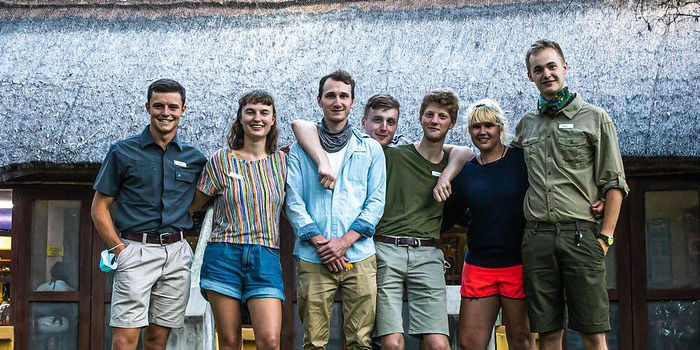
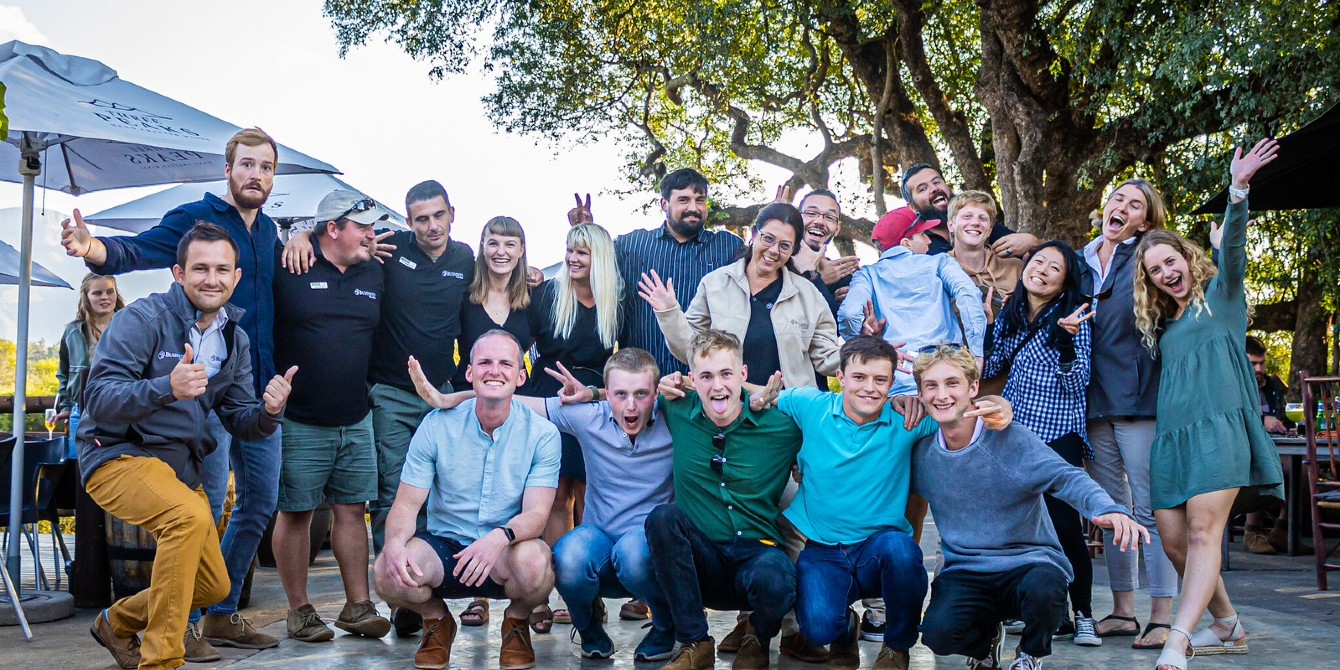
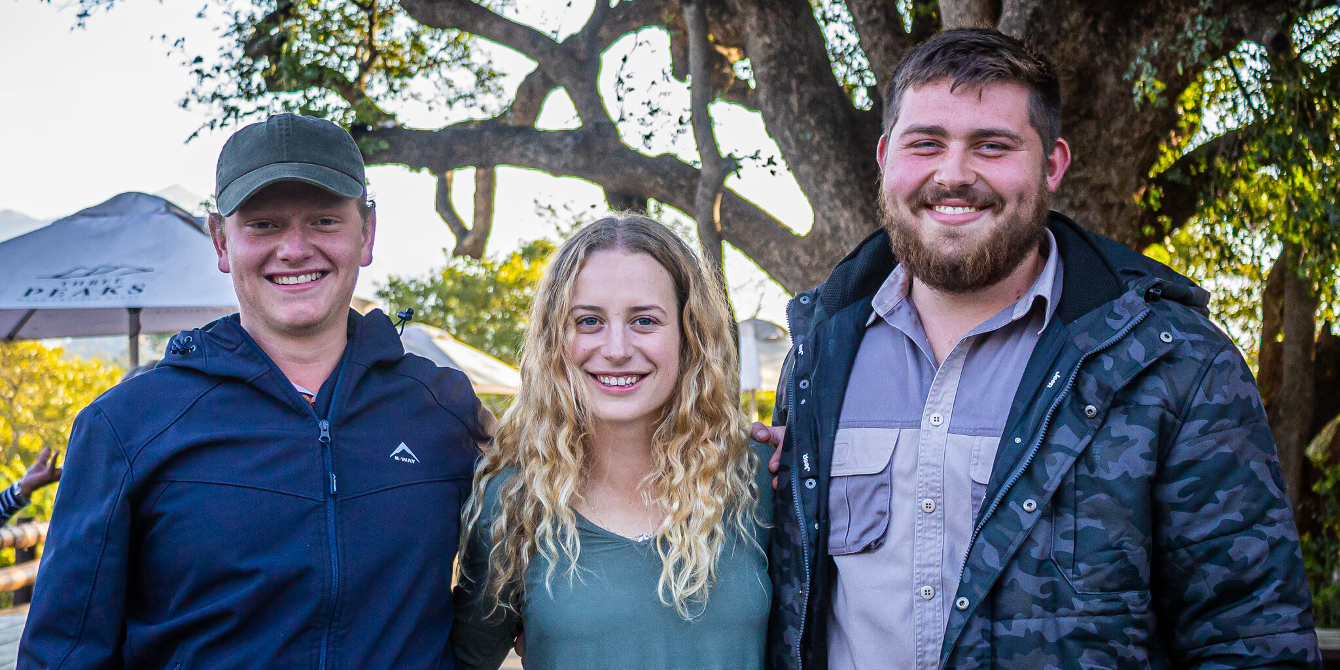
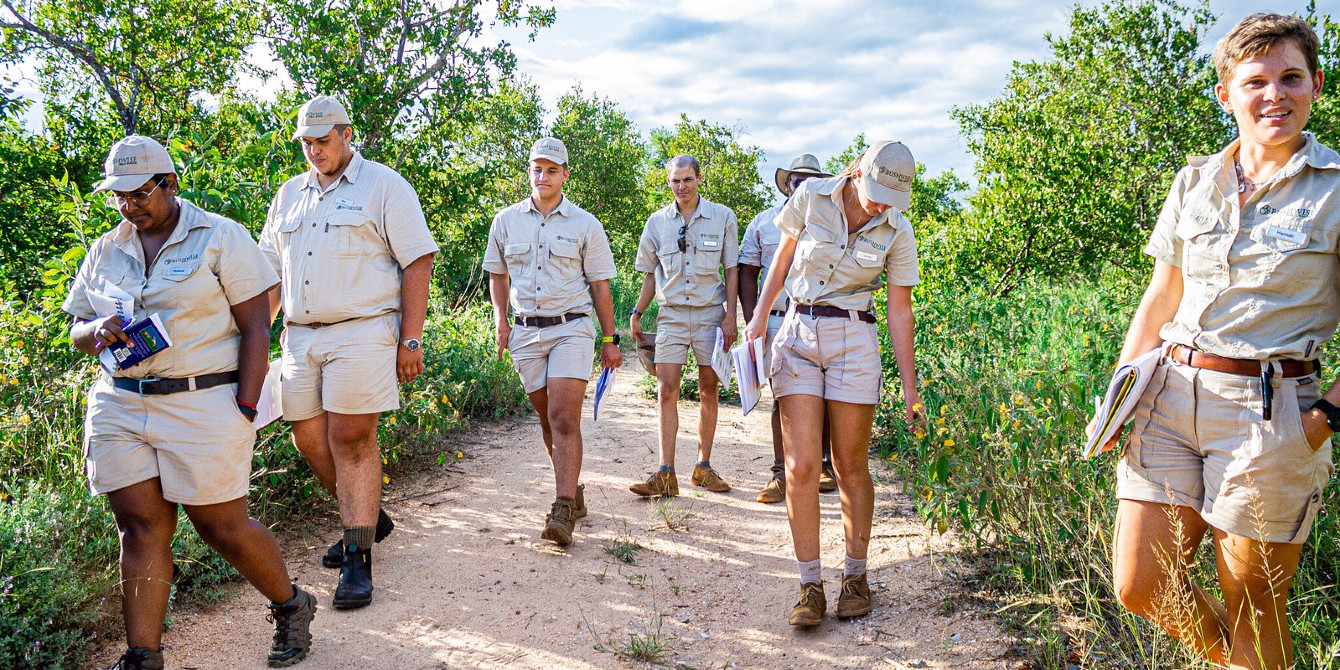
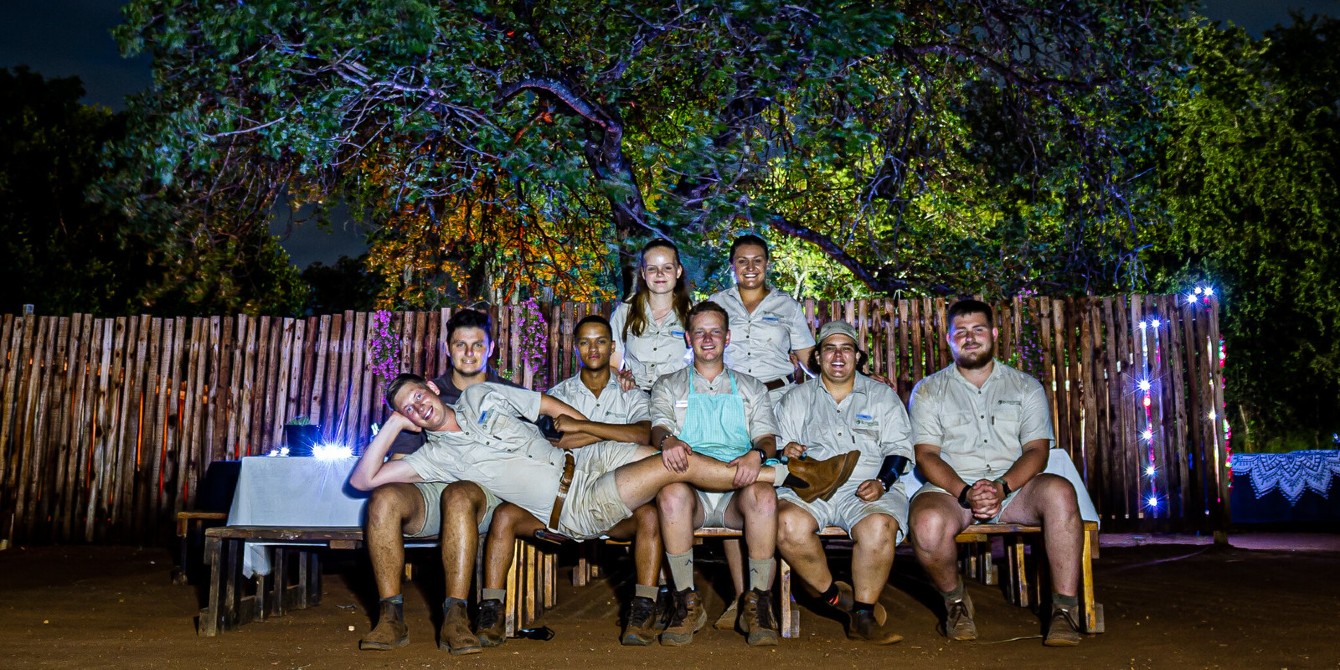
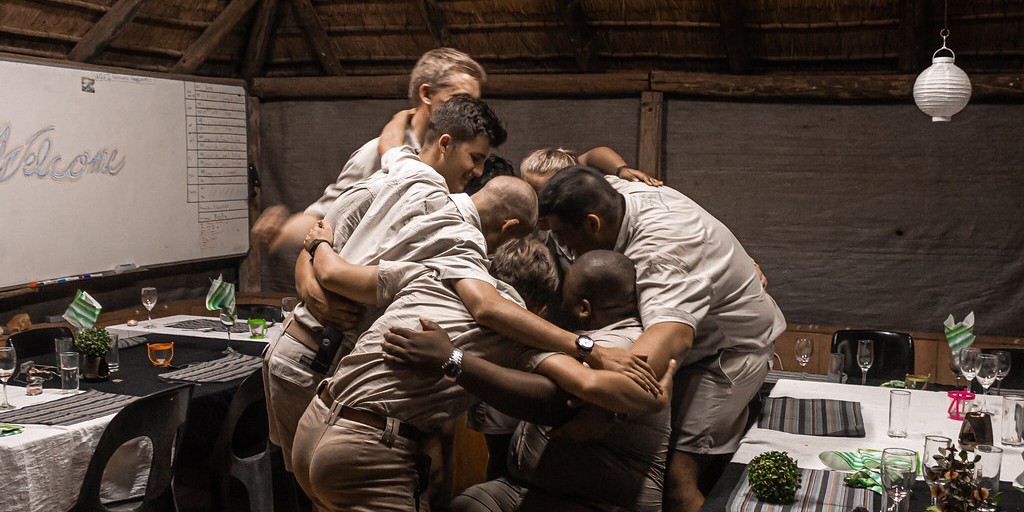
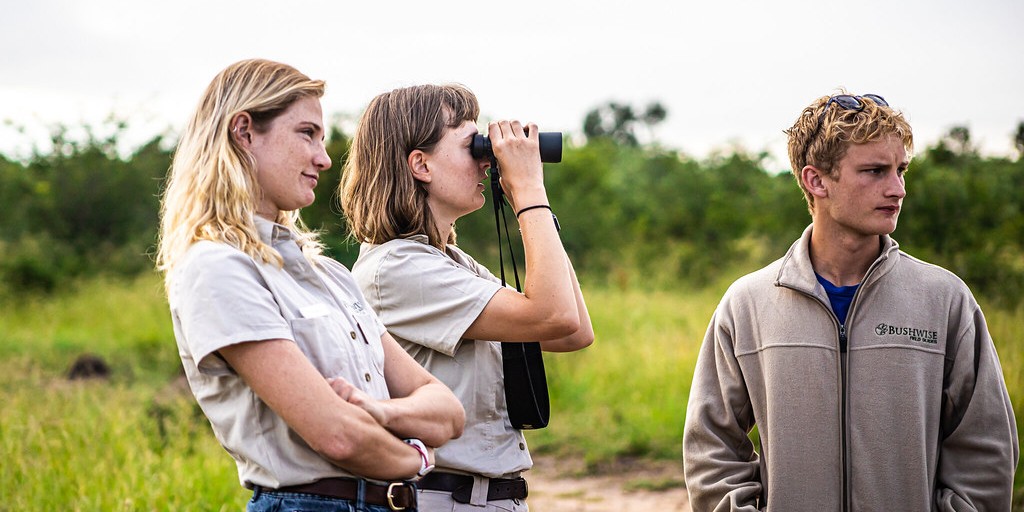
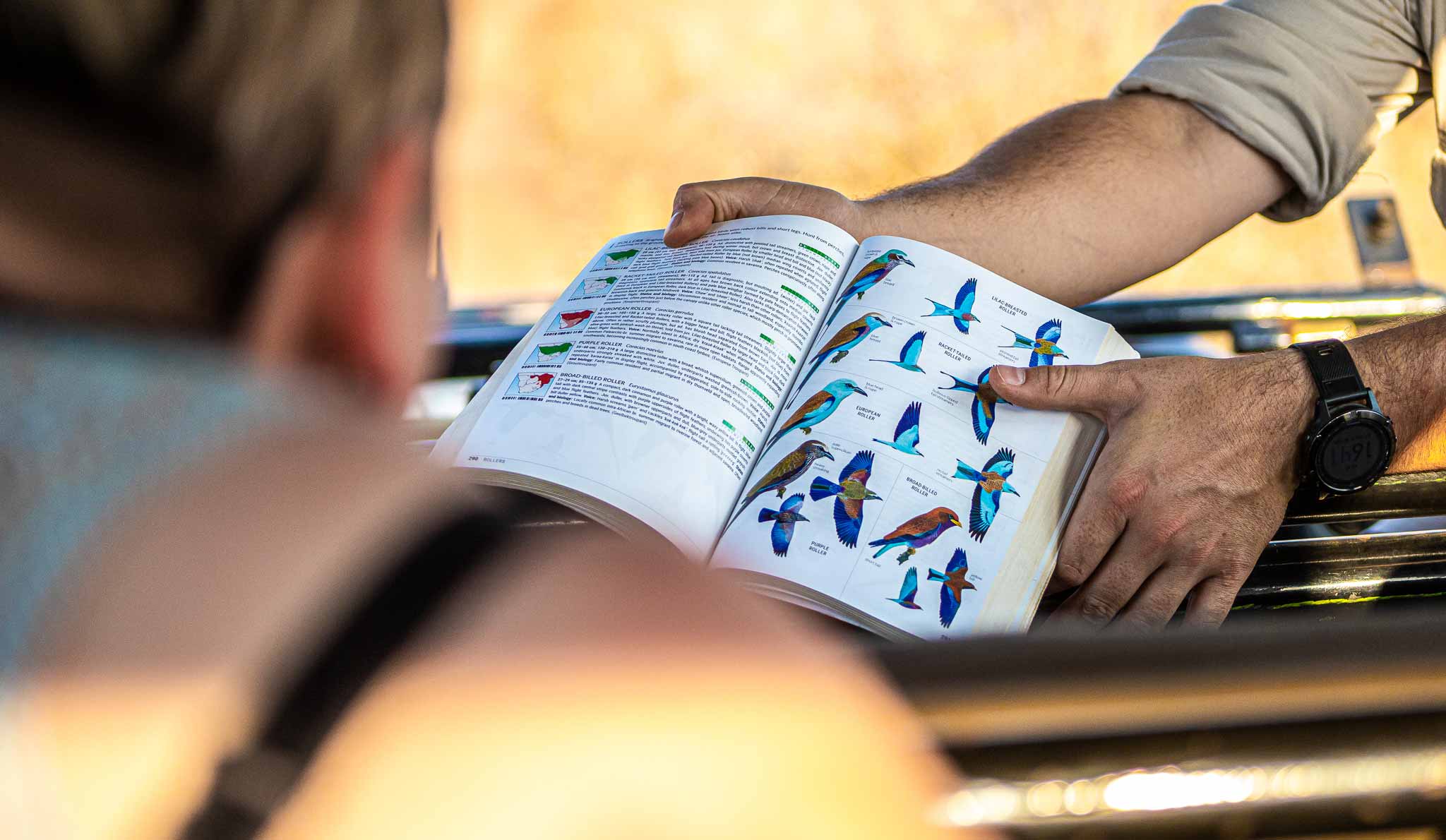
    The beginning of each new Bushwise course fills the Lowveld air with anticipation and excitement. Not only for the newest intake of field guiding hopefuls, but also for us, the Bushwise staff.
    image

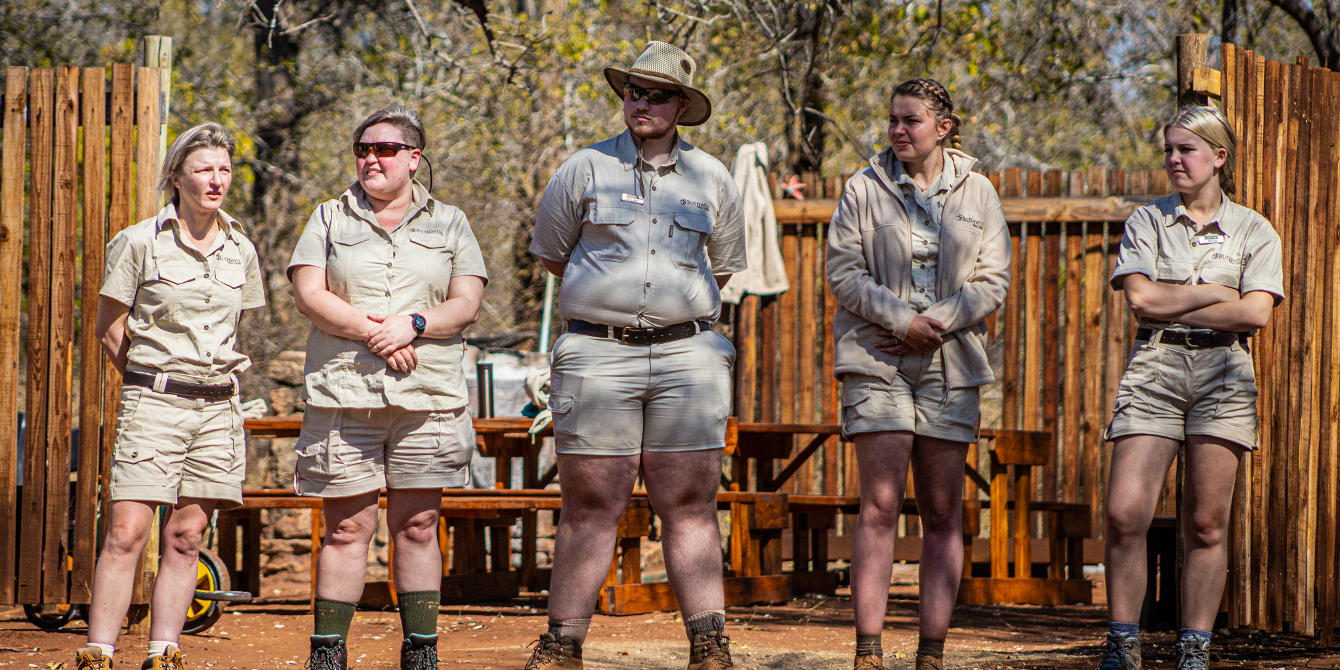
    Before the new batch of students arrive, we know a little about them – their names, where they’re from, and a bit about their backgrounds. But we don’t know the types of people they are, or the types of guide they will become. We just know they have one thing in common (with each other and with us) – they love nature and want to spend time in the bush.
    image

    We are as excited as our new students are. Despite having spent years knocking about the bush there is very little that doesn’t excite us about it. The prospect of sharing our knowledge, experience, skills and stories with the new students reminds us why we do this in the first place.
    image

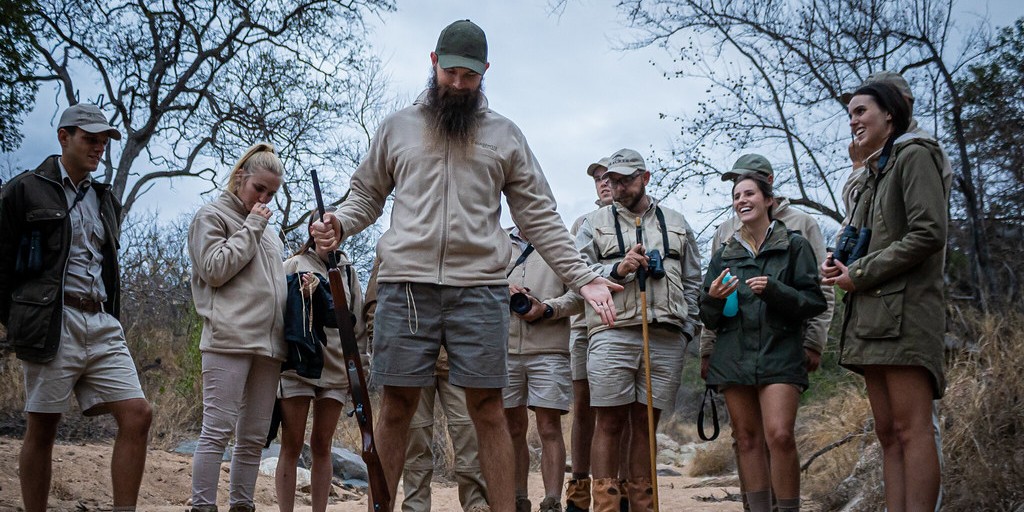
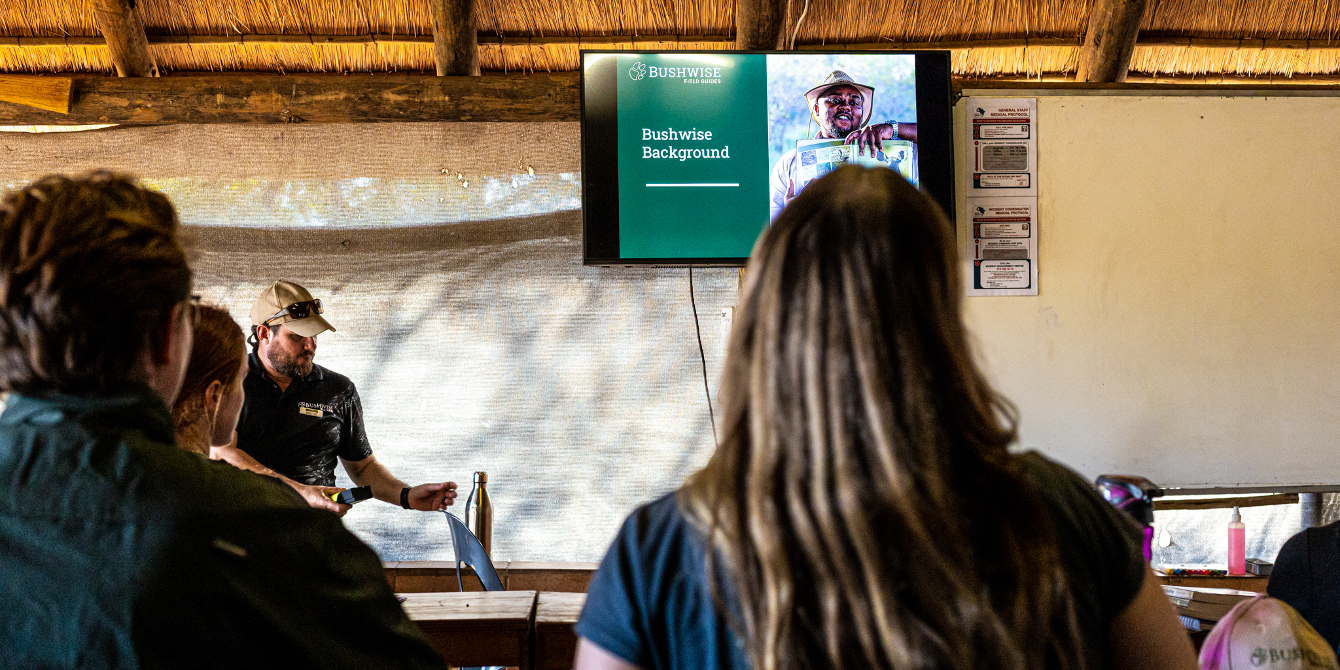
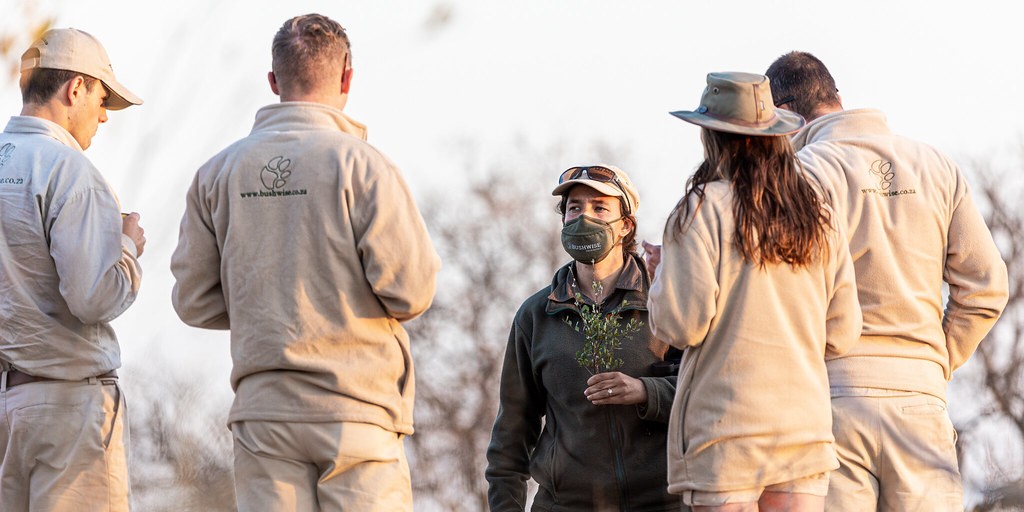
    In the first few days of every course, we naturally have some admin to take care of. Aside from the induction and welcome there are a few housekeeping rules we cover to make sure everyone fully understands what they’ve got themselves into. 

    The most important of these is the safety briefing. For many of our students, this will be the longest they’ve been away from home, fully immersed in the Lowveld environment that doesn’t bend, flex or forgive when it comes to the laws of nature.
    image

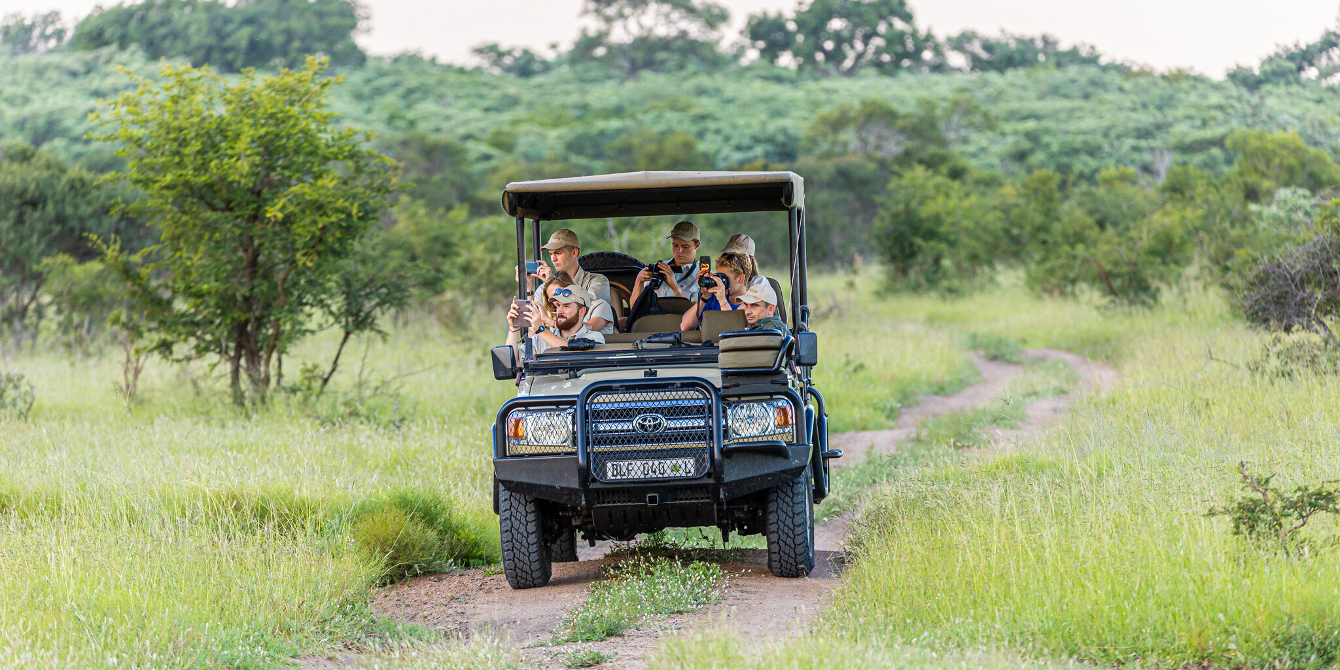
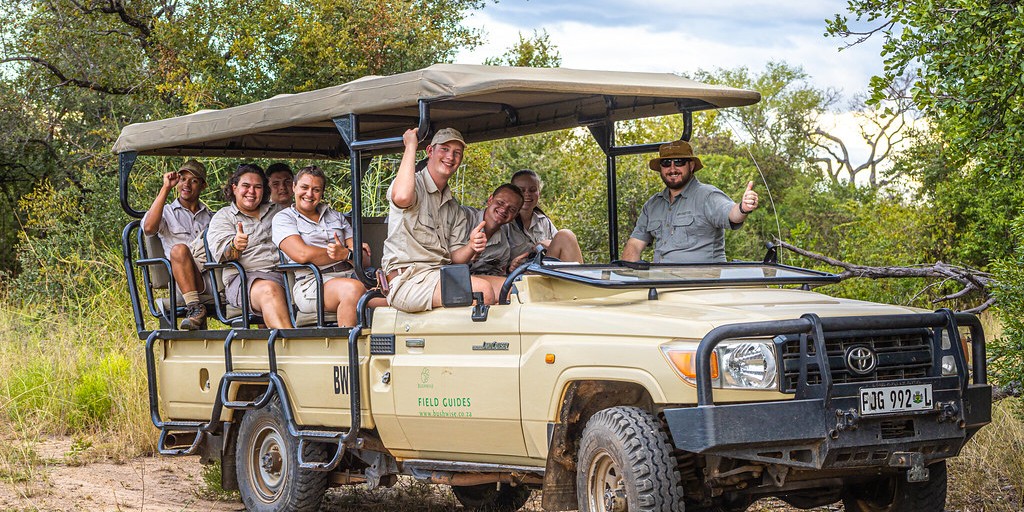
    Once the basics are covered we move on to the next important task – ensuring all the students are capable of driving the safari vehicles. For many, this can be intimidating. 

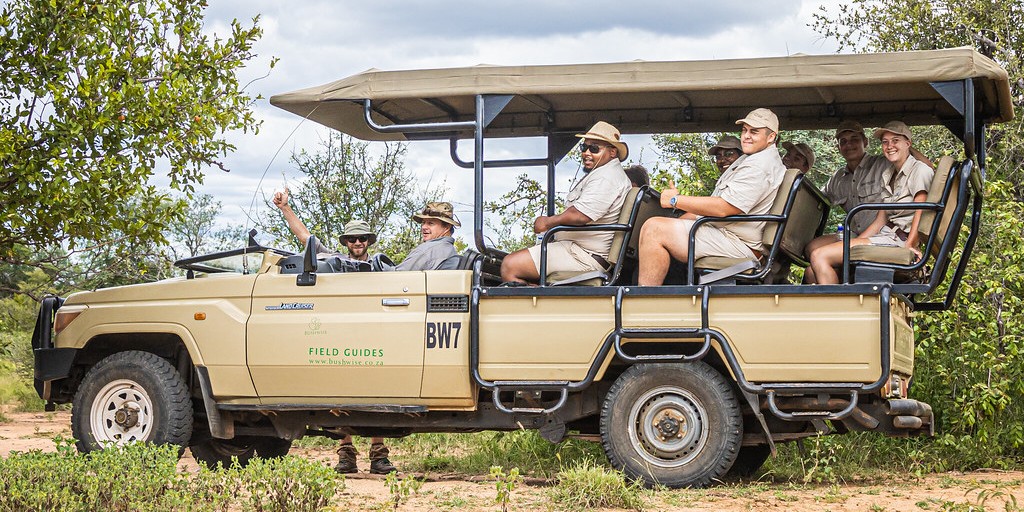
    The sight of a two-tonne Landcruiser and the realisation that the vehicle has not one, but two gear shift knobs can often result in a few minor panic attacks. “How on earth do you expect me to drive this thing?!”
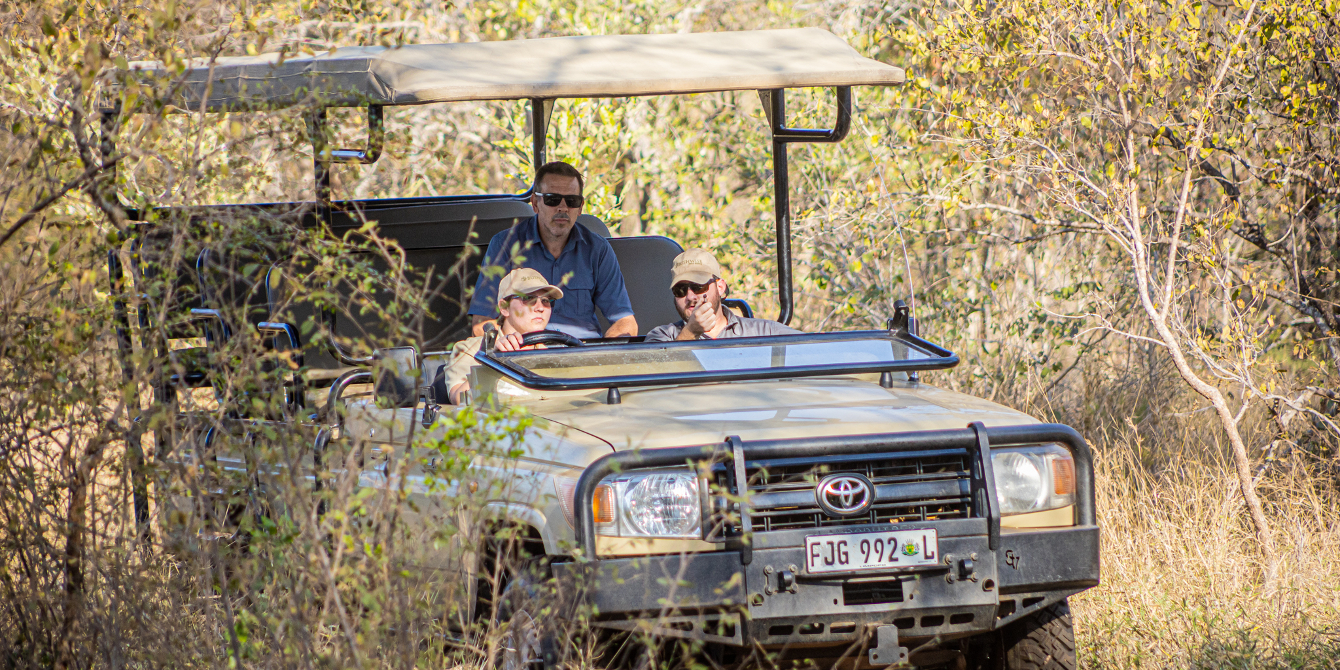
    image

    After the driving assessments are complete those worries are put to rest – it’s just a car after all. A car just like any other, with the added bonus of the option to engage four-wheel drive mode for those steep, rocky roads or thrilling off-road adventures in the Lowveld!
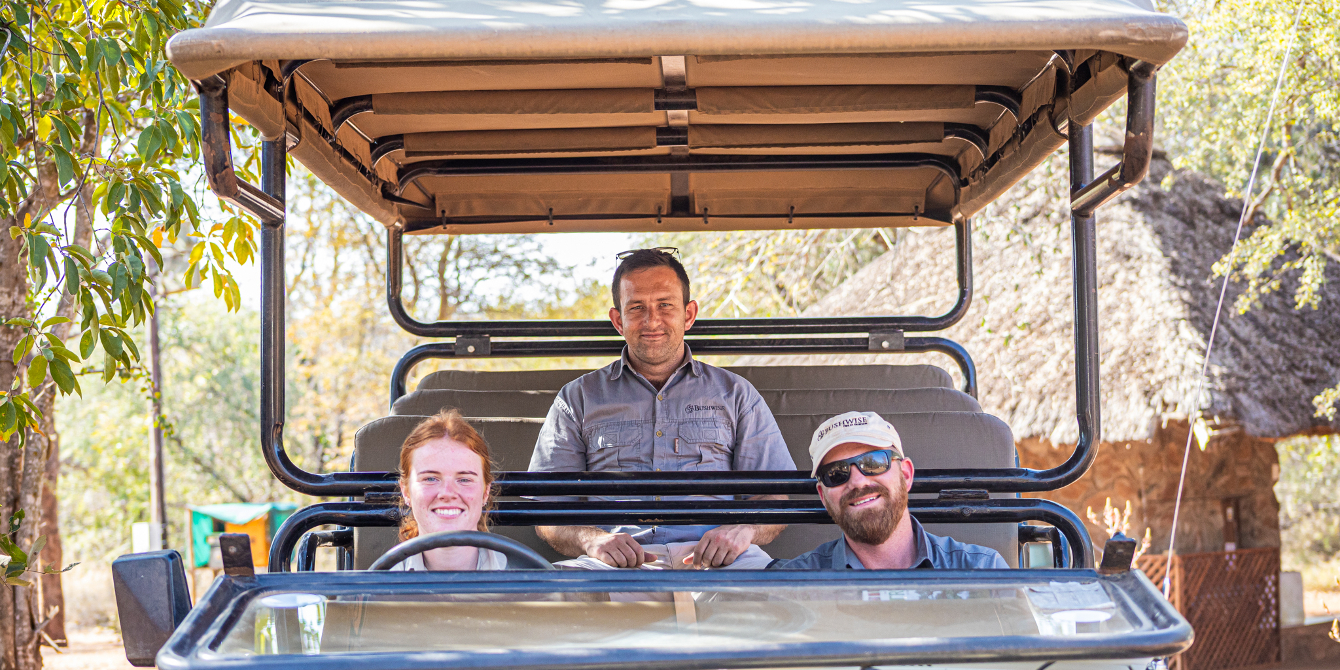
    image

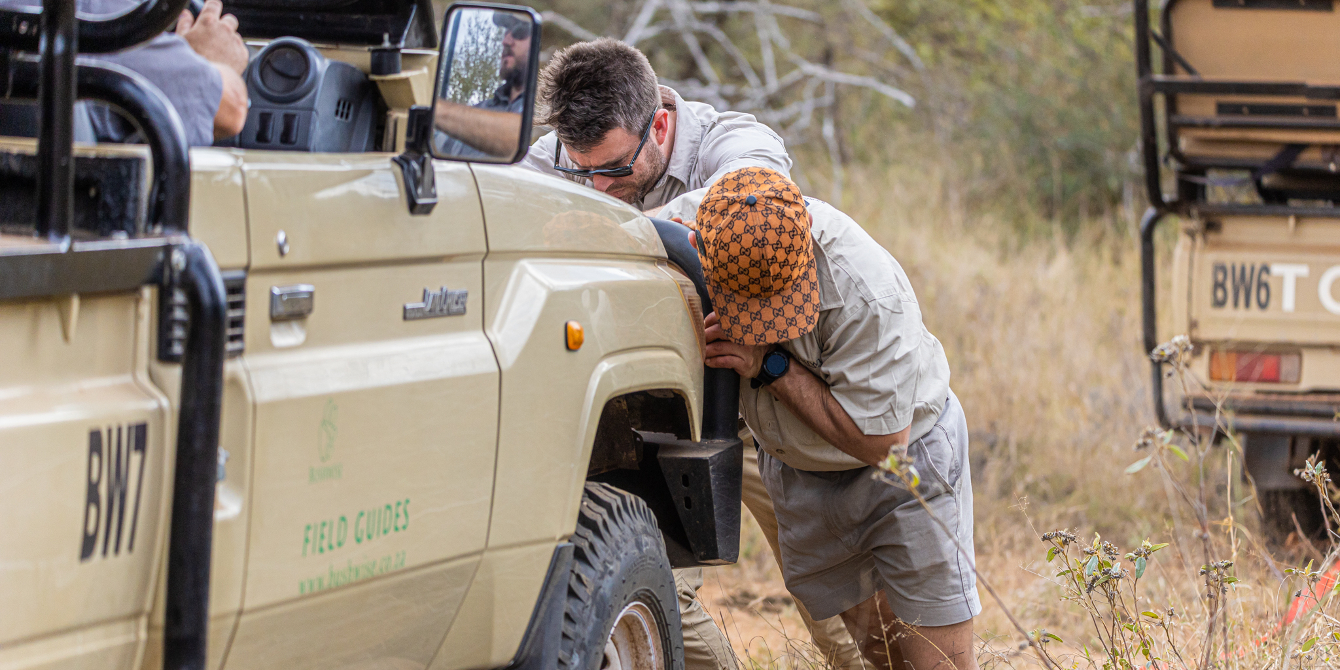
    Ok, now we’ve learnt that we can actually drive the car and it’s not that scary after all. But, what happens if we’re out and one of Africa’s very inconvenient thorns happens to pierce one of the tyres? Enter the high-lift jack, the industry standard tool for changing the 30kg+ tyres on a Landcruiser or Land Rover. 
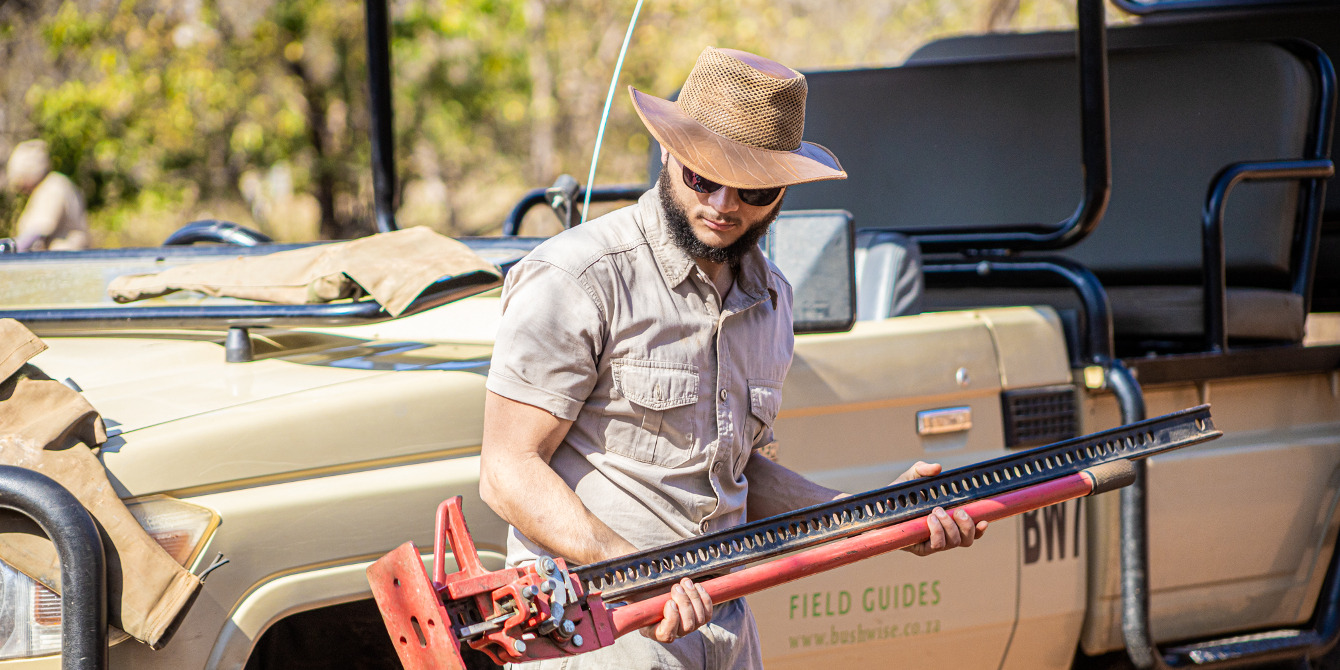
    image

    The high-lift jack is possibly one of the most dangerous tools of the trade if you don’t know how to use it properly. As with every other piece of equipment used on the course, when it comes to safety we take this training very seriously.  We spent a full afternoon under the African sun, rolling around in the red dust learning how to properly and safely change a tyre in the wild.
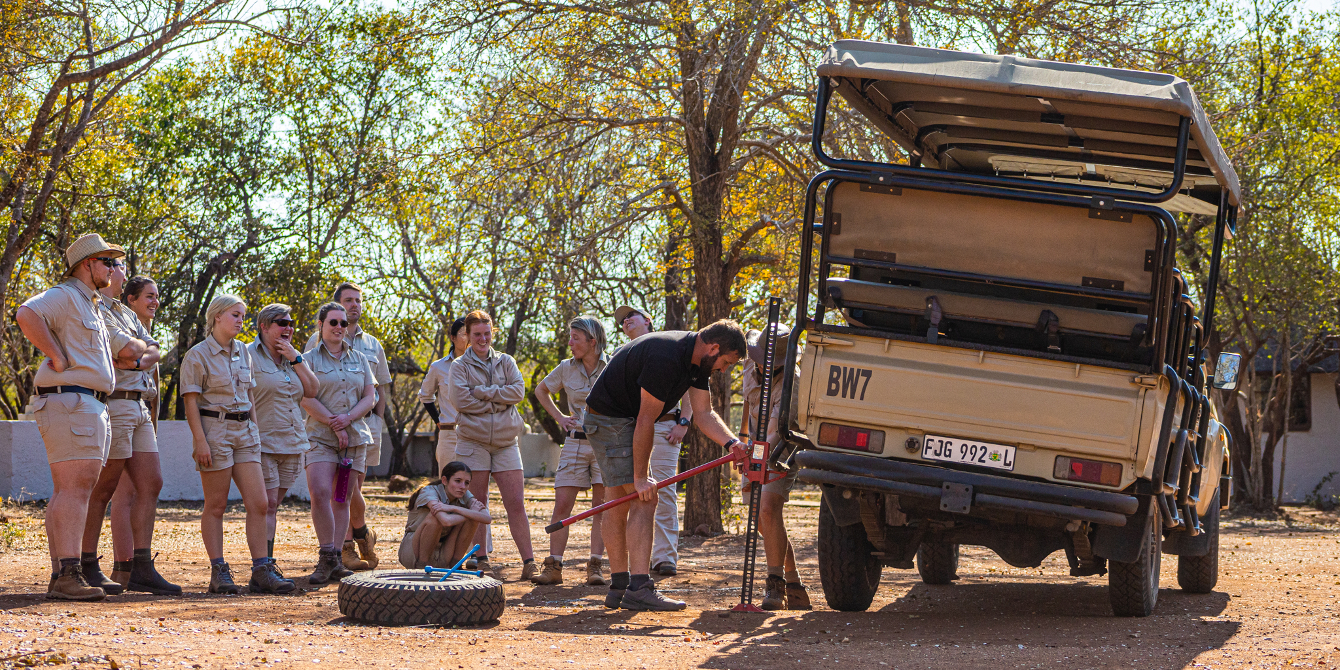
    image

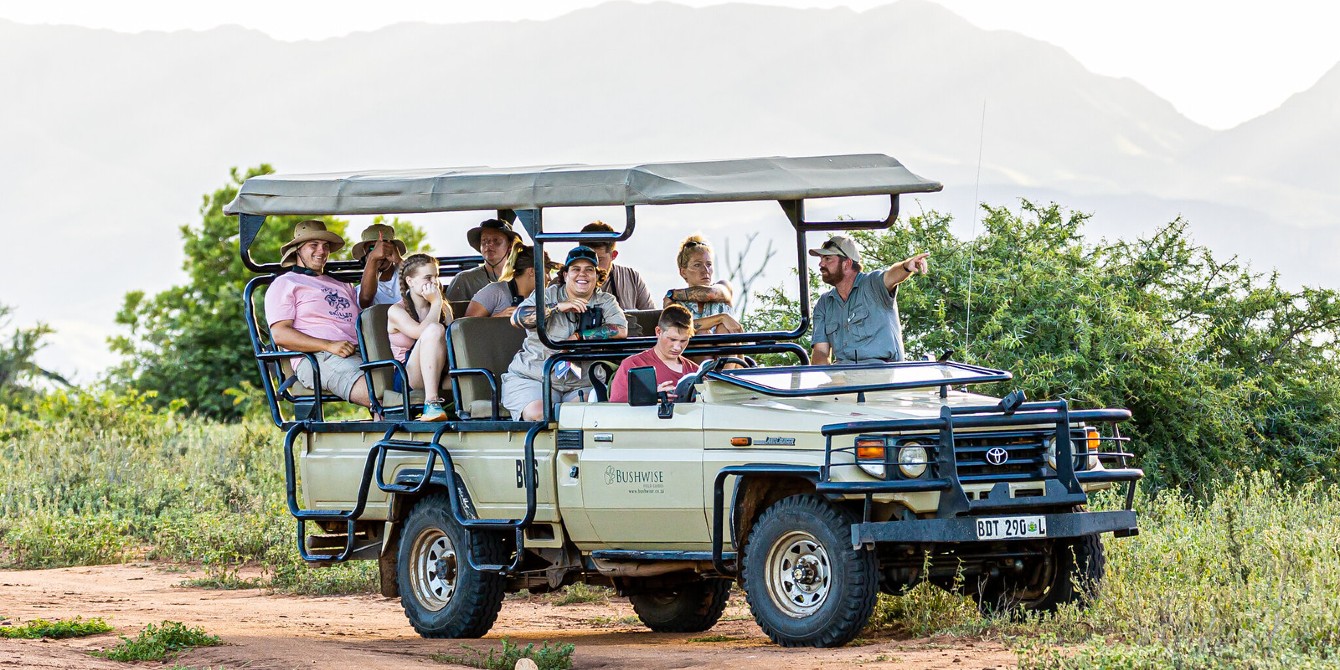
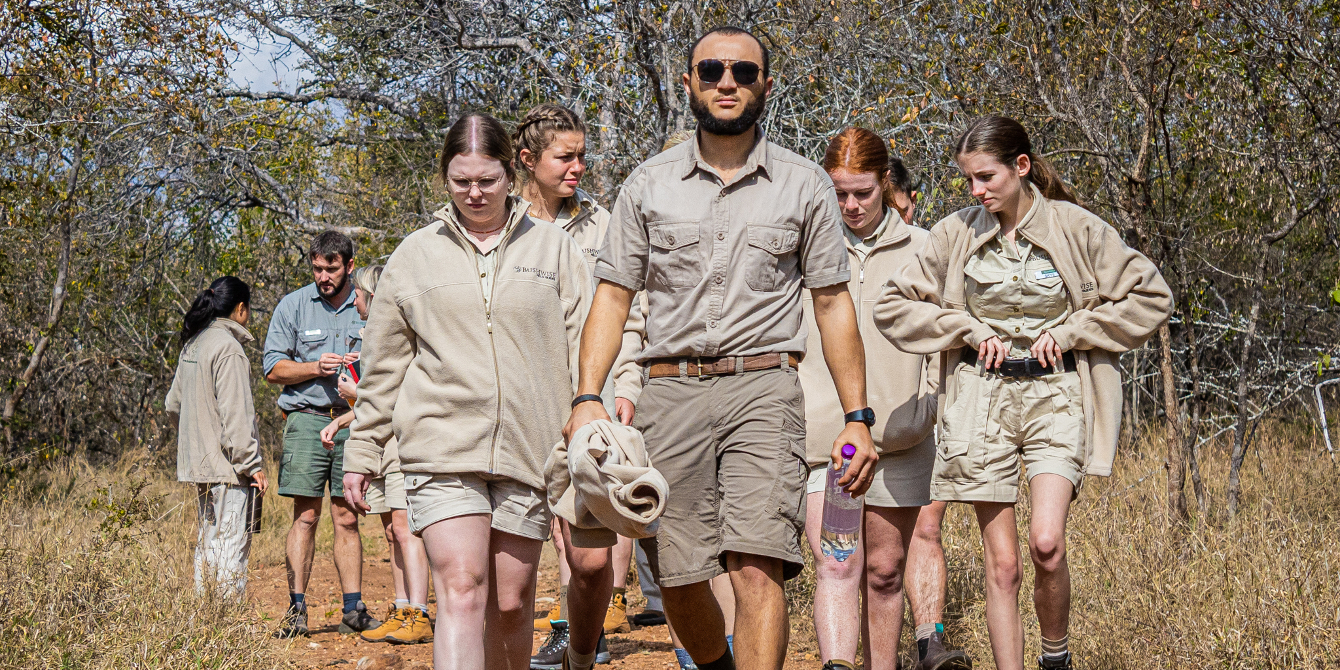
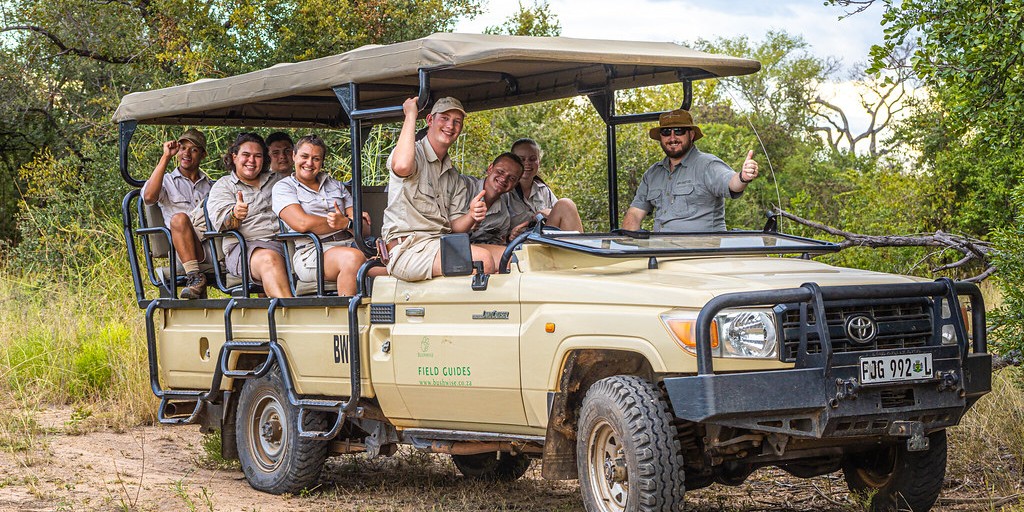
    With all the safety admin done and dusted we finally reached the moment our students had been so eagerly anticipating – their very first game drive in the reserve. 
    image

    The word “excitement” doesn’t even come close to describing the electricity coursing among the students as we prepared the vehicles on a crisp winter’s morning. If we were capable of bottling that electricity, we might just find a solution to the power supply problem!

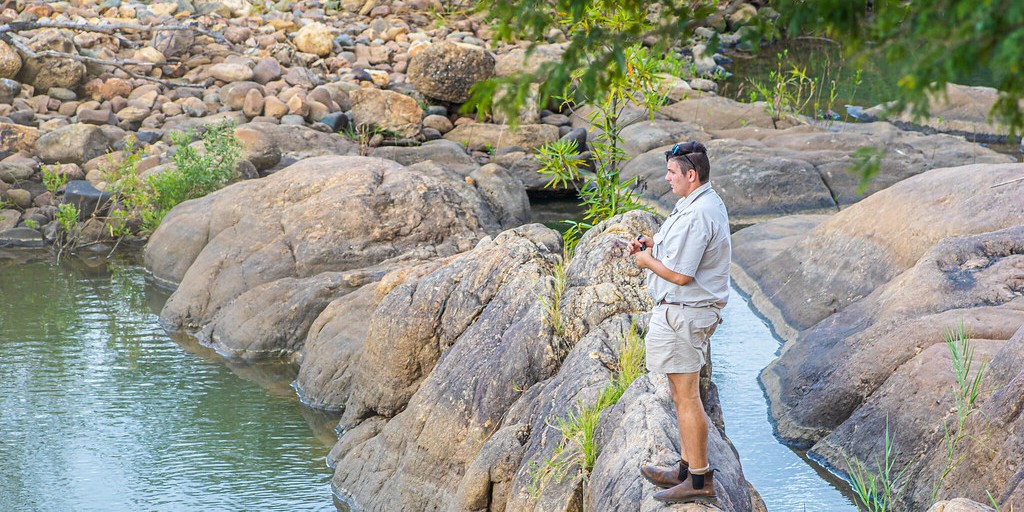
    The first drive in the Lowveld was an adventure, to say the least. We heard leopards calling and chased after them, sadly yielding no result. We stopped for coffee at the river, removed an elephant roadblock in the form of a knob thorn tree (a couple of our students learnt the hard way that yes, knob thorn trees do in fact, have thorns on them). We even went on a little bit of a rescue mission. 
    image

    The smiles, laughter and wide-eyed curiosity grew with each passing minute. As staff, our hearts filled with pride, joy and certainty that by the time this new group of students reaches their graduation in December, we’re going to be injecting the safari tourism and conservation industries with passionate, dedicated professionals who are all wild about the wild!

    We’re so excited to welcome our newest class of Bushwise IFGA Safari Guide students. Are you ready to start your career journey with Bushwise?

    Words and images by: Louise Pavid

    #AdvancedRifleHandling #gameranger #bushwise #fieldguide #safariguide #training #guidejobs #apprenticefieldguide #safari #fieldguidetrainer #fieldguiding #tracking #trackandsign #gamedrive #guiding #fieldguidecourse #fieldguides
  • Prepared, excited and now a Bushwise graduate

    BY Brody Merles, Bushwise graduate

    Camp manager blogs are written by our current students who each get a chance to lead and manage a group (of their fellow field guide students) for a period of one week.

    I could almost smell the nervousness of my peers coming into one of the most important weeks of all our lives. It was finally the week we had all been working so hard towards, practical assessment week! It was finally upon us after a well needed off-week, which I’m completely honest probably should have been spent glued to a good book on animals of the Savanna biome. 

    image

    Instead, it was spent perusing the tree lines of Kruger National Park for any kind of fascinating life we could find – learning is so much more fun when it’s done practically! It was a week filled with excitement.

    One-by-one, we all gave our best versions of a game drive that would hopefully blow the beards off our assessors’ faces (well,  at least my assessor’s magnificent beard) and one-by-one we were nailing it! My personal game drive ended up being the most fun I’ve ever had. Probably because I decided that morning that as long as I have fun and enjoy what I’m doing all my guests can feed off that positive energy and have a blast. 

    image

    This past week turned out to be a very productive one and has given me a completely different view of myself by showing me that I can actually achieve my goals and dreams. This week has also done wonders for my self-confidence (possibly a little too much, but hey let me have this one).  

    All my friends that played a massive role in getting me to this point also have made gigantic leaps in their own ways, which really does give me that warm fuzzy feeling inside. It feels like we’re a big happy Bushwise family, even once we’re Bushwise graduates.

    image

    One of the most crucial lessons I’ve learnt, not only over the course of this week but the entire course thus far, is that everyone is different in their own way. This really means that we bring a different perspective to the overall work space. Instead of avoiding these perspectives, ideas or personalities, we should rather incorporate everyone’s personality into the family dynamics (dysfunctional, weird and crazy aspects as well). 

    I found out I really enjoyed trying to get a chuckle out of the trainers with a well-timed joke here and there, whether it be a joke for Darryn or asking Francois a pointless question just to see the funny faces he would pull. Riaan was a gold mine of jokes that were carefully hidden by his professionalism. The dynamic personalities of everyone around me made for the best five and a half months of my life.

    image

    As the last day of being around these people and new found friends fast approaches, I have been feeling conflicted with my emotions. I look forward to being home with my family and friends, but then the realisation of leaving all these new found friends leaves me wanting to relive the last half a year over and over again. 

    All this time I thought I was doing this course to become a Bushwise graduate and qualified Field Guide. I never thought I would end up leaving with so much more than just a qualification. I’m leaving with the experience of a lifetime, filled with memories with some of the most incredible and amazing people. 

    image

    In closing, for anyone that may be on the fence about whether the leap or not, it’s worth it. I can assure you that it is without a doubt worth it. 

    I can’t emphasise how invaluable this journey has been for me. Yes, it has been a lot of work and it has been stressful at times. But it’s been worth it for this feeling of triumph at and the friends made along the way. And of course because of the beautiful sunrises and sunsets, and the incredible animals we got to see.

    Wouldn’t it be great if you never worked another day in your life? Through a career in field guiding, this could be you. Apply today to join Bushwise and start your wild career journey.

    #bushwise #qualification #safariguide #animals #tracks #apprenticefieldguide #safari #wilddogs #tracking #trackandsign #fieldguidecourse

  • My game path through the African bushveld

    Bushwise IFGA Safari Guide students forge their own game paths as they grow in their careers. Elmar Kleinhans shares his experience in the last few weeks of our six-month course. 

    It was the last stretch of the course with only three weeks left before everyone headed off on their separate ‘game paths’ in the African bushveld.

    image

    With students doing drive assessments (our last assessment before becoming an Apprentice Field Guides), the stress and tension levels were high. In these drive assessments we must demonstrate all the things we have learned and experienced throughout the last five months. Things like how animals behave in their natural environment, how different plants can be used for many medical uses, and the different types of birds and how to identify them. 

    We must put this vast knowledge into a three-hour game drive that is meant to be entertaining and enjoyable for our ‘guests’ and show them how we guide. It creates a lot of stress for us students, but it also makes it fun and interesting .

    image

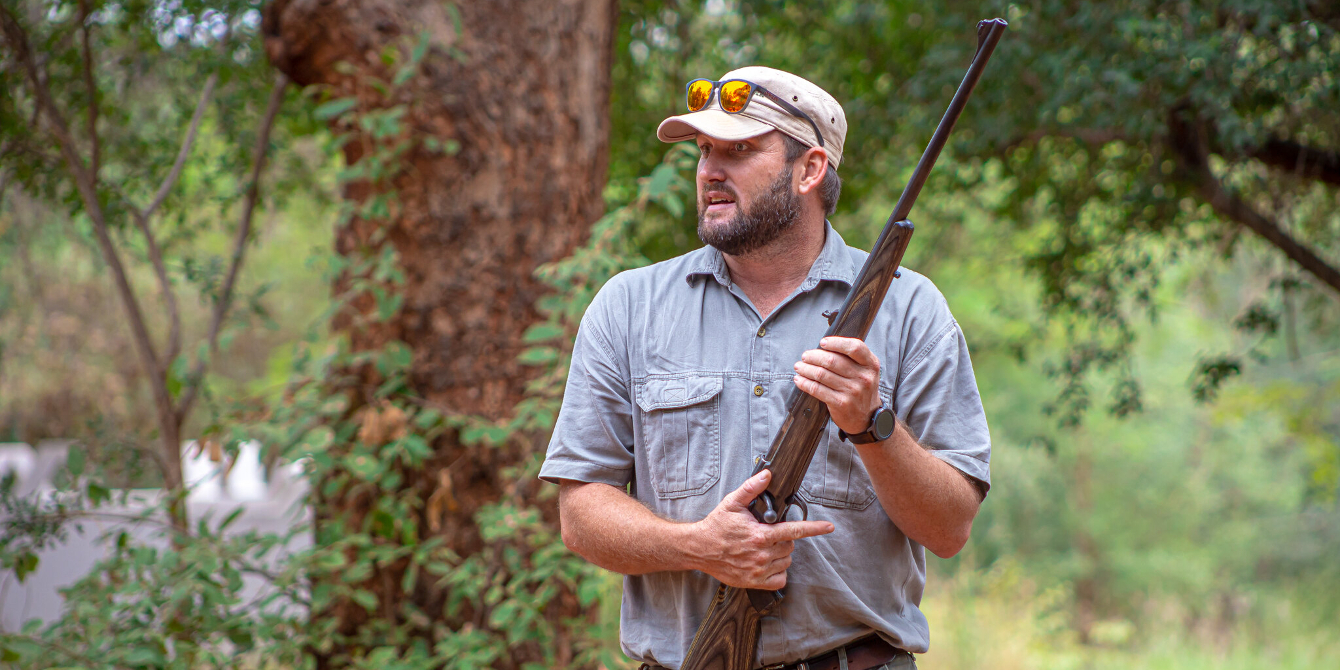
    Once we’ve completed our practical assessment drive, along with our written assessment, we’ve earned the qualification of CATHSSETA Apprentice Field Guide. The next step is to prepare ourselves to fire a .375- calibre bolt action rifle in Advanced Rifle Handling (ARH). This step is very important for when we want to trail guide in the future. 

    This is not an easy task as the calibre is big and packs a punch, while the rifle itself is very heavy, and it seems to grow heavier as you practise shooting at targets. We go through a few exercises that get cumulatively harder and harder. The last and hardest one is the lion charge because the lion target moves at a very fast speed (still much slower than a real lion), which puts a lot of pressure on the shooter as it gets closer and closer to you. At the end of the day, my arm was quite sore and weak after holding that rifle for so many hours.

    image

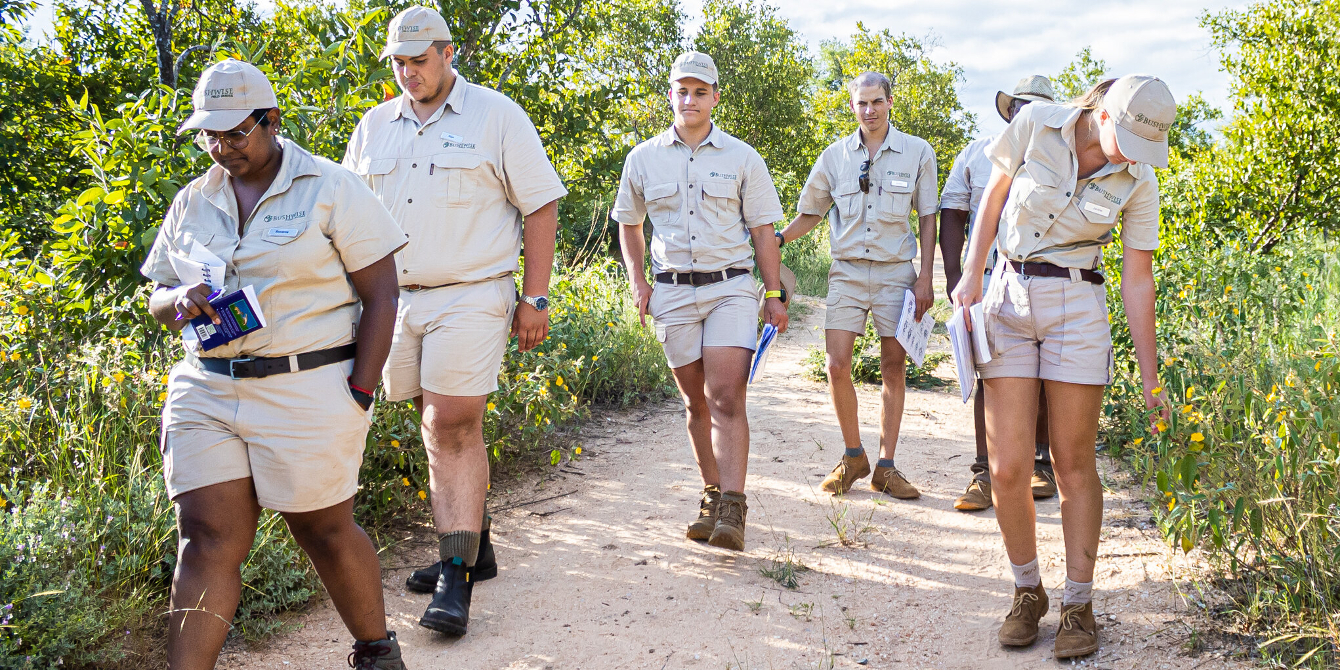
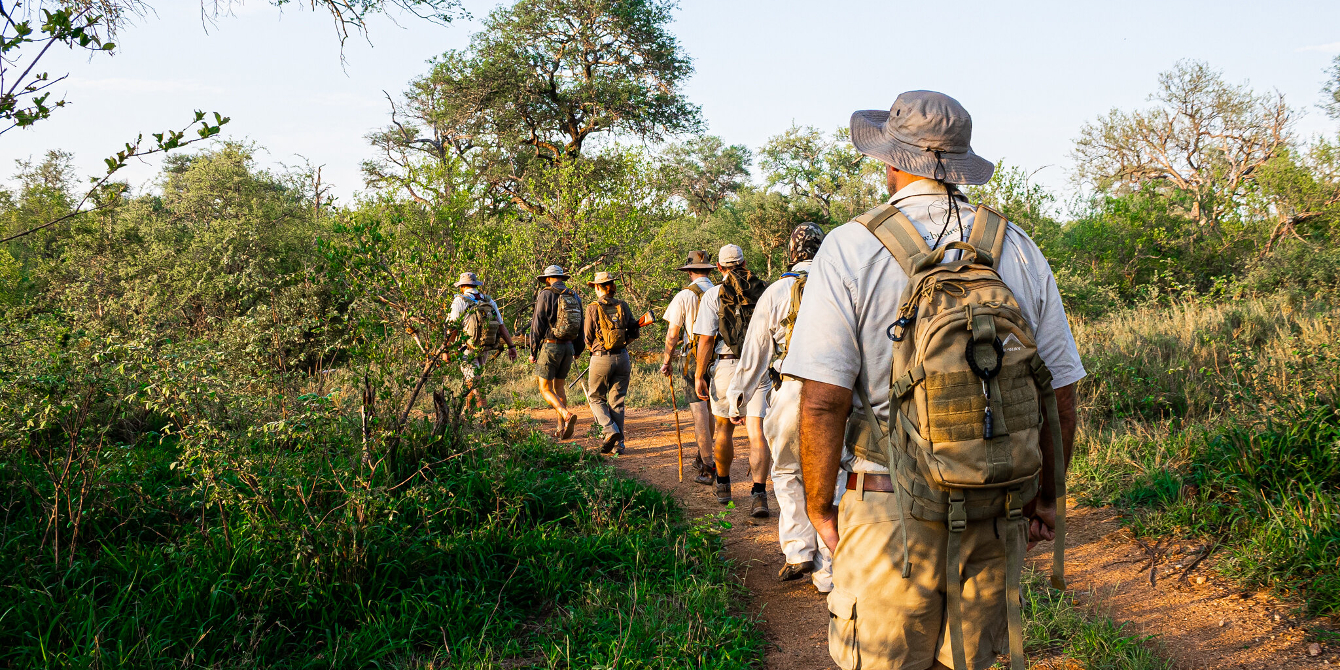
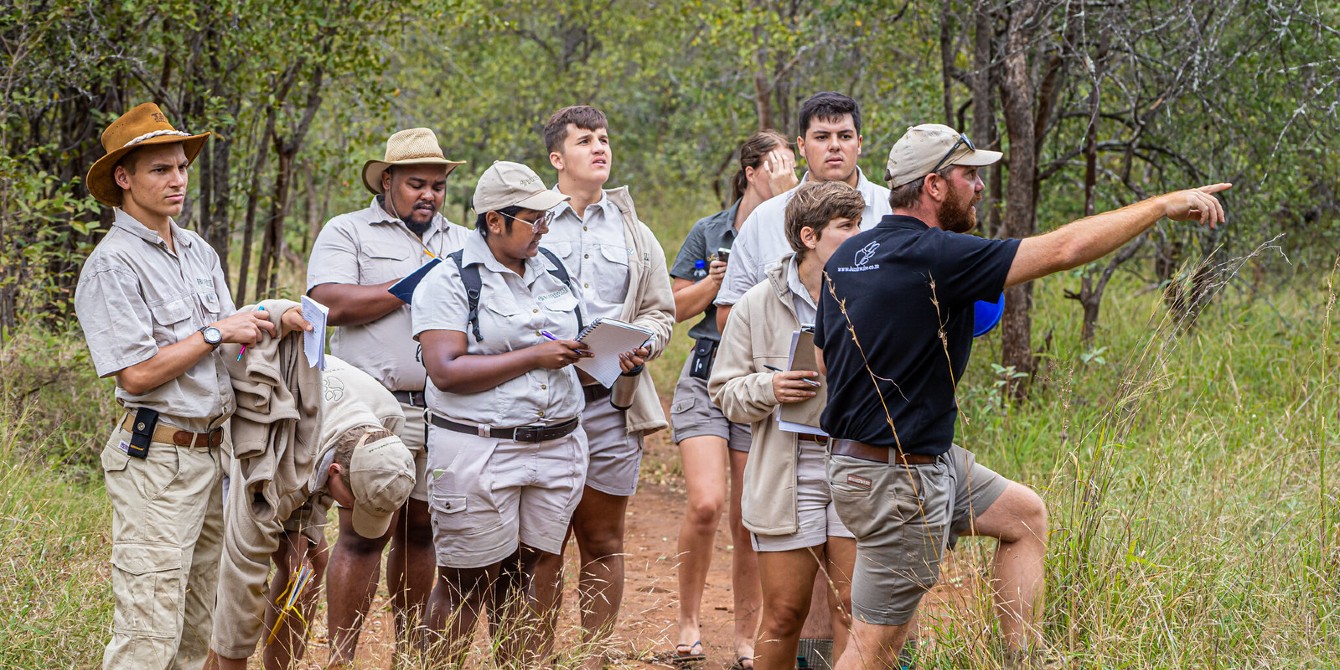
    Following our ARH qualification, the fun really begins. This is where we will experience the African bushveld from a different angle, not from the vehicle, but rather on foot. This training prepares us to earn our Apprentice Trails Guide qualification one day, through Bushwise and Lowveld Trails Co. 

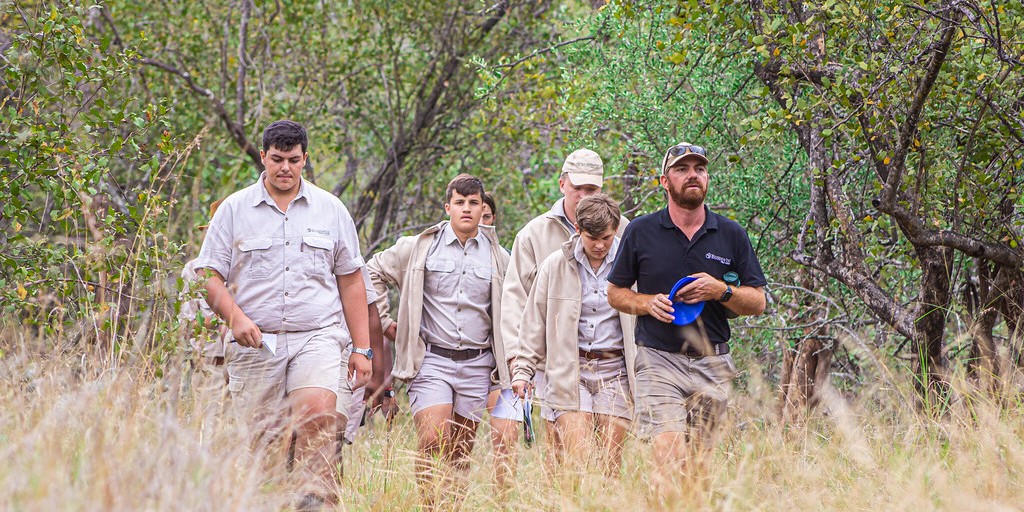
    During this training, we work to observe animals on foot without altering the animal’s behaviour in their natural habitat. We experience so much in the few days when we are out on foot in the bush between all the trees, insects and animals. And it’s amazing to look for animals and see how they act in the natural environment without a vehicle engine roaring.

    image

    After all of the intensity and excitement of these activities, we spent a day in Kruger National Park with our fellow students. There we can just enjoy a relaxing day in the African bushveld, talking about all of our shared experiences, memories, what we’ve achieved and where we’ve been placed. 

    We head to graduation where we met other Bushwise students at our annual prize giving ceremony, and we got to know them and share our experiences and feelings about the course over the last six months. We had a lot of laughs together that evening.

    image

    After all that, the end of the Bushwise course is slowly crawling closer and closer as we reach a turn in our game paths. And it’s sad that the course is coming to an end, but I’m glad that I joined the course and I’m going to miss everyone at the end of the course when we all say goodbye to each other and everyone going their separate ways.

    Find yourself immersed in the African bushveld soon, by applying for a Bushwise course. You could be walking down a game path soon, just like Elmar!

    #gameranger #bushwise #fieldguide #safariguide #apprenticefieldguide #safari #fieldguiding #gamedrive #fieldguidecourse #studying #fieldguides
  • What Bushwise means to me

    BY Jordan Fourie, current Bushwise student

    Camp manager blogs are written by our current students who each get a chance to lead and manage a group (of their fellow students) for a period of one week.

    What does Bushwise mean? Is it for a certificate that says, “you are a legal field guide” or is it just to learn about the bush and to become, in a sense, “bush wise”?

    image

    My Bushwise journey started out rough. Just before I was supposed to arrive on campus, I tested positive for COVID-19. My parents and I were distraught; we had just travelled 11 hours the day before only to find that I was not able to join my fellow students on campus. Postponing my course date would have caused more fees for my parents and I. Instead, the Bushwise staff went out of their way to find me comfortable accommodation and allowed me to start in a unique way, by quarantining first. I will always be grateful for that. 

    That week was confusing for me. I had absolutely no symptoms, so it was as if I was just living a normal week. Being alone was great because I still Zoom-called into activities and I had one of the Bushwise staff to check up on me every now and then. That really showed me how important we students are to the Bushwise staff.

    image

    The Wednesday evening after my quarantining and negative test result, I finally joined campus. Being the only student to not be there from the start was hard, and I felt like an outsider. But the students and the trainers made me feel welcome and I slowly started to feel like a member of the Bushwise family. 

    Studying came easy to me which was surprising because I was not very good with marks in high school, I was extremely nervous about the theory part of Bushwise. However, getting full marks for my first test took that fear away! I was in my element, having trainers that made it fun and interactive made studying that much easier.

    image

    I made major improvements in my driving skills as well. From getting used to the vehicles to being able to do a proper guided experience, I improved over time. Obviously I still have improvements to make, but I am getting there and that’s what matters. 

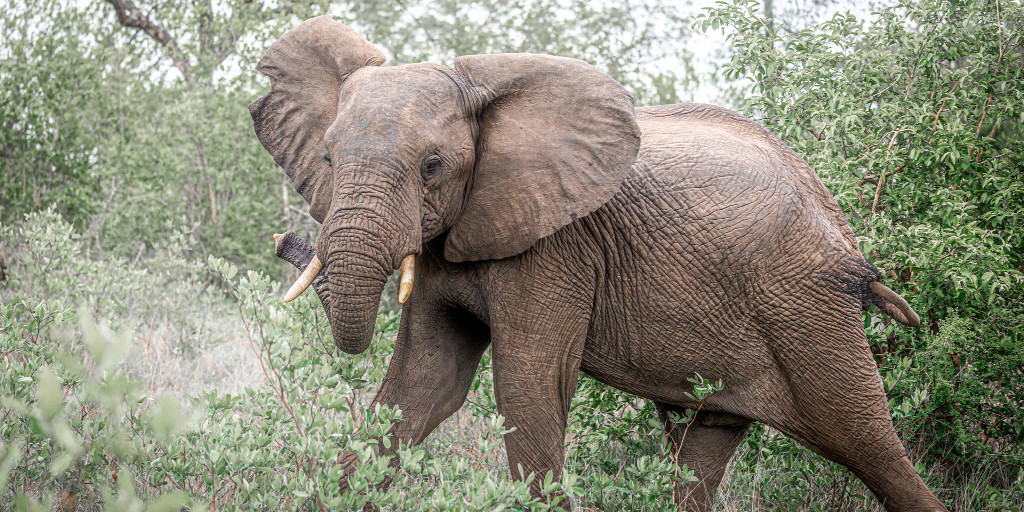
    On my last practice drive, I encountered South Africa’s giant, the African elephant. While I have a healthy respect for animals, I‘m genuinely not afraid of any animal. However, being in front of a beautiful majestic elephant still sends shivers through my entire body! 

    No matter who you are, whether you have no fear of anything, when an animal bigger than your vehicle stands in front of you, you become a mouse, powerless compared to it. Thankfully, this interaction (as with our other elephant observations) was peaceful and the elephant didn’t mind our presence.

    So, to answer my question in the beginning, I think Bushwise is those things but also something else entirely. Yes, it includes becoming a legal guide, and yes, it’s helped me start to fully understand nature. But at the end of the day that is not all Bushwise is about. 

    image

    To me, Bushwise is a family and the experience is about the journey. As a student, you’re like the little sibling that needs to be protected but not held back, to grow as a person, to come out of your shell, and to learn how to act in certain situations. It’s about the memories we make along the way and developing a passion for nature. 

    Through Bushwise we can become guides that make an impact on others, to help nature regrow and survive. If we don’t, the next generation won’t be able to see and experience the wildlife we have today. 
    image

    In David Attenborough’s words, “The fact is that no species has ever had such wholesale control over everything on earth, living or dead, as we now have. That lays upon us, whether we like it or not, an awesome responsibility. In our hands now lies not only our own future but that of all other living creatures with whom we share the earth.”

    Help protect our natural world for the next generation by starting a career as a field guide. Apply today to join a Bushwise course.

    #bushwise #safariguide #davidattenborough #apprenticefieldguide #safari #gamedrive #elephant #fieldguidecourse

  • My life on a Bushwise field guide course

    Bushwise student Rian Gouws talks about his choice to join the Bushwise IFGA Safari Guide course, and how it’s opened his eyes to many new experiences. 

    Camp manager blogs are written by our current students who each get a chance to lead and manage a group (of their fellow students) for a period of one week.

    My name is Rian Gouws and I come from Boksburg, a city near Johannesburg. In my younger life, I was surrounded by animals of all kinds, from birds to antelope, cattle and fish. My dad and grandad often took me out on weekends to go see our farm and go fishing.

    image

    One day, my dad’s nephew – who owns a game lodge  – came with us and told us many stories about what it is like managing a lodge. From then on, I have been excited by the idea of managing or working with animals and learning how they survived in the wild. He taught me how animals reacted to different situations and how to read their behaviour. 

    So, I decided to join a Bushwise field guide course after school to understand animals and educate people about them. In the past five months, Bushwise has changed my view on nature and the world.

    Starting out I was nervous because there was a lot to learn and a lot of theory to get through.  But I didn’t mind this  because all of it was done to educate me so I can pass on the knowledge to other people. Sitting in class and just listening to the trainers speak about their experiences motivated me even more. Being surrounded by trainers and students who share the same enthusiasm and interests as me has made just about everything about the experience even more enjoyable. 

    image

    Even when I’m washing dishes and taking out the dustbin on campus, I’m reminded that I’m in nature. Sometimes you can hear a hyena calling in the background or see a sable walking down to the dam to drink some water. I always like these moments because I feel part of nature then, just listening to what’s going on and observing my surroundings. 

    Game drives were a whole new experience for me because I haven’t been on very many. Driving around and looking for animals was almost as much fun as seeing them because I made so many friends on those drives. We would stop at an interesting tree and listen to the trainers explain interesting facts and stories about this particular tree, which we will one day get to tell our visitors. 

    image

    I always like hearing about the beliefs behind certain trees, like how a buffalo thorn would protect you from lightning or how by eating a marula tree bark could determine the sex of your unborn child. I feel like it’s important to tell these stories so visitors can understand more about the people who lived here and how these stories form part of their culture.

    One of my favourite experiences on this field guide course is when we came across a curious tree squirrel that was standing guard in the middle of the road. As we were observing him, he slowly crept closer until he was right next to the car’s front right wheel. Then, with an extreme burst of speed, he climbed onto a dead tree next to us and just stood there not three metres away looking at us. As he attempted to make a jump to the next branch, he decided against it … MID AIR. With a motion I’ve never seen before he made a backflip and landed on the ground. The whole car burst out laughing because when in your entire life have you ever seen a squirrel bail out of a jump for no apparent reason?

    image

    Being camp manager for a week was quite stressful because I had the responsibility of keeping everyone in check and it was up to me to try and resolve any problem that occurred or pass it along to the head trainer if it was serious. It was much nicer than I expected though, and the experience  taught me how to manage different situations and be more responsible.

    Overall, I think this experience is so much better to live than to read about and is something everybody should do if they have the chance. It changes your view about life and your place in nature for the better. Bushwise has taught me so much and will continue to do so in the future. I can’t recommend them enough. 

    Do you want to expand your knowledge of African animals and experience life on a field guide course? Apply today and pretty soon you could be here!

    #bushwise #fieldguide #qualification #safariguide #apprenticefieldguide #fieldguiding #gamedrive #fieldguidecourse

  • Learning the language of the bush: Cybertracker track and sign

    Track and sign with Cybertracker is a valuable and wonderful part of Bushwise IFGA Safari Guide training. Bushwise students learn valuable skills that help them interpret the footprints and other marks they see in the bush. Anti-poaching units, such as K9 units, also use these tactics when working in the field. Trainer Darryn Murray tells us more.

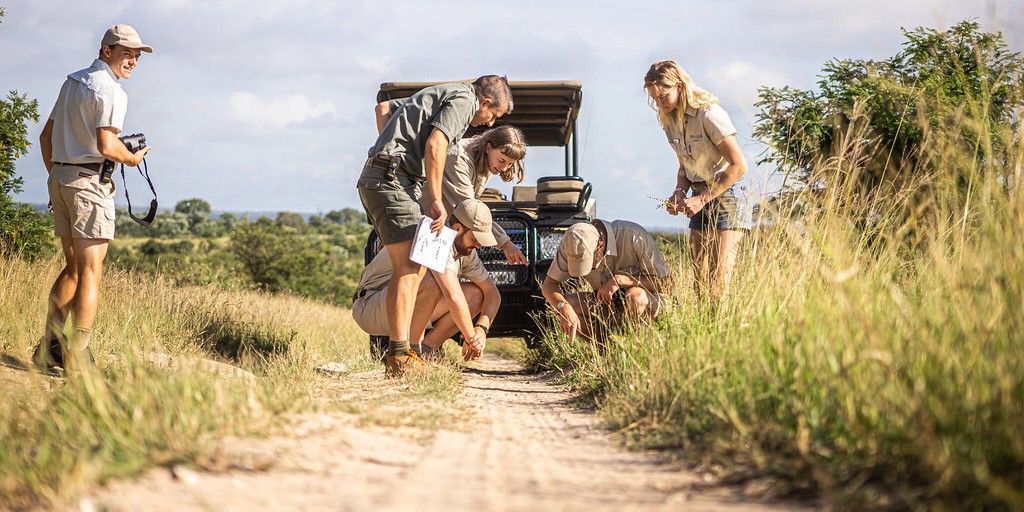
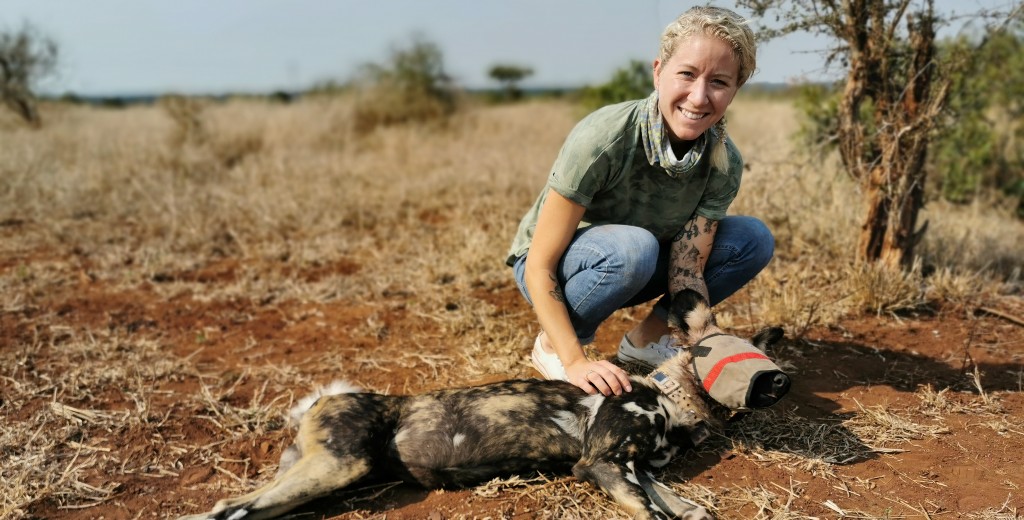
    Who would have thought that during a Bushwise course one of the most competitive and exciting parts of the course would involve staring at the ground? During the IFGA Safari Guide Course 6/12 Months, our students have the privilege of spending time under the expert mentorship of Colin, Tristan and Samantha Patrick as well as a special experience with Johan Van Straten from the K9 unit (anti-poaching and detection dogs, and their handlers).

    image

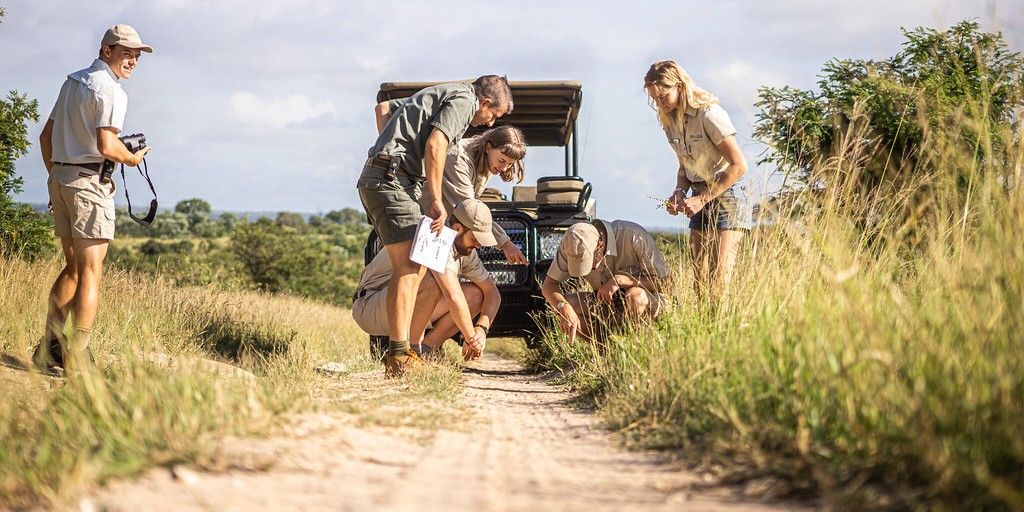
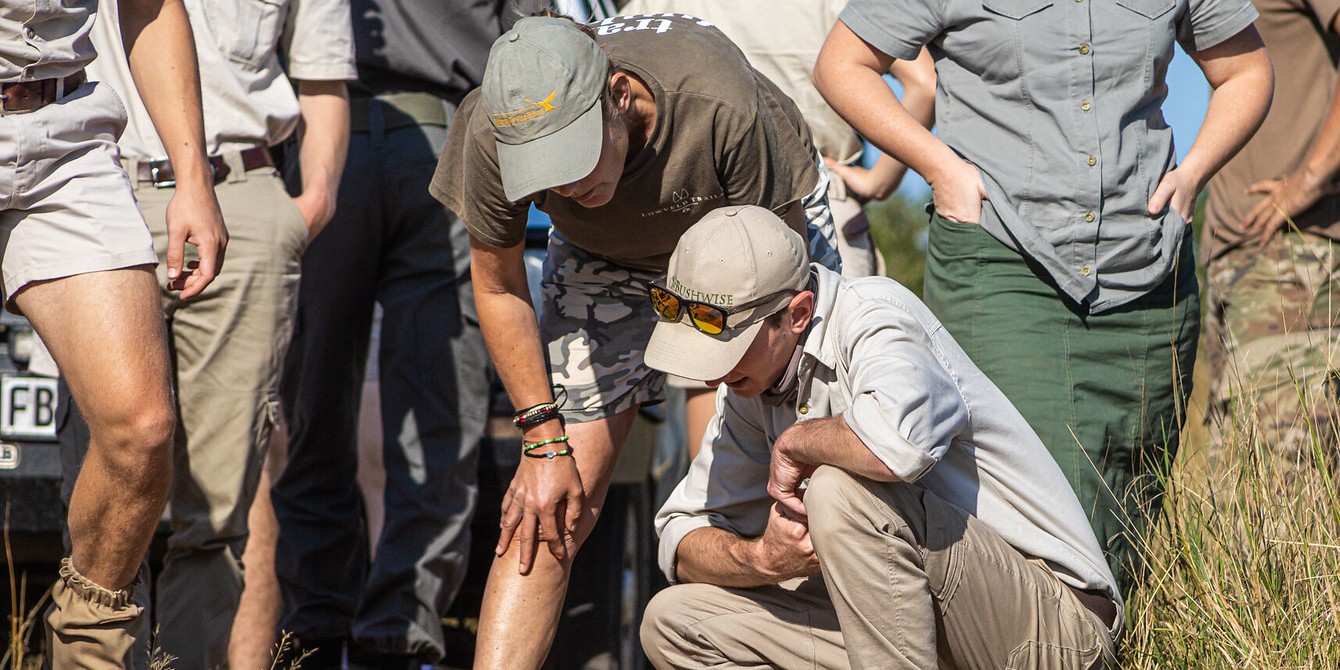
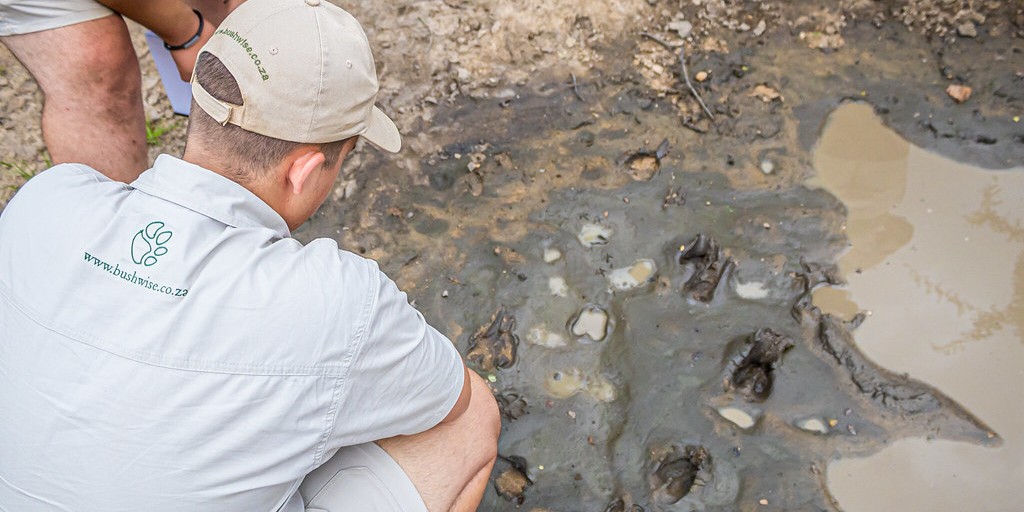
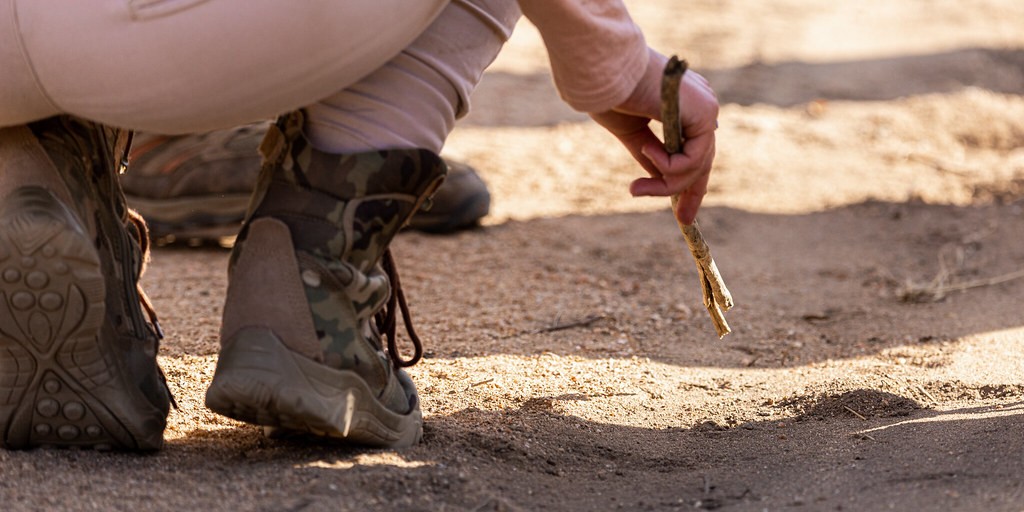
    Being able to understand the various tracks and signs in the bush is a vital part of a field guide’s job. This includes knowing how recent a track was made, which foot left the mark, and what species of animal it was, and why it was in that area at that time. These are just a few of the things that field guide students learn during their week of track and sign training.

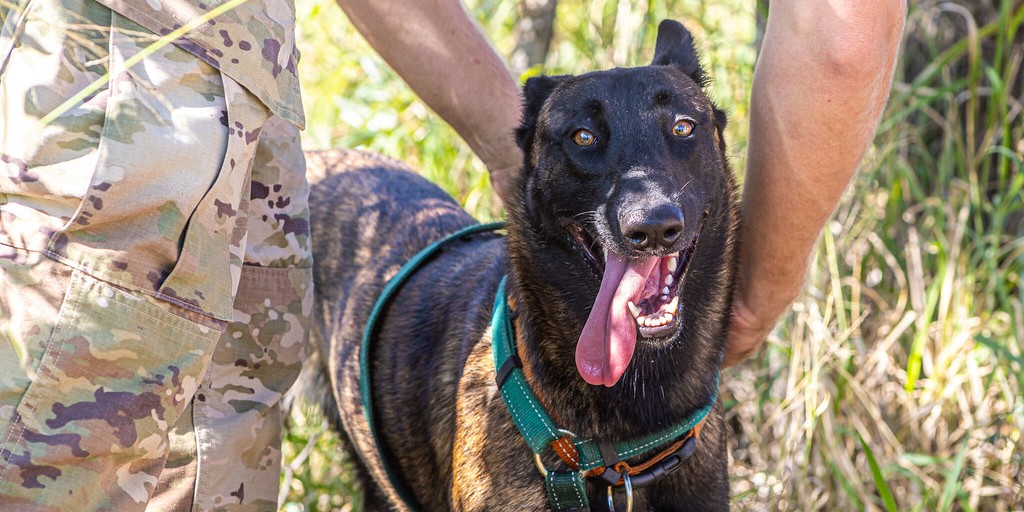
    Tracking is equally important in protecting wildlife. This can be seen in detection and anti-poaching dogs, often called K9 units. During a recent Bushwise course, the local K9 unit put on a special training exercise and display to show the students how they use tracking on a daily basis to help to protect the wildlife that is found in various nature reserves around the country. The demonstration began with a scent test for the dogs, where they sniffed out several different items that the anti-poaching unit would be looking for during their time in the bush, including rhino horn, elephant ivory, ammunition and pangolin scales.

    image

    The next demonstration showed how these skilled dogs can follow the scent of poachers through natural areas. The students were split into groups with the K9 unit and given different roles; some were “suspects”, some were “handlers” and others were part of the “response team” that followed closely behind the handlers to apprehend the suspects. All of this was done by setting up a scenario whereby a scent trail was laid for the dogs to follow and the students had to follow and find each other by using the dogs under the guidance of the K9 unit team.

    The final demonstration that we had the privilege of watching was the pack hounds, a team of six dogs that are equipped with GPS collars. These specific dogs are used for long distance and high speed pursuits of suspects. A trail was laid out for the dogs, roughly 2-3km in length, and then the dogs were released to follow the scent. The speed at which they moved was amazing to watch, they very quickly covered the distance and apprehended the “suspect” who was a member of the K9 unit, hiding in a tree. The students were in awe as they watched the entire operation take place before them.

    image

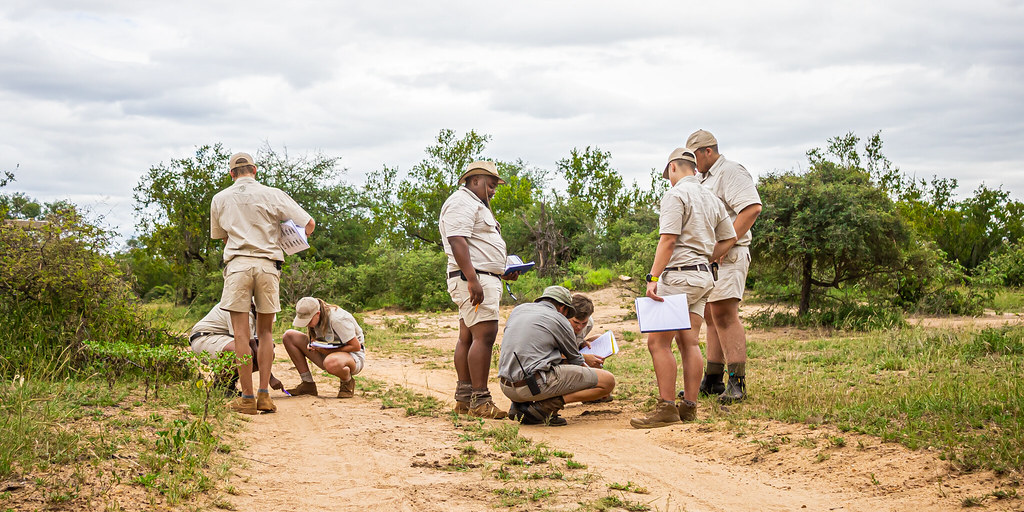
    Back on campus, the students prepared for their Cybertracker track and sign assessments. The assessment process is done over two days at the end of the week and follows the Cybertracker Track & Sign assessment process. Colin Patrick, the qualified assessor, joins students in the field and looks for tracks and signs left by animals. He identifies 50 total “questions”, circles them, leaves a numbered cone next to the circle, and then calls students to have a look and identify them. The questions are of varying difficulties. At the end of the assessment, the marks are worked out and the track and sign badges are handed out.

    If a student achieved between…

    70 – 79% they received a Track & Sign I Badge

    80 – 89% they received a Track & Sign II Badge

    90 – 99% they received a Track & Sign III Badge

    100% they received a Track & Sign Professional Badge

    image

    One of the most important things students completing one of these assessments must remember – whether they receive a badge or not – is that this is not the end of the road, they can redo the course with any Cybertracker evaluator at any point in their career. That’s one of the exciting things about field guide training – it’s a lifelong learning experience, you’re never really finished and you never know everything!

    “Tracking is not about the destination, but rather about the journey.” – Colin Patrick

    Does track and sign interest you? Join a Bushwise course and you could be learning how to read animal signs and interpret the wild world around you.

    #gameranger #bushwise #qualification #safariguide #apprenticefieldguide #fieldguidetrainer #fieldguiding #tracking #cybertracker #trackandsign #gamedrive

  • How do birds get their colour?

    A question many of us have asked ourselves at some point in time: How do birds get their colour? Bushwise trainer Wayne Lubbe brings his expertise to explain why we see those vibrant colours.

    Feathers have made it possible for birds to take to the air efficiently and successfully, enabling species to spread globally. The colour of certain birds has captivated us adding a bit of colour to our daily lives. And it’s not only people who can appreciate these colours. Birds can see in colour too – some birds can even see into the ultraviolet spectrum. This is why colour is incredibly important for birds as it allows them to seek out specific food or to attract a suitable mate.

    Feathers are quite unique in terms of their colour, shape, density and structure, and have developed to insulate, camouflage and protect a bird from the many elements of their environments.

    image

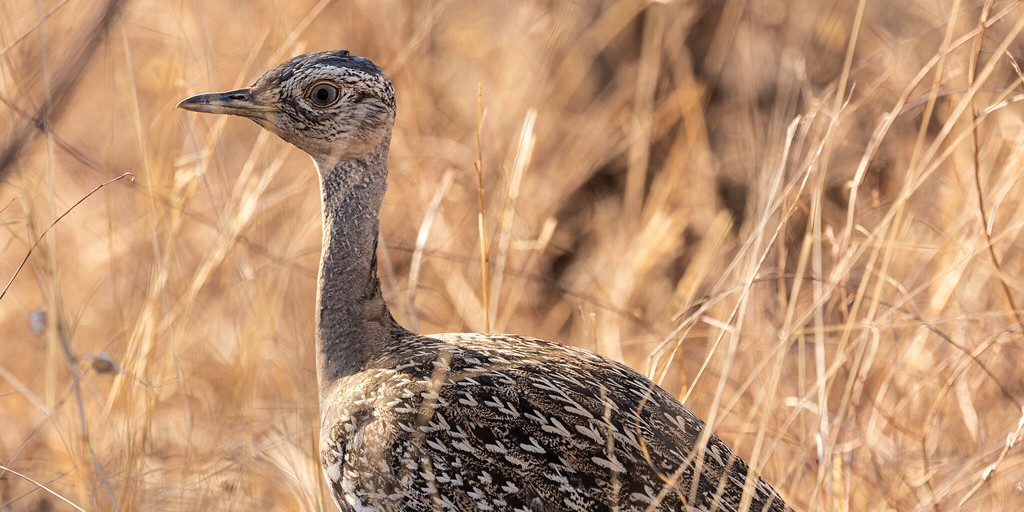
    For example, not all birds are brightly coloured; many ground nesting birds – such as korhaans, francolins and spurfowls – have evolved cryptically camouflaged feather patterns that help them blend in with their shrub and bushy environment.  

    There are two main ingredients that are essential in the making of colour. The first is pigment – of which there are three main types – and the second is keratin. 

    The first pigment is called melanin, and it produces black, deep brown or grey colours. Melanin is also extraordinarily strong and is thus often reserved for the flight feathers. White feathers are caused by a lack of pigmentation and are much weaker than black feathers due to the lack of melanin. This might explain why many predominantly white bird species have entirely black or black-tipped feathers in their wings such as with the southern pied babblers. The wing feathers are exposed to the greatest wear and are required to be stronger than regular feathers.

    image

    The second group of pigments are called carotenoids. Carotenoids are the pigments found in vegetables – such as carrots and corn – and produce red, orange and yellow feathers. Carotenoids are produced by plants, so when birds ingest either plant matter or something that has eaten a plant, they also ingest the carotenoids that circulate through the bloodstream and to the feather follicles producing the colours in their feathers. The pink colour of flamingos, for example, is derived from carotenoids found in the crustaceans and algae that the birds feed on in the water.

    The third group of pigments is known as unique pigments, as they are found in only a handful of bird species. For example, the red pigment (often called turacin) is found in many turaco species and the green pigment (turacoverdin) is found in many of the same turaco species such as the Knysna or purple-crested turaco.

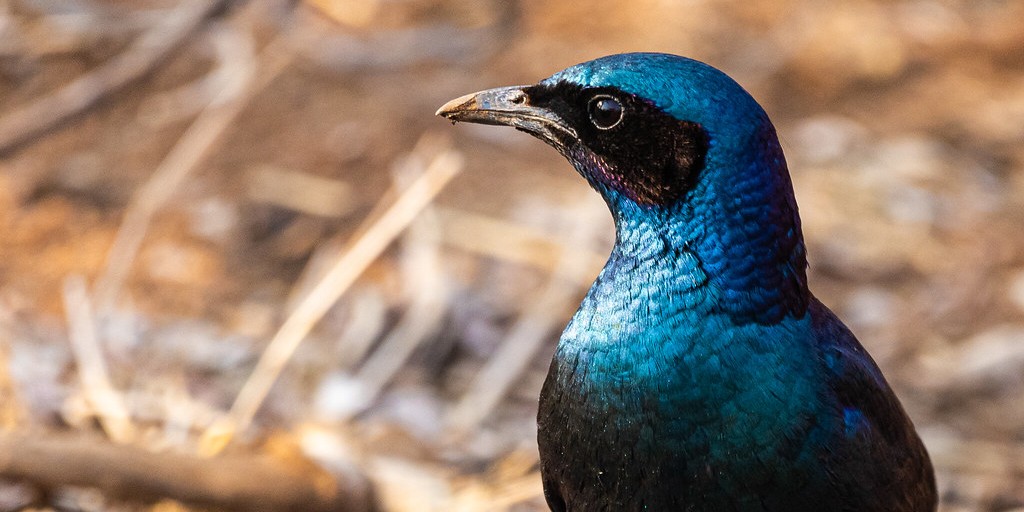
    The other main ingredient in making colours is keratin, which is the tough protein of which feathers are made (like our hair and fingernails) It also covers birds’ bills, feet and legs. Keratin is responsible for the iridescent colouring of many bird species. The brilliant colours tend to change depending on the bird’s orientation to sunlight. The colour of these feathers is not a result of pigments, but rather the reflection and refraction of coloured wavelengths of light. When the bird or the observer moves it appears as though the colour changes, which is due to the angle of the reflection changing. 

    image

    Keratin produces colour in two main ways: by layering and by scattering. Layering colours are produced when translucent keratin reflects short wavelengths of colours like blues, violets, purples and greens. The other colours are absorbed by an underlying melanin (black) layer. The ways in which the keratin of the feathers is layered will dictate the colour of the iridescence. Examples of layered colouring include the iridescence of glossy starlings, glossy ibis and the wing patches of many duck species.

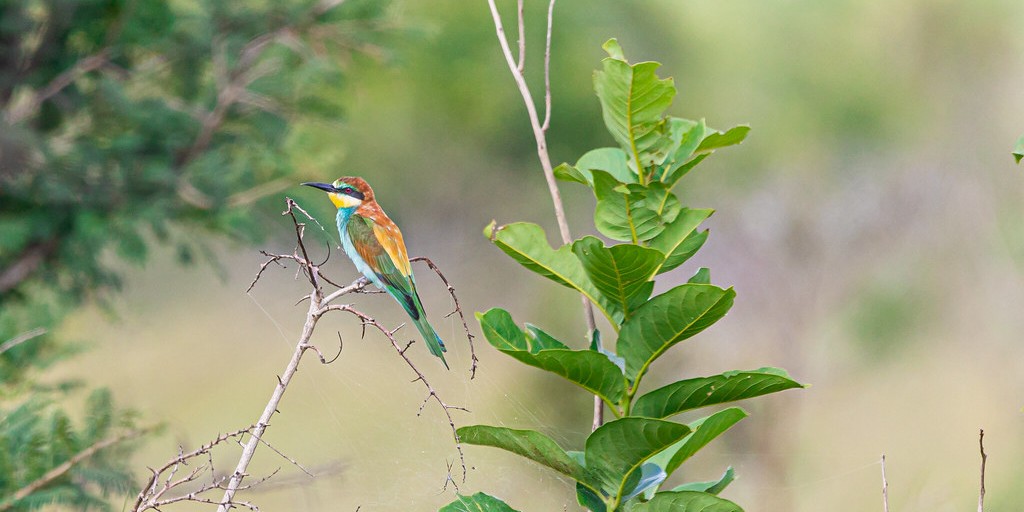
    Scattering is produced when the keratin of feathers is combined with tiny air pockets within the structure of the feathers themselves. These air pockets and the dispersed keratin scatter blue and green light and produce the shimmering colours of birds like kingfishers, rollers and bee-eaters.

    Flock to the next Bushwise course to learn even more about birds and other animals. If you have a passion for nature and wildlife, you have a home with Bushwise. Apply today!

    #gameranger #Birding #safariguide #animals #apprenticefieldguide #sightings #fieldguiding #gamedrive #guiding

  • My favourite wildlife sightings in the African bushveld

    Throughout his time on the Bushwise IFGA Safari Guide course, Kieth Windy has had some incredible wildlife sightings.

    Camp manager blogs are written by our current students who each get a chance to lead and manage a group (of their fellow students) for a period of one week.

    Studying at Bushwise’s Mahlahla campus has been a blessing because I have learned much more than I ever expected. It is mind blowing just how much information about nature we have learned, and the detail that is included with overall experience that the trainers provided. My mind has been opened to so many new facts about animals, plants and ecosystems. 

    image

    It has been a wonderful experience, from day one when we received the greatest welcome into the bush. Meeting the students with different cultures and traditions was the best experience and biggest learning curve. The respect everyone gave to all the candidates was a blessing. The Bushwise trainers have enhanced the experience, they are kind and caring, and most of all helpful to all students, providing sufficient information and attention to help each student with what they need. 

    Our days are filled with so many different activities, and there have been so many amazing highlights along the way. One of these highlights was an experience that I believe was a once-in-a-lifetime wildlife sighting. It happened during my second time behind the game viewer wheel, when a spotted hyena – my personal favourite animal – popped out of the blue, making the whole group practice an emergency stop.

    image

    Another unforgettable moment was our group’s first elephant sighting of the course. After months of trying to track down an elephant to complete our big five sightings, the moment finally came. 

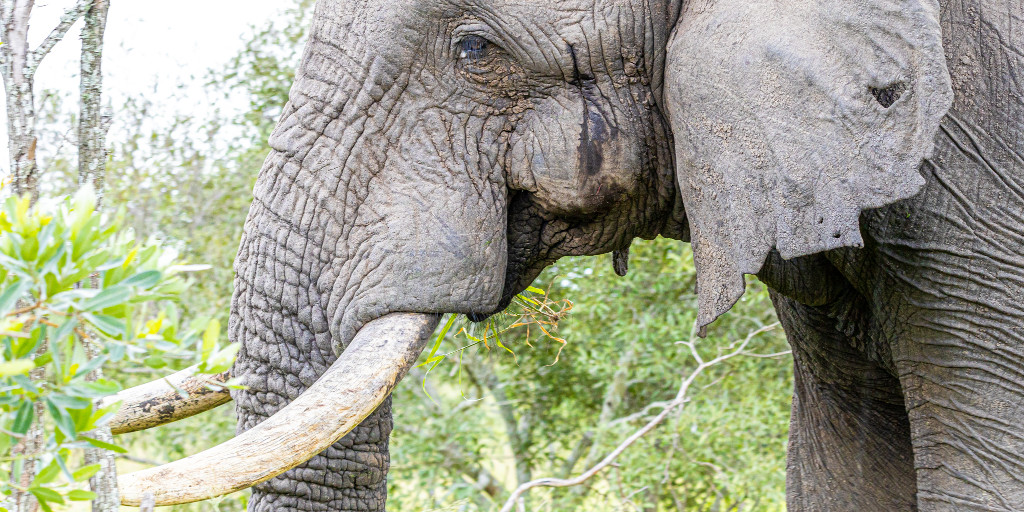
    We had an elephant crossing that blew everyone’s mind. I felt this massive being approaching the car, at first I was a little apprehensive about the encounter, but then, with the help of our trainer interpreting the elephant’s behaviour, I realised that the elephant was gentle and meant no harm. I felt more relaxed as I realised it was just as curious as I was in that wonderful moment. As the elephant smelled the car, I was intrigued by her size and the way she moved so gracefully. It was an absolutely magical moment and I hope that she enjoyed it just as much as I did.

    image

    One other sighting I am incredibly grateful for is the moment when we unexpectedly saw a baby leopard. We were not even on an official game drive that day, but rather going to practise our 4×4 training (another highlight of the course). Not even a minute past the entrance gate, a student shouted “Stop!”, and we all turned to see what he spotted. Sitting low in the grass, blended in perfectly with its surroundings, was a beautiful baby leopard. 

    It was unbelievable how close it was and it was fascinating to observe its behaviour. Of course, that was the day everyone left their cameras at camp, but it was a wonderful opportunity to observe the animal and truly appreciate how lucky we are to be doing this.

     Learning about all the different species of animals, from the big mammals and reptiles to the smallest amphibians and arthropods – as well as the abundance of trees, grasses and wildflowers – has been an eye-opening experience. Seeing how they all contribute to the ecosystem has really helped me see how everything is connected and how important every little component is. 

    image

    One of my favourite things to learn was track and sign. Being able to read the different animal tracks, including the behaviour through tracks, was fantastic. Knowing and understanding how to track animals in their natural environment was the best skill I have gained overall.

    I am glad to be one of the candidates that had this marvellous experience, and all the incredible wildlife sightings, with unlimited information. I am proud to say I am a Bushwise baby.  

    Do you want to make life-long memories and see incredible wildlife sightings while earning a valuable CATHSSETA qualification? Apply today to start your career journey with Bushwise. 

    #gameranger #bushwise #qualification #safariguide #apprenticefieldguide #safari #fieldguidetrainer #fieldguiding #cybertracker #wildlifesightings #trackandsign #gamedrive

  • Field guide jobs and career paths: where do I go from here?

    If there’s one thing we know about field guides, it’s that there’s no “one size fits all” field guide job. You might think, but a field guide is a field guide, right? Not quite! 

    When a student joins any Bushwise course, they bring with them a diversity of backgrounds, experiences and goals for the future. Not everyone will go straight into a traditional field guide role after graduation. Some will, of course, but for the others – there are endless options available. 

    In this article, we outline some of the career paths previous field guide students have taken. Take a look – you might find that someone else’s experience is similar to yours. Stay with us until the end to see a list of conservation and wildlife careers!

    The mid-career breaker

    image

    Perhaps you’ve followed a more traditional career path. You graduated from school, got a job or entered into an apprenticeship and slowly worked your way up. Lots of hard work and hours of skills development got you to the position you’re in now, but you aren’t satisfied. Or, you’re feeling a bit burnt out and you need a change of scenery.

    It’s not unusual for a Bushwise student to be a bit older – we’ve had students in their 40s, 50s, and even 60s join a course. While sometimes it’s for a sabbatical or a career break, occasionally people really do decide to completely change their careers. We’ve met students from all over the world who have a burning passion for African wildlife and they just can’t stay away!

    image

    Ildiko is from the Netherlands. She was in her 30s when she first visited South Africa in 2002, on safari with her family at Addo Elephant Park and Singita. She fell in love with the bush right away. Now 51, Ildiko is tired of spending time in an office working as an events and operations manager – she wants to spend her life in the Lowveld, surrounded by beautiful nature and like-minded people with similar interests. Ildiko recently joined Bushwise and Colin Patrick Training for track and sign assessment. Part of her heart belongs in Southern Africa and she’s determined to be in the bush as much as possible!

    The forever nature enthusiast 

    image

    If there’s one thing that truly unites all field guide students, it’s their love of nature. Sometimes that’s all it takes for a person to sign up for a course. Growing up they watched David Attenborough, Steve Irwin, and other wildlife documentaries, and developed a deep love for nature. Their shelves are filled with colourful books about wildlife, travel memoirs, bird identification guides, and novels featuring animals. Wherever they live, they get outside as often as possible and tend to find insects and reptiles just as exciting as big mammals. 

    Forever nature enthusiasts are creative about incorporating nature into their careers. Even if they don’t become field guides, they’ll work outside somehow, or they’ll find breaks in work to attend field guide courses or multi-day trails in national parks. 

    image

    Georgia is originally from Devon, England. She was working in entertainment TV production and wanted to gain more practical wildlife experience, as she made her move toward science and nature film making. She came to South Africa in 2019 for a field guide course. She absorbed information like a sponge and absolutely loved the African bush. After she qualified as an apprentice field guide, Georgia went back to the UK to continue working in film production. She’s currently working on an environmental impact film and gets back to Africa every chance she can get.

    The gap year student

    image

    Around the world, the term “gap year” means different things. People go backpacking in Europe, join research projects (like sea turtle conservation in Thailand), spend time volunteering, or learn a new language. For some new graduates, the opportunity to train and become a safari guide is an excellent way to spend six months or a year after they’re fresh out of school. 

    If you’ve just graduated from college (or even high school), a Bushwise field guide course can also be a way to gain valuable skills and knowledge that transfer to a job back home. In the USA, for example, there are world-class national parks that are always looking for top-brass talent to join their teams. Positions might include park rangers, tour guides, naturalists, wildlife guides and more. 
    In 2016, Mark finished his university degree in communications and was working a seasonal job at a summer camp in New Hampshire. He’d never been to Africa before, but loved African wildlife. Through internet searches he came across a field guiding course and, on a whim, signed up. He figured there was no better time to try something completely new. Over a few months, he gained multiple certifications, made lifelong friends, and developed some impressive tracking skills. Through his experience he made work connections and secured himself a job with a conservation organisation back home in the USA. 

    The career field guide or trails guide

    image

    Perhaps the most likely scenario on this list is the individual who’s looking to turn field guiding into their career. Whether it’s for the long term or short term, they want a field guide job. They want to drive that game viewer, work at a lodge, or take guests on bush walks in Big Five territory. They’ve arrived on campus ready to start their life-long learning in this unique industry. 

    The most traditional path for a field guide is to work your way up from apprentice field guide to field guide to IFGA field guide. Additional specialisations, known as SKS (special knowledge and skills) can also be earned, such as wildflower or regional bird SKS. Trails guides follow a similar path, moving from apprentice trails guide (previously back-up trails guide), to trails guide, to SKS dangerous game. We speak a little more about this career journey in our recent blog post.
    At Bushwise we’ve had hundreds of students join our courses who went on to find jobs across the conservation landscape. We often share their experiences, and you can find some wonderful success stories on our alumni page on our website
    Other career possibilities

    image

    Where else might a field guide course take you? Here are some more examples of real jobs in conservation and wildlife you could get after becoming a field guide.

    **This is just a snapshot of the possibilities, and some of these careers require additional training or education**

    1. Nature/wildlife photographer or videographer

    2. Ecologist

    3. Conservation researcher

    4. Field guide trainer or assessor

    5. Forest service/parks service ranger

    6. Policy or advocacy officer

    7. Environmental impact assessor

    8. Wildlife biologist

    9. School outreach or volunteer program coordinator

    10. Researcher (field work or lab based)

    11. Lodge management/front of house

    12. Anti-poaching unit member or K9 dog handler

    13. Wildlife veterinarian/vet assistant

    14. Zookeeper

    15. Freelance field/trails guide

    16. Wildlife educator

    17. Marine guide

    18. Environmental lawyer

    19. Wildlife field technician

    20. Communications officer

    21. Science officer

    22. GIS technician

    23. Social media or digital marketing manager

    24. Reserve warden

    25. Helicopter pilot

    26. Hiking/cycling/kayaking guide

    27. Wildlife trade officer

    28. Reserve security manager

    29. Endangered species monitor

    30. Working with animals

    Do any of these careers resonate with you? You could be on your way to a field guide job or other career in wildlife or conservation. Apply today and join the next Bushwise IFGA Safari Guide Course.

    #fieldguidecareer #gameranger #bushwise #safariguide #trailsguide #animals #apprenticefieldguide #safari #fieldguidetrainer #fieldguidejob #cybertracker #fieldguidecourse

  • The wild dogs are in town – call the pup-arazzi!

    It’s not every day that a pack of African wild dogs appears in the middle of your game drive. Bushwise student Lauren Noakes shares her incredible experience observing these endangered canines.

    Camp manager blogs are written by our current students who each get a chance to lead and manage a group (of their fellow students) for a period of one week. 

    We have been treated to some spectacular sightings with Bushwise, but wow, have we had an incredible week!

    image

    To be perfectly honest, my purpose for coming out here was quite different to most of the other students. Having finished a zoology degree (with my final year spent researching Banded mongoose social behaviour) I travelled here with the aim of improving my communication skills and soaking up every possible piece of information about the African bush. But with every drive, I’ve fallen more and more in love with guiding. Getting to guide the spectacular sighting we had this week was what really solidified my intention to pursue this incredible career path.

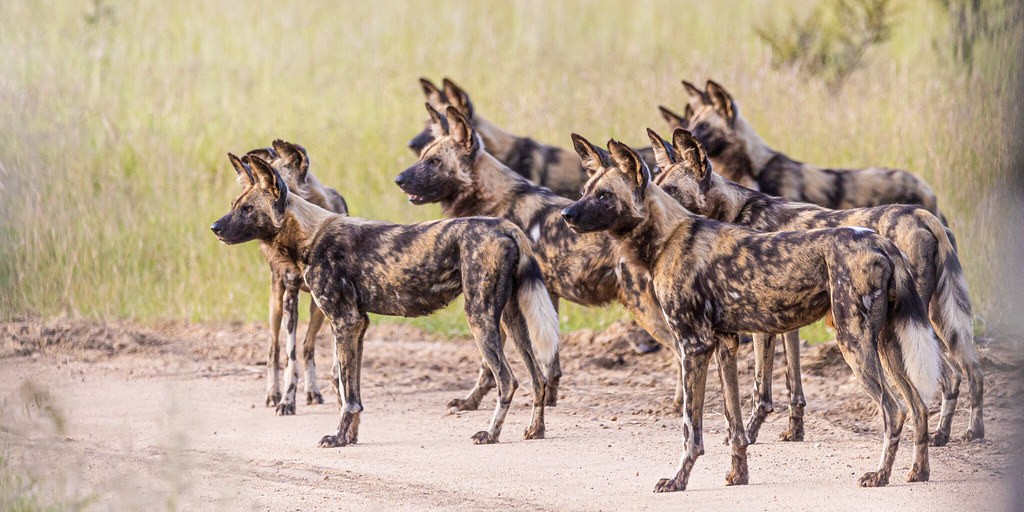
    It was halfway through my drive and I was making coffee at the drinks stop, congratulating myself on what I considered a pretty successful drive so far. Little did I know what was just around the corner! We set off again, and as we came up over the hill, I heard excitable chittering and chattering and saw a flash of white tails – it was a pack of wild dogs!

    image

    Following protocol, I quickly radioed my fellow guide: “All stations, we have a pack of wild dogs, just west of the 4-way junction, visual 5 out of 5”. Well, I say that. I think it came out more like: “HI, WILD DOG!!” Not quite as professional, perhaps, but I think it got the point across! My excitement only grew when we realised they were on a kill.

    My radio procedure may have gone out the window, but my guiding skills did not! I quickly positioned the vehicle into a nice viewing spot in the shade, watching as the other students whipped out their cameras and began clicking away, capturing the carnage of the dogs tearing apart what was once an impala.

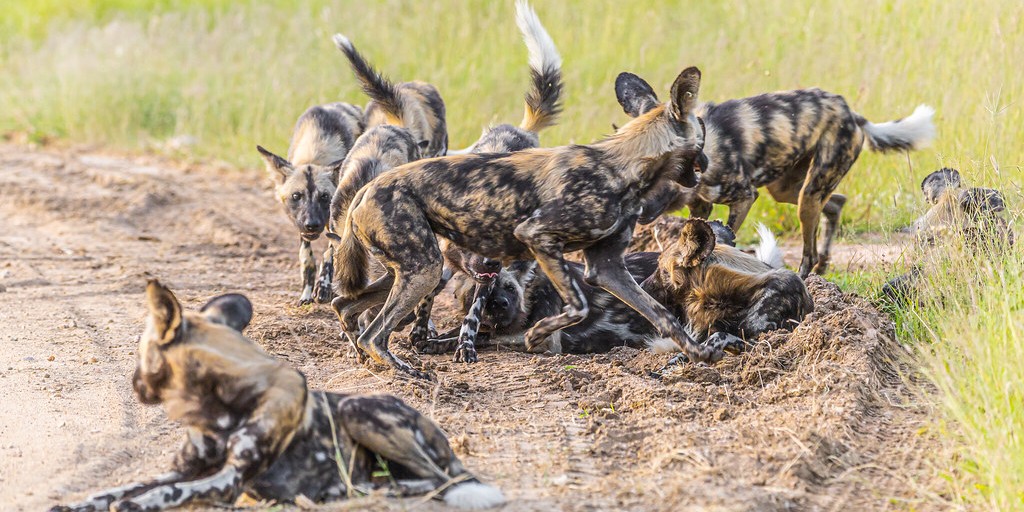
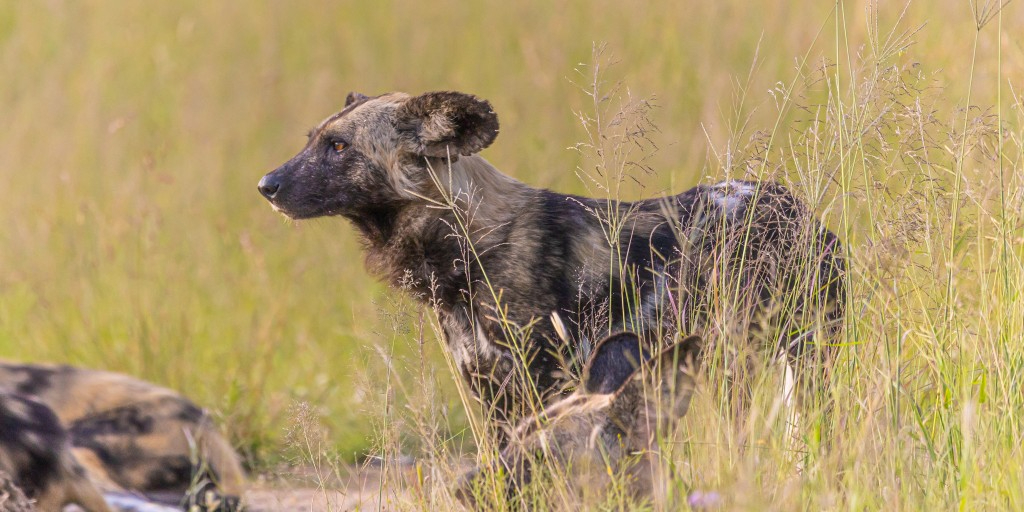
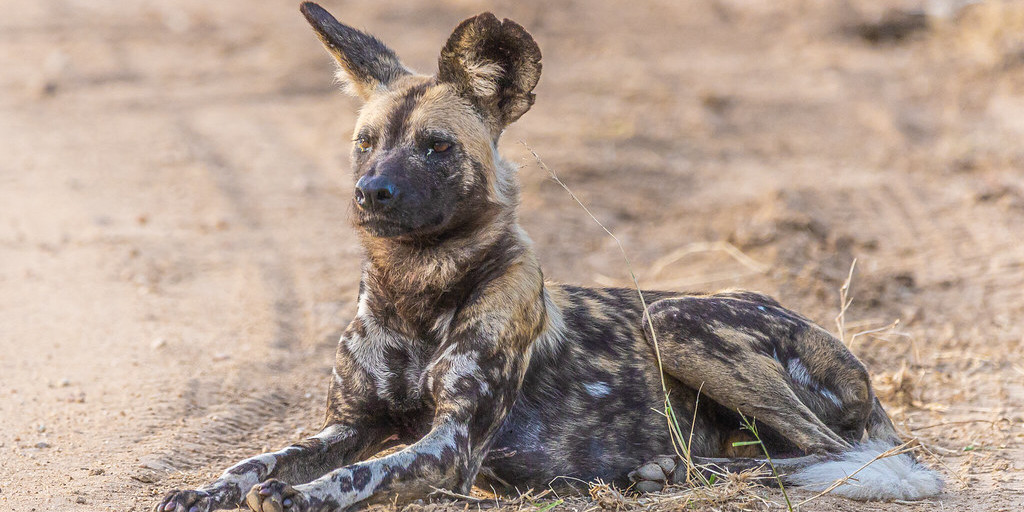
    Wild dogs live in packs and are well known for their altruism and selflessness, allowing the injured, old or juvenile dogs to eat first, even before the alpha pair. We noted that the alpha female of this pack was pregnant, which was quite exciting as the denning season (the period when wild dogs give birth and reside in a den with the pups until they’re big enough to leave) is right around the corner. One of the dogs is easy to distinguish as it has droopy ears… we have creatively nicknamed this dog “Floppy”.

    After the dogs finished, they moved even closer to our vehicle, sharing our shade and even scent-marking the front of our vehicle! Wild dogs are

    incredibly social creatures, reaffirming their bonds and hierarchy through play. We got a front row seat of this behaviour, with the dogs practically bumping into our car as they bounded about.

    Once things settled down with the dogs, we soon got to view the next step of the food chain – the scavengers! White-backed vultures swooped in by the dozen, eagerly waiting for the dogs to leave the carcass. The dogs seemed to love this, leaving the impala’s remains only to charge back to chase the vultures away, scattering them into the skies.

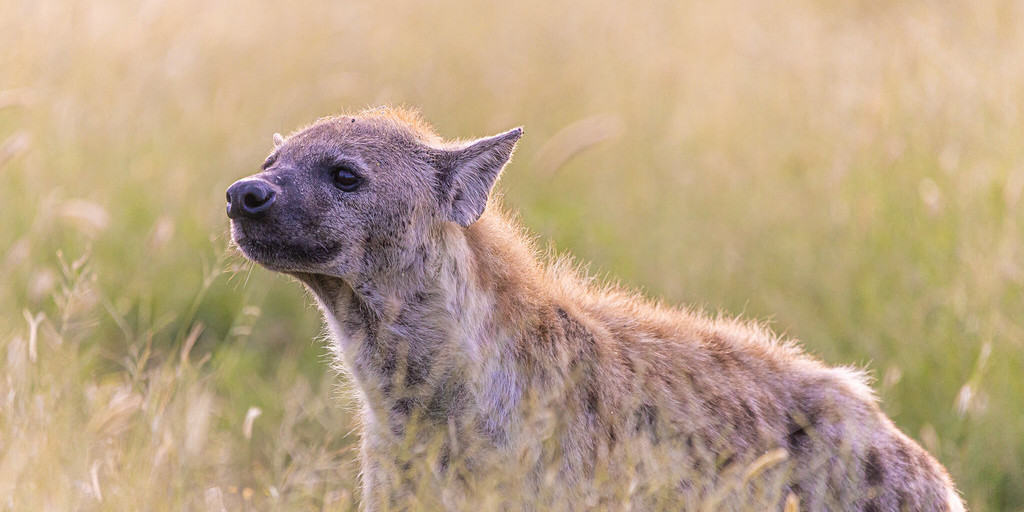
    Vultures may be smart raptors, but not smart enough to outwit the hyenas that had been lurking around the outskirts of all the drama. Two individuals dashed in and stole the carcass, leaving the vultures looking very disappointed! These guys don’t deserve the bad press they often get from TV and movies, as they truly are fundamental to an ecosystem’s health. This is because they act as the cleaning crew of the bush, even being able to eat diseased carcasses, removing them from the environment.

    image

    After spending a few hours with the dogs, and being very late for dinner (although surprisingly no one complained) we set off for home. As if the day couldn’t have gotten any better, we also found two male lions on the way back to the college!

    For me, there really is nothing more satisfying and fulfilling than watching the faces of your guests light up at a sighting – whether it’s their first safari or their hundredth – the excitement never gets old. We are so lucky to be heading into a career where we get to be the interpreters of this incredible biome, unlocking the door to the natural world for many people.

    Would you like to feel the rush of adrenaline at a wild dog sighting, sharing that experience with your guests? Apply today and soon you could be guiding a safari in the African bushveld.

    All photos by Louise Pavid.

    #bushwise #fieldguide #safariguide #animals #apprenticefieldguide #safari #wilddogs #endangeredspecies #fieldguidecourse