Category: Course updates

  • What the water buffalo means to the past and present of human beings

    BY: Tasneem Johnson-Dollie

    Water buffaloes and humans have a shared history spanning more than 50 centuries. But, how well do we really know one of our earliest animal companions, and what are we doing to ensure that they’ll be around for centuries to come?

    The water buffalo is a cousin of the cow and, just like cows, this buffalo species has played a major role in the development of society.

    Let’s learn more about the water buffalo, and how they became an important part of human history.

    How is the water buffalo different from other types of buffalo?
    image

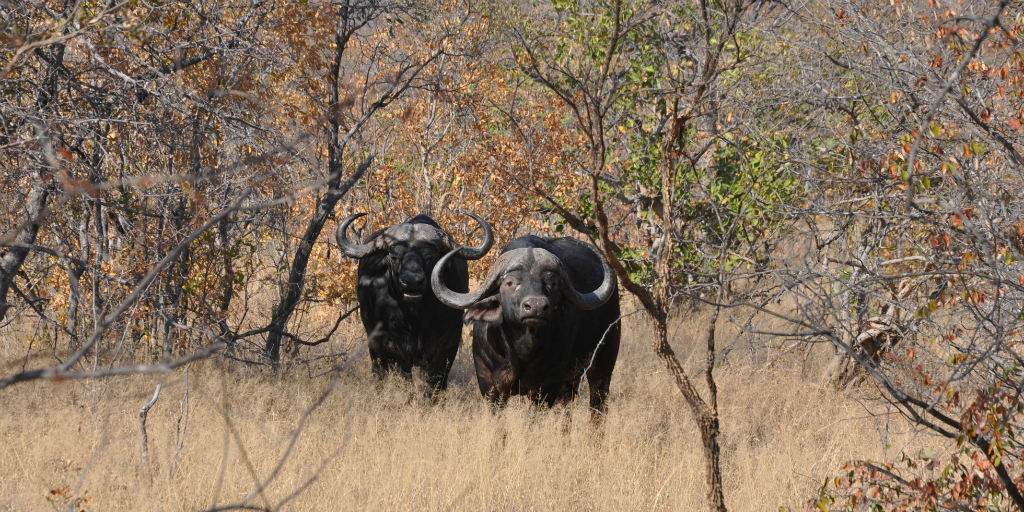
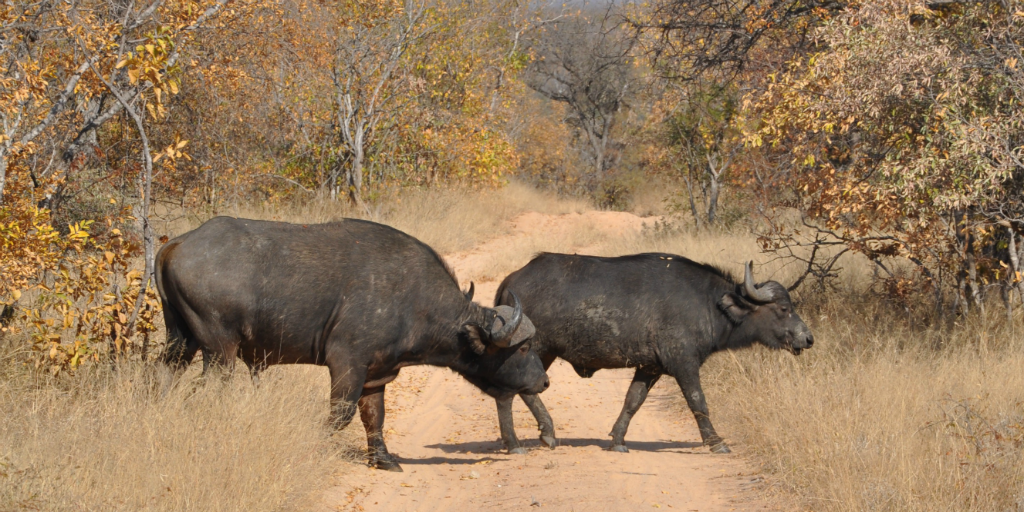
    There are two buffalo species in the world, the African buffalo – also known as the Cape buffalo, and the Asian buffalo – also known as the water buffalo.

    The water buffalo (Bubalus bubalis) differs from the Cape buffalo (Syncerus caffer) in a number of significant ways:

    1. First of all, the Cape buffalo is only found in Africa while the water buffalo is found on all seven continents.
    2. Water buffaloes live in wetlands and marshes in the tropical and subtropical forests of Asia, while the Cape buffalo lives in the savannah and forests of Africa.
    3. Because they live in different habitats, their foot structure is quite different. The water buffalo has splayed hooves that prevent it from sinking into wet sand while the Cape buffalo’s hooves are less splayed and adapted to the harder terrain of the savannahs.
    4. Water buffaloes can grow to be much bigger – and heaps heavier – than other buffaloes.
    5. The Cape buffalo is thought to be much more aggressive than the water buffalo.

    But, did you know that, due to their domestication, there are now also different types of water buffalo?

    The different types of water buffaloes
    image

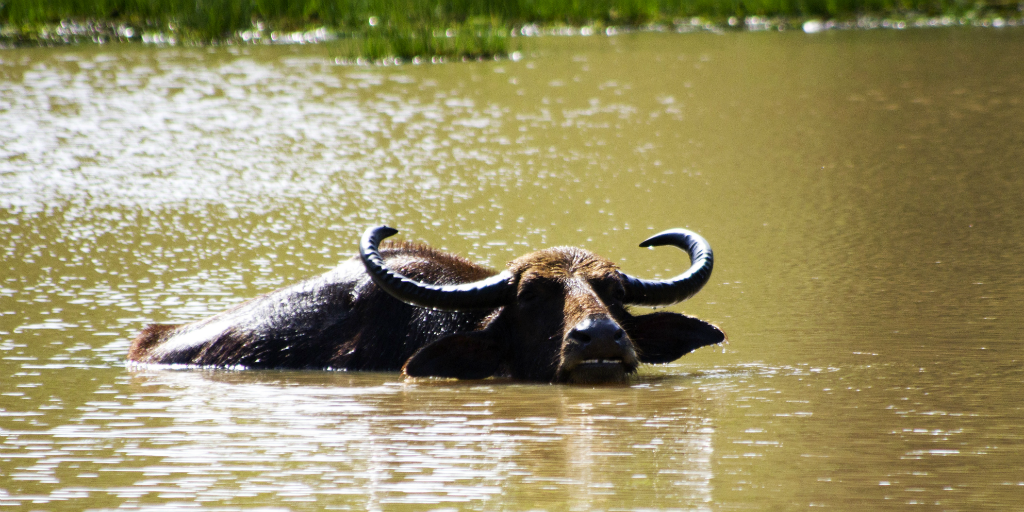
    Original image: Water Buffalo by Kosala Bandara is licensed under CC BY-SA 2.0

    After centuries of living different lifestyles, it’s no surprise that domestic water buffaloes have undergone some major adaptations that make them quite different from wild water buffaloes:

    1. While both species of buffaloes come in shades of grey and black and have off-white “socks”, domesticated breeds have more white on their bodies.
    2. The large curved horns seen in the water buffaloes of the wild are much smaller or absent in domestic water buffaloes.
    3. While water buffaloes are one of the biggest members of the Bovidae family – cattle-like animals with hooves – wild water buffaloes can be more than four times heavier than domestic water buffaloes.
    4. Domestic types of water buffaloes can live for up to 40 years, while some sources claim that water buffaloes can live for as little as nine years in the wild.

    Today domestic water buffaloes are known as the “tractors of the East” because they still play a big role in the farming industry in Asian countries.

    Why are water buffaloes an important part of human history?
    image

    With more than 70 breeds of domestic water buffalo in existence, it’s clear that human beings weren’t just taken aback by these bulky bovines, but they were keen to keep them close.

    Why did human beings decide to domesticate the water buffalo in the first place?

    Well, it started with water buffaloes inhabiting the same environments as human beings – which made them a viable option for domestication. The idea gained momentum because these animals had the type of temperament that allowed them to be domesticated. And, tons more animals were domesticated because of the realisation that keeping water buffaloes made it much easier for human beings to survive.

    What is it about water buffaloes that had human beings hooked? Well, just like the cow, the water buffalo could provide a wide variety of resources like the following:

    1. Food: Their meat, milk and butterfat are highly nutritious.
    2. Materials for various uses: Their horns and hides can be used to make clothing and equipment, and their dung can be used to fortify buildings and fuel fires.
    3. Farm labour: They’re powerful animals and can easily pull field-ploughing machinery, and can transport people and crops.

    Centuries later, research by the Food and Agriculture Organisation (FAO) shows that more people depend on water buffaloes for their livelihoods than on any other domesticated species on Earth.

    What’s the future look like for the water buffalo?
    image

    While there are more domestic water buffaloes around than you can shake a stick at, the same can’t be said for wild water buffaloes.

    In fact, the International Union for Conservation of Nature’s (IUCN) Red List, states that there are only 2,500 wild water buffaloes left, and their species is classified as endangered.

    So, what’s the problem, since there are still tons of domestic water buffaloes? Well, because wild types of water buffaloes are so different to domestic water buffaloes – they inhabit and contribute to different environments in different ways – we really can’t depend on domestic water buffaloes to take their place.

    It’s important that we work to conserve these creatures in order to conserve the environments they live in. If not, we run the risk of seeing this buffalo species becoming extinct, and finding out what effect their loss would have on environments worldwide.

    Get involved in the conservation of the water buffalo by signing up for a Bushwise Field Guides, Field Guides Association of Southern Africa IFGA Field Guide course or a Nature Enthusiast IFGA online course

  • Into the pride

    BY: Zander Schoeman Bushwise student 2020

    Feature image: Ank Lubberink

    Do not try and fight a lion if you are not one yourself. A lion sleeps in the heart of every brave man. I am more afraid of an army of 100 sheep led by a lion than an army of 100 lions led by a sheep.

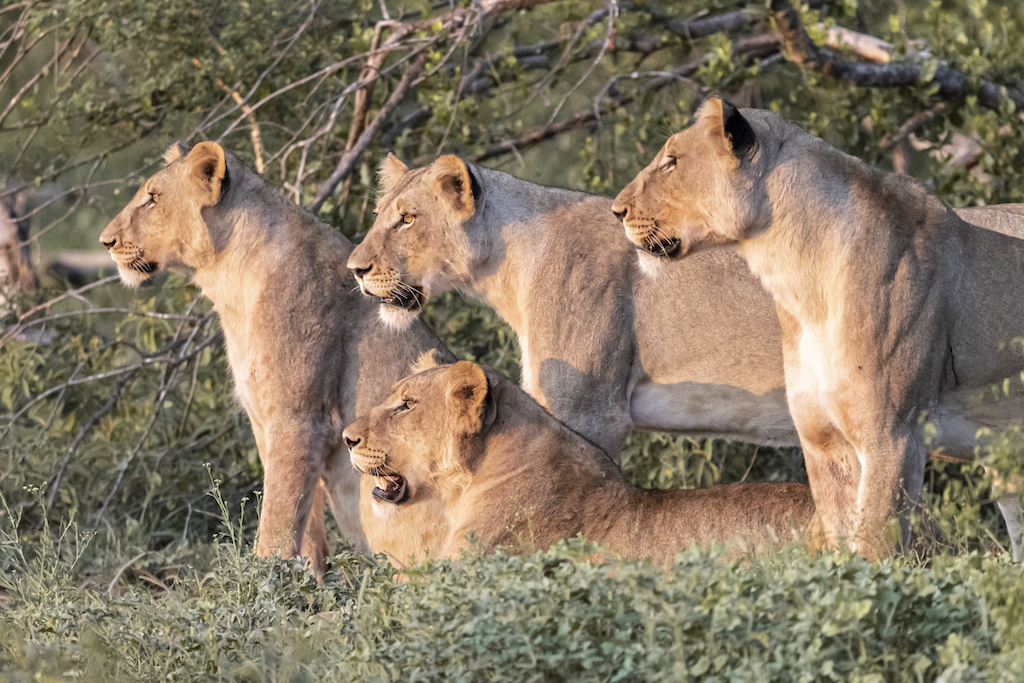
    When coming across a lion there is that moment of instant respect towards it. The way those bright yellow eyes look back at you, almost as if they are looking right through you. When you look into those eyes, you see that never-ending, never giving up spirit. If a person in this world had the soul of a lion, he would be unstoppable.

    Photo: Chloe Potier

    Have you ever watched a documentary about lions? If you have then you will have noticed how a lion dominates just about everything around him. From protecting his territory to dominating over other apex predators. They are called the ‘Kings” because they have a touch of royalty in everything they do. If you cross the line, you can bet that they would make an example out of you. I can bet you that there are a few hyenas or other apex predators that could relate to this… That is if they are still alive.

    Do not get me wrong, their life is full of hurdles and struggles. There is no room for error in the life of a lion. One mistake can lead to them losing their life or the life of a family member especially a cub. Every moment counts, they may make hunting look easy, but their success rate is only about 19%. That number speaks for itself, they are not immune to defeat. There is a famous quote that comes to mind when I think of this fact, it goes “a man’s character is not judged after he celebrates a victory, but by what he does when his back is against the wall”. For lions, their failure encourages them to improvise, to learn from their mistakes and better their skills so that they can aim bigger, and catch larger prey to feed their family.

    Photo: Chloe Potier

    That being said and in the same breath – have you ever seen a depressed lion? A lion who looks like it wants to give up? They may struggle when hunting, they may suffer defeat when trying to rule certain lands, but (and this is a big but) do they give up? No. lions adapt. They overcome. They succeed.

    So what motivates them to keep going and not surrender to the harshness of life? Survival. The only thing that keeps them going is just that. Many lions will lose their reign, children, and queens to other lions, but they will never give up. They will not give up on themselves and they will not give up on each other. A pride of lions has each other’s back in the good and bad times. Even when times are tough as an individual they will never stop contributing to the survival of the pride.

    Photo: Chloe Potier

    Lions have a life full of challenges, but they do not let it ruin their daily moments, those moments they share with their family, their brothers and sisters. Lions are setting a huge example to all of us, they teach us to dominate the problems in our life.

    So maybe as humans, we should take a moment and think deeper when we look into the bright yellow eyes of these remarkable beasts. When life hits you and knocks you down, when you stumble at a hurdle, instead of asking yourself “why me?”, be a lion and say “Try me”!

  • More about migratory birds and why they matter

    Original image by USFWS Mountain-Prairie is licensed under CC BY-SA 2.0

    BY: Tasneem Johnson-Dollie

    When the cold creeps up on you, you can reach for another blanket or sip on something warm. But migratory birds have a different way of dealing with the cold that’s worth knowing more about as a field guide.

    The colours and calls of migratory birds, as well as their migration displays in the sky, have made bird migration a well-known phenomenon that gives us a glimpse into the workings of mother nature. Let’s find out more about bird migration and how keeping our eye on migratory birds is an important part of wildlife conservation today.

    Why do birds migrate?

    image

    Original image: USFWS Mountain-Prairie is licensed under CC BY-SA 2.0

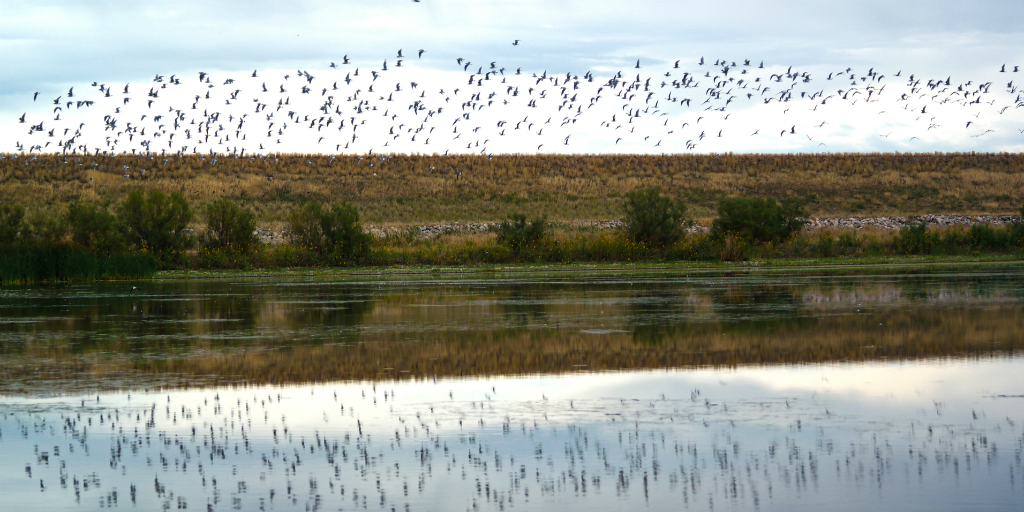
    Migration is the seasonal movement of animals from one region to another, and it’s not just for fun. With the change in weather, animals move from colder areas – where resources become less – to warmer regions with an abundance of food and shelter.

    The biggest migration that takes place each year involves the migration of birds from the Northern Hemisphere to the Southern Hemisphere, but there are also bird migrations within each hemisphere.

    But how do migratory birds know when to take off? Well, the jury is still out on this one. Although it’s believed that migratory birds are quick to pick up on the changes in day length and temperatures, we still don’t know what exactly signals birds to fly south for winter.

    What we do know, is that around half of the world’s bird species migrate, which is an incredible amount when we consider that migration can be really risky. Travelling long distances takes a lot of effort and migratory birds can’t always be sure that they’ll be able to replenish their supplies once they reach their destination.

    Right now, many migratory birds have already left their wintering areas – the areas in the Southern Hemisphere that they travel to, to avoid the cold winters in the Northern Hemisphere – and are settling in to breed back home. Let’s find out more about these sky-studding travellers.

    The different types of migratory birds

    image

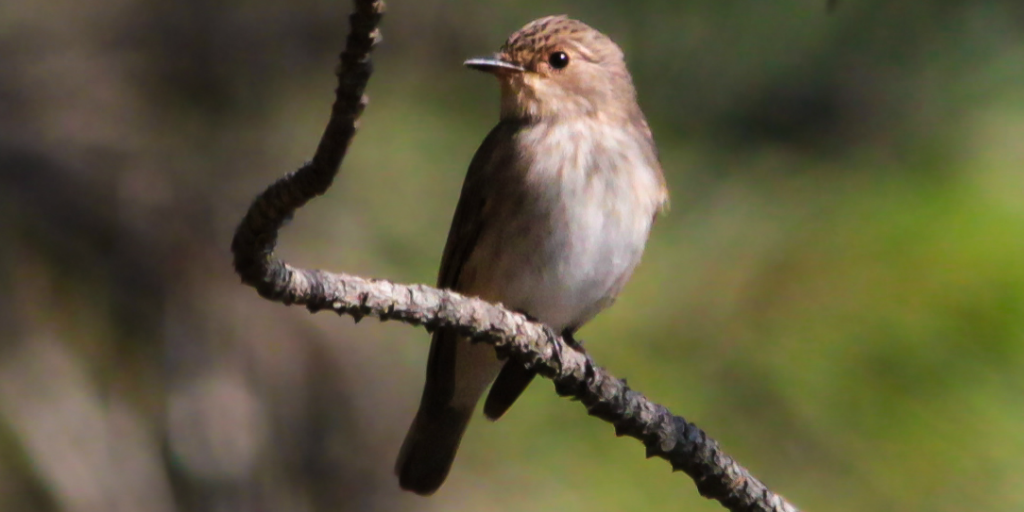
    Original image: Spotted Flycatcher by Daniela is licensed under CC BY-SA 2.0

    The reward of migration often trumps the effort that it takes, and this is why a whole host of different bird species take to the migration flyways – flight paths used by birds during migration – each year.

    Different types of migratory birds are built differently – for example, the arctic tern has a sleek and compact form when compared to the lanky figure of the flamingo. Depending on their build, each species of migratory bird will follow a different migration flyway that suits them. Some flight paths follow the land to allow for frequent stops while others are mostly over water.

    Migratory birds are categorised according to their species type, which determines the migration flyway route they’d take. There are different migration flyways for:

    1. seabirds
    2. shorebirds
    3. birds of prey
    4. waterfowl
    5. landbirds.

    But how do they know where they’re going?

    How do birds navigate during bird migration?

    image

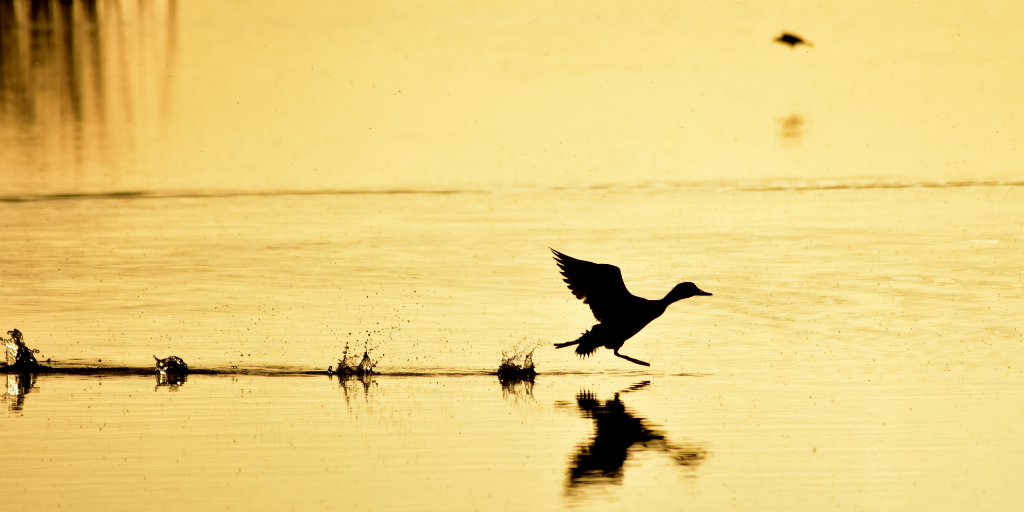
    Original image: Takeoff by USFWS Mountain-Prairie is licensed under CC BY-SA 2.0

    The different types of migratory birds follow the same migration flyways every year. The eight major migratory bird flyways are the:

    1. Pacific Americas
    2. Central Americas
    3. Atlantic Americas
    4. East Atlantic
    5. Black Sea-Mediterranean
    6. East Asia-East Africa
    7. Central Asia
    8. East Asia-Australasia.

    Many of these migratory flyways are thousands of kilometres long. With so much distance to cover, how do birds navigate without GPS?

    Well, these winged travellers have their own built-in bird navigation system that doesn’t run out of power. According to scientists, it’s made up of a combination of specialised cells in birds’ eyes – that may help them to see magnetic fields – and magnetised spots on their beaks – that act as a built-in compass.

    This is one way that migratory birds are kept from going off course – even in the type of weather that would ground an aeroplane. But there are also many other proposed mechanisms involved in bird navigation – like the use of olfactory mapping and magnetic inner ears.

    Whatever the mechanism, bird navigation allows migratory birds to take on a monumental trip twice a year that allows millions of birds to survive and thrive. But bird migration has another important job, and that’s contributing towards our understanding of global wildlife conservation.

    What does bird migration have to do with global wildlife conservation?

    image

    The spectacular sky-displays seen during bird migration season are still commonplace all over the world. But for those with a keen eye on bird conservation, something seems to be amiss.

    On closer observation, we’re seeing fewer birds each year, and in some cases, whole species of migratory birds are missing from migration flyways.

    Since migratory birds are able to travel across continents and inhabit a wide variety of environments – from waterlogged swamps to ever-shifting desert terrains – their disappearance has a significant and far-reaching effect on global ecosystems.

    And with half the world’s birds being migratory, there’s a strong link between the well-being of the world’s bird population, and what’s happening with migratory birds.

    Getting involved in the field of bird conservation

    image

    There are migratory bird conservation efforts focused on protecting important migration flyways, as well as the places where migratory birds come to settle at the end of their bi-annual journey.

    Getting involved in bird conservation activities is important. But the best approach to bird conservation involves improving our understanding of why birds migrate, determining which factors are key in migratory bird conservation and how migratory bird conservation contributes to global wildlife conservation efforts that benefit us all.

    Bushwise Field Guides offers award-winning courses in nature conservation where you’ll learn the theory and gain the practical experience you need to get involved in the conservation of migratory birds.

    Unable to travel, but still want to kick start your career in conservation? With our Nature Enthusiast IFGA Online Course you can.  Attend live lectures and masterclasses from industry experts while you complete various theory-based IFGA modules – the first step towards becoming a qualified field guide!

  • The best place to be during 2020 lockdown

    BY: Benno Klinck, Bushwise student 2020

    Who could have guessed that this year would go the way it did? The start is what you would expect from any course, as eight new students from all over the world got to know each other. I did not expect that at the end of it all we could grow as close as we did. 

    image

    Like all of us at Toro, my passion for the bush started when I was very young. I can still remember going to The Kruger National Park as a kid, wandering around trying to find out what is this bird? Or what is this animal? To be fair not much has changed since, as I am still that person, constantly curious about the things going on around me, this has helped me a lot in learning new things while being out here in the bush.

    I think the one thing the Coronavirus pandemic taught me was patience, in more ways than I could imagine. Everyone started to stress as our country went into lockdown, we didn’t know if we could go on with our course as we should, or if we would be safe during this time. At first, I thought it was a bad thing and that the whole year was ruined but sitting here in the last week of our course it seems like everything worked out the way it should. We stayed safe and our training is at its end without any problems.

    image

    The one thing that kept me busy while I was in lockdown was birding. Before coming to Bushwise I was definitely not a birder, and this became clear at the start when I struggled to identify birds. Now at the end of these six months and 245 bird species later I am a much more confident and more experienced birder and to me, this is a massive achievement. I think we were lucky with where we got stuck during this lockdown, one of the safest places you could imagine, right in the middle of a 25000ha game reserve, filled with lots of birds, mammals and reptiles. Learning about and identifying all of these was what kept me busy all this time, not only busy but entertained as well! Through trying to photograph as many as possible new and rare bird species I have had experiences that I will never forget.

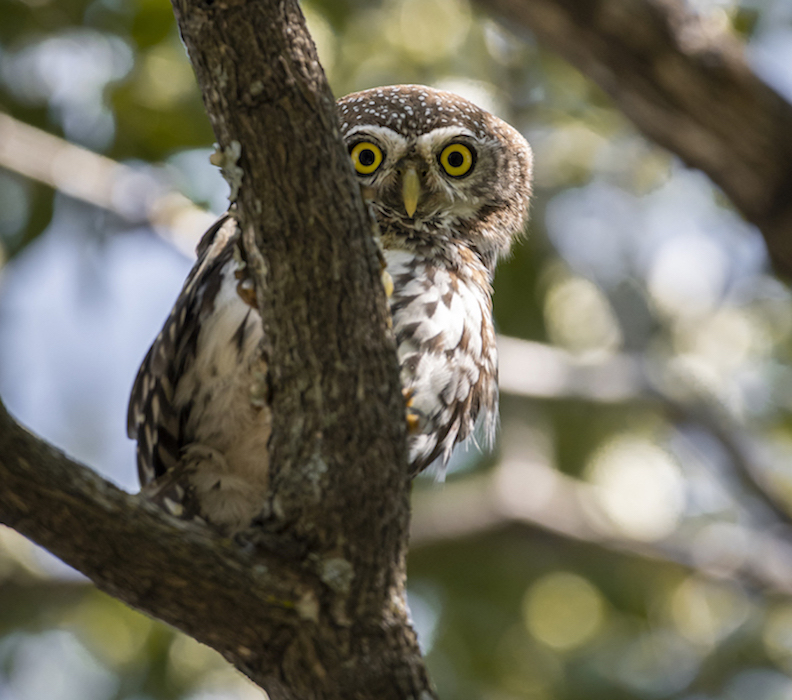
    One of my most memorable sightings was the Pearl-spotted Owlet. This tiny owl came as a huge surprise when I saw him. I was about to turn the shower on when I heard his call, “tseeu-tseeu-tseeeu-tseeeu” coming closer. He landed in the big Jackalberry right above me. Still calling, he was completely unaware of me standing right beneath him. As quietly and fast as I could, I ran inside to get my camera for a photo. As soon as he heard the shutter, he looked straight at me. Seeing a naked guy with a camera must have spooked him because soon after he flew away and was not to be seen again (This is definitely one of the many perks of having an outside shower in the bush!).

    image

    The other sighting that will also always stay in my memory is of a more rare and elusive bird. Since the start of the course, one of my favourite things to do is identifying birds by their calls, and this is what helped me find this bird. The sharp “kaaark” at the river’s edge had me baffled on what it could possibly be. At first, I thought it might even be a mammal of some sort, one of the other students said it sounded like something growling or a Bushbuck alarm calling. Being as curious as I always am, I grabbed a spotlight and went down towards the river. The spotlight was not fully charged but the characteristic white back, rufous neck and large eyes gave away the bird species. White-backed Night Heron. The next few nights a second bird also came to visit the pool in front of the lodge.

    These are just two of my more memorable experiences here in the Makalali. The past six months were filled with special moments and so many unforgettable memories that none of us here at Toro would ever forget. Despite being one of the most difficult years of our lives the memories we made here are the kind that can be told around campfires or amaze grandchildren with in years to come.

  • What is World Ranger Day?

    BY: Tasneem Johnson-Dollie

    On 31 July we’ll be celebrating World Ranger Day, in honour of those on the forefront of conservation. Don’t know much about World Ranger Day, or what a ranger actually does? Well, you’re about to find out. 

    Wildlife rangers are wildlife experts who make sure that nature reserves, game reserves, and national parks are well-managed. One of their key responsibilities is the conservation of the fauna and flora within these environments, which can be a pretty big task when you look at the area of land they need to cover. 

    Why are wildlife rangers important?

    image

    Because of the significant impact of climate change and human activities such as pollution and overdevelopment, every natural environment – and the fauna and flora it contains – is at risk. With conservation being their main business, wildlife rangers are a big part of ongoing conservation efforts.

    A day in the life of a ranger may include: monitoring wildlife and natural environments, engaging with local communities to collect or convey wildlife conservation information, assisting with tourism, managing fires, or addressing wildlife crimes – like poaching. 

    This is a wildlife conservation job that depends on wildlife personnel to be clued up and careful – since some of these activities can be dangerous. So it’s no surprise that becoming a ranger takes a good amount of training. You need to have a tertiary-level education in a wildlife discipline, as well as practical experience in the field. 

    Jobs in wildlife conservation aren’t for the faint-hearted, which is why wildlife rangers have a day dedicated to their successes and to highlight the positive impact that they’re making in the world. 

    Further reading: The important role that game rangers play in conservation

    What is World Ranger Day about?

    image

    World Ranger Day was established in 2007 by the International Ranger Federation (IRF) – an organisation that provides a global platform for wildlife rangers to connect and share their experiences. 

    It commemorates the daily contribution that wildlife rangers make to conservation, and honours those who’ve been injured or killed in the field. 

    But, while the world takes a moment to cheer on wildlife rangers, World Ranger Day also brings home another important message – that wildlife conservation jobs are important, and having more wildlife rangers in the field would be great for global conservation efforts. 

    Keen to get involved in this type of wildlife conservation job? Let’s take a look at how you can launch your career as a wildlife ranger.

    How to contribute to World Ranger Day

    image

    Getting involved in conservation activities that add to the wildlife conservation jobs that rangers do is a great way to make a contribution on World Ranger Day and beyond. And, of course, you could work on becoming a fully-fledged wildlife ranger yourself. 

    Bushwise Field Guides offers IFGA accredited courses that can set a solid foundation for anyone looking to step into a career in wildlife conservation. 

    These courses will also up your chances of studying to become a wildlife ranger in the future by helping you gain important theoretical knowledge and practical experience. 

    Getting closer to becoming a wildlife ranger

    image

    Get a taste for what it’s like working in ethical wildlife conservation jobs while training to become a professional field guide or wildlife researcher. Take a step closer to becoming a wildlife ranger by taking part in a conservation careers internship or IFGA. 

    And once you’re qualified, find out about the complimentary recruitment service and employment opportunities that Bushwise has to offer in prestigious game reserves and private lodges. 

    Find out more about Bushwise Field Guides courses online or out in the field that could start off your career in wildlife conservation, and make you a part of the global community we celebrate on World Ranger Day. 

  • Growth – A Student’s take on 2020 at Bushwise

    BY: Matthew Holland, Bushwise student 2020

    This year has been an absolute rollercoaster and it is only June. Nobody could have ever thought that a global pandemic, would have such an impact on our year here at Bushwise. We have all grown so much as individuals and for me, this could be the turning point in my life. 

    image

    I was your typical city boy, who loved the bush and visited as often as I could with my family. My uncle was one of the most influential honorary rangers in the Kruger National Park. With this being said, my passion for the bush and nature stemmed from my mother. Her passion for what she loved drove me to become obsessed with the bush and I always wanted more. I finished University in 2018 with a degree in English and Psychology from Rhodes University in the Eastern Cape. I taught at a private school for two years, teaching high school English. My classroom had a wildlife theme and the kids loved it. It wasn’t long before one of my students asked, why I don’t go and work in the bush. I thought about it for a while and I always wanted to follow a dream and become a guide. One phrase came into my head when this was said, it is, “You can’t wait for inspiration, you have to go after it”. It was then that I made a decision to follow a dream and I was sold to Bushwise, straight after I spoke to Kim.

    After you make a decision, there is always some self- doubt about whether or not you have made the right decision and this is, unfortunately, the reality of change. I was petrified that I was doing something to get away from the things I believed, were holding me back in the city. Teaching was a passion of mine, but a fire inside me burnt for following a dream in the bush and this was the defining factor in, me realising that I had made the right decision.

    image

    The day I arrived at Bushwise, there was a calmness over me, that told me I was in the right place and evidently the first person I met, was my roommate Benno. Later on I met my other roommate Andi. Upon meeting Trevor and Sharin, I know the people here were all going to be a big part of my life and today it is safe to say that Trevor and Sharin have become parent roles in my stay here at Bushwise and I would not trade them for the world.

    The Growth I have made here at Bushwise stems from my trainers, Jack and Lindi and my fellow peers, who have now become my second family and we would forever have, each others backs. I have come to realise that the things that are important in life, is whether or not you are happy with what you are doing. As the course progressed I found out, that this is where I have wanted to be my whole life. Bushwise has been nothing short of amazing and it has been a foundation for my, hopefully very long guiding career.

    image
  • Game Ranger vs. Field Guide

    BY: Edward Smith, Bushwise Trainer

    What are the differences between a game ranger and a field guide?

    This is a question I have answered numerous times and have found the best way to get a person to truly understand these differences is to explain my career-story. My field guide/game ranger journey started as a 19-year-old boy straight out of school. I decided to become a field guide but very little did I know that these two “jobs” very often go hand in hand. I am not saying that one needs the other to be successful, but it sure does help to understand the bigger picture. Both fit into protecting our natural world, whether it’s sharing the knowledge on how to protect it and why it’s important. Or actually being the person who physically steps in to assist natural processes. Very often something as small a fence around a small area prevents natural processes from taking place.

    The very simple and straightforward answer would be that game rangers work hands-on with nature. Every natural lifeform within it and the maintenance thereof. Field guides focus more on the entertainment and interaction with guests while linking our modern world to nature that has been around for billions of years. Even though this answers the question in the shortest way, there is actually so much more to it as the two lines of work commonly overlap.

    image

    When I qualified as an apprentice field guide in 2011 it meant that I was now qualified to guide guests through natural areas whether it was on foot, boat or an open game vehicle. It meant that I explained the details about all-natural things in my environment to my guests. This also included hosting my guests at lunches and dinners as well as acting barman or waiter when needed.

    When there aren’t any guests and there was no one to guide around and entertain, it was all hands on deck with reserve management. This means putting on my gators (canvas covers around my ankles and socks to give no holding material for ticks and grass seeds) and gloves to assist the game ranger team. They are also known as game wardens, reserve managers, conservation officers to name a few. When I was not busy guiding I became a game ranger, doing game counts, rhino horn removal, erosion control, keeping trail paths open and assisting with the general management of a reserve. At first, I was confused as to why I was doing someone else’s work which I didn’t sign up for. I later came to understand that a person wouldn’t want to pay an individual or a team from outside the reserve who you firstly don`t trust, who does not understand the bush and the animals that live in it and lastly, who doesn’t know the area. It makes more sense to use knowledgeable guides who can do physical labour without getting eaten or attacked while working out in the field!

    image

    My first six months as a field guide/game ranger taught me that when I wasn’t being the one I became the other. When not guiding I assisted in controlled veld burns, problem animal control, general road and building maintenance, and game capture.

    The following two years were spent studying nature conservation where I gained a better idea and understanding of what management tools and skills were needed in order to provide balance in a natural system after a fence was erected around an area. This allowed me to see the bigger picture as it is important for a game ranger to understand the meaning of conservation and what is needed for man and beast to live alongside one another. During my third year of Conservation studies, I was placed on a game reserve where the true meaning of a game ranger was explained through everyday life. My day consisted of checking fences, removing alien and problem vegetation, road and building maintenance, removing pushed over trees, fixing broken pipes, building water holes and so much more. I was quickly asked to fill a guiding position where I once again realised that both “jobs” work hand in hand.

    Whether it was my poor game ranger skills or better guiding that brought me back to the guiding world, I am grateful that I have had the opportunity to be a part of both or should I actually say that both worlds became a part of me. Since then I use the skills and knowledge I have gained in both lines of work to allow me to make the best decisions as I continue to guide and train today. At Bushwise we aim and strive to create and mould the best field guides while still giving the insight and background to what’s required to be the best of both. At many lodges and game reserves you are expected to only be one but knowing both can only allow you to become so much more.

    image

  • Is Pumba a common warthog?

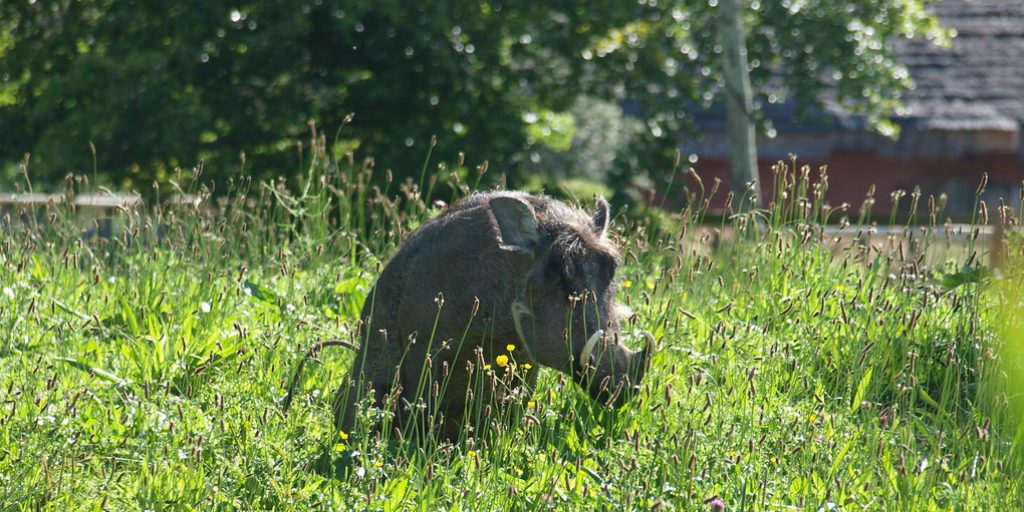
    Original photo: Warthog by Schwingi is licensed under CC BY 2.0

    BY: Zaytoen Domingo

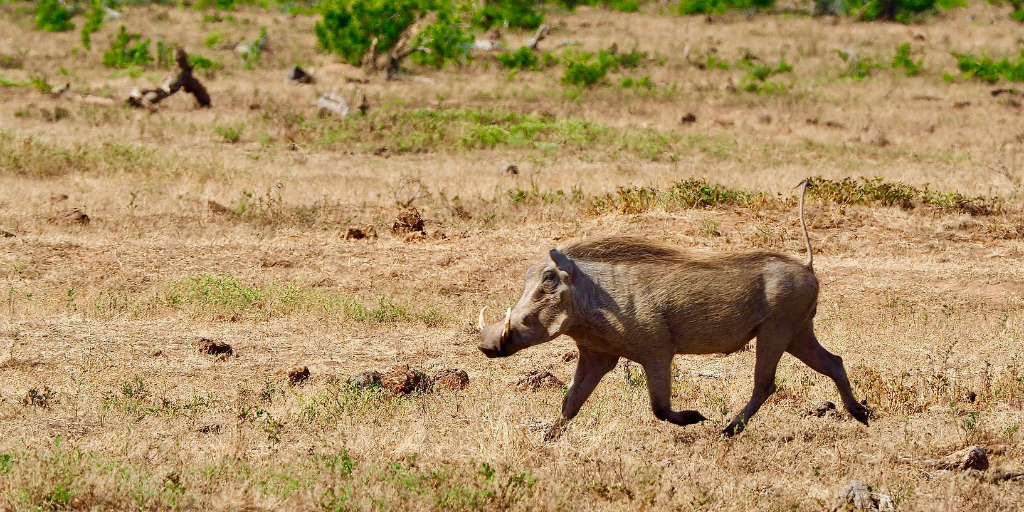
    Everyone knows one of the most beloved Disney characters, the Lion King’s Pumba the warthog. But do we know how closely related he is to the real-life common warthog?

    The character of Pumba is based on a real-life species of warthog, the common warthog. You can find them in sub-Saharan Africa. Our fictional warthog does look similar to our sub-Saharan warthog, except that Pumba has a smoother, pixelated advantage over the scruffy look of his real-life common warthog inspiration.

    But what are some of the other similarities between Pumba and the common warthog we find out on the African plains? Let’s find out.

    What sounds do common warthogs make?

    image

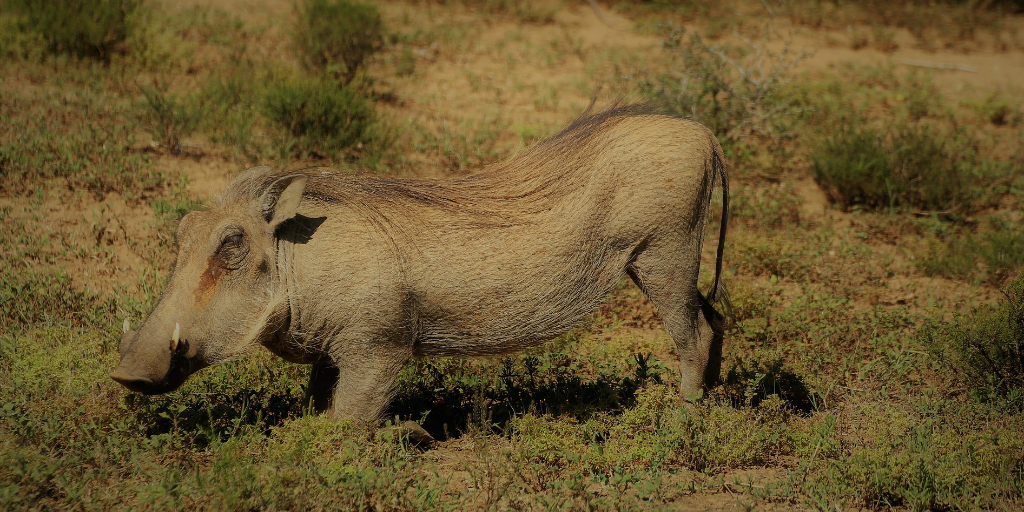
    Original photo: Warthog South Africa by RightSaidFrodo is licensed under CC BY 2.0

    If you’ve watched the Lion King, you’ll be familiar with the singing version of a common warthog. But can real-life common warthogs sing? Let’s take a look at the first time Pumba appeared on screen.

    After falling asleep in an open plain, Simba is seconds away from being eaten by vultures when a speeding figure rushes onto the plain, scaring the vultures away.

    Is it a bird? Is it a plane? No, it’s a warthog.

    Audiences around the world share a sigh of relief at the sight of Pumba, with a meerkat perched on his head. And just when we think that the scene can’t get any better, Pumba starts to sing. 

    Hakuna Matata. 

    But what about the common warthog? Can this animal really sing?

    Well, according to the San Diego Zoo Global Library, the common warthog grunts, and will occasionally squeal or squeak.

    But, don’t be disappointed, because the library also notes that the common warthog can grunt rhythmically.

    So when you’re a field guide conducting a tour in the African bushveld, you might be lucky enough to hear the song-like grunting of the common warthog. 

    And hearing this music out in the field may just set you up with no worries for the rest of your days, as the song goes.

    Is the common warthog as friendly as Pumba?

    image

    Original photo: Hippopotamus by kolibri5 is licensed under CC BY 2.0

    In Swahili, “Pumba” means foolish or silly – a fitting name for our happy-go-lucky warthog. But, is the real common warthog just as friendly? 

    Well, even though the male common warthog lives a solitary life, while the females look after the young, when warthogs meet in the savannah, they greet by rubbing their faces together. It’s like a warthog-hug.

    And, during the scene of the Lion King where Pumba and Timon sang “The Lion Sleeps Tonight”, and Nala the lion jumped out to attack them, the common warthog would act just like Pumba did, avoiding a fight and fleeing instead.

    In fact, warthogs don’t often show aggression, except during mating season when the male common warthogs will fight one another.

    Do common warthogs smell or is it just Pumba?

    image

    Original photo: Chester Zoo by Nigel Swales – 2 is licensed under CC BY-SA 2.0

    Pumba has a terrible odour, which is why he doesn’t have many friends, but he also has some bad manners, like farting way too much.

    Did you know that Pumba was the first Disney animated character to fart on television?

    There’s isn’t much evidence suggesting that the common warthog is as smelly as Pumba, or that it emits smelly gasses. So, being smelly may be a characteristic that’s unique to Pumba.

    Common warthogs and meerkats: can they be friends?

    One of the most famous fictional friendships in the world is the one between Timon and Pumba. In almost every scene in the movie, we see Timon riding on Pumba’s back, singing a song or two.

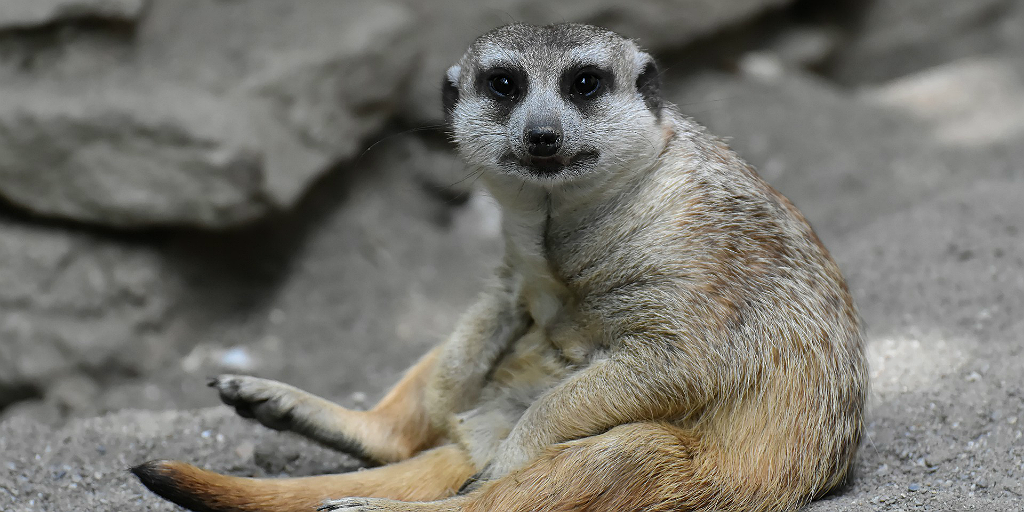
    Did you know that meerkats climb onto warthogs to feed on ticks and other parasites? So somewhere in Africa, there might actually be a Timon-and-Pumba friendship.

    image

    Original photo: Meerkat by Alexas_Fotos is licensed under CC BY 2.0

    Would a common warthog adopt a lion cub?

    When Simba meets Timon and Pumba after Pumba saves him from the vultures, audiences experience hope for the lion cub. 

    The first thing Pumba asks Timon once he realises that Simba is only a cub, is “Can we keep him? Can we please keep him? Oh, I promise I’ll walk him every day. If he makes a little mess, I’ll clean it up!” 

    And so Simba enters a new way of life, away from his home at Pride Rock. We see Simba grow up with Timon and Pumba as they teach him new songs and melodies. 

    Simba and Pumba form a sweet surrogate father-and-son bond that may leave you wondering if this bond could overcome the real-life nature of a predator-and-prey relationship.

    Well, when Timon responds to Pumba saying, “You’ll be his little mess. He’s gonna eat you and use my body as a toothpick,” he gives us a good idea of what might actually happen if a warthog got too close to a lion in real life. 

    So, is Pumba a common warthog after all? Pumba is definitely a common warthog, but with a fictional flair.

    How did the common warthog get its name?

    image

    Original photo: Warthog Safari by Elleithyia is licensed under CC BY 2.0

    The common warthog earned its name from its protruding wart-like glands on its face. But the glands are actually not warts.

    They’re just growths of skin that help identify male from female common warthogs. Female common warthogs have two small protrusions below their eyes, while the males have four big ones.

    The growths also help with protection. But how?

    Well, female common warthogs are nurturers and tend not to get into fights with other animals. As we mentioned earlier, male common warthogs will flee from predators, but they’ll get into fights with one another over their mating partners.

    They fight by charging towards one another and ramming into each other’s faces. Their growths act like padding to protect them. 

    The common warthog population in Africa

    image

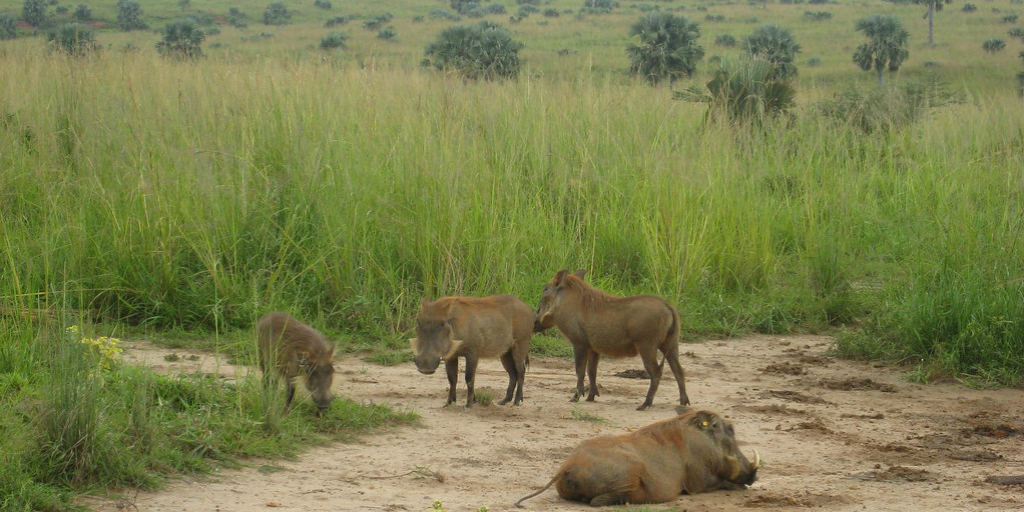
    Original photo: paraa_70 by jnissa is licensed under CC BY 2.0

    The common warthog is listed as “least concern” on the IUCN Red List of Threatened Species, but the population is decreasing. 

    Threats to the common warthog species include natural disasters like droughts, and human threats, like hunting. Warthogs are often victims of trophy hunting.

    Trophy hunting is when wild animals are killed for sport, and the animal’s head or other body part is kept as a souvenir or trophy. 

    The common warthog, like all other wild animals, is important to wildlife ecosystems. By becoming a field guide, you can help with the conservation of wild animals.

    Learn more common warthog facts and facts about other wildlife. And to gain a deeper understanding of wildlife and ecosystems, see how you can become a field guide.

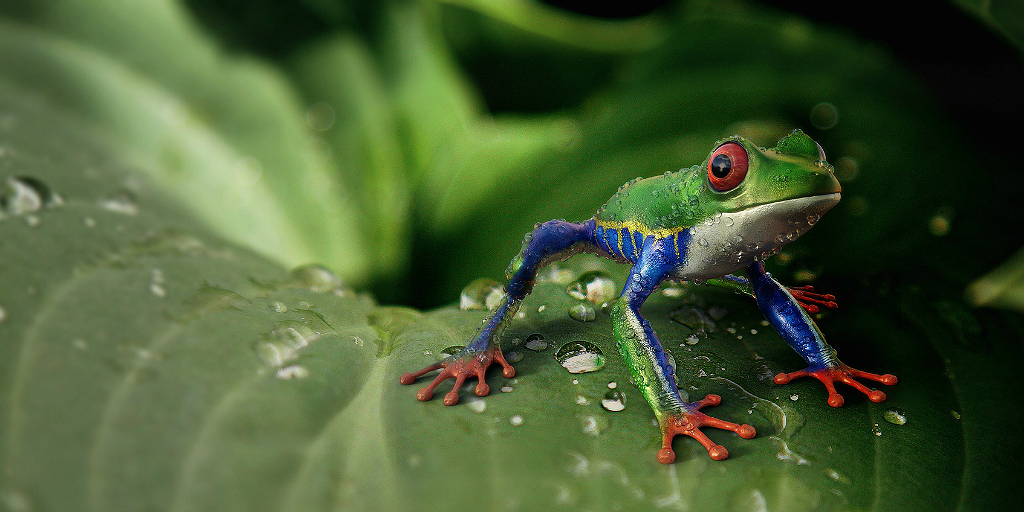
  • Save the Frogs Day: Why you should hop on board to save the frogs

    Original photo: “Frog” by Frank Winkler is licensed under CC BY 2.0

    BY: Zaytoen Domingo

    SAVE THE FROGS! is an amphibian conservation organisation that created Save the Frogs Day in 2008, to run worldwide educational workshops on the importance of frogs. Find out why this organisation made the leap toward frog conservation.

    The frog population has been experiencing major declines from as far back as 1970, from a fatal fungus that has already wiped out entire frog species, such as the Longnose stubfoot toad.

    The SAVE THE FROGS! organisation was founded to spread awareness about the decline in frog population worldwide and to prioritise the conservation of amphibian species. This year, Save the Frogs Day will be on 25 April.

    Do you know why frogs are important to ecosystems?

    Frogs are natural bioindicators

    image

    Original photo: “Frog” by cocoparisienne is licensed under CC BY 2.0

    Before we talk about why frogs are important, let’s get some jargon out of the way. What is a bioindicator? 

    A bioindicator is a living organism that can be used by scientists to find out the state of the environment that the organism lives in. 

    Frogs act as natural bioindicators because of their anatomy. A frog’s skin has many pores that help it to breathe. 

    Frogs breathe through their pores when they’re underwater, and through their lungs when on land. 

    But, just as the frog’s porous skin allows it to absorb oxygen underwater, the skin also allows it to absorb other things inside the water. The same goes for their lungs and other things in the air. 

    So, if the water or air in an environment is polluted, the frog will absorb those pollutants too, which can affect their health. When frogs die, researchers can make use of their bodies to test what they’ve absorbed.

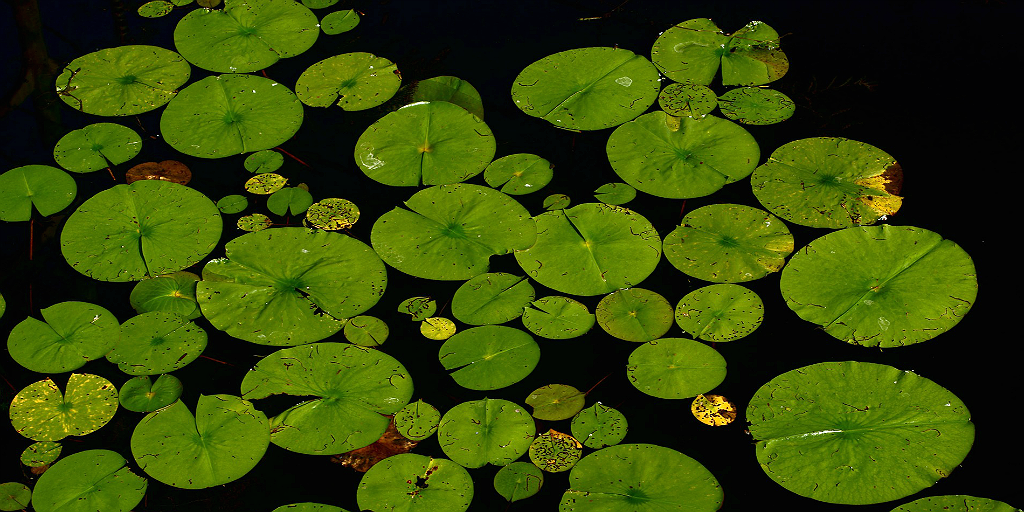
    image

    Original photo: “Lotus” by Ryan McGuire is licensed under CC BY 2.0

    This information is useful because it helps researchers to identify dangers in an ecosystem, the causes of death in frogs and other species, and possible threats on other species. 

    Having this type of information can help people to conserve wildlife and their ecosystems. It also helps researchers to monitor changes in the environment and to predict dangers before they arise.

    So frogs don’t only help researchers to protect other frogs, but they also help protect other organisms in the environment. 

    Frogs are taking big leaps toward conservation. Are you?

    Frogs are important to nature’s food chain

    Frogs are the eaters and the eaten — both of which benefit the ecosystem and other organisms. During the first stage of the frog life cycle, as eggs, they provide food for small organisms like insects.

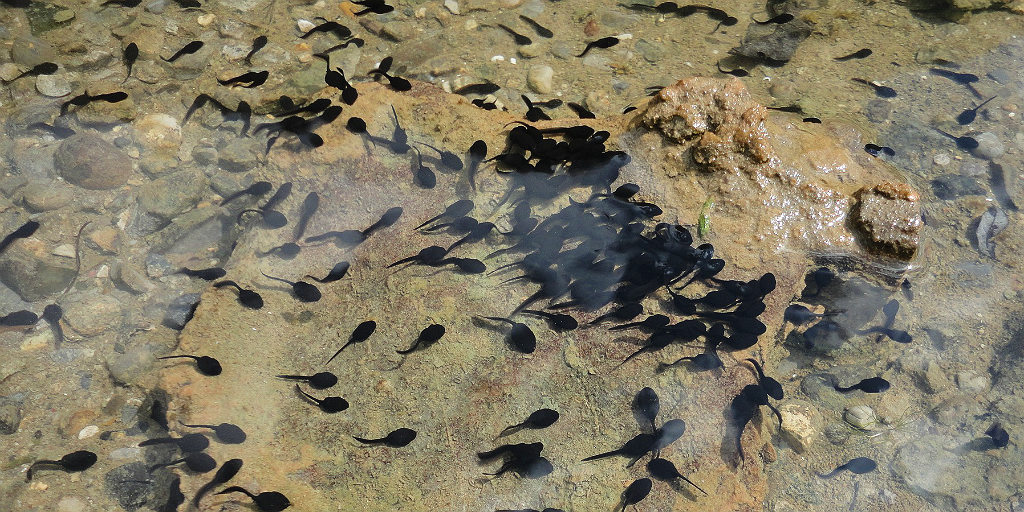
    During the second stage, as tadpoles, they provide food for bigger organisms like fish. And, in the final stage, as adults, frogs provide food for organisms like birds.

    image

    Original photo: “Tadpoles” by Alfonso Samanes Mateos is licensed under CC BY 2.0

    Frogs also act as natural water filters. When they are tadpoles, they eat algae, and in doing this they purify water supplies. This is beneficial to any living organism that consumes that water.

    When they aren’t providing food for other organisms, frogs are also predators and benefit the environment in this way too. 

    As adult frogs, they feed on all kinds of insects. This is mostly beneficial to crops, since insects feed on crops and damage them. Some insects, like mosquitoes, also carry diseases, like malaria. So frogs even control the insect population and protect human beings from diseases.

    The next leap towards frog conservation

    Are you wondering how this information is important to being a field guide? 

    Well, as a field guide, you are required to know about all organisms in the environment that you’ll work in, not just the big dogs (and cats). 

    image

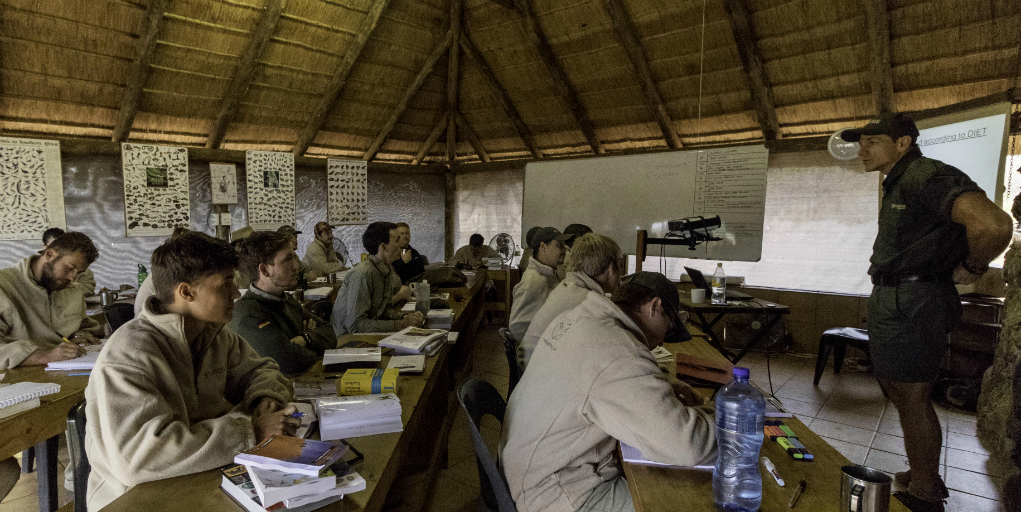
    Conservationist courses, like IFGA and Apprentice Field Guide (NQF2) courses, will allow you to learn about these organisms.

    Both of the courses include both theoretical work in the classroom, as well as guided, practical work in the field. 

    For example, Bushwise Field Guides offers a lecture on amphibians where you can do theoretical work on frogs. The instructors will also organise a frogging night where instructor, Vaughan, takes the students to a body of water on the reserve to identify as many frogs as possible.

    Of course, frogs won’t be the main focus of the courses or your job as a field guide, as there are many other organisms that also make big leaps towards keeping nature balanced and protected. 

    Do you want to learn more about the importance of frogs and other organisms, and take part in protecting them?

    You can hop onto wildlife conservation efforts too, and learn more about not only frogs, but many other important organisms in the South African bushveld.

  • The bare necessities for any safari

    Photo: Chloé Potier

    BY: Lindi Hutchinson

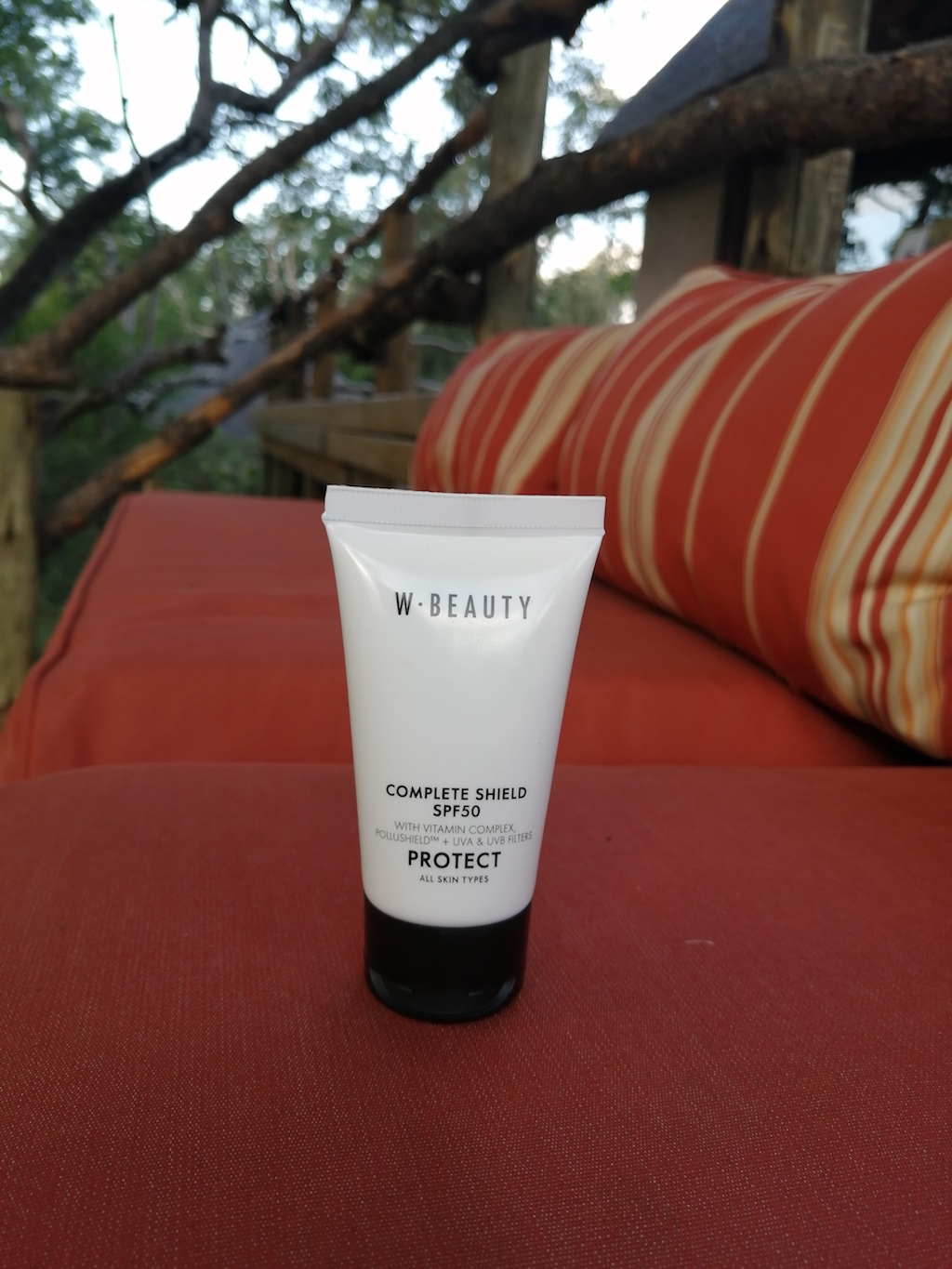
    You are super excited to embark on your first safari game drive in Africa and also an eager beaver to get a bit of a tan while the opportunity is there. Keep in mind that the African sun, though inviting, can be harsh and without you realizing it in time, you’ll soon look and feel like a crisp instead of a surfer dude or a babe.  Rather catch some sun next to the pool and not on a safari. Remember to apply an adequate amount of SUNBLOCK and put it in your bag to frequently reapply.

    image

    Secondly, while on the sunny subject, remember to take a HAT! Do not try to be brave! I have seen guests get sunstroke before and it ruined their stay. No need for a proper, heavy, English safari hat, unless you are Jane visiting Tarzan. A cap will do just fine. 

    image

    Thirdly, remember to drink WATER.  Most lodges and guides supply water bottles.  This is to prevent dehydration and headaches. Take a sip every couple of minutes. 

    image

    Fourthly, BUG SPRAY.  In your room, there will be two types of bug spray; Doom and Peaceful Sleep.  I have seen multiple people not reading the labels on these cans and then covering themselves and their kids in the harmful room spray, Doom (green/orange tin). This is bad for your lungs, bad for your skin and the mozzies will feast on you later.  Make sure you use peaceful sleep (blue tin) on your skin. Avoid your eyes, you need them to see animals. Rather spray a bit on your hand and rub it over your cheeks.

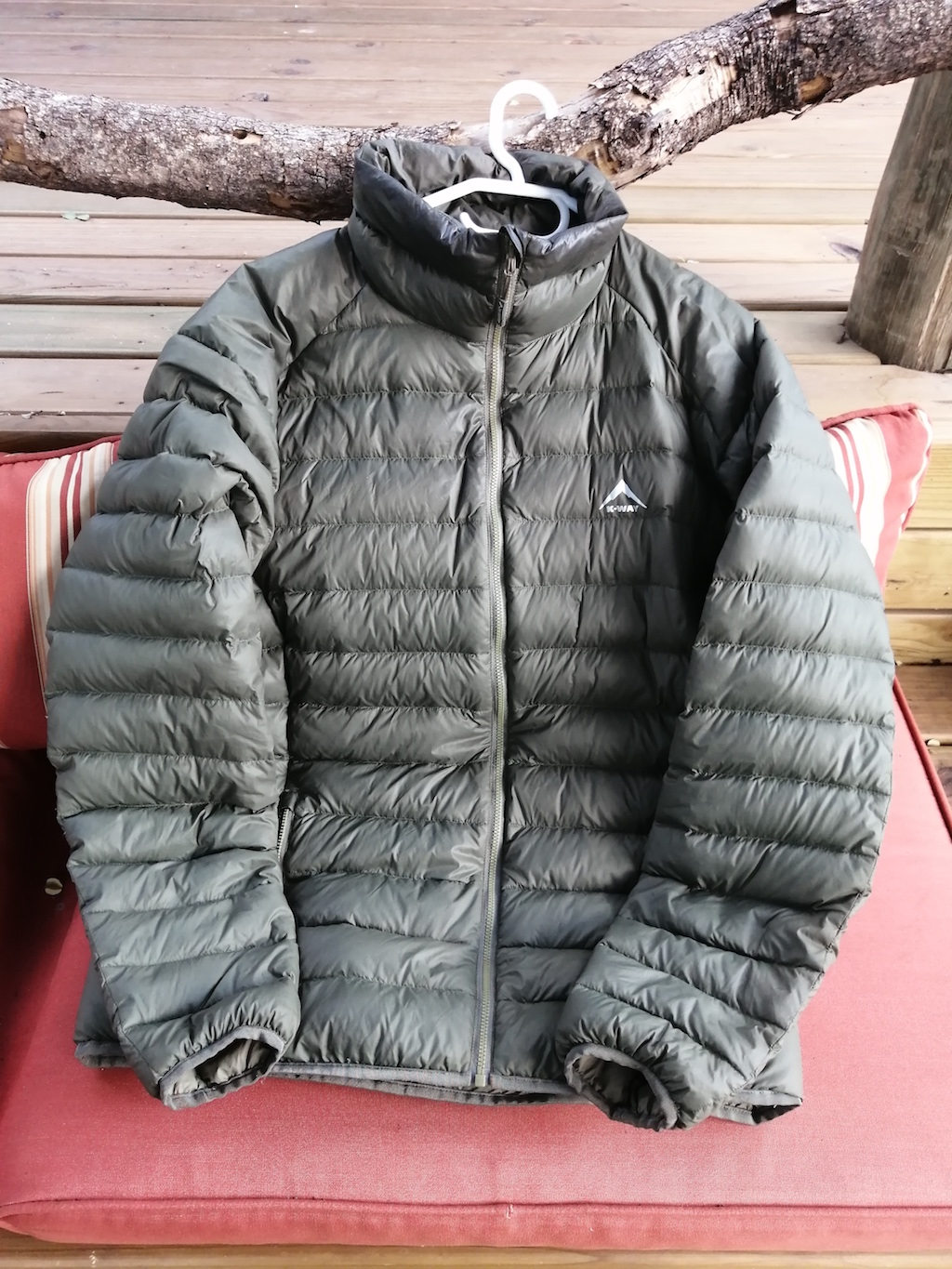
    Lastly, a waterproof JACKET.  The weather in Africa can be very unpredictable due to the warm Agulhas and cold Benguela currents. A cell might become unstable and cause a cloud break leaving you drenched and grumpy on safari  It might also happen that a cold front blows over from the Cape to the Lowveld during your stay which can turn a delightful afternoon drive into a chilly evening get-me-home rush.

    image

    There you have it, the absolute bare necessities for a safari!  Of course taking things such as cameras, binoculars and closed shoes are important but they won’t affect your health and potentially impact the rest of your travels. Rather be safe than sorry.